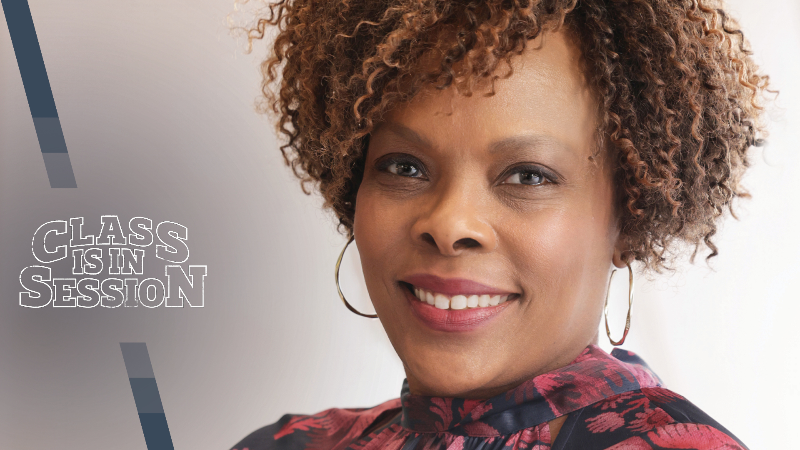
Hampton Police Division, Lieutenant Ashley Jenrette

Hampton, VA, Police Appoints First Black Woman Lieutenant

Lt. Jenrette says she worked her way up to the rank of lieutenant.


Ashley Jenrette received her lieutenant pin June 5, making her the first Black woman to attain the rank of lieutenant with the Hampton (VA) Police Division.

She believes the milestone underscores the division’s commitment to fostering diversity and ensuring its workforce mirrors its community.

Jenrette joined HPD in 2006 as a civilian clerk and became an officer in 2008. “I earned the position of lieutenant, not having anything to do with my race or my gender,” she said in a release from the city. “It’s the work that I put in over the years.”

Jenrette’s ascended through the ranks, from senior police officer in 2014 to corporal in 2016 and sergeant in 2019.

She said that she put in the work, but acknowledged that “I didn’t get here alone. I am grateful for everything those people have poured into me to get me to this point. I will show my gratitude by trying to pull up those who come behind me.”

A Hampton native and graduate of Hampton High School and Hampton University, Jenrette said she takes pride in forging positive bonds between residents and the HPD. Raised in a neighborhood plagued by crime and frequent police activity, she was part of the delegation that Hampton earned the prestigious All-America City designation in 2023.

Jenrette and her husband, Asa, were founding members of the Virginia Eagles Athletic Association, which reaches out to youth in various sports as a means of community outreach. That athletic program, started from scratch in 2016, services hundreds of community members.

“When I look back, I realize that so much of what I do has been about serving others,” Jenrette said.

Hampton University’s Office of Alumni Affairs & Parental Relations also celebrated Jenrette’s “monumental achievement” on social media.

Jenrette has been assigned to the Operations Branch, Night Shift, Chesapeake Sector, 4th Platoon.

RELATED CONTENT: Atlanta VA Police Chief Recorded Saying She Wants No Minority Female Hires

square, vending, money, payment

Here’s How To Avoid Leaving Money On The Table While Vending

Business owner Karla Spencer-George provides fellow vendors with tips for using Square.


Originally Published Feb. 19, 2013.

As a newcomer to the Omega Psi Phi National Convention, Karla Spencer-George learned a lot from other vendors who had been in the business for years. But when she pulled out her Square credit card reader they were all impressed with her ability to quickly process transactions using the device on her Android phone.

“They wished they were using it over the traditional processing machine, says Spencer-George, who enjoyed a 12-year career as an electrical engineer at Lockheed Martin before starting Liberation Clothing & Gifts, LLC in February 2010.

She sells merchandise that promotes Black history and culture, including T-shirts, documentaries, books, calendars, and paintings. While the business is mostly online, Spencer-George also sells her wares at Black-run events such as the national and regional conventions of Black sororities and fraternities, Black History Month fairs, science fairs, Juneteenth celebrations, and natural hair symposiums.

Spencer-George decided to use Square at events because it was quicker and less expensive than the credit card processing machine. At any event, credit card payments can make up 35% to 65% of the products she sells. She found out that although the Square device was only $10, she could redeem that money back after setting up her account. It also helped that there were no recurring monthly fees.

In addition, Square allowed her to ring up repeat customers without retyping their emails or phone numbers to send them their receipts. She was also impressed with the Square software’s plug-and-play feature.

“You just connect the device to your phone or iPad and swipe, says Spencer-George, who also studied computer science in college. “I also see the fact that the transactions are paperless as a bonus to me and the environment.

Now a veteran vendor, Spencer-George offers tips below to ensure that you don’t miss out on a sale:

Complete advanced on-site testing

“It is vital that my credit card payment processor works without fail. Whether your event is at an outside fair or the underground lower level of an exhibit hall, you must go to the event site and complete a test Square transaction before the event.” If you can’t go to the event site in advance, call your Internet service provider to discuss coverage in that area. Also, if the venue offers secure Internet for merchant transactions, consider purchasing it.

Keep no single point of failure

To avoid being a victim of Murphy’s Law, use two mobile devices with the Square software. That way, if one device dies, you have another one. I use both a Droid phone and an iPad. I use a wireless hotspot separate from my Droid phone for the iPad. This will help the charge of the Droid phone last longer. Finally, I bring a laptop to use the old-fashioned merchant account if all else fails.

Charge all devices

Since you may not have access to power at your event, remember to charge all of your devices the night before. I charge a Droid phone, iPad, laptop, wireless hotspot, and portable wireless charger before every event.

Use a stylus

Invest in a stylus for touch-screen devices. Have your customers sign for transactions using the stylus instead of their fingers. Using the stylus is more professional and easier for your customers to write with.

RELATED CONTENT: Meet the Former Teacher Who Built a $242,000 Per Year Vending Machine Company With $650

The Benefits Are On The Balance Sheet: Corporate America Must Stand By DEI And Chief Diversity Officers

The Benefits Are On The Balance Sheet: Corporate America Must Stand By DEI And Chief Diversity Officers

Corporate America cannot – must not – sacrifice progress to short-sighted political pressures.


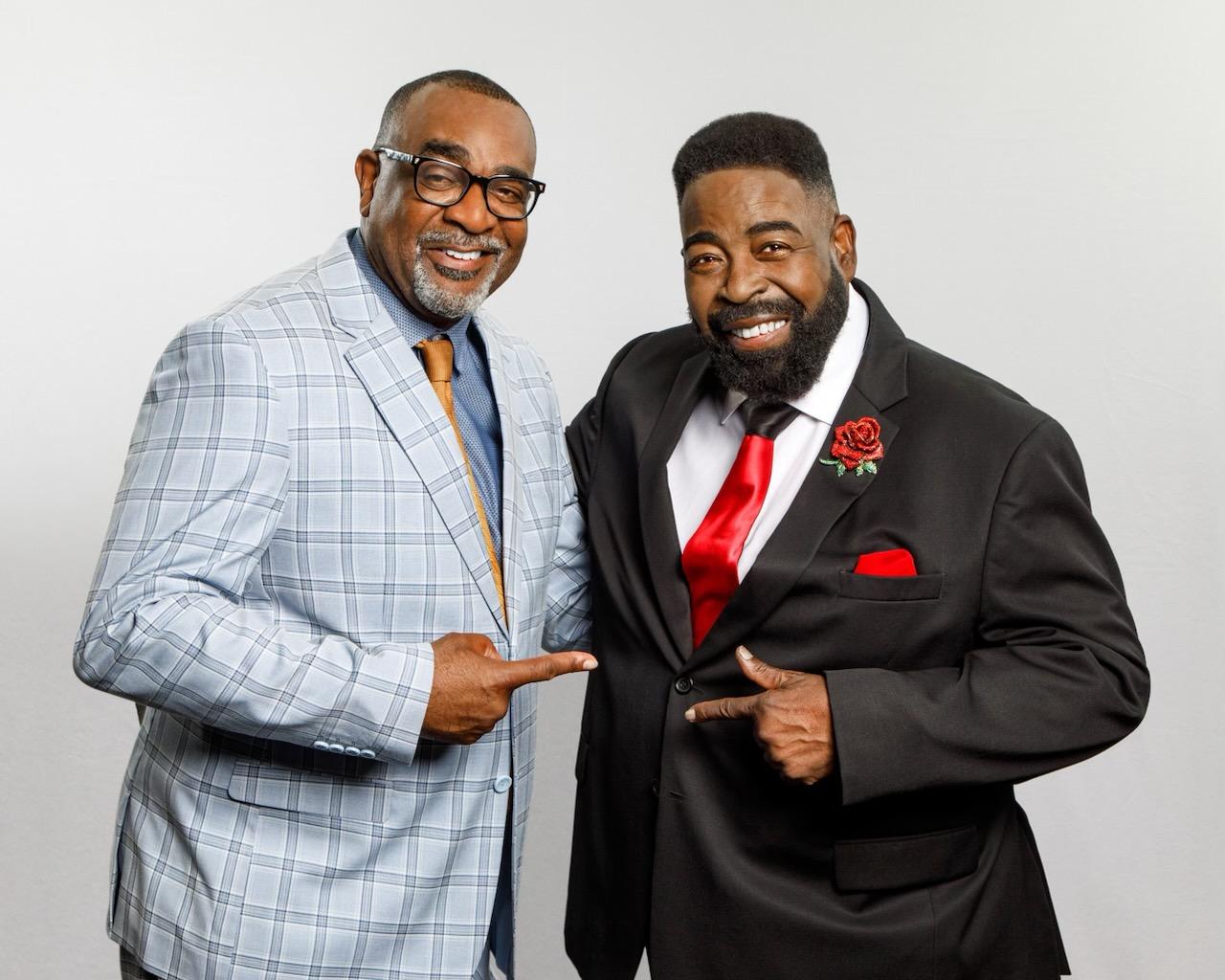
This week in New York City, BLACK ENTERPRISE is set to host its second annual Chief Diversity Officer Summit and Honors, presented in partnership with Fidelity Investments, Merck, and The Executive Leadership Council, the preeminent organization representing senior Black executives in corporate America and corporations throughout the globe.

The event’s purpose is to highlight the contributions of great champions of corporate diversity, equity, and inclusion (DEI), including impactful industry leaders such as trailblazer James Lowry, former Dell EMC CDO Jacqueline Glenn, and the dynamic duo that designed and drove the inclusive culture at PepsiCo, Ronald Parker, and Maurice Cox. Perhaps more critically, the summit serves as a platform for conversation about the status and future of DEI as it faces withering attacks on all fronts.

Indeed, DEI needs its champions now more than ever.

It was just four years ago when the murder of George Floyd and the galvanizing global protests that followed seemed to inspire a racial reckoning focused on the systemic discrimination of African Americans, and corporate America was very much a part of it. Corporations across industries declared their renewed commitment to DEI goals with grand pledges of support for equity and fairness. We seemed to be on the precipice of great change.

We were, but it was not the change we’d hoped for or anticipated.

The landscape has shifted dramatically in recent months. The U.S. Supreme Court’s decision to strike down affirmative action in college admissions has opened the floodgates for legal challenges to DEI policies in the workplace. A federal appeals court’s recent ruling to end Fearless Fund’s grant program for Black women entrepreneurs could potentially set a chilling precedent that undermines measured and effective efforts to level the economic playing field.

And in March, another federal ruling similarly gutted the Minority Business Development Agency, a potentially devastating blow to minority businesses that have long struggled to overcome systemic barriers to advancement.

As political pressure on companies to abandon DEI has intensified, the chief diversity officer role in the corporate hierarchy is being increasingly marginalized or eliminated altogether. And those lofty statements of commitment to DEI that beamed so proudly from company websites in the wake of the Floyd protests have quietly vanished.

Is this how DEI ends? Are we about to lose the chief diversity officer permanently? Or will corporate America come to its senses and acknowledge the value of equity and inclusion in its growth and profitability?

To answer that question, it’s important to remember that the business case for DEI has been made and reaffirmed in study after study, contrary to the hyperbole of its critics.

Chief diversity officers have redefined how companies recruit and develop talent. They have elevated the profile of HBCUs as a rich, viable, and long-underutilized recruitment resource and demonstrated the importance of mentorship in opening the leadership pipeline beyond the traditional white male boy’s club. Most significantly, the rise of the CDO helped countless corporations establish profitable relationships with diverse suppliers, identifying growth opportunities that allow companies to capitalize on emerging trends. This kind of collaboration leads to new and wider access to unexplored markets and untapped talent.

On another front, the CDO role provides governance and practices that underscore the necessity of DEI in the workplace. Studies show that 41% of Black employees say they have experienced discrimination at work, from the hiring process to being passed over for promotions to disproportionate compensation. For CEOs, these numbers represent a genuine threat to a company’s health and stability, leaving the firm open to damaging and expensive lawsuits. The CDO’s role ensures compliance and mitigates risk.

Bottom line: CDOs make companies more agile and responsive to marketplace trends and, yes, better places to work.

Corporate America cannot—must not—sacrifice progress to short-sighted political pressures. It’s simply a bad business strategy.

Rather than running from controversy, our leading corporations should proudly own DEI’s successes within their organizations and the contributions of their CDOs.

Moving forward, it’s essential for corporate leaders to recommit to DEI and the CDO role substantively, not in name only. If not properly championed and supported by leadership from the top down, DEI will continue to prove vulnerable to the kind of coordinated, negative attacks we’re witnessing.

BLACK ENTERPRISE was launched 55 years ago to ensure that African Americans become full participants within the economic mainstream and gain unfettered access to equal opportunity in corporate America with the ability to rise as high as their talents can take them—including the C-suite, boardroom, and the CEO’s chair. The Executive Leadership Council was founded 38 years ago to develop Black executives for the highest business echelons and simultaneously eliminate institutional barriers or excuses that denied them power positions as corporate decision-makers.

So, it falls upon Black senior executives and corporate directors to use their positions to be proactive and ferocious voices in protecting and advancing CDOs, DEI policies and practices, and the elevation of current and future generations of Black professionals. BE Founder and Publisher Earl G. Graves, Sr. continuously asserted that we can ill afford high-ranking Black executives willing to accept the role of window dressing for their respective companies but need Black men and women of position and influence to “stand in harm’s way” to ensure that all Black professionals gain opportunities across the board in corporate America.

Black C-suite executives must stand firm and uphold DEI, challenging corporate leadership to be accountable to their diversity statements and create a more equitable organization where all employees can thrive.

When C-suite executives champion the CDO role, they encourage other leaders to do the same, fostering a culture of inclusion and respect. The benefits are on the balance sheet.

BLACK ENTERPRISE ​​​​​​​​​
President & CEO,

Earl G. Graves, Jr.​​​​​​​​​​ ​​

The Executive Leadership Council,
President & CEO,

Michael C. Hyter

WalletHub, Income Disparities

Virginia Ranks Highest Income In U.S. For 2024

A 2024 WalletHub study highlights income disparities across the U.S., with Virginia leading in high incomes and West Virginia ranking the lowest.


A 2024 study conducted by WalletHub has revealed the states where people have the highest income. 

The personal finance website compared all 50 states and the District of Columbia across the following top metrics: “The average annual income of the top 5%, the average for the bottom 20%, and the median for all residents of each state,” Fox 5 Atlanta reported. The study found that Virginia residents are the highest-earning individuals in the nation.

“Virginia tops the list for highest income when balancing the median, top 5%, and bottom 20% of earners,” per the report. With the average top 5% in the state bringing home an average annual income of $518,296 and the bottom 20% making an average of $18,694, both numbers are the third-highest across the country. The median annual income in Virginia is $89,393, ranked as the 17th-highest in the country. 

Those living in the state dubbed as the home for lovers typically work in Washington, D.C., and tend to live in the northern region of the state in Fairfax County, where the average salary sits above $100,000. 

With a thriving business community, Northern Virginia is home to defense contractors, including Boeing, General Dynamics, Northrop Grumman, and RTX Corporation. Moreover, Loudoun County houses “the world’s largest and fastest-growing data center hub,” featuring heavy industry leaders like Amazon, Facebook, Google, Salesforce, and Verizon Business.

The second state with the highest average income is New Jersey, where factors like low, high, and median earnings are at play. The top 5% of the state’s residents earn an annual average salary of $505,621. The median income, the sixth-highest, is $117,847. 

Conversely, residents in the bottom 20% earn an average income of $16,445 per year, the 21st highest in the country. Situated between two prominent U.S. cities, New York City and Philadelphia, New Jersey’s high state incomes make perfect sense, especially considering that New York ranks third-highest in the nation for income.

The average income per year for the Big Apple’s top 5% of earners is $553,435, the highest in America. Unfortunately, on the other side, the bottom 20% of earners ranks 44th out of the 50 states and the District of Columbia, with an annual average income of $13,301. 

New York’s high ranking is explained by its high-income bracket receiving more weight than the low-income bracket. Thanks to the boroughs of Manhattan, Bronx, and Brooklyn, New York City has the highest income gaps in the country, with the city of Manhattan holding the highest reported income gap. 

Other states with high earners include Connecticut, Washington, Utah, Illinois, Minnesota, Colorado, and Massachusetts, ranked 10th. Coming in at the low end of earners are Kentucky, Alaska, Alabama, Rhode Island, Louisiana, Vermont, Maine, Mississippi, and New Mexico, and last on the list of low-earning states is West Virginia. 

RELATED CONTENT: Earn A High Salary After Graduation With These Tips

Rihanna, Fenty Hair, font beauty, Paris olympics

Rihanna Steps Out With Natural Hair On Full Display Amid Launch Of Fenty Hair

Rihanna seemingly responds to criticism of wearing a hairpiece in her Fenty Hair debut by sporting her natural hair.


Rihanna appears to be responding to criticism of wearing a hairpiece in her Fenty Hair debut by sporting her natural curly fro during a day in New York City.

The billionaire pop star and business mogul stepped out in NYC on Sunday, June 9, rocking her short, dyed blonde curly fro for a day out. Rihanna sported black trousers, clear strappy heels, a grey tank top, lace bralette under a brown fur jacket and paired with a black-and-white Louis Vuitton purse.

https://twitter.com/gabgonebad/status/1799953038104563853

The natural hair appeared to be a choice for the Fenty empire owner amid the announcement of her Fenty Hair line just last week. Rihanna has received mixed reactions to her haircare debut after seemingly sporting two different hair units while promoting her natural haircare line.

“A new family is moving in! #fentyhair is pullin up and it’s time to finally have the hair experience you’ve been waiting for,” Rihanna captioned a video post.

“You know how much switching my hair up matters to me. I’ve had almost every texture, color, length, from weaves to braids to natural–so I am launching a flexible line of products for not only every hair want, but every single product is designed to strengthen and repair all types of hair, which is what we truly need! It’s time to play and get stronger by the style 💁🏿‍♀️

The “Umbrella” singer teased the June 13 release date and told fans they could begin shopping early at FENTYHAIR.COM.

She followed up with a second video announcement explaining the Fenty Hair product line and how each item was designed to be “easy to use” with “repair” in mind.

“I also needed products that could keep up with me and my lifestyle, which we all know is crazy,” she says in the video.

“My hair has always been a huge part of my career and personal evolution, and #fentyhair was created to keep up with our hair and lifestyle–while constantly strengthening and repairing our hair with each use 💪🏿” she tweeted.

https://twitter.com/rihanna/status/1798445298034917396

While Rihanna’s fan base is strong, she still faced criticism from onlookers who questioned why she would wear what appeared to be two different wigs when announcing a haircare line that contains no wig-related products.

“How you promoting a hair product while wearing a wig? I don’t care,” one fan page tweeted and deleted.

The “Diamonds” singer appeared to shut down the wig rumors by posting a photo showing her blonde pixie cut getting a deep wash. But when fans compared the pixie to the look of her natural curly fro seen on Sunday, many were convinced that Rihanna was indeed wearing a pixie wig.

“Rihanna is such a scammer made y’all defend her the entire day that she is not washing a wig LMAO no wonder she is a billionaire,” one critic wrote.

“Rihanna really sat there and washed a wig 😭😭😭,” added someone else.

https://twitter.com/mihailo____/status/1799950281264013447

Rihanna’s Fenty Hair promotes itself as a haircare line that includes “repair at every step.” The website says the products have been clinically tested to repair, strengthen, hydrate, smooth, and protect at every step.

So far, only a moisture repair shampoo has been highlighted ahead of the official launch on Thursday, June 13. The haircare line is the latest addition to Rihanna’s billion-dollar Fenty Beauty empire.

RELATED CONTENT: Rihanna Expands Empire With New Fenty Hair Line

Louisiana, Homeless, Panhandling

Advocates Are Criticizing Louisiana Law That Criminalizes Panhandling

According to advocates for the unhoused, similar laws in other parts of the country have been struck from the books over First Amendment concerns for those who ask the public for assistance.


As laws that criminalize people without housing continue to expand in use across the U.S., a law in Louisiana aimed at criminalizing panhandling, an activity many of the unhoused participate in, has met some resistance.

Both advocates for the unhoused and New Orleans officials have criticized the law, which cleared the Louisiana State Legislature on June 5 and is now awaiting a decision from Gov. Jeff Landry.

As Nola.com reported, the proposed law has received pushback from politicians in New Orleans. The law was proposed by Republican State Rep. Dixon McMakin of Baton Rouge as he told Nola.com via text message: McMakin reasons that the bill would improve public safety. “It is about the safety of all people,” McMakin wrote. “Roads and right of ways where cars are were made for vehicles, not people to be in them.”

According to advocates for the unhoused, similar laws in other parts of the country have been struck from the books over First Amendment concerns for those who ask the public for assistance. As Eric Tars, the senior policy director for the National Homelessness Law Center, told the outlet, “Instead of passing unconstitutional laws, cities and states must focus on addressing the dire lack of housing that people can afford and the resulting homelessness crisis.”

In 2022, the United States Interagency Council on Homelessness (USICH) cautioned communities against enacting laws that criminalize the existence of the homeless population, saying that such laws make the crisis worse. “Criminalization does not reduce the number of people experiencing homelessness. It breaks connections people had made with providers trying to help and exacerbates homelessness and the conditions that lead to it—such as health problems and racial disparities.”

According to the 2024 Point In Time count, New Orleans’ homeless population is primarily composed of Black people (72%), but the share of Latinx people who are unhoused is swiftly rising. Adjusted for population, however, the State of Louisiana has one of the lowest rates of homelessness in the country, coming in with the third lowest rate. According to Meghan Henry, the director of the Annual Homelessness Report, homelessness is fluid, not static. Henry told U.S. News & World Report, “Homelessness is an experience, and it’s one that’s incredibly fluid. So people don’t become homeless and stay homeless until they’re not anymore. It is this sort of in and out of homelessness.”

Henry also indicated that when a significant investment in policies to address homelessness at either the state or federal level is made, homelessness tends to decrease. “The Bush administration put a ton of resources toward ending chronic homelessness, and during that period, that population declined nationally. Similarly, Obama then put a lot of resources toward veterans, and that population dropped.” 

Louisiana could look to Houston for examples of ways to get homeless people off the street. As Mandy Chapman Semple, the architect of the City of Houston’s nationally recognized homeless strategy, told Vox, city and state leaders must develop the political will to embrace a more radical approach to addressing homelessness.

Semple also echoed the USICH’s guidance, saying, “Every time we push someone needlessly through the criminal justice system, it affects their ability to get housed because every landlord is running a criminal background check. These nuisance charges create the perception that they’re a criminal and not a good tenant, and it’s just a tremendous waste of law enforcement capacity, too.”

RELATED CONTENT: 3 Louisiana Black Boys Catfish Local News Anchor Who Was Allegedly Soliciting A 15-Year-Old Girl For Sex

Kim Porter, Diddy, Cassie

Kim Porter’s Dad Breaks Silence On Diddy’s ‘Despicable’ Video Beating Cassie, ‘I Was Disgusted’

Kim Porter's father shares how "disgusted" he is by the video showing Diddy brutally beating his ex, Cassie Ventura.


Kim Porter’s father is breaking his silence on the disturbing video showing Sean “Diddy” Combs brutally beating his ex-girlfriend Cassie Ventura inside of a Los Angeles hotel in 2016.

Jake Porter, the father of Combs’ late ex Kim Porter, called out the “despicable” behavior the hip-hop mogul displayed in the shocking video that was leaked last month. Considering the years his daughter spent romantically linked to Combs, which includes welcoming three children together and allowing him to raise her eldest child, Quincy Brown, as one of his own, Jake Porter expressed his disgust with the assault video.

“You can say I was disgusted with the video,” Jake told Rolling Stone. “I wouldn’t treat my enemy like that. It was despicable.”

Jake was in Vietnam at the time CNN released the video footage. While he never saw the Bad Boy founder be violent toward his late daughter, seeing the shocking beat down “made me wonder,” he said.

“I didn’t know he could stoop that low,” Jake said. “I imagine it surprised a lot of people. I wouldn’t even do a dog like that. My heart goes out to Cassie.”

He never witnessed any physical altercations between Combs and Kim, but Jake recalls the entrepreneur/rapper being “a very jealous person” over Kim in ways that affected their relationship.

“They both loved each other. Kim’s love was legitimate. Puffy’s love, I don’t know what he calls love, you know what I mean? I really don’t think he has any idea what love is,” Jake said of Combs.

Combs and Kim dated on and off from 1994 to 2007. During that time, they welcomed their son Christian, 26, and twin daughters Jessie James and D’Lila, 17. She also had a son, Quincy, with singer Al B Sure, whom Combs raised together with all his children, including son Justin, 30, and daughter Chance, 18.

Cassie reached a settlement with Combs one day after filing a 35-page lawsuit in November 2023, accusing him of being physically and sexually abusive throughout their decade-long relationship. In March, federal agents raided Combs’ homes in Los Angeles and Miami.

Two months later, CNN released the shocking video showing the disgraced mogul brutally assaulting Cassie in the hallways of the InterContinental Hotel in Century City, Los Angeles. After the video was released, Combs posted an Instagram video owning up to his behavior and credited it to being a “dark” time in his life.

“My behavior on that video is inexcusable. I take full responsibility for my actions in that video,” he said.

“I was disgusted then when I did it. I’m disgusted now,” he added. “I went and I sought out professional help. I got into going to therapy, going to rehab. I had to ask God for his mercy and grace. I’m so sorry. But I’m committed to be a better man each and every day. I’m not asking for forgiveness. I’m truly sorry.”

RELATED CONTENT: Sean ‘Diddy’ Combs Sells Majority Stake in Revolt To Employees, Keeping The Company Black-Owned

new rules, Carnival Cruise

Carnival Cruise Line’s Remarkable Recovery: A Golden Investment Opportunity for Black Travelers

Carnival Cruise Line's post-pandemic recovery presents a unique investment opportunity, particularly benefiting Black travelers who are significant contributors to the travel industry.


After the COVID-19 pandemic left leading cruise operator Carnival with sales at zero, the beloved cruise line is making a comeback, and financial advisors are encouraging investors to take advantage.

Currently trading at a dirt-cheap valuation, Carnival’s growth story has just begun, offering a chance to buy at a price the economy may never see again, The Motley Fool reported.

“Investors sold off Carnival stock when it had to pause operations and took in no revenue during the pandemic,” the report reads. “Those who bet on its recovery have benefited from incredible gains, but the market seems to think it overshot last year, and Carnival stock is down 9% this year.”

With business booming and revenue sitting at record levels amid other beneficial financial components, experts say Carnival should soon see a huge surge in its stock.

Despite sales sitting high and the company’s net income seeing a positive turn, Carnival’s stock price is still suppressed. Net income has remained negative, the same spot it’s been in since the start of the pandemic.

Still, the Carnival rebirth story is not over.

“Wall Street expects it to turn positive as early as this summer, and the average analyst consensus for full-year adjusted earnings per share (EPS) is $1,” according to the findings. “Carnival’s stock price will likely jump at that point and begin to catch up with performance.”

So, what does this mean for the Black traveler?

With African Americans making up a significant portion of those contributing greatly to the travel industry, including the cruise sector, the current climate, dubbed a once-in-a-generation investment opportunity, could be a come-up for those already invested in spending their dollars to explore the world.

A Black Meetings & Tourism survey found that 17% of African American respondents had taken a cruise before, and 97% of them expressed a desire to cruise again. The same survey indicated that the Caribbean is a top destination, with 87% of respondents listing it among their top three preferred destinations.

In 2019, Black U.S. leisure travelers spent $109.4 billion on travel, representing roughly 13.1% of the U.S. leisure travel market. While detailed spending statistics, particularly in the cruise sector, are limited, the general trend shows an increased interest in cruising among Black people.

Before the pandemic, Carnival was a market-beating stock, with an incredible brand as a dominant leader in the field. Economists say that because demand is not slowing down and because the cruise operator is rebuilding itself with careful calculations in an estimated short amount of time, the reports reveal that this may be the prime time for investing in the company.

However, the Motley Fool Stock Advisor analysts did not list Carnival as one of the 10 best stocks to tap into at this time, so experts always advise people to do their own research before making a significant investment.

RELATED CONTENT: Travel With Ease With These Tips From Jet Setting Experts

Naomi Campbell, cowboy carter, daughter

Naomi Campbell Sends A Message To Women Who Don’t Want To Have Children: ‘You Will Change Your Mind’

Naomi Campbell believes young women who don't want to have children will eventually "change your mind."


Naomi Campbell understands that the current economy makes more young people reluctant to start a family. However, she believes these women will eventually “change your mind.”

The supermodel spoke with The Times of London in an interview published on June 7, in which she gushed about how much motherhood has improved her life. Campbell, who welcomed two children via surrogacy after the age of 50, has fully adjusted to life as a single mom.

“My babies are everything to me. It’s made me fear for the future,” she said. “I hope for a better world for my children. They are 110% my priority. I have to be there for them on their first day at school.”

When it comes to the growing number of Gen Z and millennials who are opting out of having children due to the economy, Campbell thinks they will reach a point in their lives where motherhood becomes more of a priority.

“I have heard a lot of young girls saying that it is too expensive to have children and they may not want them, and I have said, ‘You will change your mind. You will want to be a mum,” she said.

“I understand economically it is tough. But my mum had nothing and she made it work. It’s worth it. It is so amazing.”

Last week, newly released data from Australian research company the Red Bridge found that fewer millennials and Gen Zers are having children due to financial challenges, according to The NY Post. Among the young adults opting out of starting a family, 35 % have college degrees, 33% earn more than $2,000 a week, and just under half don’t own a home.

“The amount younger people have to pay out on mortgages or rent, they’ve also got HECS debt [student loans] and are often living beyond their means,” Kos Samaras, director of Red Bridge, said.

However, Campbell is hopeful about the younger generation and their ability to spark positive change for the future.

“We have to depend on the younger generation to change this world. I trust my children more than us to do the right thing,” she said.

Campbell welcomed her first child, a daughter, in 2021 at 51. Two years later, she welcomed a son via surrogacy. While speaking with The Times, she confirmed that she did welcome both children via a surrogate.

“I did,” she told the outlet.

RELATED CONTENT: Naomi Campbell Debuts PrettyLittleThing Collection At NYFW Show

Ajike 'AJ' Owens, Gun Violence , Nonprofit

Judge Expunges Convictions Of St. Louis Couple Who Brandished Guns At BLM Protesters; Now They Want Their Firearms Back

The couple had been pardoned by Missouri Gov. Mike Parson just weeks after their guilty plea.


A judge has expunged the misdemeanor convictions of Mark and Patricia McCloskey, the St. Louis couple who brandished guns at Black Lives Matter protesters outside their St. Louis home in 2020.

Now, they want their firearms, which had been confiscated by authorities, returned.

The couple, both attorneys, filed a request in January to have their convictions erased. Judge Joseph P. Whyte stated in his order on June 5 that the purpose of expungement is to offer a second chance to those who have rehabilitated themselves, according to the St. Louis Post-Dispatch. City prosecutors and police opposed the expungements, The Hill reports.

The couple was pardoned by Republican Gov. Mike Parson just weeks after their plea and was praised by then President Donald Trump and the NRA.

Following Whyte’s order, Mark McCloskey immediately demanded the return of the two guns seized during his 2021 guilty plea to misdemeanor assault: a Bryco .380 caliber pistol and a Colt AR-15. If the weapons were not returned immediately, Mark McCloskey said, he will file a lawsuit against the City of St. Louis, The Associated Press reports. 

But that might be a problem.

As Law and Crime reports, an appellate court ruled in 2023 that the forfeiture of the guns was not about the conviction, which was later rescinded.

“The law recognizes the difference between a conviction and guilt. Here, McCloskey pleaded guilty to misdemeanor assault and voluntarily forfeited his firearms in exchange for the State dismissing a felony charge punishable by imprisonment,” the court noted. “Thus, his inability to recover his firearms is not a legal disqualification, impediment, or other legal disadvantage that is a consequence of his conviction. Rather, the permanent forfeiture is a consequence of his guilt.”

The court added, “And because only the conviction is obliterated by the pardon and McCloskey’s guilt remains, we find that the governor’s pardon does not entitle him to possession of his forfeited firearms.” 

RELATED CONTENT: Prosecutor Launches Investigation Into White Couple Who Aimed Firearms at Black Lives Matter Protesters

×