Black farmers, training, HBCU, Arkansas

The Males Place’ In Charlotte Helps Mentor Boys Through Agriculture


A nonprofit group in Charlotte, N.C., employs a different approach to mentor Black boys from 12 to 18 years old.

According to WFAE, The Males Place, founded by Baba Reggie Singleton, empowers young boys by teaching them the skills that can assist them in helping their communities through agriculture. They are also taught the basic social skills and lessons on becoming men.

“Our focus is to socialize them, where we draw on time-honored traditions, our history, culture, and experience to properly develop and socialize them so they understand who they are,” Singleton said. “We use three major tenets: mentorship, agriculture, and social justice.”

Singleton shares experiences he had growing up, where he learned to do seasonal work. He started helping his family by picking and growing crops around 5 years old.

“The agriculture piece is not only addressing and ensuring that we have access to clean, healthy food but deeper concepts into being self-sufficient, solving problems, as well as being able to work side by side with young people in natural areas,” Singleton said.

Since starting in 1993,  The Men’s Place has helped more than 3,000 young men. The initiative started as a Mecklenburg County Health Department reproductive clinic for men to reduce teen pregnancy in the Black community. After starting the program, Singleton realized it needed to address more than reproductive rates.

“A rising increase of Black-on-Black crime, the rising rate of unintended pregnancy, and the absence of fathers in the homes, in the lives of the young people,” he said.

“In order to truly impact these young people, we needed to be able to counteract some of those negative images and messages and modeling that our young people were seeing.”

The nonprofit organization has taken the boys to places like Charleston, South Carolina, Washington, D.C., Ghana, and Cuba to learn about the Black experience in different parts of the world. Singleton plans on taking 20 of the boys back Ghana in June 2023.

RELATED CONTENT: Black Men Often Become Parental Figures In Mentorship Roles, It’sCalled ‘Otherfathering

Negotiate pay

Black Women Are More Unlikely To Negotiate Pay Than Black Men


A new analysis shows that 33% of Black women negotiated their pay compared to 45% of their Black male counterparts within the past two years.

The finding comes as another report shows the gender pay gap hasn’t narrowed much over the last 20 years. This analysis estimates that women earn 82% of what men make for similar work.

Compensation and pay equality have been long-standing issues between the sexes. There have been multiple studies over time because the gender wage gap keeps lingering. One belief is that the differences are tied to how women and men bargain for pay. Another notion is that women generally remain in low-paying jobs than men, another potential reason for the disparity.

ResumeBuilder.com surveyed over 1,400 full-time workers this month to learn which workers negotiated pay, their success, and what possibly restricted them. In the past two years, 49% of men versus 32% of women negotiated their salary. On getting what they wanted, 55% of men and 42% of women achieved their pursuit. Intimidation was cited as the top reason women chose not to negotiate.

For Blacks, those discoveries were statistically similar. However, unlike women, intimidation was not at the top of why Black women chose not to negotiate. They cited “worried I’d lose my job’ and ‘the offer was more than I was making previously’ as the top factors for not negotiating.”

According to ResumeBuilder.com, women mainly negotiated compensation because the offer or their current pay did not align with their value (46%). That, too, was the top reason for men (39%). Resume and Career Strategist Julia Toothacre stated that limiting beliefs and the pandemic may have influenced why fewer women negotiated.

“In my experience, women question their value more than men, which leads them to feel like they can’t ask for more. Because I work with high-performing women, there is also a fear of being too forward or seen as aggressive. This isn’t exclusive to the last two years as I’ve seen it happen since I started coaching and was a victim of it myself,” Toothacre stated.

Plus, it was reported that 5% of women versus 3% of men didn’t get close to or at all what they wanted.

Toothacre stated, “The women I’ve seen do well in negotiations are confident in themselves and their abilities. They know how to talk about their accomplishments, and they’ve done their research. They aren’t afraid of negotiating because they know their worth. It all comes back to confidence and value. It’s not that women can’t negotiate or that they are less qualified.”

Check out more findings in the report here.

Step Into History: Black-Owned Footwear Factory In The U.S. Releases Its Product


Designer Brands Inc., a world-renowned footwear and accessories collective, has announced the future release of the FIRST JEM. This inaugural shoe will kick off the JEMS by PENSOLE brand and will also be the first item released by one of America’s first-ever Black-owned footwear factories.

The new manufacturing studio will be a partnership between the footwear giant and Pensole Lewis College of Business & Design, the first and only HBCU centered on building careers in the design industry. The Black-owned factory was established in New Hampshire in early 2023 with the mission of building spaces within the industry that promote and champion Black designers and manufacturers. The brand’s launch also aligns with this purpose, as the FIRST JEM takes inspiration from a marginalized but widely impactful Black designer, Jan Ernst Matzeliger, for which his initials were also used in the company’s naming.

“The FIRST JEM celebrates Matzeliger’s little-known legacy,” shared designer Dr. D’Wayne Edwards, founder of JEMS by PENSOLE and Pensole Lewis College of Business & Design. “His invention of the Lasting Machine in 1883 revolutionized how shoes are made and is still used today. We’re celebrating his legacy and embodying that same revolutionary spirit, seeking to bring opportunity to new design talent and influence the face of the footwear industry.”

Its inclusive sneaker, complete with hand-crafted leather, seeks to restore the legacy of Matzeliger by bringing it into the future. Incorporating The Lasting Machine on the sock liner, the JEMS badge logo on the shoe is shaped like a diamond, as Matzeliger was a gem to the industry that has inspired future iterations. The shoe was released on his birthday, Sept. 15, to further honor his influence on design.

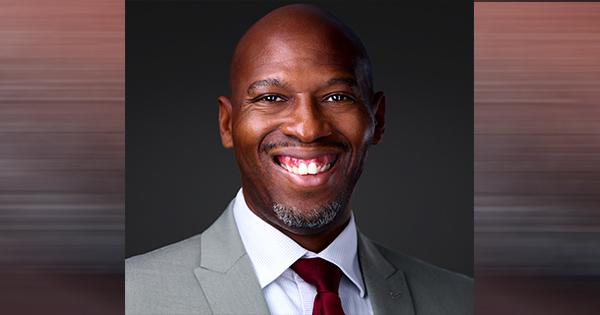
Dr. D’Wayne Edwards. Courtesy of Designer Brands

Designer Brands’ president also expressed excitement over the shoe and the new brand’s launch.

“Diversity drives innovation and brings new thinking, designs, and products to consumers, yet
Black representation sits at less than 5% across all design industries,” said Designer Brands President Bill Jordan. “We’re excited to partner with Dr. Edwards on the JEMS by PENSOLE line. FIRST JEM is just the beginning step in our goal to forge entrepreneurial opportunities for underrepresented footwear designers and make their vision and designs accessible to our customers at DSW stores.”
As their expansive portfolio includes household names such as Keds, Lucky Brand, and Vince Camuto, this venture prioritizes designers of color and grants opportunities to improve equity in the footwear industry. For shoe-lovers who want to support this new Black-owned brand with a mission of upliftment, the FIRST JEM is sold exclusively at DSW, with expansion toward in-store purchasing to be included in future collections.


RELATED CONTENT: Designer Brands Joins Pensole Lewis College of Business  Design for Ribbon-Cutting of JEMS by PENSOLE, One of the First Black-Owned U.S. Footwear Factories

Cape Sativa, water, cannabis, cannaboid

Black-Owned Brand Cape Sativa First To Release CBD Water


Cape Sativa, a Black-owned company dedicated to finding new ways to explore the benefits of CBD for human usage and consumption, has announced its latest groundbreaking release. The business is now the first to release cannabidiol (CBD) water, which is 100% water soluble.

The breakthrough formula is its patented nanotechnology platform. The 100% bioavailable water will be named Equivex Aqua, as reported by MSN. The expanded advantages of CBD can potentially be consumed wholly through this first-of-its-kind beverage. Before this achievement, CBD was extracted as an oil, so its medicinal benefits could not be easily absorbed into the body. However, Cape Sativa’s usage of nano-encapsulation attached specific polymers to create an emulsion that is cohesive with water. This application extends beyond water, and the same method could be considered in pharmaceutical and holistic drug development.

CBD-infused products are a growing trend due to their recorded medicinal properties that can be found using the plant compound without the psychotropic effects.

Cape Sativa’s chairperson, Khandani Msibi, believes that obtaining the benefits of CBD through these means will lead to its broader implementation in other areas.

“Cape Sativa has a pipeline of products with varying levels of dosage and delivery,” shared Msibi. “Nanotechnology has enabled us to develop CBD products that can be delivered orally, through an inhaler directly into the lungs and into the bloodstream through an injection. Water is not the only oral application. We have nanospray-dried capsules that we have produced in Switzerland and sterile CBD will soon be produced for injectables.”

The company hopes to have the product available in October, with inventory for in-person sales at health shops and mainstream retailers. Upon its release, the South African brand will venture to the U.S. to accrue investors as the Cannabis industry within the country has a stronger foundation. As a Black-owned company, it’s leading innovation in a field where Black entrepreneurs are often marginalized. Hopefully, this will level the playing field for diverse cannabis ventures.

Equivex Aqua will be available in four fruit flavors upon its launch, increasing to 20 milligrams of CBD for future releases.

RELATED CONTENT: 5 Black Female Family Members Make History, Launch New CBD Infused Cooking Oil Line

Elijah Mcclain, trial

Prosecutors Highlight Claims That Elijah McClain Said ‘I Can’t Breathe’ 7 Times During Police Encounter


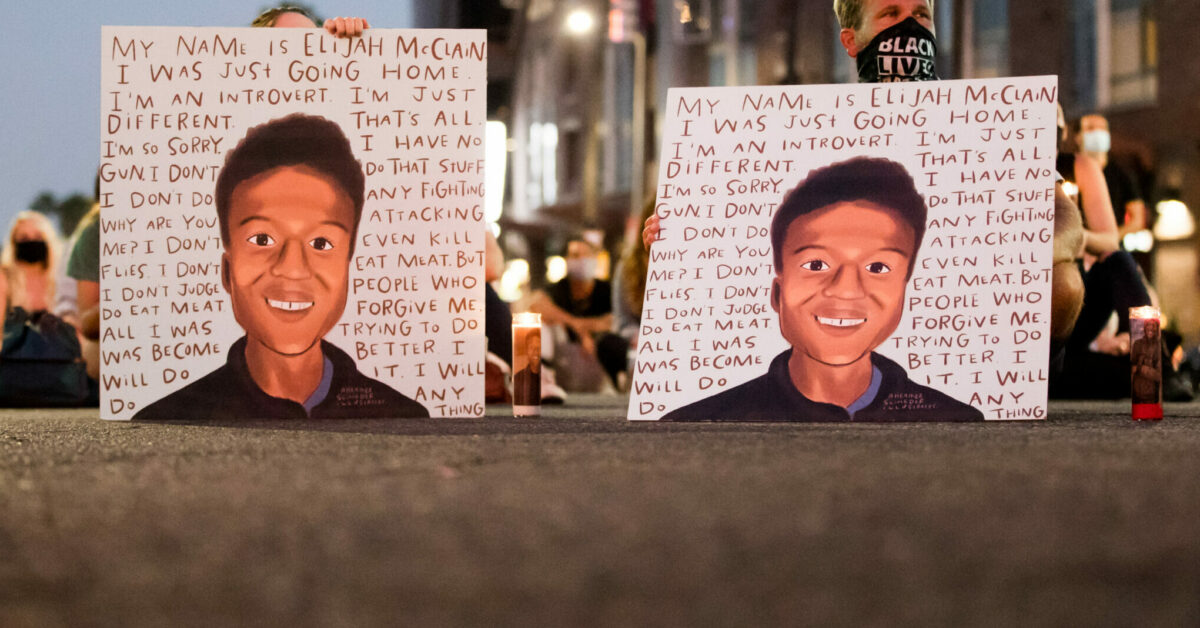
In opening statements in Adams County District Court, according to NBC News, prosecutors stated that 23-year-old Elijah McClain said, “I can’t breathe,” to the police officers seven times before a paramedic injected him with ketamine, leading to his death.

On the evening of Aug. 24, 2019, two police officers, Randy Roedema and Jason Rosenblatt, restrained McClain on the ground after an unjustified stop. The young massage therapist was stopped as he walked home from a convenience store. He was restrained by police with a chokehold that has since been banned. The prosecutor, Jonathan Bunge said that instead of helping McClain, they ignored his pleas for help and told the arriving paramedics that he was resisting and had “crazy strength.”

Rosenblatt was fired by the Aurora Police Department.

As the police body camera footage was being played, Bunge said, “Listen to Elijah’s words. When Elijah is on the ground handcuffed, he’s saying over and over and over again, ‘I can’t breathe. Please help me.’”

The paramedics then gave McClain ketamine “as he was drifting closer and closer to death,” the prosecutor said. “The sedative was the very last thing he needed at the time.”

Seven minutes after paramedics injected McClain with the ketamine, he did not have a pulse and went into cardiac arrest as he was being transported to the hospital. He died three days later.

Both Roedema and Rosenblatt, who have pleaded not guilty, have been charged with one count of manslaughter and one count of criminally negligent homicide.

Roedema’s attorney, Reid Elkus, said that his client was not on the scene when McClain was initially stopped. He claimed that McClain didn’t start resisting until Nathan Woodyard, another former Aurora police officer, placed a carotid hold on him. He added that the paramedics diagnosed McClain with “excited delirium” and then injected him with a lethal dose of ketamine.

He stated that McClain died because Aurora Fire Rescue paramedic Jeremy Cooper injected too much ketamine for a man his size.

Rosenblatt’s attorney, Harvey Steinberg, said McClain was resisting furiously and at one point stated, “I intend to take my power back” and that Rosenblatt was “obligated” to help arrest McClain and at one point heard Roedema say McClain had “gone for” the gun of one of the police officers.

Woodyard, Cooper, and another Aurora Fire Rescue paramedic, Peter Cichuniec, are also charged with one count of manslaughter and one count of criminally negligent homicide and all have pleaded not guilty.

When the unarmed McClain was stopped, Aurora police officers claimed they were responding to a report of a suspicious person wearing a ski mask and waving his arms. McClain was carrying a plastic bag that had three cans of iced tea in his left hand while he had his phone in his right hand. They stopped him as he was walking home from a gas station mini-mart.

McClain was wearing a mask and a long coat, but his family stated he was wearing them because of a blood condition that made him feel cold.

RELATED CONTENT: City of Aurora Agrees To Pay $15 Million In Elijah McClain Case

healthcare, House, GOP, ObamaCare

A Small Alabama Town Has Only Two Doctors; What Will Happen To Their Patients When They Retire?


As physicians Al and Terry Vester head towards retirement, their patients wonder where to turn for medical care they can trust.

Lafayette is a small, predominately Black farm town in Alabama with 2,700 residents and only two primary care doctors. The residents unable to make it to the nearest urgent care clinics and emergency rooms –over 20 minutes outside of town – have recently turned to the city’s fire department as a healthcare resource. The local fire station has a make-do exam area with a bench, a defibrillator machine, and a cabinet stocked with medical supplies. The Vesters, now in their 60s, have serviced the people of Lafayette for over 30 years. They are excited about the options available to their patients, but still worry that their absence will worsen the growing health concerns in the area.

“There are people here that still need in-town doctors,” said Terry, who sometimes makes home visits. “So we want to stay here to take care of them until someone else is here to take care of them.” Some of the patients the Vesters see regularly are people they’ve cared for since birth. “You know everyone, or you have a connection with someone.”

Lafayette residents now have a more high-tech and easily accessible option for telehealth support, a service known as the OnMed Care Station. Equipped with a video screen and health-monitoring equipment, patients can collect their vital signs, check their heart and lungs with a stethoscope, and use a camera to capture everything from rashes to sore throats for proper diagnosis by their healthcare providers.

The kiosks are part of the Chambers County Community Health and Wellness Center operated by nearby Auburn University, which hosts various educational events to equip Alabama’s rural areas with pertinent medical information.

RELATED CONTENT: Young Black Aspiring Doctors in NYC Getting Guidance Through Mentorship Program

Celebration of Hip Hop, lava

Hip-Hop Enters The Building At Ohio State University


Curious about hip-hop? Well, Ohio State University is offering hip-hop as a course.

According to Ohio State University, two assistant professors will join the university’s School of Music this semester. Jason Rawls and Stevie “Dr. View” Johnson are heading up the school’s hip-hop studies program. Both positions are in conjunction with Ohio State University’s Department of African American and African Studies.

“It’s a huge deal. It means the world,” Rawls said. “I grew up going to Ohio State games, so to actually be employed here now, wow.”

Rawls, known in the hip-hop community as “J Rawls,” has worked with hip-hop artists such as Mos Def, Talib Kweli, the Beastie Boys, and Aloe Blacc as a music producer. He says that part of his role as a music producer was “digging in the crates.” This is one of the things he intends to teach in his class. For those who may not know what this means, vinyl records were stored in milk crates in the beginning stages of hip-hop, so that’s what producers do to find records with samples they can use in their production.

“I’m digging. I become an archivist,” he said. “I’m learning about all kinds of different things – soul, rock, country, jazz, calypso, reggae. I’m learning about different cultures. I’m learning about different time periods.”

His first class is called “Art and Politics in Hip-Hop.” Rawls has a doctorate in education from Ohio University and was a teacher for 15 years in the Columbus City School system.

Meanwhile, Johnson completed his doctorate in 2019. He had a dissertation exploring anti-Blackness at historically white institutions and used that as the foundation for a hip-hop album. The album won the Bobby Wright Dissertation of the Year Award for the Association for the Study of Higher Education. This was the first time that an award was given for recognizing hip-hop.

He was recently the Nasir “Nas” Jones Hip-Hop Fellow at Harvard University. The fellows are picked for their excellent scholarship and creativity within the confines of hip-hop.

“What a lot of people don’t know is that Nas didn’t graduate from high school,” Johnson expressed.

“People ask if hip-hop is scholarly. Is it academic? And then [an institution like Harvard] uses the name of someone who never finished high school.”

The classes that Johnson will teach will focus on the technical side of hip-hop production, such as beat-making, DJing, and product design.

RELATED CONTENT: Bun B Speaks To The First Graduating Class of Mickey Factz Hip-Hop Academy

Timothy M. Jones, trauma

Founder of Black-Owned Startup Creates Mental Health Event Series to Empower Black and Brown Communities


Timothy M. Jones, the Founder of Colorful Voices, a startup that provides grief and trauma mitigation training for the military and other government agencies, is excited to present “Mental Hope Healing in Action.”  

The series is an innovative symposium series that kicks off in Pittsburgh, spotlighting community leaders who advocate for diversity and resilience.

This debut event, to be held on November 5, 2023, from 12 -5 pm at the esteemed August Wilson African American Cultural Center in Pittsburgh, is in partnership with Hush No More. This 501(c)3 non-profit organization provides a platform for trauma survivors to share their experiences and receive support.

The goal is to honor and uplift veterans, celebrating their unique contributions to professional and community development. The symposium aims to empower attendees with transformative stories and actionable strategies for overcoming challenges in all aspects of life. Jones commented, “Rather than focusing on what separates us, we shine a light on the human resilience and strength necessary for true communal progress.”

The afternoon features a keynote by CWO 5 (ret) Phillip Brashear, a distinguished military veteran and community advocate. He will share insights from his life of service and discuss the enduring legacy of his father, Master Diver Master Chief Carl Brashear. “Preserving my father as a legend, not a myth, is my commitment,” says Brashear.

In addition to Phillip Brashear, the event features a stellar roster of change-makers: Timothy M. Jones, CEO of Colorful Voices; Dr. Vanessa Guyton, Executive Director of Hush No More; Sean Callagy, CEO of Unblinded; Jared Lyon, CEO of Student Veterans of America; Marjah Simon, international bestselling author and CEO of Authors Writers Academy; Edward “Obbie” West, internationally recognized poet.

Jones said, “This is our inaugural opportunity to show Pittsburgh—and the nation—that community lies at the heart of healing.”

Tickets are available for $55 each via the link below:

https://culturaldistrict.org/production/91744/mental-hope-healing-in-action


This story was first seen on Blacknews.com

Koryn Hawthorne, Munson Steed, Rollin Out, gospel, song

Rolling Out Publisher Munson Steed Co-Wrote Latest Song ‘Look At God’ By Koryn Hawthorne


Munson Steed, publisher and owner of Rolling Out Magazine, has co-written a gospel song recently released by recording artist Koryn Hawthorne.

“Look at God” was released on September 15. The stirring song features the Season 8 The Voice finalist blessing the track with her multi-octave range.

Steed revealed how the song came to fruition and expressed his desire to create more music.

“This song was on my heart for years, and I was blessed to connect with a singer like Koryn Hawthorne to breathe life and love into it,” said Steed. “I hope it provides encouragement to all who listen to it, and I look forward to creating more inspirational music.”

Hawthorne gushed about the song and expressed how thankful she is for having many moments where she can say, “Look at God.”

“‘Look at God’ couldn’t be a more perfect song for me. I have so many look at God moments in my life. I’m so thankful. Also, working with Charles in the studio was a great experience, and collaborating with Munson was a blessing. I’m so excited the song and the video are out for the world to hear and see. Everybody, go download it and watch the video. Look at God!”

Charles Jenkins, who co-wrote the song with Steed, brought Hawthorne onto the project after hearing what Steed wanted to do.

“When Munson first [pitched] me the idea, we were sitting outside of a restaurant in Chicago. I had tears in my eyes, and I knew it was a diamond,” said Jenkins. “I’m just honored he allowed me to collaborate on this smash and executive produce this special moment. Now my superstar friend Koryn Hawthorne is sharing it with the world with raving reviews.”


RELATED CONTENT: TheGrio and Rolling Out Partner to Form Digital Ad Network

Angelica Ross, co star, Ryan Murphy

Tried It! Angelica Ross Claims Ryan Murphy Ghosted Her On A Show Idea and Accuses Co-Worker Of Transphobic Behavior


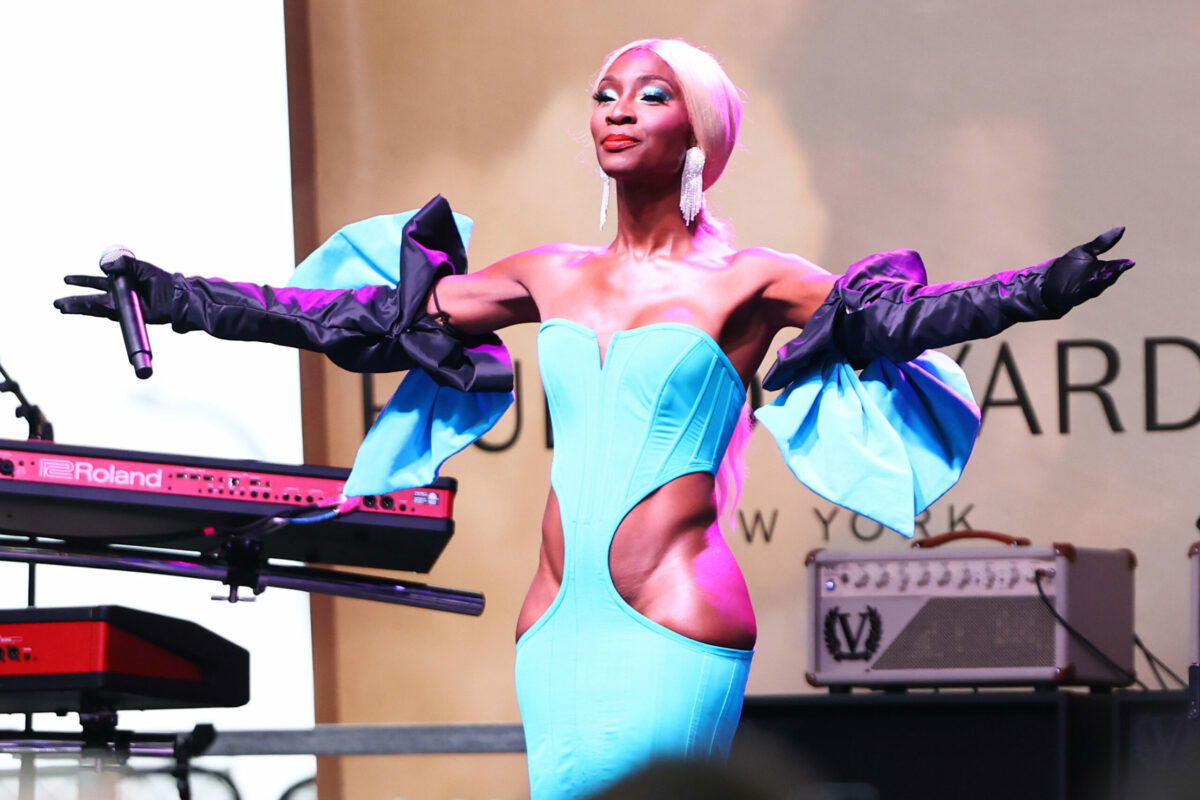
Actress Angelica Ross called out her former boss and fellow castmate from FX’s American Horror Story for two distinct reasons on social media.

Ross took to Twitter accusing American Horror Story and Pose creator Ryan Murphy of ghosting her via email back in 2020, USA Today reported. The 42-year-old actress, who starred in both Emmy-award-winning series, claimed she emailed Murphy in hopes of starring in an upcoming AHS season focusing on Black women, which was Ross’ idea, but he left her on read.

She posted screenshots of their exchange, which started with Murphy reaching out to her for casting ideas for the potential project.

“Remember your idea about a Horror season starring Black women? Well, I’m doing it,” Murphy wrote. “Not sure of the story yet, but we will start a writers’ room in the fall. Along with you, who are the four women I should get? I think you, Keke Palmer, Gabby … not sure of the fourth?”

Excitedly, Ross responded with “YAAAAAASSSSS!” and recommended three veteran actresses to add.

“Debbi Morgan (‘Eve’s Bayou’) the culture would LIVE, and she’s a powerhouse actress,” Ross said. “Also, someone like Lynn Whitfield or Alfre Woodard would TURN IT!”

She also called on fellow transgender actress Amiyah Scott to join the cast.

Murphy reportedly ghosted her after that conversation. Ross made a TiikTok video saying she even reached out to her former boss again in 2022 to see if he was still on board with having her join the writing and producing process but still hadn’t heard back. Ross claimed she had to turn down an opportunity to star in a Marvel film because of her contractual obligations with Murphy and American Horror Story.

“After not hearing back. After sending flowers and no response, I sent one last email in Feb 2022 (it took about a year to film season 10 due to COVID) while still contractually in first position with the show,” the actress wrote on Twitter.


“Mind you, Marvel had called twice now. I haven’t heard from him since.”

Ross also called out former co-star Emma Roberts’ alleged transphobic behavior. She accused her co-star of misgendering her on the set of AHS: 1984 in 2018 after another co-worker told the ladies to “play nice,” according to TMZ.

The Pose star claimed Roberts rebutted, “Don’t you mean ‘lady?'”

The actress said she never spoke to Roberts again when cameras weren’t rolling and didn’t speak up out of fear of retaliation.

RELATED CONTENT: A Florida Legislator Apologized For Calling Transgender People ”Demon”And ‘Mutants

×