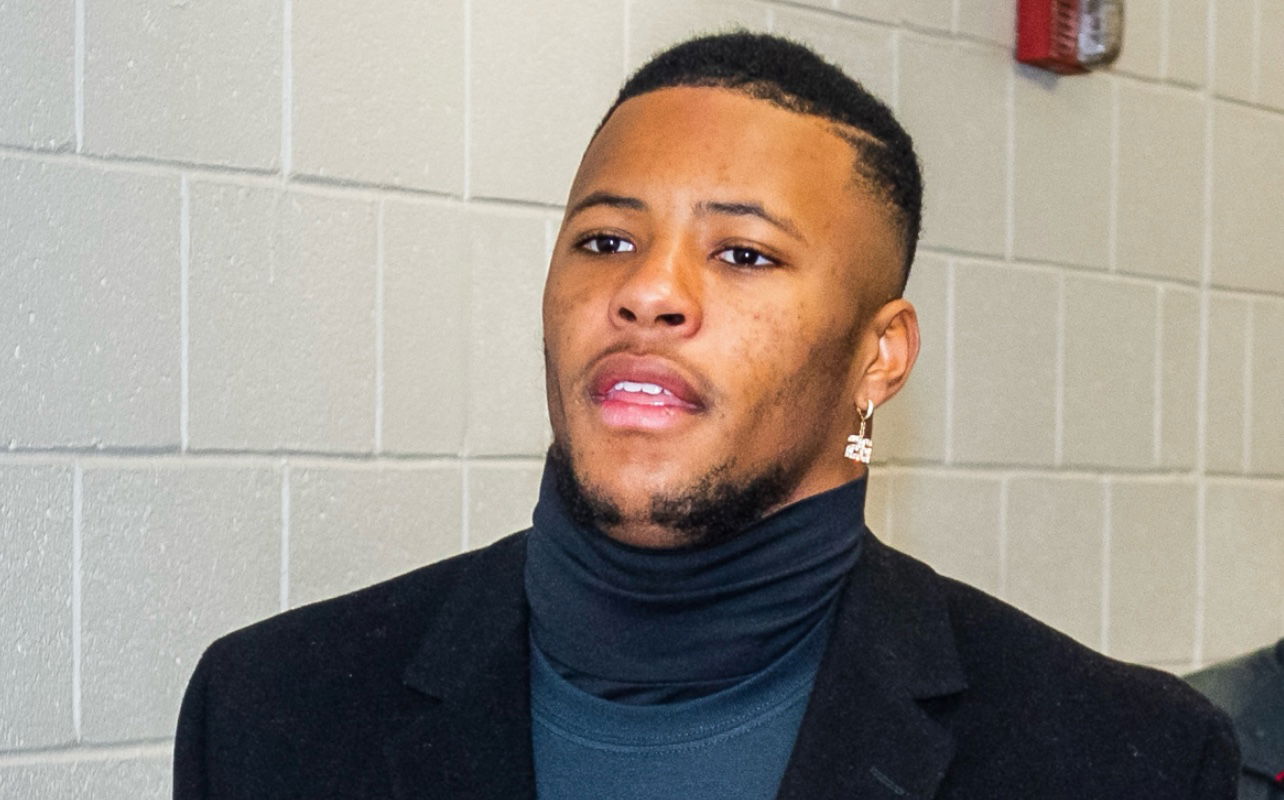
Queens, Jada McPherson, fight, parking, Sabrina Starman

A Black Woman Was Viciously Attacked Over A Parking Space And Neighbors Stood Around Watching

The 21-year-old driver, identified as Jada McPherson, said she has been on edge since the ordeal happened.


A mother-daughter duo is facing assault charges after brutally attacking a Black driver for allegedly moving trash cans that were placed on the street to “illegally” save a parking spot, Fox News reports. 

Andreea Dumitru, 45, and Sabrina Starman, 21, were seen on video attacking a 21-year-old driver, identified as Jada McPherson, outside a home in the Ridgewood neighborhood of Queens when McPherson attempted to move a trash can that was in the way of her parking. The victim can be seen being repeatedly attacked by the mother-daughter pair and a male assailant. 

The incident escalated after witnesses claimed the victim was trying to move the garbage cans to park after a long work shift. A man was heard saying, “Stop touching my stuff!” while placing the cans back on the city curb. The victim then allegedly said, “I just got home from work! I don’t want to circle the block five times looking for a parking spot because this [expletive] was holding it with a garbage can.” 

Before punches were thrown, both the victim and the others were heard yelling racial slurs at each other.

“You’re a monkey, b****,” Dumitru said, with McPherson responding with “You’re an immigrant, b****.” 

According to The New York Post, McPherson said she has been on edge since the ordeal, fearing for her life over a parking spot. “Jumping one person for a parking space is really not right,” the Pace University student said. 

Other residents in the area feel that the ordeal was a long time coming, as the family involved has allegedly been holding parking spots for years. On a Reddit post, a former resident highlighted how long the trash cans would be on the street.

“Sometimes those trash cans will be there for three hours, reserving the spot,” the post read. The person responsible for the video, which has garnered nearly 80,000 views, described the incident as McPherson reaching a breaking point.

“It’s been going on for years. The whole family does it, today someone finally had a breaking point,” the video filmer said. 

Both Dumitru and Starman were arrested at the scene, but their lawyer, Mahmoud Rabah, said the duo plans to fight the charges after claiming McPherson started the altercation.

“You can’t claim to be a victim if you instigate an altercation with threatening behavior and vile and hurtful language,” Rabah said. 

Both women said their families have received death threats since the video was posted. Still, other residents are supporting McPherson’s narrative of being fearful for her well-being, as such incidents have happened before.

“You know, I could move the garbage cans and park, but then they could slash my car or something,” resident Yesenia Delgado, who has lived in the area for 14 years, said.

RELATED CONTENT: DeKalb County Plato’s Closet Eviction Leads To Public Scramble For Designer Merch

Broward County, jail, gay inmate killed, Cierre Wood, Gwinnett county jail,, Riker's,, doulla, pregnant, inmates, Councilwoman, Rosenthal

San Quentin Prison Hosts First-Ever Father-Daughter Dance, ‘It’s My First Time I Get To Hug Them’

San Quentin State Prison brings father and daughters together for its first "Parent Prom."


A coalition of organizations recently teamed up to host San Quentin State Prison’s first-ever father-daughter dance, where “missed milestones were redeemed.”

A viral video making the rounds on social media captures highlights from the “Parent Prom” at San Quentin State Prison, an emotional event organized by the prison reform advocacy group The People In Blue in collaboration with the faith-based nonprofit God Behind Bars, The Last Mile, Got Light, Angel Cakes, and ACME Floral Co. The prom marked the grand finale of an eight-week workshop led by 18 incarcerated men advocating for prison reform, and it’s receiving widespread praise and support online, KTVU reports.

The heartfelt event marked the culmination of an eight-week family communication workshop created by Tam Nguyen, a San Quentin resident and member of The People in Blue who has been incarcerated for 22 years. The program gave participants a chance to reflect deeply on their roles in their daughters’ lives and to rebuild connections with other family members through honest, introspective work.

For some of the incarcerated fathers, the prom offered them the opportunity to meet their daughters for the first time.

“So I’ve been incarcerated 18 years, and they’re 14 and 12. So I mean, it’s my first time I get to hug them and all that,” one father shared.

Others hadn’t seen their daughters in more than a decade. According to God Behind Bars, the event’s mission was centered on family restoration.

“For one night, the prison chapel became a place of redemption. A place where missed proms, missed dances, and missed milestones were redeemed,” the organization said. “This wasn’t just a dance. It was a glimpse of what God can do- restoring families, healing hearts, and writing new stories where the world saw brokenness. Watch as fathers and daughters create memories they thought they’d lost, and see what hope looks like behind bars!”

Smiles lit up the room, and happy tears flowed as organizers reflected on just how deeply emotional the event was for everyone involved.

“The entire event was extremely touching and heartening,” said Morgan Hubbard of Friends of the People In Blue. “There was not a dry eye in the house for MOST of the day!!! Lots of happy tears and smiles.”

The event’s recap video has been widely praised online, with many applauding how the father-daughter dance helps humanize incarcerated individuals and supports efforts to reduce recidivism in a country where a large percentage of released prisoners end up rearrested, reconvicted, or re-incarcerated within just a few years.

“This is beautiful. I can get behind this,” one viewer wrote. “We definitely need to think of ways to reduce the recidivism rate, which giving fathers a sense of what they’re missing out on could help do. Worth a try if not for the benefit of the girls alone.”

“Wow, our prison systems need more of this,” added someone else. “We need to rehabilitate to have the people become effective, productive members of our society and not reoffenders when released.”

RELATED CONTENT: Al Sharpton Says Wealthy Black Men Have Been Targets, Cautions Against Conspiracy Theories

USPS, holiday shipping

Sending Mail Will Get More Costly As U.S. Postal Service Raises Price Of Its ‘Forever’ Stamps

The price of first class mail is officially going up again.


Your next trip to the post office may cost more than usual. The U.S. Postal Service just announced price hikes to its mailing products.

The news dropped July 13, with The Hill reporting the price of first-class mail has risen to help the Postal Service achieve “financial stability.” These price increases directly impact multiple items, such as its Forever Stamps, which rose from 73 cents to 78 cents. The USPS disclosed in April that the price increases are needed to fulfill its ” Delivering for America 10-year plan.”

According to the USPS website, the stamps “never expire and represents the current price of a one (1) ounce First-Class Mail postage.” The special non-denominated stamps typically showcase historical or cultural figures to differentiate them. The latest renditions include “Spongebob Squarepants” designs, former first lady Barbara Bush, and the Postal Service’s 250th anniversary.

However, the Forever Stamps are not the only USPS products getting a new sticker price. Domestic postcards will also see a price increase, rising from 56 cents to 62 cents, while international versions will rise from $1.65 to $1.70. As for letters, they will jump as well to 74 cents from the previous 69 cents.

The Postal Regulatory Commission (PRC) approved these price increases after the department confirmed the matter back in May. A spokesperson also emphasized that these new figures are still “significantly lower” than foreign postal services.

“The Postal Service continues to take a rational and realistic approach to pricing that includes prudent implementation of new and existing pricing authorities, with letter prices still significantly lower than other comparable foreign posts,” explained USPS Senior Public Relations Representative Marti Johnson in a previous statement to USA Today.

The news comes after the USPS initially decided against upping the prices in January. This new cost increase essentially mimics the largest price hike for the stamps that occurred in 2024, which took the numbers from 68 to 73 cents.

However, the USPS expects more price changes to happen over the next few years. The postal service has already proposed five additional price increases, to take effect every January and July through 2027, officially starting with the latest update.

RELATED CONTENT: U.S. Postal Service Employees Allegedly Behind Many Stolen Checks

Miya Bailey, City of Ink, Tattoo Shop

Miya Bailey Fights To Reopen ‘City Of Ink’ After Being Shut Down For Code Violation

Atlanta's code enforcement says the tattoo shop violates a ordinance that wasn't around until years after it opened.


A popular tattoo shop fights to stay open and maintain its place in Atlanta’s arts and cultural scene.

City of Ink first opened in the city’s Castleberry Hill neighborhood in 2006. At the time, its co-founder hoped to turn an abandoned space into a place fueled by art.

Over the years, the shop evolved into a cultural staple, leading to art galleries, creative events, and more. It also became a symbol of Atlanta, especially on its Westside, even appearing in popular music videos during the rise of the city’s trap music scene.

Now, a code violation threatens its future, leaving its fate in the hands of the community it has served.

The City of Atlanta’s Code Enforcement halted operations at the shop in April, issuing a stop-work order directly at its door. It says that City of Ink violates an ordinance passed in 2008, which forbids tattoo shops from operating within a certain proximity to each other.

The temporary closure immediately shocked the owners and the Westside community, as City of Ink has grown into more than the average tattoo parlor. Its owners argue that the tattoo shop predates the ordinance in question. Given this, they should be exempted from this burdensome rule.

“I’m operating like I am grandfathered in. So I never thought we’d have a problem with that since we were there before the ordinance,” continued Bailey. “I believe in the mayor and him keeping his word. He said he’s going to work it out.”

Supporters of the tattoo shop also believe that the law may harm the city’s cultural fabric. Plushette Ellis, Castleberry Hill Economic Business Development Chair, believes that the shutdown could have more consequences that bleed into the community.

“I think at stake is erasing the history and culture of Atlanta through the lens of gentrification,” Ellis said. “But also we should be investing in arts and culture. That is Atlanta.”

Forcing the closure of the tattoo shop would also result in the loss of a Black-owned business in the area. Atlanta has already made significant strides in increasing diverse entrepreneurship.

While a 2025 report by LendingTree lists Atlanta as having the highest percentage of Black-owned businesses in the nation, these companies generally struggle with first-year success and obtaining loans, making the longevity and recognition of this tattoo shop even more notable.

A hearing will take place July 17, but Bailey believes the mission is bigger than body art.

“It’s not about tattoos,” he added. “It’s about community…it’s about legacy…it’s about culture…it’s about employing people and keeping jobs in Atlanta.”

RELATED CONTENT: Trilith Live, A 700-Acre Entertainment Complex, Is Coming To South Georgia

DEI, Reuters, HBCU conference

Trump Administration Investigates George Mason University For Alleged DEI Hiring

The Trump administration has used civil rights law to fight DEI,


The Trump administration has opened a civil rights investigation into the alleged DEI hiring practices at George Mason University. The Education Department says it’s responding to multiple complaints from professors at George Mason University, which they allege is favoring people from underrepresented groups.

According to The Associated Press, the Education Department alleges the university’s president, Gregory Washington, favors faculty candidates based on diversity consideration rather than their credentials.

This is the second big public university to face scrutiny in recent weeks from the Justice Department. University of Virginia President, James Ryan, resigned following a similar investigation.

George Mason leaders have denied allegations of discrimination and said in a statement to the AP  that the university “affirms its commitment to comply with all federal and state mandates.”

The Trump Administration Says Diversity Preferences Hurts White and Asian Americans

On Trump’s second day in office, he signed several executive orders, including an order to end DEI at all universities that receive federal money. Since signing the orders, the Trump administration has used civil rights law to fight DEI, saying that diversity preferences amount to illegal discrimination against white and Asian Americans.

Like many universities nationwide, George Mason renamed its DEI office earlier this year but also concluded that university policies were already in line with federal laws.

However, complaints to the Education Department allege otherwise, saying the university did nothing to change campus and promotion policies that favored certain minority groups.

According to the complaint, George Mason has a policy to include an “equity adviser” in every academic department to help recruit faculty. The university also allegedly created an “anti-racism” task force whose work included “diversity cluster hire initiatives,” according to the Education Department.

George Mason University has a reputation of being a conservative institution but has faced scrutiny from conservative groups that said it’s too slow in ending DEI initiatives.

RELATED CONTENT: Anti-DEI Rhetoric And Federal Budget Cuts Put Emmett Till Monuments At Risk

Art As Healing: ‘Stories Of Us’ Centers Sculpture, Storytelling, And Collective Renewal

Art As Healing: ‘Stories Of Us’ Centers Sculpture, Storytelling, And Collective Renewal

The project is a living archive of Black resilience


At the 2025 Essence Festival of Culture a profound conversation unfolded at Wellness House beneath the banner of art, healing, and legacy. Titled “Art As Healing: A Dialogue on Sculpture, Storytelling and Collective Renewal,” the panel spotlighted “The Stories of Us,” a global public art exhibition that has journeyed from the United Nations to Essence Festival, creating an immersive and soulful tribute to Black identity, imagination, and belonging.

Presented by the Civic Imagination Project, “Stories of Us” is a living archive of Black resilience, designed to take up space, honor memory, and ignite meaningful dialogue across generations and geographies. Curator Ashley Shaw Scott Adjaye, artist Monique Lorden, and Monique Maddox, president of the Descendants Truth and Reconciliation Foundation, gathered in conversation, with journalist Melissa Noel guiding the exchange. Together, they offered a master class in how art, storytelling, and space shape pathways toward healing.

“Our stories are our salvation,” Adjaye said, underscoring the project’s mission. “Public art is an act of healing. It’s about occupying space and reminding ourselves, and others, who we are, what we’ve endured, and what we’re building for the future.”

The “Stories of Us” exhibit, rooted in ten thematic pillars from Emancipation to A More Perfect Union, has been weaving these narratives across cities from New York to New Orleans and next to Cleveland, before continuing on to San Francisco, Philadelphia, and Detroit. Each installation collects community stories while centering artists whose work bridges diaspora and legacy.

Monique Lorden’s contribution to the exhibit, a sculpture on a talking drum featuring angelic hands, draws from her personal lineage and the rhythms of her native New Orleans. “When I looked at my mother’s hands, I saw my own. Those hands carried soil, raised children, survived,” Lorden shared. “Through my art, I want people to see that we are not footnotes. We are foundations.”

For Lorden, the sounds of New Orleans, bounce music, porch songs, and second lines, inform her work as much as ancestral memory does. “Art is both a mic and a mirror,” she said. “It amplifies our stories while reflecting our capacity for healing, for joy, for endurance.”

Monique Maddox’s foundation — the Descendants Truth and Reconciliation Foundation — commissioned one of the exhibit’s centerpiece works: a drum sculpture honoring the Georgetown 272, the enslaved Africans sold to save Georgetown University. Maddox’s insights moved the audience beyond the conventional thinking around reparations. “Monetary compensation is part of it, but reparative justice is also about acknowledgment, truth-telling, and healing,” she said. “Art meets people where they are. It gives us a space to confront pain and to chart a path forward.”

Maddox shared how discovering her family’s history through the 2016 New York Times exposé ignited her commitment to truth-telling as a form of liberation. “This is heart work, not just hard work,” she affirmed. “Our ancestors endured so much so we could stand here today, and it’s our responsibility to carry that truth forward.”

The conversation emphasized how “Stories of Us” intentionally broadens America’s narrative. “This is a nation built by many, shaped by many. Yet too often, our stories are sidelined,” Adjaye noted. “We’re placing public markers that say: We are here. We matter. We belong.”

With artists spanning the diaspora, from Haiti to Nigeria to Louisiana, the exhibit offers more than representation. It sparks global conversations about healing, migration, belonging, and the shared threads that connect Black communities worldwide. Adjaye’s vision includes expanding the project through a digital storytelling platform, inviting everyday people to record and share their histories, bridging technology with tradition to ensure these narratives endure.

In closing, Lorden offered a simple but powerful blueprint for transformation: “There’s no separation between inner work and community work. Start within. Heal yourself. That healing ripples outward.”

Maddox echoed that sentiment, affirming that restorative justice starts with radical honesty, with ourselves, with history, and with those we aim to heal alongside. “Truth sets us free, and healing allows us to move forward together.”

At Essence Festival, “Stories of Us” stood as more than an artistic installation. For BLACK ENTERPRISE readers, the exhibit serves as a reminder that cultural capital is just as vital as financial capital. Our stories, our legacies, and the spaces we create for remembrance are investments in the future. Because, as this panel so eloquently affirmed: We are foundations, not footnotes. And our stories aren’t just for us, they’re for the generations still to come.

You can learn more about Stories of Us and Descendants at the linked websites.

RELATED CONTENT: Fine Artist Phyllis Stephens And The Art of Dancing In Color

HBO, 'The Gilded Age,' Deneé Benton, Audra McDonald, Phylicia Rashad

HBO’s ‘The Gilded Age’ Expands Its Lens: Black Broadway Royalty Rewrites The Story Of America’s Elite

With the addition of actresses Deneé Benton, Phylicia Rashad, and Audra McDonald, the period drama has deepened its portrayal of Black aristocracy in the 1800s.


When HBO premiered “The Gilded Age” in 2022, the period drama sparked early comparisons to Julian Fellowes’ earlier hit, “Downton Abbey,” which centered almost exclusively on white British aristocracy. However, as the series, created and written by Fellowes, has progressed, its scope has broadened, expanding to include the often-overlooked stories of Black Americans during the Gilded Age.

According to The New York Times, the show’s expanded narrative is largely thanks to the contributions of acclaimed historian Erica Armstrong Dunbar, who serves as its historical consultant, and actress Deneé Benton, who plays Peggy Scott—an ambitious journalist, Agnes van Rhijn’s secretary, and a member of Brooklyn’s Black upper-middle class.

As Sonja Warfield, who shares showrunner responsibility with Fellowes, told the outlet, the addition of Phylicia Rashad as Elizabeth Kirkland, in addition to Benton’s Scott and her mother, Dorothy, played by Audra McDonald, has allowed for a greater complexity of portrayals that align with the histories of Black upper-class families in New England and New York City.

https://twitter.com/JayLeesCorner/status/1942113567261573586?s=19

“Because it’s so small, what was interesting about Newport in that time period was that Black and white communities mixed more than they did in other areas,” Warfield said. “The school system was, in fact, integrated. If you were Black or white, you could have neighbors around the corner from you who were Black or white.”

https://twitter.com/girlfreend007/status/1942083159295770671?s=19

She continued, “Elizabeth Kirkland is the Mrs. Astor of Black elite society in Newport. So often, when we see Black characters depicted in this time period, it’s just one story, and it’s all in relation to slavery or sharecropping. What people don’t know is that, in fact, these people existed.”

The three actresses, largely considered Black Broadway royalty, also shared thoughts on how their characters connect to the colorist and classist attitudes of both the 1880s and the present day, which they discussed in a June interview with New York Times critic Salamishah Tillet.

Benton noted the similarities between herself and her character, telling Tillet that she feels a close connection to Scott, and also reflected on the work she did with Armstrong Dunbar to convince the show’s creator to expand The Gilded Age’s depiction of Black aristocratic society.

“It makes me emotional to think about how far we’ve come since 2019 with the show. Originally, we were going to watch Peggy walk a very narrow path and see her parents sometimes. And Dr. Erica Dunbar and I were able to be like: “We have an opportunity to show something that’s never been onscreen. We have to widen this lens.” And now we have a robust Black cast on this show. We have Black writers; we have so much richness,” Benton said.

Rashad also noted that the conventions of 1880s society aren’t terribly different from some of today’s social media-driven discussions of colorism, featurism, and other intra-community issues.

“I must say, in growing up, I knew a couple of ladies who were Elizabeths, who didn’t want their children out in the sun and nobody was ever going to be good enough for their son. It happens to people today — if it’s not about color, it’s about something else. People being locked into a past that they didn’t create but that was handed to them,” Rashad told Tillet.

At one point, the women shared a touching exchange that highlighted their mutual respect and Broadway ties. Benton became emotional upon learning McDonald would play her mother, saying, “I didn’t realize tears had started coming out of my face,” and recalling how she studied McDonald’s performances obsessively in her youth. She added, “Audra feels about Ms. Phylicia the way I feel about Audra.”

McDonald followed by reflecting on Rashad’s profound influence, sharing that getting to know her and her family held deep meaning, as Rashad remains a legend, even among fellow icons.

RELATED CONTENT: Audra McDonald Becomes Most Tony-Nominated Performer In Broadway History

North Carolina, bookstore, liberation

The Oldest Black-Owned Bookstore In Kansas City Keeps Its Legacy Alive Despite Closure

The bookstore will transform into a public archive and community hub.


The oldest Black-owned bookstore in Kansas City, Missouri, will close its current chapter, but its mission to promote Black literacy will remain alive.

Willa’s Books and Vinyl opened its first brick-and-mortar store in 2007, but its owner, Willa Robinson, had been sharing stories with the Black community since the 1990s. Robinson sought out rare and antique books by Black authors, introducing them to local diverse youth and inspiring a love of reading.

She says this mission kept her storied bookstore around for decades. Since then, she has grown her collection to over 20,000 books.

“You never saw Black kids in books,” Robinson said to the Kansas City Star. “I’ve been collecting books for years, since 1978, and very few of the books had Black children in it.”

According to Robinson, encouraging Black boys to read required having stories they felt seen in. For the bibliophile, that meant ditching the classics and prioritizing works by Black authors.

“You have to have books that kids are interested in,” Robinson told the outlet. “Because as a young girl, I didn’t read the classics … and I think young Black boys don’t identify with them because it’s not about them.”

However, age caught up to the long-time entrepreneur. The 84-year-old decided to close up shop at the request of her loved ones. She hosted a retirement party July 12 to celebrate her timeless work in the community, marking a bittersweet end to the bookshop.

Despite her retirement, the former bookstore will remain dedicated to Black youth literacy. Robinson has partnered with the Kansas City Defender, a local Black digital news outlet, to continue its legacy. Robinson will grant ownership of her artwork, titles, and other archival items to the Defender.

The Defender will take over the bookstore, ensuring it becomes a communal hub and public archive of these works. Members of the community can visit and read the books for free, which include first-edition novels by Black authors such as Frederick Douglass, Langston Hughes, and Richard Wright.

With the bookstore as its new headquarters, the Defender will also host its B-REAL Academy (Black Radical Education for Abolition and Liberation) to engage the community on Black history and radicalism. The vast efforts will also keep Black stories and teachings within Missouri, as many state schools faced book bans and cuts to DEI initiatives.

“When we talk about the erasure that’s currently happening with Black education, of Black books, there’s just no better place to intervene than the oldest and longest-standing Black bookstore in the state,” explained Defender Founder and Executive Editor Ryan Sorrell.

The Defender aims to continue Robinson’s legacy through this effort, with a fundraiser in the works to help with renovations.

RELATED CONTENT: Two Sisters To Open Bookstore Cafe In Brooklyn That Highlights Food Books Of the Black Diaspora

Megan Thee Stallion, Klay Thompson

Megan Thee Stallion’s Foundation To Honor Changemakers At First-Ever Gala

The Pete & Thomas Foundation will honor LaTosha Brown, founder of the Southern Black Girls & Women’s Consortium, and Mila Henry, the 13-year-old founder of MH Boxes.


Hip-hop superstar Megan Thee Stallion is bringing star power and purpose to Gotham Hall on July 16, as her Pete & Thomas Foundation prepares to host its inaugural black-tie gala. The event will shine a spotlight on emerging trailblazers, with a star-studded guest list that includes Taraji P. Henson, Muni Long, and DJ D-Nice, proving once again that Megan is using her cultural influence to uplift and inspire.

According to Houston Style Magazine, the evening will be hosted by Henson, while Long and DJ D-Nice will provide entertainment for the guests and luminaries who attend the event, the ticket sales and package purchases for the gala will go toward the foundation’s mission of benefiting groundbreaking initiatives in education, housing, and health and wellness aimed at underserved communities.

In 2022, the rapper established the foundation in honor of her late parents, her mother, Holly Thomas, and father, Joseph Pete. It has rapidly become a philanthropic powerhouse, focusing on supporting Black girls and women by assisting them in launching their entrepreneurial, creative, and community-centered ideas.

According to the foundation’s website, “(The) Pete & Thomas Foundation provides resources to effect meaningful and positive change in the lives of women and children, senior citizens, and underserved communities in Houston, TX and across the globe. The foundation’s programs are focused in the areas of education, housing, health & wellness, and community goodwill.”

The Pete & Thomas Foundation will recognize two powerful changemakers at its upcoming gala: LaTosha Brown, founder of the Southern Black Girls & Women’s Consortium (SBGWC), and 13-year-old Mila Henry, the inspiring force behind MH Boxes—a nonprofit dedicated to supporting the mental health of Black girls through curated toolkits that promote self-care, resilience, and open dialogue.

According to the MH Boxes website, Henry launched the nonprofit in January 2024, when she was 12, after receiving a microgrant from the Pete & Thomas Foundation and SBGWC. With their support, she created care packages filled with journals, affirmations, and self-care tools to help young Black girls feel seen, supported, and empowered in their mental health journeys.

According to the Southern Black Girls & Women’s Consortium, the organization focuses on empowering Black women and girls in the South through philanthropy and activism. So far, it has awarded $10.2 million to 220 projects across 13 Southern states.

Chanceé Lundy, executive director of SBGWC, says her partnership with Brown, who is also the co-founder of Black Voters Matter, works seamlessly because they share a common vision and deep commitment to uplifting Black women and girls.

“LaTosha embodies the spirit of radical possibility that the Pete & Thomas Foundation celebrates,” Lundy told Houston Style Magazine. “Her unwavering belief that ‘if you change the life of a Black girl, you change the world’ is a mission we proudly share.”

She continued, “LaTosha and Mila represent two generations of visionary Black leadership. Their bond proves that when we invest in Black girls—whether 13 or 53—we cultivate changemakers who are capable of rewriting the future.”

Brown, in turn, elevated the work of Henry in her comments to the outlet, “Mila exemplifies why we invest in Black girls’ dreams. She turned her vision into a healing movement, meeting the needs of her peers with compassion and creativity,” Brown noted.

RELATED CONTENT: Megan Thee Stallion Unveils Size-Inclusive Swim Line At Walmart For Hot Girl Summer

Demond Wilson, ‘Sanford And Son’

Dr. Frank B. Wilderson Jr., Trailblazing Black Psychologist And Educator, Dies At 94

Wilderson Jr. helped shape federal special education policy.


Frank B. Wilderson Jr., a prominent figure in psychology and education research, died on June 17 at age 94 in Minnesota. Throughout his life, he championed the inclusion of marginalized communities. He was a founding member of the National Association of Black Psychologists.

According to the University of Minnesota, where Wilderson became the first Black tenure track faculty member in 1962, he is credited with laying the foundation for what would come to be called the Individualized Education Plan, now a standard education practice in public schools across the country. During the course of this work, Wilderson taught elementary educators about various emotional and behavioral disorders that required them to teach students with special needs compassionately..

In addition to this work, Wilderson was a clinical psychologist who is credited as one of the pioneering educators who helped the University of Minnesota to form its own African American Studies Department. During what is referred to as “The Morrill Hall Takeover,” a protest over the hostile treatment of the university’s Black students, in January 1969, Wilderson helped facilitate the agreement that led to the creation of the aforementioned African American Studies Department by the university.

When the university agreed to create the department, Wilderson was asked to become the first Chair of the Committee which would be responsible for implementing the department and educated the students on the critical distinction between an African American Studies program and an official department of the university, which comes with funding and authority that a mere program lacks.

Eventually, Wilderson, who also served on the President’s Committee for People with Intellectual Disabilities under Lyndon B. Johnson, was tapped by University of Minnesota president Dr. Malcolm Moos to become the university’s vice president of Student Affairs, a role he served with distinction for 14 years. After exiting that role, he continued to serve the Greater Minnesota community, working to help fundraise for programs that assisted students with mental and emotional health concerns, as well as working to create equitable programs for all students. He often worked alongside his wife, Dr. Ida-Lorraine Wilderson, who was an administrator with Minneapolis Public Schools.

Later, Dr. Wilderson served as a trustee or a director on the boards of Macalester College, College of Saint Benedict and Saint John’s University, the University of Saint Thomas (where he assisted in spearheading the creation of their law school), and Breck Preparatory School, on the inaugural Board of The Jeremiah Foundation, as well as serving on the Board of the Bush Foundation for several decades.

According to his obituary, Wilderson was preceded in death by his beloved wife and college sweetheart Dr. Ida-Lorraine Jules Wilderson, whom he met when the two were undergraduate students at Louisiana’s Xavier University, the only Catholic HBCU in the nation.

Wilderson is survived by his son, Dr. Frank Benjamin Wilderson, III; his daughter Fawn Elizabeth Wilderson; daughter Amy Althea Wilderson Cousin; his son, Wayne Henry Wilderson, and six grandchildren, Reba Wilderson, Maarya Cousin, Shaa’ya Cousin, Ijaaz Cousin, Manaal Cousin, and Esau Cousin. He is also survived by his great-granddaughters, Violet Ruby Johnson, Bontle Wilderson, and Zoe Eden Wilderson, as well as by many relatives and dear friends.

On July 10, Wilderson was honored via a Celebration of Life Service, held at Minneapolis’ Basilica of St. Mary, and instead of sending flowers, the family requested that resources be donated to either the Saint Vincent DePaul Shoe and Coat Ministry, which is sponsored by The Basilica of Saint Mary or to Xavier University of Louisiana.

RELATED CONTENT: Black Educators Warn Students Will Suffer Most If Trump Dismantles Department of Education

×