Earlier this week, Atlanta native Andre Benjamin, best known as Andre 3000, popped up in a metro-Atlanta parking lot for a memorable impromptu performance.
The Grammy-winning rap artist and instrumentalist was recorded performing flute compositions on his Roland Aerophone AE-10. Professional cameras captured the moment in the Metro Mart USA parking lot as onlookers respectfully listened. Donning a suit and sneakers Andre 3000 put himself in the limelight, something he has avoided for most of the last decade.
For most of the 2000s, Andre was seemingly everywhere, especially as one-half of the legendary hip-hop duo, Outkast.
I’m Photo credit: Melissa “Phylis iller” Alexander
There has been no official announcement as to whether the pop-up concert will be a continual series.
While the exceptional lyricist has left behind rhyming for now, he has dropped two instrumental projects in the last few years. His latest offering, 7 Piano Sketches,was released May 5.
“I had a piano in my house, and sometimes I would record ideas, or record myself improvising and making up stuff from scratch,” he told GQ. “I was like, ‘This is pretty interesting.’ So I wanted to make a collective out of them. I think it’s a cool piece of music that people might want to have in their arsenal.” A
The unannounced drop of 7 Piano Sketches accompanied an extremely rare appearance for Andre at a Hollywood event, wearing a replica of the Steinway Model S baby grand by design company Pink Sparrow.
Before the “Hey Ya” rapper’s latest release, Andre 3000 dropped his first instrumental offering, A New Blue Sun, in November 2023, a seven-track exploration of the flute with a message, “Warning: No Bars.”
Pastor Jamal Bryant (inset) plans to protest on the anniversary of George Floyd's killing at a local Target store in Atlanta over the retailer abandoning DEI initiatives.
Pastor Jamal Bryant Urges Cardi B To Support Target Boycott After Rapper Posts In-Store Pic
The pastor wrote the open letter for the rap superstar to join their cause.
Cardi B has some explaining to do after the rapper posted a picture of herself and her children at Target amid a nationwide boycott.
Pastor Jamal Bryant, who initiated the Target boycott, reposted a photo of Cardi to his Instagram, urging her to join their movement. The protest started in response to Target’s scaleback of DEI initiatives, which heavily impact its Black-owned brands, employees, and consumers.
Bryant started the message with a “chest full of love,” as he detailed why he and hundreds of thousands have joined the effort to not shop at Target.
“Over the past couple of months there has been a national boycott against @target because they have betrayed our community by dismantling diversity, equity and inclusion,” he wrote in the open letter. “African Americans have spent 12 million dollars a day and yet they don’t see us a viable partner. We’ve asked them to invest in Black banks, Black colleges and Black communities and under pressure from the administration they haven’t felt compelled to even respond.”
He continued by noting how the boycott has notably impacted Target’s earnings. The retailer’s foot traffic and stocks have declined for weeks, with many attributing it to the coalition of church and community organizations remaining steadfast in this approach. He also appealed to Cardi’s massive social media following, emphasizing how her influence could further their cause.
“When I saw you post a picture of you and your beautiful family in the store I felt certain that with your demanding schedule you were probably unaware. Having 163 million following you is a great deal of influence and many follow your lead. I hope you will visit targetfast.org and walk alongside us. “
The mother of three, born Belcalis Marlenis Almánzar, also identifies as an Afro-Latina. With this in mind, Bryant also noted how the Latino community supports their movement. Cardi’s three children also have Black ancestry through their father, former Migos rapper Offset.
He concluded, “I’m fully aware that you identify as Latino and that you have children that represent both communities and to that end you should know the movement has support as well as buy in from the Latino community and more specifically workers. Your presence [could] be apart of the most effective boycott in 70 years since the Montgomery bus boycott! In the words of Martin Luther King, “a person who doesn’t stand for something will fall for anything…”
While Cardi has yet to respond, the entertainer has been vocal about political issues in the past. She also endorsed Kamala Harris during the 2024 presidential election, but has yet to directly address the current anti-DEI movement within the country.
Karen Mitchell, founder and CEO of True Hair Company and True Indian Hair (Photo provided by True Hair Company)
How Karen Mitchell Turned a Side Hustle Into an Eight-Figure Hair Empire
The trailblazing hair mogul shares insights about her journey, building celebrity clientele, and business tips for emerging entrepreneurs
From Rihanna to Demi Moore, Lizzo, and even Beyoncé, Hollywood’s biggest stars have turned to True Hair Company for luxury hair extensions and wigs. But behind the glam is Karen Mitchell, a Jamaican-born, Brooklyn-bred entrepreneur who transformed a side hustle into an eight-figure business that’s redefining the Black hair industry.
The company not only supplies hair pieces for A-list celebrities, but also provides professional women, businesswomen, and the everyday fabulous woman with premium hair units and pieces, giving them the confidence they need to walk into any room while building their businesses and careers.
Mitchell, a noted hair extension expert, launched True Indian Hair, the product brand under the umbrella of True Hair Company, after noticing a lack of diversity in ownership within the billion-dollar Black haircare industry. Coupled with her passion for hair and beauty, she embarked on a mission more than two decades ago to provide career women with high-quality extensions and wigs.
“I started True Hair Co/True Indian Hair in 2004 as a side hustle while working my 9-to-5,” she told BLACK ENTERPRISE. Initially, it was “just something to make extra money for my social activities,” she said. However, she realized that selling imported Indian hair to friends and family was a lucrative business that eventually mirrored the $60,000 yearly salary she earned as a production coordinator in the fashion industry.
“So, when I got laid off from my 9-to-5 in 2006 and was unable to find another job, I decided to gamble on myself and open a store,” she said.
With just $15,000 in savings, she cashed in her 401(k) retirement fund and used loans from family and friends to open the first official True Hair Company store in Brooklyn, New York, in 2007.
“It was the scariest decision of my adult life because I had no business knowledge outside of college economics classes. But I felt I had no other option.”
Mitchell’s lack of financing and experience as a full-time entrepreneur presented a new set of challenges, forcing her to survive on canned soup formonths. She realized that stocking a hair store with bundles, closures, frontals, and wigs, along with purchasing stock goods for online orders, required hundreds of thousands of dollars in upfront costs. “I didn’t have the funding for that,” she said.
“The first two years, my store stock was pretty weak,” she admits. At the time, “there was no other hair store in Brooklyn selling raw Indian hair, and everyone wanted some True Indian Hair. So, there was a huge demand for my product and customers were willing to wait,” she explained. The high demand forced her to learn what she calls “the flipping game” quickly.
“I would sell and use the profits to buy twice the amount of the last order, and then three times the amount, and so on. Eventually, the positive cash flow flowed enough from flipping bundles to fully stocking my store.”
Today, True Hair Company has become an eight-figure business, providing clientele with luxurious hair ethically sourced directly from donors in India. In addition to the original brick-and-mortar in Flatbush, Brooklyn, Mitchell also runs a 3,000 sq. ft, multi-level flagship store in the heart of Manhattan as well as a successful e-commerce website.
“True Indian Hair was one of those side hustles that evolved beyond a hustle into a real business. It wasn’t planned, but once I saw the trajectory. I knew I had something special to offer,” she said.
Beyond business success, Mitchell founded the nonprofit True Strength, which provides monthly hair and beauty makeovers to women who have experienced hair loss due to cancer-related treatments.
Mitchell and her team intend to expand within the next couple of years to other markets, including Atlanta and New Jersey. Her long-term goals include franchising, launching a new haircare product line, and opening locations in Houston, Miami, Washington, Washington, D.C., and London.
In an interview, the hair mogul shared insights about her journey, building her celebrity clientele, and strategies for those looking to launch or expand a business.
BE: Where does your entrepreneurial spirit stem from?
I have always had an entrepreneurial mindset since I was in high school and college. From selling Avon to selling bracelets out of catalogues, I just had a thing for business. My long-term goal was to open a hair salon.
I think my entrepreneurial mindset comes from my mom, who sold commodities in Jamaica for a living. Also, my first job out of college was for a fashion company led by a woman. I stayed with that company for 10 years and, looking back, I now see how my boss influenced me as a woman in business.
BE: What makes True Hair Company different from other hair extension and wig companies?
We set our company apart by primarily focusing on ethically sourced raw Indian hair for our hair bundles and wigs. We have partnered with our factory in India and have our own team on hand in the factory to select only the best premium raw hair for our production. The quality control continues to our NYC hub where every piece of hair is rewashed to ensure there are no tangles or visible hair issues before it is sold to customers. Because of this, we have a less than 3% return or complaint rate. I think being a woman who actually wears my products has been a great asset. I look at every piece of hair as if it’s going into my head. I’m not only the owner; I’m also a client.
Source: Karen Mitchell, founder and CEO of True Hair Company and True Indian Hair (Photo provided by True Hair Company)
BE: How did you build and maintain relationships with celebrity clients?
We have been blessed to have an amazing list of celebrity stylist and brands who trust our products for their clients. Normally, they will reach out to us with their specific needs. Yusef, who styles Rihanna, to Tokyo Stylez, who styles Cardi B, to Hairassasin, who styles JT, to Tym Wallace who styles Mary J. Blige and Taraji P. Henson, to Chis Appleton, who styles Kim Kardashian, and [celebrity hair stylist] Q Hardy, who has trusted our products from day one. This includes working with fashion brands such as LaQuan Smith for NYFW. They love and trust our quality, and we nurture those relationships.
BE: What tips would you share with entrepreneurs struggling to generate revenue and build their business?
Access to information for funding is easier now than it was when I started my journey almost 20 years ago. Small Business Loans (SML) are available for businesses to borrow for startup or reinvestment. There are also grants available for startups. I find that we sometimes do not do enough research in our communities. Information will not come to you. You have to seek it out. Start with Google. Visit your local chamber of commerce. They are there to serve you.
Find a mentor to guide you and be a sounding board, but do so only after you have done your own research and can communicate your wants or needs. No one wants to help someone who doesn’t want to help themselves.
Before starting a business, an entrepreneur must know who their target audience is in order to know who to market to. Today, digital marketing is huge, and the best free digital marketing is social media. Use it to your advantage. You have to know your audience and engage your audience with content that not only appeals to them but drives them to buy.
Build relationships with your customers to create trust and repeat buyers.
Hire strategically. Your team has to add value to your company.
Lastly, cut unnecessary expenses that are not contributing to the growth of your business.
Utah Officials Are Not Feeling President Trump’s Pardon For NBA YoungBoy
Cache County Attorney Taylor Sorensen and Sheriff D. Chad Jensen release a statement justifying the conviction of the rapper
President Donald Trump pardoned recording artist NBA YoungBoy, but a prosecutor and sheriff in Utah does not agree with the move; they released a statement objecting to it.
According to KUTV, Cache County Attorney Taylor Sorensen and Sheriff D. Chad Jensen stated they disagreed with the president’s reasoning for making the move for Kentrell Gaulden (NBA Youngboy). The Trump Administration said that the rapper’s pardon was done to “correct a politicized and weaponized justice system.” Not so say Sorenson and Jensen. The officials state they are proud of the work done to obtain the original conviction against the Baton Rouge-raised rapper.
The two officials released a statement after the news was delivered that the convicted artist had been granted the legal move May 28.
“We are extremely proud of the work our investigator and prosecutors did on this case as well as grateful for all the help we received from other local and federal agencies. Mr. Gaulden pled guilty to the charges in this investigation, and we feel strongly the Justice System in Cache County is far from a weaponized system of justice.
”We have highly trained, honest, experienced and professional sheriff’s investigators and county prosecutors, along with respected District Court Judges and Defense Attorneys. We, along with all of our staff are proud of the work we do in Cache County.”
Late 2024, the rapper pleaded guilty after being charged with possessing weapons as a felon and was sentenced to 23 months in prison on gun charges he received in Louisiana. Along with that punishment, he was also sentenced to five years of probation and fined $200,000 for a gun charge in a separate Utah case.
The Associated Press reported that in March, Youngboy was released from federal prison, and after receiving credit for time served, he was given home confinement, which was completed in April. With the president’s pardon, he will no longer have to complete the terms of his probation.
Georgia City Welcomes First Black Woman Police Chief In Cobb County History
Shame ts Jones-Harrell brings over two decades of law enforcement service
A city in Cobb County, Georgia has broken barriers with its new appointment for police chief. A Black woman will lead the Austell Police Department for the first time in its history.
A unanimous city council vote established Shameta Jones-Harrell as Austell’s new police chief. She will now reign as the first woman and Black woman to take on the role in Cobb county. The department announced the news to Facebook June 2.
According to her new bio on the Austell city website, Chief Harrell has over two decades of law enforcement service. Before starting her impressive career, she earned her Bachelor’s of Science in Criminal Justice with a Concentration in Forensic Science at Jacksonville State University in Alabama. She began as a Uniform Patrol officer in Metro Atlanta’s College Park Police Department in 2000.
She then became a member of the Special Weapons and Tactics Team (SWAT) before serving as a Field Training Officer. Ahead of her promotion to Sergeant, she also worked as a detective in the Criminal Investigations Division. Her work specialized in sex crimes, domestic violence, and crimes against children.
She then transitioned to the Brookhaven Police Department as a Uniform Patrol Sergeant in 2013. While there, she launched programs while leading new divisions that transformed the agency. As a Commander of Support Services for the department, she aided in the rebrand of the Community Policing Unit to the “Community Engagement Unit.” The name change better reflected its goals to work alongside the community it serves.
Harrell also initiated the “One Congregation One Precinct (OneCop)” program to connect the department with faith-based organizations in its neighborhood. Furthermore, she helped increase police accountability and reform efforts as liaison for the Social Justice, Race, and Equity Commission’s (SJREC) Police Accountability & Legitimacy Committee. She advised the committee on her own agency’s standards and guidelines for equitable policing to shape their own recommendations, impacting the changes to police work that combat historic injustices.
She will now lead as Austell police chief as they protect a predominately Black community. According to U.S. Census Data, Black people accounted for 63.2% of city residents in 2024.
With memberships in the Georgia Association of Chiefs of Police (GACP) and the International Association of Chiefs of Police (IACP), Harrell hopes to use her vast experience and prior leadership to better serve all within Austell and Cobb County.
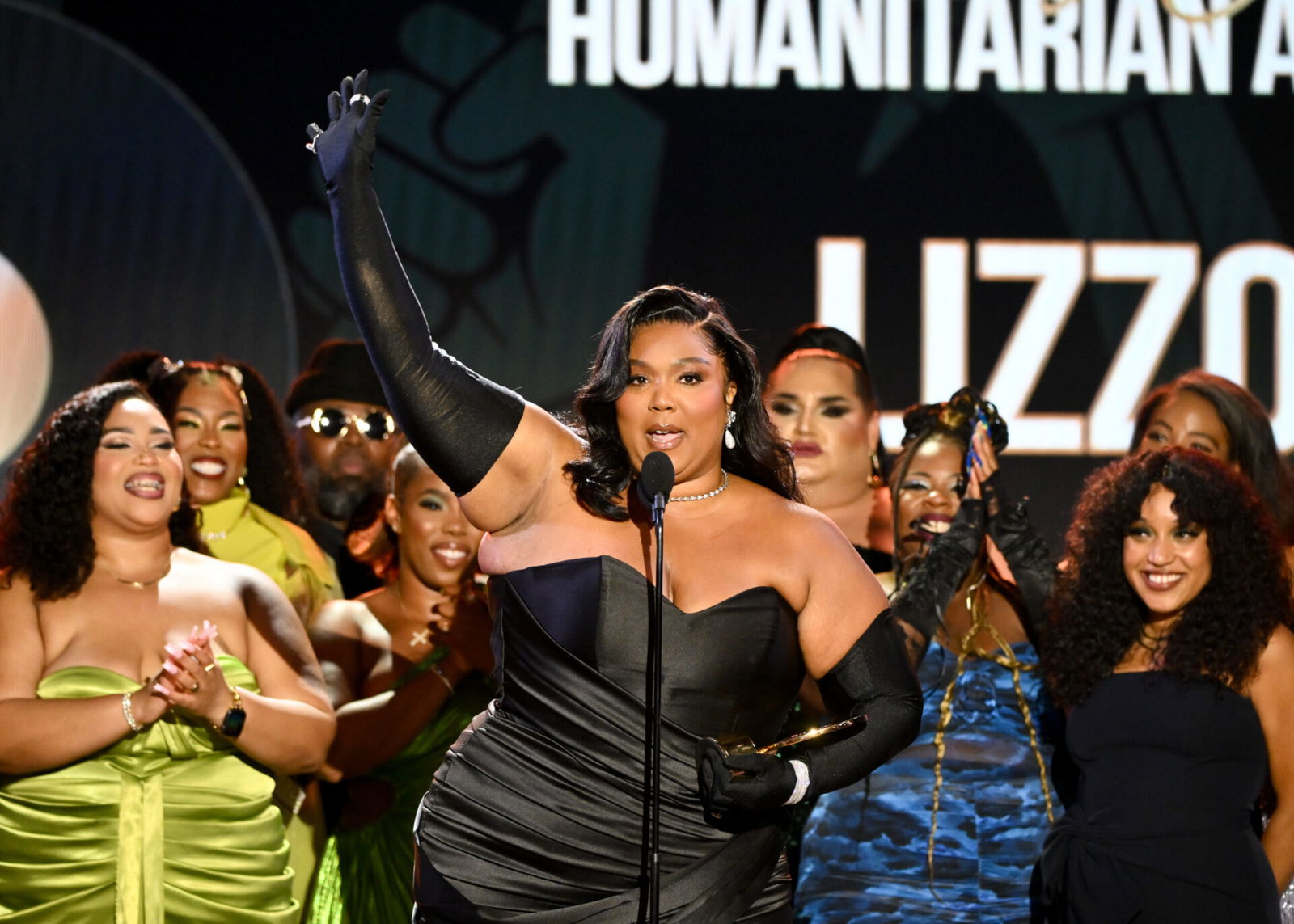
Lizzo Appeals Sexual Harrassment Lawsuit, Claiming ‘Attack’ On Her Freedom Of Speech
The artist tried to get the case tossed in 2024
Lizzo has filed an appeal over her former dancers’ sexual harassment lawsuit against her, stating that it was an “attack” on her First Amendment right to free speech.
While a judge has already dismissed some claims in the 2023 filing, lawyers for the musician are urging the courts to throw out the case entirely. The initial lawsuit alleged that Lizzo engaged in sexual harassment and discrimination. Particular claims of “fat-shaming” delivered shocking blows to the artist known for her body positivity advocacy.
Lizzo tried to get the case tossed in 2024 under similar grounds through California’s anti-SLAPP statute, a special law that ends lawsuits that threaten free speech. The appeal led Judge Mark H. Epstein to axe the fat-shaming accusation, but still keep the case alive.
Now, Lizzo wants to counter the lawsuit on federal grounds. Her legal team, which includes high-profile defense attorney Marty Singer, wrote that the lawsuit serves as an “attack” on Lizzo’s freedom to perform and advocate for causes.
“Plaintiffs’ suit [is] an attack on Lizzo’s First Amendment right to perform her music and advocate for body positivity,” wrote the attorneys, as reported byBillboard. “Rather than accept personal accountability, plaintiffs filed this shotgun action, taking aim at nearly every facet of Lizzo’s creative process.”
The attorneys suggest that one claim made by the plaintiffs, Arianna Davis, Crystal Williams, and Noelle Rodriguez, that Lizzo forced them to attend a sex show in Amsterdam, was part of her creative process. The dancers allegedly felt pressured to touch and dance with the nude performers, yet Lizzo’s attorneys claim the experience was totally optional.
“There’s no disagreement that Lizzo held these outings as a necessary part of her creative process,” added Singer. “Early social gatherings during international tours (like the Bananenbar) are critical to teambuilding and fostering cohesion.”
However, Judge Epstein’s 2024 stance challenges the notion that reports of discrimination can be ignored if they infringe upon constitutional rights.
“It is dangerous for the court to weigh in, ham-fisted, into constitutionally protected activity,” the judge wrote. “But it is equally dangerous to turn a blind eye to allegations of discrimination or other forms of misconduct merely because they take place in a speech-related environment.”
In response to the judge’s opinion, the attorneys have also cited previous rulings in favor of artists’ creative process deemed “offensive” or “unpredictable.”
“Judges must not dissect the creative process to determine what was necessary to achieve the final product and what was not,” continued the lawyers. “By rejecting the artist’s proven experience for what is necessary to, and best enhances, her own art, the trial court stepped far outside its role.”
Attorneys for the plaintiffs, however, rebuffed Lizzo’s attempts, stating that they still intend to prove the matter in court. In the coming months, the appeals court will decide if Lizzo’s claims stand, which could end the case. If not, the matter would likely proceed to a jury trial.
Sticky Mobile-Friendly Navigation with Click Dropdown
LEGACY and LUMINARY HONOREES
2025
2024
2023
2022
2020
2019
2018
2017
2016
2015
2014
2013
2012
2011
2010
2009
2008
2007
2006
2025
2025 LEGACY AWARD HON0REES
Melba Moore
Tony Award Winner, Grammy Award Nominated Singer and Actress
Glenda McNeal
Chief Partner Officer, American Express
Robin Washington
Incoming President and Chief Operating and Financial Officer, Salesforce
Valerie Jarrett
Chief Executive Officer, Barack Obama Foundation
2025 LUMINARY AWARD HON0REES
Monique Rodriquez
American Entrepreneur and Founder, Mielle Organics
Jemele Hill
Journalist
Minda Harts
Workplace Consultant, Author & Speaker
Tunde Oyeneyin
New York Time’s Best-Selling Author, Peloton Instructor and Motivational Speaker
2024
2024 LEGACY AWARD HONOREES
Judy A. Smith
Founder & CEO, Smith & Company
Thasunda Brown Duckett
President & CEO, TIAA
Mellody Hobson
Co-CEO & Chairman of the Board of Trustees, Ariel Investment Trust
2024 LUMINIARY AWARD HONOREES
Aisha Bowe
Founder & CEO, STEMBoard and LINGO
Symone Sanders Townsend
Author, Seasoned Democratic Strategist, Co-Host MSNBC’s The Weekend
Philly Pride Organization Told Target Sponsors To Kick Rocks
Target confirmed the LGBTQIA organization Philly Pride 365, turned down sponsorship for its Pride Month Kickoff.
Philly Pride 365 declined to work with the nationally boycotted retailer, Target. According to Axios, the Philadelphia organization turned down the mega-corporation’s sponsorship for its Pride Month Kickoff. Target confirmed the organization rejected its offer, stating “that they were not entering agreements with corporate entities this year.”
Philly Pride 365 has secured multiple sponsors, many of which are local. The organization is working with NRG, Penn Medicine, and the Philadelphia Union. Deciding against working with the brand comes as no surprise to many. Target has been the target of a national boycott since doing away with its diversity, equity, and inclusion initiatives in 2025.
While Target hopes to lure patronage with the gesture, other companies are stepping back. Nationwide, 39% of corporations are scaling back external Pride Month engagements this year, according to Gravity Research data.
Dangling dollars during Pride may appear supportive, yet the continued elimination of DEI initiatives is even more so. As the company sends a message that inclusion is not a priority, Black, POC, and LGBTQIA organizations have decided to fall back. The company has seen a 7% decrease in sales over the course of the first quarter of 2025.
This Pride season, the company has decided not to feature Pride merchandise as it has done in previous years. Similarly, the company has removed many of its Black-owned merchandise from shelves.
While many Black businesses have fully supported the boycott, brand influencer Tabitha Brown has received backlash for her seemingly continued support of Target.
The author and actress was caught in a firestorm of backlash after encouraging her fans to continue shopping at the retailer. While Brown’s message emphasized supporting the remaining Black brands at Target, many took offense at the suggestion.
Not to be deterred, the Donna’s Recipe founder posted a video doubling down on her statements. Ironically, she believes her support of the conglomerate is a byproduct of uplifting Black people.
“To all the people in the comments and my DMS with your uneducated hate messages…There is no amount of hate and ignorance that is going to stop me from using my platform and my voice to support and uplift small businesses, Black-owned businesses, Black content creators, and Black authors,” Brown said.
As many companies drop their commitment to uplifting marginalized communities, those communities are dropping their allegiance to these companies. Not all money is good money, and organizations like Philly Pride 365 are making that abundantly clear.
These Black-Owned Restaurant Concepts Are Thriving Right Now
The right concept can shape everything
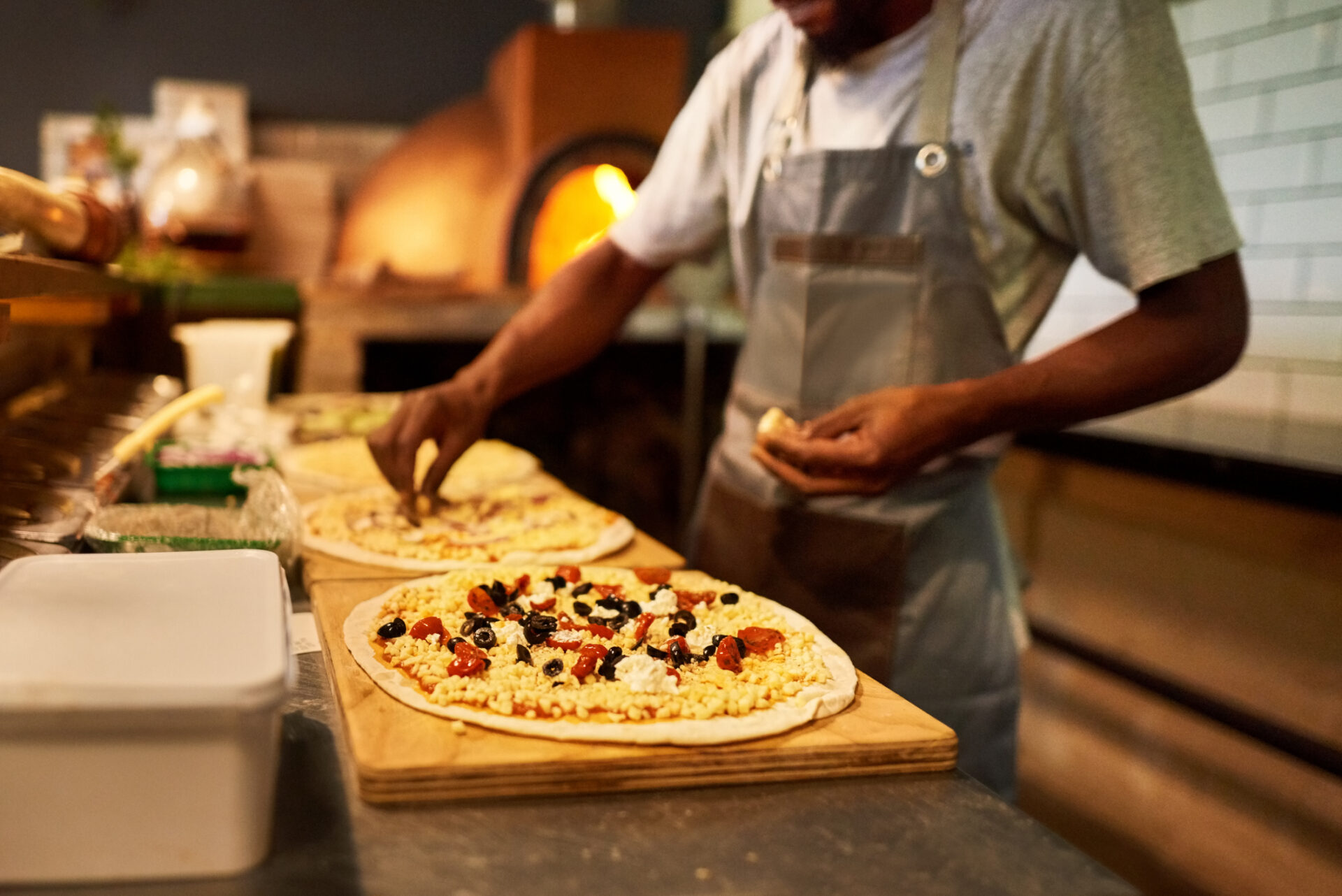
In the restaurant industry, the right concept can shape everything from the layout of your dining room to whether you invest in a commercial dishwasher or a full farm-to-table system. And if you’re thinking about scaling to different locations of your restaurants, it matters even more.
Many restaurants fail not because the food isn’t good, but because the concept isn’t built for now. As Michael LeBlanc of PLāYT said, “I was determined to change the paradigm of what a Black-owned restaurant could look like… one that celebrates Black culture in a refined way.” That’s the energy thriving in 2025.
Here are some of the strongest concepts today, rooted in culture, tech, health, and community, showing up from local farms to city streets.
1. Culture Forward, Flavor First
Restaurants like LoLo’s Seafood Shack put the diaspora front and center, with big flavor, real energy, and a whole lot of cultural presence. They celebrate Black creativity and identity through food, music, and design, meeting the moment in 2025 where diners want more than a meal. These are spaces built to feel, share, and stay awhile.
Afro-Fusion Tapas Bar
Blending West African, Caribbean, and Southern flavors into small, shareable plates, this concept invites conversation and discovery. It’s perfect for social dining and works well in urban settings where people want bold taste and variety without formality. It’s a playground for creative chefs ready to remix the diaspora.
Afrobeat Supper Club
More than a meal, this concept is a full vibe, where diasporic menus come alive with Afrobeat, jazz, or soul in the background. Unlike nightlife spots, the focus here is the food, enhanced by rhythm and vibe. Great for ticketed events or limited-seat nights where storytelling, music, and menu work as one.
Diaspora Food Truck Collective
This mobile model brings regional Black cuisines together, from jollof to jerk to vegan soul, across multiple trucks or pop-up restaurants. It’s flexible, low-cost, and big on community presence. A smart launchpad for new chefs or a fresh take for seasoned pros wanting to hit the streets.
Speakeasy Meets Juke Joint
Tucked behind unmarked doors or disguised storefronts, this concept combines moody, intimate design with live sets and upgraded comfort food. Think Southern flavors with upscale cocktails in a space that feels like both a throwback and a secret. It’s nightlife-driven, but always rooted in soul.
2. Wellness & Conscious Living
More people want food that feeds the body and honors the culture. These concepts (like Slutty Vegan or Serengeti Kitchen) tap into that shift, combining heritage, health, and sustainability without losing flavor or identity. They’re soulful, intentional, and built for folks who know food is medicine.
Plant-Based Soul Kitchen
This concept flips traditional soul food on its head — think jackfruit ribs, oyster mushroom fried “chicken,” and smoked mac with cashew cheese. It’s nostalgic, satisfying, and totally meat-free. Perfect for cities where health-conscious Black diners want comfort with exceptional taste and quality.
Ancestral Wellness Bar
Part juice bar, part herbal healing space — these spots draw from African and Caribbean traditions to serve teas, tonics, and wellness shots. Whether it’s for gut health or spiritual reset, it’s where culture meets care in a glass.
Heritage Garden-to-Table Spot
These restaurants grow their own or source from local Black farmers, putting seasonal, fresh ingredients at the center. Menus lean traditional (okra stews, millet, leafy greens) but with a modern lens. It’s about sovereignty, sustainability, and legacy on the plate.
Zero-Waste Afro-Caribbean Spots
Rooted in land stewardship, these kitchens use every part of the ingredient (stems, skins, scraps) reimagined into bold, familiar flavors. It’s a quiet revolution: Caribbean and African cuisine with a deeply eco-conscious lens, proving that waste-free can still taste like home.
3. Reinventing Tradition
Honoring where we’ve been while feeding where we’re headed. Concepts like Trap Kitchen and Fixins Soul Kitchen are showing how you can flip the classics and keeping the soul, but tightening the visuals, lightening the plates, and giving folks a space that feels both familiar and fresh. It’s heritage reimagined, without losing what made it home.
Revamped Soul Food Diner
Think soul food classics (catfish, smothered turkey wings, peach cobbler) served in bright, modern spaces with lighter recipes and bold storytelling. It’s comfort food with care, pulling in both loyal locals and health-aware newcomers who still want that flavor and feeling.
Modern Pan-African Bakery + Café
From Senegalese beignets to Caribbean coconut bread, these cozy spots revive ancestral bakes in new-school packaging. It’s the kind of café where you sip bissap or spiced coffee, snack on puff-puffs, and feel both tradition and innovation in every bite.
Mobile Black BBQ Pop-Ups
Smoked meats, bold rubs, island glazes — this concept rolls with fire. These pop-ups blend Southern, Caribbean, and West African BBQ styles in a sleek, mobile format. Think breweries, street festivals, or collabs — less roadside shack, more curated heat.
4. The Future is Black (and Digital)
Innovation meets identity in these high-concept spaces. Think AI-powered kitchens, automated front-of-house staff, and immersive design. From Afrofuturist dining rooms to reimagined fast food chains and tech-forward fine dining restaurants, these concepts show how Black vision shapes the future without losing the culture.
Afrofuturist Smart Kitchen
Streamlined, tech-driven, and unapologetically Black in design, these kitchens use automation and data to serve high-quality dishes fast without losing cultural depth. Think sleek, sci-fi vibes with jollof bowls, fufu wraps, or yam fries. It’s built for scale, efficiency, and style.
Black Imaginarium
This is fine dining as full experience, where the entire menu is inspired by speculative fiction, pan-African mythology, or alternate Black futures. Every detail, from lighting to plating, is a narrative. For diners who want food that challenges, surprises, and honors our past while imagining what’s next.
5. Community & Culture Spaces
More than restaurants, these are places to gather, build, and grow. Sip & Sonder, for example, mixes a coffee shop vibe with creativity and culture. Whether supporting local farmers or spotlighting local art, these spaces prove that food can be a purpose and a power.
Third Space Culture Café
Part café, part community engine, these welcoming spaces serve good coffee and small bites while hosting open mics, pop-ups, book clubs, and workshops. It’s where food, art, and activism intersect, especially in neighborhoods hungry for safe, creative Black-led gathering spots.
Black-Owned Culinary Incubators
These shared kitchens and co-working spaces help new Black chefs and food brands get their start. Offering access to equipment, mentorship, and pop-up support, they lower the barrier to entry and build pathways for ownership in an industry that hasn’t always made room.
Sweet Roots Lounge
A late-night dessert lounge serving sweets from across the diaspora. Think rum cakes, bofrot, pecan pralines — with cocktails and curated playlists. The vibe is indulgent but relaxed, perfect for guests who want something soulful after hours that’s not just another bar.
Build the Future of Black Food Culture
Black-owned restaurants are shaping the future of the dining experience across fine dining, fast casual restaurants, brunch places, and beyond. Whether you’re starting your first restaurant or scaling up with a full commercial kitchen, the vision stays the same: lead with culture, flavor, and purpose. This isn’t just about food — it’s about ownership, legacy, and changing the restaurant industry from the inside out.
Mark Your Calendars: Up to $3,000 in Tax Refunds Set for June Arrival
2024 tax refunds are coming this June.
Eligible American taxpayers could receive up to $3,000 in tax refunds, with payments expected to roll out throughout June and into July.
The Internal Revenue Service (IRS) has begun reviewing and issuing refunds to Americans who have already filed their 2024 tax returns or submitted an extension, according to Mint. Refund amounts will vary by individual, and the timing of the payments will depend on when and how the taxes were filed.
The refund expected during this period is nearly $3,000, with April 25 IRS data indicating an average refund amount of approximately $2,945. Taxpayers may experience delays in receiving their refunds this year due to recent budget cuts and staff reductions at the IRS. Other causes of delays include errors on tax forms, missing information, or processing issues.
Taxpayers who file electronically through the IRS’s online portal can expect quicker refunds than those who submit paper returns. Mailed filings are still in the review phase, while e-filed returns are processed instantly, speeding up the overall timeline.
Those who filed paper tax returns between May 1 and May 15, 2025, can expect refunds to arrive between June 26 and July 10. For those who e-filed with direct deposit during the same period, refunds are projected to be issued between May 22 and June 4. If a check was mailed, refunds may be received between May 29 and June 11.
Refunds extend to July for those who filed paper returns between May 16 and May 31, 2025. Those taxpayers can expect refunds to arrive between July 11 and July 25. E-filers using direct deposit may receive theirs sooner, between June 6 and June 19, while those who opted for a mailed check could see refunds between June 13 and June 26.
The IRS recommends using its “Where’s My Refund?” online tool to track your payment status. The portal offers real-time updates on whether your return has been received, approved, or issued.