Trump, dei, public schools, NY
(Photo: Gage Skidmore/flickr)

Trump’s Alleged AI-Powered Tariffs, A Masterclass In Foolishness And Misguided Policy


The unveiling of President Trump’s latest trade policy, marked by the display of a novelty-sized “Reciprocal Tariffs” sign, elicited widespread confusion. 

The administration’s proposal to apply a 10% baseline tariff across all imports—regardless of origin, even from the most remote territories—coupled with country-specific rates that seemed to contradict established economic data immediately raised eyebrows. 

The market reacted swiftly, with stock indices declining and economists warning of a likely surge in consumer prices.

The central inquiry pertains to the provenance of these figures. Evidence suggests a correlation with calculations generated by AI chatbots, specifically an oversimplified formula that divides a nation’s trade deficit with the U.S. by its total exports to the U.S. Economist James Surowiecki, who reverse-engineered the White House’s methodology, stated, “This approach is extraordinary nonsense.” 

The economist’s analysis aligned with the AI-generated outputs despite officials denying using artificial intelligence. Politico’s assessment, however, revealed a striking resemblance between the White House’s stated formula and Surowiecki’s findings.

Surowiecki’s assessment is reinforced by the cautionary statements issued by AI platforms themselves. Google’s Gemini, for instance, articulated the potential for “substantial negative consequences” and underscored the prevailing economic consensus that “tariffs are not an effective tool for balancing trade deficits.”

While a direct causal link between AI-generated data and the administration’s policy remains unconfirmed, the parallels warrant scrutiny.

This incident is symptomatic of a broader trend: policy formulation that prioritizes expediency over rigorous analysis. This approach is not unique to trade policy. Consider the following examples:

  1. The Establishment of the Space Force: Given the speculative nature of such scenarios, the rationale for a dedicated military branch to address extraterrestrial threats has been questioned
  1. The Construction of the Border Wall: Despite substantial financial investment, the project’s efficacy in curbing illegal immigration has been contested. 
  1. The Implementation of the Travel Ban: The policy’s justification, purportedly based on national security concerns, has been challenged in legal proceedings and by international observers. 

A legal expert stated, “It was a policy built on fear, not facts.” 

  1. The Withdrawal from the Paris Agreement: Scientific and diplomatic communities have criticized the decision to withdraw from an international climate accord. 

These policies, akin to the AI-influenced tariffs, exhibit a pattern of prioritizing ideological objectives over empirical evidence.

As the international community watches and awaits the implementation of these tariffs on April 5, the air is thick with uncertainty. The question isn’t just about the numbers and the process that produced them. The reliance on data sources that even AI systems warn against raises serious concerns about the administration’s approach to crafting economic policy. 

It’s not simply a matter of differing opinions; it’s whether the policies that shape our economy are based on sound analysis or something akin to a digital shrug. 

The world is about to see what happens when the whims of a chatbot potentially drive economic decisions; frankly, that prospect should give anyone pause.

RELATED CONTENT: WTH? Supreme Court Grants Presidential Immunity To Convicted Felon Donald Trump In Landmark Ruling
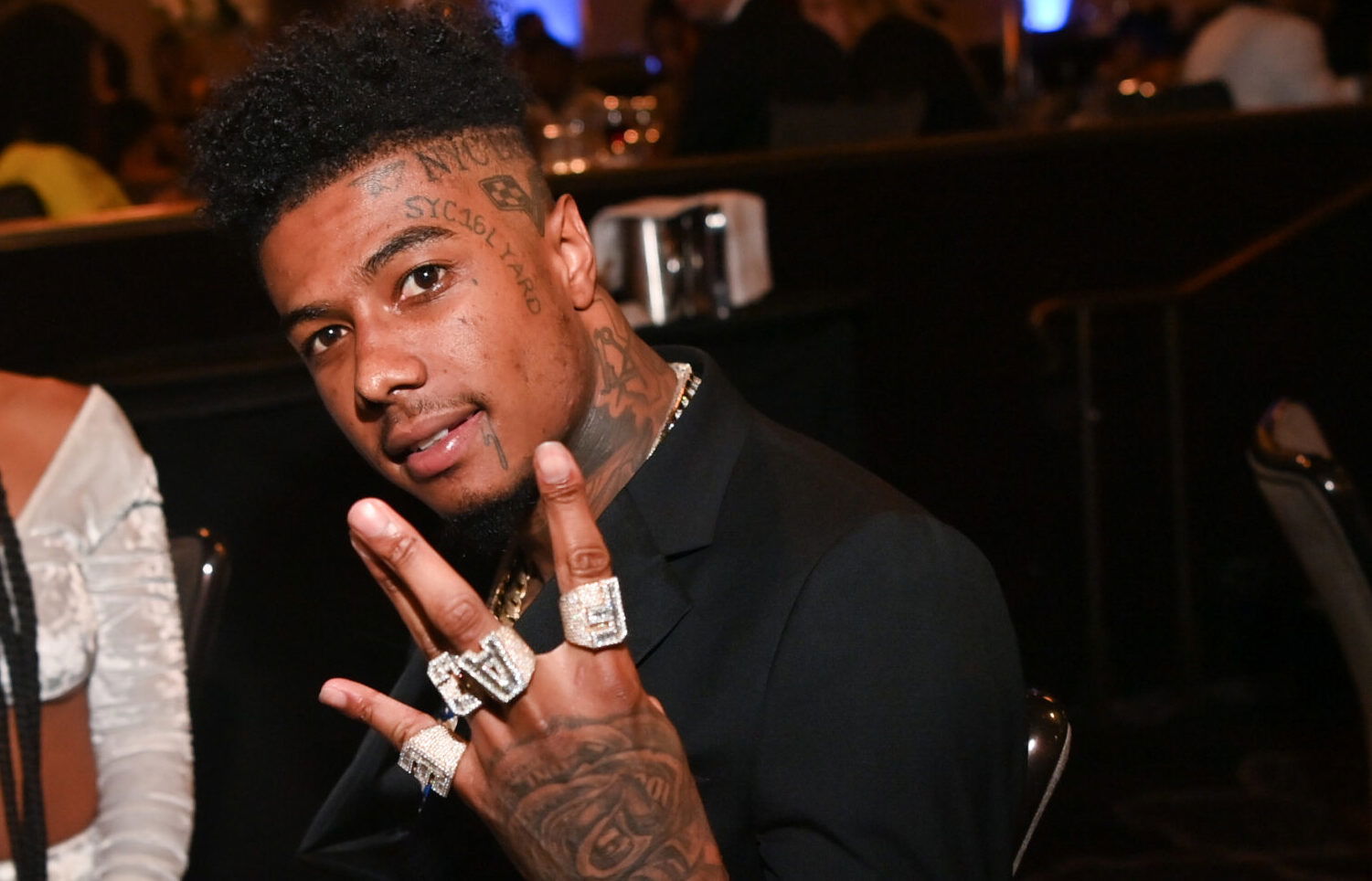

Blueface
(Photo by Prince Williams/Getty Images)

Blueface Loses Defamation Case, Ordered To Pay $123K To Soulja Boy’s Girlfriend

Jackilyn Martinez sued after Blueface falsely claimed to be the father of her child on social media


Incarcerated recording artist Blueface was recently hit with a default judgment in a lawsuit filed by Jackilyn Martinez, girlfriend to Soulja Boy, for making false claims via social media that he was the father of her and Soulja Boy’s child.

According to In Touch, Martinez sued Blueface after he released a series of social media posts while engaging in an online feud with Soulja Boy. In the midst of his war of words with Soulja Boy, he claimed on X, formerly known as Twitter, that he slept with Martinez the day before her baby shower, suggesting that he, not Soulja Boy, was the father of her child.

Blueface wrote, “I hit Soulja [baby momma] day before her baby shower and he payed [sic] for it.”

“Till Soulja get a DNA test that’s my child lil bro I’m the daddy now.”

Martinez sued for $10 million in damages, but the judge only awarded her $123,243.10. $100,000 in non-economic damages, $18,000 in special damages, $3,070 in attorney fees, and another $2,173 in costs. No punitive damages were awarded.

Martinez did admit to having sexual relations with Blueface in 2018 but stated they hadn’t slept with each other since. She said, “I had protected sexual intercourse only one time with [Blueface] years ago, in 2018.”

“Since 2018, I have not had any interaction with [Blueface].”

She also confirmed that Soulja Boy is their child’s father in a court declaration.

Martinez instructed her attorneys to send him a cease and desist order in December 2023, but he ignored it and kept the posts online.

The lawsuit asserted that she suffered and continues to suffer emotional distress due to his online activity. She also stated she suffered depression, anxiety, panic attacks, crying spells, fear, and anger, as well as physical injuries and symptoms, including insomnia, nausea, headaches, and lack of appetite.

RELATED CONTENT: Blueface Ordered To Pay $13 Million To Closed Strip Club For 2022 Shooting Incident

nfl, draft, black quarterbacks
(Photo: Jean-Daniel Francoeur/Pexels)

Alabama Lawmaker Vows To Fight State’s Plans To Cut Funding for Magic City Classic

Senator Rodger Smitherman is not having it


When Alabama lawmakers took their first official action on the state General Fund budget this week, one of the proposed cuts was eliminating funding for the Magic City Classic football game, Senator Rodger Smitherman swiftly fired back.

The Democratic senator, who has representing the 18th District since 1994, spoke on the House floor when lawmakers proposed cuts to funding for the Magic City Classic, the Birmingham Civil Rights Institute (BCRI), and several other line items. 

“If anybody thinks that’s going to happen and I’m not going to be at this mic from this moment until we leave, you can forget it,” Smitherman as reported by AL.Com. 

The state’s proposed $3.7 billion budget included $200,000 for next year’s Magic City Classic. However, when the House Ways and Means General Fund Committee approved the General Fund budget on April 1, it removed funding for the event, which has been an annual tradition in the city since 1945. Republican Alabama State Representative Rex Reynolds said that the proposed budget cut was part of the state’s initiative to prioritize budgeting.

Smitherman stated he would use the Senate’s filibuster rules to emphasize the Magic City Classic’s importance and suggested cuts to other related budget items. The senator expressed he would apply “the most resistance” to oppose these proposed budget cuts, which particularly impact Black organizations. 

Additionally, the BCRI issued a statement encouraging residents to speak out against these potential budget cuts. 

“We urge every Alabamian to contact their local legislators. Tell them that you believe in protecting civil rights history. Tell them that BCRI matters. That this story matters. That truth matters.” 

The Magic City Classic is a crowd-drawing celebration of HBCU culture that provides a significant economic boost for the community. Last year, Birmingham city officials estimated that the game would generate over $20 million for the city, as reported by WBRC.

The game and its accompanying festivities bring about 60.000 people to the city each year, making it the most significant event in Birmingham and the largest HBCU event in the nation. 

RELATED CONTENT: 7 Powerful Martin Luther King Jr. Quotes That Still Resonate Today

Small Business Administration, SBA
(Photo: iStock)

How Small Business Owners Can Boost Revenue Without Finding New Customers


Many small business owners, startups, and entrepreneurs often focus on acquiring new customers. While growing your customer base is essential, what if there was a more straightforward, more effective way to increase your revenue? The power of cross-selling. Cross-selling is the art of offering related products or services to existing customers.

Cross-selling is a powerful, underutilized strategy that boosts sales and enhances the customer experience. Small business owners can maximize the potential of every transaction by providing complementary products or services that add value.

Here’s how to implement cross-selling to grow your revenue without spending a dime on acquiring new customers.

Why Cross-Selling Works

Cross-selling capitalizes on an important principle: It’s easier to sell to someone who has already said “yes.” Once customers commit to purchasing, they are psychologically more open to hearing about additional products that could enhance their experience. Plus, customers often appreciate thoughtful recommendations that solve problems they didn’t even know they had.

According to industry data, cross-selling can increase revenue by as much as 30% and improve customer retention. This strategy is a game-changer for small businesses with tight margins.

Finding the Right Products to Cross-Sell

The key to successful cross-selling is to offer products or services that make sense. The best cross-sell opportunities fall into one of these categories:

  1. Complementary Products: Items that naturally go with the initial purchase.
    • Example: A client undergoing a facial treatment may benefit from a post-treatment skincare kit to help preserve the results.
  2. Upgrades and Enhancements: Provide a premium product version or add-on to enhance the experience.
    • Example: A waxing client may want a nourishing body scrub to prevent ingrown hairs.
  3. Often Purchased Together: Use customer data to determine which products are commonly bought together.
    • Example: A coffee shop might recommend a pastry to accompany a latte.
  4. Service Add-Ons: Offer a complementary service to enhance the original purchase.
    • Example: A customer who books a massage may appreciate the addition of aromatherapy for greater relaxation.
  5. Limited-Time Bundles: Motivate customers to spend more by presenting a discounted bundle of complementary products.
    • Example: “Schedule a facial and get 20% off our suggested aftercare products.”

Mastering the Cross-Sell Conversation

Understanding when and how to present a cross-sell is essential. The objective is to make the offer feel seamless rather than aggressive. Here are some strategic questions that may assist:

  • “Many customers who buy [Product A] also enjoy [Product B]. Would you like to include it today?”
  • “Since you’re using [Service A], have you thought about [Service B] to improve your results?”
  • “Would you be interested in a special discounted bundle that includes [Product A] and [Product B]?”
  • “Are you also interested in [a related solution]? This [product/service] complements what you just received perfectly.”

These questions present you as a helpful advisor rather than a salesperson. The customer perceives that you’re offering a recommendation for their benefit — because you truly are.

Examples of Cross-Selling in Action

  1. Beauty and Wellness
    • A medspa that offers laser hair removal could cross-sell post-treatment skincare to soothe and protect the skin. Additionally, it might provide a discounted facial for first-time clients.
  2. Food and Beverage
    • A smoothie shop could suggest adding a protein boost or offering a combo with a healthy snack.
  3. E-Commerce
    • An online clothing retailer might recommend shoes or accessories that complement a recently purchased outfit.
  4. Consulting and Coaching
    • A business consultant could offer follow-up accountability sessions or access to premium resources.
  5. Fitness Centers
    • Gyms might recommend personal training sessions to members who purchase a membership.

The Art of Making It Seamless

To ensure your cross-sell efforts don’t come off as aggressive or unnecessary, follow these tips:

  • Personalize the Offer: Base your recommendation on the customer’s purchase history and preferences.
  • Highlight the Benefits: Explain how the additional product or service will enhance their original purchase.
  • Create Urgency: Offer limited-time bundles or discounts to encourage immediate action.
  • Train Your Team: Ensure your employees understand how to make tailored recommendations without sounding ‘salesy.’

Additionally, leverage your point-of-sale system to suggest cross-sales automatically, whether in-store or online. Follow-up emails or text messages can also offer cross-sell suggestions based on recent purchases.

Conclusion: Unlock Revenue Potential

Cross-selling isn’t just about increasing sales — it’s about providing more value to your customers. When done correctly, it enhances the customer experience, builds loyalty, and boosts your bottom line.

Small business owners and entrepreneurs often spend significant resources attracting new customers. But by focusing on serving your existing customer base with thoughtful cross-sells, you can maximize your revenue without increasing your marketing budget.

The next time a customer purchases, don’t hesitate to ask, “Would you like to add this to complete your experience?” Your customers — and your revenue — will thank you.

RELATED CONTENT: How To Master The Art Of The Follow-Up

young thug
(Photo: Paras Griffin/Getty Images)

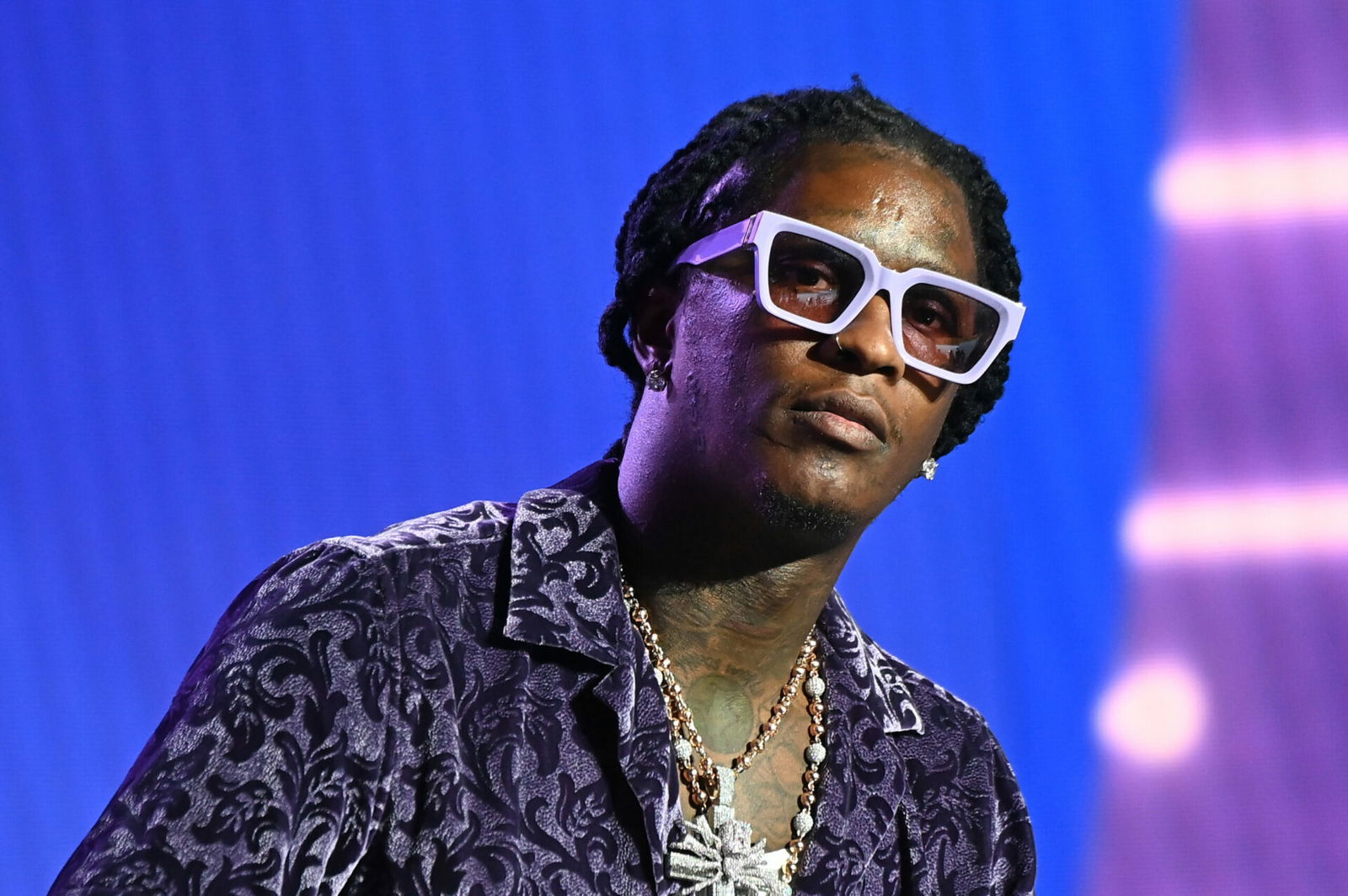
Young Thug Judge Kiboshes Probation Revocation

Young Thug will not be returning to jail.


The Fulton County District Attorney’s Office’s attempt to revoke Jeffrey “Young Thug” Williams’s probation has been denied, according to the Associated Press.

Judge Paige Reese Whitaker of the Georgia Superior Court ruled that Young Thug does not pose a threat after prosecutors raised concerns over a social media post.

The post, which alleged that an investigator in the YSL RICO trial fabricated information, led to the doxxing of the employee online. Prosecutors argued the post amounted to a threat against county staff and immediately filed for revocation of Williams’ probation.

Young Thug is currently serving 15 years probation after entering a plea deal in the YSL RICO case. Prosecutors said the post, which drew significant attention, triggered a need for increased security.

In a one-page order, Whitaker rejected the motion and issued a warning. 

“While the Court does not find that the cited social media post rises to the level of a violation of Defendant’s probation, it may be prudent for Defendant to exercise restraint regarding certain topics,” she wrote in a footnote.

Young Thug has been out of jail since October 2024. The Lifestyle rapper’s release came with strict conditions, including disassociating from all gang-affiliated individuals and activities. Prosecutors claimed his repost of the investigator’s image violated those terms and constituted a threat.

In their previous motion, prosecutors also alleged that Young Thug’s “continued association with individuals actively involved in witness intimidation, threats of violence, and obstruction of justice” breached the terms of his probation.

Young Thug denies all allegations of violence and intimidation, stating on X that he is a “peaceful” man. 

The rapper has kept a relatively low profile since his release and is on track to revamp his stalled career. He will  headline the Les Ardentes in Belgium, which is taking place from July 3 to July 6.

RELATED CONTENT:  Young Thug Back In Court To Reclaim His Cars, Cash, And Bling Seized In YSL Raid

Dwight Howard
(Phot: Allen J. Schaben/Los Angeles Times via Getty Images)

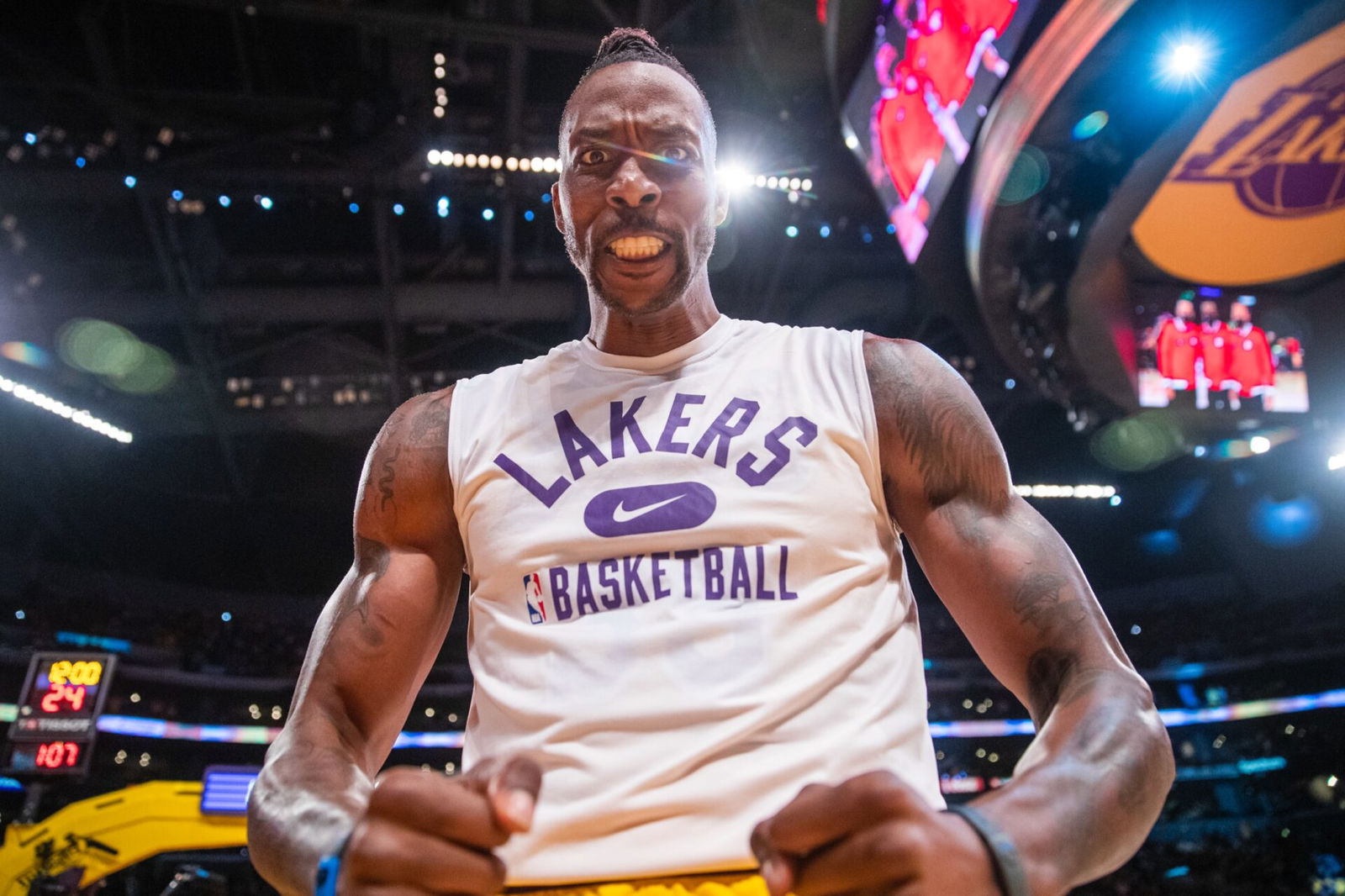
Man Who Bilked Dwight Howard Out Of $7M Sentenced To 12 Years In Prison


After a jury found Calvin Darden, Jr. guilty of bilking former NBA player Dwight Howard out of several million dollars, a Manhattan judge sentenced him to spend more than 12 years in prison.

According to The Associated Press, Darden, to whom Howard gave $7 million in a fake scheme to purchase a stake in the Atlanta Dream, has to forfeit $8 million. Along with the money, he has to return various luxury items he was able to obtain because of the illegal scheme, including a $3.7 million Atlanta mansion, $600,000 in artwork by Jean-Michel Basquiat, a Lamborghini, and a Rolls-Royce.

Former NBA player Chandler Parsons was also scammed by Darden, who bilked him for $1 million in a scheme involving then-NBA prospect James Wiseman.

A New York jury found him guilty on Oct. 4, 2024.

Prosecutors said the conman spent most of the money he received from Howard, at least $6.1 million. He purchased two luxury vehicles for $500,000, bought himself a piano for $110,000, and used $765,000 as a down payment on a $3.7 million home. He also purchased luxury watches for $90,000 and used $500,000 to upgrade his home. He also bought art for hundreds of thousands of dollars.

The alleged investment offer from Darden to the recent Orlando Magic Hall of Famer took place when the former owner of the WNBA team, former Atlanta Republican U.S. Sen. Kelly Loeffler, was selling the team due to her views on racial injustice with a team that featured mostly minority players. In 2021, the team was sold to a three-member investor group, which included former player Renee Montgomery.

After the sale of the team, Howard discovered that Darden had scammed him.

Darden was previously convicted after another scheme he was involved in landed him in trouble. Prosecutors revealed that Darden partnered with a sports agent to swindle Parsons. Darden influenced Parsons to send $1 million to aid in the development of Wiseman, who the Toronto Raptors recently waived after being traded by the Indiana Pacers.

RELATED CONTENT:  Move Over Juneteenth! The Black Delegation Commemorates Aug. 5 ‘#FadeInTheWater’ The New-Era Day Of Revolt

How Building A Brand Helped This Black Woman Create A Multimillion-Dollar Fitness Firm
Simone Ware (Standing in back). Photo credit: Frantz Belhomme

How Building A Brand Helped This Black Woman Create A Multimillion-Dollar Fitness Firm

Entrepreneur's ambitious goal is to reach $10 million in revenue in the next five years.


Simone Ware, a Caribbean woman born and raised in the Virgin Islands, said her heritage deeply influences her work.

Ware, the founder and owner of the CURVD fitness brand, said that everything she creates, from her firm’s content to campaign locations, is infused with the beauty of the ocean and the beach.

As such, Ware plans to host a fashion show at Miami Swim Week for the first time this summer. The event in Florida is supposedly the world’s largest swimwear and resort wear festival. It will allow Ware to showcase her business to tens of thousands of expected attendees.

The show could help leverage Ware’s mission of helping women of all shapes and sizes feel empowered, confident, and strong in their bodies. “Miami Swim Week wouldn’t be complete without that diversity.”

Ware made a bodacious transition after leaving an unfulfilling security job at the U.S. Department of Defense to start her business in May 2019. In just two years, she saved $30,000 of her own money, allowing her to pursue a passion for teaching fitness classes.

But her quest early on was not easy. Ware told BLACK ENTERPRISE by email that one of the biggest challenges in launching CURVD was developing a solid business model and figuring out the most effective way to allocate the funds she invested.

As a first-time entrepreneur, Ware says there were many things to consider. These included which areas of the business would give the highest return on investment and how to balance spending on marketing, operations, and product development.

“It wasn’t easy, and there were times when I felt overwhelmed by the financial strain, but the key to overcoming that was sticking to the mission,” she said. “I relied on my intuition, and slowly but surely, we started seeing the results of that investment.”

She said a huge lesson she learned is that running a business is mostly about having the right strategy and being willing to adjust when things don’t go as planned.

Ware’s exertion, tenacity, and perseverance have helped her capture a niche. This Florida-based business now generates roughly $2 million annually, leveraging her fitness app and helping women feel strong, confident, and valued.

Ware also attributes much of her firm’s growth to strategic partnerships and global social media. She said they helped her attract over 800K followers. She added that working with elite brands, including Soho House, The Webster, and ESPN, has expanded her reach and credibility.

BLACK ENTERPRISE connected with Ware to discuss her business and entrepreneurship.

What inspired you to launch a fitness brand that caters specifically to women? 

Fitness has always been a huge part of my life. As a little girl, I remember sitting on my dad’s back while he did push-ups and watching him win Gold’s Gym competitions. Staying active was second nature to me, and as social media grew, people started noticing my workouts and physique. However, I saw a major gap in the fitness industry — so many women wanted to work out but feared they had to sacrifice their curves to do it. Today, I’m proud that over 100,000 “Fit Queens” have benefited from the program, which can be found here.

Please share feedback from Black women on how your brand has helped them.

I hear from new mothers battling postpartum depression; from women rebuilding after leaving abusive relationships, each one sharing how CURVD has empowered them, not just physically but mentally and spiritually. It’s about transformation and healing.

Given the ongoing DEI (diversity, equity, and inclusion) backlash impacting many businesses of color, what steps are you taking to ensure your company remains resilient? 

Diversity isn’t just a trend for CURVD. It’s at the core of who we are. My entire team is made up of women of color, and I’m committed to continuing to expand that representation. From our models to our leadership, we ensure that inclusivity isn’t just a talking point; it’s our reality. Despite the challenges, I see opportunity. The demand for authentic, diverse representation is only growing, and I’m dedicated to ensuring that CURVD remains a leader in this space, breaking barriers and advocating for visibility.

How has your firm performed revenue-wise over recent years?

Our highest revenue came during the early pandemic years when the health and wellness industry surged. However, as people returned to work and inflation impacted spending, we saw a dip. To counter this, we shifted our messaging, emphasizing that investing in health isn’t an optional expense — it’s a necessity. With our upcoming swimwear relaunch and new product expansions, our goal for 2025 is to reach $3 million in revenue.

Looking forward, where would you like to see your company’s revenue? 

In the next five years, I envision CURVD reaching $10 million in annual revenue. To achieve this, we’re focusing on launching new yoga mats, activewear, and an extended swimwear line. We plan to expand beyond the U.S. into international markets—and brand collaborations by partnering with major fitness and fashion brands to increase visibility and impact.

What advice would you give Black entrepreneurs looking to start or grow a business?

First, believe in yourself. That’s the foundation. Among the steps to consider are identifying your niche, finding the gap in the market, and being the solution. And while funding/capital is important, don’t wait for a big investor to get started. Bootstrapping and reinvesting in your business can take you far. Know that entrepreneurship isn’t easy and comes with setbacks. But your ability to push through challenges will define your success. Most importantly, remember why you started. When your purpose is clear, your passion will fuel you through any obstacles.

RELATED CONTENT:  Gimme The Loot! Texas UPS Employee’s $200K Luxury Theft Ring Lands Him In Lockup

Trump, rwanda
(Photo: Gage Skidmore/flickr)

Trump Says The $5M Immigrant Gold Card Is For Sale

Non-citizens are now able to buy their way into citizenship for a new $5 million price tag.


President Donald Trump is back in the spotlight for promoting what he calls the “EP Five,” a $5 million card bearing his image.

As previously reported by the current administration, Trump flaunted a shiny card embossed with his face during an exchange with reporters on April 4. He claimed that immigrants could buy their way into the country for $5 million. The pitch echoed the tone of a used car salesman.

“For $5 million, this could be yours,” Trump said aboard Air Force One. “You know what that card is? It’s the Gold Card, the Trump Card.”

He continued, “Five bucks, it could be yours. It’s the first card—the Trump card—the gold card.”

When asked whether purchases had begun, Trump said the card would be available for sale within two weeks. As of now, no government approval has been given for its release.

EB-5 Immigrant Investor Program

While the rollout of the so-called “Gold Card” may raise eyebrows, the underlying idea isn’t entirely new. The U.S. has allowed foreign nationals to invest their way into the country through the EB-5 investor visa program since 1990.

Originally intended to stimulate the economy and support job growth, the program allows eligible individuals to gain lawful permanent residency by investing in U.S. businesses. According to U.S. Citizenship and Immigration Services (USCIS), qualifications depend on how the investment contributes to job creation. According to Newsweek, under the existing EB-5 program, applicants must pay between $100,000 and $200,000 in fees to the United States Citizenship and Immigration Service (USCIS), invest between $800,000 and $1 million, and create at least 10 jobs for American workers.

On March 15, 2022, President Joe Biden signed the EB-5 Reform and Integrity Act as part of a broader spending bill. The legislation outlines specific criteria for job creation:

  • For businesses outside a designated regional center, the enterprise must directly create full-time positions and act as the employer.
  • Jobs can be created directly or indirectly within regional centers. Indirect employment can satisfy up to 90 percent of the job creation requirement.
  • In cases involving troubled businesses, investors may meet the requirement by maintaining the current workforce at pre-investment levels for at least two years.

While Trump’s “Gold Card” pitch appears to draw loosely from this legal framework, it remains unclear whether the concept has any official grounding or government support.

RELATED CONTENT: Paper Checks Are Done For Thanks To Trump’s Executive Order 

entrepreneur, sales, small business, business, start-up business, customers
Entrepreneurs, startups, and small business owners can win in business by preparing for the worst.

Report: Black Entrepreneurs Topped Other Peers In Business Openings, But Obstacles Like Securing Financing Linger

Autonomy over their schedule and finances spurred Black entrepreneurs to open more businesses amid challenges


Carmeanna Eberly left a corporate chief of staff role last summer after almost a decade of building startups and advising CEOs.

“I hadn’t planned on starting a business — but I also wasn’t ready to jump back into someone else’s vision.”

As such, she launched the Bonsai & Brew Studio last June. Her Chicago-based pop-up events company offers bonsai and native gardening education by partnering with independent coffee shops, breweries, and plant shops.

Eberly is an example of why Black entrepreneurship is growing robustly. According to the Gusto 2025 New Business Formation Report, the percentage of businesses started by entrepreneurs last year was up 67% from 2019.

BLACK ENTREPRENEURS OUTDID OTHER PEERS IN BUSINESS OPENINGS

That Black growth rate was much higher than for AAPI (17%) and Latinx founders (25%). Comparatively, the share of small businesses started by White founders fell 12% during the five-year period, mainly due to the surge of new businesses created by the other racial groups.

The findings are from a survey of 1,000-plus new business owners who launched businesses in 2024 by the Gusto Insights Group, a team of specialized economists and data scientists who track the current economic landscape and labor market.

Carmeanna Eberly

ON-GOING OBSTACLES LIKE SECURING FINANCING PERSIST

Yet even with Black-owned businesses climbing, they still face serious challenges like discrimination, insufficient resources, and accessing capital, arguably their greatest obstacle. 

Gusto senior economist Nich Tremper emailed BLACK ENTERPRISE with some alarming findings. For example, almost 90% of new Black business owners stated they needed financing to start their business, versus 75% of new white business owners.

All told, Black entrepreneurs were the least likely to disclose that they received all the funding they sought last year, and almost all of them used personal financing. They were about 10% more inclined than white new business owners to use a personal credit card (33% vs 30%) to get businesses going.  

“Entrepreneurs who are reliant on their own financing are less likely to invest significant money in their business, which may limit their growth.”

Financially, Tremper said new Black entrepreneurs were more likely to report being profitable last year (70%) versus new White entrepreneurs (63%) surveyed. 

INTERESTING DISCOVERIES AMD TRENDS REVEALED 

Overall, the report found some intriguing points tied to business creation, including:

  • Women entrepreneurs started 49% of new businesses last year, a 69% gain from 2019 and the largest rate in the five years the report was published.
  •  A tough job market is making entrepreneurship more attractive. With hiring slow in many parts of the economy, the percentage of entrepreneurs who started a business because they or their partner lost a job rose 66% last year.
  • Black entrepreneurs reported starting new businesses for additional income. They were 2.1 times more likely than white entrepreneurs to report starting their business to supplement their existing income. That perhaps links with estimates that Black entrepreneurs can earn over 10 times more than non-Black business owners.

So, what other factors are helping fuel Black business growth? Tremper explained that owning a business increases your autonomy — both over your schedule and over your finances. He noted that Black entrepreneurs cited these as motivating reasons they started businesses.

Tremper shared that 60% of Black entrepreneurs who started their businesses last year did so to build an asset, making them forward-looking and seeking to create wealth for the future.

And Black women keep leading the way. Since 2017, the share of black-owned businesses started by them rose 71%. Tremper said that’s consistent with women overall — the share of women who started businesses in 2024 was 69% greater than in 2019.

INDEPENDENCE AND BUILDING WEALTH AMONG PERKS OF BUSINESS OWNERSHIP

Entrepreneur Carmeanna Eberly of Bonsai & Brew Studio was among them. She said her firm did its first public workshop last July. By late 2024, she said the firm will have beaten its targets by serving over 1,000 customers and generating $15,000 in revenue for its venue partners at sold-out events.

Eberly forecasts her firm’s monthly recurring revenue (MRR) this year to be roughly 150% to 170% higher than when it was tracked for five months last year after the business was launched.

Now, she is pursuing larger exploits. Last month, the business opened a digitally curated affiliate store to sell supplies to customers along their plant journey. Eberly added other plans, including adding the firm’s own plant markets, offering up to four new workshops, and helping individuals across Chicago convert high-maintenance lawns into cost-saving pollinator havens.

“Our plans include expanding into Indiana and Milwaukee in 2026.”

Further,  Black entrepreneurs start enterprises to fulfill a passion, gain independence where they work, and possibly collect more money than from a traditional job, among other reasons.

Rosa Thomas, owner of The Savoring Mind, launched her online psychoeducational products business in March 2024. She did so to build income for “retirement” and create security for the golden years. She also wants to provide needed assistance for people at an affordable price, fulfill her dreams of travel, and create a legacy for her child and his family.

She aims to change her business plan from a part-time therapy practice to a full-time digital publishing business this year. New to entrepreneurship, she desires to master the skills to effectively function as a business owner. She wishes to build a solid foundation and presence, then scale if she is able.

“I feel reasonably optimistic that I can replace current contract income within a three-year time horizon.”

RELATED CONTENT: 20-Year-Old Man Arrested After Money Dispute Leads To Alleged Double Murder

Dreena Whitfield-Brown
Courtesy of WhitPR

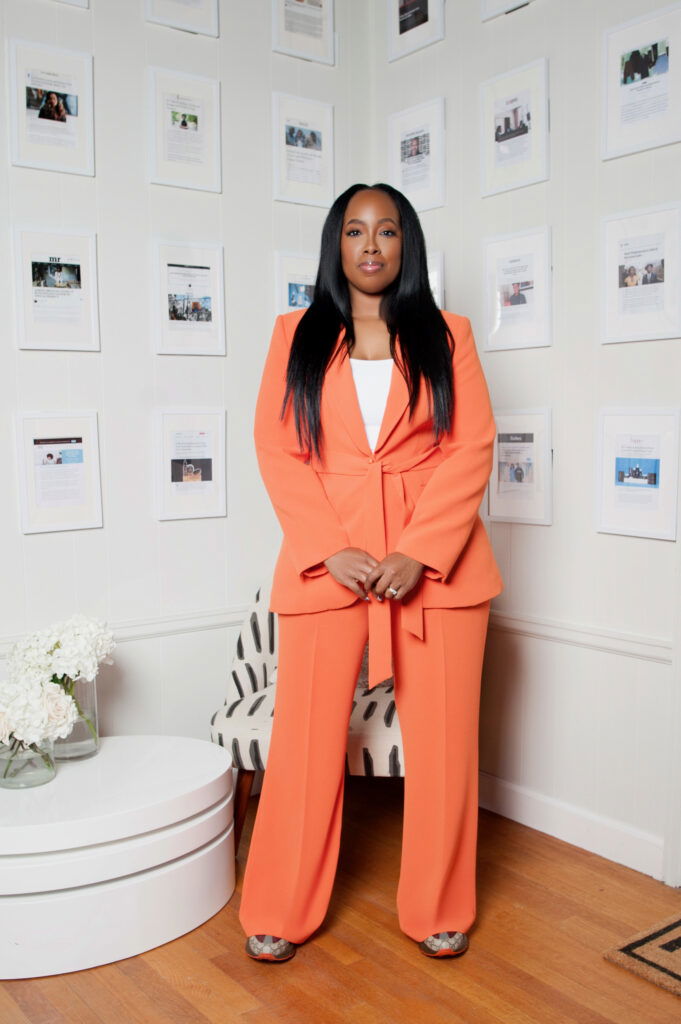
Dreena Whitfield-Brown: One Of Few Black Women Recognized As Top Female Founder For 2025

Dreena Whitfield-Brown is one of only eight Black women recognized in the PR category for the 2025 Inc. Female Founders 500 list.


Dreena Whitfield-Brown is one of only eight Black women recognized in the PR category for the 2025 Inc. Female Founders 500 list.

The recognition hasn’t set in yet.

“I’m still processing it,” she told BLACK ENTERPRISE as she reflected on her journey. “I started my company in my living room. I didn’t have any clients and didn’t even know how to do a contract. Google was my best friend. For me to be featured as an Inc. female founder is nothing but God.”

Whitfield-Brown’s journey began with a frustration that Black women know all too well: being passed over for opportunities. Research from Harvard Kennedy School details the unique challenges Black women face in the workplace. The study found that when Black women start their careers working with a higher percentage than their white colleagues, they are more likely to leave their jobs sooner and are less likely to be promoted.

She had had enough of firms offering internships despite her work experience. So, she started her own public relations agency and gave birth to her first baby, WhitPR, in 2010. It’s now one of the leading minority-owned firms in the country — a long way from her humble beginnings when she launched the agency in the living room of her one-bedroom apartment with no clients or media contacts.

Your Circle Matters: How Friends Got Her Started

Whitfield-Brown will be the first to tell aspiring new business owners to be patient and utilize the resources. Her first clients were the people in her inner circle.

“It was a bit of trial and error,” she said. “One of my first clients was one of my close friends. We were building our businesses at the same time, and she was the perfect case study for me.”

Success did not happen overnight, and neither did the money. She worked a retail job for three years to make ends meet. However, as she continued balancing a career and building her brand, others took note, and new clients started coming in. Her first big opportunity was for former Newark Mayor Cory Booker’s nonprofit.

“I got that contract through word of mouth. They ultimately became my first [big] paying client, which then opened more doors.”

WhitPR is an integrated strategic communications agency that shapes and amplifies culture-driven narratives. The agency champions cultural creators, moments, and movements. Its clients represent the social impact space, personal care, lifestyle, and athletic industries.

Her portfolio of clients includes Black Ambition, Black Love, Inc., Hallmark Mahogany, Morrow Hospitality, Prudential Financial, Thread Beauty, the Warner Music Group Social Justice Fund, and so much more.

Black Women Can Have It All, But It Takes Balance

Let Whitfield-Brown be proof that Black women can have it all despite the ongoing conversations and unsolicited studies about how Black women are three times as likely as white women never to marry.

Her then-boyfriend turned now-husband has been supporting her from the beginning. When she’s not working, the duo are likely at AAU basketball games on the weekends or at birthday parties for their most demanding clients (their children), all while she continues to scale her brand.

When you ask how she does it, she says therapy has helped her manage her many hats.  

“My therapist has talked me out of bringing my laptop into my bedroom because that’s my sacred space,” she admits. “I still struggle with that because I’m the type that if I can’t get it done during the day, I will get it done after we have dinner and put the kids down, but that doesn’t allow me time to pour into myself.”

What’s Next For Dreena Whitfield-Brown?

As someone who prides herself on staying behind the scenes to ensure her clients have the spotlight, it will likely take some time for her to celebrate and take in all of her accomplishments, which she rightfully deserves.

Whitfield-Brown says she will continue to scale her business, but her next big task is elevating the next generation of diverse entrepreneurs.

“It’s a major accomplishment that I’ve made the Inc. list, but I am one of only eight Black women [in the PR category] and the only one from New Jersey,” she told BE. “I feel that it speaks volumes to the work that is still needed to elevate diverse entrepreneurs.”

She added, “It makes me even more passionate about continuing to do the work and to provide opportunities for not just myself, but just for the next generation of Black women in PR and entrepreneurship.”

RELATED. CONTENT: Google Settles $28 Million Racial Pay Disparity Class-Action Lawsuit; DEI Policies Still Under Fire

×