


by Selena Hill
May 12, 2026
Florida Org Honors Former Teen Moms With Transformative Mother’s Day Retreat
The nonprofit’s fourth annual B.R.E.A.K Away experience provided mental wellness support, luxury self-care services, and a fine-dining celebration for young mothers in Central Florida
Altrichia Cook Wilcox was just one month shy of graduating high school when her life flipped upside down. At just 17 years old, she found out she was pregnant; however, she refused to become a statistic. Although less than 2% of teen moms graduate college by age 30 and only 50% obtain a high school diploma or GED by 22, Cook Wilcox was determined to beat the odds.
After graduating high school, the Lakeland, Florida, native went on to earn an undergraduate degree from Florida State University and a master’s from Florida A&M University, all while working two jobs and raising her son. Her son’s father, meanwhile, pursued a football scholarship in California before transferring to the University of Arizona. Today, the high school sweethearts are happily married and raising their second child, a daughter, together. Wilcox is also an entrepreneur and mentor dedicated to helping teen mothers thrive through her nonprofit, Mentoring Agency for Maternal Adolescents, Inc. (MAMA Inc.). Launched in 2014, the organization supports teen and young mothers throughout Lakeland, Polk County, and the greater Tampa Bay area through mentorship, education, life-skills training, and community resources.

Just ahead of Mother’s Day, MAMA held its fourth annual Mother’s Day B.R.E.A.K Away experience, bringing together teen mothers, young mothers, and former teen moms for a transformative day of healing and celebration. Held on May 3 in Lakeland, the full-day event pays tribute to moms who have overcome adversity and offers them a guilt-free day of pampering. Among the participants were former teen and college mothers, as well as corporate leaders, business owners, and military veterans.

“The Mother’s Day B.R.E.A.K Away is an experience that is a lifeline of hope, dignity, and restoration for mothers who have fought to rewrite their stories,” Wilcox told BLACK ENTERPRISE. “Standing in a room filled with young moms and former teen mothers thriving in their purpose reminded me why this work matters so deeply,” she continued. “Its impact on our community is undeniable: when we pour into mothers, we strengthen families, and when we strengthen families, we change futures.”
In recognition of Mental Health Awareness Month, the event focused on emotional restoration and self-care. Attendees participated in healing yoga and guided breathwork sessions, stress-management workshops, mini massages, restorative facials, and professional glam services. The experience concluded with an upscale dinner at Ocean Prime Tampa thanks to MAMA Inc.’s ongoing partnership with Cameron Mitchell Restaurants.
RELATED CONTENT: Sheinelle Jones Turns Lessons From Celebrity Moms Into A No. 1 Bestseller Ahead Of Mother’s Day

by Ahsan Washington
May 12, 2026
8 Black-Owned Companies That Produce Sustainable Products
These brands are reducing their environmental footprint.
The rising consumer demand for ethical production has led more Black-owned companies to integrate sustainability into their business models through eco-conscious materials, ethical labor, and community-centered missions. These brands, spanning fashion, beauty, and lifestyle goods, are transforming responsible commerce while reducing their environmental footprint.
BLK + GRN
Dr. Kristian Henderson established BLK + GRN as an all-natural online marketplace that connects consumers with non-toxic products made solely by Black artisans. The platform offers plant-based skincare and wellness products, along with home goods, that are cruelty-free and free of harmful chemicals. The health disparities caused by toxic products led to the founding of BLK + GRN, which maintains its sustainability focus through clean formulations and ethical sourcing.
Hamilton Perkins Collection
Hamilton Perkins started Hamilton Perkins Collection in 2014, in Norfolk, Virginia, to create bags and accessories from recycled materials. The brand uses plastic bottles, pineapple leaf fiber, and repurposed banners to make its products. The company’s “Earth Bags” collection aims to reduce waste and provide affordable, durable products. Through its transparent supply chain, Hamilton Perkins Collection leads circular fashion innovation by reducing carbon emissions and water consumption.
The Honey Pot Company
Bea Dixon established The Honey Pot to transform the feminine hygiene market through herbal-based plant products. The pioneering brand focuses on sustainable sourcing practices and toxin-free formulations. Through its eco-conscious methods and holistic wellness approach, The Honey Pot Company expanded to a national scale without compromising its dedication to clean, environmentally responsible production.
Brother Vellies
Brother Vellies is a luxury accessories brand, established by Aurora James, that creates shoes and handbags using traditional African methods and sustainable materials. The brand, based in New York, focuses on artisanal craftsmanship, ethical labor practices, and low-impact production methods to preserve cultural heritage through small-batch manufacturing.
Yam
A New York-based jewelry company, Yam, creates its distinctive pieces using recycled metals and materials. Yam produces items on demand, eliminating excess production and waste, and uses recyclable packaging. The company follows the slow fashion trend because consumers now consider environmental effects when buying accessories.
Elexiay
Elexiay is a brand that produces handmade crochet garments in Nigeria, crafted by local artisans under the leadership of Elyon Adede. Elexiay follows a slow-fashion approach, using manual production methods that reduce environmental harm and protect traditional cultural craft techniques. The brand demonstrates its commitment to sustainability through ethical labor standards, limited use of machinery, and the use of recyclable materials, which show its dedication to environmental and social responsibility.
Hope for Flowers
Tracy Reese’s U.S.-based fashion brand, Hope for Flowers, implements sustainability across all production phases. The brand employs organic cotton and Tencel fabrics, which are biodegradable, while steering clear of synthetic materials. The brand maintains fair wages for its employees and produces limited quantities of its products. Hope for Flowers exists to help customers buy consciously so their choices create environmental transformation.
KNC Beauty
Kristen Noel Crawley founded KNC Beauty and produces natural collagen lip masks and other clean beauty products. The brand bases its formulations on cruelty-free principles while maintaining environmental consciousness. KNC Beauty has become a leading brand in the eco-friendly beauty industry through its successful combination of sustainable practices with accessible products.
RELATED CONTENT: How To Care For The Environment Beyond Earth Day

by Kandiss Edwards
May 11, 2026
Yahya Abdul-Mateen II Is On Top As A ‘Man On Fire’
Beyond the action-heavy demands of his upcoming series, he has built a reputation for tackling roles that challenge social perceptions.
Emmy-winning actor Yahya Abdul-Mateen II is reflecting on the past and present status as a Hollywood powerhouse as he prepares for his leading role in Netflix’s Man on Fire.
On his promotional tour, Abdul-Mateen II spoke with Ryan Clark and the cast of The Pivot podcast. The actor revealed how his major in architecture led him to catch the acting bug. Before rising to fame in major blockbusters, Abdul-Mateen II worked in city planning as a UC Berkeley architecture graduate. He told The Pivot that his role as a student in a discipline that requires public-facing presentations was sometimes difficult because he has a speech impediment. In an effort to polish his speech, he signed up for an acting class.
“I studied architecture, and in architecture, you have to give presentations. So, I have a stutter. My father stuttered, and I would stutter during my presentations. I figured that taking an acting class would help me to overcome my stutter to help me with my architecture presentations. It didn’t. Not at all. I would still get up there and stutter, but I never stuttered when I was acting. And I was good at it,” He told The Pivot panel.
In Man on Fire, Abdul-Mateen II takes on the role of John Creasy, hopefully displaying how “good at it” he truly is. The character is a skilled, former special forces mercenary struggling with PTSD. In the blockbuster film iteration, starring Denzel Washington, the character fights his way toward redemption. Beyond the action-heavy demands of his upcoming series, he has built a reputation for tackling roles that challenge social perceptions. Many of the roles highlight the complexity of the Black experience.
This depth was notably on display in his Emmy-winning performance in HBO’s The Watchmen. The role allowed the dynamic creative to explore themes of hidden identity and racial trauma. He further solidified his status as a leading man in the 2021 reimagining of Candyman. Abdul-Mateen II is a Man on Fire and will be coming to Netflix April 30.
RELATED CONTENT: Family Of ‘Blind Side’ Actor Quinton Aaron Says His Wife Is Illegally Making Medical Decisions

by Selena Hill
May 11, 2026
Hillary Clinton Addressed The ‘Attacks On Women’s Voices’ At The Global Leadership Awards In NYC
The former sectary of state talked about the attack on women's voices and rights during the closing speech at her organizations's annual gala
Former U.S. Secretary of State Hillary Clinton didn’t mince words about what she described as “attacks” on women’s equality and rights during her closing speech at the 24th Annual Global Leadership Awards hosted by Vital Voices Global Partnership last month.
Held at the Perelman Performing Arts Center in New York City April 23, the ceremony honored women leaders who champion human rights and tackle pressing issues such as climate change, economic inequality, digital safety, and women’s rights. Speakers included marketing executive and entrepreneur Bozoma Saint John, legendary fashion designer Diane von Furstenberg, actresses Sophia Bush and Michelle Rodriguez, and CNN anchor Abby Phillip.
“There are [people] who have not heard of many of these honorees, but they’re doing incredible things in their communities. We have climate activists, we have a justice activist, we have tech activists,” Huma Abedin, a former Clinton top aide and author, told BLACK ENTERPRISE.
“To see what they’re doing and what they’ve successfully done in their communities is inspiring to all of these young women, and we need that now more than ever.”
Established in 1997 as the Vital Voices Democracy Initiative by the former first lady and U.S. Secretary of State Madeleine Albright, Vital Voices Global Partnership has supported more than 49,000 women changemakers addressing the world’s greatest challenges for nearly 30 years. The organization has provided early support for women who went on to become Nobel Peace Prize Laureates, U.S. Youth Poet Laureates, prime ministers, and social entrepreneurs.
Among the 2026 honorees was Dame Donna Langley, who received the Trailblazer Award for her leadership in entertainment. While accepting the honor, Langley reflected on the persistence required to create meaningful change.
“It will always feel like our momentum is uncertain,” Langley said. “Pushing forward when progress is stalled, and discouragement creeps in, is when the work matters most.”
Susie Wolff received the Icon Award, presented by Bush, who praised Wolff for paving the way for future generations of women in sports and leadership.
“Susie’s leadership isn’t just inspiring, it’s urgent,” Bush said during the ceremony.
Wolff later emphasized the importance of investment and opportunity in women’s sports.
“When we get the people with power backing us, when we get the investments, we’ve shown what’s possible,” she said.
Recipients also included Tracy Chou and Seyi Akiwowo, both recognized for their work combating online harm and improving digital safety. Additional Global Leadership Awards were presented to women leading transformative work around the world, including Dutch activist Shirin Musa and Indonesian conservationist Farwiza Farhan.
“I want young people to know that online harm is not inevitable. That dignity, safety, and care are not luxuries. They are non-negotiables… The tech we have today has been designed, and that means that it can be redesigned,” said Akiwowo, a British-Nigerian women’s rights activist and campaigner.
Throughout the evening, speakers stressed the urgency of protecting women’s rights and amplifying women’s leadership worldwide. Closing the ceremony, Clinton reflected on the organization’s nearly three-decade mission and warned against growing threats to women’s participation in democracy.
“The attacks on women’s voices, women’s rights, women’s opportunity, our full participation in society, have weakened democracies and strengthened the hand of authoritarians,” Clinton said. “This is not by accident. This is by design. Tonight’s honorees are part of the resistance to that growing repression,” she continued. “They, through their resilience and determination, have refused to accept the status quo or the efforts to turn the clock back. And that always inspires me.”
RELATED CONTENT: Hillary Clinton Talks To Black Businesses

by Keka Araújo
May 11, 2026
Adwoa Beauty Moves To Liquidation Following Chapter 7 Bankruptcy Conversion
The industry is watching how the collapse will affect future investments in the mainstream market.
Adwoa Beauty, a textured haircare brand that broke into prestige retail, is entering liquidation. A court ruling on May 1 converted the brand’s Chapter 11 reorganization into a Chapter 7 bankruptcy case, ending its current corporate structure, according to The Business of Fashion.
The transition to Chapter 7 bankruptcy case proceedings follows a prolonged legal and financial battle between Adwoa’s founder, Julian Addo, and Aurous Financial, a senior secured lender. A court-appointed trustee will now oversee the distribution of Adwoa’s remaining assets to satisfy outstanding debts.
Why Did the Sephora Trailblazer Face Liquidation?
Founded in 2017 with $80,000 of Addo’s personal savings, Adwoa Beauty became a symbol of success for entrepreneurs of color in the beauty industry. By 2020, the brand achieved a major milestone by launching in Sephora, bringing high-performance textured haircare to a global stage. But the cost of maintaining a Sephora presence proved unsustainable.
“It’s a very challenging time economically, and it’s a very competitive time in the market as well,” Addo said in an interview with Beauty Independent. “It’s just at a place where it doesn’t make sense, and it’s not fair to our retailers and our customers to not be able to really see this brand actualize.”
The Chapter 7 bankruptcy flip follows a Chapter 11 filing in October last year, sparked by a dispute with Aurous Financial over $375,000 in unpaid loans. While Adwoa Beauty raised $4 million in funding from Pendulum Holdings in 2022, the funding was insufficient to support the infrastructure needed to scale internationally.
What Is the Impact on Other Entrepreneurs of Color?
The closure of Adwoa Beauty is not an isolated event. It follows a concerning trend of recent closures involving entrepreneurs of color, including brands like Ami Colé and Good Light. Industry analysts point to a receding tide of diversity and equity commitments that surged in 2020 but have since cooled, leaving many minority-owned businesses undercapitalized.
Jeff Sirchio, director of operations at Aurous Financial, noted that while the lender did not wish for the brand’s demise, a viable turnaround plan was never established. Following the ruling, Sirchio stated that the firm supports the trustee’s efforts to maximize value for all creditors.
“Aurous, as the senior secured lender, is in favor of the trustee continuing the brand with a view to selling it along with the excessive packaging inventory,” Sirchio told Beauty Independent.
Lessons in Scaling High-Performance Textured Haircare
Addo, a former hairstylist who built a community through her Bella Kinks blog, has been candid about the “missteps” involved in growing a luxury brand. The Chapter 7 transition lays bare the financial pressures facing independent founders.
“Every issue you can think of–buying too much inventory, cash management, not having the right team early on to scale the business as it should–I’ve done,” Addo admitted. “I feel like I’ve aged in entrepreneurship 20 years over the past 18 months.”
Despite the liquidation, the demand for high-performance textured haircare remains high. Adwoa Beauty’s product line, including the Baomint and Blue Tansy collections, garnered a loyal following for their efficacy and gender-neutral branding.
Looking Toward the Future
While the Chapter 7 bankruptcy case marks the end of Adwoa Beauty’s current chapter, Julian Addo is already looking toward her next venture. She remains convinced that the market for entrepreneurs of color still contains untapped potential and “white space” that legacy brands have yet to fill.
“I’m ripe with ideas,” Addo said of her plans. “I’m actually excited again.”
As the trustee begins the liquidation process, the industry is watching how the collapse will affect future investments in the mainstream market.
RELATED CONTENT: Go Ahead And Just Cry: The Sandwich Generation Is Breaking In The Workplace—And AI Is Speeding Up the Collapse

by Selena Hill
May 11, 2026
Charlotte Mayor Vi Lyles Announces Surprise Resignation Months After Reelection
Charlotte’s first Black female mayor says she is stepping down to spend more time with family
Charlotte Mayor Vi Lyles is stepping down from office, marking the end of a historic political era in one of the nation’s largest and fastest-growing cities.
The five-term Democratic mayor announced that she will officially resign June 30, despite recently winning reelection in 2025 by a wide margin. In a public statement, Lyles said the decision comes as she prepares for “the next phase” of her life and wants to spend more time with her grandchildren.
“Serving as Charlotte’s mayor has been the honor of my life,” Lyles said May 7. She also noted that leadership means knowing “when it is time to let the next generation of leaders take over.”
At 73 years old, Lyles leaves behind a legacy as one of Charlotte’s most influential political figures and a trailblazing Black woman who helped shape the Queen City. She made history in 2017 when she became Charlotte’s first Black female mayor after defeating Republican candidate Kenny Smith. Before taking office, she spent decades working in city government as a budget analyst, budget director, assistant city manager, and later as a member of the Charlotte City Council. During her tenure, Charlotte experienced major economic growth and population expansion. Lyles championed affordable housing initiatives, racial equity programs, public transit expansion, and violence prevention efforts across the city.
Her resignation comes amid growing political speculation about the city’s future leadership. The overwhelmingly Democratic Charlotte City Council will now appoint an interim mayor for the remainder of her term.
According to Fox News, the announcement follows months of public scrutiny and questions about her health and absence from public meetings. Lyles, however, has maintained that her resignation is rooted in family priorities.
RELATED CONTENT: Vi Lyles Makes History As Charlotte’s First Black Female Mayor
by Black Enterprise
May 11, 2026
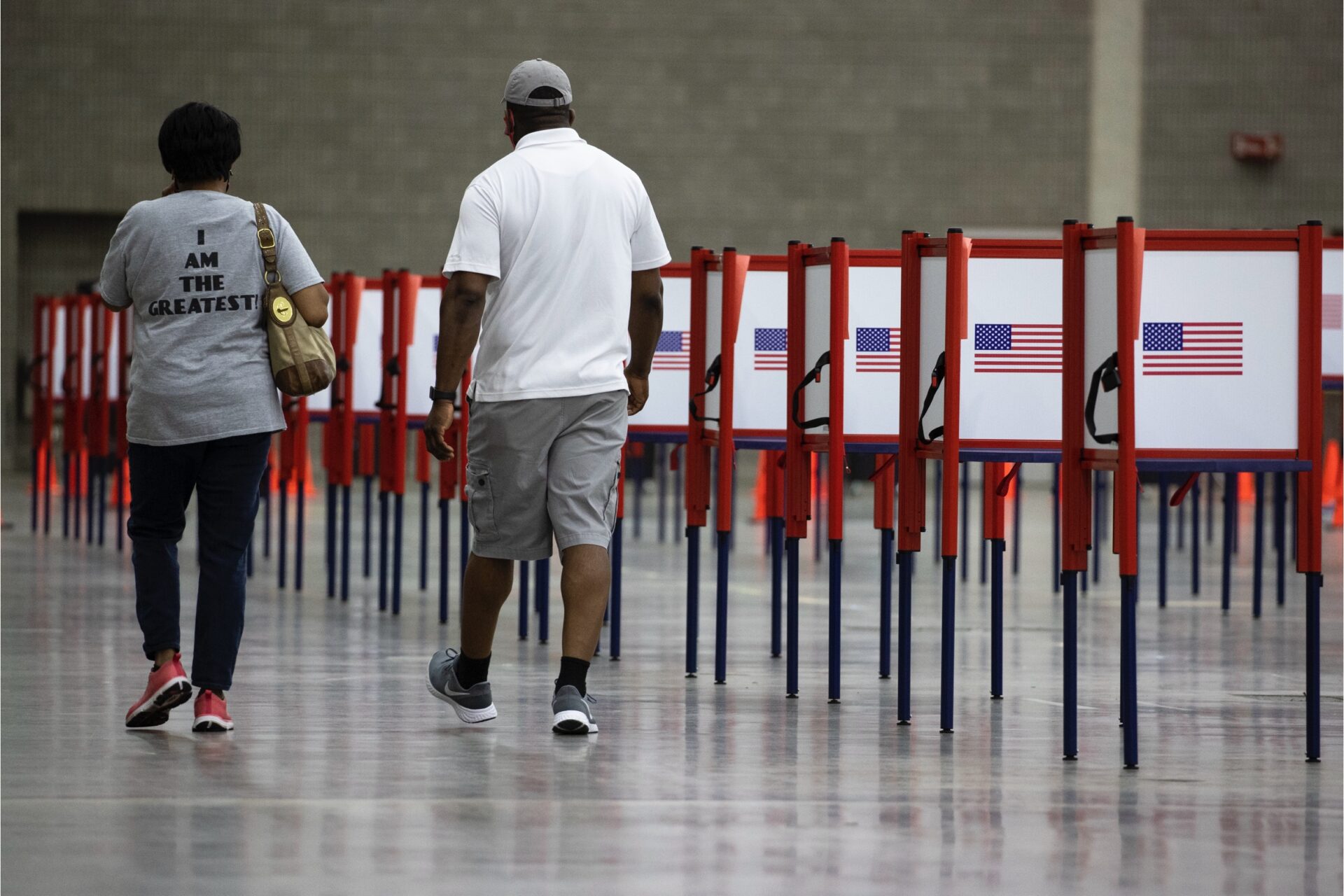
The Ballot Remains The Battlefield: The Demise Of The Voting Rights Act
The Supreme Court has diluted the integrity of the Voting Rights Act
Written by Dr. Russ Wigginton
The Supreme Court’s decision in Louisiana v. Callais effectively renders Section 2 of the Voting Rights Act (VRA) a “dead letter” by requiring proof of intentional racial discrimination. This ruling mirrors the 2013 Shelby County erosion and threatens up to 15 Black-held House seats. Dr. Russ Wigginton argues that, as in 1966, the response must be massive civic mobilization.
On April 29, the Supreme Court of the United States did what it has been seeking to do for over a decade. It diluted the integrity of the Voting Rights Act without technically saying so.
How does Louisiana v. Callais change the Voting Rights Act?
In a 6-3 decision written by Justice Samuel Alito in Louisiana v. Callais, the Court effectively rendered Section 2 of the VRA all but a dead letter, requiring proof of intentional racial discrimination, a standard Congress never wrote into the law, and that is nearly impossible for plaintiffs to meet. Justice Kagan’s dissent pulled no punches: “Today’s decision renders Section 2 all but a dead letter. In the States still marked by residential segregation and racially polarized voting, minority voters can now be cracked out of the electoral process.”
The ruling could touch off a scramble by Republicans to redraw majority-minority congressional districts, especially in the South, costing many seats held by Blacks and representing Blacks. One analysis found that the gerrymandering unleashed by Wednesday’s decision could lead to white candidates winning 15 House seats currently held by Black members of Congress, a level of racial retaliation not seen since the end of Reconstruction.
Dr. Martin Luther King Jr. and others must have known this day would come. Not this specific date, but this specific resistance.
The Historical Precedent: The 1966 “Coalition of Conscience”
In 1965, King led the march from Selma to Montgomery not as symbolism, but as a strategy. He understood that the ballot was the non-negotiable instrument of self-determination, the one tool that could convert moral authority into legislative power. The Voting Rights Act, signed that August, was the direct result of bloodshed on the Edmund Pettus Bridge. King did not stop there. By 1966, he was building what he called a “coalition of conscience,” registering voters across the South, training community organizers, and insisting that the movement’s next chapter had to be won at the precinct, not just the pulpit.
It worked. The 1966 midterm elections saw record Black voter turnout in the South, shifting the partisan landscape in ways that had seemed unimaginable just two years prior. Black voters in Alabama, Georgia, and Mississippi translated their newly protected franchise into city council seats, judgeships, and congressional representation. The act didn’t just protect a right — it restructured power.
What today’s Court has done is reopen the wound those voters bled to close 60 years ago.
The Erosion of the VRA (2013–2026)
The erosion did not begin today. It began in 2013, when Shelby County v. Holder struck down the VRA’s preclearance provisions. After falling for decades following the VRA’s enactment, the racial turnout gap began to increase again, especially in counties once covered by preclearance. Today’s Callais decision is not an outlier. It is the culmination.
But history also tells us what comes next.
Strategy for Action: Out-Organizing the Gerrymander
When the law retreats, the people must advance. The answer to a Court that picks voters over democracy is a movement that out-organizes the gerrymander. Voter registration drives. Civic education in every school, church, and barbershop. Ranked-choice advocacy. Turnout operations that make suppression irrelevant through sheer numbers. The 1966 model still works, not because it is nostalgic, but because it is true: when enfranchised citizens of every race, background, and ZIP code show up, the map changes.
Janai Nelson of the NAACP Legal Defense Fund said the decision would allow states to “discriminate with impunity.” She is right. But impunity is not immunity from organized, relentless civic participation.
Dr. King asked us, “Where do we go from here?” The answer, 60 years later, is the same: to the polls, to the precincts, to the people. The ballot remains the battlefield. And we have not yet lost the war.
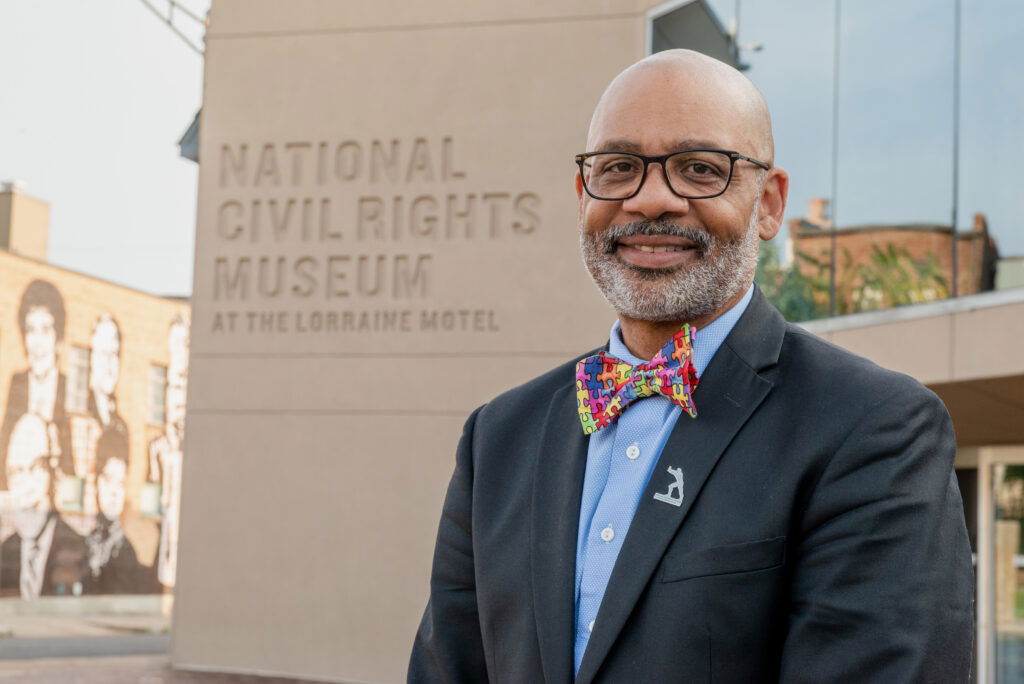
Dr. Russ Wigginton serves as the President of the National Civil Rights Museum. He assumed this role in August 2021 and brings vast experience in education, fundraising, operations, and community engagement. Prior to assuming this role, Russ served as the Chief Postsecondary Impact Officer for Tennessee State Collaborative on Reforming Education (SCORE), where he led the organization’s work for postsecondary access, retention, and completion.

by Sidnee Michelle
May 10, 2026
Joy Taylor’s Next Chapter In Sports Media
This marks an important step in her career nearly a year after she left Fox Sports.
Joy Taylor is coming back to daily sports media with the launch of The Daily Play with Joy Taylor, a new short podcast distributed through the Urban One Podcast Network. This marks an important step in her career, nearly a year after she left Fox Sports.
The project places Taylor in the growing micro-podcast space, where sports commentary is provided in short, mobile-friendly formats. Each episode of The Daily Play is expected to last 5 to 10 minutes, offering a quick analysis of major sports headlines and context for listeners seeking brief updates.
The show airs Monday through Friday on Urban One’s audio network, including Radio One, REACH Media, and various podcast platforms. The format serves as a daily sports check-in, with year-round programming in which Taylor breaks down what happened, why it matters, and what to watch next in ongoing stories.
Taylor described the concept as a response to how people consume media today. She wanted to create a format that is “fast, focused, and always authentic,” showing the need for short but meaningful sports commentary for audiences with busy lives and constant news cycles.
Taylor spent nearly 10 years at Fox Sports, where she worked on key programs like Speak, Undisputed, and The Herd, establishing herself as a prominent voice in national sports television and debate coverage.
Her departure followed broader programming changes at FS1, after which she focused on independent digital work and podcasting centered on on-demand sports content. This transition marks a significant shift in her media career as she moves away from traditional television formats.
This move also highlights a larger trend in sports media, with established personalities increasingly shifting from linear TV programs to digital audio platforms.
RELATED CONTENT: Taylor Rooks Foundations Helps Erase Medical Debt
