Judge Greenlights Racial Bias Lawsuit Against McDonald’s Over ‘Angry Black Women’ Claims
Former executives Victoria Guster-Hines and Domineca Neal allege racial slurs, bias, and retaliation after raising complaints at the fast-food company.
A federal judge from Chicago gave two Black women who are former McDonald’s vice presidents the green light to move forward with claims against the fast-food giant after they accused the chain of subjecting them to racial slurs and criticism because they were Black women, and allegedly forcing them out for complaining, Reuters reported.
U.S. District Judge Mary Rowland approved the suit to move forward after the former executives, Victoria Guster-Hines and Domineca Neal, in a 2020 suit outlined that the regional president had once criticized “Black woman attitude” and described one of the plaintiffs and other employees as “angry Black women,” saying it was enough for a hostile work environment claim to move forward. “Courts confronted with accusations regarding ‘angry Black women’ have noted that this epithet carries significant harm with it,” especially when made by a supervisor, Rowland wrote.
However, the judge dismissed claims from Guster-Hines and Neal that they were passed over for a promotion within McDonald’s, saying there wasn’t enough evidence that they were the best candidates for the positions.
A Mickey D’s spokesperson seemed to be pleased with the dismissal saying, “the evidence will show the remaining claims against McDonald’s USA are without merit” but this suit adds to the lengthy list of discriminatory claims against the home of the Big Mac.
In 2025, McDonald’s settled on undisclosed terms with a former Black security executive who also claimed he was pushed out after criticizing CEO Chris Kempczinski after he allegedly blamed the parents of a girl shot in a McDonald’s drive-thru for her death via text.
Kempczinski later apologized publicly ,saying the texts “reveal my narrow worldview that I have to work hard to correct.”
Media conglomerate CEO Byron Allen launched a $110 billion suit accusing the fast-food chain of shutting Black-owned media out from a majority of the company’s advertising budget. With the terms being restricted, McDonald’s later announced it would include buying ads from Allen’s companies.
‘Don’t Call It A Comeback!’: LL Cool J Partners With Jeep Cherokee For Its 85th Anniversary
LL Cool J is the latest brand ambassador
Experienced by Kimatni D. Rawlins
If you are a hip-hop fan of LL Cool J, chances are you are familiar with the popular verse, “Don’t call it a comeback, I’ve been here for years,” from the 1991 track “Mama Said Knock You Out.” Like the Queens, New York, rapper, the automotive brand Jeep has been on the scene since 1941, and celebrates its 85th year with a reinvention of its Cherokee models—LL Cool J is the latest brand ambassador for the American-made adventure utility. The collaboration is a perfect alignment to leverage LL’s storied legacy and bring the automaker closer to urban auto enthusiasts.
With 2026 representing Jeep’s 85th Anniversary, the brand architects have reimagined both the 2026 Cherokee and the distinguished 2026 Grand Cherokee.
“I’ve been driving Jeep 4x4s for years — if you know you know,” LL Cool J stated in a press release.
“We go way back, so it’s an honor to be part of the iconic Jeep Cherokee’s return. Our bond is built on mutual respect: style, originality, and always striving for the top. Not just for ourselves, but for everyone who chooses to ride with us on this journey.”
In 1974, the Cherokee created a culture of tall wagons, which eventually evolved into 4×4 SUVs. Building on that DNA and heritage, Jeep is investing $13 billion in future products, technology, and off-roading content, including the best-selling vehicle for its parent company, Stellantis. Of course, that is none other than the Grand Cherokee, which Jeep has sold roughly 8.2 million units since its debut at the 1992 Detroit Auto Show. Yet, customers desired more. Jeep listened and obliged.
The All-New 2026 Jeep Cherokee
The confident demeanor of the new Grand Cherokee is represented by a fresh face, 37 combined mpg, 500 miles per tank of gas, and a 30% increase in cargo capacity. How impressive is that? This range is achieved through Jeep’s all-new 1.6-liter turbocharged 4-cylinder hybrid system, which features dual electric motors and standard 4WD on all trims. Moreover, the SUV features the Jeep Active Drive I 4×4 system, which incorporates rear-axle disconnect (typically used for rock climbing). But I’m curious about that, since Jeep doesn’t offer an all-terrain tire option and says that customers desired more on-road amenities. Interesting.
Jeep’s first hybrid in North America can be adjusted in various modes from the Selec-Terrain traction management system: Sand/Mud, Snow, Auto, and Sport. I enjoyed my time outside of the West Lake area of California during the national press drive. The latest Cherokee is 4.7 inches longer, 1 inch wider, 2 inches taller, and features a 6.4-inch longer wheelbase. Of course, the increased size provides better comfort for each occupant and extra space for luggage and gear. Its 210-horsepower does not sound like much, but the goal of the electrical architecture is efficiency. The all-season Pirelli Scorpion M/S tires provided the wet-road traction required for heavy rains. Though it may take drivers a while to get accustomed to the ultra-thick, octagonal steering wheel, owners will adapt quickly with daily use.
Exploratory Jeepers will be satisfied by an 8-inch ground clearance and 19.6-degree/29.4-degree approach and departure angles, respectively. But make sure you have the proper tires outfitted. The flush under-door handles are cool, the black body-clad adds ruggedness, and the eco-friendly, non-leather materials inside provide peace of mind. Jeep offers premium synthetics on the upper trims. When cruising, enjoy nature through the dual-pane sunroof and your music on Uconnect 5’s 12.3-inch infotainment screen with Alpine audio.
Built in Mexico and available in eight colors, the base model has an MSRP of $36,995, while the Jeep Cherokee Laredo costs $39,995, the Jeep Cherokee Limited costs $42,995, and the Jeep Cherokee Overland runs at $45,995. These prices include the $1,995 destination and delivery fee, which is on the higher end of industry standards.
Next-Level 2026 Jeep Grand Cherokee
Step in the ring at the cruiserweight level with the Grand Cherokee to witness Jeep knocking out the competition. With artistic flair and a myriad of attributes, its skill set is akin to Real Deal Evander Holyfield in his prime: tough, agile, and hard-hitting. The Grand incorporates the traits of the Cherokee but takes everything up a notch.
The refreshed, unified face is defined by the traditional 7-slot grille, an adjusted headlight design, and tweaked rear and lower fascias. Jeep simplified the buying process for the Grand Cherokee lineup. The automaker used to offer 165 configurations, excluding colors, but now there are just 10, including the 3-row Grand Cherokee L and the plug-in hybrid. Punching power emanates from the formidable 2.0-liter Hurricane 4 Turbo engine, which delivers 324-horsepower and 332 pounds of torque upon impact. Produced from motorsports technology, the Grand Cherokee definitely hits when you accelerate. However, you will experience a slight bit of turbo lag. Paired to the TorqueFlight 8-speed paddle-shifting transmission, expect a 529-mile range and 6,200-pound towing capacity. Customers can choose the 3.6-liter Pentastar V6 as well.
“The Jeep Grand Cherokee set the standard for SUVs and grand adventures more than 30 years ago, and it continues to drive them forward today,” said Bob Broderdorf, Jeep brand chief executive officer.
The 2026 Grand Cherokee scales to every customer’s needs, offering a blend of surprising power from the all-new Hurricane turbo-four engine, true 4×4 capability, and a suite of amenities designed to tackle both every day and extraordinary adventures for customers and their crew.”
Benevolent and harmonious, the Grand Cherokee is both capable and comforting, especially if you select the top-of-the-line Summit. If so, your Jeep will be enhanced by 21-inch rims, a contrasting black top, Palermo leather seats, a front-passenger touchscreen, a Quadra-Lift air suspension, and the astounding 19-speaker McIntosh premium audio system. Bob Marley never sounded so good. Additionally, a trio of new hues has been introduced: Steel Blue, Copper Shino, and Fathom Blue.
Including the destination charge, MSRP ranges from $40,410 for a base Laredo up to $62,190 for the Summit model. Like LL said, “Don’t you call this a regular jam, I’m gonna rock this land.” That’s exactly what the 2026 Jeep Grand Cherokee was intended to do.
Tuskegee Coach To File Lawsuit After Handcuffing Incident At Morehouse
The lawsuit follows a controversial handcuffing incident involving Benjy Taylor.
Tuskegee men’s basketball coach Benjy Taylor is expected to file a lawsuit this week against Morehouse College campus police officers after he was handcuffed and removed from the court during a game earlier this year.
Taylor will meet with his legal team in Atlanta on March 20 to officially announce the filing. The lawsuit targets Morehouse College and campus police officers R. Clark and M. Roberson.
The incident occurred in a Jan. 31 Division II game between Tuskegee and Morehouse in Atlanta. Observers recorded the event, which quickly went viral on social media and sparked nationwide backlash.
“I am at a loss for words, and I am upset about how I was violated and treated today,” Taylor said at the time in a statement obtained by Sports Illustrated. “For my players, my family and people of Tuskegee to witness that is heartbreaking for me. I was simply trying to get the football team out of the handshake line as they were following right behind me and the team yelling obscenities! It was a very dangerous situation.”
According to Taylor’s attorneys, the coach approached officers after noticing what he believed was a potentially unsafe situation during the postgame handshake line. A group of Morehouse football players had entered the court and were interacting with players and family members, which attorneys say violates conference security rules.
Taylor asked officers to help clear the court and enforce the rules, but instead, one officer handcuffed him and took him away. Authorities did not charge Taylor with any crimes.
The lawsuit will be led by a team of civil rights attorneys, including Harry Daniels and John Burris, along with attorneys Gerald Griggs and Gregory Reynald Williams.
The SIAC fined Morehouse College an undisclosed amount for its role in the incident. Morehouse College President F. DuBois issued a statement that seemed to disagree with SIAC’s decision.
“While Morehouse leadership and I take the SIAC’s findings seriously, we have questions about an investigation that did not include a request for the College’s input but ultimately determined responsibility and a fine,” Morehouse College President, Dr. F. DuBois Bowman, said the statement obtained by HBCU Legends. “This falls short of the due diligence expected of a fair and comprehensive process, and we are engaging directly with the SIAC to reconsider, given the precedent such decisions set for all SIAC institutions.”
Brown also noted that Morehouse issued an apology to Taylor the night after the incident.
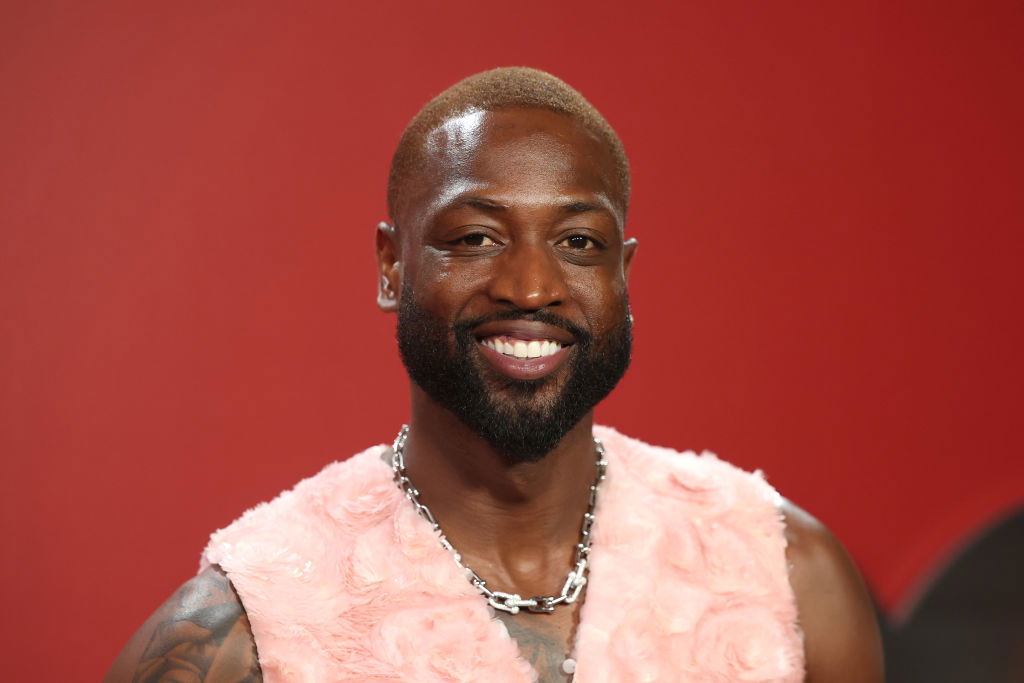
LOS ANGELES, CALIFORNIA - NOVEMBER 16: Dwyane Wade arrives at the GQ Men of the Year Party 2023 at Bar Marmont on November 16, 2023 in Los Angeles, California. (Photo by Phillip Faraone/Getty Images for GQ)
The group will regularly meet with JPMorgan Chase executives to discuss their financial needs and develop programs that help them. The move reflects growing competition among banks and wealth managers to serve athletes who often transition into entrepreneurship, investing, and media roles.
A study shows that nearly 65 percent of athletes report receiving no financial education during their careers. According to the National Bureau of Economic Research, approximately 16 percent of NFL players declare bankruptcy within 12 years of retiring.
“Athletes face unique challenges and opportunities. Having the right educational resources and guidance is critical to making smart decisions about money as your career evolves,” said Wade in a press release. “I’m excited to join the JPMorganChase Athlete Council and to serve as chair of this incredible group of athletes. The Council gives us the opportunity to share our experience and insights to help athletes build their financial knowledge and plan beyond their playing careers.”
Wilson, the WNBA superstar, highlighted the importance of teaching money-management skills to the next generation to break cycles of financial instability in sports.
“We’re starting to try to turn the page and help the youth in the next generation understand that you have to build trust, you have to build boundaries, and know exactly how you want to operate with your money,” Wilson told CNBC.
After his 16-year NBA career, Wade has worked on developing a diverse business portfolio that includes Wade Cellars, his wine partnership featuring a Napa Valley Cabernet Sauvignon and the Three by Wade collection of red, rosé, and Chenin Blanc wines. His Way of Wade basketball and lifestyle brand is available online and at 11 retail stores across China.
In 2020, Wade helped launch Budweiser Zero, the company’s first zero-alcohol beer. In 2021, he partnered with former Miami Heat teammate Udonis Haslem to launch D. Wade Burgers and UD Wings through Combo Kitchen’s ghost-kitchen platform. Through his production company, 59th & Prairie Entertainment, Wade also served as an executive producer of the Sports Emmy-nominated documentary Shot in the Dark.
NEW YORK, NEW YORK - NOVEMBER 06: Teyana Taylor attends the 2023 CFDA Awards at American Museum of Natural History on November 06, 2023 in New York City. (Photo by Taylor Hill/FilmMagic)
Essence Fest, Aiming For A Refresh, Names Teyana Taylor Chief Curator
Taylor's creative collective, The Aunties, will collaborate closely with Essence’s programing, talent, and community teams.
Following mixed reactions to the 2025 Essence Festival, the iconic annual event is aiming to restore its reputation by appointing Teyana Taylor as its new chief curator.
The Oscar-nominated, Golden Globe-winning multi-hyphenate was named the inaugural chief curator of the Essence Festival of Culture on March 18. Her creative collective, The Aunties, will collaborate closely with Essence’s programing, talent, and community teams to curate this year’s festival in New Orleans.
Taylor’s addition to the 2026 lineup builds on what Essence Festival of Culture has branded its “Ladies First” theme, following last week’s announcement of a powerhouse, female-led roster of headliners, including Cardi B, Patti LaBelle, and Brandy and Monica.
“We said ladies first, and we meant it. Not just on the stage, but behind the scenes too,” Essencecaptioned an Instagram announcement. “We are excited to announce Teyana Taylor is stepping in as Chief Curator for the 2026 ESSENCE Festival, and you already know the vibes are about to be next level.”
Fans have voiced excitement and support, with many hopeful that Taylor will “bring the Essence Festival back to its truth and glory,” as India Arie put it.
“We counting on you Teyana,” Arie wrote.
“I hope she’s been listening cause she can turn things around for sure,” added someone else.
The announcement of headliners and Taylor’s appointment come amid reports that festival organizers owe more than $400,000—initially estimated at around $456,000—to the Ernest N. Morial Convention Center from the 2025 event, a sum that accounted for a significant share of the festival’s daytime programming costs.
On March 9, Essence Festival of Culture organizers said they had reached agreements to pay all contractors from last year’s event, after New Orleans officials warned that unpaid balances could jeopardize government incentives for the July 2026 festival. Sundial Media Group, the New York-based owner of Essence, said in a statement it had “addressed all financial issues” with festival partners and is now focused on planning this year’s event, set for July 3–5.
Mystikal Is The ‘Danger’: Rapper Pleads Guilty To Rape 20 Years After First Conviction
Tyler was initially accused of first-degree rape, simple criminal damage to property, domestic abuse battery by strangulation, simple robbery, and false imprisonment in 2022.
On March 17, New Orleans rapper Mystikal, real name Michael Tyler, pleaded guilty to third-degree rape charges.
Tyler was accused and arrested for first-degree rape, simple criminal damage to property, domestic abuse battery by strangulation, simple robbery, and false imprisonment in 2022. The crime was made public by the Ascension Parish Sheriff’s Office. In August of 2022, the Sheriff’s office responded to a call at the local hospital. There, the alleged victim identified the rapper as her assailant.
Tyler was accused of choking and raping the unnamed woman after claiming she stole money from him. As a result of his suspicion, he physically assaulted the woman, stole her keys, and forced her to send him funds via Cash App. Pleading down to lesser charges will reduce the severity of his penalties, as the rapper was facing a life sentence. Though life is no longer on the table, Tyler still faces up to 25 years in prison, USA Today reported.
All Hip Hop reported on alleged details surrounding the violent sexual assault. The outlet claims that Tyler was allegedly under the influence of unspecified drugs. Furthermore, he forced the victim to pray with him to cleanse her body of any “bad spirits” before the assault. Tyler initially denied the allegations, alleging the accusation was an attempt to extort him for $1,000.
Once a successful recording artist of hit records “Shake Ya A**” and “Danger,” the 55-year-old is no stranger to serving jail time. Nor is he a stranger to sexual assault against women. The rapper has been charged with rape three times over the course of two decades. He was convicted of his first crime in 2003 and served six years in prison. The rapper also registered as a sex offender upon his release.
In 2012, Tyler was arrested and convicted of domestic abuse and served three months in jail. Though he was not convicted in 2017, he was arrested for similar crimes to the current-day rape and kidnapping. Those charges were subsequently dropped.
With Gold Teeth And A Masters Degree, This Black Scientist Is Changing The Face Of Microbiology
Jordon King lights up the Florida Everglades, saving the environment one social media post at a time.
A South Florida scientist and social media influencer turned his passion for microbiology into a flourishing online platform, breaking the mold in scientific research, reaching a new audience, and challenging conventions in the field.
Jordon King documents his learning adventures for his over 200,000 followers across various social media platforms from Everglades National Park, a key research destination in Florida. King mentions that many of his followers often comment on his appearance, which includes dreadlocks and a gold grill, styles not typically associated with people working in the industry.
“I think what makes me stand out is my personal style. Me just being myself and not conforming to the standard of a scientist, King told NBC News.
King’s research focuses on “floc” and what it can reveal about changes in the Everglades, over time, caused by human intervention, such as freshwater restoration.
“Floc is looser, and soil is more compact,” King explained to NBC News. “The floc is what helps to form the sediment, so without floc, there is no sediment, and without sediment, there are no plants because they need it to grow, and without plants, animals don’t have anything to eat, and then the ecosystem becomes a whole mess,” King said.
Completed 2 long years of research in the Everglades while being in grad school and it was a journey. My research was focused on flocculent organic matter (like soil, but looser) and I experienced and learned so much along the way. I even published a paper about my research. Now that grad school is over, what’s next ? #biologist#researchscientist#biology#gradschool#stem
His self-directed research earned him a master’s degree from Florida International University. The 23-year-old said he contacted 40 professors, but only two responded, with one of them helping him start his research journey. King says he decided to share his academic research on social media and in schools to raise awareness and inspire others to pursue environmental sciences.
“It feels so good to not only talk to our future generation, but also inspire them using my career in environmental science. As a scientist, I feel like it is my duty to do this. This was definitely a surreal moment for me and I hope to visit more schools in the near future,” King said in a social media post highlighting his visit to a South Florida elementary school. Along with teaching others about microbiology, King also uses his platform to share stories of other Black microbiologists, who make up less than 3% of scientists in the field.
The Raid, The Remix, And The Reckoning: Afroman Wins Legal Victory Against Ohio Police
Afroman successfully defeated an Ohio police defamation lawsuit after officers raided his home, seized his money, and even eyeing his lemon pound cake.
On March 18, Grammy-nominated rapper Afroman won a defamation lawsuit brought by seven Ohio deputies over music videos that used home security footage to mock a 2022 raid on his home, CBS News reported. The raid, conducted by the Adams County Sheriff’s Office, was tied to drug trafficking and kidnapping allegations, though no charges were ever filed.
Officers seized thousands in cash, electronics, and other items, with Afroman saying only $4,600 was returned, fueling his claims that police took his property. He later used the footage to criticize the raid, prompting deputies to sue for defamation and invasion of privacy, a case he ultimately won.
“It’s not only for artists. It’s for Americans,” Afroman said after winning the case. “We have freedom of speech. They … did me wrong and sued me because I was talking about it.”
“It’s for the people, by the people,” he added. “So when the people can’t use their freedom of speech, bring up the problem, address the problem, take care of the problem, then the problem never gets solved.”
The case tested the boundaries of parody and how far artists can go in criticizing public officials, with deputies seeking nearly $4 million in damages.
“No reasonable person would expect a police officer not to be criticized,” defense attorney David Osborne argued, noting officers have long been the subject of public scrutiny.
The Adams County Sheriff’s Office deputies claimed they faced harassment after the music videos received more than 3 million views on YouTube and went viral. The clips show officers breaking down Afroman’s door, searching his belongings, and eyeing a cake in his kitchen, which inspired his song “Lemon Pound Cake.”
In his testimony, Afroman, who lives in Winchester, about 50 miles outside Cincinnati, said he had every right to share his experience with fans and friends. He added that the raid left his children, then 10 and 12, traumatized. His attorney argued in closing that exaggeration is common in artistic expression, especially when used for social commentary.
“The whole raid was a mistake. All of this is their fault. If they hadn’t have wrongly raided my house, there would be no lawsuit. I would not know their names,” Afroman said. “They wouldn’t be on my home surveillance system, and there would be no songs, nothing.”
‘GOAT Back Outside’: JAŸ-Z Announces Anniversary Shows At NYC’s Yankee Stadium
Roc Nation announced the news on its website.
Brooklyn billionaire Sean “JAŸ-Z” Carter announced he will have two celebratory concerts in the home of hip-hop at Yankee Stadium in The Bronx, New York, this summer.
The rapper, who earlier this year kicked off the celebration by releasing the original “Dead Presidents” song, which debuted before his classic 1996 debut album, “Reasonable Doubt,” will be in The Bronx on July 10 and July 11. The first night will be JAŸ-Z 30, which celebrates the 30th anniversary of his first album, while July 11 will be JAŸ-Z 25, an ode to his 2001 project, “The Blueprint.”
Roc Nation announced the news on its website on March 18.
The festival will take place at the historic Belmont Plateau in Philadelphia’s Fairmount Park.
“Moving the Roots Picnic to Belmont Plateau and bringing JAŸ-Z and The Roots together to perform are both bucket-list moments for us,” Manager of The Roots and President of Live Nation Urban Shawn Gee said in a written statement. “After meeting with Mayor Cherelle Parker and hearing her vision for Philadelphia 250, she truly inspired us to dream even bigger, and we’re grateful to her, Commissioner Susan Slawson, Jazelle Jones, and everyone who helped make it happen. We can’t wait to see everyone in May at the Plat.”
Since the reissue of “Dead Presidents,” fans have been speculating about the recording artist’s moves regarding shows and new music. Roc Nation has set up a website, JAYZ30.com, to keep people abreast of his anticipated moves, but it has also posted other songs on the site since it initially featured the reissue earlier this year.
Fans are definitely taking note and are reacting to the news that one of hip-hop’s finest will be performing at least three times this year!
Nothing like a stadium full of fans to remind us that some of Jay-Z's best bars are older than the kids on TikTok. Here’s to a weekend that’ll knock your AirPods off!
Courtney Adeleye Makes History With Both Haircare Businesses Stocked At Major Retailers
Adeleye celebrated her second hair and skincare brand to hit Walmart's shelves.
One business owner’s success has doubled as major retailers now stock both her haircare brands.
Courtney Adeleye already made headlines with her natural haircare brand, The Mane Choice. Emphasizing natural ingredients that focused on hair length and retention, the brand became a leader in the beauty industry, resulting in her business growth as well.
The former nurse turned the brand into a multimillion-dollar entity, beginning operations from home. The Mane Choice and its acclaimed shampoos, deep conditioners, and hair-growth vitamins passed $100 million in sales by 2019.
“There were not many brands that used natural ingredients and specialized in healthy hair growth at the same time,” Adeleye told Entrepreneur in a 2023 profile. “So, I started mixing my own products at home and infused them with vitamins, nutrients, and healthy ingredients.”
Like many successful founders, Adeleye decided to pursue an acquisition to secure new ownership and grow the business. That same year, she sold The Mane Choice to MAV Beauty Brands for $61.5 million, according toWWD.
However, Adeleye’s entrepreneurial spirit did not waver. She then began developing another brand that ties skincare and haircare together. Using the knowledge gained from her last venture, she created Watch & Sea Beauty. This brand, however, specializes in using plant- and ocean-based ingredients, staying true to her original business ethos of natural sourcing.
Now, Watch & Sea Beauty has formed its own wave. Its assortment of scalp cleansers and complexion serums has taken over shelves at CVS and Walmart. With her second brand stocked by the latter, Adeleye has a new claim to fame as a barrier-breaking entrepreneur.
On social media, she celebrated the feat, noting that it occurred during Women’s History Month. In the post, she showed off both her current and former haircare brands on Walmart shelves.
“For every moment I doubted whether I belonged in rooms that weren’t built for me. We just closed out Black History Month, and now we’re stepping into Women’s History Month, and I can’t think of a more powerful time to share this news. History isn’t just something we read about. We are OUT HERE MAKING IT,” she wrote in the caption.
Although she no longer owns The Mane Choice, she still remarked that two Black-women-founded brands are available for nationwide distribution through the commerce giant.
“Not only has it not been done by an African-American woman, but it’s also never been done by [an] African-American person ever,” she explained in the video.
Watch & Sea Beauty has also found additional distributors, with products available at Target and H.E.B. As she scales another successful launch, Adeleye is proving Black woman can have their own haircare and beauty empires.