HOLLYWOOD, CALIFORNIA - SEPTEMBER 22: Actor Michael Ealy attends the premiere of Hulu's "Reasonable Doubt" at NeueHouse Hollywood on September 22, 2022 in Hollywood, California. (Photo by Robin L Marshall/Getty Images)
Michael Ealy Is Pulling Up To North Carolina A&T’s ‘Quarter Zips and Matcha Moods’ Series
This conversation is crucial for young men
By Lillien Cirrino
North Carolina Agricultural and Technical State University’s Spring 2026 edition of the Chancellor’s Speaker Series will host actor Michael Ealy on Tuesday, April 7, at 6 p.m. in Harrison Auditorium for “Quarter Zips and Matcha Moods,” while alum Christian Robinson will facilitate the conversation.
The name “Quarter Zips and Matcha Moods” references a social media trend in which young Black men are depicted wearing quarter zips with an iced matcha latte in hand—symbolizing their multidimensional identity and style.
The discussion will focus primarily on responsibility, intentionality, lifestyle, and goals for college-aged men, and explore how these areas influence development and maturity. This conversation is crucial for young men to be having amid this ever-changing digital era.
Ealy is best known for his roles in Barbershop, 2 Fast 2Furious, Takers, and Think Like a Man, and will star in Amazon Prime Video’s upcoming limited seriesThe Greatest, about the legendary boxer and civil rights leader Muhammad Ali. In addition to acting, he has served as an executive producer and starred as the title character in the 2015 Sony thriller The Perfect Guy, which opened No. 1 at the box office, and earned him an NAACP Image Award nomination for Outstanding Actor in a Motion Picture.
Robinson, the moderator for this event, earned his B.S. in economics in 2012 from A&T. During his time at A&T, Robinson was fully immersed in his collegiate journey, serving as SGA president, which was one of his many foundations for his work at the U.S. Department of Education under the Obama administration, where he worked in various positions. Robinson is now an attorney who focuses on advising startup founders.
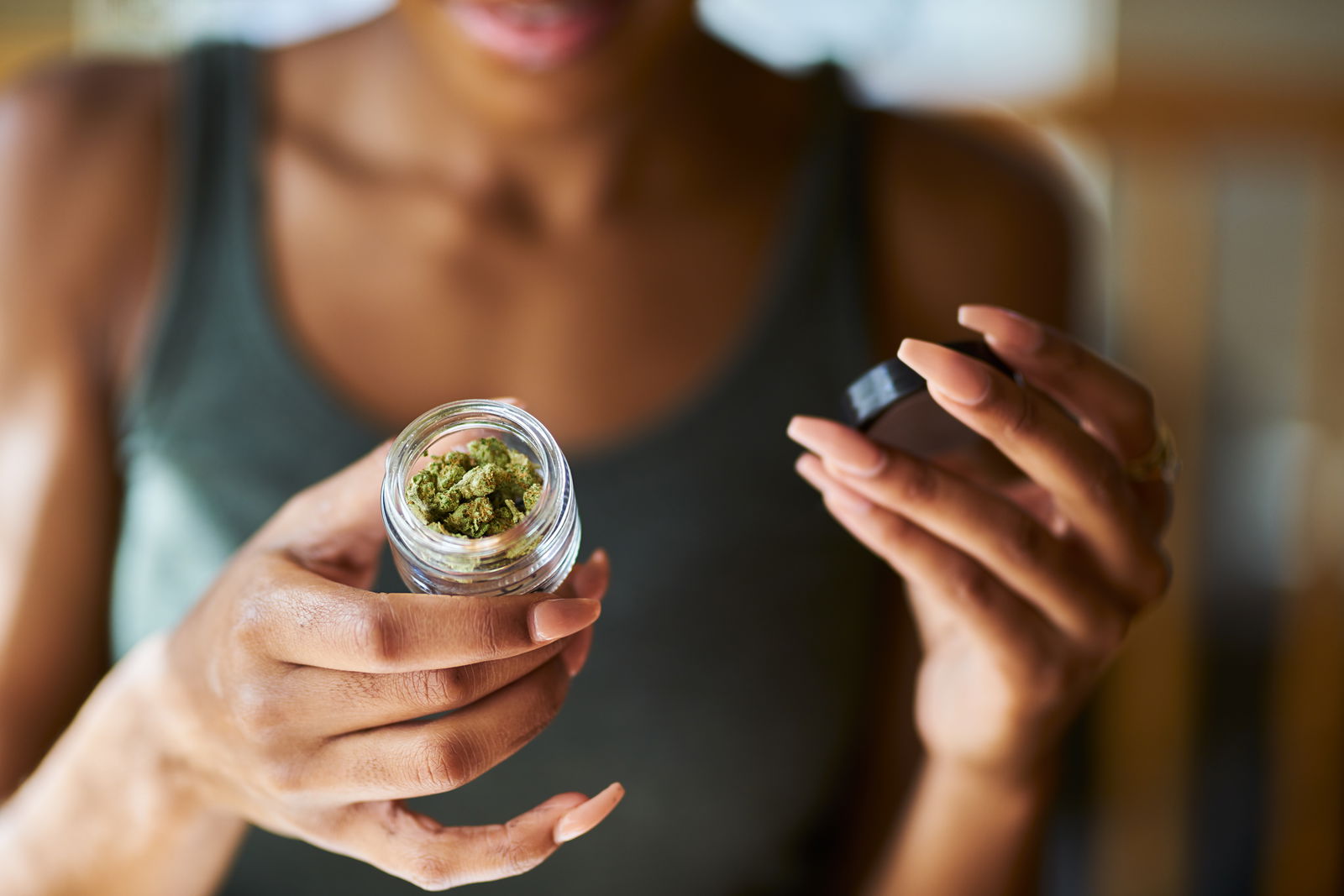
Despite The Odds, These Black Women Are Blazing The Cannabis Business
In 2024, the weed business was worth about $40 billion
The United States legal cannabis market is a billion-dollar industry that will grow “year over year through 2028,” The Library of Medicine projected. In 2024, the weed business was worth about $40 billion. Black women have been increasing their ownership stake in the sector that previously faced capital restrictions, licensing difficulties, and policy obstacles. According to industry data, Black entrepreneurs make up a small portion of cannabis business owners, despite Black communities having experienced disproportionate marijuana criminalization during the War on Drugs. Through efforts to create dispensaries and start cannabis brands while pushing for fair industry policies, Black women entrepreneurs are getting a cut of the cannabis wealth.
Pioneering female entrepreneurs in California and Maryland are transforming cannabis into economic value through ownership, development, advocacy, and community investment initiatives.
Hope Wiseman
After completing her studies at Spelman College, Hope Wiseman entered the cannabis industry, becoming the youngest Black woman dispensary owner in the United States when she opened Mary & Main in Prince George’s County, Maryland, in 2018 at age 25. The medical cannabis dispensary started by Hope and her mother, Dr. Octavia Simkins-Wiseman, serves to increase access to medical marijuana treatment and educate patients about its use. Hope’s entry into the industry marked a broader movement toward Black ownership in the fast-growing sector, where minority business owners remain underrepresented. Through Mary & Main, Wiseman has directed her efforts toward educating the community, providing patient care, and promoting economic involvement in Maryland’s medical cannabis market.
Kika Keith
After years of advocating for cannabis equity policies in Los Angeles, entrepreneur Kika Keith turned activism into ownership by opening Gorilla Rx Wellness, which is recognized as the first Black woman-owned dispensary in the city. The dispensary started operations in 2021 in the Crenshaw district, with two objectives: to help minority-owned cannabis brands and to support local residents. Keith worked hard to establish business ownership through persistent lobbying of city officials to develop legal market options for residents who experienced unequal cannabis criminalization in their neighborhoods.
Roz McCarthy
After experiencing the healing benefits of cannabis after managing chronic pain after a serious car accident, entrepreneur Roz McCarthy became a leading advocate for minority participation in the cannabis industry. Minorities for Medical Marijuana (M4MM) is a national nonprofit organization founded by McCarthy to promote diversity in the cannabis sector through educational programs, policy, advocacy, and professional development initiatives. McCarthy serves as the leader of Black Buddha Cannabis, which produces wellness-focused products while building community connections. Through her dual roles as an advocate and business leader, McCarthy has helped increase discussions about equity and access in the fast-growing legal cannabis market.
Wanda James
Wanda James established herself as a pioneering figure in the cannabis industry before the nationwide expansion of cannabis legalization. In 2010, Wanda James and Scott Durrah established Simply Pure in Denver, which became one of the earliest Black-owned cannabis dispensaries in America. James joined the cannabis industry following her work as a U.S. Navy lieutenant and political strategist who supported marijuana legalization and criminal justice reform. Through vocal leadership, James advocates for cannabis equity policies while educating people about the need for minority ownership in an industry that produced mass incarceration of Black Americans.
Chanda Macias
Dr. Chanda Macias combined her cellular biology expertise with cannabis entrepreneurship to become the CEO of Women Grow, a national organization that connects and supports women leaders in the cannabis industry. She extended her influence by managing National Holistic Healing Center, a medical cannabis dispensary and cultivation facility based in Washington, D.C. Through her scientific research background and business leadership skills, Macias educates people about therapeutic uses of cannabis and promotes diversity in leadership within the cannabis industry.
Moss says the president's executive order, "Ending Taxpayer Subsidies for Bias Media," issued May 2025, "crosses that line."
A federal judge has sided with the First Amendment right of free speech by blocking President Donald Trump’s executive order to ban federal funding for National Public Radio (NPR) and the Public Broadcasting Service (PBS) — for good, NPR reports.
Judge Randolph D. Moss of the U.S. District Court for the District of Columbia ruled that the block violated the broadcasters’ First Amendment rights on its face, labeling it “unlawful and unenforceable.”
“The First Amendment draws a line, which the government may not cross, at efforts to use government power – including the power of the purse – ‘to punish or suppress disfavored expression’ by others,” the District court said.
The ruling comes in a lawsuit against the administration from plaintiffs, including NPR, Aspen Public Radio, Colorado Public Radio, and KSUT Public Radio in Ignacio, Colorado. Moss says the president’s executive order, “Ending Taxpayer Subsidies for Bias Media,” issued May 2025, “crosses that line.” The order reads: “Which viewpoints NPR and PBS promote does not matter. What does matter is that neither entity presents a fair, accurate, or unbiased portrayal of current events to taxpaying citizens.”
In addition to accusing the public broadcasters of having ideological bias, targeting NPR’s news coverage by singling out two speakers and banning them from all federally funded programs, Moss decided to put an end to it. “The message is clear: NPR and PBS need not apply for any federal benefit because the President disapproves of their ‘left wing’ coverage of the news,” Moss wrote, according to PBS.
Under the Constitution, the U.S. government is prohibited from discriminating against people based on their expressed views, including in news coverage.
Trump has been after anyone who expressed views that don’t seem to align with his or those of the Republican Party, targeting the broadcasting networks. During a 2025 conference, he said he would “love to” defund NPR and PBS since he believes they’re biased in favor of the Democratic Party. Through his executive order, millions of dollars in funding from the Education Department to PBS for children’s programming were cut, forcing the system to lay off some PBS Kids staff.
PBS CEO and President Paula Kerger celebrated the ruling. “At PBS, we will continue to do what we’ve always done: serve our mission to educate and inspire all Americans as the nation’s most trusted media institution,” she wrote.
NPR’s President and CEO, Katherine Maher, described the ruling as a decisive affirmation of the rights of a free and independent press. “Public media exists to serve the public interest — that of Americans — not that of any political agenda or elected official,” the leader wrote.
Following the ruling, White House spokesperson Abigail Jackson released a statement calling the decision “ridiculous” and pushing against Moss. “This is a ridiculous ruling by an activist judge attempting to undermine the law. NPR and PBS have no right to receive taxpayer funds, and Congress already voted to defund them,” the statement read.
“The Trump Administration looks forward to ultimate victory on the issue.”
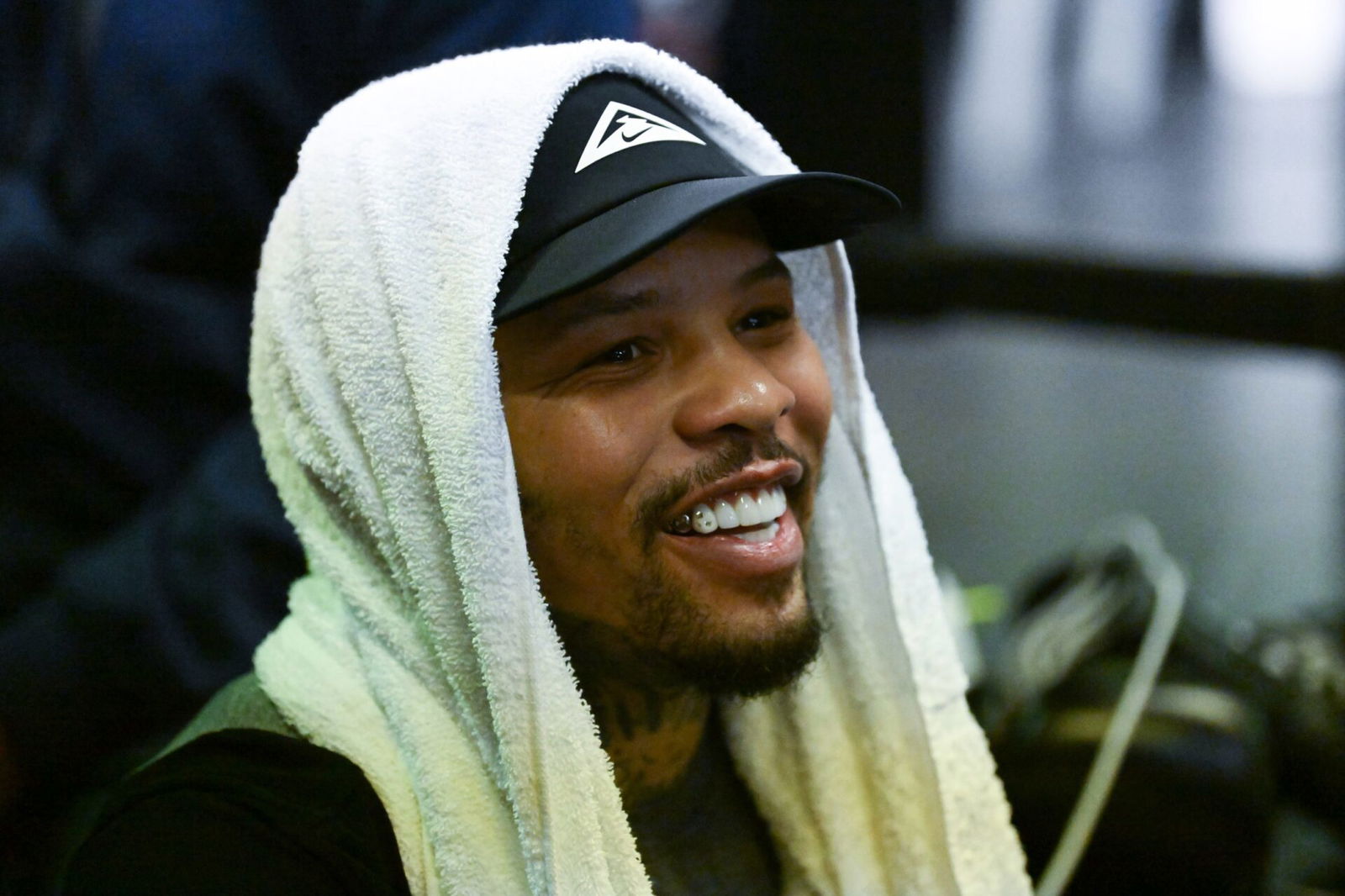
Gervonta ‘Tank’ Davis Files $20M Countersuit Against Domestic Violence Accuser
The undefeated boxer denies striking her
Gervonta “Tank” Davis, who has been accused of assaulting a woman at a strip club in October 2025, has filed a countersuit against the woman, denying that he ever hit or choked her that night.
According to TMZ Sports, the boxer is seeking $20 million from the woman he used to date, Courtney Rossel, claiming her accusations are false. He says it’s a shakedown attempt, since she previously demanded that he pay her $1.1 million to make the accusation go away.
He claimed that after the alleged incident, she spent the next two nights with him at her residence.
Tank also stated in the suit that, due to her accusation, he’s suing for “interference with business relationship” after a match against Jake Paul, scheduled for Nov. 14, 2025, in Miami, was canceled. Paul, who was also a promoter for the bout, called the fight off after news of the alleged domestic violence was reported.
He was slated to take home $20 million for the boxing match. The victim has already responded to the countersuit, and her legal team has filed a motion to dismiss his counterclaim, saying that Tank can’t sue her for reporting an alleged crime. After news of the alleged crime, Miami prosecutors filed criminal charges related to the incident and issued a warrant for the boxer’s arrest. Tank evaded law enforcement for two weeks before being apprehended and then charged with attempted kidnapping and battery.
TMZ Sports reported that after Davis’ countersuit was filed, attorneys for the alleged victim were at a Florida court on March 31 (for the civil case, not criminal), providing the court with surveillance footage that allegedly shows Tank grabbing her by the neck at the strip club, Tootsie’s Cabaret.
The video shows the boxer grabbing her by the neck, pushing her through a hallway, and down some stairs, leading to an exit. She then turns away from Tank and another man and heads back inside the club.
The accuser’s attorney spoke to the media outlet and said, “What Mr. Davis did to Courtney was outrageous. And the judge agreed. This is not the first, second, or third time that Mr. Davis has acted in this manner.”
“His defense team showed their desperation by attempting to attack Courtney, when the videos clearly showed that what Courtney said was truthful and consistent with her affidavit, the police arrest, and the incident report by her employer.”
Tank’s attorneys reached out to TMZ Sports and issued a statement after the plaintiff’s lawyers showed the video in court: “We were disappointed with the court’s ruling today, as we do not believe the video tells the entire story.”
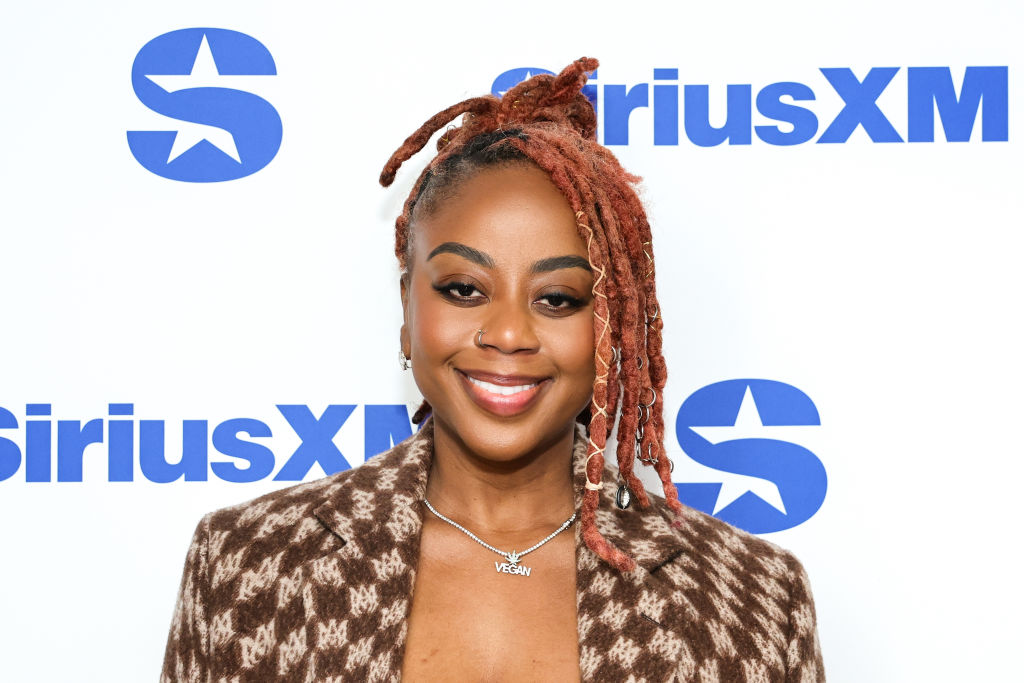
Pinky Cole Explains How She Lost Slutty Vegan And Lessons Learned From Reclaiming Ownership
Pinky Cole explained how she lost ownership of Slutty Vegan after the eatery was "drowning" in debt.
Pinky Cole is opening up about her rise and fall in entrepreneurship, explaining the lessons she’s learned since reclaiming ownership of Slutty Vegan.
The restaurateur and latest “Real Housewives of Atlanta” star is no stranger to the pitfalls of business. However, she fondly reflects on her journey as she regains her footing with Slutty Vegan. Ahead of her debut on the reality show, Cole appeared on “The Breakfast Club” to talk about losing her business and how she got it back.
When asked why she filed for Chapter 11 Bankruptcy, which allows a business owner to maintain operations while reorganizing their debts, shortly after reclaiming ownership of Slutty Vegan, Cole explained that she ended up with $20 million in debt at the peak of her business’s growth.
🚨 @pinky907 came through and breaks down what happened with her Slutty Vegan business and the lessons she learned while navigating the hiccups of entrepreneurship. Check out the full interview on @netflix ! pic.twitter.com/Ki8hxWxiGl
“At my peak [we had] 14 locations [of] Slutty Vegan. It cost me between $800,000 to a million to open up each location. I raised $25 million in 2022, the company got valued at $100 million. We [we’re] kicking in the middle of a pandemic, in the middle of a time where inflation is through the roof… Supply chain is crazy. So, like, there’s like, a 6x [price markup] on everything. We did everything that we said that we were going to do in business,” explained Cole to the show’s hosts, which streamed on Netflix.
Cole landed herself in hot water after growing her franchise with capital funding she could not keep up with. After assembling a team that struggled to thrive under the new responsibilities, and with rising costs to maintain operations, her bottom line plunged into the negative.
“The problem is that when you grow that fast, right? …You got people that do an incredible job in their skill set, but then you position them somewhere else, and they can’t do what you need them to do to take you where you need to go,” explained the 38-year-old. “So, as a result, we got $20 million in debt, right? And as a result of that debt, we were drowning.”
She added, “We were making money [in the] double digit millions. But if your payroll is high, and if you have all of these costs and everything is adding up, your bottom line is going to be red.”
As she tried to file an assignment for the benefit of creditors, a move she calls “bankruptcy’s first cousin,” the plan cleaned house so that she could, essentially, start fresh with the business. The result not only ousted investors but also her position as CEO.
Cole had to forfeit ownership of Slutty Vegan for several weeks. In that interim period, another step was to sell off the assets and pay down the debt. Although she bought back her business 43 days later, her entrepreneurship troubles persisted.
As she reclaimed responsibility for the company, creditors began to knock on her personal door to resolve lingering debt issues. However, Cole claims that she has no assets in her name, a “smart” move that she says prompted the bankruptcy filing.
“But smart entrepreneurs know is that you don’t really hold no assets in your personal name on paper. I ain’t got nothing personally and as it should be…,” she asserted.
While she continues to juggle lawsuits and keep Slutty Vegan open, Cole takes the lessons in stride. Still navigating the “hiccups” of sustaining a successful business, Cole insists she has become a better entrepreneur because of the hurdles.
“There’s so many things that I’ve learned as an entrepreneur in this process, and I’m so glad that I had the hiccups. I’m so glad that sometimes things didn’t go right, because it really only made me stronger and wiser.”
Black Women Aren’t Leaving The Workforce, They’re Rejecting Who It Requires Them To Be
There’s a shift but we’re calling it the wrong thing
By: Dr. Nicole Yeldell Butts
Headlines say Black women are leaving the workforce. Analysts from the Economic Policy Institute point to layoffs, burnout, and the steady rise in entrepreneurship. Data from Wells Fargo shows Black women among the fastest-growing groups of business owners in the United States, even as they experience disproportionate job loss and workplace instability.
All of that is true. But it is not the full story. What we are witnessing is not simply a workforce trend; it is a deeper shift. It’s one rooted not just in work, but in identity.
For decades, Black women have navigated professional environments that required far more than competence. Success has meant code-switching, over-performing, and constantly proving our worth while delivering beyond expectations, managing perception, and containing emotion. It has meant tying personal value to professional output and excellence to survival.
Until 2024, I spent more than two decades working in the people and culture space. I’ve served as chief diversity officer, vice president, and director of human resources. In those capacities, I have literally seen it all.
Over time, the impossible standards Black women face have become normalized. Even expected. Highly educated. Highly capable. Highly accomplished. And still, navigating environments where recognition does not match contribution, and advancement is not followed by impact.
For a long time, the question has been: How do I succeed here? What else must I do?
But in recent years, a different question has begun to emerge: What is this success costing me?
Because for many Black women, the cost has been more than long hours or professional pressure. It has been the ongoing requirement to adapt, manage perception, anticipate bias, and sustain a level of performance that leaves no room for error.
And at some point, awareness shifts. This is something I’ve seen in my practice as an organizational culture strategist who helps individuals and institutions unlock transformation. It’s also why I created the SHIFT™ framework.
What once felt like ambition begins to feel like misalignment. What once felt like achievement begins to feel like maintenance. What once felt like success begins to feel incomplete.
This is the part of the story we are missing. Because what looks like a departure is often the result of discernment. What looks like disengagement is often clarity. What looks like an exit is often a decision. It’s Black women saying, I no longer want to succeed at something that requires me to be someone I am not.
This is not simply burnout. It is awakening.
A recognition that success, as it has been traditionally defined, does not always equate to fulfillment. That stability without alignment is still a form of constraint. That achievement without authenticity eventually becomes unsustainable.
And so, many Black women are making a different choice.
Not just to leave jobs, but to redefine what work, leadership, and success mean on their own terms.
Entrepreneurship is one expression of that shift. But even that is not the full story. This moment is not just about where Black women are going. It is about what they are no longer willing to carry.
When the most educated, capable, and consistently over-performing demographic begins to opt out of traditional structures, the question is not simply why they are leaving. The question is what have those structures have required of them? And why is that requirement no longer acceptable?
This also has implications far beyond any single group. Because Black women have often been early indicators of broader cultural shifts. We navigate pressures, contradictions, and expectations that eventually surface more widely.
What we are seeing now may be an early signal of a larger shift that challenges how work is defined, how success is measured, and how identity is negotiated within professional spaces.
A movement away from endurance as a measure of success. A movement toward alignment as a measure of sustainability. A movement from proving to choosing.
This is not simply an economic story. It is a human one.
And perhaps the most important shift is this:
Black women are not just leaving the workforce. They are rejecting the identities that the workforce has required them to perform. They are choosing something more aligned. More self-defined. More whole.
This is not just an exit. It is a recalibration.
And in that recalibration, we may be witnessing not a loss, but a redefinition of what it means to truly thrive.
NEW YORK, NEW YORK - JUNE 15: Billy Porter speaks onstage for Storytellers during the 2023 Tribeca Festival at Spring Studios on June 15, 2023 in New York City. (Photo by Cindy Ord/Getty Images for Tribeca Festival)
Billy Porter Warns That Under Trump Adminstration ‘Work Is Slowly Drying Up’
“Authoritarian governments go after the arts first. Because the arts have the power to reach inside of people and change the molecular structure from the inside out.”
While appearing on PoliticsNation with Al Sharpton, actor Billy Porter discussed how the Trump administration’s recent actions, including the attack on civil liberties, are affecting opportunities for Black people, as well as queer folks.
According to the Advocate, Porter attended a demonstration in Washington, D.C., in front of the Kennedy Center with the likes of Jane Fonda, Joan Baez, and Jim Acosta the Friday before the last round of “No Kings” protests, “as artists warn that President Donald Trump’s cultural agenda is threatening creative independence at one of the nation’s flagship institutions.”
During his Saturday visit with Sharpton, Porter, best known for his work in Broadway’s Kinky Boots, laid out his fears.
“Authoritarian governments go after the arts first,” Porter said. “Because the arts have the power to reach inside of people and change the molecular structure from the inside out.”
Porter has already felt the effects of the current administration directly. “As a Black gay out artist, I caught the wave of what we now know as performative wokeness,” he said. “And I crashed through glass ceilings that were concrete. And I have noticed the opportunities slowly drying up for the work that I do.”
He’s noted that with programming that’s on now. “The Midwest CBS shows and the cop shows… all of that stuff still exists,” Porter said, according to the Advocate. “But when it’s time to talk about heart, when it’s time to talk about connection, when it’s time to talk about people that don’t look like everybody else…there’s not a lot of that work going on right now.”
Porter does knows that people have to meet the challenges the Trump administration keeps erecting.
“This is not the normal resistance,” Porter said. “We have to redefine what going high looks like in this new world order. We have a government who does not follow the rules.”
Masai Ujiri Becomes Principal Owner Of New WNBA Franchise Toronto Tempo
'As an honorary Canadian, I’m excited to be part of the Tempo team as I believe they are building something truly historic — a franchise that represents not only Canada, but the future of basketball.'
Masai Ujiri, who was once the president of the Toronto Raptors, has joined the WNBA ownership group of the Toronto Tempo, which is scheduled to start play this upcoming season.
The new franchise announced Ujiri as a principal owner of the Tempo.
“As an honorary Canadian, I’m excited to be part of the Tempo team as I believe they are building something truly historic — a franchise that represents not only Canada, but the future of basketball,” said Ujiri in a written statement. “I believe deeply in the vision behind the Tempo: creating female leaders, elevating women not just on the court, but across the organization, and building championship culture from day one. This is more than just a new team — it’s a defining moment in women’s basketball globally.”
Ujiri was responsible for helping build the team that took home the Toronto Raptors’ 2019 NBA Championship. He has also committed to helping women in sports through Tempo Rising, a global coaching mentorship program in partnership with Ujiri and the Tempo organization. The initiative will help emerging women-identifying and non-binary coaches excel at their craft within their communities. The program will give those prospective coaches exclusive access to mentorship, professional development, and hands-on coaching experiences. Ujiri, General Manager Monica Wright Rogers, and head coach Sandy Brondello will lead it with a focus on value-driven coaching, community impact, and long-term growth. Anyone who is interested in applying can click here for information.
“Masai’s leadership, his vision, and his deep belief in the power of sport make him an extraordinary addition to our ownership group,” said Larry Tanenbaum, Chairman of Kilmer Sports Ventures. “In his role as a Principal Owner, his influence and values align perfectly with what the Tempo stands for — equity, excellence, and purpose. Together, we will continue to build a franchise that reflects the best of what sport can do for communities here in Canada and around the world.”
The team is the league’s 14th franchise and the first outside the United States.
Content Creator Derrick Downey Jr’s ‘DualShot Recorder’ App Rises To No. 1 On Apple Store
The app helps content creators film in all formats in real time.
Content creator Derrick Downey Jr. has developed a new video recording platform that took the top spot on the App Store.
Called “DualShot Recorder,” the app helps emerging and seasoned content creators take charge of their video releases across various platforms. The app allows storytellers to record in both 9:16 and 16:9 video formats, making it easier to post across YouTube, TikTok, and Instagram.
The app seems to be a game-changer for many video creators already. Within its first 24 hours of launch, DualShot Recorder rose to No. 1 on Apple’s paid apps chart. Downey Jr. shared the exciting news with his over 1.6 million followers on Instagram.
“This is going to help so many content creators, entrepreneurs, and storytellers,” explained the influencer. “DualShot was built to solve a problem I was facing every single day. I didn’t know it would be received like this, but boy, y’all have shown up in a BIG way.”
The user-friendly mobile app encourages anyone to explore their content creation skills. With both 4k and 1080p recording options, it provides a new gateway to get quality videos on the internet without having to record twice. DualShot Recorder even has a real-time storage estimator, letting users know how much space certain footage will take up before downloading onto their devices.
Downey Jr. is no stranger to the lengthy process of content creation. Navigating the struggles of video recording, the tech entrepreneur developed the app to help newcomers troubleshoot these issues before hitting post.
In just one take, creators can have all the sizes and frames they need to showcase their content. Plus, Downey Jr. wanted the app to remain accessible and affordable while protecting users’ creativity. Those who download it will only have to pay a one-time fee. Furthermore, the app ditches subscriptions and even protects users’ personal data, making it more appealing to users.
For non-iPhone users, Downey did report that an Android version of the app is underway. In the meantime, this content tool aims to help creators streamline their recording processes for quicker and smoother rollouts.
Inside Trump’s ICE Facilities: Overcrowding, Neglect And A System Critics Call Despicable
There have been several reports of inhumane conditions facing detainees, including one where an ICE inspection found conditions at the facility violated roughly 60 federal standards for immigration detention but that report was never released.
While Congress struggles to find funding for the Department of Homeland Security (DHS), the curtains are being pulled back on the horrid conditions U.S. Immigration and Customs Enforcement (ICE) detainees suffer at the country’s largest detention center, the Associated Pressreports.
Over 100 calls to 9-1-1 and data from Camp East Montana in El Paso, Texas, paint a disturbing picture of overcrowding, medical neglect, malnutrition and emotional distress for the thousands of detainees waiting to learn their fate amid the Trump administration’s anti-immigration war.
With more than 3,000 people living there, Camp East Montana is described as loud and unsanitary, where detainees struggle to receive sufficient healthcare and are fearful of angry security guards.
After opening in August 2025, data from the City of El Paso showed staff members were making at least one 911 call per day within the detention center’s first five months. During one call, specifically, a man was heard crying in agony after being assaulted by another detainee. A doctor told another 911 operator that a man was banging his head against the wall with thoughts of suicide.
A nurse mentioned a pregnant woman being in severe pain in addition to testing positive for COVID-19. A former property manager from Columbia, Missouri, Owen Ramsingh, spent weeks there prior to being deported to the Netherlands. He said, “Camp East Montana was 1,000% worse than a prison.”
“Every day felt like a week. Every week felt like a month. Every month felt like a year,” Ramsingh said.
The former Missouri native said his mental health took a toll with some of the things he experienced while there. He highlighted how the rooms and showers were often filthy and infested with insects, while detainees were known for stealing others’ food due to hunger, as the portion sizes were inadequate and meals were inedible, leading to fights.
According to Esquire, Ramsingh once overheard security guards taking bets on which detainee would be next to take their own life, adding $500 into a bet pool.
“Holy mother of God, what kind of salary are we paying these animals? This is the kind of shit that went on at Dachau,” he said, referring to the first regular Nazi concentration camp.
“This is the kind of shit that goes on here and now.”
The sense of suicide has riddled Camp East Montana. ICE said security guards responded Jan. 3 after a 55-year-old Cuban man attempted to harm himself and then later used handcuffs and force to restrain him. But a medical examiner ruled his death a homicide caused by asphyxia. Days later, on Jan. 14, staff reported a 36-year-old Nicaraguan man died by suicide just days after being detained while working in Minnesota.
But those aren’t the only ones. At least six other suicide attempts were reported.
There have been several reports of the inhumane conditions that detainees have and still are dealing with, including one where an ICE inspection found conditions at the facility violated roughly 60 federal standards for immigration detention.
However, that report was never released.
Could have something to do with a DHS spokesperson claiming the report was false without any context as to how or why. Even U.S. Democratic Rep. Veronica Escobar, who represents the city of El Paso, has visited and called for its closure.
“This facility should not be operational. It feels like this contractor is reinventing the wheel, and people are losing their lives in their experiment,” she said.