‘Sinners’ Filmmaker Ryan Coogler Makes Tearful Speech After Big Wins At AAFCA Awards
The acclaimed director took home awards for Best Director and Writer at the 17th annual ceremony.
Sinners director Ryan Coogler let the emotions fly at the 17th annual African American Film Critics Association Awards in Los Angeles.
At the Feb. 8 ceremony, Coogler took home multiple awards, including Best Writer, according to WBLS.
Coogler cried twice at the event. In one acceptance speech, Coogler shouted out his big supporter, fellow filmmaker Ava DuVernay, who presented him the award for Best Writer.
NiteCast media shared a snippet of the heartwarming event.
“Every man has come up here and cried,” Coogler joked while wiping away tears. “I’m the first one to cry twice. Ava, you made me feel safe in this industry. Every day, knowing that you’re out there makes me feel safe. I think the love of a Black woman is the most powerful human force on Earth.”
He then shined a light on all the people who brought his vision of Sinners to life.
“The director is nothing without that crew, without that cast,” he continued. “It’s truly a community-based job. It is a skill, it is a craft, it is a calling, but you need people to do it.”
Coogler singled out his wife, Zinzi, who co-produced Sinners, calling her his “better-looking, smarter, wiser…much better half.”
Sinners took home multiple awards from the evening, including Best Ensemble, Best Music (film composer Ludwig Göransson), and Best Film. The film’s other stars, including Miles Caton, Wunmi Mosaku, and Delroy Lindo, were also honored for their work.
Hosted by Former White House Press SecretaryKarine Jean-Pierre, the AAFCA recognized its Top Ten films of the year, which included Sinners.
The awards season continues for Coogler as Sinners prepares for its night at the Oscars with a record-breaking 16 ] nominations.
The Reading Room In Houston Offers Visitors A Trailblazing Library Filled With Black Art Books
The Reading Room offers programming for all ages dedicated to learning more about Black art history.
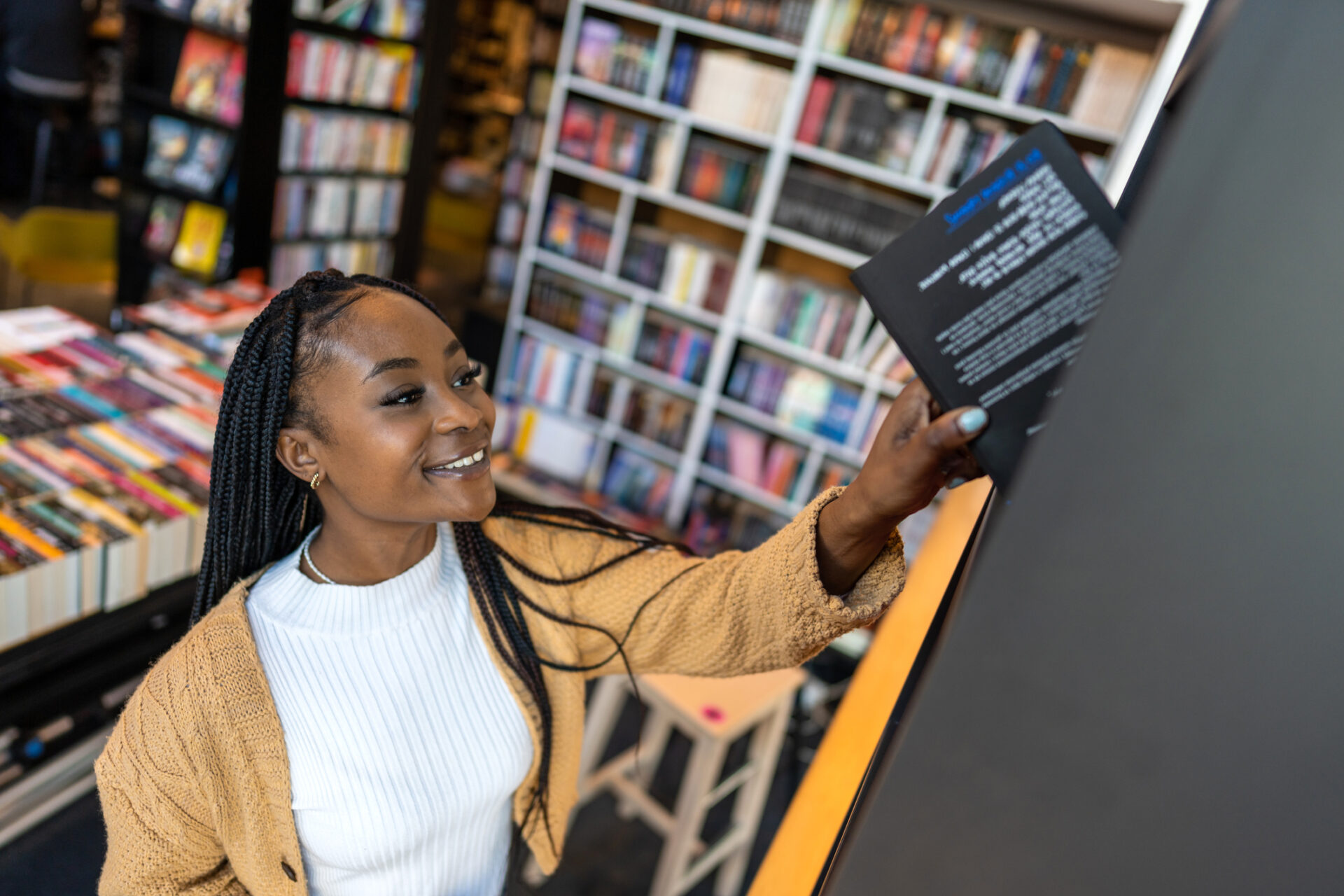
The Reading Room in Houston offers visitors a chance to surround themselves with Black art history through its books.
Located at the Sanman Studios in downtown Houston, The Reading Room is a curation of Black culture, knowledge, and joy, primarily through its art history literature.
The idea came to the reference library’s founder, Amarie Gipson, who “wanted to find a place where I could be surrounded by books—Black art books, specifically,” she explained to Houstonia.
Only seeing these books scattered across exhibits, Gipson sought to build upon her first art book. (She now now has more than 800.) The art history graduate now wants all to dive inside the world of Black diasporic art and culture.
“At the core of it, it’s Black. It’s Black diasporic…It’s Southern…It’s global South. It’s all that,” she said. The works range from Afrofuturism to legendary authors like Zora Neale Hurtson and James Baldwin, to contemporary visionaries like Spike Lee and homegrown favorite, Beyoncé, whose Cowboy Carter art book is among the shelves.
Before The Reading Room, which started online in February 2023, Gibson strengthened her passion and knowledge in the overarching art scene. She helped revitalize museums, later hosting pop-ups until a space for the library could blossom on its own. Since then, she has fostered a new kind of space that fosters creativity and community as much as learning.
Gipson added, “It’s a library. It’s just culturally specific, young and cool—a place where reading is sexy. It’s fun…It’s colorful…It’s calm…It’s not too overwhelming.”
Black people remain underrepresented in the art history spaces, especially as an academic discipline and a focus in a museum. According to Artnet, works by Black women artists only account for .5% of acquisitions across 31 art museums in the United States.
“My motivation for creating this space is to provide that sort of access to other people who don’t necessarily have the opportunity to study art history,” Gipson said. “Folks who are curious should be able to come into a space and learn without feeling like there’s some kind of limitation to the access or behavioral expectation.”
Dedicated to showcasing Black art, life, and stories, The Reading Room remains grounded in archiving Black culture while others can find beauty and common-ground with these distinct experiences.
“I’mcommitted to our stories,” Gipson said. “I’m committed to the way that we live, who we are, and to making this amazing place where we can feel safe and celebrated no matter what happens.”
Visitors can witness the Black art library for free and programs are available throughout the year.
What To Know For Your Next Flight As DHS Stunted By Government Shutdown
With the partial shutdown directly impacting the DHS, TSA officers will have to forego pay again, reminiscent of the previous shutdown that occurred last year.
As flyers hit the skies this President’s Day Weekend, here’s what they should know as the Department of Homeland Security is impacted by the partial government shutdown.
The shutdown has many wondering about their trips, with no annual budget currently approved for the government agency over airport security. Lawmakers have sat embroiled in a battle over DHS spending, specifically regarding its implementation of ICE agents and immigration enforcement. The shutdown officially paused DHS funding Feb. 14.
With the partial shutdown directly impacting the DHS, TSA officers will have to forego pay again, reminiscent of the previous shutdown that occurred in fall of last year. Given this, airports are expecting potentially longer wait times at security checkpoints.
Last year, some airports saw lines outside the doors as TSA workers began to call out due to lack of pay. Depending on how long this shutdown lasts, TSA workers may not see their next checks, causing strife with nearly all of these workers deemed essential.
Thankfully, while wait times may vary, it has been reported that flight schedules should proceed as relatively normal due to the shutdown remaining partial. Air traffic controllers, paid through the still-funded Federal Aviation Administration, will receive their checks.
However, if the shutdown drags on, airports may delay flights to keep up with the lagged security times.
Generally, experts warn flyers to remain extra cautious, allotting extra time as the situation may vary daily. Travelers should also remain prepared for longer waits, even for screenings of carry-on and checked luggage. This could potentially delay flights, and their own arrivals at gates, even more.
As for when the shutdown is expected to end, frequent flyers should hang tight. Several organizations, such as U.S. Travel, Airlines for America, and the American Hotel & Lodging Association, have already warned of impacted spring break travel.
“Travelers and the U.S. economy cannot afford to have essential TSA personnel working without pay, which increases the risk of unscheduled absences and call outs, and ultimately can lead to higher wait times and missed or delayed flights,” wrote the groups in a joint statement, according toPBS News.
Democratic and Republican lawmakers remain at a standstill over the funding of ICE, a part of the DHS. Democrats have refused to approve a budget that grants immigration enforcement more funding amid nationwide violence and protests.
Although Flores found a new footing in the league, currently serving as defensive coordinator for the Minnesota Vikings, he and fellow disgruntled coaches spoke out about the unjust treatment of Black coaches. Although the NFL initially sought to keep the legal battle private by taking its appeal to the Supreme Court, Judge Valerie Caproni of the Southern District of New York determined that the case could proceed to trial.
Flores’ legal team issued a statement expressing gratitude for the court’s decision, saying that the open court process will provide a “fair, neutral, and transparent forum” to shine a light on this issue.
“The court’s decision recognizes that an arbitration forum in which the defendant’s own chief executive gets to decide the case would strip employees of their rights under the law,” Flores’ attorneys Douglas H. Wigdor and David E. Gottlieb said in a statement. “It is long overdue for the NFL to recognize this and finally provide a fair, neutral, and transparent forum for these issues to be addressed.”
In the original lawsuit, Flores alleged that several NFL franchises did not hire Black coaches in good faith, calling the process “rife with racism” that led to seemingly unwarranted or swift firings. The Dolphins let him go following a 24-25 record over three years, although Flores did have back-to-back winning seasons with the team.
Alongside the Dolphins, Flores also cited the Denver Broncos, New York Giants, and Houston Texans for racially biased hiring practices. Other coaches in the suit, Steve Wilks and Ray Horton, also claimed racism in their appointments and subsequent firings from the Arizona Cardinals and Tennessee Titans, respectively.
The NFL has also not hired any new Black coaches in its postseason, as confirmed byThe Athletic. Only Three Black head coaches currently lead any team roster. As for the discrimination lawsuit, a pretrial hearing remains set for April 3.
Barack Obama Slams ‘Clown Show’ Politics, Calls Trump Ape Post A Distraction As He Warns Of Eroding Decorum
The former president says respect for public office have faded.
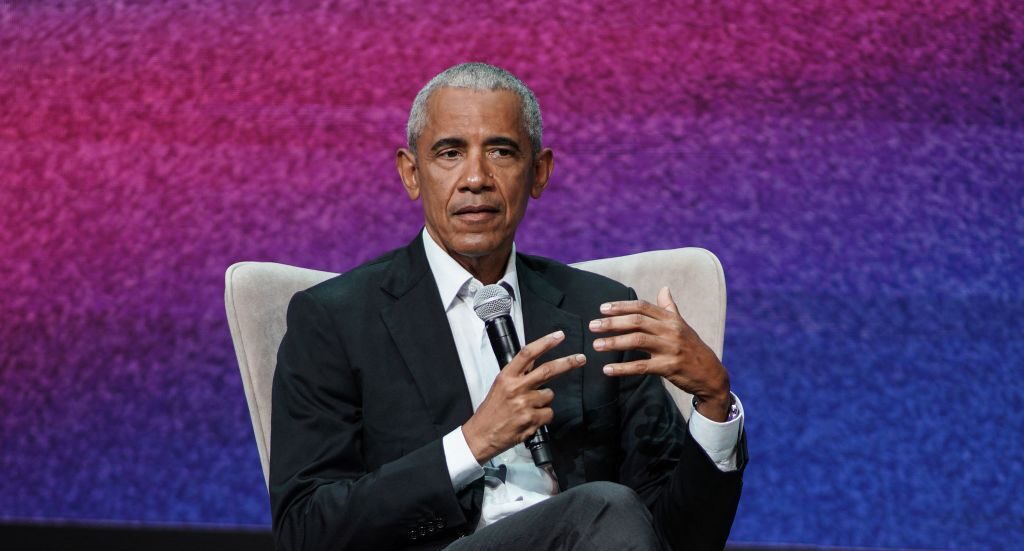
Former President Barack Obama criticized the coarsening tone of American politics during a recent podcast appearance, days after a racially offensive video targeting him and former first lady Michelle Obama circulated on President Donald Trump’s social media account.
Speaking with liberal commentator Brian Tyler Cohen in a 47-minute episode released on Feb. 14, Obama did not reference Trump directly but addressed what he described as a broader decline in public standards. “Discourse has devolved to a level of cruelty that we haven’t seen before,” he said when asked about the state of political conversation in the United States.
As reported by the BBC, the controversy stems from a video shared on Trump’s Truth Social platform that included unfounded allegations about fraud in the 2020 presidential election. At the end of the clip — set to the song “The Lion Sleeps Tonight” — was an image depicting Barack and Michelle Obama as apes. The imagery evoked long-standing racist stereotypes and quickly sparked condemnation from both Democratic and Republican leaders.
https://twitter.com/i/status/2019779053104832727
Among the critics was Sen. Tim Scott of South Carolina, the only Black Republican in the Senate, who called it “the most racist thing I’ve seen out of this White House.”
Initially, the White House dismissed criticism as “fake outrage.” The post was later removed, with officials attributing its publication to a staff member. Trump told reporters he “didn’t see” the portion of the video featuring the Obamas and said, “I didn’t make a mistake,” when asked if he planned to apologize.
During the podcast, Cohen referenced the post while discussing broader political tensions, including rhetoric surrounding immigration enforcement. He noted that the White House had labeled some Immigration and Customs Enforcement targets as “domestic terrorists” and added, “Just days ago, Donald Trump put a picture of you, your face, on an ape’s body.”
Obama responded by shifting focus to public reaction. “It’s important to recognize that the majority of the American people find this behavior deeply troubling,” he said. “It is true that it gets attention. It’s true that it’s a distraction.”
While condemning the tone of certain media and online spaces — calling it “this sort of clown show that’s happening in social media and on television” — Obama said his travels across the country suggest many Americans “still believe in decency, courtesy, kindness.”
He added that what once guided public officials — “some sort of decorum and a sense of propriety and respect for the office” — now appears diminished. “That’s been lost,” he said.
Beyond the controversy, Obama also discussed peaceful protests against immigration enforcement, electoral redistricting, and the progress of his presidential library in Chicago, slated to open next year.
Trump Vows To Make Voter ID A Requirement Before Midterm Elections
Trump suggested he may use an executive order to push new voter ID rules though.
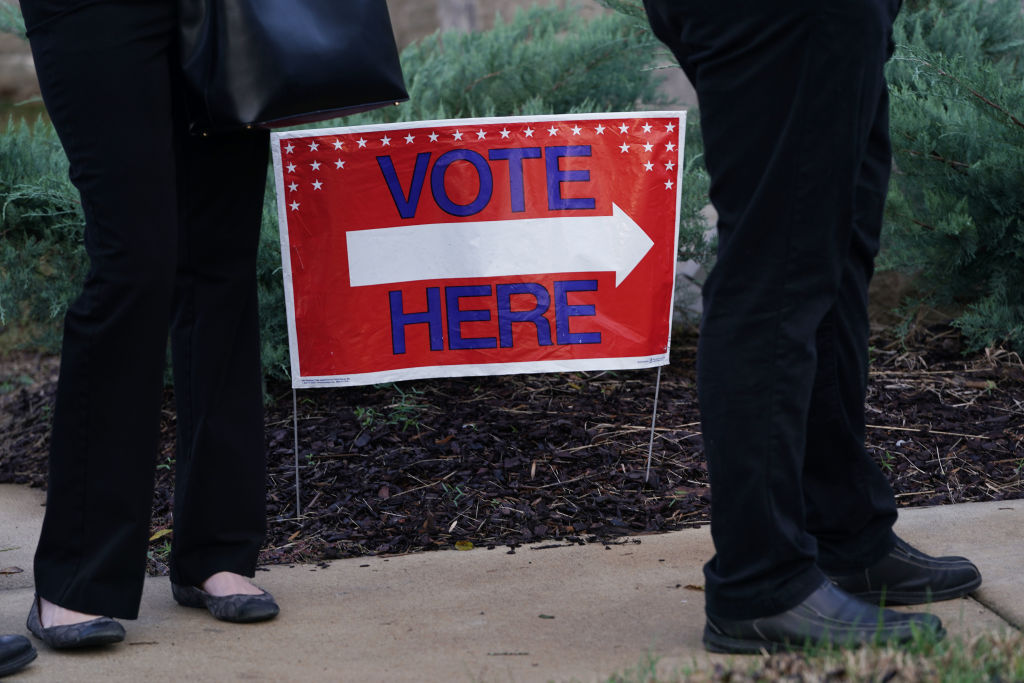
Donald Trump is adamant about making a national voter ID requirement official ahead of the midterm elections.
The U.S. president shared his plans to enforce the voter-ID requirement in new posts on Truth Social, released Feb. 13. In the social media snippets, he revealed that he intends to make the legislation happen through an executive order.
Trump blamed Democrats for allowing the requirement to remain unenforced, leaving him to take on the task himself. The president has also claimed to have researched the issue thoroughly. He noted plans to present his case “in the very near future.
“The Democrats refuse to vote for Voter I.D., or Citizenship. The reason is very simple — They want to continue to cheat in Elections,” wrote Trump. “This was not what our Founders desired. I have searched the depths of Legal Arguments not yet articulated or vetted on this subject, and will be presenting an irrefutable one in the very near future.
However, Trump remains committed to implementing voted-ID before the 2026 midterms this fall. So much so, he is willing to bypass Congress for it.
He added, “There will be Voter I.D. for the Midterm Elections, whether approved by Congress or not!”
In a follow-up post, Trump continued his tirade against the Democratic lawmakers and his alleged suspicions regarding their opposition to voter ID.
“We cannot let the Democrats get away with NO VOTER I.D. any longer. These are horrible, disingenuous CHEATERS,” he wrote in a subsequent post. “They have all sorts of reasons why it shouldn’t be passed, and then boldly laugh in the backrooms after their ridiculous presentations.”
Naysayers fear that the requirement would risk the voting rights of several groups.
A current bill on the House floor, the SAVE America Act, would require proof of citizenship and a photo ID to cast a ballot. According toCNBC, most Democrats condemned the Trump-backed bill for its potential voter disenfranchisement.
While Trump has pushed the bill as helping the GOP, others say the opposite–that many people in red states don’t have the proper ID to vote, while many more Blue state residents hold passports. CNN‘s Abby Phillip tweeted in response to conservative pundit Scott Jennings’ support of the act, “Here are the facts: the 7 states where 2/3 of Americans don’t have a passport. All of them are red states: West Virginia, Mississippi, Alabama, Arkansas, Kentucky, Louisiana, and Oklahoma. Yes, that’s your home state, Scott.”
Here are the facts: the 7 states where 2/3 of Americans don't have a passport. All of them are red states: West Virginia, Mississippi, Alabama, Arkansas, Kentucky, Louisiana, and Oklahoma. Yes, that's your home state, Scott.
The President intends to push the matter through an executive order, although the validity of such action remains unclear.
“This is an issue that must be fought, and must be fought, NOW! If we can’t get it through Congress, there are Legal reasons why this SCAM is not permitted. I will be presenting them shortly, in the form of an Executive Order.”
Black Visual Artist Nick Cave’s ‘Mammoth’ Exhibition Challenges Historical Erasure At The Smithsonian
By Robert Hill
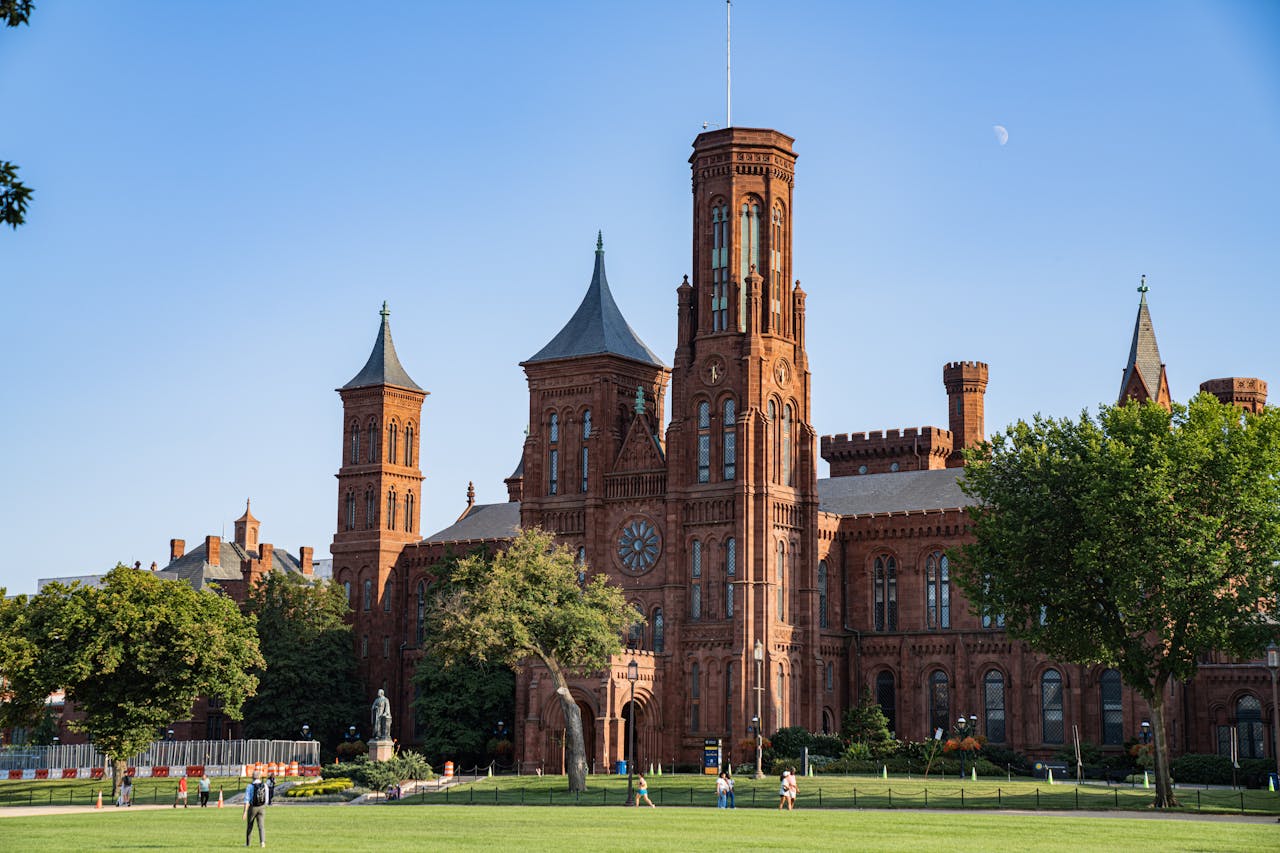
Artist Nick Cave is presenting his new body of artwork titled “Mammoth” at the Smithsonian American Art Museum in Washington, D.C.
The exhibition opened Feb. 13 and features mammoths displayed as large-scale sculptures and in video installations. His artwork explores history, identity, and social reflection. The show marks Cave’s first solo exhibition in Washington, D.C., bringing his work to the nation’s capital and highlighting art and cultural conversation.
The artist Nick Cave takes up issues of race and climate change in beads, sequins and Lite-Brite colors at the Smithsonian American Art Museum. Couched in dazzle is “a pervasive fear,” according to one curator, “without ever surfacing directly.” https://t.co/pq99C8ElHp
Cave is known for creating large-scale artworks that prompt viewers to reflect on history and identity.
Cave, a Black artist raised in Missouri and now based in Chicago, is known for his celebrated “Soundsuits,” sculptural garments that merge fashion, performance, and visual art. Originally created in response to the 1991 Rodney King beating, the works conceal the wearer’s identity, challenging assumptions about race, gender, and class while symbolizing protection and empowerment. Cave, who has been exhibited at major museums nationwide, activates his pieces through dance and collaborative performances, often staging large community events in unconventional spaces. Some of his artwork also explores themes surrounding slavery and racist imagery.
In the Smithsonian show, he uses a prehistoric animal as a visual centerpiece, prompting his audience to reflect on the past and its connection to present-day conversations. He also included family heirlooms and other items to assemble the show.
To make this happen, Cave gathered all the elements in his studio, strategically plotted how everything would appear, and worked on site for two weeks. The piece is built from open metal frames, wispy hair, and other materials. He incorporated a collection of his grandfather’s tools, his brother’s wooden cane, and his grandmother’s ceramic florals into his sculptures.
He connects his artwork to today’s broader concerns about the erasure of history, referencing how the Trump administration’s order urged Smithsonian museums to remove what it described as “Improper Ideology.” However, the show is continuing, especially given the current state of the world.
As reported by CNN, “I’m witnessing a time where history is being erased, but yet history is being revealed at the same time,” Cave explained. “And so, when I think about mammoths, I think that at one point, they existed on the Earth, and then were extinct and buried, and then rediscovered. What is erased becomes revealed. What is removed, reappears.”
The goal of the “Mammoth” exhibition is to allow viewers to spend time with each object and form their own observations and meanings, just as Cave did.
Minding Our Business: From The Nile To Now—How Dr. Ben Built The Foundation Of Modern Afrocentric Thought
In the landscape of 20th-century intellectualism, few figures ignited as much fervor or faced as much scrutiny as Dr. Yosef Ben-Jochannan.
In the landscape of 20th-century intellectualism, few figures ignited as much fervor or faced as much scrutiny as Dr. Yosef Ben-Jochannan.
Known affectionately to his students and followers as “Dr. Ben,” he was more than a historian; he was a psychological cartographer. His mission was to redraw the maps of human achievement, placing the “heart of Africa” at the center of the world’s most foundational advancements.
By the time of his passing in 2015 at the age of 96, Ben-Jochannan had fundamentally altered how millions of Black Americans perceived their lineage, shifting the narrative from the trauma of the Middle Passage to the majesty of the Pharaohs.
Born to an Ethiopian father and an Afro-Puerto Rican Jewish mother, Ben-Jochannan’s very existence was a testament to the global African diaspora. His academic journey was exhaustive, spanning institutions in Brazil, Cuba, and Spain. Holding doctoral degrees in cultural anthropology and Moorish history, he brought a polyglot sensibility to his research. When he immigrated to the United States in the 1940s, he didn’t just join the academic fray; he sought to dismantle the Eurocentric monopoly on the study of Egyptian history. He argued that mainstream Egyptian history had been sanitized to suit a Western bias, a narrative he spent the next seven decades deconstructing.
The core of Ben-Jochannan’s thesis was as simple as it was revolutionary: The foundations of Western civilization—mathematics, medicine, and philosophy—were not born in Greece, but in the ancient Nile Valley civilizations.
His focus on these ancient Nile Valley civilizations reminded the world that Africa was a donor to global culture, not the recipient.
Dr. Ben famously argued that the African origins of religion were the true bedrock of modern faith. He asserted that Judaism, Christianity, and Islam were “carbon copies” of indigenous African spiritual systems. By exposing the African origins of religion, he challenged the notion that spiritual enlightenment was an import to the continent rather than an export from it.
“Truth is a continuous examination, and Fact… always supersedes belief.” — Yosef A.A. Ben-Jochannan
For Ben-Jochannan, history was a tool for liberation. In his 1972 recording, “Wake Up Black Man,” he urged a radical shift in Black African identity, calling for an end to the “slave mindset.” He believed that centuries of oppression had fostered an internalized fear that could only be cured by the “truth” of one’s ancestry. This reclamation of Black African identity was, for him, the first step toward genuine freedom.
He believed that centuries of oppression had fostered an internalized fear that could only be cured by the “truth” of one’s ancestry. He argued that the inherited trauma of the plantation had morphed into a psychological barrier, preventing the recognition of inherent power.
To bridge the gap between theory and reality, Dr. Ben led annual “educational pilgrimages” to Egypt, Ethiopia, and Sudan. These weren’t mere sightseeing tours; they were tactile history lessons.
He would physically point to the African features—the broad noses and full lips—on ancient statues, forcing a confrontation with a history that had been “Europeanized” by mainstream academia. By doing so, he provided a visual and spiritual tether between the streets of Harlem and the temples of Luxor.
“Without you, African mother, there would have been no us—African fathers, sons, and daughters. Do we need to say any more African mothers, our own true goddesses!” — Yosef A.A. Ben-Jochannan
It would be a disservice to his legacy to ignore the friction his work generated. Mainstream historians often dismissed his findings, citing chronological inconsistencies regarding the Library of Alexandria and questioning the formal recognition of his credentials.
Yet, Ben-Jochannan viewed his detractors as gatekeepers of a colonial narrative that sought to keep Africa in the shadows of “pre-history.”
His work wasn’t about dates and dynasties–but restoration for the soul. He spent decades as an adjunct professor at Cornell and a lecturer at City College, tirelessly pouring into students the necessity of self-validation. His presence was a constant challenge to the status quo, reminding the academic world that history is often written by the victors, but preserved by the resilient.
“Let us praise you to the highest, telling the world about your righteousness. Let us tell the entire universe about your sacredness African woman.” — Yosef A.A. Ben-Jochannan
Dr. Ben’s influence extended into the classroom, where he co-wrote texts aimed at decolonizing education for elementary and secondary students during the 1960s. His donation of 35,000 volumes to the Nation of Islam in 2002 ensured that his research would remain accessible to the community he spent a lifetime uplifting. He understood that decolonizing education required a complete structural overhaul of how history is taught to young Black children.
As we reflect on his contributions, we see a man who believed that the African woman was the “true goddess” and the African man the “father of civilization.” Through the lens of Afrocentric history, Dr. Ben didn’t just give Black Americans a past; he gave them a future rooted in the sovereignty of their own story. He taught that to “wake up” was to recognize that the chains were not merely on the wrists—they were in the mind.
As we reflect on his contributions, we see a man who believed that the African woman was the “true goddess” and the African man the “father of civilization.” Through the lens of Afrocentric history, Dr. Ben didn’t just give Black Americans a past; he gave them a future rooted in the sovereignty of their own story.
By championing Afrocentric history, he ensured that the contributions of the African continent would never again be relegated to the margins.
North Carolina Mother Sues Novant Health, Seeks Truth About Baby’s Burial
LaChunda Hunter alleges there were mix-ups and conflicting medical records after the death of her premature daughter.
A North Carolina mother, LaChunda Hunter, has filed a lawsuit against Novant Health and several local physicians, alleging a series of hospital errors following the death of her premature daughter left her uncertain whether the child she buried was actually her own.
LaChunda Hunter says her pregnancy in September 2021 came as a surprise after she believed she could not conceive, according to WCNC. However, complications soon followed. She developed high blood pressure and was admitted to Novant Presbyterian Medical Center, where she delivered her daughter, Legacy, by cesarean section at 23 weeks on Feb. 13, 2022.
“She was thriving, they thought the worst, but she did well,” Hunter recalled.
The NC mother was discharged three days later, while Legacy remained in the neonatal intensive care unit. On Feb. 19, 2022, Hunter said she visited her daughter and received a reassuring message from a nurse that the baby was progressing.
That night, however, Hunter says she was told Legacy had died. When she returned to the hospital the following day, Hunter said she was taken into what she described as a storage-like room and shown a baby wrapped in blankets. “They brought me a baby wrapped in a whole bunch of blankets,” she said. “I don’t know what the baby looked like because it was so dark.”
Funeral arrangements were made. But days later, Hunter said she received a startling phone call from a doctor expressing optimism about her daughter’s recovery.
“He told me who he was and then told me how well Legacy was doing… that he was optimistic,” she said. Her assistant informed the physician that Hunter had been told her baby died, at which point, she said, the call ended abruptly.
Hunter later says another doctor contacted her to explain there had been a charting error — the earlier update referred to another infant, and her phone number had been mistakenly attached.
According to the lawsuit, Hunter sought answers and requested medical records, but claims hospital officials declined to meet with her. She also points to inconsistencies in Legacy’s chart, including notes indicating medical tubes were removed days after the baby’s reported death.
Before the funeral, Hunter requested a private DNA test after noticing differences in the child’s appearance. “This baby doesn’t even look the same as my daughter,” she said, noting the absence of marks she remembered.
The first test was inconclusive. A second test, requested by Novant, concluded the child was hers, though Hunter says she never authorized another sample.
“Every milestone that mothers get to experience, I have missed,” Hunter said. “She is the only child I would have physically had and I just want my daughter. I just want to know what happened.”
In a statement, Novant Health said it could not discuss specific cases due to privacy laws but emphasized its commitment to compassionate care and taking concerns seriously.
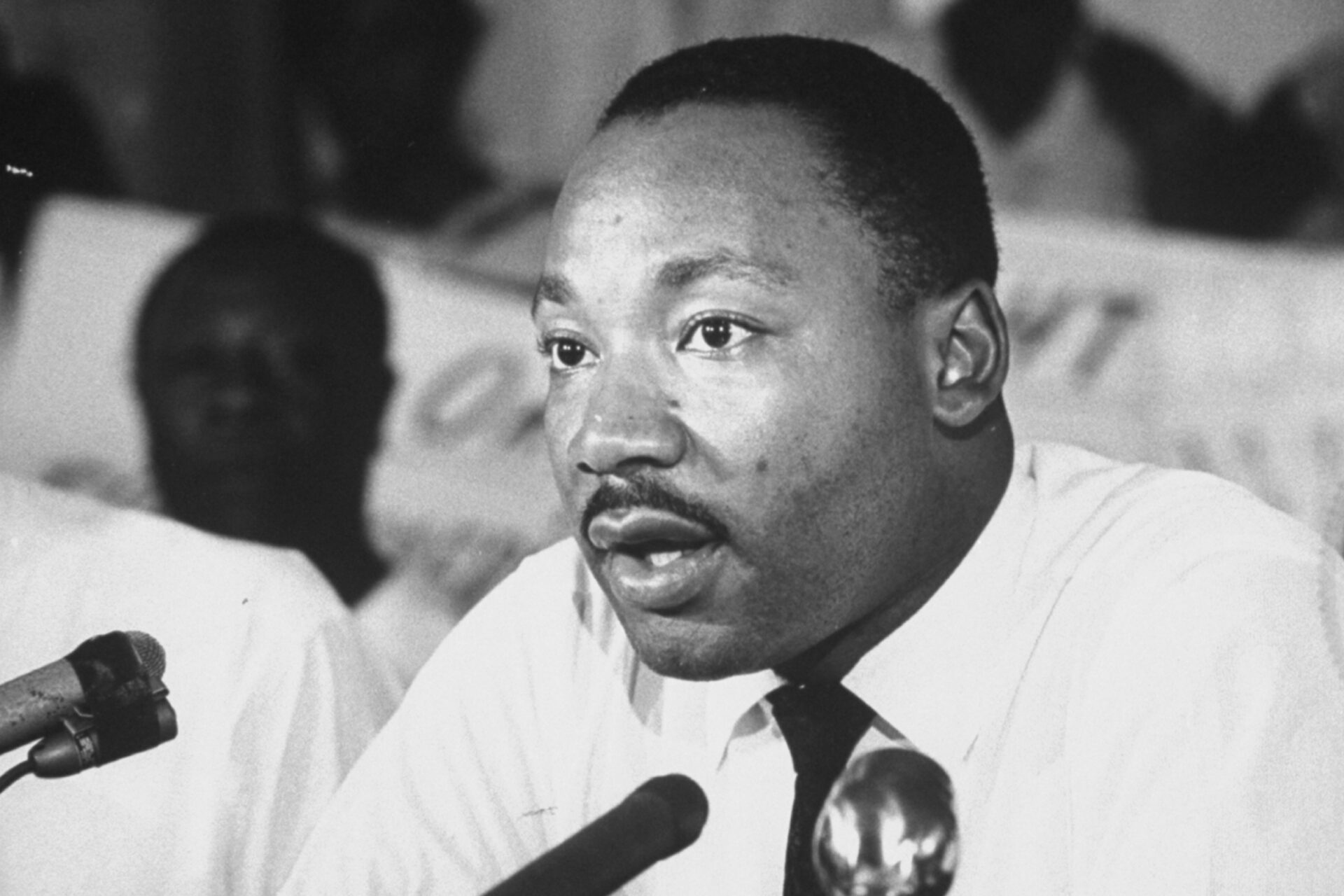
Netflix Acquires Sundance-Winning Short On Dr. Martin Luther King Jr.’s Speechwriter
'The Baddest Speechwriter of All,' co-directed by Ben Proudfoot and Stephen Curry, spotlights civil rights figure Dr. Clarence B. Jones.
A short documentary highlighting the life and legacy of Dr. Martin Luther King Jr.’s longtime adviser and speechwriter has been picked up by Netflix following its award-winning debut at Sundance, as reported by The Hollywood Reporter.
“The Baddest Speechwriter of All,” a 29-minute film centered on Dr. Clarence B. Jones, will premiere on the streaming platform later this year, according to The Hollywood Reporter. The documentary recently earned the Short Film Grand Jury Prize at the Sundance Film Festival and is already being viewed as a potential contender in the documentary short category at next year’s Academy Awards.
The project is co-directed by two-time Oscar winner Ben Proudfoot — recognized for “The Queen of Basketball” and “The Last Repair Shop” — and NBA star Stephen Curry, who makes his directorial debut with the film. Through a blend of contemporary interviews, historical footage, and watercolor animation created by Brazilian artist Daniel Bruson, the documentary traces Jones’ role during the Civil Rights Movement and reflects on the personal sacrifices that accompanied that work.
Now 95, Jones recounts his experiences working closely with King and contributing to some of the movement’s most pivotal moments.
Proudfoot, who produced the film through his company Breakwater Studios and is represented by UTA, emphasized Jones’ unique historical perspective. “This is a man who not only witnessed but personally shaped the Civil Rights Movement from the inside,” Proudfoot said. He added that he and Curry remain energized by the reception at Sundance and are grateful that “millions of people will experience Dr. Jones’ electrifying testimony because of this extraordinary partnership with Netflix.”
Curry and producer Erick Peyton, who worked on the project under their Unanimous Media banner, also welcomed the acquisition. “We couldn’t be more excited that ‘The Baddest Speechwriter of All’ has found a home with Netflix,” they said in a joint statement. They added that Jones’ life story “has long deserved this level of reach and recognition” and expressed appreciation for the creative team behind the film.
The documentary’s executive producers include Elizabeth Goodstein and Gigi Pritzker for Madison Wells, along with Peter Rotter and Jane Solomon. Brandon Somerhalder served as cinematographer, with editing by Nick Wright and Tim Johnson and an original score composed by Cameron Moody. UTA Independent Film Group and WME Independent represented the sale.
With Netflix’s global platform, the filmmakers say Jones’ voice — and his reflections on a defining chapter in American history — will reach audiences worldwide.