Supreme Court Allows Trump To End TPS Protections For Haitians
Approximately 350,000 Haitians could ultimately lose TPS protections if the administration prevails.
On June 25, the U.S. Supreme Court cleared the way for the Trump administration to end Temporary Protected Status (TPS) for hundreds of thousands of immigrants from Haiti and Syria while legal challenges over the policy continue. This allows the federal government to move forward with terminating deportation protections and work authorization for many affected individuals, NBC News reports.
The court granted the administration’s emergency request to lift lower court orders that had temporarily blocked the Department of Homeland Security from ending the humanitarian program. The unsigned order does not resolve the underlying lawsuit, which will continue in lower courts.
According to Reuters, approximately 350,000 Haitians and more than 6,000 Syrians could ultimately lose TPS protections if the administration prevails.
Congress established TPS in 1990 to allow people from countries experiencing armed conflict, natural disasters, or other extraordinary conditions to live and work legally in the United States temporarily. Haiti has remained under TPS designations for years because of political instability, gang violence, natural disasters, and humanitarian crises, while Syria’s designation stems from the country’s prolonged civil war.
The Trump administration argued that federal immigration law gives the executive branch broad authority to designate and terminate TPS protections and maintained that the program was never intended to provide permanent legal status. Administration attorneys also contended that courts have limited authority to review those decisions.
Attorneys representing TPS recipients argued that ending the protections would expose hundreds of thousands of longtime U.S. residents to deportation and strip many of their legal authorization to work before the courts determine whether the administration acted lawfully. The plaintiffs also argued that conditions in Haiti and Syria remain too dangerous for many beneficiaries to return safely.
Geoff Pipoly and Andy Tauber, lead counsel in the case before the Supreme Court, said in a joint statement that the Supreme Court’s ruling will “directly result in thousands of innocent people dying violent, needless deaths.”
“This decision will endanger Haitian TPS holders who fled their homeland in pursuit of what generations of immigrants yearned for when they made the painful decision to leave all they have known: to live in safety,” they said.
The decision carries significant economic implications because many TPS holders have lived and worked in the United States for years, contributing to industries such as healthcare, hospitality, construction, and transportation, which are facing labor shortages. Employers and immigrant advocacy organizations warned that ending the protections could disrupt businesses and local economies while creating uncertainty for families with deep ties to communities across the country.
Although the Supreme Court’s order allows the administration to proceed with ending the protections, the broader legal challenge remains pending, meaning additional court rulings could determine whether the policy ultimately takes effect permanently.
What’s Inside Trump’s Proposed Welcome Packages For White South African Refugees
This move has intensified scrutiny over the administration’s immigration priorities as refugee admissions from many other countries remain restricted.
The Trump administration is preparing welcome packages for white South African refugees that include patriotic materials, educational resources, and an Android tablet. This move has intensified scrutiny over the administration’s immigration priorities as refugee admissions from many other countries remain restricted, The New York Times reports.
According to the outlet, government planning documents show the packages are intended for Afrikaners admitted through a refugee initiative created after President Donald Trump alleged white South Africans face racial persecution and violence. South African officials and independent experts have disputed those claims, saying there is no evidence of a genocide targeting the country’s white minority.
The proposed welcome kits include an American flag, copies of the U.S. Constitution and Declaration of Independence, an Android tablet, a report produced by Trump’s 1776 Commission, and educational materials from PragerU. The package also contains a children’s book criticizing South Africa’s post-apartheid government by alleging it favors the country’s Black majority, according to documents.
A letter included in the package states: “The Trump administration understands America’s immigration system must put the U.S. citizen first, and only welcome in those who will assimilate into the American way of life and preserve our borders, language, culture, traditions, and ideals.”
The letter continues: “To welcome you to America and help you accustomate [sic] to our heritage, we have provided various educational resources to support your day-to-day life and expand your knowledge of American history and values.”
The administration has largely suspended refugee admissions from several conflict-affected regions while expediting applications from white South Africans, prompting criticism from immigration advocates who argue the policy reflects unequal treatment among refugee populations.
South African President Cyril Ramaphosa has repeatedly rejected Trump’s allegations, calling them “untrue statements” about the country. Critics have also questioned the use of taxpayer funds for the proposed welcome packages, noting that refugees entering the United States have not historically received comparable government-issued gifts.
The Trump administration has not publicly announced when the welcome packages would be distributed, and officials told The New York Times the proposal remains under review.
The Grammy-nominated rapper has announced the launch of Snoopsicle, a new frozen dessert from his Dr. Bombay Ice Creambrand that is rolling out at select Costco locations nationwide. The frozen treat comes in a 24-count variety pack and retails for approximately $14.99, reports USA Today.
With just 60 calories per bar, Snoopsicles are the latest addition to Snoop’s expanding food and beverage business, which has evolved into one of celebrity culture’s most recognizable consumer brands with catchy promotional slogans like “Pop It While It’s Hot!”
The launch builds on the rapid growth of Dr. Bombay Ice Cream, the hip-hop-inspired frozen dessert company Snoop co-founded with his son, Cordell Broadus, who serves as the brand’s creative director. Since debuting at Walmart in 2023, the company has expanded into 7-Eleven stores, opened its first seasonal retail location along the Venice Beach Boardwalk in Los Angeles, and recently welcomed rapper Lil Baby as a co-founder and investor, according to People.
The brand has differentiated itself with bold flavors inspired by West Coast culture and ’90s nostalgia, including Iced Out Orange Cream, Sticky Caramel Apple, Tropical Sherbet Swizzle, and Baked Blueberry Muffin. The company says the goal is to reimagine traditional frozen desserts through music-inspired branding and unique flavor combinations.
For Snoop, whose business interests span spirits, breakfast foods, pet products, cannabis, fashion, and media, the Costco partnership represents another step toward transforming his personal brand into a diversified consumer products empire. The Snoopsicle launch also underscores the growing influence of celebrity-founded food brands as retailers continue trying to attract loyal fan bases.
Redemption Bank Launches Debit Card To Expand Economic Opportunity For Single Mothers
Bank King Card by Redemption Bank is an ode to Dr. Martin Luther King, Jr.
Tishaura O. Jones knows what it’s like to be the sole breadwinner of her family, and the importance of having financial help along the way.
“When you solve the problems of Black single mothers, you solve everybody’s problems because there aren’t too many problems that Black single mothers experience that everybody doesn’t experience,” said Jones, the former mayor of St. Louis and single mom of a teenage son. “We all want the same things. We all want our children to be healthy, to be educated. We want to live in safe neighborhoods. We want to be able to provide whatever our children need.”
And now, other moms like Jones will have “a moment to dream and a moment to breathe,” thanks to a new effort by one of the nation’s few Black-owned banks. On Juneteenth, Redemption Bank launched Bank King Card, a first-of-its-kind banking platform designed to advance economic opportunity and support families in moving from poverty to possibility. When consumers open a debit card at Redemption Bank, a portion of the profits will fund the newly established Redemption Foundation, which helps women and children with basic income needs.
“Bank King Card represents a new regenerative banking model that starts with investing in mothers who are a few hopeful dollars away from breaking out of poverty and opening up America’s vaults of opportunity that have been closed to too many for too long,” said Ashley Bell, chairman and CEO of Redemption Holding Company. Redemption Bank is one of the nation’s newest Black-owned banks and the first Black-owned bank headquartered outside a historically underserved community.
Bank King Card includes both debit and credit card options and can be used anywhere Mastercard is accepted. The debit card is currently available, and the credit card will soon follow, according to Redemption Bank, adding that the credit card offers a more affordable alternative to many traditional cards.
Customers pay nothing extra, nor are they asked to donate more or spend more. They are simply asked to make a different and intentional choice about where they bank. Anyone in any state can bank with Redemption, bank officials said.
Helping Mothers Plan for the Future
One of Redemption Foundation’s inaugural partners will be the Georgia Resilience and Opportunity (GRO) Fund and its guaranteed income program, In Her Hands. It serves women in urban, suburban, and rural communities across Georgia, providing unrestricted, direct cash support to participants. Funds can be used for a variety of purposes, including childcare, transportation, housing, education, healthcare, and other priorities that help create long-term stability and mobility.
“What we found is that, generally, people are making the right financial choices. Simply, the expenses don’t add up to what’s incoming,” said Hope Wollensack, founding executive director of the GRO Fund. “So that additional buffer gives some really critical breathing room.”’
Wollensack noted that having a financial buffer allows women to handle health and wellness expenses, which supports their overall mental health.
“This program helps people plan for the future,” she said, noting that In Her Hands provides guaranteed income to women for two to three years. “And so, they’ve got a little bit of spaciousness to start thinking about–within the program–what they want to do next; whether there’s a career move that makes sense for them, whether there’s some post-secondary education or certification that makes sense for them, or whether it’s starting a small business.”
Continuing Dr. King’s Legacy
Bank King Card’s name is intentionally inclusive of the work and legacy of the late Civil Rights icon Dr. Martin Luther King, Jr.
His daughter, Dr. Bernice A. King, serves as senior vice president of Redemption Bank, noting that the initiative reflects the bank’s commitment to addressing poverty and expanding economic opportunity.
“Economic opportunity must be practical, accessible, and rooted in the needs of families,” King stated. “Bank King Card is an innovative way to support that work. It creates a practical opportunity for people to align their financial choices with their values while supporting mothers, children, and families working toward long-term stability.”
The GRO Fund is a new organization, begun roughly five years ago, said Wollensack, and it was “started out of listening to the voices of residents in Atlanta,” particularly in the old Fourth Ward community where, she said, “deep inequality exists.” It is also where Dr. King was born and where he and his wife, Coretta Scott King, are buried. The guaranteed-income, no-strings-attached program has served about 1,000 women and their children in Georgia, said Wollensack, and the program name is an ode to Dr. King.
“He wrote in his final book that the ‘dignity of the individual will flourish when matters concerning his life are in his hands, when he knows his income is certain and stable.’ And part of his enduring legacy is that idea of a basic income or a guaranteed income,” Wollensack said. “And so, we’ve been able to bring that to life through the In Her Hands program. And similar to Mayor Jones, we have seen really incredible impacts from a program like this.”
Jones is the treasurer of the Redemption Bank board and holding company. This new initiative by Redemption is similar to a model she has seen in action via other guaranteed basic income programs, including one she started in St. Louis, Missouri, guaranteeing $500 a month for 18 months to nearly 550 single mothers.
“And so, this ties in directly with Dr. King’s dream of silver rights,” Jones told BLACK ENTERPRISE, “attacking silver rights to making sure that our families can economically thrive.”
Healthcare Coverage Drops By 5M After Medicaid, ACA Rollbacks
The decline follows the expiration of pandemic-era federal policies that expanded health coverage and reduced insurance costs.
More than five million Americans lost health insurance coverage through Medicaid and Affordable Care Act marketplaces between early 2025 and early 2026. This issue is raising concerns about access to care for millions of low- and middle-income households across the United States, NBC News reports.
The decline follows the expiration of pandemic-era federal policies that expanded health coverage and reduced insurance costs. Researchers found that combined enrollment in Medicaid and ACA marketplace plans fell by approximately 5.1 million people nationwide over the past year.
Much of the drop stems from continued Medicaid disenrollments after states resumed eligibility reviews following the end of the federal continuous enrollment requirement on March 31, 2023.
Medicaid and the Children’s Health Insurance Program enrolled about 77.7 million people as of June 2025, down 18% from March 2023 levels, according to KFF. As states completed eligibility redeterminations, millions of beneficiaries were removed from the program.
At the same time, ACA marketplace enrollment declined after enhanced federal premium subsidies expired on Dec. 31, 2025. Open enrollment for 2026 coverage ended with approximately 23.1 million sign-ups, down from roughly 24.2 million a year earlier, according to federal enrollment data.
Health policy analysts say rising costs played a significant role in the enrollment decline. A KFF analysis released May 19 projected that ACA enrollment could ultimately fall by nearly five million people in 2026 as consumers face higher premiums and deductibles.
The report found average monthly premium payments increased by about $65, while deductibles rose by more than $1,000.
“No matter how you slice it, people are paying more,” Cynthia Cox, a KFF vice president and co-author of the analysis, told The Associated Press.
Enrollment losses arrive as lawmakers continue to debate the future of federal healthcare funding and insurance subsidies such as Medicaid. Health policy experts warn that further declines in coverage could increase the number of uninsured Americans, particularly among working families who earn too much to qualify for substantial subsidies yet struggle to absorb higher insurance costs.
Middle market companies are the engine of the economy, yet too many stall just as real growth comes within reach. The difference between those that break through and those that plateau is not luck; it is disciplined finance, stronger leadership, sharper market focus, and reliable access to capital. The strongest firms also build inclusive teams, diverse supplier networks, and strategies that create lasting value for owners, workers, and communities.
The growth ceiling hits when a company outgrows startup instincts but lacks the systems to scale without costly mistakes. At this stage, momentum can quickly turn into risk.
The path forward is clear: Stronger data, better people, trusted partners, and consistent execution backed by the right capital.
What Are Middle Market Companies?
Middle market companies sit between small firms and large corporations. The U.S. middle market is a major economic force with millions of jobs and a large role in private-sector activity.
Definitions vary. Some groups use revenue. Others use enterprise value, employee count, or growth stage.
The practical meaning is simple. These companies have outgrown startup habits. They now need:
Stronger systems
Deeper management
Better controls
They often operate across multiple regions or product lines, requiring more coordination than smaller firms. As they scale, they must balance agility with structure to remain competitive.
What Are the Biggest Challenges for Middle Market Companies?
The main business challenges include weak systems, talent gaps, limited capital access, and unclear growth plans. Data quality, finance technology, reporting, and talent training are key priorities.
Growth can expose hidden problems:
A company may have loyal customers but no clear forecast.
A founder may have strong instincts but no bench of leaders.
Operations may struggle as sales grow.
Common pressure points include:
Cash flow visibility
Hiring
Retention
Disconnected tools
Supplier risk
Succession planning
These issues can hit minority-owned firms harder when networks, capital, and advisory support are uneven.
Build Growth Strategies Around the Core Customer
Strong growth strategies start with customer clarity. Leaders should know:
Market expansion can create new revenue, but poor timing can drain cash. Leaders should study demand, competition, staffing, and delivery capacity before entering a new region or customer segment.
Value can come from consolidation, infrastructure modernization, and strategic partnerships in specialized markets. Expansion should be tied to real advantages, not excitement alone.
Inclusive expansion also matters. Diverse suppliers and community partners can open doors in markets that larger firms may overlook.
Invest in Leadership Development, Culture, and Technology
Leadership development is central to middle market success. Founders often build the first stage through grit. The next stage needs managers who can lead teams, build systems, and make sound decisions without constant owner approval.
McKinsey’s research on ownership transitions shows why leadership pipelines matter. Strong leadership can protect jobs, preserve community businesses, and widen ownership opportunities for Black, Latino, and women buyers.
Also, AI can support mid-market value, but weak data and low readiness can slow results. Leaders should begin with use cases tied to:
Revenue
Savings
Service quality
Diverse leadership is not a public relations goal. It is a business strength.
Frequently Asked Questions
How Can Minority Entrepreneurs Move Into the Middle Market?
Minority entrepreneurs can move toward the middle market by building repeatable revenue, clean financial records, and strong management teams. Relationships also matter.
Owners should connect with accountants, lenders, attorneys, buyers, supplier diversity leaders, and peer groups before a major capital need appears. Preparation creates more options when growth arrives and improves negotiating power. Mentorship and participation in industry networks can also accelerate learning and open doors to new opportunities.
Why Does Access to Capital Matter So Much?
Access to capital affects hiring, equipment, technology, inventory, acquisitions, and expansion speed. A strong company may still stall when funding is too expensive, too slow, or unavailable. Leaders should compare financing options early and keep records investor-ready.
Good planning can help owners avoid rushed decisions and protect control. Consistent access to funding also allows businesses to act fast when strategic opportunities arise.
How Does DEI Support Business Growth?
DEI supports growth by widening the talent pool, improving cultural insight, and helping firms serve more markets with credibility. Inclusive hiring and supplier practices can strengthen community trust. They can also help companies build teams that understand:
Different customer needs
Buying habits
Communication styles
Strong DEI work should include:
Promotion paths
Fair vendor access
Leadership accountability
Measurable goals tied to business outcomes
Companies that prioritize DEI often see stronger innovation and long-term resilience.
Unlock Success for Middle Market Companies With Smarter Action
The middle market companies are capable of growth when leaders combine vision with structure. Strong systems, clear growth strategies, steady financial planning, careful market expansion, and consistent leadership development can help firms face change with confidence.
Success also depends on access. More inclusive capital, stronger advisory networks, and better ownership pathways can help African American entrepreneurs and other diverse founders turn strong businesses into lasting institutions.
Keep learning, keep planning, and explore our other guides and articles for more practical business, finance, leadership, and entrepreneurship insights.
Sticky Mobile-Friendly Navigation with Click Dropdown
2027 will be Our
Biggest Year Yet.
PRICES WILL INCREASE SOON! THE EVENT STARTS IN...
Days
Hours
Minutes
Seconds
DATE
March 7-11, 2027
LOCATION
Bellagio Hotel & Casino Las Vegas, NV
DATE: March 7-11, 2027 | LOCATION: BELLAGIO HOTEL & CASINO | LAS VEGAS, NV
The Women of Power Summit is an unparalleled professional development opportunity for women of all backgrounds. We are focused on providing women with the tools to advance their careers and deliver positive impact at every level of leadership.
We curate executive development panels, in-demand skills workshops, work-life strategy sessions, meaningful networking, and in-depth conversations with high-level industry leaders—all to equip attendees to excel in their careers and bring maximum value to their companies.
The Women of Power Summit is an unparalleled professional development opportunity for women of all backgrounds. We are focused on providing women with the tools to advance their careers and deliver positive impact at every level of leadership.
We curate executive development panels, in-demand skills workshops, work-life strategy sessions, meaningful networking, and in-depth conversations with high-level industry leaders—all to equip attendees to excel in their careers and bring maximum value to their companies.
A refund of all registration fees minus a $250 processing fee will be made within 5-7 business days of cancellation. No refunds will be issued after January 2, 2026.
GROUP REGISTRATION
$
1595 5 or more
A refund of all registration fees minus a $250 processing fee will be made within 5-7 business days of cancellation. No refunds will be issued after January 2, 2026.
Honorary Oscar recipient and Emmy Award-winning
Actress, Director, and Executive producer
ANGELA BASSETT is an Honorary Oscar recipient and Emmy Award-winning actress, director, and executive producer known for captivating performances in iconic films such as MALCOLM X, WAITING TO EXHALE, HOW STELLA GOT HER GROOVE BACK, BLACK PANTHER, MISSION IMPOSSIBLE: FALLOUT, DAMSEL, and of course, WHAT’S LOVE GOT TO DO WITH IT, for which she received an Academy Award nomination.
Angela returned as the beloved Queen Ramonda in BLACK PANTHER: WAKANDA FOREVER, receiving Golden Globe and Critics Choice awards, with Academy Award, SAG and BAFTA nominations, as well as the Variety Creative Impact in Acting Award.
She is the star and executive producer of the ABC/Disney hit drama 9-1-1 and earned her first Emmy Award for Outstanding Narrator for the critically acclaimed NatGeo docu-series QUEENS. Angela reunited with Robert De Niro in the Netflix limited series ZERO DAY and with Tom Cruise in the box office fan-favorite MISSION: IMPOSSIBLE-THE FINAL RECKONING.
Angela has been named one of the Time 100 and Time Women of the Year, has earned multiple EMMY nominations, and is the recipient of a SAG Award, 16 NAACP Image Awards, two Golden Globe Awards, the Black Girls Rock! Icon Award, Critics Choice Celebration of Black Cinema & Television Career Achievement Award, an AAFCA TV Honor, and Glamour’s Women of the Year Award. She was nominated for a Directors Guild of America Award for her directorial debut of the Whitney Houston biopic WHITNEY. Angela was named a Disney Legend for her countless contributions to the brand’s vast legacy of movies, television and its theme parks.
Bassett Vance Productions, established by Angela and Courtney B. Vance, is in partnership with 20th Television to develop and executive produce comedy, drama, limited series, and TV movies for linear networks and streamers, with an emphasis on platforms across Disney Entertainment Television.
Angela graduated with a B.A. in African American studies, an M.F.A. in drama, and an honorary doctorate from Yale University. She also has honorary doctorates from Morehouse College and Old
Dominion University.
Carla Harris is Senior Client Advisor at Morgan Stanley having finished a 30+ year career as a Vice Chairman and Managing Director. Throughout her career she managed and executed billions of dollars of equity and equity related transactions, including the IPOs of UPS, Martha Stewart Omnimedia and the Immunex Corporation. She was also Chair of the Morgan Stanley Foundation from 2005 to 2014 and sits on the boards of several community organizations. In August 2013, Carla was appointed by President Obama to chair the National Women’s Business Council. She is a gospel recording artist, with 4 commercially released CDs under her belt, 6 sold out concerts at Carnegie Hall, 2 at the Apollo Theatre and a popular public speaker who gives impactful career guidance to corporate audiences based on her books, Expect to Win (2009), Strategize to Win (2014), and Lead to Win (2022).
She sits on the boards of the Walmart Corporation, Cummins Corporation and MetLife. Carla joined Morgan Stanley in 1987 after completing an AB in economics, magna cum laude, from Harvard University and an MBA from Harvard Business School, with honors.
Shellye Archambeau: Fortune 500 board member, Former CEO of MetricStream, Advisor and Author Shellye Archambeau is an experienced CEO and Board Director with a track record of accomplishments building brands, high performance teams, and organizations. Ms. Archambeau currently serves on the boards of Verizon, Roper Technologies, Okta and Lineage. She is also a CEO mentor with the EXCO Group and serves on the board of two national nonprofits, Catalyst and Braven. Ms. Archambeau has over 30 years of experience in technology.
She is the former CEO of MetricStream, a Silicon Valley-based, governance, risk, and compliance software company. During her tenure MetricStream grew from a fledgling startup into a global market leader. She is the author of Unapologetically Ambitious: Take Risks, Break Barriers and Create Success on Your Own Terms. A book that will inspire you and provide the tools to enable you to fight the battles, make the tradeoffs and create the life you want. She is also a Forbes contributor and the protagonist of the Harvard Business School Case Study: Becoming a CEO.
She is also the founder of Ignite Ambition, a community focused on the professional development of people in the early to mid-stage of their career. The mission is to provide professionals with the knowledge, inspiration, perspective, and tools that they need to overcome their challenges, achieve their aspirations, and excel in their professional careers.
Ms. Archambeau enjoys the performing arts, traveling, cooking and writing a blog that provides career advice, insights and other musings (https://shellye.com). @shelarchambeau
Rosalind "Roz" Brewer stands as one of the most influential leaders in global business today, recognized for her visionary leadership, strategic expertise, and steadfast commitment to advancing equity. Over a groundbreaking career, Brewer has driven innovation across major industries, serving as President and CEO of Walgreens Boots Alliance, COO of Starbucks, and President and CEO of Sam’s Club. Brewer’s impact extends beyond the corporate sphere through her service on the boards of United Airlines, the KIPP Foundation, and the Smithsonian’s National Museum of African American History and Culture. A proud Spelman alumna and chemistry graduate, she also holds a rare ownership stake in the NFL’s Atlanta Falcons.
Mrs. Brewer now returns to her roots as Interim President of Spelman College, where she champions educational excellence and prepares future leaders for an evolving world.
Brewer’s life’s work embodies a powerful legacy of leadership, empowerment, and transformative change.
Described by Forbes as the “Olivia Pope of Silicon Valley,” Jotaka is the founder and CEO of Full Circle Strategies, where she’s led transformative campaigns for Oprah Winfrey’s OWN Network, Goldman Sachs’ One Million Black Women Initiative, and The Color Purple film launch. She’s also the visionary behind #WinWithBlackWomen, the powerhouse network that has influenced major national moments—from Kamala Harris’ presidential run to the confirmation of the first Black woman to the Supreme Court. This is just the beginning—more major announcements are coming soon.
Director on the Boards of the
BNY Mellon Mutual Funds and CBIZ
Benaree Pratt Wiley (Bennie)
is a long-time Corporate Director and Trustee. Bennie spent the majority of her career as a serial entrepreneur and management consultant. She is most well-known for building a sustainable and influential social enterprise when she served as President and Chief Executive Officer of The Partnership, Inc., an organization that strengthens Greater Boston’s capacity to attract, retain, and develop talented professionals of color.
Bennie currently serves as a Director on the boards of the BNY Mellon Mutual Funds and CBIZ (NYSE: CBZ). She has served as Chair of PepsiCo’s African American Advisory Board and previously served on the boards of Blue Cross Blue Shield of Massachusetts and First Albany (NASDAQ: FACT). Throughout her career, she has served on the boards of numerous nonprofit and civic organizations, including the Black Economic Alliance, The Boston Foundation, the Board of Trustees of Boston College, Vice President of the Harvard Business School Alumni Board, and Vice Chair of the Board of Trustees of her alma mater, Howard University.
She is a frequent speaker on leadership, diversity, and professional development, and has received numerous awards and honors, including five honorary doctorates from institutions such as Howard University and Boston College. Among her many recognitions are her induction into the Academy of Distinguished Bostonians; the Pinnacle Award for Lifetime Achievement from the Greater Boston Chamber of Commerce; and the Myra Kraft Leadership Award from the National Association of Corporate Directors. Bennie has also been featured on the cover of Boston magazine as one of the city’s most powerful women and was the subject of a Harvard Business School case, “Bennie Wiley and The Partnership”.
As one of the first female and Black graduates of Harvard Business School, Bennie—along with her husband, Flash—has been a driving force in expanding access and advancing economic opportunities for the African American community. Her children continue that legacy: her son, Pratt, a corporate attorney and former National Director of Voter Expansion under President Obama, now serves as President and CEO of The Partnership; her daughter, B.J., a venture-backed entrepreneur, is the founder and CEO of SoHookd, an enterprise wellness platform enhancing employee engagement and well-being. Bennie and B.J. were the first African American mother–daughter graduates of Harvard Business School, exemplifying a family tradition of leadership, innovation, and social impact.
Angela Rye is an award-winning host, lawyer, social justice advocate, and Principal/CEO of IMPACT Strategies, where her political advocacy and crisis management firm’s Professional Development Program has supported more than 500 alumni now serving at the highest levels of government, corporate, and nonprofit sectors. Rye is also the co-creator of State of the People, a coalition of 200 local and national organizations providing resources, education, empowerment, and relief to thousands of citizens. She is co-host of the NAACP Image Award–winning podcast Native Land Pod and co-founder of Reasoned Choice Media with Lenard “Charlamagne tha God” McKelvey and Chris Morrow.
With more than two decades of experience in political strategy, coalition building, and advocacy, Rye previously served as Executive Director and General Counsel to the Congressional Black Caucus and as Senior Policy Advisor and Counsel for the House Homeland Security Committee. She currently serves as a board member for Wilberforce University, the Congressional Black Caucus Institute, Black Futures Lab, the Congressional Black Caucus PAC, and on the advisory boards of Club 61 and Boon Boona. She holds honorary doctorates from Wiley College and LeMoyne-Owen College and is a proud alumnus of the University of Washington and Seattle University School of Law.
Hall of Fame Inducted Marketer, Author, CEO & Founder
Eve by Boz
Bozoma Saint John is a Hall of Fame inducted Marketing Executive, author, entrepreneur, and general badass.
Boz got her start in her marketing career at Spike Lee’s ad agency, SpikeDDB. She then went on to manage brands in the PepsiCo beverages portfolio, before becoming Head of Music and Entertainment Marketing at the CPG giant. After that, she led Global Consumer Marketing at Apple Music & iTunes; before serving as Chief Brand Officer at Uber; she then took on the Chief Marketing Officer role for Endeavor (including WME, IMG, UFC, Miss Universe etc.); after which she served as the Global Chief Marketing Officer at the entertainment behemoth, Netflix.
In an exciting new chapter, Bozoma left her traditional corporate tenure track to publish her memoir The Urgent Life in February 2023: and has now taken her fierce personality and unmatched flair to The Real Housewives of Beverly Hills as a full-time cast member. In 2024, Bozoma also launched Eve by Boz, a hair and hair care line created to revolutionize the hair extension industry with a unique approach that blends cultural authenticity and premium quality. In 2025, she brought her visionary leadership to NBC’s marketing competition series On Brand with Jimmy Fallon, where she teamed up with Jimmy Fallon to mentor aspiring marketing creatives.
Bozoma’s work has been widely recognized and celebrated across the industries in which she has made her mark. She has been inducted into both the American Marketing Association Hall of Fame and the American Advertising Federation Hall of Achievement. Forbes named her the #1 Most Influential Chief Marketing Officer in the world. Additionally, she has been inducted into Billboard’s Women in Music Hall of Fame after being listed among the Most Powerful Women in Music for 10 consecutive years, and she was honored as Executive of the Year. Bozoma has graced the cover of Adweek, where she was described as “one of the most exciting personalities in advertising.” She has also been featured on an array of prestigious lists, including The Hollywood Reporter’s Women in Entertainment Power 100, Fast Company’s and Ad Age’s Most Creative People, Ebony’s 100 Powerful Executives, Black Enterprise’s Most Powerful Women in Business, and Fortune’s Most Influential CMOs.
In 2021, Harvard Business School published a multi-media case study on her career, titled “Leading with Authenticity and Urgency”; through which she developed and taught a program at the University aptly named “The Anatomy of a Badass.” Boz has also created a public online class, The Badass Workshop, to teach the nuances of achieving success and building your life on your own terms.
As part of her global impact, Bozoma was appointed Ambassador to the African Diaspora and Special Envoy to the President of Ghana from 2017–2024. During that time, she authored the groundbreaking marketing strategy for The Year of Return, a national campaign that sparked a cultural and tourism renaissance—growing annual travel interest from 40,000 to over 1 million applicants within two years. Her leadership helped reposition Ghana as a global destination for heritage, investment, and belonging across the diaspora. She serves on the board of Vital Voices, a global non-profit that invests in and empowers women leaders who are driving economic, political, and social change around the world.
All of that said, she counts her highest achievement as being a mother to her 16-year-old daughter, Lael.
President
Charlotte Hornets/ Hornets Sports & Entertainment (HSE)
Cayette-Weston is in her second season as the President of Business Operations for the NBA’s Hornets Sports & Entertainment (HSE). In this role, she oversees the day-to-day business operations for all HSE properties, including the Charlotte Hornets, Greensboro Swarm, and the newly renovated Spectrum Center that hosts over 125 annual events. She brings nearly two decades of impactful, relationship-driven leadership in sports and entertainment, with a reputation for setting vision, building trust, and driving sustainable growth.
Prior to joining HSE, Cayette-Weston was Executive Vice President & Chief Commercial Officer of the Cleveland Cavaliers, where she made history as the first Black woman to hold the CCO title for an NBA franchise. During her 12 year tenure with the Cavaliers, she was responsible for global partnerships, ticketing, premium hospitality, client experience, and commercial innovation across the Cavaliers, Lake Erie Monsters (AHL), Cleveland Charge (NBA G League), and Cavs Legion GC (NBA 2K League).
Under her leadership, the Cavaliers became one of the NBA’s top-performing revenue franchises over the past decade. She led transformative initiatives including the launch of a dedicated client engagement team, securing jersey patch partnerships, major arena renovations, development of a new practice facility, international business strategy, and the expansion of youth sports outreach—creating lasting impact for the organization, its partners, and the broader community. A committed civic leader, Cayette-Weston served on multiple boards, including Cuyahoga Community College, College Now, the Commission on Economic Inclusion, and the American Heart Association.
She began her NBA career with the New Orleans Hornets, working across marketing, community investment, and corporate partnerships, and started her professional career at Caesars Entertainment in database marketing and advertising.
Cayette-Weston earned a Bachelor’s degree from Tulane University, where she competed on the women’s varsity basketball team. In 2024, she was inducted into the Tulane Athletics Hall of Fame and received the Don and Lora Peters Career Achievement Award. She was also named Crain’s Cleveland Business Forty Under 40 (2019), Sports Business Journal Forty Under 40 (2021), and Sports Business Journal Game Changer (2019).
A native of New Orleans, Louisiana, Shelly and her husband, Aron, are the proud parents of two daughters, Ivy Grace and Averie Marie.
Described by Forbes as the
“Olivia Pope of Silicon Valley,” Jotaka is the founder and CEO of Full Circle Strategies, where she’s led transformative campaigns for Oprah Winfrey’s OWN Network, Goldman Sachs’ One Million Black Women Initiative, and The Color Purple film launch.
She’s also the visionary behind
#WinWithBlackWomen, the powerhouse network that has influenced major national moments—from Kamala Harris’ presidential run to the confirmation of the first Black woman to the Supreme Court.
This is just the beginning—more major announcements are coming soon.
Sandra Douglass Morgan is President of the Las Vegas Raiders, now entering her fourth season leading the iconic NFL franchise’s business operations. She is responsible for shaping the Raiders’ long-term strategic vision and advancing the organization’s position at the intersection of sports, entertainment, and community impact.
Morgan made history in 2022 as the first Black woman to serve as president of an NFL team. She also broke barriers earlier in her career as the first Black City Attorney in the State of Nevada and the first Black Chair of the Nevada Gaming Control Board. Her leadership across government, gaming, and sports has made her a respected voice in corporate governance and civic engagement.
She serves on the Boards of Allegiant Travel Company (NASDAQ: ALGT) and Fidelity National Financial, Inc. (NYSE: FNF), and on the Board of Trustees for the University of Nevada, Las Vegas Foundation. She is also a member of the State Bar of Nevada and the District of Columbia Bar.
Under her leadership, the Raiders have expanded revenue opportunities, strengthened community engagement, and helped establish Allegiant Stadium as a premier global venue. Working in collaboration with public-private partners, Morgan played a key role in securing major events such as the Super Bowl, Pro Bowl, international soccer matches, and bringing the College Football Playoff National Championship (2027) and the NCAA Men’s Final Four (2028) to Nevada for the first time.
Before joining the Raiders, Morgan held senior roles in law and regulation, including as Chairwoman of the Nevada Gaming Control Board and City Attorney for North Las Vegas. She also served on the Nevada State Athletic Commission, adding sports regulatory experience to her diverse leadership portfolio.
A champion for inclusive leadership, Morgan has prioritized internal culture, workforce development, and philanthropic investment through the Raiders Foundation—supporting mental health, youth sports, and education across Nevada.
She resides in Las Vegas with her husband, Don, and their two children.
Add the following script to automatically adjust the widget size and prevent scrollbars
BELLAGIO HOTEL & CASINO
Room rates and availability are limited. A deposit of one (1) night’s room/suite rate and tax is required at the time of booking. Room occupancy of more than two (2) individuals will incur an additional charge regardless of age.
Reservations not canceled at least five (5) days in advance of the confirmed arrival date will be subject to a cancellation charge equal to the first night’s room/suite rate and tax.
Guest must be 21 to check-in. Attendees must provide a credit or debit card upon check-in.
Guest/s name changes can be made without charge. Should the arrival or departure dates of the new guest/s differ from the arrival and/or departure dates of the original guest/s, the changed reservation will be accepted for the additional room nights only on a space and rate available basis. Rates may be subject to the prevailing rate at the time of requested change.
A daily resort fee, a security deposit authorization up to 4 nights, plus applicable taxes, will be added to your reservation at check-in.
Attendees must pay all room, resort fees, tax, and incidental charges upon check-out.
Resort fee includes wireless internet access in-room and within the meeting space, unlimited local and toll-free calls, airline boarding pass printing, access to paramount + w/ SHOWTIME On Demand via in-room tv and fitness center access for guests 18+.
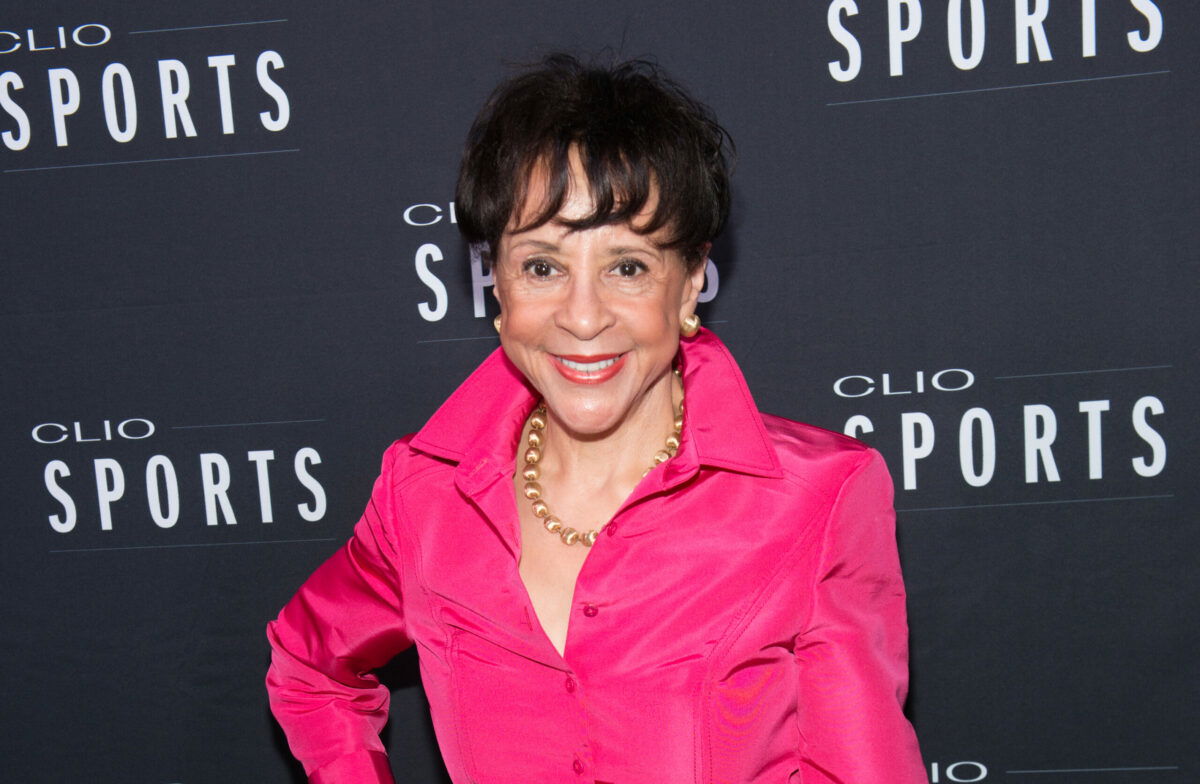
Sheila Johnson co-founded Black Entertainment Television (BET) in 1980 and helped shape the growth of Black media through her role as an owner. Johnson diversified her portfolio by buying luxury hotels, real estate and sports franchises. Johnson became the first Black woman to own shares in three major Washington sports teams, the WNBA Mystics, the NBA Wizards, and the NHL Capitals. She is the first Black woman to achieve billionaire status: (Photo by Noam Galai/WireImage)
Billionaire Sheila Johnson’s Flagship D.C. Hotel Is In Talks To Rebrand As A Marriott Property: Report
The potential move would mark another major chapter for the BET co-founder’s luxury hospitality brand, Salamander Washington DC.
Billionaire entrepreneur Sheila Johnson, the founder and CEO of Salamander Collection, a luxury hotel and hospitality company, is reportedly in discussions to rebrand the Salamander Washington DC as a Marriott property, according to the Washington Business Journal.
The 373-room hotel, located along the city’s Southwest waterfront near the National Mall and Tidal Basin, has operated under the Salamander name since September 2022. Johnson and London-based private equity real estate firm Henderson Park acquired the former Mandarin Oriental Washington, D.C., for $139 million before relaunching it as the flagship property in their luxury hotel portfolio. If completed, the deal would bring the hotel under one of Marriott International’s luxury brands while the property remains open to guests. Financial terms and a timeline for the potential transition have not been disclosed.
The reported move would represent a significant pivot for Johnson, whose Salamander Collection has spent the past several years expanding its footprint in luxury hospitality. Founded in 2005, the company now operates a portfolio of high-end resorts and hotels across Virginia, South Carolina, Florida, Colorado, Jamaica, and Anguilla.
The Washington property marked Salamander’s debut in the nation’s capital and underwent an extensive renovation after Johnson’s acquisition. The transformation included redesigned guest rooms and public spaces, an expanded spa, and the opening of acclaimed chef Kwame Onwuachi’s restaurant, Dōgon, which has earned national recognition since its debut in 2024.
Neither Salamander Collection, Henderson Park, nor Marriott International has publicly confirmed the negotiations. However, if finalized, the rebranding would end the presence of the Salamander name in Washington less than four years after Johnson introduced the brand to the city.
Johnson, who co-founded Black Entertainment Television (BET) with her then-husband Bob Johnson, made history as America’s first Black female billionaire following the sale of the network to Viacom in a multibillion-dollar deal. Since then, she has continued to diversify her business empire through investments in hospitality, sports, entertainment, and real estate. Her net worth is estimated at approximately $850 million, according to Billionaires Africa. She is also the only Black woman to be a part-owner of three professional sports franchises simultaneously, including the NBA’s Washington Wizards, the NHL’s Washington Capitals, and the WNBA’s Washington Mystics.
Recent Supreme Court Decision Raises New Concerns About Voting Rights
Advocates warn the decision further weakens protections for minority voters and limits pathways for challenging voting restrictions.
The U.S. Supreme Court on Monday declined to hear a challenge to Arkansas’ restrictions on who can assist voters at the polls — a move voting rights advocates say further weakens the federal Voting Rights Act and narrows legal action for combating discrimination at the ballot box.
The court’s decision leaves in place a ruling from the U.S. Court of Appeals for the 8th Circuit that upheld Arkansas’ law limiting voter assistance and concluded that private individuals cannot sue under Section 208 of the Voting Rights Act, a key provision designed to help voters who need assistance because of disability, illiteracy, or limited English proficiency.
According to NPR, the Supreme Court’s refusal to review the case means a lower-court ruling will stand in the states covered by the 8th Circuit, which include Arkansas, Missouri, Iowa, Minnesota, Nebraska, North Dakota, and South Dakota. The decision represents another setback for voting rights advocates already grappling with a series of recent rulings that have narrowed protections under the landmark 1965 law.
“There’s no voting rights enforcement because this administration is hostile to voting rights, so they won’t be doing any enforcement of [the] Voting Rights Act,” said Mexican American Legal Defense and Educational Fund (MALDEF) President and General Counsel Thomas A. Saenz, reports the Arkansas Advocate.
The case stemmed from a challenge brought by advocacy groups and voters who argued that Arkansas’ restrictions conflicted with Section 208, which allows voters requiring assistance to receive help from a person of their choice, with limited exceptions. The 8th Circuit sided with Arkansas, ruling that only the U.S. Department of Justice—not private citizens—can enforce that provision.
Voting rights advocates view the decision as another step in the erosion of federal voting protections. Sophia Lin Lakin, the director of the American Civil Liberties Union’s Voting Rights Project, called the Supreme Court’s decision “deeply disappointing” and warned it would make it harder to challenge voting barriers that disproportionately affect minority communities.
On the other hand, supporters of the ruling argued that the decision helps states prevent voters from being influenced at the polls.
“This law is a common sense measure,” said Samantha Boyd, a spokesperson for the Arkansas Secretary of State’s office. “One individual who is not a poll worker helping more than six different people vote places an unnecessary risk of undue influence in the system, and we support the Supreme Court’s decision.”
NPR reported that the case centers on a broader legal question of whether private citizens are authorized to sue under provisions of the Voting Rights Act. Civil rights organizations argue that private enforcement has long been essential because federal officials cannot pursue every alleged violation nationwide. One voting rights advocate told NPR that private lawsuits have been “the primary way” many provisions of the law have been enforced for decades.
Following the Supreme Court’s decision not to intervene, voting rights advocates are expected to shift their focus to Congress, state legislatures, and the Justice Department as they seek alternative ways to protect vulnerable voters and challenge election laws.
The Massachusetts legislature formed a committee to review a freedom petition by Felix Holbrook and other enslaved Americans. By using the colonists’ own revolutionary rhetoric to expose the hypocrisy of slavery, the petition marked the first time an American governing body formally met to consider systemic emancipation.