The shift comes as women continue launching businesses at historically high rates. Wells Fargo’s 2026 Impact of Women-Owned Businesses Report found that women own 15.7 million businesses nationwide, representing 40.6% of all firms.
The trend reflects changing attitudes about career advancement as many women weigh the benefits of entrepreneurship against challenges that persist in traditional workplaces, including pay disparities, limited leadership opportunities, and demands on work-life balance.
Forbes contributor Melissa Houston argued that entrepreneurship is becoming an increasingly attractive alternative for women seeking greater control over their professional and financial futures.
“Women are no longer waiting for permission to advance,” Houston wrote, noting that business ownership allows women to create opportunities independent of corporate promotion structures.
Advocates of entrepreneurship say ownership can offer advantages beyond income, including schedule flexibility, autonomy, and the potential to build generational wealth. The outlet found that many women entrepreneurs identify freedom, purpose, and legacy-building as the primary reasons they choose to start businesses.
Women-owned businesses continue to face challenges securing capital and scaling operations. Houston noted that fewer than 2% of women-owned businesses generate more than $1 million in annual revenue, underscoring ongoing obstacles related to funding, mentorship, and access to growth resources.
Industry advocates say addressing those gaps could unlock substantial economic opportunities. According to the U.S. Census Bureau, women-owned firms contribute billions of dollars annually to the U.S. economy and employ millions of workers nationwide.
As more women pursue entrepreneurship, experts say continued access to capital, education, and business development resources will play a critical role in determining whether the recent surge in business formation translates into sustained growth and long-term wealth creation.
‘Happy Ice’ Becomes 1st Black-Owned Dessert Brand With Permanent Downtown Disney Location
The opening coincided with Juneteenth, adding symbolic significance to the milestone for the growing brand.
Happy Ice, a Black-owned Philadelphia-style Italian water ice company founded by entrepreneur Lemeir Mitchell, opened a permanent location at Downtown Disney District on June 19, becoming the first Black-owned dessert business with a permanent presence at the Disneyland Resort destination, Afrotech reports.
The new Anaheim location marks the latest expansion for Happy Ice, which Mitchell launched as a Los Angeles food truck in 2017 before growing the business into multiple storefronts and event-based operations across Southern California. The company specializes in Philadelphia-style water ice, a frozen dessert rooted in Philadelphia’s Italian American communities and traditionally made with fruit, water, and sugar.
The Downtown Disney cart features Happy Ice’s first fully all-natural menu, including handcrafted water ice made with real fruit and pure cane sugar. Guests can also purchase JOY-LATI, a layered dessert that combines Italian ice, vanilla sweet cream, fruit, and toppings.
“I grew up a huge Disney kid, so opening Happy Ice at Downtown Disney is truly a full-circle moment,” Mitchell said. “I started this business to bring people together and to create lasting memories through desserts that make people smile.”
Mitchell added that the company was built around “happiness, hospitality, and community,” values he said align with the family-focused atmosphere of Disney.
The opening reflects the company’s continued growth from a single food truck into a recognized frozen-dessert brand. Happy Ice first appeared at Downtown Disney through temporary activations before securing a permanent location in the shopping and entertainment district.
To celebrate the grand opening, the company offered promotional giveaways to early customers. The location is expected to operate daily from 11 a.m. to 11 p.m.
For Mitchell, the Downtown Disney debut represents another step in a business journey that began with introducing a Philadelphia favorite to Southern California and has since evolved into one of the region’s fastest-growing independently owned frozen-dessert brands.
David Grain crosses the 1% threshold to magnificent wealth. And this is his journey!
David Grain is among the elite African Americans on planet Earth. In just under 20 years since starting his private equity firm, Grain Management, Grain is ranked among the world’s richest people. He’s in the company of Oprah Winfrey, Jay-Z, and Beyoncé, not to mention Jeff Bezos, Mark Zuckerberg, Warren Buffett, and Larry Ellison.
Forbes listed Grain as one of 989 U.S. billionaires with a net worth of $2.3 billion. Grain was honored three years ago at the 2023 XCEL Summit for Men with the Earl G. Graves Sr. Vanguard Award. BLACK ENTERPRISE introduced the world to Grain with a video tribute that captures an exciting moment for the billionaire. As we gear up for the 10th anniversary of the XCEL Summit for Men, take a look at how David Grain got started on his course. Perhaps he’ll inspire you to do the same. Who knows? In another 20 years, you just might be the next Black billionaire featured, too.
Gullah-Geechie Descendant Inducted Into James Beard Hall Of Fame
The award places Robinson among a select group of food writers whose work has made a lasting impact on American culinary literature.
Sixth-generation Gullah descendant and Daufuskie Island native Sallie Ann Robinson was inducted into the James Beard Book Awards Hall of Fame on June 20. This prestigious honor recognizes her contributions to preserving Gullah culture through food, storytelling, and historical documentation, The Island Packet reports.
Robinson received the recognition during the James Beard Foundation’s media awards ceremony in Chicago. According to the foundation, she was honored for her four books chronicling Gullah recipes and life on South Carolina’s Daufuskie Island. The James Beard Foundation annually recognizes some of the nation’s most influential chefs, authors, and culinary professionals.
The award places Robinson among a select group of food writers whose work has made a lasting impact on American culinary literature.
While Robinson said her grandmother often reminded her that hard work pays off, she never imagined receiving an honor of this magnitude.
Robinson’s approach to food is rooted in the traditions she learned growing up on Daufuskie Island before modern water and electrical infrastructure reached the community. She said her family relied on hunting, fishing, and harvesting for nearly everything they ate, and her first stove was fueled by wood fire.
“I learned to nurture, from the beginning to the end, and taste it, and watch it, and, like I say, respect it,” Robinson said. “Because if you don’t respect it, you might come up with something you don’t want.”
She added that those experiences shaped her relationship with food and helped ensure her family never went without.
“I never knew hunger growing up, because I learned how to respect and love food the way I was taught,” Robinson told the outlet.
Robinson learned to cook from her mother and grandmother, who passed down recipes through memory and practice rather than written instructions.
“I grew up remembering these recipes because of how you prepare it,” she said. “You didn’t need a book to tell you how to do something you could feel. It was like a song being sung.”
Her career as an author began while working as a nurse. After preparing a meal for a patient, Robinson was asked whether her recipes had ever been written down. The question inspired her to begin documenting family recipes and traditions.
“It just looked like it was writing on a paper,” Robinson said of her first attempt. To provide greater context, she paired recipes with personal stories about growing up on Daufuskie Island and the cultural significance behind the dishes.
Today, Robinson works as a private chef, educator, and cultural ambassador, traveling to prepare meals and demonstrate traditional cooking techniques. She also leads tours through the Daufuskie Island Gullah Heritage Society and co-authored a book exploring the island’s history.
200 Black Women Founders Who’ve Raised $1 Million In Funding Spotlighted On New List
The First 200 unveiled the first comprehensive index tracking Black women founders who have raised more than $1 million in a single venture capital round since 2022.
A new platform is shining a spotlight on one of the venture capital industry’s most underrepresented groups: Black women founders.
The First 200, a new media platform and founder network, has released a comprehensive index chronicling the first 200 Black women entrepreneurs in the United States who have raised more than $1 million in a single venture capital funding round since 2022. The index offers an inside look at the founders, industries, and companies shaping the future of innovation while examining the progress made—and the work that remains—in venture capital. The public index also features founder profiles, fundraising totals, industry sectors, geographic origins, funding stages, and other data points intended to create a more complete picture of their contributions and accomplishments.
“The First 200 was created to preserve the stories of founders from distinct backgrounds, including women, immigrants, people of color, and others who have been historically underrepresented in the startup world,” said The First 200 Founder Amira Rasool in a press release. “We want these founders to be recognized not only for the capital they raised, but for the companies they built, the industries they transformed, and the pathways they created.”
“Venture capital funding data is often discussed in aggregate, but the stories behind those numbers are rarely documented in a meaningful way,” added Rasool, who was featured on the 2024 Black Enterprise 40 Under 40 List.
According to the inaugural index, the 200 founders have collectively raised more than $3 billion in venture capital. New York, Atlanta, and Los Angeles emerged as the leading cities for founder representation, while health tech, consumer brands, and enterprise software ranked among the most represented sectors. The report also found that 2021 was the most active year for Black women founders who reached the $1 million fundraising milestone.
In addition to the index, The First 200 has launched a podcast hosted by Rasool featuring women on the list, including Tiffany Dufu of The Cru, Cherae Robinson of Tastemakers Africa, Tanya Van Court of Goalsetter, Vanessa Rissetto of Culina Health, Ashlee Wisdom of Health In Her HUE, Crystal Etienne of Ruby Love, and Jodie Patterson, co-founder of DooBop. The discussions focus on fundraising, leadership, company-building, and scaling venture-backed businesses.
The First 200 also plans to host founder dinners, networking events, and annual gatherings to strengthen connections between entrepreneurs, investors, and the broader startup ecosystem.
For The 6.6 Percent Of Unemployed African Americans, Hope To Landing A Job Is A Polished Résumé Away
Mark Anthony Dyson helps job seekers hunt, land, and succeed in their careers
According to the U.S. Bureau of Labor Statistics, the number of job openings increased to 7.6 million as of April 2026. But the national unemployment rate has remained in a narrow range of 4.35% to 4.5% since July 2025, with the number of unemployed people at 7.3 million. For African Americans, this unemployment rate is a high 6.6%, just higher than Hispanics, who come in at 5%. Mark Anthony Dyson started by writing resumes for people looking for work until he realized he could turn it into a business. And he’s been writing ever since, including his newsletter “The Job Scam Report” and his e-book “421 Modern Job Search Tips 2021.” Dyson, the founder of The Voice of Job Seekers,” sat down for an XCEL Summit for Men Spotlight Series with Black Enterprise Senior Multiplatform Content Producer Ashlei Stevens three years ago, and his insight into job searching and careers hasn’t changed. One of his suggestions, he told Stevens, was always to interview… Even people with a job, he said, should interview once a year just to keep up your “interviewing skills.” As we gear up for the 10th anniversary of the XCEL Summit for Men, Black Enterprise revisits Dyson’s interview with a brief excerpt to help any of the 1.5 million African Americans looking for work.
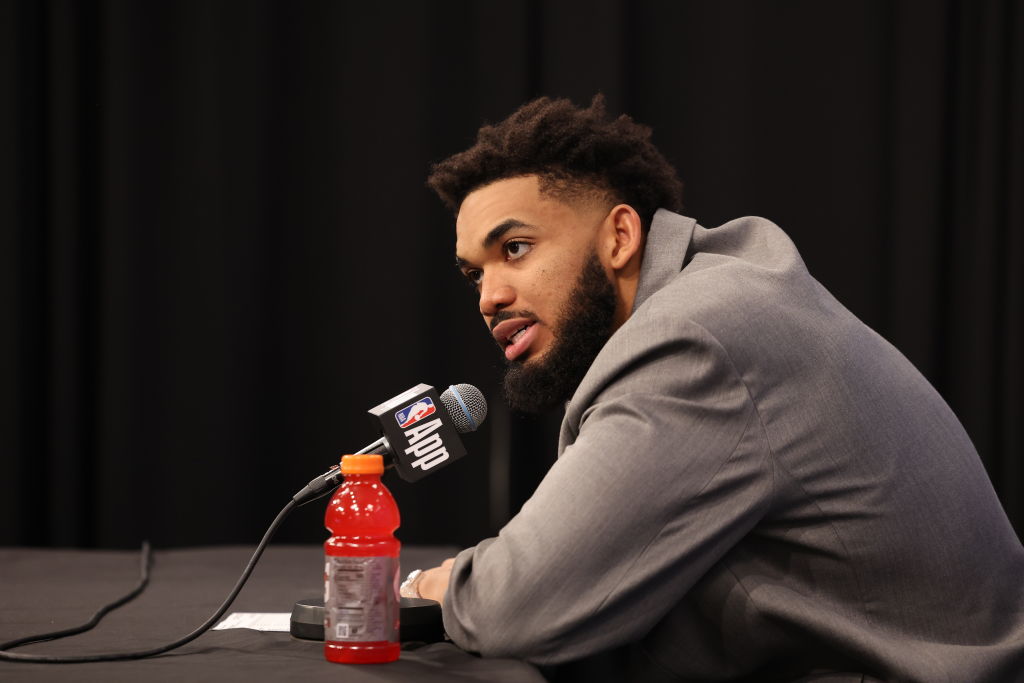
MINNEAPOLIS, MN - MAY 10: Karl-Anthony Towns #32 of the Minnesota Timberwolves talks to the media after the game against the Denver Nuggets during Round 2 Game 3 of the 2024 NBA Playoffs on May 10, 2024 at Target Center in Minneapolis, Minnesota. NOTE TO USER: User expressly acknowledges and agrees that, by downloading and or using this Photograph, user is consenting to the terms and conditions of the Getty Images License Agreement. Mandatory Copyright Notice: Copyright 2024 NBAE (Photo by David Sherman/NBAE via Getty Images)
Knicks Star Karl-Anthony Towns And Jordyn Woods Partner With Target For New Collaboration
The retailer is betting on New York basketball fever and celebrity influence to drive customers following criticism over its DEI rollbacks.
Fresh off the New York Knicks’ historic NBA championship win, Target is looking to capitalize on the city’s basketball frenzy through a new partnership with Knicks All-Star Karl-Anthony Towns and his fiancée, entrepreneur and influencer Jordyn Woods.
The retail giant announced that Towns and Woods are the newest personalities featured in Target’s “Curated By” program, an initiative that allows celebrities, athletes, and influencers to handpick their favorite products, reports Inc.com. The campaign arrives as New Yorkers continue celebrating the franchise’s first NBA championship in more than five decades.
“It’s been a minute since New York had a summer this good. These are my favorite Target finds to celebrate,” Towns said in a statement. His collection reflects a nostalgic summer theme and includes items such as Bicycle playing cards, Uno Retro, disposable cameras, and blue-and-orange Gatorade products that pay homage to Knicks colors.
Woods, the founder of the fashion and lifestyle brand Woods by Jordyn, curated a beauty-focused assortment featuring everyday essentials and cosmetics like Aquaphor Healing Ointment, Vaseline Creme Brulee Cutie Lip Balm, Maybelline liquid eyeliner, NYX lip liner, and L’Oréal Infallible Setting Spray.
The collaboration was unveiled at Target’s SoHo concept store in Manhattan, where Towns and Woods appeared in person. Woods was seen wearing her popular orange purse, which fans credit as being the Knicks’ good luck charm throughout their championship run. The bag quickly became a cultural phenomenon that sold out online and is now slated for a temporary display at the Guggenheim Museum, reports the New York Post.
According to Inc., Target launched the program last year as part of its effort to strengthen customer engagement and drive traffic through influencer-led merchandising. The partnership also underscores Target’s ongoing effort to reconnect with consumers after facing criticism from shoppers over its scaling back of diversity, equity, and inclusion initiatives.
The announcement comes after the backlash that Shawn “Jay-Z” Carter faced earlier this month for partnering with the retailer to release an exclusive 30th-anniversary collector’s edition of his landmark album “Reasonable Doubt.” Critics questioned Carter’s decision to partner with Target despite an ongoing boycott led by Black civic and religious leaders over its DEI-related controversies.
Lucid Motors is deepening its cultural footprint by partnering with New York Knicks standouts Jalen Brunson and Josh Hart. The collaboration celebrates individuals who refuse to accept the status quo.
AUTO FLEX: The 2026 Lucid Gravity GT Redefines Electric Luxury With A Boost From the NY Knicks
An exploration behind the wheel of wealth.
By Kimatni D. Rawlins
The Lucid Gravity Grand Touring (GT) replicates the game, utilizing Jalen Brunson’s speed and Josh Hart’s power to represent New York excellence. Pairing sports car acceleration with up to 450 miles of range, the Gravity GT embodies athletic performance the way Knicks fans demand it: relentless, precise, and high-velocity.
Electric Luxury Lifestyles
There’s a moment when a vehicle stops being just transportation and becomes a statement about ambition, access, and what’s possible when innovation encounters intention. The 2026 Lucid Gravity GT is that moment, sustained for longevity.
This all-electric, luxury SUV doesn’t just compete in the EV space; it expands the category. The Gravity incorporates seating for seven, a driving range that rivals gasoline-powered competitors, and acceleration that puts it in conversation with your favorite performance cars. Drivers should take every opportunity to engage “Swift Mode” and experience 0 to 60 mph in 3.4 seconds, a number that reshapes your expectations for SUV utility.
On- and Off-Court Performance
Lucid Motors is deepening its cultural footprint by partnering with New York Knicks standouts Brunson and Hart. The collaboration celebrates individuals who refuse to accept the status quo. The pairing builds on Lucid’s “Driven” campaign, which originally launched with actor Timothée Chalamet.
For Brunson, the connection runs deeper than just an endorsement. “To be one of the best, you have to be willing to do whatever it takes,” he said. “It’s a commitment to improving every day, and never accepting that you can’t reach that next level. I see that same passion for excellence in Lucid.”
Lucid says the move represents more than star power; it’s a calculated bet on cultural relevance, positioning the brand at the intersection of innovation, athletic distinction, and the values driving a new generation of consumers and tastemakers. Brunson and Hart bring more than basketball IQ to the court, and the 2026 Lucid Gravity Grand Touring matches that energy stride for stride. With a 0-to-60 mph sprint of 3.4 seconds and 828 horsepower on tap, the all-electric SUV moves with the same urgency as Brunson breaking ahead of the defense and the same force as Hart fighting for double-digit rebounds.
From Concept to Capability
Rooted in the first Lucid Space Concept, the Gravity’s three-row layout reads like a precisely constructed minivan rather than a traditional SUV — particularly with the second row folded flat and the third row tucked into the floor. That configuration requires the $2,900 3rd-Row Seating package, which includes stowable rear cargo undertray technology. In conversation with Derek Jenkins, senior vice president of Design and Brand at Lucid, the challenge became clear: translating the sporting DNA of the Lucid Air sedan into a vehicle capable of off-road versatility while preserving the styling and comfort loyalists expect. By every measure, that translation succeeded.
A Presence that Commands the Room
The Stealth Appearance Theme, signature Glass Canopy Roof, and retractable illuminated door handles complete a silhouette that feels equal parts futuristic and refined. The $1,000 Platinum Appearance Package adds contrasting accents through a Platinum-painted Nose Lighting Blade, side sills, and bumper trim.
A power-operated “frunk”, or front trunk, customizable with an optional frunk seat for lakeside relaxation, adds storage versatility, while the clamshell rear liftgate’s integrated spoiler reinforces the performance pedigree. One practical note: the vehicle sits low, including the tailgate when fully open, so mind your head when loading cargo.
Performance Built on Innovation
Power comes from a dual-motor all-wheel-drive system, supported by a liquid-cooled high-voltage lithium-ion battery delivering up to 450 miles of range on 19-inch wheels, though larger wheel packages like the one on the test vehicle bring that EPA estimate to 386 miles. Most owners will likely invest in a 240V Level 2 home charger as I did with the ChargePoint Home Flex. On the road, Gravity’s 900V+ electrical architecture permits up to 200 miles of range to be added in under 11 minutes at a Level 3 DC fast charger.
Selectable drive modes shape the experience dramatically: Smooth mode manages everyday cruising, Swift mode sharpens the responses to BMW 5 Series territory, and Sprint mode transforms the Gravity into something closer to an M5. The electric torque delivery is immediate and forceful, though Swift and Sprint modes will accelerate battery drain accordingly.
Tech-Forward with Room to Grow
Like its sedan sibling, the Gravity is a technology showcase, but it isn’t without growing pains. Lucid’s UX 3.0 operating system has historically drawn owner complaints ranging from key fob malfunctions to HVAC issues, and drivers may encounter minor Apple CarPlay glitches or a driver window that repeatedly lowered itself after being closed. Yet, over-the-air software updates will continue to reduce those glitches.
An Interior Designed for Connection
The Clearview Cockpit anchors the cabin experience with an available augmented-reality Head-up Display, a horizontally oriented HD Pilot Panel, and a 34-inch curved OLED screen above the new oval steering wheel. The test vehicle also featured the $2,900 22-speaker Surreal Sound Pro audio system for a Jay-Z-like concert performance. The $4,200 Ojai Nappa Leather with Luxury Seating Package elevated every seat in the vehicle, including Nappa leather seating surfaces, a leather-wrapped steering wheel, and walnut décor with microsuede inserts and headliner.
The Investment
Sustainability alongside innovation defines Gravity’s engineering ethos, but access to this category requires capital. My 2026 Lucid Gravity Grand Touring had an MSRP of $94,900, excluding the $1,650 destination charge, rising to $126,400 after all packages and upgrades were factored in. The warranty coverage exhibits confidence in the platform:
Prospective owners can visit any Lucid Retail Studio to familiarize themselves with the brand. The lifestyle space features a lounge, display vehicles, and a 4K Virtual Reality Experience Configurator for customers to personalize their EVs from exterior hues to interior material selections, all inspired by and named after specific cities in California, such as Santa Monica, Santa Cruz, and Tahoe. Buyers can also configure their Gravity entirely online.
Like Brunson and Hart, who bring more than basketball IQ to the court, the all-electric 2026 Lucid Gravity Grand Touring will harmonize perfectly with the tenets of your lifestyle.
“When I thought about the things I loved (food and parties), the things I needed (passion-driven work and safe spaces), and the things I wanted out of this life (community and enjoyment), all signs pointed toward creating my own supper club,” Mayfield Hewett writes in her new bookYour Turn to Host: A Guide to Great Parties and Gatherings.
“Along the way, I became quite good at organizing events. Before long, my expertise was sought after by everyone from rising entrepreneurs, artists, and musicians to top companies and household brands,” she continues.
In addition to being an event planner and author, Mayfield Hewett has created “While Entertaining,” an indie magazine turned Substack full of ideas for better hosting, gathering, and living with more than 3,000 subscribers, and Soirée School, a social media series sharing how-tos to help people plan and host at home like professionals.
Here, Mayfield Hewett shares her strategy for using social media, and specifically Pinterest, to amplify her brand and find new clients:
As an entrepreneur and event planner, what is your approach to social media?
Focusing on trust, taste, and story shapes how I approach many aspects of my business, including social media. I like to filter what I share through two lenses: Will this inspire someone? Or will this help someone?
With so much online to consume, being intentional with people’s attention helps me find my audience and grow steadily. I approach social media partnerships the same way. I only work with brands I genuinely love and already use for hosting. Brands like La Crema, The Cocktail Collection, and Staub are already in my home and at my events in real life, so those partnerships feel authentic when they show up on social.
Tell us about your relationship with Pinterest and how it came about.
I’ve always loved Pinterest and use it whenever I’m planning an event, so when I got an email from them in 2020, I responded immediately.
My first collaboration with Pinterest was creating content for a Juneteenth campaign. Shortly after, we had the opportunity to produce a creator event centered around Pinterest-inspired wedding trends. From there, the relationship continued to grow, with different Pinterest teams tapping To Be Hosted to plan and execute events.
With each collaboration, we’ve learned more about the Pinterest brand, and the partnership has grown stronger. When I started my business, Pinterest was on my dream client list, so I’m always grateful and excited each time we get to work together.
How has being part of Pinterest’s Creator Program helped you grow your business?
As I built my portfolio as an event planner, sharing my work on Pinterest became an important part of discovery and credibility. Images from our dinner parties live on people’s boards, and the hope is that those moments inspire someone to create something beautiful—or hire us to help bring it to life.
How have you used it to support the launch of your book, Your Turn to Host?
People turn to Pinterest to plan, and so much of that planning centers around gathering, entertaining, and hosting. I want to meet people where they already are, which makes Pinterest an important part of my marketing strategy for Your Turn to Host.
I partnered with Pinterest to create a dedicated Your Turn to Host board and also plan to leverage Pinterest ads to build awareness and reach my ideal reader.
Are there specific tactics you’ve learned over the years that work well for you on social?
I love documenting what I learn through my social media series, Soirée School, so people hosting events professionally or personally can find practical how-tos and inspiration for their own journey. The series was nominated for a Webby Award earlier this year, and while we didn’t win, that recognition affirmed how powerful a social series can be in creating a unique entry point into your business.
For me, it has always been important to build specifically and sustainably. I don’t chase every trend, and I don’t post every day. Instead, I consistently share content that solves a specific problem or fills a specific need. That consistency helps my ideal clients, diners, and readers continue to find me.