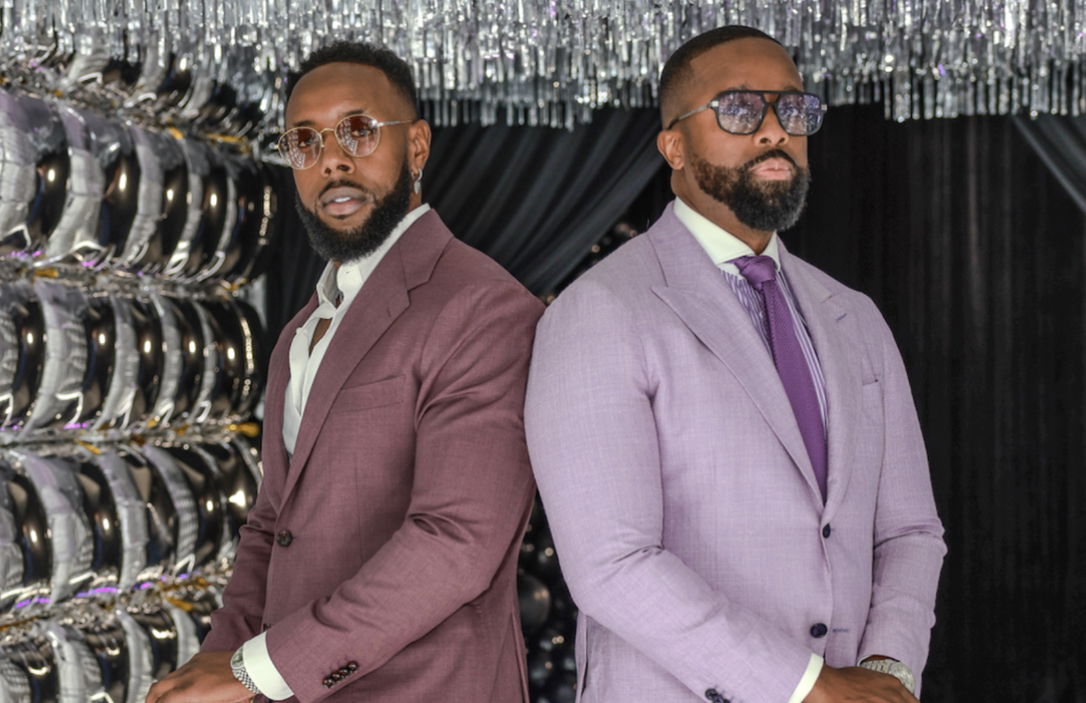
The national restaurant serves “craft tacos for a cause” from 19 locations, including three others in the Queen City. But Williams is the first Black owner to open up shop in the lavish Dilworth area with the goal of adding more diversity to the already historic neighborhood.
“I wanted to come here. I know that there aren’t any Black businesses or food businesses in this area,” Williams said. “I wanted to be that beacon of change and that beacon of light.”
Williams thrives off of service. Identifying as a Christian, Taco 4 Life’s Meal 4 Meal program drove Williams closer to the company. According to WCCB, his Dilworth location donates the cost of a MannaPack Rice meal to Feed My Starving Children—an organization that supplies food to families in over 70 countries with the sale of most meals.
The donated meals, consisting of rice, vitamins, soy, and vegetables, are distributed to feeding centers, orphanages, schools, and refugee camps in over 90 countries.
“We have the opportunity to be a part of the solution of bringing these necessities to communities,” Williams said. “Our Meal 4 Meal program has already served over 38,000,000 meals and with our new location in Dilworth, I wait with an expectant heart to see the impact that we all have together.”
With a wide range of offerings on the menu at the hands of Chef Tommi Davis—including Korean BBQ, crab cakes, blackened mahi-mahi, and fried chicken burritos—Williams wants the 3,000-square-foot location to make a difference in the Charlotte community and beyond. It’s something that he is used to.
Williams is following the footsteps of his grandfather’s hoagie shop and his father’s sub shop, Chat and Chew, which was a staple on Charlotte’s westside. “I watched them, the growing pains, the goods and the bads,” said Williams, who worked at both hops.
However, one thing he knows is that “food brings fellowship; food brings community.”
The new location opened Jan. 7. It’s open Monday through Saturday. The first meal-packing event at Williams’ location will be in March 2025.
Bodycam Footage Reveals New Orleans Attacker Shot At Police Before They Killed Him
The slain attacker, Shamsud-Din Jabbar, drove a white pick-up truck into the city's heavily crowded Bourbon Street in the early hours of New Year's Day.
New police bodycam footage has revealed that the New Orleans attacker opened fire at police from inside his vehicle before officers shot and killed him.
The slain attacker, Shamsud-Din Jabbar, drove a white pick-up truck into the city’s heavily crowded Bourbon Street in the early hours of New Year’s Day. Declaring his support to ISIS through multiple posted videos, he committed the terrorist act that killed 14 people. Dozens more also suffered injuries.
The footage, released on Jan. 10, showed police approaching the vehicle after it crashed, with two officers standing with their guns raised by the driver’s side door. According to the Public Integrity Bureau’s Force Investigation Team, one of the officers, Christian Beyer, identified himself and asked Jabbar to exit the truck. According to CBS News, the footage was taken on another officer’s bodycam, Luis Robles.
However, Jabbar began to shoot from behind an airbag. Robles and other officers, located farther away, dove onto the ground to evade the gunshots. Beyer and two officers closer to the vehicle began to shoot back, killing Jabbar in the crossfire.
The New Orleans Police Department deemed that the officers’ training led them to make these “split-second decisions” to open fire. NOPD Superintendent Anne Kirkpatrick applauded them for putting their lives at risk to apprehend Jabbar.
“Officers are trained for shoot scenarios like that — they’re highly trained, and that’s what you saw. These are split-second decisions,” stated Kirkpatrick in a news conference.
She added, “They killed the terrorist…They are national heroes.”
With the investigation ongoing, Kirkpatrick also did not disclose how many shots Jabbar let out. Despite this, she emphasized that the officers’ actions followed protocol.
“All officers are faced with ‘shoot, don’t shoot,'” she continued. “And this was clearly within the law and clearly, solidly within policy.”
However, all the officers who responded to the scene were placed under administrative reassignment. Kirkpatrick did not elaborate on why or provide further insight into the police statements to investigators.
The release of bodycam footage follows a lawsuit filed by some victims. The filing claims that the police department did not provide adequate security measures to prevent such an attack.
The city has heightened security plans, including a SEAR-1 designation, for its upcoming hosting of Super Bowl LIX in February.
Building Black Wealth: How Carter Cofield and George Acheampong Are Transforming Finances for the Culture
Melanin Money is looking to build wealth in Black communities.
Carter Cofield and George Acheampong aim to close the wealth gap and empower the Black community through financial literacy and strategic wealth building.
As a CPA and tax advisor, Cofield combines his expertise with cultural pride to provide tools, resources, and strategies through Melanin Money, the #1 Black wealth brand he co-founded with Acheampong. Together, they help individuals and families create lasting legacies by offering innovative financial solutions tailored to the community’s unique needs.
BLACK ENTERPRISE sat down with Carter and George to discuss their groundbreaking work, the inspiration behind Melanin Money, and their vision for achieving financial freedom and equity in the Black community.
BE: As the founders of Melanin Money, what inspired you to create a platform dedicated to building Black wealth, and how does it differ from traditional financial education?
Melanin Money was born out of urgency and purpose. One day, we discovered an article predicting that Black wealth would hit $0 by 2053. While alarming, it highlighted a real issue—our community’s lack of advanced financial literacy. We’re not just talking about budgeting and saving but higher-level concepts like investing, tax-saving strategies, and entrepreneurship. What sets Melanin Money apart is the expertise we bring. George is the #1 financial advisor in North Carolina, and I (Carter) am among the top certified public accountants in the country. We’ve built a platform rooted in authentic, expert-driven education designed to equip our community with tools to thrive financially.
BE: The wealth gap remains a persistent issue. What do you believe are the key steps the Black community can take to break generational cycles and build financial security?
It all starts with exposure—showing our community what financial freedom looks like and making them believe it’s attainable. “You cannot be what you cannot see.” Once that belief is instilled, we can begin educating on the actionable steps to achieve wealth. It’s equally essential to normalize conversations around money. That’s why we launched the Melanin Money Awards, celebrating our clients for attaining net worth milestones ranging from $100,000 to $10 million. By showcasing these successes, we’re breaking the taboo and proving that true wealth is within reach for people of color.
BE: Your work integrates tax strategy into wealth-building discussions. What are some overlooked tax tips that can significantly benefit individuals and small business owners in our community?
Our philosophy is simple: “It’s not about how much money you make; it’s about how much you keep.” Contributing to employer retirement accounts—especially Roth 401(k) options—is an excellent way for individuals to build tax-free wealth. Additionally, real estate can be a game-changer for W-2 employees by providing strategies to offset taxable income.
The tax code is your ally for business owners. IRS Section 162(a) deducts ordinary and necessary business expenses. When structured correctly, personal costs like rent, car payments, travel, and meals can become legitimate business deductions. These strategies are just the beginning of what’s possible for wealth-building through tax optimization.
BE: Financial literacy is often not taught in schools. What role should education systems and community organizations play in fostering wealth-building knowledge for the next generation?
While we believe financial literacy is critical, we’ve realized that schools are designed to create workers, not wealth builders. As a result, it’s up to individuals and community organizations to take the lead. This means seeking financial education independently and leveraging platforms like ours to fill the gap. Schools haven’t taught financial literacy for over a century, and they will unlikely start now. We have the responsibility to empower ourselves and future generations.
BE: In your experience, what are the most common financial mistakes people make, and how do you guide them to turn these into opportunities for growth?
Overspending and a lack of urgency around investing are the two biggest pitfalls. Many people spend more than they earn and delay investing, which keeps them on the wrong side of compound interest—paying it instead of earning it. The key is to live within your means and start investing early. Even small, consistent investments can grow exponentially, leading to financial freedom.
BE: Cultural representation in the financial industry is often limited. How does Melanin Money challenge stereotypes and create space for Black voices in finance?
We’ve created The Melanin Money Show, a podcast featuring top Black financial experts across various specialties. This platform highlights their expertise and demonstrates to the community that we have brilliant minds leading the charge in financial literacy. By amplifying these voices, we’re changing the narrative and expanding what representation in finance looks like.
BE: What does success look like for you, as CPAs and entrepreneurs and as leaders in a movement to transform how the Black community approaches money and wealth?
Our success is evident: We aim to decrease the wealth gap by $100 billion and create 100,000 Black millionaires. In just three years, we’ve helped our clients increase their net worth by over $100 million. Our ultimate goal is to prove the 2053 prediction wrong—not just slightly, but by $100 billion.
BE: What’s next for you?
The future is exciting. First, we’re focused on making the Melanin Money Awards the biggest celebration of Black wealth in history. Second, we want The Melanin Money Show to become the #1 financial literacy platform for people of color. Lastly, we’re doubling down on our mission to educate, empower, and equip our community to achieve the financial freedom we all deserve.
Mompreneur Launches New Line Of Fashionable Scrubs For Doctors, Nurses, And Healthcare Professionals
Based in Southern California and established in 2022, TLCscrubbs was born out of Shay’s vision to create a line of scrubs that embodies style, quality, and comfort, all while addressing the unique needs of healthcare workers.
Meet Shay Jackson, an African American mom and the proud founder of TLCscrubbs, a contemporary scrub brand dedicated to transforming how medical professionals experience their work attire. Based in Southern California and established in 2022, TLCscrubbs was born out of Shay’s vision to create a line of scrubs that embodies style, quality, and comfort, all while addressing the unique needs of healthcare workers.
After years of working as a nurse, Shay understands that finding the right balance between professionalism and comfort is essential for medical professionals. “Starting this small business has always been a dream of mine,” she states. “I wanted to create something unique and meaningful for those who dedicate their lives to caring for others.”
The name TLCscrubbs reflects Shay’s core values — Thoughtful, Loving, and Compassionate — which she believes define the essence of nurses and healthcare workers. “Our scrubs are designed for those who heal, combining practicality with style,” she adds. “Looking good while doing good is essential for professionals on the go.”
The extra “B” in “scrubbs” signifies the busy lifestyle of healthcare workers, who are always on the move and ready to make a difference. TLCscrubbs aims to provide medical professionals with quality uniforms that not only look good but also support their demanding roles.
“Throughout my journey in the medical field, I’ve learned a lot about compassion and resilience,” Shay says. “I’m excited to share TLCscrubbs with the world, and I look forward to supporting my fellow healthcare professionals every step of the way.”
With a commitment to customer satisfaction, TLCscrubbs looks forward to providing stylish and comfortable options that help medical professionals embody the qualities they represent in their daily lives.
For more information about TLCscrubbs and to explore the collection, visit TLCscrubbs.com
Djimon Hounsou Admits He’s Still ‘Struggling’ To Make A Living In Hollywood
Hounson shared how he still deals with financial worries despite his multiple Oscar nominations.
Actor Djimon Hounsou got real about his ongoing financial stresses despite his Hollywood success. The two-time Oscar nominee revealed that he still struggles to make a living through acting.
Hounsou shared more about his predicament in an interview with CNN’s African Voice Changemakers. Born in Benin, Hounsou scored breakout roles in U.S. films such as Ridley Scott’s “Gladiator” and the 2006 film “Blood Diamond.” He scored an Oscar nomination for the latter and one in 2002 for “In America.”
Despite his critical acclaim and extensive filmography, Hounsou still feels “underpaid.” He detailed how he continues to be lowballed in the industry and offered meager checks for new roles that do not match his accolades.
“I’m still struggling to make a living,” he said. “I’ve been in this business making films now for over two decades with two Oscar nominations, been in many blockbuster films, and yet, I’m still struggling financially. I’m definitely underpaid.”
The 60-year-old continued by stating how his counterparts have accrued more financial gains with even less critical achievement. He shared that he feels “cheated” by this pay discrepancy, given how hard he has worked to build his career.
“I’m still struggling to try to make a dollar! I’ve come up in the business with some people who are absolutely well off and have very little of my accolades,” he explained. “So I feel cheated, tremendously cheated, in terms of finances and in terms of the workload as well. I’ve gone to studios for meetings and they’re like: ‘Wow, we felt like you just got off the boat and then went back [after Amistad]. We didn’t know you were here as a true actor.’ When you hear things like that, you can see that some people’s vision of you, or what you represent, is very limiting. But it is what it is. It’s up to me to redeem that.”
Moreover, he cited that racism and xenophobia thwarted his efforts to gain further recognition for other performances, specifically his breakthrough performance in the 1997 film “Amistad.” Hounsou played a rebellion leader in the historical drama depicting the revolt by enslaved African people aboard a ship to America.
“I was nominated for the Golden Globe, but they ignored me for the Oscars, talking about the fact that they thought that I had just came off the boat and off the streets,” he claimed. “Even though I successfully did that [film], they just didn’t feel like I was an actor to whom they should pay any respect. This conceptual idea of diversity still has a long way to go. Systemic racism don’t change like that anytime soon.”
Hounsou continues to be a force in Hollywood. He recently starred in “A Quiet Place: Day One” and has upcoming roles in horror films and thrillers. However, his calls for better compensation and representation remain an ongoing conversation for diverse actors in the entertainment industry.
Black Scientist Creates Breakthrough Haircare Product For Lasting Hydration In 4C Curly Hair
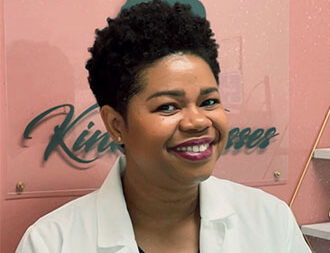
Meet Shawna Moses, a laboratory-scientist-turned-entrepreneur who is the founder and CEO of Kinky Tresses, a thriving natural haircare brand that is transforming the industry with its unique fusion of science and passion.
Meet Shawna Moses, a laboratory-scientist-turned-entrepreneur who is the founder and CEO of Kinky Tresses, a thriving natural haircare brand transforming the industry with its unique fusion of science and passion. Her company offers a range of premium, moisture-focused products tailored for tightly coiled natural hair textures rooted in her personal journey and professional expertise.
The story of Kinky Tresses began with Moses’ childhood fascination with hair. As a young girl, she enjoyed styling cornrows and twists on family members, sparking a lifelong love for haircare. However, her journey took a transformative turn during her college years, when advanced chemistry courses gave her a deeper understanding of the unique needs of kinky and curly hair.
After experiencing a severe chemical relaxer burn, Moses boldly decided to embrace her natural hair. Yet, like many others, she struggled to keep her hair moisturized with the products available on the market. Armed with her scientific knowledge and determination, she began experimenting with natural ingredients to create a solution.
Her breakthrough came with the Coconut Mango Hair Butter, a product born from months of rigorous testing and an intricate balance of hydrating and moisturizing ingredients. The results were immediate: her dry, brittle hair became soft, supple, and retained moisture for days, sparking a transformation that led her severely damaged hair to flourish.
Today, thousands of customers across the globe rely on Kinky Tresses products and are amazed by the immediate results. With glowing 5-star reviews praising the products’ ability to deliver long-lasting moisture, Kinky Tresses has built a loyal community of customers who trust the brand to nurture and transform their natural hair.
Kinky Tresses offers a full line of products, all made with superior-quality and natural ingredients. From shampoos to conditioners, each product is meticulously formulated to deliver long-lasting moisture that penetrates deep into the hair shaft. This focus on moisture retention is what sets the brand apart in a crowded marketplace.
“At Kinky Tresses, we understand that dryness is one of the biggest challenges for natural hair,” said Moses. “Our mission is to provide effective, science-based solutions that empower our customers to embrace and love their natural hair.”
The brand continues to grow, serving as a beacon for those seeking to nurture their natural hair with safe, effective products. With a foundation rooted in science, passion, and a commitment to quality, the brand is poised to revolutionize natural haircare for years to come.
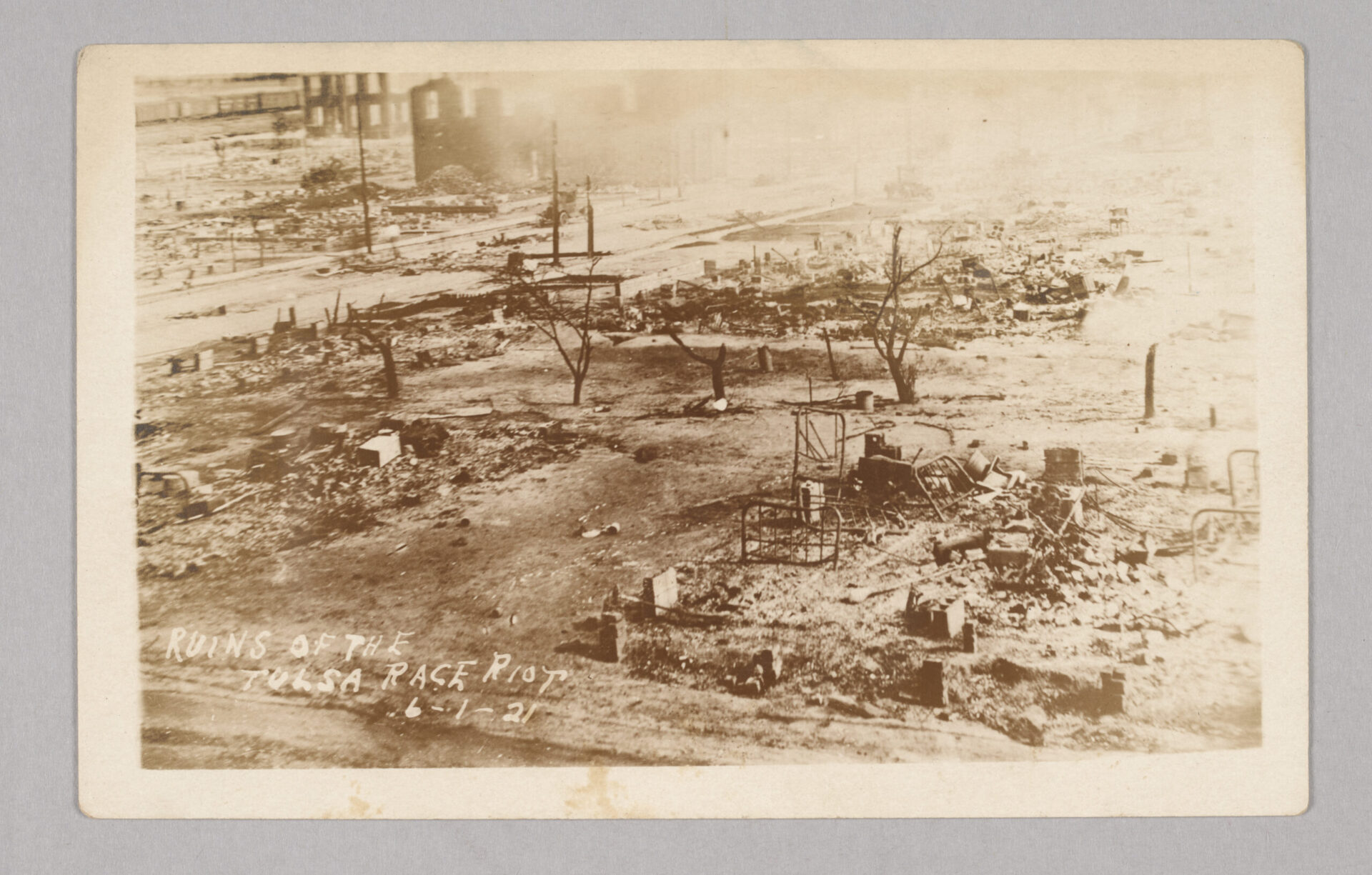
On May 31 and June 1, 1921, in Tulsa, Oklahoma, mobs of white residents brutally attacked the African American community of Greenwood, colloquially known as 'Black Wall Street,' in the deadliest racial massacre in U.S. history. Homes, businesses, and community structures including schools, churches, a hospital, and the library were looted and burned or otherwise destroyed. Exact statistics are unknown, but the violence left around 10,000 people homeless and as many as 300 people dead with many more missing and wounded.;Photo postcards of the Tulsa Race Massacre were widely distributed following the massacre in 1921. Like postcards depicting lynchings, these souvenir cards were powerful declarations of white racial power and control. Decades later, the cards served as evidence for community members working to recover the forgotten history of the riot and secure justice for its victims and their descendants. Artist Unknown. (Photo by Heritage Art/Heritage Images via Getty Images)
Justice Department Finds 1921 Tulsa Race Massacre ‘Coordinated, Systematic Attack’
The investigation found that the attack was caused by unfounded allegations that a Black teenager assaulted a white woman.
After completing its four-month investigation into the 1921 Tulsa Race Massacre, which devastated Black Wall Street, the Department of Justice concluded on Jan. 10 that the original one-week inquiry conducted by a single agent from the Bureau of Investigation, the FBI’s predecessor, was inadequate by today’s investigative standards.
According to ABC News, the new report clarified that several aspects of the initial report were flagrant misrepresentations of what happened during the massacre.
“Contrary to the agent’s 1921 report, the situation did not ‘spontaneously’ grow out of control,” the new report proclaimed. “Rather, what had initially been sporadic and opportunistic violence became systematic, yielding a much more devastating result due to coordinated efforts among white residents and law enforcement entities. Moreover, although the 1921 report asserts that the massacre (then called a riot) was not the result of ‘racial feeling,’ perpetrators of the massacre overtly expressed and acted upon racial bias.”
According to the DOJ, investigators for the Justice Department’s Civil Rights Division “spoke with survivors and with descendants of survivors, examined firsthand accounts of the massacre given by individuals who are now deceased, studied primary source materials, spoke to scholars of the massacre and reviewed legal pleadings, books, and scholarly articles relating to the massacre.”
In congruence with many historical scholars of the event, the investigation found that the attack was caused by unfounded allegations that a Black teenager, 19-year-old Dick Rowland, assaulted a white woman who was operating an elevator he used.
Per the report, after the police deputized residents who had been looking to carry out a lynching, “law enforcement officers helped organize these special deputies — as well as other white Tulsans — into the martial forces that ravaged Greenwood. Over the next several hours, they looted, burned, and destroyed 35 city blocks while Greenwood’s residents tried desperately to defend their homes.”
The report continued, “Some Black residents were shot (or otherwise assaulted), and many were arrested or detained. Law enforcement actively participated in the destruction, disarming Black residents, confiscating their weapons, and detaining many in makeshift camps under armed guard.”
Due to the length of time that has passed, the Justice Department is unable to take any legal action, per the report.
“The report recognizes that some may find the department’s inability to prosecute a painful or dissatisfying outcome,” the DOJ said in a statement regarding the report. “However, the review recognizes and documents the horrible events that occurred as well as the trauma and loss suffered by the residents of Greenwood.”
“Now, more than 100 years later, there is no living perpetrator for the Justice Department to prosecute. But the historical reckoning for the massacre continues. This report reflects our commitment to the pursuit of justice and truth, even in the face of insurmountable obstacles. We issue this report with recognition of the courageous survivors who continue to share their testimonies, acknowledgment of those who tragically lost their lives, and appreciation for other impacted individuals and advocates who collectively push for us to never forget this tragic chapter of America’s history,” Assistant Attorney General Clarke said.
Tennis Star Gael Monfils Becomes Oldest Player To Win ATP Tour Title
Ahead of the tournament, Monfils told reporters that although his love of the game is what keeps him competitive, he has less love for the grind of traveling.
French veteran professional tennis player Gael Monfils made history when he claimed his 13th ATP tour title on Jan. 11 at 38 years and 112 days old, breaking the record formerly held by Roger Federer when he won an ATP Tour title at 38 years and 74 days old.
According to ESPN, Monfils dispatched Zizou Bergs in straight sets, 6-3, 6-4 at Auckland’s ASB Classic.
With his historic win, Monfils also made more history; he is currently ranked No. 52 in the world and is the oldest player in the history of the ATP Tour to be ranked in the top 100.
Before the formation of the ATP Tour in 1990, Pancho Gonzales won a singles title in Kingston, Jamaica, in 1972 at the tender age of 44 years, seven months, and four days, making him the oldest man to win a singles title in history. Monfils’s latest win comes 20 years after he won his first title in Sopot, Poland, in 2005.
Ahead of the tournament, Monfils told reporters that although his love of the game keeps him competitive, he has less love for the grind of traveling.
“I love tennis. I love what I’m doing, so of course, all the sacrifices you do, they are a little bit easier. When you love something, it’s easier to keep pushing. I’ve been enjoying myself since the first day I played tennis and [at] 60 years old I will still have this joy. Practice, it’s easy. It’s in the DNA. Stay in shape, it’s easy. It’s more the travel.”
“Age is a number, but we keep working; I’m still striking a good ball. Hopefully, many more to come.” Regarding his daughter, Monfils said, “She might just wake up now. It’s my second final as a dad and I’m really happy, super happy let’s say that I could win a tough final.”
MAGA Thinks Black Men Helping Save Items During California Wildfires Are Looters, Because Of Course They Do
In reality, the men were attempting to save items from a relative's home before it completely burned down.
After a video on social media showing a pair of Black men taking items from a house on fire began making the rounds, the truth got lost as MAGA Republicans and other users affiliated with right-wingers started asserting that the men were looters. In reality, the men were attempting to save items from a relative’s home before it completely burned down.
MAGA out here lying about Black people looting during these California fires, just like they LIED about Haitian immigrants eating pets!
Because they’re Black, they must be looting? This isn’t an honest mistake.
Spread the truth, not lies: These people were not looters. This footage is from KTLA News, where the homeowner explained that her brothers and friends were helping her move belongings out of her burned… pic.twitter.com/QQ7I9qySbw
According to Newsweek, leaders in California, both local and state, have been vocal about their desire to punish looters. In local media outlet interviews, some Californians, most notably white women, have indicated that they believe there is widespread looting occurring as people’s homes burn down.
Per KTLA, who originally broadcast the footage that had been taken out of context to fit a racist narrative online, the owner of the home shown burning told the outlet in an interview that the men were her brothers who were trying to help her.
The KTLA interview which gives context about what was really happening. They were helping her, not looting. pic.twitter.com/4f10Fdykf4
“They told us to leave and we got what we could,” the woman who owned the home said. “We have dogs, we have animals…We just got what we could get; that’s all we could do. We’ve got to start over.”
In response to the panic over looting, users on social media pointed to reports from outlets like The LA Times that experts predicted that in the wake of the wildfires ravaging California, rent is expected to skyrocket, an example of disaster capitalism.
However, the people spreading falsehoods about two Black men trying to help their sister save belongings from a house fire, of course, most likely aren’t concerned about disaster capitalism. And their spreading of a false and racist narrative about Black people has gone viral.
Meanwhile, according to NBC, the fires have killed at least 24 people and destroyed entire communities and more than 12,000 structures.
Kamala Harris Appears To Crop Trump Out Of Jimmy Carter Funeral Pic
The Carter Center posted a funeral ceremony photo that also excluded Trump.
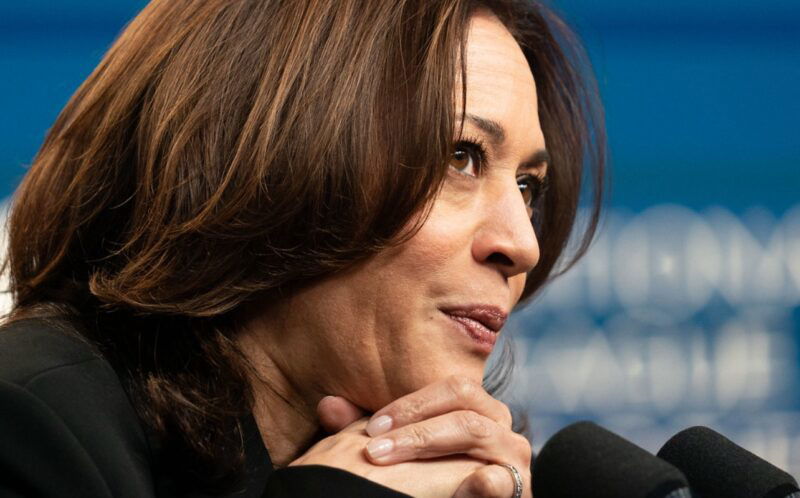
Kamala Harris is letting a picture say a thousand words. The vice president and former presidential nominee conveniently cropped out her opponent, Donald Trump, in a photo she posted from Jimmy Carter’s funeral.
Harris shared the photo on her official “VP” Instagram with all the other heads of state at the Jan. 9 memorial service. However, followers noticed that Harris had left out the President-elect.
“President Jimmy Carter loved our country. He lived his faith, served the people, and left the world better than he found it,” captioned the post. “President Carter’s many contributions will echo for generations to come.”
The picture was nonpartisan and featured former and current Presidents Joe Biden, Bill Clinton, Barack Obama, and George W. Bush. However, the cameraman was seemingly unable to get President-elect Trump in the shot. Instead, a pillar blocked Trump at that angle. He was seated next to Obama, and his wife, Melania Trump, was beside him.
While Harris’ intentions were unclear in including this specific shot of the funeral, commenters could not help but smirk at the situation. Given her recent match with Trump, Instagram users were not shocked that the photos lacked the Republican leader.
“Best photo crop of the decade,” reads one comment.
Another user wrote, “Shout out to the person in charge of the seating who had the foresight to think about the photos.”
Furthermore, Harris was not the only one who left Trump out of the photos marking the event. The Carter Center, the nonprofit founded by late President Carter and his wife Rosalynn, also posted “beautiful moments” of the funeral. They notably excluded Trump from the posted photo.
Beautiful moments from the service at Washington National Cathedral this morning honoring former President Jimmy Carter. pic.twitter.com/CwikJWLbjQ
Surprisingly, Trump has yet to comment on the cropping of photos. However, regarding his documented “friendly” conversation with Obama at the event, he did say that the unlikely duo appeared to like each other and that they “probably do.”