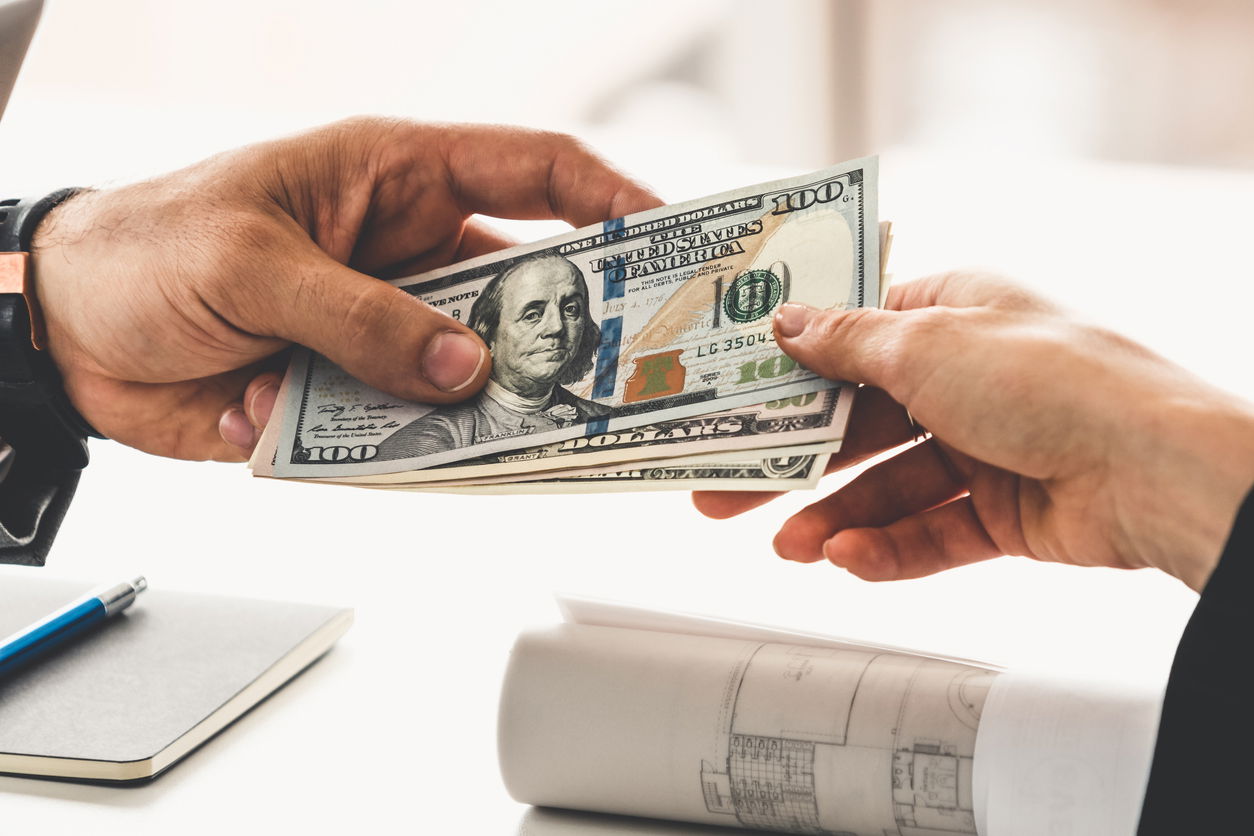
Zohran Mamdani Makes Good On His Promise By Revealing Free Childcare Program For City Workers
The program expansion for free on-site childcare puts close to $20,000 a year back in the pockets of working families in an effort to keep top talent and boost productivity.
New York City Mayor Zohran Mamdani is making good on one of his campaign promises by announcing a free childcare program for all city workers, which he calls one step closer to his plan to provide universal childcare, NBC 4 reports.
Mamdani announced the construction site being transformed to cater to “the few New Yorkers that can be louder than an active site,” labeled as “New York’s cutest,” into the city’s first-ever on-site childcare program for municipal employees — a 100% free, full-daycare for children starting as young as six weeks to 3 years old. “On April 30, these applications will open for every single worker in the David Dinkins building as well as every single Department of Citywide Administrative Services (DCAS), regardless of their location across the city,” he said while wearing a hard hat.
Mayor Mamdani: We are here at an active construction site that will be transformed into New York City's first ever on-site childcare program for municipal employees. This is a site that will be 100% free, full daycare for children as young as 6 weeks to 3 years old pic.twitter.com/92aa4oD1kp
The program expansion of free on-site childcare puts close to $20,000 a year back in the pockets of working families, helping keep top talent and boost productivity.
“Change begins at home. As we deliver universal childcare to New Yorkers, that work must include the public servants who keep this city running,” the young mayor said.
“We are bringing year-round, no-cost childcare right here to Lower Manhattan — not just saving families money, but giving them back hours of their time. No parent should have to spend hours commuting just to ensure their child is safe and cared for.”
Within a little over six months in office, Mamdani has made free childcare a priority, even partnering with every baby’s favorite teacher, Ms. Rachel, whose real name is Rachel Griffin Accurso, on a campaign to highlight its importance.
NEW: Socialist New York City Mayor Zohran Mamdani sings "The Wheels on the Bus" with YouTube star Ms. Rachel to preschoolers.
The appearance was to promote the socialist's free child care program for 2-year-olds.
Free childcare would lift a burden off many struggling New Yorkers and people across the country.
According to The American Prospect, the average cost of childcare in the U.S. is close to $14,760 per year, and in The Big Apple, it could double. The program expansion is in good hands, as Emily Liss oversees the Mamdani’s Office of Child Care and Early Education.
The city is already a national leader in early childhood services through former Mayor Bill de Blasio’s groundbreaking pre-K and 3-K programs, which Liss helped architect.
While on social media, users are seemingly badgering the mayor with claims like the “government has no business entering the childcare business and this kind of reckless spending with tax dollars will only drive up private sector costs,” childcare has become a hot-topic political issue.
In November 2025, New Mexico became the first state to host a no-cost, universal childcare program.
Canadian Prime Minister Acknowledges Drake In Juno Awards Speech
Prime Minister Mark Carney acknowledged him while presenting fellow Canadian artist, Joni Mitchell, with a Lifetime Achievement Award
Toronto superstar Aubrey “Drake” Graham was recognized for his contribution to Canadian music and culture when Canada’s Prime Minister namedropped the “OVO” boss at the recent Juno Awards (the Canadian version of the Grammys) ceremony.
According to The Hip Hop Democrat, Prime Minister Mark Carney acknowledged the “Thank Me Later” recording artist while presenting fellow Canadian artist, Joni Mitchell, with a Lifetime Achievement Award. He mentions Drake’s musical contributions alongside those of other Canadian greats like Mitchell, Rush, and Nelly Furtado.
“Canada is the third-largest exporter of music in the world,” Carney said. “It’s a huge industry, but really, at the core of it, it’s our stories, it’s our emotions, it’s our heart, at a time when the world needs more Canada. Joni Mitchell is the heart, Nelly Furtado. It’s the whole range. Drake, Rush, whoever, Canadian, Canadian, Canadian.”
This took place at the 55th Annual Juno Awards on March 30 at the TD Coliseum in Hamilton, Ontario.
Hot 97 reported that Drake also made an appearance at the awards with a pre-recorded video tribute to Nelly Furtado as she was inducted into the Canadian Music Hall of Fame. Drake’s perceived pettiness also appeared in his tribute, as he has not forgiven the Junos since he hosted the awards in 2011, when he felt the show snubbed him by giving recording artist Shad six awards he felt he rightfully deserved.
“To the Junos, because you are honoring one of my dearest friends tonight, I will spare you, even though I know you’re still thinking about those six awards that you gave to Shad in 2011 when you snubbed ‘Take Care’ as I hosted the 40th anniversary of your award show. But listen, that’s neither here nor there. Tonight we’ll let it go. This is about Nelly. And one thing Nelly knows, you know my love is real. You know my love is true. I love you. Have a great night. Enjoy your Hall of Fame status. It’s long overdue. Kill the performance. We love you, dog.”
He also reminded the audience that he has an upcoming album.
Avid Trumper Amber Rose Believes White People Should Be Able To Say N-Word
Rose argued that letting white people say the n-word would reduce racial conflict.
Amber Rose is in the hot seat yet again for her controversial opinions, this time regarding who can say the n-word.
The staunch Trump supporter met up with recently revealed MAGA enthusiast Nick Cannon to discuss all things race and politics. During their talk on Cannon’s web series, “Big Drive,” Rose asserted her opinion about white people saying the slur they historically used to disrespect Black people. The Neighborhood Talk shared a clip of the conversation.
“White people should be able to say n***a,” Rose said point-blank.
However, Rose expanded upon her controversial take. She reasoned that if white people were allowed to say the word, it would lessen its dark history and impact.
“Because when you really stop giving a f*** about stupid, dumbass words, we’ll stop killing each other,” she argued.
In Rose’s mind, allowing white people to engage in the slur, reclaimed by Black people as a sign of endearment, would soothe racial tension dividing America. She also noted the difference between someone reciting the lyrics of a rap song and using the slur to offend a Black person.
“You know if somebody says the hard ‘R’ and they’re pointing at you, [it’s] very different than rap lyrics, or saying ‘That’s my n-gga. That’s my homie,” she said.
Rose then emphasized that discernment remains a key factor, as she thinks people should understand the parameters of the slur.
She continued, “We’re all smart enough to know what’s right and what’s wrong. Why are we putting that much damage and pain behind [ the n-word]?”
Rose also believes that one’s intentions matter more than impact, insinuating that she would not feel a way if a white person used the n-word around her. She also considers the matter an issue of free speech.
“Why live in America if you don’t have freedom of speech?” questioned Rose.
However, her explanation did not land well with the Black community. Her assertion, instead, sparked an uproar for its potential to undermine the word’s legacy in America. While Rose hopes that this allowance would lessen the word’s bite, it would also allow white people to bypass accountability for a word they have historically used for harm.
Although Rose wants bygones to be bygones, racist bigots still hurl the “hard r” version of the word to hurt Black Americans. With the n-word’s original impact felt to this day, Rose’s take was preposterous and naturally fell on deaf ears.
Furthermore, naysayers find it hard to believe Rose and her lackluster plan for world peace, given her political alignment with Trump.
As the President rolls out harmful policies toward Black people and other marginalized groups, Rose’s MAGA stance has people questioning her motives for letting white people slide for saying the n-word.
Florida Gov. Ron DeSantis takes questions from the media after signing three education bills on the campus of New College of Florida in Sarasota on May 15, 2023. (Photo: Thomas Simonetti for The Washington Post via Getty Images)
It seems as if Trump is getting his wish in Florida after threatening to withhold funding to build a tunnel between New York and New Jersey if Senate Minority Leader Chuck Schumer (D-N.Y.) failed to have Virginia’s Dulles International Airport and NYC’s Penn Station named after him.
Gov. Ron DeSantis signed a bill that will prompt Palm Beach International Airport to be named after the 47th president, NBC News reported.
The name change is scheduled to take place on July 1, but not before it receives approval from the Federal Aviation Administration (FAA), which, in a statement, called the situation a “local issue” because it “must complete some administrative tasks to include updating navigational charts and databases.”
The bill, signed March 30 by the 2024 failed presidential candidate, requires Palm Beach County to “at minimum” be granted the “perpetual and unrestricted right” to use the Trump airport name and related abbreviations for airport use at no cost. It was celebrated by Trump’s son, Eric, on X. “Palm Beach International Airport is now officially…. “President Donald J. Trump International Airport! Proud to have played a small role in making this happen. Huge thanks to @megforflorida, @GovRonDeSantis, @JamesUthmeierFL, and the overwhelming majority in the Florida House!” he wrote on the social platform.
Palm Beach International Airport is now officially…. “President Donald J. Trump International Airport!”
Trump is a frequent flyer in and out of the Palm Beach airport, as his Mar-a-Lago residence is close to five miles away. Democratic lawmakers, including Florida House party leader Fentrice Driskell, condemned DeSantis after signing the bill, claiming it will cost taxpayers $5 million. “Life keeps getting more expensive for working families and seniors in Florida, which is why Democrats spent this legislative session fighting for an affordability agenda to lower costs and put more money back in your pocket,” she said.
“Instead of working across the aisle with us to advance those bills, Republican leaders decided to prioritize wasting five million of your taxpayer dollars on renaming an airport after the President.”
After attaching or attempting to attach his name to several public services and buildings, such as the Kennedy Center, it appears that Trump is getting his wish in Florida after threatening to withhold funding to build a tunnel between New York and New Jersey if Senate Minority Leader Chuck Schumer (D-N.Y.) failed to have Virginia’s Dulles International Airport and NYC’s Penn Station named after him.
The move comes at an interesting time, as just days prior, Democrats scored an electoral victory in the county by flipping a state House seat for a legislative district that includes Trump’s resort and neighbors the airport — secured by Emily Gregory.
Hours before the news, Trump’s second-oldest son revealed the design for his father’s presidential library with a video of a tower along the Miami skyline emblazoned with the signature “Trump” lettering. “This landmark on the water in Miami, Florida will stand as a lasting testament to an amazing man, an amazing developer, and the greatest President our Nation has ever known,” he said.
🚨 FIRST LOOK: The Donald J. Trump Presidential Library is officially here.
Over the past six months, I have poured my heart and soul into this project with my incredible team at @Trump.
This landmark on the water in Miami, Florida will stand as a lasting testament to an… pic.twitter.com/azV1hx0HG2
According to The Associated Press, Miami Dade College gave up a 3-acre plot of downtown real estate as a gift for the library placement. In December, a judge dismissed a complaint challenging the gift on the grounds that the college’s board didn’t provide sufficient time for public notice, with the site valued at more than $67 million.
The state also has a portion of road between the airport and his estate recently renamed Donald J. Trump Boulevard.
Bob Law, ‘Night Talk’ Host And Pioneering Voice In Black Radio Activism, Has Died
Law was instrumental in shaping Black political consciousness with "Night Talk."
Bob Law, an influential Black radio personality known for his “Night Talk” political show, has died.
Law was not only known on New York airwaves, but he also used his media platform to speak on political issues shaping Black America. According toThe Grio, family members of the Black political pundit confirmed the news of his death on March 30.
Before there was ever “The Breakfast Club,” Law was a pioneering voice in Black radio. In 1981, he began syndicating “Night Talk With Bob Law,” becoming the first live, nationally broadcast Black radio talk show in the U.S. Throughout the ’80s and ’90s, politicians seeking to connect and speak directly to the Black community appeared on the program.
Law leaves behind a decades-long dedication to political activism. Before he ever appeared on a microphone, he worked with racial justice organizations like the Student Nonviolent Coordinating Committee, where he served as field secretary.
He discovered his knack for radio activism through “Night Talk.” As the show gained influence and credibility as a sounding board for emerging ideas and leaders, Law’s position in radio and Black activism became even more prevalent.
“‘Night Talk’ became like a national organization. I was able to do things with the show. Talk as an activist,” Law said in a 2025 interview withOur Time Press.
The media powerhouse also amplified the upcoming voices that championed Black causes, some of which saluted the storied radio titan. Specifically, his show helped catapult the late Jesse Jackson’s 1984 presidential campaign, a crucial step toward Black leadership at the highest level of office.
“It was ‘Night Talk’ that started the campaign ‘Run Jesse Run’ in 1984,” added Law. “Jesse Jackson came on the show every Tuesday night, and we started talking about that on the air. Run Jesse Run. “Night Talk” was a major factor in that presidential campaign.”
Black political leaders honored the late radio host with their own tributes. Rev. Al Sharpton shared insight into his pivotal relationship with Law on social media, while emphasizing how the media personality helped him establish a platform early in his career.
Bob Law, a pioneer in National Black Talk radio, has passed away. His unparalleled #NightTalk show was the political grapevine of Black America. He was one of a kind, a true representative and voice of Black radio.
“Bob Law, a pioneer in National Black Talk radio, has passed away,” Sharpton wrote. “His unparalleled #NightTalk show was the political grapevine of Black America. He was one of a kind, a true representative and voice of Black radio.”
Sharpton continued, He gave me my first radio program when I was 16, and he, along with Hank Spann, introduced me to James Brown. My personal relationship with him and his Queen, Muntu, ran deep and strong for over 50 years. I will miss him dearly.”
Law is remembered for bringing together a national family and for amplifying, shaping, and dissecting Black issues.
“The national audience has seen that it is possible to work together as a national family,” continued Law in the interview. “That sense of community has been one of the things we’ve been able to develop. We’ve raised a lot of issues and hopefully raised the consciousness of people who listen to us regularly.”
Yet today’s top Black women designers have carved out their own career paths, creating stunning, intentional designs that break industry conventions. These designers create interior spaces that blend bold cultural maximalism with refined modern luxury, producing deeply personal expressions of identity fused with innovative design. Get into these designers who are mapping visually stunning careers that transform the Black home with a Black aesthetic that can’t be denied.
Neffi Walker
The Black Home founder and Philadelphia-based interior designer, Neffi Walker, started her current design approach through renovating her own home. Over 10 years of work, she has developed a unique design approach that places Blackness at the center of her interior creations. Walker’s design approach uses deep, moody color schemes, with black as the primary color, while incorporating multiple textures and lighting elements to create visual depth. Walker transforms black from a shunned color into a luxurious symbol of cultural significance, resulting in spaces that are both upscale and emotionally meaningful.
Kiva Brent
Kiva Brent is an interior decorator and content creator based in Pittsburgh, Pennsylvania. Brent built her brand D.I.Y. with KB to promote accessible luxury design. Brent’s design philosophy prioritizes intentionality, favoring functional, high-impact pieces over excess. The aesthetic combines modern glam with clean minimalism to offer practical ways to achieve a refined look on a budget. The elevated interior design work connects with people who want sophisticated spaces that stay within reach.
Timala
The Tampa-based entrepreneur Timala founded Decurated Interiors, a virtual design firm that provides eDesign services. Through her experience as a furniture buyer, Timala integrates more than 10 years of sourcing knowledge into her client projects. The method Timala uses combines ease of use with tailored design solutions to deliver customized interiors to clients, no matter where they are located. The design style she prefers creates curated modernism through neutral color schemes combined with purposeful decorative elements that showcase individual client lifestyles and identities.
Amber Guyton
The Atlanta-based designer Amber Guyton established Blessed Little Bungalow as a blog before transforming it into a design brand in 2016. Through her design work, Guyton uses bold jewel tones and storytelling to create spaces that radiate authentic joy. Her design philosophy rejects sterile minimalism, favoring layered interiors that express personal stories drawn from real experiences.
Sheila Bridges
Sheila Bridges is an interior designer in Harlem and founded her company, Sheila Bridges Design, in 1994. Sheila Bridges graduated from Parsons School of Design and gained fame through her “Harlem Toile” pattern, which transforms French toile into a Black cultural perspective. Bridges combines traditional American design elements with historical stories into modern interior spaces. The intellectual depth of her work creates spaces that deliver both conceptual richness and visual impact.
Malene Barnett works as a multidisciplinary designer in Brooklyn and leads her own studio, Malene Barnett Studio. The designer creates interiors, textiles, and ceramics through an African diaspora lens. Barnett’s aesthetic and artisanal methods combine texture, craftsmanship, and cultural elements from around the world. Barnett’s interiors achieve a soulful atmosphere through a focus on handmade details and material textures.
‘Women Of Power’ Panel Proves The Future Of Work Isn’t Waiting—Neither Should You
Everyone keeps talking about AI and layoffs
Dear Fairygodmentor®,
Everyone keeps talking about AI, layoffs, and “the future of work.” I’m trying to stay relevant, but honestly? It feels like too much is changing too fast. How do I protect my career without burning out or falling behind?
— Trying to Stay Ready
Dear Trying to Stay Ready,
At this year’s BLACK ENTERPRISE Women of Power Summit, I had the privilege of moderating a powerhouse conversation on a topic that’s keeping a whole lot of professionals up at night: How do you future-proof your relevance, protect your credibility, and make strategic moves now that will still matter three years from now?
No pressure, right?!
But here’s the truth: the future of work is already here. AI is here. Disruption is here. Layoffs, restructuring, shifting expectations, shrinking teams, changing leadership, political uncertainty, supply chain disruption, all of it is here. The question is no longer whether change is coming. The question is whether you are preparing for it with intention.
Joining me on stage were three brilliant women who know this terrain well: Deriece Harrington, director of government affairs and corporate citizenship at PepsiCo; Robin Glover, VP of operational excellence at Salesforce; and Patrice Williams-Lindo, workforce strategist, speaker, and founder of Career Nomad™️.
And they didn’t come to play. These three Fairygodmentors had so much to share, it felt like a masterclass. Real talk, I was taking notes myself so that I didn’t miss any gems that were dropped.
If I had to sum up our conversation in one sentence, it would be this:
You do not future-proof your career by panicking. You future-proof it by positioning.
Here are the biggest lessons every professional, especially Black women navigating high-stakes environments, should carry forward.
1. Stop obsessing over every tool and start focusing on your value
Yes, learn the tools. Yes, get familiar with AI. Yes, understand where work is headed.
But let’s be very clear: your future is not going to be secured because you know which app is trending this month.
One of the most powerful points raised on the panel was this: while tools will continue to evolve, wisdom, judgment, adaptability, and human insight are still what set you apart. Too many people are getting distracted trying to master every new platform while ignoring a more important question:
Do the right people know the value you bring?
That is the real issue.
We are living in what Patrice called a visibility economy. It is not enough to be good. It is not enough to work hard. It is not enough to quietly “handle your business” and hope somebody notices.
You have to make your value visible. And like I say to my coaching clients all the time: “It’s one thing to know your value, it’s another thing to show it.”
That means being known as adaptable. Someone who can think around corners. Someone who can bring clarity during chaos. Someone whose name comes up in the room before the room is even finished asking the question.
2. The future of work belongs to people who are willing to move before they feel ready
One truth came through loud and clear from all three panelists: disruption is not just a threat. It is also an opportunity.
But only if you’re willing to see it that way.
Robin spoke about how, in moments of rapid change, professionals who rise are often the ones who can anchor themselves in business strategy, communicate clearly, and ask for what they need before things fall apart. Not after. Before.
That matters.
Because credibility is not built by pretending everything is fine while you drown in silence. Credibility is built when people know they can trust your judgment, your communication, and your ability to deliver with honesty.
Sometimes that means saying:
“Yes, and I’m going to need three more days.”
“Yes, and I’m going to need more support.”
“Yes, and here’s what will be impacted if priorities shift.”
That “yes, and” is not weakness. That’s leadership.
Especially for those of us who were raised to overperform, overdeliver, and under-ask, this is a mindset shift worth making. You do not protect your reputation by saying yes to everything. You protect it by being thoughtful, strategic, and clear about what excellence actually requires.
3. You do not need a title to be a change agent
Let me say this for the people in the back: you do not have to be the CEO, the SVP, or the loudest person in the room to influence change.
Deriece made this point beautifully. Some of the most impactful people in an organization are not sitting at the very top. They are moving from the middle. They are influencing without formal authority. They are solving problems, building trust, and shaping outcomes before anybody hands them a shinier title.
That is real power.
Too often, we tell ourselves we’ll speak up when we get promoted. We’ll lead when we get chosen. We’ll innovate when someone gives us permission.
And let me say this clearly: time is not waiting for you to feel ready.
As I often say, and yes, it’s in my book Show Your Ask, if you do not advocate for yourself, nobody is going to magically volunteer to do it for you. And when you do advocate, make sure it is tied to the business. It cannot just be “me, me, me.” It has to be connected to outcomes, priorities, and impact.
That is how you build credibility that lasts.
4. If you want to stay relevant: rebrand, network, and achieve recognition
Patrice offered a framework that I think deserves to be repeated: RNA.
Not the science kind. The career kind.
Rebrand. Network. Achieve recognition.
Let’s break that down.
Rebrand: Who are you now? What are you known for? What do people consistently come to you for? Where are your gifts naturally making room for you? If your current brand no longer reflects where you’re headed, it’s time to update the story.
Network: Who knows your work, your strengths, and your potential? And just as importantly, who can speak your name in rooms you are not in? Networking is not just about collecting contacts when you are desperate. It is about building relationships before you need anything.
Achieve recognition: Too many talented people are allergic to self-promotion. Culturally, many of us were taught to put our heads down, work hard, stay humble, and let the work speak for itself.
The problem is that in many workplaces, the work does not speak for itself. It whispers. And somebody else with half your skill but double your visibility is taking the mic.
You do not have to become performative. But you do have to become more comfortable owning your impact.
5. Pattern recognition is a career survival skill
One of the smartest parts of our conversation centered around recognizing signs before they become consequences.
When layoffs, restructuring, or major organizational changes happen, there are often clues long before the formal announcement. A shift in communication. A strange silence. New priorities that do not quite add up. Budget language. Leadership behavior. A sudden interest in efficiency.
Call it intuition. Call it discernment. Call it pattern recognition.
Whatever you call it, sharpen it.
You do not need to become paranoid. But you do need to become more intentional. When you notice patterns early, you have more options. You can strengthen your network, update your materials, document your wins, and prepare before a situation forces your hand.
And that preparation? That’s not fear. That’s wisdom.
6. Your credibility is built on consistency, not charisma
Deriece said something I loved: ” My word is bond.
That’s it right there.
In a noisy world full of overpromising, underdelivering, and carefully curated performance, consistency still matters. Following through matters. Being honest about what you know and what you don’t know matters. Managing expectations matters.
So does how you treat people.
Because today’s intern may very well be tomorrow’s executive, senator, board member, or gatekeeper. People remember how you treated them long after they forget your fancy title.
Your credibility is not just what you say in the room. It is what people say about you when you are not in it.
7. Play with the technology instead of fearing it
Robin made a point I wish more people understood: the best way to learn AI is to use it.
Not just read about it. Not just attend a webinar and say you “really need to get into that.” Use it.
Build something. Test something. Try it in your personal life. Let it solve a real problem. Stay curious enough to play. Something happens when we enter the workplace: we stop playing. Like being an adult suddenly means no curiosity, no experimentation.
But without play, we don’t build creativity. And creativity? That’s where a lot of real innovation and real wins actually come from.
That spirit of experimentation matters because it reduces fear and increases fluency. And fluency builds confidence.
You do not have to be a technologist to become more technologically capable. You just have to be willing to get in the game.
8. Mentorship is good. Sponsorship and sustained relationships are better
When we talked about preparing the next generation, Deriece made an important distinction: exposure is not enough.
It is not enough to inspire our nieces and daughters once and disappear. We need consistent investment. The kind that grows from mentorship into sponsorship, into a long-term relationship, into the kind of trusted connection that becomes part of someone’s kitchen cabinet.
That applies to us, too.
Who is on your internal board of directors? Who tells you the truth when you are spiraling, shrinking, or second-guessing yourself? Who reminds you of what you bring when you forget?
Because yes, success amnesia is real.
9. Keep a record of your wins before your confidence tries to rewrite history
This is where I had to jump in with one of my favorite tools: the DIG Folder.
And yes, it stands for Damn, I’m Good.
If you are not documenting your wins, your impact, your progress, your ideas, your stretch moments, your positive feedback, and your visible contributions, start now.
Not during the next annual review cycle. Not when you are already burned out. Not when you’re applying for the next role and suddenly can’t remember a single thing you’ve done since January.
Here’s your next assignment (Yes, your Fairygodmentor® gives homework):
Track the meeting where you spoke up. Track the problem you solved. Track the connection you made. Track the goal you manifested. Track the thank-you email. Track the moment you handled something better than the old version of you would have. Track daily for at least 30 days.
Because when you can see your own patterns of growth, it becomes much harder to convince yourself you are behind.
The final word
The future of work is not going to be gentle.
But neither are the women who are serious about staying ready.
We do not wait around for perfect clarity. We create positioning. We do not wait for titles. We build influence. We do not panic in the face of disruption. We prepare in advance.
That was the heartbeat of our Women of Power conversation, and it is the reminder I want to leave with you now:
Stay ready, so you never have to get ready.
And if you’ve been waiting for a sign to bet on yourself: sharpen your voice, update your brand, build your visibility, and advocate for your next move with intention?
This is it.
You got this!
Yours truly,
Your Fairygodmentor®
About Joyel Crawford:
(Photo: Kirten White Photography/BE)
Joyel Crawford is an award-winning career and leadership development professional and founder of Crawford Leadership Strategies, a consultancy that empowers results-driven leaders through coaching, training, and facilitation. She’s the best-selling author of Show Your Ask: Using Your Voice to Advocate for Yourself and Your Career.
Have a question for Your Fairygodmentor®?
Submit your career and leadership questions, whether it’s about navigating a micromanager, setting boundaries, negotiating for a raise, or handling burnout. Ask Your Fairygodmentor® today!
Venus Rose Is Building Creator Economy Infrastructure Where Black Founders Thrive In The AI Era
At the center of Rose’s work is a warning creators can no longer afford to ignore
For years, creators have fueled culture while watching other people build the systems, own the platforms, and profit from the data. Venus Rose is working to change that.
The Norfolk, Virginia, native launched Haus of Creators after years of working at the intersection of culture, fashion, music, and brand storytelling. Now, she’s applying that same creative vision to a much bigger mission: building infrastructure that helps creators understand AI, use it strategically, and ultimately become owners in the next phase of the digital economy.
“I think the message that I want [people] to get is that this is to build the new infrastructure for the creator economy with AI as a tool and partner,” Rose told BLACK ENTERPRISE. “We want to help creators build AI tools and build AI companies in the end.”
Rose said the deeper she got into tech spaces, the more obvious the disconnect became.
“When I really put myself in the environment…the first initial disconnect that I saw [was] that we weren’t there at all,” said Rose, who attended North Carolina A&T before graduating from St. John’s University. “These engineers and these multimillion-dollar companies…they’re building tools to onboard us and make us consumers.”
That realization sharpened when she began attending AI and finance events and saw how disconnected many companies were from the people they claimed to serve.
“The problem that I see is that these AI tools and AI companies are being built for creators, but not by creators,” she said. “There’s no insight at all from us.”
For Rose, that gap is especially urgent for Black creators, who have long driven trends, shaped culture, and supplied the energy behind entire industries without controlling the platforms or intellectual property attached to their work.
“What’s most shocking to me is how obsessed these people are with the entertainment industry and us,” she said. “But we have no type of ownership at all. They’re running everything…and then owning the IP of all of our creativity.”
That imbalance is what pushed her from creative work into ecosystem building.
“This is why I’m so passionate about building this infrastructure and ensuring that I’m educating people from our community,” she said.
Rose launched the AI Labs pre-incubator Feb. 12, with a New York Fashion Week event in partnership with Raspberry AI. The timing let her tap into a moment when the city was already full of creatives, founders, media professionals, and industry insiders.
“I targeted New York Fashion Week because I knew it was going to be a massive amount of people in New York, so I wanted to maximize the exposure,” she said.
The response was immediate. According to Rose, the event drew 607 RSVPs and brought together fashion insiders, influencers, venture capitalists, investment bankers, media, and workers trying to understand what AI means for their futures.
“We talked about what AI was, how we use it, and then Raspberry came in with a presentation after the panel, and they showed the audience in real time what it looks like to use it and how to use it,” she said.
That real-time demonstration mattered because Rose is trying to demystify AI for communities that are often treated as end users instead of innovators.
“All of it is our data,” she said. “All the stuff we put on the internet for the past decades, and they’re taking that, and they’re generating it.”
One of the biggest misconceptions Rose is working against is the idea that AI is either too technical to understand or only relevant as entertainment.
“What I am realizing from my experience [is] the creators don’t know anything about AI,” she said. “When people think AI, they’re thinking about a dancing dog…the dog doing a Harlem Shake on Instagram or their cat doing back flips.”
Her workshops are meant to shift that mindset. Each month, Haus of Creators AI Labs focuses on a different piece of the process, from understanding AI basics to building a minimum viable product, developing a community, and learning how to protect intellectual property and approach capital.
“I created a curriculum,” Rose said. “Each month is going to help a creator get to the point of where they’re ready to build and launch.”
“Most creators don’t know that you can vibe code,” she said, referring to using tools like ChatGPT or Claude to generate programming and create early-stage software demos. “Most people think, ‘Oh, I got to have a software engineer background. I got to go to school [to] code.’ No.”
Instead, Rose wants creators to understand that AI can lower the barrier to entry if they approach it with ownership in mind.
“You don’t need $100,000 to hire a software team to get this done,” she said. “You can actually do this yourself.”
That is why her programming does not stop at tool usage. Rose is also bringing in venture capitalists, investment bankers, legal experts, and entrepreneurs to help creators understand the business side of building.
Her goal is to help participants identify a problem, build a demo, create a community around the idea, and then learn how to protect it and position it for investment.
“Now that you got the product, you got to know how to market it,” she said. “Then the next workshop is going to be about creator business models, IP, and capital.”
Rose said that approach is resonating in finance spaces too, where institutions increasingly recognize the size of the creator economy but often lack authentic access to the communities driving it.
“Everyone knows that the creative economy is a one trillion dollar business,” she said. “They have yet to come across anyone in that space that has the connection and culture that I have.”
She said that cultural proximity is part of what makes her model different.
“My angle is that I have culture and I’m in the culture,” she said. “I’m not observing urban. I’m not a fan. They’re all fans.”
Rose also believes AI is changing how younger founders approach entrepreneurship.
“They know how to scale companies,” she said of Gen Z. “Having access to AI has solved the information gap.”
She pointed to her own experience using AI to help launch her nonprofit quickly, something that once would have required a longer, more expensive process.
“I was able to open my nonprofit in two weeks because of ChatGPT,” she said.
To her, that speed represents a fundamental shift away from gatekeeping.
“Gen Z is skipping past all of that because they don’t have to wait on gatekeepers,” she said. “They’re surpassing the gatekeepers.”
That is part of why Rose believes the next generation is positioned to think beyond jobs and toward systems.
“We were too busy trying to work for a magazine or get a job,” she said. “They’re building their own infrastructure.”
At the center of Rose’s work is a warning creators can no longer afford to ignore: if they keep feeding platforms and tools they do not own, they risk becoming even more vulnerable in the AI era.
“This is why I am encouraging them to build their own tools,” she said. “The fine terms of these products, most of these products, is they own your IP as soon as you onboard it.”
Her advice is direct.
“Stop thinking like a consumer and think like a builder,” Rose said. “Think from the perspective of an entrepreneur. Think ownership.”
That philosophy also shapes the program’s accessibility. Rose said the resources are open to creators, investors, technologists, influencers, educators, media professionals, and brands.
“This is for everyone,” she said. “These are free resources. These are free events every single month. I’m not gatekeeping anything.”
In five years, Rose sees something bigger than a successful program. She sees an entirely different creative economy, one where Black creators are more deeply involved in building the companies, tools, and platforms that define the future.
“In five years, I see a new infrastructure for the creative economy scaled and with more involvement from us,” she said.
For a founder who has spent years watching culture be mined, repackaged, and monetized by outsiders, that change feels necessary.
If the first era of the creator economy was about visibility, Rose is betting the next one will be about ownership—and she wants creators to be ready.
Former Miss Compton Is Making Funnel Cakes A Community Institution
Fun-Diggity Funnel-Cakes Founder Cheyenne Brown said it was time to bring funnel cakes to Compton outside of seasonal fairs and the long trips to amusement parks.
Compton native Cheyenne Brown remembers the exact moment she fell in love with funnel cakes. It was during her cousin’s birthday party at Knott’s Berry Farm when Brown was only 10 years old.
“I just remember seeing people walking around with this cake, and you can smell the vanilla batter in the air,” she tells BLACK ENTERPRISE.
Funnel cakes are a core childhood memory for Brown, representing celebratory moments. When she finally got a car in college, she traveled to an amusement park about 30 minutes away from her home in Compton, paid for parking and a park ticket simply to purchase a funnel cake to celebrate the end of midterm exams. That’s why it comes as no surprise that when it was time to give back to her community of Compton, she decided to give them the sweetest thing she’s ever known.
From Miss Compton To The Queen of Funnel Cakes
The long drives outside of Compton for a funnel cake ignited a new mission for Brown, who began thinking about ways to give back to Compton, her first love.
Giving back was instilled in Brown at a very young age as she competed in various beauty pageants in Los Angeles as a toddler. She took a hiatus from pageant life in middle school until the Miss Compton competition was announced. For the first time in years, Brown felt compelled to enter the competition.
“The mission really stuck with me,” said Brown. “It was about changing the negative stereotypes attached to Compton. I wanted to be a part of that.”
Gangs. Violence. Illiteracy. These are just some of the misconceptions about Compton that frustrated a young Brown.
“A lot of talent comes out of Compton. We are a driven community that may be small, but it’s mighty,” she added. “I think people forget that Compton is situated in the middle of all of Los Angeles. We are truly the heart of the county.”
Her love and passion for Compton is what propelled her to win the title of Miss Compton in 2014. Despite all the excitement from winning the pageant, Brown continued to think about community service. She didn’t want the work to stop, which is the foundation of her funnel cake pop-up and brand Fun-Diggity Funnel-Cake Mix.
Source: Courtesy of Fun-Diggity Funnel-Cakes
From the Crown To The Cart
After driving nearly 30 miles in one day for a funnel cake, Brown decided it was time to bring the fried-dough treat to her neighborhood outside of seasonal fairs and the long trips to amusement parks. It was also time for Brown to make some money in college. For six months straight, Brown went on a learning spree to perfect funnel cakes. Then, in 2016, she pitched the idea of a funnel cake pop-up shop to her mom while she was a senior. The first pop-up event was at Brown’s mom’s home.
“[The pop-up] was amazing,” Brown recalled of her first one. “I think it had a lot to do with me already having a platform and being a public figure in my community. The event started with just friends and family because I was still nervous. I had a lot of self-doubt.”
Her support system gave her the encouragement she needed because soon after, she started an Instagram account, where the brand took off thanks to word of mouth and community support. Five years after launching Fun-Diggity Funnel-Cakes, she created Fun-Diggity Funnel-Cake Mix in 2021, thanks to a grant from Grid110.
For Brown, creating a retail product from scratch meant navigating a new world that she felt was a necessary pivot amid the pandemic.
“I used that grant money to find a manufacturer and create a formula,” said Brown. “I’m a self- entrepreneur. So, all of this was new to me, but it allowed my customers to be immersed in the process with me from day one.”
Creating a funnel cake formula is just the beginning for Brown and her plans. She is also currently working on a vegan funnel cake mix recipe, which was made possible from prize money she received from participating in the second season of the reality show 60 Day Hustle. Brown and other entrepreneurs were competing for $100,000. They had access to experts, investors, mentors, and millionaires, who taught them valuable lessons for scaling their companies.
“I learned how to articulate my message because I had never pitched my brand to investors before,” said Brown. “I learned a lot about articulating my message, how to make things clear and concise, and how to focus.”
Brown walked away as a finalist, earning a $12,500 grant from ZenBusiness. This win validated everything she has been building. While she didn’t take home the top prize, she will be the first to tell you that she gained the ability to speak her brand’s language fluently.
As for what’s next for Brown, she wants Fun-Diggity Funnel-Cakes to be a household name. Similar to what Jiffy is to cornbread, she wants Fun-Diggity Funnel-Cake mix to be to funnel cakes.
How This Woman’s 401(k) Romance Scam Prompted Elected Officials To Target Online Exploitation
Data from the FBI’s Internet Crime Report revealed Americans reported romance and confidence scams cost them more than $670 million in 2024, with victims being aged 60 and over reporting the highest combined total losses -- more than $389 million.
Jackie Crenshaw of Connecticut is highlighting the warning signs for other seniors like her that she should’ve paid attention to after being scammed out of her 401(k) savings all in the name of potential love, Yahoo! Finance reports.
At 60, Crenshaw was looking for someone to share her life with after admitting that her career and friends weren’t keeping her warm at night. She took a gamble and signed up on BLK, the online dating app that caters to Black singles. She quickly met someone named “Brandon” who identified himself as a widower with two children. But Crenshaw said the conversations quickly navigated from romantic to financial.
Two months in, the conversation turned to investing in cryptocurrency, starting with her sending $40,000, and prompting her to spend more after the scammer shared screenshots of how well her investments were doing. Crenshaw ultimately spent close to $1 million—and wiped out her 401(k).
She’s not alone. Data from the FBI’s Internet Crime Report revealed Americans reported romance and confidence scams cost them more than $670 million in 2024. With victims aged 60 and over reporting the highest combined total losses — more than $389 million — lawmakers decided to do something about it.
Partnering with AARP Connecticut, Crenshaw garnered support from state Attorney General William Tong for a public service announcement to warn others like her about the rise in online exploitation and the signs to watch for. Starting with the common form of “love bombing,” involving “excessive attention, affection, compliments, declarations of love,” the PSA touched on warning signals of being scammed. “Jackie Crenshaw did everything right. She was a leader in a profession that was saving lives. She owned her own home. She was a beloved rock of her large extended family. She wanted someone to share in her success, and she thought she had found that love. It was a scam, and now she is bravely sharing her story to prevent others from being harmed,” Tong said in the announcement featuring the breast imaging manager.
“Jackie is just one of thousands of older adults who each year lose their life savings to online romance scams. Together with AARP, we are sharing this important information across the airwaves to help stop these scams before they start.”
As romance scams typically start with a “been there, seen that” script, including creating an appealing persona and building emotional intimacy, cybersecurity expert Adam Levin said, people asking for money without even knowing a person is one of the first warning signs outside of refusing to be on camera or meet in person. “They get you involved, and they help you open an account. Oftentimes, it’s on a legitimate site. You make some money. They even let you take the money out, but then they kind of wet your whistle,” Levin said. “You get really excited about it, and then all you want to do is do more and more and more.”
The PSA also recommended keeping conversations on the dating site. Crenshaw said that shortly after connecting, the scammer wanted to move the conversation offline, seeking her email address and phone number. “Once a scammer has your name, phone number, and email address, they can find your family members, your wages, the property you own,” the PSA said.
“Take time to verify the person’s identity before sharing your information.”
Lastly, it is recommended to do a reverse image search. It is a helpful tactic for detecting an image’s source, which could be traced back to someone else’s social media account. Crenshaw and a friend conducted a search to see where Brandon’s photos had appeared online.