Trump, ape post, Barack Obama,

Barack Obama Calls Zohran Mandani Ahead Of NYC Mayoral Election

The gesture stopped short of an endorsement.


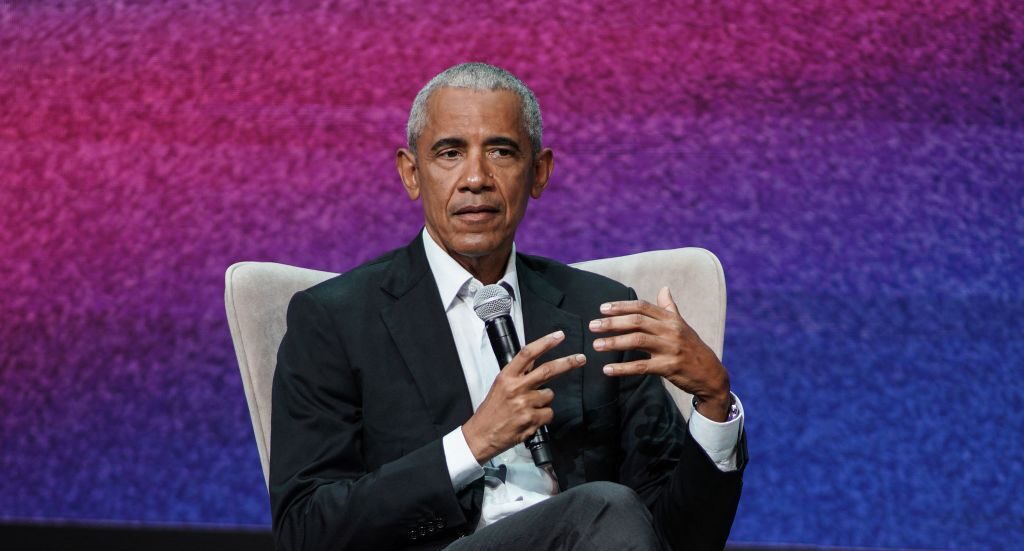
On Nov. 1, former President Barack Obama called New York City mayoral candidate Zohran Mamdani just days before the election. 

The call lasted about 30 minutes and included Obama praising Mamdani’s campaign and discussing strategies should he win. Sources say the former President praised Mamdani’s grassroots campaign, calling it “impressive,” according to The New York Times.

Mamdani’s campaign spokesperson, Dora Pekec, thanked Obama for reaching out and extending an olive branch. 

“Zohran Mamdani appreciated President Obama’s words of support and their conversation on the importance of bringing a new kind of politics to our city,” Pekec said.

Obama offered to serve as a “sounding board” for Mamdani. The 34-year-old Democratic Socialist’s campaign seems to be in good standing ahead of the Nov. 4 election. Polls indicate Mamdani maintains a double-digit lead, according to The Hill. The call from Obama could result in a last-minute boost, even without a public endorsement, bringing in undecided voters.

While Obama extended his expertise to Mamdand, he stopped short of a formal endorsement. However, making the call public is a high-profile gesture from one of the nation’s most influential Democrats. 

The outreach comes as Mamdani fights to maintain his lead over independent former Gov. Andrew Cuomo and Republican Curtis Sliwa in the biggest mayoral race in the United States.

Mamdani, born in Uganda and elected to the New York State Assembly in 2020, gained national attention after defeating Cuomo in the June 24 Democratic primary. Much like Obama in his early campaign for the presidency, Mamdani has a youthful coalition and progressive platform. His agenda for New York City includes affordability and housing initiatives that have energized young voters and simultaneously ruffled the feathers of city residents in higher tax brackets.

The timing of Obama’s call coincided with his recent lobbying efforts on behalf of Democratic gubernatorial candidates in New Jersey and Virginia. That suggests a coordinated push within the party’s progressive wing to consolidate ahead of midterm elections. 

RELATED CONTENT: Kamala Harris Endorses NYC Mayoral Candidate Zohran Mamdani While Highlighting Other Democratic ‘Stars’ 
Meek mill, NYPD

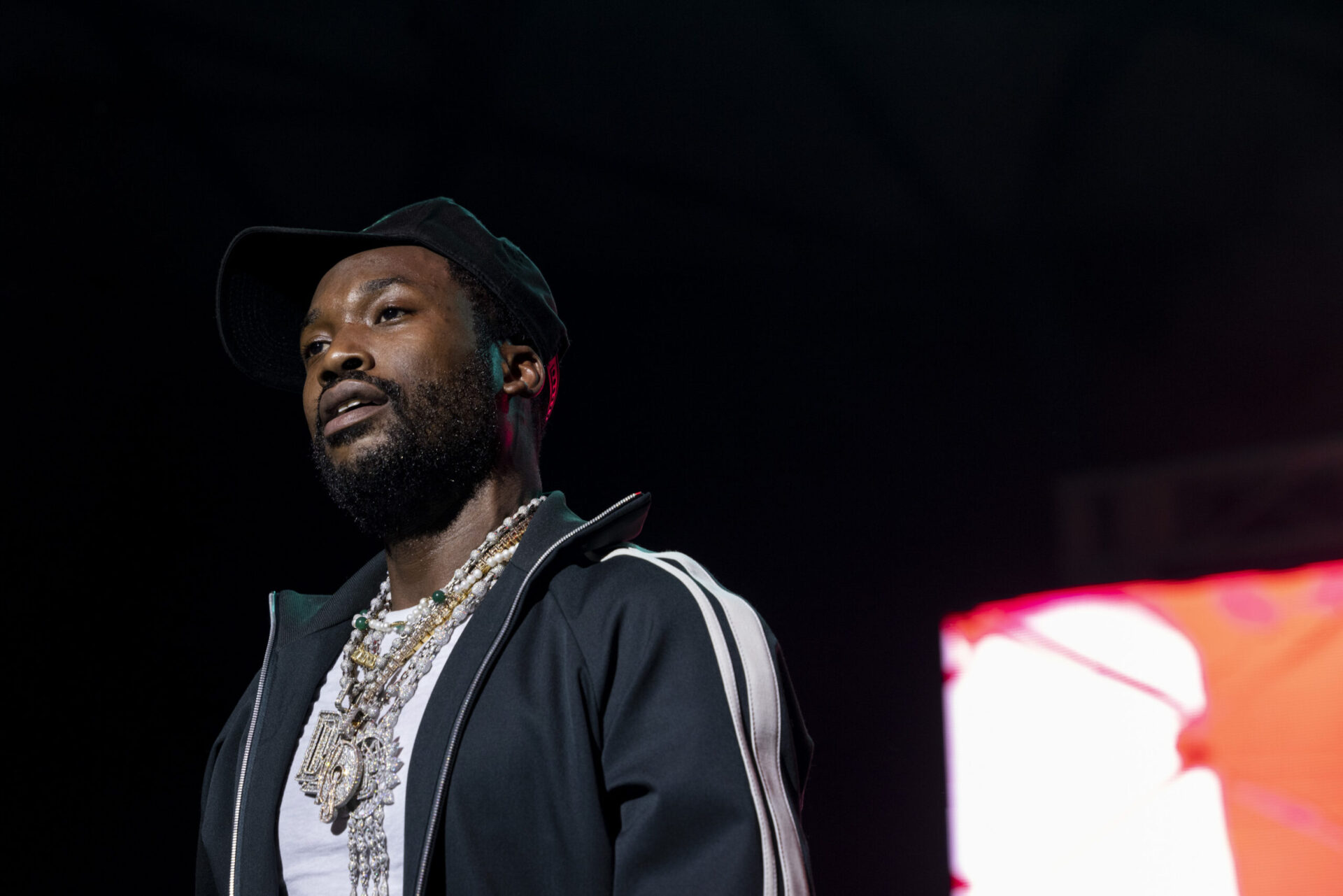
Meek Mill Blasts NYPD For Allegedly Drawing Gun On Him: ‘I Thought It Was a Prank’

Meek Mill was reportedly cleared of any wrongdoing after video showed police putting him in handcuffs.


Meek Mill goes off about the New York City Police Department after officers wrongfully detained him the night after Halloween, a move he first thought was a “prank.”

The Philly-born rapper sounded off on X after news of his wrongful detainment gained traction. NYPD officers detained Meek Mill after responding to a call of a suspected weapon in the vehicle he was sitting in. Viral clips showed officers arresting the rapper outside of a nightclub in Manhattan on the holiday weekend.

“The cameras, rolling right? While the cameras rolling, this the level you go through when you youngin’s lack,” said Meek Mill in the video.

After the ordeal was resolved, the “Dreams and Nightmares” rapper took to social media to clarify his role in the matter.

“They just pulled me out the car and cuffed me in front of the whole club embarrassed the shit out of me in nyc ! I’m not scared to go outside without a gun … they had guns in my face for no reason smh I thought it was a prank.”

According to The Grio, a police spokesperson said officers were responding to a report of a firearm inside a vehicle near the area. They confirmed that they stopped three males, including the Grammy nominee, as their car and license plate matched the description.

After no gun was found inside or on their person, Meek Mill and his fellow riders were subsequently let go. However, the incident still left the emcee shaken up, especially given his past with law enforcement.

“They tryna get me…,” reflected the rapper on social media.

Once a convicted felon, Meek Mill has become a voice for criminal justice advocacy. He received a controversial sentence in 2017 over a probation violation for a decade-old conviction. Following his release the following year, he used his experience and platform to advocate for probation reform. Then-Pennsylvania Gov. Tom Wolf later expunged his record for those charges.

RELATED CONTENT: Meek Mill Seeks $5M For Projects, Social Media Users Offer Suggestions

ilhan, Omar, ICE, Minnesota

Trump Continues Attacks Against Rep. Ilhan Omar, Says ‘Leave Country’ Despite Being U.S. Citizen

Omar has seemingly remained unshaken by Trump's threats.


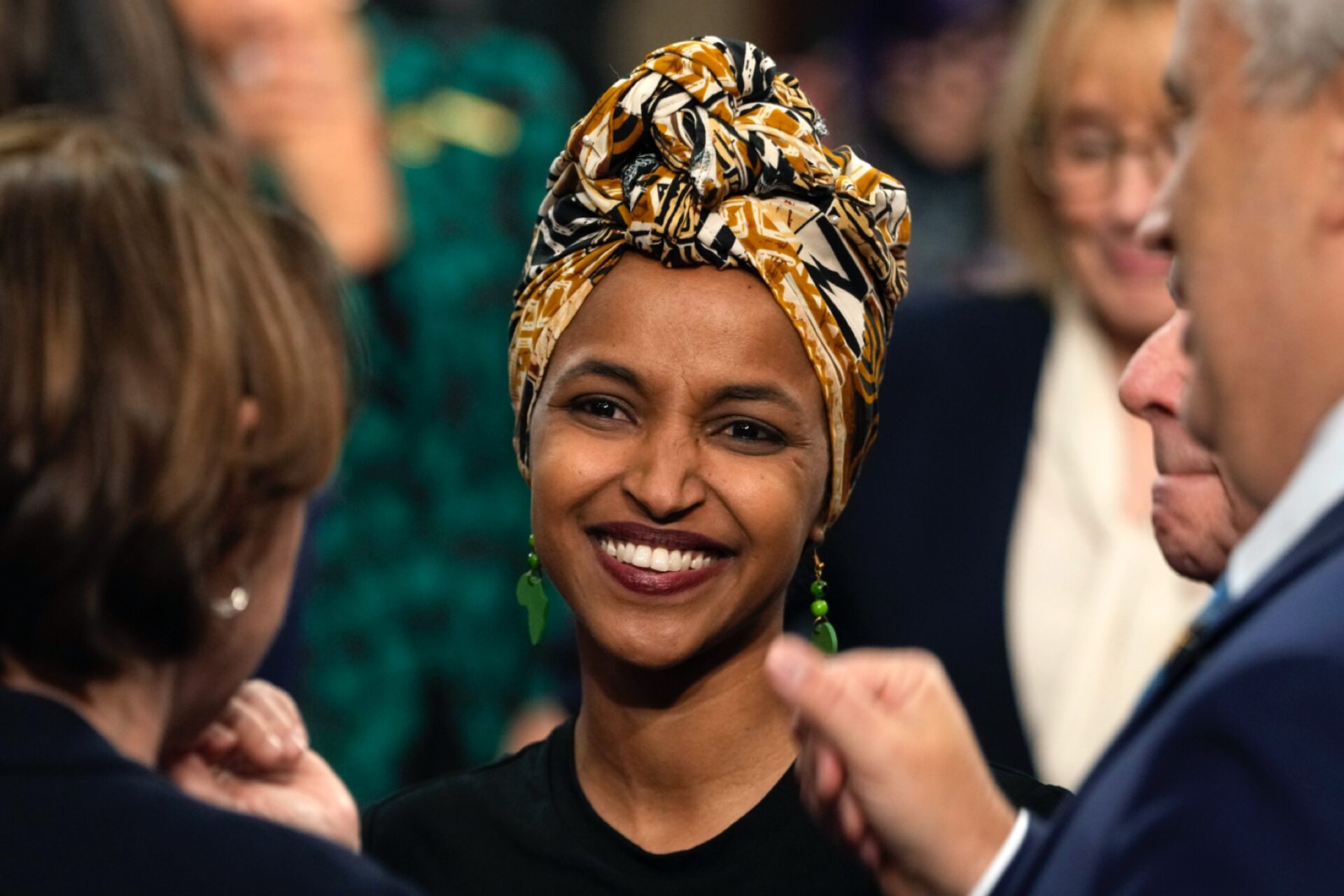
Donald Trump has seemingly had enough of Rep. Ilhan Omar and her progressive ways.

The President told the Minnesota lawmaker to return to her country, despite Omar holding U.S. citizenship. Trump lashed out at the congresswoman on his preferred social platform, Truth Social. On his right-leaning social media hub, the President shared a clip of Omar speaking what is assumed to be Somali while writing an unwelcoming caption.

“She should go back,” asserted Trump.

The clip, albeit unverified, suggested that Omar was saying, “Somalia is our home. It is our heart. We always think about Somalia.” According to Politico, when the event occurred remains unknown, but the clip has circulated in right-wing online spheres.

Despite the limited information behind the video, Omar has faced right-wing hate due to her progressive policy views and heritage. Omar currently serves as deputy chair of the Congressional Progressive Caucus, advocating for policies such as universal healthcare and the abolition of ICE, directly opposed to Trump.

Trump has recently increased his attacks against Omar, even claiming that he asked the Somali President to take her back. His officials have also perpetuated his attacks against Omar’s status as a U.S. citizen.

“You know I met the head of Somalia, did you know that?” he joked to reporters at the Oval Office in September. “And I suggested that maybe he’d like to take her back. He said ‘I don’t want her.’”

Born in Somalia, Omar came to the U.S. as a child after spending four years in a Kenyan refugee camp due to civil war in the East African nation. She became a citizen in 2000 and later served as a lawmaker for the people of Minnesota.

The heightened focus on her status in the country remains alarming to many, especially given Trump’s deportation efforts. However, Omar has stated she feels unshaken by Trump’s threats. She also noted the uptick in Islamophobic attacks against Muslim lawmakers like herself and NYC mayoral candidate Zohran Mamdani.

“I have no worry, I don’t know how they’d take away my citizenship and like deport me,” Omar said on an Oct. 31 episode of The Dean Obeidallah Show. “But I don’t even know like why that’s such a scary threat. Like I’m not the 8-year-old who escaped war anymore. I’m grown, my kids are grown. Like I could go live wherever I want if I wanted to. It’s a weird thing to wake up every single day to bring that into every single conversation, ‘we’re gonna deport Ilhan [Omar].’”

The 43-year-old began her political career as a state representative before moving on to national politics. Omar has represented Minnesota’s 5th district since 2019.

RELATED CONTENT: Rep. Ilhan Omar: ‘Trump is a Racist Tyrant’

Melvin Edwards, Sculptor, Black Resistance, Dies

Marcyliena Morgan, Founder Of World’s First Hip Hop Archive At Harvard, Dies At 75

Morgan was an champion of hip-hop as an academic subject worthy of study.


Marcyliena Morgan, the trailblazing scholar and founder of Hip Hop Archive and Research Institute at Harvard, has died at 75.

Morgan was an instrumental figure in the recognition of hip-hop as an art form and cultural phenomenon. Her work as a professor of the study of the music genre led to the creation of the Harvard institution. The archive solidified her own and hip-hop’s legacy within academia.

Born and raised in 1950s Chicago, the linguistic anthropologist uncovered the scholarly nature of hip-hop at UCLA. While teaching about urban speech communities in the ’90s, she noticed her students related their studies to the emerging popularity of rap music.

Morgan initially felt skeptical of hip-hop’s place in higher education. However, she dug deeper into the cultural and sociological ramifications of the music genre. She then discovered how it reflects Black and Brown communities, and the multifaceted roles rappers play within them.

“I developed a respect for hip-hop culture because in spite of all its excesses and some of its deserved criticism from society, it remains a rare place where young black people and brown people are valued and awarded by their peers,” she wrote in her 2009 book, “The Real Hiphop,” according to the Wall Street Journal. “They are treated as gods and goddesses and put on pedestals for searching for and ‘representing’ truth and knowledge and recognizing and being proud of who they are and where they come from.”

Morgan later championed the academic study of hip-hop. She became a collector of certain artifacts as the art form began to merge with fashion. With collectibles from boomboxes, vinyl records, and highly lauded sneakers, she founded Harvard’s Hip Hop Archive and Research Institution in 2007.

As the go-to voice in academic circles, Morgan spoke at conferences highlighting the importance of hip-hop. Notably, she taught courses on hip-hop as it blossomed into the cultural staple it is today.

Morgan understood the nuance of the rap form. She accepted its existence holistically while still marking its impact on people of color, Americana, and, eventually, the world.

“She was saying it needed to be studied, it needed to be recorded, preserved, archived, and analyzed because it was a cultural phenomenon. And she was right about that,” shared Henry Louis Gates Jr., director of the Hutchins Center for African & African American Research at Harvard. “It was not only an American or an African American cultural phenomenon. It would soon sweep the world.”

A lifelong scholar and advocate for hip-hop’s place in the classroom and on the stage, Morgan leaves behind an academic profile that supports Black people’s artistic creation and legacy. Morgan died at 75 due to complications with Alzheimer’s disease, with her legacy, the Marcyliena H. Morgan Hip Hop Archive & Research Institute, still standing in her honor.

RELATED CONTENT: The Hip Hop Museum Honors Dignitaries At New York City Gala

U.S. Shock Strikes, Venezuela, Trump , Maduro

Trump Wants U.S. Military Prepped To Go Into Nigeria ‘Guns-A-Blazing’

Trump claims there is an increase in Islamic terrorism that is targeting Christians in the county.


Donald Trump has instructed the U.S. Department of Defense to prepare for possible military action in Nigeria.

Trump claims there is an increase in Islamic terrorism that is targeting Christians in Nigeria. He has threatened to suspend U.S. aid to the oil-rich country. Additionally, the octogenarian leader says he is contemplating invading the country “guns-a-blazing.”

In a post making its rounds on social media, Trump said he had directed the Defense Department to make preparations for “fast” strikes if Nigeria continues to allow the killing of Christians.

“The U.S.A. will immediately stop all aid and assistance to Nigeria and may very well go into that now-disgraced country, ‘guns-a-blazing,’ to completely wipe out the Islamic Terrorists who are committing these horrible atrocities,” the post read.

Trump goes on to give an open directive to the Department of Defense (DOD), called the Department of War by Trump, to begin preparations. 

“I am hereby directing our Department of War to prepare for possible action. If we attack, it will be fast, vicious, and sweet.”

The Nigerian government responded swiftly to Trump’s claims. Nigerian President Bola Ahmed Tinubu released a statement reaffirming the country’s status as a democracy that champions religious freedom.

“The characterization of Nigeria as religiously intolerant does not reflect our national reality, nor does it take into consideration the consistent and sincere efforts of the government to safeguard freedom of religion and beliefs for all Nigerians. Religious freedom and tolerance have been a core tenet of our collective identity and shall always remain so. Nigeria opposes religious persecution and does not encourage it,” Tinubu wrote.

https://twitter.com/SaheedOlaSalami/status/1984646297622655410

Trump’s move follows the State Department’s designation of Nigeria as a “country of particular concern” for violations of religious freedom. 

This comes as Nigeria combats an Islamist insurgency, especially in the northeast. Reports say extremist groups such as Boko Haram have been active in the region for more than 15 years. However, there is no data that points to Christians as a central target for violence in the country, AP reported. While U.S. officials cite the assault on Christians, analysts point out that many victims of violence in Nigeria are actually Muslim.

RELATED CONTENT: Spike Lee Urges African Americans To Come Back To The Motherland In Africa

Black Boys, Maryland, graves, investigation

Burr Oak Cemetery, Resting Place Of Emmett Till Headed Toward National Register Of Historic Places

The Illinois Historic Sites Advisory Council voted to recommend the listing to the National Park Service, which would formally recognize Burr Oak as a site of national significance. 


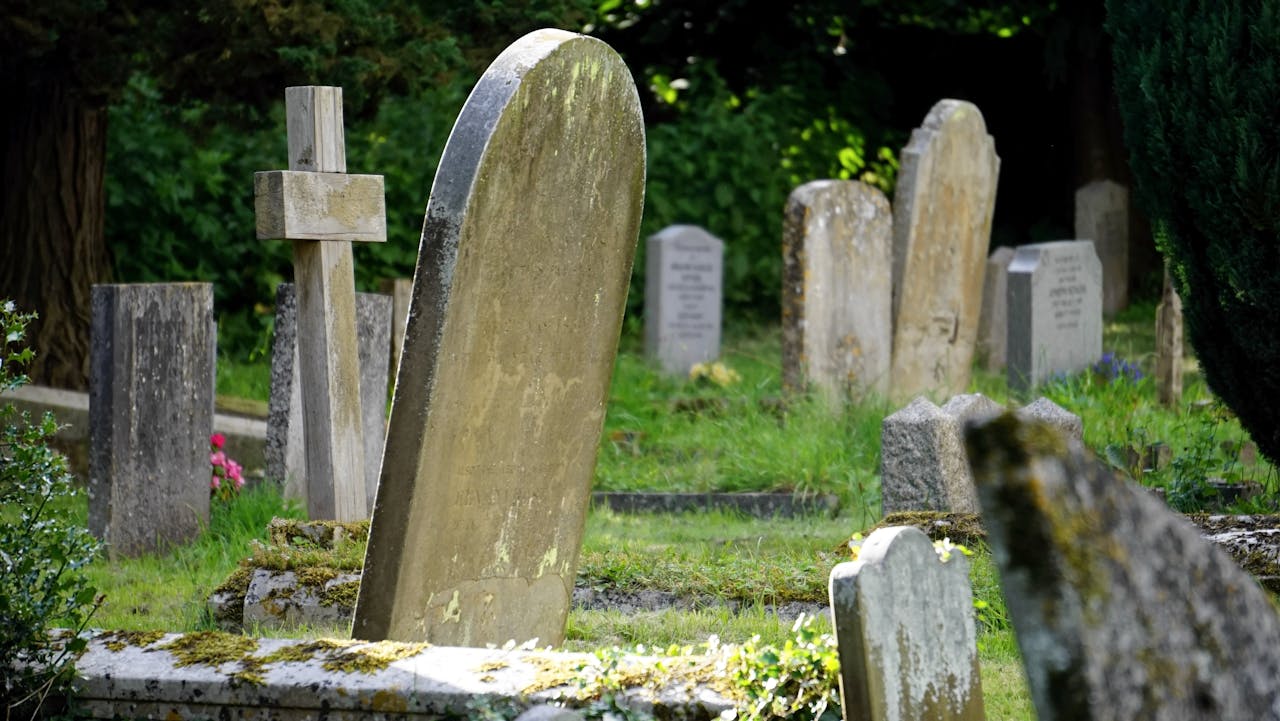
For many Chicago families, Burr Oak Cemetery isn’t just a burial ground; it is the resting place of Emmett Till and more. It has now been voted on by the National Park Service to join the National Register of Historic Places.

The Illinois Historic Sites Advisory Council voted to recommend the listing to the National Park Service, which would formally recognize Burr Oak as a site of national significance. 

The 150-acre site was established in 1927 by leaders of the Black-owned Supreme Life Insurance Company. Burr Oak was created after white-only burial restrictions left African Americans with few dignified burial options. 

In Burr Oak Cemetery’s National Register Report, historian Jean Guarino described the cemetery as “a Black-owned and Black-managed place, built in the face of adamant white opposition.”

For Edward Boone, founder and chairperson of the nonprofit Friends of Burr Oak Cemetery, who has worked for years to preserve the cemetery’s records and repair its grounds, the nomination feels personal.

“This isn’t just about monuments,” he told the Chicago Sun-Times. “It’s about memory — about making sure people know how deeply Black history runs through this soil.”

The nomination outlines Burr Oak’s “period of significance” from 1927 to 1975, highlighting its role in Chicago’s Black life and culture. It’s home to thousands of veterans, educators, and entertainers whose stories shaped American history.

“We looked at so many graves of individuals who were born in 1865 or before, and so we pretty much assumed that there’s a high probability that they were former slaves,” Boone said. “And so we put African American flags on all of their graves during Juneteenth. We think it’s important to recognize these individuals.”

Even as a federal shutdown delays official approval, preservationists say the process itself is a victory.

“It’s about respect,” Boone added. “Every headstone here represents a family that carved out dignity when the world denied it.”

RELATED CONTENT: Harriet Tubman’s Descendant Criticizes National Park Service For Watering Down Underground Railroad Language

Legislation,Florida Museum Of Black History

Legislation For Florida Museum Of Black History Moves Forward

The museum task force recommended St. Johns County as the museum's location.


A Florida state senator filed legislation Oct. 30 to move forward with the construction of the long-planned Florida Museum of Black History in St. Johns County.

This is the first step forward in what would be the state’s first Black history museum. Sen. Tom Leek, a Republican whose district covers St. Johns County, filed Senate Bill 308 for the 2026 legislative session. The measure outlines the formation of a board of directors. The board would collaborate with a foundation that oversees planning, construction, and operation of the museum on a site. The proposed site is the Florida Memorial University near St. Augustine. 

The bill comes as St. Johns County has already secured a $1 million state appropriation toward the project. The funding will help launch the design and construction phases. Commissioners said the allocation will enable initial site preparation and infrastructure planning. 

The museum task force, established under Chapter 2023-72 of Florida law, recommended St. Johns County in June 2024 as the preferred location, citing the historic significance of nearby Fort Mose—the nation’s first legally sanctioned free Black settlement—and a cluster of African American heritage sites. 

Under the proposed governance framework, the board of directors would include state-appointed officials and community stakeholders and is required to be formed by July 31, 2026, with the foundation accountable for raising private donations and managing day-to-day operations. 

Leek said in a press release that the museum will fill a vital cultural gap.

“I firmly believe that we cannot tell the history of Florida without also telling the history of Black Floridians, which is why I am proud to file Senate Bill 308 in support of Florida’s Museum of Black History,” Leek said. “The museum will be built on the former site of Florida Memorial University, which has historical significance here in St. Johns County, and I look forward to working with our community and our state in furtherance of this significant designation.”

West Augustine Historical Community Development Corp. Founder Greg White called the move “a powerful reminder that Black history is American history.”

If enacted, the legislation would position the proposed museum as a destination for cultural education, heritage tourism, and community engagement.

RELATED CONTENT: Florida Sheriff Defends Posting A 9-Year-Old’s Mugshot, Media Piggybacks Releasing The Child’s Name

Los Angeles, coalition

New Black Leaders Collective Launches To Drive Economic And Policy Change In Los Angeles

Coalition of business, civic, and advocacy leaders unites to push for equity, resources, and coordinated action across L.A. County.


A newly formed coalition of prominent Black leaders and organizations in Los Angeles aims to reshape how resources, policies, and economic opportunities reach Black communities across the region. The Greater Los Angeles Black Leaders Collective (GLABLC) publicly introduced its mission this month, describing the group as a unified force focused on long-term systemic impact.

GLABLC’s governing members include figures already well known across the city’s civic and business landscape: Dr. Robert Sausedo of Community Build, Inc.; Angela Gibson-Shaw of the Greater Los Angeles African American Chamber of Commerce; Jason Foster of Destination Crenshaw; Cynthia Mitchell-Heard of the Los Angeles Urban League; and Sarah R. Harris of the Black Business Association, who also serves as chair of the collective.

“This is not just about collaboration, this is about bridging capital, access to capital, this is about advocacy, and this is about bringing entities together and not just be about the talk, but be about the action of the community,” Mitchell-Heard said.

Harris echoed that message, underscoring the group’s commitment to being more than a symbolic partnership. “We are really serious and intentional about coming together to be the umbrella, the strategic partner for the community in terms of lending our influence, resources, the data, and everything to be able to provide more opportunities for Black community organizations as well as just the Black community as a whole,” she said.

During a public rollout at Chase Bank’s Community Room on Crenshaw Boulevard, members outlined the collective’s guiding values — from equity and accountability to cultural integrity and sustainability. Their stated priorities include economic mobility, direct relief, policy change, practice transformation, and measurable community impact.

Foster framed the effort as a necessary response to shifting political landscapes, particularly around diversity, equity, and inclusion. “I think the community can expect a unifying voice from the Black community and the organizations that are doing not only direct service but fighting for systemic change—our efforts don’t stop, and now it’s more important than ever as other challenges, what’s happening to diversity, equity, and inclusion,” he said.

The coalition is already mapping out concrete initiatives, with Gibson-Shaw noting that the collective is beginning its work by addressing wildfire recovery efforts and preparing neighborhoods for major economic events, such as the upcoming Los Angeles Global Games.

Mitchell-Heard added that the gaps exposed after recent disasters showed why unified leadership was overdue. “Post fires, we saw that our African American communities, especially in the Altadena area, are just not getting the access and the resources that they need, and thus that’s what spurred this,” she said.

Sausedo summed up the vision simply: “It means that our leadership has come together to be on a single platform to do greater good.”

RELATED CONTENT: 10 Black Leaders Who Take Your Civil Rights Seriously

Terrace Martin partners with Suntory for the launch of Toki Black

Terrace Martin Partners With Suntory To Launch A New Japanese Whisky

The Grammy-nominated musician and producer speaks exclusively to BLACK ENTERPRISE about how he approaches brand collaborations


Terrace Martin, who’s been nominated for six Grammy awards and produced songs for everyone from Kendrick Lamar and Snoop Dogg to Stevie Wonder and Charlie Wilson, has just released new music with a surprising collaborator: The House of Suntory Japanese whisky.

For the launch of its limited-edition Toki Black, Suntory worked with Martin and Japanese jazz artist Ryota Nozaki, known as Jazztronik. The resulting composition was inspired by Toki, which means “time,” and by the Japanese philosophy of Ichigo Ichie—the idea that each moment is unique and unrepeatable.

Suntory recorded the creative process and released both a film and a bespoke vinyl: Side A features an improvisational session between the artists, while Side B presents Martin’s modern reinterpretation.

“I never worked with all Japanese musicians. The only thing we had to communicate with was music. But music, love, and this whisky had everybody just on one accord. It was a beautiful experience,” Martin said at a launch event in New York City, “and Toki Black was the fuel.”

BLACK ENTERPRISE caught up with Martin after the launch of Toki Black Japanese whisky to hear more about how he approaches the business side of creating music for brand deals:

What was it about this opportunity with Suntory that piqued your interest?

Besides the great whisky, everybody on the Suntory team felt like a family. Everybody had tons of great ideas. Their ultimate goal was to make sure both of our brands were aligned.

How do you evaluate the opportunities you’re presented to collaborate with brands?

I choose collaboration partners based on the brand’s integrity and what their mission is. If the brand’s mission lines up with mine, I’ll decide I want to go forward.

Did you enlist any help to assess the business side of these collaborations?

Yes, I’ve gotten advice from multiple people about their brand deals, like Herbie Hancock and Snoop Dogg. Most of the time they told me it went extremely well when pairing with the right brand.

This was your first time working with people you haven’t been making music with for the last 30 years. What does it mean to you, especially as a Black artist, to have been able to make a living with your crew from back in the day?

Reaching success with the same set of friends I’ve had since grade school is a blessing; I’m very grateful and thankful for that. It means the world to me, operating in such a crazy business I have a trusted family that I can also go to, and that’s more than gold.

At a time when it feels like there’s less communication and collaboration and more mistrust and division, can you share advice for working with people who aren’t like you?

My best advice is to expect the unexpected, remove all ego, and go into each situation with an open mind and open heart.

RELATED CONTENT: Beyoncé Pays Homage To Great-Grandfather With New SirDavis Whisky

Echoing Green, Black-Led Women Groups, investors, social media, Fund, blog, network, Innovators, Black Founders, Black Businesses,Kathryn Finney'

Black Girl Ventures Pitch Competition Is Coming To New York

Entrepreneurs must be considered "under resourced" to participate in the Black Girl Ventures competition.


Black Girl Ventures (BGV) is bringing its crowdfunded pitch competition to New York City on Nov. 7.

The event, led by BGV Founder Omi Bell, is part of the organization’s multi-city effort to boost entrepreneurship efforts for Black women in business. The BGV Pitch Competition merges traditional pitching with crowdfunding, allowing the audience to “vote with their dollars.” The organization solicits donations through its Raisify platform. Each founder will give a three-minute presentation followed by a two-minute Q&A session. The winner will be determined by the number of crowd contributions received rather than evaluations by investor panels. 

The upcoming competition will take place at The Mezzanine in Manhattan’s Financial District. More than a dozen women-of-color entrepreneurs are expected to pitch. Entrepreneur sectors range from tech to wellness to consumer goods.

 “We created this because women and people of color get less than one percent of venture funding,” Bell told Amsterdam News. “Our work is about building capacity and creating a sustainable community around that funding.” 

Participants in the New York event must be women-identifying, revenue-generating business owners who meet BGV’s under-resourced criteria. Finalists gain entry to the organization’s alumni ecosystem, which provides ongoing access to networking opportunities, financial coaching, and brand-building support.

According to Black Girl Ventures site, since its founding in 2016, the organization has funded more than 450 founders. Additionally, their work has supported over 10,000 entrepreneurs nationwide through mentoring, accelerator programs, and workshops. Its pitch model—where everyday supporters contribute small amounts—has been replicated in cities including Chicago, Austin, and Los Angeles.

The timing of the New York launch coincides with increased national attention on equity-focused entrepreneurship. Reports from Crunchbase and the National Venture Capital Association show Black women founders continue to receive less than 1% of total venture capital funding, a figure Bell says “must be reversed by community-driven solutions, not waiting for gatekeepers.”

The pitch format’s transparency is what Bell believes makes it powerful.

“When people in the audience invest, they’re not just funding a business,” she said. “They’re joining an ecosystem that believes in collaboration over competition.” 

RELATED CONTENT: The Fearless Fund Re-Emerges After Anti-DEI Settlement And Goes Global

×