Patrice Sway McKinney, entrepreneurship, franchising, hair salons

Patrice ‘Sway’ McKinney Turns Salon Suites Into A Blueprint For Black Wealth

The Encore Salon Suites founder is helping beauty professionals move beyond the chair.


For generations, Black beauty professionals have helped power a multibillion-dollar industry, building loyal clientele, shaping trends, and influencing culture. Yet participation in the industry has not always translated into access to ownership opportunities that create lasting wealth.

Patrice “Sway” McKinney is working to change that equation.

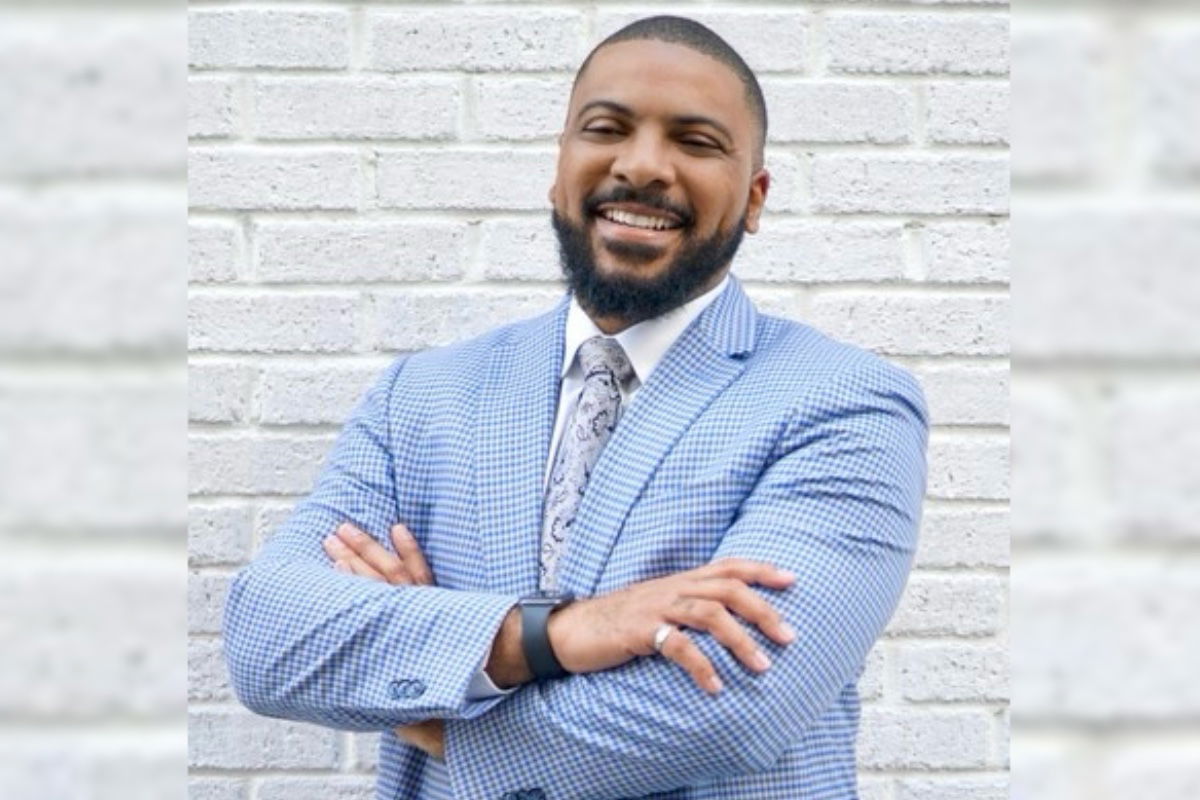
As founder and CEO of Encore Salon Suites, McKinney has expanded her influence far beyond the barber chair, building a business ecosystem centered on franchising, commercial real estate, education, mentorship, and economic empowerment. Her mission is rooted in helping beauty professionals see themselves not only as service providers, but as business owners, franchise operators, landlords, investors, and wealth creators.

Her path to entrepreneurship was anything but conventional. McKinney moved to Atlanta to pursue barbering, earned her Master Barber-Stylist license, and eventually opened her first salon while navigating the financial and operational challenges many first-generation entrepreneurs face. What began as a career behind the chair ultimately evolved into a much larger vision.

Today, Encore Salon Suites has grown into a franchise and educational platform, where McKinney says her work has reached more than 80,000 aspiring entrepreneurs. Through that work, she is pushing a simple but potentially transformative message: Black beauty professionals should not only participate in the industry. They should own more of it.

BLACK ENTERPRISE spoke with McKinney about her transition from barber to business mogul, the economics of salon suites, franchising, building scalable systems, and her mission to create new pathways toward Black ownership and generational wealth.

What gave you the confidence to take that risk, and when did you realize you were building something much larger than a career behind the chair?

A lot of my confidence came from knowing I didn’t want to spend my life building somebody else’s dream. I left corporate America, went to barber school, moved to Atlanta, and bet on myself. I was scared, but I was willing to work through the fear.

The real shift came when I discovered the salon suite model. I realized I could create something much bigger than a career behind the chair. I could help other beauty professionals build their own businesses while creating an asset that didn’t depend on me doing every haircut. That’s when I knew I didn’t just want to be a barber. I wanted to be an owner.

Why do you believe the salon suite model can serve as a powerful wealth-building vehicle for Black entrepreneurs, and what should aspiring owners understand before entering the industry?

I call salon suites real estate in the beauty industry. You’re creating a commercial space where independent beauty professionals can run their businesses while you build an asset around them. For Black entrepreneurs, that can be powerful because ownership changes the conversation from, “How much can I make doing hair?” to, “How can I build something that creates long-term value?”

But salon suites are not easy money. You have to understand leasing, construction, permits, occupancy, marketing, and your break-even point before signing anything. I want people to enter ownership prepared, not just excited.

What mindset, financial, and operational shifts must happen for beauty professionals to move from earning income behind the chair to building an asset that can generate long-term wealth?

The biggest shift is understanding that income and wealth are not the same thing. Behind the chair, your income is tied directly to your time. Ownership requires you to ask, “How do I build something that can generate revenue without me personally performing every service?”

That means knowing your numbers, understanding your expenses, documenting your processes, and investing in systems, people, and technology. If the business only works when you’re there, you haven’t built something scalable. My goal became working smarter, not just working harder.

As the first Black woman to franchise a Black-owned salon suite brand. What barriers did you face while entering the franchise industry, and what did that milestone teach you about the difference between building a profitable business and building a scalable enterprise?

One of the biggest lessons was learning that a profitable business is not automatically a scalable business. Franchising forced me to take everything in my head and turn it into systems, processes, training, and documentation that someone else could actually follow.

I learned a lot through mistakes, from contractors and permits to business partnerships and operations. But those lessons made me a stronger businesswoman. Franchising taught me that scalability is really about duplication without dilution. The model, experience, and standards have to work even when you’re not the one running everything.

Your business extends beyond salon suites into education, mentorship, real estate, live events, and franchising. How did you strategically build these different components into one ecosystem, and how do they work together to create multiple pathways to ownership?

Everything I’ve built comes back to ownership. I didn’t plan all of these businesses at once. They developed from understanding what people needed at different stages of their journey, whether that was education, coaching, opening a salon suite, expanding into real estate, or franchising.

The bigger vision is creating an ecosystem where beauty professionals don’t have to stop at providing a service. You can own the suite, the building, the brand, the education platform, or all of it. I want to create pathways that help people keep moving forward.

You have helped educate and empower more than 80,000 aspiring entrepreneurs. What recurring mistakes do you see Black founders make when trying to grow, and what systems should they establish early to avoid building businesses that depend entirely on their daily labor?

One of the biggest mistakes I see is people trying to scale before they’ve built a solid foundation. They want multiple locations, a big team, or a million-dollar business, but they may not know their numbers, have proper accounting, contracts, SOPs, or systems in place.

The other mistake is trying to do everything yourself. You have to delegate, use technology, and create processes other people can follow. And stop confusing visibility with success. Going viral is not a business model. Build the backend, know your numbers, create repeatable systems, then market the hell out of it.

When you think about the legacy of Encore Salon Suites, what do you want your work to prove about Black ownership, economic mobility, and the future of the beauty business?

I want my legacy to prove that beauty professionals can be business owners, real estate investors, franchisors, and wealth creators, not just service providers. There is so much opportunity in this industry, but you have to understand the business behind the beauty.

For me, this is bigger than building Encore. I want the next generation to see what I’ve done and understand that they can build, own, franchise, and create wealth too. At the end of the day, I don’t just want to create successful entrepreneurs. I want to create owners.

RELATED CONTENT: Nia Long Shares Her Grandmother’s Grit And Growth To Encourage Black Entrepreneurs

Black hair training New York
AI-generated image

Training On Black Hair Has Entered The Curriculum, Now Required At NY And NJ Cosmetology Schools

The new requirements aim to close a long-standing skills gap in textured haircare.


For years, Black clients could walk into a professional salon and discover that the person holding the shears or styling tool simply wasn’t trained to work with their hair. That’s beginning to change in New York and New Jersey, where new cosmetology requirements are putting textured hair directly into the curriculum and on licensing exams.

Both states now require aspiring beauty professionals to demonstrate knowledge and skills related to textured hair, including coily, curly, and wavy patterns, reports Gothamist. New York’s updated requirements take effect in September, while New Jersey began rolling out its new standards in August.

In New Jersey, legislation signed in January requires cosmetology, barbering, beauty culture, and hair-braiding students to receive training on textured hair. The state’s licensing exams will also include textured hair in both written and practical testing, according to New Jersey’s textured-hair law. The law also calls for schools to have appropriate training tools, including hair picks, weaving kits, braiding hair, and mannequins with textured hair.

Meanwhile, New York’s updated curriculum requires students to complete 220 hours of training to learn textured hair techniques and styles like braiding, locking, and weaving.

Atiya Johnson, the CEO and founder of Jana’s Cosmetology Academy, a Black-owned and operated cosmetology school in New Jersey, said the training gap affects both professionals and customers.

“A seamstress should know how to work with every single piece of material that is put in front of him or her,” she told Gothamist. “As a cosmetologist, so should we. But if we’re not equipped and we’re not trained and taught to do so, then that is where the problem becomes.”

Johnson said her own cosmetology education included less than two weeks of textured-hair training during a four-year program.

“We never had a mannequin that looked like us,” she said, noting the difference between using a mannequin with silky straight versus textured hair.

New York Assemblymember Michaelle Solages, who sponsored the state legislation, said she has also heard numerous accounts of negative salon experiences involving textured hair.

“It’s not only horrific, you know, aesthetically, but physically and spiritually,” Solages said. “There’s a significant number of curly-haired people in this world, and it’s unfair that they have to experience such horrible events when going to a professional.”

The requirements come after the CROWN Act was passed by individual states starting in 2019 to protect people from discrimination based on hair texture and protective styles such as braids, locs, twists, and knots. The changes could have implications well beyond the classroom for salon owners and beauty entrepreneurs by addressing a long-standing skills gap in the hair and beauty industry.

RELATED CONTENT: Keke Palmer, Creme of Nature, And BLACK ENTERPRISE To Bring Wellness And Leadership To Martha’s Vineyard African American Film Festival

Invest Newark, Black Business Month,
AI-generated Image via Magnific

Black Entrepreneurship Must Be Celebrated Beyond Black Business Month

Yes, shopping Black matters, but they also need funding.


Written by Marcus Randolph

I want to encourage everyone to celebrate and support Black businesses beyond Black Business Month, but I also want to change the narrative.

Yes, shopping Black matters. But if we want Black businesses to open, expand, employ people, own property, and create generational wealth, celebration cannot be the end of the conversation. We have to talk about capital. The U.S. Chamber of Commerce found that “Black entrepreneurs are nearly three times more likely than White entrepreneurs to have business growth and profitability negatively impacted by a lack of financial capital.”

Earlier in my career in banking and investments, I closed over one billion dollars in financing. Through that experience, and what I see working with businesses in Newark, New Jersey, now as president and CEO of Invest Newark, I understand just how important proper funding is. When it comes to a business’s success, it always comes back to the need for capital.

The City of Newark, under the leadership of Mayor Ras J. Baraka, has taken action to address this issue—and the results are real.

In 2024, under Mayor Ras J. Baraka’s leadership, the City of Newark and Invest Newark launched a unique program to help businesses and not-for-profit organizations locate to Newark’s burgeoning downtown core. Under this program, the City and Invest Newark made low- to no-cost financial assistance available to businesses looking to be located in the focus area. Business operators were eligible for up to $650,000 in support, depending on the storefront’s square footage. Funds could be used for exterior and interior improvements to the vacant space or to purchase furniture, fixtures, and equipment. This program was developed in collaboration with Bloomberg Associates, the pro bono consulting arm of Bloomberg Philanthropies, which works with cities and mayors around the world.

Invest Newark also runs a wide array of loan programs offering low-cost capital to business owners for inventory, equipment, construction, fit-out, and even predevelopment.

These grants and loans lead to real stories like Abdul Roberson, a Newark native who brought his deli Abby’s back to his hometown from a neighboring city. The special part — he bought and renovated a dilapidated mixed-use building with a loan from Invest Newark, and now he operates his restaurant on the first floor and receives rental income from apartments. Now that builds wealth.

Or Justin Williams, a comedian who saw a gap in Newark’s nightlife and gathered friends and fans to become investors to open Newark Culture Club. A Black-owned small performance venue and cocktail bar, he secured institutional bank financing, a retail reactivation grant, and participated in Audible’s unique Business Attraction Program.

Or Brittany and Gladys Payton, a mother-daughter duo who saw the need for a high-end spa experience in Newark – and filled it with Aulo Spa. They also needed capital and found it with a bank that believed in their vision, and our retail reactivation grant helped them get their gorgeous spa fitted out–right across from NJPAC.

Capital is not just about opening the door; it’s also about keeping that door open. Capital is staying power. I like to say that wealth creation is not a one-time event. When a business gets access to capital, it does not equate to becoming an overnight success. Creating a successful business isn’t the 100-meter dash; it’s the long-distance marathon, maybe even an ultramarathon.

Having capital means having a runway to success: the ability to withstand change and volatility in an uncertain market, hire, expand, buy property, and make decisions with a longer-term frame of reference instead of just thinking in the short term.

When someone opens a business now, it has the ability to grow and scale, meaning the business owner is setting themselves up for future success.

It is about creating an environment where businesses can survive and scale, with the potential to create opportunities and options for their children and even grandchildren.

At its core, entrepreneurship inherently involves risk. But for Black entrepreneurs, that risk is twofold because they are too often expected to demonstrate near-perfect performance to remain worthy of investment.

This is especially true when issues arise. There’s an extra weight that some of us carry as Black entrepreneurs, knowing, “Man, I’ve got to make this work.” Equal access to capital is not the great equalizer if Black borrowers have less room to navigate the ordinary and inherent obstacles native to entrepreneurship.

I am excited that Black Business Month gives us a reason to celebrate the many Black entrepreneurs who are bringing incredible goods, services, and resources to our communities. But real support is what happens before, during, and after August. It comes down to whether those businesses have the capital to survive, the room to recover from setbacks, the opportunity to scale, and the chance to build something their children and grandchildren can inherit.

That said, I want to issue my call to action: Increase capital to Black-owned businesses all year long.

Marcus Randolph is President & CEO of Invest Newark, Newark’s Economic Development Corporation. Before leading its equitable-growth work, he worked in banking and community development finance and has closed more than $1 billion in financing.

Marcus Callender Spades: the Play
Marcus Callender and the cast of "Spades: the Play" (Photo Credit: Punch courtesy of Thorpe Communications)

‘Power’ Actor Marcus Callender Is Taking ‘Spades: The Play’ On A Five-City Tour

From the screen to the stage, the play marks the actor's debut as a director and playwright.


Marcus Callender is taking a beloved Black cultural pastime to the stage. The Power and Wu-Tang: An American Saga actor is making his playwriting and directorial debut with “Spades: the Play,” a 76-performance national tour this fall.

The production, which Callender has written and developed over the past decade, launches with a one-night performance in Harlem on Sept. 3 before heading to Washington, D.C., Los Angeles, Atlanta, New Orleans, and Miami. The play previously had a four-week run in Harlem in November 2025.

Inspired by true events in Callender’s life, “Spades: the Play” takes place in Harlem in 2013 and centers on four friends in their 20s who gather for their weekly spades game. What starts as friendly competition evolves into candid conversations about relationships, friendship, and the complications that come with growing up.

“For generations, the Spades table has been a safe space for the Black community to be open, enjoy banter, and escape from the weight of everyday life. It’s a rite of passage and tradition that unites us culturally,” said Callender in a press release. “I wanted to create a story that marries this rich and important mainstay of our lineage with a coming-of-age masterclass on both life and the game.”

The cast includes Broderick Clavery as Gill, Akilah A. Walker as Cori, Derrick Alexander as Andre, and Erin Nicole Washington as Nefertiti.

“The undeniable chemistry of the cast, coupled with the raw and irreverent conversations every group of friends can relate to, makes this play hilarious, honest, and uniquely Black,” said Callender.

The tour will be shown in culturally significant venues, including Culture House DC, a former Black church dating to the 1800s, and Cam Kirk Studios in Atlanta. Los Angeles performances will take place at Wendy Raquel Robinson’s Amazing Grace Conservatory, while New Orleans will host the production at Fire House Loft. The tour will conclude in Miami during Art Basel.

RELATED CONTENT: From Players To Owners: How FanArcade Is Building The Future Of Black Power In Gaming

Dr. Betty Stewart, Hampton University
(Photo: Kevin Coles/flickr)

IRS Filings Show Rising Compensation For Private HBCU Presidents

The compensation figures come from nonprofit organizations' annual IRS Form 990 filings, which disclose executive pay and other financial information


Federal tax filings released for fiscal year 2025 show executive compensation at several private, historically Black colleges and universities (HBCUs) surpassed the $1 million mark, highlighting the increasingly complex leadership demands facing many institutions, HBCU Gameday reports.

The compensation information comes from annual IRS Form 990 filings submitted by nonprofit colleges and universities and compiled by ProPublica’s Nonprofit Explorer, which tracks executive pay and organizational finances.

Among the institutions reporting the largest compensation packages, former Spelman College President Dr. Helene Gayle received the highest reportable compensation at $1.99 million. Morehouse School of Medicine President Dr. Valerie Montgomery Rice reported the largest overall compensation package at approximately $2.26 million after benefits and other compensation were included.

Howard University reported compensation for two presidents during the fiscal year. Former President Dr. Wayne Frederick received $1.47 million in reportable compensation before returning to the presidency following the resignation of Dr. Ben Vinson III, who reported $1.04 million in compensation during the same reporting period.

Other presidents reporting more than $1 million in base compensation included Dr. Hakim Lucas of Virginia Union University at $1.15 million and Dr. Dwaun J. Warmack of Claflin University at $1.08 million. Hampton University President Lt. Gen. Darrell K. Williams reported $902,500 in base compensation and more than $1.09 million in total compensation after additional benefits.

While the compensation figures vary considerably, the data reflect significant differences in institutional size, mission, and operating models. Research universities and academic medical centers often compete nationally for experienced executives, while smaller tuition-dependent colleges operate under different financial constraints and leadership expectations.

Executive compensation represents only one measure of institutional leadership. Financial records, enrollment trends, fundraising performance, accreditation status, audit findings, student outcomes, and long-term fiscal stability also provide important benchmarks for evaluating an institution’s performance.

The filings also show that total compensation can differ substantially from reportable salary because it may include retirement contributions, deferred compensation, housing allowances, bonuses, severance agreements, or other contractual benefits. Those disclosures provide governing boards, donors, alumni, and students with additional context for understanding how executive compensation is structured at private HBCUs.

RELATED CONTENT: MACKENZIE SCOTT’S HBCU GIVING TOPS $1B, REDEFINING WHAT TRANSFORMATIONAL PHILANTHROPY LOOKS LIKE

Vic Mensa, Black media empire
(Photo: Pascal Le Segretain/Getty Images for Balmain)

Vic Mensa Spills the Cheat Code For Creatives Who Want To Follow In His Footsteps

In part 2 of his exclusive conversation with BLACK ENTERPRISE, Mensa gets candid about building his production company and cannabis brand, sharing his early mistakes and his best advice.


The professional trajectory of recording artist Vic Mensa highlights a critical evolution in the modern Black business landscape: moving past superficial consumer metrics to secure true autonomy through equity, IP control, and community-centered enterprise.

In part 2 of his exclusive conversation with BLACK ENTERPRISE, Mensa gets candid about early financial traps, how to navigate regulated industries, and why true Black wealth extends far beyond consumer spending power.

The questions and Mensa’s answers have been edited for clarity.

BE: Launching your company, ORANJ, moved you into a full-scale production house. How did you build that operational backbone while protecting long-term ownership?

Vic Mensa: Brick by brick, immersing myself in every part of the process—learning about workers’ compensation, insurance, equipment rentals, staffing, pre-production, and post-production. Once I fortified my understanding of the field, I began adding verticals. For example, I’ve always written essays, like my piece for TIME magazine on Palestine and American racism. Now, I run a newsletter vertical to monetize my writing directly rather than just giving the intellectual property away.

BE: As the founder of 93 Boyz, Illinois’ first Black-owned legal cannabis brand, what operational lessons can you pass on to Black founders entering heavily regulated markets?

Mensa: You have to watch out for predatory deals that attempt to dilute Black leadership or ownership and use Black faces merely as figureheads. Always stay conscious of that setup.

Operationally, I highly recommend reading The 22 Immutable Laws of Branding—that book was super valuable for me. Additionally, equity is non-negotiable. As my mentor Dan Pettigrew says, when you get money the first time, things can easily go left. Having been through it before, the goal is to make sure you retain true equity and avoid repeating past mistakes.

BE: How has retaining your intellectual property (IP) changed how you monetize, take risks, and structure deals?

Mensa: At this stage, owning your IP is everything. We’ve been sold a business model where we take upfront capital to cover immediate needs—like paying rent—and forfeit all backend profits. The result is that you rarely see money again.

Coming at this with experience changes the dynamic. Owning your IP allows you to move beyond basic survival, retain long-term value, and maintain control over your creative expression.

BE: Black Enterprise has documented Black economic power for decades. How do you and your generation define real wealth beyond account balances?

Mensa: I’ve been reading Dr. Jared Ball’s book, The Myth and Propaganda of Black Buying Power. He dissects the heavily cited $1 trillion Black spending power statistic, showing how that figure was largely constructed to market products to us, rather than representing capital that generates actual Black wealth—like land, stocks, and tangible assets. That number is built for corporations like Coca-Cola. Real wealth comes from collective organizing to influence policy that protects human rights, alongside the active redistribution of resources and asset ownership.

BE: What is the single biggest money mistake you made early in your career, and what did it teach you about running a business?

Mensa: My biggest mistake was letting reckless percentages go out without proper oversight. Early on, I trusted people too much without understanding my own business. I threw things up in the air, assuming that because I paid someone, they would operate ethically and in my best interest. That is simply not the reality of business. You have to understand your operations inside and out and maintain strict oversight.

BE: What non-negotiable advice do you give young Black creatives who want to transition from being talent to owning their enterprise?

Mensa: Lean into what makes your story yours. In this era, it’s easy to think imitation is salvation, but it’s not. Speaking on what is real to you is the first seed of something great. Furthermore, don’t just sell your labor—build the tool itself. If you have a specialized skill set, utilize current technologies to build platforms that scale your service rather than just remaining a worker within someone else’s structure.

RELATED CONTENT: RZA Says AI Is Transforming His Creative Process

sports betting
Group of young men watching football on TV

High Stakes, Low Yield: Is Gen Z Gambling Their Retirement Savings Away on Sports Betting?

Redirecting 401(k) contributions to sports betting puts the financial future of the next generation of African American leaders at risk.


Looking for swift financial gains, more young African Americans are turning from traditional investments to sports betting platforms. Betterment reports that 52% of Gen Z retail investors redirected funds meant for investments or retirement accounts to sports betting in the past year.

For a generation seeking financial empowerment, using sportsbook apps as investment substitutes is a significant risk. The Betterment survey found 26% of Gen Z investors consider sports wagering a regular part of their long-term wealth strategy, and 14% transfer money from investments to betting apps multiple times each month.

“When a prediction market or sportsbook starts to feel like a retirement strategy, we have a problem,” Sarah Levy, chief executive officer of Betterment, told Yahoo Finance. “These products are not designed to help them build toward the next decade of wealth.”

Chasing Short-Term Thrills

The appeal of immediate payouts stems from economic fatigue and increasing living expenses. Northwestern Mutual reports 32% of Gen Z adults are participating in or considering sports betting. Among young investors who feel behind financially, 80% believe high-risk bets will help them catch up faster than traditional stock portfolios.

However, financial experts state that shortcutting compound growth usually yields losses rather than stability. “Time is our most powerful asset in finance, and aggressive bets can erode that advantage faster than you can recover,” Ashley Russo, wealth management adviser at Northwestern Mutual, told Yahoo Finance.

This trend constitutes major risks for the African American community. The National Council on Problem Gambling reports that 32% of Black adults participate in sports gambling. Aggressive sportsbook marketing in urban cities often presents parlay wagers as quick paths to wealth, obscuring the unfavorable odds for bettors.

Even sports betting industry executives acknowledge that wagers should never replace savings. “Sports betting is a form of entertainment, not an investment or a strategy for building wealth,” Joe Maloney, president of the Sports Betting Alliance, stated. “Adults who choose to bet should do so responsibly, within a predetermined entertainment budget and never with money needed for savings or essential expenses.”

Reclaiming Long-Term Discipline

To preserve their financial future, young Black professionals should separate discretionary entertainment from wealth accumulation. Replacing disciplined investing with sports betting sacrifices decades of compounding interest, which is key to developing lasting equity.

Dan Egan, vice president of behavioral investing at Betterment, stressed that young adults need sound operational guardrails. Investors must “separate their speculative interests from their long-term wealth building, making sure they don’t inadvertently jeopardize their future for a current thrill,” Egan said.

According to Charles Schwab Investment Company, securing long-term financial success begins with a firm commitment to fundamental habits, starting with automated payday contributions to 401(k) and Roth IRA accounts. Taking full advantage of employer matching funds provides an immediate 100% return on investment that far outpaces potential payouts from any sportsbook. To ensure high-risk ventures do not compromise core investments or emergency reserves, Charles Schwab advises isolating all speculative spending within a dedicated entertainment budget.

Community-based, Black-led financial empowerment programs and mentoring initiatives also play a central role in making these strategies more accessible and effective. Organizations such as Black Women Invest and the National Urban League’s financial empowerment workshops provide culturally relevant education, resources, and support. Through involving themselves in these programs, young Black professionals can gain guidance and mentorship that connects with their lived experiences, making it easier to build lasting financial habits.

RELATED CONTENT: 401(k) Planning Gets a Fresh Look as Workers Focus on Long-Term Wealth

San Antonia Spurs forward Harrison Barnes Iowa
San Antonia Spurs forward Harrison Barnes (photo: Screenshot via NBA.com)

NBA Veteran Harrison Barnes Invests $25 Million To Acquire A Small Bank In Iowa

The San Antonio Spurs forward has been quietly building a banking empire off the court.


San Antonio Spurs forward Harrison Barnes has reportedly invested $25 million of his own capital into a groundbreaking business venture.

According to The Bank Slate, the 34-year-old NBA veteran recently purchased Community State Bank in Paton, Iowa, a small community bank located less than an hour from his hometown of Ames. The move gives Barnes direct ownership in the financial institution, which has been operating for the last 70 years. It also adds another chapter to the investment strategy that he’s been building off the court for years.

“This is not a vanity project. We want to be Iowa’s next great bank,” said the NBA champion, according to Yahoo Sports.

Outside of his 14-year NBA career, Barnes has been quietly building a banking empire. He served as a bank director, invested in financial institutions such as Triumph Financial, and completed coursework through the Iowa School of Banking. He says his interest in community banking deepened during the COVID-19 pandemic, when he saw local financial institutions play a critical role in helping small businesses and families access capital.

“I saw community banks act as economic first responders during COVID,” Barnes said in an interview with the American Bankers Association.

After earning roughly $224 million in the NBA, Barnes and his wife, Brittany, also founded Barnes & Co., a family firm that focuses on financial services, including traditional banks and financial technology companies.

During an interview on Raccoon Valley Radio, Barnes opened up about balancing his NBA career with business ventures and family.

“I think the biggest thing is that you have to be where your feet are,” said Barnes, who played a major role in leading the Spurs to the 2026 NBA finals. “When I’m focused on basketball, and I’m in that lane, I’m 100% a basketball player. When I’m here trying to figure out how to best support and serve Community State Bank, I’m 100% in this lane, right? When I’m at home, and I’m with my family, I’m 100% a husband and a father.”

Indiana Pacers star Tyrese Haliburton shared on X that he was shocked after learning that his former Sacramento Kings teammate accomplished the ambitious goal that he had initially discussed with him during his rookie season.

“HB told me this was the plan my rookie year!! I couldn’t believe what I was hearing,” wrote Haliburton.

RELATED CONTENT: Magic Johnson’s WNBA Strategy Teaches Black Investors

Terrayae McCray Vividae Campaign, India
Terrayae McCray, the founder and CEO Vividae Campaign, in India (Photo Credit: Courtesy of Vividae Campaign)

Vividae Campaign Founder Terrayae McCray Is Taking Her Hair Company To The Source

The Baltimore entrepreneur is turning her passion for hair into a business rooted in culture, global exploration, and opportunity.


Hair was never just about beauty for Terrayae McCray. Rather, it became a tool for business opportunities and a passport that exposed her to other parts of the world.

As the founder and CEO of Vividae Campaign, a company that sells raw Indian hair wigs and premium extensions, McCray built her business at the intersection of identity and commerce. Her interest in hair initially began while she was growing up in West Baltimore, Maryland, and eventually led her into the beauty industry, reports The Source.

According to Vividae’s Instagram page, she began selling hair back in 2014 while working in the medical field as a certified nursing assistant.

“Would you believe me if I told you I started selling hair out of a suitcase from the trunk of my car, all while working as a CNA?” she posted on Instagram. “It all started with a small inventory that has now grown into Healthy Inventory,” she wrote.

Since launching the business, McCray has documented frequent trips to India on social media, where she buys wholesale unprocessed human hair. While traveling, she explores not only the business side of the hair industry but also its cultural significance and the ways Indian women connect their hair to heritage. That insight informed how she sells product and has helped her better understand how hair is sourced and deeply connected to Indian culture.

“West Baltimore girl with a second home in India,” she wrote on an Instagram video of her riding through an Indian village. “This [is] bigger than just buying bundles for me. It’s relationships. It’s really knowing the source,” reads the caption. “At this point I know the streets, the factories, the people AND where the good hair at. And THAT’S the difference with Vividae.”

“People think the trips are for show. Nah! I get dirty so my business stays clean. Long flights, long days, factory floors, all so every bundle, every dollar, every move goes according to plan,” she wrote on Instagram back in December. This is groundwork.”

McCray knows first-hand that where you start does not have to determine where you go. Her travels have taken her beyond Baltimore and introduced her to new countries and cultures. Now, she is giving others the opportunity to travel to India alongside her. Earlier this year, she launched Vividae Take India, inviting five entrepreneurs to tour Indian temples and manufacturing facilities and get a close-up look at ethically sourcing hair. The trip was also designed to help business owners better understand wholesale markets and supplier relationships.

“This is for beauty entrepreneurs who want clarity, credibility, and control over their supply chain,” she wrote on Instagram.

RELATED CONTENT: How Karen Mitchell Turned a Side Hustle Into an Eight-Figure Hair Empire

×