


There is near universal agreement with the statement, “Health is wealth.” However, there is a parallel, less acknowledged fact: To neglect the former is to squander the latter. Recognition of this reality is critical to the economic advancement of Black Americans. Disproportionately prevalent disease and premature death costs Black people billions of dollars in lost earning power and wealth creation potential. It is impossible to close the racial wealth gap without addressing challenges to both the health span and life span of Black people. During this, our third Virtual Town Hall session for 2025, we bring together top doctors and champions of health equity to discuss what it will take to minimize the biggest threats to the health and longevity in Black communities, including heart disease, diabetes, and cognitive illnesses such as Alzheimer’s.
by Daniel Johnson
August 16, 2025
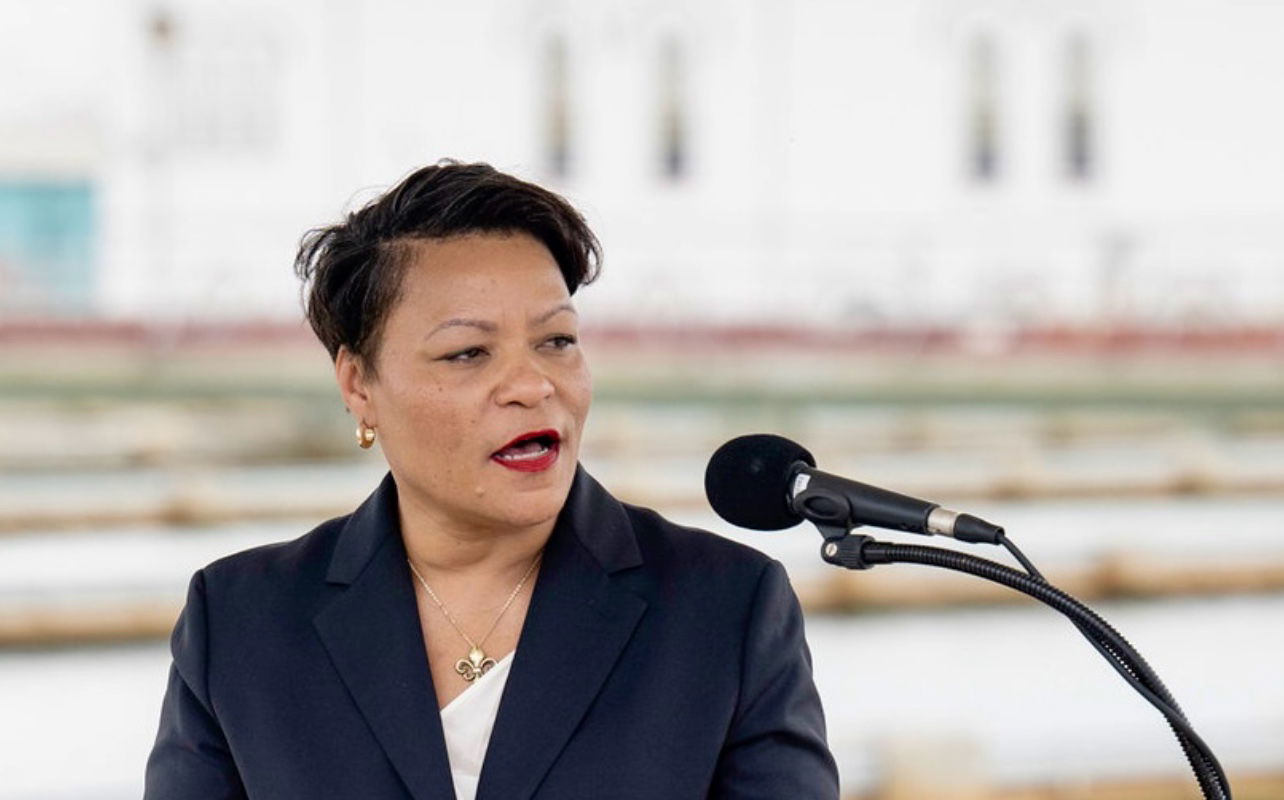
New Orleans Mayor LaToya Cantrell Becomes City’s First Mayor Federally Indicted In Office
Cantrell was once celebrated as the city's first Black female mayor.
On Aug. 15, New Orleans Mayor LaToya Cantrell made unwanted history as the first sitting mayor in the city’s 300-year existence to face criminal charges while in office. Federal prosecutors accuse her of conspiring for years to hide an affair with her bodyguard and have charged her with conspiracy, fraud, and obstruction.
According to CNN, Cantrell, who is slated to leave office in about five months due to term limits, was once celebrated as the city’s first Black female mayor, but is now being held out by federal prosecutors as the latest example of corruption in New Orleans.
“Public corruption has crippled us for years and years,” Acting U.S. Attorney Michael Simpson said in a statement alluding to the city’s history of public officials accused of corruption. “And this is extremely significant.”
Cantrell’s alleged paramour, Jeffery Vappie, has himself been charged with wire fraud and making false statements, charges to which he has pleaded not guilty.
Although the pair has maintained that their relationship was strictly professional, the indictment portrays the two as having constructed a “personal and intimate” relationship, using WhatsApp to communicate undetected and then deleting the messages later.
According to Simpson, Vappie and Cantrell used the messaging platform to exchange more than 15,000 messages including attempts to harass a citizen, delete evidence, make false statements to FBI agents, “and ultimately to commit perjury before a federal grand jury.”
Vappie and Cantrell are accused of spending $70,000 in taxpayer money to facilitate Vappie’s various rendezvous with the mayor, which Simpson alleges were looked upon fondly by Cantrell per WhatsApp messages, including one from September 2022 that read “The times when we are truly (traveling) is what spoils me the most.”
Despite the allegations against her, Cantrell and her political allies have contended that the allegations against her are, at least in part, due to her gender and race, an assertion that Simpson bristled at in his comments.
“It’s irrelevant that it’s romance or that it’s female,” Simpson told reporters, continuing that it stands as “an incredible betrayal of people’s confidence in their own government.”
Cantrell, a Democratic mayor, has struggled to hold onto power during her second term, narrowly surviving a recall vote in 2022 amid infighting with city council members.
According to WDSU, several notable individuals responded to the indictment of Cantrell, including the City of New Orleans and several members of the New Orleans City Council.
“The City of New Orleans is aware of today’s indictment against Mayor Cantrell. The Mayor’s attorney, Eddie Castaing, recently received the information, and is thoroughly reviewing the document. Until his review is complete, the City will not comment further on this matter,” the City of New Orleans said in a statement.
“Everyone is presumed innocent under the law. Mayor Cantrell deserves that presumption. This, unfortunately, will be sensationalized because it involves the Mayor and will further impede the City’s operations. We should, however, let the facts play out and not rush to judgment,” New Orleans City Councilman Joe Giarusso said.
“The announcement today reminds us of the need to let the justice system work in a fair, timely fashion and without regard to politics or preference. I’m praying for Mayor Cantrell, her family, and all New Orleanians. These are critical times for our city to get back on track and to stay focused on building a city that works and thrives for everyone. Let us all hope for a swift resolution to the situation that will bring justice. We must unify as a city and focus on the challenges we face together,” New Orleans City Councilman Oliver Thomas stated.
RELATED CONTENT: New Orleans Mayor Sued For Continuous Trash Dispute In Famous French Quarter Neighborhood
by Mary Spiller
August 16, 2025
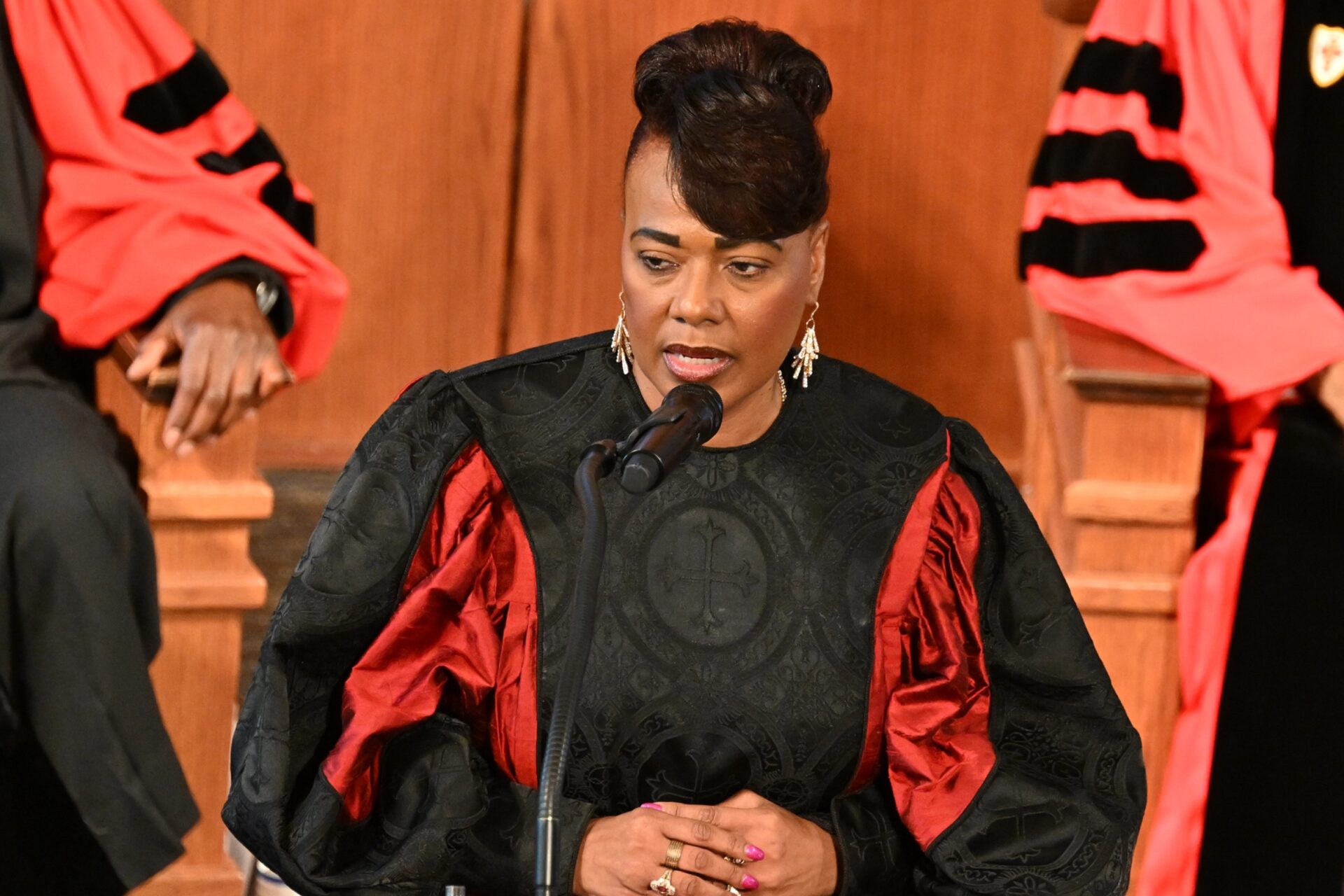
Bernice King Honors Father’s Legacy At Cincinnati’s Black Family Reunion
Speaking before a packed crowd in Cincinnati, Dr. Bernice King called on communities to confront injustice with courage and compassion, while rejecting long-standing myths about her father’s assassination.
The Black Family Reunion is once again energizing Cincinnati this weekend, nearly 40 years after its founding, with a slate of events honoring family, history, and community. On Aug. 14, Dr. Bernice King, daughter of Martin Luther King Jr., addressed a packed audience at Corinthian Baptist Church in Bond Hill. She spoke about the enduring lessons of the civil rights movement and its relevance today.
“Because that’s what happened in the ’60s,” King said, as reported by WLWT. “Y’all saw action. But there was an invisible force walking and moving those people, because they had a certain heart posture. And they weren’t trying to destroy the people who were trying to destroy them.”
The discussion, moderated by WLWT News 5’s Courtis Fuller, also touched on how to confront injustice without losing sight of shared humanity.
Earlier that day, King participated in the groundbreaking of a new memorial in Cincinnati to honor her father at the intersection of Reading Road and Martin Luther King Jr. Drive.
The monument, commissioned by the city earlier this year to replace an older memorial dating back to 1987, is expected to be completed early next year. Mayor Aftab Pureval and City Manager Sheryl Long were among those attending the ceremony.
Reflecting on her father’s assassination in 1968, King said her family has never believed the widely accepted narrative. “Not just killed and murdered, but assassinated. A lot of forces worked to get my father out of here. And I’ll let you all keep believing it was James Earl Ray, but the family knows it was not James Earl Ray,” she said.
The Black Family Reunion, officially launched in Cincinnati in 1988 by Dr. Dorothy I. Height, President Emerita of the National Council of Negro Women, was created to celebrate and strengthen African American families while pushing back against damaging stereotypes. The event, known nationally as the Midwest Regional Black Family Reunion Celebration, has fostered connection and unity for generations.
This year’s celebration, running through Aug. 17, continues to highlight that mission, offering gatherings and programming designed to honor Black family life, history, and culture.
RELATED CONTENT: Martin Luther King Jr.’s Daughter Claps Back At Donald Trump For Comparing Himself To Her Father

by Mary Spiller
August 16, 2025
Sean Kingston Sentenced To 3.5 Years In Prison For $1M Luxury Fraud Scheme
Kingston and his mother, Janice Eleanor Turner, were convicted of conspiracy to commit wire fraud and four counts of wire fraud.
Singer Sean Kingston has been sentenced to three and a half years in federal prison for his role in a $1 million fraud scheme in which prosecutors say he used his fame to secure luxury goods without paying for them.
Kingston, born Kisean Paul Anderson, and his mother, Janice Eleanor Turner, were convicted in March of conspiracy to commit wire fraud and four counts of wire fraud. Turner received a five-year prison sentence last month.
Prosecutors said the mother and son tricked high-end businesses into delivering jewelry, luxury beds, exotic cars, and a microLED TV by promising payment through fraudulent wire transfers, then kept the merchandise. The scheme stretched over several years before indictments were issued in 2024.
“He [Kingston] clearly doesn’t like to pay and relies on his celebrity status to defraud his victims,” Assistant U.S. Attorney Marc Anton said Friday, calling Kingston’s actions “a yearslong pattern” of bullying sellers into handing over expensive items.
Anton continued, “He is a thief and a conman, plain and simple.”
Kingston was first arrested in May after a SWAT raid at his Florida home and was confined to house arrest with electronic monitoring following his conviction. His mother, Turner, was taken into federal custody immediately.
Defense attorney Zeljka Bozanic argued that Kingston, now 35, has the “mentality of a teenager” — the age he was when his 2007 hit “Beautiful Girls” made him an overnight star. “No one showed him how to invest his money,” Bozanic said. “Money went in and money went out on superficial things.”
Bozanic told the court Kingston has begun repaying victims and plans to reimburse the full amount once released.
Kingston, who has released three studio albums since his breakout success, rose to international fame at just 17 years old when his song “Beautiful Girls” hit No. 1 on the Billboard Hot 100.
RELATED CONTENT: Sean Kingston Asks For House Arrest Ahead Of Sentencing
by Daniel Johnson
August 16, 2025
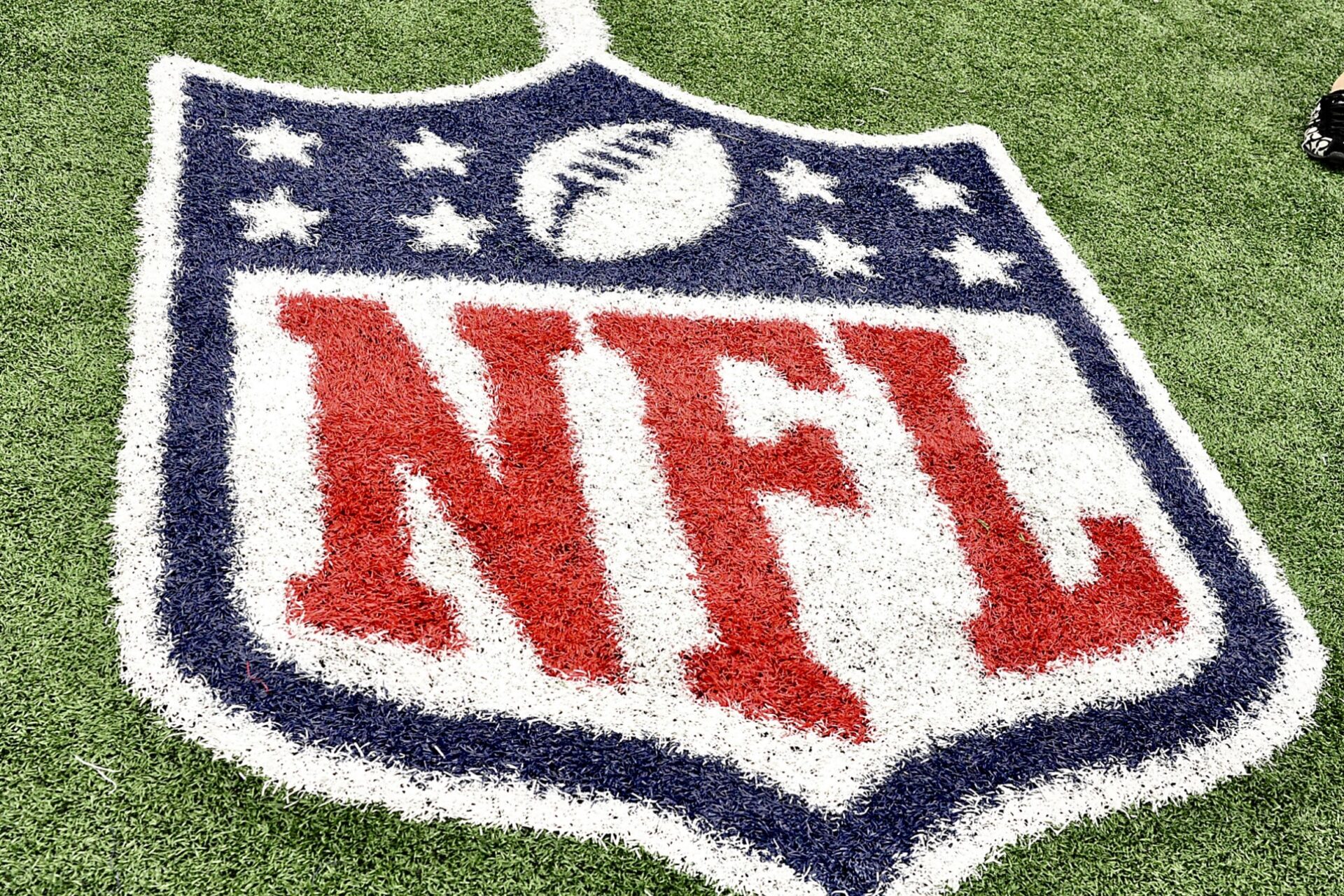
NFL To Continue Social Justice Stenciling Despite DEI Crackdown
The NFL restored its 'End Racism' message after backlash over its Super Bowl swap.
Just as it has for the past six seasons, the National Football League will continue the social justice messaging it adopted in the wake of the murders of George Floyd and Breonna Taylor during the summer of 2020.
Teams can choose between “End Racism,” “Choose Love,” “Stop Hate,” or “Inspire Change” to be displayed on one end zone, while the other end zone will read “It Takes All of Us.”
According to The Athletic, players can also individually opt to wear one of the slogans on their helmets, and although the NFL did not respond to a request for comment from the outlet, Anna Issacson, the NFL’s senior vice president of social responsibility, previously issued a statement to The Associated Press indicating that the league wants to let its teams and players indicate that diversity is important to them.
“We’re working hand-in-hand with players, and alongside our clubs, to amplify player voices and underscore what is most important to them. For decades, the NFL and its players have been a unifying force in American culture and society that brings people of all cultures and backgrounds together to enjoy America’s most popular sport. This is an honor and responsibility that the league takes seriously, which is why we actively invest in off-field programs and on-field initiatives that promote unity,” Issacson said.
The NFL’s return to its previous messaging follows criticism the league received during the Super Bowl when it swapped out the “End Racism” stenciling in one end zone for “Choose Love.”
Although the change coincided with an expensive visit from President Donald Trump, NFL Commissioner Roger Goodell indicated in February 2025 that it was intended to reflect on the tragedies in the months leading up to the game, rather than any deference to Trump. He also discussed the NFL’s broader efforts in diversity, equity, and inclusion.
“We got into diversity efforts because we felt it was the right thing to do for the National Football League, and we’re going to continue those efforts because we’ve not only convinced ourselves, I think we’ve proven to ourselves that it does make the NFL better,” Goodell said.
In addition, Brian McCarthy, an NFL spokesperson, told The Athletic that the decision from the league to alter its messaging was based on sensitivity to recent tragedies like the terrorist attack in New Orleans and the collision of aircraft in Washington D.C., which Trump acerbically blamed on DEI.
“We felt it was an appropriate statement for what the country has collectively endured, given recent tragedies, and can serve as an inspiration,” McCarthy said.
He also told Front Office Sports that the idea that the changes were due to Trump’s attendance was “not true,” saying that the Super Bowl existed as “a snapshot in time” and that “the NFL is in a unique position to capture and lift the imagination of the country.”
As Oliver Thomas, one of New Orleans’ city council members, told Northwestern University in February, ending any of America’s -isms is a group project.
“Any time you talk about ending ‘isms’ is more than just a slogan, it’s a reminder for people. Look, we love the NFL, we love our sports activities, but we also love life and respect the history of life. When you talk about any discrimination and eradicating ‘isms’, until we’re all on the same page, pages are gonna be torn. We need to make sure those pages aren’t torn, but that we write new pages and create new chapters,” Thomas said.
RELATED CONTENT: NFL ‘Chooses Love’ And Will No Longer Display ‘End Racism’ Message

by Daniel Johnson
August 16, 2025
Zach Randolph Sells L.A. Mansion For $7.4M After 11 Months On The Market
Randolph's long sales process is indicative of a depressed housing market
Memphis Grizzlies legend Zach Randolph has finally sold his sprawling Los Angeles mansion, closing the deal after pulling it off the market once and slashing nearly $1 million from the asking price.
According to Realtor.com, the 17-year NBA veteran sold his home on Aug. 7 after it spent 11 months on the market. However, he first listed the 8,500-square-foot home for sale in September 2024, and each time he took it off the market, it was relisted at a lower price.
The six bedroom, 10 bathroom home is part of the celebrity-laden Amestoy Estates community, and was custom built to Randolph’s specifications, including a fortified concrete exterior, floor to ceiling windows, a sauna, a gym, a basketball court, a home theater, a library, a full bar, and a panic room which also has a vaulted door.
To facilitate the sale of the lavish mansion, Randolph enlisted the services of Distinct Concierge, a firm specializing in sports and entertainment real estate. The sale was managed by the family that owns the business: Rod Watson, Laura Watson, and their daughter, Renecia Watson.
The family-run outfit sold the mansion to a high-level energy company mogul. The unnamed buyer is moving from Houston to Encino, California, a source confidentially revealed to Realtor.com.
According to Rod Watson, the firm’s CEO, “We were entrusted with this listing because of our track record as proven real estate advisors for NBA and NFL professionals who value discretion, strategy, and results. Our team understands how to position luxury estates like this in a way that speaks to elite buyers.”
Watson continued, “We leveraged cutting-edge AI video content and targeted digital marketing to spotlight the home’s most compelling features, and that strategy paid off. The estate captured serious attention early on, leading to a successful sale at $7,350,000 in one of L.A.’s most coveted celebrity neighborhoods.”
Laura noted that they are trusted by their clientele because “in this market, reputation and relationships matter. Athletes trust us because we understand the pace, pressure, and priorities of their lifestyle, and we bring that same championship mindset to every deal. This wasn’t just about selling a home; it was about protecting our client’s legacy and maximizing their investment. That’s the level we play at.”
Renecia, likewise, echoed her parents’ statements.
“For us, it’s not just about closing deals, it’s about creating an experience our clients can trust from start to finish. With this estate, we focused on curating the story behind the home and showcasing it through elevated, tech-driven content that resonates with today’s luxury buyer. As the next generation in this family business, I’m proud to bring a fresh perspective that blends innovation, culture, and concierge-level service our clients truly value,” Renecia Watson stated.
Randolph’s long sales process is indicative of a depressed housing market.
According to Fortune, in July, Mark Zandi, the chief economist of Moody’s Analytics, warned that the state of housing in America had earned a “red flare” from him on social media.
“Home sales, homebuilding, and even house prices are set to slump unless mortgage rates decline materially from their current near 7% soon. That, however, seems unlikely,” Zandi cautioned.
He continued, “Housing will thus soon be a full-blown headwind to broader economic growth, adding to the growing list of reasons to be worried about the economy’s prospects later this year and early next.”
RELATED CONTENT: Housing Market Remains Unattainable Amid Soaring Prices And Mortgage Rates

by Mary Spiller
August 16, 2025
Diana Ross Steps Down As Godmother Of Royal Caribbean’s Star Of The Seas
Music legend Diana Ross has withdrawn, citing “unforeseen circumstances,” just a few days before Star of the Seas' christening voyage.
Diana Ross will no longer serve as godmother for Royal Caribbean’s newest ship, Star of the Seas, after her team announced she would miss the highly anticipated christening voyage due to “unforeseen circumstances.”
“Due to unforeseen circumstances, Diana Ross will be unable to appear,” a representative for the 81-year-old music icon told People magazine on Aug. 12.
Royal Caribbean responded with disappointment but said plans to appoint a new godmother are already underway. “We’re disappointed but excited to name a new godmother soon,” the company shared.
Ross was first revealed as godmother in June, with Royal Caribbean President and CEO Michael Bayley calling her an ideal fit. “I couldn’t imagine a more fitting godmother for Star than Diana Ross,” Bayley said in a previous statement.
The three-day showcase voyage, scheduled to depart Aug. 20 from Port Canaveral, Florida, was set to feature a ceremonial champagne christening and a stop at Royal Caribbean’s private island, Perfect Day at CocoCay.
In accepting the honor earlier this summer, Ross said in a release, “I am truly honored to join the Royal Caribbean family. Having spent years creating beautiful music and memories and bringing people together from all over the world, this feels like a perfect continuation of my journey as godmother of Star of the Seas.”
Speaking further to People about the role, Ross said, “I’ve always felt a deep connection to the ocean and the magic it represents — peace, adventure, and awe. When Royal Caribbean reached out to invite me to be the godmother of Star of the Seas, I knew it was something truly special.”
Ross had shared that her children and grandchildren would be joining her on the christening voyage. “That’s really what this ship is all about — joy and family fun,” she said.
The title of godmother carries a deep maritime tradition, symbolizing blessings of safety, prosperity, and protection for a new vessel. Royal Caribbean has previously chosen women of global influence for the role, honoring figures such as Oprah Winfrey, Jennifer Hudson, Mariah Carey, and Whoopi Goldberg.
RELATED CONTENT: Royal Caribbean To Cruise Away From Private Beach Resort In Haiti Over Ongoing Violence And Political Unrest
by Jeroslyn JoVonn
August 16, 2025
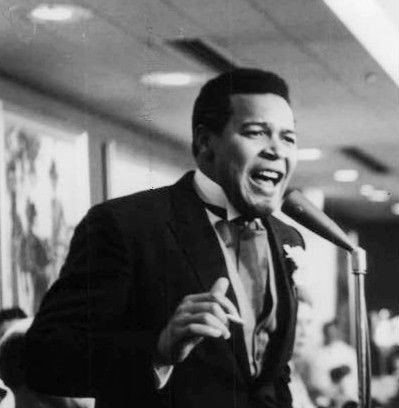
Chubby Checker Ditches Rock & Roll Hall Of Fame For Live Show, ‘We’re Not Coming’
Chubby Checker says he's happy to finally be inducted into the Rock & Roll Hall of Fame, but his fans come first.
Chubby Checker has earned his spot in the Rock & Roll Hall of Fame, but he’s choosing to skip the induction ceremony in favor of performing live.
The Rock and Roll legend is set to be inducted into the coveted institution on Nov. 8, an accolade he’s been eligible for since its inaugural class of 1985. However, when thinking about the possibility of being added, Checker, 83, made sure to make other plans.
“When I told my manager, I said ‘make sure when we go to the Rock & Roll Hall of Fame, the induction, that I will be doing what I love doing the most – being in front of an audience, a live audience, not a television audience,” Checker told a crowd of fans in a video shared on social media.
The manager, following instructions, booked Checker, best known for his 1960 chart-topping hit “The Twist,” for a Nov. 8 live show, not knowing at the time that he’d soon be named a 2025 Rock & Roll Hall of Fame inductee.
“We’re not coming, we have a gig,” Checker recalled telling the Rock & Roll Hall of Fame staff when they called to invite him out to the ceremony.
He would rather show music lovers that even into his 80s, he can still belt it out and twist with fans in person.
“Getting back to being an ‘older person,'” Checker told the crowd. “Chubby goes to the Rock & Roll Hall of Fame and they say ‘he’s an old guy, he’s probably retired, he’s not doing anything, maybe he has crutches, he’s coming to the Rock & Roll Hall of Fame to get his little award and go back home.'”
For Checker, the idea of not performing for a live audience on such a milestone occasion was a dealbreaker, especially since the Rock & Roll Hall of Fame broadcasts the show to a digital crowd.
“Let’s be doing a show like I’m doing today to show that I’m alive and well,” Checker said. “And the audience is wonderful, and my dream is still being fulfilled, and the Rock & Roll Hall of Fame is happening all at the same time.”
Checker, known for popularizing dance styles like the Twist and the Pony, is one of 13 musicians inducted into the Rock & Roll Hall of Fame’s Class of 2025. He joins a notable lineup of inductees, including Outkast, Cyndi Lauper, Bad Company, Joe Cocker, Soundgarden, and The White Stripes.
RELATED CONTENT: Outkast Among 2025 Rock & Roll Hall Of Fame Inductees
by Jeroslyn JoVonn
August 16, 2025
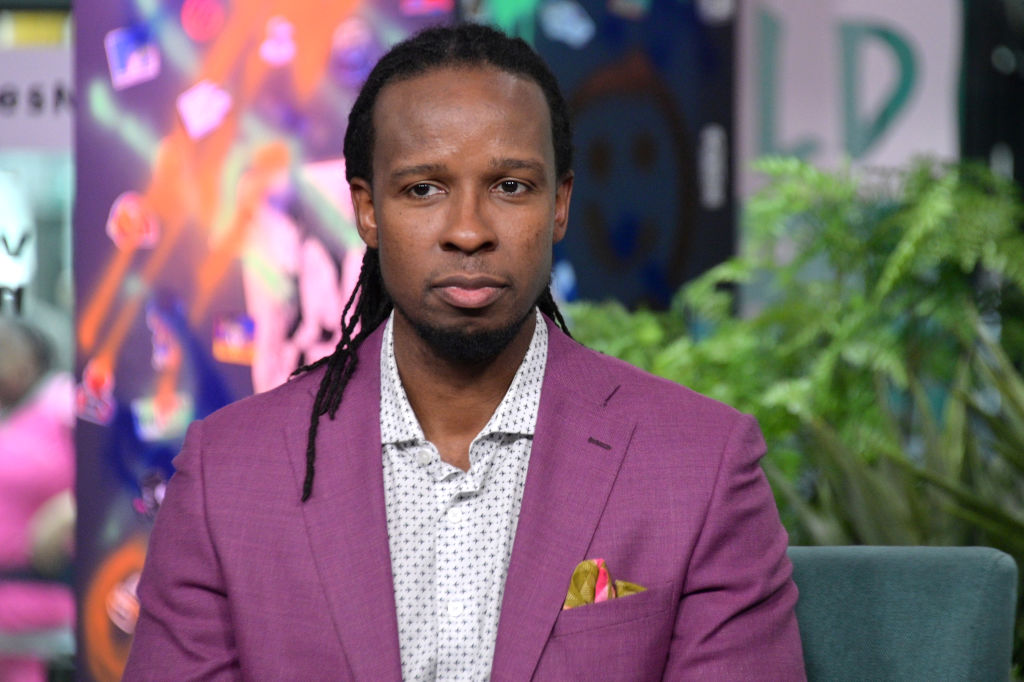
Dr. Ibram X. Kendi Celebrates HBCU Homecoming As Howard Tenure Begins, ‘Welcome Home’
After his shaky exit from Boston University, where he founded and led the Center for Antiracist Research, Kendi sees his start at Howard as a homecoming like no other.
Dr. Ibram X. Kendi is coming full circle as he returns to Washington, D.C., to begin his tenure at Howard University, reconnecting with his roots in historically Black higher education.
This August marks the start of Kendi’s tenure as a history professor at Howard University and founding director of the Howard Institute for Advanced Study. After his shaky exit from Boston University, where he founded and led the Center for Antiracist Research, the Florida A&M alum sees his start at Howard as a homecoming like no other.
“I remember people kept saying the same thing over and over again: ‘Welcome home,’” Kendi told Diverse Education, while reflecting on the announcement of his move to Howard that was made earlier this year. “It certainly gives me a feeling of peace and joy that I’ve never experienced before when I moved to a new institution.”
Further adding to the full-circle nature of his start at Howard, Kendi had spent six years in talks with the prestigious HBCU, long before the investigation into potential financial mismanagement at Boston University, from which he was later cleared.
“I have been thinking about Howard as a destination institution for a long time,” he shared. “I understood its history. I admired its legacy. I understood what Howard has meant to the history and to the culture.”
The new role reflects the arc of Kendi’s academic and professional journey, beginning with his journalism studies at FAMU and continuing through his graduate work in African American studies at Temple University, an intentional choice he made to deepen his reporting on Black communities.
“I didn’t want to assume because I was Black that I was an expert on Black people,” he said. “So, I needed to really sort of study the Black experience so I could be better able to cover Black people.”
He later authored the acclaimed “Stamped from the Beginning,” which earned the National Book Award and propelled him into national prominence, opening doors to positions at American University and Boston University, where he furthered his work, sparking public dialogue on racism in America.
Now, with a well-established career in writing and academia, Kendi is fully aware of the reputation his name carries.
“Because of my name, there’s another layer of expectation that people expect in terms of my management and my presence,” he said.
Kendi steps into the new role fully aware of the difference in resources from his past positions, yet energized by the deeper connection to the community he has devoted his career to serving.
“For me, the community and the support is much more important than resources,” Kendi said. “I want to live a life of both joy and impact. And I feel as if I could have more joy and impact at Howard University.”
RELATED CONTENT: Ibram X. Kendi’s Center For Antiracist Research Cleared Of Financial Mismanagement Accusations