Meta AI Expands Safety Provisions To Alert Parents If Teens Discuss Suicide Or Self-Harm
The tech giant is introducing new safeguards that notify parents when supervised teens discuss suicide or self-harm with Meta AI.
Meta is rolling out new safety features designed to help protect teenagers using its AI chatbot, including alerts that notify parents using Instagram supervision tools when teens discuss suicide or self-harm with Meta AI.
The new safeguards, announced July 16 in a press release, are available for supervised Teen Accounts on Instagram in the United States, Canada, the United Kingdom, and Australia, with a broader global rollout expected later this year. The company said the update is intended to encourage teens to seek support during moments of emotional distress.
“While I believe that teens have a right to privacy, I also believe parents need to be informed if their teen may be at risk of hurting themselves. That’s why I advocated for this approach and support Meta’s decision to notify parents when, after careful review, it determines that a conversation with Meta AI contains indications of possible suicide or self-harm that warrant an alert,” said Larry Magid, the CEO and co-founder of ConnectSafely, in a statement.
When Meta AI detects that a supervised teen may be discussing suicide or self-harm, the chatbot will encourage the teen to contact a trusted adult or crisis resource. If the conversation indicates a potential risk, Meta will send an alert to the supervising parent through Instagram’s parental supervision tools after a human review. The company said it is also developing technology that could notify emergency responders in the most serious situations. Meta said the new protections were developed with input from more than 75 mental health experts and advisory organizations.
“We’d rather mistakenly send an alert than miss an opportunity to help a teen get support,” Meta said in its announcement.
The company emphasized that the alerts are designed to connect young people with offline support—not to replace professional mental healthcare—and will be available only to accounts enrolled in parental supervision.
The latest update builds on safety measures Meta introduced earlier this year, allowing parents to see the general topics their teens have discussed with Meta AI over the previous seven days and providing expert-developed conversation starters to help families discuss AI use.
The announcement comes as technology companies face increasing scrutiny over how artificial intelligence interacts with minors as more teenagers reportedly turn to generative AI tools for information, companionship, and advice. Researchers, lawmakers, and child safety advocates have urged AI developers to implement stronger safeguards after raising concerns that chatbots may inadequately respond to users experiencing mental health crises, reports The Associated Press.
High-Stakes Bankruptcy Trial Sets Scope For Shilo Sanders’ $11.89 Million Legal Battle
Pretrial rulings will determine what evidence is permitted as Shilo Sanders seeks to protect his financial future and NIL legacy.
A federal bankruptcy judge has issued pretrial rulings that will determine which evidence is admissible at the upcoming trial of former University of Colorado football player Shilo Sanders. These decisions will affect whether the 26-year-old athlete can discharge an $11.89 million debt threatening his financial future and NIL legacy. If Sanders wins, he could be relieved of the judgment, allowing him to move forward without repayment and protect his earnings and endorsements. If he loses, Sanders will remain responsible for the full debt, putting his assets, future income, and business ventures at risk and possibly limiting his brand opportunities.
U.S. Bankruptcy Judge Michael Romero summarized his rulings July 15 following a private hearing in Denver. The case derives from a 2015 high school altercation in Dallas between Sanders and John Darjean, a former campus security guard. The trial is set for Aug. 31.
A judge issued several pretrial rulings in the bankruptcy case of Deion Sanders' son Shilo, who is trying to get out of more than $11 million in debt. https://t.co/J4uUdbv8Se
For the sports business community and African American audiences following the Sanders family’s “Coach Prime” era, this case highlights the intersection of wealth management, regulatory accountability, and brand protection. As Black athletes secure multimillion-dollar NIL valuations and professional opportunities, it serves as a cautionary example of how legal liabilities can disrupt generational wealth. More broadly, the Sanders bankruptcy trial signals a shift in athlete brand management, where athletes and their advisors must navigate reputational and financial risks with increasing sophistication. As student-athletes and professionals act as standalone corporate entities, this case offers business professionals a timely lesson in the need for proactive legal strategy and sound financial safeguards to ensure the sustainability of high-profile brands.
Expert Testimony and Juvenile Records Allowed
Romero partially granted and denied Sanders’ request to exclude expert witness testimony from Darjean. The court may allow experts to testify on whether reasonable force was used, addressing Sanders’ self-defense claims.
The judge also ruled on evidence related to Sanders’ time at the Letot Juvenile Detention facility in Texas. Most records will remain excluded, but documents with “party admissions,” such as explicit statements Sanders made at the time, may be admitted.
The court declined, for now, to limit evidence regarding Sanders’ prior and subsequent school disciplinary history or records from other state agencies. These requests were denied “without prejudice,” allowing the court to revisit them during the trial.
The Origin of the $11.89 Million Debt
The legal dispute began in 2016 when Darjean sued Sanders, then 15, alleging permanent injuries from a cellphone-related altercation. Sanders did not appear at the 2022 civil trial, resulting in an $11.89 million default judgment for Darjean, according to court documents obtained by USA TODAY.
Sanders filed for Chapter 7 bankruptcy protection in October 2023 to discharge the debt. Under federal bankruptcy law, debts cannot be wiped away if they result from a “willful and malicious injury.” The Aug. 31 trial will determine whether the 2015 incident meets that standard.
If Darjean prevails, Sanders will remain obligated to pay the full judgment, which could subject his future professional income and business revenues to collection.
Broader Corporate and Business Implications
This legal dispute comes at a key time for the Sanders family. Shilo Sanders, the middle son of Colorado head coach Deion Sanders, earned a master’s degree in organizational leadership from Colorado after playing for his father at Jackson State University and Colorado. He recently pursued off-the-field ventures, including modeling in Paris with his brother, Cleveland Browns quarterback Shedeur Sanders.
The bankruptcy case has attracted further financial scrutiny. A separate lawsuit from Barnes & Thornburg alleges Sanders owes $170,000 in unpaid legal fees, and a bankruptcy trustee has examined his undisclosed NIL-related assets and corporate entities.
The case illustrates a shift in the sports business sector. As student-athletes operate as independent brands, their financial portfolios require governance and risk management like traditional businesses. A negative judgment could impact Sanders’ marketability and future corporate partnerships.
ESPN Cans Ryan Clark Mid-Broadcast, Adding To Pattern Of Black Talent Departures
The Pro Bowl champion and Emmy-winning analyst was removed mid-broadcast, representing another notable departure of Black talent from the network.
ESPN has ended its relationship with Emmy Award-winning NFL analyst Ryan Clark, highlighting ongoing instability in major sports media. The mid-broadcast decision on July 20 marks another notable departure of Black on-air talent from the Disney-owned network.
Clark was appearing on NFL Live when executive leadership informed him of his termination during a commercial break, according to The Athletic. He did not return to complete the broadcast.
ESPN initially planned to notify the 46-year-old analyst on the morning of July 21 as part of broader corporate restructuring. Executives moved up the timeline due to external media inquiries and concerns about potential disclosures before direct communication.
A High-Profile Exit Amid Corporate Restructuring
The former Super Bowl champion safety and Pro Bowler joined ESPN in 2015 after a 13-season NFL career. During his tenure, Clark became a primary football analyst, appearing regularly on First Take, Get Up, NFL Live, and Monday Night Countdown.
The Athletic reported Clark’s job security had been uncertain since February despite his key role in ESPN’s upcoming Super Bowl LXI coverage. The network reportedly became dissatisfied after an on-air dispute last September with co-host Peter Schrager on Get Up. Clark dismissed Schrager’s commentary as coming from a “non-player.” Although Clark apologized publicly, tensions with management persisted.
Ryan Clark: "That’s the non-player in you"
Peter Schrager: "Don’t belittle me like that, I can come and say as three ex-players are saying one thing, and give an alternative perspective"
Ryan Clark: "Peter, what I need for you to do is not get mad and let me finish" pic.twitter.com/zbBXdNPQaI
Clark signed a contract extension in February 2024 worth over $2 million annually after public negotiations. He used social media to advocate for his market value, posting on X (formerly Twitter) about his pledge to “leave no doubt” regarding his worth in the industry.
Economic Shift and Impact on Black Broadcasters
Clark’s departure coincides with major structural changes at ESPN after its $3 billion acquisition of NFL Network assets in February, which gave the NFL a 10% equity stake in ESPN. Additional layoffs affecting both on-air and behind-the-scenes staff are expected as The Walt Disney Company overhauls operations.
Clark’s exit raises questions among Black media professionals and executives about the retention and value of African American talent at leading sports networks. Black analysts and hosts have greatly contributed to ESPN’s audience participation and cultural relevance, yet several prominent Black media figures have left the network under similar circumstances in recent years.
Industry experts and advocates propose several ways to support Black talent during these challenges. Viewers can follow and share the work of Black broadcasters across platforms, engage with their independent projects, and promote their voices on social media. Sports fans and colleagues can highlight representation and diversity in network hiring and programming. Organizations can develop coaching programs, invest in professional development, and advocate for equitable contract negotiations. Community groups and alumni networks can collaborate to highlight opportunities and provide resources for emerging Black talent in sports media.
Former SportsCenter anchor Jemele Hill left the network after public friction over social media commentary and corporate oversight. Veteran analyst Jalen Rose was let go during a 2023 downsizing, while longtime NBA Countdown host Maria Taylor moved to NBC Sports following contract negotiations and internal equity disputes. On-air personality Keyshawn Johnson and Hall of Famer Shannon Sharpe have also experienced changes in network alignment as digital and traditional platforms consolidate.
In addition to his broadcasting work, Clark has built significant personal equity through his independent media venture, co-hosting the popular podcast The Pivot, where he regularly conducts long-form interviews on athlete advocacy, ownership, and social issues.
As media conglomerates reduce high-earning talent contracts to consolidate operations, the loss of experienced Black voices in mainstream sports media highlights the growing need for independent media ownership and alternative distribution channels for Black creators. Notable successes have emerged, such as The Undefeated (now Andscape), which grew under ESPN before becoming a strong Black-led media platform, and LeBron James’s Uninterrupted, an athlete-empowerment brand producing documentaries and podcasts showcasing untold narratives and viewpoints.
Other ventures, including Jemele Hill’s production company and The Pivot podcast co-hosted by Clark, have attracted large followings and show that independent Black-owned media can drive industry conversations and commercial opportunities. These examples point to a growing ecosystem in which Black creators lead pioneering projects and shape new narratives both within and beyond traditional media.
Can Creditors Reverse Debt Forgiveness? Here’s What Borrowers Need To Know
In most cases, creditors cannot later seek the forgiven portion of a debt if both parties execute a written settlement agreement.
Borrowers who negotiate debt settlements with creditors are generally protected from future collection efforts once a written agreement is completed and its terms are met. However, consumer finance experts say legal, administrative, and contractual issues can still reopen questions about a resolved debt in certain situations, CBS News reports.
With U.S. household debt at a record high and average credit card interest rates hovering near 22%, more consumers are pursuing debt settlement to reduce what they owe rather than continuing to make only the minimum monthly payments, the outlet reports. A settlement typically allows a borrower to satisfy an account by paying less than the full balance.
In most cases, creditors cannot later seek the forgiven portion of a debt if both parties execute a written settlement agreement and the borrower fulfills all conditions outlined in the agreement. Once those requirements are met, the debt is generally considered satisfied under the terms of the agreement.
Still, several circumstances can complicate an otherwise valid settlement. One of the most common issues occurs when borrowers fail to complete the agreement. Missing a required payment or violating another condition may void the settlement, allowing a creditor to pursue the remaining balance, along with any interest or fees permitted under the contract and applicable state law.
Consumer finance professionals also advise borrowers to obtain written documentation before sending settlement funds. A settlement letter should specify the amount the creditor agrees to accept, confirm that the payment satisfies the debt in full, and explain how the account will be reported once payment is received. Without that documentation, proving a debt was resolved can become difficult if questions arise later.
Administrative errors can also create complications. A settled account may be sold to a third-party debt buyer because of outdated or inaccurate records, prompting collection attempts on a balance that should no longer exist.
In other cases, creditors may reverse a debt forgiveness decision after discovering a clerical error, though they generally must explain the reversal and provide supporting documentation. Settlement agreements also may be challenged if they were obtained through fraud or material misrepresentation, or if a delinquent account was sold before the agreement was finalized.
Debt relief professionals recommend retaining signed settlement agreements, payment confirmations, and related correspondence for years after a balance is resolved. Maintaining complete records can help borrowers dispute future collection attempts and demonstrate that a debt was satisfied in accordance with the original agreement.
Photo: Jemal Countess/Getty Images for Congressional Black Caucus Foundation) (Photo by ABC via Getty Images),Nolan Wells (Photo Credit: Image provided by Jackson County Sheriff's Department)
Tyler Perry And Rev. Al Sharpton Offer $100K For Information In Nolan Wells’ Death
The family continues to seek answers surrounding the Mississippi teen’s mysterious death.
Tyler Perry and Rev. Al Sharpton are putting up $100,000 to encourage those with information about the death of 18-year-old Nolan Wells to come forward.
Sharpton announced a $50,000 reward during Wells’ funeral July 20 at Center Pointe Church in Ocean Springs, Mississippi, offering the money to anyone who provides information that leads to an arrest and conviction in the case.
“He was not on that island by himself; somebody saw something and knows something,” Sharpton said while eulogizing Wells. “I didn’t come to make money. I came to give money. Stand up and tell the truth,” he continued, according to The Associated Press.
“Tyler Perry said, ‘I’m gonna match you and put up $50,000 more.’ So, we’re putting up $100,000 for anybody that’ll come forward,” Sharpton said. “We just want the truth.”
The billionaire filmmaker has also covered the costs of Wells’ funeral, while former NFL quarterback Colin Kaepernick has reportedly funded an independent autopsy requested by the family, reports People.com.
Wells, a Black and Asian freshman college football player, disappeared while hanging out with a group of white friends during a Fourth of July gathering on Mississippi’s Horn Island. His body was discovered two days later. Although authorities have indicated they believe Wells drowned and have said they do not currently suspect foul play, Wells’ family says those conclusions are premature. The official autopsy and toxicology reports have not yet been completed. Meanwhile, the Jackson County Sheriff’s Office has said the investigation remains active, and the case will be presented to a grand jury once it concludes. Nevertheless, the case, which has racial undertones, has sparked a nationwide call for transparency and accountability.
Civil rights attorney Ben Crump questioned the circumstances surrounding the teen’s mysterious disappearance and death.
“They went out on the boat, the boat came back, and Nolan washed up on a shore two days later—dead,” Crump said. “Wouldn’t you want answers? Wouldn’t you want transparency? Wouldn’t you want the truth? Wouldn’t you want justice?”
During the emotional service, Wells’ mother, Christine Wonsley, remembered her son as compassionate, protective, and deeply loved. “If you ever had the privilege of meeting our son Nolan, or calling him a friend, then you experienced a glimpse of God’s love through him,” she said. “He was both protective and nurturing. We will continue to fight for you.”
The funeral drew hundreds of mourners and celebrities, including filmmaker Spike Lee and former NFL wide receiver Terrell Owens.
The reward was announced after media mogul Byron Allen donated $100,000 to the GoFundMe established for Wells’ family, joining a wave of high-profile figures rallying behind the teen’s parents as they continue demanding answers, reports Yahoo News. The fundraiser has also drawn donations from comedian Lil Rel Howery and Auburn quarterback Deuce Knight, bringing the total to nearly $750,000.
My Paycheck Isn’t Growing. Should I Fight For More Or Walk Away?
Before choosing either path, ask yourself a more important question...
Dear Fairygodmentor®,
I want to make more money, but I don’t know whether to ask for a raise or find a new job. I’ve been with my company for a few years, and while I like my team (for the most part), my salary doesn’t seem to reflect everything I’m contributing. At the same time, the job market feels unpredictable, and leaving feels risky.
How do I know whether I should negotiate for more money where I am or start looking someplace else?
– Should I Stay or Should I Go
Dear Should I Stay or Should I Go,
When my coaching clients tell me that they want more money, they tend to assume that there are only two options: ask for a raise or quit.
Before you choose either path, I’d like you to answer a more important question:
Has your value outgrown your paycheck, or has your workplace outgrown its willingness to pay for it?
The answer will determine your next move.
A raise conversation and a job search campaign are both negotiations. The difference is that one happens with your current employer, and the other happens in the marketplace.
Before you make any decision, I’d like to ask that you do these three things.
Action Step #1: Conduct a Value Audit
Most people walk into salary conversations guarded and all in their feelings.
What you need to walk into that room with is evidence. Or as folks say, “receipts.”
Ask yourself:
Have my responsibilities increased? If so, how?
Am I performing work above my current level?
Have I led projects, improved processes, increased revenue, reduced costs, or trained others? (In other words, have you improved the bottom line in some way?”
When was my last significant pay increase?
I’ve shared before that updating your receipts in a DIG folder on a regular basis (DIG = Damn, I’m Good) will help you keep your evidence recorded, relevant, and up to date. You want to refer to your list of measurable contributions from the last 12-18 months.
It’s one thing to know your value; it’s another thing to show it. If you can’t clearly articulate your value, your employer won’t be able to either.
Your salary should reflect the value you create today, not the value of the person they hired several years ago.
Action Step #2: Research Your Market Value
Before asking for a raise, do your homework and find out what the market says your worth.
Research:
Roles comparable to yours
Salary ranges
Industry benchmarks
Compensation at competing companies
Many professionals discover they’re underpaid only after seeing what other employers are offering.
The goal isn’t to threaten your employer with another offer. The goal is to understand whether your compensation gap is:
Small enough to negotiate internally, or
Large enough that changing employers may be the fastest path to higher earnings.
It’s admirable to be loyal. But blind loyalty can be expensive.
Action Step #3: Pay Attention to the Response, Not Just the Answer
If you decide to ask for a raise, listen very carefully to how your leadership responds.
A “not right now” isn’t always a “no.”
You’ll want to ask some probing questions:
What would need to happen for a raise to be approved?
What timeline should I expect? (Make sure you follow up if that timeline has been exceeded!)
What measurable goals would justify an increase in compensation?
A healthy employer will explain a path forward. An unhealthy employer will change the subject, move the goalposts, or expect you to keep doing MORE for the same pay, indefinitely.
The conversation itself will often tell you whether it’s time to stay, or time to get the heck out of there!
Sometimes the raise isn’t necessarily the answer you’ll receive. It’s the information you gather during that conversation.
You don’t have to choose between asking for a raise and exploring new opportunities.
In fact, the smartest professionals often do both.
Gather your data/evidence. Understand your market value. And then, have the conversation. Listen carefully to the response. Let that response guide your decision.
Because the goal isn’t simply to make more money; the goal is to build a career in which your compensation is a true reflection of your contributions.
You’ve earned the right to know your worth and be paid accordingly!
The question isn’t whether you’re worth more money. The question is whether your current employer agrees.
You got this!
Yours truly,
Your Fairygodmentor®
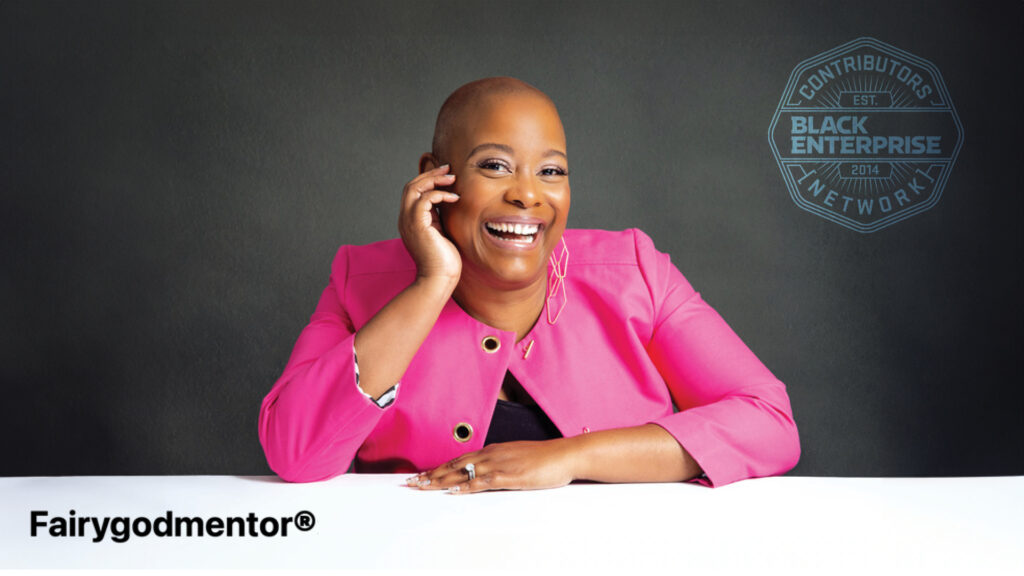
About Joyel Crawford:
(Photo: Kirten White Photography/BE)
Joyel Crawford is an award-winning career and leadership development professional and founder of Crawford Leadership Strategies, a consultancy that empowers results-driven leaders through coaching, training, and facilitation. She’s the best-selling author of Show Your Ask: Using Your Voice to Advocate for Yourself and Your Career.
Have a question for Your Fairygodmentor®?
Submit your career and leadership questions, whether it’s about navigating a micromanager, setting boundaries, negotiating for a raise, or handling burnout. Ask Your Fairygodmentor® today!
The one-game suspension highlights ongoing corporate governance, cultural accountability, and brand equity challenges across professional women’s sports.
During Toronto’s 111-92 loss to Atlanta on July 17, broadcast microphones recorded Brondello expressing frustration to officials after Tempo player Nyara Sabally was called for a foul following a collision with Reese. Brondello stated that Reese was being treated like a “protected species.”
Although the phrase is commonly used in Australian sports to describe favorable officiating, it carries dehumanizing undertones in American contexts, especially when directed at Black women. In the United States, language suggesting certain athletes are ‘protected’ has historically undermined the legitimacy and accomplishments of Black women in sport and reinforced damaging stereotypes. Such remarks contribute to a broader culture of bias, where women of color are often unfairly singled out or subjected to amplified scrutiny. This makes it especially important for public figures to consider the impact of their words.
In an official statement announcing the discipline, the WNBA said it “expects all coaches and team personnel to uphold the highest standards of professionalism and respect that are fundamental to our league.”
Accountability In A Rapidly Expanding League
For BLACK ENTERPRISEreaders interested in corporate governance, executive accountability, and equity in sports business, this incident highlights the need for cultural literacy among leaders in a global media environment. As the WNBA grows financially, driven by high-profile Black athletes like Reese, upholding workplace standards is essential to protecting the league’s brand. The WNBA has made diversity, equity, and inclusion central to its mission in recent years.
It launched the WNBA Justice Movement and established programs such as the Social Justice Council to address issues of race, gender, and equality within the league. Ongoing initiatives, including diversity hiring requirements and community education programs, reflect the WNBA’s commitment to fostering a civil and diverse environment on and off the court. Connecting incidents like this to the league’s wider efforts shows how business strategy and cultural values are closely woven in women’s professional sports.
Brondello, an Australian native and WNBA champion with Phoenix and New York, issued a public apology on X on July 18 and later addressed the media after practice.
Sandy Brondello said she reached out to Angel Reese immediately after the game. Here is Brondello’s full statement on being suspended and the backlash surrounding her comments during the Dream v Tempo game https://t.co/TQmO1t4I6Fpic.twitter.com/o36ck7pAPp
On July 17, Brondello said she contacted Dream executives to arrange a direct conversation with Reese. She acknowledged she did not consider the wider racial implications of her language in the United States.
Player Empowerment And The Business Of Voice
Before the July 19 matchup against the Chicago Sky, Reese confirmed that she had accepted the apology and commended the league for addressing the issue promptly.
“I appreciate Sandy’s apology, but I also appreciate the love and support that I’ve had for the last 48 hours,” Reese stated via CBS Sports. “There is no place for discrimination or hate in this league from anyone—from fans to coaches to players. And I’m just grateful that we are able to move on from the situation and just play winning basketball.”
Reese, a central figure in the league’s commercial growth, emphasized that athlete advocacy is essential for establishing systemic standards. When athletes speak out and shape the public narrative, it can influence sponsor interest, encourage greater fan engagement, and reinforce the league’s reputation for progress and integrity. Their presence and willingness to address important issues often drive business value for teams and the league as a whole.
“It’s important for you to use your voice and advocate,” Reese added, according to coverage by ESPN. “When you do speak out on things, address things head-on, I think it’s important to have change.”
Brondello served her unpaid suspension on July 20, when Toronto hosted the Las Vegas Aces.
ShutterStock royalty-free image #1780466981, 'remote job, technology and people concept - happy smiling young african american woman with calculator and papers working at home office' uploaded by user #301539971, retrieved from ShutterStock on November 22nd, 2024. License details available at https://www.shutterstock.com/license, image licensed under the ShutterStock Standard Image License
From Washtubs To Boardrooms: Why Black Women’s Labor Story Still Matters
Black women’s work begins with today’s conversations about equal pay.
Originally published in Unerased: Black Women Speak, written by Joshua Levi Perrin
There is a temptation to think the story of Black women’s work begins with today’s conversations about equal pay, workplace equity, or career advancement. It doesn’t. It begins in laundry rooms, kitchens, classrooms, hospitals, churches, union halls, and neighborhoods where Black women built lives, communities, and institutions despite an economy that too often depended on their labor without fully rewarding it.
That is the central argument of a new report from economist Dr. Rhonda V. Sharpe and the Women’s Institute for Science, Equity and Race (WISER). From Wash Tubs to Boardrooms: The Economic Mobility and Labor Legacy of Black Women in America traces nearly 150 years of Black women’s work, connecting historical labor struggles to the economic realities many still face today. Rather than viewing today’s wage and wealth gaps in isolation, the report asks readers to see them as part of a much longer American story.
One of the report’s most memorable figures is Oseola McCarty. McCarty spent decades washing and ironing clothes in Hattiesburg, Mississippi. She never married, never finished elementary school, and lived modestly throughout her life. Yet through disciplined saving, she accumulated more than $250,000. At age 87, she donated $150,000 to create scholarships for Black students at the University of Southern Mississippi, transforming the wages of a washerwoman into educational opportunity for future generations.
Her story captures a paradox that runs throughout the report. Black women have consistently generated economic value, built institutions, strengthened communities, and invested in others. Yet the systems surrounding their labor have rarely returned that investment in equal measure.
The report reaches back even further to the Atlanta washerwomen’s strike of 1881, when thousands of Black women organized to demand higher wages and greater control over their work. Their collective action challenged both employers and local officials, becoming one of the South’s earliest large-scale labor movements led by Black women. Their organizing laid the groundwork that later leaders such as educator and labor activist Nannie Helen Burroughs would transform into lasting institutions focused on training, worker advocacy, and economic opportunity.
These stories are not presented as historical detours. They are evidence that Black women have never been passive participants in the American economy. They have organized it, challenged it, and repeatedly expanded it. The report then follows that legacy into the present, examining occupational segregation, educational attainment, wealth, student debt, entrepreneurship, and labor force participation. One of its most striking conclusions is that education alone has not eliminated economic disparities. Black women have dramatically increased college attainment over the past several decades, yet many continue to face lower earnings, greater student debt burdens, and fewer opportunities to accumulate wealth than similarly educated peers.
The research also argues that these disparities are not simply individual challenges. Occupational segregation continues to concentrate Black women in essential care and service professions that have historically been undervalued, even as those jobs remain fundamental to the nation’s economy. Economic mobility, the report suggests, cannot be understood apart from the structures that shape opportunity in the first place.
Yet, From Wash Tubs to Boardrooms is not a story of inevitable hardship. It is a story of persistence, innovation, and collective action. Across generations, Black women built schools, organized workers, established businesses, supported families, and invested in communities while confronting barriers that stretched far beyond the workplace.
As Unerased | Black Women Speak prepares to mark Black Women’s Equal Pay Day, this research offers more than statistics to absorb. It offers context. It reminds readers that today’s conversations about wages, wealth, and economic justice did not appear overnight. They are the latest chapter in a much longer story of labor, leadership, and resilience.
Understanding that helps illuminate what a more equitable future could look like—and why building it requires valuing Black women’s work not only for what it produces, but for what it has always made possible.
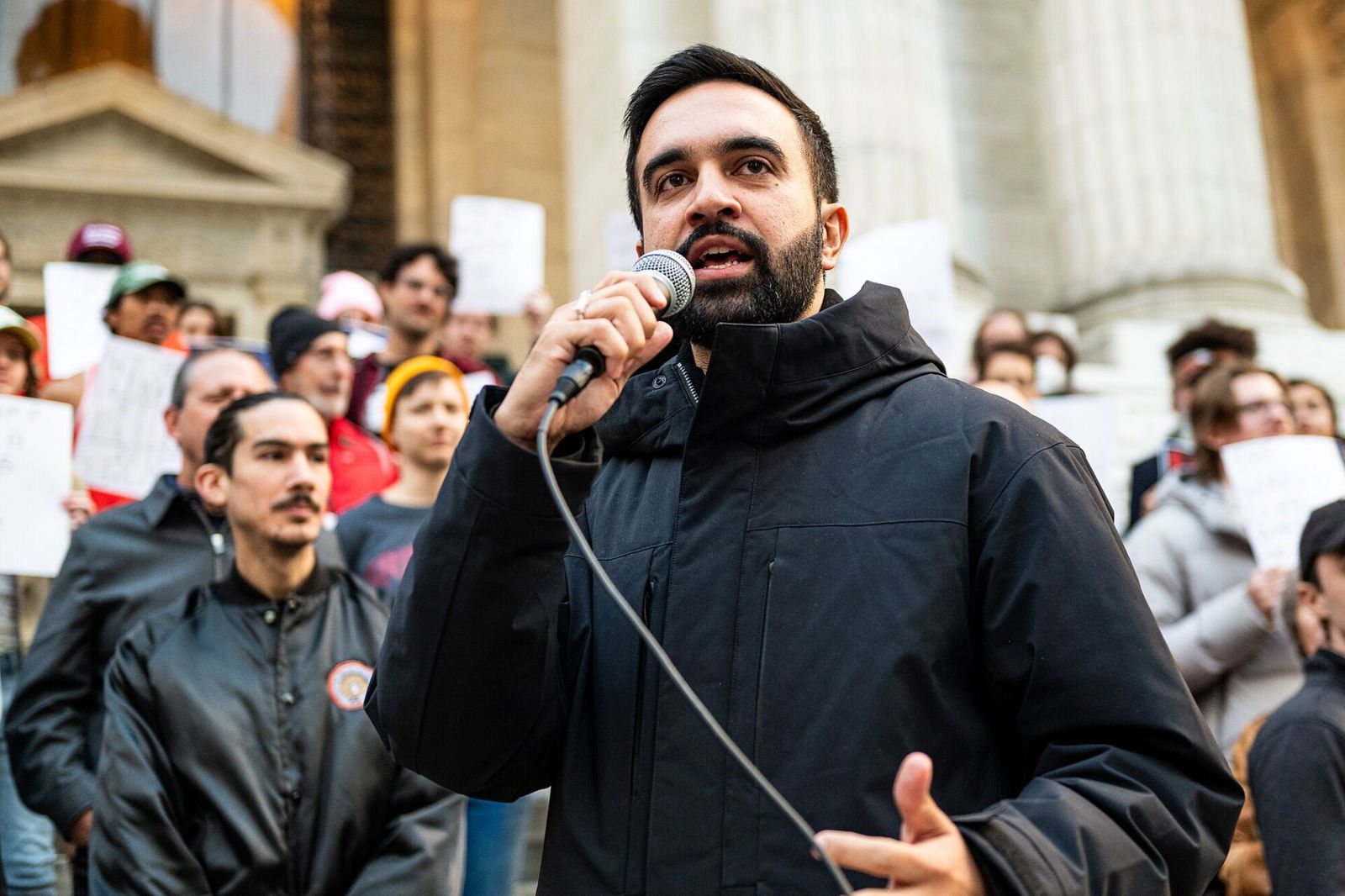
Mayor Mamdani Unveils 23 Proposals To Reshape NYC Rental Market
The sweeping plan aims to strengthen tenant protections, crack down on negligent landlords, and make renting more accessible.
New York City Mayor Zohran Mamdani is proposing a sweeping overhaul of the city’s rental housing system, unveiling a 23-point roadmap that could transform how tenants secure apartments, report unsafe living conditions, and hold landlords accountable.
Among the report’s most closely watched proposals is a potential overhaul of New York City’s longstanding rental screening process. The administration is considering legislation that would require landlords to choose between running a credit check and requiring applicants to earn at least four times the monthly rent rather than imposing both requirements.
“A credit check can be prohibitive, especially for people who are very low-income New Yorkers,” said Cea Weaver, who serves as the executive director of the Mayor’s Office to Protect Tenants, reports amNY. She added that the current system can also disadvantage renters who receive housing assistance or lack an established credit history.
The administration is also exploring requiring landlords or brokers to pay for credit checks rather than applicants. Another proposal would recognize tenant unions in rental buildings, creating a framework for organized tenant groups to negotiate with landlords. While tenants already have the legal right to organize, the city currently has no standardized process defining how tenant organizations are recognized or how property owners should engage with them.
“Just as we know that a union in the workplace can improve people’s working conditions … we think the same thing is true in buildings,” Weaver said.
The report also proposes requiring disclosure labels on apartment listings that use AI-generated or digitally altered images, citing concerns that misleading photos waste renters’ time and money. The city also plans to work with listing platforms such as StreetEasy and Zillow to enforce the rules once finalized.
Additional recommendations include expanding the list of housing violations tenants can cite when withholding rent, increasing penalties for landlords who falsely certify repairs, requiring inspectors to visit every apartment that has reported a heat complaint, and installing compact elevators in older walk-up buildings.
Not all of the proposals will take effect immediately. While some administrative changes could begin later this year, others—including credit screening reforms and expanded enforcement authority—will require City Council approval or additional rulemaking.
Despite criticism from landlord groups, who have argued the process unfairly favors tenants, Weaver defended the proposals.
“I believe it’s good for everybody,” she said, adding that stronger enforcement and faster inspections would ultimately benefit both tenants and responsible property owners.
Enslaved men, women, and children did far more than harvest tobacco and cotton. Their labor helped build many of the physical and economic foundations of the United States, including George Washington’s Mount Vernon, Thomas Jefferson’s Monticello, and portions of the White House and the U.S. Capitol. Yet while they helped create immense prosperity, they were denied every benefit of it. They could not own the land they worked, accumulate wealth, legally protect their families, or pass opportunity to their children. They themselves were treated as property.
Several years ago, while reporting for NBC News at James Madison’s Montpelier, I toured the exhibition The Mere Distinction of Colour. What struck me most was not simply its portrayal of slavery’s cruelty, but its examination of slavery as an economic system that transformed human beings into financial assets. That truth is uncomfortable.
It is also history, and it helps explain why, 250 years after the Declaration of Independence, the promise of economic freedom remains unfinished for far too many Black Americans.
The abolition of slavery ended legal bondage, but it did not create economic equality. Reconstruction promised opportunity but ended before its work was complete. The promise of 40 acres and a mule disappeared, Jim Crow followed, and generations of Black Americans were denied equal access to land, housing, education, and credit. The Civil Rights Movement dismantled legalized segregation, but it could not erase centuries of accumulated economic disadvantage. Freedom came. Capital largely did not.
That history is reflected in today’s balance sheets.
The median net worth of a Black household in America is approximately $44,100. For White households, it exceeds $284,000. Put another way, for every dollar of wealth held by the typical White family, the typical Black family possesses only about 15 cents.
Homeownership remains the principal engine of wealth creation for most American families. Yet only about 43% of Black families own their homes, compared with roughly 73% of White families. Even then, Black homeowners too often see their properties undervalued, limiting the equity that fuels generational wealth. White families also hold a much larger share of appreciating financial assets, while many Black families remain disproportionately dependent on home equity alone.
Education has not erased these disparities. The median Black household carries roughly $26,000 in student loan debt despite possessing far fewer accumulated assets than White households.
Fifteen years ago, in Black Woman Redefined, I argued that Black women were doing everything America had asked of them—earning degrees, building careers, and leading across virtually every profession. Preparation was never the problem.
Today, that observation feels painfully current. Recent research found that Black women, particularly college graduates and public-sector professionals, experienced some of the steepest employment losses in a generation. Black unemployment continues to outpace the national average. At a time when Black women have become one of America’s most educated and accomplished workforces, too many have found themselves disproportionately displaced from stable careers. That should concern every American.
Because the issue is no longer whether Black Americans possess talent, the issue is whether America is prepared to invest fully in that talent.
America’s future competitiveness depends on fully utilizing the talents of all its people. Every entrepreneur denied capital, every qualified professional overlooked, and every family unable to build wealth represents not only an individual loss, but a loss to our nation’s economic strength.
As America celebrates its 250th birthday, we also find ourselves engaged in a renewed struggle over history itself. Recent attacks on the Smithsonian’s National Museum of African American History and Culture are about more than one museum. They are about whether America is willing to tell its complete story.
Twenty-five years ago, I argued in the pages of The Washington Post that America needed to put slavery in its proper place in our national consciousness—not to induce guilt, but to tell the truth. I believe that even more strongly today.
We do not strengthen patriotism by editing history. We strengthen patriotism by trusting Americans with the truth.
The history of slavery, Reconstruction, Jim Crow, the Civil Rights Movement, and Black achievement is not separate from the American story. It is the American story.
Anniversaries are more than celebrations. They are opportunities for honest reflection. America’s 250th birthday is one of those moments.
The unfinished business of freedom is no longer emancipation.
It is economic participation.
It is ownership.
It is wealth creation.
It is ensuring every American has a genuine opportunity to buy a home, build a business, save for retirement, leave an inheritance, and pass forward something greater than what they inherited.
For 250 years, Black Americans have invested their labor, their genius, their patriotism, and too often their lives in the American experiment. Now, as America begins its next 250 years, the question is no longer whether Black Americans belong in the American story.
History has already answered that.
The question is whether America will finally ensure that the prosperity Black Americans helped create is matched by the opportunity to fully own it, build it, and pass it on.
That is not simply the unfinished business of Black America.