Getty Foundation Steps Up With ‘Critical Funding’ To Preserve Buildings Created By Black Architects
The funds will assist in promoting community engagement and heighten public awareness of the Black designers and geniuses behind them.
The Getty Foundation, in collaboration with the National Trust for Historic Preservation’s African American Cultural Heritage Action Fund, is stepping in with “critical funding” to help save historic modern buildings created by Black architects and designers, according to a press release.
Through a yearly grant program called the “Conserving Black Modernism” initiative, the grants are utilized to uplift the legacies of Black architects—both past and present—by preserving their unrecognized work and highlighting the stories behind each creation. With Getty’s support, sites like a former hat factory transformed into Chicago’s First Church of Deliverance, designed by the first licensed Black architect in Illinois, Walter T. Bailey, will have their preservation plans supported.
In addition, the grants will help promote community engagement and increase public awareness of the Black designers and geniuses behind them.
“Each year, Conserving Black Modernism has expanded the number of architects recognized through the initiative, and we’re excited to include five new designers whose innovative buildings enriched communities from coast to coast,” Getty Foundation director Joan Weinstein said.
In addition to Bailey, the 2025 Conserving Black Modernism Grantees include the ITC Administration Building in Atlanta, designed by Georgia’s first licensed Black architect, Edward C. Miller, in 1961. The theology graduate school, which features a modern brick facade, is situated near five predominantly Black denominational Christian seminaries and is the oldest building on campus.
The Founders Church of Religious Science, designed by the first Black member of the American Institute of Architects, Paul R. Williams, is a roughly 20,000-square-foot concrete building in Los Angeles with a steel-framed dome and concrete screen. Funding for the site, listed in the National Register in 2020, will consist of an accessibility plan to encourage more efficient use of the landmark and promote community engagement.
The other grant awardees are McKenzie Hall in Eugene, Oregon, and Vassar College’s 2500 New Hackensack building in Poughkeepsie, New York, in addition to 24 others being funded by The Action Fund.
“The Conserving Black Modernism program is ensuring the historic contributions Black designers have made to this field are celebrated and can inspire current and future generations,” said Executive Director Brent Leggs said.
“This year’s cohort includes sites by architectural giants, and names the world may be learning about for the first time. I’m thrilled that through our partnering with the Getty, the African-American Cultural Heritage Action Fund is helping to ensure their legacy and support the communities that are stewarding these sites today.”
Community Will ‘Celebrate Our Magic’ At 51st Annual Harlem Week
This year's theme is 'Celebrate Our Magic.'
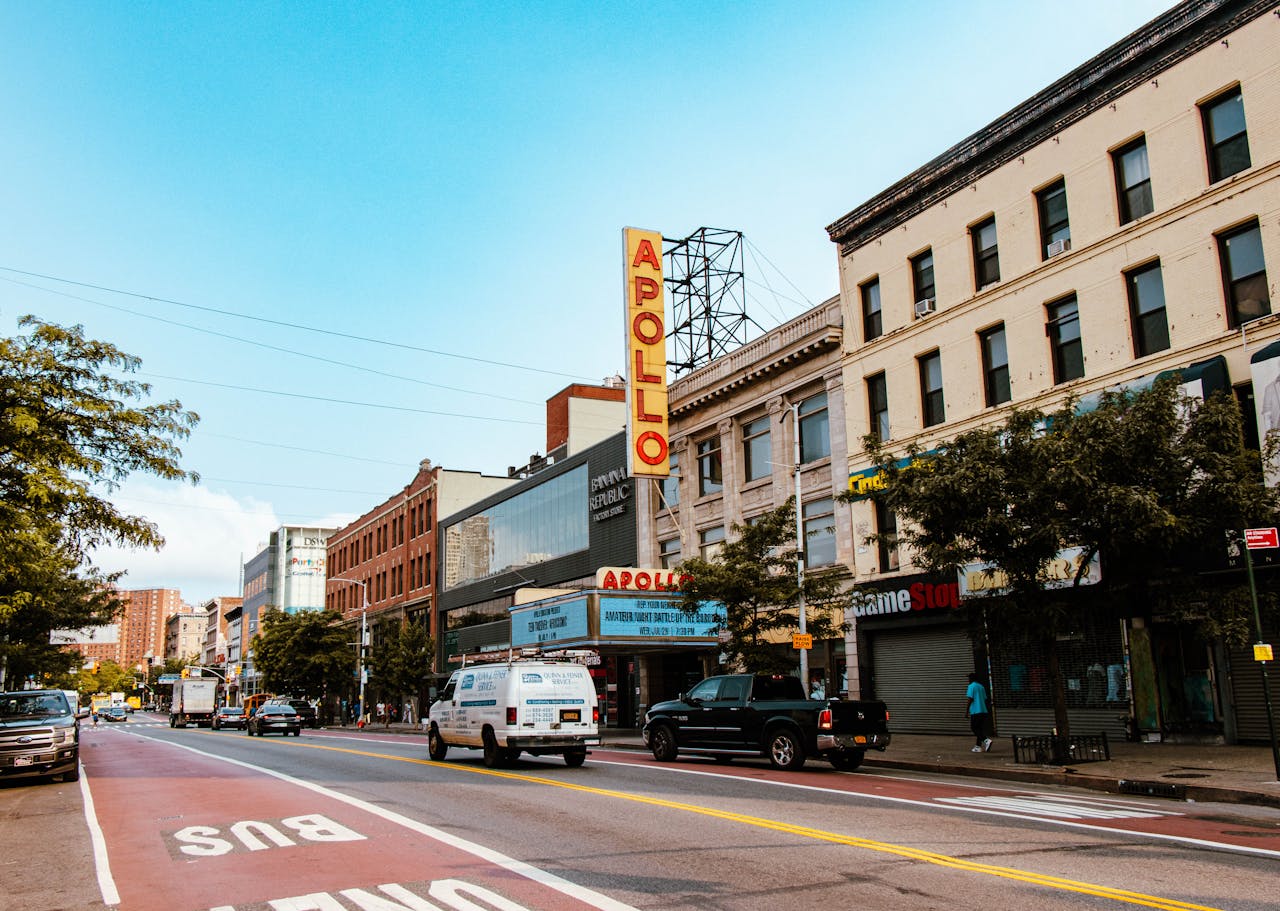
From August 1 – 17, the 51st annual Harlem Week will celebrate the culture and rich history of the New York neighborhood with events and activations surrounding this year’s theme: “CelebrateOur Magic.”
“Ourrichhistoryandcultureisjustthat,magic,”saidLloydWilliams, cofounder and chairman of Harlem Week, in a written statement.“FromtheculturalrevivalthatwastheHarlemRenaissancetoinstitutionslike theApolloTheaterandtheNationalJazzMuseumInHarlem,thisyear’sthemeembodiesthat despitechallengeswemayface,ourcreativityandourjoyismagic.”
Started in 1974 by Percy Sutton and Ossie Davis, Harlem Week has expanded to more than two weeks.
The year’s “week” features celebrations for some legendary individuals, including Harry Belafonte, Hazel Dukes, Roberta Flack, Quincy Jones, and Malcolm X. There will also be a renaming of a street for Belafonte.
Live performances will take place Friday, August 15, to Sunday, August 17, featuring previews of the Harlem Music Festival. People will be able to see local musicians celebrating the themes “Joints Are Jumpin’,” “Uptown Saturday Nite,” and “Groovin’ on a Sunday Afternoon.”
The NYC Jobs & Careers Fair will also return on Wednesday, August 13, at The City College of New York, featuring workshops and more than 40 employers throughout various industries.
“CCNY is proud to support and participate in Harlem Week,” said Vincent Boudreau, president of City College of New York. “The job fair that we host represents a key opportunity for Harlem residents and visitors to make professional connections and for employers who come to the fair to appreciate the tremendous talent living in our community. Harlem Week celebrates that talent in all its various aspects, and it’s a joy for us to be part of the celebration.”
People visiting during the festivities can expect to see activities for children, a senior citizens’ day (August 1), a health fair, a summit, and a film festival.
For a complete list of events and information, visit the Harlem Week website.
TikTok-Fueled Boycott Exposes Deep Divide Between Black Americans and Africans; It’s Time To Knock It Off
Critics argue that boycotting businesses owned by fellow Black people, regardless of origin, diverts energy and resources from the larger struggle against systemic racism and discrimination.
An alarming social media call to action, spearheaded by the hashtag #ShayaShelf, has sparked a contentious debate within the Black community, calling for a boycott of African-owned braiding shops, restaurants, and retail stores beginning August 1.
While proponents articulate grievances of disrespect, mistreatment, and undervaluation, particularly within the lucrative Black hair industry, this internal strife risks fracturing a community facing pervasive external anti-Blackness from colonizers and their minions.
The movement, gaining traction across various social platforms, stems from deeply felt experiences shared by some Black American women who describe encountering poor customer service, perceived exploitation, and a lack of reciprocal respect from certain African immigrant-owned businesses.
For many, the hair braiding salon, a cultural cornerstone, has become a flashpoint for these frustrations, leading to calls for economic withdrawal, with some advocating for the boycott to extend through the end of the year.
The initial spark for this movement came from TikTok user Shea, who posted a video on July 19, garnering nearly 50,000 views, urging Black Americans to recognize their economic power.
In her video, Shea declared, “Black Americans, come here, come here. This is a message for y’all, especially my Black American women. Come here, listen. I think it’s time for us to show how strong and how powerful the Black American dollar is, since they don’t believe us. I think it’s time to boycott the braiding shops.
“That’s what I think it’s time to do. Time to boycott the braiding shops. Stop going. We know how to braid. Let’s braid our own hair, support our own small businesses. Stop going to the braid shops. Teach them how to have some f**king respect because they have none. Black American power, Black American dollar. They need us. We don’t need them. Remember that. Do I wish there could be unity in a community? Abso-f**king-lutely. But that ain’t going to happen until they give us our f**king respect, and they’ve never done it. So f**k all that, boycott time.”
Shea continued, “No more African braid shops. It’s time to boycott the African braid shops. Stop going. Let’s show them how powerful our Black American dollar is since they think we can’t control this f**king narrative. Since they think we got everything. Let’s show them how much we really f**king got. Black American power. Again, I’m going to keep saying it. Like, follow, share, comment below. What you think?
“The ones that pay your bills. Because we black them out, I want to see how many white people are going to support y’all, right? I want to see how many of y’all businesses really want to be able to stay afloat month after month of Black people not supporting you, right? Like, let’s really be about it. So in support of Shaya’s shelf, I am even pushing past August, but it starts August 1st, OK? Complete, total blackout on Africans, period, okay? Let them know what time it is.”
However, the calls to action have met significant pushback, raising profound questions about solidarity and strategic focus. Critics argue that boycotting businesses owned by fellow Black people, regardless of origin, diverts energy and resources from the larger struggle against systemic racism and discrimination. This internal economic conflict, they contend, plays directly into narratives that undermine Black unity, potentially harming entrepreneurs who are themselves navigating complex challenges as immigrants.
Fortunately, there were Black Americans who quickly called out the foolish sentiment of these calls to action.
😐I've never seen or heard of some of us dedicating a month to 💰boycotting [Jews/Europeans, Hispanics, Asian, East Indians, etc…] 🧐Of all groups you choose to boycott Africans??? 🤔Not the others? 🫤Some of you are LITERALLY playing someone else's game… 🧠THINK!!! Smmfh. pic.twitter.com/UzYHQubML5
The Chinese and the Asians they abuse, black women all day long in their beauty salon. You never see these black Americans for boycott against their business.. but they’re calling for a boycott against African business. FBA ADOS they are agent of white supremacist and right wing… https://t.co/EOYRjMUJG6
Honestly, I wished they (FBA) would put more effort into actual political endeavors, than whatever xenophobic nonsense this boycott meant to be.
Out of all the ethnicities (White, Asian, Arab, Hispanic, Indian, etc.) in America that have disrespected Black Americans over the… pic.twitter.com/biMkPD0FSS
— Scion (PanAfroCore) (@ScionofCulture) July 22, 2025
Boycotting Africans over Asian stores that PROFIT from using our hair and beauty is INSANE💀 https://t.co/RNu0kbZpij
BLACK ENTERPRISE highlighted a seemingly growing chasm between African immigrants and Black Americans, rooted in the caution many Nigerian parents reportedly give their children before traveling to the U.S. Media personality Morayo Afolabi-Brown revealed that some parents advise their kids to steer clear of African Americans—warning them of drugs, unplanned pregnancy, and other cultural stereotypes—but to “stay with the white people.”
The advice, though often meant to protect, inadvertently strains unity across the Black diaspora and overlooks the foundational role Black Americans played in establishing opportunities through struggle and sacrifice as immigrants come to this country. While acknowledging migrant anxieties, Afolabi-Brown urges against allowing these inherited fears to derail a broader, shared mission: confronting systemic racism and social injustice together. As she explains, the real challenge isn’t internal division, but bigger and realer enemies like structural inequality and racial violence—forces far more harmful than misdirected caution within the community. Further, as articulated in an IBW21 commentary from January 2020, titled “Understanding the Division Between African Americans and Africans,” the notion of cultural purity is often a misunderstanding when applied to Black Americans.
The piece argues, “African Americans are themselves a blend of different ethnic groups. Akan, Yoruba, Igbo, Mandé, Fulani, Kongo, Temne, Ewe, Edo, Efik, Fon, Mossi, and Ga are just some of the many ethnic groups that African Americans descend from.”
This perspective challenges any assertion of cultural insensitivity when Black Americans blend various African customs, as their heritage is inherently a mosaic of these diverse traditions.
The commentary also highlights the reciprocal influence between the diaspora and the continent, noting that “the Black Power movement among African Americans in the 1960s and 1970s helped to influence a cultural revival among Africans.”
Nigerian musician Fela Kuti famously observed Black Americans in the United States. “It’s crazy; in the State, people think the Black Power movement drew inspiration from Africa,” Kuti said. “All these Americans come over here looking for awareness; they don’t realize they’re the ones who’ve got it over there. We were even ashamed to go around in national dress until we saw pictures of Blacks wearing dashikis on 125th Street.
“I started thinking. I saw how everything works there; everything functions. I saw how great America is, and realized that to be a great man, you have to have a great country behind you. I had no country, just a bunch of Africans running around in suits trying to be Englishmen. I decided to come back and try to make my country African.”
This historical context suggests that the relationship is one of mutual influence and shared struggle, rather than a one-sided dynamic.
Even within Africa, the piece noted, there has always been an excellent diffusion of cultures, a point emphasized by Trinidadian historian Hollis Liverpool, who wrote extensively on the extensive cultural mixing throughout the continent’s history.
“Today, Nigerian folk tales may be heard in Senegal, and the trickster hare of Zaire performs the same mischief as the spider trickster in Ghana and Togo. Similarly, West African musical instruments are equally known in the East and the South. The interplay of cultures and traditions of African kingdoms, states and empires before they were intruded upon by explorers, tells us something of the political and economic dynamics of the African continent then: an interplay of peoples and organizations.”
The underlying tensions are complex, rooted in cultural misunderstandings, economic disparities, and historical narratives that sometimes strain the relationship between Black Americans and African immigrants. Yet, the current moment demands a re-evaluation of priorities. Instead of internal economic warfare, many believe the focus should shift toward fostering dialogue, building bridges of understanding, and establishing collaborative economic ventures that uplift the entire Black diaspora.
Ultimately, the #ShayaShelf campaign, while born from legitimate grievances, serves as a critical mirror reflecting the urgent need for intra-community reckoning and strategic alignment. The path forward, for many, lies not in division but in recognizing shared struggles and uniting against the external forces that genuinely seek to diminish Black progress and prosperity.
Angel Reese Turns ‘Mebounds’ Disrespect Into Trademark, Launches Sneakers
The Chicago Sky superstar turned a negative into a (profitable) positive.
During WNBA All-Star Weekend, Chicago Sky superstar Angel Reese and Reebok revealed her latest sneaker, “Angel Reese 1 Mebounds.”
The second-year player took to social media to introduce the new footwear, utilizing a term that is attributed to her because of her penchant for grabbing her own rebounds off the shots she misses during a game. The sports world has labeling them “Mebounds,” a term Reese and Reebok are using to their advantage.
For detractors who used the term as a form of disrespect toward Reese—nice try. According to Bleacher Report, she trademarked the term.
Reese posted a TikTok video crediting “fans” for the “Mebounds” reference attributed to her. “Whoever came up with the ‘mebounds’ thing, y’all ate because ‘mebounds,’ rebounds, crebounds… anything that comes off that board, it’s mine.”
She added that she enjoys the trolling, and when people have “altered” her face, it doesn’t affect her in a negative way.
“And a brand? That’s six figures right there. The trolling, I love when y’all do it because, like, the ideas be good. Like, when y’all have to alter my face and s–t because I’m cute, alright, whatever. That doesn’t get me.”
She ends the clip by, once again, giving whoever came up with the term their props.
“But when y’all came up with ‘mebounds’—because statistically, all the rebounds that I get aren’t always just mine. They’re, like, the defenses, too, or somebody else on my team—but, when y’all came up with ‘mebounds,’ y’all ate.”
Black Promoters Collective On Track To Gross Over $100M In Revenue For Live Entertainment Production
BPC is known as the largest Black-owned live entertainment company in the U.S.
The Black Promoters Collective (BPC) is on track to reach a historic feat in year-end revenue.
Known as the largest Black-owned live entertainment company in the United States, BPC has made its mark in the concerts and festivals industry. Its latest entry, the highly anticipated “The Boy is Mine” tour with headliners Brandy and Monica, will take the company to over $100 million in expected revenue.
The tour will bring the R&B superstars and collaborators to over 24 cities. They will be accompanied by fellow R&B starlets such as Muni Long, Kelly Rowland, and recent American Idol winner Jamal Roberts. It has already added more dates, expanding to Florida due to growing interest.
The tour comes amid the 25th anniversary of the Grammy-winning song of the same name. Now, BPC hopes to capitalize on this growing momentum to become a major player in live entertainment.
“We’re building a movement rooted in authenticity and excellence,” said Shelby Joyner, president of BPC,in a press release. “The Boy Is Mine is the latest proof of how powerful our culture is when it’s centered, protected, and celebrated.”
BPC has also celebrated other successful events such as its sold-out “Hot 97 Summer Jam, which it coproduced. The music festival featured hitmakers such as GloRilla, Gunna, A Boogie With The Hoodie, and a surprise performance from Meek Mill.
BPC then collaborated with LL Cool J for the hip hop legend’s “Rock The Bells Festival.” Other events included the “Millennium Tour” featuring Bow Wow, Trey Songz, and Omarion, as well as the “October Nights: Calling All Lovers” tour with October London, Tamar Braxton, and Ro James.
“Our marketing approach is rooted in precision and purpose. We’ve demonstrated that when campaigns center on cultural authenticity, they not only drive ticket sales but also foster brand affinity and measurable community impact,” added Troy Brown, CMO of BPC. “The first half of 2025 is proof that brands who align with culture-forward experiences gain more than impressions; they gain trust.
With recognition from Billboard and Pollstar as a globally-renowned promotional company, BPC has shaped itself as a dynamic, culturally-significant force in live entertainment.
Harlem Youth Baseball Coach Deemed A ‘Hero’ For Protecting Players Against ICE Agents
This is why Black men in leadership matter....
Youman Wilder, the founder of Harlem Baseball Hitting Academy, is being called a hero for stepping up and protecting his players against U.S. Immigration and Customs Enforcement (ICE) agents when they approached the kids during a practice session, NBC News reports.
The incident took place July 3 at Riverside Park in Manhattan’s Upper West Side when Wilder said he saw ICE officers storming the grounds. He said he didn’t make much of it until they approached his players and started to ask them questions about where they were born and where their parents were from. “I heard them saying, ‘Where are you from? Where are your parents from?” Wilder remembered.
“And I just stepped in and said this is very inappropriate to ask these kids anything … I’m just going to have them implement their Fifth Amendment right, and not say anything to you.”
The coach, who has a Master’s degree in law, said one of the agents raised his voice and called him “another YouTube lawyer.” But Wilder calmly responded, saying, “No, I just know how the Constitution works.”
While admitting that a number of his players’ parents come from countries such as Mexico, the Dominican Republic, Africa, and South America, his young middle and high school players are American citizens. “Their kids were born here. They have the 14th Amendment entitlement to live here,” he said.
Wilder labeled his players as “tough” and reached out to lawmakers to address ICE harassment. Unfortunately, since the incident, several of his players have not returned to practice due to fear. “I got some tough New York City kids, so for them to be scared, it means something is really happening,” Wilder said. He remembers reassuring his team that he wouldn’t let the agents get through him. “I just said to myself, ‘I’m willing to die to make sure you get home. ‘” Doubling down, saying, “I’m willing to die today.”
Running the youth baseball program for the past 22 years, people in the neighborhood know Wilder well, as he views the sport as a tool that teaches important life lessons. “Baseball is life. You start at home, and we’re going to send you out. And it’s going to be hard for you out there. But you could make it easier for yourself swinging at strikes to get to first base,” he said, according to The New Yorker.
“And how can we get you to second and third? You can do things quicker, sharper, crisper. All those things get you around. Same thing in life.”
As the team consists of a majority of Black and Latino players from tough NYC neighborhoods like Washington Heights, Dyckman, the South Bronx, and parts of Queens, the kids deal with gangs, often at risk of being beaten up. Now, with the risk of being stopped by immigration officials, the coach reminds them that baseball is a great way to deal with another life hurdle. “I tell the kids, you have to use your baseball. How do you get from first base to third base without getting thrown out?”
ICE agents have been seen in numerous diverse neighborhoods of America’s metro cities, questioning and arresting those they deem “illegal and dangerous” immigrants. While an ICE spokesperson claims the agency “has not conducted any recent enforcement activity in the vicinity of Riverside Park,” Wilder says officers identified themselves as ICE agents by being armed and wearing camouflage uniforms.
HOLLYWOOD, CALIFORNIA - MARCH 27: (L-R) Venus Williams and Serena Williams attend the 94th Annual Academy Awards at Hollywood and Highland on March 27, 2022 in Hollywood, California. (Photo by Jeff Kravitz/FilmMagic)
Oh Nah, British Royal Reportedly Named Pet Black Sheep After Venus And Serena Williams
Princess Michael of Kent reportedly named her pets that to "shock" guests.
In a weird move worthy of a serious side-eye, a member of the British royal family reportedly named her pet Black sheep after Venus and Serena Williams.
Princess Michael of Kent, wife of Prince Michael of Kent, is apparently the culprit of this odd naming. Prince Michael is the son of Prince George, the brother of King George, and late uncle of Queen Elizabeth II. US Weeklyreported that the rumor came from an author named Aatish Taseer.
While unconfirmed, Taseer does have ties to the British royal family, which lends credibility to his claims. Taseer used to date Lady Gabriella Windsor, the daughter of Princess Michael of Kent. Windsor is also the cousin of the current monarch, King Charles III. The A Return To Self: Excursions in Exile writer revealed the alleged naming during an interview on the Tell Me About Your Father podcast.
“I think the [story about] Venus and Serena was part of that weird air of abstraction that exists around these people and how they’re not even aware of how shocking or offensive that might be,” Taseer said on the podcast.
However, Taseer spoke up about the names before in 2018. He wrote about Princess Michael’s assumed “desire to shock” when she shared the pets’ names with others.
“Princess Michael, though generally free of British colonial prejudices, and beyond reproach when it came to me, nevertheless invited trouble out of what felt like a desire to shock: her pair of black sheep in Gloucestershire were named Venus and Serena,” previously wrote Taseer.
Taseer does not have a current relationship with the British Royal family, which he thinks stems from his sexuality. Taseer identifies as a gay man. However, he still remembers the micro-aggressive, if not just outright racist, naming.
The admission sparked immediate backlash for the clear racial origins of the names. Although Taseer views Princess Michael as “a gay icon,” the podcast hosts think her prejudices may hinder that title.
“If she weren’t so racist, she’d be really marketable, joked podcast cohost Matt Philip.
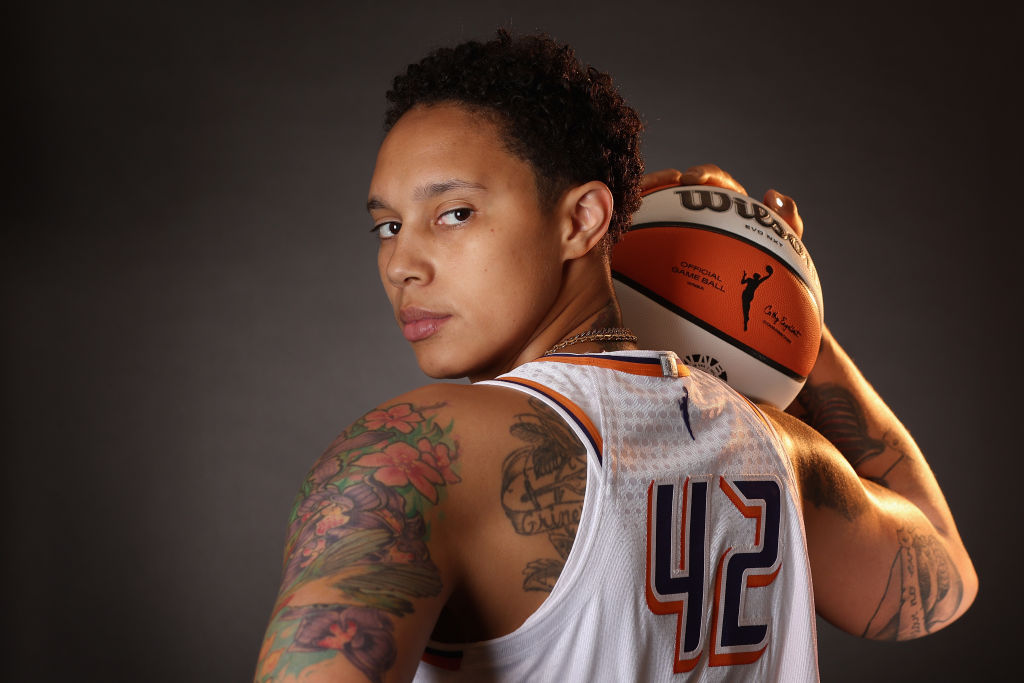
Brittney Griner ‘Didn’t Feel Like A Human’ While In Russian Prison
Brittney Griner shares graphic details about her 10-month detainment in Russian prison.
Brittney Griner opened up about her harrowing year in a Russian penal colony, where she says she was stripped, starved, and made to feel less than human.
The nine-time WNBA all-star sat down with Cam Newton and shared graphic details of her 10-month detainment and imprisonment in Russia after being found with THC vape cartridges in her luggage. Griner described enduring invasive body searches, drug and COVID tests, and a respiratory exam before being thrown into solitary confinement with barely any clothing.
“No shower, no toilet paper, no toothbrush…the toilet was just a hole, covered in feces and urine,” she recalled.
It was an experience that made her feel “worse than a d*** stray dog,” she added. “At least a stray dog get some food every now and again. Like get something. I didn’t feel like a human.”
Griner said she was forced to use a T-shirt as a makeshift washcloth and credited her family for keeping her alive during her darkest moments, believing that if she ended her life in prison, her loved ones might never get her body back.
“Trying to be strong, I got a little Sudoku book that I had with me when they took me,” she said. “So I’m writing in it, like I knew what day it was. So I would write the date and I would write a little something like how I’m feeling.”
The six-time All-WNBA member got candid when recalling Russian authorities’ “last play to terrorize me” during the prisoner swap that led to her release in December 2022. She was transferred from a penal colony to a men’s prison, where she was stripped of her humanity throughout the transfer.
“Because they were checking me in, they had me stripped down, butt naked, in front of a room like probably seven to eight men, and they had the Polaroid and had me spinning in a circle, while they were taking the photos right, of my tattoos because my tattoos are whatever they are,” Griner recalled.
Though her imprisonment dominated national headlines, Griner believes the media coverage would’ve been handled very differently if the detainee had been a high-profile male athlete like LeBron James.
“I think the media and the public reaction would have been different; they wouldn’t have automatically roped me off as a drug addict, a druggie, delinquent,” she added. “I think it would have been a different standpoint.”
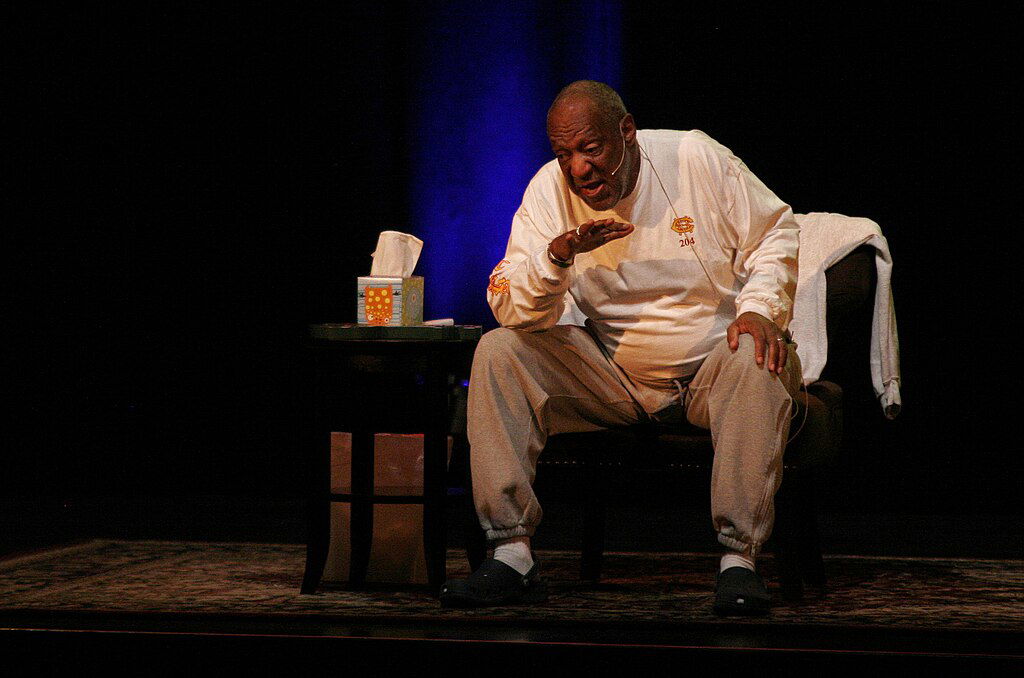
Bill Cosby Compares Malcolm-Jamal Warner’s ‘Devastating’ Death To His Son’s Murder
Bill Cosby is mourning the sudden loss of his former "Cosby Show" co-star Malcolm-Jamal Warner.
Bill Cosby is mourning the “devastating” death of actor Malcolm-Jamal Warner, who rose to fame playing his son Theo Huxtable on The Cosby Show.
After news broke of Warner’s accidental drowning while vacationing in Costa Rica, Cosby’s spokesperson, Andrew Wyatt, revealed that the comedian’s reaction “reminded him of the same call he received when his son died,” People reports. Cosby’s only son, Ennis William Cosby, was murdered during a botched robbery in 1997.
Ennis, according to Wyatt, used to “play with Malcolm” when they were younger, and called Warner’s death “devastating.”
“He found a way to talk about Malcolm even though he was sad,” Wyatt said of Cosby. “…They spoke all the time. He said, ‘Malcolm was changing humanity.'”
Wyatt shared that Warner’s death has deeply affected the cast of The Cosby Show, with Cosby and Phylicia Rashad, who played Jamal-Warner’s TV mom, connecting by phone to reminisce about the late actor. The former co-stars spent time “embracing each other over the phone about a dearly beloved friend,” Cosby told CBS News’ Jericka Duncan in a phone interview.
“He was never afraid to go to his room and study. He knew his lines and that he was quite comfortable even with the growing pains of a being a teenager,” Cosby added, noting that he last spoke to Warner “three months ago.”
Their last conversation centered around Warner’s Art in Motion concert alongside the Minnesota Orchestra, which Cosby noted was “something [Warner] was very proud of.”
Warner never publicly defended Cosby amid the sexual assault and misconduct allegations that have tarnished his reputation. Still, he consistently stood by The Cosby Show’s legacy, praising its lasting impact on both the Black community and American culture.
“Regardless of how some people may feel about the show now, I’m still proud of the legacy and having been a part of such an iconic show that had such a profound impact on—first and foremost, Black culture—but also American culture,” Warner said in 2023.
Malcolm-Jamal Warner, 54, drowned while swimming in Limon, Costa Rica, on July 20, authorities confirmed. He left behind his wife and daughter, whose identities he chose to keep private.
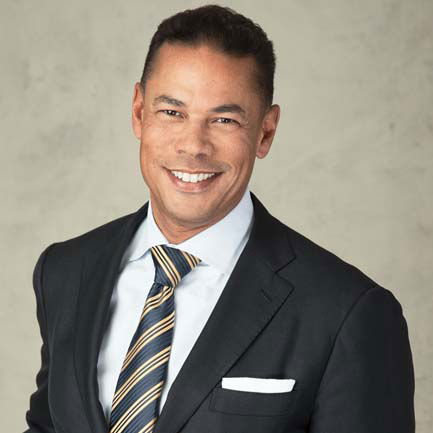
Lloyd Howell Resigns From The Carlyle Group After Quitting As NFLPA Executive Director
Questions had surrounded his roles with both companies
Lloyd Howell Jr. has resigned as a consultant with The Carlyle Group, several days after he relinquished his position as executive director of the NFL Players Association (NFLPA).
According to ESPN, no reason was given for Howell’s resignation, as he was an operations executive with Carlyle’s aerospace and defense investment team. An issue had re-emerged regarding his dual role at The Carlyle Group, as the company is one of a select group of firms approved by the league to seek minority ownership in NFL franchises. It was viewed as a conflict of interest for Howell to hold the roles at both organizations, given the possibility that Carlyle might invest in franchises for the league.
Howell did not state that he was resigning from The Carlyle Group, but he did release a statement when leaving the NFLPA.
“It’s clear that my leadership has become a distraction to the important work the NFLPA advances every day,” Howell said in a written statement. “For this reason, I have informed the NFLPA Executive Committee that I am stepping down as Executive Director of the NFLPA and Chairman of the Board of NFL Players, effective immediately. I hope this will allow the NFLPA to maintain its focus on its player members ahead of the upcoming season.”
According to an earlier report from the media outlet, it was reported that Howell started working with Carlyle in March 2023, three months before being hired by the NFLPA as the players’ chief representative in relations with the league. In August, the league announced that it had named three private equity firms and a consortium of firms, including Carlyle, to a list of approved funds that can invest in minority franchise stakes, not to exceed 10%. Sources stated that a senior union lawyer spoke to Howell and questioned whether it was appropriate for him to continue his dual role with both organizations.
He was advised to resign from The Carlyle Group to mitigate the appearance of a conflict of interest if the company were to acquire an ownership stake in an NFL team. He declined to do so at the time.
Earlier this year, it was reported that the FBI was investigating the NFL Players Association and the MLB Players Association for their deals with the multibillion-dollar group-licensing firm OneTeam Partners. The report led the players’ union to hire Ronald C. Machen of law firm Wilmer Hale to review Howell’s activities as executive director. The FBI investigation, in conjunction with the Brooklyn U.S. Attorney’s office, is ongoing, according to sources.