Suge Knight Will Fork Over $1.5M To Family Of Deceased Hit-And-Run Victim
The former Death Row Records owner has agreed to pay the family of Terry Carter $1.5 million
Former Death Records owner Suge Knight has settled a wrongful death lawsuit filed by the family of the man he killed to avoid another court trial for $1.5 million, Rolling Stone reports.
Knight is currently in prison after being convicted of killing Terry Carter in 2015 when he ran over him with a truck near the production office of the N.W.A. biopic, Straight Outta Compton.
The settlement came after Knight said he wanted to go to trial but changed his mind a day before the April 30 jury selection started.
The agreement stipulates that Carter’s wife and two daughters would each get $500,000 from him.
Carter’s wife, Lillian, spoke to the media outside the courtroom after the hearing.
“It’s hard living without him when I lived all those many years with him,” she said. “It’s been very, very difficult. I’ve been in pain ever since January 29, 2015. I haven’t had a good day, not one good day.”
Added, Lillian’s daughter, Nekaya, “I’m glad it’s finally over. It’s been a long, emotional, and mental rollercoaster. We couldn’t put ourselves through it all again. I want to move onward and upward, to get to work like my dad was always saying.”
Knight has always denied that hitting Carter was intentional, claiming he was fleeing the scene after an ambush.
“Terry was a friend of mine. It definitely wasn’t done intentionally. It wasn’t done to bring harm to him,” Knight said from prison to Rolling Stone. “One of the reasons I settled [is] I got respect for Terry, so that means I’ve got respect for his family…I didn’t want to put the family through more pain. It’s not that I did anything wrong. I never would have. But I do owe the family an apology because of this thing they had to go through.”
Knight, 60, is serving a 28-year prison term after taking a plea deal. He was initially charged with murder, but prosecutors agreed to drop the charge to voluntary manslaughter.
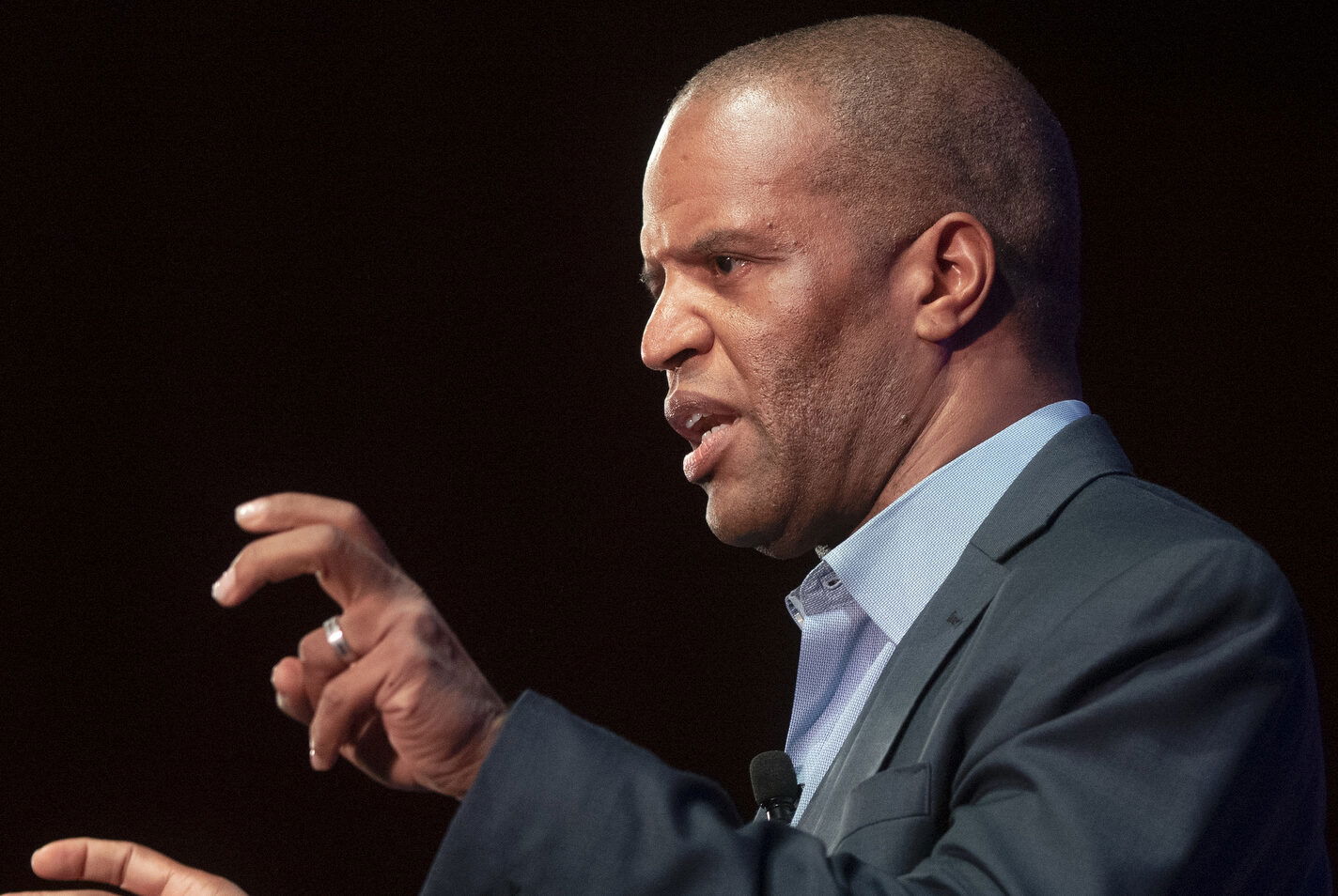
John Hope Bryant And Operation HOPE Raise Financial Literacy Awareness With Green Socks Day
Participants were recommended to take a selfie or video wearing green socks and then post on social media platforms using the hashtag #greensocksday.
John Hope Bryant’s Operation HOPE celebrated the end of Financial Literacy Month on April 30 with the Green Socks Day Challenge as a visible way to highlight the importance of financial literacy.
As a nationwide movement, Hope Bryant and stars of the corporate, sports, and entertainment world supported the Green Socks Day Challenge by wearing the vibrant socks, stating, “Put Your Best Foot Forward.” In collaboration with Operation HOPE, the initiative was supported by Financial Literacy for All (FL4A) to promote financialliteracy as a national priority and gain traction across state lines, empowering individuals, organizations, and communities to take necessary action by supporting financial education for all.
Participants were encouraged to take a selfie or video wearing green socks and post it on social media using the hashtag # GreenSocksDay. A quiz is also available for those interested in assessing their financial literacy. According to a press release, Operation HOPE will feature standout green sock wearers on Nasdaq’s Times Square Tower in New York City.
While the socks can be purchased at Walmart locations, other companies that support the initiative include major financial institutions such as US Bank, Truist, and Huntington Bank. Other companies on board include iHeartMedia, Delta Air Lines, MLB, MLS, NBA, NHL, NASCAR, Nasdaq, Shopify, OpenAI, and UPS.
Hope Bryant also received support from the U.S. government at the beginning of the yearly celebration. While meeting with U.S. Treasury Secretary Scott Bessent, the two longtime colleagues emphasized the importance of financial education being built into the fabric of American life, discussing ways to deepen the collaboration between the public and private sectors with efforts to expand access to financial tools and knowledge. “For too long, financial literacy has been treated as a luxury,” Secretary Bessent said.
“It’s a necessity, just like reading and writing. John and I have been aligned on this for nearly a decade, and I’m proud to stand with him this April and beyond.”
Beyond April, corporations, small businesses, and community organizations are encouraged to engage employees in the initiative by hosting financial literacy events and pushing financial literacy resources.
On May 1, HOMIE—a new company offering healthy home solutions for everyday families—officially launched nationwide. Committed to reimagining the modern American home, HOMIE is kicking off its services in Florida with affordable solar energy and weatherization options, targeting first-time buyers as well as middle- and low-income homeowners.
Supported by a leadership team with deep expertise in technology, adtech, and growth innovation, along with backing from a leading climate-focused financial institution, HOMIE was built to make energy upgrades more accessible and affordable to empower homeowners and help them achieve financial stability.
“We built HOMIE because rising energy bills are hurting families trying to stretch every dollar, the seniors living on fixed incomes, the parents choosing between their light bill and their groceries,” Travis Montaque, founder of HOMIE, said in a press release.
“HOMIE is here to change that. We leverage technology, AI, and local partnerships to deliver on a simple promise: healthier, more affordable homes—starting with solar.”
Research backs the initiative, highlighting the urgent need to address unhealthy living conditions. Studies show a 30% increase in mortality rates tied to poor home environments, making energy upgrades not just a financial solution, but a vital health intervention. Issues like mold, poor ventilation, and dust can trigger serious health problems such as asthma, and in extreme cases, can even be deadly for children under five.
Montague launched HOMIE with a goal to properly weatherize and insulate homes to make them more energy efficient and safer. The rising company provides a full-service platform that guides homeowners through every step of making their homes more energy efficient.
Starting with a personalized energy assessment to evaluate the home’s condition and identify areas for improvement, HOMIE partners with a trusted financial institution to help secure the best financing options, incentives, and solar tax credits, eliminating confusion and paperwork. Each customer gets a transparent view of their costs, savings, and how their monthly budget will benefit, all without technical jargon, hidden fees, or surprise expenses.
Now that it’s officially launched, HOMIE is looking to expand beyond solar and weatherization and introduce a range of Healthy Home upgrades and innovative technologies designed to help consumers create safer, healthier living environments.
Couple Who Built Tiny Treehouses To Rent On AirBnB Make Over $30K A Month
The married couple behind a thriving tiny cabin rental business opens up about their humble path to success.
A couple who began renting out rooms in their former Atlanta home now earns between $30,000 and $60,000 a month by hosting tiny cabins and treehouses on Airbnb in Upstate New York. Darrel and Patrice Maxam recall the days they had to book hotels for the weekend while renting out rooms in their Atlanta home.
“When we moved to Atlanta, we were really broke,” Darrel Maxam told Business Insider. “We literally spent all of our money on a down payment — we had $1,000 in our bank accounts.”
“I was hooked at that point,” Maxam said. “We had a barn in the backyard. I converted that barn to another livable space. Then, another year after that, I ended up building three more units. After the fifth unit on the property, we were generating roughly $15,000 a month.”
Maxam went on to quit his job at the Department of Aviation to pursue home rentals full-time through their company, Maxam Hotels.
In 2022, the Maxams launched their flagship project, Finger Lakes Treehouses, in the small town of Sodus, New York, about 33 miles east of Rochester, where they teamed up with Red Falls Timber to build five A-frame homes. Each tiny cabin has a kitchenette, a bathroom, air conditioning, and a private wood-fired hot tub that in total runs about $250 a night.
What cost the Maxams just $65,000 to build is now bringing in between $30,000 and $60,000 a month in rental income. It’s quite the success story coming from a couple who once put all their money into buying a home for $249,400.
“Everyone wants to rush and rush and race to do the largest project — and they don’t know what they’re getting themselves into,” Maxam said. “The only advice I have to someone starting out like me is to stay small enough, long enough, because soon enough you’ll be big enough.”
Melky Jean, Saint Sauveur 1972 Rum, And The Bold Reclamation Of Haitian Heritage
Melky Jean’s venture into the spirits industry is far from a capricious venture
Melky Jean’s Saint Sauveur Rum celebrates Haitian heritage, resilience, and the 1972 refugee story, a significant event in Haitian history that saw a mass exodus of Haitians seeking political and economic freedom.
This rum offers a nuanced narrative in honor of Haitian Heritage Month, serving as a powerful symbol of the Haitian journey toward independence and the indomitable spirit that defines its people.
As Haitian Heritage Month unfolds across the diaspora, a new spirit has emerged, one that seeks to transcend the typical narratives surrounding Haiti and offers a taste of its rich history and unwavering resilience: Saint Sauveur 1972 Premium 4 Year Rum. Founded by Grammy-nominated singer-songwriter Melky Jean, this is not merely another celebrity-endorsed libation. It is a thoughtfully crafted homage to Haitian heritage, embodied in a bottle that tells a powerful story of survival and the enduring spirit of a people.
Saint Sauveur Rum sets itself apart with its flavor profile—a smooth, smoky finish layered with deep oak, sweet caramel, and warm vanilla notes, underscored by hints of spice and cane sugar. This tantalizing blend is not just a liquid within a bottle, but a part of a larger, more profound narrative. Each 750 mL specialty bottle bears a powerful tribute to the Saint Sauveur ship, a vessel that ran aground on the shores of Pompano Beach, Florida, in 1972, carrying 65 Haitian passengers seeking refuge. This pivotal event, often absent from mainstream historical accounts, serves as the cornerstone of Melky Jean’s brand, a potent symbol of the Haitian journey toward freedom and the indomitable spirit that defines its people.
Melky Jean’s venture into the spirits industry is far from a capricious venture. She stands as a third-generation innovator, her path paved by the entrepreneurial spirit of her grandmother, a resourceful moonshiner who operated in the shadows of the 1940s, and her mother, a celebrated artisan of the traditional Haitian liqueur, Kremas.
Now, as the majority owner of her rum brand, Melky is not simply continuing a family tradition; she is forging her legacy, imbuing her creation with a deep sense of authenticity and a clear, purposeful vision.
The brand’s resonant tagline, “Taste the Heritage, Celebrate the Spirit,” encapsulates its core mission. It’s not just about the drink, but about the rich heritage and the resilient spirit of the Haitian people that it represents.
For Melky, Saint Sauveur 1972 Heritage Rum serves as a vital tool for storytelling, providing a direct counterpoint to the often-simplistic and negative portrayals of Haiti that dominate global media.
“So I think it’s essential for us as black people to tell our own stories,” she asserts, highlighting the critical need for self-representation.
Her presentations introducing the rum often begin with a deliberate exercise in historical awareness, “Have you ever heard of the Mayflower?”
The near-universal recognition of this iconic ship stands in stark contrast to the unfamiliarity that greets her follow-up, “Have you ever heard of the St. Sauveur?”
I hadn’t.
This stark contrast underscores the very essence of Melky’s endeavor.
“And I go, ‘Listen, it’s not your fault. This is my job to tell you a story that you’ve never heard of. So the St. Sauveur is the first ever documented Haitian refugee ship to land on the shores of Pompano Beach, Florida, in the year 1972.’”
This single event encapsulates a broader Haitian American story, one that profoundly resonates with the complexities of identity that Melky herself embodies. Born in Brooklyn, New York, to Haitian parents, she navigates the hyphenated reality of being both American and deeply connected to her Haitian roots.
“Being born in America, you’re technically what? American, yes. Right. Now, imagine you’re growing up in New York or New Jersey. You’re American, but your culture is Haitian. So my first language wasn’t English. It was French Creole.”
The very real duality often led to her feeling like an outsider in both worlds.
“To the Americans, I was one of those boat people, you know. And then to the Haitians, because I spoke Creole with an accent, I was a Jasper. I was an American. And so when I found, you know, I wasn’t Haitian enough. I wasn’t American enough, and I wasn’t Haitian enough. And so I had to find a space in everything that I’ve ever done just to find my own space.”
Saint Sauveur Rum becomes that very space, a tangible representation of this nuanced identity. The brand acknowledges and celebrates the multifaceted experiences of the Haitian diaspora, as well as the broader Black diaspora.
“This brand is more than just a drink—it’s an experience,” Melky explains with conviction. “It’s a reflection of my roots, my rhythm, and what’s been missing from store shelves.”
Melky’s commitment to authentic representation extends beyond the name and the poignant story of the Saint Sauveur. The brand’s visually striking identity, including the design of the bottle labels, was intentionally entrusted to a Black woman-owned company based in Chicago.
“The labels on the bottle are created in Chicago intentionally by a woman, a black woman. Very big for me.”
This deliberate choice underscores her unwavering dedication to fostering inclusivity within the industry and providing meaningful platforms for Black creatives. For Melky, the narrative of Haiti is inextricably intertwined with the broader tapestry of Black history and experience in the United States and around the world. Haiti is directly tied to one famous Midwestern city.
“The Haitian story is inextricably linked to the story of black people in America and around the world, as it can’t be told without Haitian stories.”
This connection echoes the significant, yet often understated, contributions of Black individuals to the very fabric of American history, such as Jean-Baptiste Point DuSable, a Haitian of African and French descent, who is widely recognized as the founder of Chicago.
DuSable’s pivotal role in establishing a major American city serves as a powerful reminder of the enduring impact of Haitian and Black individuals on the nation’s development.
The year 1972 carries a deeply personal resonance for Melky.
“And so in 1972, that also was the year that my mother came to the United States because there was a dictator…And that’s when you had the mass load of refugees leaving. They were seeking political and economic freedom. She wasn’t on the St. Sauveur, but she left Haiti in search of that freedom as well.”
Her mother’s journey, paralleling that of the Saint Sauveur passengers, underscores the enduring quest for a better life that has historically driven Haitian migration.
Melky’s entrepreneurial journey with Saint Sauveur Rum is also a profound act of self-investment. Reflecting on the often selfless nature of womanhood, she poignantly states, “If you always—as a woman, whether you invest in your relationships or you invest in your children, and you take that time for everybody else, you don’t take the time to pour into yourself. Yeah. And this is one of the first times in my life I’ve done it. And every time I decide to bet on me, it makes a difference.”
This understanding of the vital role of Black women in shaping movements and legacies fuels Melky’s desire to create a brand that genuinely represents and uplifts her community.
“Absolutely. Nothing without us is fine. Never, never.”
“And we as Haitians have been involved in so many pivotal moments in American history,” Melky emphasizes, broadening the scope of her narrative beyond the personal to the historical contributions of the Haitian diaspora.
“What I created isn’t just a Haitian rum. It’s a Haitian American rum. Because we have a lot more in common than they try to tell us.”
This powerful statement underscores her intention to build bridges and highlight the shared experiences and intertwined histories within the Black diaspora.
Melky is also intentionally challenging conventional perceptions of rum.
“When most people think of rum, they think about, you know, going out on vacation and having rum in Jamaica or Barbados. They don’t really look at rum as a player in the game. Right. Yeah. And what I’ve created is a rum that not only can, you know, make your pina coladas and your daiquiris. But both of my SKUs, you can add ice, and you can sip it.”
This deliberate positioning elevates Saint Sauveur Rum beyond a mere vacation beverage, presenting it as a sophisticated spirit to be savored and appreciated for its quality and the story it embodies.
“And when you’re sipping it, what I love to say is we celebrate the heritage. You know what I mean? And in that, we’re tasting the heritage and celebrating the spirit. Because the heritage is the Haitian heritage.”
Melky directly connects the sensory experience of enjoying her rum with the act of honoring and experiencing Haitian legacy.
While acknowledging the competitive landscape of the spirits market, she asserts, “It’s not oversaturated with people like me. It’s not oversaturated with stories like this one. And we deserve a space in that platform so we can show people what Haitian legacy really looks like, what Haitian royalty really looks like. You know, we are the kings and the queens of all of it.”
For Melky, the spirit in the bottle carries a deeper, metaphorical significance.
“Let’s talk about spirit, because there are good and bad spirits. And whether I don’t care if you come from Haiti, if you come from Cuba, if you come from Colombia, if you come from, you know, New Orleans, we talk about spirits. And this is a good spirit because what happens is a spirit. You take it. Right. And you put it inside and you drink it. Right. So now that spirit becomes part of you. As you drink this Haitian American rum, it is a rum that embodies resilience. It is a rum that is celebrating a people, and you’re taking it in.”
This imbues the act of enjoying Saint Sauveur Rum with a profound connection to the enduring strength and spirit of the Haitian people.
Melky also draws a powerful thread connecting her entrepreneurial journey to the legacy of the women in her family.
“My grandmother made moonshine. My mom, who came to the United States, had to find a different way to make money. So, what she would do is make crema. I like to say that my grandmother made clay. My mother makes crema, and now I make rum. Yes.”
The maven’s lineage of resourceful and determined women provides a robust foundation for Saint Sauveur Rum, rooting it in a history of innovation and resilience.
Saint Sauveur Rum, therefore, is far more than a premium spirit. It is a carefully crafted narrative, a taste of Haitian heritage and resilience, brought to life by the vision and passion of Melky Jean.
As Haitian Heritage Month provides a dedicated space for celebration and reflection, Saint Sauveur Rum offers a tangible way to engage with the rich history and enduring spirit of Haiti, inviting the diaspora and the wider world to raise a glass to a story of survival, strength, and the bold reclamation of a vibrant and vital legacy, echoing the foundational contributions of Haitian figures like Jean-Baptiste Point DuSable to the American landscape.
UAB Ditches Scholarship For Black Med Students After Trump Administration Cries Discrimination
The scholarship was created in 2013 in efforts to provide medical school tuition for Black students who maintained a 3.0 GPA and showed a need for financial assistance
The Herschell Lee Hamilton, M.D., Endowed Scholarship in Medicine, designed for Black medical students at the University of Alabama at Birmingham (UAB), was canceled after the Trump administration opened an investigation accusing it of being a “race-based scholarship” in February 2025, 1819 News reports.
On April 11, donors were alerted by the Office of Advancement and Strategic Initiatives that “UAB has made the decision to discontinue awarding the scholarship(s) and to return the scholarship funds to you.”
This followed a lawsuit from a conservative organization, supported by the Trump administration, that accused the scholarship, which targets African-American students, of being discriminatory.
The school received a letter from the U.S. Department of Education’s Office of Civil Rights (OCR) stating UAB and five other colleges were being investigated for “alleged impermissible race-based scholarships and race-based segregation.” The litigation was filed with the U.S. Department of Education’s Office for Civil Rights in late April 2025 by the Equal Protection Project.
This national organization opposes affirmative action efforts based on race. The same group, according to WDHN, also accused the University of Alabama’s Norton-Textra Endowed Scholarship for minority students in English of being discriminatory.
U.S. Secretary of Education Linda McMahon said the department “will not yield on this commitment” to “ensure universities are not discriminating against their students based on race and race stereotypes.”
Added the former WWE executive, “Students must be assessed according to merit and accomplishment, not prejudged by the color of their skin.”
The Hamilton scholarship was established in 2013 to provide tuition support for Black students attending medical school who maintained a 3.0 GPA and demonstrated a financial need. It started with donations from the Hamilton family and others. UAB chose the recipients every year.
“So for years, I’ve viewed UAB as a leader, a leading institution in the state that had some level of integrity and moral standing,” said Herschell Lanier Hamilton, son of the scholarship’s namesake, according to AL.com. “As it turns out, they have none.”
“They’re just another parrot parroting the same misguided racial nonsense and tropes and policies at the expense of deserving Black medical students, in this instance,” he added. “It literally is ridiculous and it’s unconscionable that you require an institution to divorce itself from a student scholarship that honors the work of somebody like my father, who wasn’t a controversial figure.”
Harlem Haberdashery To Celebrate Community’s Rich History At 2025 Harlem Derby
Harlem Haberdashery's 13th anniversary celebration will continue at this year's Harlem Derby
In celebration of its 13th anniversary, the Harlem Haberdashery is welcoming the community to slay in their finest derby looks for its 2025 Harlem Derby in New York City.
The return of the annual celebration was announced on the boutique’s official Instagram. According to the April 11 post, the 2025 Harlem Derby aims to “bridge the historic gap of Harlem’s past, recognizing the rich history of Mount Morris’ past as a race track.”
The Saturday, May 3, event promises day-to-evening festivities for attendees.
The 2025 Harlem Derby will celebrate Harlem equestrian history by honoring Marcus Garvey Park, the former trotting course once known as The Benson Family Farm. The race track extended from 120th to 134th Street, between Madison & Fifth Avenue. Additionally, the weekend festivities will tie in local retail and style with sports and family, featuring Harlem Haberdashery’s Bespoke Spirits and Bespoke Water. Drinks will be curated by Harlem mixologist and lifestyle connoisseur Habanero Papi.
Harlem Haberdashery, the retail expression of custom-made apparel company 5001 Flavors, is known for its definitive expression of today’s fashion and believes dressing well is an “expression of success.” Recognized for creating stylish looks for celebrities, recording artists, and sports stars for over two decades, the uptown boutique draws inspiration from the rich cultural history and distinctive style of the Harlem Renaissance, while adding a future-forward edge to its exclusive designs, according to its website.
The collections are exclusive to Harlem Haberdashery and feature head-to-toe ensembles pulled from the design staff’s clothing lines. The showroom also features collections and handpicked accessories from niche designers.
Haitian Heritage Month: 12 Inspiring Facets Of A Revolution That Forged Freedom
To honor that spirit, let’s examine 12 facets of this story that shine with resilience, beauty, and a profound impact that still resonates today.
As National Haitian Heritage Month unfolds, it’s a call to remember something truly extraordinary: the Haitian Revolution (1791-1804). This wasn’t just another fight for independence; it was a raw, visceral struggle for the very right to exist as human beings. It’s about people who, against every imaginable horror, carved out their destiny. To honor that spirit, let’s examine 12 facets of this story that shine with resilience, beauty, and a profound impact that still resonates today.
1. The Audacity of the Impossible Victory: Think about it: enslaved people, deemed property, rising and defeating a major European power. It wasn’t supposed to happen. The sheer audacity of their victory, against all odds, is a testament to the fundamental human desire for freedom that no amount of oppression can truly extinguish.
2. The Unwavering Stand Against Chains: When the Haitian Revolution succeeded, it wasn’t a partial freedom or a gradual easing of oppression. It was a complete, unyielding tearing down of the entire system of slavery in 1804. That absolute commitment to liberation set Haiti apart and sent a shockwave of possibility across the world.
3. Birthing a Nation on Their Own Terms: January 1, 1804. Mark that date. Haiti didn’t just become independent; it became the first free Black republic on Earth. Imagine the sheer weight of that moment, the audacity of declaring themselves a nation when the world saw them as anything but.
4. A Spirit Forged in Fire: The brutality of colonial Saint-Domingue is almost unimaginable. Yet, the spirit of the Haitian people didn’t break. It was tempered, made stronger. Their resilience, their refusal to let their humanity be erased, is a powerful lesson in the enduring strength that lies within us, even in the face of unimaginable darkness.
5. Weaving a New Culture from Fragments: Torn from their homes, stripped of their past, the Haitian people didn’t just survive; they created. Haitians took the threads of their African heritage, the impositions of European culture, and the whispers of the indigenous people. They wove something entirely new and vibrant – their art, their music, the poetry of Haitian Creole, the spiritual power of Vodou. It’s a testament to the human capacity to create beauty even from broken pieces.
6. Leaders Who Rose from the Dust: Look at Toussaint Louverture, Dessalines, and the other leaders. These weren’t schooled generals; they were men who rose from enslavement, their brilliance and courage forged in the daily fight for survival. Their strategic genius and unwavering commitment led a people to freedom against all odds.
7. A Spark That Ignited Others: Haiti’s victory wasn’t just for Haitians. It was a beacon, a shout across the world to all those who were oppressed, especially marginalized Black folks. It showed that the seemingly impossible could be achieved, that the chains could be broken. It fueled the dreams of liberation in countless other hearts.
8. The Unwavering Claim to Self-Rule: The Haitian Revolution wasn’t about a change of masters; it was about taking control of their destiny. They fought for the fundamental right to govern themselves, free from the dictates of colonial powers. That assertion of sovereignty remains a vital principle for nations worldwide.
9. Demanding the Rights That Should Never Be Denied: In their fight, the Haitian revolutionaries weren’t just asking for better treatment; they were demanding the universal human rights that had been brutally denied to them solely because of the color of their skin. Their struggle was a powerful early assertion of the inherent equality and dignity of all people.
10. Building a Nation on the Idea of Freedom: Haiti was born from the very idea of freedom and equality for everyone who called it home, regardless of their past. That foundational principle, though its realization has been a long and complex journey, remains a powerful ideal at the heart of Haiti’s identity.
11. The Strength Found in Unity: The revolution wasn’t fought by individuals alone; it was a testament to the power of unity. People from different backgrounds, different African nations, free people of color, all united against a common oppressor. That collective will, that solidarity, was essential to their success.
12. An Enduring Spirit of Creativity: Even after the revolution, even amidst the challenges of building a new nation, the spirit of creativity in Haiti has never been extinguished. Their art, their music, their stories – they are all a testament to a people who have found ways to express their resilience, their joy, and their enduring humanity, a direct inheritance from the revolution’s fight for self-expression.
As we honor National Haitian Heritage Month, let’s remember the Haitian Revolution not just as a historical event, but as a living testament to the power of the human spirit. It’s a story of unimaginable suffering met with unbelievable courage, of a people who, against all odds, dared to dream of freedom and then fought, bled, and ultimately triumphed to make that dream a reality. Their legacy continues to inspire us all.
‘Unprecedented Chaos’: National Urban League Responds To Trump’s First 100 Days in Office
NUL President Marc H. Morial: “His administration has upended the global financial system, alienated longstanding allies, and steered the United States rapidly toward autocracy.'
The National Urban League (NUL) has responded to President Donald Trump’s first 100 days in office with a list of policies and grievances that NUL President Marc H. Morial summarizes as “unprecedented chaos.”
“The first 100 days of President Trump’s second administration have been an unrelenting assault on civil rights, civil liberties, economic justice, the constitutional separation of powers, and the rule of law itself,” Morial said in a statement. “His administration has upended the global financial system, alienated longstanding allies, and steered the United States rapidly toward autocracy.”
Morial also criticized Trump’s appointed Cabinet members and staffers who he said embrace “conspiracy theories, bigotry, and racism” and his volatile, harmful financial policies.
“Since Trump’s inauguration, at least $9.6 trillion was erased from the U.S. stock market—more than half of that in just two record-setting days,” said Morial. “His administration has blocked at least $3 trillion in federal spending, defying court orders to unfreeze the funds that tens of millions of Americans rely on to keep a roof over their heads, food on the table, and access to lifesaving medical care.”
How The National Urban League Is Moving Forward With Resistance
Despite the frustration with the Trump administration’s first 100 days, Morial said the National Urban League has been building 100 days of resistance. Over the first few months of the new administration, the National Urban League has convened dozens of the nation’s top civil and human rights leaders for emergency strategy sessions to defend equal opportunity for all Americans.
Morial said the National Urban League has joined other Americans, businesses, faith communities, and advocacy organizations in filing more than 200 lawsuits challenging Trump’s actions as reckless, harmful, illegal, and unconstitutional. He makes it clear that the National Urban League has no intention of stopping.
“As we mark 100 days into this antagonistic and chaotic administration, we take hope and inspiration from the millions of Americans who continue to stand in defense of democracy, equality, and the rule of law,” Morial said.
Carla Hall To Share Special Family Recipe In New Children’s Book, ‘Carla And The Tin Can Cake Party’
'Carla and the Tin Can Cake Party' will be released October 14
Chef and television personality Carla Hall is releasing her new children’s picture book, Carla and the Tin Can Cake Party, to take readers on a trip South to visit her grandmother’s house.
According to a press release, the book “celebrates the joy of childhood, the bond between generations and the secret ingredient that makes the two magical.”
Carla and the Tin Can Cake Party will be released October 14. The book is published by Simon & Schuster through Denene Millner Books, a children’s book imprint, and available for preorder now.
In the book, young Hall and her sister Kim visit Granny and Doc’s house and prepare a special tea party, which takes a turn after Hall accidentally ruins her granny’s favorite quilt and famous pound cake. Fearing she ruined the plans for the tea party, Hall’s grandmother saves the day with a recipe for a special cake that contains a secret ingredient.
Hall won over the hearts of foodies during her run as a contestant on Bravo’sTop Chef and Top Chef: All Stars. She has also appeared on several Food Network shows, hosting gigs on ABC’s The Chew and Max’s Harry Potter: Wizards of Baking.
Hall launched her digital magazine, Sweet Heritage, this year to expand on her love for storytelling and food. Her acclaimed cookbook, Carla Hall’s Soul Food: Everyday and Celebration, takes fans back to her Nashville roots with recipes for comfort cuisine and soul food.
In her second children’s book, the master chef shares the special family recipe for a Lemon Ginger Tin Can Cake that readers can try out at home. To bring Hall’s story to life, Barbados artist Cherise Harris created illustrations highlighting the bond between grandparents and their grandchildren while adding a hint of mischief.