‘American Soul Star’ Finale Is Filming In Metro Atlanta – The Heartbeat Of The South
The American Soul Star finale is taking place in Stonecrest, Ga.
American Soul Star, a new singing competition exclusively for soul artists, will begin in Metro Atlanta on March 1.
The competition, which is being filmed as a multi-episode series set to stream on Tubi, will showcase soul singers from across the nation. In partnership with Atlanta’s premier urban radio station, V-103, American Soul Star aims to provide a platform for artists who embody the essence of soul music.
“We are beyond thrilled to provide this incredible opportunity for soul artists to showcase their talent on a national stage,” said Michael Harper, CEO of Avant-Garde Entertainment, Inc. “Soul music is the foundation of so many genres, and with American Soul Star, we’re ensuring its legacy continues by uplifting the next generation of soulful voices.”
American Soul Star is the first singing competition dedicated solely to soul music. It fills a gap left by mainstream talent shows that often focus on pop and country. The show highlights singers who bring depth, passion, and authenticity to soul and R&B.
The competition held live auditions in Stonecrest, Georgia. Fifty contestants were chosen at the beginning of the process. Only ten contestants advanced to the final round. The winner will receive a $50,000 grand prize, a record deal with Avant-Garde Entertainment, Inc., and a debut EP produced by Grammy-winning producer Zaytoven.
The finale of American Soul Star will take place at New Black Wall Street Market – Main Stage, 8109 Mall Pkwy, in Stonecrest, Georgia.
There is no confirmed premiere date for American Soul Star on Tubi, though the show will join a diverse lineup on the streaming platform. With a reported 80 million users, Tubi offers a wide range of television and film content.
In addition to American Soul Star, viewers can explore the platform’s “Black Cinema” section, which features a collection of classic and contemporary Black films.
Tubi has also become a hub for independent Black filmmakers. While the service is ad-supported, it provides access to a variety of films, ranging from low-budget guilty pleasures to critically acclaimed features.
Equal Justice Initiative Books Are Required Reading Beyond Black History Month
By knowing our own history, we empower ourselves
In recent years, efforts to scrub Black history from the education system have grown increasingly urgent for right-wing groups. However, African Americans don’t have to rely on the school system to learn or understand our past. We are resourceful and come from a culture of oral historians who have passed critical information down through generations. While oral history is valuable, documenting that history is essential. In 1989, Bryan Stevenson, an attorney and social justice warrior, founded the Equal Justice Initiative (EJI) to provide factual research and education on racial injustice to ensure the history around systemic racism and the fight against it is never lost.
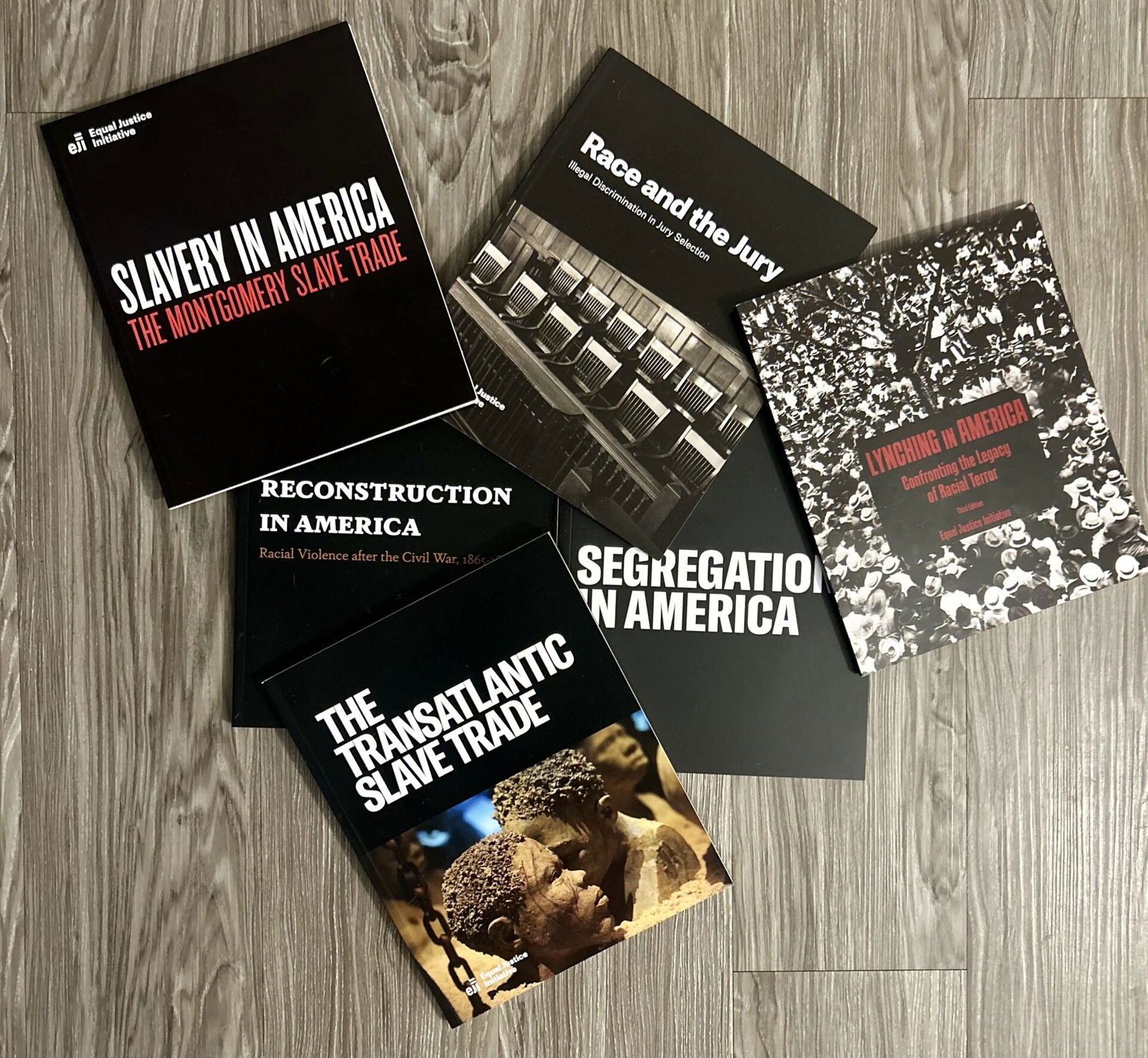
As we celebrate this last day of Black History Month, there is no better occasion to dive deep into Black Americans’ history and experiences and carry the learning beyond this honorific month. BLACK ENTERPRISE selected six insightful books from the Equal Justice Initiative that provide knowledge and context of Black historical events and facts. Readers can gain a deep understanding of the past and its ongoing impact on the present. Knowing our history empowers us to confront the current racial challenges.
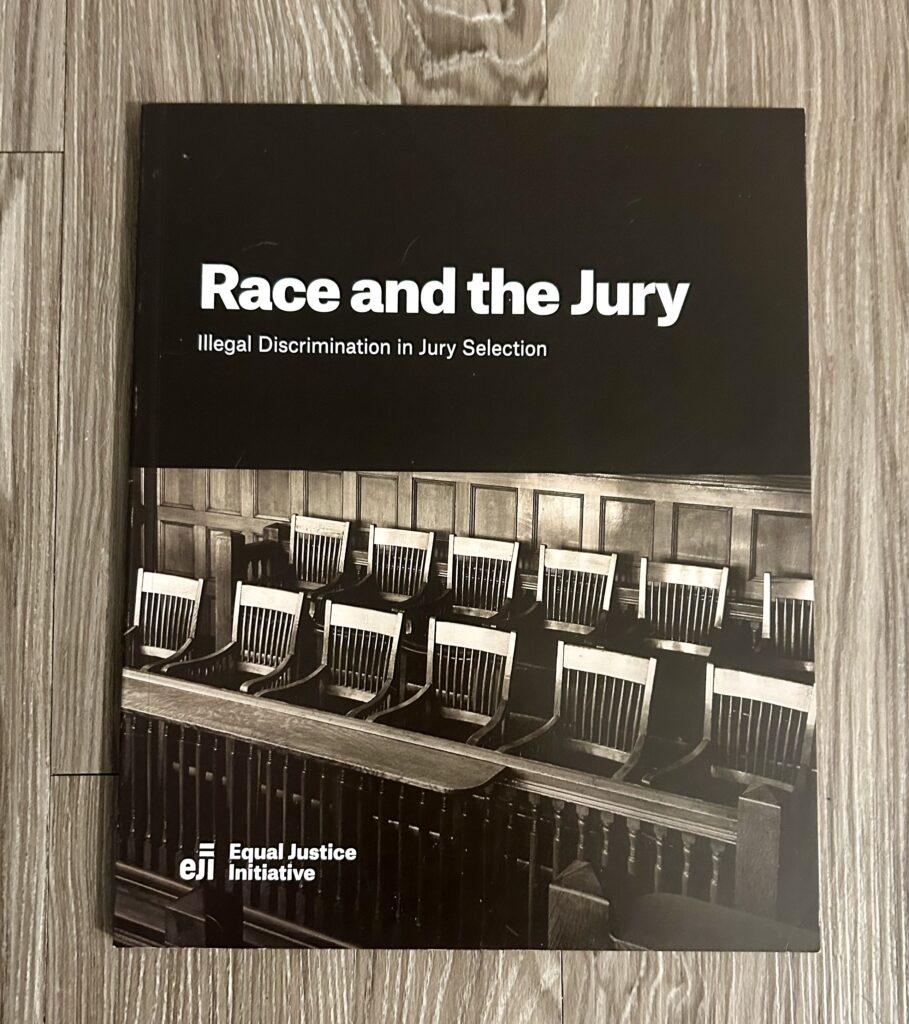
Race And The Jury
The Race and the Jury report prepared by the Equal Justice Initiative takes a long, hard look at widespread racial discrimination in jury selection in courtrooms across the U.S. legal system. The report outlines how Black individuals and other people of color are systematically excluded from participating in jury duty at different stages. This exclusion undermines the fairness of trials for marginalized people. Discrimination from the jury process not only weakens public trust but compromises the justice system’s integrity. The report emphasizes reforms that ensure diverse and representative juries.
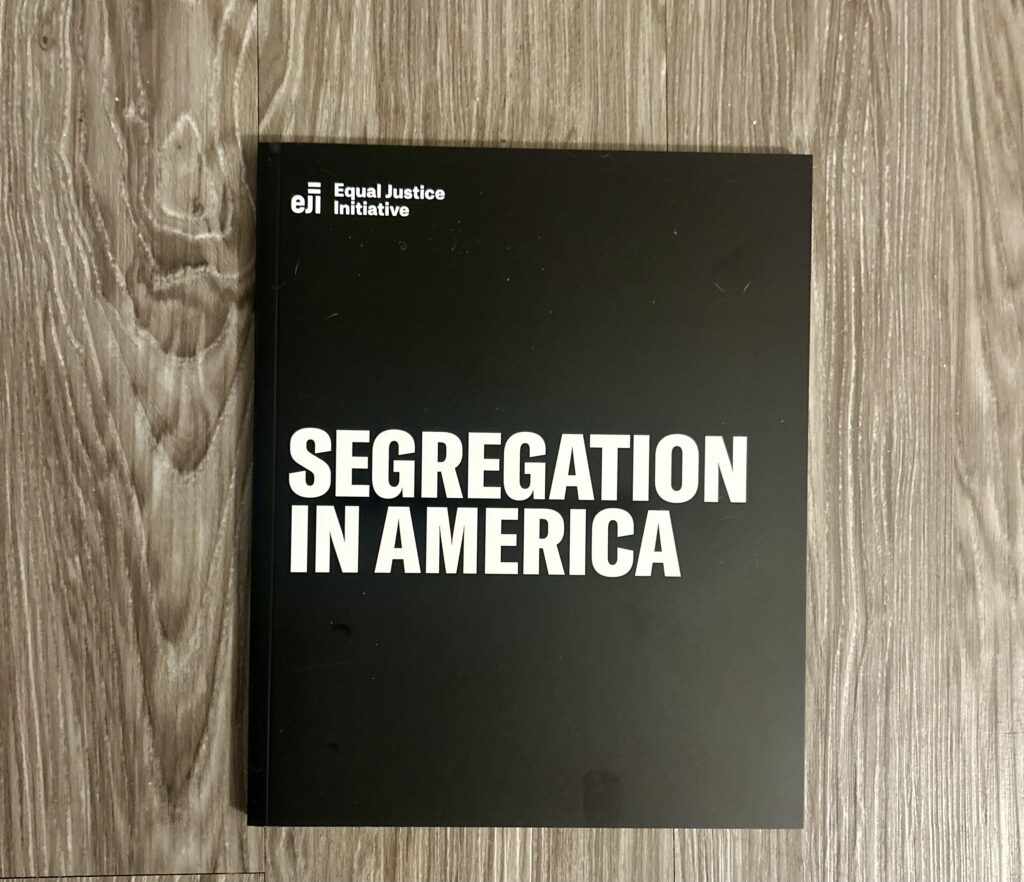
Segregation In America
Photo credit: Ahsan Washington
The Segregation in America report showed the resistance of many white Americans to the Civil Rights Movement. White people’s opposition to Black people having the rights due to them as outlined by Constitutional Law was well established and, in many cases, involved violence to uphold racial segregation and prevent progress toward equality. The Equal Justice Initiative stresses that acknowledging this large-scale resistance is crucial to understanding today’s racial disparities. Confronting this history is necessary to work toward a more just and inclusive society.
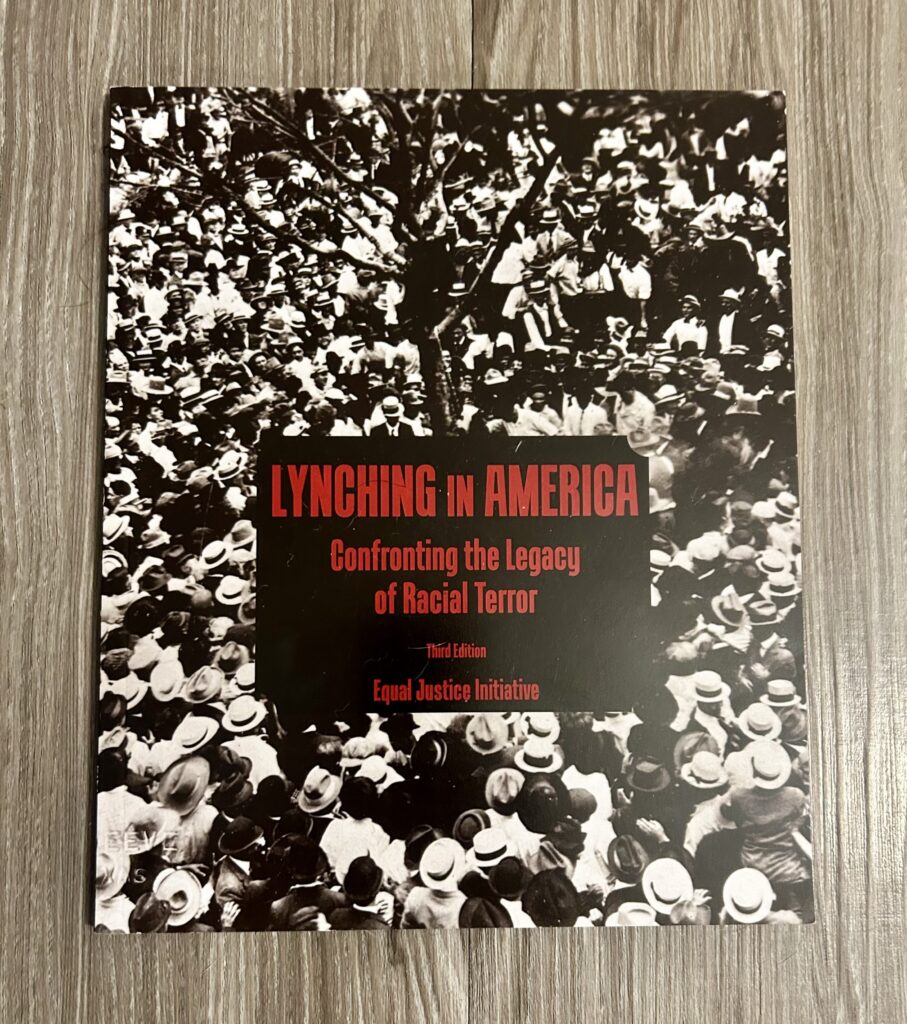
Lynching In America
Photo credit: Ahsan Washington
Lynching was a violent strategy used to intimidate Black citizens into accepting racial oppression and upholding segregation in the United States. The Lynching in America report lists over 4,400 lynchings that were racially motivated and took place between the Reconstruction Era and World War II. The report pays special attention to the overwhelming support for these horrific acts. They were a spectacle and entertainment for racists. Many of these murders were carried out publicly to terrorize Black communities and reinforce white supremacy. The in-depth report highlights the lasting impact of racial terror throughout the Jim Crow Era and its role in shaping racial injustice today.
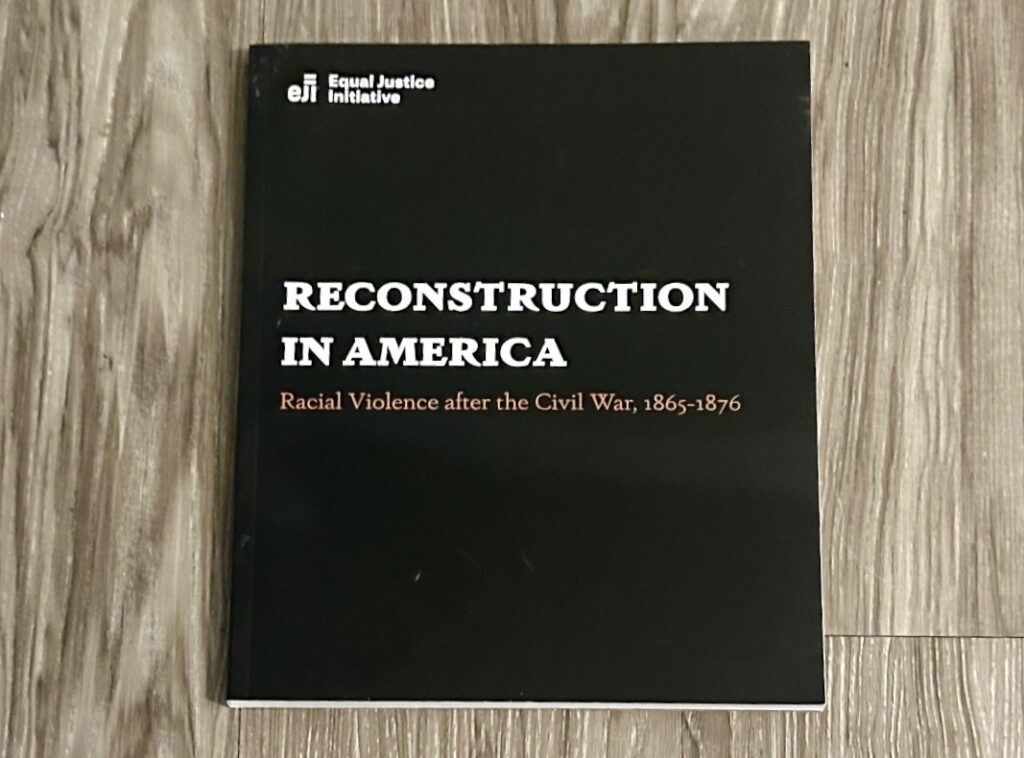
Reconstruction In America
Photo credit: Ahsan Washington
The Reconstruction in America report from the Equal Justice Initiative uncovers nearly 2,000 additional confirmed racial terror lynchings of Black people by white mobs, expanding our understanding of this violent chapter in Black history. It focuses on the 12 years after the Civil War, a time when white leaders fostered lawlessness and violence to establish a society built on racial inequality, white dominance, and Jim Crow laws. This period marked the beginning of a long-lasting legacy of systemic racism that still affects the country today. The report highlights the consequences of this era and the need for continued efforts toward racial justice and reconciliation.
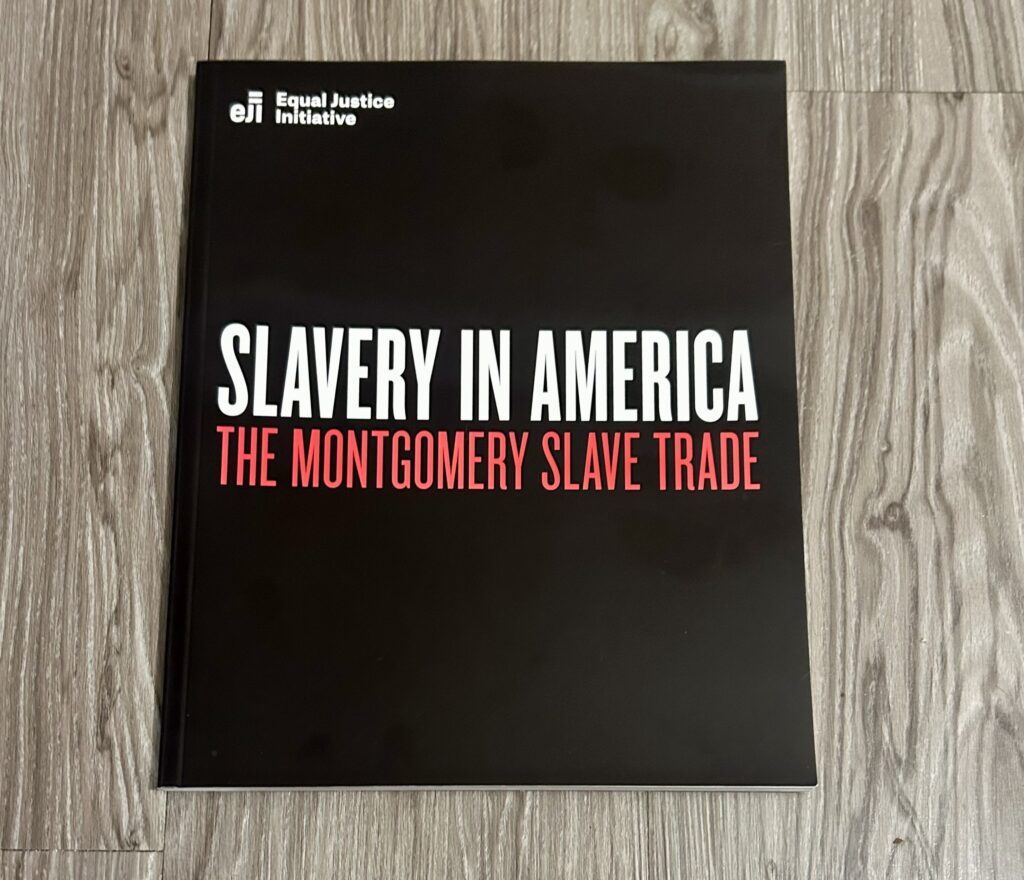
Slavery In America
Photo credit: Ahsan Washington
The book Slavery in America by the Equal Justice Initiative examines the horrific history of the transatlantic slave trade, where millions of Africans were kidnapped and transported to the Americas under brutal conditions. Around two million people died during the journey, and the enslavement of Black people helped build wealth and prosperity for many in the U.S. Montgomery was a region that participated in the slave trade, having been notorious for its slave market where the riverfront city auctioned enslaved people. The site of the Montgomery slave trade is a stone’s throw from Stevens’ EJI center. The Legacy Museum, dedicated to those who were lynched, is the site of a former slave warehouse.
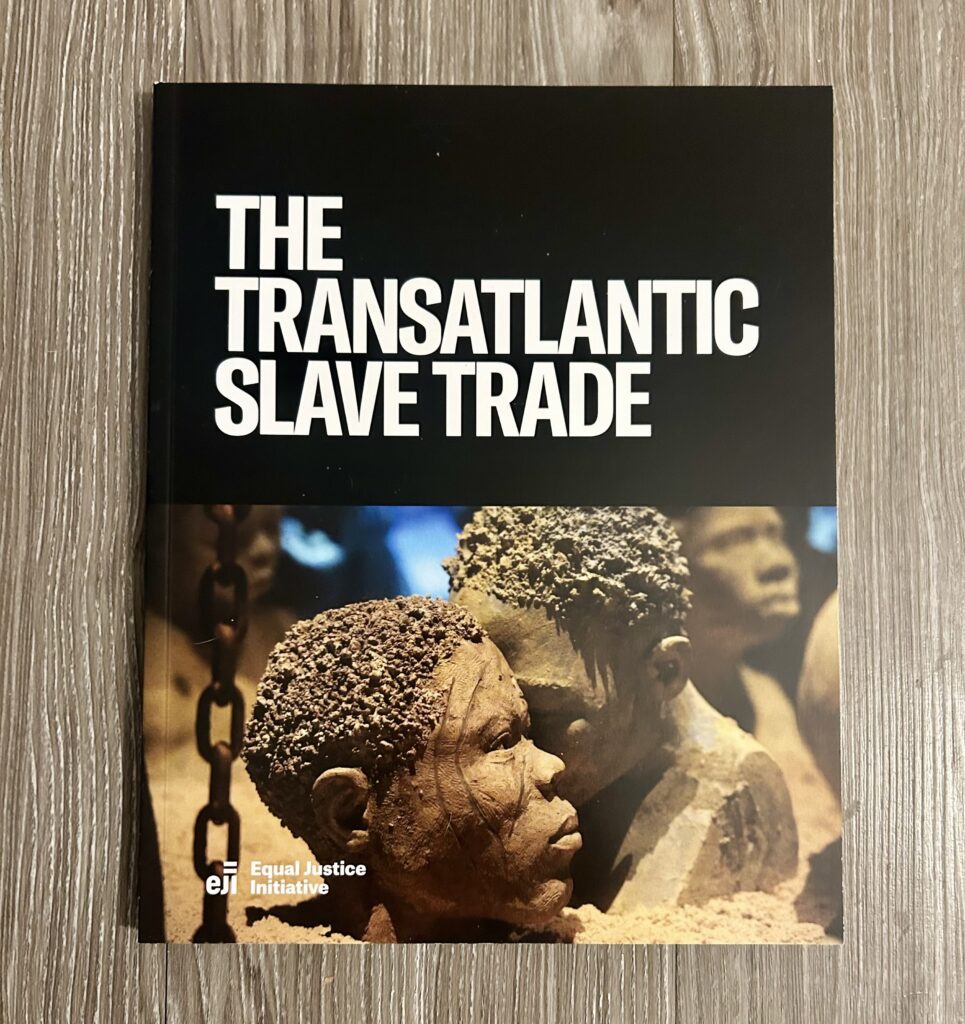
The Transatlantic Slave Trade
Photo credit: Ahsan Washington
From 1501 to 1867, millions of Africans were stolen, shipped across the Atlantic Ocean, and enslaved in the Americas. Africans forced into chattel slavery suffered separation from their families and cultures. Coastal cities in the U.S., such as New York, Charleston, and New Orleans, developed slave economies built on the exploitation and ownership of Black people. The Equal Justice Initiative’s report looks at the lasting economic impact of the Transatlantic slave trade and how it created wealth for Europeans and white Americans while also reinforcing a hierarchy informed by race. This dark chapter in history continues to shape racial disparities that persist in America today.
East Harlem Apartments That Overcharged Tenants $50K Will Return To Being Rent Stabilized
Twenty-one Harlem apartments will return to rent stabilization after being illegally overcharged for rent.
Twenty-one apartment units in East Harlem, where a landlord overcharged tenants by more than $50,000, will be reinstated as rent-stabilized.
An investigation by New York Attorney General Letitia James revealed that Emerald Equity Group, LLC, a real estate firm with 13 buildings in East Harlem, unlawfully deregulated rent-stabilized units and overcharged tenants, Patch reports. Along with restoring the deregulated apartments to rent-stabilized status, James demands that Emerald repay $54,799.66 to unlawfully overcharged tenants.
Court documents reveal that the landlord did not maintain tenants’ security deposits in separate accounts, as mandated by law. According to James, although the landlord has filed for bankruptcy, the buildings will be transferred to Emerald’s lender, who will ensure that the new owners are held to the same settlement.
“Emerald blatantly ignored rent stabilization laws, denying many New Yorkers access to affordable, reliable housing,”James said.
The apartment buildings with illegally destabilized rentals are:
203 West 107th Street
210 West 107th Street
220 West 107th Street
230 West 107th Street
124 – 136 East 117th Street
215 East 117th Street
231 East 117th Street
235 East 117th Street
244 East 117th Street
316 East 117th Street
322 East 117th Street
326 East 117th Street
1661 Park Avenue
As a result of the investigation, Emerald is legally required to reinstate the 21 apartments to rent stabilization within 60 days and refund the excess rent collected from tenants within 30 days. The landlord must also notify all affected tenants about the changes and set up separate accounts for security deposits within 30 days.
James stated that if Emerald fails to meet these deadlines, the landlord will incur a $500 daily penalty until each violation is rectified.
“By returning these units to rent stabilization and ensuring tenants are reimbursed for overcharges, we are bringing justice to the families that Emerald harmed and ensuring more fair and equitable housing for future renters,” James said.
Black Girl Vitamins Encourages Wellness With ‘Sisterhood In Self-Care’ Campaign
To prioritize self-care and wellness, Black Girl Vitamins coordinated an itinerary packed with fitness classes and educational webinars.
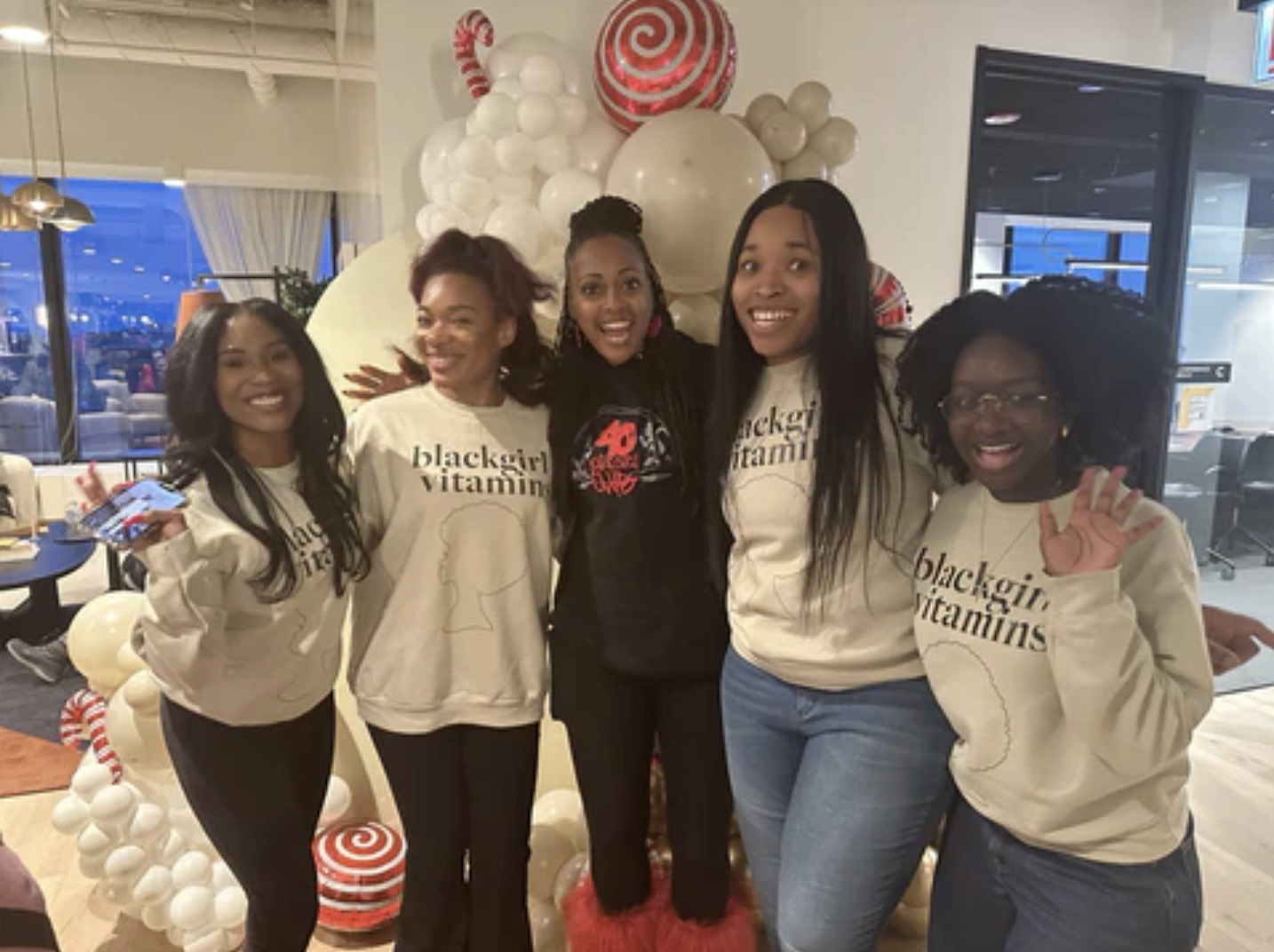
Black History Month has been a huge success for Black Girl Vitamins, the Black-owned health and wellness brand, which launched its nationwide “Sisterhood in Self-Care” campaign this February.
This year’s theme encouraged Black women to prioritize self-care and health education. According to a press release, “Sisterhood in Self-Care” flipped the “superwoman” narrative and promoted a lifestyle of wellness. Black Girl Vitamins coordinated an itinerary packed with fitness classes, educational webinars, and exclusive giveaways. Black women stayed active throughout the month with dynamic workout sessions led by Black women fitness instructors across the cities of Atlanta, Dallas, Durham, Detroit, and Chicago. Participants enjoyed raffles, free vitamins, and samples from other brands, including TGIN, Black Girl Sunscreen, BLK and Bold, and Aunt Jackie’s Curls&Coils.
As the Black Girl Vitamins’ Black History Month campaign addressed the prevalence of health disparities among Black women, it also celebrated the legacy of Black healthcare workers and medical pioneers. Licensed practitioners were tapped to steer discussions focused on critical health issues Black women often face, such as fibroids, PCOS, and vitamin and iron deficiencies. Attendees of the live educational webinars heard from medical professionals like Dr. C. Nicole Swiner, Dr. Standifer-Barrett, and Dr. Chinyere Okpaleke.
“The feeling we have is indescribable,” the company stated alongside a recap of this month’s campaign initiatives on Instagram. “From our entire team, THANK YOU, ladies, for showing up, showing out, and being present at every event we had. Thank you for getting your sisters, friends, moms, coworkers, etc., in the buildings.”
Black Girl Vitamins launched in 2021 with a mission to address the unique nutritional needs of Black women. The company offers a variety of nutritional supplements that support overall wellness, which includes skin, hair, and nail care; bone health, immunity, and vitality; iron deficiency; and more. Products include energy-boosting supplements, Vitamin D3, and Iron Gummies.
Join in for a final Black History Month fitness class, which will be held online on Feb. 27 at 6:30 p.m. EST.
Throughout Black History Month, any purchases made through the Black Girl Vitamins website above $60 will receive an exclusive “Sis Self-Care” Box, which includes free vitamin pouches, postcards spotlighting Black medical pioneers, and recipes.
Feds, Lies, And Payola: 3 Men Plead Guilty In ‘Soprano-esque’ Fraud & Bribery Scandal Uncovered At Newark International Airport
Dolphin, Wajda, and Delucia each face a maximum sentence of 20 years in prison for their crimes and fines of up to $250,000 per count.
A sweeping bribery and fraud scheme involving Newark International Airport, reminiscent of an episode of HBO’s critically acclaimed mob seriesThe Sopranos, has unraveled. Three men have pleaded guilty to wire fraud charges and honest services wire fraud. The Department of Justice-handled case highlights years of corruption in which bribes and kickbacks shaped lucrative business deals, robbing honest companies of fair opportunities.
Key Players and Their Crimes Edward Dolphin, 65, of Tomball, Texas; James Wajda, 59, of Cement City, Michigan; and Ronald Delucia, 70, of Wayne, New Jersey, each admitted their roles in the scheme. Dolphin and Wajda entered their pleas on February 19, 2025, while Delucia pleaded guilty on February 25, 2025. The charges were heard in Trenton federal court before U.S. District Judge Quraishi.
According to court documents, Dolphin, a former operations manager at United Airlines, operating out of Newark International Airport, used his position to award contracts in exchange for over $1.6 million in bribes and kickbacks from vendors. Delucia, a former CEO of a service company operating at the airport, played a central role in bribing Dolphin and other airline employees while participating in fraudulent invoicing schemes with Wajda, a COO for another airline contractor.
Dolphin’s Role: Trading Influence for Millions Dolphin’s influence as an Airport Operations Hub Vendor Manager and later Manager of Hub Business Partners gave him control over contract awards. Delucia’s company paid Dolphin up to $31,500 monthly—totaling over $1 million—to ensure favorable treatment. Dolphin also pocketed:
$70,000 for influencing a busing contract,
$278,000 for steering a snow removal contract, and
$262,000 for awarding an aircraft cleaning contract.
Dolphin’s actions secured over $1.6 million in illicit payments, underscoring how deeply corruption was embedded in the contracting process.
Wajda’s Fraudulent Invoicing Scheme As COO of a Des Plaines, Illinois-based company, Wajda orchestrated a separate fraud scheme with Delucia. In 2022, Delucia’s company falsely billed Wajda’s employer $150,000 for a “dispatcher” service that was never provided. Wajda ensured these invoices were paid and personally received $38,600 in kickbacks through a shell company.
Expanding the Web of Corruption Delucia’s involvement didn’t end there. He also admitted to bribing other airline employees — Alok Saksena, Anthony Rosalli, and Lovella Rogan — who helped his company win a $19.7 million restroom renovation contract in 2021. In return, Delucia’s company financed home renovations for the trio, including bathrooms, kitchens, and decks. Additional bribes included electronics, jewelry, and other valuables, with payouts totaling:
$539,000 to Saksena,
$276,000 to Rosalli, and
$409,000 to Rogan.
Statements from Officials Federal authorities condemned the actions of those involved.
“The defendants exploited their positions to enrich themselves while defrauding others,” said U.S. Attorney Caroline Sadlowski. “Their actions corrupted the fairness of our economic system. We will hold to account those who break the law to line their own pockets.”
“The schemes conceived and executed by these individuals are reprehensible,” added Acting FBI Special Agent in Charge Terence G. Reilly. “These individuals hoped their corruption would fly under the radar, but they are now being held accountable.”
Port Authority Inspector General John Gay emphasized the broader impact of the corruption, stating, “Blatant corruption like this erodes public trust and robs honest businesses of fair opportunities. This case demonstrates our commitment to rooting out fraud and protecting the systems that keep our region moving.”
What’s Next for the Defendants Dolphin, Wajda, and Delucia each face a maximum sentence of 20 years in prison for their crimes and fines of up to $250,000 per count. The sentencing dates are June 24, 2025, for Dolphin and Wajda, and July 1, 2025, for Delucia.
Acknowledgments and Investigation The investigation was a collaborative effort led by the FBI under Acting Special Agent in Charge, Terence G. Reilly; the Port Authority Office of Inspector General under Inspector General John Gay; and the U.S. Attorney’s Office. Assistant U.S. Attorneys Katherine Calle and Francesca Liquori of the Special Prosecutions Division in Newark handled the prosecution.
Impact and Broader Implications This case underscores the damaging ripple effects of corruption in public contracting. The schemes enriched the defendants, undermined trust in the system, and unfairly disadvantaged honest businesses. Authorities hope the outcome of this case serves as a warning to others considering similar acts.
For more information, visit FBI Newark or the Port Authority Office of Inspector General.
Federal Lawsuit Filed By Man Wrongfully Convicted Of Killing Black Chicago Police Officer
A federal lawsuit shines a light on the deep-rooted corruption within Chicago’s judicial system.
A federal lawsuit alleges that Chicago city and county officials enabled police officers to carry out a “wide-ranging scheme to manufacture evidence,” leading to the wrongful convictions of three innocent men for the murder of a Chicago police officer.
Alexander Villa, 36, filed the lawsuit nearly five months after a Cook County judge vacated his conviction and granted him a new trial, citing evidence that his rights had been violated, The Chicago Tribute reported. Villa endured eight years behind bars on a wrongful conviction for the murder of Officer Clifton Lewis before the court’s ruling.
“No one can pay Mr. Villa back for what he has been through, and Officer Lewis’ family may never find justice for their loss,” Jennifer Blagg, one of Villa’s attorneys, said in a statement. “And the city of Chicago taxpayers continue to pay for the CPD’s refusal to change a well-documented pattern of misconduct that goes back decades.”
It was last October when things got tense during a hearing at the Leighton Criminal Court Building when the Cook County State’s Attorney’s Office admitted to uncovering potentially exculpatory evidence that had not been disclosed to the defense, but opted not to pursue a retrial.
Villa was one of three individuals charged in the case, which has sparked a separate lawsuit and complete disarray within the state’s attorney’s office. Prosecutors had already dismissed charges against the other two defendants, Edgardo Colon and Tyrone Clay, who are now pursuing their own legal claims.
The lawsuit claims that police officers, with support from prosecutors, falsified evidence and withheld key information that could have proven Villa’s innocence after failing to force a confession. According to the complaint, this was part of an investigative unit called “Operation Snake Doctor,” which was assembled to target the Spanish Cobras street gang.
Lewis was working as a security guard at a West Side convenience store when two masked men fatally shot him. Misfiled evidence included an FBI cell tower analysis revealing that Villa was texting his girlfriend at the time of the shooting. Surveillance footage of the incident also showed no indication that either shooter was using a phone, according to the motion.
Villa was convicted and sentenced to life in prison, but in 2023, his attorneys filed a motion for a new trial, arguing that the state’s attorney’s office had uncovered evidence that should have been disclosed earlier by former prosecutors Andrew Varga and Nancy Adduci.
Varga and Adduci, who either resigned or were terminated, are named in the suit along with the city, county, and a number of police officers and investigators. While the lawsuits aim to seek justice for three wrongfully convicted men, there remain family and loved ones of Lewis who are still seeking answers into his tragic murder.
“I know you are disappointed, and the family is disappointed, but if there is not enough evidence, there is not enough evidence,” Judge Carol Howard said as she delivered her ruling.
Black-Owned ‘Down North Pizza’ Releases Cookbook Memoir To Shed Light On Prison System
Down North Pizza founder Muhammad Abdul-Hadi is providing hope through the pages of his cookbook, “We the Pizza: Slangin’ Pies and Savin’ Lives.”
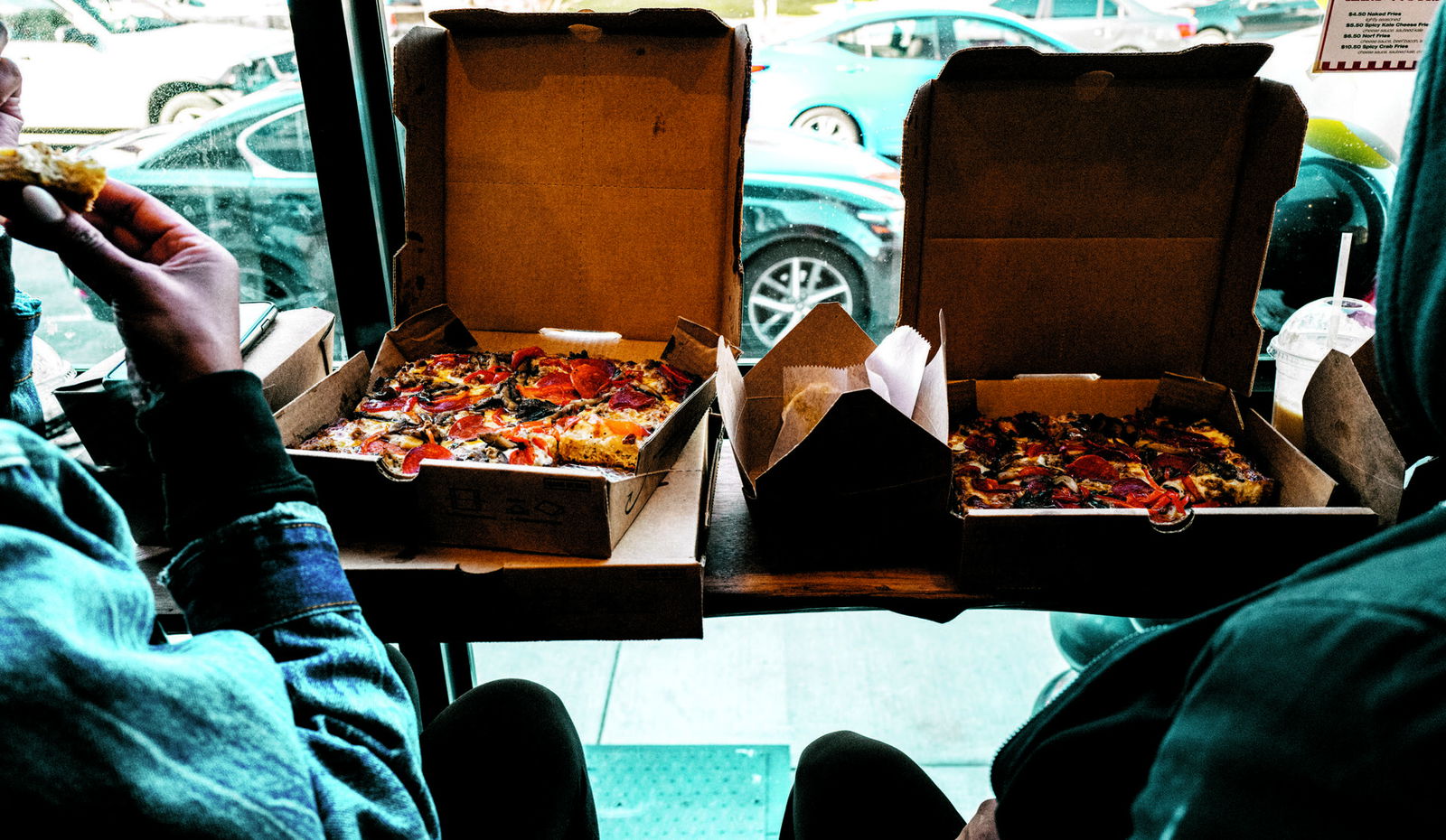
In North Philadelphia, Down North Pizza is bigger than a piece of Philly’s iconic square pizza. Founder Muhammad Abdul-Hadi created a North Star for hope through pizza slices when he opened the mission-led for-profit restaurant, Down North Pizza, in the Strawberry Mansion neighborhood in December 2020. Now, he is providing hope through the pages of his cookbook, We the Pizza: Slangin’ Pies and Savin’ Lives.
“I call it a memoir with some recipes,” he told BLACK ENTERPRISE. “It’s layered and has something in there for everybody. If you don’t care about the recipes and want to read some cool stories and see some photography, that’s there for you. If you want to dig into the recipes and make some bomb pizza, that’s there for you, too.”
Beyond the recipes and photos is information about the carceral system and its evolution. Footnotes throughout the cookbook take people on a journey of how the carceral system started with slavery and how it evolved over the centuries. The cookbook also sheds light on life after incarceration, with stories from former Philadelphia inmates.
“I always wanted to write a book, and when the opportunity presented itself, I didn’t want a traditional cookbook,” says Abdul-Hadi. “The book had to embody the brand and what we represent in the neighborhood. [I wanted to show] people eating pizza in the neighborhood. We call it ‘Pizza in the Wild.’ We want people to have a sense of the brand and what we represent.”
Down North Pizza: A Mission-Led Pizza Shop and Cookbook
“Strawberry Mansion is one of the most underserved communities in Philadelphia,” Abdul-Hadi said.“A lot of times, when people open up businesses in areas like this, it rarely benefits the neighborhood. I wanted to change that narrative.”
Down North Pizza focuses on the community. Adbul-Hadi is particularly interested in recidivism and giving people a second chance after incarceration. He knows firsthand the challenges and judgments that those who were formerly incarcerated face, because he was once in their shoes.
Inside his shop, no two pizzas on the menu are the same. The “No Betta Love” is a four-cheese pizza with “Norf” sauce. The “Break You Off” is made with lamb sausage, lemon ricotta, za’atar garnish, and garlic honey drizzle. While the pizzas are different, two ingredients stay the same: Abdul-Hadi’s love for community and the gift of second chances.
“I want to show the world we are not our worst mistakes. We can do things if given the right circumstances and thrive as well,” he says. “The brand exemplifies that, and when you come to the shop, you get to see all of that tenfold because that was very important to me.”
Money from every purchase — from the cookbook to the pizza — is recycled back into Strawberry Mansion through the pizza shop and Abdul-Hadi’s foundation, Down North Foundation.
“We have different initiatives that provide direct aid to individuals in need. We build our initiatives off necessity.”
One initiative he is proud of is “Protect Your Crib,” which assists people in danger of losing their houses to delinquent property taxes. The Down North Pizza team paid delinquent taxes for nearly a dozen people through the foundation, which also assisted residents in enrolling in a program that halted property tax increases for 10 years.
“Our biggest thing over here is the impact,” Abdul-Hadi said.
Michael Jordan’s Love Letter To His High School Sweetheart Valued At Over $12K At Auction
Love letter shows that Michael Jordan has game on the court, and with the ladies.
Micheal Jordan’s love letter to his high school girl is up for auction. The handwritten letter listed on the 2025 Lelands Winter Classic Auction currently stands at over $12,000. In the handwritten letter to his former girlfriend, Laquetta Robinson, Jordan tells his former sweetie that she will have to take a backseat to basketball.
In a letter dated May 20, 1981, the future basketball legend writes:
“Laquetta, you are my whole life next to basketball. Please don’t get mad about that statement. You are my whole life, but you can’t have basketball, ” the letter posted on Lelands.com says.
The love note shows the mogul’s romantic side and his commitment to the game. Jordan tells his former girlfriend of his plans to make basketball his career, and he promises her that he will make extraordinary strides in the sport.
A year later, the future legend won an NCAA championship as a member of the UNC Tar Heels. In 1985, he won the NBA Rookie of the Year award. He went on to earn six NBA titles as a star player for the Chicago Bulls. The former shooting guard was named MVP five times and won two Olympic gold medals. Jordan also holds the NBA record for career playoff scoring average at 33.4 points per game. In 2009, the Naismith Basketball Hall of Fame inducted the 14-time all-star.
This isn’t the first time Jordan memorabilia has made big bucks at auction. In May 2020, Iconic Auctions sold a 20-page love letter he wrote to another former girlfriend, Amy Hunter, for $25,703. Last year, a collection of six Air Jordan sneakers worn by the legendary player snagged $8 million at auction. In 2022, Jordan’s jersey from Game 1 of the 1998 NBA Finals sold for $10.1 million, making it the most expensive memorabilia ever sold at an auction.
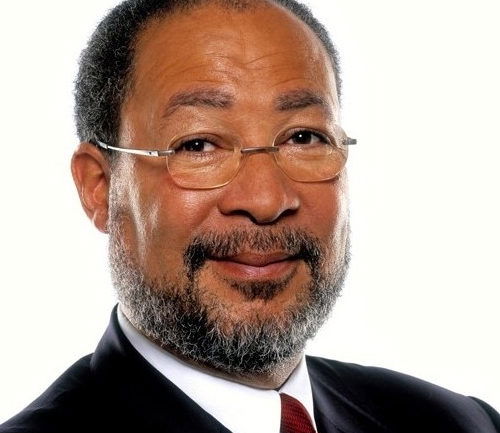
Dick Parsons: A Tribute To A Man Of Principle And Honor
Dick mentored young people, and took a special interest in younger, aspiring Black men and women.
Written by Marc Feigen
As the New York and American business communities mourn the passing of Richard “Dick” Parsons, Feigen Advisors also mourns the loss of the chairman of our firm’s Advisory Board and our firm’s first friend. In our founding years, Dick provided invaluable seed capital: his good name. Dick introduced our young firm to the Fortune 250. He counseled all our clients, taking a special interest in helping newly appointed CEOs. And he counseled me. Our thoughts and condolences are with Laura Parsons and their children and grandchildren.
Dick was not just calm under pressure; he grew calmer as the pressure rose. His calm brought calm to others. His incisive mind brought clarity to the complex. His spoken word was magical, often with a convincing and unexpected dimension. At 6’4”, most everyone looked up to him; with his James Earl Jones baritone, everyone listened to him. With his big and warm smile, the glint in his eye, and a fist bump, he was your friend.
Dick ran to the fire. Savings & Loan crisis? Dick is chosen to run the Dime Savings and Loan. The largest failed merger in history? Dick is asked to be CEO of AOL-Time Warner. The owner of the LA Clippers ridicules his players with ugly and racist remarks? The NBA calls Dick off the bench to lead the team.
His greatest legacy was saving Citigroup from insolvency. “Marc,” Dick said to me in an elevator bank, “we have got just six weeks. And I don’t know if we can make it.” The White House had just asked Dick to become chairman of Citigroup as the financial crisis reached its gravest moment. Dick knew there were other leaders the President could have chosen with a deeper combination of financial, regulatory, or restructuring expertise to lead Citi. But President Obama chose wisely. By agreeing to lead Citigroup — the failure of the $3 trillion bank could have caused an economic depression -– Dick’s selfless example bred selflessness, just as his calm bred calm. By force of will, he got bankers and regulators to compromise. He replaced many of the Citigroup board of directors. He directed the work of the CEO. He set the goals, found common ground, and dismissed those who protected their own positions.
While at law school, Dick finished second in the United States in the national Moot Court competition. That might have been the last time he came in second. The Dime was saved; Citigroup survived and grew again; he sold the Clippers to Steve Balmer. When the activist shareholder Carl Icahn held a news conference on the roof of St Regis announcing his choice to replace Dick as CEO of Time Warner, a showy affair attended by hundreds (I was there), Dick later walked over to Icahn’s office to meet. “Carl,” he said. “Nice party. But you just don’t have the votes. I have the votes.” On another visit, it happened to be Carl’s birthday, so Dick brought in a birthday cake. Carl discovered that Dick did have the votes. Carl made a deal and went away. (But Dick Parsons did sing him Happy Birthday.)
When I founded Feigen Advisors, I asked Dick to chair our advisory board. He said, “come by my office”, which I did, bringing our business plan. Low-volume jazz played in the background; a large Bugs Bunny sat by his desk overlooking Central Park. He read our business plan. Putting it down and pointing to me, he said, “Clint Eastwood.” Pointing to himself, he said, “Morgan Freeman.” Pointing to the two of us, he said, “Million Dollar Baby.”
When meeting our firm’s clients, he would tell them, “The CEO has only one natural predator. The Board.” He would charge our new CEOs to work toward their legacy from day one. He would tell our firm’s clients: “You have only two jobs as CEO. Leave your company in great shape and in good hands.”
Dick told stories like Lincoln told stories. Here are a few:
“One year, my CFO said we could not sign the financial statements, which the CFO and CEO are required by law to do. I knew that if we did not sign, we would go bankrupt. And so, I signed.”
Invited to dine with Happy and David Rockefeller at their home on the Hudson River, Dick picked up the finger bowl and started to drink it. “I thought it was soup! We did not have finger bowls in the Bronx.”
As Chairman of Citigroup, he volunteered to tell Donald Trump that the bank was pulling his loans. “So, I walked over to see The Donald” (Dick liked to visit people in their offices or ask people to “come by his office” -– recalling a time when New York leaders would visit each other to show respect). “I told Trump we are pulling his loans. Trump said, ‘You can’t do that!’ I said, ‘I just did’.”
After his first day of work as CEO of Time Warner, he came home and asked his wife, “Well, I have done that job now. I have nothing more to prove. Can I quit now?”
He called Citigroup the “land of the perfect question.” If you didn’t phrase the question just right, you would not get the answer. When he asked in the crisis, “Do we have collateralized debt obligations (CDOs)?” he was told, “No, sir!” Only later did he learn that Citigroup had billions of dollars of leverage on another kind of subprime mortgage security; it just wasn’t a CDO.
The moving obituaries about Dick capture his work as a CEO. But in his less visible boardroom leadership at The Estee Lauder Companies Inc., Lazard, CBS, Citigroup, and others, he was often the director who resolved disagreement, perhaps with an especially logical insight that caught the Board’s attention and brought people together. His hand was always raised, whether to join or lead a special committee or to have a particularly tough face-to-face meeting. He worked the telephone between board sessions — as he would say, “leading not from the front -– that’s the CEO’s job, but from the middle.” (He published some of his advice in the “Board’s Quiet Revolution,” a 2014 article we wrote in The Harvard Business Review.)
Dick was reserved and even stoic about his illness, but when I suffered from long-COVID, he knew when I was doing better and when I was not. He was genuinely pleased that I would get better, even as we both quietly knew the prognosis for him was not good. He talked a lot about his wife (“When Carl Icahn called me names,” I said, “Hold on, Carl. Only my wife is allowed to say that!”). He had the proud Dad look when discussing his children, set up his daughter in a bookstore, and loved being a grandpa.
He had the best client list of any lawyer in New York, the world’s legal capital. Estee Lauder herself, David and Happy Rockefeller, Ronald Lauder, and Shari Redstone were among his many leading clients. His clients became his friends, and he stood by them. Shari texted me last evening about Dick, “He was so beyond amazing: special, intuitive, caring. He had it all. I never wanted anyone by my side more than Dick.”
When Ron Williams and I interviewed Dick for our research on The CEO’s Guide to Retirement, here is Dick: “I counsel retiring CEOs to give back. As citizens, we owe back to our society. We have to support the platform. In America, so much of what makes things work is volunteer activity rather than government-directed or commercial activity. Being an overall good citizen is being engaged in civil society and helping manage the allocation of society’s bounty.” Dick mentored young people and took a special interest in younger, aspiring Black men and women.
He was chairman of the Rockefeller Foundation, chairman of the Apollo Theater, co-chair of the Smithsonian National Museum of African American History and Culture, chairman of the Jazz Foundation of America, trustee of the Museum of Modern Art, chair of The Partnership for New York City, member of the board of the World Trade Center Memorial Foundation, and a member of the Commission of Presidential Debates.
He invested in Harlem, re-opening Minton’s, the historic Harlem jazz playhouse where bebop was created, and opened Cecil’s next door to Minton’s, serving African-inspired cuisine. One was lucky to get a table. He had a vineyard, too, and was generous in giving away prized vintage bottles of his well-regarded Il Palazzone, a Tuscan Brunello, at Christmas. Many urged him to run for Mayor of New York.
Dick Parsons deserved his surname. Widely generous with his impact and privately generous with his time, Dick achieved for himself what he told young people: “Be the one others admire.” He told stories, not sermons, but those of us lucky enough to be mentored by him, although we knew we could never be like him, took inspiration from Dick to act with courage. We learned when to confront and when to finesse and to always think and speak with precision. Dick’s life and his work share the way to navigate life’s toughest terrain: with courage, with intelligence, with resolve, with balance, and holding true to an ethical compass.
Marc Feigen serves as CEO of Feigen Advisors in New York City.
Viral ‘Wide Neck’ Miscreant Sends Nudes Of A Mother To Her Children
Charles "Wide Neck" McDowell has another mugshot to add to his viral collection.
Charles Dion McDowell, known online as the viral “Wide Neck,” character is facing criminal charges for allegedly sending explicit images to minors, TMZ reported.
McDowell is accused of sending a 13-year-old boy and a 16-year-old girl explicit photos as well as videos of their mother. The images were also sent to the victim’s mother and another unidentified person. Charges indicate the transmission of the images occurred multiple times. The subject of the sexually suggestive content did not consent to its distribution.
The incident is serious enough to elicit federal charges, including “felony transmission of nude images without consent, electronically furnishing obscene material to a minor, and making harassing phone calls,” according to the police report.
Charles “Wide Neck” McDowell, the viral internet star known for his unusually large neck, has been arrested in Cherokee County, Georgia on multiple felony charges involving a minor.
The Cherokee County Sheriff’s Office in Georgia took the suspect into custody on Feb. 19. Due to the involvement of minors, no names or further details have been released.
McDowell, known as “Wide Neck,” gained internet fame for his unusually large neck, which has been compared to the size of a small tree trunk. The viral figure is no stranger to public attention or legal trouble.
His notoriety began in 2018 when he was arrested in Lee County, Alabama, for attempting to elude police. His mugshot went viral, drawing widespread attention online.
McDowell was charged with eluding law enforcement and reckless driving. After posting a $57,000 bond, he was released from jail.
In 2022, he was re-arrested in Escambia County, Florida., for fleeing and eluding police, as well as possession of meth and cocaine, Fox 5 reported.
After entering the ranks of internet virality McDowell went on to appear on multiple YouTube shows. He showed off the strength of his abnormal neck, took viewers along for his first chiropractic appointment, and juxtaposed his body parts with others with smaller necks.
There has been no reported court date or bond set for McDowell.