Ndamukong Suh, NFL, Finance Podcast, SIAC, brawl

Knuck If You Buck! Massive Fight Erupts At Tampa Bay Football Classic With 27 Players Suspended

The fight occurred during the spotlighted rivalry game that took place at an NFL stadium.


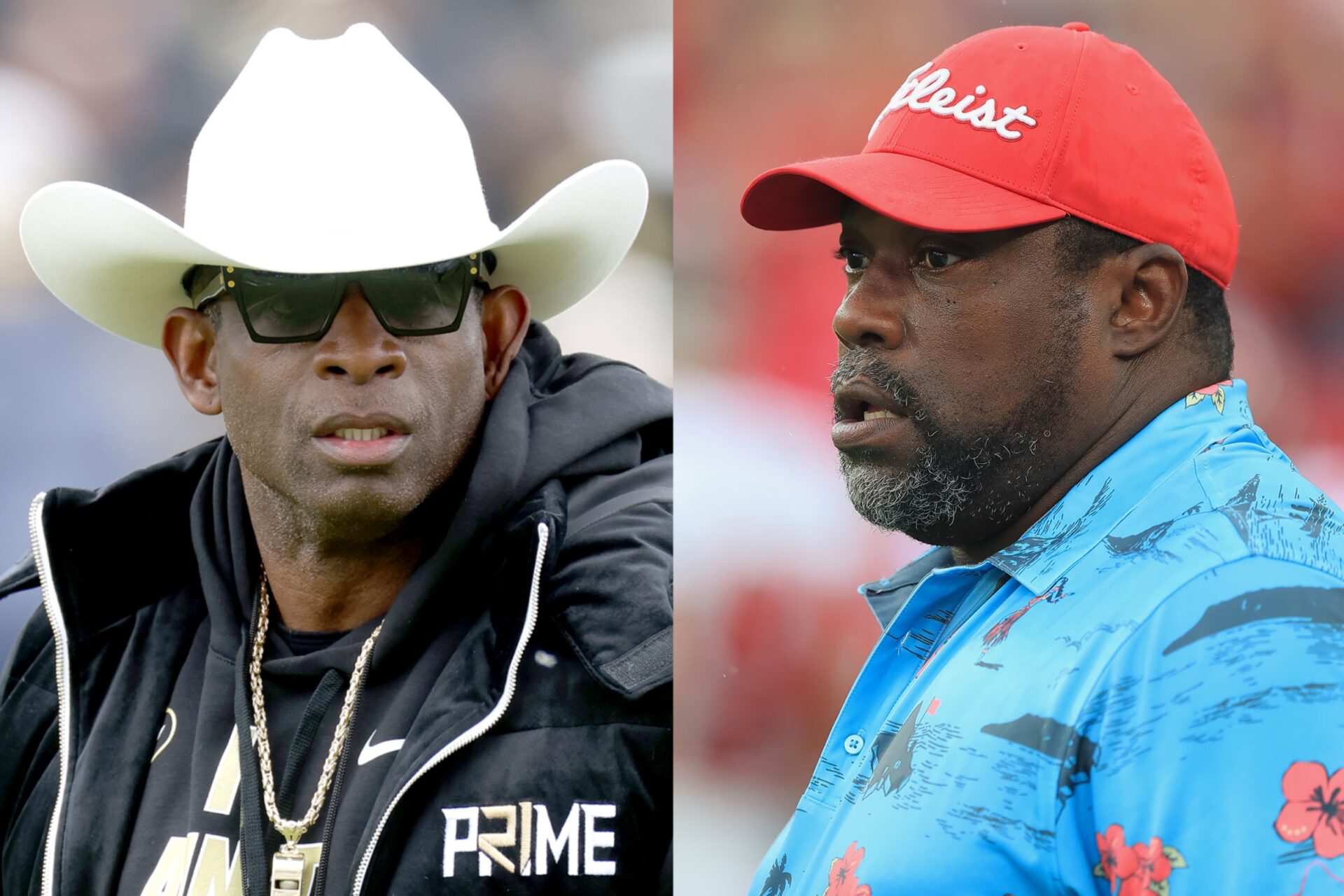
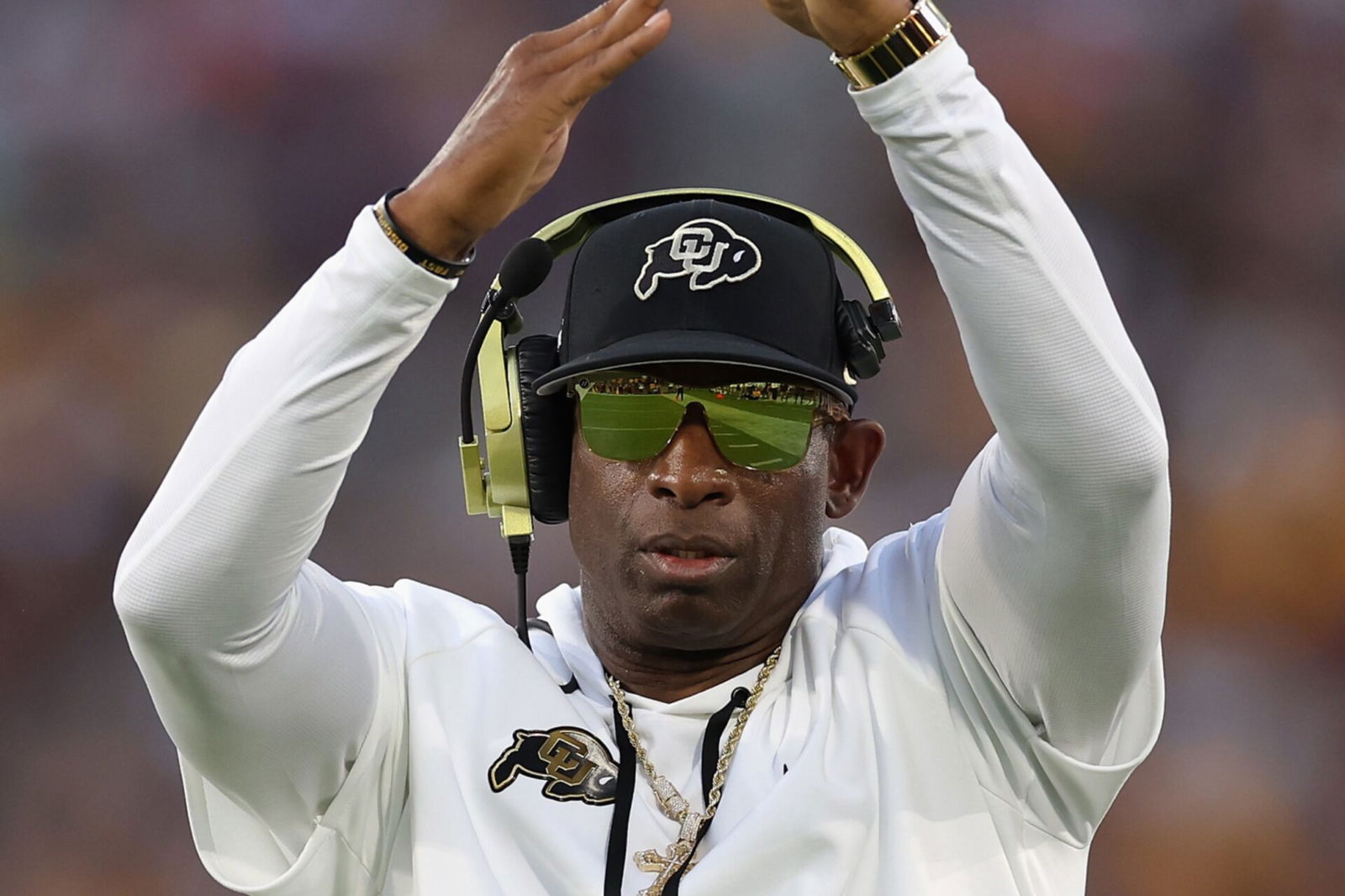
A massive fight occurred during the Nov. 8 HBCU football classic between Bethune-Cookman and Grambling State University.

Both the Bethune-Cookman Wildcats and Grambling State Tigers traveled to Tampa Bay to compete at Raymond James Stadium. The Tampa Bay Football Classic was meant to spotlight the two HBCU teams at a grander venue usually reserved for NFL matchups.

However, chaos erupted as both teams returned to the field after halftime, with tensions sparking physical blows that even left the coaching staff injured. According to HBCU Gameday, officials had to eject several players before the game could resume.

However, the all-out brawl left the Southwestern Athletic Conference (SWAC) with no choice but to swiftly discipline the many players involved. The result, issued Nov. 10 after an investigation by SWAC officials, left 27 players suspended following the shocking incident.

From the Grambling football roster, 18 players received suspensions, with nine from Bethune-Cookman also facing a similar fate. Of the many players punished, three faced a double suspension for their involvement. The football players must sit out for two games as their seasons resume.

Furthermore, the heightened violence prompted the SWAC to impose fines against the two universities. Grambling State will have to pay $40,000 for its players’ involvement, while Bethune-Cookman will pay a $25,000 fine.

SWAC Commissioner Dr. Charles McClelland expressed the conference’s disappointment with the players’ behavior.

“We’re extremely disappointed by the events that transpired during halftime of the Bethune-Cookman at Grambling State football game,” McClelland said. “Acts of that nature have zero place in the Southwestern Athletic Conference and intercollegiate athletics. The Conference Office has and will continue to enforce a zero-tolerance policy for all acts deemed to be unsportsmanlike and contrary to the high standard of good sportsmanship we expect.”

Both teams’ coaches uttered similar apologies on behalf of their squads. While Grambling State did take home the rough victory, the coach, Mickey Joseph, issued an apology for his and his staff’s own responsibility in the matter.

 “I just want to apologize to the SWAC and to Bethune-Cookman University for what happened,” Joseph said. “That’s not who we are at Grambling State. We have to be better. I have to be better. My staff has to be better.”

Immediately after the win, Joseph defended his team in some controversial post-game comments. Following backlash, Joseph retracted his words, emphasizing that the fight did not represent Grambling’s values.

“It was emotional,” Joseph continued. “But at the end of the day, we represent something much bigger. Grambling has always stood for discipline, respect, and pride. We’ll take our punishment, and we’ll learn from it.”

Coach Raymond Woodie of Bethune-Cookman also issued a statement. He remarked that one of his assistant coaches was struck during the violence, noting how the tension escalated too far. The coach asserted that the competition should remain in gameplay, not in violence against fellow HBCU football players.

“We preach discipline and integrity,” Woodie said. “We can compete as hard as we want between the whistles, but when the game stops, that stuff has to stop, too. That’s not just about Bethune-Cookman — that’s for all of us in the SWAC.”

In the aftermath, Coach Joseph says that they will take the punishment and learn from the ordeal, hoping to “handle it internally” as well to prevent further brawls.

RELATED CONTENT: Elevating Your Excellence: Thelma Golden Is At The Forefront Of Black Art And Culture

La Toya Jackson, illness, doctors,

La Toya Jackson Sparks Concern After Sharing Cryptic Video From Doctor’s Visit

The 69-year-old singer kept a positive tone in her message to fans while prompting an outpouring of concern and support online.


La Toya Jackson’s latest social media post has fans worried after the singer shared a brief video update from what appeared to be a medical appointment. The 69-year-old artist took to Instagram over the weekend, recording herself inside a doctor’s office.

“Hi guys, I hope everyone’s doing well,” she said in the clip. “I’m here at the doctor again, so I’m hoping that everything goes well with me, all results are good.”

Wearing a bright orange hat, a matching scarf, and oversized black sunglasses, she ended the short video with a smile and a cheerful send-off, “Have a great day.”

Despite her upbeat tone, she didn’t specify why she was visiting the doctor or what condition she might be monitoring.

In the caption, Jackson maintained her signature optimism, writing, “Wishing you guys a fun filled lovely weekend with much joy!!! Sending love and light to you all! Please stay safe, and of course most of all healthy!”

The video drew immediate attention from her followers, who flooded the comments with words of encouragement and concern. Some asked directly if she was alright, while others wrote messages like “sending prayers” and “wishing you well.”

Her family members also chimed in with love and support. Her nephew Taryll Jackson, son of her late brother Tito Jackson, commented, “Love you!.” Her niece Brandi Jackson, daughter of Jackie Jackson, echoed the sentiment, writing, “I love you.”

Just last week, Jackson thanked Jackie and his wife, Emily, for sending her flowers, though she didn’t explain the occasion. “These are absolutely gorgeous,” she said in another Instagram video. “Made my day.”

This isn’t the first time fans have expressed concern about the entertainer’s health. Last December, Jackson sparked similar reactions when she appeared noticeably slimmer during a trip to Qatar, with many remarking on her frail appearance.

While Jackson has not disclosed any details about her health, her fans and family continue to rally behind her.

RELATED CONTENT: Final Fugitive Cornered: Gas Forces Louisiana Fugitive Derrick Groves Out Of Atlanta Hideout

missing person

Police Search for Missing 15-Year-Old Detroit Teen Madison McGee

Detroit police are asking for the public’s help in finding 15-year-old Madison McGee who went missing when returning from school.


Detroit Police are asking for the public’s help in finding 15-year-old Madison McGee, who went missing on Nov. 6 after leaving school. McGee was last seen near the 2100 block of Oakman Boulevard and did not return home as expected. She was reportedly wearing a baby-blue Mumford High School shirt, beige pants, and black-and-yellow Jordan sneakers at the time of her disappearance.

Authorities have released her description in hopes of aiding the search. McGee is 5 feet 5 inches tall, weighs approximately 150 pounds, and has red hair and brown eyes.

While police continue to gather information, McGee’s disappearance reflects a troubling national trend that disproportionately affects Black women and girls. According to the Department of Justice, Black females are more likely to experience violence, trafficking, and systemic neglect—factors that contribute to their higher rates of disappearance and vulnerability to homicide.

Yet, despite the alarming statistics, these cases often fail to attract the same level of media coverage or investigative urgency as others. Data from the National Crime Information Center (NCIC) reveals that of the 271,493 girls and women reported missing in 2022, 97,924—about 36%—were Black, even though Black women and girls made up just 14% of the U.S. female population at the time.

Experts and advocates argue that this gap in attention perpetuates systemic inequities and leaves families without critical support. In response, several states have implemented new strategies to better address these disparities. These include the creation of specialized task forces and partnerships between law enforcement, advocacy groups, and community organizations to improve investigations and communication with families.

Such initiatives have been credited with strengthening trust between communities and law enforcement, streamlining case management, and ensuring that missing person reports involving women and girls of color receive the attention they deserve.

Anyone with information regarding Madison McGee’s whereabouts is urged to contact local authorities immediately.

RELATED CONTENT: SEARCH FOR MISSING OHIO WOMAN INTENSIFIES; CONCERNS MOUNT AFTER COMMUNICATION LAPSE

Cannabis Industry, Michigan

Michigan Cannabis Dispensaries Urged To Rat Out Customers Who Exceed Legal Purchase Limit

State officials are reminding marijuana retailers to alert authorities if customers purchase or possess more than twice the legal amount.


Michigan cannabis retailers say they’re struggling to understand new guidance from state regulators urging them to report customers who buy or possess illegal amounts of marijuana even though the same rules don’t forbid stores from completing the sale.

The Cannabis Regulatory Agency (CRA) issued a notice on Nov. 3 reminding licensed businesses of their obligation to report theft, diversion, or other criminal activity “within 24 hours of detection.” The bulletin specifically mentioned customers who possess “more than twice the amount of marijuana allowed” under Michigan law.

“It doesn’t really make sense at all,” said the manager of a dispensary in the Upper Peninsula who asked to remain anonymous. “They’re basically saying that if a customer wants more than their daily limit, we should call and tell on them. You can legally sell it—but then you have to report them.”

Under the law, individuals may purchase or carry up to 2.5 ounces of cannabis (or 15 grams of concentrate). Exceeding that amount is a civil infraction, but carrying more than twice the limit can lead to misdemeanor charges.

Some dispensaries handle this by splitting large purchases into two separate transactions, a common workaround that still technically complies with the law. “You’re not gonna stay in business very long if you start calling the police on your customers,” said Lansing-based attorney John Fraser, who advises marijuana businesses.

CRA spokesman David Harns declined to clarify to MLive how stores should handle customers who leave and return for additional purchases.

Retailers also questioned how “criminal activity” should be defined in the cannabis industry, given marijuana’s federal prohibition. “Every single one of the customers is committing criminal activity if you start looking at federal law,” Fraser noted.

Recent enforcement cases appear to have prompted the CRA’s renewed warning. Earlier this year, a dispensary in Battle Creek was cited after police intercepted an Iowa-bound truck carrying eight pounds of marijuana traced back to its store. Another shop, Muha Meds in Ypsilanti, allegedly sold hundreds of grams of concentrate in single transactions.

“It’s one of those things that’s worth reiterating,” Fraser said. “When people start getting reckless with large sales, the CRA wants to remind everyone they’re still watching.”

RELATED CONTENT: Celebrate Black Cannabis Week With The Diasporic Alliance For Cannabis Opportunities 

Miles College, Alabama,NVIDIA, HBCU

Miles College Partners with NVIDIA to Bring Artificial Intelligence to HBCU Classrooms

The Alabama HBCU teams up with the $5 trillion tech giant to integrate AI into research, teaching, and community programs, aiming to prepare students for a technology-driven future.


Miles College is making a historic move into the world of artificial intelligence through a new partnership with NVIDIA, the global leader in AI computing. The collaboration, announced last week, will weave artificial intelligence into every corner of campus life—from classroom instruction and faculty research to local community engagement.

The partnership began after Miles College President Bobbie Knight reached out to NVIDIA about a year ago, recognizing the potential impact the company could bring to students and faculty. “I wanted this partnership because the future is here,” Knight said during a panel in Birmingham. “It’s not here in 10 years—it’s here right now, and AI is part of that future. I wanted to make sure our students, not just at Miles but across HBCUs and Alabama, are positioned to live in a world dominated by AI.”

The collaboration comes as NVIDIA recently became the first publicly traded company to surpass $5 trillion in market value, underscoring its central role in shaping the digital age. For Miles College, one of Alabama’s prominent historically Black colleges and universities (HBCUs), the partnership marks a major step toward closing the technology gap that often leaves underrepresented communities behind.

AI integration is already underway. Nearly half of Miles’ faculty are using AI tools in their curriculum, while roughly 60% of research projects on campus are now supported by artificial intelligence. Louis Stewart, NVIDIA’s Head of Strategic Initiatives for the Global Developer Ecosystem, emphasized the urgency of AI adoption.

“This is a ‘right now’ opportunity—it’s not a 5-10-year opportunity,” Stewart told students. “If all of you are not involved in AI right now, that’s a problem. If you don’t think about how AI can change the situations for your family, that’s a problem.”

Stewart added that true collaboration goes beyond investment. “A real partnership isn’t about how NVIDIA can invest in you, but how we can walk alongside you as part of the puzzle. Without the other pieces, you just have a piece—and that doesn’t do you any good.”

Knight said she and Stewart have been sharing Miles College’s story at major technology conferences, including events in San Jose and Washington, D.C. “That audience will have an opportunity to see what Miles College is doing with NVIDIA and hopefully create other opportunities for others,” she said.

Looking ahead, Knight said the goal is to extend AI literacy beyond the college campus. “We’ve talked about taking this out to K-12,” she added. “Young people need to start now understanding AI and its implications in daily life. It has the potential to be life-changing for so many.”

RELATED CONTENT: Missouri Rep. Raychel Proudie Announces State Senate Bid Focused On St. Louis County

digital archives, Fisk university

Fisk University Unveils Digital Archive Celebrating Rosenwald Fund’s Legacy In Advancing Black Education

Fisk University has launched a digital archive showcasing the Rosenwald Fund’s impact on Black education in the Jim Crow South.


Fisk University has unveiled a digital portal of archived materials showcasing the Rosenwald Fund’s impact on Black education and community institutions in the South.

Launched on Nov. 5, the Julius Rosenwald Fund Archive database offers over 146,000 digitized items, including photographs, letters, fellowship applications, and building plans for Rosenwald Schools that educated the likes of Maya Angelou, Marian Anderson, James Baldwin, W.E.B. Du Bois, Langston Hughes, Zora Neale Hurston, and John Lewis, the Nashville Banner reports.

The collection highlights the Fund’s enduring impact on Black communities throughout the Jim Crow South during a period of significant educational inequality.

Project staff hosted a virtual unveiling, offering an online tour of the archive. Dr. Jessie Carney Smith, dean emerita of the John Hope and Aurelia E. Franklin Library at Fisk, was inspired to launch the database after exploring Fisk’s collection and realizing she had attended a Rosenwald School as a child in the 1930s.

“In looking around at the materials in the library, I saw photos of schools, and some of them needed to be filed,” Smith recalled. “And I asked our special collections librarian, ‘What are these schools, why are they here?’”

Rosenwald, a Jewish businessman from Chicago, partnered with Booker T. Washington, who was seeking a new board member for the Tuskegee Institute. Deeply moved after reading Washington’s autobiography, Rosenwald needed no convincing when Washington encouraged him to invest in Black education.

Their efforts led to the construction of 5,000 schools across the Southeast, as well as homes for their teachers, designed to provide quality education in well-built facilities. Rosenwald remained on Tuskegee Institute’s board for the rest of his life.

Most Rosenwald schools closed after the 1954 Brown v. Board of Education decision and the push for desegregation. Some remained open during the transition or were repurposed as community centers. The last surviving Rosenwald school in Davidson County is the Pasquo School, now a private residence and listed as an endangered historic site in Nashville in 2019. Several other Rosenwald-supported buildings, including the Wabash Avenue YMCA in Chicago, also remain standing and have been recognized as historic landmarks.

“It’s just a great experience to know the history,” said Esther McShepard, who works at Franklin Library in Nashville and attended a Rosenwald School in 1950. “You don’t know that all these other schools around and all the other different communities, and they are going through the same thing in education.”

RELATED CONTENT: Fisk University Ends Its Historic Gymnastics Program

self-driving cars, tech companies

Self-Driving Cars Are Here And Tech Giants Are Willing to Pay The Price

Tech companies want self-driving cars to become the norm.


Self-driving cars have finally hit the road, and tech companies want the automated systems to take the wheel.

From self-driving vehicles to delivery robots, companies like Uber, Lyft, and Doordash want these advanced technologies to take over their everyday services to consumers—but making these automated robots mainstream will require a bit of cash.

Business Insider reports these companies plan to make significant investments into these advanced technologies over the next year. In these tech giants quarterly earning reports, an emphasis was placed on autonomous vehicles.

DoorDash has already implemented its own robot called Dot, which navigates bike lanes and sidewalks to make deliveries sans the human companion.

The company wants to scale up the development of these robots, but there are caveats.

“This is not something that’s going to happen overnight,” explained CEO Tony Xu on a recent earnings call. “It does require making investments upfront.”

The company’s stock price took a dive with news of this investment, but other companies are following suit to prioritize autonomous vehicles in their production.

Lyft has already begun developing a depot in Nashville to hold their self-driving cars, which will cost the rideshare giant between $10 and $15 million. Uber revealed that although self-driving cars are bleeding money from the corporation, it plan to scale up profits over time with increased availability.

Fears that this will reduce thehuman workforce remain prevalent. Black people also make a significant portion of the gig economy workforce. According to data by the Bureau of Labor Statistics, Black and Latino individuals account for 42% of those doing app-based works, primarily Uber and Lyft.

With less need for contracted workers, those making livings off these flexible gigs may need to pursue other service roles in the near future.

RELATED CONTENT: Meet the Founder of a Black-Owned Self-Driving Vehicle Startup That Mobilizes Healthcare Services

Colin Powell,

Salute To These History-Making Black Veterans


From the Civil War to today, Black veterans have consistently stood at the front lines of American history, shattering barriers, reimagining patriotism, and urging the nation to live up to its promise of equality. These trailblazers didn’t simply serve; they made history. Here’s a salute to 11 veterans who transformed the face of U.S. military service and leadership.

These 11 Black veteran figures whose deeds have rewoven the fabric of history stand as testaments to a courage that spans centuries and a spectrum of conflicts. Their narratives remind us that patriotism isn’t a devotion; it’s a courageous, accountable stance. From the dust of Fort Wagner’s battlefields to the polished corridors of the Pentagon, each has propelled the quest for freedom forward both abroad and on the home front.

Salute to them all

William H. Carney

Sergeant William H. Carney, born in Norfolk, Virginia, in 1840, held the United States flag aloft amid a hail of fire during the 1863 assault on Fort Wagner, refusing to let it ever kiss the ground. That daring act earned him the Medal of Honor. When the award was finally presented in 1900, Carney became the first African American ever to receive that distinguished decoration.

Charles Young

Born in Mays Lick, Kentucky, Charles Young became the third Black graduate of West Point in 1889, later the first Black colonel in the U.S. Army, and in 1903, the first Black superintendent of a national park when he was appointed to Sequoia. In the 1900s, Young’s service spanned the United States, the Philippines, and Africa, and his command and diplomatic work bucked the norms of a segregated era, offering a vivid illustration of Black excellence in leadership long before integration took hold.

Eugene Jacques Bullard

Eugene Bullard, a native of Columbus, Georgia, born in 1895, became the first African‑American to earn military pilot’s wings during the Great War. At a time when the United States barred Black men from ever setting foot in a cockpit, Bullard crossed the Atlantic and joined the French Air Service, taking to the skies over France from 1917 to 1918. His daring service broke down barriers of his era and, in doing so, forged a path for the Black pilots who would follow.

Henry Johnson

When a German raiding party struck in May 1918, Private Henry Johnson, of the celebrated Infantry known as the Harlem Hellfighters, fought back alone, refusing to yield despite multiple wounds and managing to save his comrades. His gallantry earned him France’s Croix de Guerre. Decades later, the Medal of Honor finally arrived, a long‑overdue tribute to Black heroism in World War I.

Hazel Johnson-Brown

Hazel Johnson‑Brown, born in West Chester, Pennsylvania, enlisted in the Army Nurse Corps in 1955. By 1979, she had become the first Black woman to rise to the rank of general and to lead the Army Nurse Corps, breaking gender and racial barriers in military medicine and command.

Benjamin O. Davis Sr.

Born in Washington, D.C., Brig. Gen. Benjamin O. Davis Sr. shattered a long‑standing racial barrier in 1940, when he became the U.S. Army’s African‑American general officer. His military career stretched from the Spanish‑American War to World War II, tearing down a ceiling that had long hovered over the service since its establishment.

Phyllis Mae Dailey

Phyllis Mae Dailey, a New York City native born in 1919, made history as the first Black woman ever sworn into the U.S. Navy Nurse Corps during World War II. Her groundbreaking enlistment shattered the long‑standing gender barriers that kept the Navy’s medical ranks divided.

Daniel “Chappie” James Jr

Born in Pensacola, Florida, in 1920, General Daniel “Chappie” James Jr. fought in World War II, the Korean War, and the Vietnam War. In 1975, he shattered a barrier by becoming the first Black four‑star general in the U.S. Air Force. From 1943 through 1978, James Jr helmed bases scattered across Asia, Europe, and the United States. 

Freddie Stowers

Freddie Stowers, a corporal born in 1896 in South Carolina, led a daring charge in World War I. Even as a fatal wound took him down, Stowers’ fierce determination spurred his men to clinch the victory. In 1991, more than seven decades later,  Stowers was finally awarded the Medal of Honor, a commendation that had been denied for far too long because of the color of his skin.

Waverly Woodson Jr.

Corporal Waverly Woodson Jr., an Army medic, stormed onto Omaha Beach on D‑Day. Even after a shrapnel wound struck him, he kept moving, stitching and coaxing life back into two hundred soldiers. In 2024, for his gallantry, Woodson finally received a posthumous award, a long‑awaited recognition of Black bravery that helped shape that historic landing.

Colin Powell

Born in New York City to immigrants, General Colin Powell served two tours in Vietnam before becoming National Security Advisor. He then made history as the first Black Chairman of the Joint Chiefs of Staff and later as the first Black U.S. Secretary of State. From 1958 to 2005, Powell’s career spanned assignments in Washington, D.C. His leadership consistently reflected excellence, integrity, and a deep sense of service, reshaping how Black veterans and American statesmen are perceived.

RELATED CONTENT: Military Vets Can Dine For Free At These Restaurants On Veterans Day

MICHAEL JACKSON, BIOPIC, RELEASE DATE,

Michael Jackson Has Timeless Hits As ‘Thriller’ Charts In Billboard Top 10 For Six Decades

The King of Pop now reigns as the first artist to break the Top 10 six decades in a row.


Michael Jackson has proved, yet again, that his musical legacy withstands the test of time.

The legendary King of Pop has returned to the Top 10 of the Billboard charts with his spooky hit, “Thriller.” The re-entry of his 1982 single has cemented a new record for the pop icon.

As “Thriller” found its way into the Top 10 following its revived popularity over Halloween weekend, the milestone made Jackson the first artist to score a top 10 hit across six decades. Despite the song’s release over 40 years ago, “Thriller” has since become a Halloween theme song.

Also an instant classic when it debuted back in the ’80s, Variety confirmed that the song’s 14 million streams and radio airplay audience of 9.3 million helped it climb the Billboard charts. While the song peaked at No. 4 during its heyday, its rise back to the Top 10 helped Jackson make history while showcasing his popularity in a new era of music.

Since the 1970s, Jackson has run his own race with music. He dominated the industry with chart-topping songs throughout each decade, even as music changed. His latest entry proves his art even has an impact through music streaming.

He now beats Andy Williams for the longest consecutive decade of placing in the Top 10 on the charts. However, the emergence of another piece of media surrounding Jackson may have led to the revival of the ’80s classic.

The long-awaited biopic on Jackson’s life, titled Michael, is set to hit theaters next April. A widely viewed teaser trailer for the musical film was released on Nov. 6, showcasing the professional achievements and personal journey of the “King of Pop.”

While securing this latest Billboard record, Jackson remains no stranger to the charts. Throughout his 40-year career, he earned 30 Top 10 hits, including 13 No. 1 singles. Currently, he and Drake are tied for 5th place among artists whose songs reigned at the top. Drake’s inclusion of Jackson’s posthumous vocals in his 2018 hit “Don’t Matter To Me” also paved the way for Jackson’s prior chart placement.

As fans sing-along to “Thriller,” they can catch the reenactment of how one of Jackson’s signature songs came to life once “Michael” hits theaters.

RELATED CONTENT: San Antonio Confirms Status As U.S. Dia De Los Muertos Epicenter After Record Festival

Ashley Allison,

A Dream Deferred, Not Denied: ‘The Root’ Returns To Black Ownership

Only 4% of all media in the United States is owned by Black individuals, according to a report.


Ashley Allison didn’t expect that the news of her company, Watering Hole Media, acquiring The Root would create so much buzz. For her, it wasn’t out of the ordinary because acquisitions “happen all the time.”

However, for the community, this was something significant.

“The response to this deal has been huge. It was overwhelmingly humbling,” Allison tells BLACK ENTERPRISE.

The response from others reflects just how rare Black ownership in media has become. A report from NPR reveals that only 4% of all media in the United States is owned by Black individuals. Meanwhile, legacy media companies with verticals dedicated to coverage of Black communities gutted these departments and laid off staff.

Recently, NBC News dissolved its dedicated editorial team for NBC BLK, a platform that launched in 2015 and focused on telling stories about Black identity, politics, and culture. Teen Vogue and its publisher, Condé Nast, have recently come under fire for layoffs that disproportionately affected Black people and people of color.

“Gone is the political-cultural criticism of the fashion and culture industries by the Black women writers laid off today,” The NewsGuild of New York wrote in a statement obtained by The Hollywood Reporter about the layoffs. “As of today, only one woman of color remains on the editorial staff at Teen Vogue.

Allison’s purchase of The Root could not have come at a more dire time.

A Legacy Reclaimed

Since its launch in 2008 by Harvard University Professor Henry Louis Gates Jr. and former Washington Post Company chairman Donald E. Graham, The Root has been a trusted voice in Black news, identity, and political discourse. Ownership shifted in 2015 when Univision purchased it from The Washington Post Company.

G/O Media purchased Univision’s portfolio of online brands, including The Root, in 2019, before Allison’s company, Watering Hole Media, purchased the publication for an undisclosed amount this past October. She is reportedly the first Black woman owner of The Root.

“I have always been a reader and an admirer of The Root … and it has always been a part of my story,” Allison says.

When the opportunity presented itself to acquire such a powerful platform over the summer, she knew instantly that: “This is it. No questions asked. Why wouldn’t we build on the legacy that it has had to date?”

A Vision for The Root’s Future

A study from Pew Research shows that Black Americans are skeptical about the U.S. news media. The skepticism is rooted in long-standing concerns about coverage, representation, and the media’s role in society.

Almost two-thirds of Black adults, or 63%, say news about Black people is often more negative than news about other racial and ethnic groups. More than half (57%) say the news only covers specific segments of Black communities and often misses essential information, and 43% said the coverage largely stereotypes Black people.

Allison says her goal with The Root is to close this gap.

“We want to tell the stories that might not make it in other publications or on other channels,” she says. “I think we are able to do that with honesty, integrity, data, and facts with a journalistic rigor.”

She plans to expand the digital reach and coverage by investing in video and audio components to meet people where they are. An estimated 54% of U.S. adults access news through social media and video networks. There will be no shortage of opinions, commentary, and conversations with people readers may not always agree with.

Allison is clear that The Root will not platform people who cause harm to Black communities.

“There is a rigor that I think we should be able to have as Black people, to have a conversation and debate and still be able to work together in community,” says Allison. “We’re also going to be asking folks what they want to hear throughout the year to really get a sense of where our audience is.”

An average of 10 to 15 million people consume The Root each month. According to Allison, readers are not solely Black. Another goal for Allison is to ensure that The Root provides information for people who want to learn more about the Black experience.

A Dream Deferred Is Not a Dream Denied

What many may not know is that Allison wrote down her dreams of acquiring digital media properties in her journal in 2009. She envisoned it, then prayed about it, and waited.

Acquiring The Root is more than a business move. It’s destiny fulfilled. The Democratic strategist and former senior staff member in the Obama and Biden administrations urges anyone with a dream to push through, even when it feels impossible.

“The things that we sometimes fear or feel that no one will support, it’s often the exact opposite,” she says. “My dream was to buy media property, and I did it. People have been very receptive. If you have a dream, try it, because it’s probably been something everybody has been waiting for.”

RELATED CONTENT: Elevate Your Excellence: Ananda Lewis Remembered As The Luminous VJ Who Defined A Generation’s Voice

×