Jackson State University Partners With Mark Cuban Foundation To Offer Free AI Boot Camp For High School Students
The initiative brings AI instruction directly to Jackson students at no cost.
Jackson State University is expanding access to artificial intelligence education for local high school students through a free AI boot camp designed to prepare young people for a technology-driven future, The Clarion Ledger reports.
The historically Black university’s College of Business will host the Mark Cuban Foundation AI Bootcamp this fall for Jackson Public Schools students in grades 9-12. The program will give students hands-on experience with generative AI while exploring how the technology is being used across industries.
The boot camp will be held over three Saturdays — Oct. 31, Nov. 7, and Nov. 14 — with technology, transportation, and meals provided at no cost. Applications are open through Sept. 30.
Entrepreneur Mark Cuban, founder of the Mark Cuban Foundation, said the program is intended to make AI education accessible to students regardless of their financial circumstances.
“It’s more critical than ever that we ensure our students are prepared when they apply for schools or jobs in the future,” Cuban said in a statement. “This bootcamp will offer an avenue to explore this fascinating field to any student, no matter their means.”
Students will learn about real-world uses of AI in healthcare, business, computer science, sports, arts, and entertainment. Participants will also complete a capstone project that allows them to apply skills developed during the program.
For Jackson State, the partnership represents another opportunity for the HBCU to connect emerging technology with students in the surrounding community.
“We’re opening doors for young people to explore technology and innovation in ways that can truly change their futures,” Alisa Mosely, JSU’s senior director for AI initiatives, said in a statement.
JSU President Denise Jones Gregory said expanding access to emerging technology is also an issue of educational equity.
“At Jackson State University, we believe access to emerging technology should never be determined by zip code or circumstance,” Gregory said in a statement.
The initiative brings AI instruction directly to Jackson students at no cost as schools and employers increasingly incorporate the technology into education and the workplace.
Hall Of Fame Legends Larry Fitzgerald and Roger Craig Build Enduring Legacy in Business and Sports
NFL legends demonstrate excellence both on the field and through leadership, philanthropy, and advocacy off the field.
The enshrinement ceremony for the Pro Football Hall of Fame at Tom Benson Stadium on Aug. 8 recognized athletic achievement and highlighted executive leadership, investment, and steadfastness. Inductees Larry Fitzgerald and Roger Craig have shown that high sports performance can model business success and social impact.
Fitzgerald, a 2025 BLACK ENTERPRISE XCEL Summit honoree, co-founded Trenches Capital, an investment firm supporting innovative startups, and started the First Down Fund to provide educational opportunities for disadvantaged youth. Craig helped set up TIBCO Software’s Athlete Impact Fund, which invests in athlete-led startups and supports youth sports programs in the Bay Area. Using these initiatives, both men have turned their devotion to excellence into concrete community progress.
Fitzgerald, who spent all 17 years of his NFL career with the Arizona Cardinals, was the first to reveal his bronze statue. During the event, his eldest son, Devin, gave a speech stressing the importance of cooperative growth and mentorship.
“Don’t just pursue excellence for yourself,” Fitzgerald said. “Help other people pursue it, too. That’s the part of this story that matters the most. Not the likes. Not the fame. But the people you travel with—the values you uphold. In the end, it’s not just about the excellence. It’s about the people who help get you there.”
— Pro Football Hall of Fame (@ProFootballHOF) August 8, 2026
Fitzgerald ranks second in NFL history for catches with 1,432 and also holds second place in receiving yards with 17,492, according to official NFL.com data. Soon after his induction into Canton, the Arizona Cardinals announced plans to retire his No. 11 jersey and induct him into the team’s Ring of Honor, as reported by The Associated Press.
“It’s been 22 years and counting, Arizona,” Fitzgerald said. “And I’ll spend the rest of my life trying to replenish the well of goodwill I’ve been lucky enough to drink from.”
His community work includes founding the Carol Fitzgerald Memorial Fund and the First Down Foundation to promote youth development and improve healthcare access. Through the First Down Foundation, Fitzgerald created STEM education camps and college scholarships that help Black youth in Phoenix and Minneapolis gain opportunities. In 2025, BE awarded him the XCEL Summit Award for business leadership and philanthropy.
The Arizona Cardinals’ owner, Michael Bidwill, stated in an official statement that Fitzgerald’s standard of excellence in terms of his performance on the field was equaled only by his dedication to community service and business activities outside of football.
Roger Craig, who has won the Super Bowl three times, was included in the Hall of Fame class alongside Fitzgerald. While playing for the San Francisco 49ers, Craig greatly changed the way the running back position was played. In 1985, he became the first player in the history of the league to go over 1,000 yards in both rushing and receiving in the same season.
After starting business ventures with former teammate Ronnie Lott, Craig spoke in a pre-recorded video and revealed for the first time that he was diagnosed with vascular dementia. Doctors say this condition is partly due to concussions he suffered during his 11-year NFL career.
As more former athletes share their experiences, organizations like the Concussion Legacy Foundation and the Alzheimer’s Association offer resources to support cognitive health and those affected.
“I want people to know this diagnosis doesn’t define me,” Craig said. “I am still Roger Craig. I am still a father, a husband, a teammate, a friend and someone who loves football and the people who brought it to my life. Football gave me everything: opportunity, discipline, lifelong friends and the platform to grow as a man.”
— Pro Football Hall of Fame (@ProFootballHOF) August 8, 2026
He stated that his symptoms had developed slowly and advised former athletes and their families to place a priority on becoming aware of cognitive health.
“Two things can be true,” Craig said. “Football gave me opportunities beyond anything I could imagine. It helped shape the man I became. At the same time, we know more today about brain health than when I played, and I hope sharing my story encourages people to pay attention to their health and seek help when something doesn’t feel right.”
A legendary sports career, as demonstrated by both inductees, consists of using one’s influence to establish businesses, promote leadership, and campaign for the well-being of the community.
Tarji Carter, CEO of The Franchise Player, Daylon Goff, founder, It's Just Day Strategic Consulting, Dessie Brown Jr., director of Marketing, Feng Cha Boba Tea
The 4th Annual ‘Franchise Game’ Symposium Returns To Metro Dallas
The Franchise Game has become one of the industry's most respected events.
Returning to the Yum! Brands headquarters in Plano, Texas, for its fourth year is The Franchise Game symposium and expo. Kicking off the event Aug. 13 is the VIP Networking Reception at the Cowboys Club at The Star in Frisco, followed by the main event Aug. 14, which brings together leading franchise executives, successful multi-unit operators, investors, entrepreneurs, and emerging brands for a day of education, networking, and business development.
The Anderson’s Photography
Founded by franchise industry veteran Tarji Carter, CEO of The Franchise Player, alongside partners Dessie Brown Jr., director of Marketing for Feng Cha Boba Tea, and Daylon Goff, founder of It’s Just Day Strategic Consulting, The Franchise Game has become one of the industry’s most respected events by creating meaningful opportunities for learning, relationship-building, and business growth.
“The Franchise Game is a unique opportunity to build relationships with professionals you’re simply not going to find at traditional franchise shows,” shares Carter. “We’ve intentionally curated an environment where serious entrepreneurs, experienced operators, and franchise executives come together to share knowledge, explore opportunities, and build meaningful partnerships. This is where real conversations happen and where real deals get done.”
The Anderson’s Photography
BLACK ENTERPRISE has covered the event annually since the inaugural Symposium in 2023 and understands the value of sharing with readers who have never attended the event, as well as readers who have, why they should be in attendance.
“Our theme for this year is Franchising for All because for far too long, people have believed franchising was only for the wealthy. The truth is, there are hundreds of franchise opportunities across more than 300 business categories, many requiring far less capital than most people imagine. Our mission is to replace misconceptions with education because opportunity should never be limited by misinformation.”
The Franchise Game is nestled in the middle of Black Business Month, and attendance has become a tradition for business savvy professionals from Texas and across the U.S. With an aim to instruct current and future franchise owners, the educational sessions will cover multiple topics to include, franchise ownership fundamentals, what franchisors look for in qualified candidates, access to capital and funding strategies, franchise law and due diligence, franchise operations and leadership, non-traditional franchise development, real estate, construction, and marketing, and strategic partnerships that accelerate growth.
The Anderson’s Photography
This event will include a fireside chat with Johnny Gao and Yan Chen, founders of Feng Cha, sharing how they built one of the nation’s fastest-growing premium boba beverage franchise brands, and recognize Kirk and Coleen Jeter, with the Roland Parrish Impact Award for their extraordinary leadership, entrepreneurial success, and unwavering commitment to creating opportunities for others through their multi-unit ownership of the Wingstop and Crumbl franchise brands. Tickets, sponsorship opportunities, and event information are available at the Franchise Game-Changer website.
Monica Ephraim Receives Historic Promotion To Colonel In Augusta, Georgia County
Monica Ephraim, who has spent 22 years in law enforcement, will be promoted during a ceremony in September
Monica Ephraim is set to make history in Augusta, Georgia, as the first Black woman to become a colonel in the Richmond County Marshal’s Office, WJBF reports.
Ephraim, who has spent 22 years in law enforcement, will officially be promoted during a ceremony in September, according to the local news outlet. She currently serves as a lieutenant in the agency’s Community Services and Training Division.
The promotion marks another milestone in a career that has taken Ephraim through several law enforcement agencies across Georgia.
Before joining the Richmond County Marshal’s Office, Ephraim worked for the Albany Police Department. She later served with the Richmond County Sheriff’s Office and the Augusta Judicial Circuit District Attorney’s Office, according to the outlet.
Her work has also earned recognition beyond the agency.
Ephraim was recently named the Richmond County Marshal’s Office Administration Deputy of the Year. She was also recognized as a 2026 Augusta National Hometown Hero, an honor highlighting her service to the Augusta community.
Her promotion is particularly notable as women remain underrepresented in law enforcement leadership nationwide. Women accounted for about 14% of full-time sworn officers and 11% of first-line supervisors at local police departments in 2020, according to the latest personnel report from the U.S. Bureau of Justice Statistics. Among departments serving 250,000 or more residents, about 16% of police chiefs were women.
Other national estimates show an even wider disparity at the highest levels of the profession. The FBI, citing the 30×30 Initiative, has reported that women make up roughly 12% of sworn officers nationwide but only 3% of police leaders.
Her promotion to colonel will place her among the senior leadership of the Marshal’s Office while establishing a new first for Black women within the agency.
The milestone comes after more than two decades of work in law enforcement and public service, including experience in policing, investigations, and community engagement.
Ephraim will formally receive her new rank during the September promotion ceremony.
Method Man Turns Signature Style Into ‘TICAL’ Hat Collection
The Wu-Tang Clan rapper and actor partnered with TICAL Athletics and retailer TWNTY-TWO
Method Man is expanding his business footprint with a new headwear collaboration that taps into his decades of influence in hip-hop and New York culture, VIBE reports,
The Wu-Tang Clan rapper and actor partnered with TICAL Athletics and retailer TWNTY-TWO on a limited-edition hat collection inspired by his career and signature style.
The collection includes caps in multiple colorways featuring an inverted Wu-Tang Clan logo. “Method Man” is embroidered on one side, while a TICAL Athletics patch appears on the other. VIBE described one orange-and-blue colorway as inspired by the New York Knicks.
Method Man promoted the collection in an Instagram video set to “Bring the Pain,” a track from his 1994 debut solo album, “Tical.” The hats are priced at $50 and are available through TWNTY-TWO while supplies last. TWNTY-TWO described the collaboration as “a limited collection of premium headwear inspired by the timeless spirit of New York City and the enduring influence of the Wu-Tang Clan.”
TWNTY-TWO Co-Founder Gary Gonzalez said Method Man’s authenticity and longevity made him a fitting partner for the collection.
“Method has remained authentic through every chapter of his career,” Gonzalez said. “That same commitment to quality, originality, and staying true to your roots is what Twnty-Two stands for. This collection represents New York, hip-hop, and the generations that continue to shape culture.”
The collaboration marks another commercial venture for Method Man outside his work as a recording artist and actor.
In a 2024 interview with Wale Ogunleye, head of sports and entertainment at UBS, Method Man discussed the economics of the music industry and said he had not received money from streams of his music.
“Honestly, I’ve never gotten a streaming check for any of my music,” he said during the interview.
The new collaboration allows Method Man to extend his established image and cultural influence into branded merchandise more than three decades after Wu-Tang Clan emerged from Staten Island, New York.
You Can Help Change The Narrative Of Black Male Leadership Today
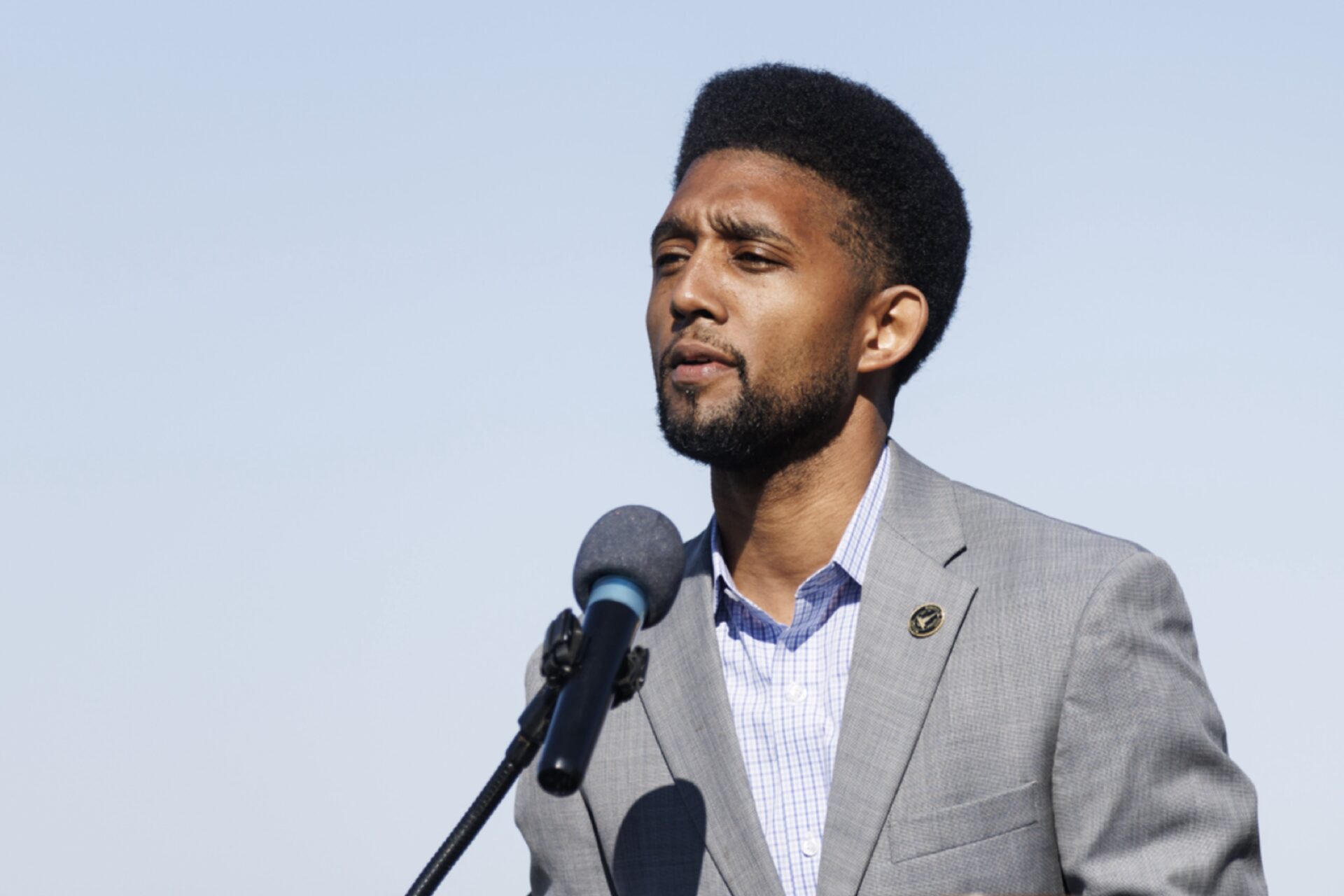
Baltimore Mayor Brandon Scott shares his strategy to get young professionals into politics
Brandon Scott is using his power in politics to deliver economic progress and opportunity for African Americans in his city. And in the process, he’s proving to the world the current narrative on Black male leadership has changed. As the 52nd mayor of Baltimore, Scott is tackling crime, housing, healthcare and police brutality just as effectively as previous Black mayors of large cities, such as Maynard Jackson of Atlanta, or Karen Bass of Los Angeles, and Lori Lightfoot of Chicago.
Scott spoke to moderator Geoffrey Bennett, the News Hour chief correspondent for PBS, at a past XCEL Summit for Men where he explained the challenges and opportunities of living up to the legacy of today’s 21st century mayors.
In this clip, Scott also lays out a strategy for young Black men to get involved in politics. And as our community continues to be attacked under the current administration, it’s more important now we get involved than ever before.
As we gear up for the 10th anniversary of the XCEL Summit for Men, BLACK ENTERPRISE re-broadcasts his conversation because we remind young men that you can make just as much of an economic impact being in politics as you can running a business. Take a look.
How Black Women Can Navigate Career Pivots In A Tough Job Market
Career pivots have become a defining feature of modern work.
By Antonia Dean
The job market is sending mixed signals. While recent employment reports suggest hiring remains steady overall, many industries, particularly technology, continue to experience layoffs, hiring freezes, and restructuring. Black women have been disproportionately affected. More than 700,000 Black women left or were pushed out of the workforce, a trend economists have described as an alarming indicator of broader economic weakness because Black women have long been among the most active participants in the labor force.
For professionals considering a career change, the uncertainty can make taking the next step feel risky. For Black women, the decision often carries an added layer of complexity. Many of us have spent our careers becoming experts in environments where we felt we had to prove ourselves every day. We’ve learned to keep our heads down, outperform expectations, and become known for one thing. So when the desire to pivot emerges, it’s easy to question whether we’re qualified to change lanes or whether we’ve earned the right to.
I’ve wrestled with these thoughts myself.
I began my career on a corporate law path, then pivoted to lead brand strategy in the cosmetics industry, transitioned from beauty into startup leadership roles, and eventually made the leap into venture capital, where I now invest in early-stage technology founders. Each transition required me to step into unfamiliar territory, learn new skills, and build confidence before I felt fully ready. I realized that a career pivot isn’t about abandoning who you’ve been. It’s about expanding who you can become.
Below are five steps you can apply for how to successfully navigate your next career pivot during uncertain times.
Stop Asking for Permission to Reinvent Yourself
One of the biggest myths about career changes is that they have to make perfect sense to everyone else.
As Black women, we’re often encouraged to stay where we’ve proven ourselves. Success can become its own trap. Once people know us for one thing, they expect us to continue doing it indefinitely. Over time, it’s easy to confuse your job title with your identity and believe that changing directions means leaving your success behind.
But you don’t have to spend your entire career honoring a version of yourself that no longer fits. The subject of your degree, the industry where you’ve grown, the titles you’ve earned, none of these are life sentences. Your interests will evolve. Your priorities will change. The industries around you will transform. Allowing yourself to change with them isn’t a sign of growth. Reinvention doesn’t erase your accomplishments. It builds on them.
You don’t need permission to pursue work that better aligns with the person you’re becoming. The confidence to pivot starts with believing your experience has prepared you for more than one path.
Your Skills Are More Transferable Than You Think
One of the biggest mistakes professionals make during a career pivot is focusing on what they lack instead of what they already bring. For many Black women in the workplace, imposter syndrome can intensify this, especially when navigating environments where we are underrepresented. It becomes easier to question qualifications than to recognize the full value of lived experience and professional expertise already built.
Before entering venture capital, I wasn’t starting from scratch. Years of building brands, understanding consumers, leading teams, and thinking strategically prepared me to evaluate founders and help companies grow. The industry changed. My strengths didn’t.
Take inventory of the experiences you’ve accumulated throughout your career. Leadership, communication, problem-solving, relationship building, and strategic thinking across industries.
Employers increasingly value people who can learn quickly and solve problems from multiple perspectives. Your experience is broader than your current job title, even when it doesn’t always feel that way.
Build Your Next Chapter Before You Leave the Current One
Some of the strongest transitions happen gradually. As Black women, we’re often conditioned to pour our energy into excelling in our current role, solving problems, and creating value for our employer. But it’s just as important to invest in your own future before you’re forced to make a change. Building your next chapter while you’re still employed gives you more options, confidence, and control over your career.
Take a class. Attend industry events. Find mentors. Volunteer for projects that expose you to new skills. Write about what you’re learning. Build relationships with people already doing the work you aspire to do.
Think of your pivot as a series of intentional experiments rather than one dramatic leap. Every conversation, project, or new skill helps reduce uncertainty and increases confidence before you make your next move.
Don’t Mistake Learning for Starting Over
One of the hardest parts of changing careers is accepting that you’ll be learning new things in a new environment. For high achievers, that can feel uncomfortable.
But learning something new doesn’t erase everything you’ve already accomplished.
This is especially true for Black women, who are often conditioned to believe we have to know everything before speaking up or contributing. We can become so focused on proving ourselves that we forget our perspective is part of what makes us valuable.
Being new to an industry doesn’t mean you’re bringing nothing to the table. Your experiences, leadership style, and way of solving problems can introduce fresh thinking that organizations desperately need. Sometimes the people closest to an industry become too familiar with the way things have always been done. Someone with a different background often sees possibilities others miss.
The goal isn’t to become an expert overnight. It’s to embrace the learning curve without questioning your worth. The professionals who thrive aren’t the ones who know everything on day one. They’re the ones who stay curious while remaining confident in the value they already bring.
Build a Career That Can Grow With You
Career pivots have become a defining feature of modern work. Entire industries are being reshaped by artificial intelligence, new technologies, and changing economic conditions. The ability to adapt is becoming one of the most valuable career skills anyone can develop.
A difficult job market can make change feel intimidating, but it can also create an opportunity to redefine success on your own terms.
Don’t focus solely on finding your next job. Focus on building a career that has room to evolve as you evolve. Because your career is defined by your willingness to keep growing even when the road ahead looks different than the one you originally planned.
Zab Judah, and Irv Gotti during Kevin Liles' release celebration for "Make It Happen: The Hip-Hop Guide To Success" at Firmenich in New York City. (Photo: Johnny Nunez/WireImage)
BLACK ENTERPRISE is shouting happy birthday to Hip-Hop! Having turned 53 on Aug. 12, Hip-Hop culture has changed the lives of many people since its birth back in 1973. The evolution of Hip-Hop has embodied art, DJ’ing, dance, fashion, hair, jewelry, language, lyricism, music and guess what else—literature ..books.
BE salutes Hip-Hop books for penetrating the literary space. Here are 10 books from Hip-Hop artists who tell their story and share their perspective not heard through music.
1.) From Pieces to Weight: Once Upon a Time in Southside Queens
This memoir, written by Curtis “50 Cent” Jackson with Kris Ex, is a tale of how 50 Cent navigated his difficult childhood as a youth: dealing with the murder of his mother; hustling in the streets to survive; being shot nine times and achieving the American dream.
The Wu-Tang Manual by Robert Diggs, otherwise known as RZA, and Chris Norris. The Wu-Tang Manual is made up of 4 books that break down all things Wu-Tang Clan—from information about the nine original members, Wu-Slang, and the philosophies and personalities that make the Wu-Tang Clan what it is. If you’re heavy into Wu culture, this book is for you.
Rakim Allah’s book is half a memoir and the other half is a writing guide. In this book he details who and what influenced him in his youth (jazz and John Coltrane) while highlighting the reason he is hailed as the god MC.
Rick Ross and Neil Martinez-Belkin wrote this memoir about Ross’ upbringing in South Beach Miami during the War On Drugs era, which covers his time as a high school football player, dope boy hustler, and correctional officer. Ross chronicles the making of his debut hit song “Hustlin’” to having a large deal with Def Jam records. This read will give you insight to Rick Ross’ experiences and inspirations
Decoded, written by rap icon and business mogul Shawn Corey Carter (widely known as Jay-Z,) is a one of a kind memoir that shows the worlds Jay-Z has maneuvered. Beyoncé’s other half tells his story while highlighting the hip-hop art form and culture by deconstructing his lyrics and giving readers a deeper dive into his journey as a artist.
The Autobiography of DMX, by the late Earl Simmons and Smoky D. Fontaine, shares X’s upbringing in the streets of Yonkers, New York. Readers learn how DMX overcame struggles involving neglect, physical abuse, drug abuse and jail time. The book reveals DMX’s ability to never give up on his dreams, finding his passion for hip-hop and releasing a no. 1 album four times in a row. X’s story literally shows that if you slip and fall you can still get up.
Torrence Hatch Jr., the controversial rapper known as Boosie Badazz, gives readers the details of growing up in Baton Rouge and being a local star at the age of 14, and becoming one of the most prominent rappers in the South. Boosie talks about survival, having a second chance at life, and beating the odds after facing death row and ultimately gaining freedom.
Vibrate Higher is a rap tale written by Talib Kweli that shares his upbringing in Brooklyn, New York. Kweli writes about what hip-hop has done for his life and how the culture impacts life socially, politically, and creatively.
The Autobiography of Gucci Man was written with the help of Neil Martinez-Belkin. Gucci Mane began writing this story while locked in federal prison. Gucci highlights the ups and downs of his life and career, and leans into growing up in poverty, his father’s abandonment, jail time, and how all these shaped him. He shares a bit about the infamous ice cream tattoo and how his career has evolved over time.
Dana Owens, our beloved Queen Latifah, wrote an autobiography that is an inspiration to women. Queen Latifah details growing up in Newark, New Jersey, and the difficult decisions she had to make dealing with sex, drugs, depression. The award-winning hip-hop artist shares what it means to be confident and independent, and what life was like being the first female solo rap artist to get a major record deal at 19-years-old.
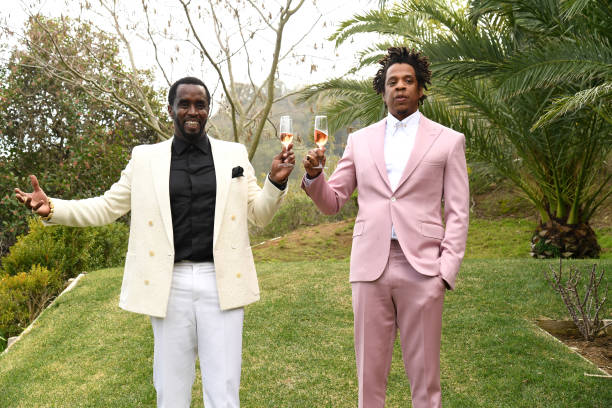
LOS ANGELES, CALIFORNIA - JANUARY 25: Sean Combs and Jay-Z attend 2020 Roc Nation THE BRUNCH on January 25, 2020 in Los Angeles, California. (Photo by Kevin Mazur/Getty Images for Roc Nation)
Hustle & Flow: 15 Hip-Hop Songs That Spark Hustling Spirit
The desire for financial wealth is something many people can relate to.
Hip-hop is now 53-years-old. Since the beginning of hip-hop culture, rap artists’ lyrics have always touched on making something out of nothing, making a dollar out of 15 cents, and manifesting—often by any means necessary—for a better life and lifestyle than the one they’ve known.
The desire for financial wealth is something many people can relate to. The want for financial stability and the ambition to achieve it is a common narrative across many businesses and industries, including hip-hop. BLACK ENTERPRISE has selected 15 hip-hop songs that ignite the hustle spirit and serve as motivation to make many of us “get up, get out, and get something.”
1) Dollar And A Dream 3 | J – Cole
In 2011, Jermaine Cole—better known by his stage name J. Cole—had “a dollar and a dream.” In the song that became a classic, Cole rapped about being in a place where your back is against the wall and striving toward success. The North Carolina rapper gave a pep talk to listeners who could relate to the ebb and flow of chasing one’s dream.
2) Juicy | Notorious B. I. G.
This debut single was made by the late great Christopher Wallace, also known as Biggie Smalls and better known as Notorious B. I. G. The Brooklyn-bred rapper raps about his upbringing and passion for hip-hop. This rags-to-riches tale highlights his ascension and success through hustling his lyricism: “Now I’m in the limelight ’cause I rhyme tight,” Biggie rapped. He emphasized satisfaction with the outcome of his grind, “Damn right I like the life I live ’cause I went from negative to positive.”
3) Hustler Musik | Lil Wayne
Hustler Musik by Dwayne Carter Jr., professionally known as Lil’ Wayne, embodies the hip-hop hustler vibe and spirit of the mid-2000s when Wayne was grinding to become the megastar he is today:
“Money is the motivation, facing the avenue, back touching the wall” describes the pressure to make money metaphorically and literally.
4) I Get Money | 50 Cent
South Jamaica Queens’ very own Curtis Jackson, known as 50 Cent, lyrically spotlights his savvy hip-hop hustle moves on this track: “I took quarter-water sold it in bottles for 2 bucks. Coca-Cola came and bought it for billions what the f—k?”
50 Cent also raps about how his hustle provided his lavish lifestyle. The infectious hook borrowed from Milk D, “I get money- money I got” is quite motivating.
5) F—k Up Some Commas | Future
F*ck Up Some Commas made by Atlanta’s Nayvadius Wilburn, better known as Future. The title alone motivates hustle, as he raps about stacking that money: “40 thou’ to 100 thou’ 100 thou’ another 100 thou’ 300 thou’ to 500 thou’ a million lets have a money shower.” The bass and the hook make you want to boss up STAT.
6) C. R. E. A. M. | Wu Tang Clan
C. R. E. A. M. is a legendary track by the legendary hip-hop rap group the Wu-Tang Clan. Raekwon and Inspectah Deck give listeners an introspective view on struggling and getting into hustle mode:
“I grew up on the crime side, the New York Times side stayin’ alive was no jive,” Raekwon spits.
Similarly, Inspectah Deck raps, “It’s been 22 long, hard years, i’m still struggling, survival got me buggin.” Method man is on the song’s chorus encouraging hustlers’ ambition: “Cash rules everything around me—C. R. E. A. M.—get the money dollar dollar bill y’all.”
7) Hustlin’ | Rick Ross
Is there even a better anthem than William “Rick Ross” Roberts’s break-out song? This joint encourages entrepreneurs to get that bag daily with its straight-to-the-point chorus, “Everyday I’m hustlin.’”
8) 1st Of The Month | Bone Thugs N Harmony
Ohio’s Bone Thugs N Harmony created the perfect song to spark that hustling initiative. The first of the month is known nationally as bill day. Bone Thugs N Harmony harmonizes on the chorus encouraging folks to “Wake up, wake up, wake up, wake up, wake up (it’s the first of the month). So get up, get up, get up, get up, get up (so cash your checks and come up).” This hit makes folks want to get money to take care of their responsibilities.
9) Rubber Band Man | T. I.
Rubber band Man, made by Atlanta’s self-proclaimed king, Clifford Harris Jr., affectionately known as T. I. or Tip, raps about keeping money in his pocket and about his dedication to his hip-hop hustle, “Got the mind and the muscle stay down on his grind put the crown on the hustle/ Hey, I could show ya how to juggle anything and make it double.”
10) Can’t Knock The Hustle| Jay-Z
Can’t Knock The Hustle by the icon Shawn “Jay-Z” Carter. Beyoncé’s other half celebrates his hustle spirit as he chronicles his success with full flex, “Yo, I’m making short-term goals, when the weather folds, just put away the leathers and put ice on the gold.”
11) And Then What| Young Jeezy
“And Then What” by Jay Wayne Jenkins, better known as Young Jeezy, is a hip-hop call-and-response bop between the Georgia-born rapper and New Orleans producer Mannie Fresh: “First I’m gone stack my flo,’ then I’m gone stack some mo.” Jeezy drops morning mirror motivation to get your money and stack it.
12) Duffle Bag Boy| Playaz Circle
Duffle Bag Boy includes Playaz Circle and Lil’ Wayne on a track that still sparks the hustler’s spirit today. Lil’ Wayne motivates on the song’s hook by rapping, “If i don’t do nothing I’mma ball, i’m countin’ all day like a clock on the wall, now go and get your money little duffle bag boy.” Tity Boi, now 2Chainz, flexes and raps about the spoils of hustling: “Walk into the Gucci store, honey i’m home.” while Dolla Boy raps about being a boss in his hip-hop hustle, “Ain’t nothing to a boss, we balling when they see us.”
13) Money Trees| Kendrick Lamar
“Money Trees” by Compton’s Kendrick Lamar is a relatable and inspiring song that details his upbringing while showing the reality and correlation between gangbanging, crime, and poverty. Lamar understands money can change his life. The West Coast hip-hop artist raps, “And I been hustling all day, this-a-way, that-a-way. Through canals and alleyways, just to say Money trees is the perfect place for shade and that’s just how I feel.”
14) It’s All About The Benjamins | Puff Daddy
The iconic line that triggers this money-making turn-up is prompted by Puff’s questions “What you wanna do? Wanna be ballers? Shot callers?” It’s All About The Benjamins features Notorious B. I. G., The Lox, and Lil Kim. Puff lays down lyrics about the lavish life and ultimately tells us why he hustles so hard and why we should too.
15) Major | Young Dolph
“Major” by the late Adolph Thornton Jr., better known as Young Dolph, is another hustler’s anthem. Young Dolph motivates people that come from the bottom, rapping, “Millions on the table, that’s major, I turned dirt into diamonds, that’s major.”
Digging these tracks? Download BLACK ENTERPRISEHustle & Flow Playlist
Hip-hop is more than beats and bravado. It is a cultural force that can change any stage it touches. As our beloved Hip-Hop turns 53-years old, we can’t deny the evolution or the great heights rappers have taken it. Shout outs to the pioneers like Kool Herc, Grandmaster Flash, Doug E. Fresh, Run DMC, LL COOL J and Rakim for laying the foundation. That groundwork made it possible for the contemporary leaders of the new school to take reigns and lift hip-hop in a whole new stratosphere.
Over the years, a growing group of artists has moved from the studio to the concert hall. Artists have shown that storytelling and orchestral music are not opposites but natural partners. From trap pioneers to lyrical architects, artists are changing how rap sounds in elevated spaces. We highlight the rappers who took hip-hop to symphony halls.
Nas
The Queensbridge, New York, rapper Nas performed his iconic album “Illmatic” with the National Symphony Orchestra at the Kennedy Center in Washington, D.C., to celebrate the 20th anniversary of the impactful album. The musical arrangement used orchestral instruments to enhance both the emotional power and musical complexity of his narrative delivery.
Kendrick Lamar
The multi-platinum rapper Kendrick Lamar performed several tracks from his album “To Pimp a Butterfly” with the National Symphony. The performance presented his politically charged jazz-infused hip-hop music to a broader audience at the Kennedy Center on Oct. 20, 2015, demonstrating the orchestral elements of Lamar’s award-winning album and its place in contemporary American music.
Rick Ross
Rick Ross performed as the main artist at Red Bull Symphonic at Atlanta Symphony Hall back in November 2022. The performance at the Woodruff Art Center brought together Rick Ross and Orchestra Noir to create new versions of his songs, merging hip-hop with classical music while celebrating Black achievement in both genres.
Jeezy
On Jan. 27, the Atlanta Symphony Hall hosted Jeezy, who performed as part of a new concert series that unites hip-hop artists with orchestral musicians. The series works to connect urban audiences with orchestral venues while using classical instruments to enhance trap music.
Wyclef Jean
Wyclef Jean, the Haitian-American rapper and producer who co-founded Fugees, organized the Night of Symphonic Hip-Hop, which brought him to perform with orchestras at multiple concert halls. The series amplifies hip-hop through orchestral performances while honoring its musical depth against classical music traditions.
Killer Mike
Killer Mike performed with the National Symphony Orchestra at the Kennedy Center in Washington, D.C., on May 21, 2024, as a full-length original orchestral concert. The concert used orchestral arrangements to transform the Atlanta artist’s music into a deeper musical experience, which showcased Black artistic presence in classical music venues.
RZA (Wu-Tang Clan)
RZA, who founded the Wu-Tang Clan and works as a producer and composer, created “A Ballet Through Mud,” which the Colorado Symphony Orchestra performed as a complete orchestral ballet score. RZA reworked the musical arrangement of “The 36th Chamber of Shaolin.” The world premiere took place in 2023. Through spoken word, orchestral elements, and ballet, RZA brings his stories to life.