White Couple Convicted Of Treating Adopted Black Kids As ‘Slaves’ Sentenced Over 150 Years
The white couple convicted of treating their adopted Black children as "slaves" received century-long prison sentences.
A West Virginia couple convicted of abusing their adopted Black children and treating them as slaves has each been sentenced to more than a century in prison.
The Independent reports that Jeanne Kay Whitefeather, 62, and her husband, Donald Lantz, 63, were given maximum sentences to be served consecutively. Judge Maryclaire Akers of the Kanawha County Circuit Court sentenced Whitefeather to 215 years in prison and Lantz to 160 years.
Whitefeather must serve a minimum of 40 years before becoming eligible for parole, while Lantz must serve at least 30 years. Additionally, both will be required to pay $280,000 in restitution to the children.
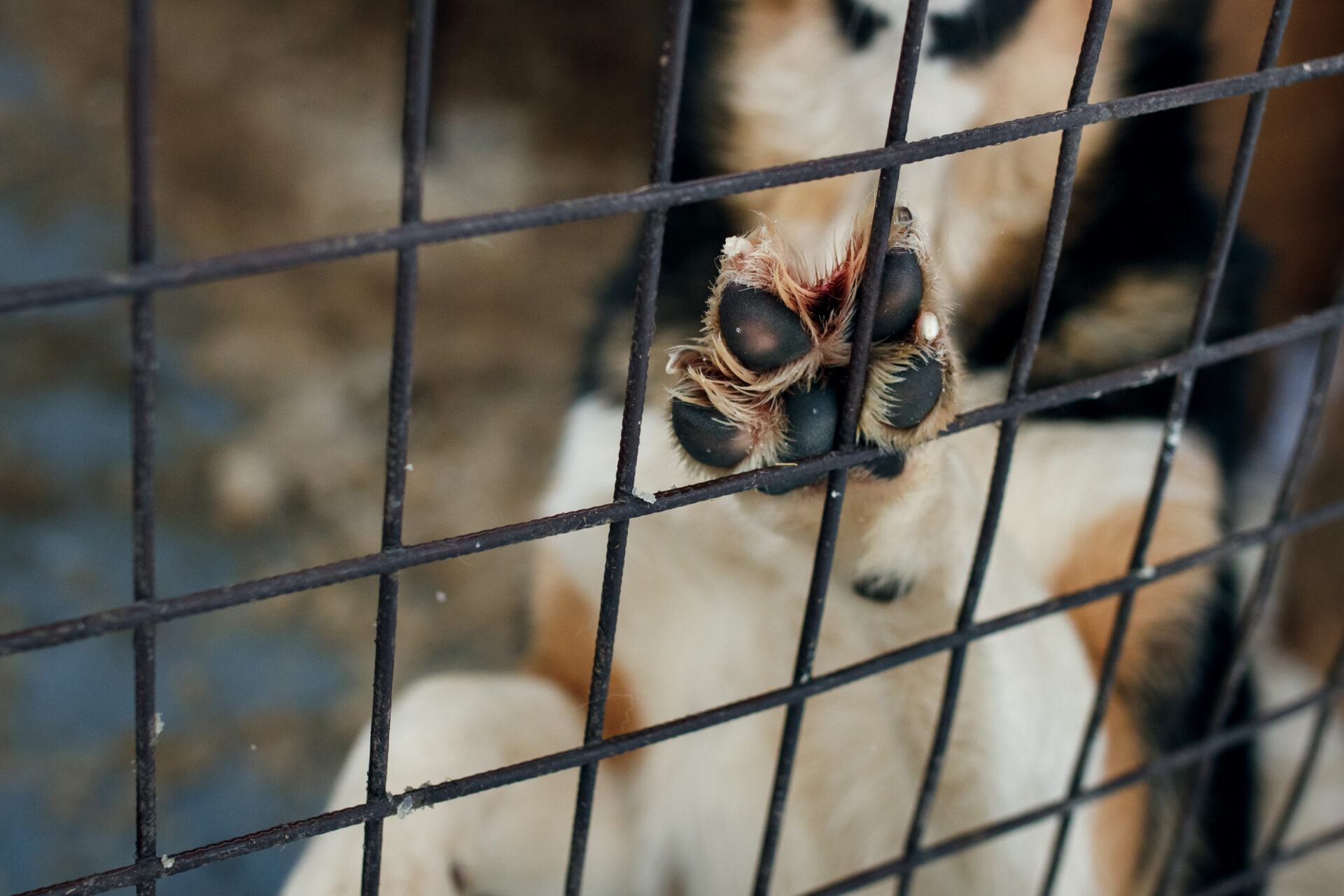
Judge Akers condemned the couple for relocating the five Black siblings, aged five to 16, to West Virginia in 2023, where they were forced to sleep on the floor and use buckets as toilets. The couple was arrested after two of the children were discovered locked in a shed under unsanitary conditions.
“You brought them to West Virginia, a place I know as almost heaven, and you put them in hell,” Judge Akers told the couple before handing down the sentence. “This court will now put you in yours. May God have mercy on your souls because this court will not.”
The sentencing comes nearly two months after a jury convicted the couple on multiple charges, including forced labor, human trafficking, and child abuse and neglect. Whitefeather was also found guilty of civil rights violations related to race, which contributed to her longer sentence.
The couple’s oldest daughter had a chance to speak and confront her parents for their brutal mistreatment of her siblings in a letter she read in court.
“I don’t understand at all how you were able to treat any person the way you treated me and my siblings and then preach the name of God right after that,” she wrote.
“I feel like I went through a lot more mentally because I had to watch my siblings go through those things… I felt hopeless in those situations. I felt a lot of anger.”
In February, the eldest daughter, now an adult, filed a lawsuit against the couple, accusing them of severe physical and emotional abuse and neglect that has left her permanently scarred.
‘The Pivot’ Co-Hosts Speak On Pitfalls Of Pledging After Caleb Wilson’s Death
'Hazing is just short of gang initiations'
The hazing death of Southern University’s Caleb Wilson has led to the arrest of three people, and the conversation has turned back to the fraternity rituals. The Pivot’s Ryan Clark, Channing Crowder, and Fred Taylor discuss the pitfalls and mindset behind some of them.
On a recent episode of “The Pivot,” the former football players have an in-depth conversation about some of the things that take place under the auspice of joining a Greek fraternity. Although there haven’t been many tragic incidents in recent years due to the outlawing of “hazing,” it seemingly still takes place outside the public eye. Legal Dictionary defines hazing as “a common practice in college sororities and fraternities, as well as military groups, sports teams, and gangs, which involves subjecting a potential member to a series of humiliating or abusive activities as a way to initiate him or her into the group.”
The tragic death of Wilson, who officials believed died after being involved in a fraternity hazing for the Beta Sigma Chapter of Omega Psi Phi, was reportedly punched in the chest several times before collapsing.
The discussion by the ex-athletes was a deep one regarding some of the ugly things that happen when college students join these fraternities and sororities.
Clark admitted to joining a fraternity in his junior year and said that he was already popular, so his reason to join wasn’t to fit in or because he needed to, but he was disgusted knowing that this tragedy affected Wilson and the three men charged in his death.
“It just don’t seem like fraternities should be that damn important to where folks are losing their lives.”
Crowder jumped in and said that, if he had pledged, he would have been a third-generation fraternity member, but he didn’t see the benefits of going through any type of hazing protocol just to be involved in an organization. He said he made friends on his own and didn’t need to do that to become a part of a fraternity, just to feel included.
“I look at it, and I joke with you about it, but it’s like, I’m paying money and getting my ass whooped and drinking sour milk to have friends? I can make friends myself. So that was my whole thing about the fraternity side of it.”
Taylor also stated he didn’t pledge for the same reason as Crowder. He didn’t see the point of going through humiliating things just to be a part of the fraternity, especially during his college years.
“No one should ever lose their lives to any type of senseless act of crime. Hazing is just short of, uh gang initiations, you know, especially in these fraternities. You joke about getting your ass whooped. That was the one reason I didn’t pledge. I had a close friend growing up who’s a Kappa. He wanted me to pledge Kappa some other people wanted me to pledge Que, but I’m like, man I can’t, I don’t see myself getting my ass smacked with the, you know, the paddle or whatever. But, you know, other than that I admire you for the Omega life and what it stands for.”
He also emphasized that a life should not be lost trying to become a Greek fraternity member.
“I don’t believe there is no tradition, brotherhood, fraternity, or what have you, that’s worth losing your life, but more importantly, as well, I think those people that do it, that promote the hazing on the physical standpoint, they have to understand that hazing is illegal in 44 states.”
Future Of CDFI Fund And MBDA, Uncertain With Their Planned Ouster
Axing the federal agencies could lessen Black businesses' ability to access capital and grow revenues.
The Community Development Financial Institutions Fund (CDFI Fund) has invested over $8 billion through various monetary award programs, helping underserved people and communities.
The Minority Business Development Agency (MBDA) helped wrap up $3.8 billion in contracts for minority businesses in 2023. That drive is significant as it can help those firms, including Black-owned businesses, to scale up and potentially fuel revenue growth.
However, the downside now is the CDFI Fund and MBDA — deep-rooted and bipartisan supporters of Black entrepreneurs and individuals, among others — are being cut by President Donald Trump.
They are among seven agencies proposed for elimination as part of a new executive order that continues Trump’s actions to cut federal government spending.
The CDFI Fund supplies financial backing to Community Development Financial Institutions (CDFIs) via grants, bond guarantees, and tax credits. CDFIs were created to spur community development in local communities. Their work includes funding affordable housing and small minority-owned businesses. They provide loans and other financial products in underserved communities, often with lower fees than rivals like mainstream banks and payday lenders.
The CDFI Fund “plays an important role in generating economic growth and opportunity in some of our nation’s most distressed communities,” per its website. The order commands the fund to trim personnel and operations. Started in 1994, the CDFI Fund is part of the U.S. Treasury Department.
Industrywide, CDFIs had roughly $452 billion in assets as of the first quarter of 2023. That consisted of $300B for credit unions, $118B for banks, and $35B for loan funds, according to the Federal Reserve Bank of New York.
According to its 2024 annual report, the “CDFI Fund award recipients successfully leverage billions in private sector investment to create jobs, build affordable housing, build essential community facilities, and provide financial counseling.” That includes investing in “distressed and underserved communities lacking access to traditional lending or banking institutions.”
The report also stated that $81 billion has been supplied through the fund’s New Markets Tax Credit program. The CDFI Fund declared that since its start, it has helped build the capacity of 1,400 Certified CDFIs in all 50 states along with the District of Columbia, Guam, and Puerto Rico.
Trump’s order occurred the same day he signed a continuing resolution into law that calls for $324 million in funding for the CDFI Fund for fiscal 2025. It’s unknown if prior approved grants will be paid for financial institutions now utilizing CDFI Fund grants.
In an email to BLACK ENTERPRISE, U.S. Treasury Secretary Scott Bessent stated, “This Administration recognizes the important role that the CDFI Fund and CDFIs play in expanding access to capital and providing technical assistance to communities across the United States. CDFIs are a key component of President Trump’s commitment to supporting Main Street America in the pursuit of job growth, wealth creation, and prosperity.”
He added, “As required by President Trump’s March 14, 2025, Executive Order, the Treasury Department will provide a response to the Director of the OMB on this matter and looks forward to future engagement with CDFIs and other stakeholders to strengthen the impact of these statutory programs and incentivize economic opportunities for all Americans.”
As for the MBDA, Trump’s latest dictate marks the second time since 2017 he has tried to erase the agency catering to minority firms for over 50 years. The MBDA’s efforts have included providing access to capital, contracts, and market opportunities as part of the U.S. Department of Commerce.
Two years ago, the agency also brought access to $1.5 billion in capital to empower minority businesses and helped them generate or protect over 19,000 jobs, according to its website. Efforts to get a comment from the MBDA were unsuccessful.
William Michael Cunningham, an economist and founder of Creative Investment Research, told BLACK ENTERPRISE by email that his firm has long recognized the CDFI Fund’s significant role in strengthening Black economic empowerment. For a decade (2013 through 2023), Cunningham estimates that at least $219 million from the CDFI Fund has supported Black-owned banks and businesses through targeted programs.
Specifically, he says around $31 million has benefited Black-owned banks via the fund’s Bank Enterprise Award program, directly enhancing their capacity to serve communities often overlooked by mainstream financial institutions.
Further, Cunnigham mentioned about $188 million has flowed to Black-led Community Development Financial Institutions, fueling lending and investment in Black-owned businesses nationwide. He stated notable recipients include institutions like Hope Credit Union, TruFund Financial Services, and Community First Fund, whose critical efforts drive economic justice, equity, and opportunity in underserved Black communities.
“Ongoing disparities underscore the need for significantly increased funding and new, innovative support mechanisms.”
Cunningham shared that the potential reduction in support from the CDFI Fund and MBDA poses significant risks to minority businesses. He says it could lead to reduced access to capital and funding shortages, severely limiting the businesses’ growth and sustainability.
He expressed that the scarcity of business development support, including strategic guidance and capacity building, could impact competitiveness. Another potential snag: The loss of networking and market access facilitated by these agencies could negatively impact revenue generation.
The Small Business Majority advocacy group criticized Trump’s latest order.
The group’s research showed that the institutions play a large role in benefiting women BIPOC-owned small businesses. Some 24% of respondents polled last year declared that a government program geared to help a specific demographic group prevented their business from closing, and 14% stated a demographically targeted program helped them gain contracts. Of small businesses that got publicly funded support, roughly 25% had help from MBDA.
In a statement, Small Business Majority Founder and CEO John Arensmeyer touched on the impact of shattering the CDIF Fund and MBDA. Among his comments, he noted that between 2021 and 2024, there were 21 million new business applications. But he added that these fledgling small businesses cannot succeed or survive without support.
“President Trump may well succeed in undermining our smallest and most under-resourced businesses, but in doing so, our economy and our communities will be devastated. Instead of searching for ways to cut small business programs no matter their size or purpose, President Trump should be looking for ways to boost entrepreneurship.”
Estate Of The Notorious B.I.G. Finalizes Partnership With Primary Wave
The deal was brokered by Voletta Wallace shortly before she died in February.
Primary Wave has acquired half of the rights to The Notorious B.I.G.s catalog as well as his name, image, likeness, The Wall Street Journal reports.
Shortly before Biggie’s mother, Voletta Wallace, died, the deal she was working on to partner with the music company was completed. Primary Wave has reportedly taken a 50% interest in the catalog and works of the Notorious B.I.G., which is estimated to be worth more than $200 million.
Wallace, along with Bystorm Entertainment’s Wayne Barrow and Mark Pitts, took the reins of the business of Biggie and turned what was once valued at $10 million when he was killed in 1997 to a staggering reported $160 million nearly 30 years after his death.
When the rap legend died, he had a standard deal of owning 50% of his publishing. Voletta Wallace took the business and helped grow it and convinced Sean “Diddy” Combs to increase the share to 85% in the early 2000s. She was able to gain 100% in 2020.
“She trusted no one,” Barrow said of Wallace. “With everything she went through, she wasn’t going to allow her or her grandkids to be in a position where what Biggie’s legacy wasn’t beneficial to them.”
Faith Evans, who was married to the “Hypnotize” lyricist when he died, said that this partnership will honor her late husband’s legacy by “creating new opportunities that highlight the timelessness of his work.”
“Securing control of my son’s publishing and masters was a hard-fought journey, one that was not easy to accomplish,” Voletta Wallace said before she died in hospice care at her home on Feb. 21. She was 72.
On March 9, 1997, Biggie was leaving a Soul Train Awards afterparty when he was shot and killed by an assailant in a black Chevy Impala when his car was parked a red light in Los Angeles. He was 24 years old.
DoorDash, In Partnership with Klarna, Now Has A Food Layaway Plan
If you want steak and lobster before payday, you can now put your meal on layaway.
DoorDash has announced a partnership with Klarna that will allow customers in the United States to use buy now, pay later (BNPL) options for takeout and grocery deliveries.
Klarna is known for its BNPL services and has expanded its offerings across sectors such as transportation, travel, and entertainment. The new payment option is being promoted as a perk for DoorDash’s American users.
“Our partnership with DoorDash marks an important milestone in Klarna’s expansion into everyday spending categories,” David Sykes, Klarna’s chief commercial officer, said in a statement. “By offering smarter, more flexible payment solutions for groceries, takeout, and retail essentials, we’re making convenience even more accessible for millions of Americans.”
According to DoorDash’s announcement on March 20, Klarna users will have several payment choices at checkout:
Pay in Full: Customers can pay immediately using Klarna’s platform.
Pay in 4: Customers can split purchases into four equal, interest-free installments.
Pay Later: Customers can defer full payment to a later date, often to coincide with their paycheck schedules.
DoorDash and Klarna have framed the partnership as a way to give consumers greater flexibility, but the move has sparked humor and criticism on social media with people poking fun at the idea of financing fast food.
One user on X joked, “Me tipping the DoorDash driver $150 cuz it’s on Klarna’s tab”
Beyond the humor, others have raised concerns about the larger implications of “eat now, pay later” financing. One critic on X wrote:
“If you need a loan to buy a damn burger, you’re not the customer—you’re the product. @DoorDash and @Klarna aren’t helping people; they’re vultures picking at the bones of a broken economy. They know wages are stagnant. They know people are drowning in bills. Instead of fixing the problem, they found a new way to profit off desperation. ‘Eat now, pay later’ isn’t convenience—it’s a trap. And like all traps, the people who set it aren’t the ones who get caught.”
If you need a loan to buy a damn burger, you’re not the customer—you’re the product.@DoorDash and @Klarna aren’t helping people; they’re vultures picking at the bones of a broken economy. They know wages are stagnant. They know people are drowning in bills. Instead of fixing…
The move has also prompted speculation from some financial analysts, who question whether the growing normalization of BNPL services for basic needs like food could signal economic strain and a potential recession.
Tesla Losing Drivers As Owners Trade In Their EVs At Record Levels
Elon Musk's Tesla brand is facing continued setbacks as owners trade in their vehicles at unprecedented rates.
Tesla’s reputation is taking a sharp hit, with new data revealing that owners are trading in their vehicles at record levels since CEO Elon Musk joined Donald Trump’s administration.
Edmunds data reveals that March recorded “the highest-ever share” of Tesla trade-ins for new or used vehicles from dealership-sold brands, CNBC reports. Data from the national car shopping site signals a shift for Tesla, which dominated the electric vehicle market until Musk joined the White House in January.
“Shifts in Tesla consumer sentiment could create an opportunity for legacy automakers and EV startups to gain ground,” said Jessica Caldwell, head of insights at Edmunds.
Musk has faced intense public scrutiny since arriving in Washington, D.C., in January as a key figure in Trump’s second administration. As head of the Department of Government Efficiency (DOGE), he has overseen deep cuts to the federal workforce and government spending while also securing access to sensitive government computer systems and data—moves that have sparked multiple legal challenges.
Musk’s close ties to the President—whom he spent $290 million to help elect—have sparked intense backlash against him and Tesla. Recently, Tesla stores, vehicles, and charging stations have been targeted by vandalism and arson.
Things aren’t looking any better on the stock market. While investors initially flocked to Tesla shares following Trump’s victory in November, they’ve been rapidly selling off in recent months, driving the stock down 42% this year. Meanwhile, the company faces growing competition in the EV market—S&P Global Mobility reported an 11% year-over-year drop in Tesla’s U.S. sales this January, while Ford, Chevrolet, and Volkswagen gained market share with rising EV sales.
“As Tesla brand loyalty and interest wavers, those offering competitive pricing, new technology, or simply less controversy could capture defecting Tesla owners and first-time EV buyers,” Caldwell said.
Edmunds reported that interest in new models on its platform hit its lowest point last month since October 2022, following a peak in November. Even before Musk took charge of DOGE, Tesla’s brand was already struggling—its value dropped by 26% (approximately $15 billion) in 2024, marking the second consecutive year of decline, according to Brand Finance.
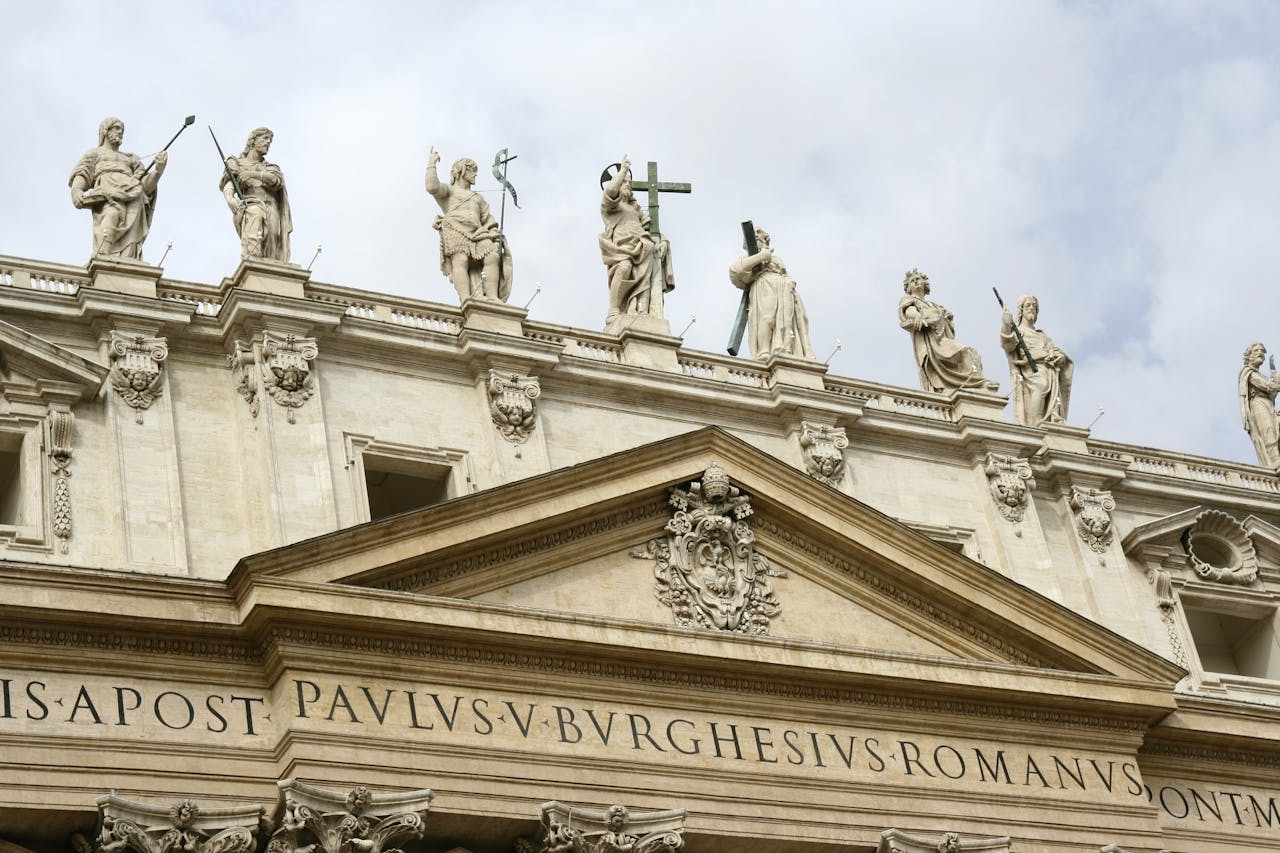
St. Thomas University School Of Law In Danger Of Losing Accreditation
St. Thomas University School of Law is not in compliance with American Bar Association standards.
St. Thomas University School of Law has been found out of compliance with the American Bar Association’s (ABA) standards related to financial resource sufficiency, according to a recent determination by the ABA Council of the Section of Legal Education and Admissions to the Bar.
In addition to the compliance issue, the ABA denied the school’s application to establish a part-time hybrid-distance Juris Doctor program. The decision was issued in February 2025.
“We are working closely with the ABA to ensure full compliance and are confident in the positive direction we are heading,” Tarlika Nunez-Navarro, the dean of the law school, wrote in a letter to the ABA Journal. “We view this as an opportunity to build upon that momentum.”
While the school remains accredited, it must resolve the financial deficiencies to regain full compliance status, the ABA Journal reports.
According to the ABA Rules of Procedure, the law school is required to “maintain a budget reflecting anticipated financial resources and expenses for the current and subsequent three fiscal years.” The guidelines further specify that “for law schools that are part of a university, the budget must reflect any anticipated obligations of the law school to the university or of the university to the law school.”
St. Thomas submitted an initial report to the ABA on Sept. 26, 2024. The ABA Council will review the submission during its quarterly meeting in November 2025. Administrators from the law school are expected to be present at the February 2026 meeting, which will determine the future of the school’s accreditation.
Founded in 1961 as Biscayne College by the Augustinian order, St. Thomas University became a university in 1984, adopting its current name to reflect the region’s strong Cuban-American influence. The law school, established in 1984, has historically served a diverse student population and is known for its focus on public service and social justice.
The School of Law has about 800 students enrolled and is one of only a few Catholic law schools in the southeastern United States.
Disney Shareholders Vote Against Anti-DEI Proposal
A shareholder proposal seeking Disney to reconsider participating in the Human Rights Campaign’s (HRC) corporate equality index was voted down Thursday night.
Disney shareholders have rejected an anti-DEI proposal at the entertainment giant’s annual meeting. According to Fox Business, a shareholder proposal seeking Disney to reconsider participating in the Human Rights Campaign’s (HRC) corporate equality index was voted down Thursday night.
Disney has long participated in HRC’s corporate equality index, which is described as a national benchmarking tool on corporate policies, practices, and benefits pertinent to LGBTQ+ employees.
Only 1% of Disney shareholders supported the proposal to halt participation in HRC’s corporate equality index.
Disney’s board reportedly advised its stockholders in the Securities and Exchange Commission (SEC) filing to vote against the proposal before the meeting. The board provided many reasons for voting it down. One reason is the belief that it “would not provide additional value to shareholders.” Another reason is for transparency. The board said Disney “provides transparency on a wide range of matters important to shareholders, including through participating in external surveys.”
Anti-DEI Proponents Worry About Disney’s Stance
The National Center for Public Policy Research reportedly proposed that Disney withdraw from the HRC index. The center argued that Disney’s involvement in divisive political issues has alienated audience segments and damaged the company’s stock price. The policy center had hoped stakeholders would support the proposal to move Disney back to neutral.
However, other companies have not followed suit. Ford, Harley-Davidson, and Lowe’s have all withdrawn from HRC’s corporate equality initiative.
Some Liberty City blocks will be renamed to honor lyrics and songs by Trina, Trick Daddy, Flo Rida, Pitbull, and others.
Several streets in the Liberty City neighborhood of Miami will be renamed in honor of some iconic area stars and songs connected to the area’s rich history of hip-hop.
According to The Miami Herald, a proposal by District 3 Commissioner Keon Hardemon to the Miami-Dade County Commission was approved March 18 to rename several streets in Liberty City after some Miami hip-hop legends’ song titles and/or phrases from recognizable songs.
The renaming of the streets will take place along 18th Avenue in the famed neighborhood.
“This item will bring more culture to Miami,” Commissioner Marleine Bastein said. “We want a place that is always sizzling. That is vibrant and dynamic.”
The streets are not being completely renamed but given alternate names to refer to those blocks.
“We need to try something dramatic to really change the neighborhood,” Hardemon said. “People in these communities take music very seriously.”
Some of the artists attributed to Liberty City include Trina and Trick Daddy, Flo Rida, Pitbull, Rick Ross, Uncle Luke, the City Girls, and even Betty Wright.
Here are the streets being renamed and the location.
Between Northwest 18th Avenue and Northwest 19th Avenue:
What’s My Name Street on NW 62nd Street
City Girls Street on NW 63rd Street
Soul Ties Street on NW 64th Street
Post & Delete Street on NW 65th Street
Chase Dis Money Street on NW 66th Street
Born N Raised Street on NW 67th Street
Big Money Baller Street on NW 68th Street
We the Best Terrace on NW 68th Terrace
Still Da Baddest Street on NW 69th Street
Trick Love the Kids Street on NW 69th Terrace
It’s Your Birthday Street on NW 70th Street
Bad Boys Bad Boys Street on NW 71st Street
Between Northwest 18th Avenue and the jurisdictional boundary of the City of Miami:
Welcome to the MIA Terrace on NW 62nd Terrace
I Luv My Dawgs Street on NW 63rd Street
I Deserve It All Street on NW 64th Street
Closer to My Dreams Street on NW 65th Street
Tunnel Vision Street on NW 66th Street
Welcome to My House Street on NW 67th Street
You Go Girl Street on NW 68th Street
People Change on NW 68th Terrace
Lovers and Friends Street on NW 69th Street
Peace In Da Hood Street on NW 69th Terrace
Run Da Yard Street on NW 70th Street
Georgia Homeowners Fight Against Predatory HOA Practices
Homeowners in a Georgia community are fighting back against an out-of-control HOA.
Residents of a Georgia neighborhood are accusing their homeowner’s association of imposing excessive fees and retaliatory fines, according to Atlanta News First.
Homeowners in the small 28-home community say they grew suspicious of the HOA’s practices as their annual dues rose significantly over the past few years. From 2019 to 2024, annual fees jumped from $500 to $1,316—an increase of $816—with no clear explanation.
The neighborhood’s HOA is responsible for maintaining the entrance, the mailbox area, and a retention pond. Individual homeowners, however, handle all personal yard maintenance. Given that the neighborhood spans less than a quarter mile, many are questioning the surge in expenses.
According to residents, the HOA’s budget rose from $4,000 in 2021 to $18,000 in 2024. The sharp increase prompted calls for financial transparency. Former HOA President Melanie Downing has reportedly refused to release receipts or itemized financial records, further fueling frustrations.
On Feb. 1, during a board meeting, residents voted to remove Downing as HOA president, citing a lack of transparency. Shortly after the vote, homeowners say retaliatory fines began to surface.
Retaliation and fines
Under the Georgia Property Owners’ Association Act of 2024, residents organized and voted for a new neighborhood board. Downing, however, claims that homeowners are required to pay a $200 “special assessment” fee plus a $50 late fee before they can participate in the vote. Georgia law does not mandate such a requirement.
Residents elected a new board, president, and treasurer despite her objections.
“We held the election, we got the majority vote, and here we are,” said Takesha Allen, now the legal HOA president. “We are in the battle of trying to take it over.”
Downing refuses to recognize the election’s outcome and has allegedly begun issuing fines to those who voted for her removal.
Billy Fan said he was fined for a garden decoration that has been in place for years.
“I received a notice saying you have a unicorn in your garden and that I should remove it,” Fan said. “I don’t have a unicorn. I have a garden gnome.”
Krishan Bhakri reported being fined for religious decorations on her property in celebration of Chinese New Year and Hindu traditions.
Residents of the Grieghland neighborhood now fear the escalating fines could lead to liens against their homes.
The risk of HOA liens
HOAs have the legal authority to place property liens when homeowners fail to pay outstanding fees or fines. Once a lien is filed, it can lead to foreclosure, even if the amount owed is relatively small.
According to the Community Associations Institute, in 2022, roughly 74 million Americans live in communities governed by HOAs, and liens are a legal tool frequently used to enforce compliance with HOA covenants.
In extreme cases, liens have been filed for as little as a few hundred dollars, ultimately resulting in foreclosure sales. A 2022 investigation by the Atlanta Journal-Constitution highlighted a trend where HOAs in Georgia have used this authority to aggressively target homeowners.
Frank Bosah, a homeowner in Grieghland, said he was issued a bill totaling $137,768, with no breakdown provided.
“Over the last three years, she has been terrorizing every homeowner here,” Bosah said.“I have worked so hard to achieve what I have. It’s not by a crooked way; it’s not by stealing; it’s not by fraud. It’s by hard work,” he continued.
Grieghland’s new HOA board is strategizing its next steps.