Black Americans, DOE, student loans, Inflation, Debt, Bills, Achieve Center for Consumer Insights, Kilgore
(Photo: Vodafone x Rankin everyone.connected/Pexels)

Financial Literacy Month: Dealing With Debt That’s Out Of Control

According to Debtor's Anonymous, there are a number of signs that indicate you might have a serious problem with debt.


Originally Published April 24, 2014.

If you’re like most people, you probably have debt. From student loan debt to credit card and mortgage debt, it’s the weight on your shoulders that won’t seem to lighten. But how do you know when debt is spiraling out of control? When is it time to get help?

Debtor’s Anonymous, an organization that helps consumers struggling with debt, lists the following signs that you might have a serious problem with debt: being unclear about your financial situation, not knowing account balances, monthly expenses, loan interest rates, fees, fines, or contractual obligations.

Then there are these signs:

  • Frequently “borrowing” items such as books, pens, or small amounts of money from friends and others, and failing to return them.
  • Poor saving habits such as planning for taxes, retirement, or other non-recurring but predictable items, and then feeling surprised when they come due. Having a “live for today, don’t worry about tomorrow” attitude.
  • Compulsive shopping: Being unable to pass up a “good deal. Taking impulsive purchases, leaving price tags on clothes so they can be returned, and not using items that you’ve purchased.
  • Difficulty meeting basic financial or personal obligations and/or an inordinate sense of accomplishment when such obligations are met.
  • A different feeling when buying things on credit than when paying in cash, a feeling of being accepted or grown up.
  • Living in chaos and drama around money: Using one credit card to pay another, bouncing checks, and always having a financial crisis to contend with.
  • A tendency to live on the edge: Living paycheck to paycheck, taking risks with health and car insurance coverage, writing checks hoping money will appear to cover them.
  • Unwarranted inhibition and embarrassment in what should be a normal discussion of money.
  • Overworking or underearning: Working extra hours to earn money to pay creditors, using time inefficiently, taking jobs below your skill and education level.
  • Denying your basic needs in order to pay your creditors.
  • Hoping that someone will take care of you so that you won’t get into serious financial trouble or hoping that there will be someone you can turn to.

If any of these describe you, there are solutions:

  • Join a debt support group. A debt support is self-help based and consists of members who have a common goal of eliminating debt. These groups provide a safe place to talk about their problems.
  • Create a spending plan. If the word “budget” scares you, just call it another name. Develop a plan that will help you take control of your spending.

RELATED CONTENT: OneUnited Bank Announces Annual Youth Contest ‘I Got Bank’ To Celebrate Financial Literacy Month

women leaders, visibility, balance
AI-generated image via Magnific

Pressure Is a Design Problem, Not a People Problem

Most managers were never trained to run interference between organizational pressure and their teams


Written by Chrysta Wilson

A few months ago, two members of a nonprofit team stopped speaking to each other, and their manager, reading it as a personal conflict between two strong personalities who couldn’t get along, scheduled mediation.

What actually happened was simpler and harder to see. Their teams had merged and while each of them had previously owned a piece of work on their old team, no one had mapped who would own what after the teams combined. After the teams merged, their responsibilities overlapped, ownership wasn’t clear, and each one started to feel like the other was encroaching on their own role.

Mediation wasn’t going to fix that. What fixed it was rewriting two job descriptions and naming, in writing, who owned what, because the conflict was never really about the two people so much as a structure nobody had built for them.

I’ve spent 25 years working with leaders in this position, and it happens more than most organizations want to admit, because when pressure shows up, we look for the person to blame, someone not communicating well, underperforming, or unable to get along with others, instead of asking whether the system around them was ever built to carry the weight it’s carrying.

We are six years into sustained pressure. 

The pandemic pushed most organizations into hybrid or remote work, and with it, into losing something few leaders name directly: the relational capacity that comes from being in the same room, where you used to walk over to someone’s desk with a two-minute question instead of sending a message and waiting for a reply. That small shift in access has widened into real disconnection, one that shows up as friction long before anyone can point to what changed.

At the same time, federal budget cuts over the past two years have hit nonprofit, social service, and civil service organizations directly, with people doing public-facing work asked to meet rising demand with shrinking resources, and in some departments, roles eliminated outright. Add the rapid move to AI adoption, which has cut front-line and entry-level positions in some organizations and left managers overseeing more people with fewer hands to do the work, and you get a workforce that hasn’t had a real break from pressure in half a decade.

Pressure isn’t going away, and the organizations that hold up are the ones that treat it as a design problem, not a people problem.

In my work, and in my book, Pressure-Proof Teams, I break pressure into three sources: environmental pressure, which comes from outside the organization, like policy changes, funding cuts, or economic shifts; interpersonal pressure, the friction between people, such as misunderstandings, unresolved tension, or strained working relationships; and design pressure, which comes from how the organization itself is built, how often you meet, how decisions get made, who owns which outcome, and how priorities get set and communicated.

Most organizations spend their energy on the second category, sending people to conflict resolution training or bringing in a mediator, the way that nonprofit manager did, but if the root cause is design, that training only treats a symptom the structure keeps producing.

Design pressure is also where psychological safety breaks down, because on a team that’s overloaded, admitting you’re at capacity feels risky: say it out loud, and you might get labeled as not a hard worker, not committed, not leadership material, and that fear is often well-founded, since it affects who gets mentored, who gets considered for a promotion, and who gets the next raise. So, people stay quiet and keep working past their limits until something breaks, whether that’s a missed deadline, a blown-up conflict, or a resignation nobody saw coming, at least not on paper.

Naming the pressure a team is under, out loud and without penalty, is one of the clearest signs a culture has real psychological safety, and it’s also one of the hardest things to build, because it requires leaders to hear that something is wrong without immediately looking for who to blame.

That’s the shift I push leaders toward most, trading blame for accountability, because instead of asking who caused it, the better question is what’s true right now and what has tochange so it doesn’t happen again. Most managers were never trained to run interference between organizational pressure and their teams; they were promoted because they were good at the work, then handed a group of people with no instruction on how to protect that group from the structural weight above them, and that’s a training gap, not a character flaw, and it’s fixable.

Leaders don’t need to be told to try harder. They need tools that let them see where pressure is concentrating in their organization, and structures that distribute it before it lands on one exhausted person at a time, because the actual work is building organizations that spread pressure out before it breaks something, instead of managing people through the damage after it already has.

Chrysta Wilson is the Founder and CEO of Wilson and Associates Coaching and Consulting, LLC, and the author of Pressure-Proof Teams™, out August 18, 2026. *

RELATED CONTENT: ‘Just Play The Game’ Is The Career Advice, But Who Holds The Game Accountable?

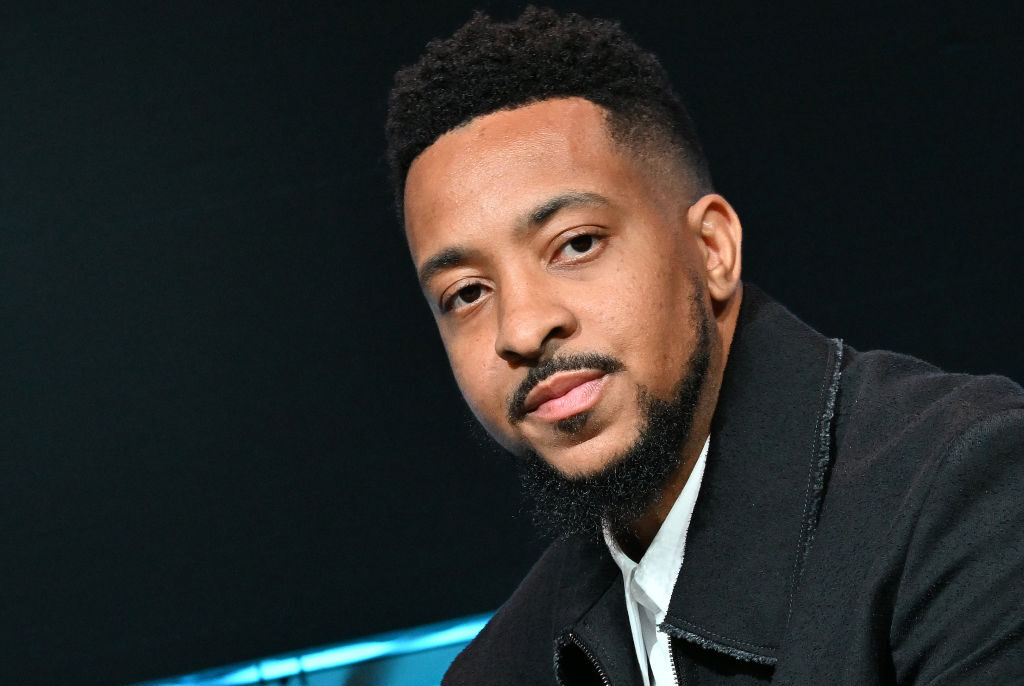
NBA Star CJ McCollum And Wife Build Wine Business On 318-Acre Oregon Vineyard
Photo by Paras Griffin/Getty Images

NBA Star CJ McCollum And Wife Build Wine Business On 318-Acre Oregon Vineyard

. The couple shared how they balance their professional careers, family responsibilities, and the financial demands of operating a vineyard.


NBA star CJ McCollum and his wife, Elise, are building a family-owned wine business with a 318-acre vineyard in Oregon, turning their passion for winemaking into a long-term investment focused on entrepreneurship, ownership, and generational wealth, Wine Enthusiast reports. 

The Atlanta Hawks guard and his wife, a pediatric dentist, recently discussed their journey as co-founders of McCollum Family Vineyard during an interview with the outlet. The couple shared how they balance their professional careers, family responsibilities, and the financial demands of operating a vineyard.

Their venture began in 2017 through a partnership with Oregon-based Adelsheim Vineyard. In 2020, they released their first wine, Heritage 91, before purchasing a 318-acre property in Oregon’s Yamhill-Carlton wine region in 2021. The property, formerly a Christmas tree farm, now includes 56 acres planted with Pinot Noir and Chardonnay grapes.

McCollum acknowledged that building a wine business requires more than financial investment.

“You can make more money, but you can’t create more time,” McCollum said, emphasizing the demands of managing a vineyard while maintaining his NBA career.

The couple formally established McCollum Family Vineyard in 2026, expanding their offerings to include estate-grown wines. Their business also emphasizes sustainable farming practices and creating experiences that connect customers with the vineyard.

In September, the McCollums introduced appointment-based wine tastings at their Oregon property, marking another step in expanding the company’s hospitality operations.

For Elise, the business represents an opportunity to build something their children, Jacobi and Margaux, can eventually help manage.

“We saw this as something for our entire family to be involved with,” she said.

The couple’s investment reflects a broader commitment to building assets beyond their respective careers. Through vineyard ownership, sustainable production, and family involvement, the McCollums are establishing a business intended to create opportunities for future generations.

RELATED CONTENT: NBA Star CJ McCollum Awarded The J. Walter Kennedy Citizenship Award For His Community Work

Free College SUNY, Gov. Hochul
AI-generated Image

New York Expands Free College For Adults

Starting in January 2027, eligible New Yorkers can pursue tuition-free associate degrees in high-demand fields through CUNY and SUNY.


New Yorkers looking to switch careers without taking on more student debt could soon have a new path to professional growth.

Gov. Kathy Hochul is expanding New York’s free community college initiative to include adults ages 25 to 55 who already hold a college degree but want to retrain for jobs in growing industries. The expansion of the City University of New York (CUNY) and State University of New York (SUNY) Reconnect programs is scheduled to take effect for the spring 2027 semester, which begins in January for most colleges.

Previously, the initiative generally served adults without a college degree, except for students pursuing nursing programs. The expanded eligibility opens the door for degree holders to pursue a new associate degree in a different field without paying tuition, fees, books, and supplies. The move comes as employers and workers navigate an evolving labor market shaped by artificial intelligence and changing workforce demands.

“As AI continues to reshape the global economy, I’m taking action to ensure more New Yorkers have the skills they need to succeed,” Governor Hochul said in a statement. “By expanding access to free community college, we’re making it even easier for adult learners to pivot into fast-growing, high-demand sectors without taking on a single dollar of tuition debt.”

The expansion is designed to help midcareer professionals build new skills and pursue opportunities in fields such as cybersecurity, technology, engineering, healthcare, and advanced manufacturing.

For workers who already invested time and money in a college education, the program offers another route to career mobility without requiring them to start over. Eligible students can pursue a second credential in a different discipline while avoiding additional tuition costs covered by the initiative. The program also helps working adults balance education with existing financial responsibilities.

“New Yorkers should not have to choose between earning a paycheck and getting the skills they need to move ahead,” state Sen. Jeremy J. Zellner said.

The initiative builds on Reconnect, which launched in 2025 and has helped more than 15,000 adult learners access tuition-free community college in high-demand fields, according to CUNY. The state says participants have saved thousands of dollars annually through the program. New York’s original Reconnect rollout included state funding for tuition, fees, books, and supplies for eligible students pursuing selected associate degrees. The state outlined the program’s initial funding and eligibility requirements in its 2025 announcement.

“Governor Hochul’s expansion of Reconnect reinforces this vital mission by ensuring cost is never a barrier for students looking to reskill, elevating our city’s workforce and securing New York’s economic future,” CUNY Chancellor Félix V. Matos Rodríguez said.

The expansion also aligns with New York’s broader workforce strategy as the state considers how artificial intelligence may affect jobs, training, and career placement. Hochul’s FutureWorks Commission is expected to deliver policy proposals by the end of December 2026, according to the announcement.

RELATED CONTENT: New York City’s Medgar Evers College Becomes First CUNY School to Offer Cannabis Degree Program

2026 XCEL Summit for Men honorees

Check Out These Sessions At The 2026 XCEL Summit For Men

XCEL Summit for Men will bring together executives, entrepreneurs, and industry leaders for three days of professional development, wealth-building strategies, and networking opportunities.


From career advancement and financial planning to artificial intelligence and mental health, this year’s summit offers tools for professional and personal success. BLACK ENTERPRISE’s 2026 XCEL Summit for Men will bring together executives, entrepreneurs, and industry leaders for three days of professional development, wealth-building strategies, and networking opportunities.

The summit, scheduled for Oct. 21-23 at the Hyatt Regency Grand Cypress in Orlando, Florida, will feature expert-led discussions and interactive workshops designed to help men navigate corporate America, strengthen their leadership skills, and build financial security.

Here are nine sessions attendees won’t want to miss.

The Advanced Leadership Institute Workshop

Calvin Stovall of The Advanced Leadership Institute and other industry leaders will guide participants through five strategies to advance their careers, strengthen executive presence, and increase professional visibility. Attendees will develop personalized 90-day leadership plans.

Driving Revenue: How to Succeed in Corporate Sales

BLACK ENTERPRISE Chief Revenue Officer Kyle Allman and other industry professionals will discuss building lucrative corporate sales careers, securing major accounts, and leveraging sales experience to pursue executive leadership positions.

Health Is Wealth — Winning the War on Prostate Cancer

BLACK ENTERPRISE Chief Content Officer Alfred Edmond Jr. will join health and business professionals to examine prostate cancer, the importance of early detection, and advances in treatment, particularly for Black men.

Build a Salesforce Help Agent Workshop Hosted by Salesforce

Salesforce will lead a hands-on workshop teaching participants how to build artificial intelligence agents without coding experience. Attendees can earn a Salesforce Trailhead badge and gain practical AI skills. Participants must bring a laptop.

How to Recognize and Leverage Your Leadership Style

Executives from Walmart and Salesforce will explore leadership approaches and how professionals can identify their strengths, manage teams effectively, and adapt to different workplace environments.

How to Succeed as a First-Time Manager

Troy Clair, founder of Strategy HQ, will offer strategies for transitioning into management, developing leadership skills, and navigating the challenges of supervising a team for the first time.

Financial Planning: The Future of Investing, Money and Markets

Morgan Stanley wealth adviser Octavius “Ted” Reid III and other financial professionals will examine how AI, digital currencies, and emerging investment trends are changing financial planning and long-term wealth-building strategies.

Protecting Mental Health in a Changing Corporate America

Mental health expert Dr. Jay Barnett and Mid-Career Mastery Founder Adrion Porter will discuss preventing burnout, managing workplace stress, and protecting mental well-being amid corporate layoffs, restructuring, and technological change.

For more information and registration details, visit the official 2026 XCEL Summit for Men agenda.

RELATED CONTENT: XCEL Summit For Men Oct 2026 –

National Cancer Survivors Day, June 2, cancer
Photo by Vasyl Dolmatov/Getty Images

7 Black Social Media Influencers Who Advocate For Breast Cancer Awareness

Social media has emerged as a vital resource for raising awareness


As Breast cancer diagnosis significantly impacts Black women with a mortality rate that is 38% higher than white women, according to the Breast Cancer Research Foundation, social media has emerged as a vital resource for raising awareness, providing education, and fostering support.

Black influencers and advocates are working to destigmatize survivorship, promote earlier detection, and fund communities in need. Their activism demonstrates that storytelling, nonprofit efforts, and policy advocacy can lead to meaningful change. Here are 7 Black influencers leveraging their platforms to provide firsthand knowledge, share personal experiences, and be change agents for better breast health. Follow these influencers for resources and events during Breast Cancer Awareness Month and beyond.

Ericka Hart (@ihartericka)

Ericka Hart (@ihartericka), a Black, queer breast cancer survivor, educator, and model, shares candid truths about survivorship, sexuality, and representation. Hart utilizes platforms such as Instagram, public campaigns, and speaking engagements to highlight these frequently overlooked experiences. Hart’s activism began in 2014, following her diagnosis and remains strong today.

Suzette Simon (@strongblackboobs)

Suzette Simon, a comedian, a survivor, and advocate, created the hashtag #StrongBlackBoobs to combat stigma through personal narratives and photo campaigns. Simon’s journey started following a 2020 diagnosis, motivating her to step into advocacy. Simon’s initiatives have gained momentum on Instagram and have been highlighted in numerous media outlets, ensuring that Black women are recognized, heard, and supported in breast cancer communities.

Tiah Tomlin (@mybreastyearsahead)

Tiah Tomlin (@mybreastyearsahead) is a survivor and the founder of a sisterhood group for Black women battling cancer. She creates digital safe spaces for both survivors and supporters. Her advocacy started in the 2010s, following her own diagnosis. She strives to deliver culturally relevant support that is often lacking in conventional care. Tomlin is active on Instagram and participates in local community outreach.

Dr. Monique Gary (@drmoniquegary)

Dr. Monique Gary (@drmoniquegary), a breast surgical oncologist, researcher, and social media educator, merges medical expertise with culturally sensitive education. She disseminates this knowledge through Instagram, X, and health podcasts. Dr. Gary’s prominence as an online educator has grown over the past decade, and is motivated by her commitment to closing the trust gap between Black patients and the healthcare system.

Marissa Thomas (@forthebreastofus)

Marissa Thomas, a Black breast cancer survivor and founder of For the Breast of Us, elevates the stories of women of color affected by breast cancer. Through initiatives such as The Naked Truth Project, Thomas strives to highlight the experiences of women of color, break the silence, and cultivate community. Engaged for several years, Thomas has captured campaigns throughout Breast Cancer Awareness Month.

Lyndsay Levingston (SurviveHER™) (@surviveher)

Lyndsay Levingston, a multimedia personality, stage 2B triple-negative breast cancer survivor, and founder of SurviveHER™, shares her journey. She educates and advocates for the genetic literacy and survivorship of Black women through Instagram, the SurviveHER site, and media engagement. Levingston aims to normalize genetic testing, offer treatment information, and enhance outcomes for Black women.

Aisha Patterson (@aisha_patterson)

Aisha Patterson, a breast cancer survivor, patient advocate, and storyteller, shares her experiences navigating breast cancer and life on a farm. Her uplifting and encouraging message connects with others on Instagram and during speaking engagements. Aisha’s advocacy has been ongoing since her diagnosis, and she consistently inspires and supports those impacted by breast cancer.

RELATED CONTENT: These Women Are Serious About Breast Cancer Advocacy 

Nichole Pointdujour, Valeisha Butterfield, he Master Connector Agency,

Nichole Pointdujour And Valeisha Butterfield Team Up To Empower Entrepreneurs To Get ‘In The Room Where Deals Are Done’

The upcoming event aims to connect entrepreneurs with influential leaders and turn networking into opportunity.


The right introduction can open a door, change a career trajectory, or put a business on the path to close a major deal. That’s why former Wall Street executive Nichole Pointdujour is hosting “In The Room: Where The Deals Are Done,” a curated networking experience designed to bring executives, investors, and entrepreneurs to the same table.

The event will take place on Oct. 15 from 6 p.m. to 10 p.m. at Prime on Peachtree in Atlanta. It is sponsored by JPMorgan Chase and Truist and powered by The Master Connector Agency, the strategic consultancy and event production company that Pointdujour launched in 2024 after spending 21 years in the financial industry. She left corporate America and founded the agency to create opportunities for entrepreneurs and business leaders to build meaningful relationships. Her business offers curated events, programs, courses, and consulting, alongside her book, The Master Connector.

Organizers anticipate 250 guests for an evening featuring structured networking, networking bingo, and a live conversation with featured guest Valeisha Butterfield, who was recently appointed CEO and executive director of Guitar Center Music Foundation. Prior to her appointment last month, Butterfield served as deputy director of public affairs at the U.S. Department of Commerce during the Obama administration, the co-president of The Recording Academy, and vice president of Partnerships & Engagement at Google. After stepping down from the tech giant in 2024, she launched SEED, an innovation agency and entertainment media platform. During her fireside chat with Pointdujour, Butterfield will share lessons from her expansive career spanning government, technology, and the music industry.

“Valeisha has spent her career in the rooms most people only read about,” said Pointdujour in a statement shared with BLACK ENTERPRISE. “On October 15, we’re bringing that access to Atlanta, so our guests leave with relationships that pick up the phone.”

A graduate and board director at Clark Atlanta University, Butterfield will also talk about access, influence, and navigating professional spaces where relationships can shape opportunities.

Hosted by Pointdujour in partnership with BLACK ENTERPRISE, the gathering will focus on helping entrepreneurs gain access to decision-makers, industry leaders, and potential investors. Rather than leaving connections to chance, the event is designed to bring attendees together intentionally.

“I don’t host events. I build rooms where deals get done,” said Pointdujour.

For Pointdujour, the event also represents an extension of her own entrepreneurial journey — translating years of corporate experience and relationship-building into a business focused on connecting people across industries. Details and tickets are available on The Master Connector Agency’s official event page.

RELATED CONTENT: Valeisha Butterfield Jones Makes Major Boss Moves With New Appointment at Google

job, career, restructuring, Fairygodmentor
Photo by Rebrand Cities: https://www.pexels.com/photo/group-of-coworkers-on-a-board-room-1367274/

Corporate Board Diversity Just Hit A Decade Low

New data shows women are losing ground in corporate board appointments.


New data show corporate boardrooms are becoming less diverse, with fewer women represented after a decade of steady progress.

The Gender Diversity Index™ published by 50/50 Women on Boards found that women held 29.2% of Russell 3000 board seats in the second quarter of 2026, down from 30.1% a year earlier. It marks the first annual decline in women’s representation on those boards in more than a decade, even as new board appointments rose 4.1% to 2,440. Women, however, received only 553 of those seats, or 22.7%. That was down from 29.1% in 2025 and roughly half of women’s 40% share of new appointments in 2022.

In other words, the talent pool did not disappear. The allocation of opportunities changed.

Spencer Stuart’s 2026 U.S. Board Index found that S&P 500 companies appointed 364 new independent directors this year, the lowest number since 2016. Diverse executives accounted for 40% of new appointments, down six percentage points from the previous year. Women represented 29% of new directors, compared with 38% in 2025.

At the same time, boards are increasingly favoring seasoned executives. Nearly 40% of this year’s new S&P 500 directors are current or former CEOs, while first-time public company directors represented just 24% of the incoming class. Directors age 50 and younger made up only 10%.

Companies are also refreshing boards less frequently while prioritizing directors with extensive leadership experience. Spencer Stuart reported that the average age of new directors rose to 60.1 in 2026, while only 24% were first-time public-company directors. The numbers suggest the question facing corporate America is no longer simply whether diverse talent exists. It is who gets considered when the door to the boardroom opens.

As a result, fewer openings and a preference for candidates with established board or C-suite credentials can make access harder for Black professionals seeking their first seat.

RELATED CONTENT: Dr. Anita Allen Makes History As The First Black Woman Police Chief In Metro Atlanta City

Sarah Michelle Washington, The Black Breast Cancer Alliance
(Image: iStock/CatLane)

Global Breast Cancer Cases To Impact Over 3.5 Million Women By 2050

New research has determined that breast cancer rates are on the rise for women globally.


New research has determined that breast cancer rates are on the rise for women globally.

CNN reported that breast cancer rates are expected to hit a new peak, estimated to reach more than 3.5 million cases by 2050. However, this is mainly due to gaps in medical equity between high- and low-earning countries.

What does the research say?

While high-earning countries have seen a decline in breast cancer mortality, mainly due to investment in screening, prevention, and treatment, those in the global south have seen the opposite impact. Residents of high-income countries saw a 30% decline in deaths from breast cancer from 1990 to 2023. For those living in the lowest-income countries, breast cancer-induced deaths have increased by 99% within the same 30-year timeframe.

These findings come from a study published in The Lancet Oncology journal. The study also found that the diagnosis rate rose by 147% in these lower-income nations.

“There were improvements in mortality rates over time in higher-income settings, but there were really inequities in progress and increasing mortality in some lower-income settings,” said senior study author, Dr. Lisa Force.

In this current decade, these figures previously sat at over one million fewer cases. The study estimated that only 2.3 million women were diagnosed with breast cancer in 2023. Of the women with the illness, 764,000 also died that same year.

These death rates remain particularly high for women in sub-Saharan Africa, where breast cancer mortality rates in this region double the global average. This is particularly due to the scarcity of medical treatments and centers available in the area.

Only half of African countries have external beam radiotherapy service, often used to treat breast cancer, leaving diagnosed women with limited resources to combat the disease. This sharply contrasts with the options a U.S. woman has when battling breast cancer, with surgery, chemotherapy, and targeted treatments also available.

Cost is another factor. Health insurance often covers the pricey treatment, a luxury that women in low-income countries often lack. While preemptive mastectomies can help if testing reveals a likely chance of diagnosis, the lack of infrastructure for postoperative care in certain nations makes this another insufficient option for women.

“In low-income countries, people are being left behind,” Dr. Kamal Menghrajani explained to the news outlet. “They’re finding cancer more frequently, and when they find it, they may not have the resources to offer the best treatment.”

How are Black women with breast cancer impacted?

However, breast cancer still remains one of the most diagnosed forms of cancer, representing nearly a fourth of all cancers diagnosed in women. Its more aggressive forms also disproportionately impact Black women, an issue still prevalent alongside regional barriers to care.

The study revealed that Black American women face even higher death rates than their white counterparts, despite seemingly having access to high-quality health care as opposed to non-Americans. In some respects, this internal health equity gap has prompted this demographic to have comparable outcomes to women outside the country.

“Disparities within countries are sometimes similar to disparities between countries,” added Force. “If you’re diagnosed later with breast cancer, the outcomes are generally poor.”

Can these numbers be reduced?

The World Health Organization has initiatives in place to reduce these gaps across the U.S. and on a global scale. However, these mortality numbers and cases are still on the rise. Given this, public health experts agree that more investment must occur at a systemic level to reduce breast cancer rates.

Menghrajani added, “We need to have strong infrastructure in place to be able to treat people who have cancer and support them all the way through so that they can be cured.”

In the meantime, getting appropriate screenings can also help identify and prevent this disease before it’s too late.

RELATED CONTENT: Bun B Big Ups Wife Queenie After Her Successful Battle Against Breast Cancer