Trump’s New Housing Lead Is ‘Ready to Rebuild’ and ‘Revitalize American Communities’
Secretary of Housing and Urban Development Scott Turner promises government accountability and to tackle the housing crisis.
President Donald Trump’s new housing lead, Scott Turner, is ready to rebuild and revitalize American communities. Speaking at the Conservative Political Action Conference, Secretary of Housing and Urban Development Scott Turner promised government accountability and to tackle the housing crisis.
“We will be mission-minded at HUD, so I’m ready. I’m ready to do the work,” Turner said. “I’m ready to rebuild and revitalize American communities and ensure everyone has the opportunity to achieve the American dream.”
As The Daily Signal pointed out, Turner spoke from his own personal experience. He told the audience that his 24-year-old son questioned if he would be able to afford to buy a home. He also noted that young people he mentors share the same sentiments. Turner vowed that he would make the government more efficient and productive in addressing the housing problem.
“We will take inventory to see which programs that we have that are serving you and which programs we have that are not serving you,” he added. “As stewards of the American taxpayer, we will be detailed and deliberate about every single dollar we spend to serve all American communities, rural, tribal, and urban.”
Who Is Housing Lead Scott Turner?
The former NFL player cornerback is the only Black American on Trump’s cabinet team. He ran the White House Opportunity and Revitalization Council during Trump’s first term. Turner thanked his predecessor, Dr. Ben Carson, a Black man who also served as HUD Secretary during Trump’s first term in office, who he said mentored him when he was executive director for the council.
During his speech, Turner confirmed that he would apply the concept of federalism.
“HUD will partner with local leaders, local leaders who know what their communities need to rebuild their lives and livelihoods, rather than imposing top-down solutions from Washington bureaucrats,” he said. “My only goal is to do what’s right by the American people.”
Beyoncé Brings Cécred To ULTA, Marking Biggest Haircare Partnership In Retailers History
The partnership will be the biggest exclusive haircare launch in Ulta's history.
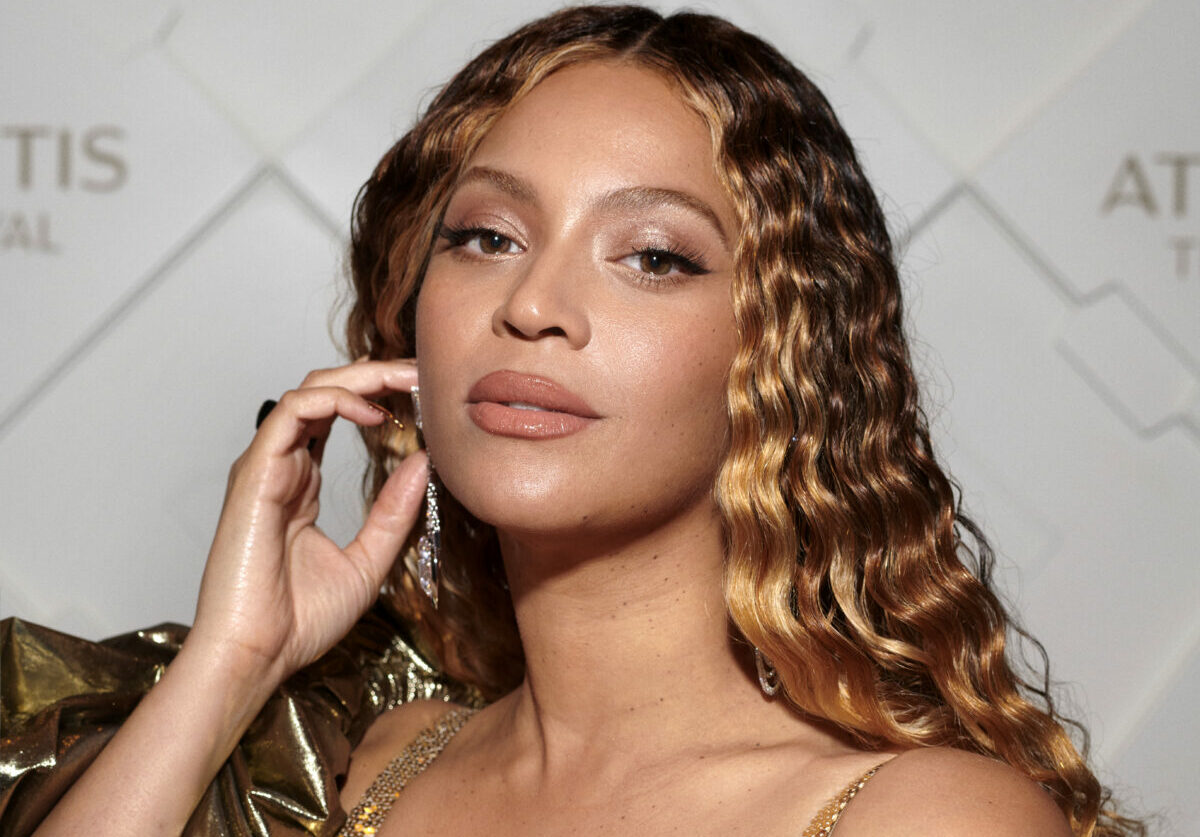
Cécred, a haircare brand founded by Beyoncé, has officially announced its upcoming launch at Ulta. The release marks the store’s biggest haircare partnership to date.
For fans eager to try out the singer’s haircare line in person, Cécred will begin selling its award-winning products at Ulta stores nationwide in April. According to Businesswire, the nation’s largest beauty retailer will stock the collection at over 1,400 locations and online. Beyoncé also shared the news to her Instagram, using her own lyrics to announce the groundbreaking partnership.
The news also comes during Cécred’s one-year anniversary. Since its launch, the brand has sought to revolutionize and unify haircare techniques. With Beyoncé’s noted childhood in her mother’s salon, Cécred’s Foundation Collection introduced its bestselling products such as the Hydrating Shampoo and Conditioner, Fermented Rice & Rose Protein Ritual, and Treatment Mask.
Buyers will also have the chance to purchase the popular Restoring Hair and Edge drops. Furthermore, Cécred will take part in Ulta’s first-ever salon integration. Ulta’s styling amenities, available at all locations, will also promote Cécred products to clients by offering the line during services.
“In the past year, we’ve helped so many make a deeper connection with their hair, building a community that redefines what a typical hair care brand looks like,” Beyoncé said, as reported by MSN.
“Our historic partnership with Ulta Beauty represents a meaningful milestone in our journey of getting Cécred in the aisles and salons nationwide for everyone to experience.”
Its exclusive partnership at Ulta will also come with branded elements implemented throughout the storefronts. With life-size displays and custom fixtures, a Cécred takeover will engage fans and avid shoppers. The marketing rollout will also highlight the brand’s patent-pending bottles.
“It’s going to be very prominent, front-and-center with life-sized fixtures and bottle amplification,” shared Ulta’s CEO, Kecia Steelman, as well. “We’re going to amplify this in a way that we’ve never done before in our salons. It’s going to be a total 360-degree approach.”
Cécred has become a growing name for salon-quality products that produces results for healthier hair of all textures. With its mission also in uplifting beauty entrepreneurs, Cécred aims to expand its reach with Ulta as it begins the next chapter.
Elon Musk Demands Documentation Of Duties From Federal Workers Or Else …
Elon Musk told federal employees to provide a list of roughly five bulleted accomplishments to the Office of Personnel Management. Employees will have until Monday, Feb. 24, 11:59 p.m. ET, to provide their list to the Office of Personnel Management.
Elon Musk, who leads the Department of Government Efficiency, emailed federal employees over the weekend to warn them to account for the work they did this past week or lose their jobs.
“Consistent with President @realDonaldTrump’s instructions, all federal employees will shortly receive an email requesting to understand what they got done last week,” Musk wrote on X.
“Failure to respond will be taken as a resignation.”
OPM told the outlet that the emails are part of the Trump administration’s commitment to an “efficient and accountable workforce.” It remains unclear what will happen next and if this will be a weekly requirement for federal employees. The legality of OPM’s request is also unclear, as many federal employees are protected by civil service protections that prevent them from being fired without cause.
Federal Employees Are Fighting Back Against Musk and DOGE
Since Trump took office, DOGE has orchestrated the mass firing of at least 20,000 government workers, a majority being probationary employees. Labor unions have since responded by suing the Trump administration. The unions argue that OPM has no authority to manage employees or federal agencies other than its own. The lawsuit points to the federal statute that states, “The head of an Executive department or military department may prescribe regulations for the government of his department, the conduct of its employees, the distribution and performance of its business, and the custody, use, and preservation of its records, papers, and property.”
Legal experts tell NPR that it is likely that Musk’s request will not stand up in court.
“Firing someone who was unable or unwilling to respond would be found to be a disproportionate punishment by a labor arbitrator,” labor attorney Suzanne Summerlin said.
However, choosing not to respond could result in disciplinary action.
“A letter of reprimand or a suspension would likely be found by an arbitrator to be proportionate,” she added.
Attorney Tony Buzbee Won’t Be Practicing Law In NYC After Failed Filings Against Jay-Z
He is not allowed to try any case within the five boroughs of New York as well as Westchester, Rockland, Putnam, Orange, Dutchess, and Sullivan counties
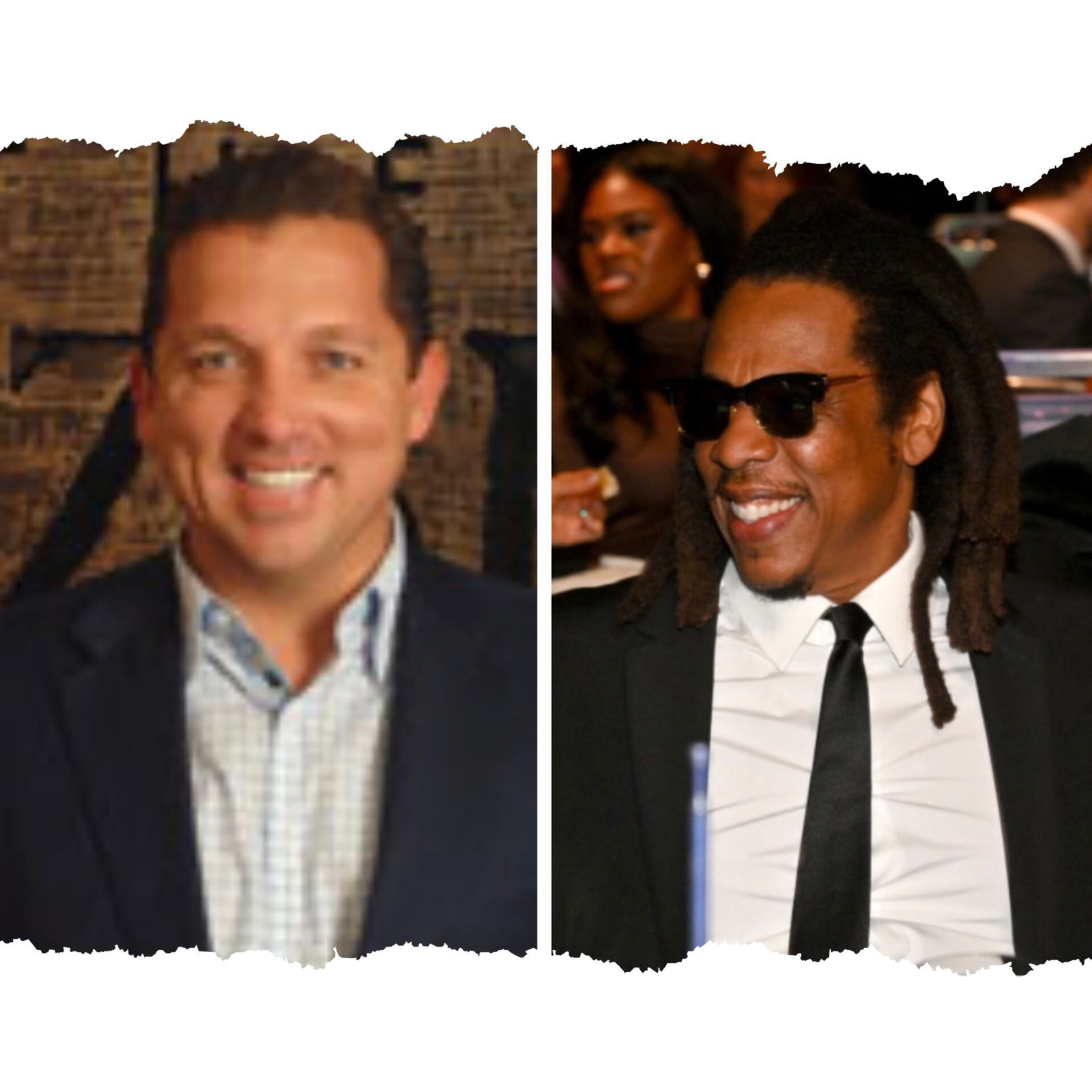
Attorney Tony Buzbee, who has filed multiple lawsuits against music mogul Sean “Diddy” Combs, has been denied the ability to practice law in the Southern District of New York.
According to Complex, the lawyer, who had to dismiss a lawsuit filed against Diddy and recording artist Jay-Z recently, is not allowed to try any case within the five boroughs of New York as well as Westchester, Rockland, Putnam, Orange, Dutchess, and Sullivan counties. This is not good news for the attorney, who has filed several lawsuits against Diddy in the past year.
Court reporter Meghann Cuniff posted the ruling on her social media account stating that the ruling came from the Committee on Grievances for the Southern District of New York. That committee is responsible for investigating complaints of attorney misconduct.
His lawsuit against Jay-Z is dismissed and not coming back, and now Tony Buzbee is trying to ensure he can keep litigating his other lawsuits against Diddy because his admission application in the Southern District of New York was denied. pic.twitter.com/NuKOU7R38W
The committee said that Buzbee failed to ask permission to practice in the district before he submitted for admission on Jan. 29, 2025. He just recently performed that task because his negligence was pointed out in the lawsuit he filed that accused the two businessmen of sexually assaulting a then-13-year-old girl in New York City in 2000.
With the recent ruling, he will have to include the denial letter each time he wants to pursue a case within the Southern District of New York.
Brooklyn rapper Jay-Z is now in the clear after Buzbee dismissed the lawsuit against the “Hard Knock Life” lyricist, but the attorney has about 12 other suits against Diddy that may be in jeopardy due to this recent ruling against Buzbee.
CNN reported that attorneys for Diddy say that Doe dropping her lawsuit means that the other numerous allegations against Combs were also false.
“This is another confirmation that these lawsuits are built on falsehoods, not facts…[in] case after case filed by individuals hiding behind anonymity.”
Diddy has been in custody since September 2024 at the Metropolitan Detention Center in Brooklyn, New York, as he awaits an upcoming federal trial on charges including racketeering conspiracy, sex trafficking, and transportation to engage in prostitution.
2025 Women Of Power Summit Honorees Will Have ‘Conversations That Count’
These Conversations will include one-on-one chats with figures such as Valerie Jarrett, Robin Washington, and Glenda McNeal.
BLACK ENTERPRISE‘s 2025 Women of Power Summit returns this March with “Conversations That Count” featuring trailblazers like Valerie Jarrett and Glenda McNeal.
The four-day summit begins March 5 at The Bellagio Hotel & Casino in Las Vegas. With its theme of “Momentum: Our Future, Our Promise, Our Power!,” the event will continue its mission to provide professional development for women of color. Attendees will not only receive tips and treats to boost one’s professional journey, but also hear directly from the diverse women at the top of their industries.
Ahead of this, the summit will showcase its Legacy Awards Gala, whose honorees will take part in “Conversations That Count” later in the week.
Following registration provided through Equitable, these “Conversations that Count” will start during the second day of programming. Attendees can begin the morning at a workout hosted by UnitedHealth Group. BE‘s CEO Earl “Butch” Graves Jr. will then kick off the sessions with his opening remarks.
The first discussion, brought by Nationwide, will see Glenda McNeal, Chief Partner Officers at American Express, and Robin L. Washington, Strategic Adviser and Salesforce Board Member, sit down for a one-on-chat as Legacy honorees for this year’s summit. The esteemed industry leaders will share their insights into building a successful career and their climb to the C-suite.
Shortly after, Dell will host another exclusive conversation with BE’s Barbara Graves Award recipient Valerie Jarrett. Jarrett has earned recognition for her work as senior advisor to Former President Barack Obama, and currently serves as Chief Executive Officer at the Obama Foundation. With her historic rise as a Black woman in U.S. politics, Jarrett remains a revered figure for her continued public service. In her own chat, she will detail her journey and wisdom learned from beyond the White House.
While the entire Women of Power Summit hopes to inspire and unite women of color throughout their careers, these “Conversations that Count” aim to dig deeper into what makes a trailblazing woman in corporate spaces. As these intimate chats break down the wall between leaders and rising professionals, the summit will offer an immeasurable experience to start off one’s 2025 goals.
Registration is available now to take part in this premier experience.
Irv Gotti’s Brother Shares The Producer Suffered A Stroke While Eating Chinese Food
The legendary music producer and record executive was diagnosed with diabetes several years ago
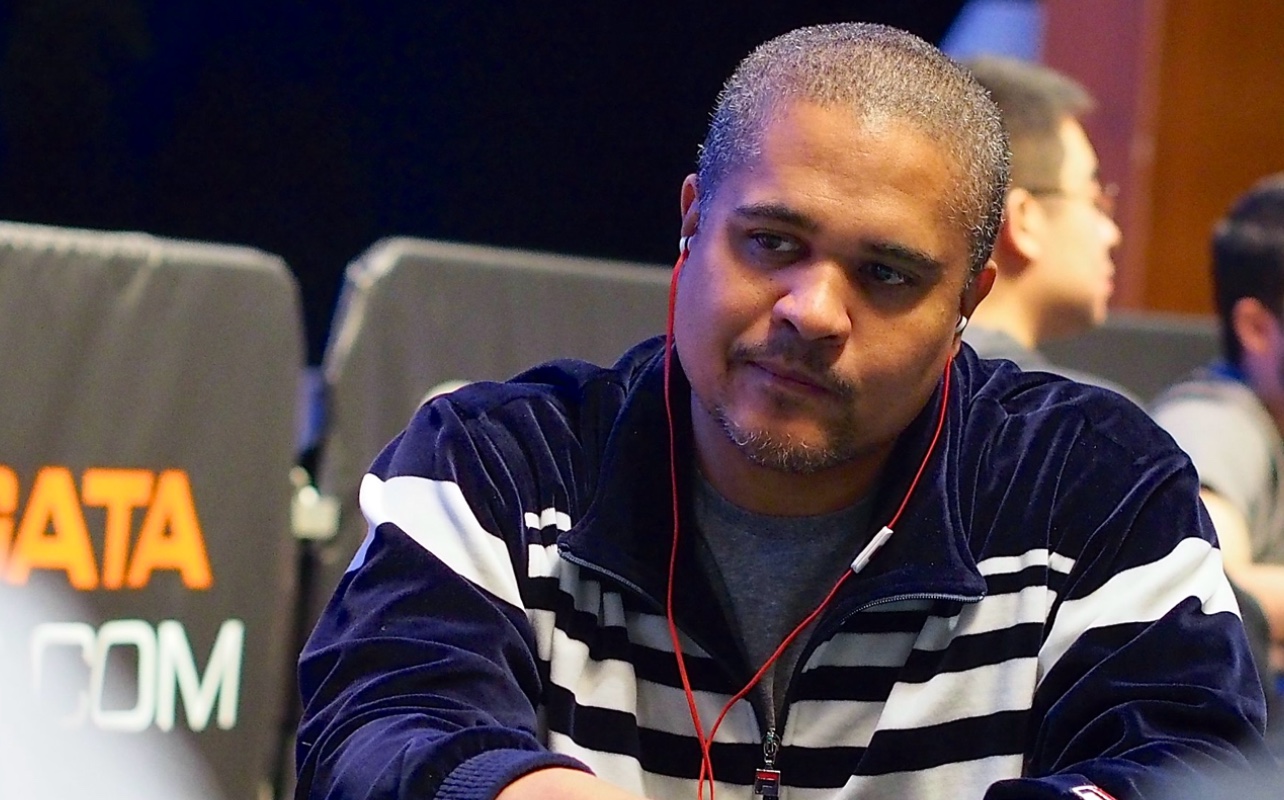
On a recent podcast, Chris Gotti (Irving) revealed that his music-producing brother Irv Gotti died after having another stroke as he was eating Chinese food and playing poker.
The legendary music producer and record executive was diagnosed with diabetes several years ago and had been struggling with the disease. He died on Feb. 5 after suffering a “massive hemorrhagic stroke,” according to his brother Chris. Chris, who is the older brother of Irv, appeared on the 2Way podcast with host Mark Halperin, along with guest Damon Dash, to speak about the Murder Inc. co-founder and his recent death.
Irv was diagnosed with Type 1 diabetes, which means his pancreas did not produce insulin. Dash also revealed that he is also a Type 1 diabetic during the program. Chris also mentioned that their father, who died at the age of 86, was also a diabetic.
Chris said that Irv was diagnosed with the disease in his late 40s, and when told about his condition, he did not believe he had it.
“He’s 54. I believe he was diagnosed in his 40s, late 40s. But Irv doesn’t go to the doctor so that’s why he’s so late being diagnosed,” Chris stated. “And when he finally did go get a real physical and a check-up, they were like, ‘You’re diabetic,’ and he didn’t believe it.”
Chris also said that when Irv was initially diagnosed, he was labeled a Type 2 diabetic, meaning his pancreas was able to produce some insulin, but not enough to sustain sugar levels at a normal rate, but Irv did not keep up with the rigors of keeping his sugar in control.
“We all have to go at one point in time we just really wanna go on our terms. That’s how I look at it. And Irv, sadly enough, he did go on his terms. He just didn’t believe it and he was like, ‘I’m going to go the way I wanted.’ He ate a bunch of Chinese food while playing poker and had a massive hemorrhagic stroke, which is bleeding on the brain.”
Chris did bring up a valid point when discussing his brother’s death. He said that diabetes does not kill you, it’s always something else due to not taking care of the condition itself.
Galveston’s First Black Lifeguards Honored With Historical Marker
The area where the marker is displayed is part of what used to be called Brown Beach, a segregated beach once patrolled by the city's first Black lifeguards.
Galveston, a city deeply tied to the history of Black freedom through Juneteenth and the emancipation of enslaved people in Texas, revealed a hidden chapter of its past with the installation of a new Texas historical marker along the Galveston Seawall on Feb. 1.
According to ABC 13, the area where the marker is displayed, near 27th Street, is part of what used to be called Brown Beach, a segregated beach that was once patrolled by the city’s first Black lifeguards.
David Mitchell, the chair of the African American Beach Lifeguard Memorial project, one of the groups that pushed for the creation of the marker, told the outlet that Black lifeguards served the area for over 30 years.
“This is an area of where they protected and served African American beachgoers during segregation between the years of 1930 up until 1962,” Mitchell said.
The marker tells a story that some Black residents of Galveston, like Sharley Adams, lived through parts of.
“We wanted to integrate downtown,” she recalled. “Our parents pay taxes here in Galveston…and yet, we could not sit on the counters.”
Adams continued, recalling how she felt when she and some of her friends tried to integrate Galveston’s whites-only beach.
“I was traumatized and really realized that it was because of my color,” she said. “I think it was just like this because I was African-American.”
According to Mitchell, the story of Galveston’s first Black lifeguards is important, particularly given the context of today’s anti-diversity, equity and inclusion movements.
“It’s important because it actually speaks to the necessity to make sure that inclusiveness is literally a way of life,” Mitchell said.
According to The Galveston Daily News, the Texas Historical Commission awarded the site an “under-told” history marker in commemoration of the “fascinating history of heroic African American lifeguards” like James “Jim” Helton, Waverly Guidry, Leroy Green Jr., Lynn Stephens, John Ned Rose, Willie Diggs, and Oliver O’Conner.
In 1921, Black residents of Galveston asked for a lifeguard to oversee the beaches of the city, and in 1935, Helton officially became the city’s first Black lifeguard, followed by Guidry in 1943. The pair have been credited with saving the lives of over 30 people and were also tasked with recovering those who had drowned.
The project has three phases, phase one was erecting the historical marker, phase two involves the development of a database profiling Black lifeguards and Black beach history on Galveston Island by historians, and phase three involves the creation of a sculpture that is a representation of past and present Black lifeguards in an artistic representation of their contributions.
According to Carol Bunch Davis, an island researcher specializing in African American culture, the state’s under-told marker series is “intended to address historical gaps, promote diversity of topics and proactively document significant underrepresented subjects or untold stories.”
She continued, discussing the monument’s significance and the stories of the pioneering lifeguards.
“Their stories offer insights about the different roles the guards played in the community. They were often longshoremen who sometimes ran small businesses or held a variety of jobs to support their families. They were held in high esteem and served a pivotal role in the community by providing protection to all,” Davis said.
Commuters are advised to pay close attention to overhead signs displaying toll prices and plan their trips accordingly.
Commuters on the I-4 Express Lanes will experience higher toll rates during peak hours starting Monday, Feb. 24, as the Florida Department of Transportation (FDOT) implements a new dynamic pricing system. Designed to manage traffic congestion, the updated tolling model will adjust prices based on real-time traffic levels, marking a shift from the fixed-rate system in place since the express lanes opened in 2022.
How It Works
Under the dynamic pricing system, tolls will increase during high-traffic periods to encourage drivers to stagger their travel times and reduce congestion. Overhead signs will display current toll prices at entry points, allowing drivers to decide whether to use the express lanes or opt for the regular lanes.
The busiest areas near Downtown Orlando are expected to see the most significant impacts, with tolls fluctuating based on demand. FDOT officials emphasize that the change aims to maintain reliable travel times for express lane users.
What Remains Unclear
FDOT has not disclosed the specific price ranges for the dynamic tolling system, leaving drivers uncertain about how much more they may need to pay during peak hours. Officials have described the increases as “small,” but details remain vague.
It’s also unclear whether the new system will successfully alleviate congestion or if drivers will seek alternative routes to avoid higher tolls.
The Bigger Picture
The I-4 Express Lanes, also known as “I-4 Ultimate,” debuted in 2022 as part of a $2.3 billion infrastructure project to address the chronic traffic issues in Central Florida. The addition of dynamic pricing aligns with a growing trend in urban traffic management. Cities like Miami and Washington, D.C., have adopted similar models, which have shown some success in managing congestion and ensuring smoother commutes for paying drivers.
Orlando’s rapid population growth has exacerbated its traffic challenges, particularly along I-4, a critical artery for the region. Dynamic pricing represents FDOT’s effort to balance commuter demand with the need for efficient traffic flow.
What Drivers Are Saying
Local commuter Angelia Colon acknowledges the challenges of adapting to the new system but sees it as an opportunity to rethink her travel habits.
“Getting an early start on road trips is more important than ever,” Colon said, noting that avoiding peak-hour toll increases might save both time and money.
FDOT’s Perspective
FDOT officials maintain that the new system is designed with drivers in mind, ensuring fair access to the express lanes while managing congestion. Though specific toll rates have not been shared, they stress that the price adjustments are intended to be modest and based on real-time conditions.
“This system is about giving drivers choices,” an FDOT spokesperson said. “Those who value reliable travel times can continue to use the express lanes, while others may choose alternate routes or adjust their schedules.”
What’s Next?
As the system rolls out, FDOT will monitor traffic patterns and driver behavior to assess its effectiveness. Based on the data collected in the coming months, adjustments may be made.
For now, commuters are advised to pay close attention to overhead signs displaying toll prices and plan their trips accordingly.
Key Takeaways
Dynamic pricing on I-4 Express Lanes begins Monday.
Tolls will fluctuate based on traffic levels, with higher rates during peak hours.
FDOT aims to reduce congestion and maintain reliable travel times.
Drivers should monitor overhead signs for real-time toll prices.
The success of this program will likely influence the future of tolling systems in other parts of Florida as state officials continue exploring innovative ways to manage increasing traffic demands in one of the nation’s fastest-growing regions.
NYC Mayor Eric Adams’ Trial Delayed Indefinitely, Judge Leaves Corruption Charges Intact Until March
Meanwhile, NYC has sued the Trump Administration after discovering it was missing $80.5M sent by the Biden Administration to offset migrant shelter costs.
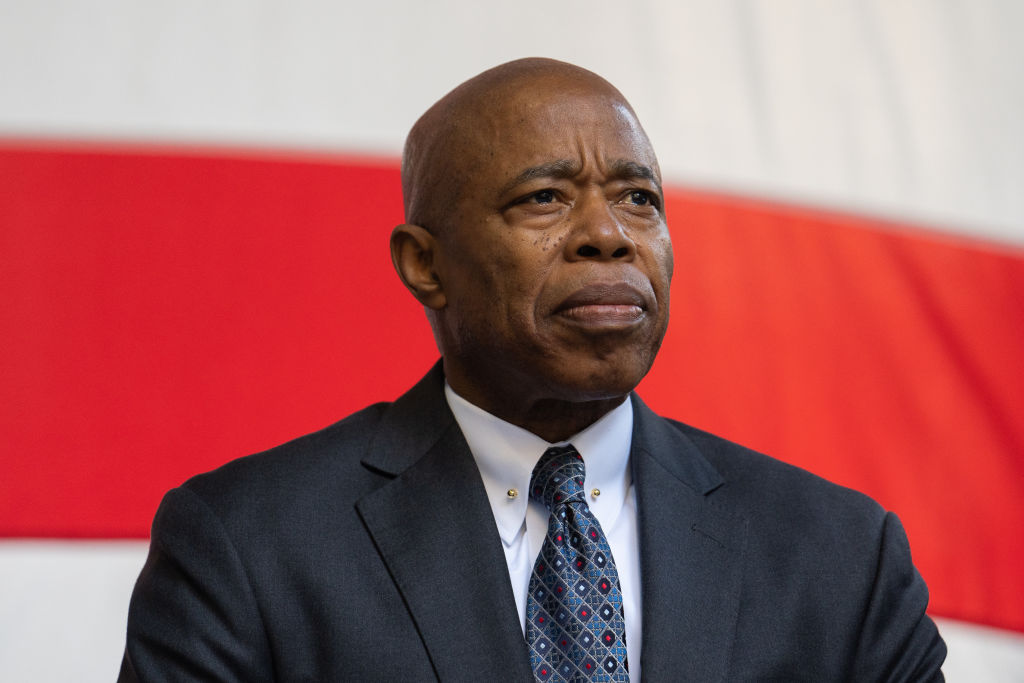
Federal judge Dale E. Ho canceled New York City Mayor Eric Adams’ corruption trial on Friday and appointed counsel to advise the court on the Justice Department’s contentious request — at Trump’s behest — to drop charges against the Democratic mayor.
According to Time Magazine, the order from Ho means that he will not decide whether or not to dismiss the case until the middle of March.
The judge appointed Paul Clement, a former U.S. Solicitor General in George W. Bush’s administration, to present arguments regarding the United States government’s request to drop the charges.
As Ho writes in his order, courts are typically “aided in their decision-making through our system of adversarial testing, which can be particularly helpful in cases presenting unusual fact patterns or in cases of great public importance.”
Since there was no presentation of an adversarial position to the Justice Department during a hearing on Feb. 19, the absence of such a position made it necessary to appoint Clement to help the judge reach an appropriate decision regarding the case, which is of great public interest.
According to Acting Deputy U.S. Attorney General Emil Bove, the request to drop the charges was put forth because a trial would come too close to the reelection campaign of Adams and would also keep him from helping Trump’s law-and-order priorities.
This argument has, however, led to speculation from legal experts that the only way for Adams to escape a trial is if he agrees to assist the Trump administration in rounding up illegal immigrants in New York City.
This is largely the reasoning that former interim U.S. Attorney Danielle Sassoon provided in her resignation letter, wherein she accused Bove of promising Adams a dismissal of his case if he helped with the Trump administration’s immigration enforcement efforts.
According to The Associated Press, Ho, who is a former civil rights attorney for the American Civil Liberties Union, is not rushing to a decision, because he wants to have as much information as possible at his disposal before making a choice regarding whether or not to continue the trial of Adams.
As David D. Cole, the former national legal director for the ACLU, where Ho ran the Voting Rights Project for 10 years before joining the federal bench in 2023, told the AP, this course of action is standard for him.
“Dale Ho is one of the very best lawyers I’ve ever worked with. He is diligent, careful and unstinting in his pursuit of justice,” Cole said, Cole is now a law and public policy professor at Georgetown University. “And, as may be relevant here, he is someone who fully appreciates both the limits and the responsibilities of his role.”
According to The New York Times, also on Feb. 21, New York City sued the Trump Administration after the city discovered that it was missing $80.5 million, which the Biden Administration sent the city to offset the costs of sheltering the city’s migrant population.
In their lawsuit, the city described the recoup of funds by the Trump administration as “lawless” and a “money grab” of the funds which had been previously granted by Congress and allocated through the Federal Emergency Management Agency.
Adams, who has been accused of being used as a pawn by the Trump administration, appeared to fight back against this likely overreach of the executive branch, as he issued a statement decrying the theft of taxpayer monies.
“The $80 million that FEMA approved, paid, and then rescinded — after the city spent more than $7 billion in the last three years — is the bare minimum our taxpayers deserve,” Adams said in a statement. “And that’s why we’re going to work to ensure our city’s residents get every dollar they are owed.”
Brad Lander, the New York City Comptroller, asserted in a letter to the city’s Finance Department that this was just another episode of federal overreach being facilitated by Elon Musk and his unofficial Department of Government Efficiency.
“This withdrawal is just one component of an escalating series of measures by which Musk and DOGE are weaponizing government payments to support unchecked federal executive power, in violation of the law,” Lander wrote.
Parents Claim 13-Year-Old Son Died From Social Media Challenge Instead Of Alleged Suicide
The young teen was found unresponsive by him parents before being pronounced dead.
The parents of a deceased 13-year-old boy believe their son died from a social media challenge and not suicide as investigators initially thought.
Nnamdi Glenn Ohaeri Jr.’s parents found him unresponsive at their Southern California home on Feb. 3. According to KTLA, the family of six had spent the prior evening watching the Grammy Awards together. However, the following day became a nightmare.
As Ohaeri Jr.’s mom performed CPR on her eldest son, his father called out for help from the police and neighbors. While all tried to save him, the teenage boy was pronounced dead.
Despite original assumptions that the teen committed suicide, his family began to doubt the cause of death. In their own investigation, they discovered his participation in a social media challenge that could have led to his passing.
The challenge encouraged participants to try to make themselves unconscious. The effort is similar to the “Blackout Challenge,” in which several participants died, prompting lawsuits against TikTok by their bereaved parents. However, the question of how Ohaeri Jr. discovered the challenge remains unclear, especially as his parents prohibited social media on his phone.
In light of this tragedy, the Ohaeris want other families to have discussions about the dangers of social media. They hope to inspire others to check in with their children about internet engagement and safety.
“I’m going through the Rolodex of guilt now like, ‘Did we check in more? Should I have not been as firm four years ago?’” shared Ohaeri Sr.
As the family deals with the loss, they have launched a GoFundMe to help with expenses during this time. The page also revealed more about their beloved son known as “Deuce.”
“When someone you love becomes a memory, the memory becomes a treasure,” quoted the family in the description. “We want to honor the treasure that was the beloved Nnamdi Glenn Ohaeri Jr, ‘Deuce.’ A vibrant, kind, loving, beautiful young man, a son, a brother, a grandson, a nephew, a friend, a teammate, a bandmate, a leader, an athlete, who had a passion and incredible talent for football who meant so much to so many, and will be so very deeply missed.”
The family has raised over $75,000 of their $100,000 goal.