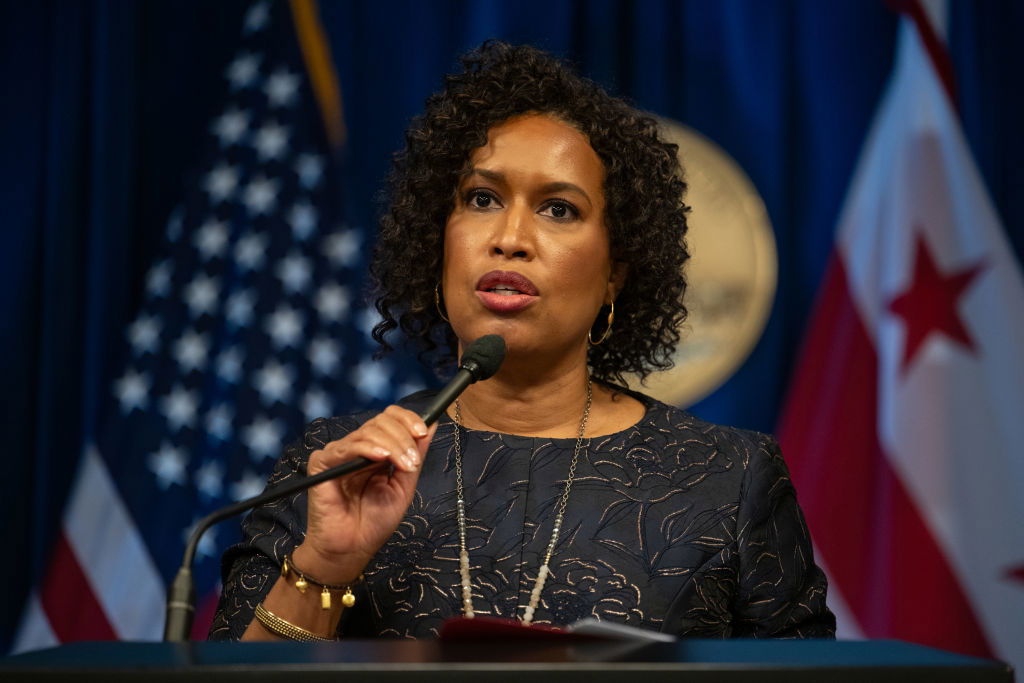
The mayor offered positive feedback for Trump’s deployment of the National Guard. This is a sharp reversal in tone just weeks after she characterized his takeover as “unsettling and unprecedented.”
Initially, the mayor resisted federal control of the Metropolitan Police. She joined critics in calling the move an “authoritarian push.” Mayor Bowser also discussed steps of action to block the takeover, in an attempt to preserve D.C.’s autonomy
However, in the past few days, her tone has changed.
At a press conference, Bowser conceded that the influx of federal law enforcement and National Guard troops had yielded results. According to statistics, carjackings were down 87%, and violent crime dropped 45%.
“We know that when carjackings go down, when use of guns goes down, when homicides or robberies go down, neighborhoods feel safer and are safer, so this surge has been important to us,” said Bowser
Still, the mayor expressed concerns over other tactics.
“I am devastated by people living in fear,” she said. “I think you know very clearly how I feel about our nation needing comprehensive immigration reform, about the Congress establishing a pathway to citizenship for hard-working people who came to this country for a better life and who are not criminals, who are law-abiding.”
While Mayor Bowser is softening to the national guard occupation, other political figures are stating their frustration with the situation.
“…it’s completely performative,” said Maryland Gov. Wes Moore in an interview with ABC’s This Week.
“He is simply using honorable men and women as pawns to distract us from his policies, which continue to drive up unemployment and strip away health care and food assistance from those who need it most,” Moore continued.
D.C. Attorney General Brian Schwalb also called the occupation “unnecessary and unlawful.”
“The Administration’s actions are unprecedented, unnecessary, and unlawful. There is no crime emergency in the District of Columbia. Violent crime… is down another 26% so far this year,” Schwalb said.
Many onlookers are questioning the sharp reversal of Bowser. For many, the National Guard’s presence in the state is unsustainable, making resisting a federal takeover a more pressing issue.
‘You Don’t Know Nann’ About Trick Daddy’s New Restaurant ‘Sunday’s Eatery’ In Miami Gardens
Rapper Trick Daddy, real name Maurice Young, is expanding his portfolio with a second location of his restaurant 'Sunday’s Eatery.'
Rapper Trick Daddy, real name Maurice Young, is expanding his portfolio with a second location of his restaurant, Sunday’s Eatery.
Sunday’s Eatery’s new location, in Broward County, Florida, follows the success of Young’s original eatery in Miami Gardens. The new restaurant promises the same down-home, nostalgic menu that made the first location a Florida favorite.
The rapper said Sunday’s Eatery is focused on serving the people in his Florida community. While he could have chosen a location that is already economically thriving, he wanted to choose a location that served his people.
“We could have went to Wynwood. We could have went to South Beach. We could have went anywhere we wanted. … We wanted to go to Miami Gardens to show them that we are still for our people,” Young told The Miami Herald.
Sunday’s Eatery is known for offering Sunday meal recipes every day of the week. The menu consists of soul food dishes popular in the South.
At the opening, Trick Daddy said, “Where you can get a Sunday’s meal, any day of the week. I’m talking about the starches, your greens, your corn bread and meats. We’re gonna do something different here.”
The new site in Broward is part of Trick Daddy’s continued mission to bring his homegrown Southern-style cuisine to new neighborhoods. His inventory typically features dishes such as fried ribs, Cornish hens (baked and fried), greens, macaroni and cheese, cornbread, and candied yams.
In 2019, Customer Chronic Chris told WVSN, “I think the food is excellent. I think it’s a real good, down-home flavor. Everything is cooked to perfection. I like everything. I mean, I’m on his plate eating.”
Trick Daddy remains active behind the scenes, working in the kitchen alongside his brand and hosting ventures, such as his Facebook cooking show, Bleep I Got My Pots.
He has also stayed visible in South Florida’s entertainment circles, blending artistry with culinary entrepreneurship. He told The Miami Herald he has plans to continue Sunday Eatery’s expansion, “Y’all get ready,” he warned. “We coming.”
For ‘Lavish The Band’ Founder Ebony Telesford, Grenada’s Spicemas Is More Than Profit – It’s Culture
In a competitive carnival landscape, where bands often vie for the most commercial appeal, Telesford’s business model stands apart.
In the vibrant, rhythmic chaos of Grenada’s Spicemas, where elaborate costumes and booming soca music fill the streets, a quiet revolution is underway. The festival pays tribute to the Caribbean nation’s rich history as a spice producer, with many of its cultural traditions deeply intertwined with the island’s identity. Corporate giants or international sponsors aren’t leading the way; instead, it’s a young, determined Grenadian woman with a simple philosophy: culture over commerce.
Ebony Telesford, the founder and leader of Grenada’s Lavish The Band, has built her enterprise not on the promise of immense profit, but on the love for her nation’s most treasured cultural expression.
In a competitive carnival landscape, where bands often vie for the most commercial appeal, Telesford’s business model stands apart.
“The goal behind it has just always been about the love for culture,” she said in an interview with BLACK ENTERPRISE. Rather than chasing a hefty bottom line, her focus is on sustainability and accessibility.
“As long as the business breaks even for me, I’m totally okay with that,” she explained. “I see it as my contribution to my culture itself.”
Telesford’s commitment to a break-even model allows her to keep a promise that resonates deeply with her people: to keep her costumes affordable for local revelers, ensuring that residents aren’t priced out of their own traditions.
The cornerstone of Lavish The Band’s identity is its unique offering, which Telesford sums up in a single phrase: “experiencing the true essence of Spicemas.”
While many bands sell a single costume for the main parade, Lavish provides a comprehensive, four-part carnival journey for the price of one. This inclusive package offers masqueraders a pass to four distinct events, a nod to the authentic, full-immersion experience Telesford cherished in her youth.
“I knew growing up as a Grenadian what it felt like doing a four-piece,” she said, recalling the marathon of festivities from the dawn of J’ouvert to the climax of the Parade of the Bands. Lavish takes the guesswork out of the process for foreign visitors, while delivering an authentic experience.
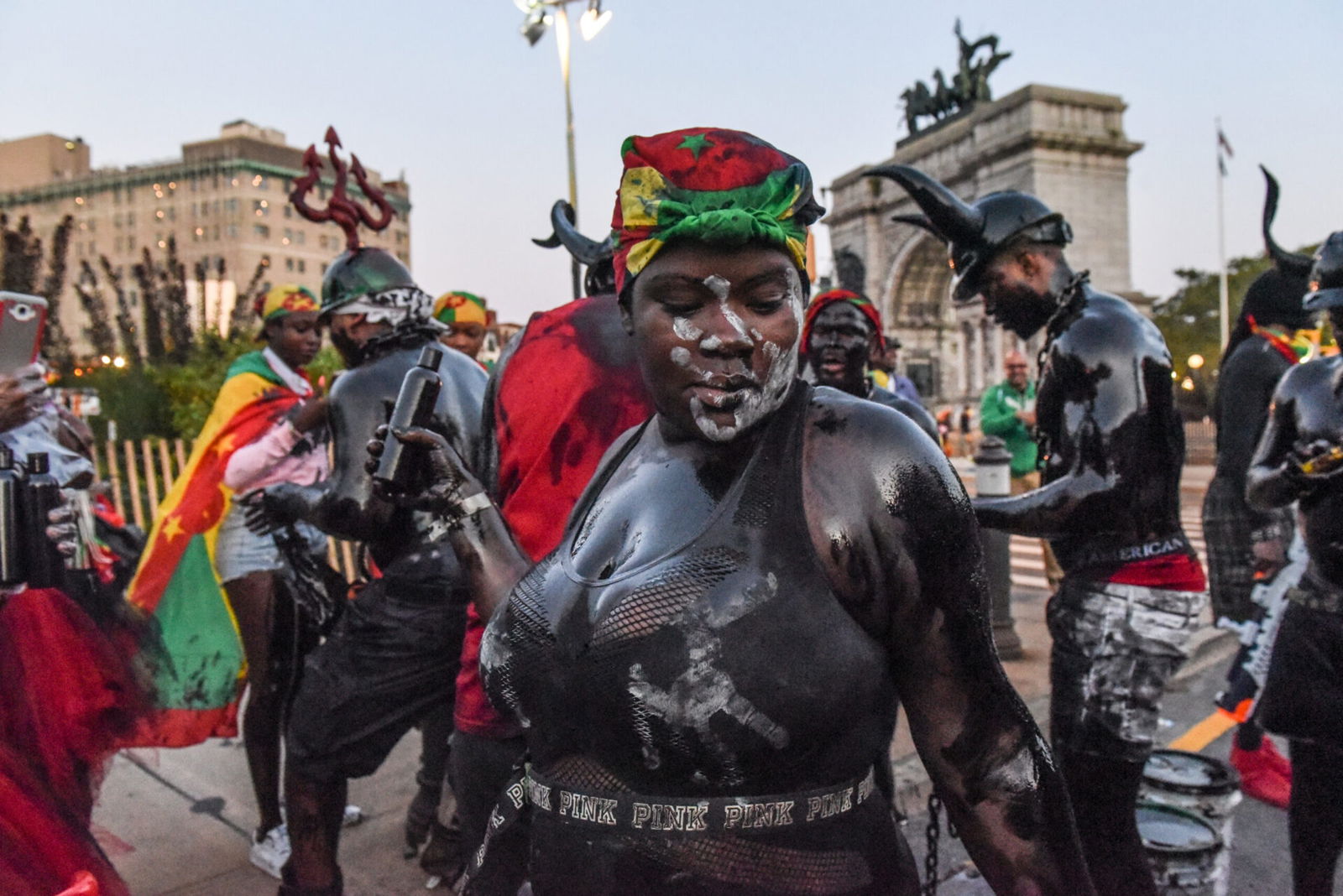
The experience begins with a deeply personal tribute: a traditional Jab Jab jump-up dedicated to her father, who was known as the “king of jab.”
Lavish’s version of the centuries-old tradition uses a mixture of charcoal and coconut oil as an alternative to the heavy, oil-based paint, ensuring a more authentic and less abrasive ritual of freedom and rebellion.
From there, the journey continues with Monday afternoon’s “pageant,” followed by the electric, glow-stick-filled street parade of Monday Night Mas. It culminates in the final, gem-adorned spectacle of Carnival Tuesday.
Beyond the front-facing parades and vibrant aesthetics, Telesford’s philosophy extends to her supply chain and creative process. She and her team, including a lead designer and a creative manager, brainstorm a unique theme each year.
For Lavish The Band’s recent Greek-inspired collection, Telesford focused not on the gods, but on the Muses of creativity.
On Lavish’s latest collection, the website says, “The Muses have watched over humanity, guiding the arts, music and storytelling from their celestial realm. But as time passed, their influence weakened and creativity began to fade, smothered by the demands of modern life and the rise of technology. Now, with the world losing its spark, the Muses are summoned one more–reborn and with a new mission: To ignite the fire of imagination and remind humanity that the power of creation is its most divine gift.”
“We pull colors, we pull different elements, the moods that we’re going for, and we give it to the designers,” she explained to BE, giving them “free range” to create within that conceptual framework.
Telesford’s commitment to authenticity is also deeply rooted in her staffing decisions. She makes a concerted effort to predominantly hire Grenadian locals, from the entire road staff to the engineers and, most critically, the DJs.
“I predominantly hire locals,” she affirmed. “I feel like if you’re coming into Grenada to experience Grenada Carnival, you’re not coming to listen to Trinidadian DJs or American DJs. You want to hear what’s happening in Grenada.”
Despite her success, the journey is not without its challenges. Telesford sees her biggest emerging obstacle as being a female entrepreneur in an industry that, while catering to a female-dominated customer base, is still led almost exclusively by men.
“I think I am one of two in Grenada with all the bands that they have,” she noted, highlighting the single-digit number of female band leaders across the entire Caribbean.
Telesford shared a heartfelt message on Lavish The Band’s official Instagram account, thanking revelers and supporters for sticking with the company.
“As we wrap up an incredible Spicemas season, we want to express our heartfelt gratitude for bringing your enthusiasm, spirit, and positive vibes to ‘Muses.’ Your ongoing support means the world to us! A big shoutout goes to our sponsors, partners, affiliates, and vendors. Your invaluable contributions have made Lavish the Band shine even brighter. A special thank you goes to our extraordinary team! Thank you for your hard work and dedication year after year.
“To our amazing masqueraders, you are the heart of Lavish the Band, and we thank you for choosing us as your band for Spicemas 2025. Our preparations for the next season are already in full swing, and we eagerly anticipate bringing you the True Essence of Spicemas once again in 2026. 1 LAVISH,” the band’s Instagram captioned.
As she continues to innovate and adapt to an ever-changing Carnival scene, the reality remains a poignant force in her work, driving her to succeed not just for herself, but for her culture and for other women who may one day follow in her footsteps.
HBCU Student, Isaiah Hand, Becomes First Tuskegee Airman In 80 Years
Isaiah Hand, an Aviation Science major at Tuskegee University, is the first student in nearly 80-years to earn private pilot’s license.
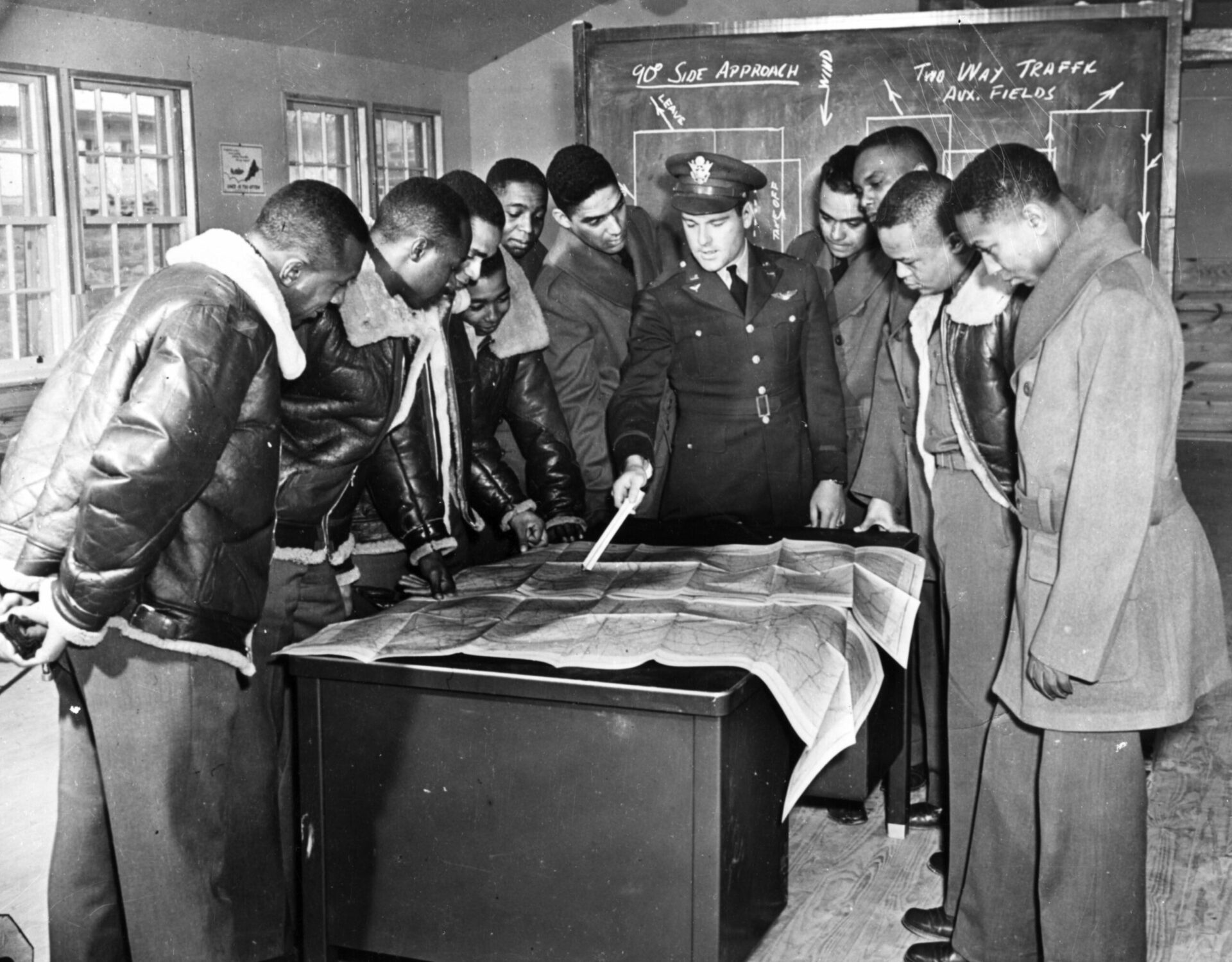
Isaiah Hand, a 20-year-old Aviation Science major at Tuskegee University, has become the first student in nearly eight decades to earn a private pilot’s license from the university, which recently relaunched its defunct aviation program. In a university press release, Hand reflected on the moment he earned his license at historic Moton Field, the original training ground of the Tuskegee Airmen of World War II.
“There is no other feeling like it,” Hand said.
The four-year Aviation Science degree integrates Federal Aviation Administration–certified pilot training. The career track offered by Tuskegee’s Aerospace Science Engineering Department was approved by the Southern Association of Colleges in 2024. Approval came after a $6.7 million infusion of federal funding. Students now have the opportunity to earn private, instrument, commercial, multi-engine ratings, and professional aviation licenses.
Dr. Mark A. Brown, Tuskegee University’s president, praised Hand’s accomplishment as an example of the university’s renewed mission to move forward in excellence.
“Confident, excited, poised, and ready to tackle the most complex problems our world has to offer,” Brown said. “Like Isaiah, our students are excited about our Aviation Science Degree Program and ready to continue the legacy of the Tuskegee Airmen and serve our nation.”
Titus Sanders, director of the Aviation Science program, said Hand’s driven approach came as no surprise, as the student clearly holds a deep passion for aviation.
“His enthusiasm and excitement for both aviation and Tuskegee were very clear from day one,” Sanders said. “I am not surprised that he is the first of this year’s cohort to get his check ride.”
Hand, a first-generation college student from Tallahassee, Florida, focused equally on excelling in academics and flying with dedication. He opted out of vacation to complete his training over a 12-week summer session. He is already working toward the next milestones: instrument rating, commercial license, and multi-engine certification.
Beyond the cockpit, Hand brings passion to campus life as a euphonium player and section leader in Tuskegee’s Crimson Pipers band.
“Flight, class, band, and then more flight, class, and band!” He said. “It takes time to mature into this mindset and to know your end goal—but it’s all paying off.”
Hand’s accomplishment revives Tuskegee’s storied aviation history and begins its newest chapter.
‘The Cutting Room Floor’ Podcaster Riles Internet Up Over Demanding Assistant Gig Paying $55k A Year
The job only offered $55,000 annually for a full-time, New-York based commitment.
The Cutting Room Floor has a new role open, for anyone naive enough to take it. The Black woman-led podcast sparked controversy over its new low-paying assistant gig.
Recho Omondi has been the face of the style podcast as it garnered new listeners for its insights into the fashion industry. However, as the show gains momentum, Omondi wanted to scale up operations by bringing someone new onto the team.
According to Complex, she made a since-deleted post about the new “Office Coordinator” position. As she began to describe the role, it looked as those the filler would wear multiple hats, despite the entry-level pay of $55,000 a year. However, the listing remains on LinkedIn, where submissions have since closed.
“This role is ideal for someone highly organized, excellent at comms (both written & verbal), proactive, and ready to hit the ground running,” detailed the LinkedIn post.
In the initial video, Omondi shared that the hired person would take on much more than office management. They would also serve in a personal assistant capacity to Omondi, who also said it “combines the responsibilities of a bookings administrator and studio coordinator.”
While the New York-based opportunity would come with inside access to an emerging platform, the pay caught a lot of social media users off guard. Not only does the job require in-person hours of 9:30 a.m. to 6:30 p.m., but it also offers no benefits.
The $55,000 salary would leave much to be desired, especially after New York taxes. After gaining immediate pushback on the uneven pay and expectations, Omondi defended the wages by stating its for someone ready to hustle.
“It’s not lost on me that that’s not a glamorous wage. You can’t be living lavishly,” she asserted.
She also said the role is for “the kind of person who wants to come to New York and hustle in the early years of their career.”
However, the internet still wasn’t having it. Some even stated that they would stop tuning into episodes over her tone-deaf post. Others also noted how inaccessible the fashion industry can be for people of color and those not from wealthy backgrounds. Given Omondi’s own awareness of this, they thought she would know and do better for those she lifts up.
In the midst of the backlash, Omondi told her Patreon that The Cutting Room Floor will freeze hiring for the role.
Dallas’ African American Museum To Receive $3M To Help Preserve Its Collection
Per the museum's website, it holds the distinction of having one of the largest collections of Black folk art anywhere in the United States.
The African American Museum in Dallas will be receiving $3 million in support from the Texas Historical Commission, a figure, which includes some additional support from Google, in an effort to preserve the materials the museum has collected during the 50 years it has been in operation.
According to Margie Johnson Reese, chief program officer of the museum, “This investment is about more than just conservation. It’s about making history accessible to a global audience. We are thrilled to work with the Texas Historical Commission and Google to preserve the works of art and the historical documents in our care. It is our responsibility to ensure that this irreplaceable material will endure to educate and inspire current and future generations.”
AAM Dallas is thrilled to announce that a very special conservation project is on the way! This exciting initiative will highlight our commitment to safeguarding history, art, and culture for generations to come.
— African American Museum Dallas (@_aamdallas) August 31, 2025
According to the museum, the funds will be used to make the collections it has archived more accessible and accentuate its role as a resource for education and research, both in Dallas and beyond. Currently, some portions of the museum’s collection is stored in non-climate controlled facilities, and these funds will help the museum to ensure that those sensitive artifacts are not degraded by the elements.
Traci Thompson, Google’s Global Community Development Strategy Manager, indicated in the press release that the company is thrilled to support the museum and its work to engage the community.
“Google is committed to making a positive impact in the communities where we operate, and we welcome opportunities to support the sharing of powerful stories. By working with the African American Museum, Dallas, we’re proud to be part of the effort to ensure that this rich cultural history remains available to inspire and educate people around the world,” Thompson said.
In addition to work by renowned artists like Romare Bearden, Clementine Hunter, Mose Tolliver, and Rev. Johnnie Swearingen, and others, plus archeological materials from The Freedman’s Cemetery; the museum also houses a number of historically significant documents, including early Dallas-based African American newspapers and rare photographs and papers from influential leaders such as Juanita Craft, Mamie McKnight, and the late U.S. Rep. Eddie Bernice Johnson.
As stated on the website, the museum’s mission is to inspire understanding, foster pride, and encourage unity among all who walk through its doors.
“The African American Museum, Dallas is committed to preserving, celebrating, and educating the public about the rich heritage and contributions of African Americans in Dallas and beyond. Our purpose is to serve as a cultural hub that honors the past, highlights the present, and shapes the future by showcasing the diverse experiences, achievements, and stories of African Americans. We aim to be a catalyst for dialogue, reflection, and action, empowering individuals to connect with history, embrace diversity, and contribute to a more inclusive society,” the museum states.
Chicago Mayor Brandon Johnson Signs Executive Order Aimed At Limiting Federal Troops
Both Mayor Johnson and Illinois Gov. JB Pritzker have presented a united front in resisting Trump's overtures about crime in Chicago.
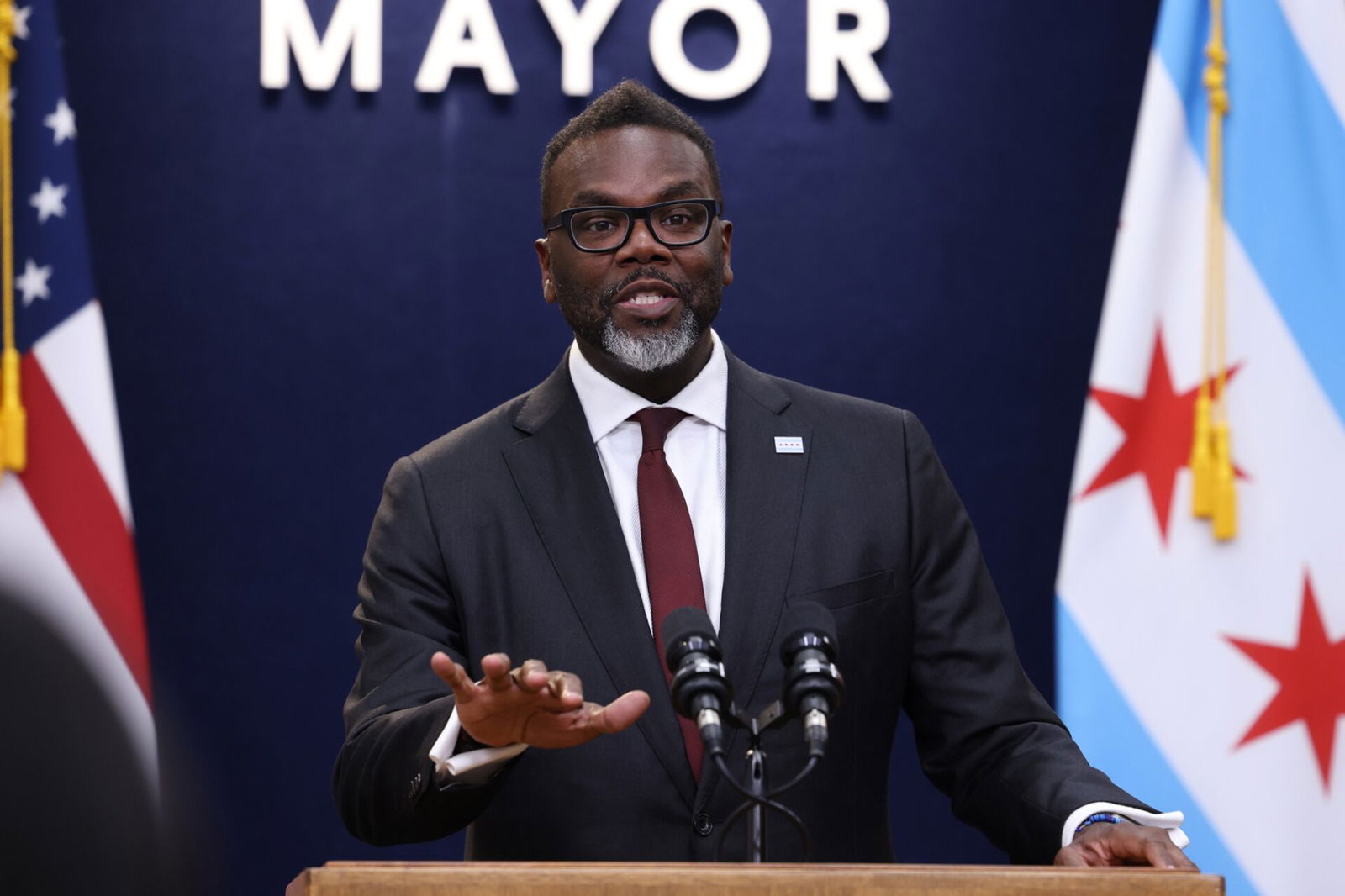
On Aug. 29, Chicago Mayor Brandon Johnson signed an executive order, titled “Protecting Chicago Initiative,” which is concerned with limiting any federal troops in the city to designated municipal policing roles and keeping Chicago’s citizens informed about any new deployments as well as their rights in the event of the federal government attempting to replicate what it is currently doing in Washington, D.C.
According to The Chicago Sun-Times, Naval Station Great Lakes, located near Chicago’s North Side is expected to be used as a staging ground for federal agents, but according to their sources, it is likely to be used as a command center but will not house any of those agents. Per the information Johnson has received, he expects troops to begin arriving in the city by Sept. 5.
Pursuant to the order, if the federal agents do stray from the same guidelines as the city’s police force, Johnson will enact legal action such as stripping the federal agents of their masks, making them wear body cameras at all times during any engagements with citizens, requiring them to wear identifiable items like badges and uniforms, and pulling the support of the Chicago Police Department from federal or military units present in the city.
“I do not take this executive action lightly,” Johnson told reporters. “I would’ve preferred to work more collaboratively to pass legislation…but unfortunately we do not have the luxury of time. We have received credible reports that we have days, not weeks, before our city sees some kind of militarized activity by the federal government.”
Both Mayor Johnson and Illinois Gov. JB Pritzker have presented a united front in resisting Trump’s overtures about crime in Chicago — widely considered a racist dog whistle — considering crime in the city, as it has nationally, has been declining.
Despite this, Julian Davis Mortenson, a constitutional law scholar at the University of Michigan, explained that although Johnson’s executive order was “well thought out,” he has questions about the ability of a local government to hold federal troops to account.
“It’s [legally] important in that it insists state and local law enforcement are independent,” Mortenson told the outlet. “Assuming the law enforcement operation is valid and there’s not some limitation to the scope of the federal authority … I don’t think a state government’s suit seeking to impose municipal law on how law enforcement conducts their operations would do very well.”
Despite the questions from Mortenson, Johnson presented himself as a figure who is willing to take on an increasingly authoritarian and fascist federal government, telling reporters, “This executive order makes it emphatically clear this president is not going to come in and deputize our police department. We do not want to see tanks in our streets. We do not want families ripped apart….And I don’t take orders from the federal government.”
Esiah Campos — a Lake County commissioner, working in concert with one of the aims to unmask federal agents, also called on state lawmakers to ban the practice statewide as well as mayors in Lake County to stand by their commitment not to help ICE harass their constituents.
“It hurts to see the base I drilled out of to house ICE and Homeland Security agents to terrorize our people. This is not a time for platitudes. Now is a time for action,” Campos said at an Aug. 29 press conference held in North Chicago’s Veterans Memorial Park.
Beyond The Long Weekend: Labor Acknowledgments Repair What’s Been Broken
In a nation designed and built by slaves, Labor Day marks the long struggle to move closer to fair and equitable wages for all of America’s workers.
Written by Dr. Marcus Anthony Hunter
Every September, Americans congregate and fellowship in honor of workers’ contributions and the victories of the Labor movement, including workplace safety, the right to organize, and the eight-hour workday. In a nation designed and built by slaves, Labor Day marks the long struggle to move closer to fair and equitable wages for all of America’s workers. As the dialogue and possibilities of reparations for slavery grow, national holidays are a genuine opportunity to reflect on our shared history and how we can heal the soul of our nation. This Labor Day presents us with an opportunity pregnant with meaningful reparative possibilities through a simple yet profound act: establishing labor acknowledgements alongside the land acknowledgements that have become increasingly common at public events and gatherings. Just as we have land acknowledgments that honor Indigenous communities as the original stewards of the land that is now the United States, it is equally important to introduce labor acknowledgments that honor Black laborers who built this nation with their literal blood, sweat, and tears.
Mapping the blueprint for Black labor rights
The nation was in a pivotal moment in 1894 when Labor Day was established as a federal holiday. Coming just three decades from slavery’s abolishment, Labor Day represented a key American paradox: Even as the holiday served to uplift and recognize workers’ dignity and rights, Black workers were systematically excluded from labor unions and benefits through Jim Crow laws, systemic racism, sharecropping systems, and other exclusionary labor practices. As the nation grappled with embracing and fully enfranchising four million formerly enslaved people and their descendants, it also decided to publicly honor the labor of some but not all Americans. Labor rights were hard fought following Reconstruction, when racists engaged in tactics such as sharecropping, convict leasing, sunset towns, and violence. These oppressive tools were designed to undermine Black self-sufficiency.
Many corporations today misinterpret taxation and paying employees livable wages as threats to their freedoms, akin to how wealthy people in the Confederate states viewed Emancipation. For instance, when Georgia seceded from the Union in 1861, state officials described enslaved people as capital, proclaiming that the Union had outlawed $3 billion of their “property.”
The connection between American labor and slavery runs deeper than historical timing. Slavery was America’s preferred labor system, generating enormous national and international wealth and prosperity through the systemic exploitation of Black labor. Forced and enslaved Black labor contributed to the construction of key landmark structures across the nation, from the White House and Capitol building to military forts, presidents’ homes, and the actual wall on Wall Street. Black people played an unwilling role in the establishment of New York City’s lucrative banking and insurance sectors, as they were viewed merely as assets. These landmarks serve as tangible reminders of a painful history we can begin to grapple with as a country through public labor acknowledgements.
Americans benefited not only from Black people’s physical labor but also from their mental and emotional labor in the fields of science, technology, and academia. Many of their contributions went largely unrecognized, discredited, or uncompensated. They also labored in kitchens, creating the sights, sounds, and traditions that have shaped American culture.
History books and other records often overlook Black people’s resistance and labor rights advocacy. The Caulkers Association, formed following a labor strike in 1838, was an early Black union movement that improved working conditions for caulkers in Baltimore. In 1869, the Colored National Labor Union was formed in response to the National Labor Union’s failure to recognize it, thereby improving conditions for its members.
In 1881, formerly enslaved Black women in Atlanta organized the Washerwomen Strike to demand fair wages and better treatment from their employers. Their small group grew to 3,000 participants, underscoring the importance of organizing at any level. The Brotherhood of Sleeping Car Porters was formed in 1925 and also achieved positive outcomes.
Many protective labor laws today stem from Black-led movements, including parts of the Civil Rights Act of 1964 and one of its enforcement arms, the Equal Employment Opportunity Commission.
From Memphis to Philadelphia: The Struggle Continues
The legacy of exclusion and struggle continues. Consider recent events: Sanitation workers in Philadelphia recently celebrated a remarkable victory after a week-long strike for better wages. Municipal jobs have historically provided one of the few pathways for Black blue-collar workers in the city to achieve economic stability. Their struggle – buttressed by union representation — highlights the persistent racial dynamics in the American economy, echoing the Memphis sanitation strike where Dr. Martin Luther King Jr. made his final stand.
As Labor Day approaches, we should honor the determination of workers, including those operating within the legacy of shared humanity, dignity, and equity. Dr. King’s last campaign was notably in Memphis, where he stood in solidarity with sanitation workers demanding safer working conditions and respect. This is where his work ended, but it’s also where much of ours began.
Today’s workforce reflects the legacy of slavery. Current economic disparities have roots in enduring attitudes about Black labor, as some did not recognize the humanity of people of African descent. While not in bondage, Black people today receive compensation that remains inequitable and disproportionate to their contributions. Black workers remain overrepresented in essential but undervalued occupations, from food service to healthcare support, receiving compensation incommensurate with their contributions. We cannot solve problems that we do not name. Accepting a truth is a critical step toward reconciliation, creating an equitable society, and making full reparations a reality.
Why we need labor acknowledgements
The enslaved people who built much of America’s early wealth and institutions were workers too, though they were denied every protection and dignity Labor Day represents.
Unlike other, more contentious forms of repair, such as the necessity of direct cash payments, labor acknowledgements are free. Labor acknowledgements should reflect genuine respect for those who came before us and an appreciation for honest history. A carefully planned statement to be recited before meetings, presentations, or community events helps build the momentum to fight for a fairer and equitable society. Before crafting a statement, it’s imperative to conduct thorough research to gather accurate information about the space. Connect with community members or descendants of local laborers to gain valuable insights.
Acknowledgments can offer an opportunity to recognize our shared history and emphasize a collective responsibility to forge a better future. However, allyship is often weakened by divide-and-conquer strategies that discourage solidarity among multiracial coalitions. This dynamic persists, as some employers instill divisions among their employees, particularly among union organizers.
A labor acknowledgement should not be treated as a quick performance or mere formality. Rather, labor acknowledgements are a public occasion to honor and remember that those before us persevered despite incredible challenges that threatened their freedom and lives. We owe them our reverence. Whether attending holiday celebrations or pausing to rest, I hope we recognize the countless Black people whose stolen or exploited labor has been foundational to our nation’s economy and culture. Enslaved Africans, sharecroppers, imprisoned people, and Black women toiled in homes outside of their own. Their determination to thrive, not just survive, is a message we can carry with us this Labor Day and each one thereafter.
Dr. Marcus Anthony Hunter is the author of “Radical Reparations: Healing the Soul of a Nation.” He is the Scott Waugh Endowed Chair in the Division of the Social Sciences at the University of California at Los Angeles, and a professor in the departments of Sociology & African American Studies.
The West Indian Day Parade Expects Over 1 Million To Celebrate In Brooklyn This Labor Day Weekend
The event is celebrating its 58th year.
In Brooklyn, the West Indian American Day Parade provides the right excitement during Labor Day weekend.
The celebration of Caribbean culture has taken place throughout the streets of the borough since 1969. Complete with colorful floats and vibrant costumes, it allows Brooklynites and those in the Metro NY area to spiritually travel to the Caribbean islands.
As music, dance, and fellowship flood the streets, the parade offers enjoyment for all over the Labor Day weekend. On Sept. 1, the party will begin on Eastern Parkway from 10 a.m. to 6 p.m., flowing down Utica Avenue to Grand Army Plaza.
Under its theme “Vive le Carnival,” the celebratory customs of multiple groups will be featured during the federal holiday. Before the main event of NY Carnival Week, early risers can take part in the Brooklyn version of J’Ouvert. Originating in Trinidad and Tobago, the event marks the start of the Carnival season with cultural music such as soca and calypso.
Native Caribbean and Carnival enthusiasts were able to participate in multiple celebrations throughout the weekend at the Brooklyn Museum. Things kicked off Friday with the Soca Music Festival, with the Panorama steel drum competition and family-friendly Junior Carnival occurring the following day. Ultimate Fete, a rum and music celebration, will commence that Sunday to prep weekenders for the final event.
“There’s no other rush than Labor Day Monday, at least for me,” said Curtis Nelson, executive director of parade costume-maker and community group Sesame Flyers International, to the Gothamist. “The music, the food, the excitement, the freedom that our costumed folks feel when they put on these wonderful costumes and are able to express themselves. … I’m just lost for words.”
While the energy is high, the NYPD also remains on high alert to make sure the festivities go smoothly. According to TheNew York Post, NYPD Commissioner Jessica Tisch confirmed that the largest deployment of officers this year will cover the events.
While the news of heightened police presence may concern some attendees, Tisch emphasized their mission to keep the celebration safe from any gun violence or harmful activity.
“This must remain a celebration, not an occasion marred by guns or disorder. This weekend is meant to highlight culture, music, and Caribbean pride, and it should not be overshadowed by headlines about bloodshed or chaos,” explained Tisch alongside NYC Mayor Eric Adams.
The West Indian American Day parade has also leaned more corporate in recent years, with rising costs to put on floats and costumes eating away at its authenticity. Despite the issues, the parade expects over 1 million to flock to Brooklyn for the growing festival.
Man Gets New Conviction Of 27 Years For Making Racist Threats Against Pregnant Black Woman
Prosecutors appealed the man's original conviction of five years.
Following a successful appeal by prosecutors, a California man received a sentence of 27 years to life for making racist threats against a pregnant Black woman.
Initially, Tyson Mayfield took a plea deal in 2019 to receive a five-year sentence, as reported by ABC News. However, prosecutors at the Orange County District Attorney’s office found the 49-year-old’s deal too light given the severity and racist motive of his threats.
The prosecutors then sought to appeal his sentence, leading to Mayfield’s retrial with the new inclusion of a hate crime.
“Over the last six years, we have fought and fought and fought for justice in this case,” District Attorney Todd Spitzer said in a statement. “Justice was finally served today against a man who spent decades hating others, and now he will spend decades behind bars where he belongs.”
Mayfield had threatened the expecting woman at a bus stop in Fullerton, California, in 2018. The woman, who was eight months pregnant at the time, resorted to using pepper spray on the man while running away.
Mayfield has attacked innocent bystanders in racially-fueled incidents before. Also having a swastika tattoo, the man had a previous conviction for punching a man as he yelled racist slurs at him.
The judge over his initial trial granted him a lighter sentence due to no weapon being used or injury caused to the woman. However, advocates and prosecutors found the five-year sentence unwarranted given his criminal history, prompting an appeal. In 2020, a three-judge panel ruled that the sentence was an “abuse of discretion,” paving the way for a retrial.
“By virtue of his prior offenses, respondent has shown he is fully willing and able to inflict great physical harm on his victims, and there is nothing to suggest he would not have done so again in this case,” the panel wrote, according to the Associated Press.
Now, the man will remain in prison for a much longer stint due to his actions.