Can Creditors Reverse Debt Forgiveness? Here’s What Borrowers Need To Know
In most cases, creditors cannot later seek the forgiven portion of a debt if both parties execute a written settlement agreement.
Borrowers who negotiate debt settlements with creditors are generally protected from future collection efforts once a written agreement is completed and its terms are met. However, consumer finance experts say legal, administrative, and contractual issues can still reopen questions about a resolved debt in certain situations, CBS News reports.
With U.S. household debt at a record high and average credit card interest rates hovering near 22%, more consumers are pursuing debt settlement to reduce what they owe rather than continuing to make only the minimum monthly payments, the outlet reports. A settlement typically allows a borrower to satisfy an account by paying less than the full balance.
In most cases, creditors cannot later seek the forgiven portion of a debt if both parties execute a written settlement agreement and the borrower fulfills all conditions outlined in the agreement. Once those requirements are met, the debt is generally considered satisfied under the terms of the agreement.
Still, several circumstances can complicate an otherwise valid settlement. One of the most common issues occurs when borrowers fail to complete the agreement. Missing a required payment or violating another condition may void the settlement, allowing a creditor to pursue the remaining balance, along with any interest or fees permitted under the contract and applicable state law.
Consumer finance professionals also advise borrowers to obtain written documentation before sending settlement funds. A settlement letter should specify the amount the creditor agrees to accept, confirm that the payment satisfies the debt in full, and explain how the account will be reported once payment is received. Without that documentation, proving a debt was resolved can become difficult if questions arise later.
Administrative errors can also create complications. A settled account may be sold to a third-party debt buyer because of outdated or inaccurate records, prompting collection attempts on a balance that should no longer exist.
In other cases, creditors may reverse a debt forgiveness decision after discovering a clerical error, though they generally must explain the reversal and provide supporting documentation. Settlement agreements also may be challenged if they were obtained through fraud or material misrepresentation, or if a delinquent account was sold before the agreement was finalized.
Debt relief professionals recommend retaining signed settlement agreements, payment confirmations, and related correspondence for years after a balance is resolved. Maintaining complete records can help borrowers dispute future collection attempts and demonstrate that a debt was satisfied in accordance with the original agreement.
Photo: Jemal Countess/Getty Images for Congressional Black Caucus Foundation) (Photo by ABC via Getty Images),Nolan Wells (Photo Credit: Image provided by Jackson County Sheriff's Department)
Tyler Perry And Rev. Al Sharpton Offer $100K For Information In Nolan Wells’ Death
The family continues to seek answers surrounding the Mississippi teen’s mysterious death.
Tyler Perry and Rev. Al Sharpton are putting up $100,000 to encourage those with information about the death of 18-year-old Nolan Wells to come forward.
Sharpton announced a $50,000 reward during Wells’ funeral July 20 at Center Pointe Church in Ocean Springs, Mississippi, offering the money to anyone who provides information that leads to an arrest and conviction in the case.
“He was not on that island by himself; somebody saw something and knows something,” Sharpton said while eulogizing Wells. “I didn’t come to make money. I came to give money. Stand up and tell the truth,” he continued, according to The Associated Press.
“Tyler Perry said, ‘I’m gonna match you and put up $50,000 more.’ So, we’re putting up $100,000 for anybody that’ll come forward,” Sharpton said. “We just want the truth.”
The billionaire filmmaker has also covered the costs of Wells’ funeral, while former NFL quarterback Colin Kaepernick has reportedly funded an independent autopsy requested by the family, reports People.com.
Wells, a Black and Asian freshman college football player, disappeared while hanging out with a group of white friends during a Fourth of July gathering on Mississippi’s Horn Island. His body was discovered two days later. Although authorities have indicated they believe Wells drowned and have said they do not currently suspect foul play, Wells’ family says those conclusions are premature. The official autopsy and toxicology reports have not yet been completed. Meanwhile, the Jackson County Sheriff’s Office has said the investigation remains active, and the case will be presented to a grand jury once it concludes. Nevertheless, the case, which has racial undertones, has sparked a nationwide call for transparency and accountability.
Civil rights attorney Ben Crump questioned the circumstances surrounding the teen’s mysterious disappearance and death.
“They went out on the boat, the boat came back, and Nolan washed up on a shore two days later—dead,” Crump said. “Wouldn’t you want answers? Wouldn’t you want transparency? Wouldn’t you want the truth? Wouldn’t you want justice?”
During the emotional service, Wells’ mother, Christine Wonsley, remembered her son as compassionate, protective, and deeply loved. “If you ever had the privilege of meeting our son Nolan, or calling him a friend, then you experienced a glimpse of God’s love through him,” she said. “He was both protective and nurturing. We will continue to fight for you.”
The funeral drew hundreds of mourners and celebrities, including filmmaker Spike Lee and former NFL wide receiver Terrell Owens.
The reward was announced after media mogul Byron Allen donated $100,000 to the GoFundMe established for Wells’ family, joining a wave of high-profile figures rallying behind the teen’s parents as they continue demanding answers, reports Yahoo News. The fundraiser has also drawn donations from comedian Lil Rel Howery and Auburn quarterback Deuce Knight, bringing the total to nearly $750,000.
My Paycheck Isn’t Growing. Should I Fight For More Or Walk Away?
Before choosing either path, ask yourself a more important question...
Dear Fairygodmentor®,
I want to make more money, but I don’t know whether to ask for a raise or find a new job. I’ve been with my company for a few years, and while I like my team (for the most part), my salary doesn’t seem to reflect everything I’m contributing. At the same time, the job market feels unpredictable, and leaving feels risky.
How do I know whether I should negotiate for more money where I am or start looking someplace else?
– Should I Stay or Should I Go
Dear Should I Stay or Should I Go,
When my coaching clients tell me that they want more money, they tend to assume that there are only two options: ask for a raise or quit.
Before you choose either path, I’d like you to answer a more important question:
Has your value outgrown your paycheck, or has your workplace outgrown its willingness to pay for it?
The answer will determine your next move.
A raise conversation and a job search campaign are both negotiations. The difference is that one happens with your current employer, and the other happens in the marketplace.
Before you make any decision, I’d like to ask that you do these three things.
Action Step #1: Conduct a Value Audit
Most people walk into salary conversations guarded and all in their feelings.
What you need to walk into that room with is evidence. Or as folks say, “receipts.”
Ask yourself:
Have my responsibilities increased? If so, how?
Am I performing work above my current level?
Have I led projects, improved processes, increased revenue, reduced costs, or trained others? (In other words, have you improved the bottom line in some way?”
When was my last significant pay increase?
I’ve shared before that updating your receipts in a DIG folder on a regular basis (DIG = Damn, I’m Good) will help you keep your evidence recorded, relevant, and up to date. You want to refer to your list of measurable contributions from the last 12-18 months.
It’s one thing to know your value; it’s another thing to show it. If you can’t clearly articulate your value, your employer won’t be able to either.
Your salary should reflect the value you create today, not the value of the person they hired several years ago.
Action Step #2: Research Your Market Value
Before asking for a raise, do your homework and find out what the market says your worth.
Research:
Roles comparable to yours
Salary ranges
Industry benchmarks
Compensation at competing companies
Many professionals discover they’re underpaid only after seeing what other employers are offering.
The goal isn’t to threaten your employer with another offer. The goal is to understand whether your compensation gap is:
Small enough to negotiate internally, or
Large enough that changing employers may be the fastest path to higher earnings.
It’s admirable to be loyal. But blind loyalty can be expensive.
Action Step #3: Pay Attention to the Response, Not Just the Answer
If you decide to ask for a raise, listen very carefully to how your leadership responds.
A “not right now” isn’t always a “no.”
You’ll want to ask some probing questions:
What would need to happen for a raise to be approved?
What timeline should I expect? (Make sure you follow up if that timeline has been exceeded!)
What measurable goals would justify an increase in compensation?
A healthy employer will explain a path forward. An unhealthy employer will change the subject, move the goalposts, or expect you to keep doing MORE for the same pay, indefinitely.
The conversation itself will often tell you whether it’s time to stay, or time to get the heck out of there!
Sometimes the raise isn’t necessarily the answer you’ll receive. It’s the information you gather during that conversation.
You don’t have to choose between asking for a raise and exploring new opportunities.
In fact, the smartest professionals often do both.
Gather your data/evidence. Understand your market value. And then, have the conversation. Listen carefully to the response. Let that response guide your decision.
Because the goal isn’t simply to make more money; the goal is to build a career in which your compensation is a true reflection of your contributions.
You’ve earned the right to know your worth and be paid accordingly!
The question isn’t whether you’re worth more money. The question is whether your current employer agrees.
You got this!
Yours truly,
Your Fairygodmentor®
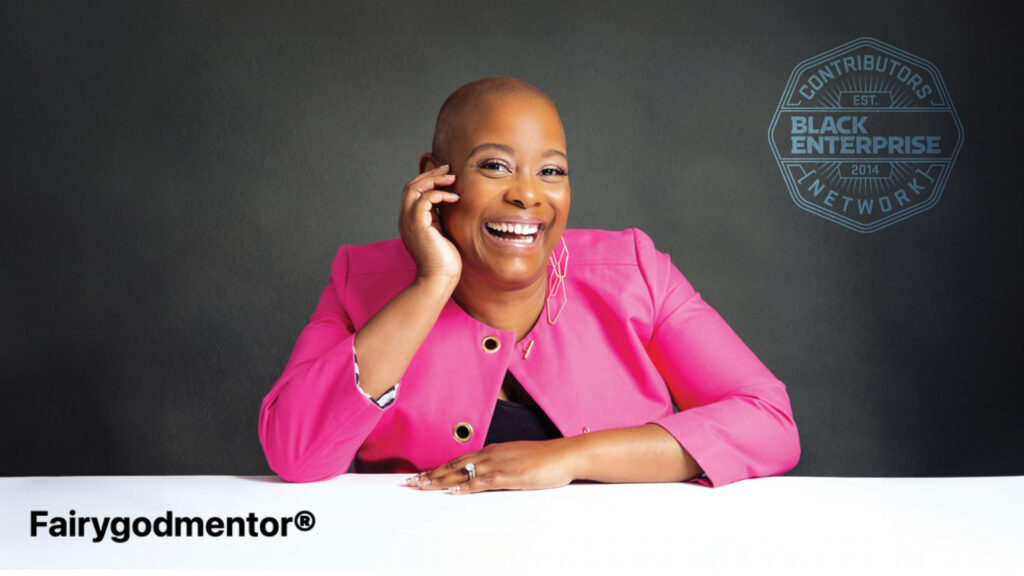
About Joyel Crawford:
(Photo: Kirten White Photography/BE)
Joyel Crawford is an award-winning career and leadership development professional and founder of Crawford Leadership Strategies, a consultancy that empowers results-driven leaders through coaching, training, and facilitation. She’s the best-selling author of Show Your Ask: Using Your Voice to Advocate for Yourself and Your Career.
Have a question for Your Fairygodmentor®?
Submit your career and leadership questions, whether it’s about navigating a micromanager, setting boundaries, negotiating for a raise, or handling burnout. Ask Your Fairygodmentor® today!
The one-game suspension highlights ongoing corporate governance, cultural accountability, and brand equity challenges across professional women’s sports.
During Toronto’s 111-92 loss to Atlanta on July 17, broadcast microphones recorded Brondello expressing frustration to officials after Tempo player Nyara Sabally was called for a foul following a collision with Reese. Brondello stated that Reese was being treated like a “protected species.”
Although the phrase is commonly used in Australian sports to describe favorable officiating, it carries dehumanizing undertones in American contexts, especially when directed at Black women. In the United States, language suggesting certain athletes are ‘protected’ has historically undermined the legitimacy and accomplishments of Black women in sport and reinforced damaging stereotypes. Such remarks contribute to a broader culture of bias, where women of color are often unfairly singled out or subjected to amplified scrutiny. This makes it especially important for public figures to consider the impact of their words.
In an official statement announcing the discipline, the WNBA said it “expects all coaches and team personnel to uphold the highest standards of professionalism and respect that are fundamental to our league.”
Accountability In A Rapidly Expanding League
For BLACK ENTERPRISEreaders interested in corporate governance, executive accountability, and equity in sports business, this incident highlights the need for cultural literacy among leaders in a global media environment. As the WNBA grows financially, driven by high-profile Black athletes like Reese, upholding workplace standards is essential to protecting the league’s brand. The WNBA has made diversity, equity, and inclusion central to its mission in recent years.
It launched the WNBA Justice Movement and established programs such as the Social Justice Council to address issues of race, gender, and equality within the league. Ongoing initiatives, including diversity hiring requirements and community education programs, reflect the WNBA’s commitment to fostering a civil and diverse environment on and off the court. Connecting incidents like this to the league’s wider efforts shows how business strategy and cultural values are closely woven in women’s professional sports.
Brondello, an Australian native and WNBA champion with Phoenix and New York, issued a public apology on X on July 18 and later addressed the media after practice.
Sandy Brondello said she reached out to Angel Reese immediately after the game. Here is Brondello’s full statement on being suspended and the backlash surrounding her comments during the Dream v Tempo game https://t.co/TQmO1t4I6Fpic.twitter.com/o36ck7pAPp
On July 17, Brondello said she contacted Dream executives to arrange a direct conversation with Reese. She acknowledged she did not consider the wider racial implications of her language in the United States.
Player Empowerment And The Business Of Voice
Before the July 19 matchup against the Chicago Sky, Reese confirmed that she had accepted the apology and commended the league for addressing the issue promptly.
“I appreciate Sandy’s apology, but I also appreciate the love and support that I’ve had for the last 48 hours,” Reese stated via CBS Sports. “There is no place for discrimination or hate in this league from anyone—from fans to coaches to players. And I’m just grateful that we are able to move on from the situation and just play winning basketball.”
Reese, a central figure in the league’s commercial growth, emphasized that athlete advocacy is essential for establishing systemic standards. When athletes speak out and shape the public narrative, it can influence sponsor interest, encourage greater fan engagement, and reinforce the league’s reputation for progress and integrity. Their presence and willingness to address important issues often drive business value for teams and the league as a whole.
“It’s important for you to use your voice and advocate,” Reese added, according to coverage by ESPN. “When you do speak out on things, address things head-on, I think it’s important to have change.”
Brondello served her unpaid suspension on July 20, when Toronto hosted the Las Vegas Aces.
ShutterStock royalty-free image #1780466981, 'remote job, technology and people concept - happy smiling young african american woman with calculator and papers working at home office' uploaded by user #301539971, retrieved from ShutterStock on November 22nd, 2024. License details available at https://www.shutterstock.com/license, image licensed under the ShutterStock Standard Image License
From Washtubs To Boardrooms: Why Black Women’s Labor Story Still Matters
Black women’s work begins with today’s conversations about equal pay.
Originally published in Unerased: Black Women Speak, written by Joshua Levi Perrin
There is a temptation to think the story of Black women’s work begins with today’s conversations about equal pay, workplace equity, or career advancement. It doesn’t. It begins in laundry rooms, kitchens, classrooms, hospitals, churches, union halls, and neighborhoods where Black women built lives, communities, and institutions despite an economy that too often depended on their labor without fully rewarding it.
That is the central argument of a new report from economist Dr. Rhonda V. Sharpe and the Women’s Institute for Science, Equity and Race (WISER). From Wash Tubs to Boardrooms: The Economic Mobility and Labor Legacy of Black Women in America traces nearly 150 years of Black women’s work, connecting historical labor struggles to the economic realities many still face today. Rather than viewing today’s wage and wealth gaps in isolation, the report asks readers to see them as part of a much longer American story.
One of the report’s most memorable figures is Oseola McCarty. McCarty spent decades washing and ironing clothes in Hattiesburg, Mississippi. She never married, never finished elementary school, and lived modestly throughout her life. Yet through disciplined saving, she accumulated more than $250,000. At age 87, she donated $150,000 to create scholarships for Black students at the University of Southern Mississippi, transforming the wages of a washerwoman into educational opportunity for future generations.
Her story captures a paradox that runs throughout the report. Black women have consistently generated economic value, built institutions, strengthened communities, and invested in others. Yet the systems surrounding their labor have rarely returned that investment in equal measure.
The report reaches back even further to the Atlanta washerwomen’s strike of 1881, when thousands of Black women organized to demand higher wages and greater control over their work. Their collective action challenged both employers and local officials, becoming one of the South’s earliest large-scale labor movements led by Black women. Their organizing laid the groundwork that later leaders such as educator and labor activist Nannie Helen Burroughs would transform into lasting institutions focused on training, worker advocacy, and economic opportunity.
These stories are not presented as historical detours. They are evidence that Black women have never been passive participants in the American economy. They have organized it, challenged it, and repeatedly expanded it. The report then follows that legacy into the present, examining occupational segregation, educational attainment, wealth, student debt, entrepreneurship, and labor force participation. One of its most striking conclusions is that education alone has not eliminated economic disparities. Black women have dramatically increased college attainment over the past several decades, yet many continue to face lower earnings, greater student debt burdens, and fewer opportunities to accumulate wealth than similarly educated peers.
The research also argues that these disparities are not simply individual challenges. Occupational segregation continues to concentrate Black women in essential care and service professions that have historically been undervalued, even as those jobs remain fundamental to the nation’s economy. Economic mobility, the report suggests, cannot be understood apart from the structures that shape opportunity in the first place.
Yet, From Wash Tubs to Boardrooms is not a story of inevitable hardship. It is a story of persistence, innovation, and collective action. Across generations, Black women built schools, organized workers, established businesses, supported families, and invested in communities while confronting barriers that stretched far beyond the workplace.
As Unerased | Black Women Speak prepares to mark Black Women’s Equal Pay Day, this research offers more than statistics to absorb. It offers context. It reminds readers that today’s conversations about wages, wealth, and economic justice did not appear overnight. They are the latest chapter in a much longer story of labor, leadership, and resilience.
Understanding that helps illuminate what a more equitable future could look like—and why building it requires valuing Black women’s work not only for what it produces, but for what it has always made possible.
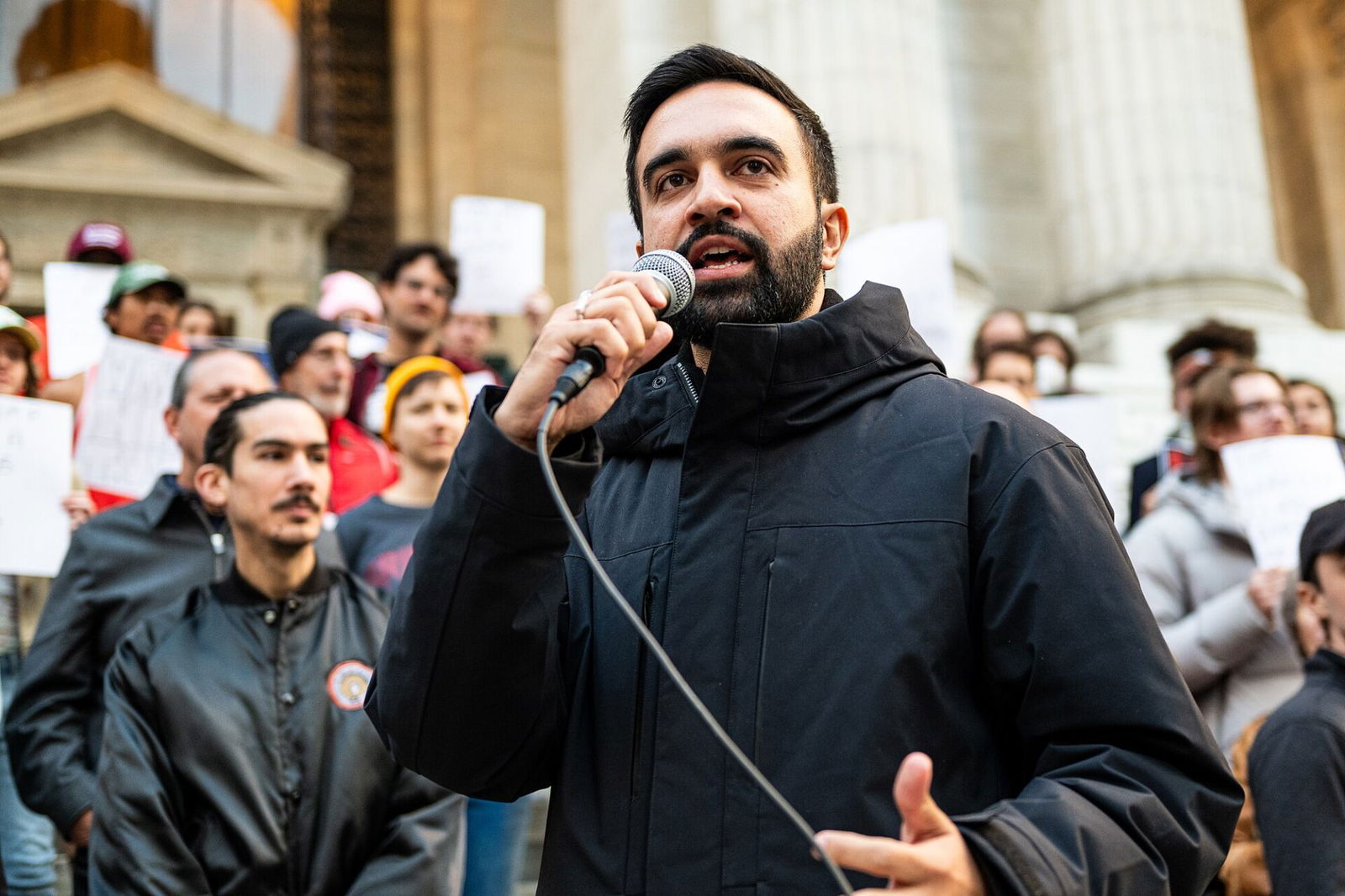
Mayor Mamdani Unveils 23 Proposals To Reshape NYC Rental Market
The sweeping plan aims to strengthen tenant protections, crack down on negligent landlords, and make renting more accessible.
New York City Mayor Zohran Mamdani is proposing a sweeping overhaul of the city’s rental housing system, unveiling a 23-point roadmap that could transform how tenants secure apartments, report unsafe living conditions, and hold landlords accountable.
Among the report’s most closely watched proposals is a potential overhaul of New York City’s longstanding rental screening process. The administration is considering legislation that would require landlords to choose between running a credit check and requiring applicants to earn at least four times the monthly rent rather than imposing both requirements.
“A credit check can be prohibitive, especially for people who are very low-income New Yorkers,” said Cea Weaver, who serves as the executive director of the Mayor’s Office to Protect Tenants, reports amNY. She added that the current system can also disadvantage renters who receive housing assistance or lack an established credit history.
The administration is also exploring requiring landlords or brokers to pay for credit checks rather than applicants. Another proposal would recognize tenant unions in rental buildings, creating a framework for organized tenant groups to negotiate with landlords. While tenants already have the legal right to organize, the city currently has no standardized process defining how tenant organizations are recognized or how property owners should engage with them.
“Just as we know that a union in the workplace can improve people’s working conditions … we think the same thing is true in buildings,” Weaver said.
The report also proposes requiring disclosure labels on apartment listings that use AI-generated or digitally altered images, citing concerns that misleading photos waste renters’ time and money. The city also plans to work with listing platforms such as StreetEasy and Zillow to enforce the rules once finalized.
Additional recommendations include expanding the list of housing violations tenants can cite when withholding rent, increasing penalties for landlords who falsely certify repairs, requiring inspectors to visit every apartment that has reported a heat complaint, and installing compact elevators in older walk-up buildings.
Not all of the proposals will take effect immediately. While some administrative changes could begin later this year, others—including credit screening reforms and expanded enforcement authority—will require City Council approval or additional rulemaking.
Despite criticism from landlord groups, who have argued the process unfairly favors tenants, Weaver defended the proposals.
“I believe it’s good for everybody,” she said, adding that stronger enforcement and faster inspections would ultimately benefit both tenants and responsible property owners.
Enslaved men, women, and children did far more than harvest tobacco and cotton. Their labor helped build many of the physical and economic foundations of the United States, including George Washington’s Mount Vernon, Thomas Jefferson’s Monticello, and portions of the White House and the U.S. Capitol. Yet while they helped create immense prosperity, they were denied every benefit of it. They could not own the land they worked, accumulate wealth, legally protect their families, or pass opportunity to their children. They themselves were treated as property.
Several years ago, while reporting for NBC News at James Madison’s Montpelier, I toured the exhibition The Mere Distinction of Colour. What struck me most was not simply its portrayal of slavery’s cruelty, but its examination of slavery as an economic system that transformed human beings into financial assets. That truth is uncomfortable.
It is also history, and it helps explain why, 250 years after the Declaration of Independence, the promise of economic freedom remains unfinished for far too many Black Americans.
The abolition of slavery ended legal bondage, but it did not create economic equality. Reconstruction promised opportunity but ended before its work was complete. The promise of 40 acres and a mule disappeared, Jim Crow followed, and generations of Black Americans were denied equal access to land, housing, education, and credit. The Civil Rights Movement dismantled legalized segregation, but it could not erase centuries of accumulated economic disadvantage. Freedom came. Capital largely did not.
That history is reflected in today’s balance sheets.
The median net worth of a Black household in America is approximately $44,100. For White households, it exceeds $284,000. Put another way, for every dollar of wealth held by the typical White family, the typical Black family possesses only about 15 cents.
Homeownership remains the principal engine of wealth creation for most American families. Yet only about 43% of Black families own their homes, compared with roughly 73% of White families. Even then, Black homeowners too often see their properties undervalued, limiting the equity that fuels generational wealth. White families also hold a much larger share of appreciating financial assets, while many Black families remain disproportionately dependent on home equity alone.
Education has not erased these disparities. The median Black household carries roughly $26,000 in student loan debt despite possessing far fewer accumulated assets than White households.
Fifteen years ago, in Black Woman Redefined, I argued that Black women were doing everything America had asked of them—earning degrees, building careers, and leading across virtually every profession. Preparation was never the problem.
Today, that observation feels painfully current. Recent research found that Black women, particularly college graduates and public-sector professionals, experienced some of the steepest employment losses in a generation. Black unemployment continues to outpace the national average. At a time when Black women have become one of America’s most educated and accomplished workforces, too many have found themselves disproportionately displaced from stable careers. That should concern every American.
Because the issue is no longer whether Black Americans possess talent, the issue is whether America is prepared to invest fully in that talent.
America’s future competitiveness depends on fully utilizing the talents of all its people. Every entrepreneur denied capital, every qualified professional overlooked, and every family unable to build wealth represents not only an individual loss, but a loss to our nation’s economic strength.
As America celebrates its 250th birthday, we also find ourselves engaged in a renewed struggle over history itself. Recent attacks on the Smithsonian’s National Museum of African American History and Culture are about more than one museum. They are about whether America is willing to tell its complete story.
Twenty-five years ago, I argued in the pages of The Washington Post that America needed to put slavery in its proper place in our national consciousness—not to induce guilt, but to tell the truth. I believe that even more strongly today.
We do not strengthen patriotism by editing history. We strengthen patriotism by trusting Americans with the truth.
The history of slavery, Reconstruction, Jim Crow, the Civil Rights Movement, and Black achievement is not separate from the American story. It is the American story.
Anniversaries are more than celebrations. They are opportunities for honest reflection. America’s 250th birthday is one of those moments.
The unfinished business of freedom is no longer emancipation.
It is economic participation.
It is ownership.
It is wealth creation.
It is ensuring every American has a genuine opportunity to buy a home, build a business, save for retirement, leave an inheritance, and pass forward something greater than what they inherited.
For 250 years, Black Americans have invested their labor, their genius, their patriotism, and too often their lives in the American experiment. Now, as America begins its next 250 years, the question is no longer whether Black Americans belong in the American story.
History has already answered that.
The question is whether America will finally ensure that the prosperity Black Americans helped create is matched by the opportunity to fully own it, build it, and pass it on.
That is not simply the unfinished business of Black America.
Why More Black Women Are Traveling To South Korea For Preventive Healthcare
Many travelers say South Korea offers streamlined care that allows patients to complete extensive diagnostic testing, imaging, and specialist consultations.
A growing number of Black American women are traveling to South Korea for preventive medical care, saying faster access to specialists, comprehensive screenings, and more attentive treatment are helping uncover health conditions they believe were missed or delayed in the United States, The Guardian reports.
The trend is helping fuel South Korea’s expanding medical tourism industry, which attracted a record 2.01 million international patients in 2025, according to the country’s Ministry of Health and Welfare. The figure marks the first time annual foreign patient visits have surpassed 2 million since the government began tracking the data in 2009.
Many travelers say South Korea offers streamlined care that allows patients to complete extensive diagnostic testing, imaging, and specialist consultations in a matter of days rather than weeks or months.
Among them is Adzua Agyapon, a 36-year-old nonprofit professional from Washington, who traveled to Seoul in April 2026 for a preventive health evaluation after hearing about the country’s comprehensive screening programs. During the visit, doctors discovered a 10-centimeter uterine fibroid through an ultrasound before confirming the diagnosis with an MRI.
Agyapon told the outlet she had undergone annual medical exams in the United States, but the growth had never been identified—the evaluation cost just under $600.
“The experience was night and day,” Agyapon said.
Elizabeth Oputa, a 42-year-old brand strategist from Jersey City, New Jersey, has also traveled to South Korea for preventive screenings, alopecia treatment, and dermatological care. Oputa said appointments in the United States often felt rushed, while providers in South Korea spent more time discussing her concerns and explaining treatment options.
Their experiences reflect longstanding racial disparities documented throughout the U.S. healthcare system. Research has found that Black women are more likely to experience delayed diagnoses for conditions including uterine fibroids, endometriosis, and some cancers. The Centers for Disease Control and Prevention also reports that Black women are about three times more likely than white women to die from pregnancy-related causes.
Health experts note that individual experiences vary and that the quality of care differs among hospitals and providers in every country. Medical tourism can also pose challenges for follow-up treatment once patients return home, and it remains financially out of reach for many due to airfare, lodging, and out-of-pocket medical costs.
Still, the women interviewed said the opportunity to receive timely, comprehensive care outweighs the inconvenience of traveling overseas, underscoring growing frustration with disparities they say continue to shape healthcare experiences in the United States.
Dr. Louis Charles Roudanez launched the first Black publication.
July 21, 1864, marks the birth of Black news media. The New Orleans Tribune goes to print and down in history as the first Black newspaper to be published. The city of New Orleans had recently abolished slavery when Dr. Louis Charles Roudanez launched the publication, which was referred to as the “organ of the oppressed,” reporting on the times and newly emancipated African Americans who were fighting for equality.
Black Mothers Get Underpaid Twice: Once At Work, Once At Tax Time
Black Women's Equal Pay Day Is July 21
By Taylor Austin, Campaign Director, Workplace Justice, MomsRising
Black Women’s Equal Pay Day is on July 21 this year. It is the day we use to highlight the racist and sexist wage gap faced by Black women. Black women are paid 65 cents for every dollar paid to non-Hispanic white men working full-time, year-round.
I lead on workplace justice campaigns, so I want to be precise about something. The 65-cent figure everyone will quote next week does not come from nowhere. It gets built, job by job, in American workplaces. Then the federal tax code picks it up and charges Black mothers a second time for it.
Where the number gets made …
Black women working full time, year-round were paid 65 cents for every dollar paid to white, non-Hispanic men in 2024, down from 66 cents in 2023 and 69 cents in 2022. The gap widened for a second consecutive year, the first time that has happened since the government began collecting the data in 1960. That gap is built three ways.
It is built by sorting. More than half of Black women work in occupations where they are overrepresented, and those occupations pay lower median wages. Black women are concentrated in childcare, home care, and housekeeping, and largely locked out of higher-paying fields. They are 6.1% of the workforce and 9.2% of the low-paid workforce. It is built inside the same job title. Black women working full time as cashiers and retail salespeople, their second most common occupation, are paid 55 cents for every dollar paid to a white, non-Hispanic man doing that work. In nursing and teaching, the best-paying of their 10 most common jobs, they are still paid about 20% less. And it is built by silence. Nearly 60% of private-sector workers report that discussing wages is prohibited or discouraged by their employer, even though the National Labor Relations Act makes forbidding those conversations illegal. A gap you are not allowed to discuss is a gap you cannot contest.
For Black mothers, it lands harder: about 52 cents for every dollar paid to a white father.
Then the tax code reads the paycheck…
Here is the part nobody mentions on July 21: The Child Tax Credit is worth up to $2,200 per child. Most of that only helps a family that owes enough federal income tax to absorb it. For families who don’t, the refundable portion is capped at $1,700 per child, and you reach that ceiling by climbing a ramp: you must earn at least $2,500 to get anything, and from there the credit grows by fifteen cents for every additional dollar you earn.
Read that again—the credit phases in with your wages. The less you are paid, the less of it you get. The Institute on Taxation and Economic Policy ran the arithmetic. A family with three children earning $30,000 receives $4,125 rather than the $6,600 available to higher-income families.
Last July’s reconciliation law raised the maximum credit to $2,200 per child and made it permanent, which produced a round of press releases about supporting families. The structure underneath went untouched. The earnings floor stayed. The phase-in stayed. The cap stayed. An estimated 19 million children will receive less than the full credit this year, or none at all, because their families earn too little. Half of all Black children are in that group. Not because their parents don’t work. Because their parents’ work is underpaid, and the credit was built to reward the paycheck rather than the child.
So the workplace hands a Black mother a discounted paycheck. The tax code reads that paycheck, decides she must not need much, and discounts her child’s credit to match. An earnings test, applied in a labor market that pays Black women 65 cents on the dollar, is not a neutral measure of effort. It is a discrimination test wearing a better suit.
Fix it at both ends.
This design was a choice, and other lawmakers keep making the opposite one. Eleven of the 15 states with their own child tax credits made theirs fully refundable. The American Family Act would do the same federally, ending the rule that denies a child the full credit because her mother earns too little. But full refundability only stops the compounding. It does not fix the wage that started it. That takes workplace policy, and the list is not mysterious. Pay range transparency, so a Black woman can see what a job pays before she is lowballed into it. Salary history bans, so one employer’s discrimination stops following her to the next job. Real enforcement of the right to discuss wages, which workers already have on paper and are told to forget in practice. Paid family and medical leave, so becoming a mother stops functioning as a permanent pay cut. Childcare funding, so a low-wage job does not cost more than it returns.
MomsRising brought mothers to Capitol Hill this spring for the first mom-centered congressional hearing on affordability. They testified about groceries, rent, and childcare. A typical family now needs roughly $145,000 a year to get by. Set that against a mother earning half of a white father’s dollar and then losing part of her child’s credit because of it, and the arithmetic stops being abstract. It becomes a decision about which bill goes unpaid this month.
Black women have never needed this country’s awareness. We get it every July, on a date that drifts a little each year and gets covered like weather.
What we need is a workplace that pays a Black mother what her work is worth, and a tax code that stops treating her underpayment as her own verdict on herself. She earned the full credit. Her child certainly did.
About the author
Screenshot
Taylor is the campaign director for MomsRising’s Workplace Justice Campaigns. Her professional background is rooted in reproductive healthcare and advocacy, protecting reproductive rights through grassroots organizing, public education, and legislative change within Pennsylvania.
With a deep commitment to the belief that social health directly impacts physical wellbeing, Taylor holds a Bachelor’s degree in Public Health (with a Biology minor) from Temple University, as well as a Master of Science in Health Administration (MHA) from Saint Joseph’s University. As a Black woman living in the United States, she is grateful to be able to leverage both her lived and professional experiences to advocate for and positively impact women and families.
A proud Philadelphia transplant, Taylor now resides in the Philadelphia suburbs with her husband, their two children, and an ever-growing collection of plant babies.