100 Black Entrepreneurs, Biden, And Harris Attend Funeral For Slain Minnesota House Speaker Melissa Hortman
Black Entrepreneur Day is nationally celebrated and Melissa Hortman 'never missed it.'
Black Entrepreneur Day is nationally celebrated and Melissa Hortman “never missed it.”
For that reason, 100 Black entrepreneurs attended the funeral service honoring her and her husband, Mark on June 28. The entrepreneurs planned to wear matching wristbands to show support for Hortman’s surviving loved ones and honor her legacy. The Minnesota House speaker was killed in a politically motivated attack in her home on June 14.
Hortman’s husband, Mark, and dog were also fatally shot during the attack by Trump supporter Vance Boelter. The Minnesota Black entrepreneurs spoke about Hortman’s unwavering support of their endeavors.
Other notable attendees of the service were former President Joe Biden and former Vice President Kamala Harris. The two were seen holding hands in the front row of the services during The Lord’s Prayer. Neither Harris nor Biden spoke at the service, yet, their presence as former leaders of the nation extending support and respect for the victims of political assassination was noted. Donald Trump did not attend the service.
According to many, Hortman was enthusiastic to interact with the community during Black Entrepreneur Day events at the state capitol. She also paid more than lip service, they said, often reaching out beyond Black Entrepreneurs Day to follow up. Sheletta Brundidge, organizer of Black Entrepreneur Day events, spoke to News Talk 830 of Hortman’s support.
“She always showed up for us, so we’re going to show up for her,” said Brundidge. “Tomorrow at the memorial, we will be 100 strong to make sure Melissa’s family and colleagues know how much we loved and appreciated her.”
Yolanda Pierson of Pierson & Sons Trucking spoke about a meeting with Hortman. Pierson presented a legislative issue plaguing her small business. She was pleased with the bipartisan gathering. Additionally, she was pleased with Hortman’s genuine curiosity to understand the barrier presented to Pierson’s company.
“In the meeting we had, she had both Republicans and Democrats present,” Pierson recalled. “It’s important to humanize the work they do for us and remember her legacy.”
Black entrepreneurs were not the only notable group of people present for Hortman’s memorial. Gov. Tim Walz led the Hortmans’ eulogies. He spoke of Melissa’s tireless work. Walz also spoke of Mellisa and Mark’s impact on those who’ve crossed paths with the couple.
“Melissa Hortman will be remembered as the most consequential speaker in Minnesota history. I get to remember her as a close friend, a mentor, and the most talented legislator I have ever known,” Gov. Tim Walz said.” For seven years, I have had the privilege of signing her agenda into law. I know millions of Minnesotans get to live their lives better because she and Mark chose public service and politics.”
The HBCU announced it has received 11,500 applications so far. The figure marks the highest volume of applications in its 158-year history. This is a significant milestone for the university as Edward Waters is one of the HBCUs that does not receive the same public acclaim as its counterparts.
A private, Christian, historically Black university in Jacksonville, Florida, Edward Waters University was founded in 1866 by members of the African Methodist Episcopal Church as a school to educate freedmen and their children.
The leap in applications represents a 6.2% increase when compared to the 2024 application season. Beyond just applications, the university has seen a 17.6% rise in enrollment deposits from prospective new students. The boost is a great sign of growth and a clear indicator that Edward Waters is on the rise.
This notable expansion at Edward Waters shows a broader trend occurring among many other HBCU communities as universities continue to diversify their academic portfolios and attract a wider array of students.
University officials attribute this remarkable growth to a confluence of strategic initiatives implemented in recent years. These include the development of innovative academic programs designed to meet modern career demands. Additionally, the school is prioritizing aggressive and well-targeted outreach efforts to prospective students and their families.
A particularly key factor driving this enrollment boom is the university’s recent expansion into graduate-level education. Expanding into higher degree programs provides new options for students seeking advanced degrees and positions at Edward Waters University.
Dr. A. Zachary Faison, Jr., president and CEO of Edward Waters University, expressed enthusiasm for this achievement. “This historic milestone speaks volumes about the growing momentum, relevance, and reputation of Edward Waters University across the state, nation, and globe,” Faison said in the announcement.
He emphasized the university remains steadfastly dedicated to building upon this strong foundation by continuously striving to offer an education that is both widely accessible and academically rigorous.
Dr. Jennifer Price, vice president of Enrollment Management and Strategic Matriculant Services, credited her enrollment team for this success. She explained that their approach centers on effectively sharing “the Edward Waters story,” a narrative that resonates deeply with prospective students.
Black Watch Collectors Were Ignored By The Industry — So They Created A Space That Can’t Be Overlooked
Black watch collectors launched their own meetups.
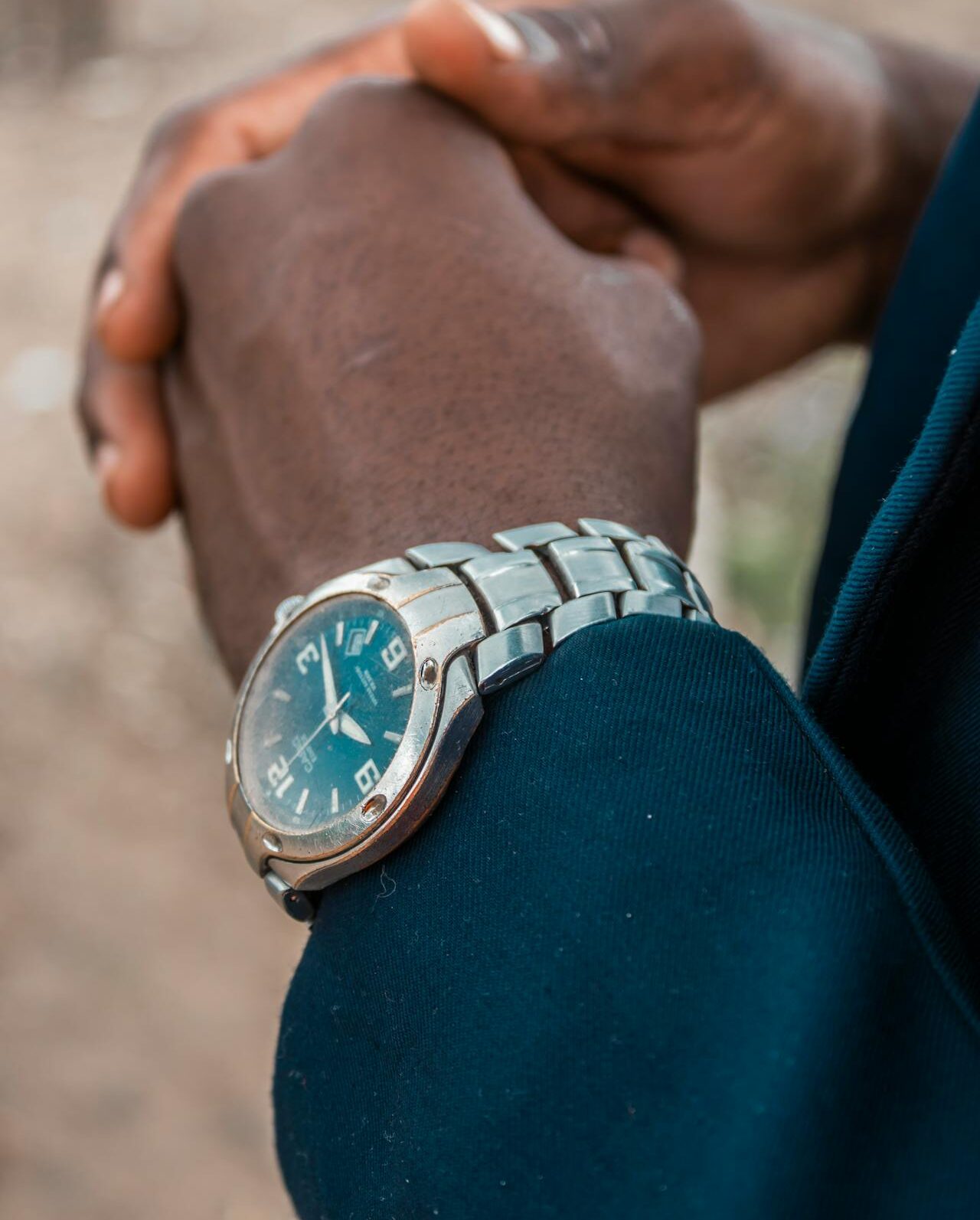
Although there is an ever-increasing number of Black-owned watch companies, the broader narrative of the watch collection community has tended to leave Black horologists out of the conversation. As a result, they have started talking to each other and building their own communities.
According to The Robb Report, Black watch collectors Perri Dash, Rashawn Smith, and Ashraf Rashid used their emergence from the pandemic to meet up at New York City’s storied dive bar Fanelli Café in 2021, where they would discuss watches together over burgers and beers.
“We’d sit outside and have beers and burgers, and we’d talk watches,” Dash told the outlet. “Everybody was shuttered in their homes, and it made me rethink how important community was. The minute everything lifted, I just wanted to get back outside. At the same time, all this watch content is exploding on social media and YouTube. It reinvigorated the passion.”
He continued, “I didn’t see us reflected in the watch world. I knew we were out here collecting and moving markets quietly. I wanted a space where we could do it loudly, together. Being a Black collector or a collector of color for a time felt kind of isolating because we just weren’t communicating with one another. And then social media post-COVID explodes, and people are sharing pictures of their watches. And we discover that we’ve already been here just doing our own thing. Then it’s like, ‘All right, why don’t we just meet up and hang out?’ And so now we’re touring the country, holding events, working with brands. It’s kind of a wild time.”
Dash and Smith have, in the time since, become known quantities in the world of high-end watch collectors, using their podcast, “Wrist Check,” to springboard into hosting events and collaborations that Detroit Lions players have even attended. As Netflix’s “Receiver” docu-series indicates, NFL players, like Minnesota Vikings superstar and Met Gala standout Justin Jefferson, are serious about their jewelry and accessories.
Really great podcast highlighting black watch collectors. If you were ever curious about the watch world these guys have great insights.
An event the pair participated in, held in Detroit and hosted by Official CP (Cultured Perspective) Time, was attended by the aforementioned Lions players. It was largely led by Dr. Albert “Al” Coombs, a longtime collector, watch lover, and dental implantologist in Washington, D.C.
Coombs and C’Quon Gottlieb, a fellow watch collector who is now a luxury watch consultant in Miami, started Official CP Time in 2020 to blend the art and practice of watchmaking, as well as the philosophy of time, also known as horology, with Black culture. As told to The Robb Report, Coombs and Dash, who met in 2022 at CP Time’s second anniversary, have become really good friends in the three years since.
“One of the things I love about Perri is that we’ve created these spaces independently but there’s so much synergy, we’ve started to collaborate,” Coombs said, before a segue into how he views their ideas on making watch collection accessible to all analogous to the Black church, which was birthed out of necessity due to segregation and enslavement.
“I compare it a lot to Black churches,” Coombs began. “They were birthed from this idea of not being able to go to white churches. One of the cornerstones was, ‘Everybody’s welcome.’ A lot of the churches are Black, but it’s a safe space where everybody belongs. That’s why we talk about CP Time being a watch group ‘through the lens of Black culture.’ It’s an easy thing to be a part of—there’s no pretentiousness. The bigger goal is to create a positive space where, if you have a $50 watch, we can celebrate you. Where you can try on somebody’s Richard Mille or Patek. Where somebody that collects AP can say, ‘Hey man, that’s a dope TAG Heuer.’ Use this thing as a means to connect with people.”
Dash echoed Coombs’ thoughts about utilizing the watch collection community to foster a sense of connection, telling the outlet, “I look at watches, especially at these events, as the perfect icebreaker. They equalize the playing field. It doesn’t mean you have to have an expensive watch. I’ve been in situations where I might be wearing an obscure Seiko, and I’m sitting with a Patek collector, and he wants to know everything I know about this Seiko. And then it goes into, ‘What do you do? Who are you? Where are you from?’ And then you develop a friendship, and you end up talking about everything under the sun. It’s amazing.”
Beyoncé Gisselle Knowles has made a name for herself. She found fame as the lead singer of Destiny's Child, one of the most successful girl groups of all time, but after launching her solo career in 2003, she became a global icon. As a solo artist, she has earned most of her wealth from music and live performances. In 2008, she established Parkwood Entertainment, a production company that handles her music, film, and fashion projects. At the moment, Beyoncé's net worth is estimated at $760 million: (Photo: Kevin Mazur/Getty Images for The Recording Academy)
‘Stop. Stop.’: Terrifying Moment At Beyoncé’s Houston Show As Singer Gets Suspended Mid-Air In Flying Car
Multiple videos have circulated showing Beyoncé strapped into the prop convertible while it began to tilt.
Beyoncé’s flying car prop tilted in midair with the singer on it and appeared dangerously close to falling.
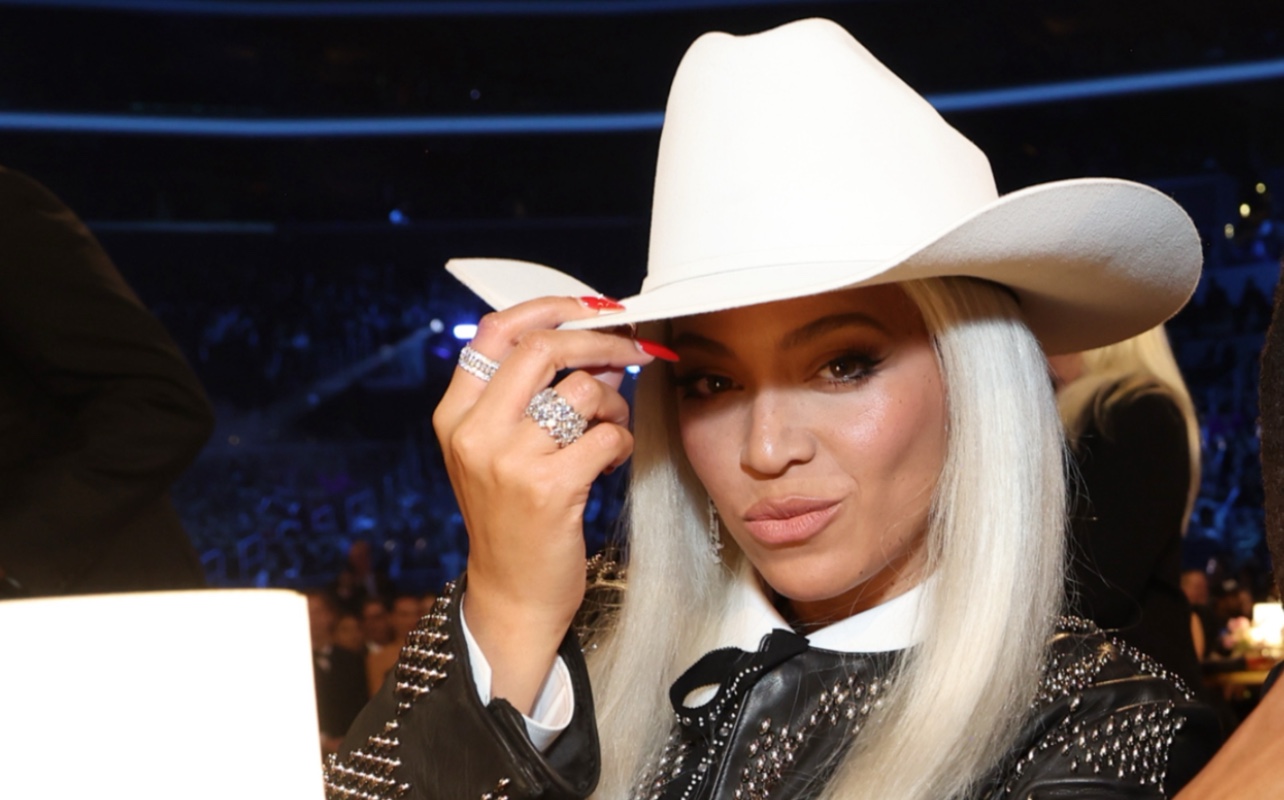
Houston attendees of the Cowboy Carter Show on June 28 were horrified, and so was the “Texas Hold Em” singer. Multiple videos have circulated showing the singer crooning her popular song “16 Carriages.” As she sings, she is perched inside a prop convertible—the convertible moves around the arena hundreds of feet in the air. Beyoncé continues to sing while holding onto the cables attached to the car until she can’t any longer. Toward the end of the song, she yells, “Stop. Stop. Stop. Stop.”
All music halts as a throng of security and staff gather under the prop, and it is slowly lowered to the ground. A consummate professional, Queen Bey walks directly back to the stage. Her voice audibly trembles as she shows appreciation to her fans.
“Thank you for loving me,” she said. “If I fall, I know you’ll catch me.”
Unfortunately, this is not the first malfunction Beyoncé has had to manage on the Cowboy Carter tour. The superstar has been subject to wardrobe malfunctions and robotic malfunctions.
During another stop, the robotic arms that usually pour her a drink on stage missed its mark. Ms. Carter sat during her “Oh Louisiana” interlude as the robot poured whiskey onto the stage. She noticed shortly after the mishap. Her only response appeared to be a smirk. Whether that smirk was a sign of annoyance or humor, we may never know. She quickly shifted her movements to grab what appeared to be a remote control and carried on with the show. Another time, it seemed the stagehands forgot to place her mark on the floor during another section of a show that used robotic props. One false step, and the heavy props could have hit her. Luckily, though visibly shaken, she figured out where to stand out of harm’s way.
While on a European stop of the Rodeo and Chitlin Circuit, Beyoncé had to contend with her chaps falling off. While performing “I’m That Girl,” the singer’s gold knickers fell to her ankles. Not one to panic, she continued singing until her dancer noticed and helped pull her chaps back up. As Queen Bey struck a pose and continued singing, the dancer secured her clothing.
The Cowboy Carter Rodeo and Chitlin Circuit is a spectacle. Flying cars and horseshoes appear nightly. Robots perform intricate choreography with Beyoncé. Dozens of dancers twirl, pop, lock, and line-dance on every inch of the stage nightly. Mishaps during a multimillion-dollar production of that magnitude are not uncommon, though this time it was certainly frightening and potentially deadly. Beyoncé appeared shaken, but if her past actions tell any tale, it is that she will not be defeated. The Cowboy Carter tour continues in Houston June 29, followed by a Fourth of July stop in Maryland.
Jazz Master Branford Marsalis Is Wake Forest University’s 2025 Artist-In-Residence
Marsalis, a New Orleans legend and global icon, is best known for his instrumental work across jazz, classical music, film, and Broadway.
On June 25, Wake Forest University announced that Grammy-winning jazz musician Branford Marsalis will serve as the university’s 2025 Maya Angelou Artist-in-Residence.
Marsalis, a New Orleans legend and global icon, is best known for his instrumental work across jazz, classical music, film, and Broadway. At Wake Forest, students will engage with a masterful saxophonist and acclaimed artist whose career spans decades of influence and innovation.
“Branford Marsalis embodies the versatility, depth and unwavering commitment to artistic integrity that define the spirit of the Maya Angelou Artist-in-Residence program,” said Wente. “His ability to transcend musical genres while championing creative excellence and community engagement perfectly aligns with Dr. Angelou’s legacy of using art as a powerful force for connection and understanding.”
Jazz musician Branford Marsalis has been named Wake Forest University’s 2025 Maya Angelou Artist-in-Residence
— Wake Forest University (@WakeForest) June 25, 2025
Marsalis has been widely recognized by his peers and prominent musical institutions. The musician has received a Tony nomination for his work on Broadway. The National Endowment for the Arts has named him a Jazz Master. Additionally, he has received six Grammy nominations and won one with the Branford Marsalis Quartet, established in 1986.
The musician has demonstrated his dedication to the arts and art education long before being selected to lead Wake Forest students. The musician taught at North Carolina Central University for two decades. Furthermore, he co-founded the Ellis Marsalis Center for Music in his hometown, New Orleans.
The master saxophonist is currently on tour. The musician will spend the remainder of 2025 traveling the globe before he returns home to assume his position at Wake Forest University.
See Below For American Tour Dates:
August 30 – Washington, DCJazz TourThe Wharf
September 14 – St. Louis, MOJazz TourThe Big Top
September 20 – Pittsburgh, PAJazz TourAugust Wilson Cultural Center
September 20 -Rockport, MAJazz TourShalin Liu Performance Center
September 21 – Rockport, MAJazz TourShalin Liu Performance Center
September 26 – Memphis, TNJazz TourOrpheum Theatre
Remembering The Hits Of Rappers Who Are No Longer With Us During Black Music Month
Their music continues to inspire and uplift
During Black Music Month, our focus is on celebrating both the generational sounds and the artists who created them, especially those who have passed away. Hip-hop emerged as a testament to resilience and creative ingenuity, yet many of its foundational artists and innovators departed the world prematurely. The music of these artists continues to inspire and uplift, driving cultural progress and maintaining their legacies. Here are 10 artists to remember during Black Music Month. Tap into the exceptional lyrical talent of these 10 pivotal rappers, whose cultural influence and business acumen have created lasting impressions within both the music industry and culture.
Pimp C
Chad Lemon Butler, who performed under the name Pimp C, was born Dec. 29, 1973 and entered hip-hop from Port Arthur, Texas. The southern producer departed the world Dec. 4, 2007. Through his work with UGK (Underground Kingz) and participation in “International Players Anthem,” he became a crucial figure who helped bring Southern rap to national attention. Pimp C’s distinctive drawl and bold commentary elevated each UGK track with genuine southern authenticity and style. Pimp C championed equitable industry treatment for Southern artists. The year 2007 witnessed his premature death, which left a void in Southern hip-hop.
Craig Mack
Craig Mack was born in North Trenton, New Jersey, on Sept. 3, 1971. Mack became a pivotal hip-hop figure in the mid-1990s with his hit single “Flava in Ya Ear.” The gritty energy of his debut record propelled Bad Boy Records into mainstream success. The untimely death of Mack in 2018 brought his foundational influence on East Coast rap’s new era back to the memories of fans.
Bushwick Bill (of Geto Boys)
Richard Stephen Shaw, also known as Bushwick Bill, was born in Kingston, Jamaica, on Dec. 1, 1966. Bushwick Bill began as a key member of Houston’s pioneering rap group, the Geto Boys. He used his music to defy societal standards and initiate vital conversations about mental health issues, violence, and Black American experiences. The emergence of Southern rap into national recognition consisted of his unapologetic and raw lyrics. Bushwick Bill’s life came to an end in 2019 following his courageous fight against cancer. Even after his death, his voice remains a fundamental element within hip-hop’s abundant heritage.
Nipsey Hussle
The musical artist Ermias Joseph “Nipsey Hussle” Asghedom achieved Grammy nomination status as both a rapper and songwriter. Ermias Asghedom, known as Nipsey Hussle, emerged from his birth city of Los Angeles on Aug. 15, 1985, to become a rapper and visionary who leveraged his platform to promote economic empowerment, alongside real estate investment and community development in South Los Angeles. Through tracks like “Hussle & Motivate,” Nipsey’s Grammy-winning Victory Lap album exhibited his entrepreneurial drive alongside emotional depth and aspirational vision. His life and work represent Black excellence and ownership.
Pop Smoke
Pop Smoke, born Bashar Barakah Jackson on July 20, 1999, grew into a transformative figure in Brooklyn after the release of his hit song “Welcome to the Party.” His unique voice, style, and energy defied his youthful age. His posthumous debut album, Shoot for the Stars, Aim for the Moon, solidified his hip-hop status by showcasing his immense potential. Tragically, he passed away at 20 on Feb. 19, 2020, leaving behind a legacy of unlimited promise.
Fatman Scoop
Isaac Freeman III, born on Aug. 6, 1968, in Manhattan, New York, before gaining fame as a hype man and crowd motivator known as Fatman Scoop. His lively performances and club hits were infectious. Scoop died on Aug. 30, 2024, leaving behind a dynamic presence and an enduring legacy.
Heavy D
Born May 24, 1967, Arrington “Heavy D” Myers explored multiple professional paths as a rapper, record producer, and actor. Myers became a music industry pioneer by crafting the hit song “Overweight Lover.” His artistry seamlessly fused smooth charisma with pop appeal while maintaining the authenticity of hip-hop. Heavy D demonstrated remarkable showmanship. The industry and culture experienced significant transformations due to his work in establishing professional opportunities for others. The music industry experienced a major loss with his death in 2011.
DMX
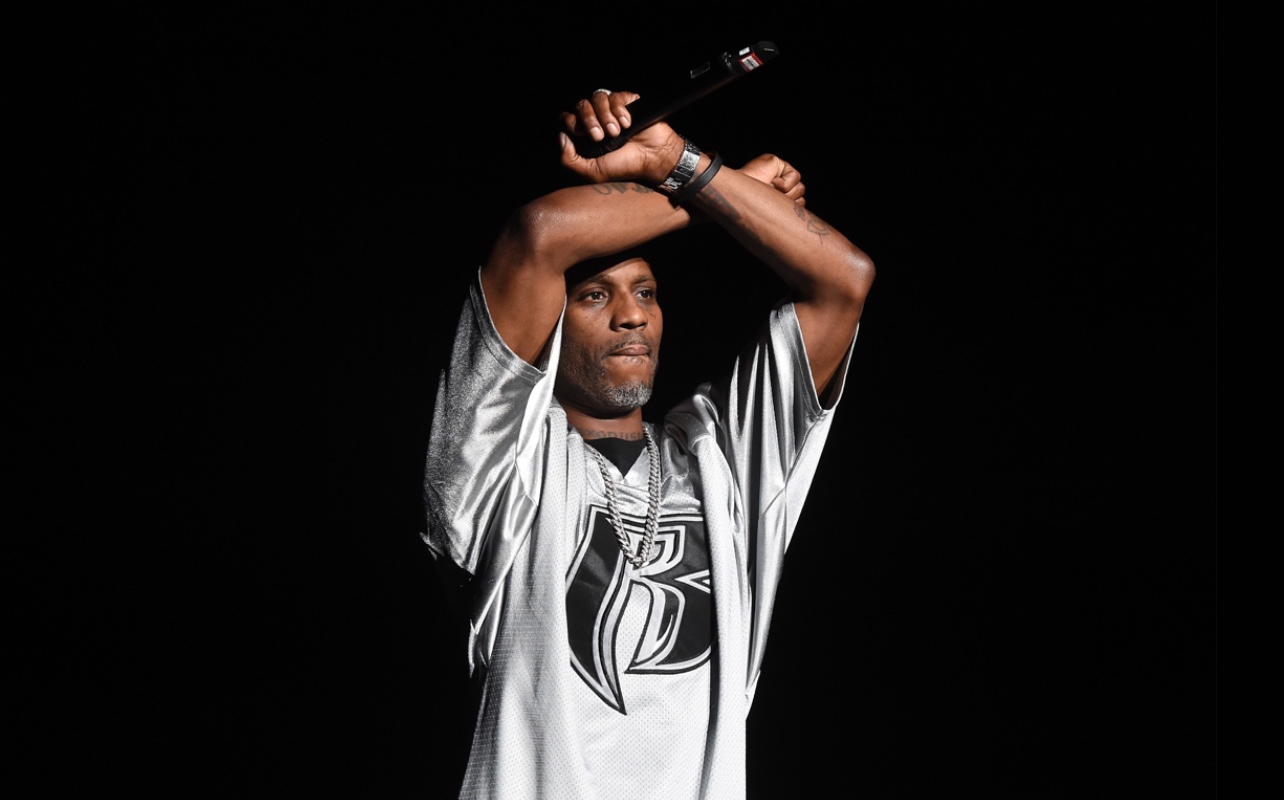
DMX was born Dec. 18, 1970, in Mount Vernon, New York, and later gained fame for songs such as “Ruff Ryders’ Anthem.” The late 1990s and early 2000s saw him emerge as a clear powerhouse. Fans around the globe connected with his gruff voice, combined with unmatched energy and lyrics. DMX, whose real name is Earl Simmons, shared his battles with addiction and trauma openly, while using his music as a powerful tool to address his suffering and seek redemption. His death in 2021 marked the end of a turbulent yet legendary period in hip-hop history.
The Notorious B.I.G.
Brooklyn, New York, welcomed Christopher Wallace on May 21, 1972. Biggie Smalls became a lyrical mastermind whose narrative skill transformed hip-hop music. The music industry still struggles to measure Biggie’s impact from his success with songs such as “Juicy.” Starting in Brooklyn’s modest neighborhoods before rising to global stardom, his powerful impact still molds the careers of countless rappers, many years after his untimely death in 1997.
Tupac Shakur
Lesane Parish Crooks entered the world on June 16, 1971, in Harlem, before becoming known as Tupac Amaru Shakur. Shakur gained fame for his revolutionary artistry and hit songs such as “Dear Mama.” His vocal presence reached beyond the microphone to define himself as a poet, actor, activist, and truth-teller. Tupac’s music confronts Black America’s struggles and oppressions head-on through its examination of systemic injustice combined with personal vulnerability. He emerged as a cultural icon representing prophetic figures. In 1996, his life ended tragically when he died at the age of 25.
9th New Orleans Jail Escapee Antoine Massey Recaptured
Massey was apprehended mere miles from the jail he escaped from, in New Orleans’ Hollygrove neighborhood, at a rental property.
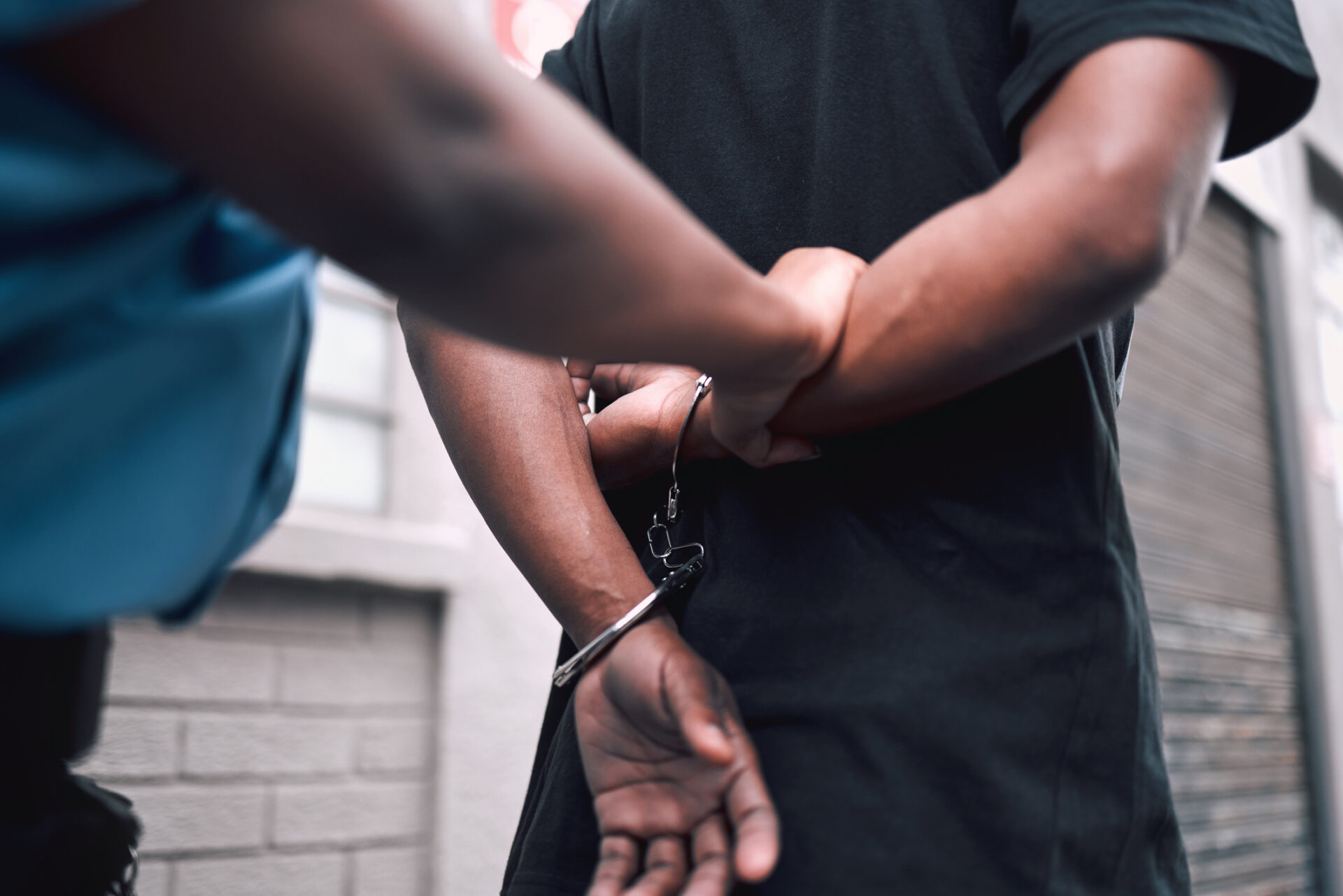
The capture of fugitive Antoine Massey by the Orleans Parish Sheriff’s Office on June 27 brings the total number of at-large escapees from the Orleans Justice Center to one, after 10 men escaped from the facility in April; only Derrick Groves currently remains unaccounted for.
According to CNN, Orleans Parish records indicate that Massey, a serial escapist, was most recently charged with vehicle theft and domestic abuse involving strangulation.
Unlike some other escapees who were apprehended after they fled to Texas, likely in an attempt to get to Mexico, Massey was apprehended mere miles from the jail he escaped from, in New Orleans’ Hollygrove neighborhood, at a rental property.
Massey and the other escapees captured the nation’s attention after they initiated a resourceful escape from the facility, utilizing the Justice Center’s faulty locks, stolen bedding, a hungry jail employee, and electric hair trimmers to create their versions of freedom from the iron bars.
Deputy U.S. Marshal Brian Fair told CNN that the arrest of Massey was “peaceful” and there was no incident as agents surrounded him. “After receiving a tip, follow-up work was done and lead directly to the arrest today,” Fair told the outlet.
Earlier in June, authorities raided a home after video of a man who claimed to be Massey surfaced on social media. In the video, the man was seen pleading for Lil Wayne, of all people, to help him and claimed to have a stamped affidavit affirming his innocence.
Furthermore, he claimed that his ex-girlfriend, Diamond White, recanted her allegations of abuse in the affidavit. White, who, according to the Louisiana State Police, was arrested after she was accused of helping Massey following his escape, did not respond to a request for comment from CNN.
After Massey’s capture, the attention of the authorities unsurprisingly turned toward Groves, the lone remaining fugitive, and New Orleans Police Department Chief Anne Kirkpatrick spoke directly to Groves at a June 27 news conference.
“We are going to capture you,” Kirkpatrick said. “You will be taken into custody, but you still have the option to peacefully turn yourself in, and we will make an appeal to you to do so. The public defender is ready to meet you and to be with you from the very moment you choose to turn yourself in.”
Currently, a $50,000 reward is available for information that leads to the capture of Groves, funded by Crimestoppers Greater New Orleans, the FBI, and other law enforcement agencies.
In addition to Kirkpatrick, Chief Deputy U.S. Marshal Walter Martin also spoke at the press conference, emphasizing that the law enforcement community would remain vigilant in their search for Groves.
“Just like we found Mr. Massey today, we will find Mr. Groves,” Martin said at the Friday news conference. “We’ll continue our efforts.”
He then turned his attention to imploring the public to assist in the capture of Groves: “You can remain anonymous, but we need your help. Collectively, we will not rest, even if it takes another six days or another six weeks until the last fugitive is in custody.”
Black Workers Sue Walmart, Alleging Discriminatory Background Check Practices
Mark Balentine, 52, filed the class action lawsuit against the retail giant.
Mark Balentine, a 52-year-old former employee at a distribution center once run by Schneider Logistics, a third-party contractor for Walmart, filed a class action lawsuit against the retail giant the week of June 27. The suit follows 2019 allegations that Walmart’s background check policies disproportionately harmed Black workers.
According to In These Times, the Arkansas-based retailer has previously faced criticism for using warehouse acquisitions from third-party companies as a tactic to undermine unions. Chris Williams, an attorney with the National Legal Advocacy Network, originally filed the complaint in 2019 with both the Illinois Department of Human Rights and the U.S. Equal Employment Opportunity Commission. At the time, Williams estimated that Walmart’s background check policies may have negatively impacted as many as 100 to 200 Black workers.
Per a recent report from the Economic Policy Institute, the South’s anti-worker policies both undermine job quality and depress worker power, in particular, those of Black and Latinx workers, lessons which the Arkansas-based Walmart has likely extrapolated to other locations.
In addition, it is notoriously difficult to prove racial discrimination in the temporary staffing industry, despite lawsuits accusing temp agencies of discrimination against Black workers by making them submit criminal background checks, which other workers don’t have to comply with.
As Balentine told the outlet, the company was dismissive of him. Per his complaint, laid-off workers were given “$250 and a slice of pizza” and told they could reapply in 60 days, but Balentine feels as though that response is inhumane.
“They told me to ‘roll the dice and try again,’” Balentine said. “And I was like, ‘this is my life.’”
Walmart countered this in a statement it released via email through a spokesperson, Kory Lundberg, saying that the company has provided those affected by its criminal background check policy “a meaningful opportunity to put the record in context.”
Lundberg continued in the email, “Retaining as many existing employees as possible has always been the goal of our transition at the Elwood distribution center, and we hired hundreds of those workers. We understand the importance of providing second chances, and our background checks include a thoughtful and transparent review process to help ensure everyone is treated fairly.”
According to Lundberg, some of the candidates with criminal records “were offered a position after a personalized review of their offense,” but Lundberg did not respond to the outlet’s inquiry to clarify what he meant by that before their article was published.
Balentine said that his fight isn’t really for him, but is for younger workers with criminal records who will inevitably try to enter the workforce.
“I’m looking out for the person behind me, the 17-year-old that’s getting in trouble today, and who sees what happens to me, and then he decides, ‘What’s the point in changing? They aren’t going to give me a chance anyway,” Balentine told In These Times.
Four HBCUs Unite To Launch The Nation’s First Digital HBCU Portal
The goal of the eHBCU portal is to bring as much of the HBCU experience to the digital space as possible.
Delaware State University, Southern University, Alabama State University, and Pensole Lewis College of Business and Design, all historically Black colleges or universities, have joined forces to create the nation’s first-ever digital HBCU portal that is expected to help increase access to higher education as well as the rich culture and legacy of HBCUs.
According to a June 25 press release, which accompanied a launch video outlining key features of the platform, the eHBCU Consortium offers several benefits: flexible online degree and certificate programs, academically rigorous courses designed to reflect the history and unique teaching traditions of HBCUs, mentorship and career preparation from HBCU alums and faculty, and a vibrant virtual community built to foster networking, connection, and lifelong friendships—mirroring the experience of a traditional campus.
The eHBCU Consortium will also partner with Blue Meridian and the Thurgood Marshall Foundation to help fund increased access for students, and this should lead to more opportunities for the professional and career development of its students through programs created with working people, those who have changed careers; also the consortium seeks to empower students with digital skills for an ever-evolving modern workforce.
“eHBCU’s mission is to remove barriers to Black excellence by delivering the culturally rich, community-centered, and academically rigorous experience of Historically Black Colleges and Universities to students wherever they are…Through this digital platform, we’re expanding the reach of HBCUs and reimagining access to higher education for a new generation,” the website states.
It continues, “Our organization builds equity as its core principle instead of treating it as an optional consideration. The main purpose of eHBCU is to eliminate obstacles which prevent everyone from accessing higher education including first-generation students and adult learners and career changers and underrepresented groups. The organization works to expand HBCU power and legacy through every household and urban center and neighborhood across the nation.”
According to Terry Jeffries, assistant vice president of Delaware State University and the executive director of eHBCU, the consortium fits well within the larger historical context of Black land-grant institutions.
“Since 1837, HBCUs have served as beacons of hope and bastions of historic excellence, producing leaders, innovators, and changemakers across industries. With eHBCU, we’re extending this distinguished academic tradition into the digital future—ensuring the next generation has access to this legacy of excellence regardless of where they live,” Jeffries said in the press release.
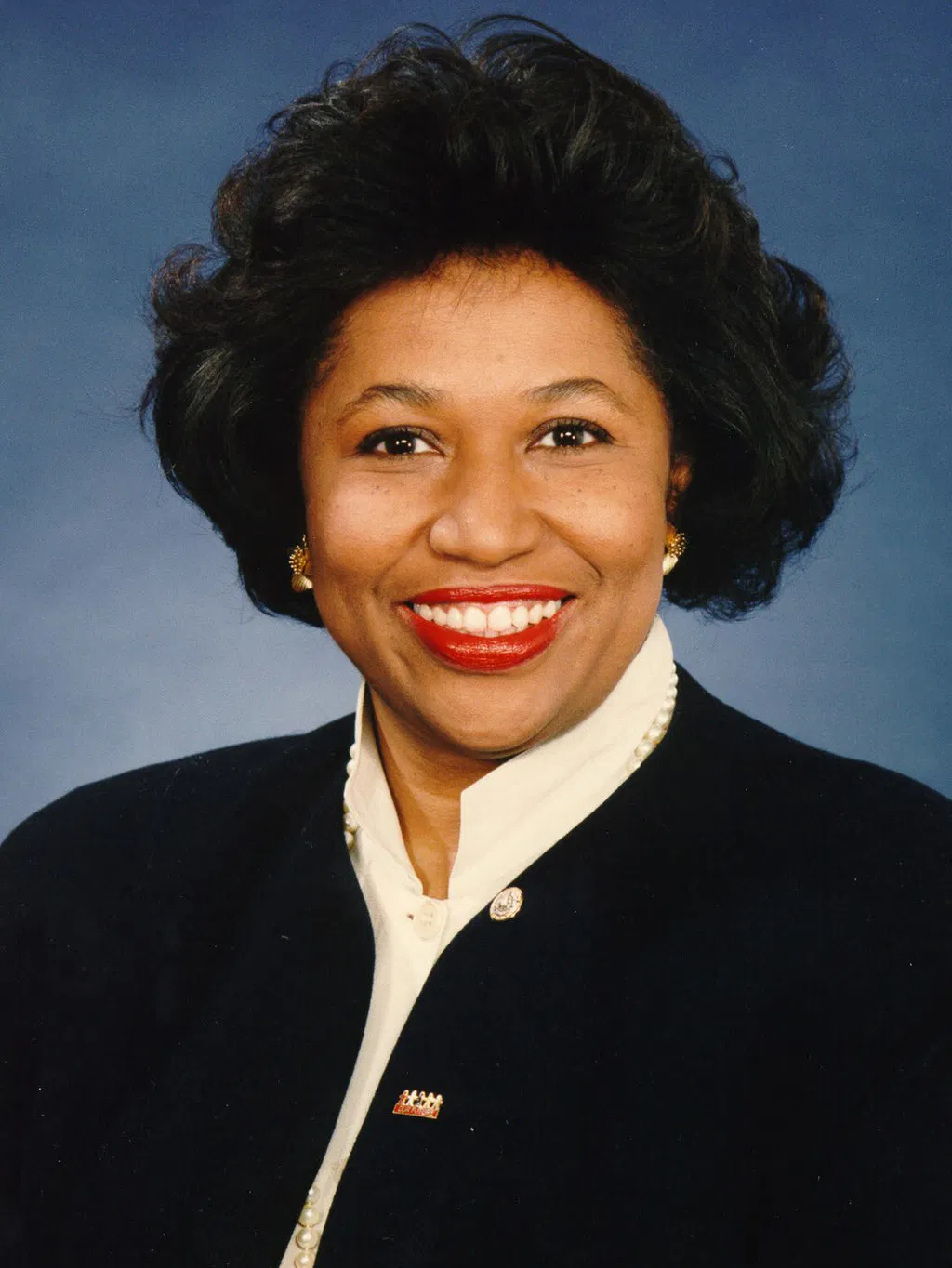
Carol Moseley Braun, America’s First Black Woman Senator, Pens ‘Trailblazer’ Memoir
'Trailblazer: Perseverance in Life and Politics,' the book details Braun’s list of 'firsts.'
The first Black woman senator, Carol Moseley Braun, released her memoir on June 24, which recounts her journey as a history maker.
Titled “Trailblazer: Perseverance in Life and Politics,” the book details Moseley Braun’s life of “firsts.” The trailblazer made history on the local level in Illinois, the national level in Congress, and eventually on the international level, working with the federal government. Moseley Braun was more than the first Black woman in the Senate. She was also the first Black person elected to an executive position in Cook County, Illinois. Additionally, she was the first U.S. Ambassador to New Zealand.
Published by Hanover Square Press, “Trailblazer: Perseverance in Life and Politics” gives insight into Moseley Braun’s early activist roots. The history maker came from humble beginnings to reach high levels.
“Born into a family with a history of civil rights activism and military service dating back to the Civil War, Moseley Braun talks about her childhood in racially segregated Chicago to the present, including marching with Dr. Martin Luther King Jr., running for president as the lone woman in a field of men, and fostering surprising friendships throughout her storied career, from Joe Biden to Hillary Clinton.”
This is a fun Black History Month reminder that there's been one black female US Senator ever, Carol Moseley Braun. pic.twitter.com/B4fK1RhdF3
Moseley Braun spoke with NPR about her role in Congress and the challenges that arise when one is a trailblazer.
“I was kind of the duckbill platypus of the Senate in the sense that I was not only a woman, I am Black, too. So you put those things together. And what you have is a set of expectations that border on the unreasonable, that border on the trailblazing and the groundbreaking, if you will. And so I did my very best to live up to those expectations. But it was not always possible,” she said.