Near-Death Delivery: DoorDash Driver’s Close Call Caught On Doorbell Camera
DoorDash drivers are facing increasing danger.
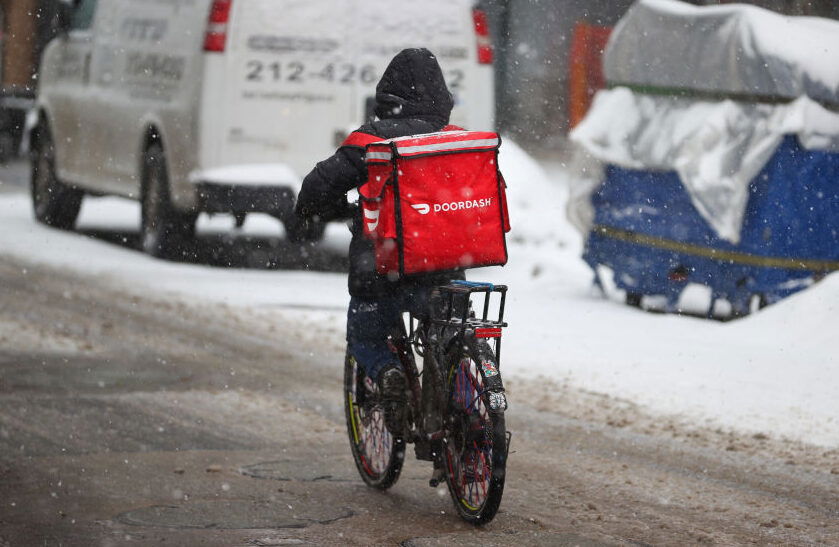
A shocking video from a doorbell camera shows a DoorDash delivery driver narrowly avoiding gunfire during a recent delivery.
In the footage, the unnamed worker is seen placing an order at a customer’s doorstep. Moments later, the sound of gunshots is heard, prompting the driver to quickly retreat from the camera’s view.
The video then cuts to show a bullet lodged in the exact spot where the delivery driver had been standing. The driver was reportedly wearing a shirt that read, “God Got Me,” a detail some have called chilling in light of how close he came to being struck.
Unfortunately, this is not an isolated incident, as delivery drivers face increasing danger on the job.
Aaron Giles, a 38-year-old delivery driver, was tragically shot and killed while making a delivery in Tallahassee, Florida, in March 2025.The incident occurred during his routine delivery route, leaving his family in shock and mourning.
Giles was known for his dedication to his work and his family.Following his untimely death, his widow, Alisha Giles, spoke to the Tallahassee Democrat about the effects of the tragedy on her family.
“We both just wanted better for our family and to build up a foundation,” said Alisha, a team lead for Amazon in Tallahassee. “I’m just trying to adjust from wanting something with someone for so long, to now it’s being changed, and it’s not by choice.”
Alisha initiated a GoFundMe campaign to cover funeral expenses and support their children.The campaign has garnered attention and support from community members who remember Giles as a hardworking individual committed to providing for his loved ones.
“This horrible tragedy not only affected an entire family forever, but also became another example of the dangers of gun violence and the destruction it leaves behind,” she wrote on the fundraiser’s website.
Local authorities are investigating the incident, but no arrests have been made as of yet.The community continues to demand justice and enhanced safety measures for delivery drivers in the area.
Judge Glenda Hatchett Champions Fight Against Black Maternal Mortality
Judge Hatchett lost her daughter Kira nine years ago after she delivered a second child through a scheduled cesarean section.
On a morning just days before Black Maternal Health Week, Judge Glenda Hatchett met with BLACK ENTERPRISE at a neighborhood staple: Gocha’s Breakfast Bar, a Black woman-owned breakfast and brunch cafe in the heart of Southwest Atlanta, not far from the Collier Heights community Hatchett was raised in. She is poised, spry, and owns a sense of urgency. She is every bit the fabulous and fierce judge you might be familiar with from Court TV.
Gavel aside, Hatchett pulls no punches when it comes to Black maternal health. Hatchett is not only on a mission to bring awareness to the epidemic that impacts Black women and birthing people at disparate rates, she is relentless in the pursuit to hold medical institutions and practitioners accountable for slights in obstetric care provided to the Black maternal demographic. Hatchett took up this initiative when her family was directly affected.
She lost her daughter Kira nine years ago after she delivered a second child through a scheduled cesarean section. The 39-year-old mother, who was healthy with no underlying illnesses or conditions that might complicate pregnancy, was “butchered” during the standard procedure—and became the victim of giving birth while Black.
“The autopsy showed that she was butchered,” Hatchett tells BE. “He butchered her and in the process just lacerated her insides, and if they had done the CT scan at 6 o’clock when it was ordered. She would be alive if they had kept monitoring her and seeing that she was bleeding.”
Hatchett continues, “All the medical experts who reviewed her medical records don’t understand how she lived as long as she lived…I think it was her sheer determination. They did not get her back into the OR until midnight, and at that time, they found liters of blood in her abdomen. She had bled out. She coded, and they brought her back. The second time, she was gone. This was totally preventable.”
Hatchett had not always been privy to the statistics around Black maternal mortality or the negligence women encounter during labor and delivery. On its face, cases like Kira’s might fall under medical malpractice, but there’s far more to consider: Kira was one of six women in lawsuits; the physician who performed the fatal C-section did not lose his license; Kira was a Black woman. These things mattered—and as a practicing attorney, Hatchett decided she needed to address Black maternal mortality with a more nuanced legal approach.
“I am taking on these cases now all over the country,” Hatchett tells BE. “We can never bring all of these mothers back. These children will never hug their mothers.”
“Three to four times more likely than Black and Brown women to die than white women,” she adds. “Well, none of them should be dying if it were preventable, right? Black women are catching the brunt of this. There is a disparity in the treatment of Black women in these hospitals. That is not only a malpractice practice issue—it is a civil rights issue, and that is exactly how we got to look at this.”
While there’s been an overall decline in maternal mortality rates across the U.S. to the tune of slightly over 10 percent according to statistics released by the CDC in 2023, pregnancy-related deaths are proportionately higher for Black women compared to white women and other ethnic groups of women. Findings from the National Vital Statistics System study revealed that for every 100,000 live births, Black women succumb to maternal death 50.3 times. The numbers are stark in comparison, dropping significantly for white women at 14.5, Latin women at 12.4, and Asian women at 11.
The Trump administration’s freeze on Title 10 funding in 20 states will further impact Black maternal health. Title 10 funds cover reproductive health care, including everything from sexually transmitted infections to abortion services. Hatchett says it will be “more difficult for women to make choices” about abortion, while others might be forced to give birth, albeit putting their own lives at risk.
“Right here in the state of Georgia, a young woman who died because she could not get the services because there was a question about whether it was medically needed or legal … and in the process of all of that past, she died,” Hatchett says.
Despite the improvement in the number of women dying in childbirth, Hatchett expects things will worsen, particularly when the loss of Medicaid enters the equation.
“If we’re talking about changes to Medicaid … that’s going to affect predominantly low-income communities and Black ones.”
Hatchett is no stranger to litigating on behalf of vulnerable communities. Unbeknownst to many, it was Hatchett who represented Philando Castile, who was killed by a Minnesota police officer in front of his girlfriend and daughter in July 2016 after a traffic stop. She currently represents clients involved in catastrophic accidents and events.
Judge Glenda Hatchett shows no signs of slowing down in the pursuit to protect the people. There’s more on the horizon.
Judge Joe Brown Drops Nugget Regarding Karmelo Anthony’s Bail Reduction
Judge Joe Brown analyzes Karmelo Anthony case thus far and gives his expert opinion.
Judge Joe Brown is weighing in on the case of Karmelo Anthony, a 17-year-old who was arrested for murder.
The former television judge sat down with YouTube creator TheRealDana to discuss the circumstances surrounding Anthony’s arrest and the legal implications of the case.
According to Brown, if Anthony were assaulted in the commission of a robbery, then he would be considered a victim.
“He’s not a perpetrator,” Brown said in the interview. “He’s a victim of a robbery. You can’t hold him accountable for the conduct of somebody else.”
Judge Brown also criticized the bond set for Anthony, arguing it was unjust. He explained that bail is not intended to reflect public opinion or punishment, but rather exists solely to ensure a defendant’s return to court.
“If a defendant has no prior record, and there’s no flight risk, then the law says there should be a reasonable bond set,” Brown said. “That young man should be awaiting trial outside of jail.”
Anthony was initially given a $1 million bond. Supporters have since rallied to help his family raise funds. His next court date has not been announced yet.
On April 2, 2025, 17-year-old Karmelo Anthony was arrested and charged with first-degree murder after allegedly fatally stabbing fellow student Austin Metcalf during a high school track meet at Kuykendall Stadium in Frisco, Texas. According to witness accounts and police reports, the altercation began when Metcalf asked Anthony to move from an area designated for Metcalf’s team. The situation escalated, and Anthony allegedly stabbed Metcalf once in the chest. Metcalf died at the scene, reportedly in the arms of his twin brother.
Anthony claimed he acted in self-defense, stating that Metcalf had grabbed him during the dispute. He was initially held on a $1 million bond, which was later reduced to $250,000. Following the bond reduction, Anthony was released on house arrest, subject to conditions that included wearing an ankle monitor and obtaining judicial permission before leaving home.
The case has garnered significant public attention, and fundraisers have been established for both families. Supporters of Anthony have raised over $431,000 for his legal defense, while a separate fundraiser in memory of Metcalf has collected over $500,000.
As the investigation continues, the case will be presented to a grand jury for consideration. Due to Anthony’s age, he is not eligible for the death penalty or life without parole, in accordance with a 2005 Supreme Court ruling.
Video Of Alleged Dallas School Shooter Emerges; 17-Year-Old Claims, ‘I Had To Do It’
The suspect turned himself in and is currently in custody
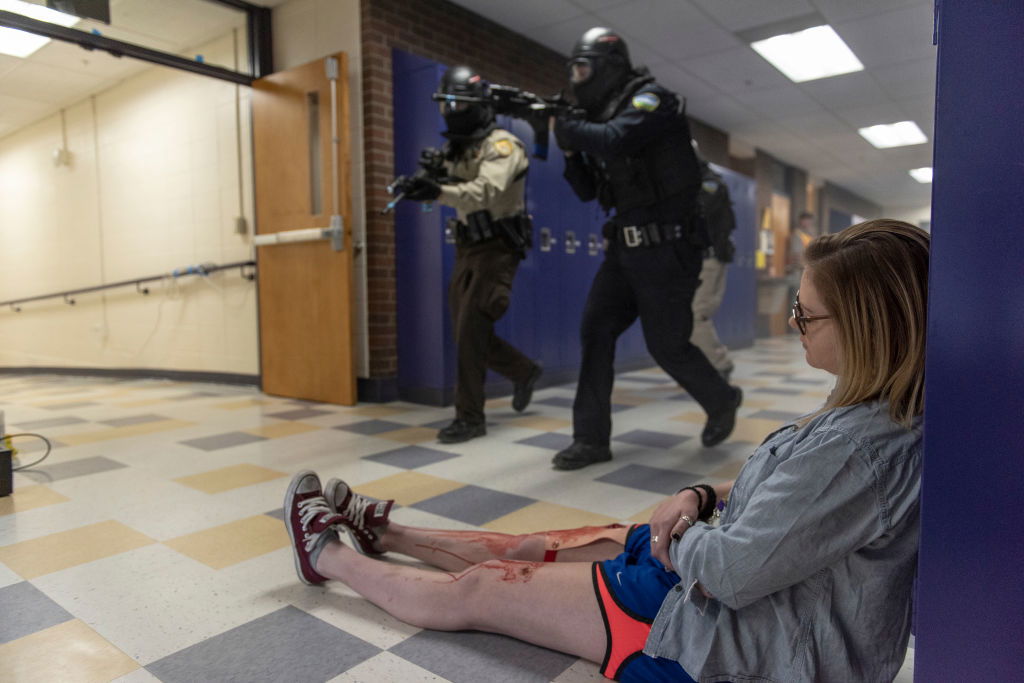
A video has emerged on social media of suspected high school shooter Tracy Haynes before Dallas police officers arrested the 17-year-old for his alleged role in the shooting at Wilmer-Hutchins High School on April 15.
The video clip, posted on Instagram by beezytvmedia, shows the suspect seemingly admitting to what he had just done as he is seen driving. Haynes was charged with aggravated assault and mass shooting. He is currently being held in custody as his bail is set at $600,000. He is accused of shooting three students inside the school.
In the video, he is seen explaining why the action took place at Wilmer-Hutchins, saying he was threatened and that he was told that he was going to be killed, and he wasn’t going to allow that to happen.
“N**ga told me he was gonna kill me, all these n**gas told me they was gonna kill me, look what happened.”
He then says he loved various family members and the person “behind the camera” who was filming.
“I want everybody to know I love them.”
Haynes reportedly expressed that he knows what he did was wrong, and he didn’t want to do it, but he “had to do it” and he’d be “damned if one of us get buried again. I’m tired of us getting buried and nobody doing s**t about it.”
The teen was emotional, explaining that his mother and grandmother were gone, and that he’d rather everyone see him in jail than “dead in the ground.”
The video ends with him saying, “I love y’all!”
“17 year old #TracyHaynes speaks out after the viral mass shooting that took place yesterday at #WilmerHutchins high school in #Dallas ; he turned himself in last night.
“I won’t let yall k*ll me, I’m sick of my people getting buried!” 🙏💔”
The three students who were shot all survived and ranged in age from 15 to 18. There was another student who wasn’t shot but suffered a “musculoskeletal injury to the lower body.”
Republican Congressman Claims Budget Cuts To Medicaid Will Keep Young Men From ’ Playing Video Games All Day’
Some members of Congress aim to cut $880 billion from federal Medicaid spending.
House Speaker Mike Johnson justified proposed budget cuts to Medicaid, arguing that the taxpayer-funded healthcare system causes young men to play video games instead of working.
In a press conference last week, the Republican leader discussed the proposed budget cuts, asserting that young men are taking resources from the more vulnerable citizens.
“No one has talked about cutting one benefit in Medicaid to anyone who’s due—what we’ve talked about is returning work requirements, so, for example, you don’t have able-bodied young men on a program that’s designed for single mothers and the elderly and disabled. They’re draining resources from people,” the congressman said.
“So if you clean that up and shore it up, you save a lot of money, and you return the dignity of work to young men who need to be out working instead of playing videogames all day.”
Mike Johnson Says Men Need to Stop ‘Playing Video Games All Day’ and Get to Work: ‘They’re Draining Resources’ https://t.co/Vg0iAcNPv1
Medicaid is a healthcare system that provides access to healthcare for low-income Americans. According to the healthcare research firm KFF, 64% of Medicaid recipients work full-time or part-time jobs. The firm also noted that most unemployed Medicaid recipients have an illness, disability, or are students. If implemented, Johnson’s proposedreturn-to-work requirement wouldeliminate healthcareaccess forAmericans who are temporarily unemployed after beinglaid off.
Some Republican leaders proposed cuts to the Medicaid budget to support the Trump administration’s plan for reducing federal spending. The GOP aims to cut the Medicaid budget by $880 billion, which could eliminate healthcare coverage for millions of low-income Americans.
The plan received criticism from both sides of the aisle. A letter signed by 12 Republican leaders warns that these budget cuts could lead to catastrophic consequences.
“Cuts to Medicaid also threaten the viability of hospitals, nursing homes, and safety-net providers nationwide. Many hospitals—particularly in rural and underserved areas—rely heavily on Medicaid funding, with some receiving over half their revenue from the program alone.”
On average, healthcare insurance for an individual costs $539 a month or $6,468 annually. The United States is still the only developed country without a universal healthcare system.
Pre-Easter Blackout Affects Millions, Restoration Underway In Puerto Rico
Puerto Rico Governor Jenniffer González-Colón called the transmission issue "unacceptable."
Crews are working to restore power to Puerto Rico after an island-wide blackout left 1.4 million customers in the dark. As of Thursday morning, approximately 41% of customers, or about 609,700, had their power restored, according to Luma Energy.
The blackout began around 12:40 p.m. on April 16, when a transmission system failure caused all of Puerto Rico’s power plants to shut down. This is the second island-wide blackout in less than four months, following a similar event on New Year’s Eve. The repeated nature of these outages has amplified concerns about the stability of the island’s power grid and the effectiveness of ongoing recovery efforts.
Puerto Rico Governor Jenniffer González-Colón called the transmission issue “unacceptable.”
She cut short her vacation and returned to Puerto Rico on Wednesday evening, underscoring the severity of the situation.
“This is a shame for the people of Puerto Rico that we have a problem of this magnitude,” she said, as reported by CBS News. Her swift return and strong words reflect the growing frustration and urgency surrounding the persistent power problems.
Luma Energy, the private company responsible for power transmission and distribution, estimated that it could take 48 to 72 hours to restore power to about 90% of customers. This timeline highlights the extensive damage and the complexities involved in restoring a power grid that has been plagued by years of neglect and natural disasters. The company’s efforts are being closely watched by residents and officials alike, as the speed and efficiency of the restoration process are crucial for the well-being of the island.
Genera PR, the company that generates power on the island, said the outage was caused by the sudden shutdown of all generating plants, including their own and private generators. Daniel Hernández, vice president of operations for Genera PR, stated at a news conference on Wednesday that plants may come back online more quickly than in previous years because the company has invested in quicker restart systems. This suggests that while the initial outage was catastrophic, there have been some improvements in the system’s ability to recover. However, the fact that all plants shut down simultaneously raises questions about the grid’s resilience and its susceptibility to cascading failures.
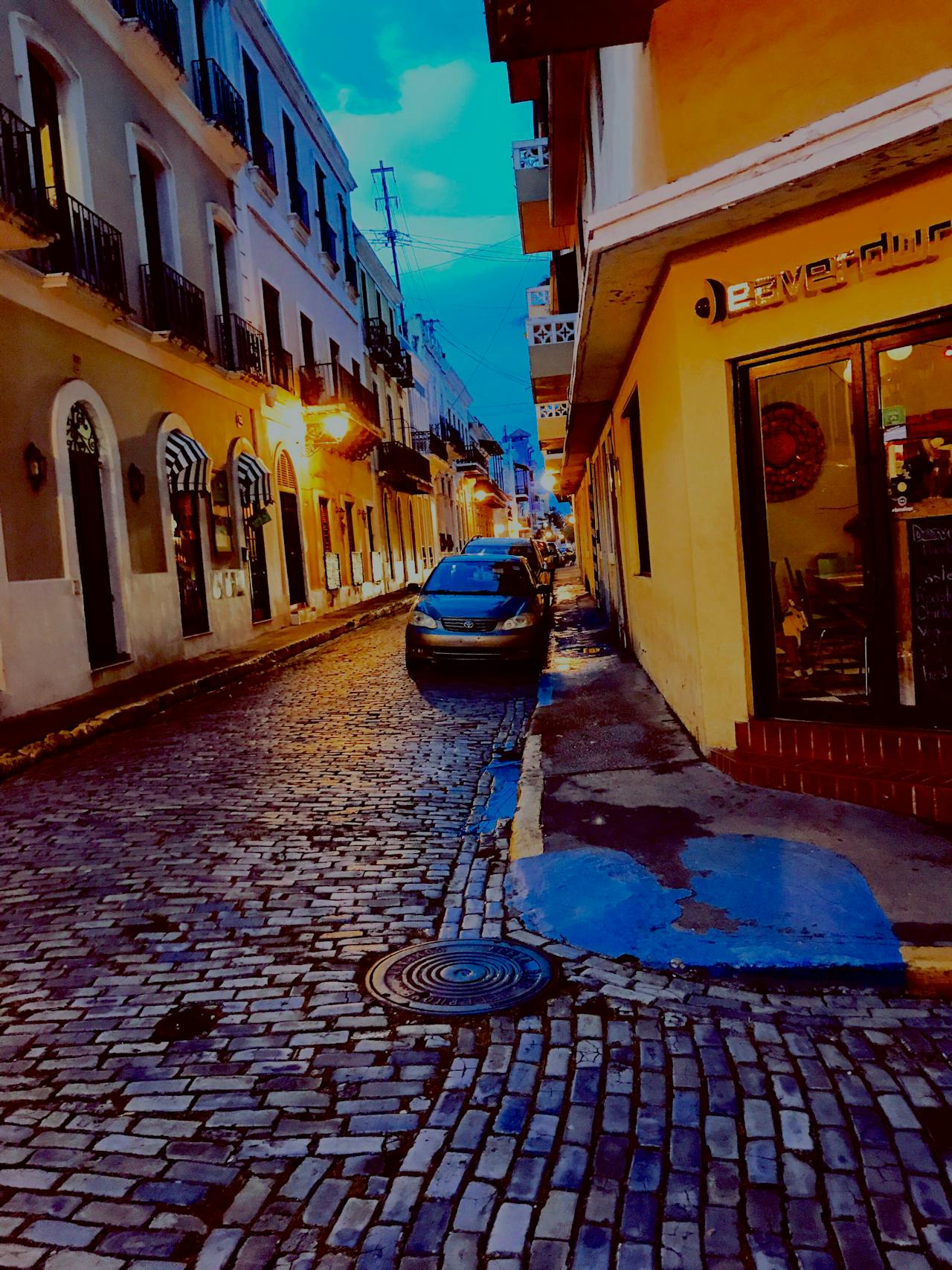
The blackout occurred as Puerto Rico residents were preparing to celebrate the Easter holiday weekend. The predominantly Catholic island observes the holiday throughout the week. The outage disrupted daily life, forcing some in San Juan to dine by candlelight and others to rush to stores for ice to preserve food. The timing of the blackout, coinciding with a major religious holiday, added to the hardship and frustration experienced by residents. Many had planned to spend the week with family and friends, but the lack of power cast a shadow over these celebrations.
Josué Colón, the island’s energy czar, said in a news conference on Wednesday afternoon, “This process is not going to end today.” He added that a preliminary review suggested the cause was a problem near a transmission line in southern Puerto Rico that began at 12:38 p.m. The early findings of the investigation point to a specific technical issue, but the full extent of the damage and the underlying causes are still being investigated. The focus remains on restoring power as quickly as possible, but understanding the root cause is essential for preventing future outages.
The blackout caused widespread disruptions. Traffic was gridlocked as transit officers directed cars at intersections with non-functioning traffic lights. Residents flocked to gas stations for fuel to power generators. Passengers on an urban train in San Juan were forced to evacuate and walk along an overpass. Plaza Las Américas, the island’s largest mall, largely shut down. These disruptions illustrate the far-reaching impact of the power outage on daily life, affecting transportation, commerce, and public services. The lack of electricity not only caused inconvenience but also raised safety concerns, particularly regarding traffic management and the operation of essential services.
Puerto Rico has struggled with power grid problems since Hurricane Maria devastated the island in 2017. The island has experienced frequent blackouts, frustrating residents and businesses and causing damage to appliances and electronics due to power surges. Recovery from major power disruptions has often been slow, with past island-wide outages taking several days to resolve. This includes an island-wide outage on New Year’s Eve. The legacy of Hurricane Maria continues to haunt Puerto Rico, as the power grid has never fully recovered from the damage inflicted by the storm. The subsequent blackouts have become a recurring problem, eroding public trust and hindering economic development.
Gary Soto, director of the energy management and transmission operation center for Luma Energy, said at the news conference that full restoration could take up to 72 hours. Luma Energy stated, “Our crews will continue working throughout the day today with the goal of restoring service to 90% of our customers within 48 hours, conditions permitting.” The company’s acknowledgment of the potential challenges in restoring power underscores the complexity of the situation. While they are committed to working tirelessly, unforeseen circumstances could prolong the process.
The ongoing outages have sparked outrage among Puerto Ricans, with many calling for the government to cancel contracts with Luma Energy and Genera PR. Governor González acknowledged these concerns. “That is not under doubt or question,” she said, but added that it’s not a quick process. González also stated that a major outage like the one on Wednesday leads to an estimated $230 million revenue loss daily. The economic impact of the blackouts is substantial, affecting businesses of all sizes and disrupting the island’s fragile economy. The calls for contract cancellations reflect a deep-seated frustration with the current energy providers and a demand for accountability.
Ramón C. Barquín III, president of the United Retail Center, warned that the repeated outages could deter potential investors. “We cannot continue to repeat this cycle of blackouts without taking concrete measures to strengthen our energy infrastructure,” he said. The business community is particularly concerned about the long-term consequences of the power outages. The lack of reliable electricity not only disrupts daily operations but also creates uncertainty, making it difficult to attract investment and foster economic growth.
Concerns also exist for Puerto Rico’s elderly population. The mayor of Canóvanas deployed brigades to visit bedridden individuals and those reliant on electronic medical equipment. The vulnerability of the elderly and other dependent populations during power outages is a significant concern. The lack of electricity can have serious health consequences for those who rely on life-support systems or require refrigerated medications. Local governments and community organizations are stepping up to provide assistance, but the need for a more resilient power grid is evident.
Luma Energy had previously announced near-complete power restoration after the New Year’s Eve blackout, stating that 98% of customers had power, including hospitals, sewage facilities, and water plants. Juan Saca, President of Luma Energy, had stated, “Given the fragile nature of the grid, we will need to manage available generation to customer demand, which will likely require rotating temporary outages.” This statement highlights the underlying problem: even when power is restored, the grid remains fragile and susceptible to further disruptions. The need for a comprehensive overhaul of the energy infrastructure is becoming increasingly apparent.
The situation in Puerto Rico is more than just a series of unfortunate events; it’s a symptom of a deeper crisis involving an aging and poorly maintained infrastructure, a complex web of public and private interests, and the ongoing challenges of recovering from natural disasters. The island’s power grid, much of which dates back decades, has suffered from years of neglect and underinvestment. This neglect, combined with the devastating impact of Hurricane Maria in 2017, has created a system that is highly vulnerable to failures.
The privatization of Puerto Rico’s power transmission and distribution system, with Luma Energy taking over operations, was intended to improve efficiency and reliability. However, the recent blackouts have raised serious questions about the effectiveness of this transition. Critics argue that Luma Energy has not made sufficient investments in upgrading the infrastructure and that the focus on short-term profits has come at the expense of long-term stability.
Genera PR, responsible for power generation, faces its own set of challenges. The company is tasked with maintaining aging power plants and ensuring a stable supply of electricity. However, the frequent outages suggest that these efforts have been insufficient. The company’s reliance on fossil fuels also raises concerns about environmental impact and the need for a transition to renewable energy sources.
The role of the Puerto Rican government in this crisis is also under scrutiny. While Governor González-Colón has expressed outrage at the repeated outages, many are demanding more concrete action. The calls to cancel contracts with Luma Energy and Genera PR reflect a growing dissatisfaction with the government’s oversight of the energy sector. Residents are demanding accountability and a clear plan for addressing the systemic problems that plague the power grid.
The economic consequences of the power outages are significant. Businesses, both large and small, suffer losses due to disruptions in operations, spoiled inventory, and the inability to serve customers. The tourism sector, a vital part of the island’s economy, is also affected, as blackouts can deter visitors and damage the island’s reputation. The long-term impact on investment and economic growth is a major concern.
The social impact of the blackouts is equally profound. The lack of reliable electricity affects people’s daily lives in numerous ways, from the inability to cook and refrigerate food to the disruption of work and school. The emotional toll of living with constant uncertainty and the fear of the next blackout is also significant. The situation is particularly challenging for vulnerable populations, such as the elderly, the sick, and low-income families.
In the aftermath of each blackout, there are renewed calls for change. Some advocate for a complete overhaul of the power grid, with a focus on renewable energy and decentralized generation. Others argue for greater government intervention and stricter regulation of private energy companies. There is a growing consensus that the current system is unsustainable and that a fundamental shift is needed to ensure a reliable and affordable supply of electricity for all Puerto Ricans.
Don’t Keep It on the Down Low: ‘CrazySexyCool—The TLC Musical’ Coming Summer 2026
The story of Tionne 'T-Boz' Watkins, Lisa 'Left Eye' Lopes, and Rozonda 'Chilli' Thomas is being made into a musical!
The story of TLC, the best-selling American girl group of all time, will be the subject of a new musical, CrazySexyCool–The TLC Musical.
The show will debut at Arena Stage in Washington, D.C. Production will run from June 12 to August 9, 2026, as part of the theater’s 75th anniversary season.
The musical, named after TLC’s 1994 Diamond album, chronicles the trio’s rise, personal struggles, and influence on music and culture. It features hits like “Waterfalls,” “Creep,” and “No Scrubs” and will explore the group behind salacious headlines: Tionne “T-Boz” Watkins, Lisa “Left Eye” Lopes, and Rozonda “Chilli” Thomas.
Kwame Kwei-Armah will write and direct the CrazySexyCool, with choreography by Chloe O. Davis. The musical is produced by Diggit Theatrical Group, with Stephen Gabriel serving as executive producer.
“Bringing this story to the stage is a dream come true. We have performed in a lot of different venues all over the world throughout our career, but bringing our story and music to the theater is a totally new and exciting challenge,” said T-Boz in a statement.
Chilli added, “Audiences will get to hear our story—mostly fact with a sprinkle of fiction—told in our own way, and of course… !”
TLC’s journey was marked by both triumph and tragedy. Despite selling over 65 million records worldwide, the group faced financial hardships. In 1995, the group filed Chapter 11 bankruptcy. Additionally, internal conflicts and the untimely death of Left Eye in 2002 slowed the group’s momentum.
Yet, T-Boz and Chilli continue to honor the group’s legacy through tours, new music, and, now, this theatrical production.
Tickets for CrazySexyCool–The TLC Musical will be available as part of Arena Stage’s season packages, with individual tickets expected to go on sale closer to the show’s premiere.
Federal Judge Finds Probable Cause To Hold Trump Administration in Contempt Over Deportation
U.S. District Judge James Boasberg says he can hold officials in attempt for “willful disregard” of his order to stop transferring deportees to El Salvador to the notorious maximum security prison.
In the latest battle between the Trump administration and the judicial system, a federal judge said he has found probable cause to hold Trump administration officials in criminal contempt. U.S. District Judge James Boasberg says he can hold officials in contempt for “willful disregard” of his order to stop transferring deportees to El Salvador to the notorious maximum security prison.
“The Court ultimately determines that the Government’s actions on that day demonstrate a willful disregard for its Order, sufficient for the Court to conclude that probable cause exists to find the Government in criminal contempt,” Boasberg wrote in a 46-page decision.
Boasberg said the Trump administration stonedwalled and refused to provide the court information during hearings after his initial order. However, officials from the Trump administration invoked the Alien Enemies Act to carry out the rushed deportations and argued that divulging into details would jeopardize state secrets.
“The Constitution does not tolerate willful disobedience of judicial orders — especially by officials of a coordinate branch who have sworn an oath to uphold it,” he added.
The Trump Administration Tests Court’s Limits
The latest ruling from Boasberg comes as the Trump administration continues to test how far it can push the limit with court orders.
Boasberg did not identify specific officials he might refer for criminal prosecution. Criminal contempt can be punished by fines or imprisonment.
All of this comes amid what has become one of the highest profile immigration case involving a Maryland man who was wrongly deported to El Salvador. The Trump administration says it has no plans of returning Kilmar Abrego Garcia, despite a federal judge’s order to bring him back.
Nigerians Applying For U.S. Visas To Face New Interview Requirements Before Approval
The new interview requirements will take effect starting April 22.
Nigerians applying for visas to the United States should expect new interview requirements ahead of their arrival.
The U.S. Embassy in Nigeria announced that the new applicant criteria will take effect on April 22. Business Insider Africa says the changes will help increase efficiency and streamline the visa application process.
Applicants must now bring an additional form to their visa interviews to confirm their appointment. Nigerians in Abuja and Lagos seeking a U.S. visa must bring the DS-160 visa application form with a confirmation/barcode number to proceed.
“Starting April 22, 2025, all visa applicants in Abuja and Lagos must bring a DS-160 visa application form with a confirmation/barcode number (starting with ‘AA’ and followed by ’00’ – two zeroes) that matches the one used to make their appointment online. You must also schedule your appointment at the location you selected when filling out your DS-160.”
The statement also detailed that the location selected when filling out the form is where one must complete the on-site interview. Moreover, any former DS-160 form barcodes from previous applications will become invalid.
The embassy emphasized that the new measure will be strictly enforced. Applicants whose barcode/confirmation numbers do not match their appointment details cannot enter the consular section, thus canceling the interview.
However, support for those whose DS-160 numbers do not align with the interview confirmation can still receive help. Applicants with this issue can log into their AVITS account on the Online Visa/Preclearance Application Facility account website. There, they can submit a ticket for correction.
The changes come as U.S. foreign policy shifts under the Trump administration. Trump has not directly targeted Nigeria with his new orders, although he did so during his first term. However, the heavier focus on immigration control still impacts all current and potential visa holders across many nations.
Trump has already drafted a proposed travel ban impacting several African countries. The list includes those in the continent’s Western region, such as Chad, The Gambia, and The Democratic Republic of Congo. Although Nigeria remains off this list, its new visa interview requirements could result in fewer approvals for the foreseeable future.
Nigerians are encouraged to remain up-to-date with all new rulings on the U.S. Embassy’s website.