New York Woman Found Guilty After Tossing Dynamite In Boyfriend’s Bedroom
Keyonna Waddell faces up to 25 years in prison for the crime.
Keyonna Waddell of Long Island, New York, faces up to 25 years in prison for throwing a stick of dynamite into her then-boyfriend’s bedroom in 2024.
According to the Suffolk County District Attorney’s Office, Waddell, 35, was found guilty of assault in the first degree and criminal possession of a weapon in the first degree by a jury on April 24.
The victim lost his hand due to the incident.
“Domestic violence can escalate to deadly levels, and this case is a sobering reminder of that reality,” said District Attorney Tierney in a written statement. “Thanks to the outstanding work of our prosecutors and the Suffolk County Police Department, a dangerous individual has been held accountable and will face a lengthy prison sentence for this horrific act.”
Prosecutors stated that the incident took place on March 22, 2024. After an argument in the apartment, the boyfriend left and told Waddell to leave as well. When he returned home, he went to bed thinking that she had left. A hissing sound woke him up, and he saw a flame on the floor. When he went to see what it was, he realized that it might be a stick of dynamite that had been thrown into the room. He tried to put the flame out, but when he couldn’t, he picked it up so he could throw it outside the home.
As he headed outside, it blew up in his hand. Feeling the pain, he realized his hand was gone, then ran to the end of the driveway and saw Waddell leaving the home.
The victim was taken to Nassau University Medical Center by police officers. The rest of his hand and a part of his arm were amputated.
Waddell was arrested the next day after police officers investigated the incident. They discovered that she had previously threatened to use the dynamite on him several times before this incident.
She is slated to return to court for sentencing on May 27.
Kameirah Johnson is one of five finalists for the art contest, with her drawing focusing on the legacy of Black hair in America. Her artwork, titled “Hair Power: The Crown that Grows From Us,” symbolizes her unbreakable connection to her tresses. Google and NBA all-star Giannis Antetokounmpo announced Kameirah as one of the esteemed finalists.
The Doodle for Google Art contest allows young artists to showcase their creative skills for a chance to get featured on the search engine’s homepage. Thousands of kids from grades K through 12 submitted drawings that align with this year’s theme of “My Superpower is…”
Kameirah opted to highlight her hair, representing a triumphant legacy for Black women and men to reclaim their natural styles.
“My superpower is my hair and the family history it carries. Each texture and style holds culture, care, and survival passed down without words,” wrote the high schooler in a statement. “Lying in the grass, our crowns rest without weakening. This kinky hair refuses conformity; it makes us different. Shaped by our lineage, our hair is undeniably beautiful.”
With her own crown, Kameirah hopes to maintain this history as she maintains her kinky curls. Her artwork, however, extends beyond the personal. By uplifting Black hair, she also spreads awareness of other movements that champion natural hairstyles. As social advocates continue to fight against hair discrimination, particularly through CROWN Act policies and legislation, Kameirah’s advocacy adds to this ongoing cause for diversity and justice.
Fans supporting her purposeful art can vote for Kameirah’s doodle until April 29. If she wins, Kameirah would receive a $55,000 scholarship and a $50,000 tech package for her school.
A blood sugar level of 535 altered his thoughts on how he lived
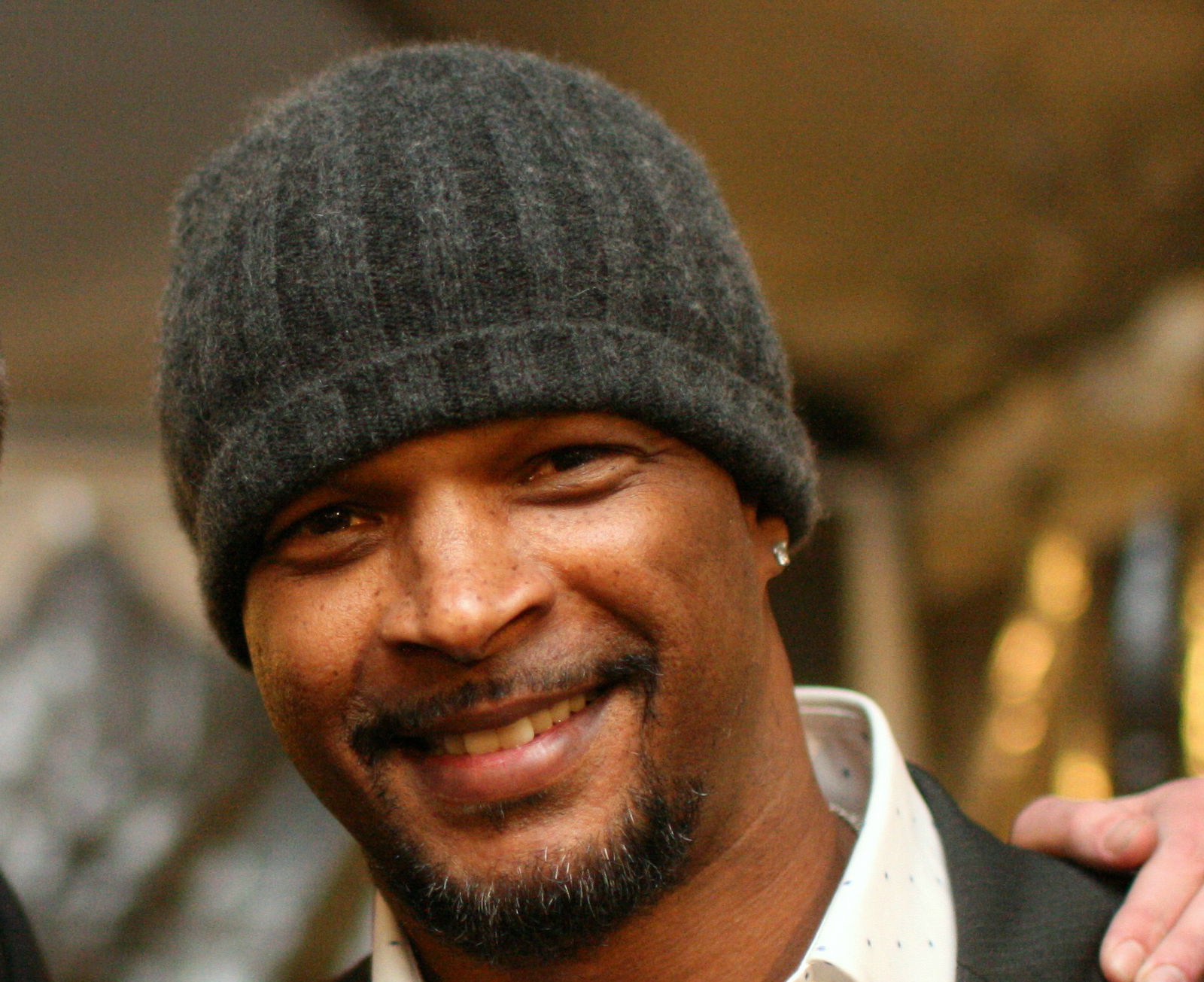
In a recent interview with People, Damon Wayans discussed having to cope with almost dying as he discovered that he had diabetes.
The near-death experience took place in 2008 when he found out that his blood sugar was at 535 (Normal blood sugar levels are typically between 70- 140), nearly placing him in a diabetic coma. It was then that he realized life changes would be the only thing that could save his life. He was diagnosed with Type 2 diabetes.
“When I got diagnosed with diabetes, I needed triage. I needed to take insulin. I had to change my diet and get into exercise because my sugar was at 535, which is not sustainable. Just knowing that then set me on a path to learning more about what I can do to control it and the things that I can’t do and need to let a doctor do,” Wayans told the media outlet.
He is speaking about his experience as he raises awareness in the community about diabetic macular edema (DME). This condition can lead to temporary or permanent blindness in people with diabetes.
“I found out it affects Black and brown people two to three times more for vision loss, which is terrible. It’s something that is not really discussed in those communities. It’s nice to be able to maybe have a voice and lend it to something that’s important,” Wayans said.
Wayans is part of the Wayans collective, which got its start after the oldest brother, Keenen Ivory Wayans, entered Hollywood with his movie “Hollywood Shuffle,” which he co-wrote with Robert Townsend—leading to the television sketch comedy series, “In Living Color,” which starred Damon, Kim, Keenen, Shawn, and Marlon. The Wayans family was honored in 2025 at the 56th NAACP Image Awards when they were inducted into the NAACP Image Awards Hall of Fame.
Civil Rights Memorial Center To Host Emmett Till Traveling Exhibit
The exhibit, "Emmett Till & Mamie Till-Mobley: Let the World See," will be on display from April 28 to August 14.
The Civil Rights Memorial Center in Montgomery, Alabama, has been chosen as the next host of the traveling Emmett Till exhibit.
On April 28, the exhibit, “Emmett Till & Mamie Till-Mobley: Let the World See” will open at the Civil Rights Memorial Center (CRMC) and run until August 14, WAFF reports.
The exhibit, created by the Emmett Till and Mamie Till-Mobley Institute, the Emmett Till Interpretive Center, the Till family, and The Children’s Museum of Indianapolis, serves as an interactive time-traveling, immersive experience that incorporates three notable installations in honor of the life and legacy of Emmett Till and his mother, Mamie Till-Mobley.
The exhibit is supported in part by the National Endowment for the Humanities, Maddox Foundation, Institute of Museum and Library Services, and the National Park Service.
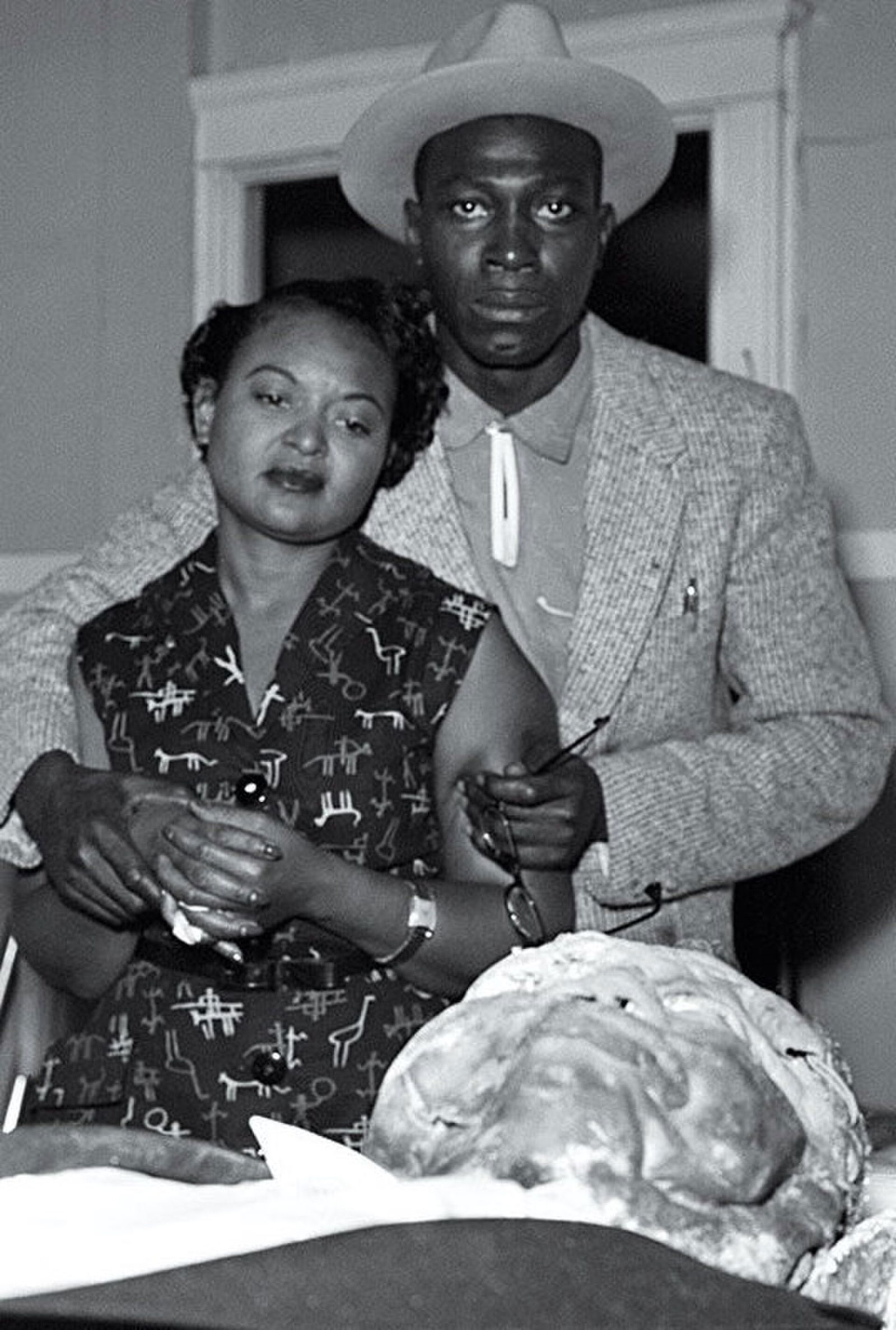
Highlights include Eyewitness Account, an interactive rotary phone audio experience recounting Till’s kidnapping; The Emmett Till Funeral, a visual display of photos documenting his return home; and Courtroom Sketchpad, an interactive tool that recreates courtroom sketches and explains the trial.
Emmett Till was just 14 when he was kidnapped, tortured, and murdered by white supremacists in the Jim Crow South in 1955. His mother, Mamie Till-Mobley, refused to let the truth be hidden, courageously sharing her son’s story with the world and helping ignite a movement that changed the nation.
While progress has been made, her mission for justice, healing, and reconciliation continues. This exhibit honors their legacy, telling their story, and urging visitors to carry it forward by making an impact in their own communities.
The traveling exhibit’s debut at the Civil Rights Memorial Center follows a three-month run at Minnetrista (IN) Museum & Gardens, where it was on view from January 24 through April 12.
“Emmett Till’s story is not distant history—it continues to shape the world we live in,” says Sebastián Encina, director of curation & exhibition at Minnetrista. “This exhibition asks visitors to sit with the reality of what happened, to understand the courage of Mamie Till-Mobley, and to recognize how memory, truth, and responsibility are deeply connected. Remembering is not passive work—it requires attention, care, and action.”
Metro Atlanta Residents Push Back Against Mass Surveillance Under Flock Safety
Metro Atlanta residents are speaking out against the growing mass surveillance throughout the city.
Residents across metro Atlanta are raising concerns about expanding mass surveillance, warning that the growing program is leaving communities uneasy.
On April 13, the Dunwoody City Council approved a contract with Atlanta-based surveillance tech company Flock Safety. Meanwhile, in DeKalb County, the expanding network tied to the Atlanta Public Safety Training Center is fueling concerns among residents who say the increased surveillance makes them feel watched rather than protected, Capital B News reports.
It “certainly feels like an invasion of privacy,” said DeKalb resident Brian Page.
Page’s concerns about the Atlanta Public Safety Training Center—often called “Cop City”—reflect a broader issue. Built on 85 acres of one of Atlanta’s last urban forests, the site is now part of a massive surveillance network of more than 60,000 cameras linked to law enforcement across the metro area.
For many Black residents, the project replaced a vital green space with a heavily monitored facility, that raised concerns about environmental impacts, public health, and increased digital surveillance in their communities.
Meanwhile, in Dunwoody, Jason Hunyar and his pregnant wife have been outspoken at city council meetings, raising concerns about Flock Safety. Despite resident pushback, officials approved the contract. In a statement, a Flock spokesperson disputed Hunyar’s claims, saying Dunwoody served as a demonstration partner and had authorized select employees to test new products and features.
“It’s baffling to me. Less than a week after we find out that Flock employees are watching children at a pool, they decide to continue to do business,” said Hunyar, who was outraged after learning Flock executives were logged into cameras at Dunwoody’s Marcus Jewish Community Center.
Training at the Atlanta Public Safety Training Center features mock city blocks equipped with cameras, license-plate readers, and real-time monitoring systems, allowing officers to practice AI-driven tracking and crowd control. A 2025 analysis found Atlanta has roughly 124 cameras per 1,000 residents—among the highest rates globally—with systems capable of flagging “suspicious” activity even without a reported crime.
Civil liberties advocates warn these tactics are already being used locally and could spread to departments nationwide. A Harvard University study across 10 cities found surveillance cameras are most concentrated in gentrifying neighborhoods, increasing as white residents move in, even after accounting for crime and income.
Atlanta ranks among the U.S. cities with the most Black neighborhoods gentrified since 1980. As property values rise, policing often intensifies; one analysis found arrests increase alongside even modest gains in home values. Together, the data suggest redevelopment in Black communities is frequently paired with expanded surveillance and enforcement.
All the while, concerns about Flock Safety are spreading across metro Atlanta, as its tools—from license plate readers to surveillance cameras and gunshot detection—expand nationwide. In Marietta, a Cobb County meeting drew pushback from a product manager over local contracts with the company. At Emory University, a coalition of students, faculty, and staff submitted a petition with over 1,000 signatures calling to remove license plate readers, end the school’s contract, and launch a transparent review of campus surveillance.
As Georgia-based surveillance firms expand nationwide and cities push back over ties to immigration enforcement and protest policing, the debate in Atlanta is taking on national significance. Residents in Atlanta are joining a growing national movement pushing back on surveillance technology—a decentralized, cross-partisan effort that has led to at least 50 canceled or rejected contracts, or the removal of Flock cameras, over the past year, according to DeFlock.
Hunyar said his concerns center on “security, auditability, and transparency,” arguing that those standards are essential in any system of mass surveillance. For Atlanta community organizer Kamau Franklin, the development is unwelcome but unsurprising, saying it aligns with the broader trajectory of gentrification in Atlanta.
“The surveillance system, the environmental issues, and the gentrification of Atlanta go hand in hand,” Franklin said. “The focus and money poured into specialized police units and cameras feels far outstripped by anything invested in housing, green space, or jobs.”
FDA Fast-Tracks Good Trip With Approved Psychedelic Drugs For Depression
Three companies were granted a voucher to explore, develop and test two different serotonin-2A agonists, defined as a class of psychedelic medications, to treat depression.
The Food and Drug Administration (FDA) greenlit a review process of three experimental psychedelic drugs for depression, giving priority vouchers to three unnamed companies, USA Today reports.
In an April 24 announcement, three companies were granted a voucher to explore, develop, and test two different serotonin-2A agonists, defined as a class of psychedelic medications, and related products, while another company was granted permission to begin clinical trials on a third psychedelic drug.
The move comes less than a week after President Donald Trump signed an executive order to extend research into the therapeutic effects of psychedelic drugs. “These medications have the potential to address the nation’s mental health crisis, including conditions like treatment-resistant depression, alcoholism, and other serious mental health and substance abuse conditions,” FDA Commissioner Dr. Marty Makary said in a statement.
“We owe it to our nation’s veterans and all Americans who are suffering from these conditions to evaluate these potential therapies with urgency.”
According to Fast Company, two of the companies are scheduled to research psilocybin as a treatment for depression, and another will study a drug called methylone, which is a stimulant similar to MDMA, the main ingredient in ecstasy — a Schedule I drug — for treating post-traumatic stress disorder (PTSD).
The vouchers cut time on the FDA’s review process from its standard 10 to 12 months to one to two months, with government-approved psychedelics potentially being available by summer 2026. Before Trump’s EO, research into psychedelics had been limited since the drugs are illegal in the U.S.
Medical officials define “psychedelics” as a broad term often used in reference to a variety of hallucinogenic drugs that cause non-ordinary mental states and sometimes add images of hippies “tripping” on colorful MDMA pills. Psychedelics can also alter consciousness, often described as creating an otherworldly experience by targeting serotonin receptors in the brain to affect the senses and cause auditory, visual, and psychological sensations.
Schedule I drugs, such as ecstasy, heroin, and LSD, are deemed to be more dangerous and require higher regulation, causing criticism and skepticism from leading experts like Dan Troy, former FDA chief counsel and current managing director at Berkeley Research Group.
Troy feels the White House giving priority directives to the FDA is a move that could raise doubts on the agency’s independence and dedication to a process that has worked for decades. “There are many people who think that this avenue shows promise in the mental health space,” he said.
“I think the concern that some of us have is whether or not the White House should be telling the FDA which medicines to prioritize and which medicines not to prioritize. Because historically, that’s been something that has been more the province of the scientists.”
This isn’t the first time the Trump administration has pushed for the approval of some drugs. In a push to make state-licensed marijuana safer and more accessible, the Justice Department is planning a new hearing to reclassify marijuana from a Schedule I drug to a Schedule III drug.
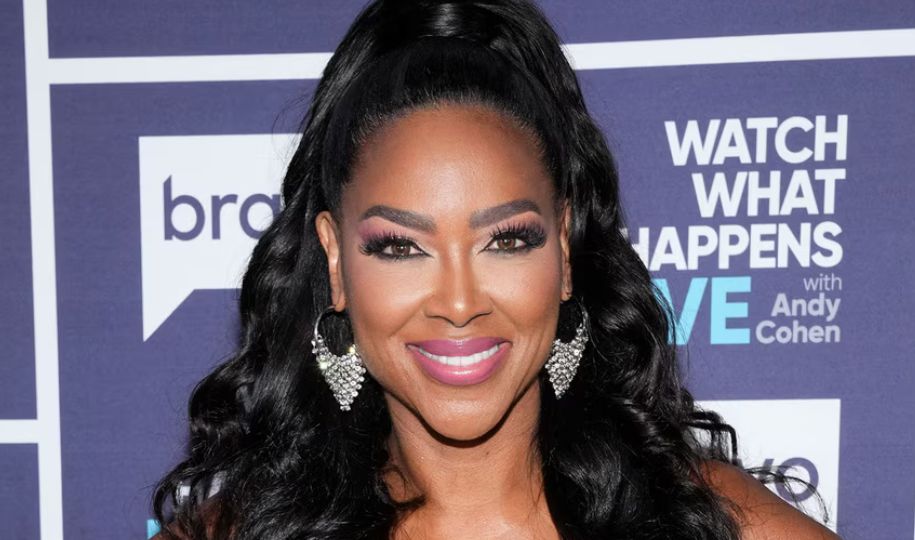
On April 24, videos surfaced online showing The Real Housewives of Atlanta alum packing up her hair salon and moving out after issues with her landlord. Footage showed Moore’s salon furniture sitting on the street outside the location that was featured on her last season of the Bravo series.
“All of #KenyaMoore’s equipment being removed from her salon,” a tweet from Jay’s Reality Blog read.
All of #KenyaMoore’s equipment being removed from her salon.
Moore—who was fired from The Real Housewives of Atlanta after displaying explicit images of fellow alum Britt Eady at her salon launch—said she wasn’t forced out of the space but chose to withhold rent due to a dispute with her landlord.
“I have spent the last several weeks moving out of my salon as a result of my ongoing legal battle with the landlord who has failed to reimburse me nearly $80K of improvement funds I am rightfully owed,” Moore said in a statement shared on Instagram. “My only recourse was to withhold rent and file a countersuit. I already have my outfit laid out for court chile!”
Ahead of vacating the salon, court records shared by TMZ show a Georgia judge ordered Moore’s company, Moore Vision Media, to pay nearly $88,000 in back rent and utilities, split into two payments of about $44,000 while paying roughly $5,500 a month unless the property was vacated.
Soon after, the landlord claimed the company missed the first court-ordered payment and asked the court to grant immediate possession of the space.
Moore pushed back, claiming the landlord failed to deliver promised improvements to the space. With her departure, the dispute appears unresolved. In a statement, she thanked her clients and teased a new chapter ahead, encouraging fans to stay tuned.
“This salon chapter is closing, trust me, it’s not the end. It’s just the beginning of a new era. Stay tuned for what’s next!” Moore wrote.
Moore opened Kenya Moore Hair Spa in Atlanta in 2024. The salon catered to a loyal clientele but later became part of the drama surrounding her TV appearances and legal disputes. Eady has also drawn backlash after posting a video that appeared to mock Moore’s salon closing.
Resorts World NYC To Open Live Table Games April 28
"'New York City has never seen anything like what we're planning for April 28,," said Robert DeSalvio, president of Genting Americas East.
The Nas-backed Resorts World New York City (RWNYC) will open April 28 with over 240 live table games, reportedly the first time this has happened in the city’s history.
The casino will offer blackjack, craps, baccarat, and roulette, as well as thousands of slot machines with multi-million-dollar jackpots. Attendees will see the games on the reimagined third floor.
“New York City has never seen anything like what we’re planning for April 28. Once the Gaming Commission’s final testing is complete, live table games will be open and operating right here in Queens for the first time in the history of New York City. We are ready to welcome New Yorkers to this exciting new experience,” said Robert DeSalvio, president of Genting Americas East, in a written statement.
In the announcement, DeSalvio said the casino now employs over 2,200 people, which doubles the workforce. He anticipates thousands of additional hires over the next three years.
When the floor opens, Nas, along with Genting Chairman KT Lim, will be joined by many elected officials, community leaders, and entertainers. They will be participating in the ribbon-cutting ceremony and ceremonial throw of the first dice.
The Queens recording artist had announced in the summer of 2025 that he forged a new partnership with Resorts World as part of its $5.5 billion expansion in his borough.
The expansion was undertaken by RWNYC, which aimed to build on the resort’s 15-year legacy of community partnership with a 5.6 million-square-foot proposal. It also promised to grow the casino, while creating thousands of union jobs, and generating billions for education and transit for Southeast Queens.
The entrepreneurial rapper has expanded his business portfolio by recently announcing the opening of three restaurants in Midtown Manhattan: Bar Chimera, COTE 550, and Sushi Yoshitake. He partnered with Gracious Hospitality Management in the ventures.
The Currys Relaunch PLEZi Hydration Drink As New Formula Appeals To Wider Audience
The married couple are co-founders of the brand, which now promotes health-focused beverages for families and active adults.
Steph and Ayesha Curry are reintroducing their PLEZi Hydration drink with a new formula to fit all activity levels and ages.
The Currys are already co-founders of the drink’s overarching brand, PLEZi Nutrition. Now, with their deeper creative input, they have relaunched PLEZi Hydration to support families and active adults.
The new formula ensures the safety and wellness of its wide-ranging audience, allowing drinkers to get an extra boost of hydration with every sip. The sports-famous family has used their star power to shed more light on the brand founded by Michelle Obama, which focuses on providing nutritious beverages for healthy living.
“When I think about what I grew up drinking versus what we know now about performance and hydration, there’s a real opportunity to raise the bar,” said Steph Curry, as reported byEssence. “With PLEZi Hydration, we wanted something that supports another level of hydration but still tastes great for the whole family, whether you’re an athlete or just someone who’s active in some way, shape or form.”
The married couple was the initial investors and brand partners for PLEZi. Noting its mission to produce nutrition-focused beverages, the basketball star emphasized that PLEZi’s values align with his family’s,further amplified through their Eat.Learn.Play foundation.
“For me, getting involved with PLEZi was about authenticity,” Curry added. “Everything I’m part of aligns with what we truly stand for. It’s never about just putting my name on a label—it’s about having a real seat at the table and being part of the decision-making process.”
Now, the new and improved PLEZi hydration will encourage anyone to drink with their health in mind. For Mrs. Curry, the famed chef said the flavor and health benefits go hand in hand.
“I think you’re getting that health factor while still keeping the integrity of something being delicious so that you’re not feeling like you have to choose being healthy over satisfying your cravings,” added the mother of four.
According to PLEZi’s website, the hydration drinks come in four distinct flavors: Orange Mango Slush, Fruit Punch, Berry Boom, and Lemon Lime Splash. While PLEZi Hydration rolls out new products to a widespread demographic, they hope to inspire healthy choices across generations.
“I hope [people] take away from this; that fueling your body can be easy and fun and delicious all at the same time, and that hopefully they find this a less stressful option and they feel like they don’t have to think about what to choose anymore,” continued Ayesha.
Man Who Lost Legs And Fingers Accuses Fulton County Jail Of Medical Neglect
Fulton County Jail is facing allegations of medical neglect after a former inmate suffered septic shock while in custody, leading to the amputation of his legs and fingers.
Rashaad Muhammad has hired civil rights and personal injury attorney Ben Crump and attorney Eric Hertz to pursue legal action after losing both legs and several fingers following septic shock while detained at Fulton County Jail, 11 Alive reports. The legal action follows his detention last August on charges that were later dropped, during which he says his repeated requests for medical care were denied.
“For the rest of his life, Rashad Muhammad has to live with the nightmares from the Fulton County Jail because of the failures of the care that he received,” said Ben Crump during an April 24 press conference.
In an Instagram video, Muhammad said he was arrested in August 2025 on aggravated assault charges, which were later dropped. Muhammad said that he informed officers he had a bladder infection and was on medication. He says he grew seriously ill during his more than two-week detention, repeatedly requesting care but being ignored until he began vomiting black liquid.
His condition progressed to sepsis and septic shock, and he was taken to Grady Hospital, where he remained in a coma for nearly two weeks. Complications from the infection led to multiple surgeries, resulting in the amputation of his legs and several fingers.
“This was so very preventable. It is deplorable. It is horrendous. It is egregious. It is a violation of the United States Constitution,” attorney Crump said. “The deliberate indifference that was shown to Rashaad Muhammad while he was in the custody of the Fulton County Jail.”
According to the Fulton County Sheriff’s Office, Muhammad was in custody for 177 days but spent only 11 days in the jail’s medical unit, adding that he was already ill upon arrival. Crump—who previously represented the family of LaShawn Thompson, whose 2022 death at the facility was ruled a homicide after an independent medical review—argued conditions at the jail have not improved since Thompson’s death and said a lawsuit is forthcoming.
Graphic images shown at the press conference revealed Muhammad’s condition upon arrival at Grady Hospital, including severely discolored fingers and post-surgery photos showing amputations. Muhammad and his legal team called for accountability, transparency, and a full investigation into jail conditions and medical care.
Fighting back emotion, he shared, “My daughter asked me, ‘Daddy, do you have vitiligo?’ These scars are forever.”