On Friday, Sept. 18, Westbrook and his wife, Nina, will host the 6th Annual Why Not? Foundation Poker Night at Fontainebleau Las Vegas in the Poodle Room. In partnership with the World Poker Tour Foundation, this fundraiser gathers corporate executives, poker professionals, and celebrity athletes for an evening dedicated to philanthropy.
“Our upcoming 6th Annual Poker Night is a signature cornerstone of our ongoing work to unlock game-changing futures for underserved youth. With that purpose in mind, my retirement is beyond a farewell; it’s a new door opened for impact at the highest level,” Westbrook said in the statement. “Basketball gave me the platform, but purpose has helped me reimagine what’s possible. This next chapter gives me the opportunity to invest further in the next generation. Since 2012, it’s been an honor to build new pathways to success for young people in my hometown of South Los Angeles with the ‘Why Not?’ Foundation.”
Westbrook has prioritized direct equity and Black ownership over traditional endorsement deals. His business interests include the Los Angeles-based lifestyle brand Honor the Gift, media division RW Digital, and real estate projects providing affordable housing in South Los Angeles. He also led a $63 million investment in Varo Bank to advance financial empowerment in marginalized neighborhoods, as BLACK ENTERPRISE reported. His portfolio includes stakes in Leeds United, an English football club, and the AI platform Eazewell.
Through his foundation, Westbrook launched Westbrook Academy to expand educational access and partnered with grassroots organizations to offer trauma-informed mental healthcare.By combining business expertise with community organizing, he is creating a model for economic self-determination that reaches beyond the NBA.
Pensole Lewis College Receives $10M Investment To Expand Detroit’s Creative Economy
The investment deepens the foundation’s support of the Detroit-based historically Black college.
Pensole Lewis College of Business and Design has received a $10 million commitment from the Gilbert Family Foundation to expand opportunities for aspiring designers and strengthen Detroit’s creative economy, AfroTech reports.
The investment deepens the foundation’s support of the Detroit-based historically Black college, which reopened in 2022 with the Gilbert Family Foundation among its founding funders. Pensole Lewis is the nation’s only HBCU dedicated to design education, according to the outlet.
Akua Hill, director of arts and culture at the Gilbert Family Foundation, said Detroit has no shortage of creative talent, but more infrastructure is needed to turn that talent into long-term economic opportunity.
“The challenge has been creating stronger pathways that transform that talent into sustainable careers, businesses, and wealth-building opportunities,” Hill told the outlet.
Founded by footwear designer D’Wayne Edwards, Pensole Lewis has helped more than 800 students pursue careers with major companies including Nike, Jordan, Converse, Carhartt, Adidas, PepsiCo, Apple, General Motors, Timberland, New Balance, and The North Face.
The college has also expanded its reach through ePLC, its digital learning platform. A recent program introduced 400 students to character development, research, visual storytelling, strategic problem-solving, and Afrofuturism. Two-time Academy Award-winning costume designer Ruth E. Carter taught the course in partnership with Adidas, and the top three students earned the opportunity to present their designs to Carter.
Pensole Lewis’ partnership with New Balance has created another pipeline into the design industry. Edwards said nearly 300 students have secured one-year paid internships over the partnership’s 10-year history, with more than 40 ultimately hired as designers.
The $10 million commitment is designed to build on that work, address representation gaps in creative industries, and position Detroit’s creative talent as an economic asset.
“More broadly, this investment supports the growth of a stronger and more inclusive creative economy and recognizes the sector as a key engine for economic development,” Hill said.
“In doing so, it helps position Detroit’s cultural vibrancy as a driver of economic growth rather than an overlooked asset, and helps ensure the city’s creative economy reflects the diversity, innovation, and entrepreneurial spirit of its people.”
AI Could Hit Workers’ Paychecks Before It Takes Their Jobs
The findings suggest employers could capture some AI-driven productivity gains through slower wage growth rather than workforce reductions.
Artificial intelligence (AI) could begin reshaping workers’ paychecks before it eliminates their jobs, as emerging research suggests employees in occupations highly exposed to AI may experience slower wage growth even without widespread layoffs, CNBC reports.
The concern comes as U.S. wage growth shows signs of cooling. Inflation-adjusted wages and salaries fell 0.4% year over year through June, according to the Bureau of Labor Statistics’ Employment Cost Index. Labor’s share of nonfarm business output fell to 52.8% in the second quarter of 2026, the lowest level since the government began tracking the measure in 1947.
Research from Apollo Global Management Chief Economist Torsten Slok and Sania Edlich found that workers in occupations considered highly exposed to AI experienced inflation-adjusted wage growth that was 6.7 percentage points slower after 2023 than workers in less-exposed occupations. The researchers found no statistically significant effect on employment.
The findings suggest employers could capture some AI-driven productivity gains through slower wage growth rather than workforce reductions, though economists caution that the evidence remains preliminary.
“It’s absolutely the case that AI could be affecting the demand for certain types of jobs,” Economic Policy Institute Senior Economist Ben Zipperer told the outlet. However, Zipperer said Apollo’s sample was too small to establish a convincing connection.
Apollo analyzed 321 of roughly 800 BLS occupations, with only 11 meeting the study’s threshold for high AI exposure. The researchers characterized their findings as “early evidence.”
MIT economics professor Daron Acemoglu also told the outlet there is no convincing evidence yet of meaningful wage effects across specific areas or demographic groups. However, he said, evidence is mounting that AI is affecting entry-level jobs.
“Ultimately, given that the U.S. labor market is relatively flexible and has a fairly weak social safety net, I expect the impact on wages to be bigger than those on employment,” Acemoglu said.
Dallas Fed researchers warned that AI could disrupt the traditional white-collar career ladder by automating entry-level tasks that workers previously performed while developing experience and expertise.
Acemoglu said AI does not have to function solely as an automation tool. It could instead complement workers by creating new tasks and areas of expertise, but achieving that outcome would require investments and policies centered on workers rather than what he called a “ceaseless race to replace workers.”
Content Creators Are Seeking Equity Over Brand Deals
The creator economy is shifting from paid promotion to ownership as influencers seek equity, investing opportunities, and a bigger stake in the businesses they help build.
Content creators depend on companies and corporations to pay them to promote their products. Now, some creators want more than brand deals; they want ownership.
That shift was a central theme at the recent Creator Angel Summit, hosted by Cherub, where more than 100 creators gathered to learn about angel investing, hear startup pitches, and explore ways to become investors and advisers rather than paid promoters, reports Inc.
The movement could significantly change how Black creators build wealth. Instead of monetizing influence one sponsored post at a time, creators can potentially use their cultural knowledge, audiences, networks, and expertise to secure a stake in companies they help grow. Nadya Okamoto, the chief creator officer at Cherub, said the strategy is also about building financial resilience in an industry subject to constant change.
“For me personally, it’s a lot of thinking about, ‘How do I build my career for longevity?’”
She added, “I don’t want my wealth to be so tied up in and reliant on the creator industry that is constantly changing.”
That concern is particularly relevant as algorithms shift, platforms evolve, and competition for brand dollars intensifies.
From Influence To Ownership
Content creators increasingly bring more to the table than followers. They understand positioning, content, community building, consumer behavior, and cultural trends. Valeria Lipovetsky, a creator, entrepreneur, and investor, said her value extends beyond simply publishing sponsored content.
“It’s not just doing a post,” she said. “It’s ‘How am I bringing your messaging into my messaging?’”
That distinction could reshape negotiations between founders and creators. A creator with a highly engaged niche audience may ultimately provide more value than a celebrity with millions of passive followers.
But equity is not free money. According to Inc., creator-equity arrangements discussed at the summit commonly ranged from 0.1% to 0.5%, although the percentage alone does not determine whether a deal is worthwhile. Vesting schedules, responsibilities, and deliverables can dramatically change the economics.
“You don’t have to agree to five posts a month for 0.25%. That could be one post a year,” Okamoto said.
Likewise, investor Maggie Sellers Reum said, “For us, it’s really not about having the biggest audience. It’s about having the most impactful.”
That may be the biggest opportunity in the creator economy’s next chapter: turning influence into assets that can potentially outlive a platform, campaign or personal brand. Still, investing carries risk. Sellers Reum cautioned creators against treating angel investing as a primary source of income, describing it instead as the “dessert” of a creator’s financial life. Cash provides certainty. Equity offers possibility.
5 Things You May Not Know About Isiah Thomas, 2026 BLACK ENTERPRISE XCEL Honoree
Thomas has built a business career beyond the basketball court, from leading NBA labor negotiations to acquiring a professional basketball league.
Many basketball fans remember Isiah Thomas as the determined point guard who led the Detroit Pistons to back-to-back NBA championships in 1989 and 1990. However, during and after his playing career, Thomas also distinguished himself as an entrepreneur, labor leader, educator, and sports executive. Here are five facts about Thomas that may surprise even longtime fans.
Thomas Was a Major Voice for NBA Players
Long before player empowerment became central to professional sports, Thomas was active in basketball business matters. He became president of the National Basketball Players Association (1988-1994), succeeding Alex English. During his tenure, the union faced a major dispute with the NBA over revenue-sharing calculations that resulted in a $62 million settlement for the players, according to the National Basketball Players Association website.
Thomas Bought an Entire Professional Basketball League
In 1999, Thomas made a significant business move by purchasing the Continental Basketball Association for about $10 million. Initially interested in acquiring a CBA franchise in Detroit, he ultimately bought the entire league. Thomas aimed to restructure the CBA as a single-entity organization and strengthen its function as a developmental pipeline for the NBA.
Thomas Helped Build the Toronto Raptors
After retiring as a player, Thomas became part owner and executive vice president of the expansion Toronto Raptors, which began playing in the NBA during the 1995-1996 season. He helped build the franchise and was involved in selecting players, including Damon Stoudamire, Marcus Camby, and Tracy McGrady.
In 1997, Thomas led a group seeking majority control of the Raptors. The Associated Press reported that had the transaction been completed as proposed, Thomas would have become the first Black person to lead a group with majority ownership of a major league sports team.
Thomas Went Back to School — at Berkeley
Thomas continued his education after earning his bachelor’s degree from Indiana University, later earning a master’s degree in education from the University of California, Berkeley. His studies focused on the cultural aspects of sport in education, examining the intersection of athletics, education, race, class, and society.
Thomas Has Long Viewed Business as Part of His Legacy
Perhaps most notably, while the NBA made Thomas famous, he has spent decades developing a legacy beyond the game, defined not only by championships but also by ownership, education, leadership, and business.
Thomas will receive BLACK ENTERPRISE‘s prestigious XCEL Award at the XCEL Summit for Men, Oct. 21-23 at the Hyatt Regency Grand Cypress in Orlando, Florida.
"Digital twins" could help creators scale content and brand deals.
Influencers may no longer need to be in front of the camera to grow their brands and businesses. Artificial intelligence is making it possible for creators and celebrities to build digital twins that can replicate their online personas for branded content, fan interactions, and other opportunities. That shift could create a new revenue stream for creators, but it also raises the question of who owns the digital version of yourself.
In January, social media star Khaby Lame, who has more than 162 million followers on TikTok, reportedly entered a deal allowing a Hong Kong-based company to create an AI avatar of him for product sales and brand deals. Lame was reportedly set to receive $975 million in stock for the deal, while the company projected that his digital twin could generate more than $4 billion in annual product sales. The company’s stock later fell more than 90% from its January high.
Lame’s experience illustrates both the upside and uncertainty surrounding AI-powered creator businesses. The global content-creator industry is projected to grow from $314 billion to more than $2 trillion over the next decade, while creator advertising spending continues to outpace broader media growth, according to data cited by Vanity Fair.
AI companies are betting creators will use digital twins to increase that output without increasing their workload. Platforms such as HeyGen and Descript market tools that allow users to produce videos with AI avatars rather than appearing on camera for every recording.
For creators building businesses around their personal brands, however, the contract may matter more than the technology.
Caryn Marjorie, a lifestyle influencer who previously licensed her likeness for an AI chatbot, warned about the loss of control that can follow once a digital replica is released.
“I think one of the biggest pitfalls is people not realizing that once you give up your likeness, there’s only a certain level of control you can have after it’s been released,” Marjorie told Vanity Fair.
Talent agencies are already treating digital likenesses as valuable intellectual property. Creative Artists Agency (CAA) created an internal system known as the CAA Vault to capture and securely store clients’ digital likenesses, including facial features, bodies, and voices. CAA says the goal is to give talent greater control while opening opportunities for commercial use.
Alex Shannon, CAA’s head of strategic development, said the agency captures “terabytes of data for every single client” and emphasized that clients retain ownership and control over how their likenesses are used.
Attorney Robert Freund, who works with creators and talent agencies, cautioned that creators can “very quickly inadvertently lose control of your identity” if they sign away likeness rights without understanding the terms.
For Black creators, entertainers and entrepreneurs whose brands are often built around identity and cultural connection, the stakes are especially significant. An AI replica could help a creator take on more brand work, produce localized campaigns or interact with audiences around the clock. But poorly negotiated rights could allow companies to monetize a likeness long after the original deal ends.
Kua Designs Founder Ruby Buah Redefines Global Fashion Supply Chain Strategy
This contemporary luxury brand operates across multiple continents.
True visionary leadership does not merely participate in a market; it fundamentally reshapes its structural consciousness. At the pinnacle of this modern renaissance stands Kua Designs, an enterprise that has successfully disrupted conventional retail expectations.
Led by its trailblazing Founder and Head Designer, Ruby Buah, this contemporary luxury brand operates across multiple continents, proving that balancing creative expression with cross-continental operational stability is the ultimate industry differentiator. With an uncompromising reverence for ancestral roots and a brilliant tactical mind, Buah has paired corporate finance methodology with an unwavering commitment to heritage to establish a robust blueprint for modern fashion entrepreneurship.
Managing a cross-continental footprint requires more than a compelling narrative; it demands structural precision. From navigating shifting tariffs and currency fluctuations to stabilizing local production timelines, this esteemed executive proves that sustainable economic impact can be intentionally engineered from within the West African market.
https://www.instagram.com/p/DZKtaUUigRO
Redefining Risk: How Does a Corporate Finance Background Shape Global Fashion Supply Chain Strategy?
The transition from corporate boardrooms to the creative uncertainty of artisanal luxury manufacturing requires a profound operational evolution. For executives who spent years forecasting within structured multinational corporations, the initial challenge lies in managing systemic unpredictability. Fashion entrepreneurship introduces volatile variables—delayed raw material shipments, localized power fluctuations, and sudden fabric shortages—that traditional corporate modeling cannot eliminate.
This environment demands that leaders abandon the comfort of rigid spreadsheets and embrace fluid contingency planning. In the global marketplace, a breakdown in shipping logistics or an unexpected shift in trade regulations can instantly ripple through an entire collection’s timeline. Navigating these constant real-world pressures requires a rare synthesis of analytical stamina and instinctual agility. Survival in this space means recognizing that stability is not a static state to be maintained, but a dynamic equilibrium that must be constantly engineered and defended.
Instead of viewing this volatility as a barrier, Kua Designs utilizes an analytical framework to build resilient structures inside the global supply chain. Operational excellence comes from approaching creative development with strict business discipline, maintaining meticulous oversight of production margins, and cultivating transparent sourcing relationships.
“The first thing I had to redefine was my relationship with certainty,” explains Buah, reflecting on her departure from corporate stability. “Fashion entrepreneurship is much less predictable. What my analytical background gave me was the ability to build structure inside uncertainty.”
https://www.instagram.com/p/DYADrSugnYp
Operating between Accra and the United States demands constant adaptation, transforming flexibility from a reactionary measure into a core operating system. By maintaining manufacturing hubs directly in Ghana, the enterprise ensures that global consumer demand translates into sustainable local job creation and talent development.
The Creative Force Behind the Paradigm: Founder Ruby Buah
Buah personifies the strategic synthesis of structural finance and high-concept design. Born and raised in Ghana, the innovative designer built her analytical foundation by earning a degree in Business Administration from Wesleyan College in Georgia and working as a financial analyst at Coca-Cola in Atlanta.
Driven by an innate creative calling to redefine the global narrative around African craftsmanship, she committed fully to fashion entrepreneurship, completing a formal degree in Jewelry Design at the Fashion Institute of Technology (FIT) in New York City. Buah’s deliberate marriage of corporate forecasting and technical design allowed her to ground the label—named in personal honor of her mother, Kua—in absolute operational integrity, ensuring that every collection balances structural business discipline with soulful, unrepeatable artistry.
Why Authenticity Navigates Complex Cosmopolitan Luxury Demands Better Than Hype
The global marketplace often tries to confine African designers to a predictable visual language, interrogating their identity based solely on the use of specific traditional textiles. True innovation, however, rejects these narrow limitations, asserting that heritage can be expressed through craftsmanship, silhouette, material choice, and storytelling rather than performance.
Just as a global technology giant’s identity is defined by its design philosophy rather than its manufacturing location, contemporary luxury must be allowed to be multidimensional.
The pressure to commodify culture for a Western gaze can dilute a creative brand’s genuine voice, turning authentic artistic expression into mere spectacle. When a label focuses entirely on chasing ephemeral viral trends, it sacrifices its long-term institutional authority for temporary marketplace visibility. True staying power belongs exclusively to those who build on solid conceptual ground.
“For me, authenticity isn’t about performing culture,” Buah asserts. “It’s about creating from an honest place. I don’t believe African designers should be confined to a single visual language.”
Kua Designs intentionally engineers collections for cosmopolitan individuals whose lives span diverse global cultures, making contemporary luxury pieces equally at home in London, New York, or Accra.
Rather than competing with mass-produced, automated fast fashion, the brand deliberately limits production quantities, ensuring each piece features distinct, subtle variations in how stones are sourced and fabrics are cut. This commitment to slow, intentional artisanal luxury justifies its premium price point through transparent craftsmanship and enduring emotional value.
Building the Infrastructure of Empathy in Modern Retail
True social impact within a commercial business model requires integrating advocacy directly into daily workflows rather than relying on superficial marketing language. Through targeted corporate responsibility programs, the behind-the-scenes production infrastructure can be redesigned to champion opportunity, dignity, and excellence.
By employing visually impaired artisans to handcraft signature beaded elements, the brand directly challenges the assumption that inclusivity requires compromising luxury standards.
“The infrastructure of empathy looks like designing a business where people can succeed with dignity,” Buah shares. “For me, luxury is not only about the final product. It’s also about the humanity behind how something is made.”
This disciplined operational approach proves that when individuals receive tailored training and work in structured environments, exceptional quality naturally follows. While viral media exposure and high-profile celebrity placements provide immediate market visibility, long-term customer retention depends entirely on the product’s integrity and the consumer experience.
Traditional marketing metrics often prioritize transaction volume over relational depth, yet sustainable brand equity is always forged through trust and consistency. When consumers feel emotionally aligned with the values that undergird a product, their loyalty shifts from a simple purchasing habit to a deep, long-term brand relationship.
“A celebrity may introduce someone to your brand,” Buah notes, “but only the product and the experience can convince them to stay.”
By focusing on quality control, superior packaging, and personal storytelling, Kua Designs converts temporary cultural moments into predictable revenue through disciplined fashion entrepreneurship and lifelong brand loyalty. Rather than competing with mass-produced options, the future belongs to authentic artisanal luxury, proving that the brand remains at the absolute forefront of contemporary luxury lifestyle curation.
Kai Cenat Debuts Fashion Brand VIVET At New York Fashion Week
Kai Cenat is turning streaming influence into a fashion business.
Live streamer Kai Cenat is on to his next act.
The 24-year-old Bronx native debuted at New York Fashion Week on Sept. 12, showcasing Collection 1 of his brand VIVET at Cipriani in Lower Manhattan. The collection included boxy hoodies, leather biker trousers, fur pieces, joggers, tailoring, and accessories. Models included streamers such as Duke Dennis and BruceDropEmOff, alongside model and dancer Alton Mason. Legendary hip-hop artist Lauryn Hill and celebrity stylist Law Roach also made appearances at the show.
Business of Fashion described VIVET as owing aesthetic debts to designers Demna and Ye while noting that its community-driven spirit makes Cenat resemble “Gen Z’s answer to Virgil Abloh.”
The show marked a major expansion for Cenat, whose career has been built on Twitch. He spent roughly nine months away from regular streaming to focus on developing VIVET. During that period, he traveled to Italy and studied manufacturing, pattern-making, and leather construction alongside industry specialists, according to Dazed.
For Cenat, the runway was also a distribution play. Select VIVET pieces were offered through a “see now, buy now” model, allowing consumers to shop shortly after the looks appeared on the runway.
He can introduce a product to an audience that already follows his story, personality, and creative evolution. But VIVET’s debut also underscores the tension between traditional fashion and creator-led entrepreneurship. Critics questioned Cenat’s credentials and the speed of his rise, while supporters pointed to his ability to create his own platform and audience.
Fashion critic Ayọ̀ Òjó, known as Fashion Roadman, defended that path, writing, “A lot of people who went to fashion school feel entitled to opportunities just because of a degree. Kai created his own platform, lane, and audience separate to the industry and is utilizing it.”
Pusha T And Pharrell Turn ‘Grindin’’ Into A Coffee Business
The hip-hop stars are taking the spirit of their iconic 2002 hit from the studio to the coffee aisle.
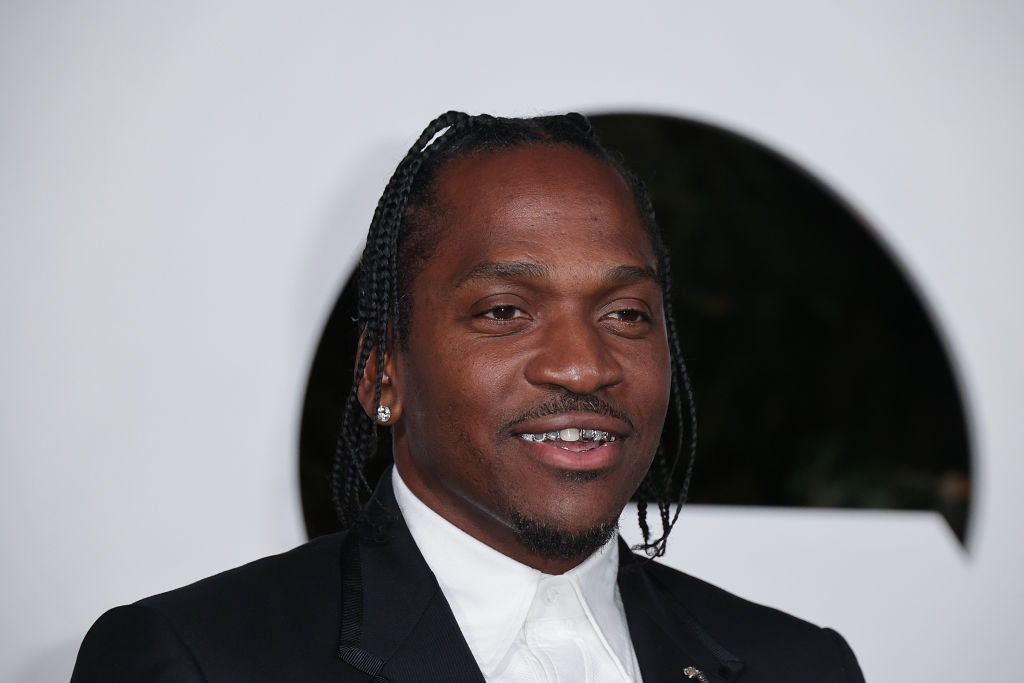
Pusha T and Pharrell Williams are taking “Grindin’” from the recording studio to the breakfast table.
The longtime collaborators have launched Grindin Coffee in partnership with Italian coffee company Lavazza. The venture comes after their decades-long creative relationship, putting their shared work ethic at the center of a product designed for entrepreneurs, creators, and people on the move. The business also gives new meaning to the name of the Clipse classic “Grindin’,” released in 2002 and produced by Williams and Chad Hugo as The Neptunes.
“Pusha and I have been building together since the beginning,” Pharrell said, according to Broadway World. “From making ‘Grindin’’ back in 2002 to now, it has always been about intention and focus. Coffee has always been part of that discipline. It has been in the room with us when we create. Now it has a name.”
For Pusha T, the product is rooted in an actual routine he developed with Pharrell during their creative sessions.
“P and I were waking up really early. Like 5 a.m. early,” Pusha said. “That was our routine. Alarm goes off at 5, we’re up, and the first thing we’re doing is black coffee or the strongest espresso we can find.”
He said the routine eventually became a cycle of creating music, exercising, and returning to work.
“That was the fuel. We’d be in the studio creating, locked in, just grinding,” Pusha said. “And then from there we’d go ride twenty-five miles on the bike. That was the whole rhythm, create, move, create again.”
Grindin Coffee, which is being sold exclusively through the brand’s website, is initially offering medium and dark roast blends in ground and whole-bean formats. The brand’s first two offerings reflect a premium positioning. The dark roast features cocoa, caramel, and brown spice notes, while the medium roast combines bittersweet chocolate, caramel, and roasted hazelnut. Both can be prepared as filter coffee, espresso or cold brew.
Pusha said the intended customer extends beyond traditional coffee drinkers.
“Our customer is someone who builds things,” he said. “The kind of person who wakes up and gets to work, who works out every day, who builds a strong community around them.”
For the rapper and entrepreneur, that philosophy is the business itself: “It’s all about the grind. It’s the first move before you build something. That’s why this brand exists.”
Money, Power, And Weight Class: Gervonta Davis And Ryan Garcia Target High-Stakes Rematch
The boxing stars from the pay-per-view event are negotiating a rematch worth millions
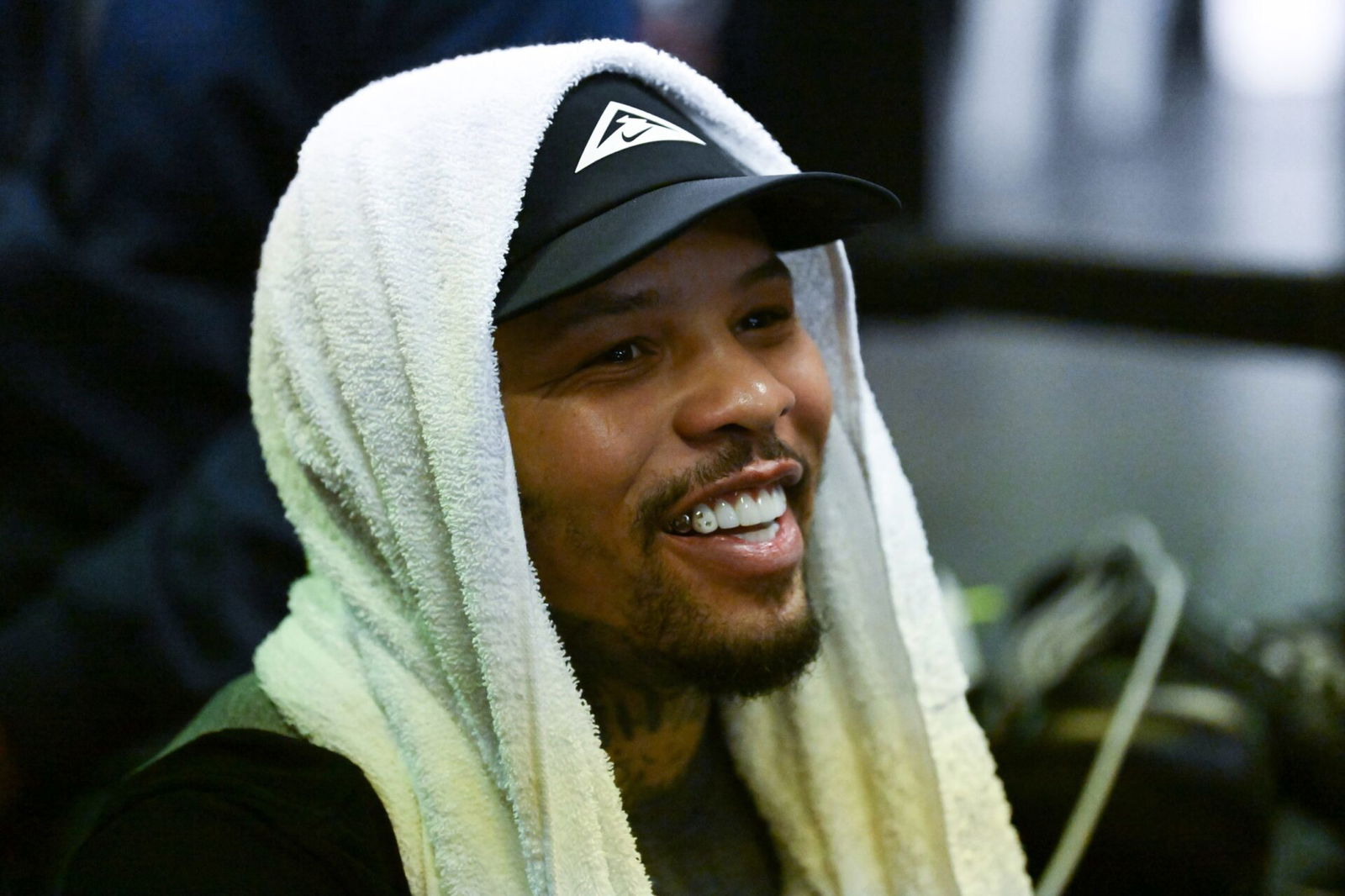
The original fight at the T-Mobile Arena in Las Vegas on April 22, 2023, showcased Davis’s tactical ability as he defeated Garcia in the seventh round on a 136-pound catchweight. Davis earned an estimated $30 million to $50 million and allowed Garcia to keep his $5 million purse bet.
Negotiations suggest the rematch will likely occur in Las Vegas, with T-Mobile Arena and Allegiant Stadium as possible sites for spring 2027, according to Box.Live. The main issue is agreeing on the weight limit.
Davis, 31, from Baltimore, enters the rematch undefeated at 30-0-1 with 28 knockouts. Garcia, 28, from Southern California, holds a 25-2 record with 20 knockouts.
Promotional Alliances and Fighting Words
The rematch highlights the strategic arrangements of the two prominent promoters: Davis is associated with GT Promotions and Premier Boxing Champions (PBC), and Garcia is linked to Golden Boy Promotions, which is headed by Oscar De La Hoya.
During their first fight, contract negotiations were as intense as the match, with catchweight limits restricting Garcia’s rehydration. “I’m going to get so big that Gervonta has to fight me again,” Garcia told BoxingScene. “I went to 136, you can’t come to 147. Don’t be shaky now. I need that if you want it,” Garcia posted on X. Garcia also told DAZN, “I know I’m the better fighter, and if I get my rematch, I’m gonna beat him.”
Gervonta cool but he don’t want the smoke
What’s up with you
I went to 136 you can’t come to 147 don’t be shaky now. I need that if you want it. If not there’s nothing to be said
According to analysis by The Ring Magazine, Garcia enters negotiations with far greater financial leverage than in 2023, when he accepted a 10-pound rehydration clause to secure the opportunity.
Davis, the primary commercial draw, welcomed the financial opportunity and dismissed Garcia’s explanations. “I’ll tax that ass again,” Davis told Fight Hub TV, noting that any rematch would be on terms protecting his business interests.
Davis first proposed a 140-pound limit, then raised his offer to a 144-pound catchweight. “I would go to 140 but not 147 for him,” Davis posted on Instagram, later adding, “No lie, for you I’ll do 144. Word, say it’s a bet!”
Financial Implications and Media Equity
The rematch highlights modern athletic entrepreneurship. Their 2023 fight generated over 1.2 million pay-per-view buys and a live gate exceeding $22.8 million, with total revenue over $100 million.
As BLACK ENTERPRISE previously reported, Davis secured a guaranteed $10 million purse for the first fight and let Garcia keep his share of a winner-take-all purse bet. Garcia’s commercial standing was questioned after a World Boxing Council expulsion.
Industry forecasts suggest the welterweight rematch could pay each fighter more than $30 million. Davis and Garcia show how elite Black and Brown athletes are moving from contracted positions to equity partnerships in combat sports. As contractual negotiations continue, Davis vs. Garcia II represents a study in athlete empowerment, weight-class economics, and high-stakes media distribution.