Butterball Reaches $230K Settlement With Woman Fired After Missing Work For Cancer Treatments
The poultry company will pay $230,000 to settle an EEOC disability case.
Butterball has agreed to pay $230,000 to settle a federal disability discrimination lawsuit involving a North Carolina employee who was fired after missing work for breast cancer treatment.
According to the lawsuit, which was filed by the U.S. Equal Employment Opportunity Commission (EEOC), Marie Marc informed Butterball of her cancer diagnosis and requested intermittent leave to undergo chemotherapy and recover from treatment. The poultry company referred her to a third-party benefits administrator, but the requested leave was never approved. Marc subsequently accumulated attendance points for cancer-related absences and was terminated under Butterball’s attendance policy. The EEOC alleged that the company’s actions violated the Americans with Disabilities Act (ADA), which requires covered employers to provide reasonable accommodations to qualified employees with disabilities.
“Employers that hire third-party benefits administrators must ensure that effective policies and procedures are in place to meet the employer’s statutory obligations under federal workplace discrimination laws,” said Melinda C. Dugas, regional attorney for the EEOC’s Charlotte District, in a statement. “An employer cannot delegate its responsibility for complying with the ADA.”
Under the settlement, Marc will receive approximately $18,000 in back pay and $135,000 in compensatory damages. Another $77,000 will cover her legal expenses. Butterball also agreed to revise its Americans with Disabilities Act policies, provide additional training, improve how it tracks employee accommodation requests, and educate workers about their workplace rights, reports WRAL News. The settlement, however, does not constitute an admission of wrongdoing by Butterball. The company previously denied the allegations in its response to the lawsuit.
“Federal law guarantees qualified individuals with disabilities an equal opportunity to work. The EEOC is committed to holding employers accountable when they violate those rights and pursuing all appropriate relief for victims of discrimination,” said Samuel Williams, trial attorney for the EEOC’s Charlotte District.
The case also underscores the potential business consequences of outsourcing benefits or administration. The EEOC emphasized that using a third-party administrator does not remove an employer’s responsibility to comply with federal employment-discrimination laws.
The EEOC continues to enforce federal laws prohibiting employment discrimination, including protections for workers with disabilities. Employers and employees can find additional guidance through the agency’s disability-discrimination resources.
After being fired from ESPN back in July, the former NFL star and longtime ESPN analyst launched The Pivot Sports with Ryan Clark, a weekly digital football program, on September 14. Produced in partnership with NFL Films, the show brings Clark together with former NFL players Channing Crowder and Fred Taylor to analyze the previous Sunday’s games. The show airs Mondays at 2 p.m. ET on The Pivot’s YouTube channel, which has nearly 1.5 million subscribers, and incorporates interviews and game breakdowns.
The launch comes roughly two months after ESPN ended Clark’s tenure at the network. Clark joined ESPN in 2015 and became a regular presence across NFL Live, Get Up, First Take, and SportsCenter. He said he was informed of his departure during a commercial break on NFL Live in July. Rather than wait for another traditional network opportunity, Clark is leaning into a platform he and his co-hosts had already built.
“Here we are, guys. It’s Week 1. Fanbases still believe that this could be their season,” Clark said during the debut. “The Pivot’s tagline is ‘Accept, adjust and move forward.’ I’ve accepted where I am, I’ve adjusted my plan, and this is us moving forward.”
The former Pittsburgh Steelers safety also made clear that the new venture is about more than simply replacing his former television role.
“I didn’t want to be a star, I didn’t want fame, I didn’t want attention,” Clark said. “I just really wanted to talk ball and watch film, break it down.”
For Clark, the business model is also personal.
“Most importantly, do it with people I love to be around,” he said. “So I got to thinking, how do I get back to that?”
Now, he has his answer.
In an instagram video, comedian KevOnStage stressed the importance of the Black community showing support for Clark’s new independent and self-funded show.
“We have to go out of our way to support him,” he said. “You’re going to have to subscribe to their YouTube page, subscribe to their Instagram page, and go out of your way to watch them.”
The move reflects a broader shift in sports media, where athletes and former players can build direct relationships with audiences through podcasts, YouTube, and other digital platforms rather than relying exclusively on legacy television networks.
Philly Quakers Offer $10K Grants To Black Families Buying Homes
The program is part of the congregation’s broader effort to redistribute wealth to Black residents as reparations.
A Philadelphia Quaker congregation is helping Black families cover the upfront costs of homeownership through a reparations initiative offering $10,000 grants to first-time homebuyers, The Philadelphia Inquirer reports.
Green Street Friends Meeting in Philadelphia’s Germantown neighborhood is funding five grants for Black homebuyers purchasing properties in the 19138 and 19144 ZIP codes, according to the outlet. The program is part of the congregation’s broader effort to redistribute wealth to Black residents as reparations.
Charmira and Quincy Pilgrim were among the first families to benefit, receiving $10,000 toward the purchase of their $315,000 home in West Oak Lane. The couple, who had hoped to become homeowners since marrying a decade ago, closed on the three-bedroom property in late May.
“It was a blessing that I ended up getting the grant because money was tight,” Charmira Pilgrim, a 32-year-old special education teacher and case manager, told the outlet.
Green Street partnered with birdSEED, a Washington-based nonprofit focused on narrowing racial wealth gaps, to administer the grants. Applicants must be Philadelphia based first-time homebuyers, have lived in the area where they plan to purchase for at least three years, and have annual household incomes of no more than $150,000.
Applications for the current round are open through Sept. 30.
The Philadelphia homebuyer grants are part of a reparations initiative Green Street launched in June 2021. The congregation pledged to contribute $50,000 annually for 10 years. Its efforts have also supported estate planning, Black midwives, music education, and legal assistance for Black homeowners.
Green Street said legal clinics addressing tangled property titles have helped more than 85 families preserve over $11.3 million in housing wealth.
Rebecca L. Grant, a member of Green Street’s reparations committee, acknowledged that the congregation’s efforts cannot undo generations of housing discrimination but said the initiative can make a tangible difference for individual families.
For the Pilgrims, buying a home also created an opportunity to build an asset that could benefit their five children.
“It feels good to have ownership. It feels good to be in a space I can create a vision for,” Pilgrim said. “I see this as an opportunity for my kids to have a legacy.”
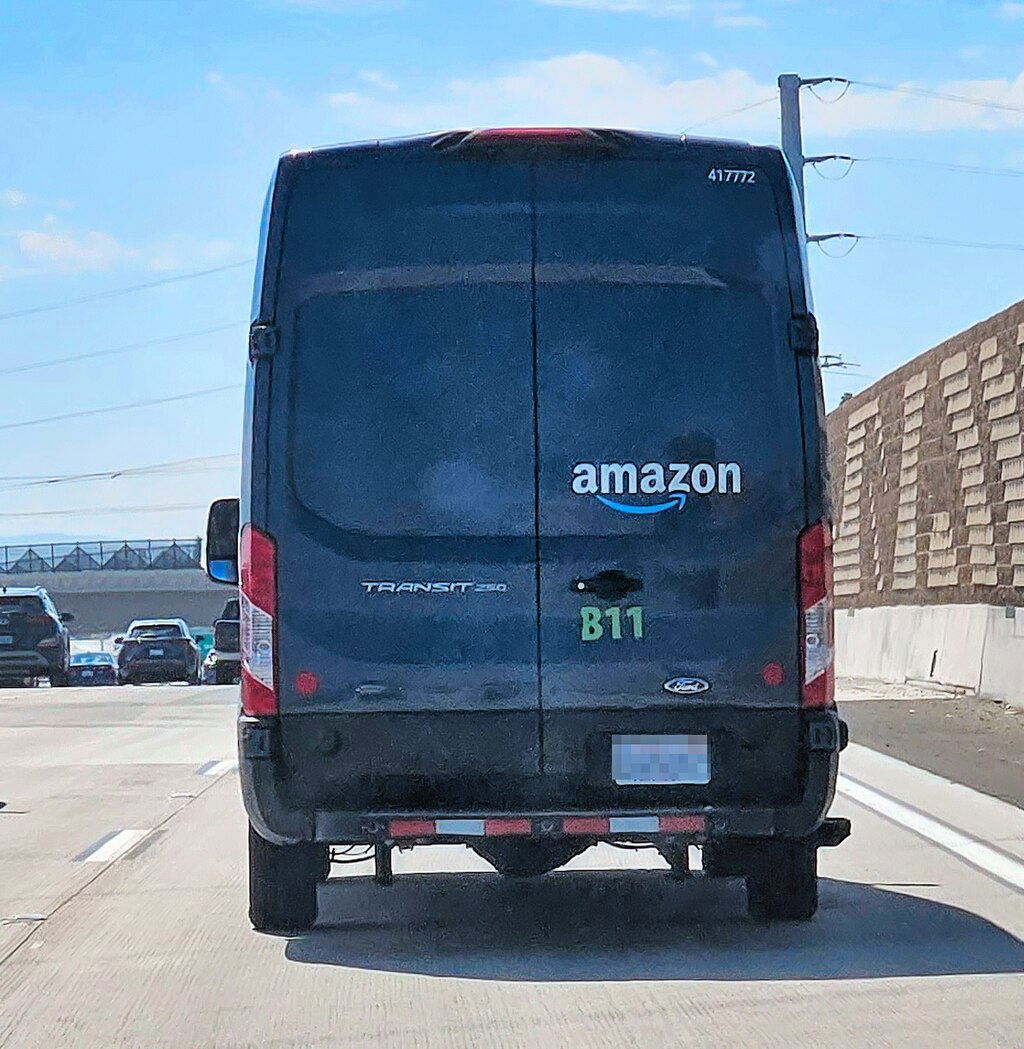
A recent Government Accountability Office (GAO) report found that 12,346 Amazon workers across 11 states were enrolled in the Supplemental Nutrition Assistance Program (SNAP), while 11,338 were enrolled in Medicaid as of September 2025, reports Fortune. The number of Amazon employees in need of federal assistance has nearly tripled compared to a 2020 GAO analysis. During that same period, the tech giant’s annual profit increased from about $11.6 billion in 2020 to $77.7 billion, while 2025 revenue reached roughly $717 billion.
The findings arrive as the broader U.S. economy shows a widening disconnect between productivity, corporate performance, and workers’ share of economic output.
The Bureau of Labor Statistics reported that labor’s share of output fell to 52.8% in the second quarter of 2026, the lowest level on record dating back to 1947. Labor share measures the portion of economic output paid to workers through compensation, including wages and benefits.
GAO Director Kathryn Larin noted that many people receiving assistance are already working substantial hours.
“What this analysis really points to is the large number of people who have very low incomes and continue to have very low income,” Larin told Fortune. “I mean, these are families that are really barely able to make ends meet, and yet they are working, and they are working a lot.”
GAO’s analysis found that about two-thirds of working adults receiving Medicaid or SNAP worked full time in 2024, while 88% were employed in the private sector. The report also identified large employers across retail, transportation, restaurants, and food preparation among those with workers receiving benefits.
Amazon, however, has disputed that GAO report as evidence that its pay and benefits are inadequate.
“When you look at the actual facts, you see that Amazon pay is among the best in the industry,” Amazon spokesperson Rachael Lighty told Fortune. She also pointed to health coverage available to regular full-time employees beginning on their first day.
“Seventy-four percent of our regular full-time employees are enrolled in an Amazon health insurance plan,” Lighty said, adding that the company’s enrollment rate exceeds the private-sector rate cited by Amazon.
The issue extends beyond Amazon. Walmart, FedEx, and major gig-economy platforms have also appeared among employers with workers receiving federal assistance.
This Southside Duo Levels Up NYC Properties And People’s Lives
Ronald Tucker and Teddy Coleman have been down like two flat tires since childhood.
Ronald Tucker and Teddy Coleman have been down like two flat tires since childhood, building brotherhood, an unbreakable bond, and a storied history in South Jamaica, Queens— and in more recent years, Level Windows & Doors, a successful millwork business that is anchored by the same principles that have held together their 50-year friendship: trust, integrity, and commitment.
“I trust Teddy with my life,” Tucker told BLACK ENTERPRISE.
The best friends-turned-business partners have considered themselves brothers after connecting in primary school five decades ago. Their memory of meeting varies, with Tucker dating the first encounter back to kindergarten and Coleman insisting they met much earlier in Pre-K.
The two have cemented a friendship that has transcended time and space through their formative years, adulthood, and time behind bars—between them, 36 years combined were spent incarcerated. Like many of their peers from South Jamaica, neither Tucker nor Coleman made it through the 1980s and 1990s unscathed by the crack-cocaine epidemic, RICO laws, or the mandatory minimum sentencing guidelines that grew from the targeted war on drugs in Black communities.
But how do two childhood friends from the Southside transition from the volatile streets of their youth to managing multimillion-dollar window installations across the New York metropolitan area? For Coleman, CEO, and “Tuck,” vice president, the answer lies in an unyielding partnership, rigorous discipline, and an ongoing commitment to community restoration through their firm.
Founded in 2016, the specialized glazing and commercial installation venture represents a profound evolution for the longtime business partners, who survived systemic adversity before establishing themselves within the Tri-State area’s construction landscape. Globally, fenestration is a $225.35 billion industry, according to Mordor Intelligence, projected to gross more than $278 billion by 2031.
Over the past decade, Level Windows & Doors has completed window, curtain wall, and glass installation projects across more than 100 buildings—ranging from a $116 million Manhattan development at 103rd Street and 2nd Avenue to specialized residential glazing on a historic $70 million townhouse on Bank Street.
“We did a lot of wrong together in our lifetime,” Coleman told BE regarding their shared history. “Now, we’re doing something positive, something that can take care of ourselves and building something where we can ride around New York City and show our children, our loved ones… ‘Hey, we did this building.'”
Operating as a 50/50 entity, the executives divide operational mandates according to individual skill set and specialization. “I cracked the whip in the streets, I cracked the whip with the workers,” Tucker explained, sharing how being a “lieutenant” back when he was a hustler both informs and prepared him for his role managing field mechanics, installation precision, and site accountability.
Coleman, meanwhile, handles back-office administration, blueprint takeoffs, project bidding, and corporate strategy. Coleman shared why Level is successful with the two of them at the helm.
“There’s no jealousy, no ego… ego ruins businesses,” Coleman added. “They might beat him by himself, or beat me by myself, but us two together, we can’t be stopped.”
By retaining complete internal oversight, the entrepreneurs navigate complex supply chain fluctuations, raw material tariffs, and stringent municipal compliance demands all on their own. Coleman stressed the necessity of this self-reliance: “When you outsource and give other people the keys to your car, you never learn how to drive the car.”
How Has Level Windows & Doors Mastered NYC Commercial Installation?
Level’s success stems from its technical versatility and reputation as expert structural remediation contractors. In an industry often plagued by subcontractor default and improper installation, the firm built its market share by stepping in to correct failed competitor installations. “We were great mediators,” Coleman recalled. “We come behind someone else that messed up a job, screwed it up, and we fix it.”
Whether routing and bending aluminum composite panels for complex rainscreen systems or erecting expansive multi-story glass window walls, the team leverages vocational mechanics learned during their formative technical training at Thomas Edison High School. “To read blueprints, it’s like second nature,” Tucker said, as he described how they approach custom fabrications. “We make it like we’re making a cake from scratch.”
By prioritizing direct developer relationships over traditional third-tier subcontracting, the company maintains control over installation timelines and quality assurance. “Our work speaks for itself,” Coleman emphasized, reflecting on how word-of-mouth recommendations among top developers fueled their portfolio across Manhattan and New Jersey.
What Drives the Firm’s Workforce Rehabilitation Mission?
For Coleman and Tucker, commercial profitability remains intrinsically linked to investing in local human capital. Drawing directly from their shared upbringing in South Jamaica, Queens, the founders utilize their commercial installation platform to disrupt cycles of urban disenfranchisement. “All the destruction that we did… now we have the opportunity to literally and figuratively build in the community,” Tucker reflected.
Beyond business, Level serves as an economic engine for social rehabilitation and reducing recidivism. For Tucker, this commitment speaks directly to personal redemption. “Some people come home from jail and believe they paid their debt to society,” Tucker stated. “I believe that paying a debt to society begins once you come home… It’s ongoing, like, forever. It’s infinite.”
Coleman and Tucker actively recruit at-risk youth and formerly incarcerated individuals, training entry-level laborers into skilled window mechanics capable of reading structural engineering plans.
“They came to us saying, ‘I don’t want to be in the streets no more, just give me a job,'” Tucker shared. “They started at the bottom as laborers, and we taught them everything… They were able to get a career and not have to look back.”
Rather than treating labor as a transactional commodity, Level provides sustainable trade careers, mentorship, and financial support during market downturns. During the coronavirus pandemic, the business faced challenges in securing Payroll Protection loans to stay afloat. The company was left with almost nothing due to institutional mishandling.
“They were supposed to give us something like $100,000,” Coleman recalled. “They gave us $10,000. And it was one of those take it or leave it at Bank of America. They apologized and said they did our application wrong, but there was no more funds available, and all they had was this little $10,000 left.”
Coleman continued: “We were paying guys … 60% – 70% of their salaries. Without working.”
Tucker And Coleman Stay The Course
Post-pandemic, like many construction and contracting businesses, Level experienced a market downturn due to inflation, tariffs, and supply chain issues, but Tucker and Coleman remain resilient and optimistic, continuing to build on their portfolio and pursue prospective projects.
“We come out here and put in 20-something years of hard work, getting up early every morning, creating jobs for people…” Tucker said.
Coleman and Tucker shared encouragement and parting advice with those looking to become entrepreneurs in the construction industry. Coleman stressed avoiding unnecessary debt and vanity expenses: “Don’t go out there getting credit cards and getting trucks under your LLC… you gotta build it up,” he told BE.
The longtime friends emphasized not just being skillful in the trade but learning the market before launching and understanding the industry inside and out, from blueprints to operational costs. Tucker, who manages more of the workflow, emphasized valuing labor and tradespeople, in that business ownership and honest labor hold equal value. “Everybody can’t be a boss. You need workers,” Tucker told BE. “There’s dignity in labor, there’s dignity in working a job.”
A Black Woman Invented A Device That Could Revolutionize Time Preservation In Sporting Events
This invention represents a potentially dynamic evolution in sports officiating technology.
Written By Curtis Bunn
The Frustration Behind the Innovation
As a youth girls’ basketball coach in New Jersey, Maria Carthon recalls the difficulty of getting a referee’s attention to call a timeout as one of the frustrations she consistently faced. Stoppages often came too late or not at all.
As a sports fan, Carthon saw other coaches at multiple levels struggle with the same issue. It puzzled her that in today’s technologically advanced world—where innovations like instant replay have minimized human error in some college and professional sports—no foolproof method existed to preserve time, especially during a game’s pivotal moments.
After a particularly upsetting experience in 2011, when a referee dismissed her complaint about not being granted a timeout by telling her, “Next time, jump up and down and yell,” Carthon decided to do something about the pervasive issue.
“Sports have invested billions of dollars in technologies that determine whether a player’s foot touched an out-of-bounds line or the three-point line,” Carthon said. “Time is a part of the game’s most strategic moments, and it should not come down to whether a coach can shout over crowd noise. If no one else was going to solve it, I decided I would.”
The Path to Product Development and Business Strategy
As Associate Director of Programs in the Office of Enrollment Management at Emory University School of Medicine in Atlanta, Carthon researched inventions and learned about product development, intellectual property, and business strategy. She returned to college and earned a Master’s in Business Law, strengthening her ability to turn innovation into business.
Introducing T.O.S.S.: How the Wireless Timeout System Works
The results of her commitment produced the Time Out Synchronized System (T.O.S.S.), a wireless tool that allows coaches to communicate instantly with referees when desiring a stoppage of play by depressing a button on a device to gain an official’s attention from afar or over crowd noise.
This invention represents a potentially dynamic evolution in sports officiating technology, focusing on preventing game-management concerns that could affect the outcome of competition.
Her 2023 creation, which continues to evolve, is a two-step process: Coaches press a small handheld device to request a timeout. An instant signal from the device sends an immediate wireless alert through a vibration to the apparatus referees wear on their wrists. Officials know then to grant a timeout no matter where they are on the court or playing field.
Hers is an innovation that Carthon and others who have tried it believe could, should, and eventually will be a standard part of most sporting events.
Endorsements from Pro Athletes and Industry Experts
“Sports has been an industry where change is hard,” said former NFL player Ryan McNeil, who tested T.O.S.S. “The conventional thinking has always been: ‘If it’s not broke, don’t fix it.’ But Marie’s product sits in the efficiency and strategy box. There are so many scenarios delaying or preventing a coach from calling a timeout in a game. With T.O.S.S., you’re taking away a lot of the chaos, a lot of uncertainty. It’s such a solid product.”
Others who have been introduced to the creation, like former NBA player Willie Anderson, concur. Anderson, who played for four teams during his nine-year professional basketball career, tested T.O.S.S. and called it: “A game-changer. That device will help referees and coaches because at the end of the game is when it gets crazy loud. With T.O.S.S., the referees can just totally focus on the play and not worry about watching the bench as much because they will feel the vibration when the button is pushed. It would take a lot of pressure off of referees.”
Anderson recalled coaching an AAU game a few years ago when he was desperate to stop play and convene with his team but couldn’t get the referees’ attention. “It was wild and crazy in the stands, and the other team had the ball, and they missed the shot,” he said. “I was trying to call a timeout, but the ref was focused on all the activity on the floor. By the time I got the timeout, we had lost about six seconds on the clock. Six seconds is a lot of time and would have pretty much given us a chance to win the game. Instead, we had no time to set up a play. T.O.S.S. would have prevented that, which is saying a lot.”
Grassroots Deployment and Real-World League Testing
But while the endorsements validating T.O.S.S. are plentiful, it has been challenging to gain access to officials in the high-level sports world who evaluate and approve new technologies for league-wide implementation. And so, about six months ago, Carthon said she pivoted.
“We shifted and adopted a bottom-up approach, focusing first on recreational leagues and high school athletics,” she said. “What is especially exciting is that this next phase is no longer just about developing the technology; we have real-world testing.” That strategy has already produced solid results. Recently, TOSS was successfully piloted in the Henry and DeKalb counties in metro Atlanta and the Georgia Parks and Recreation basketball leagues.
“Several leagues have expressed interest in piloting T.O.S.S.,” Carthon said.
Capital Investment and Venture Mentorship
With the aid of her fiancé, Cliff Ochemba, and brother, Carthon has invested $100,000 into her invention so far, and projects she needs another $200,000 to $250,000 “to take the technology to the next level and develop a more robust, league-ready product. That funding would support engineering and product design, development of the next-generation prototype, testing, and a small pre-production run.”
To reach this stage, Carthon sought mentorship through the American Technology Venture Lab (ATVL). Under the tutelage of Dennis C. Hayes, an inventor of the Hayes PC modem that helped build the internet, Carthon strengthened the business strategy behind T.O.S.S., gaining invaluable insight into intellectual property commercialization, entrepreneurship, technology ventures, and scaling innovation from concept to marketplace.
Looking to the Future of Sports Technology
Anderson said: “That technology will make it. But she has to be careful. Once the NBA gets wind of this device, they may find a way to get it themselves.”
Carthon, a mother of two grown children, seems less worried about that—her product is patented—than continually upgrading the innovation so it will stand up to any critique leagues may have about T.O.S.S.’ functionality.
“It’s exciting. We have made great strides,” Carthon said. “But there are more strides to be made.”
Black Businesses in Bermuda: Trials, Tribulations, Triumphs, produced by Marq Rodriguez with research and support from Meredith Ebbin, features established entrepreneurs alongside newer ventures. The film previewed in July and is now available online through Bermuda’s Department of Culture.
The documentary examines what the department described as the “resilience and evolution of Black enterprise” in Bermuda, bringing together business owners and economic leaders to discuss the role Black entrepreneurs have played in the island’s development.
Among those featured are Marico Thomas, president of the Bermuda Chamber of Commerce; Donna Pearman; Tamara Richardson, co-founder and chief executive of the People’s Pharmacy; and economist Craig Simmons.
Owen Darrell, Bermuda’s minister of tourism, transport, culture, and sport, said the documentary also provides an opportunity to recognize the historical contributions of Black business owners.
“Black businesses have played an important role in shaping Bermuda’s economic, social, and cultural landscape,” Darrell said.
“This documentary allows us to recognize the determination and achievements of generations of Black entrepreneurs, while ensuring that these important stories are preserved and shared with future generations,” he added.
By documenting those experiences, the project provides viewers with a look at the role Black entrepreneurship has played in Bermuda’s economic and cultural history, as well as the challenges business owners have encountered along the way.
Black Businesses in Bermuda: Trials, Tribulations, Triumphs is available to watch through the Bermuda Department of Culture’s YouTube channel.
From The Court To Crate & Barrel: Venus Williams Announces New Design Partnership
The tennis champion expands her design portfolio with furniture, decor, and textile pieces for Crate & Barrel and Crate & Kids.
Venus Williams is bringing her eye for design to a new arena: the home.
The seven-time Grand Slam champion has partnered with Crate & Barrel and Crate & Kids on an expansive collection of nearly 200 furniture, decor, and textile pieces. The collaboration, launched Sept. 15, extends Williams’ business portfolio beyond tennis, fashion, and entertainment and further establishes her work in interior design.
Williams founded V Starr, a full-service commercial and residential design firm, in 2002. The firm has worked on hospitality, multifamily residential, and luxury projects across North America and the Caribbean, according to a press release.
“I’m so proud of this collection. Each piece was intentionally designed to feel artful, timeless, and design-driven, while still working cohesively together,” Williams said in the announcement.
The Crate & Barrel collection draws on tennis’ geometry, movement, color, and ceremonial traditions while incorporating Italian design influences. One standout is the Second Serve Stone and Metal Chandelier, inspired by the suspended motion of a tennis ball during a serve toss and crafted with burnished brass, onyx and travertine.
For Crate & Kids, Williams translated the sport into a more playful environment. Lavender — her favorite color — is paired with tennis-ball neon green, while rounded silhouettes and athletic details appear throughout the collection.
The kids assortment includes pieces such as the Break Point Round Ivory Wood Kids Play Table and Members Only Accent Chair. Current offerings also include a tennis-ball-inspired floor bin and organic cotton bedding. The collection blends playful tennis references with functional pieces for children’s spaces.
“For Crate & Kids, this collection represents the bedroom of my dreams,” Williams said. “Creating a space that kids can be proud of is so important to me, and bringing an energetic, playful spirit to their rooms was really at the heart of this.”
The partnership also reflects the evolution of Williams’ career as an entrepreneur. Her outside tennis business interests have expanded across design, wellness, and entertainment, with V Starr serving as a foundation for her work in the design industry.
Alicia Waters, brand president of Crate & Barrel and Crate & Kids, said the collaboration connects Williams’ athletic legacy with the retailer’s approach to home design.
“Venus embodies the intersection of power, style, and design,” Waters said. “From sophisticated, modern furniture for the whole home to energetic spaces for kids, we are thrilled to offer our customers this collection that seamlessly bridges high design with functionality.”
5 Things You May Not Know About XCEL Honoree Bob Johnson
From a failed paper route to BET, Bob Johnson built a business legacy rooted in ownership, opportunity, and culture.
Robert L. “Bob” Johnson is best known as the founder of Black Entertainment Television and as the first Black billionaire.
As BLACK ENTERPRISE prepares to honor Johnson at next month’s XCEL Summit For Men, here are five things you may not know about the pioneering entrepreneur.
1. His first business venture was a paper route
Long before BET, Johnson tried his hand at entrepreneurship as a child. At age 12, he launched a paper route that did not exactly go according to plan. According to The Washington Post, Johnson eventually dumped his surplus newspapers in trash cans.
The failed venture did not stop his entrepreneurial ambitions. Years later, he would turn a different idea into one of the most significant media businesses in American history.
2. He did not start with television experience
Johnson was working as a cable-industry lobbyist when he developed the idea for BET. He recognized an opportunity created by the expansion of cable television and saw a gap in programming aimed specifically at Black audiences.
Johnson also entered the industry without previous experience running a television network.
3. A barber shop helped validate the BET idea
Before launching BET, Johnson wanted to know whether Black consumers would actually watch a television channel created specifically for them. He traveled to Anniston, Alabama, and looked for a place where he could speak directly with Black men. He found Pink Junior’s barbershop.
“I told him I’m Bob Johnson and I’m starting a new cable channel if people would be interested in a Black channel if we showed Black college football,” Johnson recalled. The response was yes.
4. BET’s public offering was about more than making history
In 1991, BET became the first company with majority African American ownership to trade on the New York Stock Exchange. Johnson later used the company’s ownership structure to create an opportunity for employees.
“That allowed the people that worked with me to share in the ownership,” he said.
When BET was sold to Viacom for approximately $3 billion in 2000, employees who held shares benefited from the transaction. Johnson has credited that ownership model with creating substantial wealth for Black employees.
5. He views BET as a wealth-building blueprint
Johnson’s legacy extends beyond launching a groundbreaking television network. Through The RLJ Companies, he has pursued investments across industries, while continuing to emphasize ownership and economic opportunity.
“To me, that’s what you do as a founder,” Johnson told BLACK ENTERPRISE, “you bring your people in and give them a significant piece of the commitment to opportunity.”
Johnson did not simply build a brand. He built an ownership model that allowed others to participate in its success. As an XCEL honoree, Johnson’s career offers a reminder that creating wealth can be about more than reaching the top. It can also be about bringing others along for the ride.
Whitesboro Gala Organizer Pushes Back On Claims Surrounding Lt. Gov. Dale Caldwell
Felicia Simmons says organizers of the 2026 Whitesboro Black History Gala should be heard as questions surrounding New Jersey’s lieutenant governor continue.
A New Jersey community leader is calling for firsthand witnesses to be heard as an investigation involving Lt. Gov. Dale Caldwell continues to draw public attention.
Felicia Simmons, organizer of the 2026 Whitesboro Black History Gala, said in a Sept. 14 statement that she was directly involved in coordinating the April 18 event and had communicated with Caldwell’s office ahead of his attendance.
Simmons’ statement comes after reports that an anonymous letter prompted an inquiry into allegations involving Caldwell, who also serves as New Jersey’s secretary of state. The New York Times reported that the letter alleged Caldwell brought “uninvited female guests” to events and distributed business cards to women he hoped to date. Caldwell has disputed the claims, calling them “inaccurate, misleading and completely false.”
Simmons says the circumstances surrounding the Whitesboro gala warrant input from the people who helped organize it.
“I was one of the people directly involved in coordinating the 2026 Whitesboro Black History Gala,” Simmons wrote in a press release sent to BLACK ENTERPRISE. She said she was the contact with the lieutenant governor’s office and received an email notifying her that guests would attend, followed by a call from members of Caldwell’s staff concerning the space required.
“So when I hear the suggestion that Dr. Caldwell simply ‘showed up with guests,’ I believe that characterization deserves to be questioned,” she wrote.
The New York Times reported that Robin Tyson, a longtime acquaintance of Caldwell’s, attended the Whitesboro gala with him and said investigators later interviewed her. Tyson said she and Caldwell do not have a romantic relationship and that he had not offered her employment opportunities.
Simmons identified Rev. Elorm Ocansey, assistant pastor of Transformation International Chapel, and Shirley Green, executive director of the Whitesboro Historical Foundation, as others who were involved in organizing and coordinating the event.
The dispute also underscores how much Simmons values Whitesboro, a historic Black community in Cape May County. The Whitesboro Historic Preservation Project describes its work as an effort to preserve the community’s legacy while supporting its future, according to the Whitesboro Historic Preservation Project.
Simmons said Caldwell’s appearance at the gala was meaningful because of the community’s historical significance.
“Whitesboro represents an important part of New Jersey’s history, a community whose story deserves to be remembered, respected, and brought into the wider public conversation,” she wrote.
Her broader message centers on representation, voting rights, and the importance of including communities historically excluded from political decision-making.
“Let firsthand witnesses be heard,” Simmons wrote. “I was there. I was involved. I know the communications I received and what I witnessed.”
The Whitesboro Historic Preservation Project has since amplified the call for organizers and other firsthand witnesses to be considered as the inquiry proceeds.
Simmons, a lifelong Asbury Park resident and former two-term member of the Asbury Park Board of Education, currently serves as president/executive director of WCC Historic Renovation Association Inc. and is a lead partner in the Whitesboro Historic Preservation Project, according to the release.