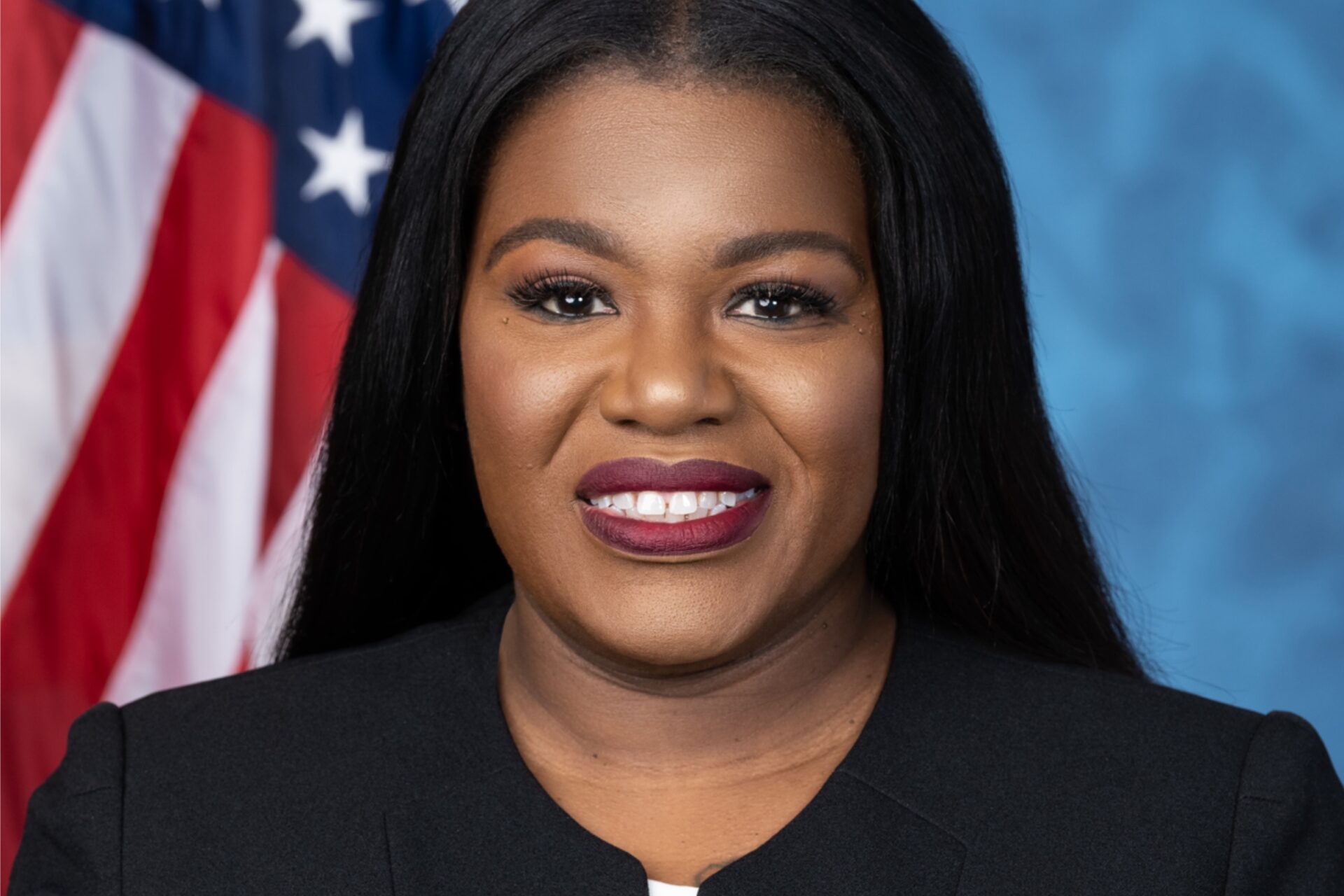
Cori Bush investigation

She’s Back! Ex-Squad Member Cori Bush Launches Bid For Old Congress Seat 

The former U.S. House 'squad' member was unseated after a tense standoff in the 2024 Democratic primary by Rep. Wesley Bell (D-MO).


On X, former Missouri Democratic Congresswoman Cori Bush launched her comeback bid for her old U.S. Congress seat one year after losing a primary election. 

“St. Louis deserves a leader who is built differently. That’s why I’m running to represent Missouri’s 1st District in Congress. We need a fighter who will lower costs, protect our communities, and make life fairer. I’ll be that fighter,” Bush said in the video announcing her run. “I ran for Congress to change things for regular people. I’m running again because St. Louis deserves leadership that doesn’t wait for permission, doesn’t answer to wealthy donors and doesn’t hide when things get tough.”

The former U.S. House “squad” member was unseated after a tense standoff in the 2024 Democratic primary by Rep. Wesley Bell. After becoming the second “squad” member to lose a seat, following New York Rep. Jamaal Bowman, Bush revealed another side of her that the Show Me state has yet to see.

“Pulling me away from my position as congresswoman, all you did was take some of the strings off,” she said in her concession speech. “Let’s be clear, let’s talk about what it really is.”

Bush received aggressive pushback over her criticism of Israel. She expressed support for Palestine, while pro-Israel groups like American Israel Public Affairs Committee (AIPAC) spent millions to support Bell, a St. Louis County prosecutor. 

The feud between Bell and Bush has resumed. Bell started a thread on X about her new campaign, saying Missouri deserves “honest representation, not more headlines or scandals,” and highlighted some of the policies she voted against.

“St. Louis deserves real results and honest representation, not more headlines or scandals,” he wrote. “When it came time to deliver, Cori Bush’s focus wasn’t on our community, but on her own national agenda. That’s why our district was left behind.”

Bush seems prepared to fight, discussing the government shutdown, which entered its third day on Oct. 3, and working with leaders in D.C.

“The question before us isn’t whether Washington is broken—because it is,” she said in a press release, according to St. Louis Post-Dispatch. “The question is whether we send leaders who will take on that broken, failing system and fight to change it.”

RELATED CONTENT: Depo-Provera Risks and Racial Disparity: As Brain Tumor Lawsuits Mount, Critics Recall History Of Targeting Black Women
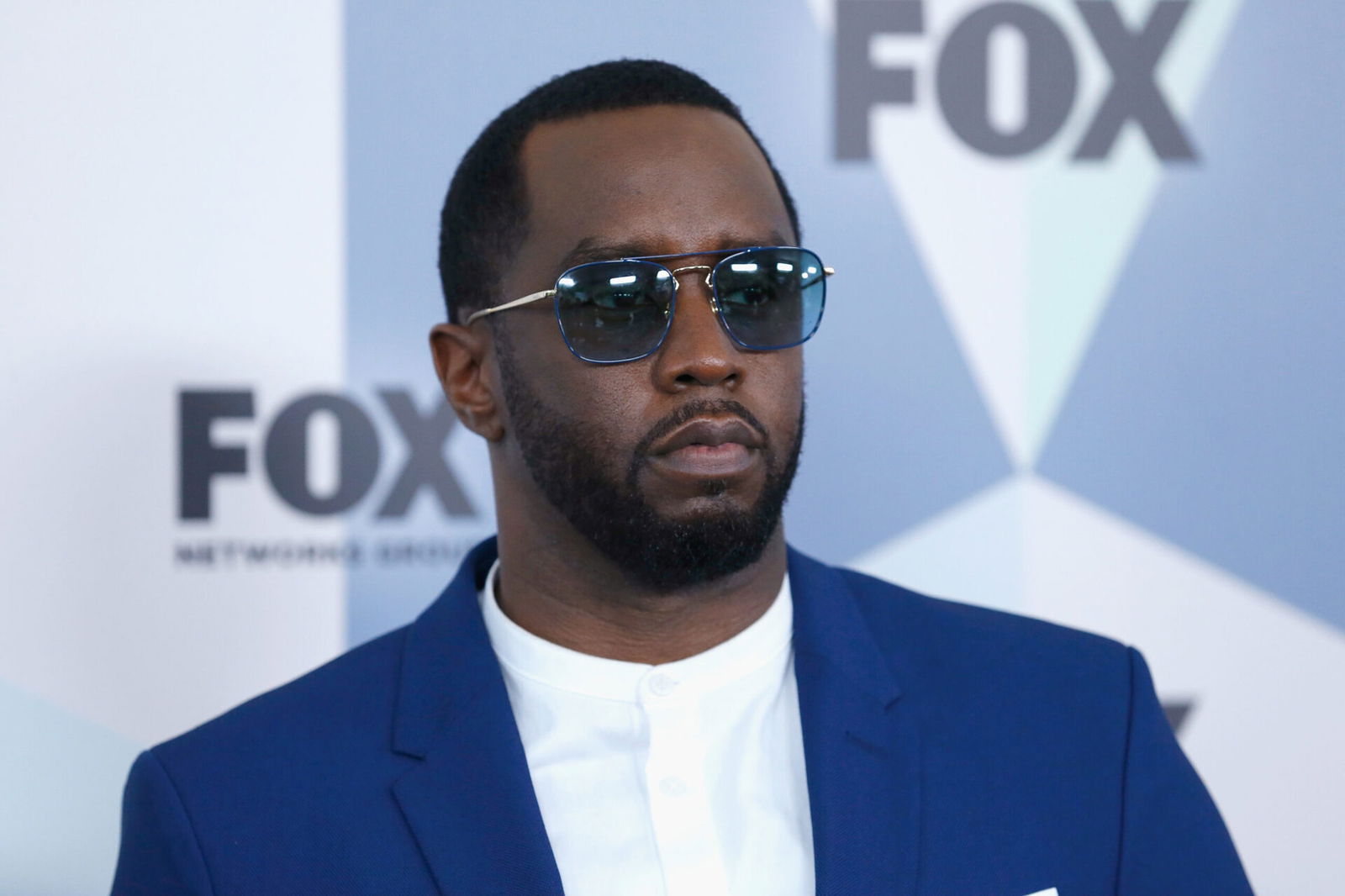
Diddy, Lawyer, Federal Raid

BREAKING: Judge Sentences Sean ‘Diddy’ Combs To 50 Months In Federal Prison

Judge Subramanian emphasized the need for a strong judicial response to protect victims. 


Sean “Diddy” Combs was sentenced to 50 months in federal prison, following his July conviction on two counts of transportation to engage in prostitution, in a dramatic courtroom scene that saw the music mogul beg for leniency before a federal judge issued stern remarks about accountability. The magistrate also imposed a $500,000 fine on the disgraced mogul. It is also expected that Diddy’s current 13-month incarceration will count toward time served.

As the court session commenced, Judge Arun Subramanian addressed Combs directly, reviewing the evidence that led to the jury’s guilty verdict. 

Combs, who had maintained his innocence throughout the federal racketeering investigation and trial, delivered an emotional address to the court earlier in the day. He called his actions “disgusting, shameful, and sick,” and offered an apology to the victims and “all the victims of domestic violence.”

Defense Strategy Criticized

Diddy’s defense’s final effort for mercy involved a high-stakes, eleventh-hour strategy. Combs’ legal team released a documentary-style video that included a montage of clips highlighting the mogul’s extensive charity work and commitment to his family. 

The public relations maneuver, paired with a personal letter from Combs, stood in stark contrast to his defense’s prior assertions that he was innocent and unfairly targeted by the government.

Judge Subramanian dismissed the core premise of the defense’s argument, stating that the court “is not assured” that if Combs were released, “these crimes will not be committed again.”

The judge also explicitly rejected the defense’s attempt to characterize the ‘Freak Offs’ and hotel nights as intimate consensual experiences or just a “sex, drugs and rock ‘n’ roll’ story,” adding that he had been present for the harrowing testimony from key witnesses, including Cassie Ventura and “Jane.”

Judge Subramanian’s Statement Before Sentence

Judge Subramanian acknowledged the positive aspects of the defendant’s life, noting that Combs’s “work history, impact on the Black community, and entrepreneurship are celebrated and iconic.” 

He specifically mentioned the trauma of Diddy’s father’s early violent death. However, that history could not outweigh the harm caused to the victims.

“A history of good works cannot erase the power and control you had over the women you professed to love dearly,” Judge Subramanian said. “You abused them physically, emotionally, and psychologically, and you used that to get your way.”

Judge Subramanian emphasized the need for a strong judicial response to protect victims. 

He stated that acts of sexual violence are unfortunately everyday, and “a substantial sentence must be given to send a message to abusers and victims alike that abuse against women is met with real accountability.”

RELATED CONTENT: BREAKING: Diddy Guilty, Not Guilty

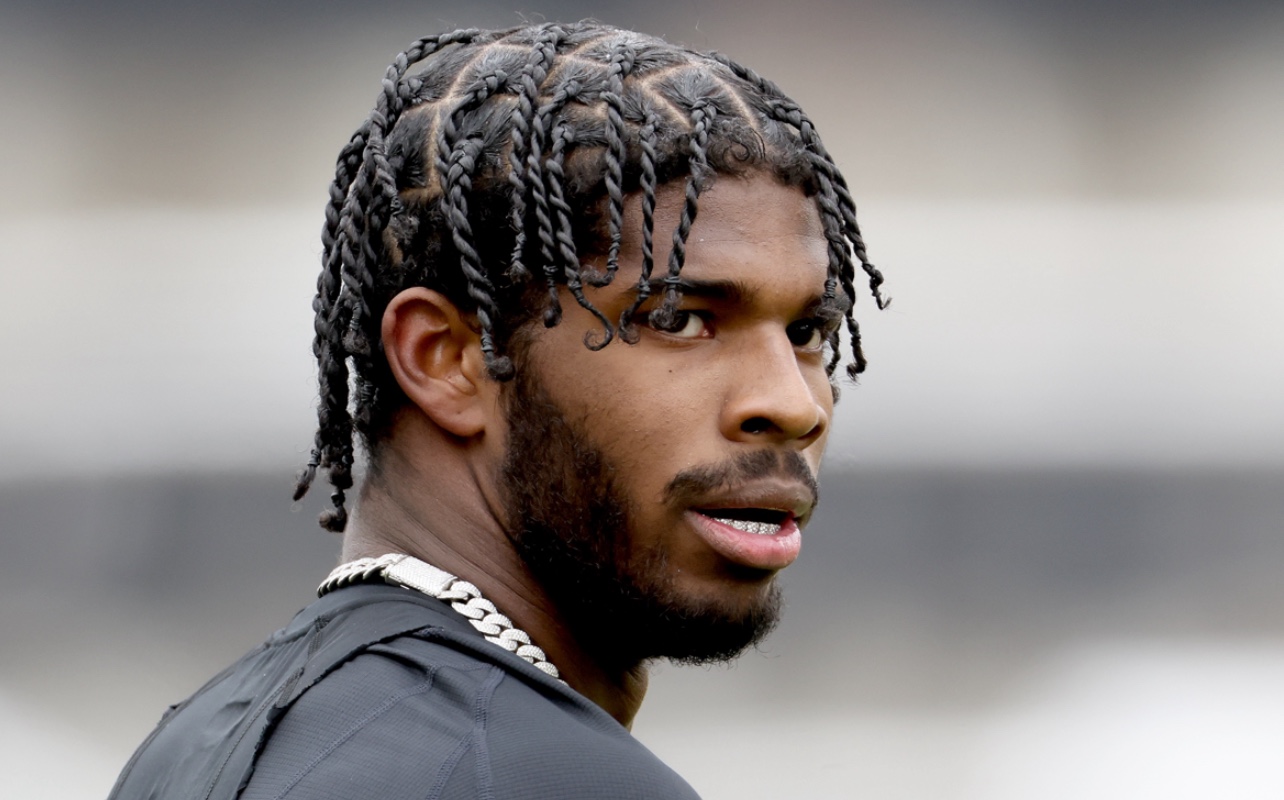
Shedeur Sanders,NFL draft, Browns

Shedeur Sanders Literally Stays Completely Silent During Recent Interview

The rookie mouthed his responses to reporters' questions


Shedeur Sanders made headlines this week by not saying anything during a recent interview.

Sanders’ NFL team, the Cleveland  Browns, made a quarterback change by demoting the starter, veteran Joe Flacco, and stated that the previous No. 2 quarterback, Dillon Gabriel, a first-year player, will be taking over the duties as the starter for the upcoming game against the Minnesota Vikings, taking place in London. Sanders, being drafted after Gabriel, is the team’s No. 3 quarterback.

The team is currently 1-3, and fans were getting antsy and vocal about the team making a quarterback change.

With the switch, Sanders did not move up, as the coach, Kevin Stefanski, simply swapped the No. 1 and No. 2. Reporters wanted to hear Sanders’ thoughts on the coach’s move.

Reporters asked the rookie about the starter change, and when he responded to several questions, he did so by mouthing his responses, leaving reporters baffled.

No one knows or understands why Sanders conducted the interview that way, but, according to ESPN’s Adam Schefter, he did so in response to criticism from former New York Jets and Buffalo Bills head coach Rex Ryan, who had appeared on ESPN earlier this week.

The analyst seemed a bit peeved at Sanders, and it showed when he made the following statement on the air:

“We’re all waiting to see Shedeur Sanders be the guy or Gabriel, whatever,” Ryan said on Monday. “Something’s missing. Something’s missing with this kid. This kid talks, and he runs his mouth like he’s a … ‘I can be a starting quarterback’ with his arms crossed like this.”

“Get your ass in the front row and study and do all that. If I know, the whole league knows. Quit being an embarrassment that way. You got the talent to be the quarterback. You should be. You should be embarrassed that you’re not the quarterback now.”

Sanders hasn’t commented on the incident.

RELATED CONTENT: Did Shedeur Sanders Sabotage Suiting Up For The Baltimore Ravens?

invisible disabilities, butterfly, maryland

Maryland Residents Given Butterfly Icon To Alert First Responders To Invisible Disabilities

Maryland residents who live with non-apparent disabilities scan request a small butterfly icon on their state driver’s licenses or ID cards.


Maryland residents who live with non-apparent disabilities such as autism or intellectual disorders can now request a small butterfly icon on their state driver’s licenses or ID cards.

The change comes after the implementation of “Eric’s ID law,” which took effect on October 1. Eric’s ID Law is named after advocate Eric Carpenter-Grantham, a high-functioning autistic individual. The legislation requires the Maryland Motor Vehicle Administration (MVA) to offer a butterfly marker, according to a press release from the MVA The marker signals to law enforcement or first responders that the person they are interacting with has an invisible disability. The marker can be received upon request without requiring medical paperwork. The symbol appears above the words “hidden disability” on qualifying cards.

The concept grew from personal experience. Eric and his mother, Linda Carpenter-Grantham, advocated for a designation they hoped would prevent misunderstandings during police interactions or other high-stress encounters. Both mother and son were concerned as conversations about police escalation and disability have become national topics.

“It will be a helpful tool for many loved ones who have a person in their family with a disability,” Eric said in Eric’s ID Law Explained on YouTube.
In the video, Eric discussed the pushback he and Linda received at the outset of the endeavor. Although policymakers had told them that law enforcement would not be receptive, the duo found that this was not the case.
“And the weirdest thing that we heard from many of the lawmakers in the state of Maryland was that law enforcement has never supported a bill like this before. Every law enforcement official we have talked to said, ‘This is a no-brainer. This will help us and the first responders.'”

Some lawmakers and disability rights advocates initially raised concerns around privacy, stigma, or potential insurance misuse, according to Linda. But the final law includes a prohibition against insurers using the market to adjust rates. The change is entirely voluntary and can be added or removed at no additional cost aside from other standard MVA fees.

In its first hours, dozens of Marylanders visited MVA offices to request the new butterfly-marked ID cards. Among them was Montgomery County 13-year-old Addison Jawando, who has an invisible disability, autism.

“It’s an exciting day. It’s been an honor to have a personal connection with my own daughter, who’s on the spectrum, and to be able to share this with her friends. It’s kind of a form of advocacy for her, too,” Jawando told Maryland Matters.

While Eric’s ID Law won’t guarantee de-escalation, officials say it provides an additional “information data point.” This data point will hopefully guide safer interactions.

RELATED CONTENT: Disability Advocates Weigh In On Jasmine Crockett’s Viral ‘Governor Hot Wheels’ Remark

Theresa Randle, arrest, domestic violence

Arrests Made In Suspected Fort Valley State Hazing Incident

'The City of Fort Valley Police Department has concluded its criminal investigation regarding the FVSU Blue Machine Marching Band and has found sufficient evidence to support charges of hazing. As a result, arrests have been made in connection with the case.'


About a week after Fort Valley State University suspended its Blue Marching Band due to allegations of hazing, the university announced that the suspension would continue, as local police had made arrests.

A Facebook post from the school stated that the Fort Valley Police Department has arrested several students after completing its investigation into the hazing allegations. Although the police have concluded their investigation, officials at Fort Valley State have stated that they have initiated an independent administrative investigation in accordance with the university’s policies. The band will miss this week’s homecoming events as a result.

“The City of Fort Valley Police Department has concluded its criminal investigation regarding the FVSU Blue Machine Marching Band and has found sufficient evidence to support charges of hazing. As a result, arrests have been made in connection with the case.

“The University is engaged in an independent administrative investigation in accordance with FVSU policy, USG policy, and the Stop Campus Hazing Act. The ongoing process is comprehensive and involves additional steps beyond the investigation. Until the process is complete, the band will remain under suspension and will not perform this weekend.”

The university stated that the top priority for the school is the safety and well-being of its students, as well as the Wildcat community.

According to Fox 5 Atlanta, the investigation was spurred by a campus police incident report, which stated that officers spoke with five women, between the ages of 18 and 21, about a potential hazing incident. There were two alleged victims involved in the incident that took place Sept. 24.

Police have issued an arrest warrant for 25-year-old Jamaica Baisden, as two students, 20-year-old Jayla Williams and 21-year-old Arika Tolbert, were arrested on hazing charges by the Fort Valley Police Department.

Fort Valley State’s homecoming is slated to take place Oct. 4 with a football game against Central State University.

RELATED CONTENT: Elevating Your Excellence: Media Maverick Emil Wilbekin Forged A Movement From Vibe To Native Son

Donny Hathaway

The ‘Donny Hathaway Legacy Project’ Is Launched On His 80th Birthday

Donnita Hathaway’s mission is to provide mental wellness in Black communities


On what would have been the 80th birthday of famed vocalist Donny Hathaway, his daughter, Donnita, launched the Donny Hathaway Legacy Project. The project is a 501(c) (3) nonprofit organization founded by Donnita in her father’s honor and is dedicated to music and mental wellness. The intimate event took place in Atlanta at Miss Conduck, a Caribbean restaurant and lounge, among close friends and supporters. 

Donnita’s mission is to “provide holistic mental and emotional health-related education, advocacy and essential resources,” according to the nonprofit’s website. The target demographic is creative artists and young people in Black communities. 

“I am overwhelmed with emotion. I’ve been thinking about this day for the past 10 years,” Donnita said. “Wanting my father to be acknowledged for his musical contributions.”

Donnita continued: “80 is just such a pristine age, and I really wish that he could be here. The fact that I decided to launch my nonprofit, The Donny Hathaway Legacy Project, on such a special day, I’m just completely full.”

Donnita emphasized that the organization will utilize holistic healing modalities, music, and education to foster mental wellness among project participants. 


Donny Hathaway churned out soulful chart-topping songs throughout the late 1960s and into the late 70s, including “A Song for You,” “Ghetto Boy,” “This Christmas,” “Where Is the Love,” and “Back Together Again,” with his fellow Howard University alum and musical partner Roberta Flack. His struggles with mental health, over the course of his career, led to his untimely death. Donny died by suicide on Jan. 13, 1979, after falling 15 stories from his hotel room at New York City’s Essex Hotel. 

Gerald Keys, who works in music and media as chief of production with the Ludacris Foundation and as CEO of  Prompt Haus, an AI-native tech agency, spoke to the necessity of mental health awareness and balance. 

“In our communities, we have a lot of unhealed trauma, a lot of things that we go through,” Keys said. “That we’re so resilient, that sometimes that can kind of backfire on us.”

Among those who showed up to give their support to Donnita was Crooner Eric Roberson, who was heavily influenced by Donny Hathaway. Roberson shared reflections and emphasized the importance of attending the event, keeping Black music alive, and using the art form and Donny’s personal experience to address mental health. 

To learn more about The Donny Hathaway Legacy Project, visit the organization’s website here

RELATED CONTENT: Legendary Producer and Musician James Mtume Passed Away

Relooted, african, games,

New Game Invites Players To Liberate Stolen Artifacts From Western Collections

South African gaming studio Nyamakop unveiled the new project during the Day of the Devs livestream.


A new game called Relooted, developed by an African gaming studio, casts players as a crew staging a heist to reclaim authentic African artifacts currently housed in Western collections.

South African gaming studio Nyamakop unveiled the new project during the Day of the Devs livestreamRelooted takes place in a near-future world. In the game, a global treaty demands the return of African artifacts displayed publicly. Many Western institutions avoid compliance by moving items into private collections. Players are tasked with infiltrating these private facilities and reclaiming artifacts, returning them to their countries of origin. 

Ben Myres, CEO and creative director of Nyamakop, says the game is one of wits. There is no violence in the reclamation. Instead, gamers are invited to “outsmart” those who succeeded in violent conquest.

“We wanted to contrast the very violent way the artifacts were often taken. The way the artifacts are reclaimed is not through brute force and overpowering but outsmarting the very same systems and institutions that took the artifacts,” Myres told CNN.

Relooted features 70 real-world artifacts as mission targets. Players must conduct planning, reconnaissance, and stealth phases before extraction and escape. The game combines narrative, puzzles, and platforming mechanics. More than playing a game, the concept invites reflection on issues of theft, colonialism, and restitution.

Critics and observers say the game’s premise is provocative. On the one hand, it raises awareness of the numerous African artifacts that are housed abroad. On the other hand, it may oversimplify the real complexities of heritage law, institutional responsibility, and the repatriation process. In recent years, African nations have requested the return of artifacts that were stolen from them. Since 2021, the Nigerian government has attempted to acquire the Benin Bronzes collection from the British Museum. Discussions are ongoing, although this collection is just one of many that are spread across the world.

Nyamakop is not the only game in development that seeks to address social issues. Game developer Adaya Head is tackling environmental activism. BLACK ENTERPRISE spoke to Head about the intention behind her creation. According to Head, the game uses horror to propel the story forward. 

“Horror games rarely take place in aquariums, so I wanted a unique setting paired with a story that raises awareness of climate change. Zoos and aquariums exist to educate the public about animals and the challenges they face because of human activity, so the game combines those elements with interactive horror,” Head told BE.

Games like Relooted and Head’s unnamed project blend interactive media with social activism. The creation of such provocative media places a sharp lens on the historical injustices of colonialism and the climate crisis, respectively. Whether the creation of such media triggers real change or merely provokes conversation remains to be seen.

RELATED CONTENT: Game Developer Adaya Head Takes Environmental Activism To The Next Level

Suspect, White House Correspondents Dinner, Shooting, trump

Trump Dangles Federal Funds To Strong-Arm Colleges Into His Agenda

With asking for a decision by Nov. 21., the effort is a continued stretch of having Republicans and conservatives reshape college and university culture as they claim have become overwhelmingly liberal - too “woke.”


The White House is seeking to lure nine colleges and universities into President Donald Trump’s agenda with promises of receiving favorable access to federal money, Associated Press reports. 

The 10-page letter titled, “Compact for Academic Excellence in Higher Education,” was sent to Vanderbilt, the University of Pennsylvania, Dartmouth College, the University of Southern California, the Massachusetts Institute of Technology, the University of Texas, the University of Arizona, Brown University, and the University of Virginia — some of the country’s most selective public and private universities — but it isn’t clear as to why or how they were chosen.

Trump’s team proposes that colleges adopt the administration’s vision for America’s education campuses, committing to adhering to priorities surrounding admission policies, women’s sports, free speech, student discipline, tuition affordability, and other key areas. The proposal also suggests accepting the government’s definition of gender by applying it to campus bathrooms and locker rooms. 

Following the Supreme Court’s 2023 decision to overturn affirmative action, the White House is seeking to have schools stop considering race, gender, and various student demographics in their admissions processes. 

With asking for a decision by Nov. 21, the effort is a continued stretch of having Republicans and conservatives reshape college and university culture, which they claim has become overwhelmingly liberal, too “woke.” However, critics are slamming the move. 

President of the American Council on Education, which represents nearly 1,600 presidents of colleges and universities, Ted Mitchell, believes the move threatens academic independence. “Any effort to reward or punish institutions based on their adherence to the views of government officials should trouble all Americans,” Mitchell, who also served in the Obama administration, said, according to USA Today.

“Defining what constitutes a vigorous and open-ended intellectual environment is not the role of the federal government, and the implications for free speech and academic freedom are chilling.”

Coming with limited surprise, one of Trump’s biggest critics, California Gov. Gavin Newsom, issued a stern warning on X, alerting the administration that there is no way state colleges included in the list will “bend” to the proposal. “California universities that bend to the will of Donald Trump and sign this insane ‘compact’ will lose billions in state funding — IMMEDIATELY. California will not bankroll schools that sign away academic freedom,” he wrote. 

However, some schools are looking forward to reviewing the proposal and working with the White House. Leaders of the Texas system said they were “honored” that the University of Texas at Austin was selected to be a part of the compact. “Today we welcome the new opportunity presented to us and we look forward to working with the Trump Administration on it,”  chair of the Board of Regents Kevin Eltife said in a statement.

RELATED CONTENT: Publix Allegedly Reneges On Black Book Bash Sponsorship, Denies Email Proof

birth control, pregnancy

Meet Herriot Tabuteau, The Haitian-Born Doctor Whose Brain Disorder Medications Turned Into A $6 Billion Empire 

When the company first went public in 2015, there was a struggle but in 2025, Tabuteau’s research resulted in the company trading on the Nasdaq with a market cap of $6.1 billion, making the Haitian-born doctor a billionaire.


When Herriot Tabuteau launched his drug development company, Axsome Therapeutics, in 2012, he decided to do things differently by focusing on treatments for brain disorders that are particularly challenging to develop. Now, he’s sitting on a $6 billion empire, according to Forbes.

The company is named after two parts of a nerve cell — the “axon” and the “soma” — with three drugs on the market and five up-and-coming drugs designed to help more than 150 million Americans suffering from brain conditions such as depression, ADHD, and Alzheimer’s disease. Tabuteau and his company faced pushback from investors after proposing a theory that building a portfolio on a single drug would reduce the risk of plans failing, while also keeping costs low.

“If you do things the same way as everybody else, you’re going to have the same outcomes as everybody else. And we wanted to have outcomes that stand apart,” the 57-year-old physician said. 

Outside of Axsome, a Phase III trial could easily have a price tag of $50 million, but Tabuteau could do it for 30% to 50% less. When the company first went public in 2015, there was a struggle. However, by 2025, Tabuteau’s research had resulted in the company trading on the Nasdaq with a market capitalization of $6.1 billion, making the Haitian-born doctor a billionaire. 

Axsome Chief Financial Officer Nick Pizzie recalls a time when many people didn’t believe in the company, especially when the company’s stock fell below $10 for years and its market cap dropped under $100 million following the failure of an early drug for pain during clinical trials. But things changed when its first drug, Auvelity, a treatment for major depressive disorder, hit big and gained approval from the U.S. Food & Drug Administration (FDA) in 2022.  

Auvelity combines two existing medications for a treatment that starts to work in one week, in comparison to eight weeks of serotonin-based antidepressants. Shares for the company soared to 65% in a week, increasing Axsome’s value to $3 billion. 

According to Business Insider, another one of Axsome’s medications, AXS-05, was labeled as a breakthrough for Alzheimer’s patients. It went to market in 2023, receiving rave reviews from advocates as there wasn’t one single approved drug to treat agitation — defined as extreme emotional distress that can lead to resisting care, shouting, or becoming physically violent — in Alzheimer’s patients. “This is a major problem,” leading Alzheimer’s researcher and professor at the University of Nevada, Las Vegas, Dr. Jeffrey Cummings said. 

“It is one of the principal reasons that Alzheimer’s patients are admitted to long-term care because they can’t be managed at home.”

Close to 6.2 million people are diagnosed with Alzheimer’s disease, with roughly 70% experiencing agitation and 40% having severe enough symptoms to receive treatment. 

With shares continuing to climb, reaching 35% to $122, outperforming the Nasdaq Biotech Index, Tabuteau and Axsome have no plans on stopping. The company is fighting to bring an antipsychotic medication to the market, which would be the only treatment available. 

In the meantime, the plan for the Wesleyan and Yale School of Medicine-educated doctors is to reach $16.5 billion, which is already on track, projecting up to $3 billion in sales for Auvelity and another $3 billion from the Alzheimer’s agitation drug. The numbers show that there isn’t a risk too small when you see the potential. “There is so much ahead of us right now in terms of the pipeline and the number of patients we’re able to address,” Tabuteau said. 

“We might be a small company in terms of size, but we’re not a small company in terms of fundamentals or in terms of ambition.”

RELATED CONTENT: Son Of U.S. Soldier Left Without Citizenship, Deported To Jamaica

Cristina Mancini, Black Girls Code

Black Girls Code CEO Shares How She Got A ‘Footing In The Tech Landscape’

Black Girls Code CEO Cristina Mancini reflects on the sponsor who helped propel her tech career.


Black Girls Code CEO Cristina Mancini explains the difference between a mentor and a sponsor in the corporate world, as well as the sponsor who played a key role in advancing her career in the tech industry.

Before leading the nonprofit Black Girls Code, Mancini advanced through the C-suite, holding executive vice president positions at 20th Century Studios and serving as chief marketing officer and chief engagement officer at Salesforce. She attributes her successful corporate climb to the relationships she cultivated with mentors and sponsors.

“I’ve been really fortunate,” Mancini told CNBC Make It at the Fast Company Innovation Festival. “I have had some incredible mentors and sponsors that have helped accelerate my career.”

The Los Angeles native, who also spent eight years of her childhood in Italy, developed her tech skills on the job, gaining a career-changing sponsorship while navigating challenges with an IT executive at 20th Century. In 2015, during her 13-year tenure at the company, she was tasked with deepening fan engagement with 20th Century properties, specifically through digital connections. But she lacked the necessary tech support, and the head of IT was unwilling to assist.

“I was struggling because the IT executive that was assigned to me was not taking me seriously,” Manicini said, adding that “I needed technology. I needed to test technology, and he would not help me.”

While seeking workarounds to address the lack of tech support, Mancini caught the attention of John Herbert, former chief information officer at 20th Century Studios, who offered guidance rather than criticism.

“You will find if you keep doing that, eventually the CIO will come visit you in your office,” she said. “Luckily, instead of penalizing me for that, John asked, what was I trying to accomplish?”

“He also introduced me to these tech organizations like HP and Microsoft,” she added. “That led to me really finding my footing in the tech landscape.”

The experience underscores the key difference between mentorship and sponsorship. Mancini explains that mentors listen and help improve resumes, while sponsors open doors, placing you in the rooms where you can build your own connections.

At Black Girls Code, Mancini leads the organization’s strategic efforts to advance workforce development and help one million girls of color enter the tech industry by 2040. Through culturally responsive programs for youth and career-acceleration pathways for adults 18 and older, BGC has become a national leader in tech education, equipping over 40,000 students with skills in STEAM fields and helping to close the opportunity gaps in the sector.

“I want people to know that tech is for everyone, and it doesn’t matter how old you are or where you are in life,” Mancini said. “This is an incredible moment in time where you can opt in and affect change at great scale, so there’s no wrong answer to how you start. Just start.”

RELATED CONTENT: Accenture Steps Up to Diversify Tech Talent Pipeline

×