George Mason University President Refuses To Apologize For The School’s Diversity Efforts
photo credit: Tony Webster from Minneapolis, Minnesota, United States, CC BY 2.0 via Wikimedia Commons

George Mason University President Refuses To Apologize For The School’s Diversity Efforts

Gregory Washington is defending George Mason Univeristy's diversity efforts despite pressure from the Department of Education’s Office for Civil Rights.


Gregory Washington, the first Black president of George Mason University, is refusing to issue a forced apology for the school’s diversity initiatives, despite a call from the Department of Education’s Office for Civil Rights (OCR) to do so.

Washington is defending the university’s diversity efforts, backed by faculty, one week after OCR concluded an investigation accusing him and George Mason University of unlawful race-based hiring and violating Title VI of the Civil Rights Act, the Chronicle reports. OCR’s proposed resolution included a demand that Washington personally apologize to the campus community for the diversity initiatives he oversaw, but Washington says that’s not going to happen.

“It is glaringly apparent that the OCR investigation process has been cut short, and ‘findings’ have been made in spite of a very incomplete fact-finding process, including only two interviews with university academic deans,” Washington’s lawyer, Douglas F. Gansler, wrote in a response letter.

“For OCR to single out GMU for alleged discriminatory conduct — when it admits more than 90% of its student applicants, has no record of selectively denying faculty opportunities, and in fact boasts a faculty community nationally respected for its viewpoint diversity — borders on the absurd.”

Gansler’s letter also stressed that Washington, who joined GMU in 2020, was not directly involved in evaluating faculty candidates. It accused the government of making “gross mischaracterizations” of his statements regarding efforts to foster a welcoming environment and a racially balanced faculty at the state’s most diverse public university.

GMU appointed Washington as president in 2020 after his successful tenure as dean of the engineering school at the University of California, Irvine, where he prioritized building a diverse faculty. Since joining the Fairfax, Virginia-based college, he has launched a Task Force on Anti-Racism and Inclusive Excellence to review university policies for racial bias and revised hiring procedures to ensure greater inclusion of women and people of color in applicant pools.

After its six-week-long investigation, OCR gave George Mason leaders 10 days to agree to revise policies, retrain staff, and assign a compliance officer to oversee the changes. The proposed resolution agreement would require the university to remove “any provisions that require or encourage the use of race to favor or disfavor any candidate.”

But Gansler says abiding by the investigation and issuing an apology “would be falsely admitting to conduct that did not occur and would open GMU to further legal risk in concurrent and future investigations by other agencies.”

“What the government is really wanting to do here is to humiliate the president, and not only that, but expose him, and the university, to future legal action not only by the government but also potentially thousands of people who have applied for positions at George Mason since 2020,” said James H. Finkelstein, a professor emeritus of public policy at George Mason who strongly encouraged Washington not to apologize.

Finkelstein warns that by apologizing, Washington could expose himself to further legal trouble, asking whether a white male applicant passed over in favor of a minority or female candidate “would have a claim.”

RELATED CONTENT: Companies Identify Key Ways To Keep DEI Alive

Denene Millner, elevating your excellence
Photo credit: Erskine Isaac

Elevating Your Excellence: Denene Millner Is A GOAT In The Literary Game

Denene Millner has been excellent her entire career.


Denene Millner has consistently excelled throughout her 25-year career. The former entertainment reporter and political journalist for the New York Daily News—and former editor for Parenting and Honey Magazine, the seminal millennial women’s publication that debuted in the early 2000s—turned author of 35 books to-date, six of which are New York Times best-sellers; two that were adapted into screenplays, one for the silver screen—is currently vice president and publisher of Denene Millner Books, a Black children’s book imprint under Simon & Schuster Publishing House

Millner’s commitment and tenacity in identifying and amplifying Black stories beyond the stereotypical narrative of mainstream media—be it news, lifestyle, or publishing—is the hallmark that catapulted and shaped her life’s work. 

After eight years in journalism, Millner pivoted into publishing after a supervising editor continually suppressed her talent and blocked her professional advancement in the newsroom. As fate would have it, the emerging writer had written a feature article for the newspaper that went viral, resulting in a commission to write her first book, The Sistahs’ Rules: Secrets for Meeting, Getting, and Keeping a Good Black Man. A single offer led to another, which led to another, which eventually led to Millner being commissioned to co-author Steve Harvey’s wildly popular book, Act Like a Lady, Think Like a Man, which went on to sell over 2.8 million copies and spend 64 weeks on The New York Times’ best-seller list. 

Due to her writing prowess and ability to transform people’s life experiences into impactful narratives, Millner became a highly sought-after biographer, having penned the memoirs of Taraji P. Henson, Jessye Norman, Charlie Wilson, Cookie Johnson, and Nene Leakes, among others. 

In 2008, Millner launched MyBrownBaby, a platform that addressed all the wonders of Black parenting, as a response to society’s negative portrayal of Black children, mothers, and fathers. MyBrownBaby spoke to the nuance of parenting Black children and protecting Black kids during a time when Trayvon Martin and Jordan Davis were gunned down by overzealous white vigilantes and Tamir Rice and Michael Brown were killed by police officers. 

Millner’s excellence and leadership extend beyond the page and into the community. In addition to being a popular and prolific writer, Denene dedicated six years to leading a writing program that she spearheaded within the halls of Atlanta Public School system’s Grady High School. Millner personally tutored students, rallied student and community engagement in the school’s annual poetry competition, and developed college essay clinics for a diverse group of students who needed the support. 

Millner has been just as influential in the careers of other mainstream authors, providing guidance, support, and opportunity. 

Amid the nation’s racial reckoning, Millner challenged the publishing industry on its lack of African American representation in Black children’s texts. She advocated not only for herself as a parent and writer, but also for other children’s storytellers and African American artists and illustrators. Her activism and advocacy led to negotiating her own imprint under the Simon & Schuster publishing company and becoming a publisher of stories created specifically for and about young Black girls and boys. In 2016, her breakout year as editorial director, Millner acquired, shepherded, and published the multi-award-winning children’s book, Crown: An Ode to the Fresh Cut by Derrick Barnes. This was a monumental honor and feat in the publishing industry and for Black households alike. Denene Millner, a Black woman, accomplished all this. 

In recent years, Millner continues to have an astounding impact in her community through her leadership and writing. She has penned the critically acclaimed historical novel One Blood, which, in its own right, is a literary masterpiece that addresses the Black familial experience, adoption, and adoptees’ right to know and own their identity. Over the past 25 years, Millner’s literary prowess has grown increasingly sophisticated, but also necessary to the intersecting demographics she represents: African American, female, and humankind. Her place in the canon cannot be denied. Millner is perpetually elevating excellence.  

RELATED CONTENT: ‘One Blood’ Is The Most Black And Beautiful Adoption Story You’ll Ever Read

SGIQ, ai assistant
Courtesy of SGIQ

SGiQ Founders Are Making Sure Black-Owned Businesses Stay Ahead With Ai

SGIQ Business Solutions is on a mission to help entrepreneurs and business owners leverage AI


Artificial Intelligence (AI) has arrived in the workplace with signs that it’s not only here to stay but is essential to growing and scaling businesses. Shaun Jeffries and Gary Lovelace are making sure that Black-owned and small-owned companies are not getting left behind in AI with their firm, SGIQ Business Solutions. The men are on a mission to help entrepreneurs and business owners leverage AI to improve efficiency, increase productivity, and drive sustainable growth without requiring technical expertise.

“AI can even the playing field for solo entrepreneurs and small agencies that don’t have the money or bandwidth to staff up and get things done,” said Lovelace. “We consult with companies and help them identify their pain points.”

According to research from McKinsey & Company, 92% of companies are planning to increase their AI Investments over the next three years. By the end of 2025, Goldman Sachs analysis estimates that total investments in AI will soar to nearly $200 billion, including companies investing in AI for their workforce and investors backing AI startups. Despite the investments, AI can be overwhelming even for larger corporations, and integrating the technology as a small business owner can hinder scaling when smaller agencies are already strapped for time and resources.

According to Jeffries and Lovelace, a lack of time and money are often significant hurdles for small business owners to get things done. SGIQ technology allows overstretched business owners to scale and manage their businesses with autonomous communication assistants. Some services offered under SGIQ include call and messaging automation, appointment scheduling, chatbot, customer support, sales and lead generation automation, social media and marketing automation, and more.  

“This is important because there are a lot of tasks that need to be done to operate a business, but the owner, who is already wearing 10 hats, doesn’t have time to do the things needed to scale their business,” Lovelace adds.

How SGIQ Can Improve Black Small Businesses Through AI

Starting a new business is difficult, and a majority fail within the first few years. According to data from the U.S. Bureau of Labor Statistics (BLS), nearly 20% of new businesses fail during the first two years of opening. 45% fail during the first five years, and 65% during the first 10 years. Only 25% of new businesses make it to 15 years or more.

However, statistics show a disproportionately high failure rate for Black-owned businesses. The Enterprise Center at Salen State University found that eight out of 10 Black-owned businesses fail within the first 18 months.  Many of them face a disproportionate number of challenges, including a lack of access to capital and resources.

With SGIQ, the SGIQ co-founders want to make sure that Black-owned businesses have access to more resources.

“We see the importance of our community and building up businesses to build wealth,” said Lovelace. “We think that this technology will help even the playing field for small businesses and businesses that don’t have a lot of access to capital. You can close some of the gaps with the utilization of AI.”  

The men are also setting up a nonprofit called the Linden Institute for AI Literacy, which pays homage to the street they grew up on in Jamaica, Queens. The nonprofit will focus on AI training for educators, parents, and underserved communities amid a competitive global economy.

“As companies are embracing AI to sell you more things and increase their business, we’re not educating our kids to live in that world,” Lovelace added. “In five to ten years from now, the kids in school now are going to be living in a different world with AI. We’re not educating them for the future, we’re educating them for the now. We want to educate them better.”

RELATED CONTENT: Microsoft’s List Of 40 AI-Crossing Jobs Has People Guessing: Which Jobs Are AI-Safe? 

National Guards Now Carrying Firearms Throughout D.C. As Trump Escalates Military Deployment 

National Guards Now Carrying Firearms Throughout D.C. As Trump Escalates Military Deployment 

Nattional Guard troops in Washington D.C. have started carrying firearms as Trump ramps up military deployment.


After Donald Trump decided to increase military deployment in Washington, D.C., National Guard troops patrolling the capital are now armed.

A Defense Department official speaking on condition of anonymity confirmed that some units on specific missions will be carrying firearms, ranging from handguns to rifles, AP reports. The official added that all armed units have been trained and are following the strict rules of engagement established by Defense Secretary Pete Hegseth.

The official said only certain troops would be carrying firearms, and those working in transportation or administration would likely remain unarmed. However, one day after speaking with the anonymous defense official, an Associated Press photographer observed South Carolina National Guard members outside Union Station carrying holstered handguns.

A task force spokesperson said that National Guard members assigned to safety and security duties will be armed, while those handling “beautification” tasks, such as community restoration, would likely not.

The heightened military presence follows a statement from the joint task force overseeing policing in the capital, which said units began carrying service weapons on Aug. 25. The task force emphasized that force should be used “only as a last resort and solely in response to an imminent threat of death or serious bodily harm,” and affirmed its commitment to protecting the safety and well-being of Washington residents.

Since Trump deployed U.S. troops to the nation’s capital, thousands of National Guard members and federal officers have been patrolling D.C.’s streets. The move, which overrides the authority of state and local law enforcement, comes as he weighs expanding military deployments to other Democratic-led cities, including Baltimore, Chicago, and New York.

“I think Chicago will be our next,” Trump told reporters from the Oval Office on Aug. 22. “And then we’ll help with New York.”

Critics are calling out what many see as Trump’s use of the military against Democrat-led cities with Black mayors and majority-minority populations.

“This is about profiling us,” Rev. Al Sharpton said while speaking at Howard University.

“This is laced with bigotry and racism,” he later added. “Not one white mayor has been designated. And I think this is a civil rights issue, a race issue, and an issue of D.C. statehood.”

A White House official said that although National Guard troops in D.C. are armed, they are not making arrests and will continue to focus on protecting federal property and supporting law enforcement during arrests. So far, over 2,200 National Guard soldiers and airmen, most from out of state, have been deployed to D.C. as part of Trump’s coordinated effort to address crime and homelessness in the capital that has seen violent crime drop roughly 27% year over year.

RELATED CONTENT: New York Governor Bringing In National Guard To Search Subway Commuters’ Bags

Jeezy, adversity for sale, restaurant
Rapper Jeezy performs during The Shhh Show at Buckhead Theatre on June 20, 2023 in Atlanta. (Photo: Prince Williams/WireImage)

Jeezy Connects With Uber To Offer 101 People Rides

Jeezy partners with Uber after one of their drivers, Tanner, drove him 10 hours to make a show on his recent tour


Several weeks after Atlanta rapper Jeezy was rescued by an Uber driver who drove 10 hours so he could make his next show, the Soul Survivor lyricist has announced that he has partnered with the rideshare service.

According to the New York Post, Jeezy was leaving South Carolina to head to Baltimore for an upcoming show at The Lyric Baltimore on Aug. 1 when, due to bad weather, his flight, along with several others, was canceled. After several attempts to get him to Baltimore, nothing was working out for Jeezy. While his team arranged for him to take an Uber to the local airport, Jeezy decided to ask the driver if he would drive him to his next destination; whatever the price, he would be glad to pay.

“I assured him that whatever it was, he’d have it,” Jeezy stated. “Like a real one, he didn’t hesitate and just kept driving.”

After contemplating the trip, he agreed to it and proceeded to drive 10 hours to make sure Jeezy arrived on time for his next show.

He brought the driver, Tanner, on stage that night and thanked him in front of the audience.

Fast forward a couple of weeks, Jeezy takes to his social media and informs his followers that he has connected with Uber for a partnership to help those in need of a ride, including single mothers, entrepreneurs, college kids, whoever needs a ride, in essence. He promises that the rideshare company and he are helping to provide rides for 101 people.

“I’m happy to announce my collaboration with @uber to help provide rides for 101 people in need—people like single mothers, people who have a hard time getting to work… We see you. We’ve got you. Uber is covering the rides; my @streetdreamzfoundation team will be hitting the streets, surprising these people in need.”

RELATED CONTENT: Self-Preservation Turned Adversity Into Purpose

wet nurse, Black women, slavery, enslaved women, autonomy, breastfeeding
Slave Nursing White Baby, Envelope 2,” 1861-1865. John A. McCaUister Collection: Civil War Envelopes (Library Company o f Philadelphia, Philadelphia, Pa.), Public domain, via Wikimedia Commons

From Slavery To Liberation: The Diasporic Legacy Of Black Breastfeeding

The historical pain from slavery still resonates, shaping complex and often painful relationships with breastfeeding in the Black community.


A Traumatic Legacy

For over a decade, Black Breastfeeding Week has served as a powerful testament to the resilience and determination of Black mothers, creating a space to celebrate and advocate for a healthier future. Yet, this annual observance also serves as a poignant reminder of a painful history. The brutal practice of forcing enslaved Black women to act as wet nurses for white children was a widespread and deliberate act of control, one that stripped Black women of their autonomy and commodified their bodies.

This exploitation inflicted a legacy of trauma that continues to affect Black women’s relationships with breastfeeding today. The historical pain from slavery still resonates, shaping complex and often painful relationships with breastfeeding in the Black community.

Enforced Wet Nursing And Familial Disruption

The forced use of enslaved Black women as wet nurses was a heart-wrenching practice that stripped them of their fundamental maternal rights. Enslavers viewed an enslaved woman’s breast milk as a valuable asset to be bought, sold, or rented, with records of these transactions appearing in newspapers across the Americas and Brazil.

To ensure a constant, available milk supply for their own children, enslavers would forcibly separate enslaved mothers from their own infants, sometimes permanently. This cruel act denied the Black children the immunological and nutritional benefits of their mother’s milk, often leading to a reliance on inadequate substitutes like dirty water or cow’s milk, which contributed to devastatingly high infant mortality rates. The emotional and psychological trauma for these mothers, who endured the grief of separation while being forced to nurture another’s child, was immense and lasting.

The Purpose Of Enforced Wet Nursing

The motivations behind this practice were multifaceted and insidious. For affluent white women, hiring a wet nurse was a symbol of social status that freed them from the perceived “drudgery” of breastfeeding. For enslavers, the practice served as a tool of manipulation and control, allowing them to dictate the reproductive lives of enslaved women whose bodies were seen as tools for labor and profit. Enslavers would often time the pregnancies of enslaved women to align with their wives’ due dates, ensuring a lactating woman was always available. Accounts suggest that some enslaved mothers were even beaten to ensure compliance, a horrific form of coercion that contributed to the racist stereotype of Black mothers as unloving or harsh, a narrative used to justify the enslavers’ inhumanity.

The Lasting Legacy Of Breastfeeding

The trauma of enforced wet nursing created a historical wound that has never fully healed. This history contributes to a cultural memory where breastfeeding is painfully associated with exploitation and a lack of autonomy. For some, avoiding breastfeeding became a way to reclaim agency and disassociate from this painful past. This is a sentiment that has been passed down through generations, with some older Black women discouraging younger women from breastfeeding, believing it to be a practice tied to a period of servitude. The advent of infant formula further compounded this intergenerational trauma, as companies aggressively targeted Black communities with marketing campaigns that framed formula as a modern, sophisticated alternative to a painful history.

Today, these historical factors, combined with enduring systemic barriers, contribute to significant disparities. The high labor participation rate of Black women—higher than any other group—means they are often the primary economic support for their families. The financial pressure forces many to return to work sooner, often to jobs that lack paid family leave or adequate lactation accommodations. Despite legal mandates, employers frequently fail to comply, leaving Black workers vulnerable to demotion, harassment, or job loss for simply trying to exercise their right to breastfeed. Furthermore, inequities in healthcare and a lack of culturally competent support from medical institutions compound the problem. The relatively low breastfeeding rate for Black mothers is therefore not a matter of personal choice but a direct result of systemic racism that continues to impact their health and well-being.

The fight for Black maternal and infant health requires more than just promoting breastfeeding. It demands a comprehensive effort to acknowledge and dismantle the centuries of historical trauma and systemic inequities that have made this natural act a struggle.

The lasting effects of forced wet nursing are a painful reminder that for Black women, the fight to nourish their children is not just a personal choice—it is a struggle against a system that has long denied them the very foundation of wellness. The only way forward is to prioritize policies that remove barriers to health and well-being for all.

RELATED CONTENT: Social Determinants And Social Norms When Breastfeeding Isn’t Enough For Black Women

Snoop Dogg, Snoop Dogg, rap snacks
(Photo: Rodin Eckenroth/Getty Images)

Snoop Dogg Says He Struggled To Explain Gay Family Scene To Grandson During Movie Trip

Snoop Dogg was left speechless after his grandson asked how two women had a baby.


Snoop Dogg was left uncomfortable after a movie trip with his grandson, after he was unable to answer questions regarding a gay couple in the feature.

According to Hot97, the rapper explained the situation in the since-deleted clip of the “It’s Giving” Podcast. While on the show, Snoop Dogg explained why seeing a gay couple in the animated movie Lightyear, a Toy Story spinoff that focused on the fictional astronaut Buzz Lightyear, left him scared.

The children’s film showed a female character starting a family with her wife. The loving scene also showed the same-sex partners sharing a brief kiss. However, Snoop’s grandson inquired about how the two women had a child.

“They’re like, ‘She had a baby — with another woman,'” Snoop recalled the child saying, then adding, “Papa Snoop? How she have a baby with a woman? She’s a woman!’”

The 53-year-old was left speechless by the young boy’s question. Feeling put on the spot, he says the incident left him unprepared.

“I didn’t come in for this s—. I just came to watch the goddamn movie,” explained the entertainer, according to Variety. “It f—ed me up. I’m like, scared to go to the movies. Y’all throwing me in the middle of shit that I don’t have an answer for…”

He added,” It threw me for a loop. I’m like, ‘What part of the movie was this?’ These are kids. We have to show that at this age? They’re going to ask questions. I don’t have the answer.”

The West Coast native also faced heat for his unabashed comments, as some critics felt his response stems from homophobia. However, Snoop claimed that he wasn’t coming from a hateful place. Instead, he asserted that he did not know how to broach the sensitive topic.

“These are kids,” he continued. “They’re going to ask questions. I don’t have the answer.”

Despite what he deems as innocent concerns, the film faced backlash from conservative countries for including the gay-friendly scene. Lightyear’s director, Angus MacLane, defended the scene’s inclusion, which producers also found inspirational.

“The controversy is whether or not you think it’s appropriate for people to love each other,” expressed MacLane. “That’s a thing that’s a controversy? I don’t know where to begin on that one.”

RELATED CONTENT: Snoop Dogg Named LA Community Chairman For 2026 FIFA World Cup


SLAMS, Shaquille O’Neal, Shaq, gummies,
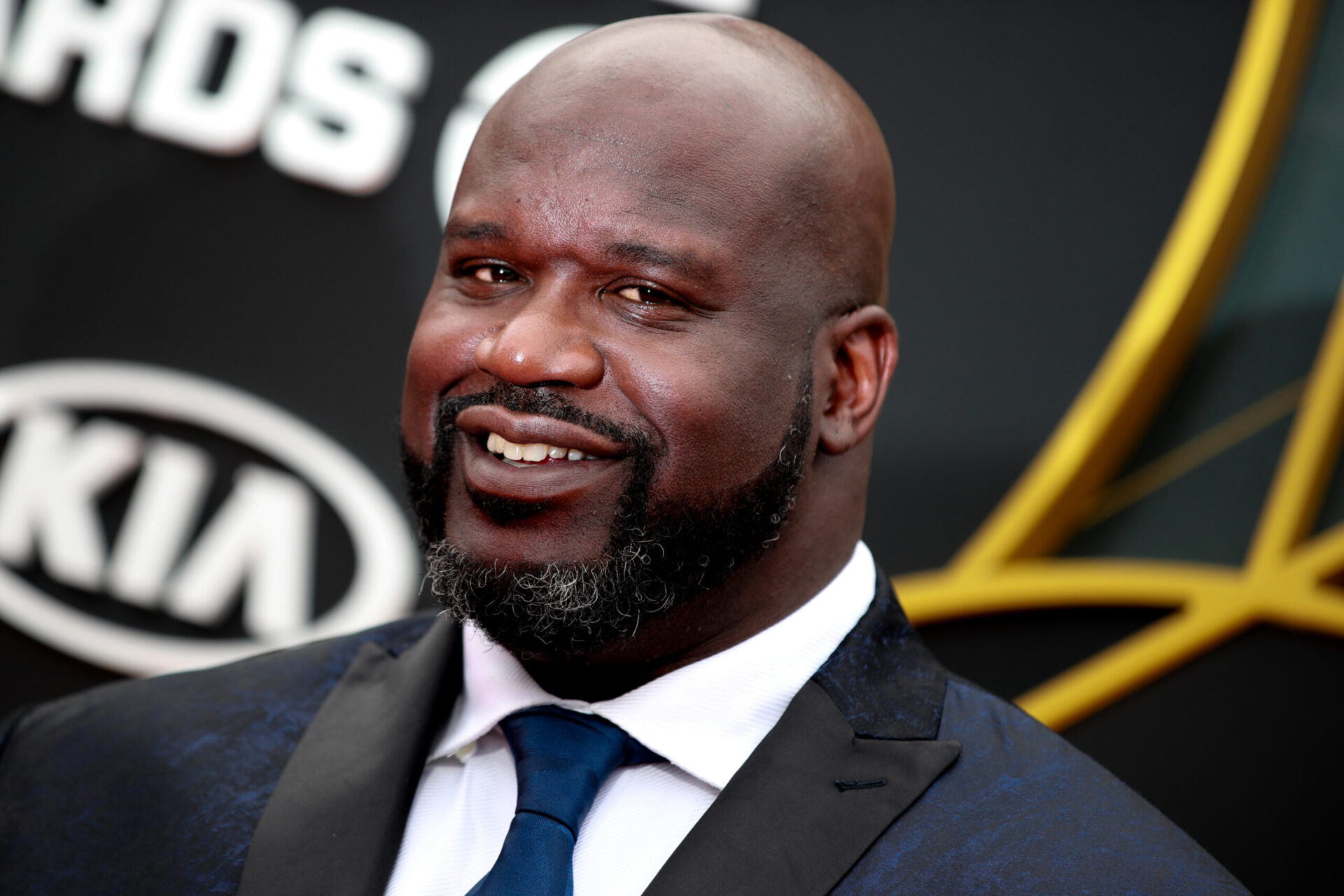
Shaquille O'Neal at the 2019 NBA Awards. (Photo by Rich Fury/Getty Images)

That Time Shaquille O’Neal’s $70K Purchase Was Declined At Walmart

'It was $70,000, so I put my card in it, and it declined. Then, pulled it out, put it again, and it declined again”


You can be extremely rich and still get your credit card declined, as NBA Hall of Famer Shaquille O’Neal recalled that happening to him while he was still playing in the NBA, and Walmart declined his purchase of $70,000.

According to Benziga, in an interview that aired on The Late Late Show with James Corden over seven years ago, Shaq explained to the talk show host about the incident that led to his purchase being declined while shopping at Walmart. The timing was around the 2007-2008 NBA season when he was traded from the Miami Heat to the Phoenix Suns. 

After the transaction went through, Shaq decided to head to Walmart because once he was traded and had a place to stay, it was unfurnished, so he wanted to buy some things for his new apartment in Arizona. As his place was bare, he didn’t have the patience to wait, so he went shopping. He claimed that the purchase is the largest in Walmart history.

“I have the biggest purchase in Walmart history, $70,000. I got traded from Miami to Phoenix, and I’m the type of guy I have no patience. When I get to Phoenix, they have an apartment for me; nothing is in it,” he told Corden.

As the merchandise was being rung up, he gave his credit card to the cashier, but it did not agree with the register. The card was declined several times.

O’Neal said, “So at the end, it was $70,000, so I put my card in it, and it declined. Then, pulled it out, put it again, and it declined again.”

As he felt bewildered that his card was being declined, he told them he’d be back. Meanwhile, American Express security had contacted him via phone and told him that someone had stolen his card and was trying to spend $70,000 at Walmart.

“So I told them I’d be back, and then the American Express security guard called me, ‘Hey man, somebody stole your credit card and spent $70,000 at Walmart,’ and I said no, that was me,” Shaquille O’Neal added.

They restored his spending abilities, and he was able to make the purchase that day.

RELATED CONTENT: Nalah Barry, 6-Year-Old Athlete, Offered Sneaker Deal By Shaq

Egypt Sherrod And Mike Jackson Offer Financial Guidance Ahead Of Tax Extension Deadline
Approved Imagery Courtesy of TurboTax Business

Egypt Sherrod And Mike Jackson Offer Financial Guidance Ahead Of Tax Extension Deadline

Egypt Sherrod and Mike Jackson partnered with TurboTax to share business money management tips ahead of the upcoming tax extension deadline.


Married real estate gurus and serial entrepreneurs Egypt Sherrod and Mike Jackson have teamed up with TurboTax Business Tax to help small business owners prepare for the Sept. 15 tax filing extension.

Managing taxes is a top priority for small business owners, but the process can often be complex and time-consuming. With the Sept. 15 deadline approaching, Egypt and Mike are reminding small business owners and solopreneurs that TurboTax Business offers easy access to unlimited live experts to help get their taxes filed.

While the process may feel “frustrating” at times, Egypt says, it’s also “rewarding” when you consider the satisfaction of persevering, working for yourself, and supporting the livelihoods of employees if you have a team on payroll.

“Because even though as an entrepreneur you will never have worked harder in your life, at the very least you know that you’re doing it for yourself,” Sherrod tells BLACK ENTERPRISE. “That’s the mantra Mike and I often remind ourselves of, even on the hard days, it’s still worthwhile.”

Balancing taxes alongside running a business can be overwhelming, and Egypt and Mike experienced the same challenge firsthand. Between managing their household, guiding clients through building, renovating, and buying homes, and operating multiple businesses, keeping up with taxes and receipts became a chore.

That is, until the Married to Real Estate stars began tapping into the built-in resources TurboTax offers business owners.

“Some of the tools that we have found to simplify our lives and our businesses have been with TurboTax,” Sherrod said. “For many years, we would sit at our kitchen table and just have receipts sprawled out all over the table, categorizing what goes where. Then, of course, we got wise to put it on individual credit cards for each business, but even that is not a simplification.”

Source: Approved Imagery Courtesy of TurboTax Business

Sherrod continued. “Once we put all of our businesses on QuickBooks, it was a dream come true because we could see the financials, we could see the expenditures, projections, everything was well organized. But they also had virtual tax experts that we could see and talk to, or we could hire out the bookkeeping service for them to help keep us organized year-round, 24/7. That was the real difference maker, it like freed up a whole two positions for it in our company.”

As a hands-on contractor, Jackson found great use of TurboTax’s built-in integrations with other business platforms, such as Mailchimp, and for file sharing with clients and vendors.

“What’s great about it as well is that the integration of it all allows the communication process to flow seamlessly between the tax expert and us or any other clients we may have because of the integration with Mailchimp,” Jackson said. “And also, you can file whatever you need to file and send it right through there without having to have several different apps.”

Sherrod points out that TurboTax’s accessibility on both smartphones and desktops gives business owners a central hub for managing their financial information. She also appreciates the platform’s instant projections, which help guide future business growth.

“They always want to be able to see your balance sheets and your P and L,” she added. “Usually, it used to be if they asked us, I got anxiety, like, ‘oh God, time to go through everything.’ Now it’s like, OK, cool. We’ll print it out. So that was really cool for us having those tools, and it’s all cohesive.”

Egypt and Mike stress that financial transparency in marriage is non-negotiable, noting it as a make-or-break factor that will “end the relationship.” It’s something they’ve seen firsthand while interviewing couples on their Marriage and Money podcast.

“When we’re interviewing people, they seem to have been able to come back from everything, including infidelity. But the one deal breaker was that we had two divorced couples who were still friends, and they came on and talked to us. And we’re like, ‘Well, what broke you up?’ Financial infidelity is what breaks people up,” Egypt said.

“You know, just finances, not being able to be on the same accord or having the same core values about money and planning. So it’s super important for us. It’s sort of what we were built on.”

The real estate duo is encouraging fellow small business owners to stay ahead of their taxes and file before the Sept. 15 extension deadline. Visit www.TurboTax.com/business to file today and get a head start on the next tax year.

RELATED CONTENT: Birkin Besties: Kash Doll’s $20,000 Wedding Gift For Detroit’s ‘Royal Couple’ Goes Viral

missy elliot, rock ' roll hall of fame
ATLANTA, GEORGIA - MAY 19: Missy Elliott speaks onstage at 2023 Black Music Honors at Cobb Energy Performing Arts Centre on May 19, 2023 in Atlanta, Georgia. (Photo by Nykieria Chaney/Getty Images)

Missy Elliott Reaches Settlement With Producer Who Claimed To Co-Write Her Early ’90s Songs

Missy Elliot and music producer Terry Williams have finally reached a settlement after a seven-year legal battle.


After years of legal battles, Missy Elliott has reached a settlement with a music producer who claimed to have co-written songs from her early girl group days.

On Aug. 22, Elliott reached an undisclosed settlement with music producer Terry Williams, just days before jury selection was set to begin for a Philadelphia trial, Billboard reported. The lawsuit stems from Williams’ claims that he co-wrote several songs during Elliott’s early years with the group Sista.

According to Williams, he wrote four tracks on Sista’s 1994 project 4 All the Sistas Around Da World and accuses Elliott of later releasing the material without giving him proper credit or compensation. After unsuccessful attempts to link his claims to Aaliyah’s 1996 single “Heartbroken” and having his allegations against Timbaland and several record labels dismissed, Williams was left to represent himself in 2019 when his lawyer withdrew from the case.

“As with many other lyrics, vocal arrangements and melodies Elliott created during this time, Elliott independently wrote the lyrics and melodies for the song ‘Heartbroken,’” a legal document Elliot filed in 2023 states.

Regarding the Sistas songs, “Elliott did not even know of or meet Williams until after the production on the Sista album entitled ‘4 All The Sistas Around Da World’ was completed and the album was publicly released in 1994,” the filing added.

Despite Williams’ legal setbacks, he remained steadfast with his lawsuit, which has now been resolved through a settlement that neither side has disclosed the details of. The settlement comes nearly two years after Elliott filed documents denying Williams’ claims, which she said were unsupported by evidence.

The “Work It” rapper also argued the claims came two decades too late, as he didn’t take legal action until 2018, more than 20 years after the disputed songs were written.

“In contrast to Williams’ unsupported claims”, the 2023 court filing states, “Elliott has produced admissible and compelling evidence that clearly establishes Williams’ lack of a valid ownership interest in the disputed musical works.”

Missy Elliott tried to have the lawsuit dismissed but was unsuccessful, though the dispute ultimately ended with a settlement.

RELATED CONTENT: The Junkyard Band And DC Take Over Miami To Celebrate 50 Years Of Go-Go

×