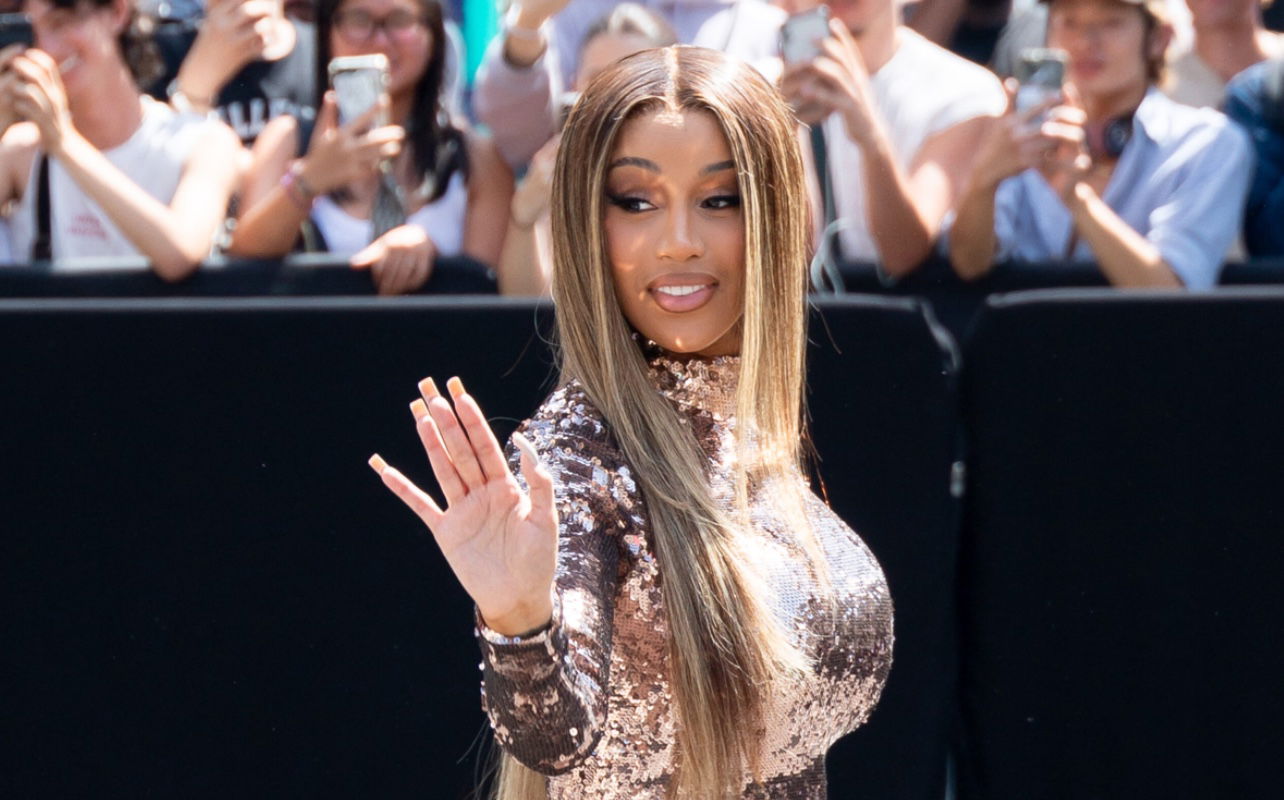
Uncle Luke, MAGA

From Banned To The Ballot: Uncle Luke Launches Congressional Bid For South Florida Seat

"It's the perfect timing," the former 2 Live Crew member says.


Uncle Luke is going from hip-hop to politics. The retired rapper said it’s “perfect timing” to run for Congress this midterm election season.

The Miami-based rapper, whose real name is Luther Campbell, wants to head back to Broward County to represent his community.

In a recent interview with This Week In South Florida, the former 2 Live Crew member shared his political ambitions to hold a seat in Florida’s 20th congressional district, which covers most of Broward and parts of Fort Lauderdale.

Campbell, 65, dived into his desire to hold office. The Neighborhood Talk shared a clip of the conversation with the show’s host, Glenna Milberg.

“It’s the perfect timing…I was thinking about doing it the last cycle, but it wasn’t the right time,” Campbell said. “I needed to do a lot of things, you know, to get myself prepared. I need[ed] to do more outreach to the community.”

The South Florida native had become a controversial voice in his community, remaining politically involved and outspoken throughout his music career. This is also not the rapper’s first attempt at holding office. He put his hat in the race for mayor of Miami-Dade County in 2011.

“I just go meet with the stakeholders, not necessarily politicians, at the end of the day, once I did my due diligence,” Campbell said of this recent attempt. “You know, I said, let me come to Glenna’s show and let her know I’m gonna run for Congress.”

Uncle Luke had been political through his raps. An advocate for free speech, his 1989 album with 2 Live Crew, As Nasty As They Wanna Be, became politically infamous after a U.S. court ruled it legally obscene due to its explicit lyrics and cover art.

Prosecution of members of the rap group also led to supporters calling out the racism surrounding their legal battles.

Now, Uncle Luke wants a return to the political arena.

RELATED CONTENT: Jasmine Crockett Calls Out Nicki Minaj And Cites Immigration Issue: ‘I Don’t Do Sellouts’

States,Ban, Federal Agents, Local Police, anit-mask

Immigration Crackdown Sparks Economic Strain for Minority-Owned Businesses In Minnesota And Beyond

Shop owners report steep losses as federal enforcement actions dampen foot traffic.


As federal immigration enforcement intensifies under President Donald Trump’s deportation push, small business owners in Minnesota say the economic fallout is undermining promises that stricter policies would benefit Black and Hispanic workers.

During the 2024 presidential campaign, Trump argued that immigrants were taking jobs from minority communities. “They’re going to be attacking—and they already are—Black population jobs, the Hispanic population jobs, and they’re attacking union jobs too,” he said at a rally in Reading, Pennsylvania.

But in Minnesota, where federal agents have carried out one of the largest recent enforcement deployments, many entrepreneurs say the opposite is occurring. Storefronts in diverse neighborhoods report sharp declines in customers and revenue, with some warning they may not survive the year.

Local business leaders launched “A Week to Shop Local for Truth & Freedom,” urging residents to spend money in neighborhood stores ahead of Valentine’s Day. Organizers argue the downturn is not seasonal but tied directly to fear surrounding immigration raids.

Brian Atkins, co-owner of Custom Designs in Brooklyn Park, said his shop typically sees slower sales after the holidays. “November, once after Halloween, Thanksgiving, Christmas is slow,” he told The Minnesota Spokesman-Recorder. But ICE’s presence has “made it even slower.”

Community advocates say many residents are avoiding public spaces, concerned about potential encounters with Immigration and Customs Enforcement agents. Yusra Mohamud told the outlet the impact along Minneapolis’ Lake Street corridor is staggering.

“Right now, ICE activity is hitting our corridor hard. Businesses on Lake Street are losing tens of millions of dollars a month,” she said. “That number continues to grow.”

Financial estimates reflect the depth of the downturn.

Russ Adams, of the Lake Street Council, a nonprofit serving the largely immigrant neighborhood of the same name, said projections show between $10 million and $20 million in weekly losses citywide, with approximately $46 million in revenue disappearing across December and January on Lake Street alone.

“You don’t come back from that in a single quarter,” Adams said.

Carl Swanson of the Minnesota CDFI Coalition warned that prolonged disruption could destabilize lending networks. “Even a 20 percent default rate would mean a $140 million loss to Minnesota’s economic ecosystem,” he said, noting there is “no federal safety net” to offset such damage.

For many owners, the crisis is also about principle. “Shopping local for truth and freedom is about saying clearly and publicly that our local economy should not be built on fear,” said Lawrence Eddison of Custom Designs.

Emilia Gonzalez Avalos, the executive director of Unidos MN, added, “Where you spend your money is one way we show what kind of community we want to live in. It’s also about solidarity.”

The economic ripple extends beyond Minnesota. In Columbus, Ohio, immigrant entrepreneurs gathered at the Global Mall to describe similar struggles.

Khalid Turaani of CAIR-Ohio said “we’re seeing ICE agents are parked at the front literally to disenfranchise these businesses who are legal, who are taxpayers, who are employers,” he told WCMH-TV.

On the West Coast, Los Angeles County officials reported roughly $3.7 million in losses between July and September 2025 following federal immigration raids. County supervisors commissioned the study after enforcement operations intensified, citing concerns about harm to local economies.

From Minneapolis to Columbus and Los Angeles, business owners say the effects of heightened enforcement are measurable not only in dollars lost, but in communities strained by fear and uncertainty.

RELATED CONTENT: Target CEO Along With Other Minnesota Executives Call For ICE Brigade To End As Workforce Dwindles As A Result Of Raids

Harry Potter, HBO

Tubi Debuts HBCU Film Hub, Spotlighting Black Student Filmmakers, For Black History Month

The partnership with HBCU First LOOK Film Festival launches during Black History Month, expanding national access for emerging storytellers.


Streaming service Tubi has unveiled a slate of films created by students and graduates of Historically Black colleges and Universities for the launch of its partnership with the HBCU First LOOK Film Festival during Black History Month.

The platform released 20 films as part of the rollout, delivering on plans first shared in November at the festival’s annual awards ceremony.

At that event, founder Sheila Eldridge announced a collaboration with Tubi designed to give rising Black filmmakers broader visibility through a national streaming outlet.

Eldridge, a Howard University graduate and CEO of Miles Ahead Entertainment, described the partnership as a turning point for creators from HBCUs, calling it “a milestone for Black creatives.” The initiative aims to elevate voices that have traditionally faced barriers in film and television.

In addition to the 20 newly available titles, the dedicated streaming hub—branded “HBCU First Look”—is expected to feature more than 100 films from HBCU-affiliated creators. The collection spans documentaries, scripted projects, and experimental works from institutions including Morehouse College, Howard University, Florida A&M University, and Spelman College. The films explore themes ranging from student life to deeply personal narratives and broader cultural stories.

Tubi, known for its expansive digital catalog and growing original programming, said the partnership reflects an effort to connect with emerging filmmakers earlier in their careers. By providing a free, widely accessible platform, the company hopes to offer both exposure and sustainable opportunities for independent artists.

Among the highlighted selections is HIM+, a first-place short film written by Florida A&M alumnus Chazriq Clarke. Other featured projects include a documentary about the 15th Annual Café Mocha Salute THEM Awards, directed by Lee Solomon, along with experimental pieces such as Echo Of 22 by L. Palmer and Timeless by Dr. Shaina Thomas.

Eldridge’s career in media began under the mentorship of Cathy Hughes at WHUR-FM. She has since collaborated with major brands and cultural institutions, maintaining a focus on Black storytelling throughout her work.

Founded to create a professional pipeline for HBCU creatives, the festival now engages more than 15,000 students and alumni annually and drew over 700 submissions last year—evidence, organizers say, of growing demand for platforms centered on Black voices.

RELATED CONTENT: UNCF Expands ACCLAIM Project To More HBCUs, Growing Talent Pipeline For Asset Management

cheesesteak, Carter’s Cheesesteaks, Chinatown, philadelphia,

Philadelphia’s Chinatown Welcomes First Black-Owned Spot, Carter’s Cheesesteaks

The new counter-service spot pairs classic rib-eye sandwiches with seafood twists while creating space for other Black entrepreneurs.


A new cheesesteak shop in Philadelphia is reshaping part of the city’s Chinatown’s business landscape.

Carter’s Cheesesteaks at 1016 Race St. is the first Black-owned business to establish itself in the neighborhood. The counter-service restaurant features both traditional rib-eye cheesesteaks and inventive variations topped with shrimp or lobster, blending familiar, city-loved flavors with surf-and-turf flair.

The restaurant officially opened its doors on Nov. 1, but has taken off during the new year. Owner Garci said opening the doors carries personal and historical weight.

“Me at 38 years old, I’m the first person to accomplish that goal,” he told Philadelphia’s FOX 29. “I could understand why some people wouldn’t want that to happen, so I felt like, because of that, let’s double down on that.”

Beyond operating the sandwich shop, Garci purchased the entire building and reimagined it as a small food-hall concept. The space now houses multiple Black-owned food ventures offering a range of cuisines, an effort he says is designed to expand opportunity and representation within the corridor.

“Let me bring some more Black people down here, let them also be a part of the history that’s being made because I feel like it’s a wonderful thing and change is needed,” Garci said.

The opening has sparked discussion among residents about growth and evolving business ownership in a district traditionally associated with dim sum parlors and bubble tea cafés. Supporters view the project as an addition to the area’s culinary diversity rather than a departure from it.

Garci said his own upbringing motivates him to set an example for younger generations.

“Chase your dream,” he said. “I really truly believe the more you chase your dream, put the work in, in the end you’ll get the reward.”

RELATED CONTENT: Big Dave’s Cheesesteaks Brings A Philly Flair To Metro Atlanta

Chicago, Black-owned Grocery store, 40 acres

Chicago Entrepreneur Opens Grocery Store To Reclaim Promise Of ‘Forty Acres’

The Black-owned market in Austin neighborhood blends history, design, and access to fresh food.


A long-broken post-Civil War pledge is finding new meaning on Chicago’s West Side.

During Black History Month, entrepreneur Liz Abunaw is reframing the historic promise of “40 acres and a mule” through the launch of her grocery store, Forty Acres Fresh Market, in the Austin neighborhood.

The concept references the federal government’s unfulfilled commitment to provide land and opportunity to formerly enslaved people. For Abunaw, it represents economic ownership and community investment.

“What would it look like if we actually got our 40 acres?” Abunaw told CBS News Chicago. In her view, it looks like a thriving, Black woman-owned supermarket serving its Chicago neighbors.

Located at Chicago Avenue and Waller Street, the store occupies a space that once housed a Salvation Army thrift shop.

“This place used to look like a prison,” she said, recalling its concrete block walls and minimal entryway. When redesigning the property, she focused on light and openness. “You have to open it up,” she explained.

Inside, Abunaw said she aimed for a contemporary general store atmosphere, inspired in part by mid-century soda fountains.

“The decor in this place, I wanted it to feel like a 1950s ice cream shop,” she said.

The market opened in September 2025, marking a significant milestone for a community that previously lacked a full-service grocery option. Abunaw said Chicago’s Austin residents often had to travel to surrounding neighborhoods or the suburbs to buy essentials.

“Look around us. The mayor lives on the next block,” she noted. “The man can afford food, but until we got here, he had to go into Oak Park to get food.”

Though she resists labeling the area a “food desert,” Abunaw acknowledged disparities in access to fresh groceries. Drawing on experience from her years at General Mills, she said running a supermarket requires precision.

“Grocery is not complicated, but it is complex,” she said, adding that success depends on managing many small tasks at once.

Customers say the convenience is transformative. Resident Samuel Correa said quick trips for basics are now possible without a lengthy drive. Community member Haniyyah King praised both the symbolism and quality of the store’s offerings.

Abunaw believes competitive pricing is key to sustainability. “If we’re charging the same prices as other grocery stores, that means we’re doing it right,” she said.

While proud of her achievement, Abunaw emphasized she is building on a legacy of Black-owned Chicago grocers who came before her—and continuing a story that began generations ago.

RELATED CONTENT: This Black-Owned Business Turns ‘Heritage Into Healing’ With Its Sparkling Okra Water At Erewhon

Ryan Coogler, AAFCA Awards

‘Sinners’ Filmmaker Ryan Coogler Makes Tearful Speech After Big Wins At AAFCA Awards

The acclaimed director took home awards for Best Director and Writer at the 17th annual ceremony.


Sinners director Ryan Coogler let the emotions fly at the 17th annual African American Film Critics Association Awards in Los Angeles.

At the Feb. 8 ceremony, Coogler took home multiple awards, including Best Writer, according to WBLS.

Coogler cried twice at the event. In one acceptance speech, Coogler shouted out his big supporter, fellow filmmaker Ava DuVernay, who presented him the award for Best Writer.

NiteCast media shared a snippet of the heartwarming event.

“Every man has come up here and cried,” Coogler joked while wiping away tears. “I’m the first one to cry twice. Ava, you made me feel safe in this industry. Every day, knowing that you’re out there makes me feel safe. I think the love of a Black woman is the most powerful human force on Earth.”

He then shined a light on all the people who brought his vision of Sinners to life.

“The director is nothing without that crew, without that cast,” he continued. “It’s truly a community-based job. It is a skill, it is a craft, it is a calling, but you need people to do it.”

Coogler singled out his wife, Zinzi, who co-produced Sinners, calling her his “better-looking, smarter, wiser…much better half.”

Sinners took home multiple awards from the evening, including Best Ensemble, Best Music (film composer Ludwig Göransson), and Best Film. The film’s other stars, including Miles Caton, Wunmi Mosaku, and Delroy Lindo, were also honored for their work.

Hosted by Former White House Press Secretary Karine Jean-Pierre, the AAFCA recognized its Top Ten films of the year, which included Sinners.

The awards season continues for Coogler as Sinners prepares for its night at the Oscars with a record-breaking 16 ] nominations.

RELATED CONTENT: Karine Jean-Pierre To Host 2026 African American Film Critics Awards

bookstore,Houston, The Reading Room, Black art

The Reading Room In Houston Offers Visitors A Trailblazing Library Filled With Black Art Books

The Reading Room offers programming for all ages dedicated to learning more about Black art history.


The Reading Room in Houston offers visitors a chance to surround themselves with Black art history through its books.

Located at the Sanman Studios in downtown Houston, The Reading Room is a curation of Black culture, knowledge, and joy, primarily through its art history literature.

The idea came to the reference library’s founder, Amarie Gipson, who “wanted to find a place where I could be surrounded by books—Black art books, specifically,” she explained to Houstonia.

Only seeing these books scattered across exhibits, Gipson sought to build upon her first art book. (She now now has more than 800.) The art history graduate now wants all to dive inside the world of Black diasporic art and culture.

“At the core of it, it’s Black. It’s Black diasporic…It’s Southern…It’s global South. It’s all that,” she said. The works range from Afrofuturism to legendary authors like Zora Neale Hurtson and James Baldwin, to contemporary visionaries like Spike Lee and homegrown favorite, Beyoncé, whose Cowboy Carter art book is among the shelves.

Before The Reading Room, which started online in February 2023, Gibson strengthened her passion and knowledge in the overarching art scene. She helped revitalize museums, later hosting pop-ups until a space for the library could blossom on its own. Since then, she has fostered a new kind of space that fosters creativity and community as much as learning.

Gipson added, “It’s a library. It’s just culturally specific, young and cool—a place where reading is sexy. It’s fun…It’s colorful…It’s calm…It’s not too overwhelming.”

Black people remain underrepresented in the art history spaces, especially as an academic discipline and a focus in a museum. According to Artnet, works by Black women artists only account for .5% of acquisitions across 31 art museums in the United States.

“My motivation for creating this space is to provide that sort of access to other people who don’t necessarily have the opportunity to study art history,” Gipson said. “Folks who are curious should be able to come into a space and learn without feeling like there’s some kind of limitation to the access or behavioral expectation.”

Dedicated to showcasing Black art, life, and stories, The Reading Room remains grounded in archiving Black culture while others can find beauty and common-ground with these distinct experiences.

“I’m committed to our stories,” Gipson said. “I’m committed to the way that we live, who we are, and to making this amazing place where we can feel safe and celebrated no matter what happens.”

Visitors can witness the Black art library for free and programs are available throughout the year.

RELATED CONTENT: Black Visual Artist Nick Cave’s ‘Mammoth’ Exhibition Challenges Historical Erasure At The Smithsonian 

flights, Government Shutdown, Staff Shortage

What To Know For Your Next Flight As DHS Stunted By Government Shutdown

With the partial shutdown directly impacting the DHS, TSA officers will have to forego pay again, reminiscent of the previous shutdown that occurred last year.


As flyers hit the skies this President’s Day Weekend, here’s what they should know as the Department of Homeland Security is impacted by the partial government shutdown.

The shutdown has many wondering about their trips, with no annual budget currently approved for the government agency over airport security. Lawmakers have sat embroiled in a battle over DHS spending, specifically regarding its implementation of ICE agents and immigration enforcement. The shutdown officially paused DHS funding Feb. 14.

With the partial shutdown directly impacting the DHS, TSA officers will have to forego pay again, reminiscent of the previous shutdown that occurred in fall of last year. Given this, airports are expecting potentially longer wait times at security checkpoints.

Last year, some airports saw lines outside the doors as TSA workers began to call out due to lack of pay. Depending on how long this shutdown lasts, TSA workers may not see their next checks, causing strife with nearly all of these workers deemed essential.

Thankfully, while wait times may vary, it has been reported that flight schedules should proceed as relatively normal due to the shutdown remaining partial. Air traffic controllers, paid through the still-funded Federal Aviation Administration, will receive their checks.

However, if the shutdown drags on, airports may delay flights to keep up with the lagged security times.

Generally, experts warn flyers to remain extra cautious, allotting extra time as the situation may vary daily. Travelers should also remain prepared for longer waits, even for screenings of carry-on and checked luggage. This could potentially delay flights, and their own arrivals at gates, even more.

As for when the shutdown is expected to end, frequent flyers should hang tight. Several organizations, such as U.S. Travel, Airlines for America, and the American Hotel & Lodging Association, have already warned of impacted spring break travel.

“Travelers and the U.S. economy cannot afford to have essential TSA personnel working without pay, which increases the risk of unscheduled absences and call outs, and ultimately can lead to higher wait times and missed or delayed flights,” wrote the groups in a joint statement, according to PBS News.

Democratic and Republican lawmakers remain at a standstill over the funding of ICE, a part of the DHS. Democrats have refused to approve a budget that grants immigration enforcement more funding amid nationwide violence and protests.

RELATED CONTENT: FAA Enters Another Shutdown As Funding Lapse Raises Fresh Concerns For Air Travel

NFL, Brian Flores, discrimination lawsuit

Brian Flores’ NFL Discrimination Lawsuit On ‘Racist’ Hiring Practices Will Likely Head To Court

The ruling rejects the appeal made by the NFL to keep the case privately settled.


The discrimination lawsuit against the National Football League, led by former Miami Dolphins head coach Brian Flores, can now proceed in open court.

A federal judge presiding over the matter determined that the lawsuit over the NFL’s alleged racist hiring practices can bypass the league’s arbitration process. According to AP News, Flores, a Black man, sued the league alongside two others in February 2022 after his firing from the Florida franchise.

Although Flores found a new footing in the league, currently serving as defensive coordinator for the Minnesota Vikings, he and fellow disgruntled coaches spoke out about the unjust treatment of Black coaches. Although the NFL initially sought to keep the legal battle private by taking its appeal to the Supreme Court, Judge Valerie Caproni of the Southern District of New York determined that the case could proceed to trial.

Flores’ legal team issued a statement expressing gratitude for the court’s decision, saying that the open court process will provide a “fair, neutral, and transparent forum” to shine a light on this issue.

“The court’s decision recognizes that an arbitration forum in which the defendant’s own chief executive gets to decide the case would strip employees of their rights under the law,” Flores’ attorneys Douglas H. Wigdor and David E. Gottlieb said in a statement. “It is long overdue for the NFL to recognize this and finally provide a fair, neutral, and transparent forum for these issues to be addressed.”

In the original lawsuit, Flores alleged that several NFL franchises did not hire Black coaches in good faith, calling the process “rife with racism” that led to seemingly unwarranted or swift firings. The Dolphins let him go following a  24-25 record over three years, although Flores did have back-to-back winning seasons with the team.

Alongside the Dolphins, Flores also cited the Denver Broncos, New York Giants, and Houston Texans for racially biased hiring practices. Other coaches in the suit, Steve Wilks and Ray Horton, also claimed racism in their appointments and subsequent firings from the Arizona Cardinals and Tennessee Titans, respectively.

The NFL has also not hired any new Black coaches in its postseason, as confirmed by The Athletic. Only Three Black head coaches currently lead any team roster. As for the discrimination lawsuit, a pretrial hearing remains set for April 3.

RELATED CONTENT: NFL Takes Brian Flores Discrimination Fight To Supreme Court, Seeks To Block Jury Trial

Trump, ape post, Barack Obama,

Barack Obama Slams ‘Clown Show’ Politics, Calls Trump Ape Post A Distraction As He Warns Of Eroding Decorum

The former president says respect for public office have faded.


Former President Barack Obama criticized the coarsening tone of American politics during a recent podcast appearance, days after a racially offensive video targeting him and former first lady Michelle Obama circulated on President Donald Trump’s social media account.

Speaking with liberal commentator Brian Tyler Cohen in a 47-minute episode released on Feb. 14, Obama did not reference Trump directly but addressed what he described as a broader decline in public standards. “Discourse has devolved to a level of cruelty that we haven’t seen before,” he said when asked about the state of political conversation in the United States.

As reported by the BBC, the controversy stems from a video shared on Trump’s Truth Social platform that included unfounded allegations about fraud in the 2020 presidential election. At the end of the clip — set to the song “The Lion Sleeps Tonight” — was an image depicting Barack and Michelle Obama as apes. The imagery evoked long-standing racist stereotypes and quickly sparked condemnation from both Democratic and Republican leaders.

https://twitter.com/i/status/2019779053104832727

Among the critics was Sen. Tim Scott of South Carolina, the only Black Republican in the Senate, who called it “the most racist thing I’ve seen out of this White House.”

Initially, the White House dismissed criticism as “fake outrage.” The post was later removed, with officials attributing its publication to a staff member. Trump told reporters he “didn’t see” the portion of the video featuring the Obamas and said, “I didn’t make a mistake,” when asked if he planned to apologize.

During the podcast, Cohen referenced the post while discussing broader political tensions, including rhetoric surrounding immigration enforcement. He noted that the White House had labeled some Immigration and Customs Enforcement targets as “domestic terrorists” and added, “Just days ago, Donald Trump put a picture of you, your face, on an ape’s body.”

Obama responded by shifting focus to public reaction. “It’s important to recognize that the majority of the American people find this behavior deeply troubling,” he said. “It is true that it gets attention. It’s true that it’s a distraction.”

While condemning the tone of certain media and online spaces — calling it “this sort of clown show that’s happening in social media and on television” — Obama said his travels across the country suggest many Americans “still believe in decency, courtesy, kindness.”

He added that what once guided public officials — “some sort of decorum and a sense of propriety and respect for the office” — now appears diminished. “That’s been lost,” he said.

Beyond the controversy, Obama also discussed peaceful protests against immigration enforcement, electoral redistricting, and the progress of his presidential library in Chicago, slated to open next year.

RELATED CONTENT: Trump Reaches New Low In Racism After Posting Video Depicting The Obamas As Apes

×