Atlanta, Sundance Film Festival
(Image: iStock/Kruck20)

Atlanta Ranks No. 1 City To Start A Career Despite City’s Racial Wealth Gap

Atlanta boasts an impressive annual increase in median household income, at approximately $79,000 and ranked as a top location for singles.


According to a recent evaluation by the financial wellness platform WalletHub, Atlanta has emerged as the best city to start a career.

As the premier destination for career beginners, the Georgia capital clinched the top spot in a comprehensive assessment of 182 urban centers nationwide. WalletHub’s analysis, published in May, employed a nuanced 70-point system, with Atlanta securing 65.84 points. The study’s methodology hinged on two pivotal factors: Professional Opportunities and Quality of Life.

Atlanta boasts an impressive 8.9% annual increase in median household income, currently at approximately $79,000. The city’s job market is thriving, with numerous highly-rated companies offering an abundance of entry-level positions and high job satisfaction rates. For aspiring entrepreneurs, the city ranks sixth among large cities for starting businesses. It’s also recognized as the fourth most entertaining city and an ideal location for singles, offering a well-rounded lifestyle beyond professional pursuits.

However, despite its economic prosperity and reputation as a “Black Mecca,” Atlanta grapples with a significant racial wealth disparity. The Atlanta Wealth Building Initiative revealed a stark contrast: white families’ median household income of $83,722 triples that of Black families at $28,105. A 2024 report by the organization found the wealth gap is even more pronounced, with white households possessing 46 times more wealth than Black households.

Alex Camardelle, vice president of research and policy at the Atlanta Wealth Building Initiative, emphasized the need for change. “There needs to be large scale, public investment and structural policy changes to reverse the centuries worth of harm that has led to the racial wealth divide,” Camardelle told Atlanta Civic Voice.

Efforts to address this inequality are ongoing. As previously covered by BLACK ENTERPRISE, JPMorgan Chase granted $1.7 million to the Atlanta Wealth Building Initiative and the Center for Community Progress to foster equity in Black businesses and neighborhoods. The center revealed plans to use the funding to foster partnerships for affordable housing, renovate unused properties, and create proposals encouraging philanthropy, policy, energy efficiency, and more.

RELATED CONTENT: Vice President Kamala Harris Addresses Atlanta’s 100 Black Men Conference

SPONSORED CONTENT

Article by Ida Harris
Photo credit: Jared Soares for AARP

SCROLL BELOW TO READ

Dr. Myechia Minter-Jordan has been asking the same question for nearly thirty years. The work of answering it has never been more essential. Today, she asks it as CEO of AARP, where she leads roughly 2,300 employees and nearly 60,000 volunteers on behalf of 125 million Americans aged 50-plus. She is the first physician to hold the job, and only the second woman in the organization’s 68-year history. The question she brings to every policy debate, budget line, and partnership is the one she has carried since her earliest days in medicine: what do people need to live well, and who is making sure they have it?


The scale is new. The question is not.


As an attending physician at Johns Hopkins Bayview Medical Center in Baltimore, she asked it one patient at a time. She treated people, taught medical residents, and began to see where the systems surrounding her patients could be strengthened in ways no prescription alone could address. So, she got an MBA, not to leave medicine but to reach further into it.


As chief medical officer and then president and CEO of Boston’s Dimock Community Health Center, she asked it for an entire community. Dimock serves some of the city’s most vulnerable populations. Under her leadership, the organization brought in nearly $5 million in federal funding, built academic research partnerships, launched an Institutional Review Board, and moved the health system onto digital records.


As president and CEO of CareQuest Institute for Oral Health during the worst of the COVID-19 pandemic, she asked it on a national scale, spending four years focused on closing gaps in access through philanthropy and innovation.


“Every step I’ve taken in my career has been about how I ensure that I’m bringing my talents, my skills, my expertise, and my passion for people to the work,” Minter-Jordan says.


She took the role of CEO at AARP in November 2024, inspired and energized by the opportunity to advance the mission.


“It was really the mission of AARP, to help empower people to choose how they live as they age, that drew me in,” she says. “And then it’s the people who are doing the work: our employees and colleagues across the enterprise and across the country, and also our volunteers. That’s what solidified my decision.”


A New York native, Minter-Jordan traces her career back to a single instinct her parents gave her. “For as long as I can remember,” she has written, “my parents have instilled in me the importance of giving back through service to others, especially those less fortunate.” With that as a guiding principle, she pursued her education at Brown University, earning both her undergraduate degree and her M.D., before heading to Baltimore to begin her clinical career.


The move from Hopkins to Dimock in 2007 was deliberate. She loved her patients, but she had begun to see that the impact she wanted required more than what one physician could do in one exam room. The MBA she earned at Johns Hopkins was the bridge. Dimock was the destination: a community health center where the work was systemic, not just clinical.


That shift, from treating individuals to strengthening systems, defines how she approaches her work at AARP. Healthcare, Medicare, Social Security, caregiving, livable communities, financial security: she sees them as interconnected parts of the same equation. As a physician, she treated the whole patient. As CEO of AARP, she is applying that same holistic lens to the experience of aging.

More than membership perks


Most people know AARP for travel discounts and insurance deals. But beyond those tangible benefits lies a deeper power: strengthening the systems that support health, financial security, and connection over a lifetime.


AARP works alongside congressional leaders, activists, and volunteers to protect Social Security and Medicare, the earned benefits that millions of Americans have spent a lifetime paying into.


“We activate folks. We advocate on The Hill. We advocate locally. We elevate the stories of real people who are experiencing issues with their access to those earned benefits,” Minter-Jordan says. “We lift up the impact that Social Security has on the many people who depend on it.”


AARP has fought to keep Social Security solvent and accessible, to protect recipients’ full benefits, and to block efforts to privatize the program. The organization’s advocacy operates at both the state and federal level. Its state offices work directly with governors, legislatures, and local leaders; its national team engages members of Congress and federal agencies. The focus is on the real-life impact of policy on all Americans age 50-plus.


“We know that for many Americans, Social Security is the foundation for their retirement. This is an earned benefit, essential to health and financial well-being. And we know that for Black Americans, it’s particularly critical,” Minter-Jordan says.


The statistics reflect this reality. Longstanding wage and employment inequities translate directly into lower lifetime Social Security benefits for Black Americans. Without it, poverty among Black adults would double. Minter-Jordan views the protection of Social Security as both an economic issue and a health issue, two things she has never been willing to separate.


“The work that we’re doing in advocacy, fighting for Social Security and Medicare, supporting family caregivers, combating fraud, all of those things are central to the lives of the 125 million 50-plus that we represent, including Black Americans,” Minter-Jordan says. I am committed to ensuring this work strengthens and uplifts every single community we represent.”

Transforming the experience of aging


Minter-Jordan’s leadership arrives at a turning point. By 2030, for the first time in U.S. history, Americans 65 and older will outnumber those under 18. The country is getting older, fast, and the institutions built to serve that population need to keep up.


At the center of Minter-Jordan’s leadership is what AARP calls the Longevity Economy: the total economic and social contribution of adults 50-plus. This demographic generates an outsized share of the national economic activity. Its influence extends well beyond spending into workforce participation, entrepreneurship, caregiving, and community leadership. Businesses that ignore it, Minter-Jordan argues, do so at their own cost.


“The spending power of the 50-plus is $8.3 trillion and growing. But they are not only consumers. They are driving job growth and launching businesses at remarkable rates, and this includes millions of Black entrepreneurs over the age of 50,” she says. “Where businesses invest their time and resources must reflect this reality.”


The Longevity Economy represents a powerful economic and social force, but for Minter-Jordan, it is also about quality of life. She is focused on closing the gap between how long people live and how well they live. The average American spends thirteen of their final years in poor health, financial insecurity, or isolation. Her goal is to close that gap by treating health, financial security, purpose, and social connection as essential pillars of living well longer. She came to that view as a physician. At AARP, she has the platform to act on it.


This strategy comes to life in AARP’s engagement with employers to build multigenerational workplaces, expanding meaningful opportunities for people 50-plus who want to keep working, while strengthening the financial security that allows others to retire on their own terms. It is reflected in AARP’s work alongside entrepreneurs and innovators to co-design technology with older adults, not just for them. And it drives the organization’s philanthropy, which provides direct services to older adults facing hunger, housing insecurity, and isolation.


“As our demographics continue to shift, businesses will be left behind if they’re not thinking about and investing in the Longevity Economy and recognizing the full power of the 50-plus,” Minter-Jordan says. “We create the platform for those conversations. We influence the business sector to think differently. That’s our role, and we take it seriously.”

A stronger focus on caregiving


Family caregiving is one of the most significant and least visible forms of labor in American life. For Minter-Jordan, it is also one of the most urgent priorities AARP is addressing.


The pressures facing Black family caregivers are considerable. Black Americans make up 14% of the nation’s caregiving population, spending roughly 34% of their income on care-related expenses. One in five Black adults is caring for both aging parents and younger family members at the same time.  There is deep strength and tradition in Black families caring for one another, but too often that commitment comes at a steep financial cost, compounding the economic realities many were navigating long before taking on this dual responsibility.


“Family caregivers need financial relief,” Minter-Jordan says. “We listen closely to our members, many of whom are supporting both children and aging parents, to understand what they are carrying and how we can provide meaningful resources and support.”


AARP advocates for tax credits, workplace flexibility, and other policies that ease the financial burden on family caregivers. They connect family caregivers to local services through a partnership with United Way, offering legal and financial guides, and maintaining peer support networks where family caregivers can reach one another. At the federal level, the organization pushes for systemic relief, not just sympathy.


Minter-Jordan sees this work as a way to reach people who might not think of themselves as part of AARP’s constituency yet. Many of the country’s family caregivers are in their late 40s and early 50s, younger than the traditional image of retirement-age members. They are already doing the work. AARP’s case is that they should not have to do it alone.


“That opens up an opportunity for us to engage a broader demographic and ask: what do you need? How can we help you get through this with more support, better resources, and a larger community to lean on?”

Community cultivation


Identifying the needs of the 50-plus is one step. Building the support around them is another. AARP also creates spaces where people feel seen, supported, and connected.


According to AARP’s own research, the share of Americans 45 and older who report feeling lonely has risen 35% over the past decade. For a CEO who built her career on the idea that health cannot be separated from the conditions of daily life, the data reinforces the urgency of work that has long been underway. Minter-Jordan is a champion of  AARP’s commitment to age-friendly communities and their engagement with local leaders to ensure that urban planning, public spaces, and neighborhood resources reflect the needs of aging residents across race, income, and geography.


This commitment is tangible and local. In Houston’s Sunnyside neighborhood, a historically Black community, AARP partnered with residents to transform vacant lots into community gardens. The project reclaimed neglected space and gave people a reason to show up for one another. It is a small example of a large conviction Minter-Jordan carries from her years running a community health center in Boston: that well-being is not something you deliver to people. It is something you build with them.


Defining a legacy


For Minter-Jordan, this work is personal and rooted in a responsibility that extends far beyond herself. She often reflects on the leaders who came before her at AARP and the foundation they built. Their example shapes how she measures her own impact and how she thinks about what comes next.


“I believe in leaving a legacy,” she says. “I think about my predecessors and what they built at AARP. I feel a responsibility to that lineage, and to what comes after.”


The legacy she envisions is about people.


“I want this chapter to mark a transformed experience of aging,” she says. “What does it mean to age well? How do we recognize and value the contributions people make after 50?”


For her, the answer must include everyone. Every community. Every lived experience.

Aging does not look the same for all Americans, and that diversity is a strength.


Each experience carries value. And with more than 125 million Americans over 50, AARP has both the platform and the voice to ensure those experiences are reflected in the policies, workplaces, and communities shaping the future.


That is the legacy she hopes to build: a future where aging is defined by possibility. Where every stage of life is elevated, with health, purpose, security, and connection at the center.

Snoop Dogg, trademark, Snoopsicles
(Photo: Rodin Eckenroth/Getty Images)

Snoop Dogg Runs 200 Meter Race At U.S. Olympic Team Track And Field Trials

Snoop Dogg ran for a 34.44 time while competing against runners Ato Bolden and Wallace Spearmon


Earlier this year, NBC Sports announced that Snoop Dogg would join its Olympic coverage this summer in Paris. But, before he starts his duties in July, the “Gin & Juice” lyricist took to the field over the weekend at the U.S. Olympic Team track and field trials in Eugene, Oregon, and took it upon himself to run the 200-meter race (unofficially, of course).

According to Rolling Stone, Snoop D-O Double G had some competition when he headed to the track to participate in a race at the Olympic trials on June 23. He ran against some seasoned professional sprinters: four-time Olympic medalist Ato Bolden–Bronze medal winner in the 200m at the 1996 and 2000 games–and Wallace Spearmon, multiple medal winner who has run in the track and field World Championships.

Snoop, a known connoisseur of cannabis, did not finish in first place. It took him 34.44 seconds to cross the finish line, which he was proud of. Spearmon crossed the line first ahead of Bolden, but it still left Snoop with a smile on his face, although he had to catch his breath shortly after the run.

After finding out the time, he said, “34.44 for a 52-year-old? Ain’t bad.”

Snoop will team up with NBC Olympic host Mike Tirico when the network airs the Olympic Games Paris 2024 on NBC and Peacock from July 26 to Aug. 11.

“I grew up watching the Olympics and am thrilled to see the incredible athletes bring their A-game to Paris. It’s a celebration of skill, dedication, and the pursuit of greatness,” said Snoop Dogg in a written statement. “We’re going to have some amazing competitions, and, of course, I will be bringing that Snoop style to the mix. It’s going to be the most epic Olympics ever, so stay tuned and keep it locked. Let’s elevate, celebrate, and make these games unforgettable, smoke the competition, and may the best shine like gold. Peace and Olympic LOVE, ya dig?”

RELATED CONTENT: Snoop Dogg’s Wife Opens ‘The Players Club’ In Downtown Los Angeles

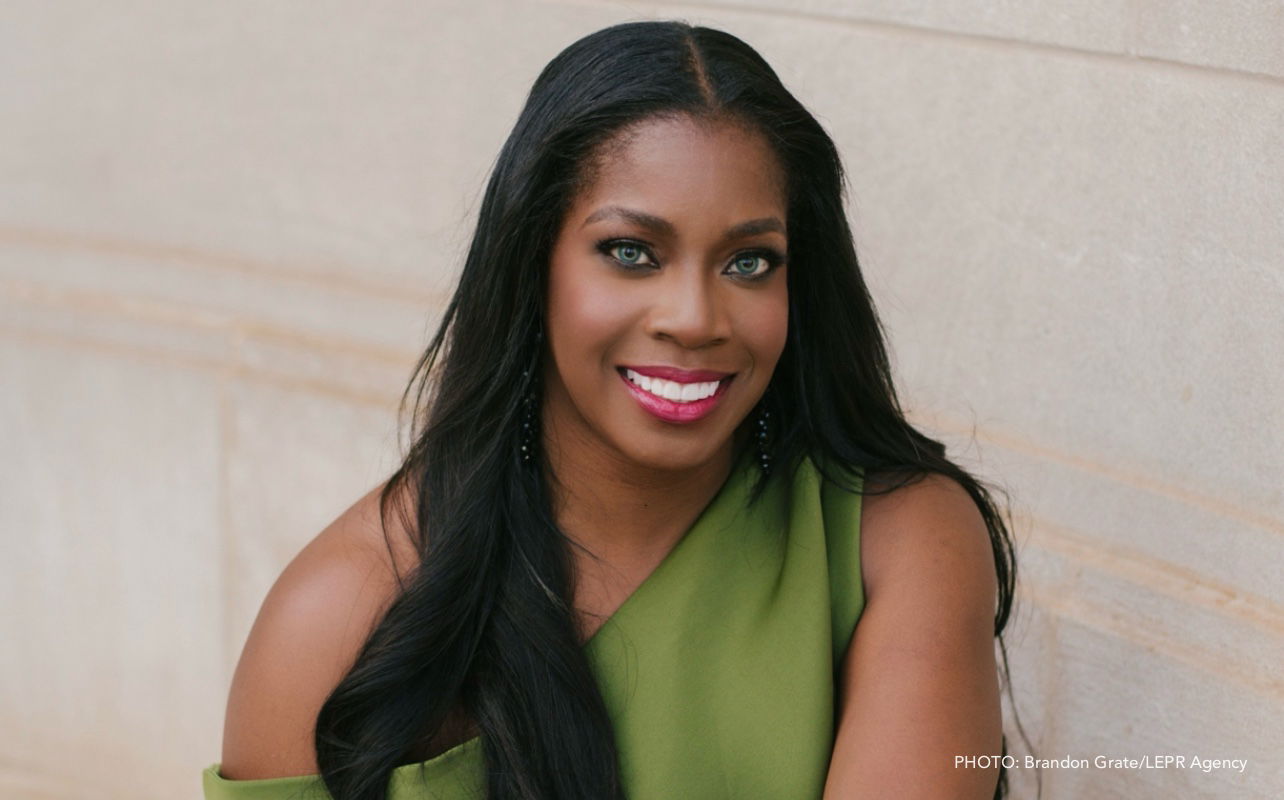
Dr. Shanté Williams Color, Opera Carolina
(Photo: Brandon Grate/LEPR Agency)

Dr. Shanté Williams Named First Woman Of Color To Lead Opera Carolina

Dr. Williams has served on Opera Carolina's board of directors and sponsored past productions for the company.


Opera Carolina has appointed Dr. Shanté Williams as its new general director, marking a significant milestone as she becomes the first woman and person of color to lead the Charlotte, North Carolina opera company since its establishment in 1948.

Dr. Williams, who has served on Opera Carolina’s board of directors, will assume her role on July 1, succeeding James Meena, according to Opera Wire. “I look forward to leading the business operations as Maestro Meena continues to serve as Artistic Director,” Williams said. “With a dynamic staff and passionate board, we will embrace and expand the company’s role as a leader in Charlotte’s artistic community and an agent for healing, inspiration, and joy.”

On behalf of the entire board of directors, Carol Kendrick, the Board Chair, shared her excitement about the appointment. “As a Charlotte native, she brings to the role a track record of success in fundraising and business, and we were collectively impressed by her extensive credentials and past support of Opera Carolina.” Dr. Williams’ appointment comes at a crucial time, as the company emerges from the challenges posed by the pandemic. Her leadership is expected to propel Opera Carolina to new heights of excellence while strengthening its position as a cornerstone of Charlotte’s artistic community.

The Charlotte businesswoman brings a wealth of experience to her new position. As the CEO of Black Pearl Vision and its parent company, Black Pearl Global Investments, she oversees a $25 million venture capital fund. Her Linkedin profile reflects an academic background that is equally impressive, with degrees from Winston-Salem State University, Queen’s University of Charlotte, and a doctorate in integrated biomedical science from The Ohio State University.

Her involvement with Opera Carolina extends beyond her board position. In 2023, Opera Carolina recognized Dr. Williams on Instagram for her contributions to Pre-Curtain Dinners and for serving as a main sponsor for the production of Mary Cardwell Dawson, featuring renowned opera star Denyce Graves.

RELATED CONTENT: New Orleans’ OperaCreole To Revive Forgotten Work Of 19th Century Black Composer

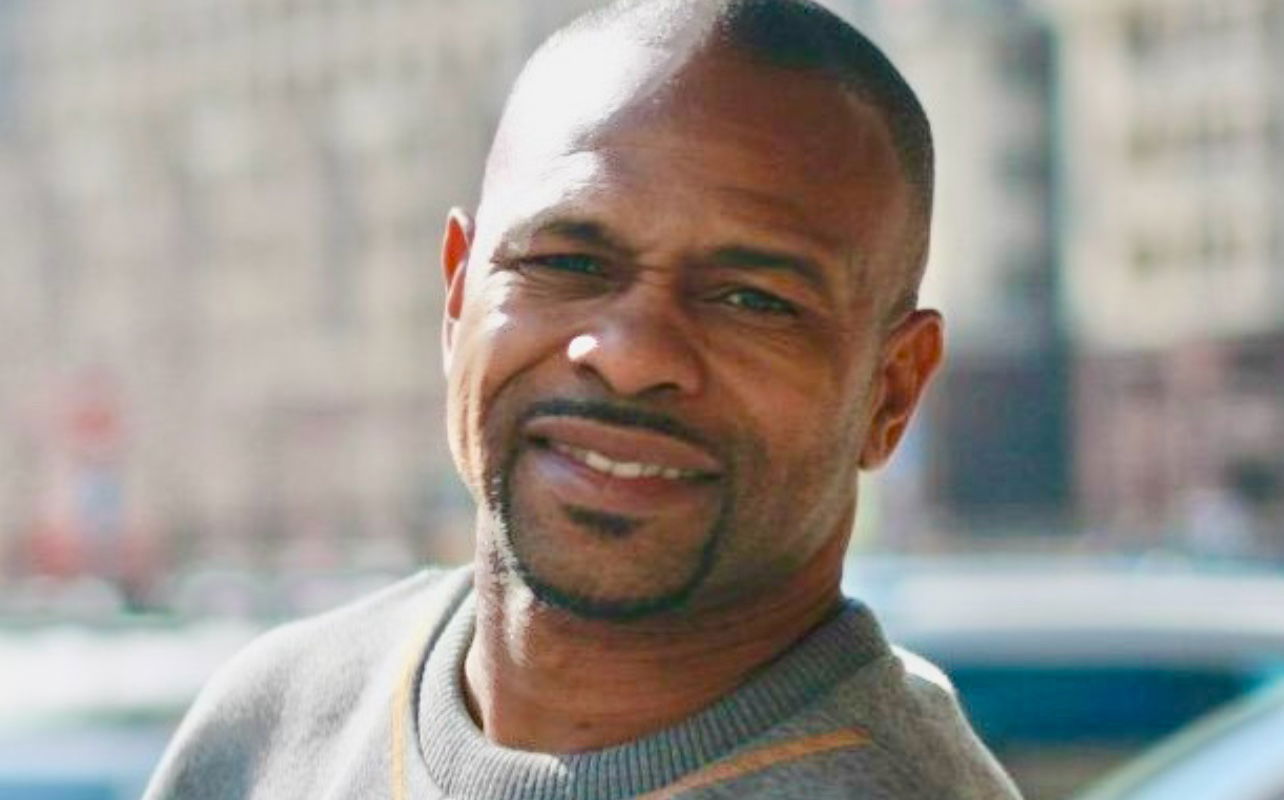
Roy Jones Jr., son, suicide
(Photo: Fedyanin Nikita, CC BY-SA 3.0 via Wikimedia Commons)

Roy Jones Jr.’s Son Unalive At Age 32

'Unfortunately, my son DeAndre took his life on Saturday. I'm so thankful that God allowed me to come home Friday night to spend the last night of his life with me and the family.'


Boxer Roy Jones Jr. announced the tragic news that his 32-year-old son DeAndre has died. He informed his social media followers that DeAndre took his own life on June 22.

Jones took to Instagram with the sad news on June 24.

“Unfortunately, my son DeAndre took his life on Saturday. I’m so thankful that God allowed me to come home Friday night to spend the last night of his life with me and the family. I know a lot of people are going through tough times right now, but nothing is worth taking your own life. God gives it and God should be the one to take it away.”

“Please respect our privacy while my family and I process this loss. Thank you for the love and support.”

DeAndre is survived by Jones, his mother Natlyn, and brothers DeShaun and Roy III.

According to the International Hall of Fame, Jones, who won four world boxing titles during his career took the belts in four different weight divisions and went pro in 1989. History was made when he became the first middleweight champion in 106 years to win the heavyweight title. He was also the second light heavyweight champion to win the heavyweight title when he defeated John Ruiz in 2003 for the WBA title in 2003.

He left the sport of boxing in 2018 and had won 66 bouts (47 by knockouts) while losing nine of them. He had his share of matches against highly respected boxers such as Bernard Hopkins, James Toney, and Antonio Tarver, to name a few.

Although he retired in 2018, he fought in a boxing exhibition against former heavyweight champion Mike Tyson in 2020. He recently went back into the boxing ring in April, losing to former UFC lightweight champion Anthony Pettis, by a majority decision, according to CBS Sports.

RELATED CONTENT: Mike Tyson-Jake Paul Boxing Match Rescheduled Following Tyson Medical Emergency

Black beaches, diaspora, beaches
(Image: Getty Images)

Combat Skyrocketing Travel Costs This Summer


Originally Published July 22, 2022.

Due to inflation, travel has joined the growing list of industries—including food, housing, and gasoline—that now cost Americans more than in previous years. There is concern that they might be ringing up large credit card bills.

Here are six ways travelers can save money and avoid debt.

Book as far in advance as possible

If you are considering public transportation by flight or train, book as far as possible. This approach may work well for you as it often allows the airline or rail company to help you get seats to your destination at a certain price, offering the potential to save money. This Air Fleet Rating provides details of air travelers.

Carpool instead of taking a plane

It is no secret that gas prices are costly. Another option to consider is traveling with a group by carpooling. Be mindful, too, that airline cancellations typically rise during the summer. Another potential benefit is that you won’t have to rent a car once you reach your site. Download apps like GasBuddy and AAA Gas Prices to help find less costly gas stations near you.

Use credit cards that offer perks

The Ascent reports some credit cards offer rewards for flights, hotel stays, meals, and more. See if your credit cards have travel rewards programs. If not, paying for a travel rewards credit card might be worth it. Some cards even offer perks that could bring savings, like free checked baggage.

Spot the best time to travel during summer 

Although many people like to travel during the peak of summer, postponing your trip can save you money. It’s been revealed that in the last two weeks of August, prices decline greatly. Part of the reason is that kids return to school nationwide, decreasing the number of families traveling.

Try to identify free tourist attractions

Why pay to sightsee if you can do it without spending money? For instance, personal finance company NerdWallet reports that there are many things you can do at Disney World at no cost. It reports travelers can find free walking tours in large cities but should be prepared to tip guides. In major cities, do some research to learn what attractions offer freebies.

Take your own food and snacks

Avoid buying expensive meals at the airport or your destination. It might not seem like a big deal, but the accumulated savings could be worth it.
Abortion, Teacher, New Hampshire
(Photo: Liudmila Chernetska/istock)

New Hampshire Teacher Fired After Allegedly Driving Student To Get Abortion

The teacher reportedly had been conversing with the student for over 2 weeks about the medical appointment.


A New Hampshire educator was terminated after reportedly assisting a student in obtaining an abortion without parental knowledge.

A New Hampshire Department of Education report indicates that the teacher had been advising the student about a medical appointment for weeks. On the day of the procedure, the educator called in sick, citing food poisoning, to transport the student to a clinic during school hours. The report confirmed that the educator’s claim of food poisoning was false. However, the teacher said the student had no support from anyone, “so they offered to go with them.”

Prior to their termination, the teacher was placed on paid administrative leave after administrators became aware.

The incident, which came to light through a state Department of Education investigation, has drawn criticism from some New Hampshire legislators, NH Journal reported.

State Rep. Erica Layon expressed her dismay, stating, “I am horrified to hear that a teacher in our New Hampshire schools felt the right way to help a pregnant student who felt unsupported in her pregnancy was to research abortion facilities and call out sick to take a student to an abortion rather than to help her speak with her parents and find support from her family.”

State Sen. Tim Lang emphasized the importance of transparency in schools, asserting, “Parents have the right to know everything that is happening to their child in school. Keeping secrets or going behind a parent’s back is never good public policy.” He further explained that such behavior sets a troubling precedent for youth, and when authority figures engage in deceitful behavior, it implicitly condones dishonesty, which can negatively shape future generations.

Melanie Israel from The Heritage Foundation noted that students typically require parental consent for off-campus activities. Planned Parenthood confirms that New Hampshire law mandates that for individuals under 18 seeking an abortion, a parent must be notified 48 hours before the procedure.

50 Cent, Rashad Bilal, Troy Millings, Earn Your Leisure, Invest Fest
(Photos from left: Paul Archuleta/FilmMagic; Inset: Paras Griffin/Getty Images)

50 Cent To Headline This Year’s Invest Fest

The financial conference returns to Atlanta in August.


Several months ago, the organizers of Invest Fest announced that it was returning to Atlanta’s Georgia World Congress Center August 23 to 25 for this year’s increasingly popular financial conference.

And in a June 26 social media post, they confirmed that 50 Cent will headline the fourth annual event, which will be co-sponsored by sponsored by Steve Harvey, Matthew Garland, and Michael MacDonald.

TMZ reported that 50 is taking over the role that his nemesis, the embattled hip-hop impresario Sean “Diddy” Combs, handled at last year’s conference.

The founders of Earn Your Leisure, who is putting on the conference, Troy Millings and Rashad Bilal, gave statements to TMZ. Millings told TMZ that 50 represents “the powerful blend of culture and business.”

“We believe [50’s] insights and experiences will inspire and empower our audience to pursue their own paths to financial freedom,” Bilal added.

The conference, which has been in Atlanta every year, is designed after the podcast Earn Your Leisure, which aims to empower the Black community when it comes to financial decisions. The conference last year brought approximately 50,000 attendees to the Georgia World Congress Center over three days.

Organizers anticipate this year’s conference will draw around 60,000 participants.

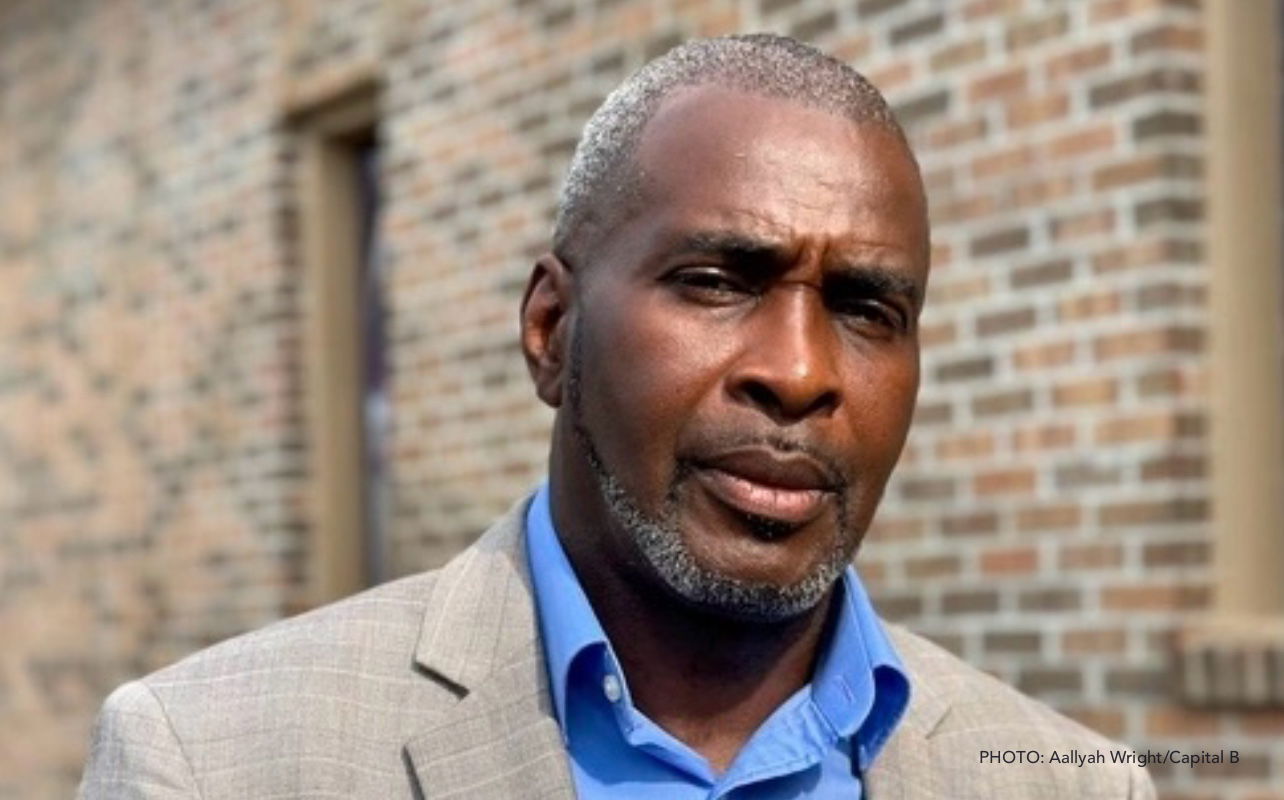
Patrick Braxton, Black Alabama Mayor
(Photo: Aallyah Wright/Capital B)

Black Alabama Mayor Will Finally Take Office After Settling Lawsuit Against Obstinate Town Council

'I’m pleased with the outcome and the community is pleased. I think they are more pleased that they can voice their opinion and vote.'


Last summer, a Black man who was rightfully elected mayor in a small town in Alabama sued the town’s council members, accusing them of conspiring to hold an illegal election to reappoint the previous mayor and keep him out of office.

After a proposed agreement between the town and the soon-to-be mayor, he will become the first Black mayor to hold the position in the small town.

According to The Associated Press, Patrick Braxton should be recognized as mayor of Newbern if a judge approves the terms of an agreement between Braxton and the town of Newbern. Paperwork filed on June 21 should allow the town’s first Black mayor to take the position and permit the seating of a new city council if U.S. District Judge Kristi K. DuBose gives the green light to the proposal.

“I’m pleased with the outcome, and the community is pleased. I think they are more pleased that they can voice their opinion and vote,” Braxton, 57, said.

Newbern, which has 133 residents, has a mayor-council government, but the town has not held elections for the past 60 years. Traditionally, the mayor would appoint his successor, while the successor appointed the council members. In a town that is overwhelmingly Black by a 2-1 margin, the mayor and council members were always white, according to the lawsuit filed by Braxton and others.

In 2020, Braxton decided to run for mayor of Newbern. Being the only person on the ballot, he was voted in and became the town’s mayor-elect. After winning the election, he appointed council members but was met with resistance from the previous mayor and council members.

In the lawsuit against Newbern, Braxton alleged that town officials “conspired to prevent the first Black mayor from exercising the duties and powers of his new job” and also prevented the town’s first majority-Black council from being seated.,The town officials changed the locks and refused to give Braxton access to town bank accounts. They also allegedly conspired to set up a special election and “fraudulently reappointed themselves as the town council.”

Under the proposed settlement, Braxton will take office as Newbern’s mayor and be granted town hall access. All “individuals holding themselves out as town officials will effectively resign and cease all responsibilities with respect to serving in any town position or maintaining any town property or accounts,” the agreement states.

Positions will be filled by appointment or through a special election. The town will hold municipal elections in 2025.

Voters, Trump, Biden, debate, presidential, Drug Test
(Photos from left: Getty Images, Joe Raedle/Getty Images, Yuri Gripas/Abaca/Bloomberg via Getty Images)

Trump and Former White House Administrators Attack Biden’s Mental Capacity By Calling For A Drug Test Before Debate 

This is getting weird....


Former President Donald Trump thinks the only reason President Joe Biden performs well in debates is by using performance-enhancement drugs — so he wants the President to take a drug test. 

Trump made the claims on his Truth Social site on June 24, just three days before the two battle it out for the first round of debates on June 27 in Atlanta. “Drug test for crooked Joe Biden??” Trump wrote in all caps. 

“I would also immediately agree to one.” 

https://twitter.com/iamgabesanchez/status/1805416251688468918

His idea came about after former White House physician Rep. Ronny Jackson (R-Tx.) said during an interview with Fox News that Biden should submit to a drug test — before and after the debate. 

“It’s really embarrassing as the former White House physician to have to do something like this, but we don’t have any choice based on what’s going on,” he said. “But I’m going to be demanding on behalf of many millions of concerned Americans right now that he submit to a drug test before and after this debate, specifically looking for performance-enhancement drugs.”

https://twitter.com/glamelegance/status/1805222929535250836

Jackson continued to suggest that Biden was “different” during the State of the Union Address (SOTU) in March 2024 and thinks he was “on something.” 

The Republican congressman even speculated that Biden is having drugs given to him while he visits Camp David — the presidential retreat — in late June as he prepares for the debate. “I feel like this is probably what’s going on over this week at Camp David,” Jackson said. 

“Part of that is probably experimenting with just getting the doses just right because they have to treat his cognition.”

The narrative has been pushed by Trump and his band of allies for months. On June 15, Trump went before a crowd in Detroit, suggesting that Biden didn’t know what the word “inflation” meant. He challenged Biden to take a cognitive test — one he was said to have “aced.” According to Forbes, Rep. Mariannette Miller-Meeks (R-Iowa) shared similar sentiments with Jackson during a Fox Business interview. She spoke on behalf of all GOP legislators, saying the party expects the president “will be on something” during the debate.

After the Biden administration caught wind of Jackson’s comments, the team brushed it off, and White House spokesperson Andrew Bates said Republicans are intimidated by the country’s leader. “It’s telling that Republican officials are unable to stop announcing how intimidated they remain by the President’s State of the Union performance,” Bates said.

During Biden’s annual physical in February, medical professionals revealed the President is “fit for duty” with no signs of concern. He also went through a neurologic exam, and while there were no signs of “any cerebellar or other central neurological disorder,” the President does suffer from peripheral neuropathy, which is nerve damage causing pain and sometimes numbness in his feet. 

×