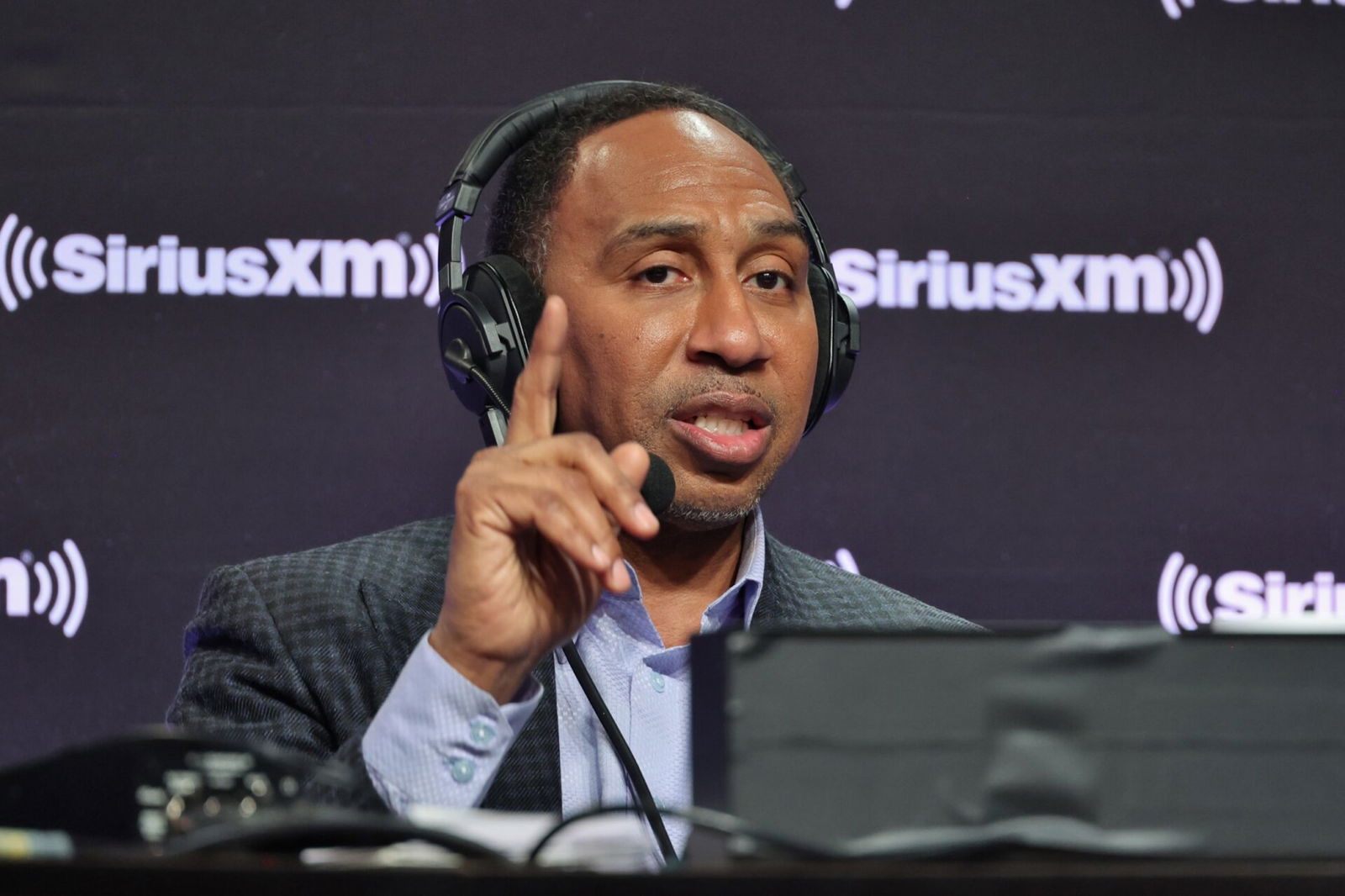
The ESPN personality and Winston-Salem State University alum is launching the HBCU Week Sports Scholarship Program, a new initiative designed to provide financial support to HBCU student-athletes, reports Clutch Points. Smith is partnering with the HBCU Week Foundation and Robert O. Wright, a 20-year-old Division I student-athlete who is contributing $25,000 to the scholarship fund, according to Yahoo Sports.
The announcement comes years after Smith began a relationship with HBCU Week back in 2019. He has participated in the organization’s programming and used his ESPN platform to spotlight HBCU campuses, including Tennessee State University, Florida A&M University, Norfolk State University, Howard University, Delaware State University and his alma mater, Winston-Salem State.
The scholarship initiative also comes as Smith explores a bigger opportunity in HBCU sports media. Back in August, Smith said he was working toward a deal to produce and distribute HBCU basketball games.
“I’m about to ink a deal where we’re broadcasting HBCU basketball games,” Smith said on his SiriusXM show. “I’m going to need some Black folks working for me as talent, as producers, and beyond. That’s what I’m doing!”
That business angle could make Smith’s latest HBCU push about more than philanthropy. Sports media has become an increasingly important commercial platform for colleges, athletes, and content creators, while HBCU programs continue looking for greater visibility and new revenue opportunities.
Smith’s own career offers a blueprint for the value of building a recognizable personal brand. His influence extends beyond ESPN’s First Take, where he has become one of the network’s most prominent personalities.
He has also been candid about the difference between his arrangement with ESPN and the business model used by fellow sports-media personality Pat McAfee. McAfee owns his platform and licenses it to ESPN, while ESPN owns First Take, Smith explained in a recent interview. “Pat McAfee has a level of independence I’ve never had,” Smith said.
Funeral expenses are climbing across the U.S., prompting more families to reconsider traditional burials.
Death may be inevitable, but the price tag attached to it is becoming harder for American families to ignore. A traditional funeral can cost thousands of dollars—and that’s before families factor in cemetery expenses, death certificates, flowers, and other services. As a result, the financial pressure is influencing how many Americans approach end-of-life arrangements.
According to NBC News, funeral and burial costs in the U.S. have climbed roughly 77% over the past two decades. Funeralocity reports that a full burial service costs the average American nearly $8,600, while the costs can reach over $20,000 based on location. Funeral costs also extend beyond the service itself. Cemetery plots, transportation, paperwork, and other third-party charges can add thousands of dollars to the final bill.
To offset the cost, more families are opting to cremate their loved ones. The National Funeral Directors Association (NFDA) projected that cremation accounted for 63.4% of U.S. dispositions in 2025, compared with 31.6% for burials. By 2045, cremation is projected to reach 82.3%. According to the NFDA, the median cost for a funeral with viewing and burial is $7,848, while a funeral with viewing and cremation has a median cost of $6,280. For families already navigating rising household expenses, the difference can be significant.
The rising cost of dying is creating both opportunities and challenges for businesses across the deathcare sector. The NFDA says roughly 75% of the nation’s 15,401 funeral homes are family- or privately owned. Together, funeral homes employ about 105,300 people and generate $16.3 billion in revenue, while crematories and cemeteries contribute another $4.274 billion.
Funeral directors are also adapting to consumers with tight budgets. Camelia Clarke, a funeral director at Paradise Memorial Funeral in Milwaukee, said that families facing financial hardship should talk directly with funeral providers to explore different options.
“Most funeral home operators that I’m aware of do an amazing job with everything that they can to ease the emotional and the financial burden on any family,” Clarke told Quartz. “There isn’t one funeral home that I know in my 30 years of existence that [has] ever turned anyone around that I know of because of genuine financial hardship.”
Meanwhile, the industry is investing in new ways to meet changing consumer expectations. The NFDA reports that nearly 36% of member firms already offer online cremation arrangements, with another 25% planning to add them within four years.
Ode Hotel, a 10-room guesthouse in Toronto’s Little Portugal neighborhood, has been recognized by Louis Vuitton’s City Guide.
Founded by the Herbert family, who are originally from Trinidad and Tobago, Ode has positioned itself as more than a place for travelers to sleep. The property, located at 1417 Dundas St. West, is designed as an extension of the surrounding neighborhood and a reflection of its owners’ heritage, reports Yahoo.
Ode’s business model is intentionally personal. There is no traditional lobby or front desk. Instead, guests interact directly with the owners, either in person or through text. That hands-on approach is reflected in the property’s design. Designer Alisha Sturino of Studio Otty created rooms with individual identities, while Toronto artist Yung Yemi contributed Afrofuturist murals.
The hotel also puts Black literary culture front and center. Each room replaces the traditional hotel Bible with a Toni Morrison novel. Furthermore, rather than adding an on-site restaurant, the Herberts encourage guests to spend their dollars in the surrounding community, from Portuguese bakeries to neighborhood restaurants.
The Louis Vuitton City Guide nod further places the property in front of travelers who seek design-driven accommodations with a strong sense of place. The model also demonstrates how a relatively small property can differentiate itself without competing with global hotel chains on room count or amenities.
Ode instead sells an experience built around identity, design, and neighborhood access. This shows that boutique hospitality is increasingly about more than thread counts and room service.
Actress Tichina Arnold, "Everybody hates Chris" and "Martin" signs an autogragh for a fan March 24 at the Yokota Community Center. Ms. Arnold visited base meeting Airmen at the Samurai Cafe and also visiting schools on base. (U.S. Air Force Photo by Airman 1st Class Eric Summers)Airman 1st Class Eric Summers, Public domain, via Wikimedia Commons
Tichina Arnold’s ‘Martin’ Salary Was Used To Pay Celebrity Guest Stars
The actress revealed that her contract sometimes kept her character, Pam, off “Martin” episodes when high-profile guest stars appeared.
Tichina Arnold is pulling back the curtain on one of the lesser-known realities behind the beloved 1990s sitcom Martin.
During a recent appearance on The Maverick Approach, Arnold said her contract didn’t guarantee an appearance in every episode and that her compensation was sometimes redirected to celebrity guest stars. As a result, Arnold, who played Pamela “Pam” James, said she appeared in only seven of every 13 episodes at the beginning.
Tichina Arnold Breaks Down Her TV Contract
“People don’t realize, I wasn’t in every episode. Anytime there was a guest, I wasn’t on it,” Arnold said. “My salary went to guest stars.”
The revelation offers a glimpse into how television production decisions can affect cast members when budgets have to accommodate high-profile talent. “Martin” routinely featured prominent entertainers, including The Notorious B.I.G., Little Richard, Outkast, Coolio, Halle Berry, Will Smith, Shaquille O’Neal, and Chris Rock. Arnold said the arrangement meant she sometimes did not know whether she would appear until the cast received scripts.
“I didn’t know whether or not I was in the next episode until we’re all in the trailer and they start handing out the scripts and if I didn’t get a script …” she recalled. “It was pretty humiliating.”
The 57-year-old actress also said she was featured in only part of the series during its earlier seasons, explaining that she appeared in all episodes during the final two seasons of the show’s five-season run.
Episode records provide additional context. Arnold is credited with the series, which ran from 1992 to 1997, but available episode listings show she did not appear in every installment. She did, however, appear alongside major guest stars in episodes including Season 3’s “All the Players Came” and Season 4’s “Where the Party At.”
The distinction between being credited for a series and appearing in each episode highlights an important aspect of television contracts: A recurring cast member’s overall deal does not necessarily mean guaranteed screen time in every installment.
The Experience Put Things Into Perspective For Arnold
Arnold ultimately contrasted her Martin experience with her later role on Everybody Hates Chris, where she was a lead performer.
“Everybody Hates Chris, I was a new mother. First time I was playing a mother. The first time I was No. 1 on the call sheet,” Arnold said.
For Arnold, that shift represented more than another acting credit. “It was the first time that I had a heavy load in a show that I really loved doing.”
Beyoncé’s Cécred Takes Its Haircare Empire Across The Pond With UK Launch
The global superstar's beauty brand is expanding internationally through an exclusive retail partnership with Space NK.
Beyoncé is taking Cécred international.
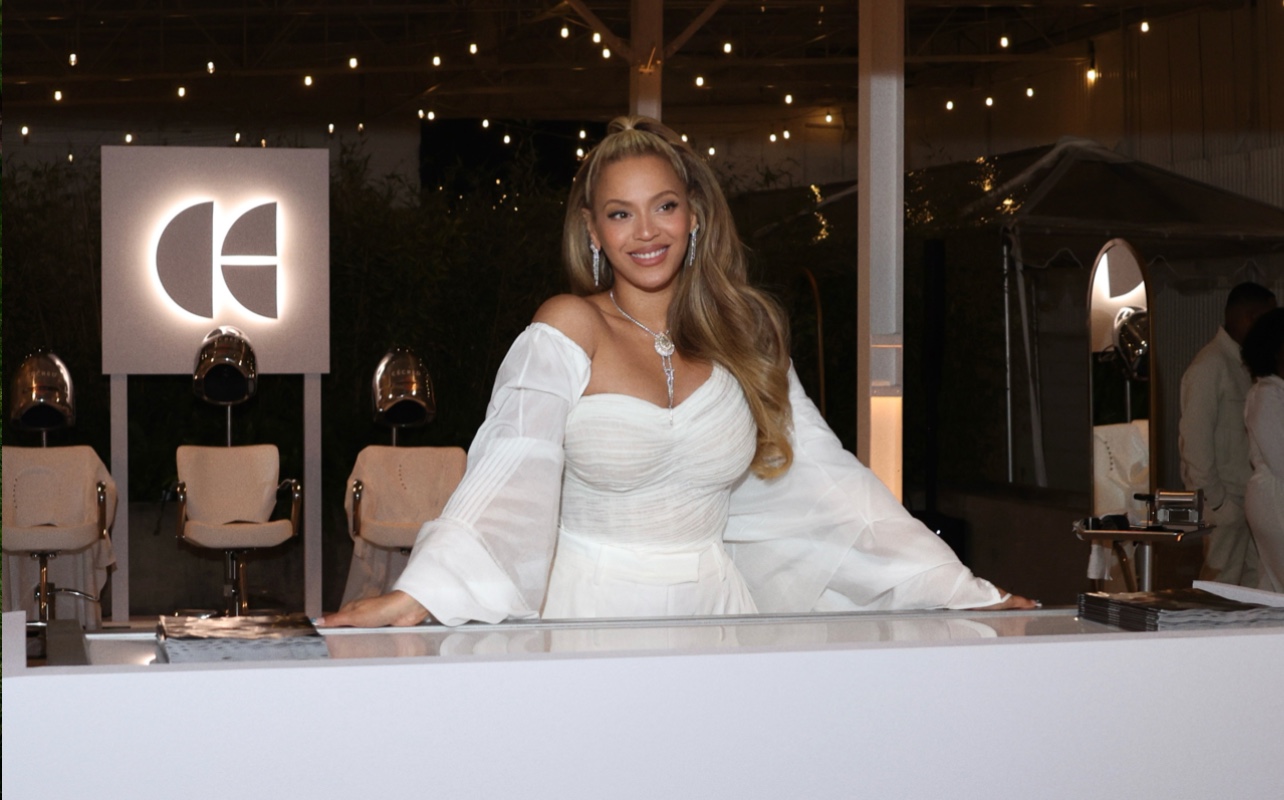
The Grammy Award-winning entertainer’s haircare brand is set to launch exclusively at British beauty retailer Space NK on Sept. 22, marking Cécred’s latest step in expanding its retail footprint beyond the U.S. The UK rollout will make Cécred products available through Space NK’s stores and website.
The brand made the announcement with an Instagram video showing its products making their way across the Atlantic.
“UK, get ready to make space!” Cécred wrote in the caption. “Cécred is exclusively launching at Space NK on 22 September – bringing transformative hair care for all.”
Cécred debuted in 2024 with an eight-piece Foundation Collection centered on what the company calls keratin recovery technology, designed to moisturize, strengthen, and enhance shine across hair types and textures. The brand later expanded into hair tools in 2025.
The company’s retail momentum has also accelerated in the U.S. In April 2025, Cécred entered more than 1,400 Ulta Beauty stores, becoming the retailer’s largest-ever haircare rollout at the time. The partnership also introduced Cécred services in Ulta salons, including treatments and stylist education.
That expansion followed the brand’s direct-to-consumer launch and illustrates a broader strategy to move from a celebrity-backed product line to a beauty company with significant brick-and-mortar distribution.
The UK launch also comes as Cécred continues investing in the professional beauty ecosystem. In May, Cécred and the BeyGOOD Foundation announced the third year of the Cécred x BeyGOOD Fund, committing $250,000 across the U.S. and UK to support hairstyling education and training.
With Space NK now joining Ulta Beauty as a major retail partner, Cécred is extending Beyoncé’s beauty-business playbook into another market — putting the brand’s products directly in front of a new customer base while continuing to build its retail and professional footprint.
Black Households See A 4.8% Jump In Income As U.S. Median Hits Record High
Black median household income reached $59,980 last year.
Median household income for Black Americans rose 4.8% in 2025 as overall U.S. household income reached a record high and the national poverty rate declined, according to new data from the U.S. Census Bureau, CNN reports.
Median household income increased 3% for white households and 2.9% for non-Hispanic white households. Changes for Asian and Hispanic households were not statistically significant.
Despite the larger percentage increase for Black households, the Census Bureau found that differences in the year-over-year percentage changes among racial and ethnic groups were not statistically significant.
The gains also come amid persistent racial income disparities. Black households’ median income of $59,980 remained well below the national median of $87,460. Asian households had the highest median income among the racial groups reported, at $126,300.
The official U.S. poverty rate fell 0.5 percentage points to 10.2% in 2025, leaving approximately 34.5 million people in poverty. The child poverty rate dropped to a record-low 13.4%.
A separate measure presented a different picture. The Supplemental Poverty Measure, which accounts for government benefits, taxes, and certain expenses, stood at 13.1% and was not statistically different from 2024.
Income growth was also uneven across the economic spectrum. Household income at the 90th percentile increased 1.7% between 2024 and 2025, while income at the 10th percentile did not change significantly. Income inequality, as measured by the Gini index, was also statistically unchanged.
The figures provide a snapshot of household finances during 2025, showing rising median income and declining official poverty alongside continuing disparities in how income is distributed across American households.
Your Credit Score Could Change How Much You Pay For A Home
New mortgage credit-scoring models could give more prospective homeowners a fuller picture of their financial history.
For years, prospective homeowners have been told to keep their credit score in mind. Now, that number is getting a makeover, and the changes could have major implications for people trying to buy a home.
The Federal Housing Finance Agency has approved newer credit-scoring models, including VantageScore 4.0 and FICO 10T, for use in the mortgage market. Unlike older scoring approaches, the newer models can incorporate a broader view of a consumer’s financial behavior, including eligible rental-payment history and trends in credit balances.
That shift matters because traditional credit scores do not always capture the full financial picture of consumers who pay their bills consistently but have limited or nontraditional credit histories.
For Black Americans and other consumers who have historically faced barriers to homeownership, evolving mortgage underwriting could be particularly significant. Pew Charitable Trusts reports that 37.5% of Black mortgage borrowers surveyed from 2013 to 2023 had credit scores between 600 and 699, compared with 19.5% of all mortgage borrowers.
Mortgage lending has also become increasingly concentrated among borrowers with higher credit scores. Pew found that lenders originated 1.08 million home-purchase mortgages in 2000 for borrowers with scores between 601 and 660. By 2024, that figure had fallen to 293,000.
The newer models are designed to capture more information instead of relying primarily on a snapshot of a borrower’s credit history.
That could benefit consumers whose financial habits are stronger than their traditional credit scores suggest. Experian says newer mortgage scoring models can incorporate positive rental-payment history and other eligible data. The company’s research found that 41% of consumers surveyed were already aware that mortgage lenders were transitioning toward models that incorporate rent and utility payments.
Still, a new scoring model does not mean every lender will immediately offer better terms to every borrower. Mortgage approval also depends on factors including income, debt, employment history, down payment, and the lender’s underwriting standards.
For prospective buyers, the change makes one thing especially important: knowing which credit model a lender uses.
As mortgage underwriting evolves, consumers may have more reason to shop lenders — not just for an interest rate, but for how their financial history is evaluated.
ASK YOUR Fairygodmentor®: The Truth About Executive Presence Nobody Explains At Work
Some define executive presence as “a blending of temperament, competencies, and skills
Dear Fairygodmentor®,
I’ve been told I need to ‘show more executive presence.’ What does that even mean?
–Totally Confused
Dear Totally Confused,
Great question! What is executive presence? Why do you need to show more of it? And why is it even important?
It’s a confusing term for a subjective workplace behavior.
Some define executive presence as “a blending of temperament, competencies, and skills that, when combined, send all the right signals. Leaders know they must embody executive presence to get ahead, influence others, and drive results. Leadership development professionals know they must help their executives develop it.”
I define it as the leadership IT factor. Think about some of the leaders you know who have great executive presence. Can you visualize them? Great! Now, it’s time to study them.
One of my late Fairygodmentors had amazing executive presence. She would walk into a room and make an impact while not saying a word. She was sharp, graceful under pressure, spoke only when she had something impactful to say, and was just …magical. The other thing that made her stand out was that she was real. Authentic.
And that’s what I’ve been doing for more than 20+ years: I strive to emulate her, but I do it by being myself– loud laugh, bald head, and bold attitude and all. I learned to do that by acting like I was an alien from another planet: observing how she spoke in meetings, requested work products, and provided feedback. It was a masterclass in executive presence.
The Center for Talent Innovation advised that executive presence is made up of three things: Communication(28%), Appearance (5%), and Gravitas (67%). Gravitas is how you speak, look, and act. It’s also the core internal trait of composure and decisiveness that anchors executive presence.
Emotional Intelligence plays a large part in gravitas, and we’ll discuss that next.
Some believe you’re born with it, and others believe it can be taught and strengthened. I’ve talked about the importance of EI as a leadership superpower that everyone can strengthen, but I want to get into more detail about how this plays a part in executive presence.
Solid self-awareness and self-management are key to checking yourself without wrecking yourself at work and beyond.
If you can, identify what emotions are bubbling up in the moment and ask yourself what you need to regulate and move forward with those emotions, you’ll know when, how, and where to express yourself appropriately.
One way to check your executive presence is to get a fix your face buddy. If you’re anything like me, people can see what I’m thinking before I even say a word. But I had a great co-worker who used to send me chats or text messages to remind me to fix my face.
Show Your Ask: Ask for feedback.
Ask whoever it was that said you needed to show more executive presence for specifics. What does it look like to them? What does it sound like? That data will help you determine whether it’s something you can work to improve upon or if it’s truly an excuse for something else they’re not being clear about.
Whatever you do, don’t fake it. The human brain can detect fake behaviors from a mile away. You want to keep it real and professional.
Is executive presence code-switching? My short answer is no. But I’m going to dive a little deeper so you understand where I’m coming from. EP isn’t about contorting yourself, shrinking your identity, or performing a version of professionalism that makes others comfortable. It’s about demonstrating the behaviors that build trust in professional settings through clear communication, preparation, sound judgment, confidence, and follow-through. Adapting how you communicate to meet the moment is leadership range; feeling pressured to erase who you are is assimilation.
You can be intentional and professional without losing authenticity.
How you show up, the energy you bring into the room, how you prepare for meetings/presentations, or how you carry a conversation all make up executive presence. Think about the people who possess it, then add your own personal seasoning so showing up at work — and for yourself —shines through in a way that’s 100% authentically you.
You got this!
Yours truly,
Your Fairygodmentor®
About Joyel Crawford:
(Photo: Kirten White Photography/BE)
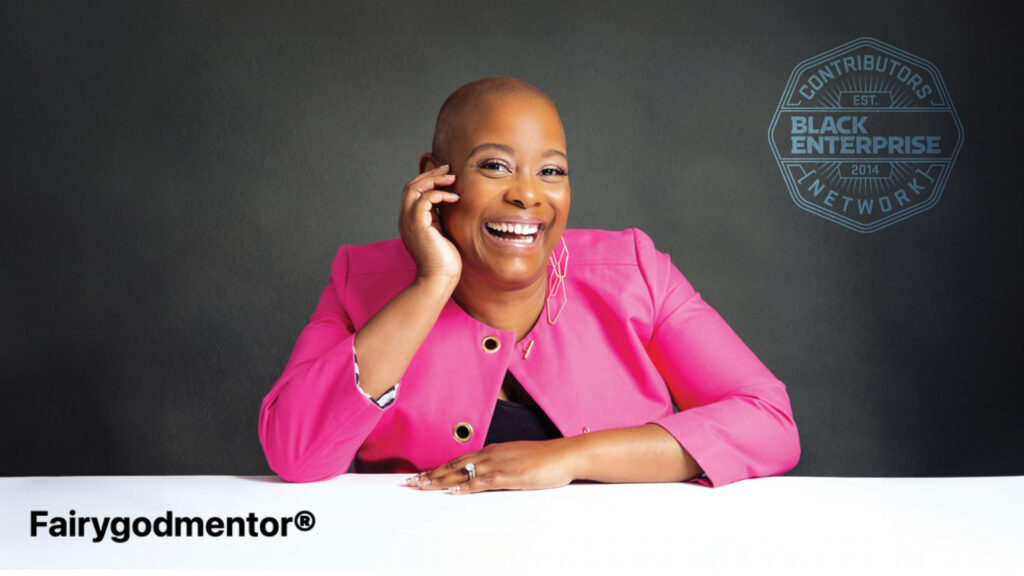
Joyel Crawford is an award-winning career and leadership development professional and founder of Crawford Leadership Strategies, a consultancy that empowers results-driven leaders through coaching, training, and facilitation. She’s the best-selling author of Show Your Ask: Using Your Voice to Advocate for Yourself and Your Career.
Have a question for Your Fairygodmentor®?
Submit your career and leadership questions, whether it’s about navigating a micromanager, setting boundaries, negotiating for a raise, or handling burnout. Ask Your Fairygodmentor® today!
Gen Z’s Cashless Habits Are Changing How They Spend
The shift is particularly pronounced among younger consumers.
Gen Z’s reliance on digital wallets is reshaping how young consumers pay for purchases—and changing how some view physical cash, Business Insider reports.
Adults 24 and younger make 45% of their purchases by phone, nearly double the 23% rate across all age groups, according to a 2025 Federal Reserve report. Cash, meanwhile, accounts for just 14% of purchases.
The shift is particularly pronounced among younger consumers who have grown accustomed to Apple Pay, mobile banking, and other digital payment platforms. The outlet reported that some Gen Z consumers increasingly view physical cash differently from money held in their bank accounts, making it easier to spend.
A Cash App survey found that 54% of Gen Z respondents said they were more likely to spend cash thoughtlessly. The finding runs counter to longstanding research suggesting consumers generally spend more when using credit cards instead of cash.
Digital wallets are also becoming more prevalent. About 4.4 billion people worldwide use digital wallets, a figure projected to increase 35% by 2030, according to Juniper Research.
A LendingTree survey found that 30% of Americans did not withdraw cash from an ATM in the previous month.
Gen Z consumers are also turning to other digital payment options. Young shoppers used buy-now, pay-later services more than credit cards during the 2024 holiday season, according to J.D. Power research. The financing option allows consumers to divide purchases into smaller installments instead of paying the full cost up front.
The continued move away from cash could have broader implications for how younger consumers manage their money.
Digital payments offer speed and convenience, but they can also make spending less tangible as transactions increasingly happen with a tap of a phone rather than an exchange of physical money.