Nearly 4 Million Records Of Enslaved People Are Now Searchable Online
The records include names, ages, physical descriptions and family relationships, as well as births, deaths, and transfers of ownership.
Nearly 4 million records documenting enslaved people across 20 former British colonies are now searchable online, providing descendants across the African and Caribbean diasporas with new access to names, family relationships, and other details that could help reconstruct ancestral histories disrupted by slavery, The Guardian reports.
The Former British Colonies Enslavement Registers contain about 300,000 pages documenting enslaved people from 1813 to 1840 in territories including Jamaica, Barbados, the Bahamas, Trinidad, Mauritius, and the Cape of Good Hope in present-day South Africa. Genealogy company Ancestry digitized and indexed the collection in partnership with University College London Center for the Study of the Legacies of British Slavery, according to the outlet.
The records include names, ages, physical descriptions, and family relationships, as well as births, deaths, and transfers of ownership. Some entries also indicate whether a person was born in Africa or the Caribbean, providing details that could help descendants establish connections between generations.
The British government created the registers after abolishing the transatlantic slave trade in 1807 as part of efforts to prevent the illegal trafficking of enslaved people and monitor enslaved populations. More than two centuries later, records originally created to document people held as property are being used to help descendants reconstruct their family histories.
Nicka Sewell-Smith, a professional genealogist and senior story producer at Ancestry, said the records take on a different purpose when used by descendants researching their ancestors.
“Our product is restoring the humanity of a person,” Sewell-Smith told the outlet.
Matthew J. Smith, director of UCL’s Center for the Study of the Legacies of British Slavery, described the registers as the most systematic collection of archival documents on enslavement across the British Caribbean and broader British colonial world. Researchers examining Jamaican records have already used the data to trace some families across six generations, the outlet reports.
UCL’s work extends beyond the newly searchable collection. Its Valuable Lives project is developing a publicly accessible database focused on Black lives under British slavery, using records from Jamaica to connect enslaved people with descendants and communities. The project is being conducted in partnership with The National Archives and Ancestry.
The newly searchable records could be particularly significant for people across the Caribbean and wider African diaspora whose efforts to trace their ancestry encounter gaps created by enslavement and colonial recordkeeping.
Can A College Sports Bill Hurt Black Athletes? Obama’s Brother-In-Law Says It Won’t
The National Association of Basketball Coaches executive says the Protect College Sports Act is about stability and athlete education.
The debate over who controls the future of college sports is heating up in Washington, with Black athletes, name-image-and-likeness rights, and billions of dollars in athletic revenue at the center of the conversation.
Craig Robinson, executive director of the National Association of Basketball Coaches and former first lady Michelle Obama’s brother, is pushing back against criticism that the Protect College Sports Act could disproportionately harm Black student-athletes, Fox News reports. The bipartisan legislation, sponsored by Republican Sen. Ted Cruz and Democratic Sen. Maria Cantwell, would establish federal rules governing areas including NIL compensation, transfers, eligibility, recruiting, and revenue sharing. The Senate advanced the legislation through procedural votes this month, including a 77-22 vote, according to the Senate Commerce Committee.
Robinson rejected the argument that the proposal would strip Black athletes of the agency they gained through the NIL era.
“Well, you know everybody is entitled to their interpretation of what’s going on,” Robinson told Fox News. “I would disagree with that.”
He argued that frequent transfers could make it harder for athletes to complete their degrees.
“If we don’t fix this system, the same student-athletes they’re talking about are not going to be college educated, because you cannot get educated by transferring to four or five different schools,” Robinson said.
That position puts Robinson at odds with NAACP President Derrick Johnson, who has argued that Black athletes have helped generate enormous economic value for college athletic programs while gaining greater leverage through NIL. In an August letter to Senate leaders, the NAACP said Black men make up about 66% of football rosters in the ACC, SEC, and Big 12, arguing that the legislation could provide additional protections to institutions and conferences without adequately addressing broader concerns about Black political and economic power.
The organization has called for the Senate to reject the legislation.
Supporters, meanwhile, describe the bill as an attempt to establish consistent national rules in an increasingly complicated college sports economy. The Senate Commerce Committee says the legislation would create federal protections for athletes’ NIL rights while establishing rules around transfers, eligibility, and recruiting.
The legislation also has backing from the current White House administration, which has formally supported S. 4668, with the Office of Management and Budget stating in August that the administration would recommend the president sign the bill if it reached his desk.
The Senate’s debate now centers on how much federal structure college sports needs—and whether those rules will expand or constrain the leverage athletes have gained in the NIL era.
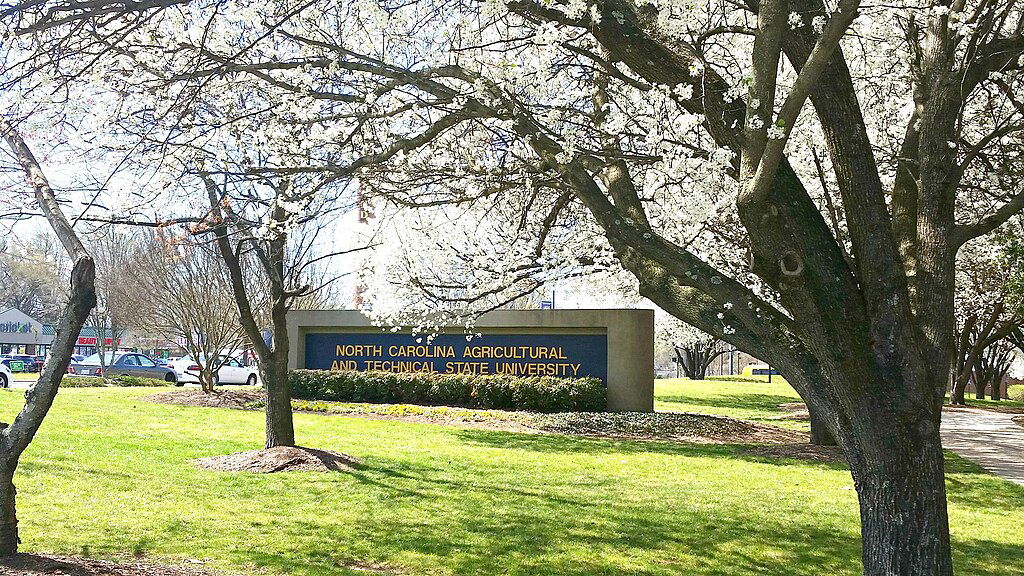
N.C. A&T Students Earn $15K Astronaut Scholarships
Victoria Little and Avery C. Love are among 79 students from 54 universities nationwide selected for the Astronaut Scholarship.
Two North Carolina A&T State University students have been named 2026 Astronaut Scholars, earning up to $15,000 each and national recognition for their research in science, technology, engineering, and mathematics, AfroTech reports.
Victoria Little and Avery C. Love are among 79 students from 54 universities nationwide selected for the Astronaut Scholarship. In addition to financial support, scholars gain access to mentorship, professional networking, and opportunities to present their research to leaders in STEM.
Little, a senior from Greensboro, North Carolina, is pursuing degrees in biology and psychology. Her research focuses on neuromodulatory signaling, combining experimental biology and data analysis to study neurological signaling and tumor behavior.
She also completed an internship at the University of Virginia School of Medicine, where she studied glioblastoma responses to immunotherapeutic agents and contributed to research examining tumor resistance.
Love, a senior chemistry major with a biology minor from Harrisburg, North Carolina, was selected as an Astronaut Scholar for the second consecutive year. His research uses liquid chromatography-mass spectrometry to examine the metabolic composition of organoids, work that could help researchers better understand brain metabolism and Alzheimer’s disease.
Love has also conducted research through programs at Yale University and the University of California, Santa Cruz. His work has explored areas including the biochemical composition of marine organisms and bacterial gene expression associated with disease.
Both students are members of N.C. A&T’s Honors College and Cheatham-White Scholars. The Cheatham-White Scholarship provides recipients with a fully funded undergraduate education, including tuition, fees, housing, meals, and textbooks.
“Avery and Victoria’s recognition as Astronaut Scholars reflects the strength of our academic programs, the dedication of our faculty mentors, and our shared mission to position N.C. A&T students are at the forefront of innovation and scientific leadership,” College of Science and Technology Dean Abdellah Ahmidouch said.
The Astronaut Scholarship Foundation supports high-achieving college students pursuing STEM careers while connecting scholars with astronauts, scientists, and other professionals in their fields.
Major TV Networks Unite To Fight Back Against Trump’s White House Press Ban
The White House’s decision to bar CNN, MS NOW, and Politico has triggered a legal fight over press access.
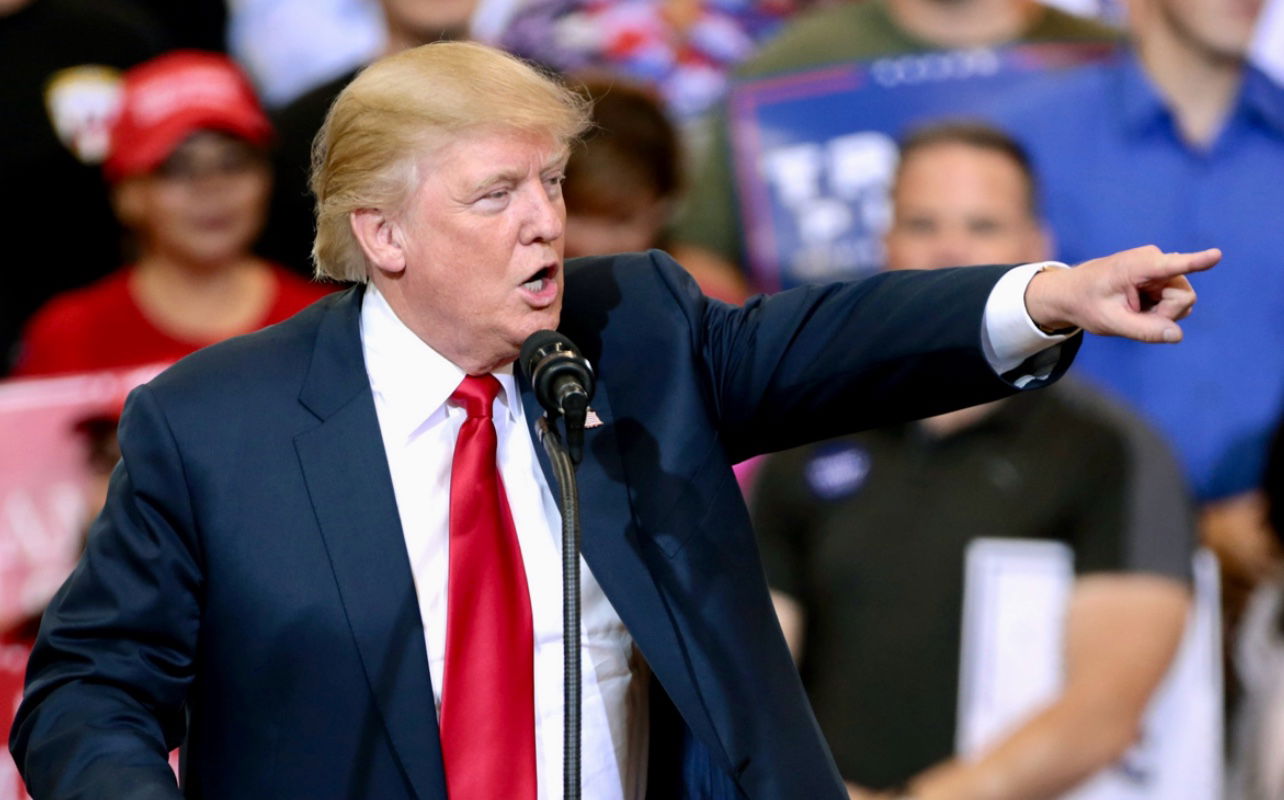
Major television networks are standing together to push back against President Donald Trump’s latest ban on news media.
The clash began Friday after the president banned CNN, Politico, and MS NOW from the White House. The move follows Trump’s continued efforts to restrict news coverage that he finds objectionable. In response, the entire presidential television press pool, which includes CNN, ABC, CBS, NBC, and Fox News, has suspended coverage of the president.
CNN had been scheduled to provide the press pool feed for Trump’s trip to New York ahead of the United Nations General Assembly. The other four networks declined to replace CNN, effectively removing the shared video feed broadcasters and other media organizations rely on for coverage of presidential events.
“Effective today, the TV pool will not be covering events designated as pool coverage of the President,” wrote the TV pool in an email, according to The Associated Press. “This follows the White House’s position preventing CNN from fulfilling its assigned pool duties. There will be no replacement pool put in place.”
Trump defended the restrictions, arguing that the targeted outlets publish what he calls “fake news.” Vice President JD Vance has similarly characterized the move as a decision not to provide what he described as “special access” to outlets that engage in propaganda, while saying the organizations can continue reporting from outside the White House.
The five networks also criticized Trump’s decision in a joint statement, saying, “The public has a vital interest in receiving accurate, independent information about its government. No administration should restrict a news organization because it objects to its reporting,” reports The New Republic.
In addition, CNN, MS NOW, and Politico have filed a lawsuit against the Trump administration, seeking to restore their access to the White House. The outlets said the government revoked their journalists’ credentials without notice or due process because of objections to their reporting. A hearing on their request for a temporary restraining order is scheduled for Wednesday.
“This is not a tantrum by three media outlets who are upset because they can’t get into the White House or the Oval Office,” CBS News Senior White House Correspondent Weijia Jiang said on Fox News. “This is a serious concern for the public, because an attack on one outlet is an attack on everyone, no matter where that outlet falls on the political spectrum.”
As the legal battle moves forward, the question is no longer simply which networks get inside the White House. It is also about who controls the pipeline through which Americans receive video of the president doing the nation’s business.
Mellody Hobson And George Lucas Open $1 Billion Lucas Museum
The Lucas Museum of Narrative Art, co-founded by George Lucas and his wife, Mellody Hobson, opens with a mission to expand art and visual storytelling.
Mellody Hobson is no stranger to big bets. Now, one of the nation’s most prominent business leaders is opening the doors to a $1 billion cultural institution designed to change how people see art.
The Lucas Museum of Narrative Art, co-founded by Hobson and her husband, distinguished filmmaker George Lucas, officially opened to the public on Sept. 22 in Los Angeles’ Exposition Park. The 300,000-square-foot museum includes more than 100,000 square feet of gallery space spread across more than 30 galleries.
The museum’s opening-night celebration drew an A-list crowd, including Oprah Winfrey, Queen Latifah, Samuel L. Jackson, Tyler Perry, Spike Lee, Michael B. Jordan, and Magic Johnson. Winfrey and Jackson later narrated a drone show featuring images from the museum’s collection before Will.i.am performed.
But the star power is only part of the story. For Hobson, the former chair of Starbucks, the museum represents years of work alongside Lucas to build an institution centered on visual storytelling — from illustration and comics to paintings, murals and film-related artwork. The couple’s vision also reflects a broader interest in expanding access to culture and education, including their effort to preserve the historic EBONY and JET archives and their $10 million donation to Spelman College to support arts education, according to TheGrio.
“We wanted a museum unlike any other — one that brings people from every walk of life through the same doors,” said Hobson, president and co-CEO of Ariel Investments, in a statement posted on the museum’s website. “That’s why this collection holds so many different kinds of stories: so that more people can walk in and, somewhere in these galleries, see themselves — and the world they know—reflected back. That kind of recognition is what we built this place to offer.”
Lucas, the founder of the Star Wars franchise, has described the institution as a challenge to traditional definitions of fine art. Its collection brings together works that might not traditionally share museum walls, including illustration, comics, photography, and cinematic art.
“The Lucas Museum of Narrative Art was created to honor humanity’s stories and the artists who illustrate them,” said Lucas. “The artists in this collection didn’t just create images; they connected our modern imaginations with our ancient emotions—with common beliefs creating community. Their work spans genres, media, and time. They deserve to be in a museum.”
Designed by architect Ma Yansong, the museum sits on a 13-acre campus that includes gardens, public gathering spaces, and more than 40,000 works. The institution says its mission is to explore how visual stories connect people across cultures and generations.
“I am deeply grateful to George Lucas and Mellody Hobson for giving me the opportunity to create a building that will faithfully serve the visitors and the art while being as light and free as a cloud, or a dream,” said Yansong. “Designed with emotional architecture spaces, so that it is fluid in every part, and merged like a natural feature of the landscape into Exposition Park, the building invites everyone to participate in a journey of discovery and become part of the story of the Lucas Museum of Narrative Art.”
Gen Z’s Iced Coffee Habit Could Stop Them From Getting Hired
A viral debate over iced coffee in interviews is highlighting a bigger workplace question: How much do old-school professionalism rules still matter?
Iced lattes and matchas may be a daily essential for Gen Zers, but some career experts warn that their habit could prohibit them from getting a job.
A viral workplace debate is putting the spotlight on whether showing up to an interview with an iced coffee looks relaxed and authentic or unprofessional. Corporate recruiter Caitlin DeClercq, who says she has 16 years of experience placing candidates at Fortune 500 companies, argued on TikTok that the beverage can make the job seeker seem like they’re not taking the interview seriously.
“When you show up with an iced coffee or an iced latte, it is perceived — from my opinion and a hiring standpoint — that this interview is just a stop on your list of errands for the day,” she said.
Her comments sparked a broader conversation among recruiters, hiring managers, and Gen Z professionals about workplace etiquette and whether seemingly minor behaviors can influence hiring decisions. One creator called bringing a cold drink into an interview “diabolical,” pointing to condensation on the cup, potential water rings, and the possibility of loud sipping as distractions.
But younger workers aren’t necessarily buying the argument. One Gen Z TikToker pushed back bluntly: “I don’t want to f–king work for you if you don’t want to hire me because I bring an iced coffee,” reports Yahoo.
That response gets to the heart of a generational shift in workplace culture. Younger professionals have increasingly questioned whether traditional standards of professionalism actually measure job performance or simply reward conformity to expectations established by previous generations. Still, in a competitive labor market, candidates may want to distinguish between challenging outdated workplace norms once they have leverage and navigating established expectations while trying to get their foot in the door.
LinkedIn News contributor Benjamin Chipman offered a practical middle ground. If candidates choose to bring a beverage, he recommended holding it in the left hand so the right remains available for a handshake, while avoiding noisy ice or finishing the drink during the interview.
Communications manager Adam Raider takes a stricter approach, saying, “I would NEVER bring an iced coffee… or a hot coffee… or tea, soda, juice, sangria… or any other beverage into a job interview.”
Franklin is among the Black men being honored at this year’s BLACK ENTERPRISE XCEL Summit
Kirk Franklin has spent more than three decades expanding the reach of gospel music, blending its traditional choir sound with elements of hip-hop, R&B, and pop while introducing the genre to new audiences. Franklin is among the Black men being honored at this year’s BLACK ENTERPRISE XCEL Summit happening Oct. 21-23 at The Hyatt Regency Grand Cypress in Orlando, Florida, for their achievements and impact across music, business, culture, and their communities.
The Fort Worth, Texas, native has worked with artists across genres, including Mary J. Blige, Kanye West, Chance the Rapper, Justin Bieber, and GloRilla. Franklin has won 20 Grammy Awards and earned 33 nominations over his career.
In January, the Recording Academy’s Black Music Collective honored Franklin with its Black Music Icon Award, recognizing his contributions to music and culture.
Beyond the awards and chart success, Franklin’s path includes an unconventional introduction to music, financial struggles, and personal discoveries that have shaped his work.
Here are five things you may not know about Kirk Franklin.
1. His aunt collected aluminum cans to pay for his piano lessons
Franklin’s musical education began at an early age. Raised by his great-great-aunt Gertrude Franklin after his mother abandoned him, Franklin began taking piano lessons at 4. Gertrude collected and sold aluminum cans to help pay for the lessons.
Franklin was offered a recording contract at seven, but his aunt declined the opportunity. By 11, he was directing an adult church choir, an experience that helped establish the foundation for his career as a choir director, songwriter, and producer.
2. He built his career without being a traditional lead singer
Despite becoming one of gospel music’s most prominent figures, Franklin built his career primarily as a songwriter, producer, musician, and choir director rather than a traditional lead vocalist.
His work with ensembles, including The Family and God’s Property, paired gospel choirs with contemporary R&B and hip-hop influences. “Kirk Franklin & The Family,” released in 1993, became a major commercial success and helped expand contemporary gospel’s audience.
3. He faced eviction before becoming a Grammy winner
Franklin’s eventual success followed years of financial hardship.
He has recalled being evicted from his home after being unable to afford rent about three years before receiving his first Grammy Award. Franklin won his first Grammy for “Whatcha Lookin’ 4,” which received the award for best contemporary soul gospel album in 1997.
His career would eventually produce multiple chart-topping projects and collaborations that extended his influence beyond gospel music.
4. He has publicly discussed his struggle with pornography
Franklin has also spoken openly about personal struggles that were rarely discussed publicly within Christian communities at the time.
In 2005, he appeared on “The Oprah Winfrey Show” and discussed his past struggle with pornography. Franklin said his decision to speak publicly about the issue was rooted in a desire to be transparent about his experiences and help others facing similar challenges.
That willingness to address personal subjects has extended to his music, which has explored faith alongside family trauma, relationships, abandonment, and personal accountability.
5. He learned the identity of his biological father at 53
Franklin spent much of his life without knowing the identity of his biological father.
That changed when Franklin was 53. DNA testing confirmed that a man living in the same area was his biological father, a discovery Franklin documented in the 2023 short film “Father’s Day: A Kirk Franklin Story.”
The discovery coincided with the release of Franklin’s 2023 album, “Father’s Day,” a project that explored themes of fatherhood, abandonment, forgiveness, and reconciliation.
More than 30 years after his recording debut, Franklin continues to occupy a distinctive place in gospel music. His career has combined commercial success with a willingness to address complicated conversations surrounding faith, family, and personal struggle.
‘Mississippi Goddamn’: Grand Jury Will Not Move Forward With Indictments In Nolan Wells’ Horn Island Death
The decision is disappointing.
A Jackson County grand jury has unanimously declined to issue criminal indictments in the tragic death of Nolan Wells, an 18-year-old resident of Ocean Springs who vanished during a Fourth of July boating excursion to Horn Island, state prosecutors announced Sept. 21.
Following a multiagency inquiry into the high-profile Mississippi Gulf Coast case, Jackson County District Attorney Angel Myers McIlrath confirmed that sworn grand jury proceedings concluded with a “no true bill.” The decision indicates that state law enforcement authorities and jurors found insufficient evidence to establish probable cause or criminal wrongdoing against anyone present during the holiday gathering. The ruling addresses months of public scrutiny, intense digital speculation, and widespread community calls for transparency regarding the circumstances surrounding the teenager’s demise on the barrier island, the Mississippi Free Press reported.
The public response to the decision is disappointment. One social media user took to Facebook to air his grievance shortly after the news made waves.
“Gotdamn Mississippi… There isn’t a place on earth where white supremacy is more historically and presently calcified, codified and protected by the culture it infests,” Alfred Conteh posted on Facebook. “Despite this, the fight to dismantle these systems WILL continue. #JusticeForNolanWells”
What Did the Grand Jury Investigation Reveal About Nolan Wells’ Death?
The exhaustive grand jury investigation evaluated extensive physical, forensic, and digital materials compiled by local and state law enforcement agencies. Investigators issued 132 subpoenas, reviewed a 261-page Snapchat conversation log, and extracted location data from mobile devices to reconstruct the timeline preceding Wells’ disappearance. Additionally, grand jurors heard sworn testimony from 43 witnesses, including the companions who accompanied Wells to Horn Island on July 4, before his body was recovered on the island two days later.
Medical experts from the Mississippi State Medical Examiner’s Office, alongside an independent forensic pathologist retained by the Wells family, evaluated the physical evidence, according to the Mississippi Free Press. Both pathology examinations concluded that the official cause and manner of death remain legally undetermined, though physical findings remained entirely consistent with accidental drowning. Forensic analysts specifically examined non-fatal blunt-force trauma on the back of Wells’ head. Witness testimony and corroborating accounts demonstrated that Wells had awkwardly slipped off a boat earlier that afternoon, showing no immediate signs of severe physical distress prior to his disappearance.
Was There Any Evidence of Criminal Wrongdoing or Racial Motivation?
District Attorney McIlrath emphasized that the grand jury investigation uncovered no evidence of criminal wrongdoing, foul play, or racially motivated acts connected to the incident. Social media platforms had previously generated intense speculation regarding potential racial bias among the individuals accompanying Wells, prompting state prosecutors and law enforcement officials to systematically analyze every piece of digital forensic evidence and witness statement to verify the factual record.
The grand jury investigation ultimately determined that no individual engaged in criminal conduct or deliberate harm. However, state officials noted that because Mississippi law has no statute of limitations on homicide offenses, prosecutors reserve the authority to re-examine the case should credible new evidence emerge. For now, the unanimous decision of the grand jury investigation brings a formal legal resolution to the Jackson County proceedings, confirming that the factual evidence gathered by law enforcement agencies does not support criminal charges in the death of Nolan Wells, WWL-TV reported.
Converse Apologizes For Triggering Ad With Resemblance To KKK And Lynching
The global sneaker brand apologized and removed the campaign ad following a storm of backlash.
Converse is facing a firestorm of backlash over an advertisement for its Chuck 70 X sneakers that critics said evoked imagery of the Ku Klux Klan and lynching.
The Nike-owned footwear company apologized for the image, which featured K-pop star Karina wearing a long white skirt while holding black Converse sneakers, with lighting creating a triangular shape that some viewers compared to a KKK hood. Others said the placement of the shoes resembled the dangling feet of a lynching victim.
“We’re sorry,” read the statement, according to CNN. “We understand why this image is deeply upsetting and recognize that we got this wrong. We removed it from our channels and are working to remove it everywhere it appeared. This should not have happened and we will do better.”
“These people are playing in our faces,” Lemon said in an Instagram video posted on Sunday. “We need to stop demonizing diversity, equity, and inclusion,” he continued. “Take diversity seriously, and maybe you wouldn’t end up with something that looks like a damn KKK lynching.”
Likewise, comedian Tony Baker said the imagery was jarring, especially in light of the recent wave of Black people susicipously found hanging on trees around the country.
“The Klan could use this on their flyers,” he said in an Instagram video. “We not fallen for the okie doke. You know what the hell that looks like,” he continued. “How did you let this slip through the cracks if you’re approving the ads?”
On CNN, commentator Jahmal Lee questioned how the image made it through the company’s internal review process.
“We know that these things go through a significant vetting process.”
Lee added that the controversy represented a preventable risk, saying, “This is a landmine that could have been avoided,” reports CNN.
The ad has also prompted broader questions about who is included in advertising review processes and whether brands are adequately considering historical and cultural context before campaigns go live.
Converse has not publicly detailed how the ad was approved or what changes it plans to make to its review process. Karina and her management company also have not publicly commented.
Nevertheless, the controversy is a reminder that representation in advertising is not simply about who appears in front of the camera. It also involves understanding how imagery, symbolism, and history can shape how a campaign is received.
A Safe Space to Heal: The Black Women’s Sanctuary Rooted in Plant Medicine
At the Sanctuary for Black Women, these simple practices are woven throughout the retreat’s integration sessions.
Good Hope Estate & Plant Medicine Retreats
Nestled in Jamaica’s lush Trelawny Parish sits Good Hope Estate, a historic 2,000-acre former sugar plantation transformed into an emancipated workers’ village that now welcomes seekers from around the world for transformational plant medicine retreats.
While Beckley Retreats hosts several psilocybin retreats at Good Hope Estate throughout the year—one of two global locations alongside its forest sanctuary in the Netherlands—the Sanctuary for Black Women is an annual experience created exclusively for Black women. This year’s five-day retreat, though not intentionally timed, fell around Juneteenth, concluding on June 19 after five transformative days of healing, self-discovery, meaningful connection, and sisterhood rooted in nature.
Addressing Mental Health & Societal Pressures Faced by Black Women
The gathering came as Black women nationwide navigate workplace inequities, job losses, DEI rollbacks, caregiving responsibilities, and the weight of generational trauma. For many, those pressures exist alongside deeply personal struggles, including grief, the journey of motherhood, relationship challenges, family dynamics, friendship losses, and career aspirations.
At a time when so many are carrying heavier emotional, financial, and societal burdens, spaces like the Sanctuary for Black Women offer something often in short supply: room to heal. Those realities naturally surfaced throughout our retreat, as women shared stories of job loss, unequal pay, limited opportunities for advancement, and the all-too-familiar sting of workplace microaggressions. Couple the workplace traumas with deeply personal struggles, from grieving the loss of loved ones and navigating marriage, motherhood, and family dynamics to coping with betrayals that ended long-standing friendships and deep desires for career growth. While every woman’s story was unique, they all shared a common desire: a safe space to be seen, heard, and begin healing.
Designed as an intentional space for Black women, the Sanctuary for Black Women addresses the unique mental health challenges and traumas they face while celebrating joy, self-determination, and the power to reclaim healing and liberation. Hanifa Nayo Washington, a Beckley Retreats lead facilitator with more than two decades of experience advocating for plant medicine and expanding access to its healing potential, created the program. Drawing from her Afro-Indigenous matriarchal lineage of healers, Washington blends plant medicine, music, and ancestral wisdom to guide transformative healing experiences. She designed the Sanctuary specifically for Black women, honoring their lived experiences and emotional, spiritual, and communal needs.
Expert Facilitators & Somatic Practitioners
Dr. Dingle Spence
Each facilitator is a Black woman bringing distinct credentials, experience, and ancestral wisdom to create a powerful, soul-stirring plant medicine experience. Dingle Spence is a Beckley lead facilitator and also heads Hope Institute Hospital in Kingston. A Jamaican physician trained in oncology and palliative medicine, Spence has also studied healing traditions including Traditional Chinese Medicine, Reiki, and Shamanic Energy Medicine. Her guided meditations, sacred ceremony openings and closings, and intention-setting integration activities extend the retreat’s impact beyond its five-day journey.
Mandi Bent
Then there’s Mandi Bent, a Jamaican-born registered holistic counselor and Tantra coach whose expertise in female sexual wellness, relationship healing, and emotional restoration adds another layer to the experience. From early morning qigong and therapeutic body-shaking exercises, playfully dubbed “happy boobies,” to her guidance as a certified meditation teacher and Reiki master, Bent brings a nurturing energy that meets each woman where she is in her healing journey.
Debbie-Ann Chambers
Jamaican-born counseling psychologist Debbie-Ann Chambers brings warmth and wisdom through poetry therapy, journaling, somatic practices, and dance. Grounded in liberation and decolonial psychologies, she guides women through grief and trauma while fostering deeper connections to their bodies and inner selves. Through reflective exercises and rhythmic drumming rooted in Afro-Indigenous traditions, Chambers creates space for healing, joy, and restoration.
Renique Harriot & Musical Support
Rounding out the team is Renique Harriot, a Jamaican Yin yoga teacher with nearly a decade of experience, years of personal work with psilocybin, and experience as a ceremony sitter. I affectionately called her “Renny Girl” throughout my stay, thanks to her calming, sisterly presence. From thoughtfully cleansing participants with sage to offering steady ceremony support, Harriot brought a sense of comfort to every gathering. Her gentle yoga sessions helped release postpartum tension I didn’t realize I was carrying, while her soulful rendition of Bob Marley’s “Redemption Song” during the final ceremony felt like a tribute to our spirits and ancestors.
The only man present during ceremonies is Jeremy, a musician whose carefully curated soundscapes deepen each plant medicine journey through grounding, emotional support, and music. The retreat closes with an affirmation-setting bonfire, where vocalist and guitarist Elizabeth Goffe leads Jamaican folk songs honoring the island’s history and ancestral traditions. It’s a fitting close to five transformative days, leaving participants with a renewed connection to themselves, one another, and those who came before them.
Reclaiming Historic Land at Good Hope’s Great House
Upon arriving at Good Hope’s Great House, guests are welcomed by Dorothy with a cool rag, a refreshing drink, and a warm “Welcome Home.” Despite the property’s painful history, the land feels alive with ancestral pride, joy, and grief. Original furnishings, artwork, and wood floors preserve its layered past, while lush gardens, swaying palms, tropical blooms, singing birds, and playful toads create a peaceful backdrop that invites you to slow down and reconnect with nature’s rhythm.
Given its history, it’s understandable to question how healing can take place on former plantation land, particularly for Black women. Yet by the retreat’s end, the answer feels clearer: perhaps our ancestors transformed a place marked by pain into one capable of holding healing, joy, and connection. What was once a site of forced labor now features boutique villas, cottages, art studios, horse stables, locally sourced cuisine, and restorative experiences designed to nourish body and mind.
The Psilocybin Ceremony & Integration Process
The ceremony itself is deeply intimate, with cozy cots arranged in a circle beneath an outdoor tent surrounding an altar adorned with meaningful objects collected around the Great House. Eye masks encourage participants to turn inward, while the Jamaican countryside remains steps away for those drawn to nature. Between moments of introspection, we wandered the grounds, journaled, wrote letters, stretched out on swings, and took in the beauty around us.
I found myself connecting with the land in unexpected ways—even on walks to the bathroom, when the historic home’s artwork, wooden floors, and intricate details seemed to speak to me differently. While each woman experienced her own journey, watching my ceremony sisters surrender to theirs was just as moving. Some gazed quietly across the landscape, others wrote, explored nature, or opened up to facilitators who held their stories with compassion. It was a beautiful reminder that no two journeys look alike, yet each creates space for reflection, release, and connection.
The experience extends far beyond words. Each ceremony begins with an intentional call to the spiritual guides supporting us, followed by mushroom tea and a moment to set an intention or offer gratitude. Before her second journey, one retreat sister whispered to her cup, “Whatever happens, let’s just have fun”—a simple intention that stayed with me as I watched her burst into laughter throughout the ceremony.
After each ceremony, we had time to rest, eat, reflect, or sit in silence before next-day integration sessions helped us process our experiences. Beckley’s support begins two weeks before the retreat and continues for four weeks afterward through virtual sessions featuring facilitator-guided meditation, reflection, and connection, reinforcing its commitment to participants’ emotional, physical, and psychological well-being.
The Science & Therapeutic Benefits of Psilocybin
Despite its stigma, psilocybin is gaining attention for its potential therapeutic benefits. Clinical research suggests that psilocybin, the active compound in “magic mushrooms,” may help reduce symptoms of treatment-resistant depression, cancer-related anxiety, and certain substance use disorders when administered alongside psychological support. While research is still evolving, the findings point to its growing potential as a tool for mental and emotional healing. The growing availability of psilocybin retreats worldwide, at a range of price points, is helping make healing more accessible while reconnecting seekers with ancestral practices rooted in spiritual and holistic healing.
Holistic Healing & Community Integration
What draws many people to psychedelics and plant medicine is the desire to step outside the pressures of everyday life and reconnect with themselves. Yet the very tools that help us release—deep breathing, music, dancing, journaling, creativity, and time in nature—are often right in front of us, even if stress makes them difficult to access.
At the Sanctuary for Black Women, these simple practices are woven throughout the retreat’s integration sessions. The experience culminates in a “love tunnel,” where each woman walks through a circle of Black women whispering affirmations and words of encouragement in her ear. By the end, tears of joy flow as the room celebrates her healing. It’s a powerful reminder that while every journey is personal, none of us truly heals alone.
At a time when we could all use a little healing, why not find it on ancestral land in a proudly Black country, surrounded by women and a space created with you in mind?