MIT Calls For Higher Ed Redesign As AI Reshapes Learning
The committee was commissioned in January to examine how students and instructors use AI.
The Massachusetts Institute of Technology (MIT) is calling for universities to rethink how they teach, assess students, and structure campus life as generative artificial intelligence becomes increasingly embedded in higher education, Gov Tech reports.
A new report from MIT’s Ad Hoc Committee on AI Use in Teaching, Learning, and Research Training recommends that colleges adopt “AI-aware” approaches to education rather than attempting to keep the technology out of classrooms. The committee said institutions should reconsider learning goals, assessment practices, and the role of in-person experiences as AI changes how students approach academic work.
“This report is a call to action,” the committee wrote.
The committee, which includes undergraduate and graduate students, faculty, and staff, was commissioned in January to examine how students and instructors use AI. Its report found AI use is widespread across MIT, although opinions about the technology vary among students and faculty.
Among the committee’s concerns is “cognitive surrender,” which occurs when students turn to AI at the first sign of difficulty rather than working through challenging material. Heavy chatbot use can create an illusion of learning, the report says.
The committee also recommended moving beyond attempts to “AI-proof” assignments and instead reconsidering what students should know and how educators determine whether they have mastered the material.
“Rather than simply ‘AI-proof’ current methods of assessment, instructors need to revisit what they really want students to know and devise assessments that foster, or even include, the kind of productive struggle that builds durable understanding and mastery,” the report said.
Experiential and social learning could become increasingly important under that approach. The committee also called for strengthening face-to-face interaction, including scheduled technology-free periods and programs designed to encourage students to engage with their peers.
Clear AI policies are another priority. The committee recommended that faculty disclose how they use AI and called for broader institutional frameworks, including department-level AI leaders and an ongoing committee focused on AI and education.
“This is not an optional exercise,” the report said. “We must demonstrate how to integrate AI thoughtfully and deliberately into the classroom, the research enterprise, and the experience of residential education in ways that ensure learning, advance discovery, and prepare students for the future.”
Shaq Brand and the younger O’Neal previewed the collection during New York Fashion Week, according to the outlet. The launch comes as Shaquille O’Neal gives his son a larger role in the brand, with plans to expand its footwear offerings beyond traditional performance basketball sneakers.
The collection is Shareef O’Neal’s first major project since taking on a creative director role with Shaq Brand, according to House of Heat.
Among the designs is an unnamed lifestyle sneaker featuring a cupsole, thick laces, and a removable zippered shroud. The shoe also incorporates a redesigned version of Shaq Brand’s signature Dunkman logo.
Other footwear previewed includes updated versions of the Devastator and 4XT and a lightweight, running-inspired model featuring perforated side panels and a molded sole. The additions build on Shaq Brand’s existing footwear lineup, which includes updated versions of the Dunkman 1.0, Reign, and Devastator.
Shareef O’Neal also incorporated elements of his personal story and his father’s basketball career into the collection. A zipper featured on the upper of some designs was inspired by the scar from the open-heart surgery he underwent in 2018. The collection also features an open-heart “R” logo.
Four snaps incorporated into select designs carry a dual meaning, representing the four chambers of the human heart and Shaquille O’Neal’s four NBA championships, according to the outlet.
The collection aims to broaden Shaq Brand’s identity as Shareef O’Neal assumes a larger creative role and introduces lifestyle footwear alongside the company’s basketball-focused products.
Official release dates and pricing for the Shareef by Shaq collection have not been announced.
Denzel Ward And A Rising Tide Of Athlete Ownership
Browns cornerback Denzel Ward has invested in the Cleveland Guardians.
For many years, professional sports depended on Black athletes for their skills and cultural impact, while mostly white ownership groups enjoyed steady economic benefits. Record-breaking contract guarantees are now causing a change in corporate ownership. On Sept. 9, Denzel Ward’s purchase of a minority interest in Major League Baseball’s Cleveland Guardians was more than a local investment; it reflects a broader trend of Black athletes using their high incomes to gain long-term equity in professional sports teams.
A Hometown Investment with Capital Impact
Ward, 29, a five-time Pro Bowl cornerback from Macedonia, Ohio, built the financial foundation for ownership through consecutive record contracts with the Cleveland Browns. After signing a $100.5 million extension in 2022 and a two-year, $62.2 million extension, his career NFL earnings surpassed $100 million, according to Spotrac. Instead of investing only in traditional assets, Ward bought a minority stake in the Guardians, as the Browns formally announced.
“Cleveland is my hometown,” Ward said in an official statement reporting the transaction. “I’m so blessed to be able to show up for this city on the field and now as a part of the Guardians organization. I couldn’t be more grateful to the Dolan family and David Blitzer for the opportunity to continue to pour into this community and give back to the best fans in the world.”
Guardians Chairman Paul Dolan and Vice Chairman David Blitzer welcomed Ward as a long-term commercial partner, pointing to his standing in Northeast Ohio. “Denzel Ward is a hometown hero on the field and off it,” Dolan and Blitzer said in a joint statement. “His excellence, character, and commitment to this community make him a perfect fit for our organization.”
Ward’s entry into MLB reflects a wider trend in sports business. BLACK ENTERPRISE previously reported that NBA superstar LeBron James is expanding his corporate presence through an ownership stake in Fenway Sports Group, which includes equity in the Boston Red Sox, Liverpool FC, and the Pittsburgh Penguins. In football, Venus and Serena Williams, along with Earvin “Magic” Johnson, have increased Black representation in NFL ownership through minority stakes in the Miami Dolphins and Washington Commanders. Basketball Hall of Famers Grant Hill and Chris Webber have also secured minority ownership in Detroit’s WNBA expansion franchise.
Transforming Community
Ward’s investment in the Guardians complements his civic leadership in Northeast Ohio, where his Make Them Know Your Name Foundation works to prevent sudden cardiac arrest fatalities. Beyond community efforts, minority equity positions give Black athletes a voice in executive decisions on governance, hiring, supplier diversity, and stadium development. As more Black athletes turn athletic success into lasting team equity, transactions like Ward’s offer a strategic model for the modern Black executive ecosystem.
Photo by <a href="https://unsplash.com/@chamo_007?utm_content=creditCopyText&utm_medium=referral&utm_source=unsplash">Allan Vega</a> on <a href="https://unsplash.com/photos/a-close-up-of-a-piece-of-paper-with-a-notice-of-eviction-on-it-idy16o-UasE?utm_content=creditCopyText&utm_medium=referral&utm_source=unsplash">Unsplash</a>
The program comes as metro Atlanta is on pace for another staggering year of eviction filings, with Black renters disproportionately at risk as high housing costs continue to strain household finances, Capital B Atlanta reports.
More than 142,000 eviction cases were filed across the five-county metro Atlanta region as of Aug. 1, according to Princeton University’s Eviction Lab data. The total exceeds filings in New York City, Virginia, and Pennsylvania. Metro Atlanta led the nation in eviction filings in 2025.
Black households have shouldered much of the burden. Black residents account for about 52% of renters in the region but nearly 70% of eviction cases. Peter Hepburn, an Eviction Lab collaborator and associate professor of sociology at Rutgers University, said Black renters face four to five times the eviction risk of white renters.
The disparity extends across income levels. Hepburn said Black households earning more than $80,000 annually face a greater eviction risk than white households earning $20,000. He cited factors including discrimination, limited savings, and fewer financial support networks.
High rents and stagnant incomes have contributed to the crisis, but researchers also point to Georgia’s eviction laws. Landlords must wait only three business days to file an eviction for unpaid rent. Filing can cost as little as $50 to $75 in metro Atlanta, compared with a national average of more than $110.
Within Atlanta, about 31,000 people are facing eviction, according to Courtney English, chief of staff for Mayor Andre Dickens.
“It’s totally unacceptable and absolutely solvable,” English said during a Sept. 10 meeting with housing researchers and local leaders.
This crisis comes as Atlanta’s homeless population has increased for four consecutive years. Local officials, researchers, and nonprofit leaders are examining strategies to prevent displacement, while advocates are calling on Georgia lawmakers to strengthen protections for renters.
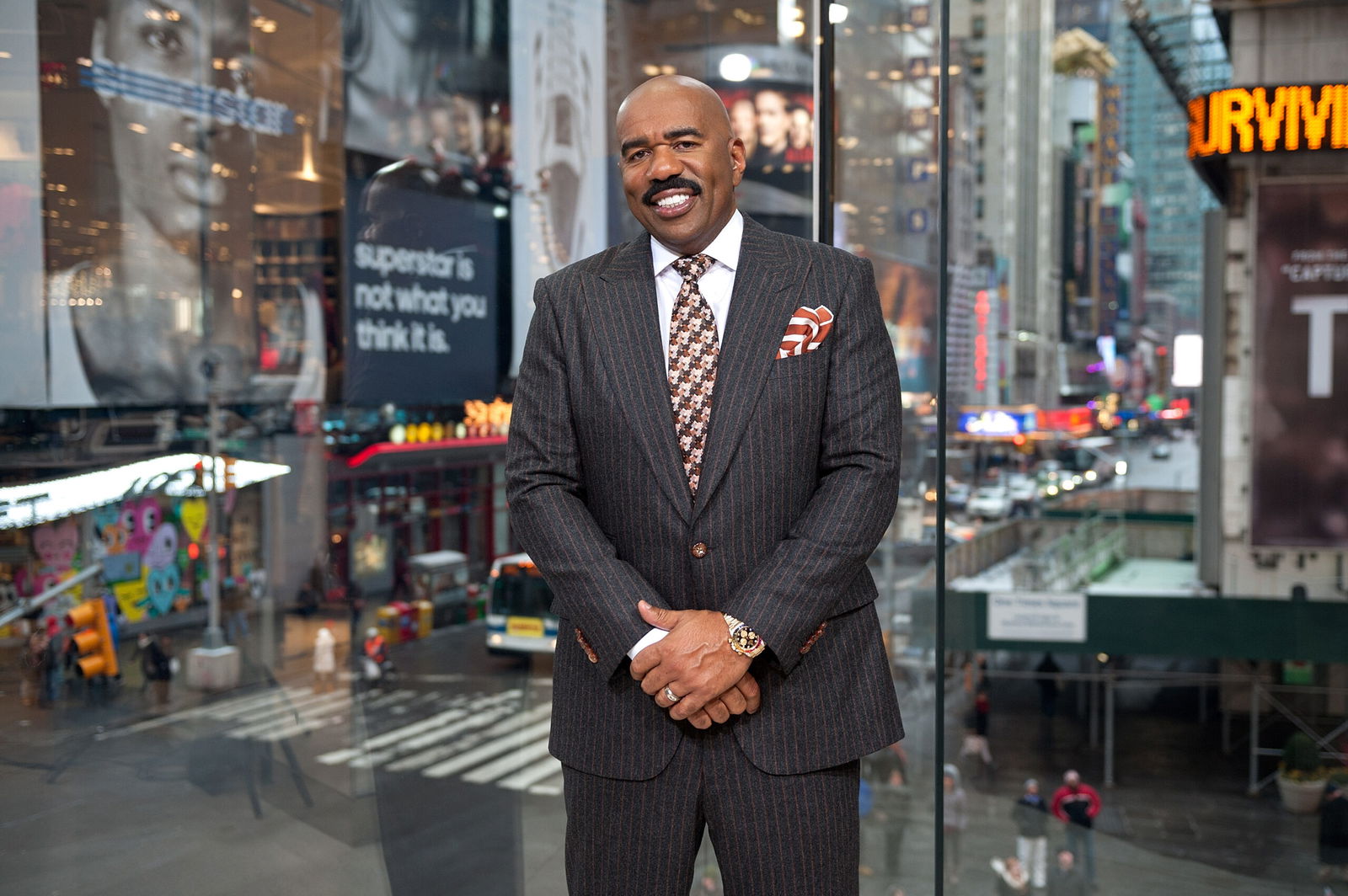
Steve Harvey Claims TV Exec Retaliated After He Refused To Move ‘Celebrity Family Feud’ To NBC
The comedian says the experience reinforced the importance of ownership.
Steve Harvey is revisiting his 2019 split from NBC, alleging that a former network executive retaliated against him after he refused to move “Celebrity Family Feud” from ABC to NBC, Men’s Journal reports.
During a Sept. 17 appearance on “Vault Empowers,” hosted by his daughter Brandi Harvey, the comedian and television host said his relationship with former NBC Entertainment executive Paul Telegdy deteriorated after Harvey rejected an offer to bring the successful game show to the network.
Harvey said he initially pitched “Celebrity Family Feud” to NBC while he was hosting “Little Big Shots” for the network. After NBC passed on the project, the show ultimately landed at ABC.
According to Harvey, Telegdy later approached him about moving “Celebrity Family Feud” to NBC after the show became successful and offered to match his compensation. Harvey said he declined because ABC had supported the series when NBC had not.
“He hated me. That white man couldn’t believe I told him no.”
Steve Harvey says former NBC Entertainment chairman Paul Telegdy canceled his hit talk show “Steve” and removed him as host of the TV show “Little Big Shots” because Steve Harvey refused to bring “Celebrity Family… pic.twitter.com/Pk3gPb7Phy
“I said, ‘No man, that ain’t right,'” Harvey recalled. “They believed in it, and gave me a crack. I’m gonna stay with them.”
Harvey alleged Telegdy retaliated against him following that decision and threatened to “take his whole TV career.”
In 2019, Harvey lost two prominent television roles. His syndicated daytime talk show, “Steve,” ended after seven years on daytime television, including its earlier iteration, “Steve Harvey.” NBC also announced that Melissa McCarthy would replace Harvey as host of “Little Big Shots” after three seasons.
At the time, Telegdy publicly praised McCarthy as a “strong creative force” who would bring a fresh perspective to the series.
Harvey said he rejected advice to negotiate with Telegdy to preserve his television career.
“I’m not going to beg nobody for nothing,” Harvey said. “He didn’t give me this career.”
Harvey said the experience ultimately reinforced the importance of ownership. He later launched ABC’s “Judge Steve Harvey,” which premiered in 2022. Harvey said he owned the series and earned more from the show than he had from “Steve” and “Little Big Shots” combined.
“So I recovered from that real nicely,” Harvey said.
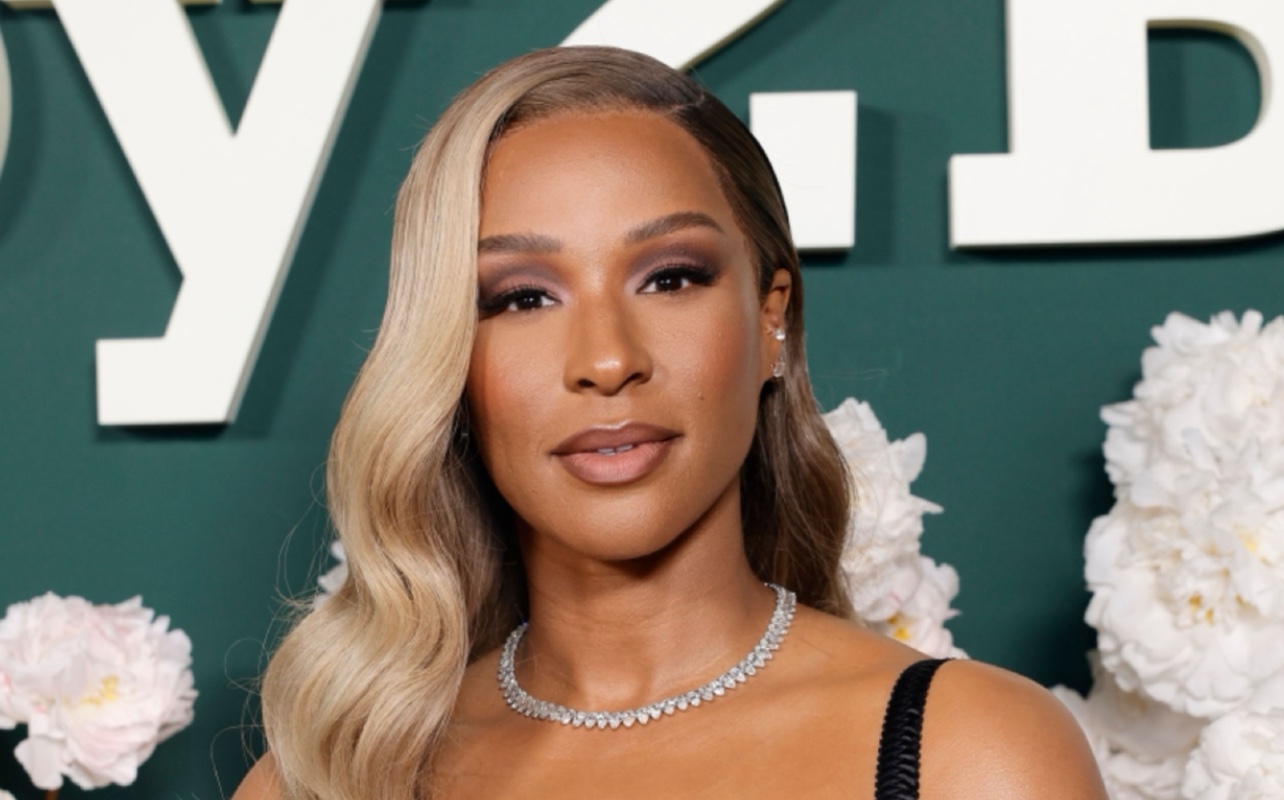
The founder and philanthropist has joined LOVB Los Angeles as an investor ahead of the franchise’s inaugural 2026-27 season, adding her voice and capital to a growing ownership group behind professional volleyball in Southern California.
“I’ve seen firsthand through my daughter Zhuri how powerful volleyball can be for young girls, the confidence, discipline, and sense of community it creates,” James said in a press release shared with BLACK ENTERPRISE.
James said she sees LOVB as a league with elite athletes and room to grow, adding that she is excited to help build an organization that young girls can aspire to join.
LOVB Los Angeles President Ana Mendy said James brings leadership and influence that align with the franchise’s goals.
“She has spent years creating opportunities for women and young people,” Mendy said, “and she understands the power of sport to shape what the next generation believes is possible.”
The investment also expands a roster of high-profile names connected to the franchise. LOVB Los Angeles recently announced actress, writer, and entrepreneur Issa Rae as part of its ownership group. Alexis Ohanian, founder of 776 and owner of LOVB Los Angeles, said the franchise has been deliberate about assembling investors who understand both the opportunity and responsibility involved in building a new professional sports team.
“Savannah brings exactly that combination of conviction, perspective and impact,” Ohanian said.
LOVB Los Angeles is preparing to make its home at Intuit Dome in Inglewood. The team is scheduled to reveal its official name, logo, and brand identity on Sept. 25, followed by its first Fan Fest on Sept. 26.
The franchise will debut during LOVB’s third professional season as the seventh team in League One Volleyball, which describes itself as the first youth-to-professional volleyball ecosystem in the United States.
For James, the investment connects the business of sports with a broader focus on creating pathways for the next generation.
“I’m excited to be part of LOVB Los Angeles and to help build something special that girls like Zhuri can aspire to be part of one day,” she said.
Dwight Howard Pursues Business Degree In His Next Chapter
The NBA champion is among a rising group of Black athletes pursuing higher education to broaden their influence in the corporate arena beyond sports.
A New Playbook for Off-Court Growth
Dwight Howard, the No. 1 overall pick in 2004 after graduating from Southwest Atlanta Christian Academy, has spent nearly two decades carving out a Hall of Fame basketball career. After winning an NBA championship in 2020 with the L.A. Lakers, earning three Defensive Player of the Year awards, and building a successful investment portfolio, the 40-year-old center is now pursuing a business degree. Howard announced this while continuing his international playing career, noting that executive skills are essential for athletes’ long-term success.
Howard admitted that it has been a big adjustment to move from the basketball court to the virtual classroom. “This is the most crazy thing in the world, man, to go to school,” he said in a post on Instagram. “I didn’t do it since I was 18 and now that I’m 40 I’m sitting down at the computer doing maths.” He highlighted the fact that although his early career had given him an informal “degree in basketball,” gaining knowledge in corporate strategy, financial management and entrepreneurship does require formal academic study.
Howard’s pursuit of higher education is part of a wider trend in which African American athletes return to school to build their business careers. He pointed to Hall of Famer Shaquille O’Neal, who earned bachelor’s, master’s, and doctoral degrees, as an example of how education can broaden an athlete’s corporate prospects. Howard also mentioned former NBA guard J.R. Smith as an inspiration; Smith enrolled at North Carolina A&T State University in 2021 and received a bachelor’s degree in liberal studies,BLACK ENTERPRISE previously reported.
Just as Stephen Curry, a four-time NBA champion, obtained his bachelor’s degree in sociology from Davidson College 13 years after joining the league, these examples demonstrate that earning a degree is now seen as a strategic means of securing equity, gaining access to venture capital, and achieving wealth in the global market, and not merely as a last-resort option.
These gains highlight a cultural shift as athletes recognize that sports careers are brief while business education offers long-term impact. As Basketball Network reported, Howard emphasized that today’s players are increasingly focused on building economic literacy alongside athletic skills.
Africa’s Richest Man Aliko Dangote’s Net Worth Surges Past $50B As Refinery Goes Public
Dangote’s net worth reached an estimated $51.3 billion according to Forbes’ Real-Time Billionaires List.
Nigerian billionaire Aliko Dangote’s estimated fortune has climbed above $50 billion after a new valuation of his oil refinery significantly increased the value of his holdings and widened his lead as Africa’s richest person, Business Insider Africa reports.
Dangote’s net worth reached an estimated $51.3 billion according to Forbes’ Real-Time Billionaires List. The valuation puts his estimated fortune above those of several prominent billionaires, including Alibaba co-founder Jack Ma and Nike co-founder Phil Knight.
The increase comes as Dangote Petroleum Refinery & Petrochemicals moves forward with what some describe as Africa’s largest initial public offering to date. The company launched the sale of 4.1 billion shares on Sept. 14, seeking to raise 2.15 trillion naira, or about $1.6 billion. The offering values the refinery at approximately $47.6 billion.
The refinery’s valuation has become a major driver of Dangote’s estimated personal wealth. However, billionaire wealth estimates vary by publication and methodology. Reuters reported that other estimates place Dangote’s fortune between $31 billion and $35 billion.
The Lagos-based refinery was built over 10 years at a cost of about $20 billion and began operations in 2024. It can process 700,000 barrels of crude oil per day and reached full capacity this year. Dangote plans to use proceeds from the public offering to help double the refinery’s capacity to 1.4 million barrels per day by 2029.
The public offering also gives retail investors access to one of Africa’s largest industrial projects. Investors can purchase a minimum of 10 shares at 525 naira each, requiring an investment of about $4. The shares are expected to begin trading on Nigeria’s main stock exchange in November.
Dangote’s business interests extend beyond petroleum. His conglomerate includes operations in cement, sugar and salt across more than a dozen African countries. He built much of his fortune through the cement business before the refinery emerged as another major component of his wealth.
A new survey of 1,007 side hustlers found that people using AI reported significantly higher monthly earnings than those who did not. According to research conducted by Network Solutions, AI users reported average monthly earnings of $555, compared with $333 for nonusers. At the median, the gap was even wider: $500 versus $250. However, the survey’s authors said AI use and higher earnings are correlated, not proof that the technology itself caused the income difference.
Still, the findings show how quickly AI is becoming part of the entrepreneurial toolkit, particularly for people building businesses outside their traditional 9-to-5. Thirty-three percent of respondents said they probably or definitely would not have started their side hustle without access to the technology. For many, AI helped tackle one of the biggest hurdles at the beginning of a business journey: figuring out where to start.
“For most of the people we surveyed, the hardest part was never the work itself,” the Network Solutions report said. “It was the blank page or not knowing where to begin.”
Once entrepreneurs got moving, AI also helped them save time. Users reported saving an average of nine hours per week, with writing, social media content, branding, logo creation, and market research among the tasks most commonly automated.
The technology also appeared to shorten the runway from idea to launch. Nearly 40% of AI users said they got their businesses on the ground faster than expected, compared with 30% of those who didn’t use AI. The average transition from concept to operation was about one month.
But AI isn’t removing every challenge. Twenty-eight percent of respondents said staying motivated was the hardest task to hand off, while 20% cited finding and retaining customers.
There’s another concern for entrepreneurs building digital businesses: competition. Nearly half—45%—said they worry AI makes it easier for competitors to copy what they do. That concern was greatest among digital-product sellers and content creators.
AI can help shrink the workload, speed up execution, and potentially create more room to earn. But the fundamentals like finding a customer, solving a real problem, and building something people will pay for, still matter. As one entrepreneur quoted in the original report put it: “Don’t reinvent the wheel.” In other words, use the tools. But make sure the business itself makes sense.
This Southside Duo Levels Up NYC Properties And People’s Lives
Ronald Tucker and Teddy Coleman have been down like two flat tires since childhood.
Ronald Tucker and Teddy Coleman have been down like two flat tires since childhood, building brotherhood, an unbreakable bond, and a storied history in South Jamaica, Queens— and in more recent years, Level Windows & Doors, a successful business that is anchored by the same principles that have held together their 50-year friendship: trust, integrity, and commitment.
“I trust Teddy with my life,” Tucker told BLACK ENTERPRISE.
The best friends-turned-business partners have considered themselves brothers after connecting in primary school five decades ago. Their memory of meeting varies, with Tucker dating the first encounter back to kindergarten and Coleman insisting they met much earlier in Pre-K.
The two have cemented a friendship that has transcended time and space through their formative years, adulthood, and time behind bars—between them, 26 years combined were spent incarcerated. Like many of their peers from South Jamaica, neither Tucker nor Coleman made it through the 1980s and 1990s unscathed by the crack-cocaine epidemic, RICO laws, or the mandatory minimum sentencing guidelines that grew from the targeted war on drugs in Black communities.
But how do two childhood friends from the Southside transition from the volatile streets of their youth to managing multimillion-dollar window installations across the New York metropolitan area? For Coleman, CEO, and “Tuck,” vice president, the answer lies in an unyielding partnership, rigorous discipline, and an ongoing commitment to community restoration through their firm.
Founded in 2016, the specialized glazing and commercial installation venture represents a profound evolution for the longtime business partners, who survived systemic adversity before establishing themselves within the Tri-State area’s construction landscape. Globally, fenestration is a $225.35 billion industry, according to Mordor Intelligence, projected to gross more than $278 billion by 2031.
Over the past decade, Level Windows & Doors has completed window, curtain wall, and glass installation projects across more than 100 buildings—ranging from a $116 million Manhattan development at 103rd Street and 2nd Avenue to specialized residential glazing on a historic $70 million townhouse on Bank Street.
“We did a lot of wrong together in our lifetime,” Coleman told BE regarding their shared history. “Now, we’re doing something positive, something that can take care of ourselves and building something where we can ride around New York City and show our children, our loved ones… ‘Hey, we did this building.'”
Operating as a 50/50 entity, the executives divide operational mandates according to individual skill set and specialization. “I cracked the whip in the streets, I cracked the whip with the workers,” Tucker explained, sharing how being a “lieutenant” back when he was a hustler both informs and prepared him for his role managing field mechanics, installation precision, and site accountability.
Coleman, meanwhile, handles back-office administration, blueprint takeoffs, project bidding, and corporate strategy. Coleman shared why Level is successful with the two of them at the helm.
“There’s no jealousy, no ego… ego ruins businesses,” Coleman added. “They might beat him by himself, or beat me by myself, but us two together, we can’t be stopped.”
By retaining complete internal oversight, the entrepreneurs navigate complex supply chain fluctuations, raw material tariffs, and stringent municipal compliance demands all on their own. Coleman stressed the necessity of this self-reliance: “When you outsource and give other people the keys to your car, you never learn how to drive the car.”
How Has Level Windows & Doors Mastered NYC Commercial Installation?
Level’s success stems from its technical versatility and reputation as expert structural remediation contractors. In an industry often plagued by subcontractor default and improper installation, the firm built its market share by stepping in to correct failed competitor installations. “We were great mediators,” Coleman recalled. “We come behind someone else that messed up a job, screwed it up, and we fix it.”
Whether routing and bending aluminum composite panels for complex rainscreen systems or erecting expansive multi-story glass window walls, the team leverages vocational mechanics learned during their formative technical training at Thomas Edison High School. “To read blueprints, it’s like second nature,” Tucker said, as he described how they approach custom fabrications. “We make it like we’re making a cake from scratch.”
By prioritizing direct developer relationships over traditional third-tier subcontracting, the company maintains control over installation timelines and quality assurance. “Our work speaks for itself,” Coleman emphasized, reflecting on how word-of-mouth recommendations among top developers fueled their portfolio across Manhattan and New Jersey.
What Drives the Firm’s Workforce Rehabilitation Mission?
For Coleman and Tucker, commercial profitability remains intrinsically linked to investing in local human capital. Drawing directly from their shared upbringing in South Jamaica, Queens, the founders utilize their commercial installation platform to disrupt cycles of urban disenfranchisement. “All the destruction that we did… now we have the opportunity to literally and figuratively build in the community,” Tucker reflected.
Beyond business, Level serves as an economic engine for social rehabilitation and reducing recidivism. For Tucker, this commitment speaks directly to personal redemption. “Some people come home from jail and believe they paid their debt to society,” Tucker stated. “I believe that paying a debt to society begins once you come home… It’s ongoing, like, forever. It’s infinite.”
Coleman and Tucker actively recruit at-risk youth and formerly incarcerated individuals, training entry-level laborers into skilled window mechanics capable of reading structural engineering plans.
“They came to us saying, ‘I don’t want to be in the streets no more, just give me a job,'” Tucker shared. “They started at the bottom as laborers, and we taught them everything… They were able to get a career and not have to look back.”
Rather than treating labor as a transactional commodity, Level provides sustainable trade careers, mentorship, and financial support during market downturns. During the coronavirus pandemic, the business faced challenges in securing Payroll Protection loans to stay afloat. The company was left with almost nothing due to institutional mishandling.
“They were supposed to give us something like $100,000,” Coleman recalled. “They gave us $10,000. And it was one of those take it or leave it at Bank of America. They apologized and said they did our application wrong, but there was no more funds available, and all they had was this little $10,000 left.”
Coleman continued: “We were paying guys … 60% – 70% of their salaries. Without working.”
Tucker And Coleman Stay The Course
Post-pandemic, like many construction and contracting businesses, Level experienced a market downturn due to inflation, tariffs, and supply chain issues, but Tucker and Coleman remain resilient and optimistic, continuing to build on their portfolio and pursue prospective projects.
“We come out here and put in 20-something years of hard work, getting up early every morning, creating jobs for people…” Tucker said.
Coleman and Tucker shared encouragement and parting advice with those looking to become entrepreneurs in the construction industry. Coleman stressed avoiding unnecessary debt and vanity expenses: “Don’t go out there getting credit cards and getting trucks under your LLC… you gotta build it up,” he told BE.
The longtime friends emphasized not just being skillful in the trade but learning the market before launching and understanding the industry inside and out, from blueprints to operational costs. Tucker, who manages more of the workflow, emphasized valuing labor and tradespeople, in that business ownership and honest labor hold equal value. “Everybody can’t be a boss. You need workers,” Tucker told BE. “There’s dignity in labor, there’s dignity in working a job.”