Thasunda Duckett
Photo by Jeenah Moon/Bloomberg via Getty Images

TIAA CEO Thasunda Brown Duckett Maxed Out Her 401(K) On A $26,000 Salary And Built Generational Wealth

The Fortune 500 CEO is urging Gen Z to prioritize retirement savings from their very first paycheck even if money is tight


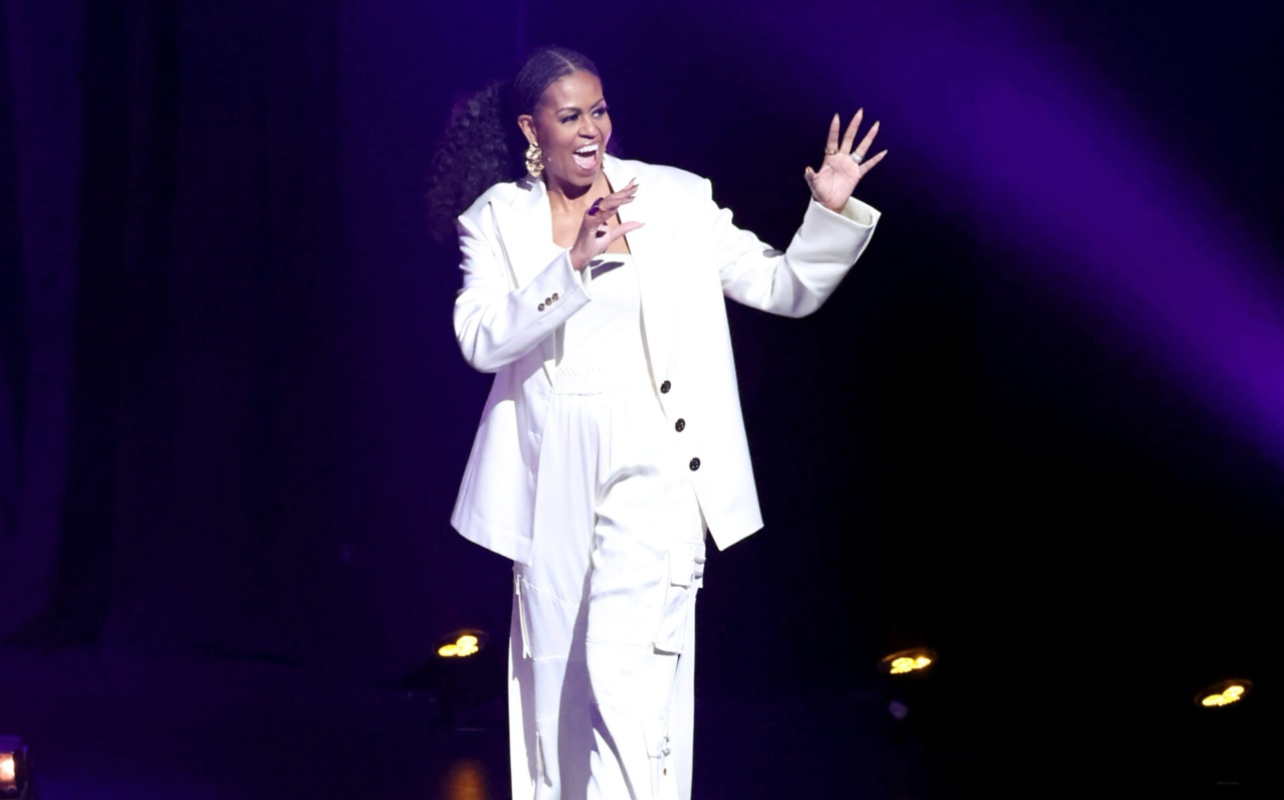
TIAA President and CEO Thasunda Brown Duckett says one of the smartest financial decisions she ever made came when she was earning just $26,000 a year.

The Fortune 500 executive recently shared that while working in an entry-level position after graduating from the University of Houston in 1996, she immediately prioritized saving for retirement—a habit she says helped shape her financial future.

“I made $26,000 when I graduated from college—that was $26,000 more than I made ever—and so I immediately maxed out on my 401(k) plan,” Duckett said during Fortune‘s Titans and Disruptors of Industry podcast.

Duckett, who began her career at Fannie Mae before leading JPMorgan Chase’s Consumer Banking division and later becoming CEO of TIAA, said her retirement strategy has remained consistent throughout her career.

Her advice to young professionals is simple: don’t wait.

“Especially for young people, retirement seems so far away, but there’s a hack,” Duckett said. “The hack is: first job, first dollar.”

She encouraged workers to contribute to their employer-sponsored retirement plan before they become accustomed to spending their full paycheck.

“The first thing I tell young people is, your very first job, max out before you get the check, because once you get it, you will find ways to spend it,” Duckett said. “Power of compounding: $1 today is worth more than $1 tomorrow…You want to make sure you take full advantage of that match.”

Duckett also recommends building wealth beyond a 401(k) by maintaining an emergency fund and investing in vehicles such as Roth IRAs, stocks, and high-yield savings accounts.

“For young people, max out understanding that you have to save to invest…Max out on your retirement, have your rainy day fund to make sure that you can afford the flat tire and all the basic things that life will give you,” she said. “Then you can start investing.”

Her commitment to retirement planning was also shaped by her family’s experience. Duckett recalled discovering that her father, who had worked for decades in a warehouse and as a truck driver, never contributed to his employer’s 401(k), leaving him with limited retirement savings.

“We definitely had financial insecurity growing up,” Duckett said. “I’m like, ‘Dad, this is not enough money for retirement’…He never contributed $1. That’s 30-plus years of compounding that never got compounded.”

Although her father began contributing later in life, Duckett said the experience reinforced the importance of starting early.

“I just want to remind this next generation, if you go back 250 years and you look at where we are today, there is no better day that I want to be in than today,” she said. “The future is always brighter because we get to decide.”

RELATED CONTENT: Thasunda Brown Duckett Appointed As TIAA President and CEO

WhatsApp
photo credit: microsiervos, CC BY 2.0 via Wikimedia Commons

Privacy Update: WhatsApp Shifts To Usernames Over Phone Numbers

usernames will allow people to connect without revealing their personal phone numbers, adding another layer of privacy to conversations.


WhatsApp users will soon be able to communicate without sharing their phone numbers as Meta prepares to launch usernames, a feature the company says is designed to strengthen privacy for the messaging platform’s more than three billion users worldwide, FastCompany reports.

Meta announced June 29, that it has begun allowing eligible users to reserve unique WhatsApp usernames ahead of the feature’s broader rollout later this year. The company said early reservations are intended to help users secure preferred usernames before the feature becomes widely available. According to Meta, usernames will allow people to connect without revealing their personal phone numbers, adding another layer of privacy to conversations.

The rollout is occurring in phases, and availability will vary by region. Meta said users whose accounts have access to the feature can create a unique username through their account settings. Usernames must be between three and 35 characters, be unique, and comply with the platform’s naming requirements. Meta has not announced a specific date for when the feature will be available to all users.

The company said the update is intended to reduce the need to exchange phone numbers when starting new conversations. Unlike many social media platforms, WhatsApp will not include a public directory of usernames or recommend accounts for users to follow.

Instead, Meta said someone must know another person’s exact username before initiating contact. The company also said users will have the option to enable a username key, an additional security feature that requires a verification code before receiving first-time messages through a username.

Announcing the feature, Meta said, “For most people, choosing a WhatsApp username should be something unique that only people you want to contact you will know.”

The company also said businesses, creators, and organizations will be able to reserve usernames that align with their existing Facebook and Instagram identities to maintain consistent branding across Meta’s platforms.

Privacy experts have long advocated for reducing the use of personal phone numbers as digital identifiers because they can expose users to unwanted contact, scams, and other security risks.

Meta said the introduction of usernames is part of its broader effort to give users more control over how they connect with others while maintaining the end-to-end encryption that has become a hallmark of WhatsApp. The company said the global rollout will continue throughout 2026 as additional users gain access to the feature.

RELATED CONTENT: Meta Announces New Analytics Tools To Help Brands Find Perfect Match

Crunch Fitness
photo credit: Sr1jj, CC BY-SA 4.0 , via Wikimedia Commons

Howard Alum Chequan Lewis Named CEO Of Crunch Fitness

Lewis, a 2005 Howard University graduate, earned bachelor's degrees in political science and economics before receiving his law degree from Harvard Law School.


Crunch Fitness has named Howard University alumnus Chequan Lewis its next chief executive officer, placing another HBCU graduate at the helm of a major national consumer brand as the fitness company continues its global expansion, Yahoo Finance reports.

The company announced Lewis’ appointment June 30. He succeeds Jim Rowley, who will become executive chairman after serving as CEO since 2019. Lewis joined Crunch Fitness as president in January 2024 and now assumes responsibility for leading one of the world’s largest fitness franchise systems as it continues to grow its domestic and international footprint.

Lewis, a 2005 Howard University graduate, earned bachelor’s degrees in political science and economics before receiving his law degree from Harvard Law School. He began his career at McMaster-Carr before practicing corporate law at Baker Botts. He later transitioned into business operations at Pizza Hut U.S., where he served as chief operating officer and became the brand’s first chief equity officer before joining Crunch Fitness.

His promotion highlights the growing influence of HBCU alumni in executive leadership across corporate America. Lewis has credited his family with shaping the work ethic and sense of purpose that have guided his career. Reflecting on his professional journey during a podcast interview, Lewis said, “The mission has always been to do all that I can with all that I’ve been given.”

Lewis has also discussed why he left the legal profession for business leadership. He said during the podcast, “The reality was I still had this fire burning from my time at McMaster-Carr to not be a lawyer on the outside of the business, but in the heart of the action.”

Looking ahead, Lewis said his focus will remain on strengthening the company’s franchise network while investing in long-term growth.

“As we enter this next chapter, our focus remains clear: to support our franchise network, invest in innovation, and grow the Crunch community in a disciplined way while staying true to the culture, values, and ‘No Judgments, No Limits’ experience that define this brand,” Lewis said in the company’s announcement.

Lewis now takes over as Crunch Fitness pursues its next phase of expansion, adding another Black executive to the ranks of CEOs leading nationally recognized consumer brands while reinforcing Howard University’s legacy of producing influential business leaders.

RELATED CONTENT: Howard University Makes History By Taking Home Men’s, Women’s Swimming and Diving Championships

Jamaica, travel, violent crimes, Jamaican restaurant
(Photo: aboodi vesakaran/Pexels)

Jamaican Minister Of Culture Headed To The UK To Petition Reparations To King Charles III

According to Jamaican officials, the petition asks the monarch questions regarding whether Britain has a legal obligation to provide reparations for slavery.


Jamaica will send a government delegation to the United Kingdom on Sept. 6 to formally present a slavery reparations petition to King Charles III, seeking legal clarification on Britain’s responsibility for the transatlantic slave trade and its lasting impact on the Caribbean, The Guardian reports.

According to Jamaican officials, the petition asks the monarch, in his capacity as Jamaica’s head of state, to refer questions to the Judicial Committee of the Privy Council regarding whether Britain has a legal obligation to provide reparations for slavery. The effort is backed by the Caribbean Community (CARICOM) and follows the release of the CARICOM Reparations Commission‘s updated reparations manifesto in June 2026.

Britain has consistently rejected calls for slavery reparations, maintaining that it does not support financial compensation for the institution of slavery while acknowledging its historical role in the transatlantic slave trade.

Speaking before Jamaica’s Parliament on June 30, 2026, Culture Minister Olivia Grange said Sept. 6 was selected because it marks the anniversary of the 1781 departure of the Zong slave ship from West Africa.

“We intend to petition King Charles on September 6 — a historic day,” Grange said according to the outlet. “On this date in 1781, the Zong slave ship departed West Africa for Jamaica with 442 enslaved Africans.”

Grange said approximately 140 enslaved Africans were thrown overboard during the voyage before the ship arrived in Jamaica on Dec. 21, 1781, an event historians widely recognize as one of the most infamous atrocities of the transatlantic slave trade.

The petition also cites Britain’s compensation of slave owners following emancipation in 1834, while formerly enslaved Africans received no financial restitution and were instead required to complete a period of unpaid apprenticeship. Grange said Britain paid £20 million to compensate enslavers through a government-backed loan that was not fully repaid until 2015.

Laleta Davis Mattis, chair of Jamaica’s National Council on Reparations, called the petition “a significant milestone in our long pursuit of reparatory justice,” while crediting Jamaican and British legal experts with developing the initiative.

Deputy Chair Bert Samuels said the country’s legal position has been strengthened by the United Nations General Assembly’s March 25, 2026, resolution recognizing the transatlantic trafficking of enslaved Africans as a crime against humanity.

“We have learned from the 300-year struggle for freedom itself,” Samuels said. “People who have been tied down for three centuries into slavery must have felt hopeless at times. So we are used to a struggle that seems hopeless at times.”

RELATED CONTENT: Barbados Prime Minister Unveils Expanded Caribbean Reparations Plan In Accra, Ghana

GLP-1 weight-loss
AI-generated image via Magnific

Women Taking GLP-1 Weight-Loss Drugs May Be More Likely To Get Hired: Study

Being skinny can still equate to greater career success due to employer weight bias in hiring.


Rather than an impressive resume or sharp interviewing skills, the secret to landing a new job in 2026 may be Ozempic—at least for women.

A new study finds that women who used GLP-1 weight-loss medications like Ozempic and Wegovy were significantly more likely to secure employment than women who wanted the drugs but had not taken them, reports Fast Company.

The study, authored by Harvard economics professor Rebecca Diamond, analyzed data from more than 10,000 adults collected through a University of Southern California survey. It compared women who began taking GLP-1 medications with women who expressed interest in using the drugs but had not yet started treatment. Diamond found that unemployed women who took weight loss drugs were 27% more likely to find employment within 18 months than their counterparts who did not begin the drugs.

“The estimates show that GLP-1 weight loss changes outcomes on precisely the margins where visible body weight should affect first impressions,” Diamond wrote in the paper.

The findings suggest that first impressions had a significant impact on the likelihood that a female job seeker would secure employment. On the other hand, women who already had jobs did not experience meaningful increases in earnings, hours worked, or career mobility after starting the medications.

“What does not change for women is equally informative,” Diamond wrote. “The arrangements that do not respond are the ones already in place, where any first impression occurred long ago and where weight is one characteristic embedded in a much richer stock of information.”

Beyond employment, single women taking GLP-1 medications were 29% more likely to get married or move in with a partner within 18 months. Likewise, women already in committed relationships saw little change in their relationship status.

The findings align with years of research documenting weight bias in hiring. Previous studies have shown that workers with obesity are often perceived as less motivated or less productive, despite no evidence supporting those assumptions.

Diamond, however, cautioned that the paper has not yet been peer-reviewed and does not prove that employers are directly discriminating against applicants based on weight. Other factors—including improved physical health or increased confidence following weight loss—could also contribute to better employment outcomes. However, the study found those explanations accounted for only part of the observed effect, reports Business Insider.

RELATED CONTENT: FDA Warns Of Fake Ozempic Floating Through U.S. Supply Chain 

entrepreneur, sales, small business, business, start-up business, customers
Entrepreneurs, startups, and small business owners can win in business by preparing for the worst.

Brookings: Closing The Black Business Ownership Gap Could Create 6.3M Jobs And $824B in Revenue

A new reports shows Black-owned employer businesses continue to grow, but still remain significantly underrepresented.


Black-owned employer businesses are reaching new heights, but a new Brookings Institution report says the U.S. is still leaving enormous economic potential on the table.

In “The Shifting Landscape for Black-Owned Businesses: An Update to the Black Business Parity Dashboard,” researchers found that Black-owned employer firms surpassed 200,000 for the first time in 2023 after at least six consecutive years of growth. According to the report, those businesses generated $249 billion in revenue, supported more than 1.8 million jobs, and paid $69.8 billion in annual wages.

Despite that progress, Brookings found that Black entrepreneurs remain substantially underrepresented among employer businesses. While Black Americans accounted for 14.4% of the U.S. population in 2023, they owned only 3.3% of employer businesses. The report’s updated Black Business Parity Dashboard models what local economies could look like if Black-owned employer businesses matched the Black share of the population in metropolitan areas across the country. Under that scenario, the United States could gain approximately 757,000 additional Black-owned employer businesses, 6.3 million new jobs, and $824 billion in annual business revenue, along with billions of dollars in additional payroll.

Brookings also highlighted continued momentum in Black entrepreneurship. Between 2022 and 2023 alone, the nation added roughly 6,300 Black-owned employer firms, creating an estimated 238,000 new jobs, generating $37 billion in additional revenue, and paying $8.6 billion more in wages than the previous year. However, researchers noted that the pace of growth slowed compared with earlier post-pandemic gains.

Regionally, 116 metropolitan areas experienced growth in Black-owned employer businesses between 2017 and 2023. Major metropolitan areas, including Atlanta, Miami, New York, Washington, D.C., and Los Angeles, recorded some of the largest increases in Black employer firms during that period. Still, the report found that no major metro area has yet achieved parity between its share of Black-owned employer businesses and its Black population.

According to Brookings, longstanding barriers—including unequal access to credit, capital, and intergenerational wealth-building opportunities—continue to limit Black entrepreneurs’ ability to start and scale their businesses. Previous Brookings research found Black Americans score above the national average on entrepreneurial traits associated with business success, suggesting that the ownership gap reflects structural barriers rather than a lack of entrepreneurial potential.

RELATED CONTENT: Black Churches Lead Movement To Encourage Consumers To ‘Spend In The Black’

Ghana FIFA World Cup
photo credit: YantsImages, CC BY-SA 4.0 via Wikimedia Commons

Africa Sets FIFA World Cup Record With 9 Teams Reaching Knockout Stage

Morocco, Algeria, Cape Verde, Democratic Republic of the Congo, Egypt, Ghana, Ivory Coast, Senegal, and South Africa secured places in the knockout stage


Nine African nations advanced to the FIFA World Cup Round of 32, setting a tournament record and marking the continent’s strongest collective performance in World Cup history, Reuters reports.

Morocco, Algeria, Cape Verde, Democratic Republic of the Congo, Egypt, Ghana, Ivory Coast, Senegal, and South Africa secured places in the knockout stage following the conclusion of group play on June 28. Tunisia was the only African representative eliminated before the single-elimination rounds.

The milestone comes during the first 48-team FIFA World Cup, hosted by the United States, Canada, and Mexico, which increased Africa’s allocation from five teams in 2022 to nine automatic berths plus one intercontinental playoff berth in 2026. 

The result surpasses the previous record of two African nations reaching the knockout stage at a single World Cup and follows Morocco’s historic semifinal appearance at the 2022 tournament in Qatar. The outlet reports that five African teams advanced as group runners-up, while four earned knockout berths as the tournament’s highest-ranked third-place finishers. 

Confederation of African Football President Patrice Motsepe said the achievement reflects years of investment across the continent.

“This success is not by chance,” Motsepe told the outlet.

“It is the result of years of hard work, investment in youth development, infrastructure, and coaching.” 

Democratic Republic of the Congo coach Sébastien Desabre also credited sustained development for Africa’s performance.

“There has been a lot of work done over the last 10 years,” Desabre said.

“The quality of African football has improved, and the players are playing at the highest level in Europe.” 

The tournament has also produced several national milestones. Cape Verde reached the knockout stage in its first World Cup appearance, while South Africa advanced beyond the group stage for the first time. Democratic Republic of the Congo also reached the knockout rounds for the first time since competing as Zaire at the 1974 World Cup. The round of 32 continues through July 3 before the round of 16 begins on July 4, with four African nations already advancing to that stage as of June 30.

The outlet reports that the results have renewed discussion about Africa’s growing competitiveness on the global stage and its future representation in FIFA competitions. 

RELATED CONTENT: This African Nation Says It’s Time For World Map To Reflect The Continent’s True Size

George Floyd, Loan, Woman, car
(Photo: Lorie Shaull/flickr)

Reconstruction Of George Floyd Square Sparks Backlash From Black Business Owners And Residents

Local business owners say construction is hurting access, threatening livelihoods, and disrupting a neighborhood still healing after George Floyd's murder.


Nearly six years after the murder of George Floyd reignited the global Black Lives Matter movement, a new chapter of controversy is brewing at the Minneapolis intersection where he died.

George Floyd Square has served as both a memorial and a gathering place since former Minneapolis police officer Derek Chauvin murdered Floyd in May 2020. Murals, sculptures, and community art honoring Floyd and other victims of police violence have transformed the intersection into an internationally recognized symbol of the movement for racial justice.

Construction at the site began on June 8, launching a two-year reconstruction project that city officials say is designed to preserve the memorial while improving infrastructure, public gathering spaces, and accessibility. The first phase is expected to continue through the end of 2027, reports the Minnesota Spokesman-Recorder. However, as barricades have gone up around the historic site, local Black business owners say the project has already made it difficult for customers to reach their stores.

Ini Augustine, who owns Mystic Healing Stones, said her business became inaccessible on the first day of construction.

“It just feels like the latest violation of my human rights because the city of Minneapolis has closed down my business,” Augustine told the publication. “The first day of construction, they closed traffic in every single direction. No one could approach my business unless they were on foot, and it took me 40 minutes to get into my own office. They kind of just made that executive decision that my business was inaccessible for that day.”

In addition to barely getting business, she added that city plans have slated a Metro D Line rapid bus shelter to replace her shop’s location.

“If I make it to the end of the month, I would be really surprised,” Augustine said. “It’s almost poetic because they expected George to hold his breath for nine minutes, which is humanly impossible, and they’re expecting my business to hold its breath for four months, which is financially impossible. They’re asking the impossible of Black businesses, of Black bodies, and of Black mental health at this point.”

The reconstruction project, city officials say, is the result of years of community engagement.

“In 2022, we began a process to engage with the community,” Minneapolis Media Relations Coordinator Allen Henry told the Spokesman-Recorder. “Through this process, we re-envisioned and redesigned the area in a way that reflects community needs.”

City officials maintain that community gathering spaces will remain available throughout construction, although some memorials and artwork will be temporarily relocated before being restored as work progresses. The overall project includes new streets, sidewalks, utilities, bicycle facilities, and public spaces, intended to preserve George Floyd Square’s significance while improving long-term infrastructure, according to a press release from the city of Minneapolis.

Still, some residents are raising concerns over the future of community-led resources that have operated from the square for years. Residents also expressed fears that increased construction activity and law enforcement presence could retraumatize a neighborhood still grappling with the legacy of police violence.

“There has been a lot of increase in sheriff activity, specifically in this neighborhood. The surveillance is increasing,” said Jerimiah Rupert, a longtime neighborhood resident. “It’s deeply troubling because everyone’s got police trauma here. It’s like the government’s saying ‘we’re gonna respect you as you need to mourn,’ but then they’ll tell people, ‘hey, wrap it up, you’re done crying now,’ as if people didn’t know someone for 30 years.”

RELATED CONTENT: George Floyd Mural Vandalized Amid Derek Chauvin Trial

Ketanji Brown Jackson, 14th Amendment, Constitution, Trump, Supreme Court, Dred Scott
Photo by Chip Somodevilla/Getty Images

Supreme Court Upholds Birthright Citizenship, Prompting Powerful Response From Justice Ketanji Brown Jackson And Black Leaders

The SCOTUS decision rejects Trump's effort to end automatic citizenship for children born in the U.S., reaffirming the 14th Amendment in a landmark constitutional ruling.


The U.S. Supreme Court handed President Donald Trump a major blow on June 30, ruling against his executive order that attempted to end birthright citizenship — a right constitutionally protected under the 14th Amendment for the last 150 years.

Supreme Court Reaffirms the 14th Amendment

The 6-3 ruling marks a major victory for immigrant rights by protecting all children born on American soil to undocumented immigrants and temporary visa holders. The decision reaffirmed that the Citizenship Clause of the 14th Amendment guarantees U.S. citizenship to nearly everyone born in the United States, regardless of their parents’ immigration status, reports Reuters.

The constitutional protection dates back to the Reconstruction era, when the 14th Amendment was ratified in 1868 to guarantee citizenship to formerly enslaved Black Americans. Writing for the majority, Chief Justice John Roberts concluded that a president cannot unilaterally rewrite the Constitution through executive action. He went on to describe citizenship as “the right to have rights,” adding that “the Framers of the Fourteenth Amendment extended that promise to ‘every free-born person in this land.’ We keep that promise today.”

Diverging Judicial Interpretations

Conservative Justice Clarence Thomas sided with President Trump, arguing in the principal dissent that birthright citizenship should not automatically extend to children whose parents lack permanent allegiance to the United States. He maintained that the Amendment was intended primarily to restore citizenship rights to formerly enslaved Americans rather than establish a universal guarantee based solely on birthplace.

Ketanji Brown Jackson, the first and only Black woman to serve as a Supreme Court justice, sharply criticized Thomas’ dissent. In a scathing opinion, she argued that his interpretation of the 14th Amendment ignored the Reconstruction Amendments’ broader purpose of dismantling systems of racial subordination. She contended that Thomas’ reading failed to recognize that the Amendment was designed not only to grant citizenship to formerly enslaved people but also to establish a broader constitutional principle of equal citizenship.

“Despite his longstanding endorsement of a ‘colorblind’ Constitution, Justice Thomas now surprisingly suggests that the Citizenship Clause was a race-conscious remedial measure, relating only to ‘freed slaves such as Dred Scott,’ and those who shared with them certain characteristics,” wrote Jackson, according to Yahoo News.

“It is for this reason, he says, that ‘children who were born in the United States but [to parents] not domiciled here’ are not entitled to claim birthright citizenship,” she continued. “But that narrow vision of the Fourteenth Amendment bears little relationship to the history of its ratification. Even worse, Justice Thomas’s telling elides the entire point of the Second Founding: The Reconstruction Amendments were an anticaste, antisubordination reset for the Nation, not a mere spot treatment for the dark stain of slavery.”

Responses from Civil Rights Leaders

The ruling drew praise from Black civil rights leaders and elected officials like Congresswoman Jasmine Crockett, who applauded the decision while slamming Trump for attempting to overturn the Constitution.

“The President took an oath to uphold the Constitution — not rewrite it whenever it doesn’t serve him,” she wrote on X. “Newsflash, Donald: We live in a democracy, not a dictatorship.”

“This is not simply a legal victory, but a rejection of a dangerous effort to redraw the boundaries of citizenship and belonging in America,” wrote Martin Luther King III on X.

Likewise, Rev. Al Sharpton pointed to the historical significance of the decision for Black Americans, writing that the Citizenship Clause was adopted in direct response to the Supreme Court’s infamous Dred Scott v. Sandford ruling, which declared that Black people could not be U.S. citizens. The 14th Amendment overturned that decision by establishing birthright citizenship as a constitutional guarantee.

“Birthright citizenship was shaped by this country’s painful history of slavery, Dred Scott, and the long struggle to ensure that Black people born in America could not be denied citizenship or equal protection. That history matters. If you are born on this soil and subject to its laws, your citizenship cannot be taken away by executive order or political pressure,” said Sharpton, the founder and President of the National Action Network (NAN), in a statement to Black Enterprise.

Political and Legislative Aftermath

Trump, on the other hand, criticized the ruling and indicated that his administration would push Congress to restrict birthright citizenship through legislation — an action that legal scholars say is nearly impossible considering that it would require either a new constitutional interpretation or a constitutional amendment.

RELATED CONTENT: Trump Calls Country That Voted Him In ‘Stupid’ After Birthright Citizenship Arguments in Supreme Court

Rick Ross, jazzma Kendricks
Photo credit: Latisha Robin for BE

Melanated Moments: June 2026

Moments like these highlight Black joy and community.


Black folks had a time this June. They showed up, showed out, shone among one another, and embodied the spirit of Juneteenth throughout the entire month. BLACK ENTERPRISE showcases these beautiful Black moments below:

26th Annual BET Awards Ceremony

The 26th Annual BET Awards took place June 28 in Los Angeles, bringing out the best of Black entertainment and paying tribute to the work Black artists produced in the previous year. One of the highlights of the Awards show is the red-carpet outfits worn by attendees.


The Black Broadway Nominee Soirée

On June 5, Lamar Richardson and Ivy Lion Productions put on its inaugural Black Broadway Nominee Soirée, taking place at The Skylark in Midtown, New York City. The invitation-only event gathered this season’s Black Broadway nominees, debut performers, producers, and industry leaders to pay homage and be in community.

RELATED CONTENT: Culture Creators Celebrates 10th Annual Innovators & Leaders Awards Brunch

×