Robert Johnson XCEL
photo credit: BE

BET Founder Robert L. Johnson To Receive XCEL Honors At BLACK ENTERPRISE’s 2026 XCEL Summit For Men

Black Enterprise announced this recognition this week ahead of the annual summit.


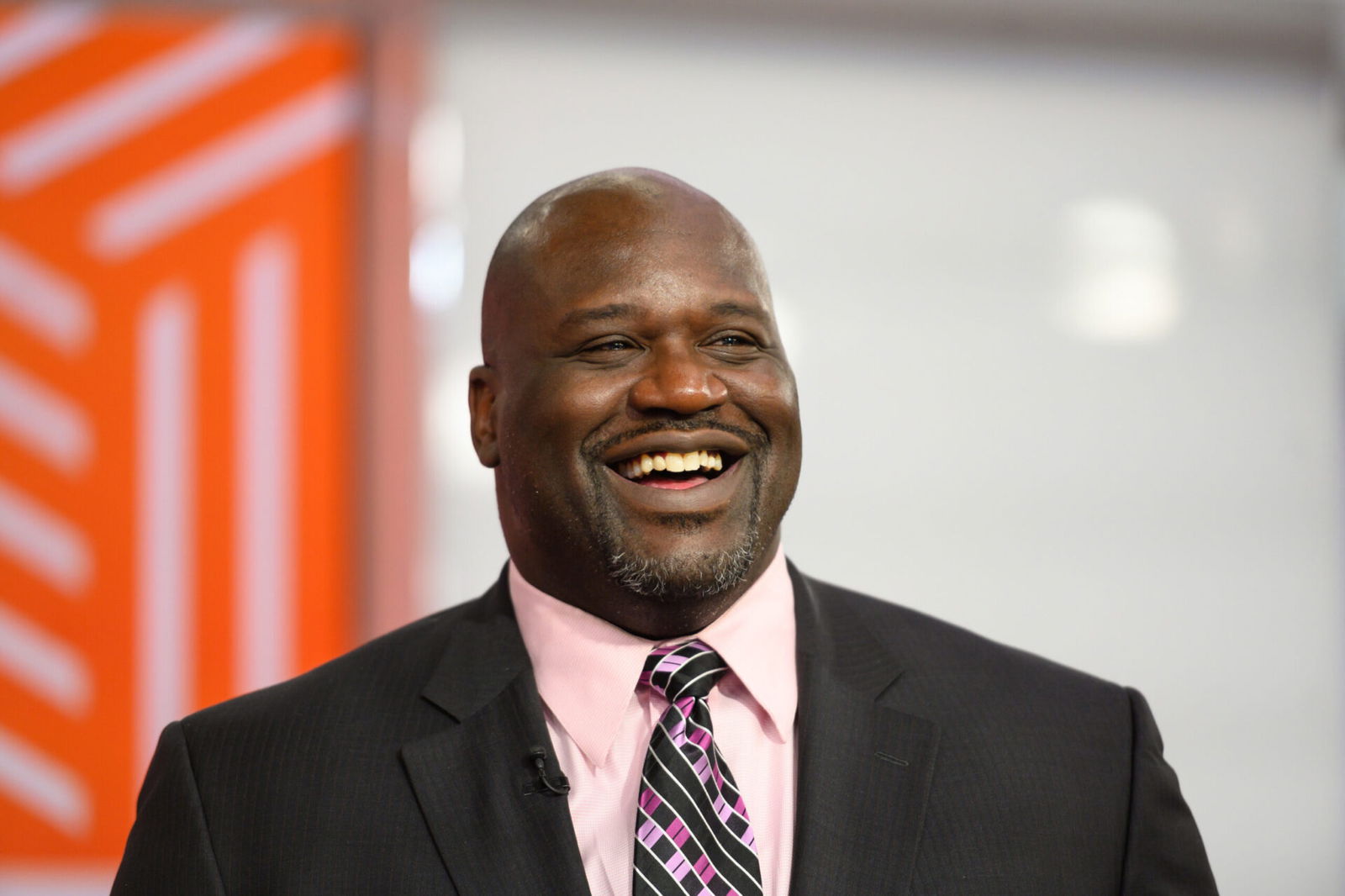
Media mogul and entrepreneur Robert L. Johnson will receive an XCEL Award at the 2026 BLACK ENTERPRISE XCEL Summit for Men, taking place in Orlando, Florida, at the the Hyatt Regency Grand Cypress on Oct. 21-Oct. 23, 2026. This honor adds to his impressive career, which has transformed Black media and business leadership.

BE announced this recognition ahead of the annual summit. The event, in its 10th year, celebrates influential Black leaders across various fields, including business, entrepreneurship, entertainment, and social impact. Johnson is acknowledged for his long-standing contributions to wealth creation, media ownership, and economic empowerment in the Black community. BE has always followed Johnson’s excellence in business, previously ranking his holding companies among the top Black-owned companies in the country on the BE 100’s list. BE also named him one of the 40 Titans,, the most powerful African Americans in business.

Johnson is best known as the founder of BET, which launched in 1980. It later became the first Black-owned company listed on the New York Stock Exchange. In 2000, he sold BET to Viacom in a multibillion-dollar deal, making him one of America’s Black billionaires.

John Malone, an early BET investor, raved about Johnson’s excellence, telling Wharton University, “Johnson has an extraordinary ability to see opportunities that others miss.”

Since then, Johnson has broadened his business interests through The RLJ Companies. He invests in various industries, including hospitality, private equity, automotive, and financial services. He also made headlines in professional sports by becoming the first Black majority owner of an NBA franchise when he purchased the Charlotte Bobcats in 2003.

The XCEL Summit for Men celebrates its 10-year anniversary in October and has become a key event for BE. It brings together executives, entrepreneurs, and thought leaders for networking sessions, leadership workshops, and discussions focused on professional growth and community improvement. Previous honorees have included business leaders, athletes, and advocates recognized for their lasting impact in their fields.

Johnson’s selection as a 2026 honoree highlights the summit’s ongoing focus on legacy, ownership, and generational wealth. These themes have defined his career for over four decades.

RELATED CONTENT: First Black Billionaire’s Mission to Get Blacks $14 Trillion


Baddie Con Breast Cancer
photo credit: Baddie Con Breast Cancer

Breast Cancer BaddieCon 2026 Aims To Redefine Survivorship Of Women Of Color

A national nonprofit dedicated to supporting women of color affected by breast cancer is hosting its signature survivorship conference


A national nonprofit dedicated to supporting women of color affected by breast cancer is hosting its signature survivorship conference in Atlanta this May, placing a strong focus on healing, advocacy, and community.

The For the Breast of Us Foundation announced that Breast Cancer BaddieCon 2026, themed “Survivorship Reimagined,” will be held from May 14-17 at the Atlanta Evergreen Lakeside Resort. This four-day event is designed to create culturally intentional spaces for breast cancer survivors, caregivers, medical professionals, and advocates, especially women of color who often encounter disparities in treatment results and access to care.

The American Cancer Society reports that breast cancer is the most commonly diagnosed cancer among women in the United States. Black women face higher mortality rates from the disease despite lower incidence rates compared to white women. Researchers continue to investigate this gap, looking at issues like access to care, early detection, and systemic inequality.

Organizers state that the conference aims to go beyond traditional discussions about survivorship. It will include wellness programming, educational workshops, and spaces focused on joy and emotional healing. Attendees can participate in panel discussions, fireside chats, and advocacy sessions, as well as activities focused on community-building, resilience, and identity.

Marissa Thomas, who co-founded the organization after her own journey with the disease, highlighted that the gathering addresses conversations and support systems that are often ignored in mainstream cancer discussions:

“Breast Cancer BaddieCon: Survivorship Reimagined is centering the lived experience for Women of Color impacted by breast cancer. It’s a place where we address the gaps often left out of the conversation in most spaces.”

The conference is sponsored by pharmaceutical and healthcare companies, including Pfizer, Novartis, Eli Lilly and Company, and Exact Sciences. Organizers say the event represents a larger effort to redefine survivorship through advocacy, education, and community-focused support.

RELATED CONTENT: Bun B Big Ups Wife Queenie After Her Successful Battle Against Breast Cancer

US DOT Is Trying To ‘E-Race’ What Cannot Be Erased With The ‘Interim Final Rule’

US DOT Is Trying To ‘E-Race’ What Cannot Be Erased With The ‘Interim Final Rule’


Written by Hanna Rowell and Morgan Wilson, Esq.

On Oct. 3, 2025, the United States Department of Transportation (USDOT) issued an Interim Final Rule (IFR) regarding modifications to the Disadvantaged Business Enterprise (“DBE”) and Airport Concessions Disadvantaged Business Enterprise (“ACDBE”) programs. Griffin & Strong is a firm at the forefront of non-discrimination and procurement research. Our team has conducted a detailed review of the IFR and collaborated to put together the information in this article.

The major modification that the IFR makes is to remove the Congressional mandate for race- and sex-based presumptions of social and economic disadvantage from DOT program eligibility. In other words, women and minority race/ethnic groups are no longer presumed to be disadvantaged by the DOT. Instead, they must now prove disadvantage to qualify as a DBE or ACDBE during the recertification process. This change triggers other modifications, such as:

  • Replacing existing terms of “race-neutral” and “race-conscious” with “DBE-neutral” and “DBE- conscious.”
  • Requiring the recertification of all currently certified DBE and ACDBE firms, which means new applications now must include individualized proof of social or economic disadvantage in a personal narrative that cannot be “based in whole or in part on race or sex.” As discussed in further detail below, this is a meaningful example of the USDOT attempting to push the boundaries of what the Supreme Court has previously ruled, which remains good law.
  • Requiring each Unified Certification Program (UCP), which is the state certifying agency, to reevaluate all currently certified DBE and ACDBE businesses according to the new personal narrative requirements to determine if a firm is eligible for recertification under the new DOT terms, i.e., non-presumptive disadvantage.

Griffin & Strong note that the sum of the IFR modifications rests on a shaky foundation of district court cases, executive orders, and a single Supreme Court ruling applicable only to diversity efforts in college admissions (Students for Fair Admissions, or SFFA). The IFR misapplies good law and serves as a distraction and scare tactic meant to create a chilling effect with a reach more ambitious than its legal scope.

District courts are trial-level courts whose rulings are typically limited to their district. Even if these cases were to be applied at the national level, the specific district court cases the IFR relies upon (Ultima, Mid-America Milling, and Nuziard) would need to be complete. Instead, the cases cited in the IFR to substantiate its modifications are in preliminary stages with no final rulings yet issued. Regardless of how the district court cases are interpreted, these two facts alone preclude them from supporting the IFR’s reach. The presidential executive orders completely and purposefully disregard the distinction between programs and governmental action focused on “diversity” and actions focused on combating the present effects of past discrimination. Despite the Department’s attempt to group the two together, remedying “specific, identified instances of past discrimination that violated the Constitution or a statute” is still recognized as an acceptable governmental interest. Notably, this is reiterated in the Students for Fair Admissions Supreme Court ruling.

Intentional Mischaracterization and Overreach

The USDOT IFR was drafted by, or under the supervision of, numerous knowledgeable governmental officials (many with law degrees), which makes the mischaracterization much more concerning. This infirmity demonstrates that the federal government cannot unequivocally prove the unconstitutionality of DBE and ACDBE programs. As a workaround, USDOT is attempting to redefine what a DBE/ACDBE can be by conflating the indefensibility of the presumption of race or sex as disadvantage with using race or sex as evidence of disadvantage in your personal narrative. The practical effect of this is that the burden of proof to establish a firm’s disadvantaged status is shifted onto individual business owners, despite the legal overreach.

While Griffin & Strong acknowledge that the USDOT does have the authority to modify certain elements of the DBE/ACDBE programs (i.e., removing presumptions of race/sex), they do not retain the authority to determine or direct what a personal narrative of disadvantage faced by individual business owners can or cannot be. These two modifications are distinct from one another and therefore do not retain the same backing by the Supreme Court case law that the IFR cites:

  • Removing race- and sex-based presumptions of social and economic disadvantage from USDOT program eligibility
    • Supported by the SFFA Supreme Court ruling.
  • Not allowing race and sex related evidence of social and economic disadvantage to be shared as
    individualized proof in their personal narrative statement
    • NOT supported by the SFFA Supreme Court ruling. In fact, in SFFA, the Supreme Court held that individuals may cite their race and sex in a personal narrative statement.

There is a meaningful difference between these two modifications. Beyond economic disadvantage, the IFR does not clarify what sort of disadvantage can be relied upon in a personal narrative. Without clarity, it is up to the individual certifying agencies to determine their own criteria for reviewing personal narrative statements.

What Now? And How G&S Can Assist

The bottom line for certifying agencies and individual business owners is not to abandon your DBE/ACDBE or M/WBE programs in response to this IFR. The federal government is counting on a sweeping chilling effect on race- and gender-conscious programming so that they can achieve their ends of eradicating the effects of the civil rights gains of years past.

Remember, you are not under attack if you are following the right standards. Do you need to get rid of your program? No, but the IFR does require that goal setting be based on a current disparity study conducted using the new definitions of DBE and ACDBE to provide a legal foundation for a program. Previous studies that employed the prior definition of DBE/ACDBEs, in which race and/or gender were used as a presumption of disadvantage, are no longer usable for goal setting. Additionally, although not new to most disparity study methodology, the clarified disparity study expectations of the IFR require that newly conducted disparity studies include a “detailed capacity analyses, which may necessitate additional economic modeling, data collection, and expert analysis beyond what is standard practice in many jurisdictions,” and outline the methodology used for such analysis if the study is going to be used for goal- setting purposes. Disparity studies take approximately one year to complete. Therefore, G&S encourages agencies to initiate the disparity study solicitation process while conducting DBE/ACDBE recertification, rather than waiting until firms have recertified to begin the study, which would ultimately cause further delays in reestablishing goal setting.

Keep in mind that the IFR applies only to projects and contracts funded, in whole or in part, by the USDOT, and is applicable only to DBEs/ACDBEs and programs. Therefore, M/WBE programs remain lawful with an unexpired disparity study and should not be shuttered. Additionally, the IFR states that agencies are no longer required to track race and sex data, but that does not mean they cannot continue to do so. Maintaining your data collection ensures that future disparity studies can be based on recent, accurate data. Do you need to recertify? Yes, every DBE- and ACDBE-certified firm will be prompted by certifying agencies to undergo reevaluation in accordance with the new eligibility requirements, with a specific focus on the personal narrative portion.

Due to meaningful missteps in this IFR that render certain parts inapplicable, there are avenues to maintain your program and craft a personal narrative that reflects your experiences as an individual and business owner. Griffin & Strong is dedicated to helping governments and individuals navigate this volatile legal landscape.

Contact Griffin & Strong or fill out our meeting request form to discuss how to keep your program compliant and legally defensible with a robust disparity study, or to request assistance preparing your personal narrative.

For more information regarding Griffin & Strong’s assessment of the IFR, you can view our public comment submission to USDOT.

RELATED CONTENT: Flights at O’Hare To Be Reduced And Capped for Summer Travel Season

Stormi Steele, Belle Collective, Canvas Beauty Brand
Courtesy of Warner Bros.

‘Belle Collective’ Star Stormi Steele Built Canvas Beauty Brand Into A Multimillion-Dollar Empire Through Reinvention And Live Selling

In its first month, Canvas Beauty generated roughly $50,000 in sales


The Founder’s Origins: From Survival Mode to Beauty School

For Canvas Beauty Brand founder and “Belle Collective: Birmingham” star Stormi Steele, success didn’t begin with a viral TikTok Live or a reality television camera crew. It started in survival mode.

Long before she became one of the most recognizable entrepreneurs in beauty and social commerce, Steele was a depressed college student in Mississippi trying to force herself into a life that never felt like her own. She was just 24 credit hours shy of graduating with an art degree when she realized she couldn’t continue down a path that left her emotionally hollow.

“I was thinking about committing suicide, to be honest,” Steele told BLACK ENTERPRISE. “I just got to the point where I was like, I gotta fight. I gotta do something.”  

That fight eventually led her to beauty school, then to Huntsville, Alabama, where she rebuilt her life one client at a time. Armed with a thrift-store outfit, a portfolio of hairstyles, and relentless hustle, Steele began building a clientele through Facebook messages and word-of-mouth referrals.

“I befriended every female that popped up on Facebook from Huntsville, and I put my flyer in their inbox,” she said.  

Within months, she was working 12- to 14-hour days as a stylist. But the real entrepreneurial breakthrough came after she left a commission-based salon and opened her own small studio for $800 a month.

“That’s when I first had that real entrepreneurial understanding,” Steele said. “‘Oh wow, Stormi, you can have ideas and invest in them.’”  

The Product Innovation: Addressing Traction Alopecia

While specializing in wigs and extensions, Steele noticed that many of her clients were quietly struggling with traction alopecia and hair thinning. Determined to help, she began researching ingredients and experimenting with formulations in her kitchen after dreaming about components like cayenne pepper and black tea.

The result became Canvas Blossom Serum, the product that launched Canvas Beauty Brand.

Steele initially sold just over 100 bottles on Facebook in 2015. They sold out the same night.  

Still, she hesitated to leave hairstyling behind completely until a traumatic incident in 2016 changed everything. After a woman pulled a gun on her at the salon, Steele said her anxiety became overwhelming.

“I was having panic attacks going to the salon,” she recalled.  

Scaling the E-Commerce Empire

A 2018 trip to New York City became the catalyst for her next leap. Inspired by the energy and ambition of the city skyline, Steele returned home, canceled months of salon appointments, built her own website from scratch, and committed fully to e-commerce.

The gamble paid off immediately.

In its first month, Canvas Beauty generated roughly $50,000 in sales. Within a year, the company had surpassed $1 million. By 2020, the business had reportedly generated more than $20 million in sales.  

Pivoting Through Crisis and TikTok Shop Dominance

But Steele’s story wasn’t a straight climb upward.

In 2022, she learned her company had been hit with a devastating financial crisis after a former CFO allegedly secured unauthorized funding deals that left the business exposed to millions in repayment obligations.

“I was sitting there at zero,” Steele said.  

Rather than folding, Steele pivoted again. She launched a new entity, stabilized her website operations, and began rebuilding the business almost in real time.

That reinvention coincided with another major shift: the expansion of Canvas Beauty beyond haircare into body and skincare products, including the now-viral Body Glaze collection.

Then came TikTok Shop.

Steele quickly recognized the platform’s potential and leaned fully into livestream selling, where her transparency and storytelling resonated with audiences. She openly shared her financial struggles, rebuilding journey, and entrepreneurial lessons while demonstrating products live.

The strategy transformed the business.

One of her earliest TikTok live events generated $150,000 in sales in just two hours. Later, Steele became part of TikTok Shop history after generating more than $1 million in a single livestream over roughly four-and-a-half hours, helping establish a blueprint for modern live selling in beauty.  

Strategic Media Presence and Future Vision

Today, Steele says live commerce is reshaping retail entirely.

“Live selling is going to change and reshape how we consume and understand e-commerce,” she said. “It’s just getting started.”  

That entrepreneurial instinct also shaped Steele’s return to television through Belle Collective. After previously walking away from ensemble reality TV, Steele said she initially had no desire to reenter that space.

What changed was leverage.

Rather than simply appearing on camera, Steele negotiated a producer role for herself through Kingdom Reign Entertainment, giving her greater ownership of how her story and business were portrayed.

“One thing, you know, to be a producer, to be able to control my Stormi,” Steele explained.  

That distinction mattered after earlier experiences where she felt major business milestones were overlooked in favor of interpersonal drama.

Now, Steele views television as another visibility tool, but only when paired with strategy.

“I know how to compound visibility into results,” she said.  

That philosophy extends to her partnership with La La Anthony, which Steele says worked because it felt authentic rather than transactional.

“She cared about my Stormi,” Steele said. “That was unique.”  

Despite her growing national visibility, Steele has remained rooted in Alabama, where she lives on equestrian property outside Huntsville. For the Mississippi native, building wealth in the South wasn’t a compromise. It was the dream.

“I just wanted peace,” she said.

RELATED CONTENT: Stormi Steele First Creator To Hit $1M In Sales During Single TikTok Live Session

Steph Curry,warren buffett
Photo by: Nathan Congleton/NBC via Getty Images

Stephen Curry Launches New Scholarship Program Aimed At Supporting Underserved Bay Area Students

The school announced the launch of the Davidson College Curry Scholars Program in partnership with Curry.


Four-time NBA champion Stephen Curry is expanding his impact beyond basketball by helping Bay Area students access higher education through a new scholarship initiative with his alma mater, Davidson College.

The school announced the launch of the Davidson College Curry Scholars Program in partnership with Curry, a nonprofit organization, College Track, and the Oakland Unified School District. The program will provide full scholarships and college support services to high-achieving students from under-resourced Bay Area communities.  

According to Davidson College, 5 to 10 students will be selected each year, starting with the high school graduating class of 2027. Scholarship recipients will receive funding for tuition, housing, meals, books, and other academic expenses, including a computer allowance and opportunities for campus visits.  

Curry attended Davidson from 2006 to 2009, where he became the Wildcats’ all-time leading scorer before leaving for the NBA, where the Golden State Warriors selected him in the 2009 NBA Draft. He later completed his sociology degree in 2022.

In a video released with the announcement, Curry said he and his wife, Ayesha, have focused their philanthropic efforts in Oakland for years through their Eat. Learn. Play. Foundation. The couple stated that the scholarship program aligns with their mission of increasing opportunities for young people.

“Davidson College is part of who I am, not just as an athlete, but as a family member, a leader, and as someone who cares deeply about this community. I want you to have the opportunity for the same kind of life-changing experience that I had … I’m super excited about this scholarship program and hope that you will look to learn more about this incredible opportunity and apply,” Curry states in the video.

Davidson officials mentioned that the initiative also aims to strengthen pathways for first-generation college students. More than 22% of the college’s current first-year students are eligible for Pell Grants, according to the institution.  

College Track President and CEO Shirley M. Collado said the partnership shows a shared commitment to helping underserved students succeed through higher education. Meanwhile, Davidson President Doug Hicks praised Curry’s ongoing dedication to Oakland youth.  

Applications and financial aid materials for the first class are due on Sept. 21, with an in-person selection process scheduled in Oakland on Oct. 20.

RELATED CONTENT: Which Sneaker Brand Will Stephen Curry Sign With After Under Armour?

Artificial intelligence, Ai, AI, generative AI, employment
Photo credit: Sanket Mishra

AI Layoffs Surge Across Big Tech As New Research Questions If Automation Is Actually Paying Off

A new study suggests that corporate America may be overestimating AI's ability to replace human talent


The artificial intelligence gold rush is rapidly reshaping corporate America, but at what cost?

Over 92,000 tech workers lost jobs in 2026, with April alone seeing over 45,000 layoffs. This comes as tech giants like Meta, Microsoft, Amazon, and Oracle eliminate roles in favor of investing billions into AI infrastructure and automation tools. However, despite the massive workforce shifts, new research suggests many companies are not actually seeing stronger returns. According to a new survey published by Gartner, nearly 80% of companies that reduced headcount in place of AI did not experience higher ROI gains than companies with modest or no cuts. Instead, the research firm found that companies with the most gains were using AI as a collaboration tool to make workers more productive rather than replacing them, reports Fortune.

The findings are adding fuel to growing concerns that companies may be using AI as a justification for broader restructuring efforts rather than as a proven replacement for human labor. “Cutting jobs may free up budget, but it does not create business value by itself,” Gartner analysts warned in their findings, reports Yahoo Finance.

Meta is reportedly eliminating roughly 8,000 positions — nearly 10% of its workforce — while continuing to invest heavily in AI computing infrastructure. During a recent company town hall, CEO Mark Zuckerberg acknowledged that the company faces difficult financial trade-offs between funding AI expansion and maintaining headcount, reports Reuters.

Microsoft has also announced major workforce reductions and buyouts affecting thousands of employees as the company accelerates its AI ambitions. At the same time, some researchers believe the future of work may evolve into a hybrid model where humans and AI collaborate rather than compete directly. Another recent study found that nearly 79% of observed AI usage involved augmentation — meaning workers used AI to enhance productivity instead of fully replacing jobs.

Still, for many employees navigating another wave of layoffs, the promise of AI-driven prosperity feels uncertain. As Silicon Valley races toward automation, workers across industries are left wondering whether AI is truly creating the future or simply shrinking the workforce along the way.

RELATED CONTENT: Those Most Reliant On AI Show Weaker Confidence In Their Own Thinking, Study Shows

Women Of Color, Voting, Politicians, maternal death rates, criminal justice system
Photo by Brandon Bell/Getty Images

The Voting Rights Act Is a Black Business Issue

Voting has never been ceremonial to Black people


Written By Briana D. Williams

Voting has never been ceremonial to Black people. The ballot has always had a balance sheet attached to it. It has determined who could protect land, wages, schools, workplaces, neighborhoods, and the basic right to participate in public life. The Fifteenth Amendment promised that right in 1870. For nearly a century after, Black voters were met with poll taxes, literacy tests, grandfather clauses, white primaries, bureaucratic traps, intimidation, harassment, economic retaliation, and violence. The Voting Rights Act of 1965 was Congress’s attempt to turn a constitutional promise into enforceable power.

The point of that history is not that every modern redistricting case is Selma. The point is that the machinery of political voice has always shaped the machinery of economic life. The Voting Rights Act outlawed discriminatory voting practices, authorized federal examiners in covered jurisdictions, and made Section 2 a nationwide protection against voting rules that deny or abridge the right to vote on account of race or color. Its impact was immediate: by the end of 1965, roughly 250,000 new Black voters had been registered, about one-third by federal examiners.

That is why the Voting Rights Act belongs in the business conversation. Civic power is business infrastructure. Resilience is beautiful. But it is not infrastructure.

BLACK ENTERPRISE recently covered the Supreme Court’s Louisiana voting-rights ruling as news. The business question is what comes next. In Louisiana v. Callais, BE reported that Justice Samuel Alito described Louisiana’s challenged map as an “unconstitutional gerrymander,” and that Chief Justice John Roberts described the district as a “snake” stretching more than 200 miles to connect pieces of Shreveport, Alexandria, Lafayette, and Baton Rouge.

Here is the short version of the case, without turning this into a bar-review lecture. Louisiana’s post-2020 congressional map had one majority-Black district. Section 2 litigation led the state to adopt a new map with a second majority-Black district. That new district was then challenged as an unconstitutional racial gerrymander. On April 29, 2026, the Supreme Court affirmed the judgment against the new map, holding that Section 2 did not require Louisiana to create the additional majority-minority district, so the state’s use of race in drawing it was not justified.

The majority also tightened the Section 2 framework in ways that matter far beyond Louisiana: plaintiffs’ illustrative maps cannot use race as a districting criterion, must satisfy the state’s legitimate districting objectives, including political goals, and must control for party affiliation when proving racial bloc voting. Justice Elena Kagan’s dissent warned that the decision pushes Section 2 back toward a purpose test and gives states a new way to defend minority vote dilution by calling the harm partisan rather than racial.

For lawyers, that is a doctrinal fight. For Black professionals, founders, executives, and workers, the practical question is sharper: when political representation weakens, what happens to market access?

Political representation is business infrastructure

A district line may look like geometry. For a business owner, it can feel like a loan denial with better handwriting.

Representation influences who writes procurement rules, who funds enforcement agencies, who audits supplier-diversity promises, who asks why minority vendors are not being paid on time, who protects small business lending programs, who funds workforce training, and who answers the phone when a contractor says the bidding process has developed a mysterious fondness for the same three firms.

As a lawyer who works with business owners, executives, public entities, and companies in employment, business, and compliance disputes, I think of rights the way I think of contracts: they are only as strong as the systems that enforce them. Rights rarely disappear all at once. More often, they are buried under friction — a missed deadline, a vague standard, a disappearing paper trail, a complaint that goes “under review” long enough to qualify for a pension.

For Black businesses, that friction is expensive.

Black entrepreneurship is growing, but it is growing inside a constrained system. Census Bureau data for reference year 2023 show that Black or African American-owned employer firms accounted for 3.4% of U.S. employer businesses, about 201,000 firms, and generated $249 billion in receipts. Black-owned nonemployer businesses accounted for 14.4% of nonemployer firms, about 4.4 million businesses, with $128.7 billion in receipts. Pew Research Center’s analysis of federal data found that majority Black-owned employer firms grew from 124,004 in 2017 to 194,585 in 2022, with gross revenue rising 66% over that period. Yet those firms still represented only about 3% of classifiable U.S. employer firms and 1% of gross revenue, while Black Americans were roughly 14% of the population.

That is growth. It is also a warning. A community can be entrepreneurial and still be structurally under-leveraged.

Public contracts are a market, not a metaphor

For many founders, government is not an abstract political actor. It is a customer, a regulator, a landlord, a lender, a certifier, and sometimes the slowest-paying client on the books.

The federal marketplace alone is enormous. In fiscal year 2024, small businesses received more than $183 billion in federal prime contracts, while small disadvantaged businesses received $78.1 billion. Disaggregated SBA data listed Black American small businesses at $9.83 billion, or 1.54% of prime contracting dollars. Federal Reserve Small Business Credit Survey data also show that among Black-owned employer firms, 15% reported state and local government customers accounting for at least 10% of firm sales in 2024, and 7% reported federal government customers.

So when we talk about voting rights, we are also talking about who influences the rules of a marketplace worth billions. Who gets certified? Who gets outreach? Who hears about the opportunity before the application window closes? Who gets paid within 30 days instead of “soon”? Who audits whether agencies are actually meeting their small business goals?

A delayed payment to a Black-owned firm is not an inconvenience. It can be payroll, rent, insurance, and survival wearing a government badge.

Workplace accountability runs through representation

Voting rights are also a workplace issue.

The representatives we elect help shape labor budgets, anti-discrimination enforcement, whistleblower protections, wage-theft priorities, public-sector hiring, family leave, education pipelines, transportation, childcare, and the way agencies respond when discrimination is not dramatic enough to trend but serious enough to derail a career.

This connection is not new. The Department of Justice’s summary of Section 2 explains that courts evaluating vote-dilution claims may consider whether minority group members bear the effects of discrimination in education, employment, and health, because those conditions can hinder effective political participation. In plain English: the law has long understood that political power and economic conditions talk to each other.

Black professionals know the difference between a right that exists on paper and a right that has someone with authority willing to enforce it. A handbook can promise fairness. A DEI statement can have better adjectives than a luxury candle. But if agencies are underfunded, if oversight is weak, if boards and commissions do not reflect affected communities, accountability becomes a branding exercise.

And branding without enforcement is just calligraphy.

Capital gaps make civic power more urgent

The risk is sharper because Black businesses often face the market with less margin for error.

The Federal Reserve’s 2026 chartbook on firms by race and ethnicity of ownership found that at the end of 2024, 47% of Black-owned employer firms were operating at a loss, compared with 32% of white-owned employer firms. Among loan, line of credit, or merchant cash advance applicants, 36% of Black-owned employer firm applicants were denied, compared with 17% of white-owned applicants; 32% of Black-owned applicants were approved, compared with 57% of white-owned applicants.

A redistricting decision does not personally deny a loan. But if Black firms are already operating with thinner margins and facing tougher credit outcomes, every policy choice carries more weight: a grant, a licensing rule, a tax credit, a procurement target, a public payment timeline, a workforce program, a CDFI partnership, a broadband buildout, a transit line, a school board budget.

The vote is not the business plan. It is the road the business plan has to travel.

The playbook: what Black professionals and founders should do now

The response to weakened voting protections cannot be panic. Panic is not a strategy; it is a very expensive group chat.

  • 1. Audit your public-money map. Identify every public system that touches your business or career: contracts, licenses, grants, tax incentives, zoning, public boards, school districts, transportation authorities, health departments, courts, and workforce programs. If your business sells to government, wants to sell to government, or depends on a regulated industry, know who writes the rules and who oversees the rule-writers.
  • 2. Document like the future may ask for exhibitsIf you are denied a contract, request the scoring criteria. If payment is delayed, keep the timeline. If a workplace complaint is mishandled, preserve the emails, policies, names, dates, and witnesses. If a supplier-diversity promise does not match actual spend, capture the gap. Receipts are not petty; receipts are governance.
  • 3. Run a representation-risk audit. Executives should ask whether promotion, discipline, procurement, and complaint processes are measurable. Who is getting opportunities? Who is not? Are supplier commitments tied to dollars? Do policies survive legal and political shifts, or are they dependent on the mood of the moment?
  • 4. Build civic continuity before crisis. Join chambers, professional associations, neighborhood councils, industry groups, and public-comment processes before the emergency. A community that only organizes after the damage is done is always negotiating from the invoice end of the transaction.
  • 5. Treat civic power as infrastructure. Business owners would never ignore roads, utilities, cybersecurity, insurance, banking relationships, or supply chains. Political representation belongs in the same category because it affects the terrain on which Black businesses compete.

This is not about special treatment. Black businesses do not need pity. We need enforceable rules, transparent procurement, fair credit, accountable workplaces, and political systems that allow communities to choose representatives who understand the invoice, the payroll, the lease, the lawsuit, and the dream.

The Voting Rights Act is not merely a civil-rights statute. It is a market-access statute. It helps determine whether Black political voice can translate into Black economic leverage.

A vote may be cast in a booth, but its value shows up everywhere a Black person tries to work, build, hire, borrow, contract, lead, and own.

That makes voting rights not a side issue for BLACK ENTERPRISE readers. It makes them business infrastructure.

RELATED CONTENT: The Supreme Court Guts Voting Rights Act By Restricting Black Representation In Louisiana

Briana D. Williams is a Harvard Law graduate, California attorney, and founding attorney of Greystone Law and Advisory Group, P.C., where she represents business owners, executives, and public entities in employment, business, and compliance matters. Her work focuses on litigation, governance, workplace accountability, sustainable business strategy, and risk mitigation.

Brandon Clarke
photo credit: Mogami Kariya, CC BY-SA 2.0 , via Wikimedia Commons

NBA Mourns Death Of Memphis Grizzlies Brandon Clarke At Age 29

Clarke's agency, Priority Sports, confirmed the news in a statement, describing him as "the gentlest soul."


The NBA community is mourning the death of Brandon Clarke, the longtime forward for the Memphis Grizzlies. He died May 12 at age 29, according to various reports and statements from his agency and team. The cause of death has not been made public.

Clarke’s agency, Priority Sports, confirmed the news in a statement, describing him as “the gentlest soul.” They praised the impact he had on his teammates, friends, and family throughout his basketball journey.

 “We are all beyond devastated by the passing of Brandon Clarke. He was so loved by all of us here, and everyone whose life he touched. He was the gentlest soul who was the first to be there for all of his friends and family.”

The Grizzlies and the NBA also expressed their condolences to Clarke’s loved ones and acknowledged both his contributions on the court and his involvement in the Memphis community.

Clarke was born in Vancouver, British Columbia, and moved to the United States as a child. He attended Desert Vista High School in Phoenix. He started his college basketball career at San Jose State before transferring to Gonzaga University, where he emerged as one of the top forwards in the nation during the 2018-19 season.

Clarke was selected as the No. 21 overall pick in the 2019 NBA Draft by the Oklahoma City Thunder, but his rights were traded to Memphis. He quickly became an important player for the Grizzlies and earned NBA All-Rookie First Team honors in 2020.

In recent years, Clarke faced several injuries, including a torn Achilles tendon in 2023 and knee issues that limited his playing time during the 2025-26 season. USA Today reported Clarke played in only two games this year due to ongoing injury problems.

He also has faced recent legal trouble. BLACK ENTERPRISE recently covered that Clarke was arrested on allegations of speeding, reckless driving, and possessing a controlled substance.

Tributes from across the basketball world continue to come in from former teammates and NBA figures remembering Clarke not just as a talented player but also as a respected member of the Memphis community.

RELATED CONTENT: Memphis Grizzlies Acquire Cedric Coward With No. 11 NBA Draft Pick

In Episode 03 of BE THE GAME: The Business of Sports, hosted by Alfred A. Edmond Jr. and presented by Nationwide, ESPN powerhouse David Roberts breaks down the leadership, strategy, and vision behind some of the biggest shows in sports media – including First Take, Get Up, and SportsCenter. From building talent to redefining sports storytelling, this is a true masterclass in excellence.

SPONSORED BY

Black Americans, Hollywood, Film, Content Creator, Actor, Actress
(Photo: Ignatiev/Getty Images)

Black Actors Need Creator-Owned Pipelines, Not Just Visibility

If Black actors want long-term security and cultural power, the move isn’t just “get more visible.”


By Markice Moore

Visibility can change your life.

A strong run on television can bring better rooms, better reps, bigger auditions, and — on a good day — a little peace of mind.

But there’s a trap inside that progress: visibility is not the same thing as ownership.

For too many Black actors, the career arc looks like this: you grind, you break through, you get “seen,” and then you’re right back to waiting on the next greenlight that you don’t control. The checks may be larger, the meetings may be nicer, but the leverage is still fragile.

I’ve lived the difference.

I’m an actor, writer, and producer, and I’m signed to Daniel Hoff Agency. My credits include The Walking Dead, Snowfall, Tyler Perry’s The Paynes, Law & Order, and Chicago P.D. I’m also the founder of Both Sides of the Camera Studios and the writer/producer of the award-winning horror film, Spaghetti.

I’m not sharing that to flex. I’m sharing it because I’ve learned something the hard way: credits are a door, not a foundation. The foundation is a pipeline you own — a creator-run system that turns talent into repeatable outcomes.

If Black actors want long-term security and cultural power, the move isn’t just “get more visible.” The move is: build creator-owned pipelines that connect performance to production, IP, education, audience, and business infrastructure.

Visibility vs. ownership: a simple test

Here’s the question that clears the fog:

When the industry slows down, what still produces value under your name?

If the answer is “nothing until I book again,” you’re living on visibility.

If the answer is “my catalog, my community, my IP, my products, my productions, my systems,” you’re building ownership.

Ownership is the difference between a season and a career.

This matters for Black talent in particular because we already understand that access can be inconsistent. The power isn’t just in getting picked — it’s in building a platform where you don’t need permission to create.

The five parts of a creator-owned pipeline

A pipeline doesn’t have to start big. It has to start intentionally. Below is a practical framework any working actor can begin building, regardless of where they are on the call sheet.

  • 1) IP you control (stories, formats, and worlds)

The fastest way to move from “talent for hire” to “talent with leverage” is to have intellectual property you own or co-own.

That can be: a feature screenplay you can package; a series concept with a bible and pilot; a podcast with a defined format; a book or audiobook; a documentary concept rooted in community truth.

The key is to stop treating writing and development like a hobby you’ll “get to later.” If you’re waiting on permission to create your best work, you’re already behind. Start building a catalog.

  • 2) Audience you can reach directly (not rented attention)

Social media can be useful, but a creator-owned pipeline needs at least one channel you control: an email list, a membership community, a Patreon-style hub, or a text list.

An algorithm can disappear your reach overnight. A direct channel can’t.

When you build a real audience, you’re not begging for a meeting. You’re walking in with proof that people care.

  • 3) Production capacity (small, repeatable, real)

A pipeline requires a production lane — not just “one big dream project,” but a consistent output rhythm.

Think in tiers: short-form proof (scenes, shorts, concept reels); micro-budget productions that can actually get finished; co-productions that expand your footprint.

The point is not to compete with studio resources. The point is to build your own track record of delivering.

A finished project creates more leverage than a perfect pitch deck.

  • 4) Education and ecosystem (teaching, training, and community value)

One of the most overlooked leverage plays for actors is education — not as an ego move, but as a business move.

If you can teach acting technique, audition strategy, set professionalism, writing/producing fundamentals, you can build a revenue stream that strengthens your community and supports your creative output.

When you teach, you also build an ecosystem: students become collaborators, collaborators become crews, crews become companies.

That’s how pipelines form.

  • 5) Business infrastructure (the unglamorous part that wins)

Infrastructure is clean branding and a professional home base (site, press kit, assets); an organized slate (what you’re making next and why); a consistent outreach system (press, festivals, partners); contracts, accounting, and a real process for deals.

It’s not sexy, but it’s what makes your work scalable.

If you treat your career as “art only,” you’ll keep being treated like labor.

The mindset shift: stop asking, start building

The industry will always have gatekeepers. That’s not cynicism — that’s math.

Networking matters, yes. But ownership is built through output and systems. When you produce consistently, you create reasons for decision-makers to attach themselves to you, not the other way around.

Black actors already have one of the strongest advantages in entertainment — cultural leadership. The issue is that cultural leadership doesn’t automatically translate into business ownership unless we build for it.

A creator-owned pipeline makes that translation possible.

A practical 30-day starter plan

  1. Pick one IP lane: feature, series, podcast, book, or doc.
  2. Create one “proof asset”: a 2–3 page outline, a scene, a short pitch video, or a one-page bible.
  3. Build one direct channel: email list + one weekly update.
  4. Ship one finished piece: a short scene, a micro-short, a recorded reading — anything completed.
  5. Do 10 outreach touches: five press targets, five partner targets — with a clean one-page press kit.

What this unlocks

When you build a creator-owned pipeline, you unlock negotiation leverage (alternatives), creative leverage (you set the agenda), and legacy leverage (your work keeps producing even when you’re not on set).

That’s how you stop living on a highlight reel and start living on an engine.

The next era of Black acting success won’t be defined only by who gets seen. It will be defined by who builds.

Markice Moore is an actor, writer, and producer, signed to Daniel Hoff Agency. He is the founder of Both Sides of the Camera Studios and the writer/producer of the award-winning horror film, Spaghetti.

RELATED CONTENT: Freepik Becomes Magnific, Signaling the Rise of the ‘No-Collar’ Creative Economy

×