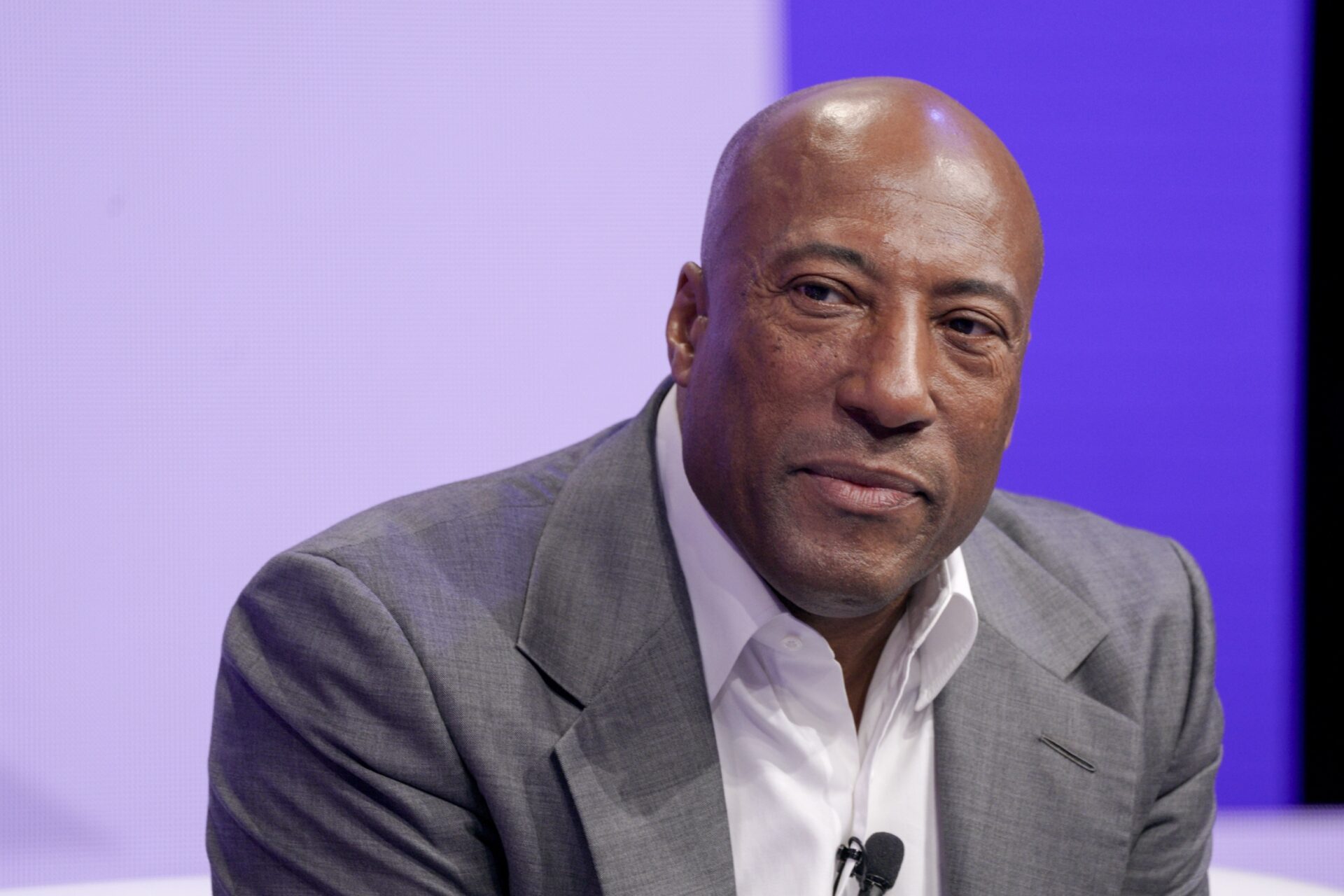
Byron Allen Reveals Plans For A Hostile Takeover Of STARZ On ‘The Breakfast Club’
The media mogul spoke about Black wealth, ownership, and economic power
Media mogul Byron Allen talked about his recent media acquisitions, his pursuit to control STARZ Entertainment, and the fight for Black economic power during his latest appearance on The Breakfast Club.
Allen, founder and chairman of Allen Media Group, opened up about his company’s expansion, including its recent acquisition of BuzzFeed and HuffPost. He described the acquisitions as strategic moves designed to ensure Black-owned companies maintain influence in an increasingly consolidated media landscape.
Allen also addressed his plan to take over STARZ after recently acquiring a nearly 11% stake in the company for $25 million.
“We bought just under 11% — 10.7%. I like STARZ,” said Allen during the interview. “STARZ says that they’re going after the underserved. That’s code for Black,” he continued. “If you’re chasing us, we should own it.”
The comedian explained that STARZ has since adopted a “poison pill” shareholder rights plan to prevent him from acquiring more than 17.5% of the stock without board approval.
“We ended up being the second largest stockholder instantly, and now we have a seat at the table. And so, I’ve made it very clear I plan to buy the whole company. I want to control that company,” said the billionaire entrepreneur.
“My first preference would be to keep it public and to take 52% of it and just control it. But they immediately adopted a poison pill, and they said, ‘Hold up! We do not want you to own this company or control this company.’ So, they took a poison pill to stop me.”
Watch a clip of Allen’s interview on The Breakfast Club below.
Regardless of the opposition, Allen says he remains steadfast and optimistic.
“That won’t stop me. You’ll just delay us, but we will eventually get what we want,” he proclaimed.
“My preference is for it to stay public and for me to control it 51% or greater. But if I have to, I’ll buy the whole company, fire everybody, fire the board — not the people working there — get rid of the board for resisting me, and then take it back public.”
Allen, whose company owns the news platform TheGrio, went on to explain why he believes Black America’s biggest fight today is for economic power. Reflecting on a conversation he had with the late Coretta Scott King about Rev. Dr. Martin Luther King Jr.’s vision for “one America,” he said economic inclusion is what she described as the “fourth and final chapter” in the pursuit of Black liberation following the end of slavery, Jim Crow, and the fight for civil rights.
White Physician Sues ‘Find A Black Doctor’ Directory For Alleged Racial Discrimination
The suit alleges that the online directory denied an application by a white physician due to his race
A white doctor based in Colorado has teamed up with a conservative legal group to sue the online directory, “Find A Black Doctor,” for allegedly discriminating against physicians based on their race.
The lawsuit was filed May 19 in a Manhattan federal court by dermatologist Dr. Travis Morrell and Do No Harm, an organization founded in 2022 that publicly condemns DEI. The complaint accuses the directory of excluding non-Black physicians by restricting eligibility to “Black physicians and dentists in active clinical practice.” The suit also alleges that the online platform “robs” non-Black physicians of “advertising exposure” and promotes “racial concordance,” the notion that patients receive better care from doctors of the same race.
Source: Dr. Travis Morrell, a Do No Harm member and licensed physician (Photo Credit: X / @MorrellMDmph)
“Find A Black Doctor indefensibly robs some physicians of valuable advertising exposure and deprives patients of the opportunity to discover capable providers without regard to race,” reads a statement from a Do No Harm rep in a press release.
According to the complaint, Morrell, a double board-certified physician and member of Do No Harm, says he applied to join the directory on Dec. 23, 2025. However, he didn’t receive a response and followed up by email months later, but was met with silence. The suit, which targets the website and its founder, claims Morrell’s application was “constructively rejected because he is white.”
“Do No Harm and Dr. Morrell are entitled to relief,” reads the legal complaint.
“Find A Black Doctor” was founded in 2005 with the intent to help reduce racial health disparities and improve access to quality healthcare for Black communities around the country. It was relaunched in 2019 by Founder Dr. Dina Strachan, a board-certified dermatologist in New York City, as a resource for individuals seeking culturally competent care from experienced and qualified Black physicians. In 2024, the platform announced that it was expanding to include listings of board-certified health professionals in all 50 states.
“Find A Black Doctor is an internet directory of U.S.-based Black physicians and dentists in active clinical practice. Our mission is to be a partner which provides access, education and resources to improve health outcomes particularly in the African American community,” reads a statement on www.FindABlackDoctor.com.
The lawsuit comes at a time when health disparities disproportionately affect Black communities. Meanwhile, conservative groups continue to target organizations that promote gender and racial equity amid the Trump administration’s ongoing attack on DEI. Earlier this year, the federal government filed a lawsuit against a Coca-Cola distributor for hosting a women’s empowerment event. President Trump also signed an executive order threatening to revoke federal contracts from colleges that promote diversity, equity, and inclusion initiatives.
NAACP Calls For Black Athletes To Boycott Southeastern Conference Schools Over Redrawn Voter Maps
The leading civil rights group is urging Black student-athletes to reconsider playing in Southern states where new congressional maps could be redrawn.
The NAACP is leading the call for Black athletes to boycott Southeastern Conference (SEC) schools as Republican-controlled southern states redraw their voter maps, thus diluting Black voting power following the Supreme Court’s recent decision to gut the Voting Rights Act.
National backlash over voting rights intensified last month following the SCOTUS’ ruling in Louisiana v. Callais, which struck down a map with two majority-Black districts as racial gerrymandering in The Pelican State. As a result, Republican-led states like Alabama and Florida quickly redrew congressional lines, giving GOP congressional candidates an advantage ahead of the 2026 midterm elections. Voting rights advocates argue that by redrawing political maps, Republicans are eliminating majority-Black districts. In response, the NAACP launched a campaign on Tuesday calling on Black student-athletes to boycott colleges in Southern states where new congressional maps have the potential to be redrawn.
“The NAACP will not watch the same institutions that depend on Black athletic prowess to fill their stadiums and their bank accounts remain silent while their states strip Black communities of their voice,” NAACP National President and CEO Derrick Johnson said in a statement, according to NBC News.
The civil rights organization is urging Black recruits to withhold their commitments from universities primarily in the NCAA’s Southeastern Conference, which includes schools in Tennessee, Louisiana, Alabama, Florida, Mississippi, South Carolina, Texas, and Georgia.
The Supreme Court’s monumental decision in Louisiana v. Callais unleashed a tidal wave throughout the South. Since then, Republican states in the South, all of which have at least one majority-Black district, have been working to reset the maps in their favor. Tennessee, for instance, became the first Southern state to pass a new redistricting map that eliminated a majority-Black district in Memphis. The hastily drawn map is among several working their way through state legislatures across the South that are expected to wipe out districts representing majority-Black areas that overwhelmingly vote for Democratic leaders.
In light of the redistricting backlash, comedian and political commentator D.L. Hughley has also voiced support for an SEC boycott. During an interview with The Tennessee Holler, Hughley urged Black athletes not to support states opening the door for racial gerrymandering, which he described as a new era of Jim Crow.
“I don’t understand why a 4/5-star athlete would go to a school where the state is ushering in a new iteration of Jim Crow,” he said. “If you can’t run in a state, don’t run in a state.”
Hughley called for Black college athletes to boycott SEC programs, citing the conference’s $1.03 billion in revenue, driven by Black football and basketball players.
“If you’re a four- or five-star athlete, you can get NIL money anyway. You don’t need to go there. If it was up to the southern states, they would still be having slave labor, which is what they used athletics for. If athletes stop going to the Tennessee and the Louisiana, the top-tier athletes, ESPN and presidents of schools, chambers of Congress would start having conversations.”
He continued, “Let’s be clear. What they’re doing now is ushering in a new iteration of Jim Crow. It’s kind of cliche to say it, but they’re actually living up to it now. They made the ruling not even a week ago, and you see Louisiana and Tennessee and other states jumping on it. You can’t tell it’s not about race when one group of people thinks that they have the right to tell another group of people the parameters for their vote.”
9 Female Entrepreneurs Share The Secret Sauce To Their Success
Black Enterprise asked a handful of women small business owners to name the one thing that has made all the difference
It’s not an exaggeration to say that the best part of my workday is speaking to women entrepreneurs. Since I launched BLACK ENTERPRISE’s SistersInc. podcast for and about women entrepreneurs, back in 2020, I have been energized by conversation after conversation with resourceful, resilient Black women who are launching and growing businesses.
So I jumped at the chance to attend the How I Got Here Small Business Summit, a one-day event for women entrepreneurs across New Jersey, produced by WhitPR. And while there, I took full advantage of being in a room full of successful female small business owners to ask them about their secret sauce.
The answers ranged from inspirational to practical to completely unexpected. Here, nine women entrepreneurs answer the question: “If you could only name one thing, what would you say is responsible for your success?”
I came from a place where I constantly felt like I had to shrink. So now I’m realizing the power of my voice and who I am, and I’m helping other women do that. What has worked for me is utilizing my story and allowing my life to be that representation and testimony to encourage other people. I live this, I walk it, and I make sure that every time I walk into a space, that I remind people.
It isn’t easy, especially when you’ve gone through certain challenges or when you feel like you’ve constantly been disappointed and let down. Sometimes you want to stay in your own bubble. We kind of create a safety net for ourselves. But I realized that that safety net wasn’t keeping me safe, and it wasn’t helping other people. So I had to break out of that fear, and that started with myself—doing the inner work. Sometimes we look at the finished product and we’re like, “I can never get there.” But you can, as long as you’re committed to the work.
My public relations and marketing background has been a catalyst for making sure the world knows that The Nourish Spot exists, and as a result, I’ve been able to leverage that.
I would say breaking out of my shyness shell and speaking to people and telling people about my idea. That helps me to have my name be spoken in different rooms when I’m not even there. And people remember me and ask me for updates on my journey, and they’ve helped me along the way.
At first, I made my sister come out to networking events with me. I had the feeling in my gut like, oh, I don’t love this, but I would still go. That was two years ago, and now I can show up to these events by myself, but there are still times where I still don’t like it. Every time I go to an event, I sit in my car before, and I call my other sister, like, ‘I don’t want to go.’ And she’s like, “Just go. Every time you go, you meet somebody. You call me after, and you’re like, ‘I needed to be there.’” So I just have to remember those conversations and know I’m going to meet at least one person that I’m supposed to meet that day. So, just keep showing up.
What makes me successful is my passion for building wealth and helping families navigate a big transaction with knowledge and confidence. That passion came from me being a single mom and needing an extra hustle to save for my first down payment. That extra job was me becoming a realtor, and after two years of saving my commission checks and learning the business, I was able to close on a home. That changed my life.
I host a lot of webinars. I also share resources with friends, family, and my community on ways to better prepare their finances for home ownership, how to apply [for] and get grants. I just want to share that it’s easier than we think, and with a little bit of structure, strategy, and proper financial resources, homeownership can be achieved.
I think any entrepreneur will tell you that it’s not easy. But something that sticks out to me is when a client can tell me that they really enjoyed working with me, my professionalism, you know, the ease that I help them to figure out what they wanted. Creating those relationships means a lot. A lot of my business comes from referrals and repeat clients, so that makes a big difference.
I am a very bubbly person, and I attract good people. My energy just attracts good energy; energy attracts energy. So be someone who constantly keeps a smile on your face and just be presentable and be open to collaborations.
One day, my fiancé said, “Hey, let’s get back into entrepreneurship and start something.” I said, “Oh, I love flowers.” I had no experience with flowers. But it grew from there. It’s been two years, and now this is my sole job.
A lot of times, I didn’t know how I was going to get it done, I didn’t know how to do it, I didn’t know who to connect with, but I had the faith that it would work out. And I had to persevere and get it done. Move in faith knowing that it will work out without actually knowing how it will work out.
Community is at the core of what we do, and also relationships. My husband and I, we really believe in just each other and pushing the culture forward, and that has been the success of where we are now.
Building community is a process, right? You have to get out and meet people, meet like-minded people. Don’t be afraid to reach out to people and let them know, like, hey, I want to build with you. I want to learn from you. I think that’s how you really build community, just showing interest and learning from others.
Black women supported me. I’m still standing because of Black women.
When you’re up against the Juggernaut, such as your Pampers and your Huggies, the only way you can survive when you’re an underdog is your community—having community and figuring out what our skill sets are and how to support one another/grow our businesses collectively. So if you have this resource and I have this resource, how do you put them together to make it easier on you, easier on me, especially when you’re starting out?
To Successful Entrepreneurs, Time Is More Than Relative
George Fraser says time is more precious than money
If you didn’t know that XCEL Summit for Men Award honoree George Fraser is the chairman and CEO of FraserNet, a networking organization connecting entrepreneurs and professionals with clients, helping them build business, and accelerating their careers, the world might think Fraser is a professor who helped Albert Einstein propose the Theory of Relativity.
Fraser’s theory is centered around the biggest mistake entrepreneurs make: Believing they have plenty of time.
Not true.
For entrepreneurs, time is the only currency they spend, and they never know how much is left. Therefore, Fraser warned in his acceptance speech at this past BLACK ENTERPRISE XCEL Summit for Men, “Use your time wisely.”
In building a successful business, entrepreneurs will experience a lot of obstacles, but ultimately, Fraser advises, don’t waste your time in the process. It’s a precious commodity no one gets back. And when everyone’s career is over, he hopes each person’s body of work will be summed up in two words: “He mattered!” And as BE approaches the 10th anniversary of the XCEL Summit, take a moment to ask yourself: “Do you matter? And to whom? And for what?”
AUTO FLEX: Serena Williams Turned A Tournament Purchase Into A Lincoln Legacy
Lincoln's one-of-a-kind custom Navigator isn't just a luxury vehicle, it's a monument to Black excellence, entrepreneurial vision, and the art of knowing your worth.
By Kimatni D. Rawlins
In 1998, a teenage Serena Williams did what champions do: she invested in herself.Fresh from her first major tournament earnings, she walked into a dealership and drove off in a Lincoln Navigator, the undisputed champion of sports utility vehicles at the time. She named it Ginger.
That singular act of self-determination, equal parts swagger and sentimentality, planted the seed for what would become one of the most extraordinary automotive collaborations in recent memory. More than two decades later, Lincoln didn’t just invite Serena back into the fold; they handed her the design studio. The result is a bespoke, one-of-a-kind Navigator that functions less like a vehicle and more like an autobiography, rendered in Perfect Rose paint, sheepskin carpet, and laser-engraved steel.
The luxury automotive industry is littered with celebrity endorsements that feel transactional at best. What distinguishes the Serena–Lincoln partnership is a relationship far more valuable than any marketing budget: authenticity. Lincoln’s Global Design Director Christine Park Cheng and her team understood this distinction acutely. They weren’t designing for an ambassador; they were creating for a woman who chose Lincoln before Lincoln chose her.
For BLACK ENTERPRISE readers who understand the compounding power of authentic brand equity, this matters. Serena’s relationship with Lincoln mirrors the kind of organic brand-building that translates into generational cultural currency. It’s the difference between being featured in a campaign and being the inspiration for the product itself.
The vehicle was shown at a private design presentation and walk-around at Ford World Headquarters in Dearborn, Michigan — a rare, invitation-only glimpse into the collaboration’s genesis. Standing inches from the finished Navigator, the intentionality becomes real. The exterior wears Perfect Rose, a deeper interpretation of Lincoln’s Sunrise Copper, infused with Serena’s beloved pink and a constellation-inspired sparkle effect. High Gloss Black panels, Satin Rose Copper grille jewels, and Custom Satin Obsidian trim ride on 24” wheels that communicate prestige. A hand-painted rose with an embedded heart graces the B-pillar and rear tailgate: symbols of femininity, tenacity, and love, fused into one image.
The interior concept is christened Clay Court & Afterglow, a rich, warm-brown leather that imitates the clay courts she played on. Lighter Afterglow Tan adds dimension and softness, creating what the design team describes as a feeling of “embrace.” For a woman who has spent decades in the competitive field, that deliberate invitation to exhale carries profound weight.
Engineering marvels include the 30-way Perfect Position Seats, a Revel Ultima 3D sound system with 28 speakers, the panoramic 48” LCD screen, and the hand-painted Big and Little Dipper constellations dancing across the center console. But it was the laser-engraved sill plates with her mantra, “keep going,” and bearing the birth years of her daughters, Olympia and Adira, in the rear, her own name on the driver’s side, and husband on the passenger side that emotionally touched her. When Serena saw them, she wept.
“She is a true class act and a champion in every sense,” said Christine Park Cheng, Lincoln’s global design director. “We couldn’t be prouder to have her behind our wheel.”
Lincoln’s Rejuvenate wellness system, integrating massaging seats, adaptive ambient lighting, and nature-themed audio, reflects a broader driving experience around high-performance individuals and the infrastructure of rest. For Serena Williams, a champion, entrepreneur, designer, and mother of two, a vehicle that doubles as a mobile sanctuary is not an indulgence. It is a strategic resource.
Lincoln has long mastered the art of energy restoration. The XL body frame, illuminated grille, adaptive suspension, and ventilated massaging seats compose a sanctuary on wheels. This bespoke edition simply elevates that sanctuary to the level of a shrine.
When Serena first laid eyes on the completed Navigator at Lincoln’s studio, she broke into elation: “This deserves a clap, a standing ovation. She’s beautiful!” The spontaneity of that moment is the entire thesis. Lincoln didn’t just build Serena Williams a luxury SUV. They presented her with a monument that began with a young Black woman who trusted her own taste and desires.
Photo credit: Courtesy of Kimatni Rawlins/BE
Kimatni D. Rawlins is the founder and editor-in-chief of Automotive Rhythms, a premier multicultural automotive lifestyle publication. His coverage spans luxury vehicles, motorsport, and the intersection of car culture with Black excellence.
(Photo: Julian Dakdouk/Parkwood Media/WireImage via Parkwood )
Beyoncé’s Cécred x BeyGOOD Fund To Invest $250K In Cosmetology Schools In The U.S. And U.K.
The fund will support the next generation of hair professionals through educational scholarships
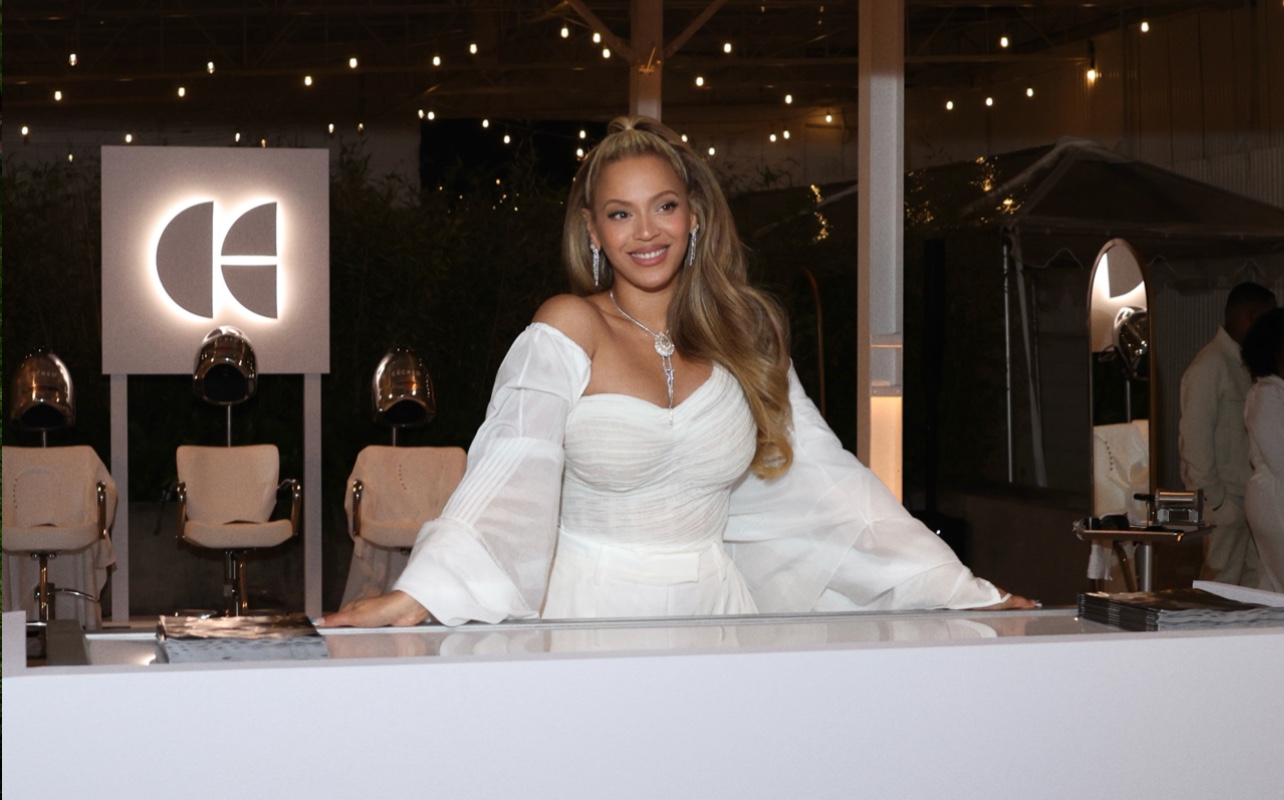
Beyoncé Knowles-Carter’s haircare brand Cécred and her nonprofit, the BeyGOOD Foundation, are launching the 2026 Cécred x BeyGOOD Fund to support aspiring hairstylists, barbers, and hair professionals.
According to a press release, the initiative will return for a third year with a $250,000 commitment focused on educational support and workforce development for the next generation of beauty professionals. The program will provide grants to 10 cosmetology and barbering institutions across the United States and the United Kingdom, with each school receiving $25,000 in scholarship funding.
“As a licensed cosmetologist and former salon owner, I’ll never forget my own beginnings at Franklin School and the pure passion it takes to succeed in this craft,” said Knowles-Carter’s mother, Tina Knowles, who serves as Cécred’s vice chairwoman and chair of the Board of Directors at BeyGOOD Foundation.
“Today, the cost of tuition, tools, and equipment is hitting record highs, making it harder for aspiring cosmetologists to afford their education. By expanding our grants from five to ten schools this year, we are providing vital financial support so these talented students can focus on their training and pursue their passions. We are committed to uplifting the next generation of hair professionals and giving them the tuition support they need.”
Since its launch in 2024, the Cécred x BeyGOOD Fund has awarded $1 million in student scholarships and salon business grants to 133 students and salon owners. This year, the Fund will award grants to more schools, providing vital tuition support to keep beauty school affordable.
In 2024, the Cécred x BeyGOOD Fund launched with a $500,000 investment to support salon owners, barbershop operators, and cosmetology students in cities such as Atlanta, Houston, Chicago, Los Angeles, and New Jersey. Last year, the program awarded grants to salon and barbershop owners and provided mentorship and business development support through partnerships with organizations such as the National Minority Supplier Development Council.
The latest expansion reflects the growing economic power of the Black beauty industry, which has increasingly become a pipeline for entrepreneurship, brand ownership, and generational wealth creation. The beauty and personal care market continues to be one of the most influential consumer sectors, driven by Black consumers and creators.
Stephanie Mills Survived The Music Industry, Now She Does Business Her Way
The Grammy Award-winning songstress shows no signs of slowing down.
Stephanie Mills is a consummate professional who has worked the stage since the tender age of nine. Mills’ resume dates back to the 1970s. Her career wins include the viral success of Broadway’s original run of The Wiz— which Mills dominated in the lead role of Dorothy, her status as a top reigning R&B songstress throughout the 1980s and 90s, starting her own record label and most recently, being a legendary diva, alongside Gladys Knight, Patti Labelle, and Chaka Khan, on the Black Promoter’s Collective’s tour, The Queens! 4 Legends. 1 Stage. The 69-year-old is as spry as ever and is slated to take the stage Saturday, May 23, to perform with Karen White and Take 6, in metro Atlanta at the newly-built VyStar Amphitheater.
Mills shows no signs of slowing down. Due to overwhelming popular demand, the Queens tour is in its third iteration. She gives props to the concert and her “sister” performers, regarding the collective moment as “history.” When asked what the most rewarding part of the tour is, Mills said, “That we’re all still singing in our original keys.”
“I was telling them that we are survivors of this business,” Mills told BLACK ENTERPRISE.
“You know, there’s so many of us that have gone on, but we’ve survived, and that’s important.”
Witnessing Mills perform is magical, as is the way she connects with a multigenerational audience. She credits that to the love she has for her craft. Mills expressed that she gets a sense that concertgoers can feel the love and “appreciation” she has for them.
“As an artist, you never know who’s watching, and if they like your music … and everybody seems to love my music. I’ve reached a lot of people, and I’m grateful for that. That’s everything to me.”
Mills’ gratitude for her fanbase runs deep. So much so that she privileges them when selecting tracks from her vast catalog to include in the show’s playlists. The songbird tends to keep an ear out for what they respond to or scream out.
“I usually go after the hits, but then there’s some album songs that people like and I’ll try to put those on as well,” Mills said.
Among the plethora of songs in her catalog, Mills’ favorite songs to perform are “Power of Love” and “Starlight.” The former was originally a gospel song titled “Power of God” and especially resonates with her because it was written by her dear friend, Angela Winbush. Reggie Lucas and James Mtume penned the latter. Mills reminisced on the days of recording the song and how she became enchanted with it.
Mills has been performing since her youth. She was 11 years old when she was cast in her first Broadway show. Surprisingly, she didn’t want to audition for the “Wiz.” Her mother made her go. She locked down the lead role in the musical at age 16, and the rest is Black history. Mills’ presence contributed to keeping the door open for other Black women to take the stage on Broadway.
“After the Wiz,” you had “Bubbling Brown Sugar,” “Raisin in the Sun,” “Sophisticated Ladies,” … “ Dreamgirls,” all these Black shows were on Broadway,” Mills recalled. “And it was very interesting … I don’t know if that will ever happen again because of what we’re up against today.”
Mills is referring to the political climate and the feverish push for Black erasure. She’s a fan of what Kandi Burruss has accomplished on Broadway with the revival of the “Wiz,” “Othello,” and “The Piano Lesson.”
“I think we need more of that to get the shows that we want to see on Broadway. I really do think that it’s important that we have our producers, and I think it’s a wonderful thing.”
Motown, 20th Century Fox, and MCA are all major record companies Mills has been signed to over the years. However, she established JM Records, an independent record company, to control her own musical output. The Grammy Award-winning artist has reached the point in her career where grinding as an artist in the music industry takes a backseat to the enjoyment of creating and performing.
“I have my own label, and it’s just me on it,” Mills says. “I wanted to be able to record and release singles that I liked. I didn’t think the executives had their finger on the pulse of what I wanted to sound like. My company is just me, and it’s for me to release whenever I want to.”
Not only is Mills producing her own tunes, but she’s also navigating the new music landscape where digital streaming and promotion are king. She plays an active role in getting her songs to fans. She isn’t hands-off.
“I’m very active,” Mills told BE. “You have to have independent people service your record, and I’ve learned how to do it digitally. I’ve learned how to put things out the way they’re doing it now …. with streaming and everything.”
Mills is all entertainment. To date, her great work is being a mother to her son, Farad, and it’s a role she takes much pride in. Mills is a mom first, adjusting her career around motherhood because she never wanted to be away from her child. Farad spends a lot of time on the road with Mills. He’s even involved in her shows, often introducing her to the stage or coming as she wraps her set and escorting her offstage.
“Farad was born with Down Syndrome, and I hit the ground running with him,” Mills said.
“I immediately got him what he needed, and I did what I had to do as a mother to make sure he grew up and was educated. It was very important for me for my son to be educated.”
She went on to share: “He has written a book. He already has another book in the can …. And that makes me very, very proud.”
Mills is looking forward to the road ahead, one filled with love, bliss, and more music.
If in the Atlanta area during Memorial Day weekend, check out her upcoming show Saturday, May 23, at VyStar Amphitheater, located at 4650 N. Henry Blvd., Stockbridge, Georgia 30281. Doors open at 6 PM. The show begins at 8 PM. Tickets can be purchased at Ticketmaster or at the box office.
Experts Say U.S. Students Have Been Falling Behind Academically Long Before The Pandemic
A new report reveals U.S. students are struggling in reading and math at levels not seen in decades
A new report is sounding the alarm on the state of education in America, revealing that students are performing worse academically than a decade ago, and that declines in reading and math scores began years before the COVID-19 pandemic.
According to the newly released Education Scorecard, a joint initiative from researchers at Harvard University, Stanford University, and Dartmouth College, academic performance among students in grades 3 through 8 has steadily declined since 2013. The report analyzed reading and math scores from more than 100 school districts nationwide between 2009 and 2025, reports ABC News.
Researchers found that reading scores had already begun slipping before the pandemic, with student performance from 2017 to 2019 nearly as poor as scores recorded at the height of COVID-era school disruptions. Meanwhile, eighth-grade reading scores in 2025 reportedly fell to their lowest levels since 1990.
Tom Kane, a faculty director at Harvard’s Center for Education Policy Research and one of the report’s authors, described the decline as a “learning recession.” He pointed to the rise of social media and changes in federal education policy as possible contributors to the academic downturn.
“The ‘learning recession’ started a decade ago, after policymakers switched off the early warning system of test-based accountability and social media took over children’s lives,” Kane said in a statement released with the report, according to ABC News.
The report also highlighted the end of the No Child Left Behind Act in 2015 as a potential turning point. The law, which required schools to track and report student progress, was replaced by the Every Student Succeeds Act. Researchers suggested that reduced academic accountability, combined with growing screen time and social media use among students, may have hurt students’ ability to learn. Additional factors linked to declining student performance include chronic absenteeism, classroom disengagement, and insufficient literacy reforms.
Still, some education experts say the data should serve as a call to action. Elaine Allensworth, who serves as the executive director of the UChicago Consortium on School Research, told ABC News that the findings underscore the need for schools to better support student engagement and address the root causes behind reduced academic growth.
George Clinton Files Suit Against UMG For $1.1 M In Royalty Payments
George Clinton is suing Universal Music Group over claims the company withheld more than $1.1 million in royalties tied to his legendary music catalog
Funk pioneer George Clinton is taking legal action against Universal Music Group (UMG), alleging the record label withheld more than $1.1 million in royalty payments tied to his legendary catalog for over three years.
According to a federal lawsuit filed in Michigan on May 15, Clinton claims that UMG Recordings froze 100% of the royalties across multiple royalty accounts connected to his work with Parliament-Funkadelic and his solo work. The complaint accuses the label of breach of contract and alleges the payments were improperly withheld during an ongoing legal dispute involving the estate of late Parliament-Funkadelic keyboardist Bernie Worrell. The lawsuit reportedly alleges that UMG used the separate dispute as justification for suspending Clinton’s royalty payouts entirely, despite Clinton maintaining that he remains contractually entitled to the earnings, reports Music Business Worldwide.
“This is a straightforward breach of contract case arising from UMG’s decision to withhold 100% of royalties payable to Plaintiff under governing recording agreements based on a third-party lawsuit to which UMG is not a party, in which UMG faces no claim, in which UMG could incur no liability, and in which the third party has now lost on summary judgment,” the complaint states.
Clinton, widely recognized as one of the architects of funk music, helped shape generations of Black music and culture through influential groups like Parliament and Funkadelic. His music has been heavily sampled across hip-hop, R&B, and pop for decades, making ownership rights and royalty payments surrounding his catalog especially valuable. Artists ranging from Dr. Dre to Snoop Dogg and Kendrick Lamar have incorporated elements of Clinton’s sound into their work.
The lawsuit arrives as broader conversations continue around artist ownership, masters rights, intellectual property protections, and transparency within the music industry. For entrepreneurs, executives, and creators in the music business, Clinton’s lawsuit serves as a reminder of the importance of understanding contracts, protecting intellectual property, and maintaining visibility into revenue streams. As intellectual property increasingly becomes one of the most valuable assets in entertainment, media, tech, and branding, legal clarity and ownership rights can determine whether creators benefit from the wealth generated by their work.