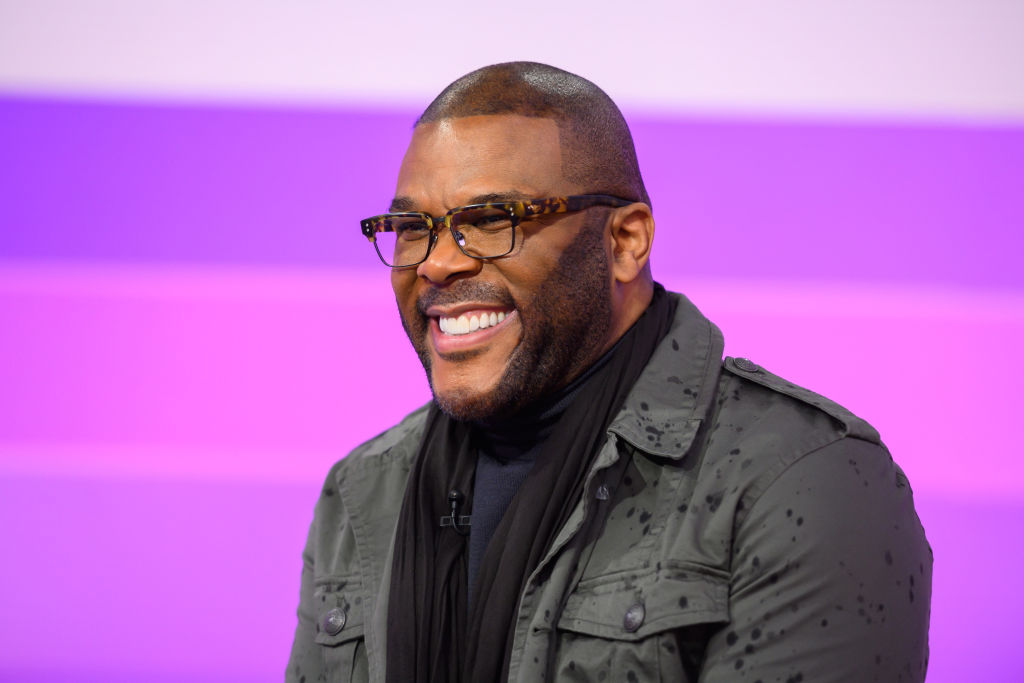
Myron Rolle, NFLPA
Photo credit: Tennessee Titans, Wikimedia Commons CCA

From The Gridiron To The Operating Room: Dr. Myron Rolle Joins NFLPA To Lead Brain Health Programs

The former NFL safety and pediatric neurosurgeon will serve as a medical advisor focused on player safety and health.


Dr. Myron L. Rolle, former NFL safety and pediatric neurosurgeon, has joined the NFL as a strategic advisor on player health, brain safety, and preventive care, according to a June 6 news release.

In this role, Rolle will contribute his medical expertise to the union’s Mackey-White Health and Safety Committee. He will guide policies on brain health, cognitive performance, and mental healthcare for active and retired players. He will spearhead new concussion baseline testing protocols, expand mental health screening programs, and lead education initiatives to improve early detection of cognitive issues among players.

Rolle’s appointment is a significant milestone for the African American sports and business community. Black athletes make up about 60% of NFL rosters but have faced long-term health risks from concussions and brain injuries without proportional representation in medical decision-making.

A former Rhodes Scholar and Tennessee Titans player, Rolle combines elite athletic experience with medical expertise.

“As a former player who now treats complex neurological conditions, Dr. Rolle brings a rare combination of lived experience, medical authority, and a deep commitment to service,” NFLPA medical director Thom Mayer said in the statement. “He understands both the demands of the game and the science required to safeguard those who play it.”

Rolle described the appointment as a full-circle moment for his family, stressing the sport’s impact on his life and on that of his older brothers.

“This sport gave my family joy, discipline, and community,” Rolle said. “To return now, as a physician, researcher, and former player, and contribute to the well-being of the men who make this game what it is, feels deeply meaningful.”

The NFLPA represents over 2,000 players in North America’s most profitable sports league. With the collective bargaining agreement in place through 2030, protecting player health remains a key priority. Rolle’s expertise, shaped by on-field experience, strengthens the union’s commitment to player safety. His appointment is expected to accelerate the development of more rigorous concussion protocols, improve early identification of cognitive issues, and expand access to psychological health support.

These initiatives have the potential to set new industry standards for athlete health management, not only within the NFL but across other professional sports organizations. For example, similar efforts by the National Hockey League (NHL) to address concussion risks led to league-wide protocol reforms and increased scrutiny of player safety measures. By advancing player safety protocols and emphasizing comprehensive brain health, the NFLPA’s efforts may similarly contribute to long-term cultural and policy shifts within the sport. This would encourage greater accountability and awareness of the risks associated with repetitive head trauma. Ultimately, such changes could improve health outcomes for current and future generations of athletes.

RELATED CONTENT: Black College Football Hall of Fame Enshrines Class of 2026, Showcasing HBCU Economic and Athletic Power

inflation, credit, Americans, debt, loans, interest, rates, credit score, credit report
(Jordi Salas/Getty Images)

Credit Line Management: It’s About Balance

CBA analysis shows how banks respond to consumer credit performance and market conditions.


* Editor’s Note: The following analysis is provided by Consumers Bankers Association.

Key Findings  

  • Credit line management is an essential tool issuers can use to provide access to credit on a credit card while managing risk and customer delinquencies.
  • Data show how banks increased credit lines in response to better consumer debt performance following pandemic stimulus and pauses on other payments.
  • Data also show how banks initially reduced credit limits in the immediate response to the pandemic’s brief recession and then again in response to deteriorating credit performance in the post-COVID inflationary period.
  • These changes in available credit lines align with overall better credit card payment rates and payment behaviors over the same period.

Credit Line Management as a Tool to Manage Risk and Consumer Debt Performance.

Credit cards play an important role in helping households manage everyday expenses, unexpected costs, and temporary cash flow needs. At the same time, banks must carefully manage risk to ensure that consumers receive credit they can reasonably repay.

To achieve this balance, banks use a variety of tools, including:

  • Setting or adjusting underwriting standards for new account applications.
  • Pricing credit based on risk—mainly through annual percentage rates (APRs).
  • Setting or adjusting credit limits at account opening or after when appropriate.

While application approvals and APRs get a lot of the attention, the management of credit lines plays an important role as well. It allows card issuers to expand access while mitigating the potential loss from delinquencies. For example, a customer with a lower credit score may be able to be approved for a lower credit limit, gaining access to the liquidity they need without being over-exposed.

Credit line management is a useful tool because, unlike application underwriting, it allows an issuer to adapt over time with a cardholder. After the customer is approved, issuers can increase a customer’s credit limit, and therefore the customer’s access to credit, as the issuer learns more about the customer’s repayment history and ability to make payments (As a customer displays a greater ability to make payments and manage their balances, for instance if the customer gets a higher-paying job or pays down other debts, issuers can expand access.)

This same process can also work in reverse. When a customer shows signs of trouble making payments, a credit card issuer can reduce a customer’s credit card limit, decreasing the amount of debt they can take on. Credit line increases generally occur more often than decreases, helping explain the general upward trend in credit limits.

The number of credit line decreases in the market is often impacted by greater macroeconomic uncertainty or turmoil. Credit line changes are also more common for consumers with the highest and lowest utilization rates. For high utilization customers (those who use up most or all of their credit line in a given month), a decrease allows the issuer to prevent a customer from getting over-extended, mitigating the severity of a possible delinquency. For customers with low utilization or credit lines that are often inactive, it’s a chance to limit future exposure.

The COVID pandemic as a real-world example.

To see how this all works, let’s look at a recent example in the real world. During the early days of the pandemic, banks faced heavy uncertainty. The possibility of widespread unemployment and economic disturbances led to a more cautious approach to extending credit to consumers.

As the economy stabilized, however, the picture quickly changed. Government stimulus payments, enhanced unemployment benefits, and reduced consumer spending helped many households improve their financial position. Delinquencies declined, payment performance improved, and consumers paid down credit card balances. The government stimulus not only helped improve consumers’ financial health; it was a part of a concerted effort to boost the economy and avoid a prolonged recession.

What did this mean for issuers’ credit line management? The chart below helps tell the story using data from the CFPB’s 2025 CARD Act report (See Figure 1 below). It shows credit line increases falling drastically at the start of the pandemic, when uncertainty was high and the economy experienced a brief recession (shaded chart area). It also shows credit line decreases climb as issuers pulled back the amount of credit people could take on. The net result was the first overall reduction in credit card limits in nearly ten years.[v]However, credit line management is about balance. While credit limits may have been restricted, overall access to credit remained intact with credit card spending representing over a fifth of GDP as consumers used credit cards to bridge turbulent macroeconomic conditions and drive the post-COVID economic recovery.

After the initial lockdown period and recession, credit line management activity began to return to pre-pandemic levels until inflation began to increase substantially, putting pressure on consumers and their ability to meet debt payments. Accordingly, credit line increases start to decline, and decreases climb again from early 2022 through 2024 as inflation peaked at nine percent, delinquencies on credit cards reached 3.36 percent, and issuers began to tighten access to credit to limit exposure to risk.[vii] This is especially true for the riskiest borrowers (subprime and near prime) who experienced a much higher rate of credit line decreases over this period compared to other cardholders (see Figure 2 below).

At the same time, the management of credit lines during this period seems to have been a factor in improving credit card payment rates and behavior. Using data from the latest CFPB CARD Act Report, Figures 3 and 4 below show payment rates and the percent of accounts paying their full balance dipped but remained above pre-COVID levels as issuers managed credit lines in response to higher inflation and delinquencies.

The Bottom Line

Credit line management is an important tool issuers use to balance two important goals: providing consumers with access to liquidity while promoting sustainable borrowing and managing risk. The data show that credit line decisions respond to changing economic conditions and consumer financial performance. During periods of economic strength and improving repayment behavior, issuers expand access to credit. When signs of financial stress emerge, they may slow line increases or, in limited cases, reduce exposure though line decreases to help mitigate losses and prevent consumers from becoming overextended. Together, these patterns demonstrate how credit line management serves as a dynamic tool that helps maintain access to credit across changing economic environments.

RELATED CONTENT: Redemption Bank Launches Debit Card To Expand Economic Opportunity For Single Mothers

Airbnb, Black women, discrimination, Atlanta metro
(Photo: Nikolas Kokovlis/NurPhoto via Getty Images)

Atlanta Woman Sues Airbnb, After Alleged Denial To Rent In ‘Peaceful White Neighborhood’

The listing described the location as a "peaceful white neighborhood."


A Georgia woman is suing Airbnb, an Atlanta property owner, and two people identified as a host and co-host, alleging she was denied the opportunity to rent a home because she is Black after revealing information that identified her race during the booking process, WSBTV Atlanta reports.

The lawsuit stems from an attempted reservation in 2024 for a property on Manhasset Drive in Dunwoody. According to the complaint, Sharonda Stewart was searching for temporary housing in metro Atlanta after relocating when Airbnb prompted her to introduce herself to the property’s host before her reservation could be approved.

Stewart said she described herself as a businesswoman, explained the purpose of her stay, and included the name of her company, whose logo depicts a Black woman. She alleges that the host never responded to her booking request or to her subsequent follow-up message, thereby allowing the reservation window to expire.

Afterward, Stewart said she returned to the listing and noticed language describing the surrounding area as a “peaceful white neighborhood.” According to the lawsuit, that description, combined with the unanswered booking request, led Stewart to believe she had been denied lodging because of her race.

Civil rights attorney Bataski Bailey, who represents Stewart, said the listing raises concerns about unlawful discrimination.

“You can’t describe something as peaceful and white and then act in a way that signifies you intend to keep it that way,” Bailey said.

Airbnb said it has since removed the host from its platform. “Discrimination has no place on Airbnb, and we removed the host from the platform,” the company said in a statement provided to the outlet.

The lawsuit also alleges Airbnb failed to promptly remove the listing after Stewart’s legal team notified the company. Bailey said attorneys sent a demand letter requesting an investigation, but the advertisement allegedly remained online for months afterward.

A person who answered a phone number associated with property owner George Shihfang denied knowledge of the allegations and told WSB-TV the property had never been listed on Airbnb.

Bailey said his legal team plans to seek subpoenas to identify everyone responsible for creating and managing the listing, which allegedly used pseudonyms, and intends to pursue the case before a jury. Stewart said she hopes the lawsuit will help prevent similar incidents from happening to other travelers.

RELATED CONTENT: Airbnb Guest Airs Company Out After Superhost Used Fake AI Photos To Claim $16K In Damages

On this day, David Dinkins, Shirley Chisholm
Public domain, Wikimedia Commons CCA

ON THIS DAY: 250 Years Of Black America

July 10 marks some pretty remarkable moments in American history.


July 10 marks some pretty remarkable moments in American history. The first is the birth of David Dinkins, New York City’s first Black mayor, in 1927. Dinkins was a visionary and catalyst for cleaning up NYC. Amid decline and mayhem, Dinkins imagined the city as we now know it today.

Meanwhile, in 1972, Shirley Chisholm did the unimaginable. Chisholm became the first Black presidential candidate in a major party after becoming the first Black woman elected to Congress in 1968.

RELATED CONTENT: ON THIS DAY: JUNE 30, 1847

debt collection
photo credit: pexels

Atlanta Leads U.S. In Debt Collection Complaints, New Study Finds

The study found that Georgia also ranked first among all states for debt collection complaints on a per-capita basis.


Metro Atlanta recorded the nation’s highest rate of debt collection complaints in 2025, according to Federal Trade Commission data released on July 8, underscoring a sharp increase in consumer reports tied to collection activity nationwide, CBS News reports.

The study also found that Georgia ranked first among all states for debt collection complaints on a per-capita basis. Nationally, consumers submitted more than 471,000 debt collection complaints to the FTC during 2025, more than twice the number filed in 2024.

Researchers said the increase reflects several factors, including growing consumer debt burdens, more aggressive collection efforts, and heightened awareness of the FTC’s complaint reporting process.

While debt collectors were the subject of many complaints, the report noted that not every case involved a legitimate collection agency. Some consumers said they did not believe they owed the alleged debt, while others suspected they were targeted by fraudulent callers posing as collectors.

Nearly one-half of all complaints filed in 2025 alleged abusive, threatening, or harassing behavior, according to the analysis.

Behind Georgia, Texas, Florida, and Louisiana posted the highest rates of complaints after population adjustments. Every state recorded an increase over 2024, with several experiencing triple-digit percentage growth.

On the metropolitan level, Dallas, Houston, Miami, and Memphis joined Atlanta among the highest-ranking cities for complaints per capita. Dallas, Houston, Atlanta, New York, and Miami generated the greatest overall volume of FTC debt-collection complaints.

The report also identified adults ages 30 to 39 as the demographic that filed the largest share of complaints during 2025. Consumers aged 40 to 49 ranked second, followed by those aged 20 to 29.

Researchers said many people in those age groups are simultaneously managing mortgages, vehicle loans, student debt, and other financial obligations.

Consumer advocates encourage anyone contacted by a debt collector to request written verification before making a payment, avoid sharing personal or banking information until the debt has been verified, understand their rights under the Fair Debt Collection Practices Act, report abusive or suspicious collection practices to the FTC, and use available call-blocking or spam-filtering technology to reduce unwanted calls.

RELATED CONTENT: Black Army Veteran Shares Tips to Financial Freedom After Owing Over $87K In Debt

SHOWS

We’re advancing change and expanding horizons. Black Voices are rich and varied. Our podcast network hosts premier shows covering politics, social justice, sports, music, relationships, mindfulness, and more, amplifying and empowering these diverse voices.


CURRENT & PAST SPONSORS

CREATORS & HOSTS

The BE Podcast Network serves as a thriving hub for a community of gifted creators both past and present who spark meaningful dialogues and provide captivating narratives for their audiences.

Speaker Name 1

Katrina M. Adams

Author, Global Speaker, Sports Analyst, Leader ‘Own The Arena'

Speaker Name 2

Alfred A. Edmond Jr.

SVP/Executive Editor,
Black Enterprise

Speaker Name 3

Sidnee Michelle Douyon

Senior Digital Editor & Host,
Black Enterprise

Speaker Name 4

Earl “Butch” Graves Jr.

President & Chief Executive Officer,
Black Enterprise

 Muse Image, Instagram
(Photo: Pixabay/Pexels)

Your Public Instagram Photos Can Now Be Used For AI Consumption

The feature, called Muse Image, debuted on July 7, as part of Meta's expanding portfolio of generative AI products.


Meta’s latest artificial intelligence feature is prompting new questions about online privacy after the company confirmed that adults with public Instagram accounts are automatically eligible to have their publicly shared images used to generate AI-created content unless they choose to opt out, Mashable reports.

The feature, called Muse Image, debuted July 7, as part of Meta’s expanding portfolio of generative AI products. According to Meta, users can create AI-generated images by entering prompts that include an @mention of a public Instagram account, allowing the system to reference publicly available profile photos, posts, and Reels when generating new images.

The privacy implications of the rollout note that eligible public accounts are enrolled by default rather than through an opt-in process. Meta said the feature does not apply to private accounts or users younger than 18. Adults with public profiles, however, must manually disable the setting if they do not want their public content used in AI image generation.

Meta Chief AI Officer Alexandr Wang promoted the feature on social media, encouraging users to “pull from your friends’ public Instagram profiles by @ mentioning them in your prompt” when creating AI-generated images.

The rollout has drawn criticism from privacy advocates, who argue the default setting gives users too little control over how their likeness can be repurposed through artificial intelligence. Meta’s help documentation states users are not notified when someone generates an image using their public profile, and that opting out later does not remove images that have already been created.

Meta said Muse Image includes safeguards intended to prevent abuse, including restrictions on generating sexual content or images involving minors. The company also applies a digital watermark, known as “Content Seal,” to AI-generated images to identify them as synthetic content.

Muse Image is now available across the Meta AI app, Instagram, and WhatsApp, with additional integrations planned for Facebook and Messenger as the company continues investing heavily in generative AI technology. The launch reflects intensifying competition among Meta, OpenAI, and Google to expand consumer AI tools amid growing scrutiny over how publicly available user content is collected, repurposed, and governed. 

RELATED CONTENT: Privacy Update: WhatsApp Shifts To Usernames Over Phone Numbers

Lonnie Bunch
Smithsonian Institution Secretary Lonnie G. Bunch III (photo credit: Black Enterprise)

Lonnie Bunch Pushes Back After White House Accuses Smithsonian Museum Of ‘Anti-Americanism’

The Smithsonian Institution defends its museums after the White House accused the National Museum of American History of promoting radical activism.


Smithsonian Institution Secretary Lonnie G. Bunch, III, is defending the nation’s largest museum complex after a scathing White House report accused the National Museum of American History of promoting “thinly veiled anti-Americanism” and “extreme political activism.”

The 162-page report, titled Saving America’s Story, was released by the White House Domestic Policy Council on July 4 as part of the Trump administration’s broader effort to reshape how American history is presented at federally supported cultural institutions. The report alleges that the Smithsonian has become ideologically biased and argues that its exhibits fail to present a patriotic and unifying narrative of the nation’s past, Reuters reports.

“The thinly veiled anti-Americanism on display at NMAH is merely a symptom of the widespread belief among Smithsonian leadership that America is, and has been since Columbus first set foot in the New ​World, a fundamentally oppressive nation,” the ​White House report said, adding that the museum has moved “toward an extreme political activism.”

The report went on to accuse the museum of “anti-White activism,” “illegal alien activism,” and “transgender activism,” reports ABC News. It also criticizes museum exhibits and programming for emphasizing issues such as slavery, race, and systemic inequality.

“As it stands today, it would benefit most Americans, especially parents bringing their children for a tour, if the Smithsonian’s flagship history museum had a label at every entrance that reads: ‘Warning: the exhibits in this museum were prepared by people who don’t want you to love your country,'” reads the report.

The White House review was launched in response to the executive order President Donald Trump signed in March 2025 directing Vice President J.D. Vance and federal advisors “to remove improper ideology” from Smithsonian institutions that he believes cast America in a “negative light.”

In a memo sent to Smithsonian employees on July 7, Bunch rejected the administration’s characterization.

“While there will always be room for improvement, this report is not a fair characterization of the work and totality of the National Museum of American History,” Bunch wrote, according to Reuters.

Bunch, who became the Smithsonian’s first Black secretary in 2019 after founding the Smithsonian’s National Museum of African American History and Culture, defended the institution’s commitment to presenting a complete account of the American experience. According to Reuters, he emphasized that while there is always room to improve, the museum remains committed to accurately portraying U.S. history rather than advancing a political agenda.

The Organization of American Historians, the nation’s largest professional association of U.S. historians, also condemned the White House report, calling it an attempt to pressure the institution into aligning its exhibits with the administration’s political agenda.

“In another example of executive branch overreach, the White House is seeking to coerce Smithsonian leadership to shape its presentation of U.S. history so that it serves the administration’s political agenda,” the organization said in a statement.

RELATED CONTENT: Confederate Flag Controversy Overshadows Trump’s ‘Great American State Fair’

Jobs, Workplace, Resenteeism,, federal employees
(Photo: Mizuno K/Pexels)

Ask Your Fairygodmentor®: I’m Exhausted From Code-Switching. What Happens If I Just Stop?

The best version of your professional self isn’t a carefully edited copy


Dear Fairygodmentor®, 

I just started my internship at this very prestigious company. I’m trying to learn to adult and be a great team member. I’m exhausted from code-switching. What happens if I just… stop?

-Simply Exhausted

Dear Simply Exhausted,

First off, let me say this: if you’re exhausted, it’s because you’re doing two jobs at the same time!

The first is the internship that you were hired to do. The second is managing everyone else’s comfort with who you are. 

It’s hard enough to be an intern and then add the pressure of code-switching to the mix?! Can a brotha or sista catch a break?!

Many early-career professionals, especially those from underrepresented backgrounds, learn quickly that success often feels tied to code-switching: adjusting how you speak, dress, express yourself, or even react to fit into workplace expectations.  It can often feel like you’re carrying an invisible backpack full of self-edits and self-corrections all day long.  And the backpack only gets heavier with time.

So what happens if you stop? Probably not what you think.  

The goal isn’t to swing from complete adaptation to complete rebellion.

The goal is learning the difference between professionalism and performing a version of you that leaves you exhausted.

How do you find the balance? Read on a little more so I can share the how.

1) Conduct an Authenticity Audit

Before you throw the entire script away, figure out which parts are helping you grow and which parts are sucking the life out of your soul.

Ask yourself:

  • Am I changing my behavior because it’s professionally appropriate?
  • Or am I changing it because I’m afraid people won’t accept the real me?
  • Which parts of my personality completely disappear when I walk into work?

Not every adjustment is code-switching.  Learning workplace norms is part of professional development.  But constantly filtering your flavor (personality, culture, humor, or communication style) can become emotionally expensive.  

If maintaining a behavior leaves you feeling exhausted rather than empowered, it’s worth taking some time to marinate on whether it’s serving your career, or simply helping others feel comfortable.

2) Experiment With “One Degree More You”

You don’t have to wake up tomorrow and become a completely different person.  

Try showing up as just a little more of yourself.

This could look like:

  • Speaking naturally instead of over-editing every sentence.
  • Sharing your perspective in meetings.
  • Wearing your hair or style it in ways that feel more authentic.
  • Talking about your interests without filtering them for approval.

Authenticity isn’t an on/off switch.  It’s a dimmer. 

I’m giving new meaning to the phrase “Turn up.” 

Turn it up gradually and observe what happens.

You’ll most likely find that the people who value your contributions care far less about your performance of “professionalism” than you thought.

3) Build a Personal Board of Directors

    No one, especially as an intern, should navigate workplace identity challenges alone.

    Find your people who can help you separate real feedback from perceived pressure:

    This could be: 

    • A trusted manager
    • A mentor (who may also be that trusted manager)
    • A former intern
    • An employee resource group leader
    • Someone who has successfully navigated the culture before you

    When you’re constantly questioning whether you’re “too much” or “not enough,” this outside perspective becomes invaluable as you continue to “adult” in the “real world”.

    Your board can remind you that belonging shouldn’t require becoming unrecognizable to yourself. 

    Pro Tip: Seek mentors who appreciate your authenticity, not just your adaptability.

    Simply Exhausted, the question that you should be asking yourself is whether you’re building a career that requires you to leave parts of yourself at the door every day.

    A good internship teaches you new skills. A great workplace makes room for who you really are.

    This experience will give you data on what you’ll want to look for in the future when the full time job opportunity presents itself. 

    Because the best version of your professional self isn’t a carefully edited copy. It’s the version that can succeed without disappearing. 

    You got this! 

    Yours truly,

    Your Fairygodmentor®

    About Joyel Crawford:

    Joyel Crawford is an award-winning career and leadership development professional and founder of Crawford Leadership Strategies, a consultancy that empowers results-driven leaders through coaching, training, and facilitation. She’s the best-selling author of Show Your Ask: Using Your Voice to Advocate for Yourself and Your Career.

    Have a question for Your Fairygodmentor®?

    Submit your career and leadership questions, whether it’s about navigating a micromanager, setting boundaries, negotiating for a raise, or handling burnout. Ask Your Fairygodmentor® today!

    Imani Schectman, BIPOC brands
    Imani Schectman, founder of Open Market

    15 Emerging BIPOC Brands Are Popping Up At Brooklyn Navy Yard This Summer

    Lifestyle marketplace Open Market has curated a Summer Atelier for all your shopping needs


    For New Yorkers who want to shop small as they beat the summer heat, the Brooklyn Navy Yard Development Corporation has announced the launch of its second Yard Opportunity Shop storefront. The Summer Atelier, run by Black-owned lifestyle marketplace Open Market, features products from 15 BIPOC brands and will be open five days a week through Aug. 22.

    The Yard Opportunity Shop retail incubator program gives small, minority- and women-owned businesses the chance to operate out of a retail space at the Brooklyn Navy Yard on a three-month rotation.

    “We’re thrilled to welcome Open Market to the Yard Opportunity Shop. Their mission to uplift small business owners and celebrate the diverse cultures of entrepreneurs across the country strongly aligns with Navy Yard’s vision,” said Lindsay Greene, president and CEO of the BNYDC, in a statement.

    Founder Imani Schectman launched Open Market in 2020 as a then-virtual lifestyle marketplace centered around showcasing emerging BIPOC entrepreneurs.

    “I built Open Market to elevate BIPOC creators and help their brands thrive. Having a brick-and-mortar space to bring people together has always been a goal of mine, and I’m thrilled to embark on this experience at the Brooklyn Navy Yard,” said Schectman in a statement. “The Summer Atelier is a beautiful celebration of culture and creativity, and I can’t wait to share the works of these amazing emerging brands with the broader Brooklyn community.”

    Schectman spoke with BLACK ENTERPRISE exclusively about how BIPOC brands can get a foot in the door for retail opportunities:

    How do you choose which brands to participate in your activations?

    We take a deliberately organic and personal approach when choosing which brands to feature in our activations. Rather than relying on a single pipeline, we blend targeted research with community‑driven discovery. Some partnerships begin with our own strategic scouting, identifying brands whose values, creative direction, and audience alignment complement our vision. After running Open Market for six years now, we’ve also been able to create partnerships more naturally through word of mouth, referrals, and ongoing conversations within our growing network.

    This mix allows us to stay both intentional and adaptable: research ensures we’re curating brands that fit our standards, while personal connections help us uncover emerging voices and cultivate collaborations that feel authentic. The result is a roster shaped by genuine alignment, shared energy, and a sense of mutual possibility.

    How do you prepare those brands for these kinds of retail marketplaces?

    Preparing emerging brands for retail marketplaces is a hands‑on, collaborative process for us. We start with the basics, making sure each brand has a functioning website, a clear social presence, and the capacity to meet production and inventory needs. Those fundamentals matter, but they’re only part of the picture. We also provide resources for our brands, sharing pro tips on the latest trends and keys for success, as well as opportunities to connect with industry leaders and organizations. Having these brands plugged into our community prior to the Summer Atelier opening at the Brooklyn Navy Yard has helped make the process more seamless.

    We’re creating a marketplace filled with great products and services, yes, but we’re also building a community that strengthens us as people and as creators. What’s most important for us at Open Market is that the brands we work with are similarly community‑focused and genuinely aligned with what we’re building. We look for partners who believe in the larger vision and want to grow alongside us. That shared commitment is what makes these partnerships meaningful and sustainable.

    What do you think emerging BIPOC brands can do to better position themselves for opportunities?

    Emerging BIPOC-owned brands can better position themselves by strengthening both their foundations and their visibility. On the foundational side, having a polished website, a clear social presence, and reliable production and inventory systems is essential. Retail partners and marketplaces need to know a brand can meet demand, communicate effectively, and show up consistently.

    Beyond the basics, the biggest differentiator is clarity of identity and community connection. Brands that understand their story, their audience, and the cultural value they bring tend to stand out. Our Yard Opportunity Shop storefront and other pop-ups we’ve done give our brands visibility and access to a community of locals and potential new shoppers. Leaning into community, whether that’s local networks, digital communities, or industry circles, creates momentum and opens doors that traditional pathways sometimes overlook.

    Something I’ve learned is the importance of founders approaching opportunities with a collaborative mindset and being totally obsessed with making their business thrive. I’ve often thought to myself that I’ve had to be nearly delusional about Open Market’s success to keep driving the mission and the vision forward. The brands that thrive are the ones willing to grow with partners, invest in relationships, and see themselves as part of something larger. Infrastructure gets you ready for the opportunity; community and alignment help you sustain it.

    RELATED CONTENT: Brooklyn Entrepreneur Launches Black-Owned Champagne

    ×