Job search, Unemployed, Bureau of Labor Statistics, jobs
Photo by cottonbro studio/Pexels

Nearly 1 In 4 U.S. Workers Are ‘Functionally Unemployed’ New Data Finds

The institute's findings contrast with the federal government's official unemployment rate.


Nearly 1 in 4 U.S. workers were considered “functionally unemployed” in July, according to an alternative labor-market measure that counts people who are jobless, unable to secure full-time work, or earning poverty-level wages, CBS News reports.

The Ludwig Institute for Shared Economic Prosperity reported Aug. 20 that its True Rate of Unemployment rose to 24.9% in July, up from 24.7% in June. The rate has increased for four consecutive months and is 1.3 percentage points higher than in March. 

The institute’s findings contrast with the federal government’s official unemployment rate. The U.S. Bureau of Labor Statistics⁠ reported that the unemployment rate fell to 4.1% in July, while the number of unemployed people remained little changed at 6.9 million. 

The difference stems largely from how the two measures define employment. The Ludwig Institute classifies workers as functionally unemployed if they do not have a job, want full-time employment but cannot secure it, or earn less than $26,000 annually before taxes. 

Women experienced a substantially higher rate of functional unemployment than men in July. The rate among women reached 31%, compared with 19.5% among men. Black workers had a functional unemployment rate of 27.3%, compared with 26.7% for Hispanic workers and 23.8% for white workers. 

Official employment data also showed limited hiring in July. U.S. nonfarm payroll employment declined by 23,000 jobs, while employment estimates for May and June were revised downward by a combined 103,000 jobs, according to the Bureau of Labor Statistics.

Gene Ludwig, the institute’s chairman, said the four-month increase warrants attention if the trend continues.

“We shouldn’t read too much into a single month, but four months begin to tell a story,” Ludwig said. 

Some economists caution against treating the institute’s measure as equivalent to the government’s unemployment rate because the two track different conditions. Gregory Daco, chief economist at EY-Parthenon, told CBS News⁠ that an unemployment rate above 20% does not correspond with other indicators of the U.S. economy.

RELATED CONTENT: Job Seekers Use Hidden Resume Prompts To Outsmart AI Screeners

401(k), ai exposure, retirement benefits
(Photo: JGI/Jamie Grill, via Getty Images)

More Small Businesses Are Offering 401(K) Plans To Workers

About 31% of small businesses had active retirement plans in 2026, up from 19% in 2019.


Small businesses are increasingly offering retirement plans to employees, expanding access to a workplace benefit that has historically been less common among the nation’s smallest employers, HR Brew reports.

About 31% of small businesses had active retirement plans in 2026, up from 19% in 2019, a 64% increase, according to an analysis from payroll and benefits platform Gusto. The research examined private-sector businesses with two to 99 employees using payroll data through June 2026.

The growth has been particularly significant for hourly workers. The share with access to a workplace retirement plan rose from 21% in 2019 to 38% in 2026. Hospitality businesses tripled their adoption rate from 4% to 12%, while recreation and agriculture businesses increased by 147% and 122%, respectively.

“Most of that growth has been happening at very smallest employers,” Nich Tremper, head of Gusto Insights and a senior economist, told HR Brew.

Government policies have helped fuel the expansion. As of June, 18 states had enacted automatic IRA programs requiring many private employers to either offer a retirement plan or facilitate employee enrollment in a state-managed program, according to the outlet. The federal SECURE 2.0 Act also provides qualifying businesses with one to 100 employees with tax credits to help offset the cost of establishing retirement plans for up to three years.

But policy is not the only factor. Separate Gusto research analyzing payroll records from more than 500,000 small businesses found companies offering 401(k) plans had about 8% fewer first-year employee quits than otherwise similar businesses without them. Gusto noted the findings show an association and do not prove that 401(k)s directly cause lower turnover.

“It’s expensive to have to go back out into the market and find somebody new and train them, and then also all of the lost productivity while you’ve got vacancies,” Tremper told HR Brew.

The expansion could be particularly consequential for workers historically less likely to have workplace retirement benefits. Earlier Gusto research found 5.6 million more small-business workers had access to active retirement plans than in 2019. Access among Black employees increased 52%, while access among Hispanic employees rose 71%.

Still, Gusto found that more than half of small-business employees remain without access to a workplace retirement plan.

RELATED CONTENT: Employers Are Lagging To Implement IRS’ 401(K) Student Loan Matching Guidelines

San Diego Padres, Kwanza Jones, MLB, José E. Feliciano
(Photo: Steshka Willems/Pexels)

San Diego Padres’ New Ownership Brings Diverse Leadership And World Series Ambitions

Feliciano will serve as the Padres' control person under MLB governance requirements, while the couple will jointly lead the ownership group.


Kwanza Jones and José E. Feliciano have taken control of the San Diego Padres, with the new majority owners setting an immediate goal for the Major League Baseball franchise: winning its first World Series championship, MLB.com reports.

Jones and Feliciano, who are married and longtime business partners, were formally introduced Aug. 24 at Petco Park in San Diego. MLB owners unanimously approved the transfer of control on Aug. 17, and the transaction was completed on Aug. 21.

Feliciano will serve as the Padres’ control person under MLB governance requirements, while the couple will jointly lead the ownership group.

“We need to win the World Series,” Feliciano said. “It’s that simple.”

The championship pursuit comes as the Padres build on one of the most successful stretches in franchise history. The team has reached the postseason four times in the past six seasons but has never won a World Series title.

Jones made clear that the couple plans to take an active approach to ownership.

“We are all in; it’s not lip service,” Jones said. “We are absolutely committed to this organization, and we are absolutely overjoyed.”

The couple brings extensive business, investment, and philanthropic experience to the franchise. Jones and Feliciano co-founded the Kwanza Jones & José E. Feliciano Initiative, a private family office established in 2014. Jones serves as CEO and oversees its strategic direction, governance, and investments. Feliciano is co-founder and managing partner of Clearlake Capital Group.

Their ownership follows the Seidler family’s November 2025 decision to explore selling the franchise, two years after former Padres owner Peter Seidler died. The family reached an agreement in May to transfer control to an ownership group led by Jones and Feliciano, pending MLB approval.

Jones and Feliciano said their plans extend beyond baseball. They intend to build on the Padres’ community work under Seidler, including efforts throughout San Diego and the Baja region. Jones also proposed a “listening tour” with Padres CEO Erik Greupner to learn more about local organizations and community needs.

“Sports is just much more than a business,” Feliciano said. “Sports is an integral part of the community.”

RELATED CONTENT: Women’s Professional Baseball League To Debut In 2026

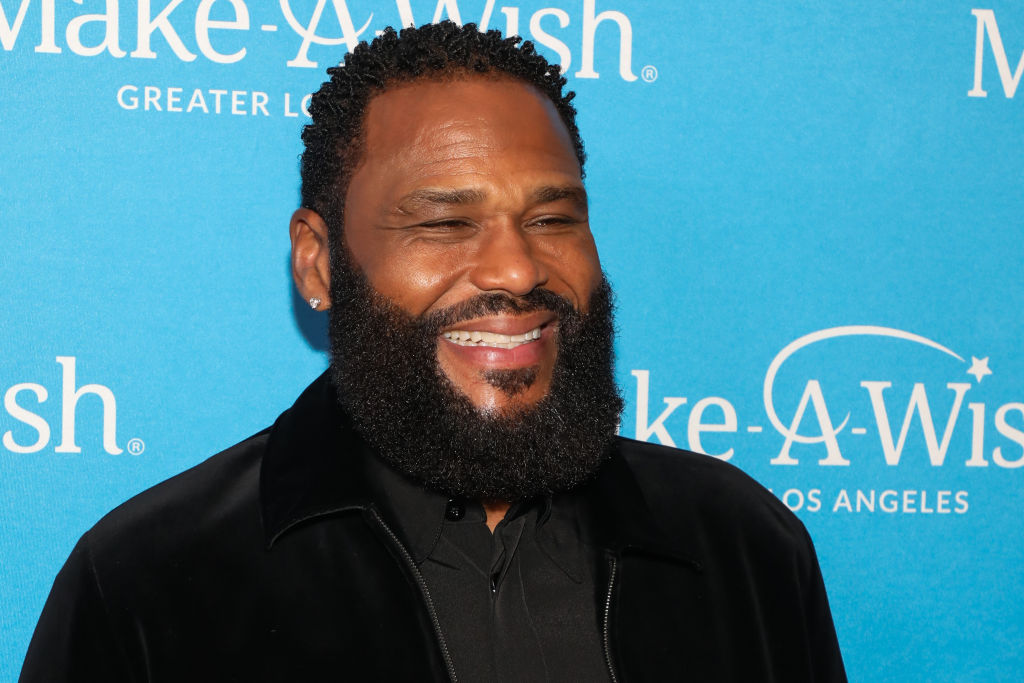
Anthony Anderson, Law & Order, XCEL Summit For Men
Photo by Paul Archuleta/Getty Images

Anthony Anderson Shares a Secret Behind the Hit Sitcom ‘Black-ish’

While people didn’t find the name funny, the story behind it certainly Is.


With a career in television and films spanning a little over 30 years, Anthony Anderson is an Emmy and Golden Globe Award-winning actor, comedian, and game show host. He has displayed a wide range of acting talent from his supporting roles in the drama “Hustle & Flow” and Martin Scorsese’s crime film “The Departed” to the iconic crime drama “Law & Order.” But it was the groundbreaking family sitcom “Black-ish” that had a tremendous impact on his life. For eight seasons, he was known for his leading role as Andre “Dre” Johnson. It starred Tracee Ellis Ross, Jenifer Lewis, and Laurence Fishburne.

Anderson explained it was a challenge to get people to watch the show. Turns out, people hated the name. Yet, ABC picked up the pilot for the 2014-15 television season, and the sitcom became an instant success. Anderson, a 2023 Xcel Summit Honoree, sat down with fellow Honoree Ed Gordon and shared the secret behind the show’s controversial name and what he and show creator Kenya Barris were willing to do to keep it. With the 10th anniversary of the XCEL Summit for Men approaching, BLACK ENTERPRISE offers a sneak peek at the diverse cadre of talented African Americans who attend. They are not just corporate executives and middle management; they’re entertainers, singers, basketball players, and the list goes on. They share their stories and offer insight into the world around us. Check out Anthony Anderson’s insight behind the “Black-ish” name. 

Michigan, letter grades, first-year students
Photo by ajay_suresh/flickr, small image (Photo by Jeff Robinson/Icon Sportswire via Getty Images)

University Of Michigan To Drop Letter Grades For First-Semester Students

The change will apply to first-year students in the university's College of Literature, Science, and the Arts, or LSA.


The University of Michigan will change how thousands of first-year students are graded beginning in fall 2027, replacing first-semester letter grades on external transcripts with a pass or no credit designation, The Wall Street Journal reports.

The change will apply to first-year students in the university’s College of Literature, Science, and the Arts, or LSA, which enrolls about half of Michigan’s roughly 8,000 incoming first-year students. The pilot program is intended to ease students’ transition to college, reduce academic pressure, and encourage them to explore challenging coursework.

Under the new system, students will continue to receive letter grades and feedback from instructors. However, those grades will not appear on external transcripts or factor into students’ GPAs during their first semester.

The university will retain internal records of students’ letter grades for purposes including academic advising, scholarships, awards, compliance, and certain applications for internships or academic programs. After the first semester, students will return to traditional letter grades that appear on transcripts and count toward their GPAs.

The University of Michigan joins several institutions that have adopted similar approaches to first-year grading, including the Massachusetts Institute of Technology, California Institute of Technology, Swarthmore College, and Wellesley College.

MIT, which launched its program in 1968, uses a pass or no-record system for first-year students during their first semester and January Independent Activities Period. Students transition to an A, B, C, or no-record system during the spring semester before moving to standard A-F grading as sophomores.

Michigan’s decision comes amid a broader debate over academic pressure, student mental health, and grading practices in higher education. The university has described its approach as “grade covering,” with the goal of giving students time to adjust to university-level expectations while continuing to receive feedback on their academic performance.

Beginning with the fall 2027 class, LSA students’ official transcripts will note that all first-semester grades were automatically designated as pass or no credit. Traditional letter grades will appear on their transcripts for subsequent semesters.

RELATED CONTENT: From Debate To Copy and Paste: How AI Drains Flavor From College Discussions

Black mother and daughter success parents
AI-generated image via Magnific

Psychologist Warns Parents Not To Tell Children They Can Be Anything

A psychologist says parents may better prepare children for success by having honest conversations about fear, setbacks, skills, and growth.


For generations, parents have offered children a familiar piece of encouragement: ‘You can do anything you put your mind to.’ But psychologist Juli Fraga says that message may do more harm than good.

“If you put your mind to it, you can accomplish anything,” is “one of the most common lies I hear parents in my psychotherapy practice tell their kids,” Fraga wrote in a recent CNBC report.

The problem, according to Fraga, is not encouragement. It is the implication that effort alone can guarantee an outcome — whether that outcome is becoming a pop star, landing on the moon, or going to an Ivy League school.

“Most of the time, though, these parents don’t even realize they’re relaying a false message,” Fraga wrote on LinkedIn.

For families thinking about the long game, that distinction matters. Career development, entrepreneurship, and financial success rarely follow a straight line. Skills must be developed, opportunities can be limited, and setbacks are part of the process. Fraga, who has spent more than 20 years working with parents, warns that an excessive focus on outcomes can reinforce “external motivation,” in which a child’s drive is tied to praise, grades, trophies and other rewards that may not be fully within their control.

Instead, the focus should shift toward helping children navigate challenges. That can mean acknowledging that a new experience is scary, validating disappointment and showing children that falling short of a goal does not mean they have failed. It can also mean parents sharing their own experiences with setbacks, missed opportunities and changing course. Rather than selling children a fantasy of guaranteed success, she says parents can encourage ambition while also helping young people understand their strengths, develop skills, and recognize that progress does not always produce immediate rewards.

PayPal, tuition, Venmo
In this photo illustration a PayPal logo seen displayed on a smartphone screen in Chania, Greece on August 15, 2023. (Photo illustration by Nikolas Kokovlis/NurPhoto via Getty Images)

College Students Can Now Pay Tuition With PayPal And Venmo

PayPal announced on Aug. 19 that it had integrated PayPal and Venmo with three education payment platforms: Illumia, Nelnet Campus Commerce, and TouchNet.


College students and their families can now use PayPal or Venmo to pay tuition and fees at select universities, expanding the digital payment services into one of the largest expenses many households face, Fox Business reports.

PayPal announced on August 19 that it had integrated PayPal and Venmo with three education payment platforms: Illumia, Nelnet Campus Commerce, and TouchNet. The integrations allow students and families at participating schools to make payments through their universities’ existing online portals.

Bellarmine University, Butler University, Kansas State University, Michigan State University, and Texas Tech University are among the schools offering the payment options. PayPal said more institutions are expected to join throughout the year.

The three education payment platforms collectively serve thousands of colleges and universities nationwide, potentially giving the online payment systems a significant foothold in higher education payments.

“Tuition is one of the biggest payments a family will make, and it should come with the same flexibility and security that millions of people already count on PayPal and Venmo for every day,” Frank Keller, president of Checkout Solutions at PayPal, said in announcing the integrations.

Students and families can fund eligible payments using a bank account, credit card, or PayPal or Venmo balance. PayPal said transactions include encryption and fraud monitoring.

However, students should consider potential processing fees and how their money is protected before using the services for large tuition payments.

Fees vary by institution and payment method. Kansas State University, for example, lists a 2.95% service fee for domestic card transactions made through PayPal or Venmo and a minimum $3 service fee for transactions exceeding $20.

Federal deposit insurance protections can also vary. PayPal says eligible U.S. dollar funds associated with certain PayPal and Venmo offerings are placed at participating banks and may qualify for pass-through Federal Deposit Insurance Corp. coverage, subject to conditions. PayPal itself is not a bank and is not FDIC-insured.

The tuition expansion comes about a year after PayPal and Venmo reached agreements with the Big Ten and Big 12 conferences to facilitate institutional revenue-sharing payments to college athletes.

RELATED CONTENT: After Two Decades, PayPal Returns to Nigeria

USS Doris Miller, veterans,
photo credit: Unknown photographer, US Navy; restored by User:Coffeeandcrumbs, Public domain, via Wikimedia Commons

Black Veterans Urge Navy To Keep Doris Miller’s Name On Historic Navy Carrier

In a letter provided to BLACK ENTERPRISE, the National Coalition of Black Veteran Organizations expressed "profound concern and strong disapproval" over the reported deliberations.


The National Coalition of Black Veteran Organizations is urging Defense Secretary Pete Hegseth to preserve the name of the future USS Doris Miller after reports that the Navy is considering renaming the aircraft carrier, potentially in honor of President Donald Trump, CNN reports.

According to the outlet, three sources familiar with internal discussions said the Navy is working to rename the Ford-class carrier, designated CVN-81.

Two sources said officials have discussed naming it for Trump. The Defense Department told CNN it had nothing to announce. Naming a carrier for a sitting president would be unprecedented, according to the outlet.

In a letter provided to BLACK ENTERPRISE, the National Coalition of Black Veteran Organizations expressed “profound concern and strong disapproval” over the reported deliberations and called on Hegseth to reject any proposal to rename the carrier.

“This is not a partisan objection, nor is it intended to diminish the service or position of any president,” the coalition wrote. “Our concern is the preservation of an honor already bestowed upon an American sailor whose extraordinary courage, sacrifice, and historical significance are beyond dispute.”

Doris “Dorie” Miller enlisted in the Navy in 1939, when racial segregation largely restricted Black sailors to service positions. During Japan’s Dec. 7, 1941, attack on Pearl Harbor, Miller helped wounded sailors aboard the USS West Virginia before manning an anti-aircraft gun despite having no formal training on the weapon.

Adm. Chester W. Nimitz presented Miller with the Navy Cross on May 27, 1942. Miller became the first Black sailor to receive the decoration. He was killed Nov. 24, 1943, when the USS Liscome Bay was torpedoed by a Japanese submarine.

The Navy announced Jan. 20, 2020, during Trump’s first administration, that CVN-81 would be named for Miller. The designation was historic: The vessel was set to become the first aircraft carrier named for an African American and the first named for an enlisted sailor.

The coalition is asking Hegseth to publicly confirm the USS Doris Miller name, reject transferring Miller’s name to a less prominent vessel, consult his family and Black veterans’ organizations before making changes, preserve the Navy’s original commitment, and support renewed consideration of Miller for a posthumous Medal of Honor.

“Ship names carry history across generations,” the coalition wrote. “His name aboard one of America’s most powerful warships would demonstrate that courage is not determined by rank, race, or assigned duty.”

RELATED CONTENT: Sailors Who Suffer From Razor Bumps Could Get Booted From The U.S. Navy

Target, DEI rollback, Blackface, Halloween
Photo by Mike Mozart/flickr

Target Apologizes For ‘Racist’ Halloween Costume

Target removed a children’s Halloween costume criticized for evoking Blackface and minstrel imagery


Target has pulled a children’s Halloween costume from its website and apologized after the product drew widespread criticism online for imagery that consumers said evoked Blackface and racist minstrel caricatures.

The costume, sold as the “Kids’ Glows Under Blacklight Circus Clown Halloween Costume” under Target’s Hyde and EEK! Boutique brand, featured a dark face covering with an exaggerated smile, black gloves, and a small hat. The costume was modeled by a Black child, adding to the backlash over its resemblance to historical racist imagery.

In a statement, Target acknowledged the backlash, calling the costume “offensive” and “hurtful.”

“As a company, we know we got this wrong, and we are deeply sorry,” the Minneapolis-based retailer said. “The costume is offensive and should never have been part of our assortment. It is no longer available for sale. We know this is especially hurtful for our Black guests, team members and partners.”

The company added that it is reviewing how the costume made it through its approval process and what changes are needed to prevent a similar incident.

“Removing the costume is an important first step, and the company is looking closely at how this happened and what needs to change to ensure this won’t happen again,” it wrote.

This is the latest controversy Target has had with Black consumers since the retail giant slashed several diversity, equity, and inclusion initiatives in 2025, prompting a nationwide boycott led by civic and religious leaders. Sheletta Brundidge, a Minneapolis-area business leader, says the costume controversy is an indirect result of the company’s DEI decision.

“You rolled back diversity,” she said, “so who’s in the ‌room, now, ⁠to say ‘hey, this is wrong?'” she told Reuters.

Social media users raised similar concerns. Christopher Webb wrote on X that Target likely would not have “made the disastrous decision to market a Halloween costume that looks like it’s straight out of the Jim Crow era if Black folks had a seat at the table.”

Likewise, @TheTanitaShow suggested on Threads that Target no longer has executives to identify problematic merchandise since cutting its DEI policies.

View on Threads

The incident arrives as Target works to strengthen its business and rebuild consumer confidence. Reuters reported that the retailer has recently posted stronger quarters and that Wall Street has responded positively to efforts under new CEO Michael Fiddelke. Still, analysts say the company has little room for mistakes.

“As Target begins to gain traction in repairing its brand reputation, this is exactly the kind of stuff they want to avoid,” Morningstar analyst Brett Husslein said. He added that additional challenges “could lead to further market share losses.”

The Washington Post
photo credit: Michael Fleischhacker, Public domain, via Wikimedia Commons

‘The Washington Post’ Ordered To Rehire And Issue Back Pay To Journalist Karen Attiah

The ruling marks a significant labor victory for Attiah, whose was fired over comments about Charlie Kirk's death.


An independent arbitrator has ordered The Washington Post to reinstate former opinion columnist Karen Attiah and provide her with back pay and lost benefits, finding the newspaper lacked sufficient cause to fire her following social media posts about the 2025 killing of conservative activist Charlie Kirk.

The ruling is a major workplace and labor victory for Attiah, who was the last Black full-time member of The Post’s opinion desk at the time of her termination.

Private arbitrator Sarah Miller Espinosa concluded that the newspaper “did not have good and sufficient cause” to terminate Attiah and failed to establish that she had engaged in “gross misconduct,” according to Reuters.

Attiah was fired in September 2025 after publishing posts on Bluesky following Kirk’s assassination. One post said, “Refusing to tear my clothes and smear ashes on my face in performative mourning for a white man that espoused violence is … not the same as violence.” The Post accused Attiah of violating its social media policies and harming the organization’s integrity. But Miller Espinosa found that the company had not met the standard required to justify her termination under its collective bargaining agreement.

“This decision confirms what we’ve said from the start: I was doing my job as an opinion journalist, and doing that job is not misconduct,” Attiah said in a statement issued through her attorney, according to The Hill. “After spending over a decade of my career at the Post as an editor and an opinion columnist focusing on race, gender and global human rights, I’m relieved to finally have that record set straight.”

Attiah also addressed the ruling on Instagram, writing, “It’s been a year-long fight, but this is a victory for journalists everywhere.”

The Democracy Defenders Fund, which represented Attiah in the dispute, called the ruling a significant moment for press freedom, saying it confirmed that media institutions cannot use retaliatory discipline to silence journalists addressing difficult issues.

The National Association of Black Journalists had previously warned that Attiah’s firing “raised an alarm about the erosion of Black voices across the media.” The organization has also criticized The Post over layoffs affecting Black journalists and the elimination of race and culture beats.

The Washington Post said it respects the arbitration process and declined further comment.

×