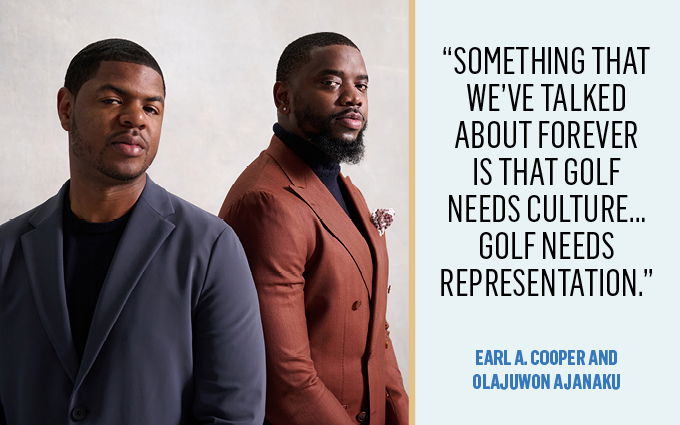
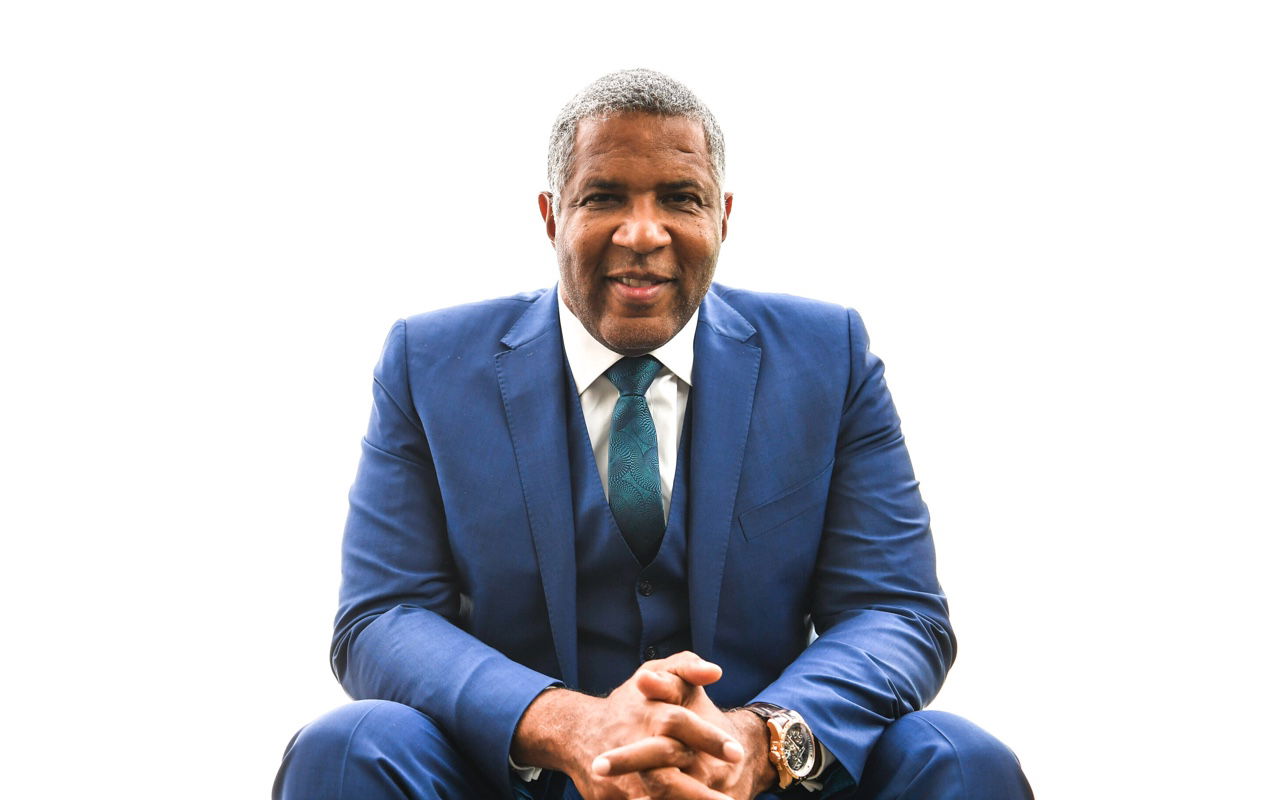
Rod Johnson, 36, and Pernell Cezar, 37, are childhood friends who have leveraged a lifelong bond of shared values, complementing skills, and love of community into a thriving young business. BLK & Bold Specialty Beverages, which produces and distributes a product line of quality coffees and teas, is growing its market share while investing real dollars in America’s youth. The duo donates 5% of BLK & Bold’s gross revenue to nonprofit organizations that provide guidance and support to children to help them “become the best versions of themselves.”
Johnson is BLK & Bold’s co-founder and chief values officer; partner and co-founder Cezar serves as CEO.
Both friends hail from Gary, Indiana, but attended different colleges—Johnson at Indiana University and Cezar at the University of Northern Iowa. The two remained in touch through college and post-graduation, nurturing ideas of entrepreneurship and joining forces to start a new venture.
“My professional background is in merchandising and consumer goods development, focused on building national and emerging brands,” Cezar explains. “Ultimately, that professional background, along with my passion for mixing community impact and entrepreneurship, is where Rod and I started maturing our conversation about what doing business together would look like. BLK and Bold is the byproduct of that.”
Their talks during the Summer of 2017 helped solidify the concept, which joined Cezar’s love of coffee with Johnson’s passion for tea and their respective roles in what began as an eCommerce business. Johnson would take on the “digital experience,” managing social media, community outreach, and the company’s social impact mission, while Cezar would run operations and sales.
“It was a very organic start,” Johnson said. “We were learning on the fly how to start a business.”
Cezar set up shop, roasting beans in his garage in Des Moines, while Johnson worked on his laptop from his couch in Sacramento. The venture started coming together and finally launched in 2018. It didn’t take long for BLK & Bold to draw loyal customers and a growing corporate clientele. Soon, cafes wanted BLK & Bold to supply them.
Business growth and mounting demand eventually brought the partners under one roof, first sharing space in a local brewery and ultimately moving into their current space, a 33,000-square-foot facility in Des Moines.
Despite the COVID-19 pandemic wreaking broad economic havoc, BLK & Bold made a successful leap into national retail in partnership with Target. Today, BLK & Bold is a fixture on corporate and university campuses. At the same time, shoppers can find selections at an estimated 12,000 retail outlets across the United States, from regional grocers to big chains like Albertsons, Safeway, and Walgreens.
“We’ve been able to secure some landmark partnerships, like working with the NBA and Ben and Jerry’s, because of who we are at our core,” Johnson said. Microsoft, Amazon, and Bank of America are anchor partners, also. “We are a social impact company that is trying to invite more people into conscious consumerism by way of their everyday habits. And that philosophy—that ethos—is entities with a similar focus.”
For both men, the determination to make BLK & Bold profitable and socially impactful comes with the understanding that the company’s money management structure must be coordinated with its dual priorities. The two are also engaged in keeping laser-beam focus on their personal financial needs as well.
As Johnson put it: “As a bootstrap business, we have to be intentional with where we allocate resources so there isn’t a lot of frivolous spending. We don’t have the luxury to make those mistakes or take those risks.” He cited inventory missteps as valued learning opportunities that helped shape the partners’ disciplined approach.
Cezar credits their successful merger of business and social impact with the ability to prevent company growth from outpacing the founders’ control.
“Rod and I self-funded the business, and we are still 100% co-owners,” says Cezar, noting that while BLK & Bold has been fortunate to attract investor capital and lending support to fund its expansion, the pair have been careful to sustain the right balance—the price of capital would not be control of the direction of the company or a compromise of its goals.
“We are almost six years into the business, and we’ve learned a lot about the various means of capital and the needs of investors and lenders. And so, we’ve been open to learning and pursuing opportunities. Nonetheless, we continue to navigate and control the pace of our journey.”
Of course, the flip side of 100% control of a venture means assuming 100% of the risk—a responsibility both men take especially seriously. Entrepreneurs who choose the coffee business confront marketplace uncertainty and unique production challenges. Strong insurance coverage is a must.
Cezar: “We’re roasting coffee beans to between 400 to 500 degrees. If we have a fire and the equipment that we’re financing is down, we’re screwed if we can’t replace it as fast as possible. So, it becomes essential to play offense by playing defense and having the right coverage across the different needs.”
For more content Click here please visit our Plan to Prosper page.