Aoki Lee And Russell Simmons Have A Heated Exchange On Instagram Live After Father’s Day
Aoki Lee Simmons is not holding back this Father’s Day weekend as she gets tearfully real on an Instagram Live explaining her estranged relationship with her father Russell Simmons.
Simmons joined in on the live stream as the 20-year-old cried about strained communications with her dad, commenting that he’s “so sorry” and “love you.”
However, his youngest child was not standing for it, releasing a muted video showing her father yelling at her, reshared by The Neighborhood Talk. While the audio was nonexistent, it was evident that the Def Jam Recordings co-founder was heated at who he once considered to be “Daddy’s girl.”
The recent Harvard graduate went on to also display screenshots of messages where Russell referred to her mother, Kimora Lee Simmons, as a “piece of sh-t” who stole his money.
Within the messages, Aoki Lee defended the Baby Phat founder, stating that Kimora had nothing to do with Simmons’ diminished wealth, and that he “lost it with your actions.”
Simmons has been tucked away in Bali ever since allegations of his sexual assault made headlines back in 2017.
His two daughters Ming Lee and Aoki Lee, both shared with the former model, have remained relatively silent about his transgressions. However, his youngest child is no longer holding back her discontent toward the disgraced media mogul.
Her mother Kimora got involved in the social media matter, getting tearful as well as she explains that her ex-husband hit “rock bottom” and that their daughters are more than over it.
While Simmons is clearly at odds with his former family, his story posts signal that he still doesn’t believe himself to be at fault for his distant relationship with his only children. The 65-year-old reposted a photo of a sign that states, “stop telling fathers they should have fought harder to see their children and start asking mothers why he had to fight at all.”
Aoki Lee has, seemingly, given up on the matter, sharing most recently to her Instagram with screenshots of all her loving posts towards her dad in the past.
“I have always shown up for my dad as a daughter can,” expressed the model. “I have always been in his corner. I have tried everything I could try.”
Newark Symphony Hall To Host First Black Creative Economy Summit In NJ
Making its inaugural debut, the Black Creative Economy Summit will be hosted by the Newark Symphony Hall (NHS) to help support Black artists and entrepreneurs.
Calling itself New Jersey’s largest and oldest Black arts institution, the NHS declares the three-day event June 20-22 in Newark, N.J. its hosting will be the first ever of its type in the city and state.
Part of the state’s North to Shore Conference, the affair intends to foster investment opportunities for entrepreneurs and artists in media, performing arts, technology, film and advance the power of the Black creative economy. It also aims to link BIPOC entrepreneurs with potential investors and mentors to help scale up their businesses.
The Newark summit will showcase a diverse and distinguished mix of industry leaders and tastemakers from sectors including entertainment, business, and tech, to empower creatives at all career stages.
Reportedly attendees will include David Banner, Grammy Award-winning rapper, record producer, and philanthropist Jeffrey Page; Emmy-nominated director and choreographer Sway; American journalist, radio personality and executive producer Lenny the Barber. The Other Side of Newark, a musical project led by multi-award-winning producer, Jerry Wonda, will perform.
Talia L. Young, president and CEO of NHS, stated,
“The Black Creative Economy Summit is geared to acknowledge the financial impact of artists and promote ownership while celebrating the rich heritage and contributions of Black creators in Newark, throughout New Jersey and beyond.”
She added, “The event will provide a platform for artists, industry professionals and investors to come together, exchange ideas and drive positive change within creative industries.”
The event may very well be needed, considering Black startups collected $324 million in venture capital funds in the second quarter of 2022. However, that dropped from $1.2 billion in the first quarter of 2022 and from $866 million in the second quarter of 2021. The figures are from the analytics firm, Crunchbase.
At the same time, Blacks and other minorities make up a scant number of fund managers, though some progress has occurred in recent years. Across America, 5.1% of private-equity firms are owned by minorities, including Blacks, Latinos, and Asians, based on this report.
Gain more details about the event and its agenda, speakers, and performers here.
Eric B. & Rakim Reunite Becoming First Hip-Hop Act To Perform at NJ’s North To Shore Music Festival
“I came in the door, I said it before, I never let the mic magnetize me no more, but it’s biting me, fighting me, inviting me to rhyme, I can’t hold it back, I’m looking for the line” is one of the most iconic lines in the history of hip-hop. A young Rakim helped elevate the lyrical spectrum of the young art form known as hip-hop in 1986. Now, the “legacy” rapper has teamed up with his former partner, Eric B. for a performance in New Jersey this week.
Earlier this week, for the first time ever, according to HipHopDX, the legendary duo became the first rap act to perform at The Stone Pony in Asbury Park, New Jersey during the North to Shore Music Festival. The governor of New Jersey was on hand to introduce the duo.
In a statement released before the show, Eric B said: “Performing at the Stone Pony is definitely a dream come true. I have been TRULY BLESSED during my career to have played at almost every premiere arena and venue around the world. So, to be able to play at the Stone Pony, which has been the home to countless iconic acts…especially as we celebrate 50 years of hip hop, is unprecedented.”
“I came in the door, I said it before, I never let the mic magnetize me no more, but it’s biting me, fighting me, inviting me to rhyme, I can’t hold it back, I’m looking for the line”
As Rakim continues to perform around the world blessing audiences with his classic lyrics and records, Eric B. started a new career that no one saw happening. The DJ has been acting in a recurring role as a police officer, Mike Gee on the long-running CBS drama, led by Tom Selleck and another former recording artist, Donnie Wahlberg (New Kids on the Block), Blue Bloods.
Founder Of ‘She Builds Future’ Empower Women Across The African Diaspora
Award-winning Haitian American entrepreneur Shaīna Silva, embarked on an ambitious endeavor to bring forth the She Builds the Future Festival, held in Miami June 8-10, 2023. Recognizing the need to empower and celebrate the achievements of women in various industries, Silva created a one-of-a-kind event spotlighting the female leaders, innovators, and trailblazers shaping the future.
According to the American Express State of Women-Owned Business report (2020), Black women entrepreneurs in the U.S. are the fastest-growing demographic, with nearly 2.7 million businesses nationwide. According to the World Bank, women-led businesses in sub-Saharan Africa and the Caribbean account for approximately 40% and 30% of all businesses, respectively.
Despite their enormous growth and impact on financial markets, women-led businesses across Africa and the African diaspora lack access to long-term funding resources and solutions that will provide their businesses the opportunity to grow and thrive.
She Builds the Future Festival
Created after a Haitian call to action in 2018 after a statement made by then-President Trump, the She Builds the Future Festival highlighted the remarkable contributions of women across the technology, entrepreneurship, arts and culture, and sustainability sectors.
“My vision for this festival is to create a space where women come together to share their stories and inspire the next generation of female leaders,” Silva explained.
The festival was a platform for showcasing innovative projects, disruptive ideas, and groundbreaking initiatives spearheaded by women. Attendees were given the opportunity to witness firsthand the incredible advancements and transformative impact women are making across industries, in an environment fueled by inspiration, collaboration, and empowerment.
“Let’s not be victims of tech disruptions within industries,” Silva urged. “We need to take advantage, lead, and be part of the disruption.”
Connectivity
More than just a conference, She Builds the Future connects individuals from different industries, sectors, and regions. “Our goal is to plug in and provide concrete ways for people to give back to their native countries. If you are a Nigerian in fintech, learning from the experts how to take learnings back to Nigeria,” Silva describes. This meeting of the minds enables collaboration and an enhanced perspective on solution design to complex challenges, which leads to more effective and sustainable development across the diaspora. Silva remarked, “This is a place of connectivity to galvanize and bring together individuals from different industries, sectors, and regions.”
The Outcomes
She Builds the Future is designed to empower women entrepreneurs to scale their businesses through an 8-10 week accelerator program. “A fintech entrepreneur who created a digital wallet for emerging markets spent months and months trying to connect with the Central Bank.
Through the She Builds the Future accelerator mentorship, she was able to get meetings with the Central Bank and is now a partner to help launch Haiti’s first cryptocurrency,” Silva shared.
The organization works with high-level industry partners and influential leaders to create a more inclusive and equitable landscape for women entrepreneurs. By fostering meaningful collaborations and providing resources, mentorship, and opportunities, women become empowered to thrive in their respective fields. She Builds the Future is building a future where every woman has the support and opportunities to succeed.
Faces of Sickle Cell: NFL Player Tevin Coleman and Wife Akilah Connects Black Community With Sickle Cell Resources
On World Sickle Cell Day, NFL player Tevin Coleman and his wife, Akilah, are breaking the chain between sickle cell resources and the Black community.
The Colemans, who both carry the trait for sickle cell disease, are passionate and outspoken champions for Black healthcare. And they are starting with the sickle cell community, which makes up of 8 to 10 percent of African Americans.
“Sickle cell disease (SCD) is a rare, and devastating inherited blood disorder that causes lifelong health challenges that adversely impacts the physical, mental, and socio-economic well-being of those living with the disease and their families,” Dr. Kim Smith-Whitely, site head, advisor of scientific and clinical affairs at Pfizer, told BLACK ENTERPRISE in a statement. “Since 2006, all states in the U.S. have been required to provide newborn screening for SCD, which is an important step to getting parents the information they need to plan for their child’s health.”
As a cohesive team, the proud parents of twins Nazaneen and Nezerah, 4, are helping to build and strengthen global sickle cell communities by sharing their own stories on platforms such as Sickle Cell Speaks.
(Photo courtesy of Tevin and Akilah Coleman)
During his time as a college football player at Indiana University, Coleman began experiencing fatigue and body cramping due to less oxygen to his muscles. He tells BE that he couldn’t even finish practices. But he took so much pride in his competitive edge that he endured until he would ultimately pass out.
As a result, Tevin’s coach at the time, who is Black, suggested that he get tested. The former San Francisco 49ers running back discovered that he had the sickle cell gene and began to take the time to learn more about his body. The rest is history.
Nazaneen was diagnosed with what’s commonly called sickle cell anemia, also identified as Hemoglobin S. It is an abnormal form of hemoglobin that carries oxygen in red blood cells and causes the red cells to become rigid, and sickle- shaped.
Akilah, on the other hand, doesn’t experience the effects of living with the trait. But this matriarch of the family is standing powerfully beside her beloved husband and daughter.
“Sickle cell really lacks representation. I want people to see my husband when he is making the touchdowns and big plays. I want you to see him and associate him with sickle cell. I want people to know that this is a safe space. We go through it too. Regardless of what’re doing in life, we represent sickle cell. We walk through this everyday. We want to bridge the gap between the resources and you,” Akilah tells BE.
Tevin echoes his wife’s insistence on normalizing the conversation around sickle cell. He advises those living with SCD to start “educating people around you that don’t have the trait or the disease. Just giving them the heads up so they can help you in certain areas.”
(Photos courtesy of Tevin and Akilah Coleman)
The power of love and family
While Tevin travels for football, his wife and baby girl are in Atlanta, where her healthcare is handled by the best doctors. It is never easy to be apart but the sacrifices are worth it.
“It was trial and error. We did try to travel with him and live in the cities that he played in, but we didn’t have the best experience. That was the flame. We had to make that sacrifice as a family,” Akilah says. She continued to stress the value of finding your community. When planning a proactive plan, a care team is just as important as the love and support of family.
“It’s really hard with sickle cell. A lot of parents don’t really know how to go about it, know how to treat it, know how to help their child with sickle cell. We just want everybody to come together and just to tell their story so we can figure out a way to help each other move on,” Tevin explains.
Across the world, people are living with SCD and face significant misconceptions and stigmas, which can further pose emotional and social challenges by the disease.
For example, sickle cell anemia can cause tiredness as well as severe pain. When seeking pain management consulting, one must realize that this resource is just part of a larger system that is often stacked against Black people and their healthcare. How accessible is pain management for Black kids and adults living or caring for sickle disease? Health disparities related to race and socioeconomics is a major factor why patients affected by sickle cell disease (SCD) frequently do not receive adequate pain management: Physicians and nurses hold false beliefs.
“SCD patients are often perceived as drug-seekers or addicts and might display behaviors in interactions with providers that are misperceived as being characteristic of substance abuse,” according to an article published in The Clinical Journal of Pain.
With that being said, the Colemans are adamant about maintaining healthy communication with Nazareen and those around her so that her well-being is priority.
Proactivity at its finest
At first, Tevin and Akilah were hesitant to share their baby girl’s diagnosis with the world. They are now proud to instill confidence in Nazaneen, who has stood firmly in her bravery while at school. She would tell her teachers to call her parents if she felt any pain.
“Princesses need their beauty sleep,” Akilah would tell her daughter. To support their daughter, the Colemans developed a game plan to create relationships with doctors and find a medical network of resources who knew them and who they knew they could trust. Sickle cell is not one-size-fits-all, so the Coleman tribe is taking the proactive and preventative approach.
From spa days and rest to massages and healthy food consumption, Tevin and Akilah only want to protect their daughter through self-care practice and advocacy. Tevin makes it his business to maintain hydration, a healthy lifestyle, and mobility, thanks to the resources he receives in football and beyond.
“When she has her aches and her pains, we try to protect her innocence. I think that’s a huge part of raising Black children is protecting their innocence because society will try to force them to grow up sooner than what they deserve. They deserve to be children,” Akilah explains.
She continues: “We try to create a very healthy environment for her. Her healthcare is our healthcare. We tell her that it’s self-care. Whatever she needs, we tell her, “It’s OK if you’re tired, you sleep, you rest. You have nothing to prove.'”
(Photo courtesy of Tevin and Akilah Coleman)
Creating a safe and confident environment
In 2017, the U.S Food and Drug Administration (FDA) approved two new drugs to help treat sickle cell disease, the first in nearly 20 years. More recently, Pfizer acquired Global Blood Therapeutics for $5.4 billion to breathe new hope in building a pipeline of innovative sickle cell disease treatments.
“Thankfully, significant research into the mechanisms of SCD and the medicines to treat it have emerged in earnest over the past 10-plus years and with that we are gaining new, continual insights into the medical impact of this disease and the innovations needed to address it,” says Smith-Whitely.
Today, scientists and patient advocates continue to reach new patients and communities with the Colemans. As advocates, the determined family has previously visited hospitals and state houses to spread awareness about SCD and educate others on how to gain access to resources and exercise their rights.
“We have multiple goals that we’re trying to reach within our community,” Akilah says. “One of them is vocalizing how important it is to find the right healthcare team. There’s such a stigma on people of color in the medical system. We lack trust there. For us, I know this is our survival. We need our care team for our daughter.”
To reach a larger audience, the Colemans have partnered with Pfizer to speak freely and to create a safe and confident space. Akilah mentioned that some of the members of the team have met Nazaneen, making the partnership a more personable experience.
While Pfizer addresses long-standing disparities in treatment and care of those living, or caring for someone, with this disease, Tevin and Akilah are uplifting the Black community.
“If it affects one of us, it affects all of us,” says Akilah.
From Tulsa And Beyond: A Nation Of Black Wall Streets
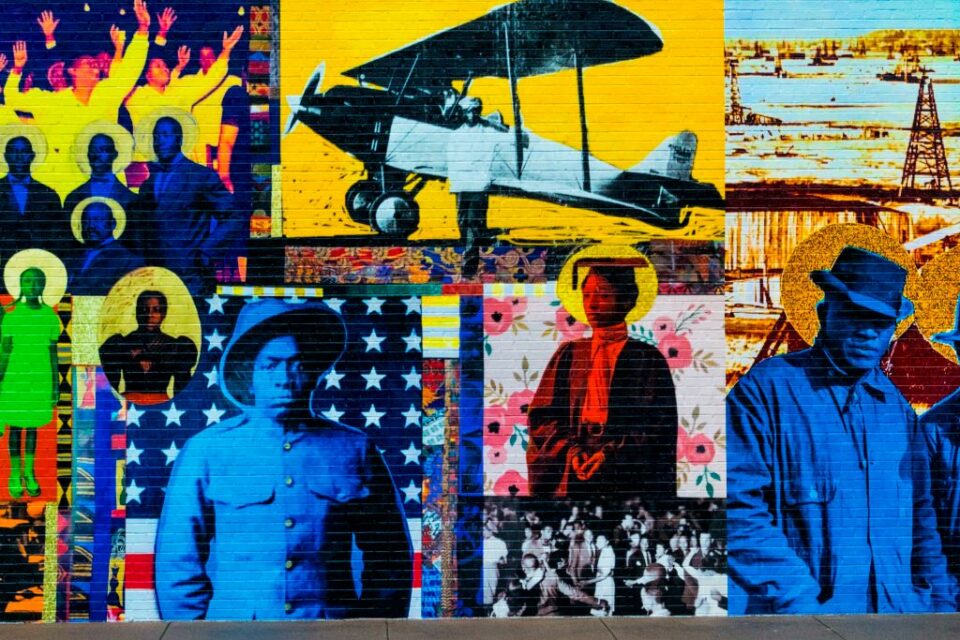
Tulsa’s Black Wall Street is often considered as the only legacy of Black wealth and economic empowerment. That is farther from the truth. There is a nation of Black Wall Streets beyond Oklahoma, nestled between the pasts of the Civil War and the end of Reconstruction.
Today is a new day to shed light on the ongoing efforts to preserve and advance the Black dollar. From Greenwood to Richmond, segregation and discrimination forced Blacks into a small world in which Blacks had open access to prosperity and generational wealth.
We want to acknowledge the freedman communities, individuals, and new-age initiatives that continue to breathe hope in a New Black Wall Street. For instance, former Wall Street analyst Claudia Walker dedicated her collection, The ABCs Of Black Wall Street books, to empowering educators, parents, and youth about the future for Black Wall Street. The Official Black Wall Street organization provides a platform and directory for Black-owned businesses across various sectors within the United States.
Ikechi Nwabuisi, founder & CEO of TRiBL, is also a true believer in the future of Black Wall Street. He introduced a strategic plan to lay the groundwork for a global digital wealth strategy built on community and e-commerce. In May, the Black Wall Street Legacy Festival hosted a series of community-led events, which included discussion panels, performances and guest appearances from artists, advocates and political leaders.
Greenwood in Tulsa, Oklahoma
(Photo courtesy of Greenwood Cultural Center)
After a long battle, the affluent Black-owned community Greenwood District, also known as Black Wall Street, graced the National Register of Historic Places last year.
Recognized as a freedom colony, Black Wall Street was a thriving mecca of black enterprises fueled by Oklahoma’s oil boom during that time. The entrepreneurs of Greenwood continued to work with other businesses to pour and circulate resources within the Black community until the Tulsa Race Massacre on May 31, 1921.
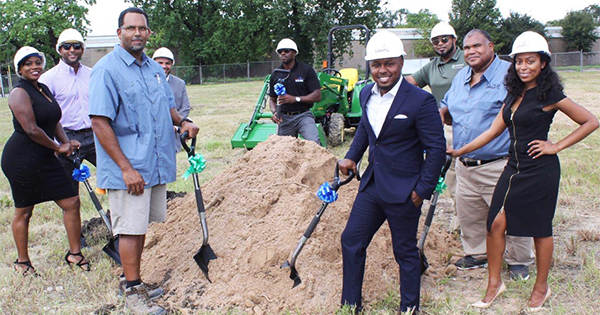
Launched in 2022, the Black Wall Street Business Center pays homage to the Tulsa Greenwood neighborhood. The 2,200-square-foot facility that aims to advance Black, indigenous, and minority businesses and entrepreneurship. Thee hub features three shared office spaces, 16 working desks, a seating area and a meeting room, free Wi-Fi and printing, and a kitchen.
Jackson Ward in Richmond, Virginia
Image: Jackson Ward Historic District (Hippodrome Theater) Photo Credit: Mrssisaithong / Wikimedia Creative Commons
Known as “the Harlem of the South,” the Jackson Ward district of Richmond was established in 1871. The Reconstruction era saw an influx of freed slaves move into the neighborhood. They created one of the most vibrant, active, and prominent centers of Black economic self-determination.
Among the District’s thriving entertainment included the famed Hippodrome theatre where the likes of Ella Fitzgerald, Duke Ellington, and Richmond’s own Bill “Bojangles” Robinson made appearances. The neighborhood housed large and well-known African-American churches, including the Sixth Mount Zion Baptist Church, founded by famous orator John Jasper. The retail and business community included the incomparable Maggie L. Walker, the first woman in America to found and lead a bank in the United States when she opened the St. Luke Penny Savings.
In the late 1950s, the Ward was divided by the Richmond-Petersburg Turnpike (now part of I-95). Many structures and businesses were torn down.
Juneteenth Cleared A Path For The Rise Of The Black Investor Class
Black investment groups, venture capital firms, and individual investors have been rising like a tidal wave in recent years.
Many Black men and women used the COVID-19 Pandemic to educate themselves about money, invest in businesses, and even purchase real estate. The pandemic also led to a rise in the number of Black entrepreneurs and business owners, as the Black Lives Matter movement andJuneteenth brought a new focus on racial equity.
“It’s amazing, the fact that it’s cool so it’s not even just podcasts, people are learning financial literacy through music,” entrepreneur, investor and podcaster David Shands told BLACK ENTERPRISE.
“There’s never been a time in history where rappers are injecting financial literacy into their music and now it’s cool. The whole culture is shifting to you’ve got to be smarter you’ve got to be more responsible with your money. I think it’s absolutely amazing.”
Investing has been on the rise in the Black community in recent years, but several Black people made fortunes investing in businesses and real estate in the 1980s, 1990s, and early 2000s.
If you take a look at the Atlanta skyline, you’ll see the decades-long work of Black CEO and investor,Herman J. Russell.
Russell, whose first property was a vacant lot he bought in 1946, built H.J. Russell & Co. into one of the nation’s largest black-owned construction and real estate firms. In addition to acquiring and developing numerous real estate projects in the Jim Crow South, H.J Russell is one of the largest black-owned companies in the U.S. and is regularly on the BE 100 list
Projects built by H.J. Russell includeHartsfield-Jackson Atlanta International Airport, theGeorgia Dome, Philips Arena, Turner Field (former home of the Atlanta Braves), and Mercedes-Benz Stadium, (current home of the Atlanta Falcons). Russell passed away in 2014 and his sons Jerome and Michael now run the company
In 2014, Russell shared his advice for being a successful Black person in an industry with little minority participation.
“Do not hesitate,” Russell told BE in 2014. “Push for opportunity but most of all be persistent, prompt, and reliable. African Americans make up a huge percentage of the population so it is important that you work hard to increase the percentage of our participation and you should seek it as if your life depends on it.”
The late TLC Beatrice CEO Reginald Lewis, a Harvard-trained lawyer and entrepreneur, was the first Black man to build a billion-dollar company.
The Baltimore native launched his investment firm, the TLC Group, which in 1987 purchased Beatrice International Foods Cos., a manufacturer of processed meats, dairy products, and beverages with 64 food-processing and distribution companies in 31 countries.
“Reggie was not afraid of going beyond what Black business was, which was privately owned companies run by family members to be passed on to family members,” BET Founder Bob Johnson told BE in 2015. “He got access to public capital, which gives you leverage in deal-making.” Johnson is the founder and chairman of The RLJ Cos., a portfolio of companies with holdings in many industries.
Before he died in 1993, Lewis helped Black Americans gain access to financing on Wall Street. After Lewis passed, his wifeLoida Lewistook over, and in the first two years of running TLC Beatrice, the company made more than $3 billion in net sales.
Moving into the 1990s, another Black businessman who paved the way was FUBU CEO, Draymond John.
John, who once sold hats on the street outside the famed Apollo Theatre in the early 1990s, is now a featured investor on NBC’s Shark Tank and has invested in numerous businesses including Bombas socks, Hells Bells Helmets, andBrowndages.
Vista Equity Partners CEO Robert F. Smith made national headlines in 2019 when he paid off the tuition and student loans of the graduating class at Morehouse College. However, the Black billionaire has been an investor for more than two decades and sports a portfolio that includes more than $96 billion in assets and includes more than 80 enterprise software, data, and technology-enabled companies that employ over 100,000 people worldwide.
These men paved the way in Black investment and are shining examples for a growing chorus of figures and organizations that are pushing to make investing more popular and turn Juneteenth into a holiday focusing on financial literacy, business, and entrepreneurs for Black men and women.
Black Athletes and celebrities are also helping by starting their own VC funds and are investing and assisting minorities- and women-led businesses.Serena Ventures, the VC fund started by tennis legend Serena Williams, has made numerous investments in women-owned and minority-owned businesses.
NBA All-Star Kevin Durant’sThirty5 Ventures and Stephen Curry’s Penny Jar Capital also invest in minority businesses, as do the VC firms started by rappers Shawn “Jay-Z” Carter and Calvin “Snoop Dogg” Broadus.
Wall Street veteran and finance coach Shareef “Ross Mac” McDonald has a unique name for this renewed interest for Black men and women.
“I love it, we call it the Digital Civil Rights Movement,” said McDonald. “Post George Floyd and during COVID we as a people were more intentional and saying no one’s going to give us anything we need to get it and take it for ourselves whether it’s knowledge or wealth and so I’m excited that people are now doing the things that our ancestors didn’t necessarily have access to even understand or comprehend.
“Now, people have the ability to buy stocks and so I love the fact that people are taking it amongst themselves to be submerged in the information and now you have Black content creators on Twitter, Instagram, and YouTube saying hey now is the time to buy stocks for cheap and so I love being a part of that and part of the digital Black wealth renaissance.
Celebrate Juneteenth 2023 with BLACK ENTERPRISE with month-long content that explores the history of prosperity and banking, and the future of investing and financial literacy for Black communities.
Juneteenth Celebration In Chicago Becomes Mass Shooting Of 20 Victims
In an unnecessary Juneteenth tragedy, 20 people so far have been victims of a mass shooting that occurred June 18, early Sunday morning, during a celebration of the federal holiday, Chicago suburb’s.
At approximately 12:30 a.m., the parking lot of a strip mall in Willowbrook, an area a little over 20 miles west of Chicago, was overtaken by gunfire, ABC Newsreported. A sizable crowd of people were still present at the Juneteenth festivities honoring the emancipation of enslaved people when the shooting erupted.
According to local news WLS-TV, one victim was fatally shot while two others remain in critical condition.
Witnesses shared their accounts of what took place in the moments leading up to and during the shootout, with many stating it was a race to safety.
“It was supposed to be like a Juneteenth celebration; we just started hearing shooting, so we dropped down until they stopped, said onlooker Markeshia Avery.
“They just kept going. After that, we literally scattered away.”
Police investigated the area until mid-morning, with debris from the chaos still on the ground of the site.
The status of the victims remains varied, with some being transported via ambulances to the surrounding hospitals while others walked in to receive care for what was considered to be “graze wounds,” as DuPage County Deputy Sheriff Eric Swanson told news outlets.
Joe Ostrander, battalion chief of the Tri-State Fire Protection District, elaborated further on the help arriving to the scene, as detailed by CNN. With a grave amount of attendees shot, 12 ambulances responded to the call for medical attention.
Swanson also confirmed that the investigation is still active, with police tape still blocking off the scene as they continue to survey the premises as needed.
What was supposed to be a commemoration of Juneteenth turned into another instance of gun violence that plagues America.
The motive for the shooting, and who the perpetrator is, is still unknown.
More Than $3M In Grants Will Protect 40 African American Historic Sites Across The U.S.
The African American Cultural Heritage Action Fund (AACHAF) has announced it will give out $3.8 million in grants to preserve and protect 40 African American history sites.
The announcement coincides with Juneteenth, and recipients of the grants will focus on preserving HBCUs, theaters, historic heritage trails, and more.
“The history embodied in these places is emblematic of generational aspirations for freedom, the pursuit of education, a need for beauty and architecture, and joys of social life and community bonds,” Brent Leggs, executive director of the African American Cultural Heritage Action Fund said, according to Veranda. “That’s why the Action Fund believes all Americans must see themselves and our shared history in this year’s grantee list if we are to create a culturally conscious nation.”
The Action Fund, a program within the National Trust for Historic Preservation, is in its sixth year and has raised more than $95 million. It’s considered the largest resource dedicated to preserving African American historic sites. The grants range from $50,000 to $150,000 to support preservation efforts in four categories education and programming, project planning and development, building capital, and increasing organizational capacity,
Historical sites the grants will help preserve include the Black Heritage Trail of New Hampshire, where augmented reality will guide visitors along the Black Heritage Trail to view 3-D representations of people and places.
Another site that will receive grant funding is Elktonia Beach Heritage Park. The park was purchased in 1902 by formerly enslaved veteran Fred Carr and Elktonia-Carrs Beach became a Green Book-listed recreational area where Black beachgoers could safely enjoy leisure activities.
Grant funding will go to the University of Milwaukee-Wisconsin to inventory and preserve the sites of Alonzo Robinson Jr., the first registered Black architect in Wisconsin. Robinson’s career spanned over 40 years, designing several civic and commercial buildings, houses, and community churches in Milwaukee and surrounding areas.
Other sites receiving grant funds include the Neosho Colored School, the Southgate Street School, the Nantucket African Meeting House, and the YMI Cultural Center. The full list can be seen here.