pitch contest, HBCUs,
Students from 17 HBCUs competed at the PROPEL Center's "Future of Tech Innovation" national finals in Austin, TX in April 2026. The winning team hails from Morgan State Unversity.

Propelling Toward the Future: HBCU Students Design AI-powered Solutions


Morgan State University students take home top prize at PROPEL Center Future of Tech Innovation Challenge.

Having a dream job and putting those skills into action before earning your degree is a win-win for Fikewa Akindolire. The rising junior, honors information systems major at Morgan State University, did just this at the inaugural PROPEL Center Future of Tech Innovation Challenge, where her school’s team won first place.

“It’s not just about winning; it really just gave me insights and reaffirmed my career aspirations of becoming a product manager,” Akindolire, an aspiring AI/machine learning product manager, told BLACK ENTERPRISE. “Being able to see a product from inception all the way to fruition, prototyping and actually being able to pitch it—that’s exactly what I want to do in terms of being able to develop a product.”

Supported by Apple and Southern Company, PROPEL Center is a global technology and innovation hub, preparing students from historically Black colleges and universities (HBCUs) to transform the nation’s talent pipeline and workforce. PROPEL hosted its inaugural Future of Tech Innovation Challenge national finals in Austin, Texas, in mid-April 2026. The multiday event convened some of the nation’s most promising HBCU student innovators to showcase AI-driven solutions addressing real-world challenges.

The program engaged 1,100 applicants from 89 HBCUs. Seventy finalists were selected for the national finals, representing 17 HBCUs. Participants worked in teams exploring various sectors, including education, energy, health innovation, cybersecurity, and media technology, which PROPEL cites as “areas shaping the future of work and society.” Students were charged with identifying real-world problems, designing AI-powered solutions, and presenting their ideas to industry leaders.

“We are building a new standard for HBCU innovation, one that positions students not just as learners, but as creators, problem-solvers, and future leaders in AI and technology,” said PROPEL Center Vice President of Operations and Chief Strategy Officer Harriette K. Burrell. “What has been most exciting is seeing these students step into that potential in real time, bringing bold ideas to life, collaborating across disciplines, and applying AI in ways that are both innovative and deeply impactful.”

The winners walked away—not only with big cash prizes—but also with meaningful connections, working with cross-functional teams, and building skills that will prepare them for future careers in tech.

The winning team, “Hax Lab” from Morgan State, was awarded $35,000. In second place, “The Planeteers” from Fisk University were awarded $25,000, and in third place, “Team ABS” from Huston-Tillotson University took home $15,000.

Fueling Next Gen Black Tech Leaders

Black professionals account for 12% of the U.S. workforce, but only 8% of the tech industry, according to data from McKinsey. When you reach the top of the ladder, only 3% of technology C-suite executives are Black, data shows.

PROPEL Center aims to increase these stats through mentorship, hands-on training, and direct employer engagement to advance equity in the tech pipeline. In addition to the Future of Innovation Challenge, PROPEL Center launched PROPEL U last September, an applied learning platform for HBCU students that provides micro-lessons, AI foundation courses, and team-based challenges.

Similarly, BLACK ENTERPRISE’S BE SMART HBCU Hackathon, an annual coding competition for HBCU students, also aims to increase the pipeline of emerging tech talent to ensure they are adequately trained and prominently positioned to be recruited for jobs. Last fall in Charlotte, more than 300 students from 43 HBCUs formed 62 teams to develop technical solutions to solve real-world challenges. A panel of judges examined each team’s application impact, technical complexity, and user-friendliness, and rated teams on their pitch and presentation skills at the 10th annual event.

“I am so proud of our BE Smart Hackathon and its participants,” said Earl “Butch” Graves, CEO of BLACK ENTERPRISE, lauding the 2025 winning team from Alabama State University. “It has met its goal of providing a showcase for HBCU students to display their technical expertise and gain exposure to the top companies in global business.” 

Likewise, Burrell, with PROPEL Center, expressed pride in the Challenge’s participants and can already foresee the positive impact that HBCU students will have on the industry’s future.

“Their creativity, confidence, and vision for the future have been nothing short of inspiring,” Burrell said, “and it reinforces exactly why investing in HBCU talent is so critical to shaping the next generation of leaders in technology.”

Meaningful Connections and Lasting Impact

For Akindolire of Morgan State, she says, “the culture of PROPEL was one of the most unique things I’ve ever experienced.” From collaborating with teammates and peers to networking with partners, meaningful connections were made that had a lasting impact.

Joining Akindolire on the winning team “Hax Lab” are Osita Odunze, Daniel Onyejiekwe, and Jaden Reeves.

“I enjoyed meeting students from different schools and universities,” said Reeves, who recently graduated as a cloud computing major, adding that he made new connections on LinkedIn—from peers to panelists to PROPEL and Apple employees. “Seeing all these bright minds in one space is something I truly appreciate.”

Onyejiekwe, also a Class of 2026 graduate, majored in computer science and is an aspiring software engineer. He said the Future of Innovation Challenge helped him step onto the main stage with confidence.

“This is the first time I got to take an idea and turn it into an actual product and pitch it to investors, which was really cool and took me out of my comfort zone,” he said.

The team “Hax Lab” plans to use their award money wisely: investing a portion in the stock market, assisting with grad school, pursuing business ventures, including real estate, and giving to people experiencing homelessness. Oh, and of course, per Onyejiekwe, maybe a few new kicks for the sneakerheads; thus, stepping into his future career in tech with style.

Ruka CEO Tendai Moyo, hair extensions
Ruka CEO Tendai Moyo opens up about the company's innovative hair extensions and fundraising journey

Black Women Founders Raise $4.5 Million for Their Innovative Hair Extensions Brand

Tendai Moyo, CEO and co-founder of Ruka Hair, shares their fundraising journey and her best advice for other founders in a Black Enterprise exclusive


London-based biotech beauty brand Ruka Hair has announced $4.5 million in new funding that will help it bring its innovative hair extensions to the U.S.

Co-founded in 2020 by Tendai Moyo, who was born in Zimbabwe, and Ugo Agbai, who was born in Nigeria, Ruka Hair has built a loyal following by tackling a problem Black women know all too well: finding hair extensions that don’t compromise on quality, safety, or ethics.

Solving for the sourcing questions around natural hair and the harmful chemicals found in synthetic options, Ruka Hair created its own patent-pending, lab-grown fiber called Synths 2. Its hair extensions are made from collagen, are biodegradable and hypoallergenic, and look, feel, and perform like natural hair without plastics or carcinogens.

The new round brings their total funding to $10 million and will allow them to launch U.S. operations this year.

Freedom Trail Capital and Henkel Ventures co-led the round with participation from Big Issue Invest, Backed VC, and angel investors, including British track star Dina Asher-Smith, and retail and M&A expert Sophia Dennis.

“Ruka Hair exemplifies what we look for: founders solving a real problem with genuine commitment, building through community rather than hype,” said Samyr Laine, co-founder and managing partner of Freedom Trail Capital, in a statement.

“Tendai and Ugo built this brand during one of the most challenging periods for consumer businesses, scaled through an authentic community, and are now pioneering biotech innovation that could reshape an entire category,” he continued. “Ruka is on track to become a category-defining brand and a future household name for textured haircare products.”

Co-founder Moyo spoke with BLACK ENTERPRISE about their fundraising strategy and the lessons it has taught them:

What was behind Ruka Hair’s decision to pursue venture capital?

For us, venture capital made sense because Ruka was never just about launching another beauty product. We are building a new fiber platform for textured hair, and that requires significant upfront investment in research and development, testing, supply chain, manufacturing, education, and brand-building.

There are parts of the business that look like consumer packaged goods, but the ambition is much more infrastructure-led. We are trying to change the quality, safety, and experience of hair extensions for a community that has historically been underserved. To do that properly, we needed investors who understood that the opportunity was not just [about] short-term growth, but long-term category transformation.

What has the fundraising journey been like for you?

Fundraising has been stretching, humbling, and, honestly, character-building. We have raised through very different market conditions: from the peak of consumer enthusiasm to a much tougher environment where capital has become more cautious, especially for consumer brands.

As a Black female founder building in a category that has often been misunderstood, I have also had to spend a lot of time educating investors on the scale of the textured hair market, the depth of the consumer problem, and why this category deserves serious innovation.

But the journey has also been incredibly affirming. The right investors have understood that Ruka is not just a beauty brand. It is a science, community, and culture-led business tackling a huge global market.

How did you determine that it was time for another round of fundraising?

The timing was driven by the stage of the business. We had built strong community trust, proven demand, developed Synths 2—our collagen protein fiber-braiding hair—and reached a point where the next phase required more infrastructure.

This round allows us to move from proving the concept to scaling it properly. That means investing in research and development, product testing, supply chain resilience, manufacturing consistency, education, and the operational foundations needed to grow in the United States and beyond.

We were also very conscious of growing responsibly. In a difficult consumer environment, we deliberately constrained spend rather than chasing unprofitable growth. Now the focus is on building the foundations that allow us to scale with more discipline and longevity.

How is this new round of funding different from previous rounds?

This round feels different because it is less about proving that the market exists and more about proving that we can build the future of the category.

Earlier rounds were about vision, community, and the initial product-market fit. This round is more about infrastructure, defensibility, and execution. The conversations are deeper—around supply chain, intellectual property, safety, testing, gross margins, operational readiness, and what it takes to build a business that can last.

As a founder, it also feels more serious. You are no longer just asking people to believe in an idea. You are showing them the system you are building and the discipline behind it.

What will this $4.5 million infusion mean for your hair extensions?

The funding will help us continue scaling Synths 2, our collagen protein fiber-braiding hair, and the wider fiber platform behind it.

It will allow us to invest further into research and development, product testing, supply chain, manufacturing, education, and retail readiness. For us, it is about making sure the innovation is not only exciting, but safe, consistent, high-performing, and easy for customers to understand.

It also supports our United States expansion, including fulfillment, content, community building, and the foundations for larger retail partnerships. We see the United States as a major growth market for Ruka, both commercially and culturally.

Ultimately, this funding helps us build the infrastructure to take textured hair innovation seriously—at the level our community has always deserved.

What advice do you have for other founders about fundraising?

I would say: know what kind of business you are building before you decide what kind of capital to take.

Venture capital is not just money. It comes with expectations around speed, scale, and outcomes, so it has to match the ambition and structure of the company.

I would also tell founders to get very clear on the story behind the numbers. Investors need to understand the market, but they also need to understand why you are uniquely positioned to win. Especially if you are building in a category that has been overlooked, part of the job is education.

And finally, do not let the fundraising process define your worth as a founder. A no is not always a reflection of the quality of the business. Sometimes it is timing, mandate, market conditions, or simply a lack of understanding. The key is to stay close to the truth of what you are building, keep refining the story, and make sure the capital you take serves the company—not the other way around.

Flau'jae Johnson, NIL, SCORE Act
(Photo: Brian Rothmuller/Icon Sportswire via Getty Images)

Black Lawmakers Block Controversial NCAA NIL Bill

Opponents of the SCORE Act argue that it would strengthen the NCAA’s power while limiting labor protections and voting rights for college athletes.


A coalition of Black lawmakers and progressive Democrats has successfully blocked the advancement of the controversial Student Compensation and Opportunity through Rights and Endorsements (SCORE) Act, a sweeping proposal aimed at reshaping college athletics and name, image, and likeness (NIL) compensation rules for student-athletes.

The legislation, introduced by Rep. Gus Bilirakis, sought to establish a national NIL framework while giving the NCAA and athletic conferences broader authority to regulate college sports. Supporters argued the bill would bring consistency to the rapidly evolving NIL landscape and protect student-athletes from exploitation. However, critics said the proposal would primarily benefit universities and athletic organizations while limiting athlete rights and labor protections.

According to The Hill, Republican leadership pulled the bill from consideration after failing to secure enough bipartisan support in the House. Black lawmakers and athlete advocates played a major role in derailing the legislation, warning that the bill would weaken athletes’ bargaining power and prevent future state-level protections.

One of the bill’s most contentious provisions would have barred student-athletes from being classified as employees, effectively denying them access to collective bargaining rights and certain labor protections. The legislation also proposed granting the NCAA limited antitrust protections, shielding the organization from certain legal challenges related to athlete compensation rules, reports Morgan Lewis.

The failed vote underscores the growing political divide over the future of college sports, particularly as Black athletes continue to generate billions of dollars in revenue for universities, conferences, broadcasters, and sponsors. Critics of the SCORE Act argued that federal legislation should prioritize athlete empowerment, long-term financial security, healthcare protections, and equitable compensation instead of restoring power to institutions already benefiting from the current system.

RELATED CONTENT: Ole Miss Football Star Trinidad Chambliss Is Amazed By His NIL Earnings, ‘Wow, I Have That Much Money’

CARMELO ANTHONY,, WEED, MARIJUANA, STAYME7O
Photo by Bennett Raglin/Getty Images for 1800 Tequila

From the Hardwood to Hollywood’s AI Frontier: Carmelo Anthony’s Next Big Play
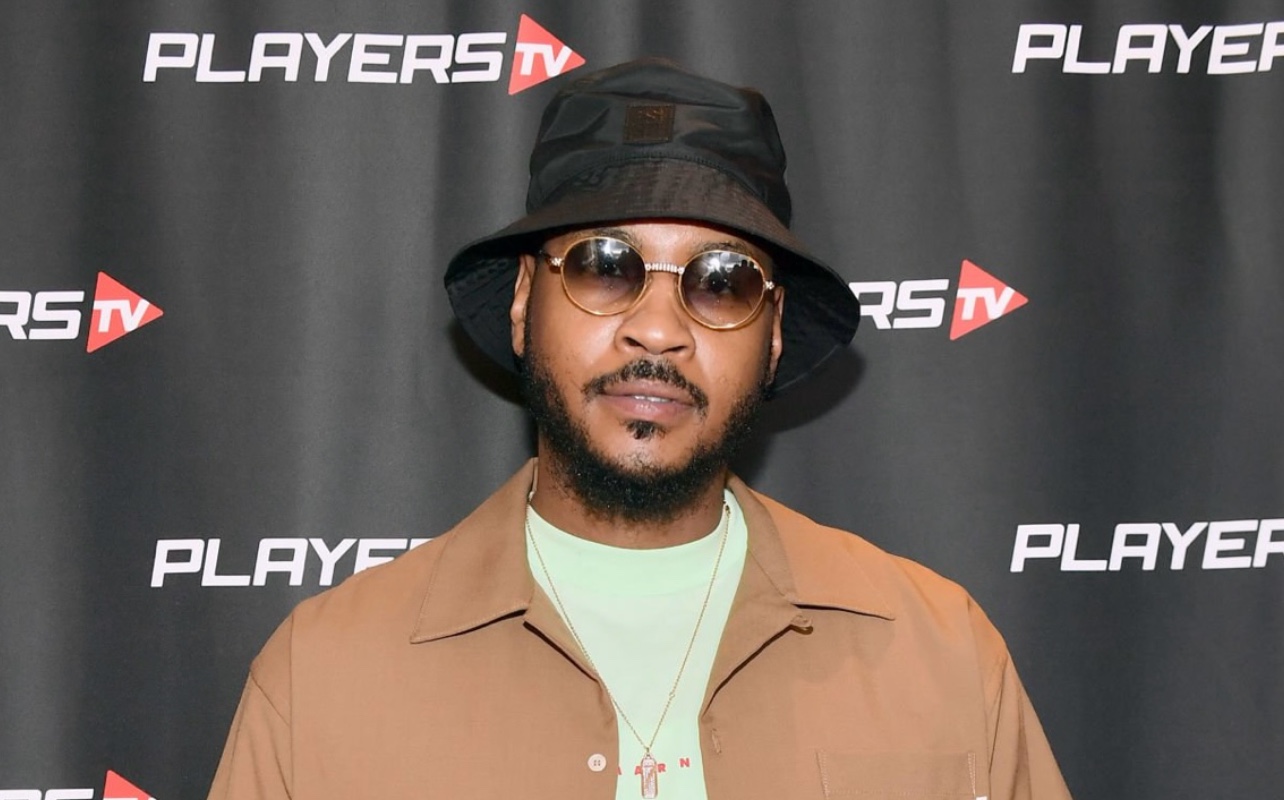
The partnership signals a structural shift in how sports figures leverage their personal brands.


Basketball Hall of Famer-turned-entrepreneur Carmelo Anthony is pivoting from the hardwood to Hollywood’s next frontier, positioning his production company as a cornerstone player at the intersection of sports media and artificial intelligence.

Utopai Studios announced on May 21 that Anthony’s Creative 7 Productions has signed on as a strategic partner to aggressively expand sports and entertainment intellectual property. The collaboration aims to pioneer an asset-heavy model for professional athletes, allowing them to develop, own, and scale original entertainment properties using PAI, Utopai’s proprietary cinematic storytelling AI.

Financial terms of the investment were not disclosed.

The partnership signals a structural shift in how sports figures leverage their personal brands. Rather than acting as hired talent for traditional Hollywood networks, modern athletes are increasingly seeking equity, creative control, and intellectual property ownership. Recent market indicators show that NFL athletes pursuing advanced degrees and building sophisticated corporate structures are part of a broader trend in which sports figures treat their post-career lives as enterprises.

“Sports has always been grounded in real human stories that can translate to powerful entertainment IP, but bringing those stories to life hasn’t always been easy,” Carmelo Anthony said in a statement. “PAI [Utopai’s proprietary AI] changes that. It gives us a more accessible way to create and build something with long-term value.”

Anthony, a 10-time NBA All-Star, alongside Creative 7 co-founder and business partner Asani Swann, will spearhead efforts to recruit professional athletes into original projects across film, television, streaming, and digital platforms. The venture’s maiden project will be an anime-inspired entertainment property built around Anthony’s career, legacy, and basketball culture, featuring a recurring short-form series and behind-the-scenes content.

The partnership between Anthony’s Creative 7 Productions and Utopai Studios marks a significant evolution at the intersection of business and basketball for several reasons:

The Shift from “Talent” to “Studio Mogul”

Historically, athletes entered the media as on-camera talent, such as analysts, commentators, or actors for major networks. LeBron James (SpringHill Company) and Kevin Durant (Thirty Five Ventures) changed this by becoming producers. Anthony is advancing this trend. By partnering with an AI cinematic studio, he is not only producing content but also building a technology-driven studio infrastructure.

This project demonstrates how the partnership allows athletes to move beyond traditional licensing deals and become equity-holding media distributors with ownership of technology and intellectual property from the outset.

Democratizing the “Athlete-Owner” Model

Unlike traditional production models that require significant capital, large crews, and lengthy development cycles, Anthony, a three-time Olympic gold medalist with the United States Men’s Basketball Team, is introducing a scalable, efficient alternative by leveraging Utopai’s proprietary AI. With AI-driven visualization and editing tools, athletes can quickly develop high-quality film, television, and digital projects, reducing time-to-market and lowering barriers to entry.

This approach offers a clear path for both active and retired basketball players to launch media ventures without large budgets. To expand this model, Anthony and Swann are actively recruiting other athletes to join this technology-focused ecosystem.

Protecting and Monetizing Athlete IP Globally


Today, NBA players have global brands, yet traditional Hollywood localization, such as dubbing and international distribution rights, remains fragmented and slow. Utopai’s existing operations in Germany and South Korea enable this venture to deliver basketball-focused content, including the planned anime series based on Anthony’s legacy, to international audiences quickly and in localized formats. Importantly, this business model uses AI to protect athlete authorship and maximize equity, addressing concerns about artificial intelligence in Hollywood by prioritizing ownership over replacement.

Normalizing the “Athlete Venture Capitalist” Archetype

This development reinforces a broader trend: elite athletes are becoming sophisticated corporate leaders. Following NBA superstar James Harden’s recent collaboration with the same studio (on an AI-animated short about his signature beard), the basketball community increasingly views technology and AI as core business opportunities rather than just endorsement platforms. Anthony’s move demonstrates that post-career success for athletes now centers on venture capital, intellectual property ownership, and technological innovation.

For the sports and business community, the venture represents a high-tech evolution of the traditional studio system. While AI tools are often criticized for undercutting creators, Utopai executives insist their infrastructure is purpose-built to preserve authorship.

“We are building a new studio system for the AI era, one that gives creators, athletes, and talent a more direct path to develop original IP while preserving authorship, ownership, and creative control,” said Cecilia Shen, co-founder and CEO of Utopai Studios.

Looking ahead, this shift could reshape the sports industry by encouraging more athletes to pursue business education and technology ventures during and after their playing careers, ultimately transforming traditional career pathways and redefining athletes’ roles as influential architects of the broader sports and media landscape.

RELATED CONTENT: Carmelo Anthony To Serve As New York/New Jersey Hospitality Captain For 2026 FIFA World Cup

Big brothers big sisters, mentors
Little Jaylen (right) and Big Jerome (left) in a still from the “It Takes Little to Be Big" campaign. (Big Brothers Big Sisters of America) Photo credit: Big Brothers Big Sisters of America

Big Brothers, Big Sisters Reports Growing Need For Male Mentors In San Antonio

The organization said many boys remain on a waiting list for months in hopes of being matched with a positive adult role model. 


Nearly 400 boys across San Antonio are currently waiting to be paired with adult male mentors through Big Brothers Big Sisters of South Texas, highlighting what organization leaders describe as an ongoing mentorship shortage in the region. According to the nonprofit, the most urgent need is for Black and Latino men willing to volunteer as mentors for local youth.

The organization, which serves children throughout South Texas, said many boys remain on a waiting list for months in hopes of being matched with a positive adult role model. The mentoring initiative connects children, known as “Littles,” with volunteer adults, called “Bigs,” through community- and school-based programs. The nonprofit says those relationships are designed to provide emotional support, guidance, and stability for children facing social or economic challenges.

Big Brothers Big Sisters of South Texas currently supports more than 1,000 active mentorship matches in the San Antonio area. The organization reported that the average community-based mentoring relationship lasts more than 33 months, with some partnerships continuing for over a decade.

One of those long-term mentorships includes 15-year-old Shilou Mack and mentor Gable Crowder, who were paired together four years ago through a workplace mentoring program at Jackson Middle School in San Antonio. Since then, the pair has bonded over basketball, music, and community activities.

“Being able to look up to him as a leader, and showing me what he does, made me want to start doing what he does,” Mack said to KSAT. “It pushes me greater than I already am.”

Crowder, who also serves as the organization’s director of community engagement, said mentorship can provide young people with encouragement and exposure to opportunities they might not otherwise experience. 

“The majority of the families we have are single-parent homes, and they need men, especially men of color,” Crowder said. “The impact that it has is needed, and it’s a must.”

Big Brothers Big Sisters of South Texas said adults interested in becoming mentors can apply through the organization’s website, where volunteers complete training and background checks before being matched with a child. The nonprofit says its mentorship programs aim to help children improve confidence, academic performance, and long-term personal development.

RELATED CONTENT: BIG BROTHERS, BIG SISTERS WANTS TO CLOSE THE YOUTH MENTORSHIP GAP

Super Bowl, Matt Snell Dead
(Photo: Tetra Images/Getty Images)

From Gridiron to Ivy: Collin Johnson Retires To Join Elite Wave of NFL Academics

At MIT Sloan, Johnson will pursue an MBA, joining a distinct group of NFL players who transitioned from professional sports to elite academic institutions


While announcing he’d be enrolling at the highly prestigious Massachusetts Institute of Technology in the Northeast this fall, NFL wide receiver Collin Johnson also announced his retirement from the league, trading complex defensive playbooks for intensive academic textbooks. 

At MIT Sloan, Johnson will pursue an MBA, joining a distinct group of NFL players who transitioned from professional sports to elite academic institutions, further defining a trend among top athletes. According to a 2022 report by the NFL Players Association, more than 30 former and current NFL athletes have enrolled in graduate programs at top-tier universities over the past decade, including business schools at Stanford, Harvard, and MIT. While still a relatively uncommon path, the number of NFL players seeking advanced degrees at elite institutions has steadily increased as the league expands its initiatives supporting post-career education.

“Football has shaped my life in more ways than I can put into words,” Johnson shared via Instagram. “It taught me faith, discipline, resilience, leadership, and how to compete at the highest level. I’m thankful for every teammate, coach, organization, and person who helped me along the way.”


The 6-foot-5, 220-pound wide receiver from the University of Texas was a fifth-round pick by the Jacksonville Jaguars in the 2020 NFL Draft. He recorded career highs in his rookie season, catching 18 passes for 272 yards and two touchdowns. Johnson later spent two seasons with the New York Giants and had stints with the Chicago Bears and Las Vegas Raiders.

At MIT, Johnson plans to expand ‘Beyond Sports’, an educational and venture-building platform he runs for current and former athletes. ‘Beyond Sports‘ aims to empower athletes to succeed beyond their playing days by providing mentorship, entrepreneurial training, and resources for building ventures. The organization has already supported dozens of athletes in launching businesses, pursuing advanced education, and preparing for life after sports, signaling its growing impact on athlete transition and personal development.

“For a long time, athletes have been seen as endorsers of other people’s companies,” Johnson said. “I believe we can be the founders, operators, investors, and owners behind them, too.”

Johnson’s path echoes that of NFL veterans who channeled athletic discipline into top graduate programs, helping reshape ideas of athlete careers beyond sports. Such high-profile transitions not only expand opportunities for athletes themselves but also challenge public perceptions, encouraging society and younger players to view professional sports as a launching pad for diverse pursuits in academia and leadership.

As more stories like Johnson’s emerge, expectations of what athletes can achieve after their playing days continue to evolve, potentially inspiring new models of lifelong learning and multidimensional career planning.

Take a look at a few examples of NFL athletes who have walked away from the gridiron to pursue degrees in higher education.

Doctorates and Medical Degrees

John Urschel: The former Baltimore Ravens offensive lineman stunned the sports world by retiring in 2017 at 26 to focus entirely on mathematics. Urschel enrolled at MIT, where he completed his Ph.D. He has since published multiple research papers and currently works as an assistant professor in the MIT Department of Mathematics.   
 
Dr. Myron Rolle: Drafted by the Tennessee Titans as a safety, the former Florida State standout was a Rhodes Scholar who constantly prioritized medicine. Rolle retired from the NFL after three seasons to attend the College of Medicine at Florida State University.

Julius Thomas, a former Pro Bowl tight end for the Denver Broncos, decided to retire from football at 30 to pursue a doctorate in psychology, according to a letter he wrote for The Players’ Tribune as reported by Sports Illustrated. Thomas earned a Doctor of Psychology (Psy.D.) and completed a residency focused on community mental health. He continues to study cognitive science and performance coaching through his athletic development initiatives.

Business, Arts, and Creative Fields

Andrew Hawkins: Following a six-year career as a wide receiver for the Cincinnati Bengals and Cleveland Browns, Hawkins shifted his focus to sports business. He earned a master’s degree in sports management from Columbia University, maintaining a 4.0 GPA while actively playing in the NFL.
 
Chris Conley: After a 10-season career as a veteran wide receiver with teams including the Kansas City Chiefs and San Francisco 49ers, Conley retired to chase a long-held passion for filmmaking. Conley returned to the University of Georgia to study film, hoping to build a secondary career behind the camera as a director and storyteller.   
 
For Johnson and others, retiring from the NFL signals not an end, rather a transition—a new phase in which the focus and drive required in football fuel their pursuit of academic and career excellence.
 

RELATED CONTENT: Virginia Union Star Curtis Allen Invited to 2 NFL Rookie Mini-Camps


Dame Dash Says He's ‘Like a Proud Broke' and Has Actually Been 'Losing Money for Years’
(Photo: Monica Morgan/Getty Images)

Damon Dash Launches Dash Records With Call For Emerging Creatives

Dash invited artists and creatives to submit portfolios for consideration.


Hip-hop entrepreneur Damon Dash is making another move into the music business with the launch of Dash Records, a new creative venture aimed at discovering emerging talent across multiple industries. The announcement was made through Instagram over Memorial Day weekend as Dash invited artists and creatives to submit portfolios for consideration.

According to Dash’s public open call, the company is seeking recording artists, videographers, engineers, producers, makeup artists, stylists, and digital marketers for its initial rollout. Applicants were encouraged to submit their work directly to the label, while supporters were urged to tag creatives who could benefit from the opportunity.

“We are searching for the best Hungry and talented Recording Artist, Videographers, Engineers, Producers, Make up artist, Stylist and Digital Marketers. Share and Tag Your Favorite Creatives. Come Get With The Hottest Record Label In The World. Please email your portfolio to: Dashrecordinglabel@gmail.com.”

The launch marks another entrepreneurial chapter for Dash, who co-founded Roc-A-Fella Records alongside Jay-Z and Kareem Burke in 1994. The label helped shape the sound and business landscape of late-1990s hip-hop through artists including Jay-Z, Beanie Sigel, and Cam’ron.

Dash Records arrives at a time when the media executive has continued to expand independent business ventures while also publicly reflecting on his legacy in music and entertainment. Industry outlets reported that the new imprint is still in its early stages of development, with no official artist roster or release schedule announced yet.

The announcement also signals Dash’s continued interest in cultivating independent creatives at a time when many artists are seeking alternative paths outside traditional label structures. Hot97 noted that the venture appears designed to operate as a broader creative collective rather than a traditional music label alone, incorporating visual media, branding, and digital content creation.

RELATED CONTENT: Dame Dash Gives Sage Advice On Why $1M Isn’t Enough To Sustain Millionaire Status

Cardi B, Zevia, Investor , Ambassador
(Photo: Mike Coppola/Getty Images for MTV)

Cardi B Expands Her Empire As The New Face Of Luxury Resale Platform FASHIONPHILE

The collaboration centers on the company's new "Get Your Bag" campaign, which highlights the growing demand for pre-owned luxury accessories


Grammy-winning rapper Cardi B is adding another fashion partnership to her growing business portfolio after luxury resale platform FASHIONPHILE named the artist its 2026 global brand ambassador.

The collaboration, announced May 20, centers on the company’s new “Get Your Bag” campaign, which highlights the growing demand for pre-owned luxury accessories and the resale market’s emphasis on long-term value. According to the company, the campaign was photographed in New York City and features Cardi B showcasing a curated selection of rare and high-end designer pieces.

“I love a good bag, but I love a smart buy too. I love Fashionphile because they really have it all. The rare pieces, the classics, and everything’s authentic,” said Cardi, according to Complex. “This partnership made sense because we both care about quality, style, and getting to the bag!”

Founded in 1999 by Sarah Davis, FASHIONPHILE has become one of the leading luxury resale retailers specializing in authenticated handbags, jewelry, and accessories from brands including Hermès, Chanel, and Goyard. The company has also expanded its retail footprint with locations in New York and Los Angeles while positioning itself within the growing circular fashion economy.

The company said in a press release that Cardi B’s influence in fashion and her reputation as a collector made her a natural fit for the campaign. The rapper has frequently showcased her extensive luxury handbag collection online, including rare Birkin bags and archival designer pieces.

“At FASHIONPHILE, we’ve always believed that ultra-luxury is an investment, not just a purchase,” said Davis, founder and president of FASHIONPHILE. “Cardi embodies that mindset in a way that’s both aspirational and real. She understands the value behind these pieces and brings a level of visibility and energy that expands how people think about resale.”

The campaign also includes a curated edit of Cardi B-approved items available through the resale platform. FASHIONPHILE said the initiative reflects the brand’s “shop-and-sell” model, which encourages consumers to buy, resell, and reinvest in luxury fashion.

The endorsement marks another major business move for Cardi B, whose fashion partnerships have included campaigns with Reebok, Balenciaga, and Fashion Nova.

RELATED CONTENT: NYC Mayor Mamdani Taps Cardi B To Promote Jingle Competition For 2-K Program

John Hope Bryant, Operation Hope, XCEL Summit for Men

From the Streets to the C-Suites

John Hope Bryant looks for the rainbow that follows the storm


At the 2025 XCEL Summit for Men, honoree John Hope Bryant, founder, chairman, and CEO of Operation Hope, rallied the audience to draw lessons from the past, using Frederick Douglass, a businessman, abolitionist, and owner of prime real estate in Baltimore, as his example.

African Americans have contributed to the success of our country from the beginning. And as Douglass went from freedom to access, to opportunity, and to ownership, it’s part of a modern-day Reconstruction that today’s entrepreneur can learn from. And yet, success won’t come without its challenges. But remember, he tells attendees, as we approach the 10th anniversary of the XCEL Summit for Men, a “rainbow will always follow a storm.”

RELATED CONTENT: Robert F. Smith Talks ‘XCEL Summit For Men’ And The Unique Role Black People Play In Our Own Future

JAŸ-Z Jay Z, paternity
(Photo: Kevin Mazur/Getty Images for Roc Nation)

D’USSÉ Celebrates 30 Years of Jay’Z’s ‘Reasonable Doubt’ With JAŸ-Z 30 Box Set and Live Activations

The cognac brand co-founded by the hip-hop billionaire is honoring the legacy of "Reasonable Doubt" with exclusive releases, signature cocktails, and immersive fan experiences


Three decades after Shawn “JAŸ-Z” Carter’s Reasonable Doubt transformed hip-hop, D’USSÉ Cognac is launching a nationwide campaign to celebrate the cultural milestone.

To mark the 30th anniversary of Carter’s debut album, the luxury cognac announced the release of a limited-time Jaÿ-Z D’USSÉ VSOP collector’s box set. D’USSÉ, which was founded by the hip-hop mogul and the global spirits company Bacardi, will also host a variety of live events in Atlanta, Houston, Chicago, Washington, New York, and Philadelphia, celebrating the album’s legacy and Carter’s storied career.

JAY-Z 30
Source: D’USSÉ Cognac’s limited-edition JAŸ-Z30 VSOP Collector’s Box Set (Photo courtesy of NIKE Communications)

“Mr. Shawn Carter’s codes of ambition, craftsmanship, and excellence are woven into the DNA of D’USSÉ, and JAŸ-Z30 is a powerful reflection of that legacy,” says Gigi DaDan, the General Manager of D’USSÉ, in a press release. “For 30 years, he has shaped culture through music, art, style, and philanthropy, and as a brand built as an extension of his innovation, D’USSÉ has continued to redefine the cognac category while honoring its heritage.”

To further commemorate the moment, D’USSÉ announced a signature cocktail called CODE30, which combines the bright, citrus-forward blend of D’USSÉ Cognac with lemon, amaretto, pineapple juice, and soda water.

D’USSÉ Cognac’s limited-edition JAŸ-Z30
Source: D’USSÉ Cognac’s limited-edition JAŸ-Z30 VSOP Collector’s Box Set and the CODE30 signature cocktail inspired by legacy, celebration, and modern cognac culture. (Photo courtesy of NIKE Communications)

“D’USSÉ was created to celebrate those forging their own path — and we believe the best moments are meant to be shared. There’s no better way to mark 30 years than raising a glass to community, legacy, and what comes next,” said DaDan.

Outside of the collector’s box set and cocktail, the campaign will host activations at major events throughout the summer, including The Roots Picnic, which the Grammy-winning rapper is headlining, along with his upcoming Yankee Stadium residency in July, dubbed “JAŸ-Z 30” and “JAŸ-Z 25.” The first will pay homage to his 1996 debut album, followed by a celebration of the 2001 release of Carter’s The Blueprint.

The performances mark JAŸ-Z’s first solo stadium shows in nearly a decade, reports REVOLT. Fans attending the events can expect dedicated D’USSÉ bars, specialty cocktails, and branded experiences celebrating the rapper’s contributions to hip-hop.

×