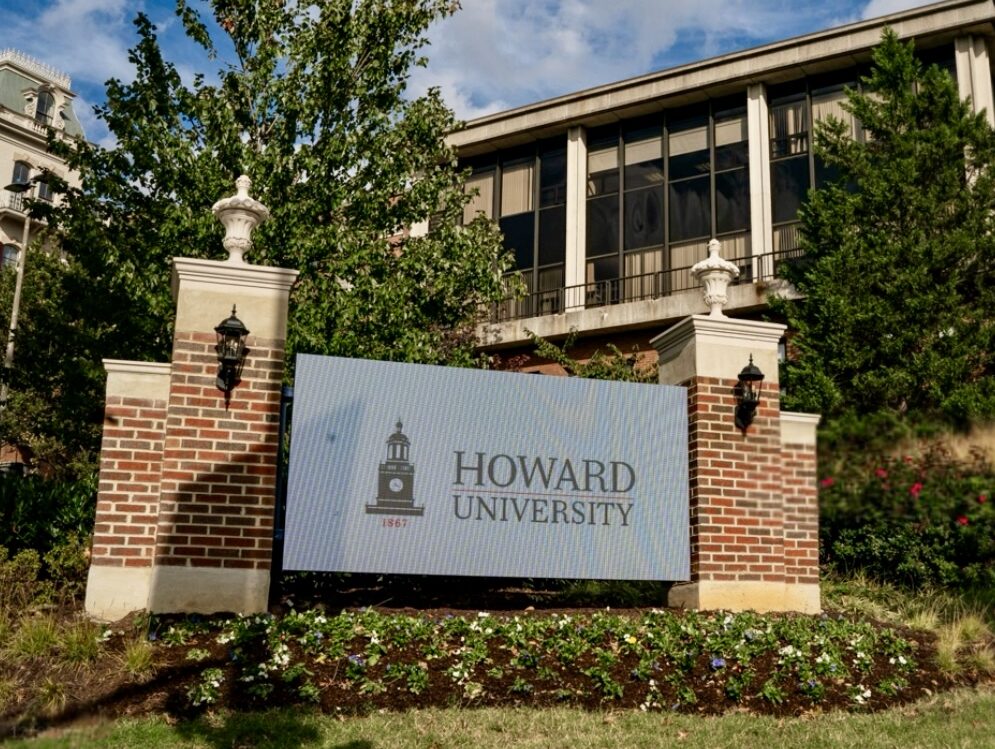
‘Deadlining,’ A Howard University Student’s Research Highlights Gaps In Missing Black Women’s Case Records
The Deadlining project documents 186 historical cases while raising questions about how missing and murdered Black women are represented in public records.
Missing-person cases can become difficult to investigate when records are scattered across government agencies, newspaper archives and other sources.
Howard University junior Avery Bernard Johns is addressing that problem through Deadlining, a public database that documents 186 cases involving missing and murdered Black women and girls in Washington, D.C., from 1961 through 2025.
Beyond documenting individual cases, Johns uses historical housing maps, census information and neighborhood data to identify geographic patterns.
Her Deadlining project could provide families, researchers and journalists with another resource for investigating overlooked cases and preserving the histories of Black women and girls.
The giant photo platform is turning to the Getty family and Koch Equity Development for a financial reset
Getty Images is preparing for a major financial overhaul, with plans to file for Chapter 11 bankruptcy and return to private ownership under a restructuring deal backed by the Getty family and Koch Equity Development, the investment arm founded by billionaire Charles Koch. The agreement includes up to $533 million in new equity investment, a move designed to strengthen the company’s balance sheet and position the visual-content business for future growth. The company expects to complete the restructuring by the end of 2026, according to its official announcement.
The deal also targets Getty Images’ debt burden. Holders of 83.5% of its unsecured bonds have agreed to retire $270 million in outstanding notes, while secured lenders have agreed to lower interest costs and extend debt maturities. The restructuring is expected to give the company additional financial flexibility as it navigates a changing media and technology landscape. Getty has said the process is not expected to affect its operations, employees, contributors, partners, customers or vendors, with payments expected to continue in the ordinary course.
The move follows the collapse of Getty Images’ proposed $3.7 billion merger with rival Shutterstock, reports The Hollywood Reporter. The companies abandoned the transaction in June after the U.K. Competition and Markets Authority imposed conditions involving Shutterstock’s editorial business that Getty was unwilling to accept. During an August earnings call, CEO Craig Peters said Getty had spent “more than $100 million across professional fees and financing costs in pursuit of what we believe will be a strategic transaction.” Now, the company is pursuing a different path: restructuring its liabilities and focusing on its core business rather than relying on a major acquisition.
Meanwhile, AI-generated imagery is putting pressure on traditional stock-photo businesses, forcing established providers to reassess how they create value, protect intellectual property, and serve customers. Getty’s extensive visual archive and relationships with photographers remain important assets, but the company must continue adapting as businesses gain access to new image-generation tools.
According to Reuters, affiliates of the Getty family and Koch Equity Development will own the reorganized company once the transaction is complete. For Getty Images, the bankruptcy filing is intended to facilitate a financial reset, not shut down the business. The bigger test will be whether fresh capital, reduced debt, and private ownership can help the company compete in a market being reshaped by artificial intelligence and evolving demand for visual content.
Black Enterprise, Ursula Burns, And Dow CEO Karen S. Carter Honored At BECA’s 2026 Manifest Awards
The fifth annual BECA Manifest Awards celebrated barrier-breaking executives and organizations while spotlighting the next generation of marketing leaders
Black business leadership took center stage in South Florida as Ursula Burns, Dow CEO Karen S. Carter, Procter & Gamble, and Black Enterprise received top honors at the 2026 BECA Manifest Awards & Symposium.
Hosted by BECA, an alliance of senior marketing and marketing-adjacent executives, the event was held Oct. 8 at The St. Regis Bal Harbour in honor of the organization’s fifth anniversary. The ceremony recognized executives and organizations whose leadership and contributions have helped shape business and create opportunities for future generations.
BLACK ENTERPRISE received the inaugural Beacon of Light Award, which recognizes individuals and organizations whose vision and commitment have made a lasting impact on the Black business community. Earl “Butch” Graves Jr., president and CEO of BE, accepted the award on behalf of the media publication founded by his father, business icon and visionary Earl G. Graves Sr., in 1970. The recognition highlights the publication’s longstanding role in documenting Black entrepreneurship, corporate leadership, and wealth creation. For more than five decades, Black Enterprise has covered the people and institutions influencing Black economic advancement.
Burns, the first Black woman to lead a Fortune 500 company, received BECA’s Icon Award. The former Xerox chairwoman and CEO was recognized for her executive leadership, innovation, and efforts to create opportunities for others. She currently serves as founding partner of Integrum, chairwoman of Teneo and chair of the Ford Foundation’s Board of Trustees.
Carter received the Trailblazer Award after making history in July as the first Black woman to lead Dow. She joined the materials science company in 1994 and advanced through its leadership ranks, serving as chief operating officer before becoming CEO. The award recognized her professional achievements and commitment to developing future leaders.
The gathering brought Burns, Carter, and Thasunda Brown Duckett, president and CEO of TIAA, together in a moment highlighting the significance of Black women’s representation in the highest levels of corporate America. According to BECA, the three are among just six Black women to have led Fortune 500 companies.
Procter & Gamble received the Corporate Champion Award for its support of leadership development, mentorship, innovation, and community impact. Marchoe Northern, the company’s president of North America Fabric Care, accepted the honor on its behalf.
Beyond recognizing established executives, the event emphasized the importance of building a pipeline for future leadership. Seventeen participants graduated from BECA’s Playbook Class of 2026, the organization’s flagship development program designed to prepare emerging marketing executives through mentorship, learning, and professional development. Deloitte co-leads the program.
“As we celebrate five years of BECA, I’m incredibly proud of the community we’ve built and the impact we continue to make together,” said Jerri DeVard, Founder and CEO of BECA. “This year’s honorees represent the very best of leadership, as individuals and organizations that have broken barriers, opened doors and created opportunities for others to succeed. The Manifest Awards are not only about recognizing extraordinary achievements, but also about inspiring and investing in the next generation of leaders. BECA is about sharing what we know, lifting as we climb and paying it forward.”
Founded in 2021 by DeVard and 25 C-suite executives, BECA focuses on sharing knowledge, developing future executives and creating a more inclusive pipeline for marketing leadership. Its annual awards bring corporate influence and leadership development into the same conversation.
The organization announced that it is moving away from a model reliant on large corporate sponsorships and instead embracing virtual programming and smaller, self-sustaining events. The strategy comes as organizers of other cultural gatherings report similar challenges securing corporate backing. WFAE reported in July that Charlotte Black Pride lost or saw reductions in support from five corporate sponsors, forcing the organization to seek replacement funding.
For MelaninCon, the funding squeeze prompted a broader operational reset. The organization moved its flagship conference to a virtual format to reduce costs and geographic barriers, while replacing its single large annual gala with smaller gatherings.
“In a climate built to make us smaller, intention is resistance,” said Donovan Woodberry, MelaninCon’s founder and executive director, in a statement shared with BLACK ENTERPRISE. “They can pull the funding and change the rules, but they cannot touch our resourcefulness or our intent. We are done waiting for permission to invest in ourselves.”
The shift also addresses concerns about the value attendees receive from professional networking events, including rising ticket prices, repetitive panel discussions, and networking that fails to produce tangible business outcomes.
MelaninCon’s Champagne Reign gathering, held on a rooftop in Washington’s Shaw neighborhood, featured entrepreneurs pitching their businesses onstage. According to the organization, one founder walked away with seed funding to grow the company.
“The support economy for Black events is changing, so we changed with it, on purpose and on our own terms,” Woodberry added. “This is bigger than one organization. It is about whether our community will let someone else’s budget decide what we are allowed to build. We decided it will not.”
Founded by Woodberry in 2021, MelaninCon connects Black and underrepresented entrepreneurs with education, relationships, resources, and opportunities intended to help them build sustainable businesses. The platform produces conferences, pitch experiences, and community programming focused on turning access into measurable economic opportunity.
Clark Atlanta University in Georgia will receive approximately $9.8 million, while Florida A&M University, Morgan State University, and North Carolina A&T State University are each slated to receive $10 million.
Other recipients include Delaware State University, the University of the District of Columbia, Jackson State University, Fayetteville State University, Prairie View A&M University, and Texas Southern University.
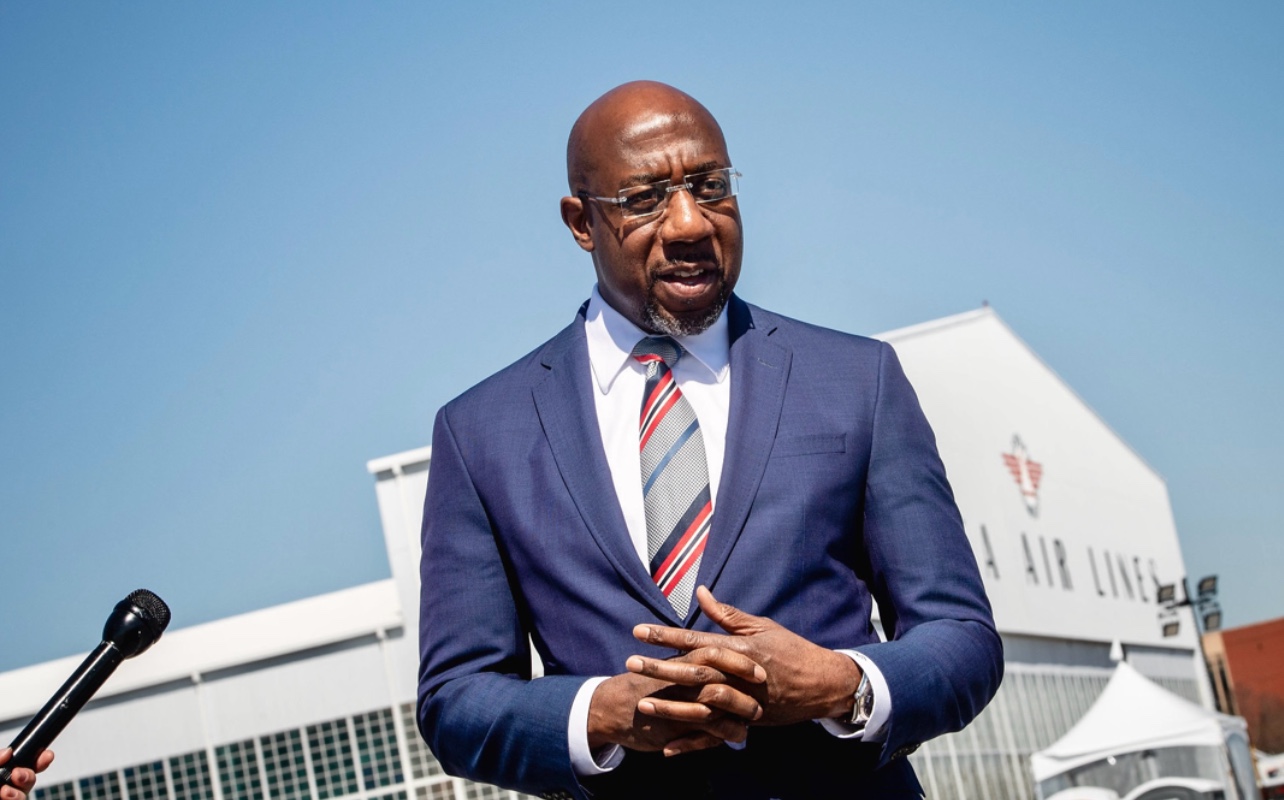
“For too long, HBCUs have gone unrecognized for their contributions to our nation’s leading STEM industry,” Warnock said in a statement.
“These institutions serve as stewards of academic excellence and innovation, and this federal investment specifically in STEM programs honors that legacy of greatness and expands opportunity for the next generation of scientists.”
Funding For HBCU Schools Has Been Long Overdue
The investment comes amid ongoing concerns about funding disparities affecting historically Black institutions. Federal research funding can help universities expand laboratory infrastructure, attract researchers, and strengthen academic programs that prepare students for careers in science and technology.
The announcement also builds on Warnock’s efforts to increase federal research opportunities for HBCUs. In March, the Morehouse College graduate joined Republican Sen. Katie Britt of Alabama to introduce the bipartisan HBCU Research Capacity Act.
The proposed legislation would establish a centralized federal website to help HBCUs identify available STEM research grants and development funding opportunities.
According to Warnock’s office, the senator has helped secure more than $17 billion in federal investments for HBCUs nationwide since beginning his full Senate term in 2022, including nearly $275 million for institutions in Georgia.
The latest funding is expected to support participating universities’ efforts to expand research capacity, compete for additional federal grants, and prepare more students for careers in STEM-related industries.
Nascar’s Rajah Caruth Named 1st Celebrity Ambassador For Black-Owned WavEnforcer
The partnership also highlights the history of Black entrepreneurship behind Firstline Brands
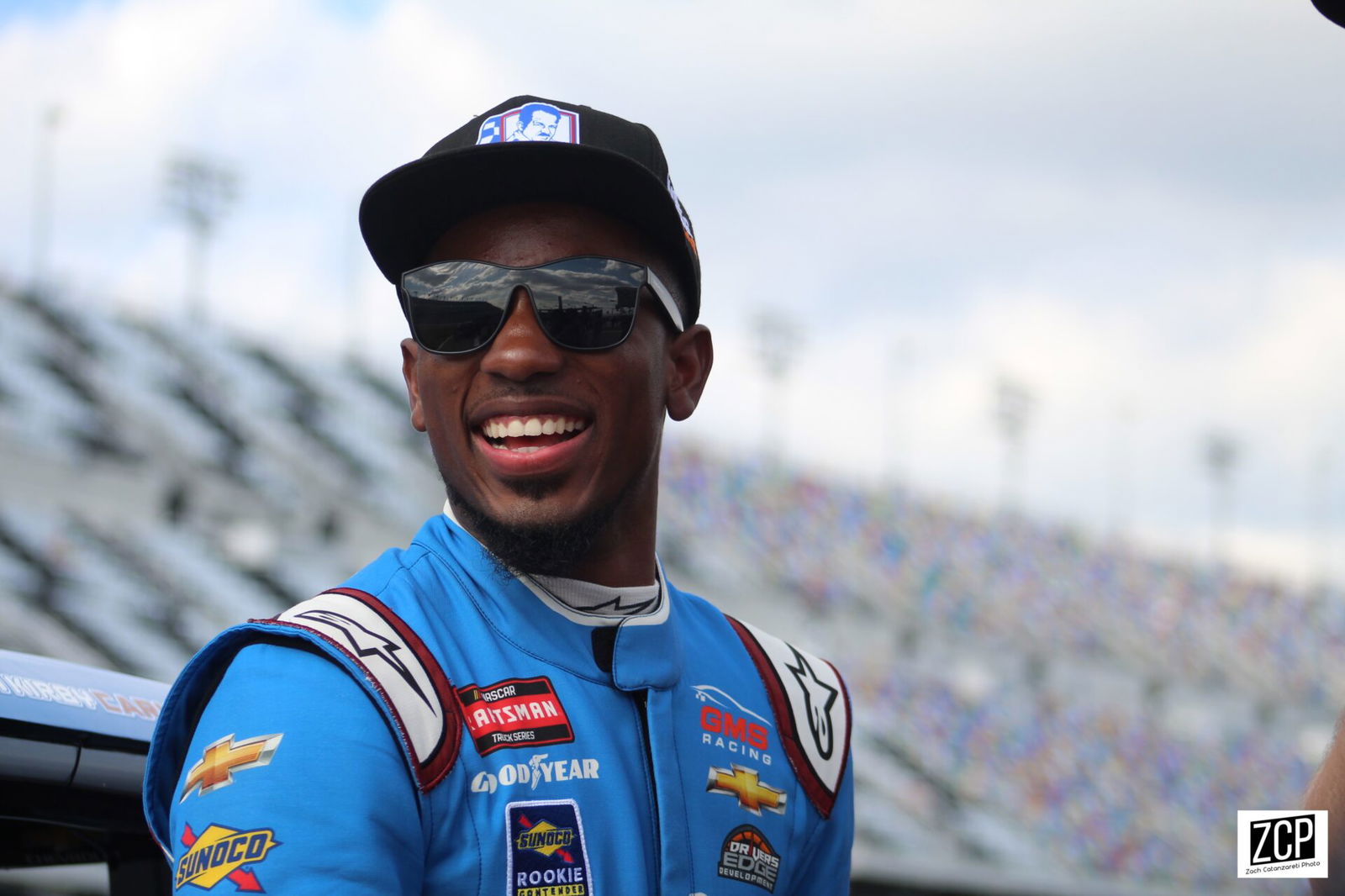
NASCAR driver Rajah Caruth is expanding his influence beyond the racetrack after being named the first celebrity brand ambassador for WavEnforcer, a men’s grooming brand under Black-owned Firstline Brands, according to a recent announcement.
The Houston-based company announced the partnership Oct. 13, bringing together the rising motorsports talent and a grooming brand with a 40-year history of serving multicultural consumers.
The collaboration launched Oct. 9 during the EcoSave 200 NASCAR Craftsman Truck Series race at Charlotte Motor Speedway, where Caruth drove the No. 77 Chevrolet Silverado for Spire Motorsports. WavEnforcer appeared as an associate sponsor on the vehicle.
According to Odum, WavEnforcer was the first brand her father established four decades ago, introducing grooming accessories such as do-rags and boar-bristle brushes designed for textured hair. Those products helped Firstline become the first Black-owned textured hair accessory manufacturer to achieve national retail distribution, according to the company.
“Rajah represents the pioneering spirit and authenticity that define WavEnforcer, and we’re proud to welcome him to the Firstline family,” Odum said in a statement.
Caruth currently competes in the NASCAR O’Reilly Auto Parts Series for JR Motorsports, driving the No. 88 Chevrolet. In 2024, he became the third Black driver to win a NASCAR national series race, joining Wendell Scott and Bubba Wallace.
“My hair is a huge part of my culture and identity, so proper grooming is essential,” Caruth said in a statement.
The partnership will feature Caruth in social media campaigns and promotional events aimed at introducing WavEnforcer products to new consumers.
Content featuring Caruth began appearing Oct. 9 across WavEnforcer, Firstline Brands and Caruth’s Instagram and TikTok accounts.
7 Activists Who Center Survivors And Domestic Violence Awareness
Domestic violence is often an unseen crisis
Domestic violence is often an unseen crisis that occurs behind closed doors. In the United States, more than 35.6 % of women and roughly 28.5 % of men are affected by DV. Under the Violence Against Women Act (VAWA), the term covers sexual abuse, as well as any coercive behavior used to assert power over an intimate partner. All 50 states have enacted legislation that imposes penalties and funds services for victims of domestic abuse. Black activists who are confronting violence lead with personal experience and exercise cultural responsibility. They call out the domestic violence system, the lack of access that brings about positive outcomes, and are redefining policy, advocacy, and healing.
Beverly Gooden
Beverly Gooden, a writer and social activist from Cleveland, Ohio, sparked the #WhyIStayed campaign in 2014. The hashtag turned the dialogue on its head, moving the focus from scrutinising victims to probing why abusers resort to violence. Now based in Houston, Gooden has addressed audiences at a myriad of platforms and college campuses. Gooden launched the movement in the wake of the September 2014 Ray Rice domestic‑violence video. Having endured abuse herself, Gooden aims to amplify survivors’ voices and expose the misunderstandings that often mute them. #WhyIStayed morphed into a conversation giving survivors a moment to be seen and raising awareness about the need to leave abusive relationships.
Sil Lai Abrams
Sil Lai Abrams is a writer, speaker, and domestic‑violence‑awareness activist. Abrams put those roles into practice by founding Truth In Reality, a social‑advocacy nonprofit. To push back against the way the media often frames women of color and to help end violence in Black communities, she kicked off the Redefining HERstory campus tour. Abrams’ advocacy journey began in the mid‑2000s with volunteer stints at domestic‑violence shelters. By 2007, Abrams had transitioned to full‑time work in the field. Having survived assault and domestic violence herself, she unpacks the race and gender that determine how Black women are affected by and portrayed within cycles of abuse. Her advocacy spotlights the ways media portrayals and entrenched cultural stereotypes not only fuel violence but also silence and overlook survivors.
Nupol Kiazolu
Born in 2000 in Brooklyn, New York, Nupol Kiazolu has devoted her work to championing survivors of sexual violence, homelessness, and civil rights struggles. Raised in a shelter, Kiazolu carries an awareness of the vulnerabilities that affect Black communities, channeling that insight into an intersectional activism that blends youthful energy with survivor‑focused support. Kiazolu leads efforts that uplift survivors of intimate‑partner violence, weaving together grassroots organizing with avenues for healing. As a representative of a generation of Black domestic‑violence advocates, Kiazolu stresses the need to reach younger survivors and to fuse community activism with restorative care.
Dr. E. Faye Williams
Dr. E. Faye Williams, a civil‑rights attorney and political activist, has spent decades championing women’s rights and confronting violence within the Black community. While serving as president of the National Congress of Black Women, Dr. Williams helped lift women’s voices, thrust the conversation about abuse into the public arena, and pushed for legislative measures, including the reauthorizing of the Violence Against Women Act. Williams’ career has been dedicated to supporting women and families across the nation. Drawing on her experience as a survivor of abuse, Williams insists on systemic safeguards for survivors and advocates for sweeping structural change.
Paméla Michelle Tate, Ph.D.
Paméla Michelle Tate, Ph.D., has spent more than 18 years in San Francisco, in the trenches of domestic violence prevention, wearing the hats of advocate, educator, and speaker. As its director, Dr. Tate now steers Black Women Revolt Against Domestic Violence, a Bay Area resource hub devoted to women and families. In the course of training hundreds of advocates, Tate has repeatedly seen how Black women and their loved ones run into roadblocks. Tate works to fortify community‑based responses, foregrounding attuned advocacy and guiding survivors through support networks with impediments.
Aishah Shahidah Simmons
Aishah Shahidah Simmons, a Black feminist, lesbian, survivor-healer, documentary filmmaker, author, and educator, centers advocacy against sexual and domestic violence in Black communities. Simmons’ acclaimed film, NO! The Rape Documentary (2006) and subsequent anthology, Love WITH Accountability: Digging Up the Roots of Child Sexual Abuse, expose domestic and sexual violence in Black communities and promote survivor-driven healing. Based in Philadelphia and active internationally, Simmons’ activism and work span almost four decades. As a survivor of childhood sexual abuse and adult rape, Simmons uses creative work to bridge cultural, gender, race, and sexuality dimensions of violence and healing, shaping how domestic/sexual violence is discussed in Black communities, accountability, and cultural transformation.
Fallon MK
Fallon MK, a psychotherapist licensed to practice, channels the reality of her own escape from domestic violence into a force that empowers victims and amplifies public consciousness. She works to strip the stigma that clings to survivors’ testimonies, underscoring that abuse is fundamentally an exertion of control, rather than simply a physical assault. Recent articles highlight how her outspoken advocacy now resonates on a scale. Having grown up in a single‑parent household and later found herself caught in relationships, she now calls for voices to be raised, for solidarity to be forged, and for the cycle of abuse to be shattered.
Black-Owned Food Co-op In Detroit Receives $25K Grant As Community Support Drives Sales
After experiencing weather disruptions and a power outage, Detroit’s community-owned grocery cooperative is getting a lift from shoppers, local organizations, and a major grant
Detroit People’s Food Co-op, a Black-led, community-owned grocery business, is seeing a surge in community support after asking shoppers and local organizations to help it navigate financial challenges. The North End grocery store reported a significant increase in sales following its public appeal for support. The turnaround comes after several disruptions, including wildfire smoke that kept customers home and a power outage that affected business.
The community support helps the business replenish inventory, serve neighborhood residents, and strengthen its position as a source of fresh food and locally produced goods.
“We’re at the point where we can stock, have back stock, and continue to meet the community’s needs,” Lanay Gilbert Williams, president of Detroit People’s Food Co-op, told WXYZ-TV.
The co-op received another financial boost when Black Leaders Detroit awarded it a $25,000 grant, marking the largest grant in the organization’s history. Dwan Dandridge, CEO of Black Leaders Detroit, said the investment reflects the importance of the grocery store’s mission and the work required to establish it.
“I really believe everyone should have access to fresh food,” Dandridge said. “The work that has gone into creating this place in the first place is so admirable and necessary. So it was a no-brainer.”
According to Williams, community members have organized group shopping trips, created promotional flyers, and encouraged residents to spend money at the store.
“Where they’re showing up with 100 people at a time, they’re creating flyers, they’re distributing them to the community saying we’re going to swamp the co-op with sales. It’s been beyond phenomenal,” Williams said.
Detroit People’s Food Co-op opened in 2024 after years of organizing around community ownership and access to fresh groceries. Unlike a conventional supermarket owned by a single corporation, the cooperative is designed to give the community a direct stake in the business. That model also makes sustained customer participation central to its future. A rush of shoppers can help stabilize sales, but the co-op’s long-term health depends on people returning regularly.
“The most important support a co-op can ever receive and what will solidify its standing in the community is the reception of the community itself,” Williams said.
Baba Blair Anderson, a resident and co-op member, described the store as an important source of healthy food connected to the region’s agricultural network.
“This is actually one of the places that will still have lines to healthy grown food to every farm that we have in the metropolis of Detroit,” said Anderson.”
Kelly Rowland and Beyonce attend the exclusive listening event for the highly-anticipated release by Jay-Z and Kanye West,"Watch The Throne" (Available August 8th) at the Hayden Planetarium at the American Museum of Natural History on August 1, 2011 in New York City.
Beyoncé And Kelly Rowland Open 31 New Homes In Houston To Support The Unhoused
The Houston natives opened a permanent supportive housing development for residents experiencing homelessness
Beyoncé Knowles-Carter and Kelly Rowland are bringing their commitment to Houston full circle by opening the Knowles-Rowland House, a 31-unit permanent supportive housing development designed to help residents experiencing homelessness build stable lives.
Beyoncé and Kelly Are Doing Good In Their Hood
The music superstars joined Knowles-Carter’s mother, Tina Knowles, and community leaders on Tuesday at St. John’s Downtown church to celebrate a project that connects their hometown roots with a broader effort to address housing insecurity. According to the Houston Chronicle, the $13.96 million development is a three-story, 18,900-square-foot facility that includes 31 single-room occupancy apartments in Houston’s Midtown neighborhood. The Knowles-Rowland House will also offer residents access to mental health counseling, substance use treatment, life skills training, and fresh food starting on November 1.
The development stands on the former site of the Knowles-Rowland Center for Youth, which was destroyed by a fire in 2021. The original center opened in 1999, with Knowles-Carter, Rowland, and their families supporting its establishment. In 2002, Knowles-Carter, Knowles, and Rowland donated $1.5 million to help establish the center, according to the Chronicle.
At the opening ceremony, Beyoncé reflected on her longstanding connection to St. John’s Downtown, where she was baptized.
“I have so many memories here, and I want to thank Juanita and Rudy (Rasmus, church pastors) because your prayers have held us up. This church was our foundation. I was baptized right here. I made the choice on my own to be baptized because I felt the spirit here, and I feel the spirit right now. And I’m so grateful for that foundation,” she said.
Tina Knowles also reflected on how her daughters’ connection to the church influenced their commitment to service.
“I have these beautiful young women who have hearts and empathy, and they give, and they work and do things to give back to the community,” she said. “I have this place to thank for that because God always gives you what you need at the time you need it, and I needed a place to teach that. I’m so full because this is full circle.”
Beyoncé Is A Dedicated Philanthropist
The new housing facility also builds on a wider history of philanthropy. Beyoncé co-founded the Survivor Foundation in 2005 to assist individuals and families displaced by Hurricane Katrina. She later launched BeyGOOD in 2013 to provide those in need of employment support, clothing, counseling, housing, food, and medical assistance. Following Hurricane Harvey in 2017, she established BeyGOOD Houston to support affected residents. During the COVID-19 pandemic, the organization also helped provide free testing and meals in the city.
Her recent giving has included $100,000 to the University of Houston Law Center’s Criminal Justice Clinic in 2024 and another $100,000 to Texas Southern University’s Ocean of Soul marching band for scholarships in 2025.