Barefooted Parisian Risks Life Rescuing 4 Children From Flaming Apartment
Fousseynou Cissé risked his life to save four children and two adults in Paris
A man in Paris, Fousseynou Cissé, went into a burning apartment building, risking his life to save six others, as caught on video.
According to People, Cissé saved six people, four of whom were children, when he went out on a ledge to rescue those in danger. The incident took place on July 4, and a video clip captured the 39-year-old rescuing the children as he guided them while standing on the ledge barefoot. The burning apartment was on the sixth floor of the building.
The footage shows Cissé grabbing the young children and passing them along to a waiting adult in the next apartment through the window.
Two of the children were reportedly one month old and one year old. The two adults were the mothers of the four children he helped escape the flames.
ABC News reported that Cissé stated that when he learned of the fire in the building, he took his family to safety before a neighbor informed him that people were trapped upstairs. With that information, he decided to risk his own life to rescue the others.
“As I was leaving, (my neighbor) called me over and told me that there were people trapped upstairs,” he stated.
Knowing he was jeopardizing his own life, he said he was driven by instinct.
“It wasn’t calculated; it was instinct: ‘We’ve got to go’. So I jumped in to help,” he said.
The man is being recognized for his bravery as Paris Police Chief Laurent Nunez stated that Cissé would be awarded a medal “in recognition of his courage and dedication.”
“This medal recognizes republican courage that commands admiration,” Nunez said.
6 ABC Action News reported that Cissé also received a phone call from French President Emmanuel Macron and is expected to be formally honored by the city.
Black Women Labor Leaders Sound The Alarm On The Workforce Of Tomorrow
Women spoke truth to power about systems that profit from Black labor
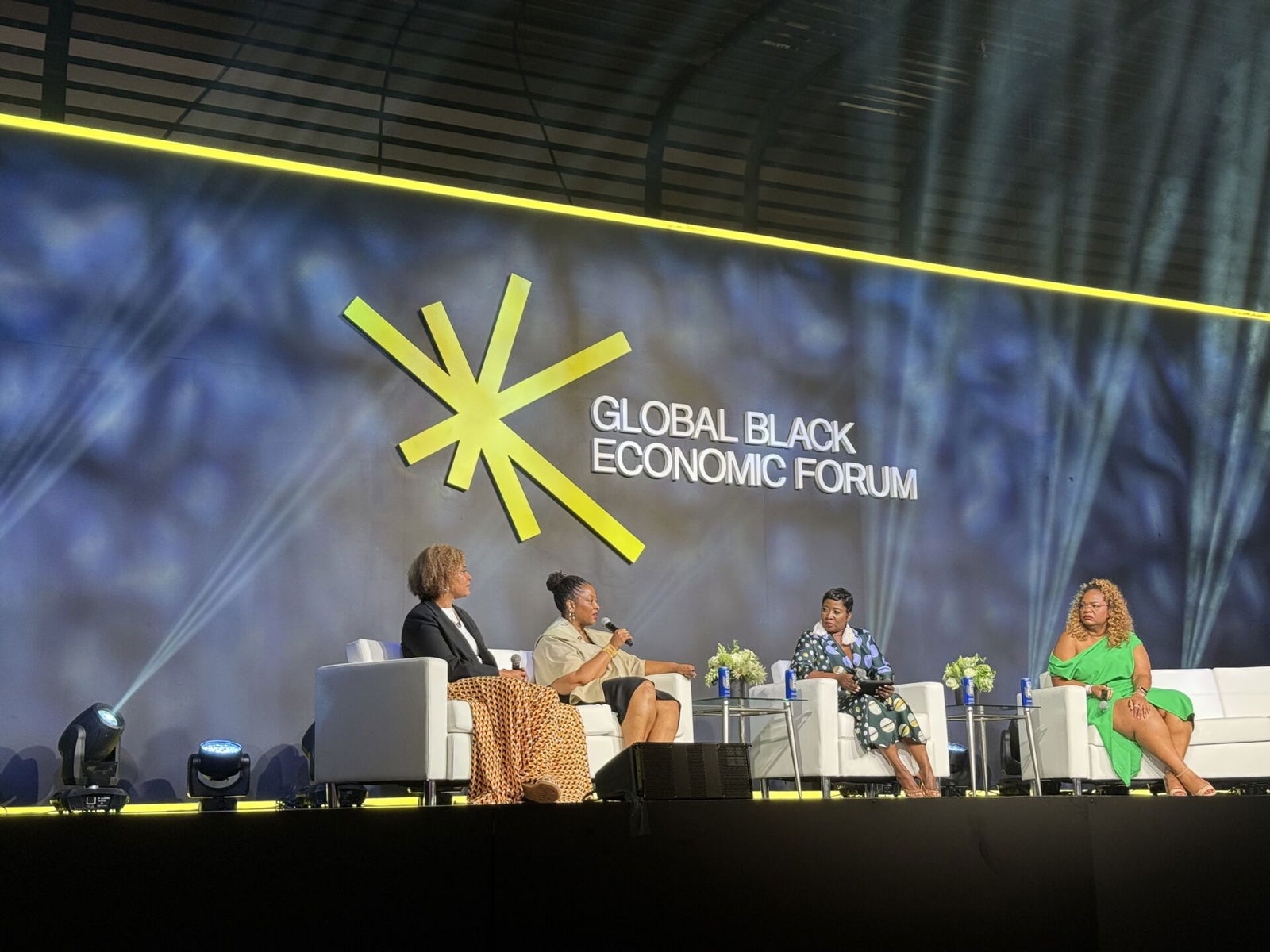
In a world being rapidly reshaped by artificial intelligence, political rollbacks, and widening wage gaps, a dynamic panel of Black women leaders gathered at the 2025 Essence Festival of Culture to issue a powerful call to action: the future of work is already here, and Black communities can’t afford to be left behind.
At the Black Global Economic Forum’s session titled “Work, Wealth, and the Workforce of Tomorrow: Innovation, Unions, and Black Economic Mobility,” Ebony McMorris, AURN White House correspondent, guided a potent conversation featuring SEIU President April Verrett, ACLU President Deborah Archer, and National Women’s Law Center President and CEO Fatima Goss Graves. Together, they spoke truth to power about systems that profit from Black labor while denying Black workers fair access to opportunity, equity, and decision-making.
McMorris set the tone with hard facts: 43% of Black workers are concentrated in just three sectors: healthcare, retail, and public administration. All three are currently facing pressure from automation, underinvestment, and policy disruption. Meanwhile, Black workers make up less than 9% of STEM professionals and only 6% of apprenticeships. Still, the panel’s energy was not rooted in defeat; instead, it radiated strategy and resolve.
“AI is not going to replace our humanity,” said Verrett. “There will never be an instance where our humanity will be able to be replaced by automation. We have to remember to center our humanity and to let the powers that be remember we are talking about lives, which cannot ever be replaced.”
Verrett, who leads one of the nation’s largest labor unions, was clear: collective power is essential to unlocking Black economic mobility.
“Jobs that are poverty-wage jobs today can become family-sustaining jobs tomorrow if those workers organize,” she said. “When home care workers—the fastest-growing workforce in our economy—come together, they create new pathways to the middle class for millions of Black families.”
Goss Graves also highlighted the importance of care work (often undervalued and underpaid) as a space where innovation rooted in equity can make a real difference.
“There are jobs AI won’t replace—like care work that requires touch, empathy, and human connection,” she said. “But technology can also improve those jobs. It can help enforce fair pay, eliminate wage theft, and ensure better job matching. That only happens if we center equity from the beginning.”
The conversation turned to the increasing threats Black workers face, including anti-DEI legislation, as well as restrictions on protest rights and civil liberties.
“These aren’t isolated threats—they are connected,” Archer said. “It’s about the re-ascendency of white supremacy. We cannot silo our fights—whether it’s over education, employment, voting, or housing. These issues are intertwined. And so is our resistance.”
She called for a renewed focus on community infrastructure, civil rights tools, and long-term grassroots organizing.
“We’re not going to litigate our way out of this crisis,” Archer said. “We have to build power in our communities, with coalitions ready to take on structural inequality in every form and use tools that are not the standard tools that we’ve used in the past.”
The panel didn’t hesitate to name private-sector responsibility either.
“We flocked to federal and city jobs because the private sector wouldn’t hire us,” Verrett said. “Those public sector jobs—many of which are being cut—gave us retirement, stability, and healthcare. Corporations need to be held accountable for not hiring us and not paying us what we are worth. It is time to say, ‘No more poverty-pushing.’”
Near the end, all three issued a resounding call to action.
“Justice and equality are not self-executing,” Archer reminded the audience. “They exist where we fight for them, and now is the time to fight.”
Verrett closed on a note of generational power.
“To the 92%, to the 80%, we have rested, we have rejuvenated. Now it is time for us to flex our power and muscle in ways that we choose with our joy and love at the center. This is our country, and it is worth us fighting for.”
What’s Next for Black Labor Power
Post panel, April Verrett spoke with BLACK ENTERPRISE about the surge in labor activism and what Black workers can learn from recent gains.
“The surge is real,” Verrett told BE. “We’ve seen growth in worker organizing that we haven’t witnessed in a generation. But now is not the time to take our foot off the gas —it’s time to put our foot on the gas.”
Drawing on union wins across Hollywood, tech, and service sectors, she offered it as proof that Black labor can deliver meaningful change.
“There is no healthy democracy on this globe without a healthy labor movement,” Verrett said. “In this moment, building worker organization, building off this momentum is the most important thing any of us can do around the hope of our democracy and economy.”
On resilience in the face of constant challenge, she offered this insight:
“I’m good at compartmentalizing—that works for me,” she said. “But we all have to heal while we do the work. We carry trauma. We carry weight. But we have to turn our pain into power.”
SANTA MARIA, CA - JUNE 13: Michael Jackson prepares to enter the Santa Barbara County Superior Court to hear the verdict read in his child molestation case June 13, 2005 in Santa Maria, California. After seven days of deliberation the jury has reached a not guilty verdict on all 10 counts in the trial against Michael Jackson. Jackson was charged in a 10-count indictment with molesting a boy, plying him with liquor and conspiring to commit child abduction, false imprisonment and extortion. He pleaded innocent. (Photo by Kevork Djansezian-Pool/Getty Images)
Micheal Jackson’s Estate Sues Ally-Turned-Accuser For Extortion
The Michael Jackson estate says Frank Cascio, defender and accuser of the singer, is attempting to extort millions.
On July 8, Michael Jackson’s estate filed a lawsuit accusing Frank Cascio of extortion.
Cascio was a former friend and business associate of Jackson’s. The suit claims Cascio threatened to reveal false abuse allegations about the late singer if he was not paid up to $213 million, People reported.
The suit, filed in Los Angeles Superior Court details Cascio’s alleged extortion attempt. Representatives for the estate claim Cascio met with them at the Sunset Marquis Hotel swimming pool to deliberately avoid recording devices as he levied his threats. They also claim he acted in a threatening manner designed to intimidate.
“The negotiation with Respondents morphed into a shakedown in which Frank and his cohorts each demanded substantial amounts of money, otherwise they threatened to concoct false allegations against Michael, which were the opposite of their prior glowing statements about Michael they had made in his defense over the prior decades,” the petition claims. “And they were free to do this because there is no protection against defamation for a deceased person.”
Cascio, once a defender of Jackson, recanted his support after the release of the 2011 HBO documentary Leaving Neverland. After the release of the documentary, Cascio was paid a $3.3 million settlement. The settlement terms included confidentiality in order to protect Jackson’s children and estate from slanderous allegations. Furthermore, future disputes by Cascio were required to go through the arbitration process. By threatening to speak out on the alleged allegations lawyers contend Cascio is breaking the agreement.
“This is a clear case of civil extortion,” Singer told The Blast. “We will not stand by as Michael Jackson’s legacy is threatened by falsehoods and financial schemes.”
Cascio’s legal representation includes attorney Mark Geragos, who the estate claims renegotiated the demand. Yet, Geragos still demands tens of millions on behalf of his client and threatened further allegations unless paid.
Estate executors John Branca and John McClain argue the extortion attempt breaches the arbitration clause and request that Cascio be compelled to move forward privately, rather than through public court documents
“Mr. Cascio was part of Michael’s life for over 30 years, publicly defending him and calling himself family,” a spokesperson for the estate said in a statement. “Now, years after Michael’s death, he is seeking to profit from claims he once rejected as false.”
Instead of honoring the settlement, the estate claims Cascio and his legal team escalated their demands to $213 million, later lowering the amount to $44 million. They allegedly warned they would fabricate damaging allegations publicly or leak claims to publishers unless the estate complied. Estate executors stress that Jackson’s estate is now valued at over $3 billion.
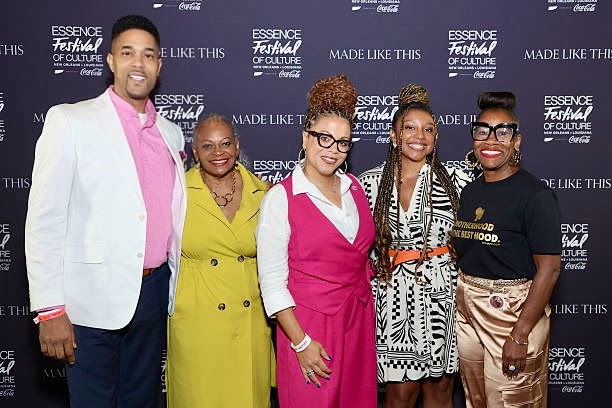
NEW ORLEANS, LOUISIANA - JULY 06: (L-R) LeToya Luckett, Alana M. Yzola, Kimberly Seals Allers, Dr. Margaret Larkins-Pettigrew and Emmai Alaquiva speak onstage during the 2025 ESSENCE Festival Of Culture presented by Coca-Cola - Day 3 at Ernest N. Morial Convention Center on July 06, 2025 in New Orleans, Louisiana. (Photo by Leon Bennett/Getty Images for ESSENCE)
‘The Ebony Canal’ Wins Best Documentary For Social Impact At 2025 ESSENCE Film Festival
'The Ebony Canal' has ignited conversations surrounding Black maternal health and mortality rates.
The Ebony Canal, a groundbreaking documentary spotlighting the lived experiences of Black mothers navigating a deeply flawed healthcare system, has been awarded Best Documentary for Social Impact at the 2025 ESSENCE Film Festival. Directed by four-time Emmy Award-winner Emmai Alaquiva and narrated by EGOT-winning actress Viola Davis, the film is being recognized not just for its artistic excellence but for its powerful contribution to the national dialogue around maternal health disparities.
Featuring appearances by Vice President Kamala Harris and actor-advocate Lamman Rucker, and with creative input from Keke Palmer, the film is produced by Brenda Gilbert and Lekha Singh and directed by Alaquiva. The Ebony Canal tells stories of birth, loss, survival, and resilience within a system that, too often, fails Black families.
“This wasn’t just a film, it was a mirror,” said Grammy-winning artist and actress LeToya Luckett, who moderated a post-screening panel. “The Ebony Canal forced us to see the beauty, the grief, and the strength that Black mothers carry. As a Black woman and a mother, this story hit home.”
NEW ORLEANS, LOUISIANA – JULY 06: (L-R) LeToya Luckett, Alana M. Yzola, Kimberly Seals Allers, Dr. Margaret Larkins-Pettigrew and Emmai Alaquiva speak onstage during the 2025 ESSENCE Festival Of Culture presented by Coca-Cola – Day 3 at Ernest N. Morial Convention Center on July 06, 2025 in New Orleans, Louisiana. (Photo by Leon Bennett/Getty Images for ESSENCE)
The film’s ESSENCE debut was introduced by Pennsylvania State Rep. Gina H. Curry, co-chair of the PA Black Maternal Health Caucus, who praised the documentary for aligning with the ongoing policy efforts in the state and acknowledged its Pennsylvania roots.
Other panelists discussing Alaquiva’s Ebony Canel included Alana Yzola-Daly, a mother featured in the film and one of its associate producers; Dr. Margaret Larkins-Pettigrew, OB/GYN and executive medical advisor to the project; and Kimberly Seals Allers, award-winning journalist and founder of the Irth App, which helps Black and brown families rate their birth and pediatric experiences.
“This film is a roadmap,” Dr. Larkins-Pettigrew expressed. “It shows what happens when we listen to Black women, invest in community care, and demand systems change. It’s not just storytelling. It’s strategy.”
For Yzola-Daly, sharing her story was deeply personal.
“I didn’t want to just tell the story. I wanted to live it, breathe it, and help change what’s next,” she said. “That’s what The Ebony Canal gave me. A way to turn pain into purpose.”
Director Alaquiva emphasized that the film’s mission extends far beyond awards and into activism.
“We didn’t set out to win awards. We set out to wake people up,” Alaquiva said. “The Ebony Canal is a vessel. It exists to move people and systems into action.”
Following its win at ESSENCE, The Ebony Canal will continue its national tour with a screening at the Martha’s Vineyard African American Film Festival this August.
Additional impact screenings are planned and will be announced via The Ebony Canel website.
Black Homebuyers Still Struggle To Secure Mortgage Loans
Black applicants are 1.7 times more likely to be denied a mortgage
Black homebuyers face significant challenges in securing a mortgage loan for homeownership, and a new study has found that these obstacles are unlikely to disappear anytime soon.
Black applicants are 1.7 times more likely to be denied a mortgage than applicants from other racial backgrounds, according to the latest report from LendingTree. In 2024, 19% of Black applicants were denied mortgages. For perspective, that’s about 7.73 percentage points higher than the denial rate for all other applicants, which is 11.27%.
“For generations, homeownership has been one of the most powerful tools for building wealth that Americans have. Homeownership isn’t cheap, and there are ongoing costs; however, the equity that you can build over the years can be incredibly helpful,” said Matt Schulz, chief consumer finance analyst at LendingTree, in the report. “Not only can it provide you funding when you’re in a financial pinch, but it can also be used in working toward other financial goals.”
Across the board, there are significant disparities that persist for Black homebuyers. In 2023, roughly 65% of Americans owned their home. That number was approximately 44.7% for Black Americans, according to National Mortgage News.
Why Black Homebuyers Struggle To Obtain Mortgage Loans
High mortgage denial rates— along with limited generational wealth, income disparities, and discriminatory practices — are just one of the persistent challenges that keep the Black homeownership rate lower than that of other racial groups, LendingTree points out in its report.
One of the primary reasons for these disparities is the variation in credit scores. Black Americans had a median VantageScore of 639 compared to 730 for white applicants. Black Americans are more likely to have little or no credit history at all. This means that Black homebuyers are more likely to be turned down when applying for a mortgage, and if approved, their mortgage loans may have higher interest rates.
“There’s very little in life that is more expensive than crummy credit,” says Schulz. “It can cost you tens of thousands of dollars or more over the course of your life in the form of higher interest rates and more fees. It can even keep you from getting a loan altogether.”
While there are disparities nationwide, Michigan and North Carolina are among the states with the worst disparities. LendingTree’s study reveals that Detroit, Grand Rapids, Michigan, and Raleigh, North Carolina, have the widest denial rate gaps among the 50 largest metropolitan areas.
In Grand Rapids, the denial rate for Black borrowers is 23.90%, compared with 14.15% among applicants of all races — a 9.75 percentage point difference. In Detroit, there is an 8.54-point gap, where 21.25% of Black applicants are denied, compared with 12.71% of all applicants. Raleigh has the third-highest gap, with an 8.44 percentage point difference. The denial rate is 16.41% among Black borrowers, compared with 7.97% among all homebuyers.
Salt Lake City, Utah, San Antonio, Texas, and Fresno, California, have the lowest discrepancies for Black applicants.
What Black Homebuyers Should Know
LendingTree analysts recommend that Black homeowners take proactive steps to improve their credit. Pay debt and loan payments on time, make bigger payments to bring down balances, and avoid taking on new debt when applying for a mortgage.
Black homebuyers should research resources such as education courses, down payment assistance programs, and community and state initiatives.
“One of the most important things you can do is shop around,” Schulz adds. “Different lenders can make very different offers, including loan amounts, rates, fees, and more, but you won’t know unless you take the time to comparison shop.”
The best thing Black homebuyers can do is get quotes from at least three lenders, which should include a mix of lender types. This can result in a lower interest rate and better mortgage terms.
‘Click-To-Cancel’ Subscription Policy Shut Down By Federal Appeal
The Federal Trade Commission's plan to protect consumers from harmful subscription practices with "click-to-cancel" policy has failed.
A federal appeals court has shut down the Federal Trade Commission’s proposed “click-to-cancel” rule.
Judges on the Eighth Circuit of the U.S. Court of Appeals denounced “deceptive practices” but asserted a procedural failing on the part of the FTC. According to reporting by NBC, the FTC failed to include a preliminary regulatory analysis in its pursuit of “click-to-cancel.” The analysis is required when the economic impact of the FTC policy on the economy exceeds $100 million. Courts deemed that the policy would indeed exceed the threshold.
“While we certainly do not endorse the use of unfair and deceptive practices in negative option marketing, the procedural deficiencies of the Commission’s rulemaking process are fatal here,” the court wrote.
The policy was first introduced during the Biden administration. Its goal was to protect consumers from predatory subscription policies. The agency cited a five-year increase in claims as its reason for seeking subscription solutions. According to the FTC, it receives over 70 complaints daily. Many companies automatically enroll subscribers in services they no longer want or need without the consumer’s consent. Furthermore, options to cancel services are often difficult to access. The FTC stated its intentions to curb this behavior.
“Too often, businesses make people jump through endless hoops just to cancel a subscription,” said Commission Chair Lina M. Khan in a statement. “The FTC’s rule will end these tricks and traps, saving Americans time and money. Nobody should be stuck paying for a service they no longer want.”
Misrepresenting any material fact made while marketing goods or services with a negative option feature.
Failing to clearly and conspicuously disclose material terms prior to obtaining a consumer’s billing information in connection with a negative option feature;
Failing to obtain a consumer’s express informed consent to the negative option feature before charging the consumer; and
Failing to provide a simple mechanism to cancel the negative option feature and immediately halt charges.
Though the policy will no longer move forward, the FTC continues to hold individual companies accountable for similar practices. It is unclear if the FTC will adjust its petition in an attempt to refile.
Kai Cenat Demands Attention On TIME100 Creators Cover; Keith Lee, Mychal Threets, and Others Also Recognized
Kai Cenat lands the top spot on TIME100 Creators List 2025.
Kai Cenat has proven himself to be the leader of the pack within the digital content world, as the 23-year-old streaming star landed on the cover of TIME100‘s Creators List.
Released on July 9, Cenat claimed the top spot on the Time100 Creators: Most Influential Digital Voices list for 2025, recognizing the most influential digital voices. Surpassing major names within the “Titans” category like Hot Ones host Sean Evans, MrBeast, and Khaby Lame, Cenat’s reign on Twitch, nonstop brand collaborations, and the momentum from his successful four-day content creator event, Streamer University, cement his place as a standout in the digital world.
“We’re showing people that if you be yourself, people are going to f— with you,” Cenat said during his cover shoot. “As a streamer, you’re not in a box. You’re not trapped. You can talk however you want.”
Since starting his content creation journey in 2018 and joining Twitch amid the global pandemic in 2020, Cenat has become known for streaming much of his life for hours at a time. Though the grind can be exhausting, his passion continues to drive him.
“I’ll be really tired and drained,” he shared. “It’s a mindset thing, though. I can be as physically tired as I want, but in my mind, if I say, ‘Just keep going,’ I’m gonna just keep going.”
Other Black content creators who secured spots on the list include popular food reviewer Keith Lee, Librarian and mental health advocate Mychal Threets, Ghanian food influencer Chef Abbys, and multi-hyphenate Quenlin Blackwell, among others. As digital content continues to shape how audiences, especially young people, consume media, TIME’s Creators list seeks to highlight the leading voices and trailblazers driving this rapidly evolving space.
“Led by changes in consumer behavior, accelerated during the pandemic, digital creators, the entrepreneurs who have built businesses through significant online followings, have emerged to shape our culture,” said Time Editor-In-Chief Sam Jacobs. “They are changing what we watch, how we spend our time, what we buy, and how we vote.”
“Today, we release the inaugural TIME100 Creators list, in recognition of how significantly these individuals are changing the way people inform themselves … As we often say, influence comes in many forms and it can mean for better or for worse.”
HBCU Swingman Classic Spotlights Black Baseball Talent And Trailblazers At MLB All-Star Week
The game will follow a luncheon discussing opportunities for Black talent on and off the baseball field.
The HBCU Swingman Classic will return for another game spotlighting emerging Black talent in baseball.
Taking place July 11 during MLB All-Star Week in Atlanta, the game will feature the top 50 HBCU baseball players from 17 storied historically black colleges and universities (HBCUs). The match will not only showcase the talent from these underrepresented athletic programs but also dive deeper into the legacy of Black American baseball.
Founded by Ken Griffey Jr. in 2023, the HBCU Swingman Classic puts these collegiate baseball players on a national stage. The game offers them the opportunity to display their skills during one of the biggest weeks of the major leagues.
Before the players hit the field, they joined trailblazers and legends in the sport for a luncheon July 1. The HBCU Swingman Classic luncheon, held at Black-owned Atlanta soul food eatery Pascal’s, brought together upcoming talent and notable Black baseball stars to connect before their showcase. Hosted by Big Tigger, the gathering of sports enthusiasts and major players continued the conversation on the future of Black athletes in America’s pastime.
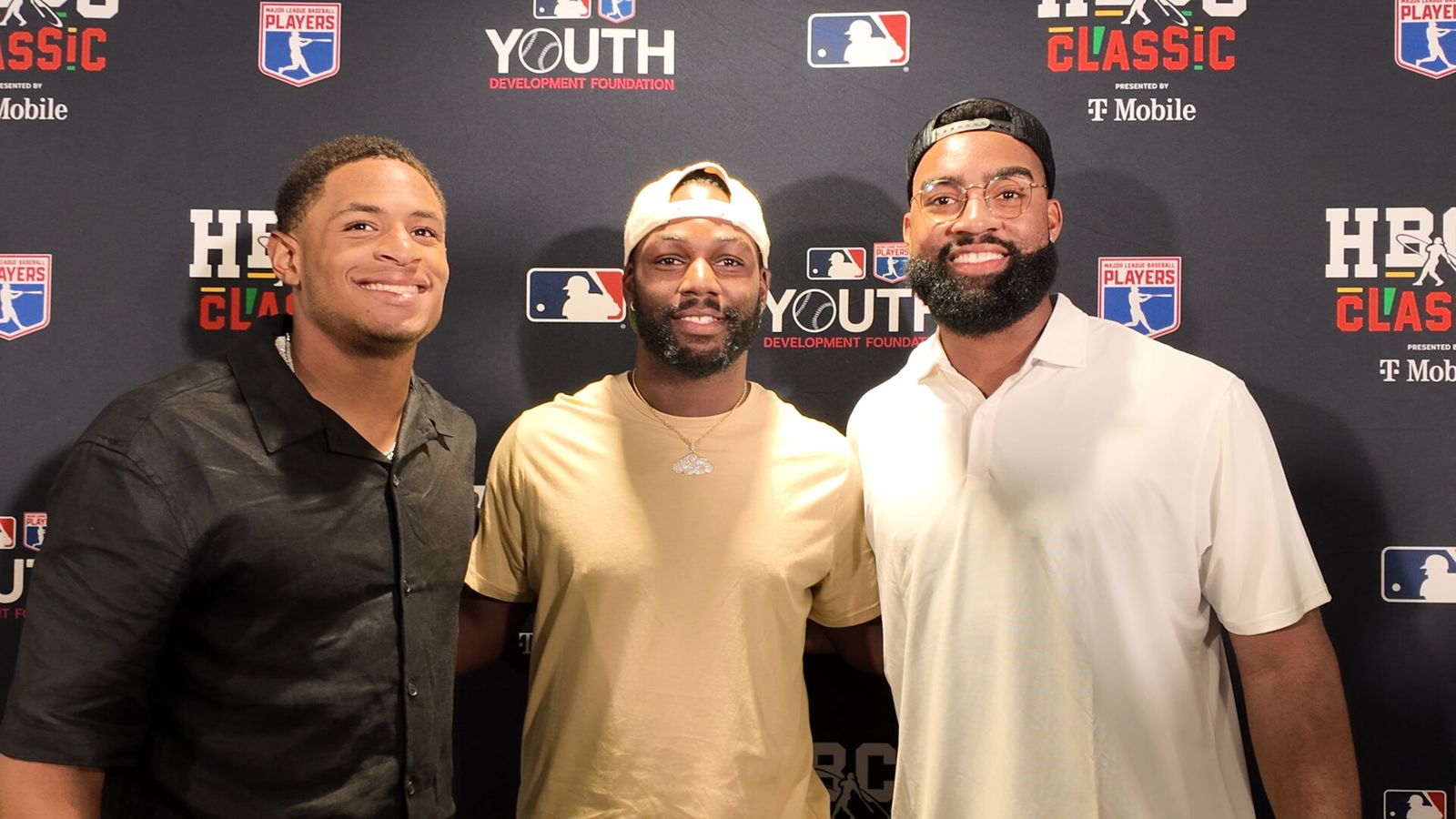
The luncheon included panelists such as “MLBbros” Michael Harris II, Christian Moore, and Jo Adell. Del Matthews, MLB’s SVP of Baseball Development, Reggie Waller, an MLBPA consultant, and MLB All-Star Brian Jordan joined them in the discussion on centering greater opportunities for these players and baseball lovers alike.
Jordan spoke about his own journey developing players in the HBCU divisions and how this work aims to build a pipeline for these athletes.
“It brings tears to my eyes to see someone like KJ, who came through our program and is now thriving at Southern,” said Jordan, who will manage the National League squad during the classic, according to MLBbro.com. “I was able to help him with a scholarship, and now as manager of the Swingman Classic, I get to keep pouring into these kids. Hopefully, we’ll see them in the big leagues one day.”
Through programs like the Hank Aaron Invitational and Breakthrough Series, more players from various colleges can get the chance to make it to the next base. However, conversations surrounding the HBCU Swingman Classic want to expand these opportunities on and off the diamond.
“These players are just as talented when given the chance—but it’s also about the students who want to be journalists, marketers, or photographers,” added Matthews. “Through this game, they get real experience to match their dreams.”
Whether a player or someone who loves the game from the stands, diversifying opportunities within baseball remains a priority for the Classic.
Patti LaBelle, Mara Brock Akil, Jasmine Crockett, And Danessa Myricks Celebrated At ‘Women In Harmony’ Awards
Patti LaBelle, Mara Brock Akil, Jasmine Crockett, and Danessa Myricks came together to be honored by the National Urban League.
The National Urban League (NUL) utilized the Essence Festival weekend to celebrate the impact and legacy of influential Black women who are driving change and breaking barriers across music, television, politics, and the beauty industry.
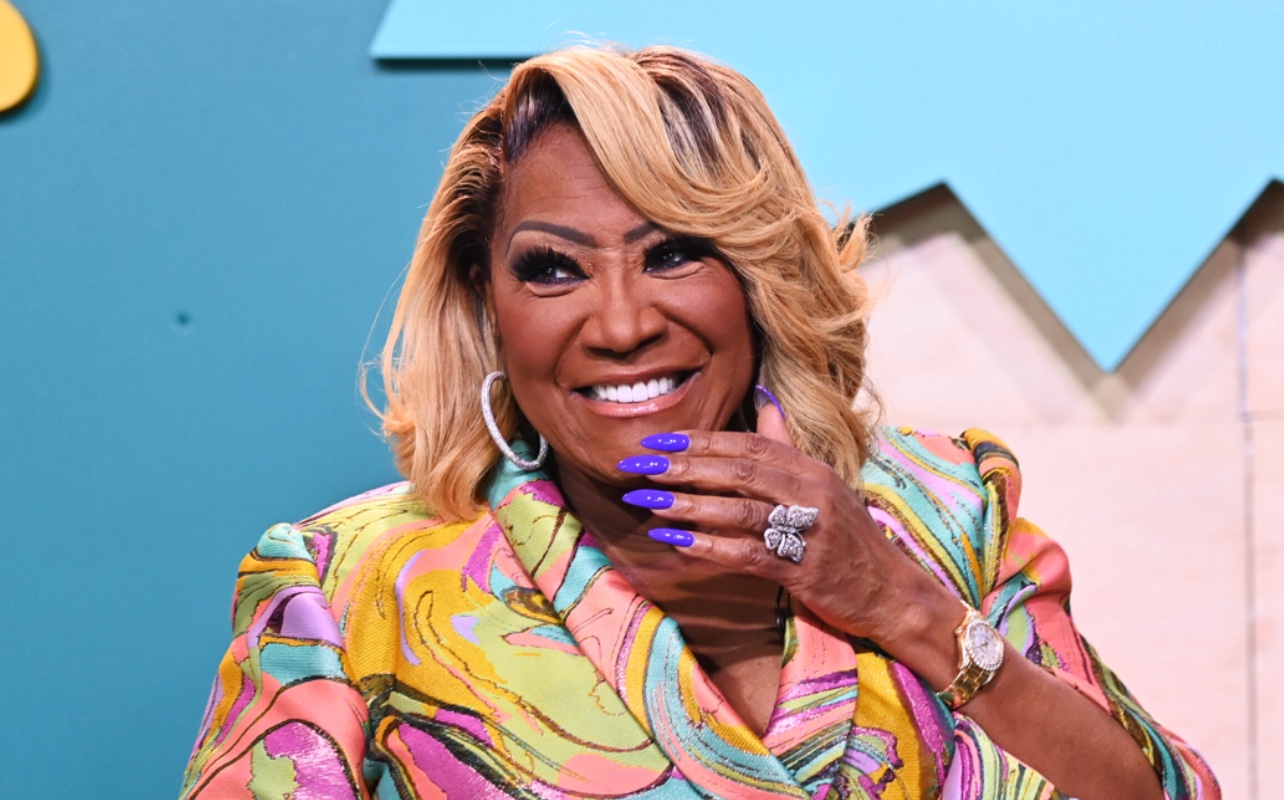
Held at the Ritz-Carlton Hotel in New Orleans on July 5, the NUL hosted its 6th annual Women in Harmony Awards Luncheon, celebrating the theme “Her Power, Her Prosperity.” The event honored iconic vocalist Patti LaBelle, acclaimed television writer and producer Mara Brock Akil, trailblazing U.S. Rep. Jasmine Crockett (D-Texas), and beauty industry powerhouse Danessa Myricks for their extraordinary contributions and influence.
The honorees delivered powerful acceptance speeches between performances by Grammy Award-winning vocalists MAJOR and Howard Hewett, and an inspiring keynote from author and coach Dr. Cheryl P. Williamson. Crockett moved the room with her passionate nod to her bold and fearless approach to public service.
“I have to tell you that I am humbled,” Crockett said, as cited by Bossip. “I am humbled anytime someone says to me that I deserve recognition because when I wake up, and I decide that I am just gonna go in and be my very Black self at work, I can’t imagine that that is anything that is award-worthy.”
Elevating the experience was the “Self-Care Lounge,” where 350 guests enjoyed makeup consultations from Danessa Myricks Beauty and pampering from a variety of other beauty and wellness brands. The event offered Myricks a chance to connect with a room full of Black women who draw inspiration from her remarkable rise in the beauty industry.
“What I do remember is the feeling of walking into this room, having people walk up to you and tell you they love you. You matter. You belong,” Myricks said. “It’s that feeling that I craved for so long. That’s the reason why this brand exists.”
Each year, the historic civil rights and urban advocacy organization hosts the event to spotlight exceptional Black women who lead, create, and drive meaningful change. This year was no exception, as NUL Senior Vice President and Chief Marketing Officer Rhonda Spears Bell applauded the honorees for using their platforms and voices to make a lasting impact on their communities.
“Each year, the National Urban League is pleased to highlight empowering women who share our mission and are aligned with the critical work we do. This year’s slate of honorees are individuals who not only recognize the power of their platforms but are also not afraid to speak up and empower others to do the same,” said Spears Bell.