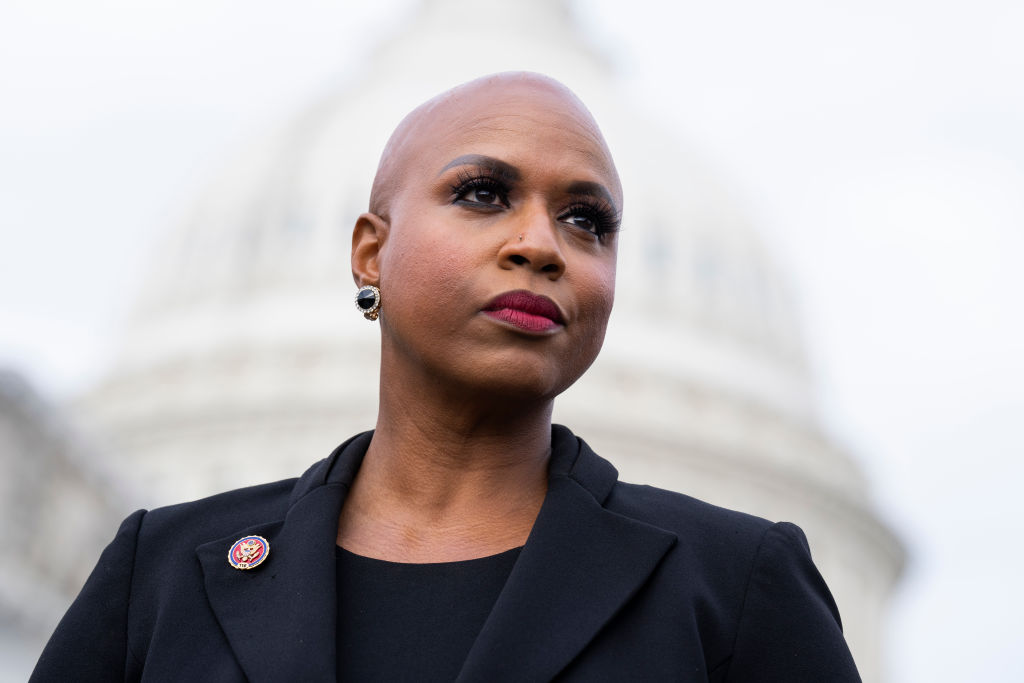
Ayanna Pressley, legislation,
(Photo: Tom Williams/CQ-Roll Call, Inc via Getty Images)

Rep. Ayanna Pressley Reminds GOP Lawmakers To ‘Keep MLK’s Name Out Of Your Mouths’ Over Anti-DEI Bill 

How many reminders do they need?


Massachusetts Democratic Congresswoman Ayanna Pressley expressed her criticism over the name placement of civil rights activist Rev. Dr. Martin Luther King, Jr. in the Republican-sponsored bill, “Dismantling DEI Act,” which would weaken DEI initiatives in government, Fox News reports. 

Pressley ripped the legislation during a House Oversight Committee hearing on Nov. 20, labeling the bill an “utter disgrace.” She summarized the bill’s provision as banning anything that acknowledges racism but, later on, does the opposite by addressing the presence of reverse racism. Pressley continued by chastising GOP members’ misuse of King’s words when his children have asked them to stop. “And I’d also like to take a personal note of privilege to say please keep Dr. Martin Luther King Jr.’s name out of your mouths. Your perversion of his words and his mission when his children have asked you to stop invoking his name and perverting his work when he was a proud and unapologetic Black man fighting for equality for Black Americans and all marginalized people,” she said. 

“So you all are entitled to your opinions but not a denial of the facts.” 

The goal of the bill, created by Rep. Michael Cloud (R-TX), is to eliminate DEI offices in the federal government, end DEI requirements for federal contractors and grant applicants, and give supervision to guarantee tax dollars don’t go toward race-based policies and other “divisive initiatives.” Cloud feels DEI “undermines the progress we’ve made,” listing hard-fought battles — including the Civil War — the ending of slavery, and more as examples of ways “Americans worked tirelessly to right the wrongs of discrimination.”

Pressley’s remarks came during the same hearing that fellow Democratic lawmaker Rep. Jasmine Crockett passionately addressed the legislation. She slammed GOP lawmakers for characterizing DEI as “oppression.” 

The progressive “squad” member schooled her colleagues on the history of racism in the United States, going back to verbiage within the original Constitution. “Do you all know your history? Do you know American history? The original Constitution counted enslaved individuals as three-fifths of a person. During World War II, the federal government forcibly relocated and incarcerated 110,000 Japanese Americans,” Pressley reminded legislators. 

“The FHA practiced redlining in the 1930s and 60s to deny mortgages to Black Americans, which is why we have a racial wealth gap today.”

While the bill passed with a 23-17 vote, according to Pressley’s website, she introduced an amendment that would protect historically Black colleges and universities (HBCUs) from the bill’s federal funding ban. The amendment was adopted with a unanimous vote.

RELATED CONTENT: Pusha T Launches ‘Grindin’ Coffee Brand With Exclusive Los Angeles Pop-Up
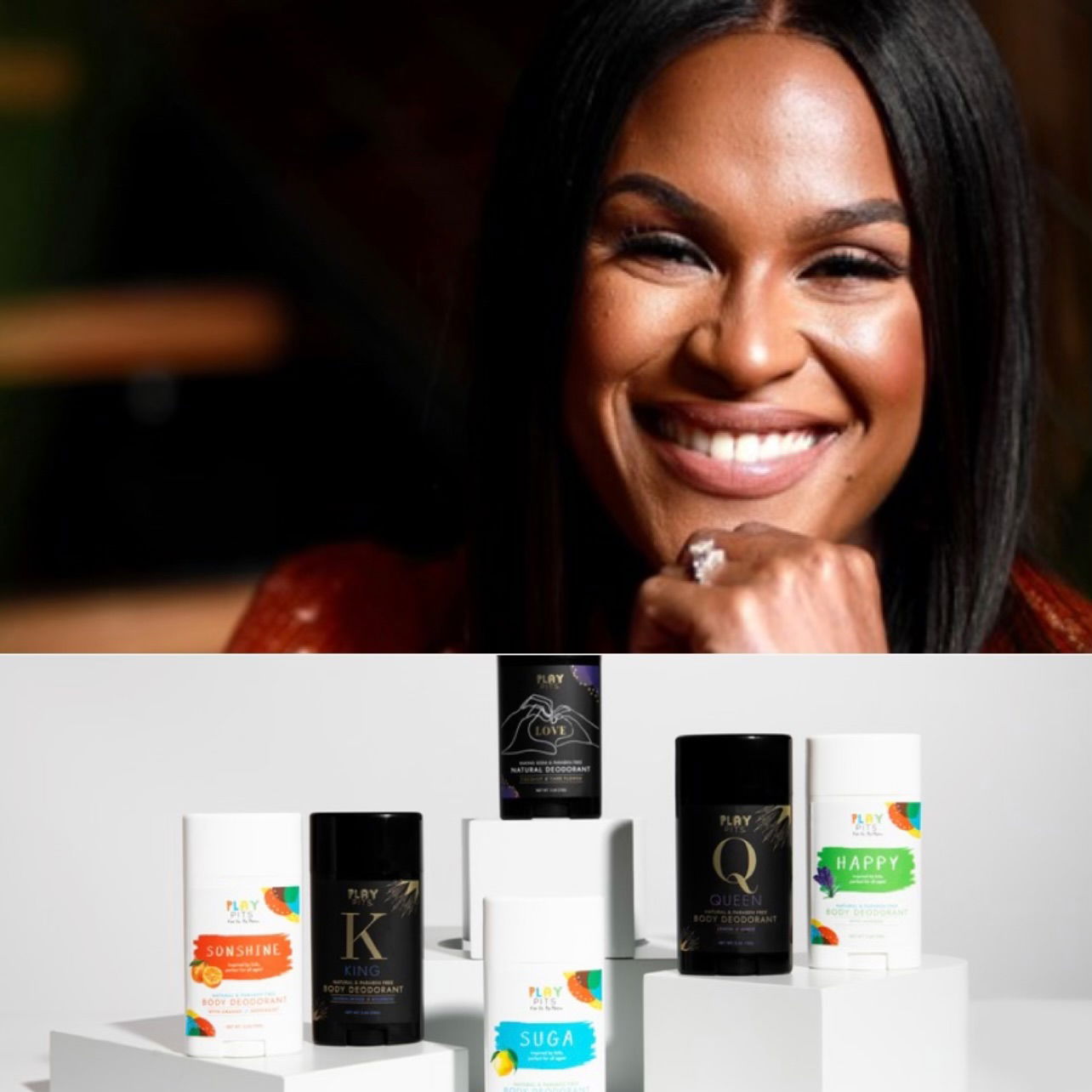
Play Pits, Chantel Powell
Courtesy of Play Pits

Play Pits: Black-Owned Deodorant Brand Started In The Kitchen Is Now Sold In Target

Chantel Powell created Play Pits so parents wouldn’t have to settle for harmful ingredients.


Out of the mouths of babies often comes wisdom. For Chantel Powell, the wisdom to create Play Pits came from her then-six-year-old son, Kam, who was adamant about sharing her homemade deodorant with the rest of the kids at his summer camp. Powell made a kid-friendly deodorant after a firsthand experience with Kam.   

“He came in the car smelling like a grown man,” she jokingly confirms to BLACK ENTERPRISE.

She began searching for a product she could give her active middle child. As someone with hand Eczema, Powell has been forced to be conscious of product ingredients to avoid irritating her hands. There was nothing on the market Powell felt comfortable putting on Kam’s body, so she created her own.

“I didn’t want to put toxic antiperspirants on him with all these different harsh ingredients, and the natural deodorants were boring,” said Powell.

Play Pits, a deodorant for children, was made in the kitchen with remedies Powell’s grandmother taught her so parents wouldn’t have to settle for harmful ingredients and products that barely worked.

A Fire Almost Destroyed The Business. Out of the Ashes, A Rebirth To Something Bigger

Powell received a call at 3 a.m. in September 2022 that singlehandedly changed everything with Play Pits. Between 2020 and 2021, the business grew 500%. By then, Powell had relocated to Atlanta from Maryland. She also moved into a warehouse to keep up with the demand, including the demand for Target Stores. Two years after moving into the warehouse, her neighbor called to tell her it was on fire.

“Me and my husband got up, no words and drove down. My body was calm, but my heart was racing. I could see the fire off the highway,” she recalled. “I lost everything.”

The loss included equipment she practically started with. The fire damaged 7,000 units, all of her fragrances, raw goods, and an $11,000 machine that made the deodorants. Even more devastating, she had to lay off some of her employees.

Powell, a faithful woman, tells BE that God told her that the fire would be just a part of their story and wouldn’t be the end. Still, it was a tough time for the mom of three who had given her all to the business, even quitting her full-time job in the entertainment industry. The most challenging part about the fire is that insurance didn’t fully cover the damages.

“Everyone kept saying, ‘Make sure you have high liability,’ so I had to have a certain level of liability. But nobody said, ‘Chantel, have you checked your property damage insurance?’”

The insurance company barely paid a fraction of what was lost. Then, if that wasn’t enough to bear, the insurance company dropped the business from the policy even though the fire wasn’t its fault. Insurance more than quadrupled for the Play Pits.

Two years after the fire, the business is still recovering. Yet, amid the challenges, Powell is pushing through. She has built relationships and partnerships with youth sports organizations in the community and expanded her products to adults who love them, too.

“Everything that could go wrong went wrong after that fire,” says Powell. “When people see the success of Play Pits [or] when they walk in Target and see Play Pits on the shelves, people just see the product. I see the obstacles. I see the challenges that I’ve overcome.”

Bigger Than Smelling Good. Play Pits Is Inspiring The Next Generation of Black CEOs

Customer service and giving back are the core of her brand, especially to the ones who continue to inspire her the most: children.

She says what sets her apart from other brands, other than providing parents with peace of mind for the clean ingredients she uses, is that she treats every customer with care as if they’re a member of her own family. Listening to children about what they want is also vital for Powell, so she ensures they have a seat at the adult table and meets them at the kids’ table.

“What makes us different and will continue to make us different is my ability to be in touch with my customers. I will sit on the floor with the kids at a round table. I don’t ever want to feel far removed from why I am here,” she says. “Kids have always been the center of it all.”

Powell doesn’t take her position as a Black woman CEO lightly. Growing up, the CEOs in her classrooms didn’t look like her. Part of her work in giving back to the community is also about showing up as her authentic self and being the representation to inspire the next generation.   

“I know what it means when I walk into a classroom full of African American kids, and they see me walking in with Jordans, a t-shirt, and some jeans, and I say, ‘I’m a CEO,’” says Powell. “When I was a little girl, a CEO was a white man with a suit on, and it didn’t feel obtainable […] I’ve taken the path of continuing to do the work within the community.”

RELATED CONTENT: Queen Latifah Shares How Her Queen Collective Creates Growth In Hollywood Through Inclusivity

Michael Blake , New York,
Washington, DC, May 5, 2010 -- Michael Blake, Associate Director, White House Office of Public Engagement & Deputy Associate Director of the Office of Intergovernmental Affairs addresses the FEMA Black Leadership Forum. The Black Leadership Summit is a 2-day conference organized by FEMA, bringing federal, state, local, private-sector and non-profit leaders together to collaborate on preparedness and emergency response efforts. FEMA/Bill Koplitz

Former NY State Assemblyman Michael Blake Enters The Race For NYC Mayor 

Move over, Mayor Adams!


Former New York State Assemblyman and Obama administration member Michael Blake has entered the race to unseat troubled New York City Mayor Eric Adams.

Blake is the seventh candidate to step into the ring to challenge Adams, who, ahead of his 2025 re-election campaign, is dealing with an indictment on federal corruption charges. The  former vice chair of the Democratic National Committee launched his campaign on Nov. 22, pushing a robust agenda to uplift the middle class with his slogan, “Tomorrow begins today.” During his first public interview, Blake highlighted how his campaign will tackle the rising costs of living in the Big Apple and issues on quality of life. “New Yorkers clearly do not feel that their lives are getting better under his administration,” the 41-year-old said. 

“Whether it be loss of funds in their pocket or loss of hope and trust, it is hard to see how the city moves forward given the current mayor.”

Like Adams, Blake has deep roots in the city, raised by Jamaican immigrants in the Bronx and attending NYC public schools. Out of the seven mayoral candidates, Blake feels he is more left than others, including former Gov. Andrew M. Cuomo, who is rumored to enter the race in the coming months. By implementing progressive and moderate policies, Blake views himself as a “responsible leader who is finding solutions in the middle.” 

State assemblyman from Brooklyn, Brian Cunningham, agreed with the compliment, adding that Blake would be an ideal candidate for the job as he has made “meaningful investments in underserved communities.”

“He understands how to lift everyone around him,” Cunningham said.

According to NY Amsterdam News, the former sports journalist served in the White House under many titles during his tenure with the Obama administration. In 2012, he worked as the associate director of public engagement, deputy associate director of the Office of Intergovernmental Affairs, and national deputy operation vote director. His mayoral campaign is not the first time he has dabbled in New York politics. During the 2019 general election cycle, Blake unsuccessfully ran for public advocate of NYC but lost to incumbent Public Advocate Jumaane Williams. 

He also lost in the primary for the 15th Congressional District in 2020 to Congressman Ritchie Torres.

The founder and CEO of the KAIROS: Democracy Project said that the running aim is to better the city’s residents. Outside of legislation, Blake thinks “prayer” is the best way to move forward.

“Prayer is a conversation with the Lord. It’s really about what is best for the city and if it can be a vessel to help in some way, and at the end of the day, if that answer is yes, then it’s on the people to decide,” he said. 

“But first and foremost, you pray for the city, and you pray for the people. You don’t pray for yourself.”

If Adams resigns amid controversy, Williams would become the interim mayor, leading to a rematch between Williams and Blake.

RELATED CONTENT: Harlem’s Own Jim Jones To Host Thanksgiving Turkey Giveaway In NYC

Michael Rainey Jr., financial Literacy Initiative
(Photo: Patrick McMullan via Getty Images)

‘Power’ Actor Michael Rainey Jr. Launches Financial Literacy Initiative

Rainey Jr. hopes to build greater financial futures for the next generation in Staten Island, New York.


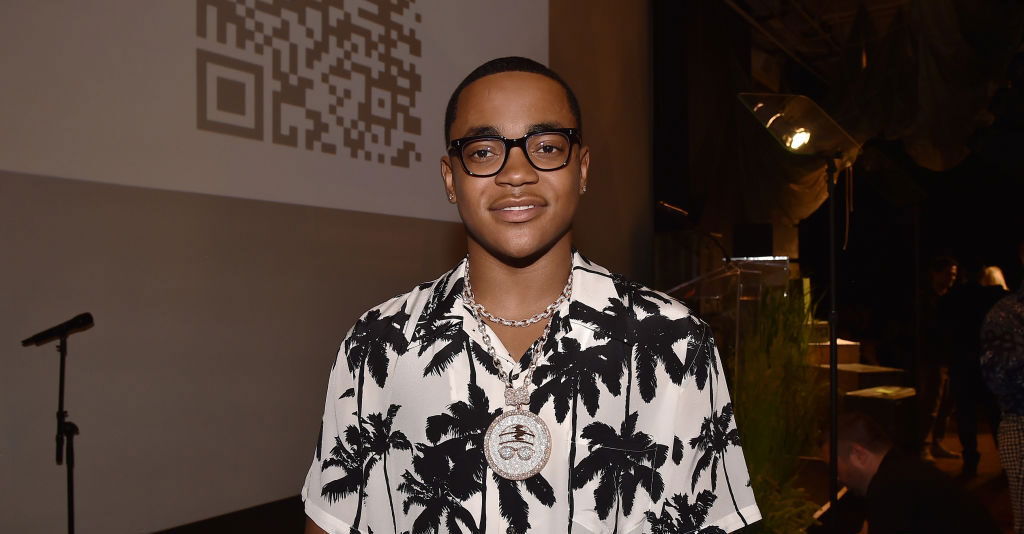
Michael Rainey Jr., the actor known for his role on “Power” and its spinoff, has launched a financial literacy initiative in his hometown of Staten Island, New York.

Rainey Jr. started the “Educate a Student. Protect Yourself” initiative in partnership with The Restoring America Recovery Education (R.A.R.E) Foundation and Equifax. The $2.4 million charitable venture will help the youth in the New York City borough learn the tools and resources needed for financial empowerment.

To celebrate the program’s launch, Rainey Jr. held an event at Port Richmond High School in November. There, he spoke of his own journey with financial literacy.

He also encouraged the school’s senior class to make smart financial decisions as they enter the next phase of life and gave one piece of advice to the audience.

“If I was these kids coming from this exact room…,” began Rainey Jr. “The first thing I would do is go home and ask my parents what their credit score is. And then, as time goes on, you become an authorized user on their [credit card] and start building your own [score].”

Building one’s credit early is a clear key toward financial empowerment for the 24-year-old actor. Now, he hopes to build greater financial futures for the next generation in Staten Island.

Through the initiative, participants will learn more about money management, credit, and identity protection. The R.A.R.E. Foundation also specializes in financial recovery. The nonprofit pledged to sponsor 250,000 students alongside Rainey Jr. and Equifax with the knowledge needed to avoid identity theft.

Donors and students will get one year of Equifax Complete Premier to monitor their credit and identity. They will also receive two e-books, “The Power of Credit” and “Who Stole My Identity?” The latter was written by 7-year-old financial literacy advocate Preston “Kid Kredit” Luzunaris. Both focus on ways to safely navigate building one’s credit.

Moreover, a 12-course digital financial literacy curriculum will be available alongside a free credit consultation.

RELATED CONTENT: Jay-Z’s Shawn Carter Foundation Launches HBCU Champions For Financial Legacy Program

Bishop TD Jakes
(Photo: T.D. Jakes/Creative Commons via Wikimedia Commons)

Bishop TD Jakes In ‘Stable’ Condition After Experiencing ‘Health Incident’ While Preaching

Jakes, who leads The Potter's House Church in Dallas, appeared to stop speaking during his Sunday sermon.


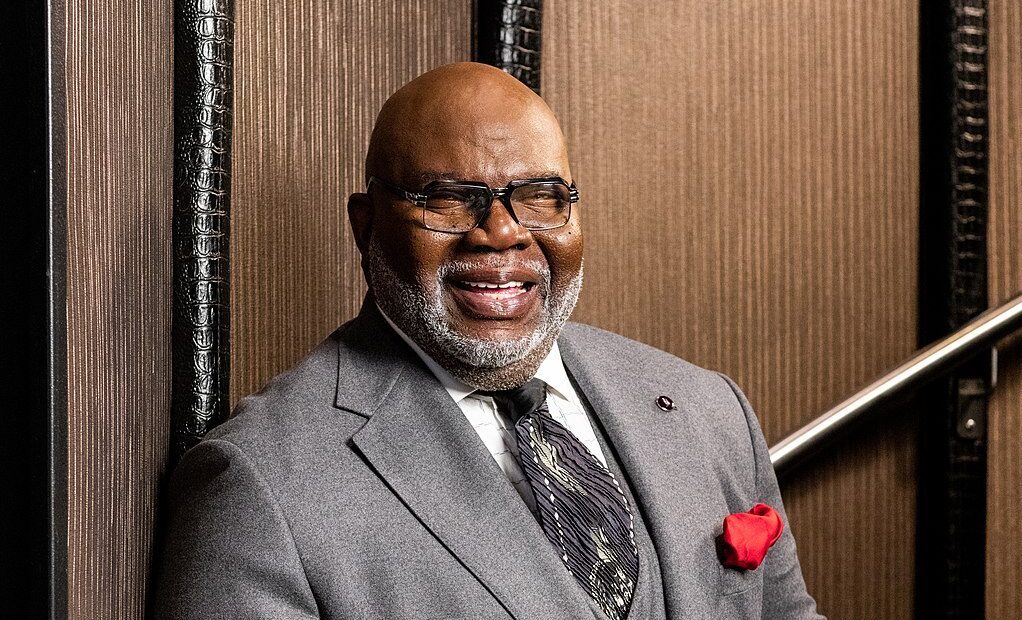
Bishop TD Jakes is in stable condition after he experienced a health scare while preaching a sermon on Nov. 24.

Jakes, who leads The Potter’s House Church in Dallas, appeared to stop speaking during his Sunday sermon. The famed 67-year-old pastor was seen lowering his microphone and pausing, alarming churchgoers as Jakes did not continue preaching. The footage also concerned social media users as the ordeal went public. The NeighborhoodTalk re-shared the clip.

After the medical emergency made rounds on social media, the Potter’s House released a statement on Jake’s condition. The Dallas-based church informed the public that Jake remains “stable” and receives medical attention for the “slight health incident” onstage.

“During today’s service, Bishop T.D. Jakes experienced a slight health incident and received immediate medical attention following his powerful hour-long message,” wrote the megachurch in a shared post. “Bishop Jakes is stable and under the care of medical professionals. The entire Potter’s House family is grateful for the outpouring of love, prayers, and support from the community.”

Jakes founded the nondenominational Christian church in 1996, still serving as its Senior pastor. According to its website, the megachurch boasts a 5,000-seat auditorium on its 34-acre campus, with over 30,000 members under its domain.

Moreover, the acclaimed speaker has become a world-renowned preacher since starting the church. He has been influential to numerous leaders, including Presidents George W. Bush and Barack Obama, who selected the pastor to lead the morning prayer service ahead of his 2009 inauguration.

Jakes has also released multiple albums and writings, including his famous self-help novel “Women Who Thou Art Loosed.” The story was adapted into a stage play by Tyler Perry and a film released in 2004.

As for Jake’s main job, it remains unclear when he will return to the pulpit or what he experienced during the incident.

RELATED CONTENT: Chicago Bulls Legend Bob Love Dies After Battle With Cancer

Mielle Organics, Founder, Products, Hair loss
(Photo: Kampus Production/Pexels)

Mielle Organics Founder Claims Influencer Got Paid To Spread Lies About Her Haircare Products

The company's Founder and CEO Monique Rodriguez explained the "very important message" on Instagram Live.


The founder of Mielle Organics claims that recent controversies over her haircare brand were prompted by an influencer getting paid to spread lies about its products.

The company’s founder and CEO, Monique Rodriguez, explained the “very important message” on Instagram Live. She detailed how a competitor brand paid an influencer to promote their products. While in the partnership, a creator went viral after spewing allegedly untrue claims about Mielle’s popular Rosemary and Mint Hair Oil in September. TheShadeRoom reposted footage of Rodriguez’s claims of sabotage.

“As many of you have seen, Mielle has been buzzing in the media lately… but here’s the thing: we recently discovered that the original TikToker creator who sparked all of those rumors about Mielle products causing hair loss and falsely claiming that the Rosemary Mint Oil formula has changed, that creator has been paid by one of our competitors,” Rodriguez explained.

According to Rodriguez, her team discovered that the influencer, Danesha Mo’nek, earned a commission. The CEO asserted that Mo’nek sparked the controversy to boost sales for the competitor and earn more money herself.

“This creator was earning a commission to promote a competitor’s products while spreading misinformation about our products for their own personal gain. Unfortunately, some who joined in on those conversations seemed to have ulterior motives as well,” revealed Rodriguez.

Rodriguez first addressed the scandal that same month, in which Mo’nek asserted that the hair oil causes hair loss. Fellow TikTokers also expressed similar stories of damage. Following the backlash, Rodriguez assured customers that its product quality never wavered.

However, Rodriguez decided to announce this latest update for “transparen[cy].” She spoke on Mo’nek, stating the beauty expert has since had her videos removed from TikTok. However, the controversies that stained the popular natural haircare brand remain across social media.

“It has reached a point where I feel it’s important to be transparent with you all,” explained the entrepreneur.
“So, just to let you know, the originator of those false videos has since been removed.”

RELATED CONTENT: Mielle Organics Founder Shuts Down Rumors That Products Cause Hair Loss.

Queen Latifah Shares How Her Queen Collective Creates Growth In Hollywood Through Inclusivity
Steven Matthews for AdColor 2024, California, Inclusivity, JW Marriott, Los Angeles, Main Stage, P&G,

Queen Latifah Shares How Her Queen Collective Creates Growth In Hollywood Through Inclusivity

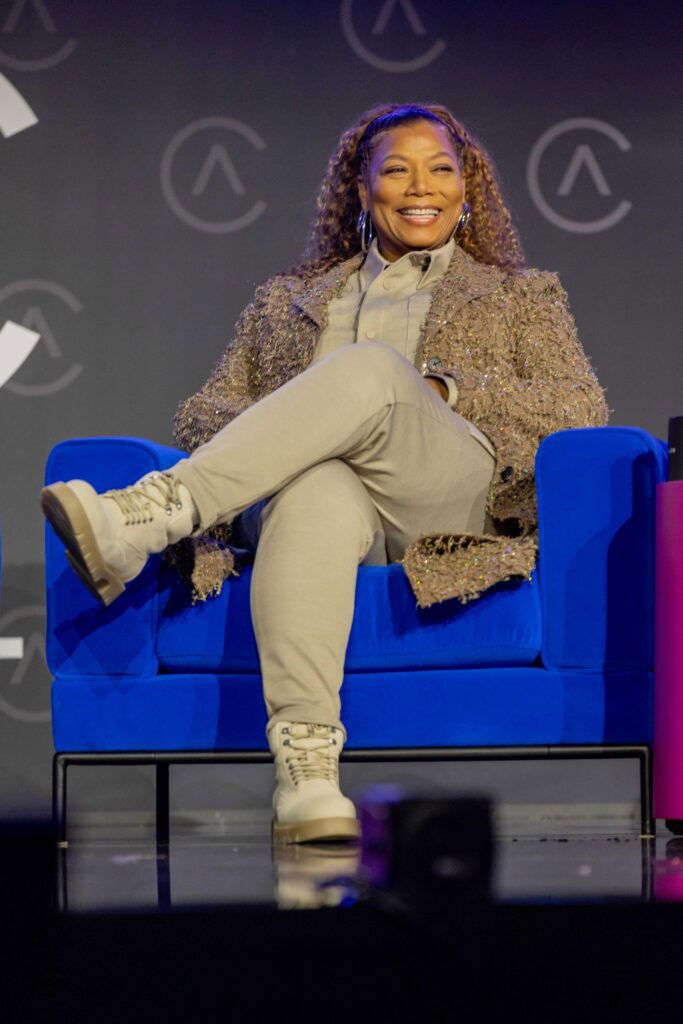
Queen Latifah shares how her Queen Collective initiative creates lasting opportunities for emerging directors from diverse backgrounds.


In the six years since Queen Latifah launched her Queen Collective initiative with Procter & Gamble, the program has provided over 300 jobs to emerging directors, more than 60% of whom are people of color. 

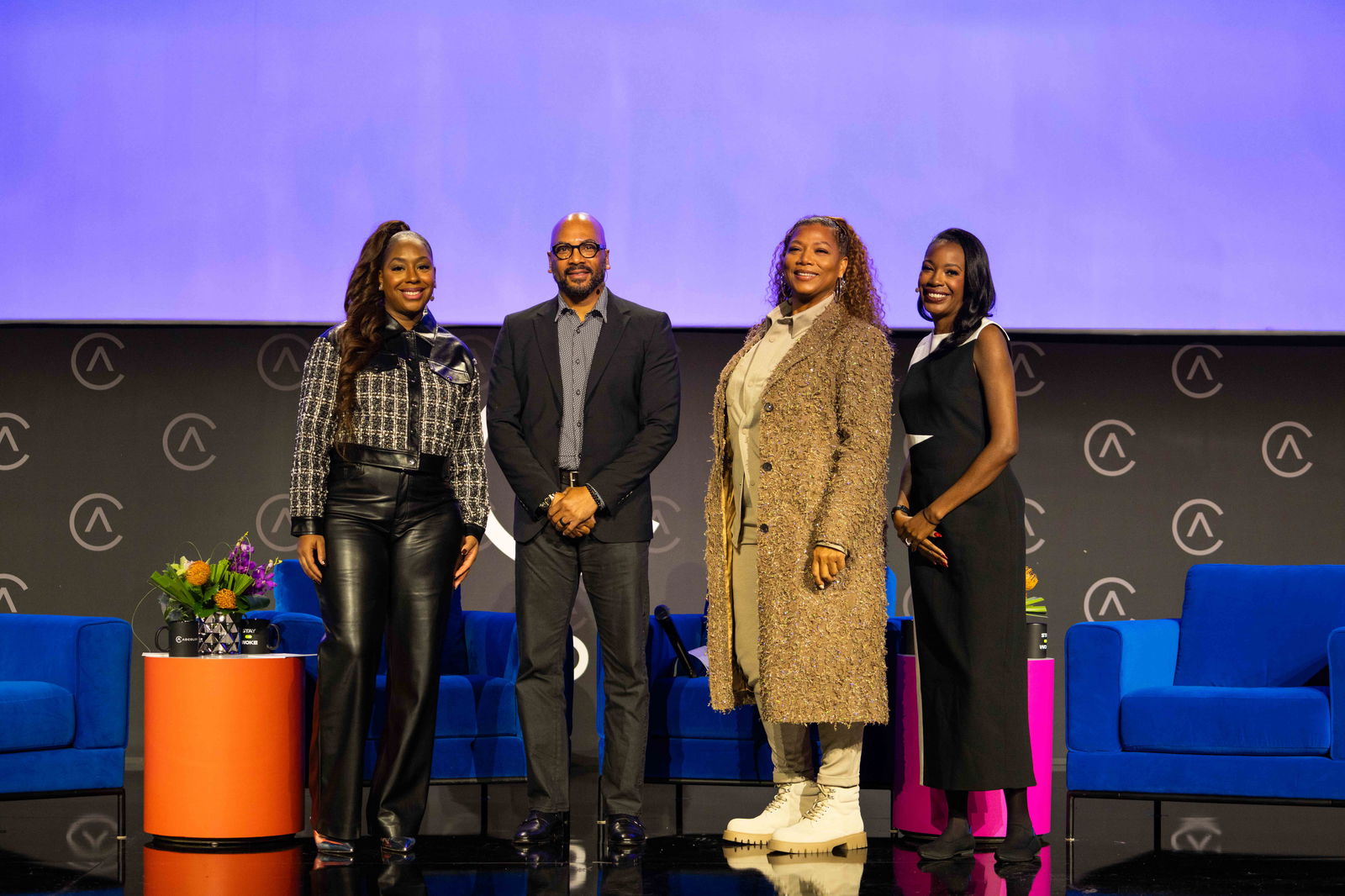
On Friday, Nov. 14, the award-winning multihyphenate participated in an in-depth discussion at the 2024 ADCOLOR Conference, moderated by Jeroslyn JoVonn of Black Enterprise. She was joined by Eric Austin, VP of Marketing & Media Innovation at P&G, and Angelica Matthews, Brand Vice President at P&G, to talk about how the Queen Collective is fostering opportunities, visibility, and economic empowerment for diverse emerging directors.

Launched in 2018, the Queen Collective was created to increase the gender and racial equality of film directors in entertainment and advertising. The platform’s ability to reflect diverse audiences and authentic stories allows brands to reach and resonate with all consumer groups.

“Directors are decision-makers who build crews and talent rosters,” Queen Latifah explained during the panel. “And by widening opportunities for Black directors with programs like Queen Collective we will open the door to a generation of diverse creators.”

As part of its commitment to inclusivity in the entertainment industry, P&G launched the Widen The Screen initiative. With support from the Queen Collective talent pool, the initiative aims to expand the multicultural media ecosystem, enabling more effective engagement with diverse audiences. The program was developed to address significant gaps in Black creator representation–on-screen and behind the camera.

Less than 6% of writers, directors, and producers in American-made films are Black. P&G discovered that two-thirds of Black individuals feel their culture and identities are not accurately or authentically represented on screen. Furthermore, Black-owned media previously accounted for less than 2% of all U.S. media spending.

“That’s why in 2021 we’ve created “Widen the Screen” –-an expansive content creation, talent development, and partnership platform that celebrates creativity with an accurate portrayal of the Black Experience,” Austin said.

“It also enables the increased representation of diverse creators across the advertising, film, and media industry. It expands the multicultural media ecosystem so that we can reach diverse consumers with greater effectiveness. If we do this right, it represents a $10B opportunity for our business.”

Austin continued, “As we Widen The Screen, we Widen Our View and our reach by broadening the spectrum of the images we see, the voices we hear, the stories we tell, and the consumers we need to understand fully. “

He emphasized the success of Old Spice’s ad campaign featuring comedian Deon Cole, which significantly boosted the brand’s awareness and relatability among a broad audience, extending beyond the Black community. This achievement was driven by a Black female director—an opportunity that might not have existed without her presence in the creative process.

“The Queen Collective, as our signature program, is such a shining example of this as the initiative provides access and creates mentorship for Black and women of color to share their gifts and expand their creative footprints,” Austin said.

Queen Latifah shared her passion for being hands-on with Queen Collective directors, allowing them access on the set of her hit show The Equalizer, taking them to award shows like the NAACP Image Awards, and even to film festivals like Sundance and Martha’s Vineyard African American Film Festival.

“I do this because I see the talent and you also never know when one of these directors becomes my boss one day,” she shared.

P&G’s amplification of the Queen Collective goes even further, with leaders like Matthews creating a mentorship program that transitions Queen Collective directors into the advertising industry, placing them as directors of record for major agencies. In its second year, the program expanded to provide “Shadowship” opportunities to HBCU students.

“Similar to the Director Shadowship program, this is aimed to give HBCU students an opportunity to learn about developing content to support large brand activations,” Matthews said.

As the country sees the drawback of many DEI efforts launched in the aftermath of 2020, Queen Latifah, Austin, and Matthews are hopeful that their work with the Queen Collective at P&G can serve as a changemaker for more major brands to see the value in hiring diverse talent.

“I’ve been in this industry for a long time and have been lucky enough to be a part of a lot of film and TV projects,” Queen Latifah said. “So I can tell you that when a director or writer or showrunner authentically knows the communities they’re trying to reach – it changes everything.”

RELATED CONTENT: NAACP Chapter Is Prepared To Fight After Virginia State Leaders Purge 1600 Voters From Voting Rolls

The Harlem-bred native had been running mere minutes behind but was extremely apologetic for the tardy arrival. Before he readied himself to sit in his barber’s chair for a fresh cut and shape-up, he shook hands with the production crew who were patiently waiting and — again — took full accountability for his lack of punctuality, albeit, at the mercy of cross country travel, New York City traffic, and an unexpected ruckus at the entrance of the building that left an individual knocked unconscious and waiting on an ambulance.


Cam’ron was back in his hometown, Harlem, where he once got the “boosters boosting” and “computers ‘puting.” With a music career spanning almost 30 years, selling millions of records, and performing in sold-out venues, the “Get ‘Em Girls” rapper has a business portfolio that ain’t all hip-hop.


In recent years, Cam’s professional ambitions have reached even greater heights, and his shift into digital media has become the vehicle. To understand Cam’ron, one would have to understand that he is never not enterprising and capitalizing on an opportunity. 


In February 2023, the rapper-turned-talking-head did his big one, launching It Is What It Is, an irreverent, sports-centric podcast hosted by Cam, his childhood homie, Ma$e, and Treasure “STAT Baby” Wilson. The initiative was a power move that turned his $120,000 investment into an eight-figure entity. 


“I would be on the phone arguing with my man … I look at the phone; I’ve been arguing with this dude for an hour and 50 minutes about sports,” Cam’ron said. 


“So, I was like, I’m gonna just invest my own money and just make it look like a professional setting, wear a suit but talk how people talk in the gambling spot, on the corner, in the projects, on the stoop or the barbershop.” 


“That was the vision,” Cam said. 


It Is What It Is
swooped in to cater to an underserved demographic who might enjoy sports commentary—without the code switch.


Less than two years later, It Is What It Is has about 279 episodes in the can. The show ranks No. 45 in the sports podcasts category on Spotify, has 630,000 Instagram followers, and has 551,000 subscribers on YouTube, with over 80 million views. The concept is genius and took flight. Along with a sweet payday for those involved came a huge following where thousands of supporters stay saluting the triumvirate and giving Cam’ron his flowers. A glance beneath a given episode post will show subscribers of the network leaving endearing comments: 


OH BOY

Cam’ron is aware that there are conflicting views of him depending on the perspective or scenario. His run-ins with controversy, which have seemingly made a few folks salty, are often misconstrued and perhaps perceived without nuance. There’s a rhyme and reason for his reactions and responses in many cases, and he’s more than willing to expound. 


“I do what the situation calls for,” he says.  “I wouldn’t regret anything that I’ve done in the past.” 


Cam continues: “A lot of people say, ‘Cam, when he was on Bill O’Reilly, he was bugging. When he was on CNN, he was acting crazy,’ but if you ever want to know my perspective from any of those situations, I would be more than happy to explain what happened in any situation where somebody thinks that I was ignorant and stupid, arrogant, stupid, dumb, not representing the Black culture.” 


Art doesn’t always imitate life, but those lines can easily blur when observing life through digital lenses. However, Cam’ron is every bit of who he says he is, not the idea of who people may project him to be. He acknowledges that his hip-hop persona, tongue-in-cheek commentary, and shoot-from-the-hip mannerisms are often conflated with Cameron Giles. 

“A lot of misconceptions sometimes come from music. Because my music may be vulgar, or a movie role that I played and people think I’m still the character Rico from Paid in Full, or maybe previous interviews I’ve done, and people will be like, ‘Oh, he’s ignorant.’” 


Cam’ron is even methodical in navigating those types of people and “what the situation called for.” His approach to social engagement is intentional and based on how people interact with him. 


“It isn’t really about the difference between Cam’ron and Cameron, to be totally honest.” 


“If [I’m] in a room with a bunch of intellectual people and I need to show my intellect, there’s no problem doing that. If [I’m] around ignorant or arrogant people or people where I need to show a different side, I can do that. I can basically read the room and see what person needs to be there according to Cameron.” 


Cam’ron is an entertainer. Cameron is a multifaceted individual—and it is Cameron Giles who makes the business decisions, recruits, tutors the students, nurtures their brains, and moves the movement. 

IN THE MIDST OF THE STRUGGLE 

The borough of Manhattan has earned the moniker “Money Making” for its mysticism around wealth creation, and the impetus for Cam’ron’s motivation toward wealth stems from the influences he had coming up in Harlem, a historic epicenter of African American enterprise dating back to the Great Migration. Young Cam’s first grind was going door-to-door, selling newspapers at 9 years old.


Luckily, there were hustlers in the community who prevented him from going hand-to-hand. 


“They didn’t really let me hustle because I played basketball,” Cam shared. “I was pretty good, so they never really wanted to give me any work or anything like that; and they’d give me $20 or $10 here and there.” 


Cam, who hails from 140th Street, was hyper-aware of the materialism and shiny things East Harlem had to offer, particularly during the Crack Era. Yet, the “Big Harlem” rapper also understood at a tender age that these ornate lifestyle projections were very much embellished. And though he and his best friend, deceased Harlem rapper Huddy Combs, eventually dabbled in hustling, the stint never materialized into anything substantial. 


“Drug dealers in the ‘80s and ‘90s when I was young and growing up, they didn’t have an out,” Cam’ron shared. 


“They just wanted to keep selling drugs and selling drugs, and that’s just not gonna last forever.” “They were cool,” Cam said, “but they weren’t really getting no real money—like they still lived on the block.” 


Cam saw the distinction between drug dealers being hood rich and trapped in their environment and the hustle spirit he witnessed from his mentor—Dame Dash—and how he flipped that mentality toward the music business, taking it to greater heights. 


“Dame Dash was the only one who had the vision to want to be out.” 


Dame, also a Harlem native, was instrumental in leading Cam’Ron to financial independence in the rap game, signing him to Roc-a-Fella Records. A woman Cam befriended put him up on game, schooling him on the business side of the industry when his deal with Epic Records didn’t yield significant revenue. The knowledge Cam gained through both connections led him to become the savvy businessman and entrepreneur we know today. He’s been spinning the winning circle ever since. 

BOUT IT, BOUT IT 

Cam’ron’s grind makes it plain: He’s a man who stands on business, not just his morals and principles but actual business. While he’s made an indelible mark in hip-hop, writing and producing albums and executive producing films like Killa Season and Paid in Full, Giles has established an impressive portfolio over the years. Cam’Ron owns Diplomat Records. The “fandemonium” around Dipset in the early 2000s resulted in Cam owning trademarks for Byrd Gang, Dipset, and Diplomats, allowing him to license music, video recordings, and clothing items. 


Under the Dipset umbrella, he owns Sizzurp Liquor; It Is What It Is apparel, and Dipset Couture. In 2014, he partnered with Mark McNairy on a cape collection during New York Fashion Week—and designed face masks to respond to the Ebola virus outbreak. 2015 saw Killa Crunch cereal, and we’d be remiss not to mention Oh Boy! Cologne.


“I was ahead of my time with that,” Cam reflected. “I made masks for Ebola, but Ebola ain’t stick around, and when the COVID came around, I killed them on the masks.” 


“I was ahead of the game; I made a lot of money with the masks.” 


Needless to say, Cam’Ron is a branding and merchandising savant, and his timing for ideas seems to be on point. His masks weren’t the only thing poppin’ during the pandemic. Nobody saw libido enhancement products on Cam’ron’s bingo card in 2020. To much surprise, the serial entrepreneur popped out with Pink Horse Power. When asked what piqued his interest in the sex-based industry, Cam said, “Just being creative throughout the pandemic I started doing the homework on it and doing the due diligence.” The brand has since grown to include Blue Horse Power, and the rest is money in the bank. 


Cam’ron’s investments include a toilet tissue business and hella real estate property and development in small cities and towns throughout Florida, where he could get his money’s worth and a great ROI. 


“I saw this growing city, and the next city over was St. Cloud,” Cam said, speaking about his business ventures in Central Florida. “Kissimmee got too overcrowded, and St. Cloud got popular.” 


While Cam’Ron has his hand in real estate down in South Florida, buying and selling, he has his sights set westward. “I’m working in Vegas a lot,” he shared. “To me, Vegas is gonna be the next one.” Cam identified the Raiders, Oakland A’s, and the WNBA team, the Aces, as draws to the high-roller city, which shifts the conversation to his occupation and residence in Las Vegas. 

IT IS WHAT IT IS 

Cam’ron launched The Come And Talk 2 Me Network after being “tired of waiting for calls back” and decided to bet on himself. As it stands, making that decision turned out to bring Cam the realest return on investment by far—and it doesn’t hurt that his childhood friend Ma$e went half on one of the most notable sports podcasts in current times. 


The network went live on YouTube on Jan. 24, 2023, and boasts over 760,000 subscribers and 145,000,000 views and counting. The network houses several shows, including Es Lo Que Es, Check Out The Stat, The Mark Jackson Show, and It Is What It Is, the network’s crown jewel. The wildly successful show is filmed in Las Vegas’ Wynn Hotel at a fraction of what it costs to produce in Miami. The cost contributed to Cam’ron’s relocation to the left coast, along with future business expansion and Ma$e and Stat’s desire to work in Nevada’s resort city. It Is What It Is kicked off its fifth season in September under a newly negotiated contract with a nine-figure outcome.


Cam’ron’s excitement around his flip was “dumb happy,” but his goal is far more robust numbers. 


“I’m excited about that, but look at certain people’s flip, like The Blair Witch Project, right? It was like $15,000 [to produce]; it’s [worth] like $4 billion now,” Cam said. 


“When I look at stuff like that, I’m like, how do you do that? The least amount of money, the least amount of work to make, then maximize the most you could get out of it.” 


“So, I still think I got a long way to go.” 


Despite his business aspirations, Cam’ron has come a long way and brought legions of people along for the successful ride, providing opportunity and come-up. He spoke briefly about how he built his team from Ma$e to Stat to various correspondents: 


“I had a few different people start at the beginning, and I invited Mason as a guest one time, and when he came on, it was kind of dope because we haven’t spoken in years,” Cam’ron said. 


“He knows sports, he knows me from a child. We could joke with each other without feeling hurt, you know?” 


Cam was intentional in establishing a role for a female broadcaster, but it wasn’t a shoo-in situation as it was when he tapped Ma$e. He first extended the opportunity to someone from his network. That fell through due to camera shyness. The following prospect was great on camera; as for sports knowledge—not so much. Enter Stat Baby, whose talent lies in communications, research, and sports knowledge. Wilson was discovered through auditions and brought an element the podcast could benefit from. A bridge across the age and gender gap with a woman’s perspective and youthful energy. 


“Stat was right behind the scenes from maybe the first four or five episodes,” Cam says. 


“She was about two months, three months away from graduating from the University of Miami. She fit well. I definitely wanted to have a woman who was knowledgeable, a little younger than us, and just bought something different to the show.” 


OJ Simpson was another highly unexpected correspondent who made the cut. The infamous NFL Hall of Famer appeared on the show and entertained viewers with banter between himself and the host. OJ’s inclusion was Ma$e’s idea, but it was about redemption and humanizing the sports icon for both sports enthusiasts. Simpson’s residing in Vegas was purely coincidental. 


“The reason why we picked OJ is because, in the public eye, a lot of people say OJ Simpson is guilty, but he beat the trial,” Cam shared. 


“If you’re guilty in people’s public opinion, you can’t do nothing about that … we’re working with an innocent man. What’s the problem?” 


WHAT’S REALLY GOOD? 

Let Cam’ron tell it, streaming is the wave of money-making for entertainers, specifically those in the music industry. Cam explains the ease of access in streaming despite people’s nostalgia for music and visiting record stores. The “Purple Haze” rapper noted the cultural and generational significance of streaming in that the younger generation can easily tap into old-school music, giving the classics a longer shelf life. 


He says the older generation will have to learn it, albeit “more tricky than just doing math from selling records or CDS or tape any type of physical form of music.” He said they “gotta learn it just like you have to learn that form of music as well.” 


As for his own streaming business, Cam’ron plans to expand programming. 


“I’m actually starting another network as well; not just sports, but other content, music, movies, sitcoms.” 


It probably makes sense to pick up on what he’s putting down. Cam’s journey is proof of possibility and how jumping into new lanes and new technologies might bring success—not to mention the consistency and hustling heart. 


Nowadays, Cam’ron is looking toward the mountains—figuratively and literally. He’s considering buying swaths of land to develop in the mountain time zones—think Arizona, Utah. North Dakota. His circle is so diverse that he has a friend who produces spring water from his own land. 


“You gotta surround yourself with certain types of people who own mountains and pump water out of them and sell the water,” Cam chuckled. 


“I know somebody who owns a few mountains, and I never even knew you can own mountains. You know what I’m saying? It’s about learning different things.” 


Cam’ron has yet to figure out his end goal. He says he’s unsure and that once “the machine” is self-functioning, he’s “off to the next thing and trying to build something different.” 


Cam shows no signs of slowing his roll, as he describes a modus operandi that has surely worked for him for almost three decades, and though when Cam references “the machine,” he is referring to his projects, I am curious if he knows that he, too, is “the machine.” 


“Even though I be trying to take care of myself, I still be working and sh*t,” he said. 


Although he has moments of retreat, where he indulges in yacht life, Cam’ron acknowledges that he’s a workaholic, oftentimes pushing himself well beyond the norm and, at other times, beyond physical limits. He admits to filming episodes of It Is What It Is while being hospitalized. Despite it all, Cam’ron is health conscious, eating better and exercising, and being laser-focused on his wellness due to health risks and hereditary high blood pressure in his family. 


The end goal discussion is reframed as a question about retirement and what that looks like for Cam’Ron. He says his accountant has him stacking money and that “retirement looks like this,” meaning like his current station in life. 


“I’m old. I just look good. You know what I’m saying?” Cam affirmed. 


“You gotta realize I get to watch sports and then go talk about it for an hour, then go online and ask how many people bought Pink Horse Power or get to look at this property and place people I trust to build whatever they build.” 


“I get to go see my childhood friend that I haven’t hung out with in 20 years and talk sh*t for an hour about sports and anything else that’s not really work for me.” 


Cam’ron is pleased with himself and is extremely proud of the life and career he’s conceived for himself, having hailed from a storied hood during one of the most notorious drug eras of our time and surpassed talented others who have succumbed to the streets and the drug game—user and dealers—his reality could be a lot different. 


WRITTEN BY IDA HARRIS

DIGITAL PRODUCTION DEVEN ROBINSON

ART DIRECTION & GRAPHIC DESIGN TODD CHAPMAN

VIDEOGRAPHY & VIDEO PRODUCTION EDWIAN STOKES

PHOTOGRAPHY RAYON RICHARDS

LOCATION THE VICTORIA THEATER


WRITTEN BY
IDA HARRIS

DIGITAL PRODUCTION
DEVEN ROBINSON

ART DIRECTION & GRAPHIC DESIGN
TODD CHAPMAN

VIDEOGRAPHY & VIDEO PRODUCTION
EDWIAN STOKES

PHOTOGRAPHY
RAYON RICHARDS


LOCATION
THE VICTORIA THEATER
 
 
Maurice Hicks, private investigator
Photo Courtesy of Maurice Hicks

Private Investigator Maurice Hicks Talks Missing Persons, Fighting Stereotypes, And Inspiring Blacks In The Industry

The unsolved murder of Hicks' younger brother sparked a passion for investigation.


Maurice Hicks grew up under siege in Baltimore’s harsh, unforgiving streets and always felt hopelessness and despair while witnessing repeated drug use and numerous violent crimes. For years, he said he wondered why the police did not care what “we” were going through. In a twist of fate, his youngest brother became one of the scores of homicide victims in Baltimore at the tender age of 17. The unsolved murder shook Hicks to his core and ignited a fire that had never been extinguished.

Today, the former leader of an FBI Homicide Task Force is a 20-year law enforcement veteran who heads Global Investigative & Security Solutions. “We enhance the quality of life by advising and counseling people facing investigative and security challenges. We solve complex cases that have fallen off the radar of law enforcement or other organizations,” the company promises. Hicks’ company has formed strategic alliances with dedicated retired law enforcement officers and agents worldwide. In addition, they use various intellectual capital gathered across the globe to solve the most complex problems facing communities today.

We caught up with Hicks to talk about his work, impact, and overall mission within our communities:

BLACK ENTERPRISE: Why do you think your work is important today?

Hicks: The work is so vital because police agencies are severely understaffed with the increase in violent crimes. Police agencies have focused on more serious violent crimes. That has resulted in a severe gap between the resources needed to solve crime and complex community problems. Police agencies devote fewer resources to solving fraud, property crimes, and missing people.  

BE: Why do you think your work is critical in the African American community?

Hicks: We need private investigators to fill the enormous gap between the resources that are devoted to solving crimes against African Americans and the resources necessary to solve African American crime victimization. Information about unsolved crimes against African Americans is not adequately publicized, which is often required to facilitate a more diligent police response. 

Media outlets are more likely to promote stories about white crime victims and white missing persons than stories about African American crime victims. Moreover, in the Journal of Communication, Travis L. Dixon, then at the University of Michigan, and Daniel Linz of U.C. Santa Barbara sampled local television news broadcasts in Los Angeles and Orange counties in California and found that, when compared against relevant crime data, ‘African Americans were overrepresented as perpetrators. African Americans are more likely to be profiled on the news as suspects, not as victims.’

BE: Share a case where you have reduced crime in our communities.

Hicks: One case involved a missing person who went to Nevada to obtain drug rehabilitation. During the second day, the counselors took all the patients to the gym to work out. Two patients left the gym and never returned to the treatment facility. The next day, one of the patients died of a drug overdose. The family of the second patient hired me to locate their daughter, who was from another state. They were fearful that she might meet the same fate as the other patient who died of a drug overdose.

I spent the next two weeks looking for her all over the Las Vegas Valley. Two weeks after I started my search at 5 A.M., I got a call from a tipster who saw my missing person flier. I met him, and he pointed me in the direction that he had last seen her. I staked out that location and located her. That day was Easter Sunday. I was able to reunite her with her family. Every Easter Sunday, I receive an email from her mother thanking me for bringing her daughter home.  

BE: Are there a lot of PIs who are Black?

Hicks: Less than 14% of private investigators nationwide are African American. I believe there are fewer African American private investigators because of a lack of knowledge about the industry. Also, because there are fewer African American private detective agency owners. I was personally unaware of the inner workings of the field until I met a Black female private detective agency owner specializing in death penalty cases. Prior to meeting her, I had never met a private investigator.    

Secondly, I think that more African Americans are choosing to work in the private security industry as opposed to the private investigations industry due to the enormous profits and the increasing demand for private security after the Sept. 11, 2001, attacks.      

BE: What would be your advice if someone wanted to choose PI as their career choice?

Hicks: I would advise them that private investigations can be a fun and exciting profession. Each day provides a unique opportunity to test their investigative skills and intellect. However, they need to understand what they are getting into fully. Spending 12-hour days sitting in a car in the Nevada or Texas heat while doing surveillance may not be for everyone. Conversely, if they enjoy helping people prove their innocence, locating missing people, or solving complex crimes, this profession might provide the joy and satisfaction they seek.

There are many specialties to choose from, such as corporate investigations, civil investigations, infidelity investigations, missing heirs, missing persons, infidelity investigations, workmen’s compensation investigations, death penalty investigations, insurance fraud investigations, accident reconstruction, etc.  

BE: What inspired you to write your book?

Hicks: While teaching criminology classes at the University of Maryland, Global Campus, I used many cases as case studies. Over the past 20 years, my students have told me my stories would make an outstanding book. After my comrades in the police department kept asking me to share my stories with other officers, I realized that my students were right and that my experiences would make an excellent book. For more info, go to www.lookingfortrouble2022.com.

RELATED CONTENT: Private Investigator: Companies Are Hiring Us To Make Sure Employees Are ‘Working’ From Home’

Kendrick Lamar, top earner, Forbes Drake
(Photo: Arturo Holmes/MG23/Getty Images for The Met Museum/Vogue)

Kendrick Lamar Reacts To Lil Wayne Super Bowl Diss And Snoop Dogg On Surprise ‘GNX’ Album Drop

Lamar's track "Wacced out Murals" addresses the New Orleans rapper and the Super Bowl Halftime show controversy.


Kendrick Lamar has not held any punches this year. The rapper got candid about how he felt about Lil Wayne, the Super Bowl, and Snoop Dogg on his surprise album GNX.

Lamar gave fans a good Friday by releasing his sixth studio album, with no prior promotion, on Nov. 22. Following his rap beef with Drake; the album continued Lamar’s quest to express any ill feelings through his music. However, this latest project touched on Lamar’s issues with fellow rappers Lil Wayne and Snoop Dogg.

On “Watched Out Murals,” Lamar addressed the New Orleans rapper over the Super Bowl Halftime show controversy. In light of Lil Wayne’s disapproval of his selection, Lamar talked about letting him down on the song.

“Used to bump Tha Carter III, I held my Rollie chain proud/ Irony, I think my hard work let Lil Wayne down,” voiced Lamar.

After Lamar was announced as the 2025 Super Bowl Halftime show performer, Lil Wayne spoke out about his disappointment with the decision, especially since the game will take place in his hometown.

“I blame myself for not being mentally prepared for a letdown and for just automatically mentally putting myself in that position,” the “A Milli” rapper stated on Instagram. “I thought there was nothing better than that spot, that stage, that platform, in my city. So it hurt, it hurt a whole lot.”

Lil Wayne later reiterated his feelings during his 2024 Weezyana Fest performance. The viral occurrences resulted in Lamar broaching the subject in his own way.

As for Snoop Dogg, Lamar felt confused by his repost of Drake’s “Taylor Made Freestyle.” The song was released as a diss to his fellow Los Angeles rapper.

The Grammy winner continued, “Snoop posted ‘Taylor Made,’ I prayed it was the edibles/I couldn’t believe it, it was only right for me to let it go.”

However, Snoop Dogg quickly cleared the air on the issue shortly after the album’s release. He went to X to explain that it was the edibles, a THC-infused product, that made him repost Drake’s track. Moreover, he praised Lamar and GNX, showing that the West Coast remains united.

On the other hand, Lil Wayne has yet to comment on Lamar’s response.

RELATED CONTENT: Kendrick Lamar Takes Home 8 BET Hip Hop Awards

×